Skip to main content Accessibility Policy

Alumni Atelier ambassador Eric Ross

December
8
2020
By
Tags:

Eric Ross (M. Arch, 2010; B.F.A., architecture, 2009) is an award-winning director at William McDonough + Partners in Charlottesville, Virginia. His work at WM+P focuses on the integration of Cradle to Cradle thinking at all levels of a project, embodying regenerative design and development principles across scale and typology.

Eric's Fall 2020 Alumni Atelier project, A Return to Zero, addresses mass timber, the building material that is a critical element in the fight for carbon positive buildings. A collaborative endeavor with contributions from mass timber manufacturer Nordic Structures, A Return to Zero will serve as a landmark case study for carbon positive architecture.

architectural rendering

Rendering excerpted from A Return To Zero: A Case Study Report, Eric Ross, AIA, 2020.


Eric Ross:

Through deep research, the building industry has set targets to reduce carbon emissions substantially in the next 10 years, and ultimately reach zero by 2050. Larger companies have embraced the challenge internally rather than waiting on the public sector and politicians to lead. The housing industry continues to lags behind because it deals with the most economic hurdles.

My idea is: How can we take the work we're doing for major companies and distill it into case study house projects that can serve as roadmaps for architects and builders?

We've been using a new building material called mass timber in lieu of concrete or steel which both have pretty substantial carbon footprints. The test case house is meant to employ mass timber as much as possible, as well as prefabrication techniques which reduce on-site waste. It's a big vision thing. For Bill McDonough, my boss, it's something he's been pushing for 30 plus years. My Alumni Atelier project is a chance to distill it all down as a case study.

For me, this journey began about fifteen years ago. I had been in the Army and decided I wanted to study architecture. My sister living in Hilton Head recommended checking out SCAD. I immediately started the five-year program. Since I was a little bit older, I was working full time while going to SCAD and by the time I started that fifth year, I was completing my thesis and at the same time transitioning into a real architecture profession role, doing high-end architecture including 3D modeling that I learned in at SCAD. It was a nice dovetail.

Bill McDonough and Michael Braungart's book Cradle To Cradle: Remaking the Way We Make Things (North Point Press, 2002 was required reading for my first SCAD studio project with professor Tim Woods. This ethos of designing beautiful, compelling architecture with a strong, sustainable ethos was instilled early on at SCAD. Now, at WM+P, I've worked on five mass timber projects, building on this breadth of knowledge.

With these projects, we can do pretty great photorealistic renderings throughout the process. There are VR walkthroughs and prototype 3D printed models and laser cut models, analogous to what a studio project might produce in the end, but with a with a lot more real world thought and input.

Returning to SCAD for Alumni Atelier project has been wonderful. I've enjoyed speaking directly with students, taking them on a virtual walk-through of my work space, answering questions, and sharing my project in progress. I appreciate the opportunity to pay it forward.

The SCAD Alumni Atelier, conceived and endowed by SCAD President and Founder Paula Wallace, enriches the creative and professional endeavors of distinguished SCAD graduates.

Learn more about the program here.

D.J. lights the way

December
7
2020
By
Tags:

Artist and manga devotee D.J. Kirkland-DeJesus (B.F.A., sequential art, 2009) is the co-creator with writer Daniel Barnes of the hit graphic novel The Black Mage (Oni Press, 2019). A native of Charlotte, NC, Kirkland is committed to raising the profile of Black and LGBTQ artists and storytellers.

"There are not a lot of Black queer persons in our industry," D.J. says. "If I can be an example for even one other kid, then I've succeeded."

The Black Mage is a celebration of diversity and a condemnation of small mindedness. The main character, Tom Token, deals with the same issues marginalized children face growing up in their communities on a daily basis. Bullying. Stereotypes. Ignorance. Hate.

In addition to The Black Mage, D.J. has illustrated Oni Press titles including Dream Daddy (Oni Press, 2019) and Aggretsuko (Oni Press, 2020). D.J. also works at Viz Media as a digital publishing production assistant, where he ensures the quality of the firm's anime shows before release.

cover of the black mage graphic novel

D.J. Kirkland-DeJesus:

I found my love of art at an early age. My mom and dad worked hard to give me the typical suburban childhood. Sometimes that meant I would be left with a box of crayons, reams of printing paper, and Sailor Moon cartoons to keep me occupied until dinner was ready. I loved drawing, and that turned into a love for storytelling.

My first art teacher was my friend's mom, Mrs. Pittman. She was a local artist in Charlotte who hosted art classes for kids in the neighborhood. I was always coming home with little projects for my mom to hang up. When I was 13 my parents put me in more formal drawing classes.

I grew up watching anime, believing one day I would be the one creating the magic, but I wasn't sure how to get there. When I first heard about SCAD, I learned they offered programs for both sequential art and animation. Since I wanted to make both cartoons and comics. I knew I wanted to go to SCAD.

Professor John Larison (M.F.A., sequential art, 1998) single-handedly defined my sequential art experience at SCAD. I love him with every piece of my being. He pushed me to be my best, and was a huge advocate for me. In quarters when I didn't have classes with him, I would hang out with him during his office hours. Most importantly, he helped me showcase my work to ONI Press when editors from ONI visited SCAD to give guest critiques of student portfolios.

In 2015, I was at PAX West in Seattle and dropped by the ONI booth. Charlie Chu, their VP of creative and business development, asked: "Are you still interested in comics? We've got an open submission for a book called The Black Mage."

The rest is history, but I wouldn't have gotten that book if I hadn't already met Charlie at SCAD. Daniel and I are now looking to continue the story of The Black Mage and take it from the page to the screen. I envision a kid in his house, crayons splayed out across the table, drawing Tom Token the way I drew Sailor Moon, and telling his parents, "I am going to do this when I grow up."

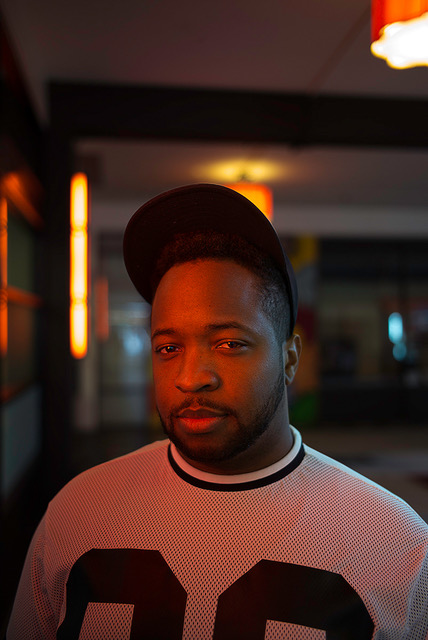
portrait of DJ Kirkland

www.djkirkland.com


Gonzalo Hernandez keeps mixing emotions

December
2
2020
By
Tags:

"I reject the idea of the artist being dependent on mystic inspiration," says Gonzalo Hernandez (M.A., painting, 2018; M.F.A., fibers, 2019). "The idea I'm pushing is that everyone is an artist and this is a job."

The Peruvian multi-disciplinarian stands in the light-dappled Alumni Gallery of the SCAD Museum of Art on a brisk autumn morning. Behind him, two drill-wielding workers in backwards baseball caps affix one of his new works to a wall. While installing Hernandez's exhibition, their actions emphasize his point.

One wall exposes the gallery's pink innards, which will be covered when the installation is complete. Except a closer look reveals…it is the work itself, titled PPP. Hernandez has created a floor-to-ceiling vinyl simulation of Owens Corning Energy-Saving Insulation with its familiar Pink Panther logo, adding subtle adornments to the repeat pattern, including his web address and an enigmatic emoji ):).

"I was researching symbols and that's how I found the title of the show," Hernandez explains. "The closed parenthesis followed by a colon and another closed parenthesis is both a sad face and a happy face. The emoji represents mixed emotions, and that's how I feel right now — having my first museum show at SCAD MOA is a big step for me, while the whole world is dying!"

The artist is building himself as he goes. What might sound like fatalism in conversation inspires intrigue in person. In and Out, a photographic diptych of a shopping list written in Spanish on the back of a fist, carries implications about sustenance and consumption in a Corona-stricken year when even the supermarket can seem unsafe.
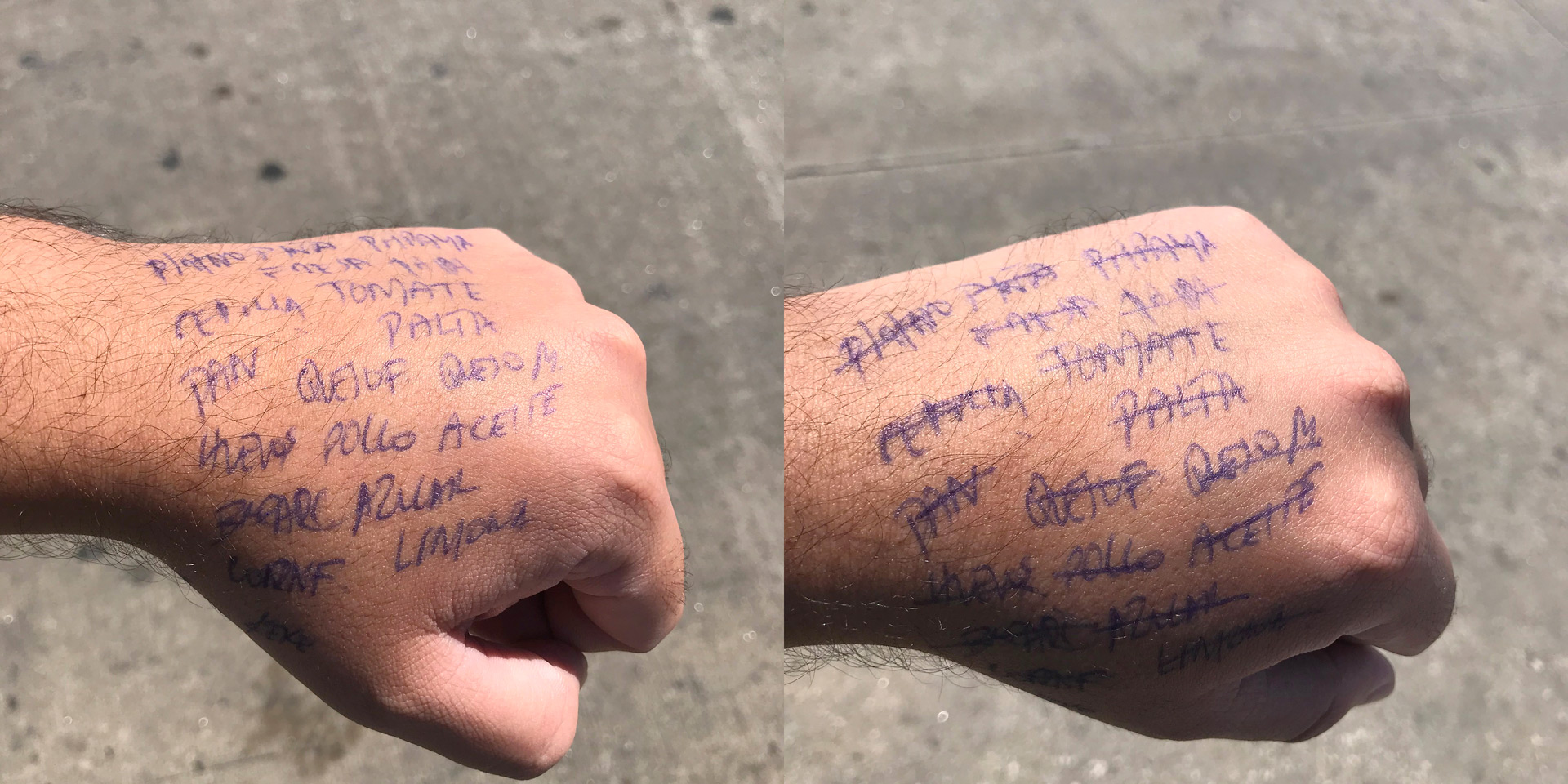
photographic prints by Gonzalo Hernandez

Gonzalo Hernandez, "In" (left) and "Out" (right), photographic prints, 40" x 40" each, 2020.


A video piece, 45", depicts Gonzalo wielding an advertising board featuring the word "SUCCESS" as he stands in different locations: an art fair, a soccer match, Damien Hirst's studio, a political rally, Machu Pichu. There is no sign twirling, the artist's stoicism questioning notions of location, reward, and who's doing the real work to make success possible.

In a moment of uncertainty and upheaval, Hernandez has embraced possibility. Shortly before the opening of his SCAD MOA show, he completed a monthlong residency with the nonprofit Erie Artists & Culture in Pennsylvania, where he collaborated with a piñata maker and a group of local musicians. In March, he and his wife Pierina Sanchez (M.U.D., urban design, 2019) launched ABRIR, an online gallery featuring an international network of artists including Leia Genis (B.F.A., painting, 2019; B.F.A., sculpture, 2019) and beloved painting professor Todd Schroeder.

"Todd is one of my big influences," Gonzalo says, nodding towards ):) (gracias Todd), a painting of the titular emoji on a sheet of Tyvek paper, a brand favored by Schroeder in his own work. "The English word ‘tribute' is not quite right," Gonzalo clarifies. "It's something closer to what we say in Spanish, homenaje."

Straddling cultures and countries, exploring art as language: Gonzalo Hernandez is on the job.
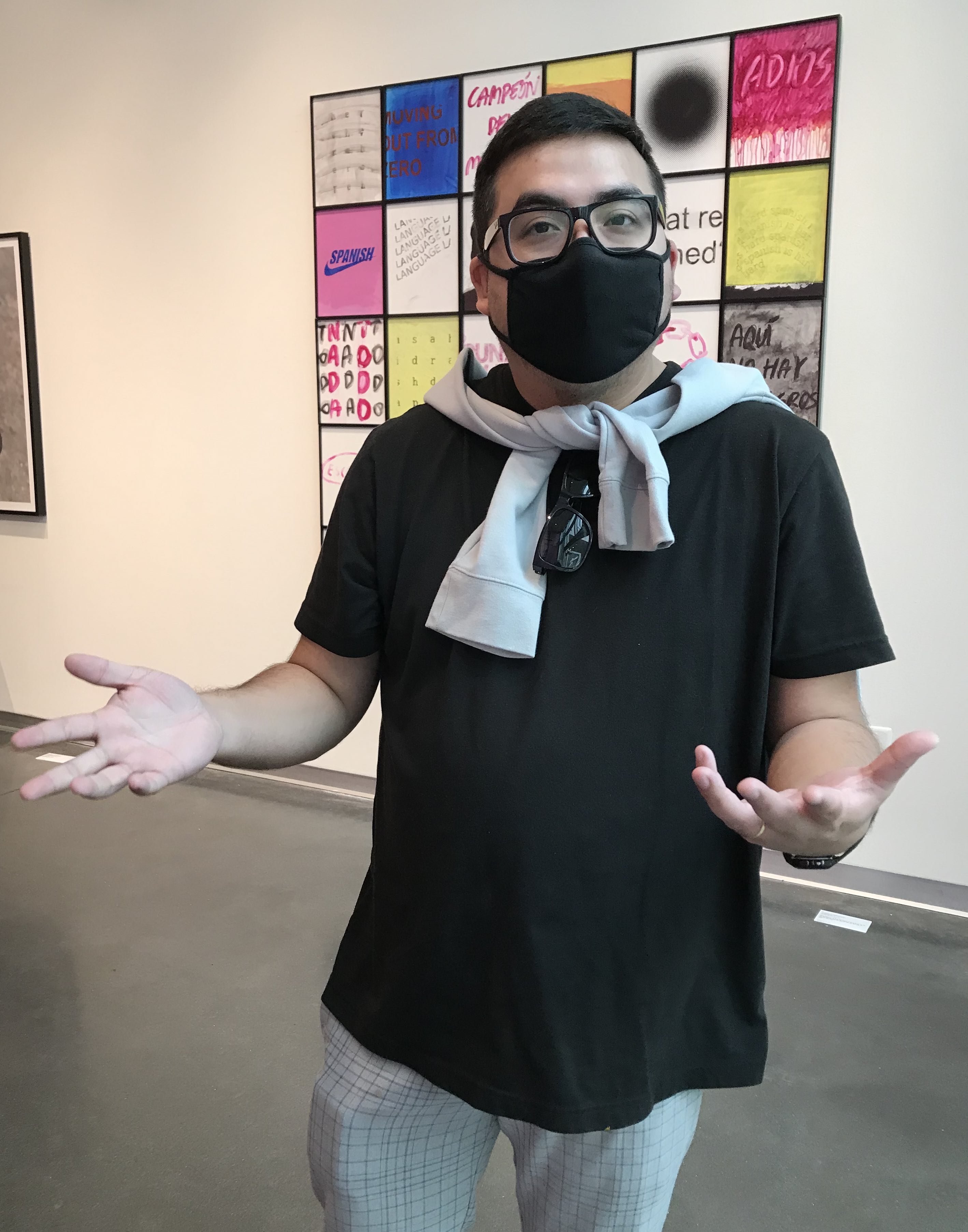
portrait of Gonzalo Hernandez

):) is on view through Sunday, January 24, 2021.

The exhibition is curated by Ben Tollefson.

 

Devon Vander Voort's museum mission

November
19
2020
By
Tags:

"I believe museums should drive social change," says Devon Vander Voort (B.F.A., art history). "All my work is aligned in some way with that mission." A museum studies minor, Vander Voort presented her project "An American Tail Immigration Brochure" at this year's Southeastern Museums Conference, as part of the Student Work in Museums (SWIM) Awards.

The project sprang from MUSM 302: Museum Curation and Collection Management, a class taught by art history professor Christine Neal. Conducted in collaboration with Special Collections librarian Sauda Mitchell, the class accessed the Don Bluth Collection of Animation at the Jen Library, as students designed education materials for hypothetical museum exhibitions.

Museums have been a thread through Vander Voort's life, from her time as a high school student with the Teen Arts Council at Everson Museum in Syracuse, NY, to her current work as a docent and exhibition planner at the Savannah African Art Museum alongside executive director and SCAD alumna Billie Stultz (B.F.A., art history, 2016). "My dream is to someday be director of the National Museum of Women in the Arts," says Devon. She's on her way.

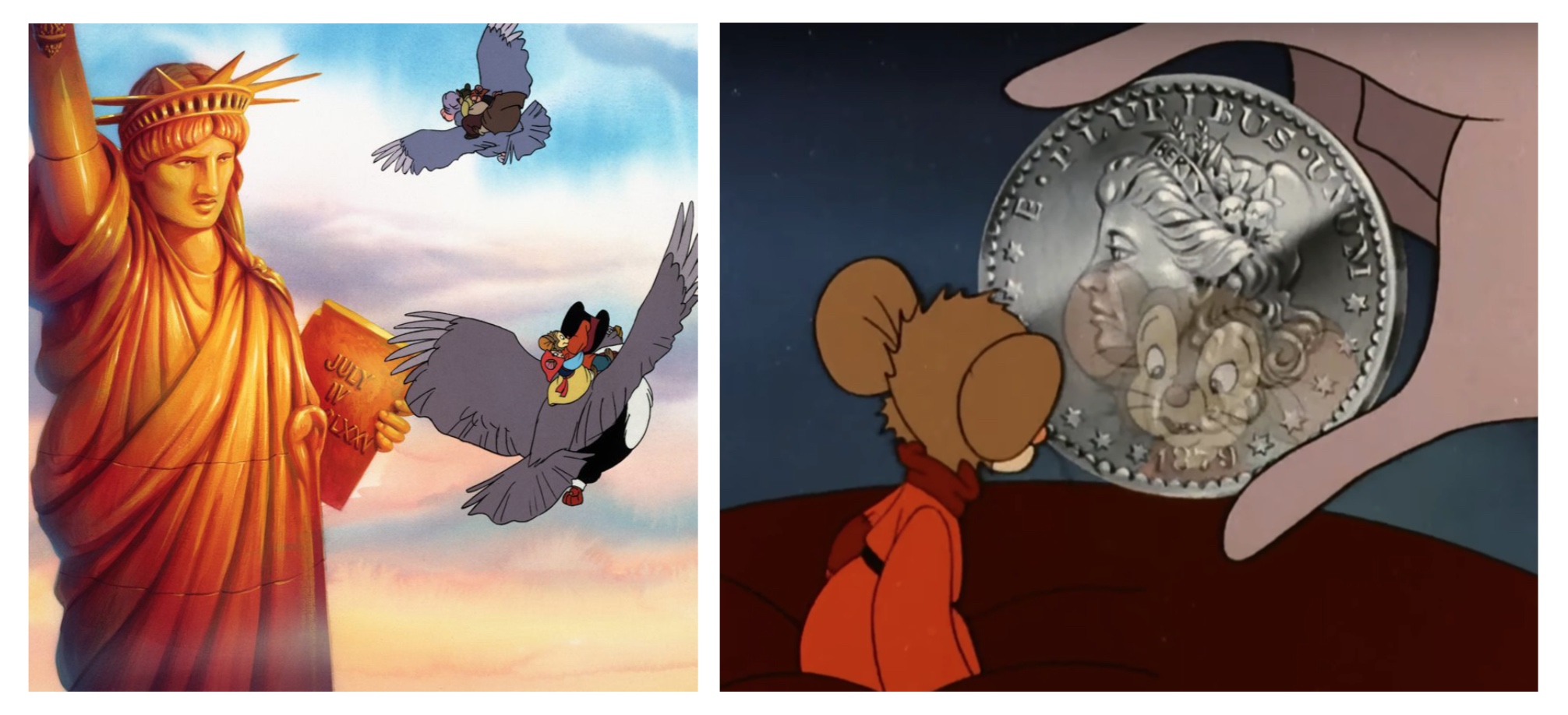
animation still from an american tail

Devon Vander Voort:

As part of my museum studies minor, I took MUSM 301: Museum Leadership in fall 2019 with Dr. Carr. Then I spent a quarter in Lacoste, where I took ARTH 240: Treasures of Provence, which I loved. When I returned to Savannah for spring quarter this year, SCAD had transitioned to virtual learning as I began MUSM 302: Curatorial Practices with Professor Neal.

One thing instilled in me during Museum Leadership is that museums have to reflect a community's needs. I was thinking about that as I began Curatorial Practices. When Professor Neal said we were going to be using the Bluth Collection, I realized how little I knew about the art of animation. Then I saw that one of the films Don Bluth made was An American Tail, which is an immigration story. Immigration affects people's lives, and I began thinking how I could align my values and my work for this class.

As Americans we have had this idea that we welcome people from other places. Then we see the border crisis on the news and it doesn't make any sense. I created the brochure to address the themes of immigration in the movie, and juxtapose them with the current border crisis. The brochure includes a card with information on what to do if you're approached by law enforcement about your immigration status.

In An American Tail we see the Statue of Liberty, and we see U.S. currency, and Fievel the mouse seeing his face reflected in the face of the coin. My proposed exhibition would include the drawings and animation cells from SCAD Special Collections, a space where the movie's playing, and a display about the history of America's first immigration center, Castle Garden. Museumgoers would have a chance to learn about their own ancestors, and see how we're all connected.

I was born in India and adopted by my mom. I grew up in a small suburb outside Syracuse, but we lived abroad for a few years, and we traveled a lot. My mother gave me those experiences, which influenced my world view and my project. I've been afforded an awesome life and have to do something with it to help other people. I plan to achieve that through working at museums, and making them places of inclusion, accessible to the communities they serve.

Learn more about the Don Bluth Collection of Animation.

www.devonvandervoort.com

Eleanor Turner: changing underwear

November
16
2020
By
Tags:

"I was holding a six pack of novelty Valentine's Day underwear at Walgreens and I thought, ‘I need to fix this'," says Eleanor Turner (B.F.A., fashion, 2008). "While packing last minute for a business trip, I realized I had no clean underwear. I went to the only store that was open and left with these hideous heart-covered underpants."

Turner saw the need for change. Now, assisted by the SCADpro Fund, the entrepreneur and designer's new venture The Big Favorite is redefining the business of underwear.

"People care about the companies they support, and how those companies operate on a global scale," Turner say. "Consumers want quality, comfort, and style, and they also want to know that the places they shop are mindful of their impact on the planet. That is why I started a company that is going to recycle underwear."

As part of SCAD's Guests and Gusto lecture series, Eleanor shared her vision with future designers.

model wearing the big favorite underwear

Eleanor Turner:

The first piece of advice I give any entrepreneur is, "If you are going to fail, fail on somebody else's dime." When the company is yours, every decision matters. Where to locate, who to work with, how many hangers do you need? Every decision costs money, and when you first start out, money is tight.

Before I co-founded my first company, Argent, I worked at some of the biggest fashion houses in New York. Each stop taught me something new and prepared me for my own launch. My time at Tommy Hilfiger taught me the importance of the runway show to our marketing strategy. While at Tory Burch I learned how to work with wholesalers, and when I designed for J. Crew, I learned how to fail at a big scale.

Getting to make mistakes early in my career allowed me the ability to learn how to recover, re-prioritize, and not repeat them when my name was on the door.

I did not know that I was an entrepreneur at heart when I first got to SCAD. That changed one day when I found an old button in the garage when I was home my junior year.

It read "The Big Favorite." I asked my dad what it was and he told me my great-grandfather started a clothing business in the 1930s. From there I was hooked. I thought about his company and how I could follow in those footsteps. Today, I stand here, launching my second company, wiser and more prepared, believing the world is going to embrace recycled undergarments.

Over $500 million of garments is discarded every year, and more than 11 million pounds of undergarments are sent to landfills daily. I felt it was time for a change and we are making that change at The Big Favorite. We are going to use 100% pima cotton to make our undershirts and underwear to eliminate plastic particles. When our users are finished wearing these items, we will collect and aggregate the clothes, turning them back into new yarn, creating new garments.

Our goal is simple: reduce waste, have an eco-friendly supply chain, and do it from the bottom up.

portrait of eleanor turner

Join The Big Favorite revolution.


Superstar sisters' Guests + Gusto

November
10
2020
By
Tags:

"We have been partners since the day I was born," Inga Berge tells a rapt audience of SCAD students, professors, and staff. "I am pretty sure Leslye pulled me into her room the moment our mom brought me home form the hospital. We've been a creative team ever since."

Founder of Raging Bees, Inga is an artist, creative director, graphic designer, and one half of the Brege/Headland creative duo that brought the hit Netflix show Russian Doll to life. Her sister Leslye Headland is a writer, producer, and director best known for feature films Sleeping with Other People and Bachelorette. Leslye is currently developing and writing the next installment of the Star Wars franchise for Disney+ with Inga at her side.

"I couldn't do it without Inga," Leslye says. "Inga's ability to shape worlds and create tones, feelings, and narratives through art is a huge help to me as a writer."

As part of the ongoing lecture series Guests and Gusto, the sisters spoke on creativity, writing, and how the look and feel of a show is part of their process. Here are several key takeaways:

Embrace your process. Leslye: "When I went to Lucasfilm with my idea for our Disney+ series I was clear about my needs as a creator: I need Inga with me from the very beginning. Most often, a look book is brought in at the end of the initial development process, but her ideas drive my story process forward. Often times I get on a call and pour out my thoughts like a waterfall. Then Inga takes what I said and builds the environment that the story will live in. From there, I am refine the characters and further enhance the overall arc. Our partnership allows me to be better at my job."

Know it all. Inga: "You have to study beyond your specific field. When you are developing a look book for a film, play, or television series, you have to understand how all the pieces fit together. Who are these characters? What are their motivations and how does the director want the audience to feel for them? The more knowledge you have at the outset, the better. Leslye and I have a shorthand when it comes to concept creation, but when I am working with a new team I ask thousands of questions. I can't do my job unless I understand what the entire picture needs to look like."

Continually clarify. Inga: "If someone says, ‘I want it to be more fluffy,' ask what ‘fluffy' means to them. I am continually working with clients who describe their needs in abstract or overly simplistic terms. For example, ‘We want it to be gothic.' Gothic literature is an enormous genre! Are they asking you for gothic horror or gothic romance? Are they looking for a tone of the beyond, or do they simply love the clothing choices? Are we talking Dracula or A Christmas Carol? The more specific the answers, the better your deliverable will be."

Chop wood, carry water. Leslye: "As writers we are constantly pushing ourselves to reach the next destination and forget the journey we are on. We want our shows to get picked up, our movies to be made, our plays to be seen on Broadway, but we can lose sight of what we enjoy about storytelling and character development. We write because we love to write. Don't forget that. Be present in your work, and take pride in the steps you are taking along the way."

Guestst and Gusto slide

Learn more about Guests and Gusto and future virtual events.


Teresa Burk: Reading Creatively

November
9
2020
By
Tags:

"Books about books are my favorite," says Teresa Burk (M.A., historic preservation, 2016). As head librarian, SCAD Atlanta, Burk is in her element. The library, located in the university's main academic building at 1600 Peachtree, offers students an abundant and growing catalog of books, periodicals and visual resources. It's also home to Atlanta Print Collection and Artists' Book Collection, two teaching collections that Burk uses to facilitate student learning experiences complementary to classroom curricula. "Part of the instruction I do is referring students to books about artists' books," she explains.

Here are a few Burk picks, all of them in SCAD Libraries:

Andrew Roth, Philip E. Aarons, and Claire Lehmann, eds., Artists Who Make Books (Phaidon, 2017): "The SCAD Atlanta library has an incredible collection of artists' books. Numbering 2,300 volumes, it is one of the largest in the southeast. We have deep holdings in work from the 1960s and 1970s and from Atlanta's artist-run Nexus Press. We continue to build on the collection, and a point of pride is the student work we collect during the annual student artists' book competition. This book is a great place to start exploring the history of artists' books—you'll find many of the artists mentioned here in our library collection."

Jeff Brouws, Wendy Burton, and Hermann Zschiegner, eds., Various Small Books (MIT Press, 2013): "This book is a tribute to the artist Ed Ruscha. Ruscha is sometimes called the godfather of artists' books because of the small, photo-based books he made in the 1960s and '70s. Those books are highly collectable and we are fortunate to have some of them in the SCAD Libraries. This book shows the impact they had on other artists. It's also about looking and noticing what is interesting in the often-mundane world around you."

Martin Parr and Gerry Badger, The Photobook: A History (Phaidon, vol.1 2004, vol.2 2006, vol.3 2014): "This three-volume set about the history of the photobook brings together an incredible range of material. Parr and Badger discuss the photobook as propaganda, the stream-of-consciousness photobook, the artists' photobook, the company photobook, the protest photobook, and the identity photobook. This set is indispensable inspiration for photography students and all students involved in telling stories with pictures."

Sina Najafi (foreword), Curiosity and Method: Ten Years of Cabinet Magazine (Cabinet Books, 2012): "This is a book about a magazine in the form of an encyclopedia. In other words, not your average reference book. What I love is the range of topics covered–from animal architecture to synesthesia–things I find myself wanting to know more about. Because Cabinet magazine aims to 'encourage a new sense of curiosity,' this book is perfect for artists, designers and creatives. We also have the magazine available in the Atlanta Library."

Fleur Cowels, ed., The Best of Flair (Rizzoli, 2014): "Recently I was working with a graphic design class researching unusual publication design. We looked at some artists' books and contemporary, collectible magazines and when we got to Flair...yes! Goldmine. Flair was a short-lived (1950-51), innovative, lavishly produced magazine famous for its die-cut covers and superb coverage of the arts. You know a magazine that only lasted a year is special if a deluxe book about it has a third edition. We have some original issues of Flair in the special collections and several copies of this book in the SCAD Libraries."

Jane Jacobs, The Death and Life of Great American Cities (Random House, 2011): "This is the 50th anniversary edition of an influential and poetic book about the city, originally published in 1961. Jane Jacobs approaches cities from a humanistic perspective and writes about the ballet of street-life. I was introduced to Jacob's writing and activism during my graduate work in preservation studies here at SCAD. Her perspective helped me look at my surroundings with fresh eyes, not unlike Ed Ruscha's photobooks. I love books that prompt you to take another look, and consider another angle."

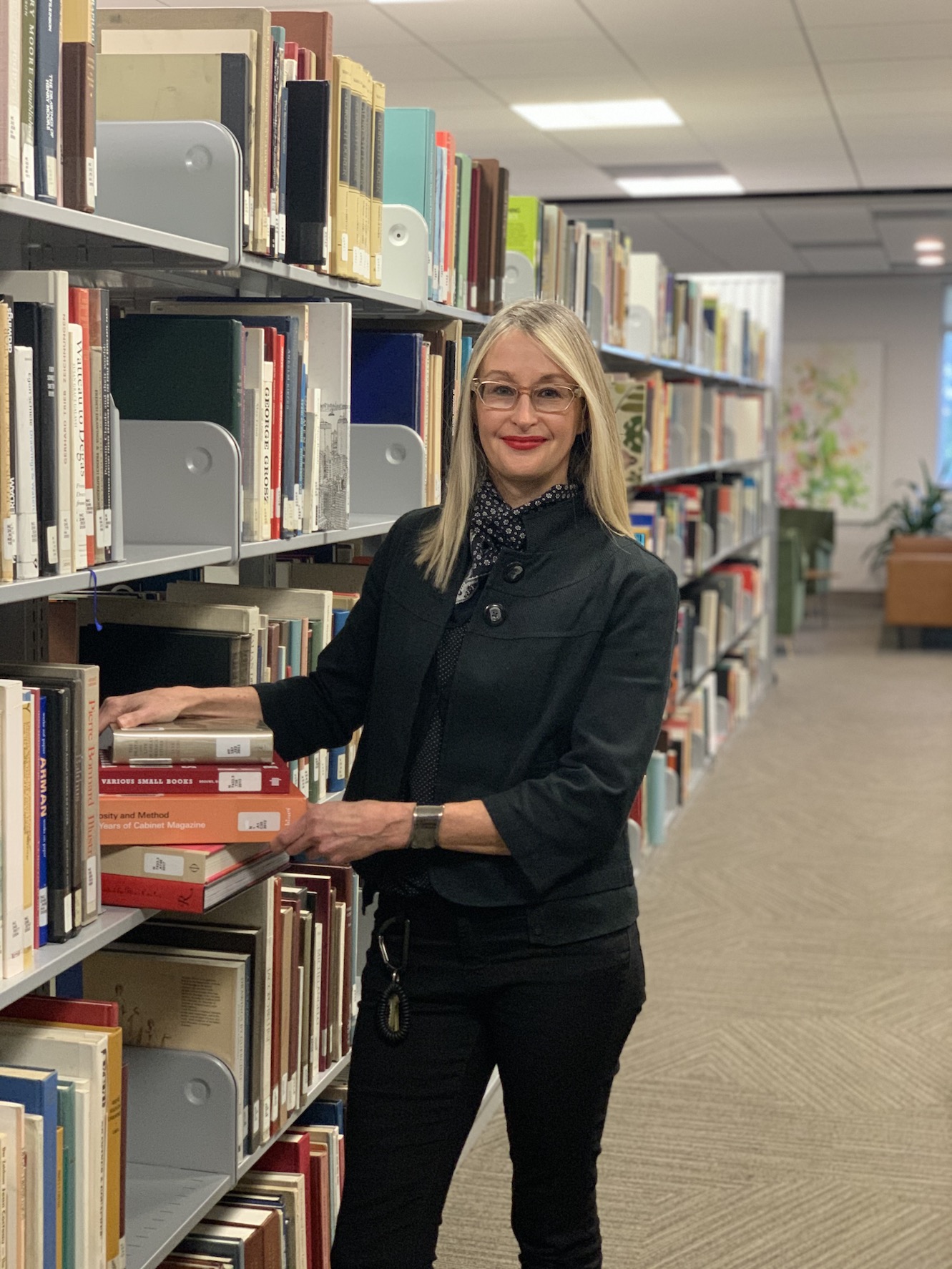
Portrait

Teresa invites you to browse the Artist’s Book Collection.


#SAVFF: marquee mood

November
5
2020
By
Tags:

SCAD Savannah Film Festival 2020 went virtual, screening 148 films total, including ten major studio pictures ahead of their general release. Film Fest has long prided itself as a place where student-made short films and future Oscar-winners share screens, and top stars interact directly with SCAD students. This year's virtual format changed the game, creating new, focused connections.

In interviews, workshops, and virtual masterclasses, students and festivalgoers heard directly talent from across the filmmaking spectrum, from writers to producers to top-marquee screen stars, including 2020 honorees Samuel L. Jackson, Millie Bobby Brown, Ethan Hawke, Jennifer Hudson, Steven Yeun, Delroy Lindo, Rachel Brosnahan, Billy Crystal, Glen Keane, Yahya Abdul-Mateen II, and Tessa Thompson.

Ethan Hawke brought all the love, offering words of encouragement and strength to students at a #SAVFF masterclass: "Take good care of yourself. Treat yourself with respect. That's all that matters. Find ways of nurturing and caring for yourself like you would someone you love. Once you do that, you'll be able to nurture other people, because you'll be in a position of strength." Hawke was honored with the Outstanding Achievement in Entertainment Award for his prolific career, including his new Showtime project, The Good Lord Bird.

Tessa Thompson received the Vanguard Award and spoke on her roles in Creed and Thor: Ragnarak. Asked about her process, Thompson said: "When I'm approaching a part, something I always loved to feel is scared of something. When I played Bianca, the idea of having to write and perform original music was terrifying to me. Playing Valkyrie, the idea of having to do something so physical to pull off the bravado of a superhero, that terrified me. I love this feeling right after I get the job, or have the conversation with the director, a moment of panic wondering if I can do it."

Virtuoso Award winner Jennifer Hudson, hotly anticipated as Aretha Franklin in Respect, spoke about a career is built in incremental steps, from American Idol to Dreamgirls to the honor of playing the First Lady of Soul: "Aretha asked me, how are you going to portray me? And I said, Ma'am, how would you like to be portrayed?  Aretha spoke to me a lot about life. Her life. I'm so grateful to be able to be chosen to portray her, and to have a communication with her for her to teach me. She deserves see her legacy carried on and represented in the way she represented herself. I miss her presence to this day."

Hudson told students about working on the film's live singing scenes with director Leisl Tommy, who comes from an award-winning Broadway background. Hudson: "It's something we both were adamant about. I like living in the moment and a huge part of that comes from our church, and then there's her background as a theater director, which you have to perform live. When you can use the instrument of your voice while filming, it gives you more power and control over the moment."

Millie Bobby Brown received the Maverick Award. Brown produced and is starring as the younger sister of Sherlock Holmes in the Netflix film Enola Holmes. Brown is a something of an adoptee of the Georgia film industry, after her breakout role in Stranger Things was filmed in the state. "It's definitely fulfilling to see young girls and sometimes even women look at me and see inspiration. Usually in those moments I take the time to think about the women before me who helped me get to where I am. When people find me inspiring, I actually find them really inspiring. They usually tell me stories that are just amazing and make me want to do what I do even more. Inspired women inspire women. That's a quote I live by."

Stars, they're just like us? At #SAVFF, yes.


Tessa Thompson photo courtesy Awol Erizku.

Women of Blumhouse

November
5
2020
By
Tags:

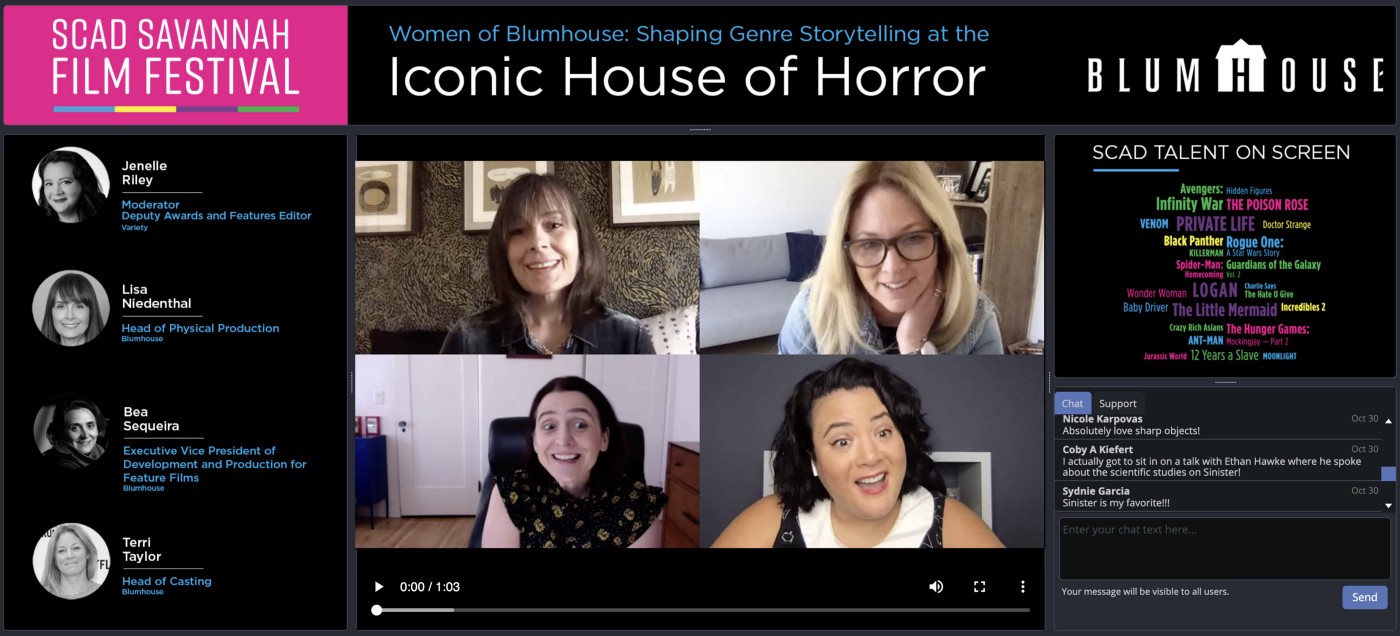
"Horror gets a bad rap," said Bea Sequiera, executive vice president, Blumhouse Productions, during a virtual Wonder Women panel at this year's SCAD Savannah Film Festival. "Yet the genre has always been a vessel for talented storytellers to share new stories and points of views."

Sequiera was speaking during the panel Women of Blumhouse: Shaping Genre Storytelling at the Iconic House of Horror, celebrating the studio behind blockbusters including The Invisible Man and Get Out, award-winning shows Sharp Objects and The Purge, and new releases Freaky, and The Good Lord Bird.

Film Fest has continually showcased and elevated the voices of women in the film industry, exemplified by the return this year of the popular Wonder Women panel series. The Blumhouse panel, moderated by Variety features editor Jenelle Riley, welcomed three industry leaders from the studio: Lisa Niedenthal, head of physical production; Bea Sequeira, executive vice president of development and production for feature films; and Terri Taylor, head of casting. The panelists brought thrills and chills and insights to the virtual audience. 

Lisa Niedenthal: "The best advice I can give to anyone looking to make films is to dive right in. Working alongside a great director is a crash course in how to be a great producer, actor, editor, etc. Talented directors know every step of the process. They anticipate needs, and are always one step ahead of the production. Seeing the process through their eyes will help you as a creator in your own right, and allow you to pick and choose the techniques that speak to you as a leader. You do not have to start from square one. Learn from the people who have already paved the best paths."

Bea Sequeira: "From traditional slasher movies, to psychological thrillers, to the supernatural, horror films get to be something completely different. Our genre is oftentimes a 'trojan horse' in terms of social conversations. Our studio allows film makers the ability to share a specific viewpoint and message with the audience many mainstream films are unable to. That maneuverability brings writers, directors, and film professionals back to the genre and allows those of us who love thrillers, a robust and ever deepening collection of meaningful films."

Terri Taylor: "Our genre is always looking for new and emerging talent. As a casting director, I am constantly searching for actors who can portray the emotional and phycological turmoil that make our movies work. Yes, you are wrestling a demon in a vent, but is it believable? Are you drawing the viewers in? Can the audience sense your terror? Thrillers only work if the actors bring the audience into the scene with them. We all love giving young professionals the opportunity to showcase their craft and stretch their skills on set."

Webinar screenshot

Thanks to everyone who made the 2020 SCAD Savannah Film Festival an event to remember.


Pitchford preaches prioritization

October
29
2020
By
Tags:

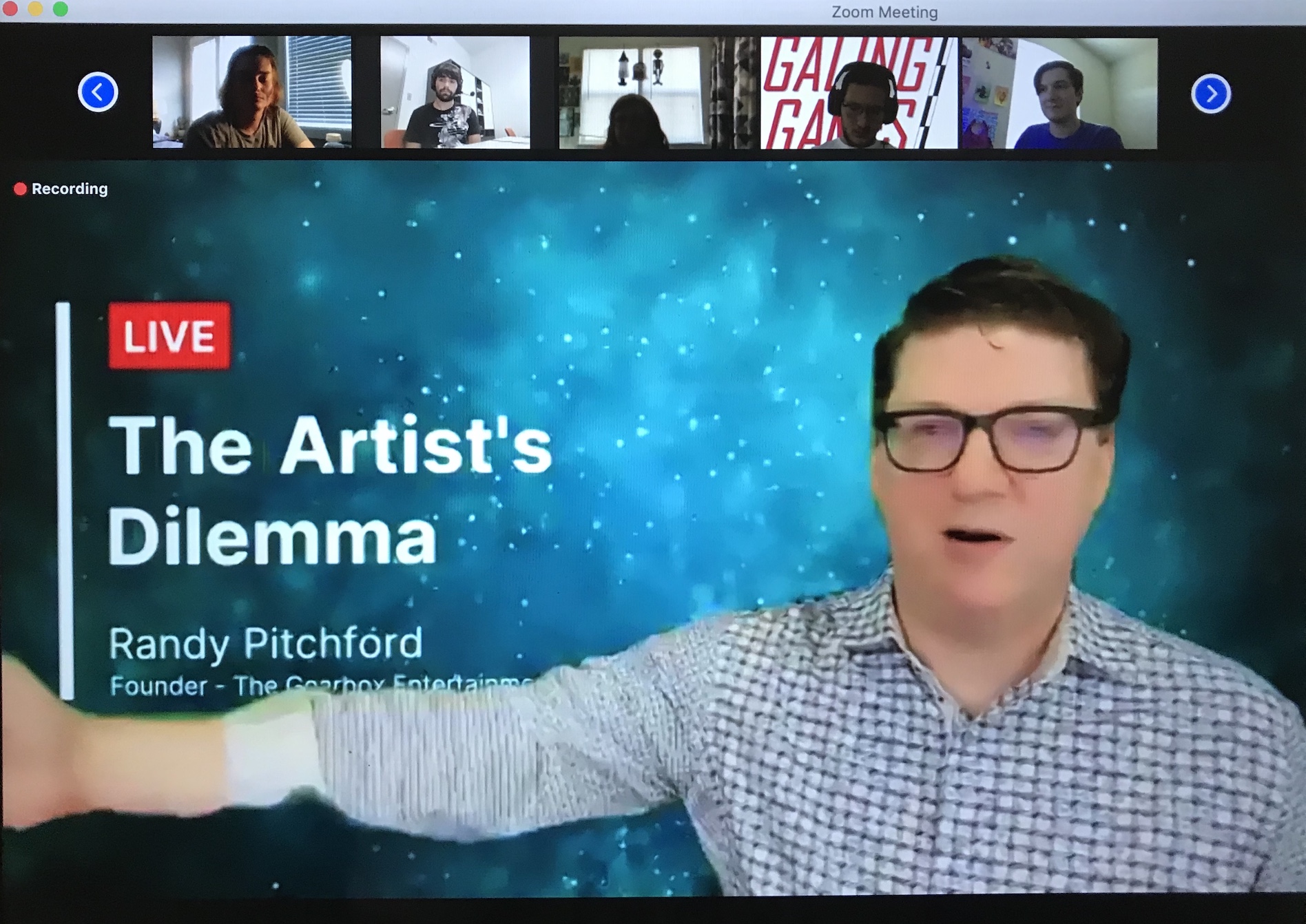
"I firmly believe that the best game developers in ten years are people who are not yet in the industry today," said Randy Pitchford, "and that's going to be you."

As founder of Gearbox Software, Pitchford is an industry icon. His company has created some of the most successful video game franchises of all time, including Borderlands and Brothers in Arms. He spearheaded the initiative Borderlands Science, a mini-game within Borderlands 3 that enables players to contribute to medical research by helping map the human gut microbiome. With his youthful cowlick and unbridled enthusiasm, Pitchford has cred to boot, having grown up with the earliest gaming systems to become an architect of a billion-dollar global industry.

Pitchford's guest lecture, "The Artist's Dilemma," delivered via Zoom to undergraduate and graduate students in the SCAD School of Digital Media, addressed those who play Pitchford's popular games and will work in his industry. During his talk, the Zoom chat boomed with animation, motion media design, visual effects, and interactive design and game development students asking questions in real time, testament to this connection.

"While we are artists, we're commercial artists," Pitchford said. "Our livelihoods, and the livelihoods of the people we work with, depend on making commercial art. The fact that we can make commercial art means that we as a species have figured out a way to commoditize entertainment, so that some of us can dedicate our lives to creating experiences and joy for other people."

Pitchford's talk was structured with compelling narrative reveals and mind-fizzing koans, suiting someone who attacks his craft and his business from both wildly philosophical and rigorously practical perspectives. Ultimately, he spoke directly to the task at hand: doing the work.

Here are five key points from his talk:

1. "When I got started programming computers and designing games back in the early days, there were no schools to go to and learn the craft, we were teaching ourselves as we went. Now you have the opportunity to go to a university where experts can teach you how to get to a point where you can pave the way for what's next. I'm so grateful you guys exist."

2. "I make video games because I love video games. I'm a lot like you: When we feel that engagement interacting with our entertainment, we want to see if we can do that too, and create something that gives those feelings to other people. That instinct is rooted in empathy. I call it having the heart of an entertainer."

3. "You need to eat. If we're going to commit to this, we have to make money. As an artist there's a balance that we have to think about. There's a spectrum with expression on one side and commercialism on the other. There is a place in the middle where we can value expression but accept the reality of earning a living. Hunting for that sweet spot is the artist's dilemma."

4. "I've been in the industry for 30 years, and worked on a lot of projects and made a lot of things. There's the same problem every time: not enough. Not enough time, not enough money, not enough people, not enough memory. Of all the skills you develop, the most important may be figuring out what's important and attending to what's higher in the importance ranking. That's prioritization."

5. "It can be daunting thinking about entering the job market. If you're really good at something that we're already in need of, we're going to want to employ you. Then show us something we've never seen before. If you can do both, you're going to be wanted and loved, you're a unicorn. In aggregate, show a high degree of specialized skill. Another way to be successful is to be awesome and great, so that people love working with you."

Pitchford's guest lecture, "The Artist's Dilemma," delivered via Zoom

Thanks to SuAnne Fu, chair of interactive design and game development, and Nye Warburton, associate chair of interactive design and game development.

Find Randy Pitchford on Twitter @DuvalMagic.