Skip to main content Accessibility Policy

Jaylyn Lassiter: Open Studio spotlight

June
25
2020
By
Tags:

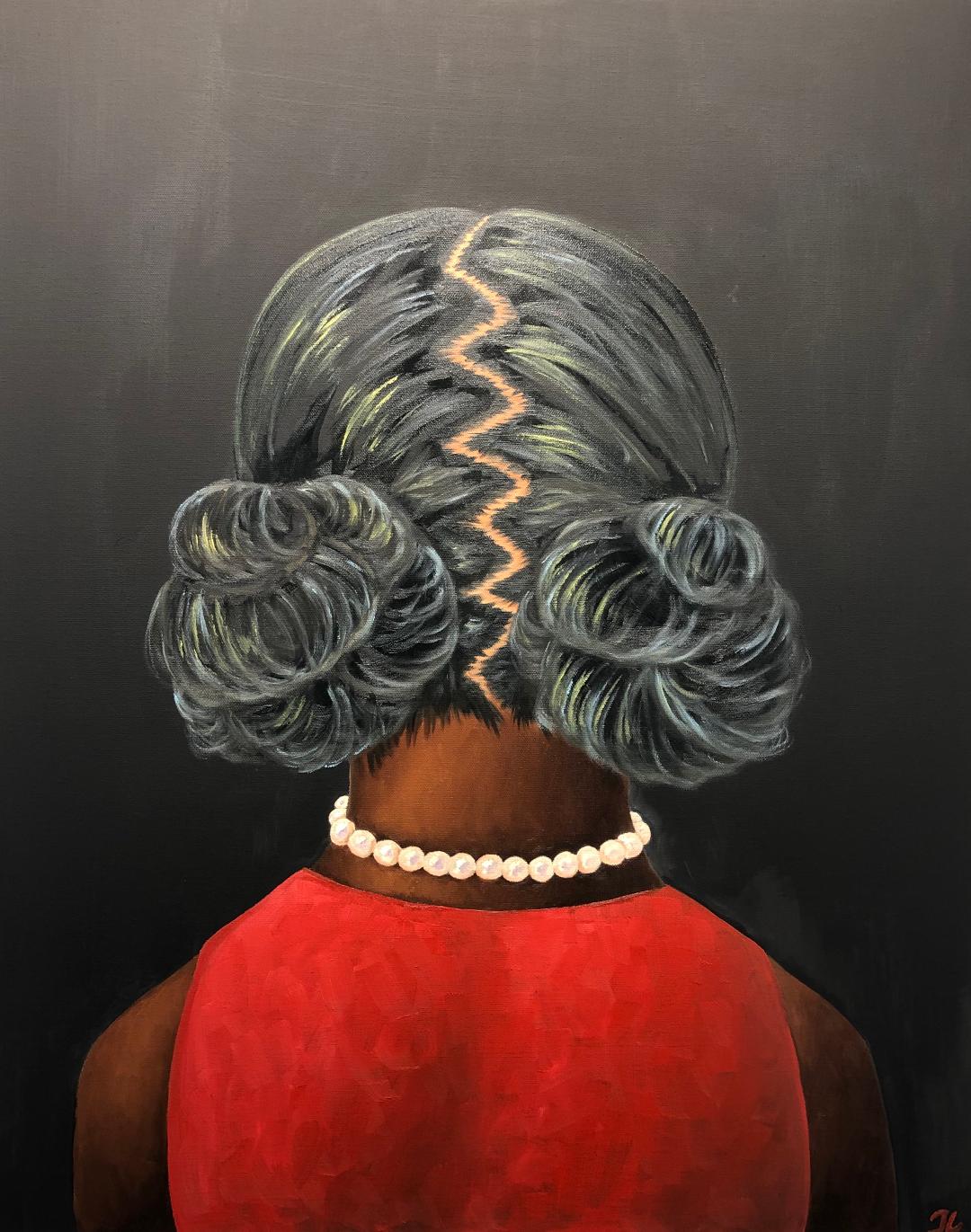
Jaylyn Lassiter, (M.F.A., painting), embraces natural beauty by showcasing the elegance, joy, and power of Black hair. A masters candidate in Atlanta, Jaylyn’s upcoming Open Studio showcase draws the viewer in to her world, her community, and her life through pieces including "Little Lady," "Locs," and "Bundles." Her collection is a year in the making and her work will continue as she portrays the Black experience in our world today. SCAD Open Studio takes place Friday, June 26-Sunday, June 28.

artwork by Jaylyn Lassiter

Jaylyn Lassiter (M.F.A., painting), “Little Lady,“ oil on canvas, 2020, 30" x 24".


Jaylyn Lassiter:

Growing up in in Chesapeake, Virginia, some people made comments about my hair. Negative comments. Un-educated comments. Comments that made me understand I was different. So, it was easy when I had to decide what to focus on for my senior project in undergrad— the beauty of Black hair. Black hair is more than a style or a cut. For some, it is an expression of who we are and a how we want to be seen in our community. For some, it is a reminder of our heritage and a way to show respect for those that came before us. For others, it is a fun, whimsical style element that can change on the season.

As I began painting my collection, I felt the power of the portraits come to life. At first, I was painting them on a smaller canvas, but I didn’t have enough room to capture the details. I had to crop and make sacrifices that I wasn’t willing to make. Now they are large scale paintings. The canvasses I choose allow me to fully realize the subject and allow the viewer to have a more powerful experience.

Some might not see these as typical portraits. My paintings crop out the wearer, their face and their identity, but these are portraits of hair. The hair is the subject. The hair is the story I am choosing to tell, and that story, much like each face, is unique. No two are exactly alike, and that’s a powerful message the world needs to see.

My first painting was of cornrows and that got me going. When I sold my second painting in this collection—"Locs"—I had this incredible feeling that I was really connecting with my audience. My favorite painting is "Little Lady" of a woman wearing a bright red dress and a string of pearls. Her dark arms and neck are glowing in front of a neutral background. Her hair shows signs of grey, and she has two tightly knotted buns at the base of her neck. It is simple, but I love the details.

These portraits are meant for everyone to enjoy. I am excited to share my work with the SCAD community through Open Studio.

I have felt at home at SCAD and have loved my experience in Atlanta. My passion for painting and my fellow classmates is on another level from where I was just a year ago. Professor Kent Knowles has helped me refine my work and has challenged me to push beyond my comfort zone. His critiques and guidance have really helped elevate my collection.

Going forward I will continue to tell the stories of the Black community. Beyond hair, I want to capture the figures, the people and the individuals who make our community special. The Black community in America is fighting to be recognized. We are fighting to be heard, and honestly fighting for our lives. As part of the Black Lives Matter movement, I painted “No Justice, No Peace." We all need to speak up and make sure our voices are heard. This is how I can do that best.

portrait of Jaylyn Lassiter

See more of Jaylyn Lassiter’s work on her Open Studio page.

Top image: “No Justice, No Peace,“ oil on canvas, 2020.


Mora Medina talks "Walky"

June
18
2020
By
Tags:

A NYCxDESIGN award winner, architect, and furniture designer, Armando Mora Medina (M.F.A., furniture design) came to SCAD focused on turning ideas into reality. Movement, constant re-examination, and ongoing growth empower him to reach his ultimate goal — overseeing his own studio and design firm. For Armando, standing still is not an option. Design. Redesign. Innovate. Build upon that innovation. Don't hesitate to take risks, especially when you don't know what the limitations are. Always follow your own path — even when the furniture you build is seemingly on a journey of its own.

Mora Medina with Walky chair

Armando Mora Medina:

"Walky" was a project I created in the class Furniture Studio: Process and Prototype (FURN 748). Professor Frederic Spector asked us to redesign the traditional café experience and I couldn't stop thinking about the kinetic energy of the space itself. Cafés are busy. They are full of people on the go. They are vibrant in nature. So why was the furniture static?

I just loved the play on movement with "Walky." People are hustling to get coffee and then off to their next meeting. Furniture should mirror that reality. I wanted the chair to be playful but striking, and worked to find the right balance.

The most difficult part of the project was building the chair. "Walky" was a sketch that immediately jumped off the page as the perfect idea, but when I showed it to my classmates and professor Spector, there was some concern. Could the "feet" take the weight? Could the wood be graceful, and strong enough to support the user? How could anyone assemble a chair without right edges or flat surfaces?

Not knowing how hard it was going to be was, in the end, a blessing. I designed the chair initially in CAD, but I'd never shaped wood like this before. Thankfully, professor Spector was there every step of the way. We honed the design to a place we believed was going to work, but there was definitely a moment in the shop where we had to hope the wood would cooperate.

The process of assembling the chair came into focus through hours in the studio. When I had finally finished and my friends and classmates sat on it and started rocking back and forth, Professor Spector suggested I submit it to the annual NYCxDESIGN Awards.

I really loved the design, but I was still shocked when I received the email announcing I was one of the six winners. Hopefully I will get calls for more chairs since I know how to assemble them now.

I met my wife Viviane (M.F.A., industrial design) when we were in enrolled in our undergraduate studies at Tecnológico de Monterrey in Guadalajara, Mexico. We were both studying architecture, but knew we wanted to have our own design business. Knowing we needed more knowledge, hands-on experience, and support, we began thinking about a masters program. We found SCAD, and moved to Savannah. I can't describe how much we have enjoyed our SCAD experience.

This year we will be working on our joint thesis. It will focus on how furniture, design, and art can serve multi-purpose functions in a home. Can a table be more that a table? Can chairs create a sense of tranquility or energy in a space? A lot of these ideas have been sparked by the COVID shelter-at-home order. We believe that our new normal has brought us to an understanding of what a home can and should be in the world tomorrow.

Mora Medina

Learn more about SCAD furniture design and industrial design.


Roy Christopher: Reading Creatively

June
13
2020
By
Tags:

"We don't need to just make room, we need to change the defaults," writes Dr. Roy Christopher in his book Dead Precedents: How Hip-Hop Defines the Future (Repeater Books, 2019). As a scholar and theorist, Christopher engages critical thinking with pop culture to show that innovation is a key to liberation. As a SCAD communications professor, he is beloved for his kinetic lectures and candor. Catch Roy cruising around Savannah on his bike, and he's happy to stop and talk about his favorite new records and the power of the written word. Here are a few books the avowed bibliophile deems crucial to his development as a writer and educator.

Marshall McLuhan, Understanding Media: The Extensions of Man (Houghton-Mifflin, 1964): "There's no way around the importance of Marshall McLuhan and this book to my research interests and my ideas about teaching. Originally conceived as a media-literacy primer for high-school students, this book was reconfigured and became the bible of media theory."

Hakim Bey, T.A.Z.: The Temporary Autonomous Zone (Autonomedia, 1985): "This book (the full title is T.A.Z: The Temporary Autonomous Zone, Ontological Anarchy, Poetic Terrorism) is ultimately what I strive to create in a classroom, especially one teaching communication: a space where the rules are determined by the discourse of those present, improvisational structuration applied to pedagogy."

Tricia Rose, Black Noise: Rap Music and Black Culture in Contemporary America (Wesleyan University Press, 1994): "The first full-on academic exploration of hip-hop culture, Dr. Rose's Black Noise showed that anything that compels learning is fresh fodder for teaching. I go back to this one often."

Tina Fey, Bossypants (Little, Brown, 2011) and David Lee Roth, Crazy from the Heat (Hyperion, 1997): "These two books, ostensibly autobiographies, are actually handbooks for managing people and projects, two of the main skills needed for running a class and a classroom. I use anecdotes from both of these books in lectures and when constructing syllabi."

James Gleick, Chaos: Making a New Science (Scribner, 1987): "If not for this book, I wouldn't have become a reader instead of a viewer, a scholar instead of a spectator, a teacher instead of a journalist. I reread it regularly. The effect this book had on me is well-documented in this interview from 2015."

Neil Postman and Charles Weingartner, Teaching as a Subversive Activity (Delacorte Press, 1969): "Teaching might not seem like the coolest thing to some people, but if everyone read this book, we'd be considered rock stars. Postman and Weingartner make teaching sound downright dangerous. And it is, you know."

Read Roy's interview with Tricia Rose in the forthcoming Follow for Now, Vol. 2 (Punctum Books).

Roy Christopher with a bicycle

www.roychristopher.com


Salutatorian Debbie Onyibe

June
12
2020
By
Tags:

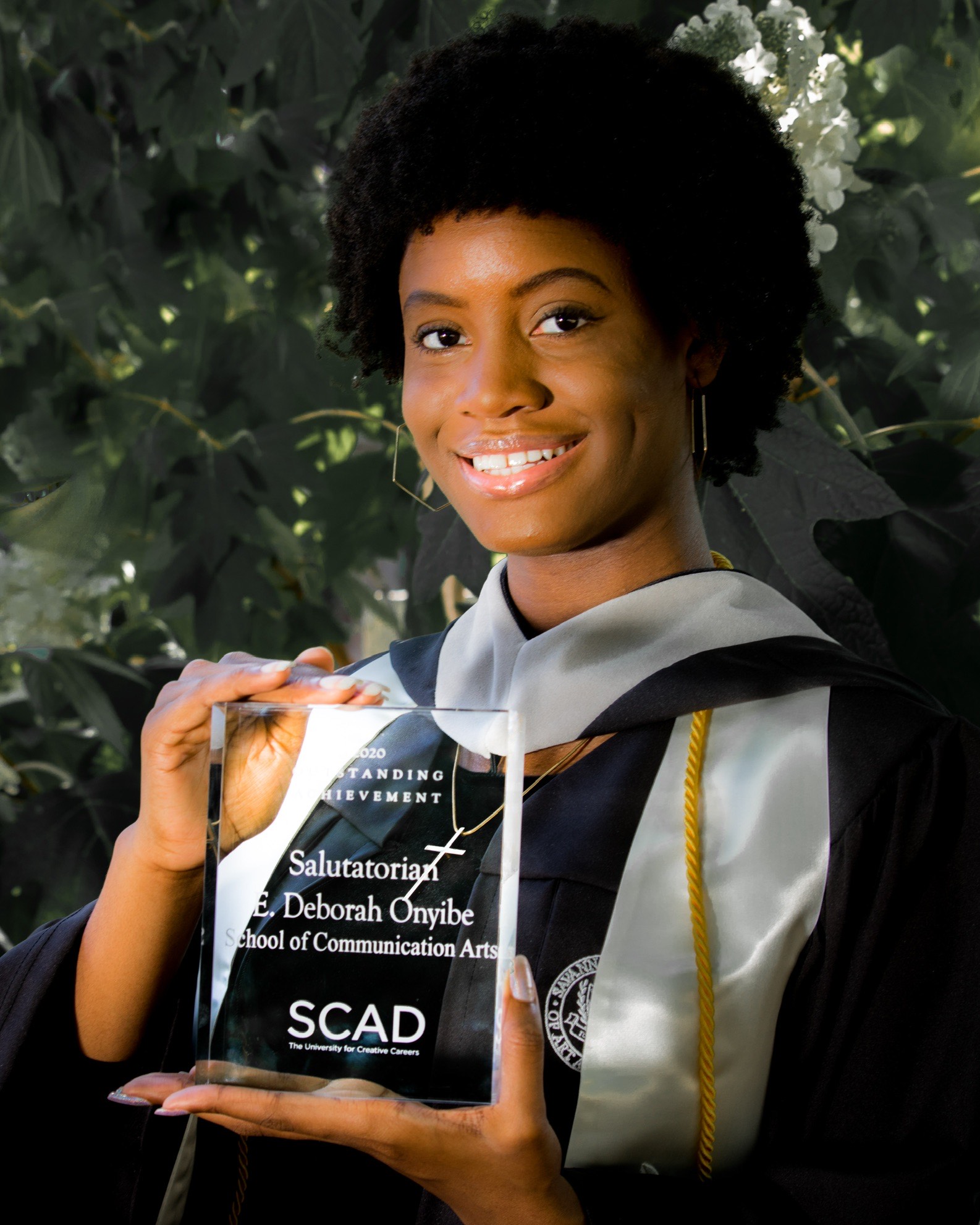
Debbie Onyibe (B.F.A., advertising, 2020), SCAD Atlanta 2020 Salutatorian, is Chief Executive Officer of Spirête Inc., an Atlanta-based branding and advertising agency committed to creating “a global ripple effect with groundbreaking, creative ideas.” As a SCAD advertising student, Onyibe created prospective campaigns for brands including Oatly, Goat Story Coffee, The New York Times, and Cadillac. Her work utilizes an integrated advertising skill set including design, art direction, typography, copywriting, and business. As founder of Spirête Inc., Onyibe is dedicated to sharing new stories and tackling creative challenges in a changing world. Congratulations Debbie, and to the SCAD graduating class of 2020.

Art direction, photography, and editing by Debbie Onyibe.

Art direction, photography, and editing by Debbie Onyibe.


Debbie Onyibe:

I moved from Nigeria to the United States when I was a teenager. I was interested in art, music and writing, and wanted to meet new people and experience new traditions and cultures. I toured SCAD and it spoke to me. I felt inspired when I walked into buildings and saw other students' art work. I could sense the excitement in my classrooms. SCAD felt like the place where I could grow into the person I envisioned becoming.

One of my favorite classes freshman year was in foundation studies. My professor, Chin-Cheng Hung, was there to help us grow. I never felt as though my talents were being judged solely against my classmates. He graded me off of my growth and development, which was different from anything I had experienced before. I felt cared for and seen as an individual. I loved my professors Trina Brown, Christopher Bundy, and Todd Wirth. I could name so many!

People I never imagined meeting were in my dorm, my classes and at my lunch table. I made friends from India, China, Korea, and Milwaukee. We shared stories of our parents, our homes and our love for creating. It didn't take long to realize I made the best decision of my life.

Those conversations with friends in Forsyth Park, or at Arts Café, are when I learned I wanted to study advertising. Advertising is not limited to traditional ideas or cultural norms. Advertising is constantly changing, connecting in a way today that it won't tomorrow.

Understanding what's going on in society and having a diverse look into other perspectives allows us to connect on a more meaningful level. I started to think of advertising as a superpower. When it is done right, it can change the world. I was not only working towards my degree, I was becoming someone who will drive change.

One of my favorite projects I got to work on was an assignment for The New York Times. A lot of consumers are not taking the time to sort out factual news from opinion pieces. News literacy is lacking in society. Headlines are all people read, and soundbites are what they remember. Our project focused on ways to draw readers deeper into the stories, emphasize facts, and highlight opinion vs. hard news. It changed the way I consume information and allowed me to see how others take in information.

SCAD fosters an environment where students from all around the world collaborate with each other, while learning to stretch ourselves. I made sure to dive fully in the opportunities and resources SCAD offers. One of the things I am most proud of was a campus ministry program I began. My faith is important to me and SCAD allowed me to bring that aspect of my life into the community. At its very core, SCAD is a place where we can all come together to grow, develop our skills and achieve our goals, regardless of discipline, regardless of where we started.

SCAD allowed me to be me, and in turn SCAD changed my life.
Debbie Onyibe

See more of Debbie's work here.
 

Victoria Wanjuhi's creative upcycling

May
29
2020
By
Tags:

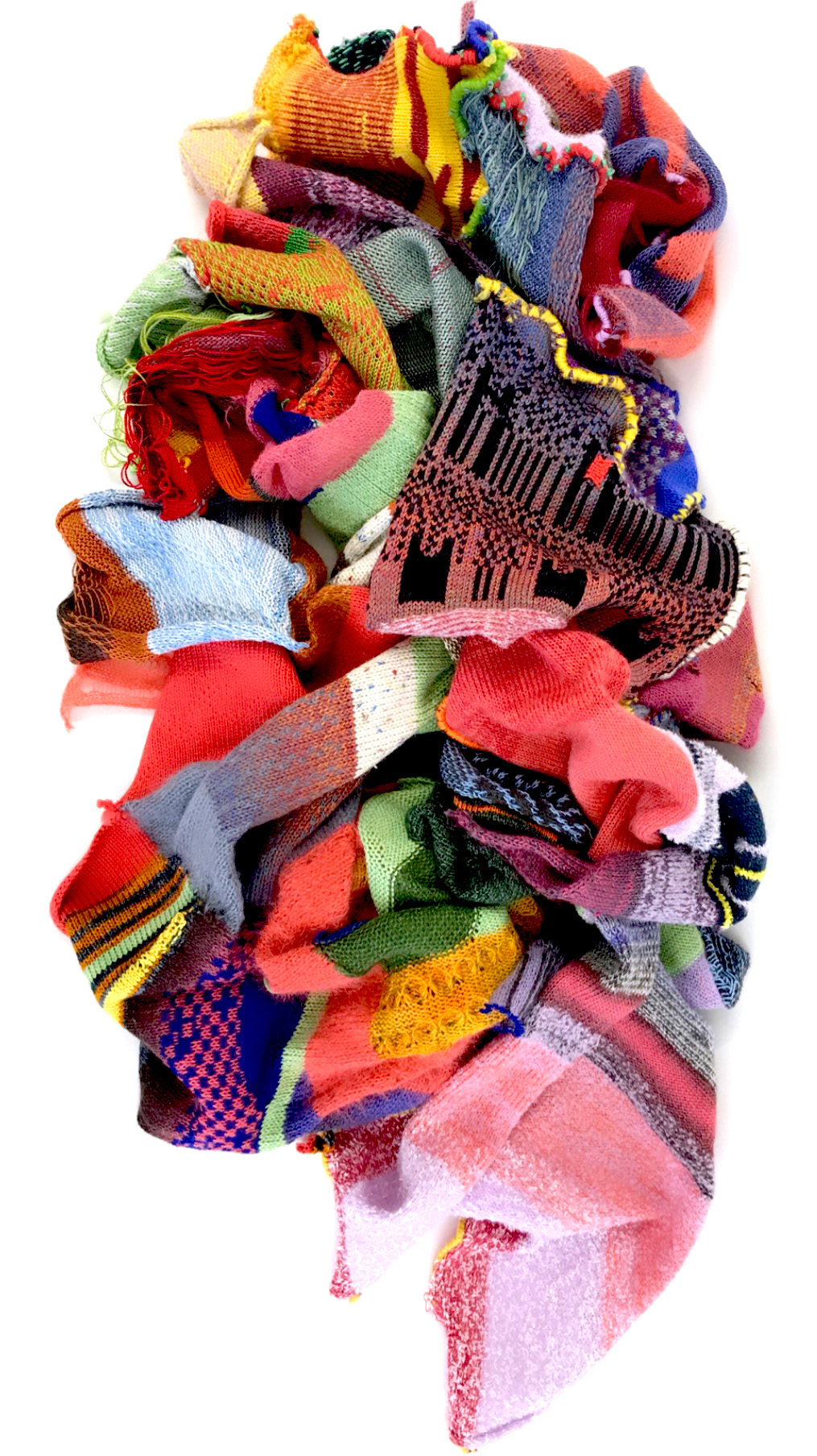
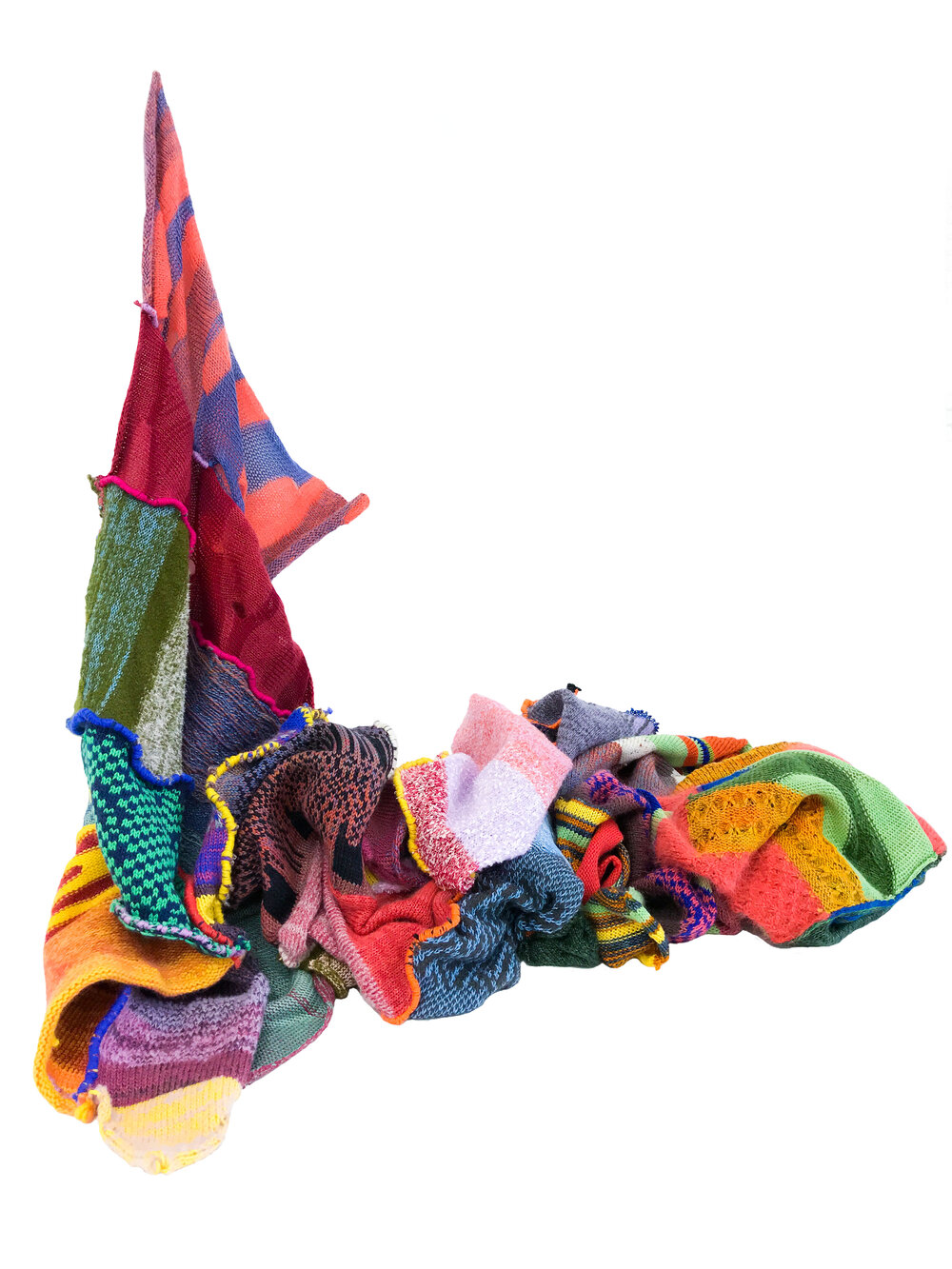
In a department that openly advocates sustainable design, fibers student Victoria Wanjuhi's master's thesis, "Cluster," is an ingenious commentary on the global textile and fashion industries. Her work is also wildly enjoyable as abstract art.

Wanjuhi (pronounced Wa-jo-he) received her B.F.A. in fashion design from SCAD Atlanta in 2013, worked in the garment industry as an assistant designer for four years ("I saw how much waste was created with mass-produced clothing"), then came to SCAD Savannah to pursue her fibers M.F.A.

"Cluster" emphasizes the importance of rethinking discarded materials. While Wanjuhi refers to her accompanying thesis paper as "an exhibition catalog," her writing is a rigorously researched analysis of the effects of the first world shipping undesirable fabric to less developed nations. Wanjuhi studied how specific communities in Kenya, India, and Brazil deal with the deluge, inspiring her to create the extraordinary "Cluster."

Fabric

Victoria Wanjuhi:

When I was a teenager, I used to deconstruct denim; I'd cut it up and sew it back together. I'd heard this term "fashion designer" and googled the best fashion school. SCAD came up. I spoke to a recruiter, and showed her a dress I was making out of boxes. I thought, they won't take me, it's too strange. But SCAD said yes! My SCAD journey, including the years between degrees I spent working, has been a decade of discovery.

Upon entering the graduate program at SCAD, I took a knitting class with professor Liz Sargent. I was reminded how much I loved working in abstract forms. Then I took a printmaking class that allowed me to explore how I could transfer my tactile fiber works into two-dimensional prints. Techniques from different disciplines became essential to my fibers projects. My thesis work explores processes including machine knitting, printmaking, and jacquard weaving. 

I went to visit Kenya in 2018, after 10 years away, with my Mom. It was a good time to go. That was the start of exploring the craft of beading practiced by Maasai women. The result was "Scraps of Denim," a set of four Jacquard woven pieces, using leftover threads from my previous projects, embellished with colorful Maasai glass beads to create color contrast with the blue background. I collaborated with Noonkokua Enole Naingisa, a local artisan based in Maasai Mara. We designed the layout of the beadwork for textiles, while the sequence of beading was based on her artistic decisions.

Kibera, in Nairobi, along with the Brazilian favelas in Rio, and Dharavi in Mumbai, India, are resourceful communities that have taken ownership of their environments. From the outside, these alternative communities appear endless and clustered; when you enter, you realize that there is an underlying organization at play and that the inhabitants are aware of their footprint within their communities.

SCAD taught me that having access to diverse creative fields is a huge advantage. I collaborated with Juanita Holmes (B.F.A., fashion, 2013) to create handcrafted couture shoes from upcycled material, and with Victoria Lake (M.F.A., animation) to create a 3D depiction of the favelas.

By exploring the possibilities and potential of materials, we can give new life to what has been discarded. "Cluster" reflects my world view. I'm proud of my SCAD experience.

Fabric

www.wanjuhi.com


Experience SCAD MOA at home

May
19
2020
By
Tags:

The SCAD Museum of Art is pleased to premiere new exhibition videos by four artists: Raúl de Nieves, Shoplifter, Igshaan Adams, and Kenturah Davis. These unique walk-through videos provide the opportunity to experience the process and output of these acclaimed international artists. The videos are free to view at www.scadmoa.org.

All four exhibitions opened to sensational response at SCAD deFINE ART 2020, the annual signature event featuring exhibitions, lectures, and performances. Held in February, deFINE ART brought all four artists in-person to Savannah for the festivities.

These videos exemplify the mission of SCAD MOA: to expand learning opportunities beyond the classroom, and inspire and challenge SCAD students to push the boundaries of their creative practices. They provide museum members, SCAD students and alumni, and audiences around the world an inside look at these dynamic exhibitions.

The concise videos (each approximately two minutes in duration) include artist and curator interviews, detailed shots of exhibitions, and time-lapse sequences of artists at work. They provide creative joy and public art programming at a time when physical access to the museum is stymied.

"The work derives from a personal story," Raúl de Nieves says, "an understanding of yourself." His exhibition, "Reemerge the Zero Begins Your Life, Eternal is Your Light" utilizes the distinct encasement-like structure of the SCAD MOA Jewel Boxes to position his sculptures as allegories within shrines. Using beading, sequins and textiles, the artist sublimates spiritual energies into agendered representations of characters like The Fool, the tarot's eternal figure of rebirth, and chromatic delineations of the seven chakras.

"When it comes to being a creative person, I think it's very important to find comfort in being uncomfortable," remarks Hrafnhildur Arnardóttir, aka Shoplifter, in the video celebrating her exhibition, "Chromo Zone." As a medium, hair represents both the viewer's identity and what Shoplifter calls the "remnant of the beast in us." Her sculptural installation, made from synthetic hair extensions, presents cave-like dwellings whose dynamism translates well to video.

"If I can be deeply honest about my own lived experiences, the work becomes universal," says South African artist Igshaan Adams, exploring materiality, phenomenology, and identity. in his first solo museum exhibition in the U.S. Adams lined the walls and floors of SCAD MOA's Pamela Elaine Poetter Gallery with used linoleum extracted from working-class homes across Cape Town, South Africa. The title of the show "Getuie" is in Afrikaans, Adams' mother tongue, and directly translates as "witness."

"It's all up for grabs," says Kenturah Davis with a knowing smile. "Everything That Cannot Be Known" explores mark-making in relation to the representation of Black bodies and the intangibility of personal and collective identities. Her multilayered process includes different forms of translation: from text to image and reality to representation. Her figures often intersect with words, or appear to be in the act of movement. The video includes insights from Humberto Moro, adjunct curator, SCAD exhibitions.

Videos:

Raúl de Nieves
www.scadmoa.org/exhibitions/2020/reemerge-the-zero-begins-your-life-eternal-is-your-light

Shoplifter
www.scadmoa.org/exhibitions/2020/chromo-zone

Igshaan Adams 
www.scadmoa.org/exhibitions/2020/getuie

Kenturah Davis
www.scadmoa.org/exhibitions/2020/everything-that-cannot-be-known


Thanks to Raúl de Nieves, Shoplifter, Igshaan Adams, and Kenturah Davis.


Guests and Gusto: Team Christopher John Rogers

April
24
2020
By
Tags:

"He makes glamour for the next generation," read the headline of journalist Naomi Elizée's Teen Vogue profile of Christopher John Rogers (B.F.A., fashion, 2016) in February, 2019. At that moment, Rogers had just shown his second New York Fashion Week collection. In November, he was awarded the first-place, $400,000 prize Council of Fashion Designers of America (CFDA)/Vogue Fashion Fund. The transformative award gave Rogers the juice to rent a studio in Soho, create his own eponymous line, and hire full-time the team he'd been working with since his days at SCAD.

This week, Rogers and his brand director Christina Ripley (B.F.A., fashion marketing and management, 2016), studio director David Rivera (B.F.A., dramatic writing, 2016) and production designer Alex Tyson (B.F.A., fashion, 2016) participated for a special Guests and Gusto virtual chat, hosted, appropriately, by Elizee. The wide-ranging, hour-long conversation, watched by SCAD students online, addressed what it means to work in fashion at this moment, and the joys of dressing celebrities including Michelle Obama, SZA, Lizzo, Cardi B, Lil Nas X, and Priyanka Chopra.

Elizée brought up the fact that brands big and small alike are struggling to stay afloat in a moment where there are no red carpets or editorial shoots.

"In the fashion industry, everything is interconnected," agreed Tyson. "This has forced us to literally sit still and recharge. I hope it only happens once!"

"Most of the people we work with have become like family: makeup artists, hairstylist, buyers, store owners," added Rivera. "Knowing that we're going through this together, we have a responsibility that for Spring/Summer 2021 we will make a collection that is joyful and hopeful about the future."

On how the fashion world will be changed, and what current SCAD can hope for, Rogers emphasized versatility and vision: "I think the days of being a blank slate and trying to please everybody are over. People are going to be focusing on hiring people who have an incredible amount of intention and are adaptable to many different situations.

"Show people that you care and are passionate about what you're doing. The summer before I graduated from SCAD, I interned in New York. I didn't have money to go out, so I was just working. One of my internships was with Tanya Taylor. She said, 'Who here knows how to illustrate fashion sketches?' I ended up sketching out their audition for the Swarovski collective. She got the sponsorship, and all the things I sketched for her wound up reaching fruition. She introduced me to the Swarovski team, and I was able to use Swarovski elements in my senior collection at SCAD."

The CJR team's final word? "Remember to be kind and check in with everyone!"

screenshot of zoom meeting

Thanks to Michael Fink, Dean, School of Fashion, Naomi Elizée, and all the Bees who Zoom-ed in!

SCAD launches virtual spring quarter

March
30
2020
By
Tags:

Through the award-winning SCAD eLearning platform, SCAD launched its virtual spring quarter Monday, March 30, 2020 for more than 15,000 students around the globe. 
 
A pioneer in online creative education, SCAD has made significant enhancements to strengthen digital resources for this historic transition to virtual learning. These new online resources include Zoom-enabled masterclasses, conversations, and demonstrations with industry leaders like artist Marilyn Minter, creative director Donald Robertson, costume designer Ane Crabtree, actor Tommy Dewey, tastemaker Carson Kressley, and many other friends of SCAD.
 
In addition to offering an expansive electronic library archive, the university has arranged for students to have access to more than 35 software programs utilized in the professions SCAD graduates will soon be entering. From anywhere in the world, SCAD students can create captivating graphics and storyboards using Toon Boom, the same software used by leading animation producers. Students have the capability to create 2D and 3D games and immersive environments with Unreal Engine and Unity and develop superior graphics using Cinema 4D and ZBrush. They also have access to a full music-production suite with Ableton Live, the same program used by digital music impresarios like Diplo, David Guetta, and Deadmau5. 
 
"SCAD's virtual resources meet and often exceed what our graduates will be using in the workplace in their future professions," said Dr. Gokhan Ozaysin, SCAD chief academic officer. "These resources are available to students regardless of location. We've crafted a curriculum for students to get comfortable with distance learning, as so many creative fields call for flexibility and remote work environments."
 
SCAD is the first creative university to earn the Instructional Technology Council's award for Outstanding Distance Education and the rank of Excellence in Institution-wide Online Teaching and Learning from the Online Learning Consortium. 
 
Of SCAD seniors, 63% have already taken an online class and are well positioned to excel during remote learning. SCAD eLearning students are taught by the same experienced faculty members who teach students at SCAD locations across the globe. 
 
"These are unsettling times affecting all of us, and the need to move to virtual classes is understandably disconcerting to many, especially those who've never taken an online course," said Dr. Audra Pittman, vice president, SCAD Atlanta.
 
"SCAD has been a world leader in online education for over a decade. We already offered 27 degree programs entirely online, the online world is not new to SCAD," said John Buckovich, vice president, SCAD Savannah. "We realize, for many of our students, virtual learning is not necessarily what they envisioned for our spring quarter, but change and the unexpected are part of everyday life. Our students and parents can have confidence in SCAD's ability to provide seriously substantive instruction every quarter, pandemic or no." 
 
To further assist students and faculty, SCAD also announces:
 

  • Any student completing a course this spring and who is not satisfied will be offered a free retake of the same course. 
  • No late fees will be charged for the spring quarter. 
  • Fees for setting up a payment plan for the spring quarter will be waived. 
  • All students will be allowed to register for Fall 2020, regardless of account balances that would normally prevent registration. 
  • Students who chose to move out of SCAD residence halls are having their spring quarter housing and meal plan charges refunded in full, and will be able to keep the university housing portion of their scholarships for the spring quarter.
  • Students who choose to defer enrollment until SCAD on-ground classes reopen will not lose their scholarships.

 
For more information on SCAD eLearning, visit scad.edu/elearning.
For more information on SCAD's robust response to COVID-19, visit scad.edu/coronavirus.


SCAD aTVfest studies 'The Female Gaze'

March
2
2020
By
Tags:

"They say luck comes to those who're prepared," award-winning television director Karen Gaviola told SCAD students at aTVfest 2020. "If you're prepared, when the opportunity comes you can grab it and succeed."

The eighth annual SCAD aTVfest facilitated up-close interaction between industry professionals and students preparing for careers in film and television. The popular "Wonder Women" panels highlighted female talent in front of and behind the camera.

"The Female Gaze" witnessed directors Karen Gaviola (Hawaii Five-0, Magnum P.I.) and Angela Barnes Gomes (Carol's Second Act, Legacies, Ambitions) joined by moderator Juliet Blake (head of television, TED Talks) for a discussion of directing. As with their TV shows, Gaviola and Gomes kept students on the edge of their seats.

"Humility goes a long way," said Gaviola, who won the NAACP Image Award for directing "The Whole Truth" episode of the hit show Lost. "You'll be working with people who've been doing their jobs for twenty, thirty years. Respect that they're there to help you. Some directors think they have to have the right answer. It's not about finding the right answer. It's about asking the right question."

Gaviola screened a clip of a daring rescue sequence from Hawaii Five-0, explaining the implementation of visual effects, and how she managed her actors. It was a mini-masterclass on dramatic challenges essential to episodic TV.

Gomes, who earned her nickname "the Swiss Army Knife" based on her ability to direct multi-camera comedies, single camera comedies, and one hour dramas, spoke about changes in the industry: "People don't think I'm the hairdresser when I show up anymore. Even when I was first AD, I'd have to say, don't talk to the white dude who works for me, talk to me. People weren't used to seeing women direct. Now that more women of color are directing, presumptions aren't the same.'"

There was an immediate bond between Gomes and Gaviola. As Gomes said: "I've heard about Karen Gaviola for 25 years now, so I'm happy to finally meet her." The panel concluded with inspiring words.

Karen Gaviola: "Always be learning. When I was PA on set, I was asking the first AD, 'How do you create the shooting schedule?' Or ask DP, 'How do you decide the lens?' Keep that process up as you move your way through the industry. I know sound mixers, casting directors and visual effects supervisors who've become directors. There are a million ways to get there. Your studies here at SCAD are a big jumping off point."

Angela Barnes Gomes: "You guys have a much bigger advantage than we did, because people have paved the way, and because y'all can make a whole movie on your iPhone. The access you have to make content is spectacular. The platforms are different. How people consume content is different. You have the advantage now. Just get out there and smash it."

Thanks to Karen Gaviola, Angela Barnes Gomes, Juliet Blake, and all of the incredible talent who made the eighth annual SCAD aTVfest a spectacular success.


Marilyn Minter delights deFINE

February
20
2020
By
Tags:

"A lot of times I get good ideas in the bathtub," said Marilyn Minter during the Q&A portion of her keynote address at Trustees Theater. Playful, applicable, honest, and wet, her response epitomized both her artist talk and the stunning career survey 'Nasty Woman' at SCAD Museum of Art, part of deFINE ART 2020.

After receiving her deFINE honoree award from President Paula Wallace, Minter presented a slide and video show of her work, including lurid, purple-lipped images of explicit glamour, early paintings she deemed "terrible," and a series of TV commercials created especially to be shown during Late Night with David Letterman in the 1980s.

Enjoy these select remarks from Minter's memorable deFINE delivery:

Marilyn Minter:

When I first went to NYC in 1976, I liked the idea of painting overlooked things that were around the house. I wanted to be part of the vernacular, and photorealism was popular at the time. We were building rooms in our loft, and I threw this 2x4 on the floor and took a photograph. I made paintings of those photos. I thought, everyone's going to love these! I took them to galleries and they said, "These are photorealism, but really boring ones." It was really painful. But when I had my retrospective, I didn't have to search anything out. I still had all the paintings.

When you think something is the worst thing that can happen to you, but you still think that what you're doing is the right thing, you just wait it out. The way that artists make art is they listen to their own inner voice, from their personal vision. Sooner or later the zeitgeist catches up to you.

In 1989, in was time for women to own images for their own sexual pleasure and amusement. Women never paint pictures of porn. I thought, I should do that! I thought, not softcore, it'll have to be hardcore. I had the entire gay community behind what I was doing, but it was a shock to the art world. Most people thought that I was betraying feminism. I was asked, "What do the images mean?" I didn't have the answer, and that was my downfall.

I never wanted to make a remake of something. I wanted to make an image of something in the world that you know is true, but you've never seen a picture of it. You never saw art about armpit hair. You never saw pictures of people pulling their socks down where you could see the lines on their legs.

Everything human is shot through with imperfection. Trying to erase that will make you ill. We are untidy beings. Why should we feel ashamed about it? No one escapes having a pimple.

I don't think of myself as a photorealist painter, because if you get close to a true photorealist painting it looks like a photo. With my painting, if you get close to it, it falls apart and becomes abstract.

The eye craves what it doesn't see. If you don't know what to do, just start making marks. You have to work, though, for the ideas to come. You can't just sit there waiting for inspiration.

Marilyn Minter

See 'Nasty Woman' at SCAD MOA through August 2, 2020.