Skip to main content Accessibility Policy

Madi Alspector's architectural history

September
25
2019
By
Tags:

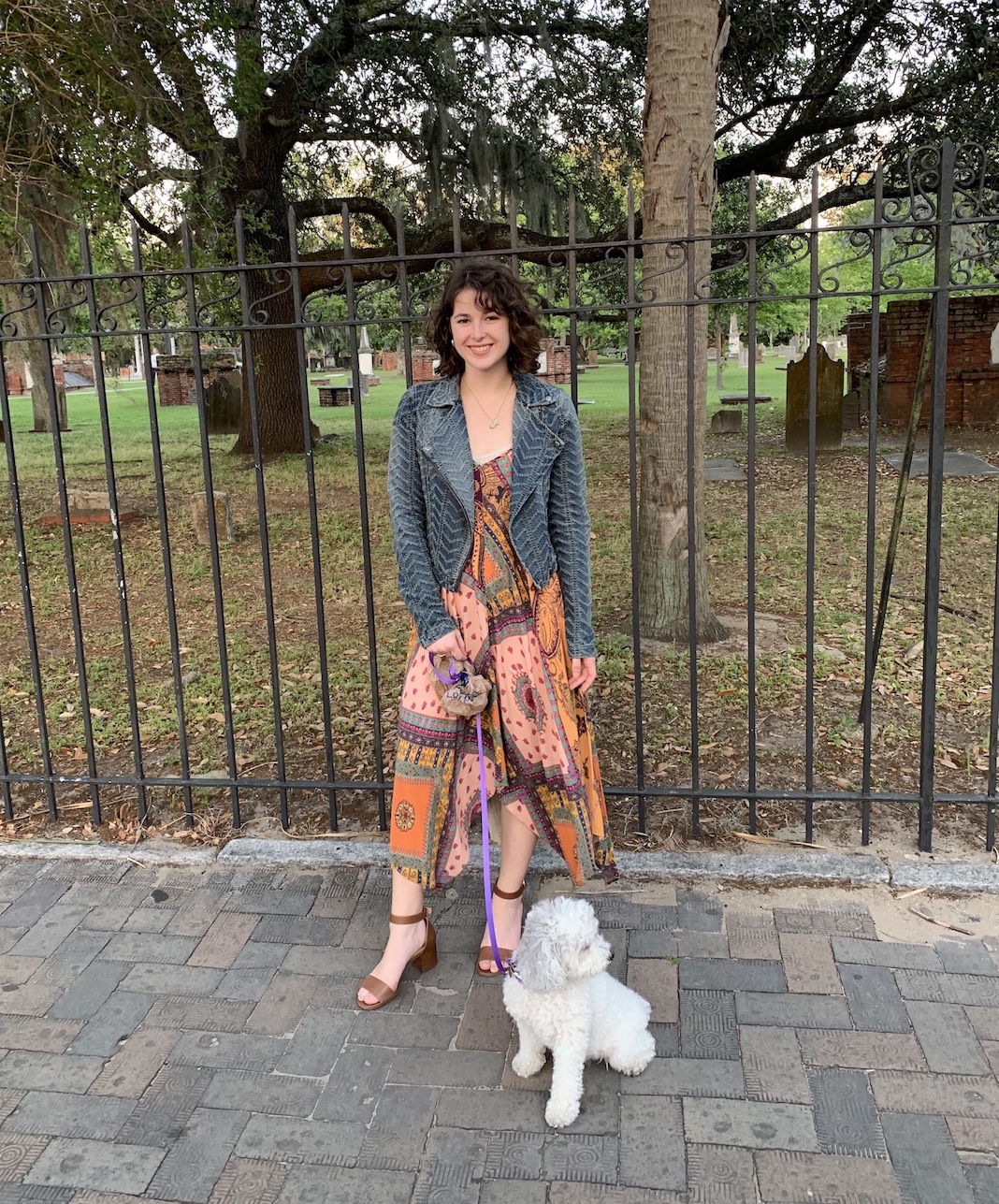
"I've grown up in historic cities," says Madi Alspector (M.F.A., architectural history). "Being informed about histories of place has always been part of my life."

A graduate of Wando High School in Charleston, Alspector selected SCAD in order to pursue her master’s degree in Savannah, one of the best-preserved urban landscapes in the country. She attends class in the upper rooms of the SCAD Museum of Art, a National Historic Landmark housed in a former railway depot for the Central of Georgia Railway dating to 1853: “I love going to class in rooms with preserved historic brick.”

The devoted scholar complements her academic achievements with hands-on work in the field. In summer 2018 she was easements department intern at the non-profit Historic Charleston Foundation, and is currently interning for credit with HALLETT & Co. in Savannah's historic downtown district. For Madi, historic architecture lives in the present.
 

Madi Alspector:

I'm beginning my final academic year here at SCAD as a masters candidate in architectural history. This quarter I'm taking Urban Form and Civic Ideals through History (ARLH 739), tracing city-building from the ancient Near East through post-modernism. I'm also taking Contextualizing Ancient Architecture (ARLH 724), and doing a Graduate Internship (ARLH 779) with Matthew Hallett at a firm called HALLETT & Co., learning to translate the historical lessons taught in class into field work skills.

The internship has been wonderful. I spend half my time at HALLETT & Co. doing research and half on-site working on renovation and historic preservation projects. I love being in the field. My plan after graduation is to work with a restoration group and be active in conservation. I want to work on projects that impact my field of study.

In October, I'm presenting a paper called "Highway Revolts" at the 2019 conference of the Southeast Chapter of the Society of Architectural Historians in Greeneville, South Carolina. Last year I took "Power and the Built Environment" (ARLH 759) with SCAD professor Robin Williams and began researching highway revolts. From the 1950s through 1970s, federal highways were being built and tearing through inner cities. The most famous protest happened in New York City with Jane Jacobs challenging Robert Moses over the proposed Lower Manhattan Expressway, but there were over 350 smaller revolts around the country. I studied articles written at the time, human interest pieces documenting different protests, and more recent scholarship.

My paper discusses what happened in San Francisco and Miami. In San Francisco, protests led to proposed freeways being canceled, while in Miami the interstate wiped out a whole neighborhood downtown. I grew up traveling down the I-95 Expressway through Miami, never considering that its construction was problematic.

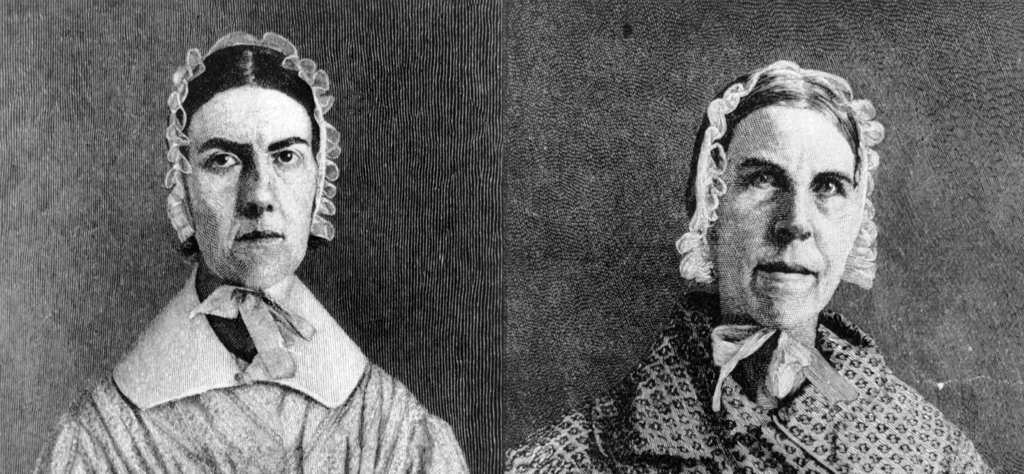
"Highway Revolts" is the second paper I've delivered at a conference this year. In February I received a SCAD travel grant to Montgomery to attend the Southern Studies Conference 2019 and deliver my paper "The Grimke Sisters of Charleston: their influences on changing urban societies as abolitionists and early feminists."

The Grimke sisters

A few years ago there was a best-selling novel by Sue Monk Kidd called "The Invention of Wings" (Viking, 2014) based on the story of Sarah Grimke. My mom read it and had me read it. I fell in love with it. The Grimkes were highly outspoken early on as abolitionists. As women in Charleston, they were kicked out of the city and banned from coming back. I toured their house in Charleston and integrated that research into my paper.

The Grimke sisters stood up and helped the cause of justice as much as they could. Everyday people like me might say, what can I do? Any time you can use research and show the historical record and say, "Something was wrong and somebody stood up against it and it led to necessary change" that's important. We are making progress.

Madi Alspector

Learn more about the SCAD architectural history program.


Grimke sisters image courtesy Library of Congress.

Banner image courtesy San Francisco Chronicle via Foundsf / Creative Commons.


Chelsey Thomas' 'Embrace'

September
19
2019
By
Tags:

Hallway lockers, a bathroom stall, orthodontic braces and a sense of not belonging: "Embrace" contains familiar signifiers from high school films. Yet the animated short by Chelsea Thomas (B.F.A., animation) packs its own empowering punch.

Inspired by Disney cartoons like "The Proud Family," Thomas conveys her tale with great tenderness and technique. A graduate of Redan High School in Stone Mountain, Georgia, she is due to graduate SCAD Savannah in spring 2020.

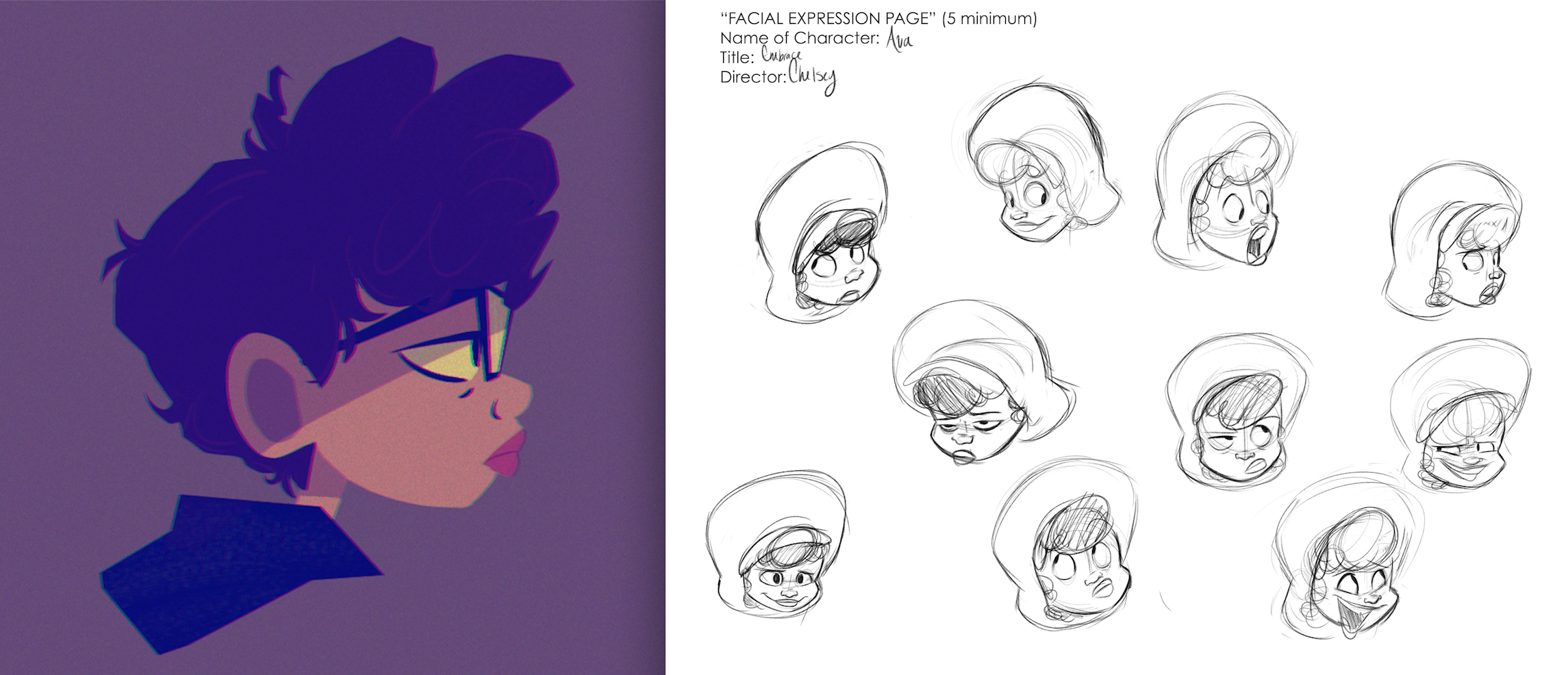
storyboard for animation

Chelsey Thomas:

"Embrace" is the film I made in my 2-D Animation Production (ANIM 312) class with professor Michelle Tessier.  The assignment was to make a 30-second-long animation. I was thinking, what can I fit into 30 seconds? I thought of the idea of a girl who goes to a new school and looks different and feels insecure.

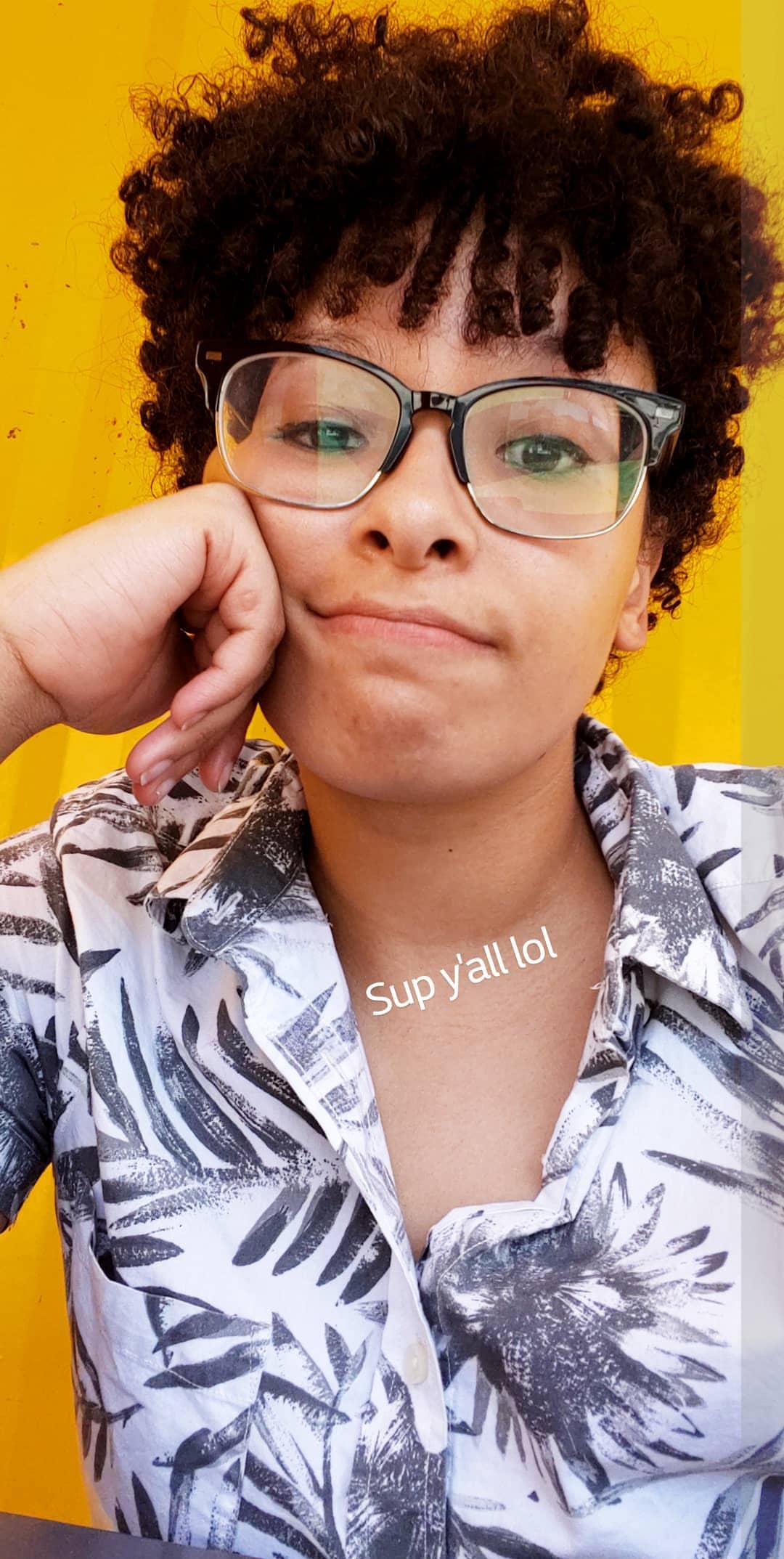
I named it "Embrace" because part of the film came from my own experience embracing my natural hair. In tenth grade, I started going natural with my hair. In the film, you see Ava see her teacher with natural hair and then she embraces it too.

With silent films, you really have to convey what the characters are feeling through action and expression. The idea of my film was to feel what Ava's feeling and go with her through this journey.

Initially I wanted to set it in present day, and have Ava wear a hoodie to hide her hair. Then I decided to set it in the ‘70s for a groovy vibe. I gave her this big disco hat and bell bottoms.

I started creating character designs and putting together a mood board to get the feel of the film. Then I made rough storyboards and sketches to see how the story would progress. Then storyboards and layouts, then rough animation, cleaned-up animation, color, line art, compositing, sound. All in ten weeks!

I worked mostly on a Wacom. I did the initial character designs in Photoshop using a pen tool with a bit of grit to it so it seemed hand-drawn, like a marker. I used pencil tools for the backgrounds. Then I brought it into TVPaint Animation, a 2-D paint and digital animation software, for storyboarding and animation.

"Walk cycle" is one of the first vital things that animators need to know. A walk cycle is when you're animating somebody's walk and identifying the poses that are essential to that movement, then filling in the in-betweens. I was trying to find a song that fit the walk cycle that emphasized how proud Ava felt walking down the hallway with her afro bouncing. The Bill Withers song just fit. I grew up with that kind of music through my parents, and I still listen it.

It's really important representing African-Americans in animation, you don't see it that often and I want to be that person. I had people reach out to me via Instagram and say nice things. I've definitely gained traction from my "Embrace" video.

portrait of chelsey thomas

See more of Chelsey's character designs on her Instagram.

Watch "Embrace" here.


Brushing up with Lara Favaretto

September
16
2019
By
Tags:

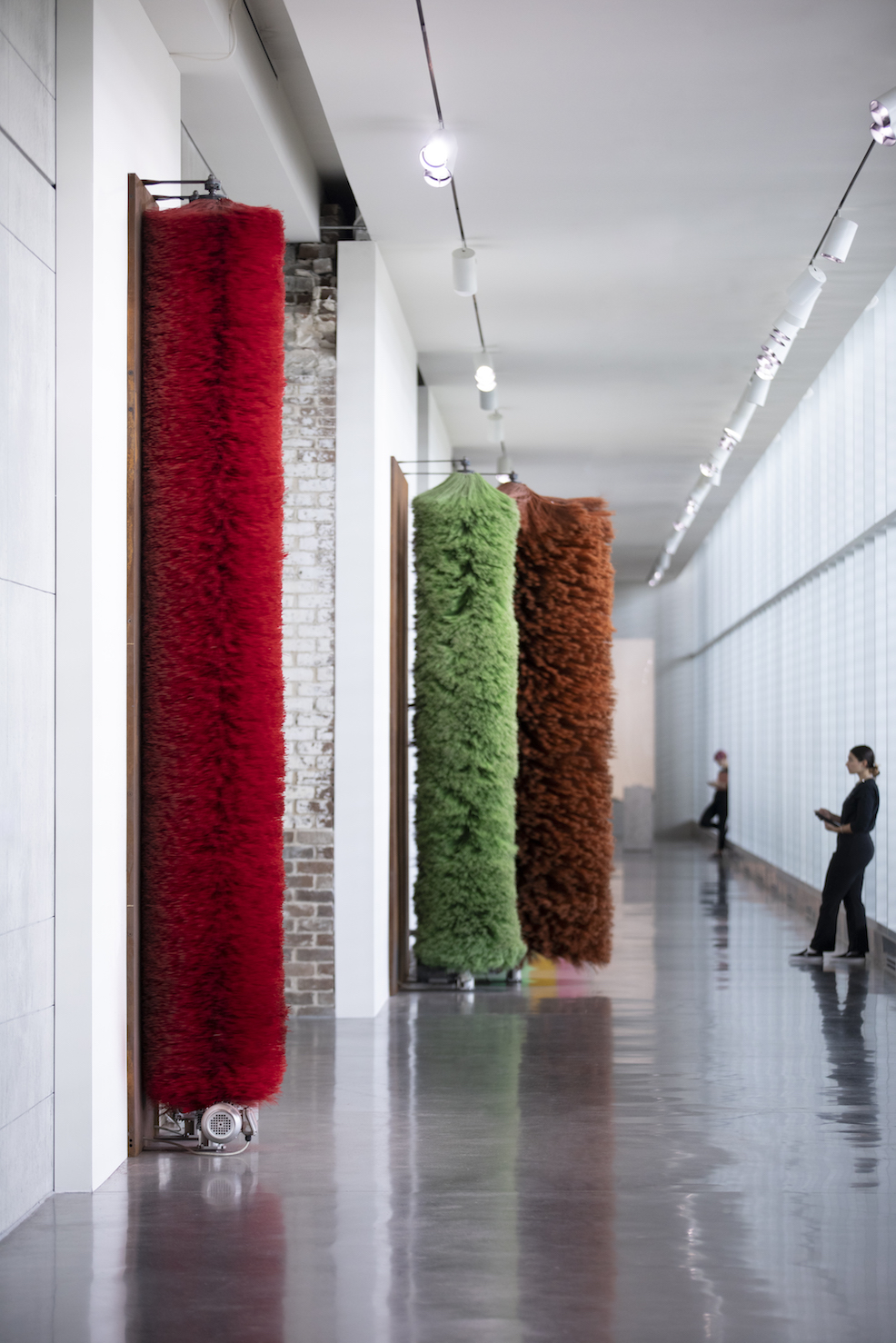
"There's nothing better than watching something as practical as car wash brushes," said Wendy Chang, director of the Rennie Collection, during a gallery talk on Lara Favaretto at the SCAD Museum of Art. The museumgoers filling the 300-foot Pamela Elaine Poetter Gallery to witness Favaretto's bristling "Simple Couples" during Summer Celebration keyed in on Chang's point.

"Simple Couples" is part of "Lara Favaretto: Works from Rennie Collection," a selection of works curated by Abaseh Mirvali, executive director and chief curator of Museum of Contemporary Art Santa Barbara, and organized by Humberto Moro, curator of SCAD exhibitions. The exhibition, on view through Dec. 22, includes an enigmatic suitcase, concrete sculptures, and a glassed-in room billowing confetti. The pairs of car wash brushes are the vibrant stand-out stars.

"The brushes are exhibited in a gorgeous way where you can see all of them in their different rhythms," guest curator Mirvali said. "No two of us have the same rhythm in life. We all move at a different pace and have different relationships with different people."

"Simple Couples" alternate between rotation and stillness. Liberated from their original context, the brushes touch, flare outwards, retreat and grow still, like people trying to relate, their attempts at connectivity furtive or bold. Brushes spin against backboards and each other, deteriorating over time, leaving behind particulate matter that resembles the residue of a relationship.

"Lara uses materials that are otherwise considered mechanical and practical, infusing them with the human spirit," explained Chang. "Her ability to connect on a human level in the most unexpected ways with the most unexpected materials is really what draws us."

Background reading (provided by helpful, iPad-wielding SCAD student docents) reveals Favaretto's inspiration: Each of the "Simple Couples" was inspired by an infamous cinematic couple, including "Harold & Maude" (dir. Hal Ashby, 1971), Maria & Felix of "Garage Olimpo" (dir. Marco Bechis, 1999), and Shirley & Cyril from "High Hopes (dir. Mike Leigh, 1988).

"It's an amazing exhibition that speaks to Lara's capacity to make art from the everyday," remarked SCAD curator Moro. "It has a strong dialogue with the architecture of the gallery, which we can all enjoy."

installation view of Lara Favaretto exhibition

Learn more about "Lara Favaretto: Works from the Rennie Collection" including hours and admission.


Hygge finds a home in Savannah

September
13
2019
By
Tags:

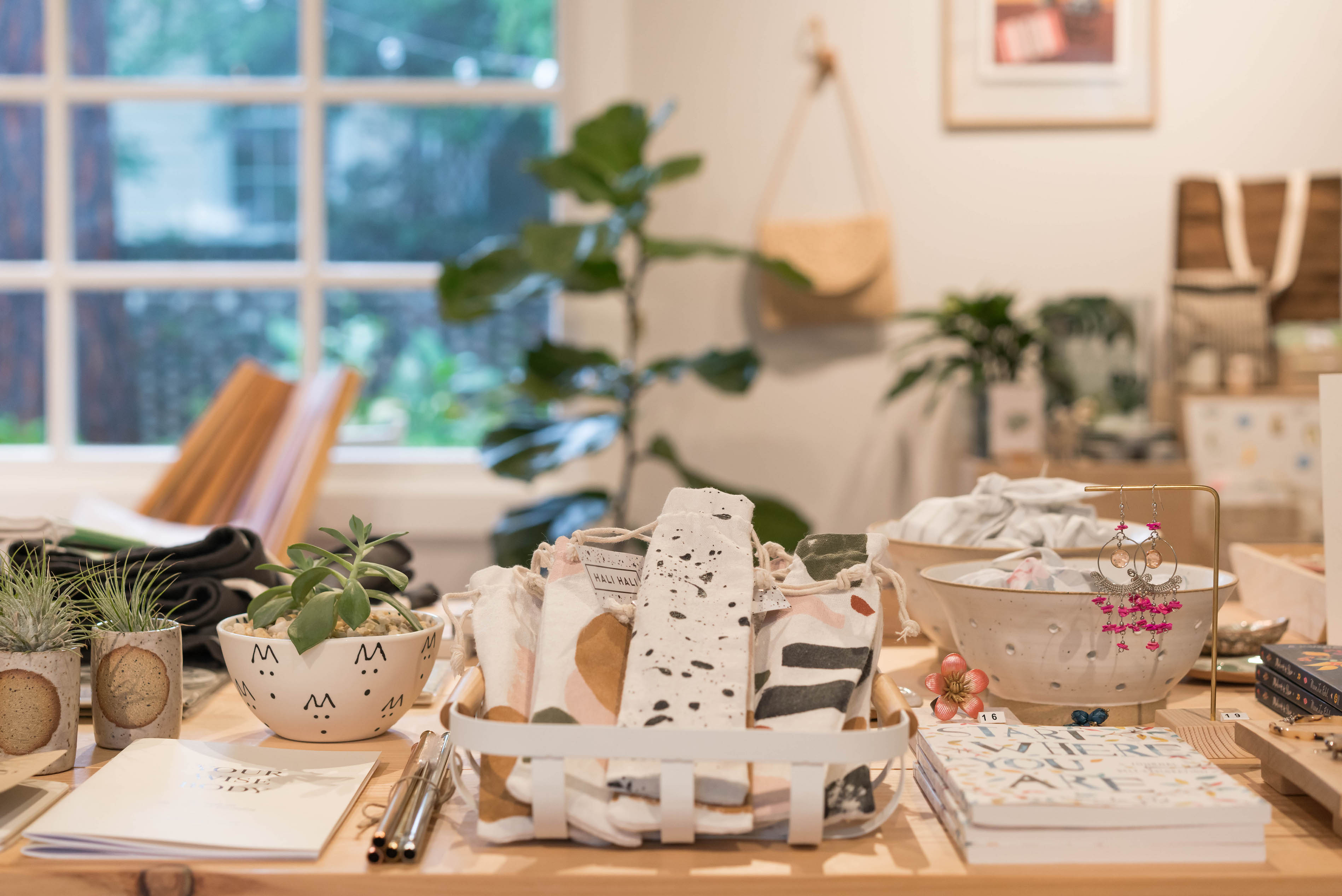
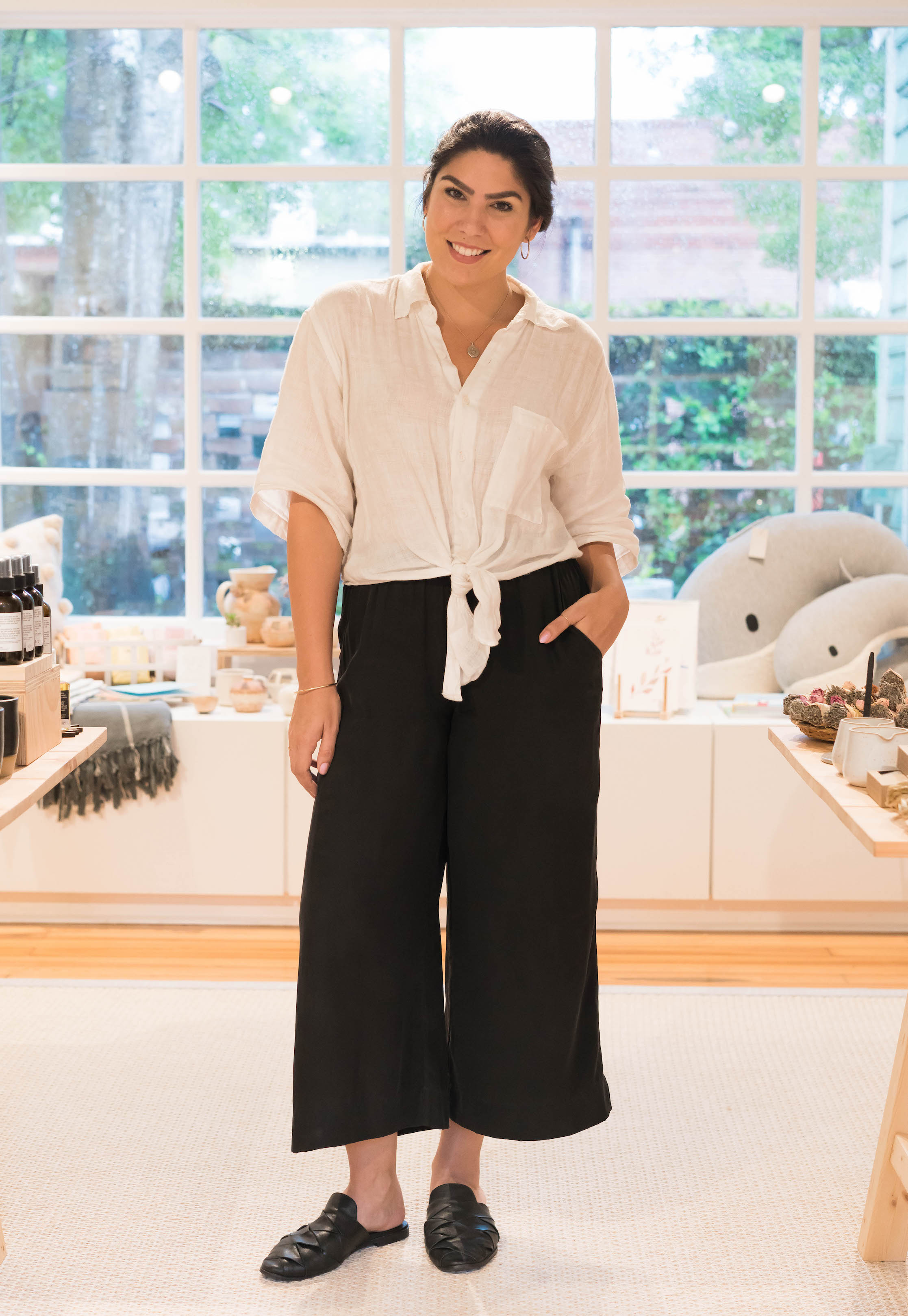
With her shop Hygge, Cristina Drumm (B.F.A., advertising, 2014) has captured anew the quintessence of Savannah: warmth, charm, and homey coziness. Drumm drew inspiration—and her retail studio's name—from the Danish word "hygge" (pronounced hoo-guh), which she learned first-hand while experiencing the simple charms of Copenhagen as a traveler. Now owner and founder of Hygge Savannah, Dunn ensures every detail of her store embodies the hygge experience, from decor to handmade goods, all imbued with her kindhearted energy.

interior of Hygge shop

Cristina Drumm:

I'm originally from Venezuela. I was initially drawn to SCAD because I was looking at programs abroad and found SCAD Lacoste, and thought, "This looks amazing. I need to know more." I came to Savannah and fell in love with the way the university is laid out throughout the city. I loved how you can walk around the city and I knew SCAD was for me. At the time, I was still living at my parents, so I started to take some classes via SCAD eLearning. I did that for one academic quarter, then went to SCAD Lacoste. Lacoste was an absolutely magical experience. It's one of those places that changes your life. Shortly after, I moved to Savannah to complete my degree.

One thing I adored about SCAD is the professors. I could tell they loved being involved in student dreams and projects. My professors were always willing to go that extra mile to help, and they were so passionate about what they were doing. My professors had already worked in the industry and knew what they were talking about. I'm still in touch with a lot of the professors I had. They became like family to me. 

When opening the business as a one-woman show, I used all the advertising tools I learned at SCAD and brought them into this small business approach. It's been very organic, and my knowledge of advertising and creative direction has really helped all of this unfold. My advertising degree really helped. I've applied every aspect of advertising, including branding, storytelling and copywriting. I love the stories that brands can tell through creative direction and branding. 

A lot of people ask, "You could open the business anywhere else, why Savannah?" I see so much potential in Savannah. It needs student and alumni-run businesses, and SCAD and Savannah become more deeply connected the more alumni stay here and cultivate businesses. 

When opening Hygge, I wanted to feature brands whose values align with mine. That, and connecting with the people behind the brands is super important to me. I love that I'm working with locals, and that I can do pop-ups to bring the community together. I try to feature artists who haven't been featured yet in Savannah. Hygge allows those artists use the space to show their goods as well.

I had always envisioned the store being a space where people come to get away from their busy day, unwind, look at beautiful things — I offer them a nice cup of tea — and feel inspired. I knew I wanted a space that had a homey feel. It has a different aesthetic from anything I've seen in Savannah. I'm bringing something new to the city and I want it to do well. So far, it's been well-received.

portrait of Cristina Drumm

Visit Hygge online or at 600 E. Broughton St., Savannah, Georgia, 31401.


What wood Gonzalo do?

August
22
2019
By
Tags:

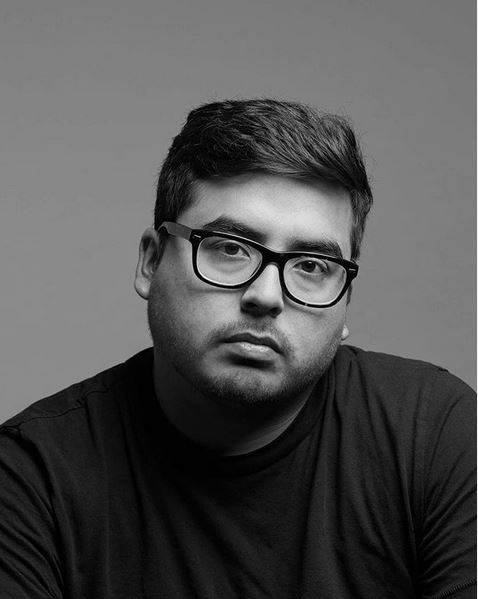
"How do you disappear mimetically?" wonders Gonzalo Hernandez (M.A., painting, 2018; M.F.A., fibers, 2019). His three works in the new group exhibition "The Artist as Muse" at Gutstein Gallery present a provoking possibility: As the artist disappears into the work, the work stands out.

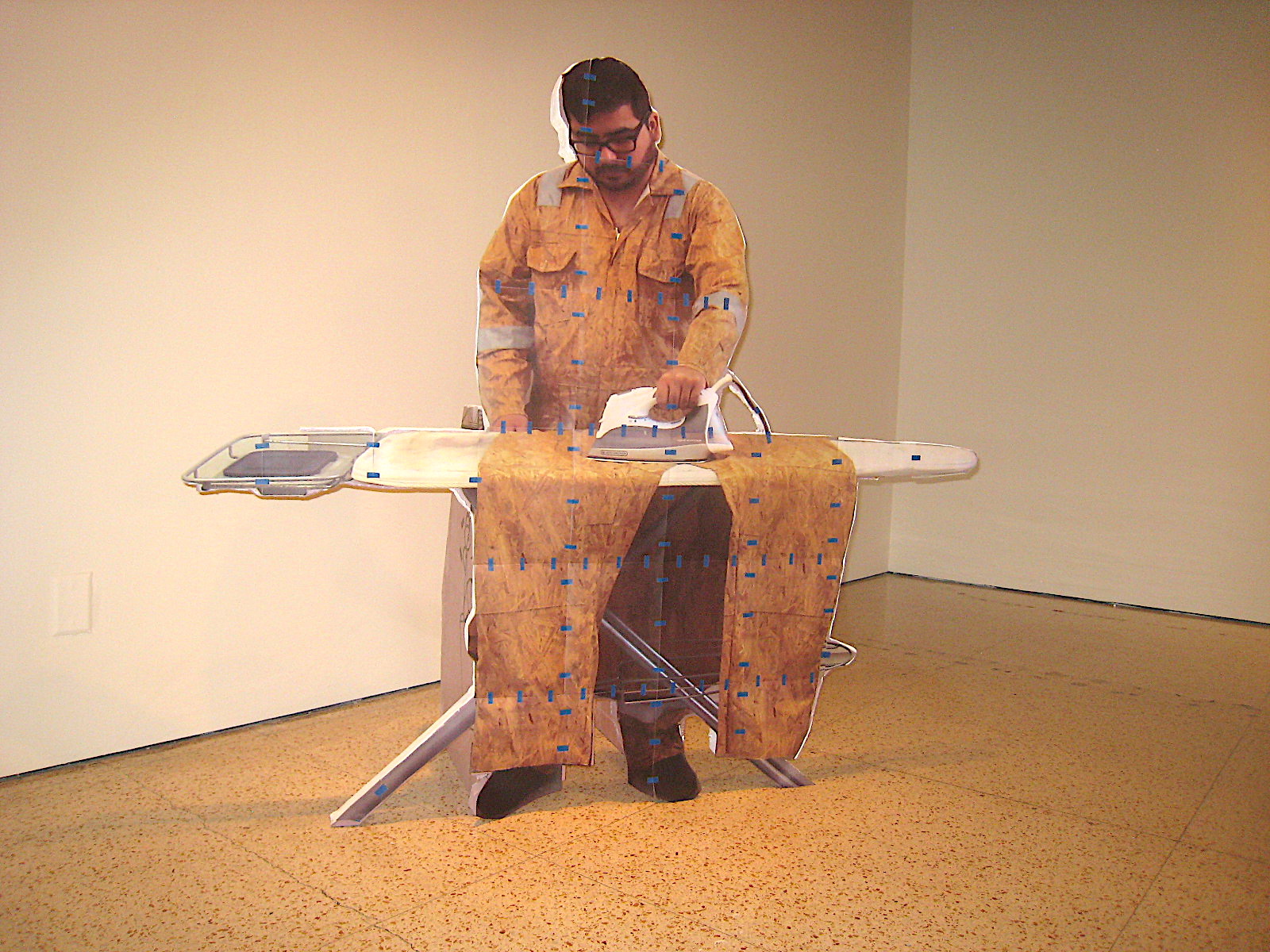
A native of Lima, Peru, Hernandez's technical proficiency is matched by conceptual excellence. Echoing Duchamp, his use of readymade Pink Panther foam for "Untitled" is a practical choice with interpretive implications. Viewing the work in person offers an experience irreplicable online. Gutstein awaits!

Artwork

Gonzalo Hernandez:

While studying at SCAD, I was working in a Pier 1 Imports warehouse in Pooler. I was a material handler. All the work for my M.A. final project started out of that factory work and materials there, like cardboard boxes and tape, applied to an art world situation.

One of the workers at the warehouse used to wear a coverall every day. I was interested in why he chose to wear that uniform, and how the uniform can place you in a position of power or erase you.

I bought a navy-blue coverall and wore it at the warehouse but it was too hot. I wondered: How can I make this coverall unique? In the warehouse we use a lot of compressed wood. I decided: Be that wood.

I took a photo of compressed wood and Photoshopped it and created a pattern. I printed the fabric here in the States, then sent the fabric to Lima to a company that makes coveralls. Now I had a coverall where the pattern is compressed wood. I'd wear it to openings of shows.

For this Gutstein exhibition, I'm showing three pieces. "Self Portrait Falling" is the actual piece of compressed wood with the coverall atop it, which has a human shape. That relates to the photograph "Falling" displayed on the adjacent wall. My idea was: Can you make falling a success?

The third piece is a photographic print on Pink Panther insulation foam. It shows me wearing a coverall while ironing a coverall for the next day. I'm addressing the taboo about a male doing fibers work, because traditionally women work in fibers. A guy seeing another guy ironing? I was interested in that.

For my main studio classes in painting at SCAD, I studied with professor Todd Schroeder, whose work is also showing in "The Artist as Muse." As a professor, he lets you make your decision but often challenges you. I was a formal painter painting self-portraits for a long time. At a key moment he asked me, "Why are you still painting?" At the time I was repeating myself. I switched and got more into materials, then decided to pursue my masters in fibers.

There's an idea about Hispanics and labor and pink foam and plywood and materials. It always came up in critiques as I was making the work, the invisible labor that we don't really see. That's related to the invisible pattern. It's intentional that I used Pink Panther isolation foam in "Untitled" and that the Pink Panther is there, behind, smiling. Pulling back the curtain to see yes, the labor is there.

Gonzalo

See more of Gonzalo’s work here and through Oct. 5 at Gutstein Gallery.


Summer Seminars: Textile Techniques

August
9
2019
By
Tags:

"Art can create an interface for people to grapple with paradigm-changing ideas," writes Katie Glusica (M.F.A., fibers, 2010) in her essay "The Seen and Unseen" (Leonardo Journal, The MIT Press, 2016). "It can enable unseen concepts to affect the way we think and live."

A writer, maker and artisan, Glusica works in antique rug restoration at Savannah Galleries. In conversation she connects weaving to the cosmology of the Kogi people of Colombia, wave/particle duality, and the invention of computer technology. As the high school students who took her recent SCAD Summer Seminar "Textile Techniques" can attest, she's also a wonderful, welcoming teacher.

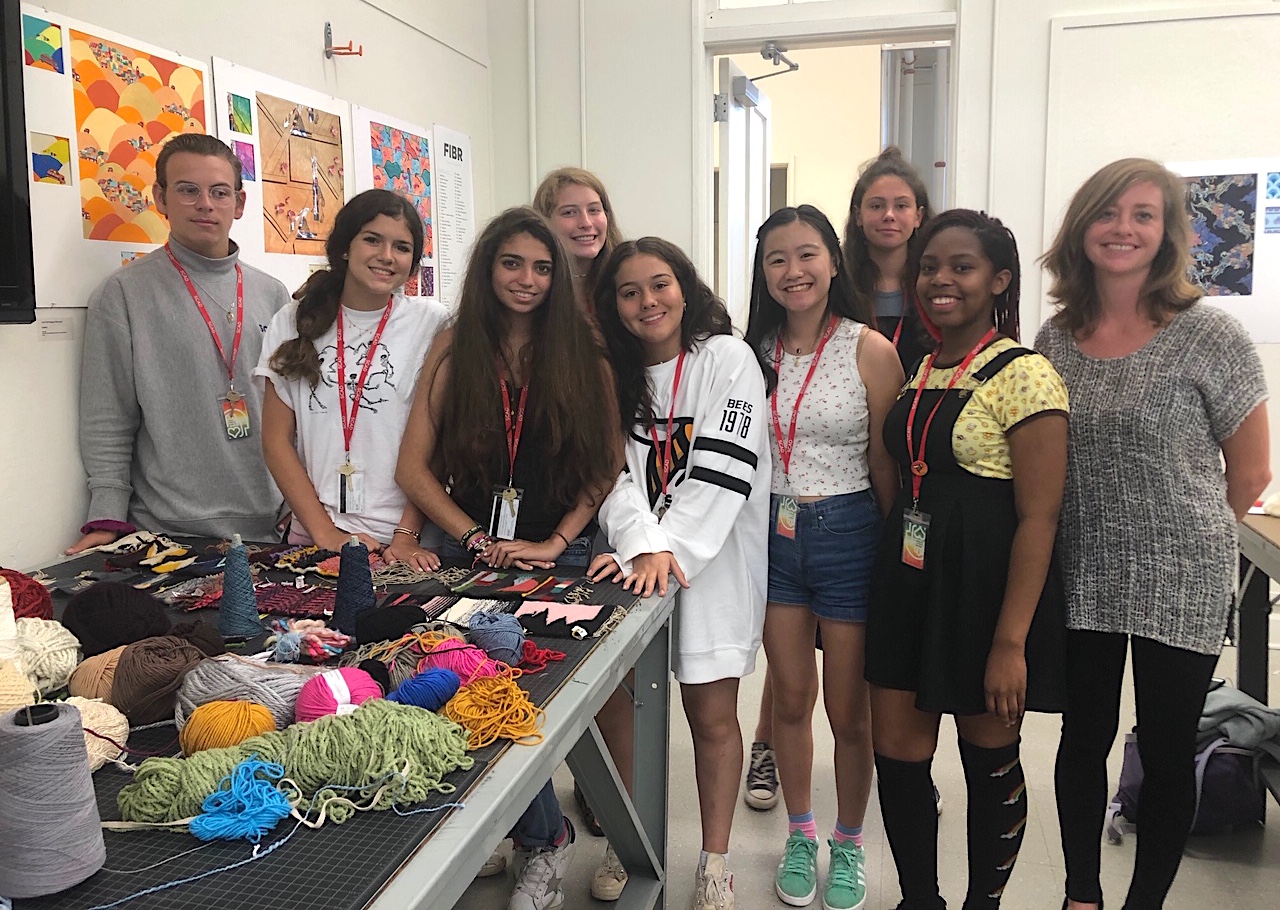
Student group

Katie Glusica:

I taught three weeks of Summer Seminars this summer. It's gratifying to work with high school students coming to SCAD to learn about fibers. Super fun too!

On the first day I give students a presentation focused on frame loom weaving. I have the supplies out on the table. I show them what a loom looks like, and tell them, "You're going to leave here at the end of the week with a loom weaving you've created."

I show them other techniques within fibers, and their applications, from fashion to installation art to antique Chinese embroidery. I explain that some SCAD students studying fibers are not only fibers majors, but also students majoring in fashion, interior design, architecture, furniture design, jewelry design and painting. No matter your direction, even a basic understanding of cloth construction is invaluable. We cover the technical, historical and potential career trajectories of weaving and textiles professionals.

I tell students, there'll always be a place for things made by hand.  You can find a niche doing things mass-production industry can't do. Fashion involves complexities of production and human labor is part of that. Same with jewelry. Even stones that can be set with machines still require manual finishing. These disciplines require a skilled professional.

Weaving is a great way to learn math because every number on the loom directly corresponds to a physical object. The loom is something you hold and therefore it makes sense in a different way than when you are dealing with abstract arithmetic.

The facilities are a spectacular part of what SCAD has to offer. Pepe Hall is an amazing place, and our jacquard loom is a magnificent piece of technology. The students see that when you have access to the technology itself, you can take complex ideas and think about them in relatable terms as they apply to physical things, like weaving and cloth, that help us on a human level.

The last day of Summer Seminars is an open house when parents come to pick up their kids and see what they're been working on all week. Our fibers deparment chair Cayewah Easley stops in to give a great presentation about the department. This year it turned out that some of the parents wanted to weave. Luckily, I had warped up an extra loom.

The point of the Summer Seminar is to get excited and involved in the field of textile and fibers. To have high school students focused and engaged is really impressive. "This is so satisfying!" is my favorite comment of all time.

Portrait

www.katieglusica.com


Emmy winner Simon Stevens

July
30
2019
By
Tags:

The dazzling pageantry of the 2019 National Academy of Television, Arts, and Sciences Emmy Awards was out-watted only by Simon Stevens' winning smile. After three years as marketing producer at Savannah's CBS-affiliate WTOC-TV, Stevens (B.F.A., film and television) has alchemized his SCAD experience and professional dedication into a gold statuette. Locals know: Tune in to WTOC for breaking news, severe weather information…and to see his award-winning handiwork. Congratulations, Simon!

Simon Stevens:

I attended Parkview High School in Lilburn, Georgia, where there was an orientation evening when a representative from SCAD came. They spoke about the hands-on approach to learning film and TV. The SCAD Savannah film and television program felt very robust. I wanted to spread my wings so I came here.

Senior year at SCAD I worked at SCAD District with director of student media Adam Crisp. I shared the role as SCAD District video co-director with Fairuz Ferrer (B.F.A., film and television, 2017). Working with Fairuz, I became more disciplined with scheduling and deadlines as well as the storytelling process. Fairuz created a series called "Savannah Secrets" about places like The Coop rock climbing wall and Mrs. Wilkes Dining Room. I took what she filmed and edited it. We collaborated on at least half a dozen pieces.

Adam Crisp showed me I was part of something important. He pointed me towards a marketing position at WTOC. I didn't get the position, but one of their news managers offered me a part-time job as a PA. Then the opportunity opened up for the slot I currently have. I'm currently a promotion-focused marketing producer at WTOC. We serve southeast Georgia and the Coastal Empire and Lowcountry.

I work on promotions about the station for the station. These include daily promos to promote a specific story for a specific show. I speak with producers and ask for their biggest stories, write something about them that's 10-15 seconds long, get them approved, then shoot and edit and it's on-air within minutes. I do about six of those a day.

My first week full time at WTOC, Hurricane Matthew hit. As the city was evacuated, I stayed. I was able to dive in at the station with extra hours and show what I was able to bring to WTOC marketing. I learned a lot about how to cover hurricane season. When Hurricane Irma hit in 2017, I created a 60-second spot demonstrating our commitment to coverage before, after and during the hurricane, which wound up being nominated for an Emmy in 2018, but did not win.

This year I received two nominations, including one for a coverage commercial of the C-130 crash, which did not win. Creating that spot meant understanding the sensitivity to the event, and what that means to our viewers.

The other nomination was for Savannah Weekend, WTOC's lifestyle explorer. Savannah Weekend producer Brian Byers (B.F.A., illustration, 1992) was a professor of multimedia design at SCAD before coming to WTOC. When we launched Savannah Weekend, I created a promo using drone footage cut with upbeat music and the tag "Discover your Savannah Weekend today!" It wound up being the Savannah Weekend spot that won the Emmy this year.

The event was at the Hyatt in Buckhead in Atlanta on June 15. I remember walking up on stage, seeing my commercial on the giant screen, and being handed a trophy. I said, "I'm new to this. This is cool!"

SCAD was my first taste of committing to excellence. At SCAD District I learned about taking a story and presenting it in a way that's honest and resonates in a way that's relevant. I took that with me when I came to news. I'm really grateful for the opportunity to challenge myself at a high level. I didn't expect to stay in Savannah but I'm glad I did.


Photograph: Just Toby


Illuminating Summer Seminars

July
23
2019
By
Tags:

"There's no such thing as an outlandish idea."

It's Wednesday morning in room 120 of Gulfstream Center for Design, and SCAD Summer Seminars instructor CoCo Ree Lemery (M.F.A., furniture design, 2019) is encouraging focused experimentation. A decorated theater designer and 2018 IDA Design Awards Gold winner, Lemery is intent on providing the high school students here with an unforgettable SCAD experience.

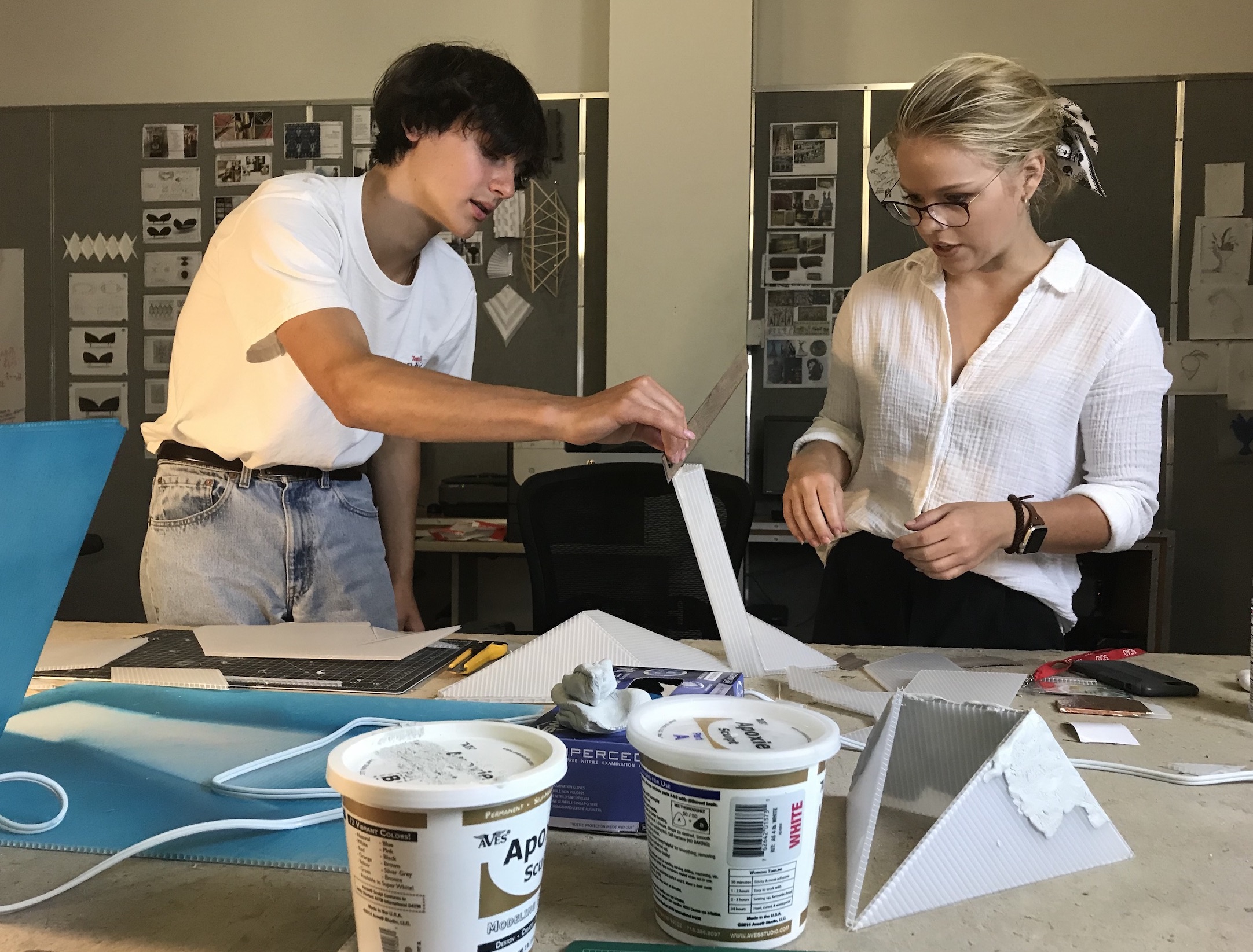
Over the course of five days, Lemery's furniture design students will each concept, sketch, and build their own functional lamp. Her seminar is part of a series of weeklong immersions for high school students interested in all things SCAD. Students who have completed their freshman, sophomore or junior years of high school gain essential educational experience through art and design projects. They also do fun stuff like take river cruises and attend Savannah Bananas games.

"This was suggested to me by a college counselor as a great summer program," says William Egan, a student at Putney School in Windham County, Vermont. "I thought it would be a fun experience, and it's proven to be much more than that."

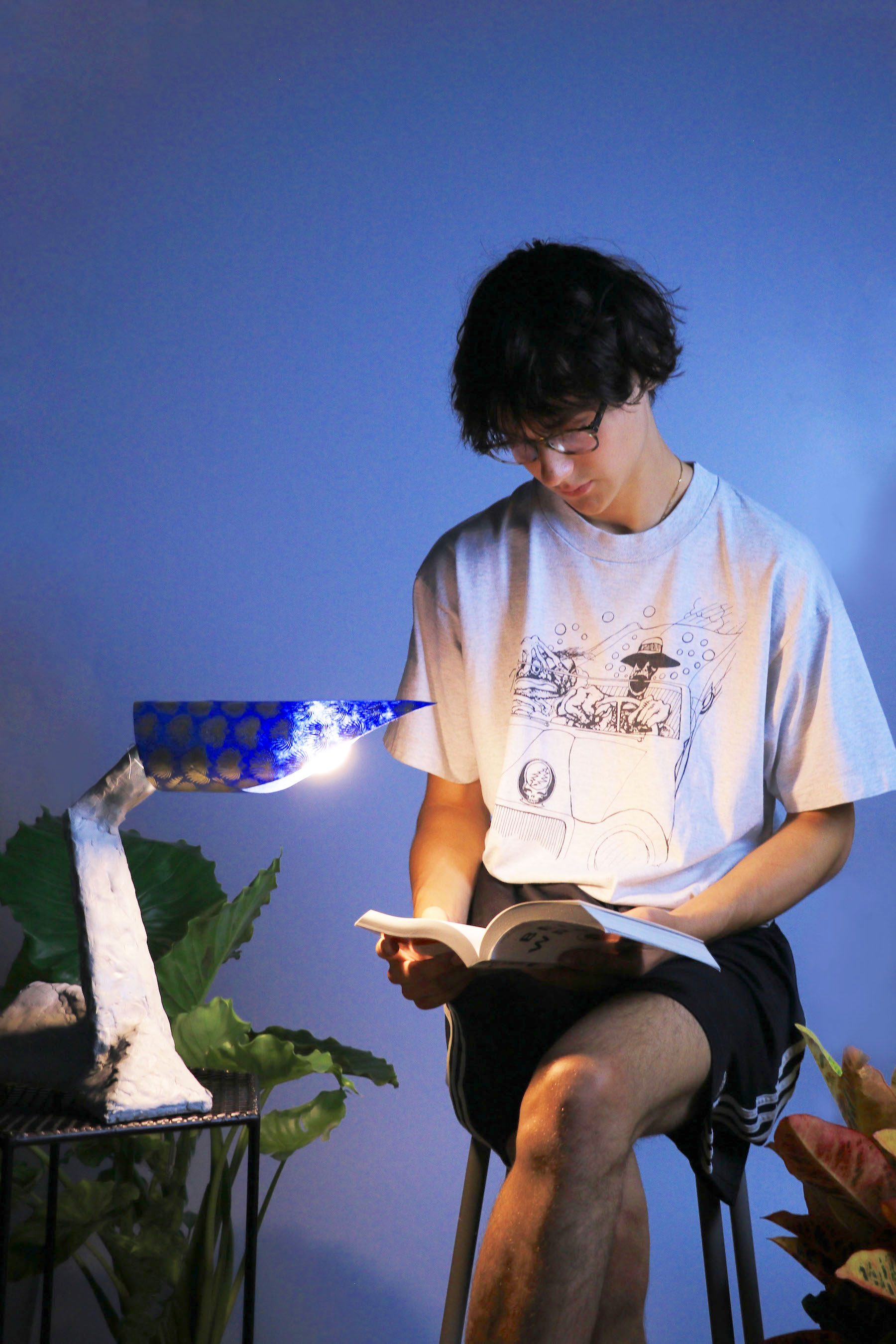
As Lemery preps a selection of supplies, Egan considers what style shade he should make for his lamp. Soon, he is glue-gunning strips of gold-embossed blue wrapping paper onto hand-curled hangar wire to create a beak-shaped shade for his lamp which, in a nod to nature, is inspired by the long-necked crane.

participants in summer seminars workshop

"My work has an organic mentality," Egan explains.

"Some designers struggle to embrace both masculinity and femininity in design," Lemery says. "What's great about Will's form is it has both sides, in part because it's derived from nature. How does nature intersect with the industrial world? That question has a lot of resonance."

In the afternoon, in The Shed at Montgomery Hall, Egan joins his summer seminar in industrial design, taught by Yueqi Wang (M.F.A., industrial design). Working as part of a team of three, Egan builds a large lounge chair, suitable for the beach. The team tests their chair as a guest group of SCAD graduate students critique their work.

Come Friday, Egan is wrapping up his week back at Gulfstream with a photo shoot featuring his finished lamp. "It's important for the students to leave here with good portfolio shots of their work," Lemery explains. Egan's lamp interacts with plants in a natural, even affectionate way—an impressive testament to the seminar itself.

participant in summer seminars workshop

"When students return home with their finished lamps, they often post pictures and tag me on Instagram," says Lemery. "It's really cool to know they had a positive experience at SCAD."

Egan is considering embracing the idea of continuing to make light fixtures when he returns to Putney School in the fall, and creating a light installation as a high school project.

"I learned a lot this week," Egan beams. "I'd never worked with corrugated plastic or Apoxie Sculpt before. I learned how to design lamps using clearly-defined techniques. I'm definitely glad I came."


Learn more about SCAD Summer Seminars.


Phillip Cox's submersible ideal

July
15
2019
By
Tags:

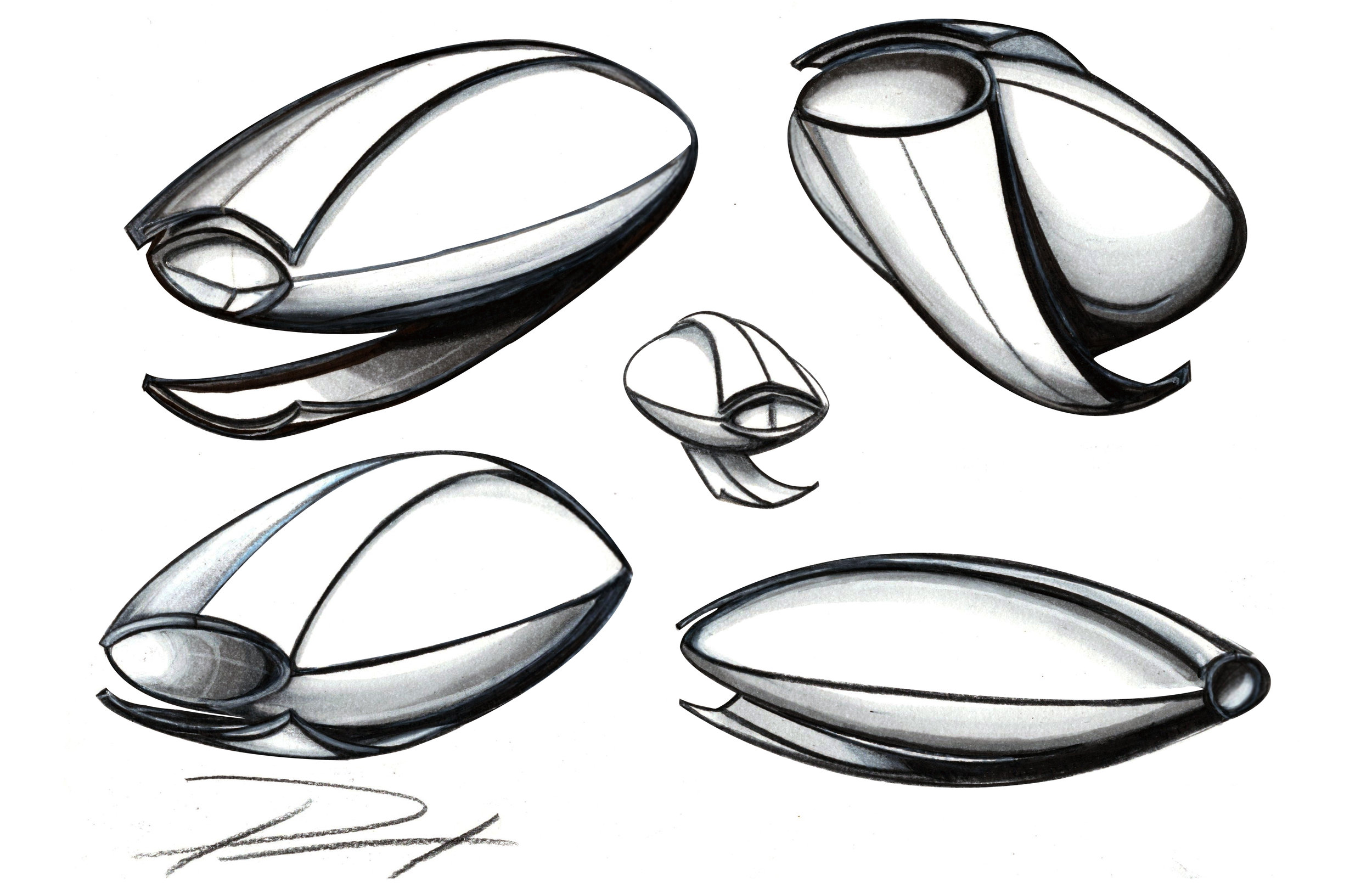
"As a marine designer," says Phillip Cox, "I aim to create beautiful ships with supreme performance and functionality to further the users' experience and their passion for being on the water." His masterful design for Cero, a luxury submarine, remains on display at Gulfstream Center for Design, inspiring SCAD students to push their own work to another level. Cox (B.F.A., industrial design, 2018) currently works as industrial designer at luxury boat company Cobalt Boats, based in Neodesha, Kansas.

Phillip Cox:

Growing up, my family always had a recreational boat and a fishing boat. It's like I grew up on the water, whether on Lake Cumberland in Kentucky, or in Florida on Sanibel Island. Fishing is really what began my interest in marine design. When I came to SCAD, I found my passion for industrial design, with a focus on marine design.

Senior industrial design class is a two-quarter class. One quarter was sketching and researching. The second quarter was adding all the design details that bring it to life. Professor Craig Smith trusted his students to shape our portfolios towards the careers we desired. I had two boats already in my portfolio—a 38-foot center console boat, and a smaller fishing boat with a unique hull shape. Professor Smith pushed me to do something outside the box. I decided to create a luxury submarine, which became Cero.

Sketches of Phillip Cox's submersible

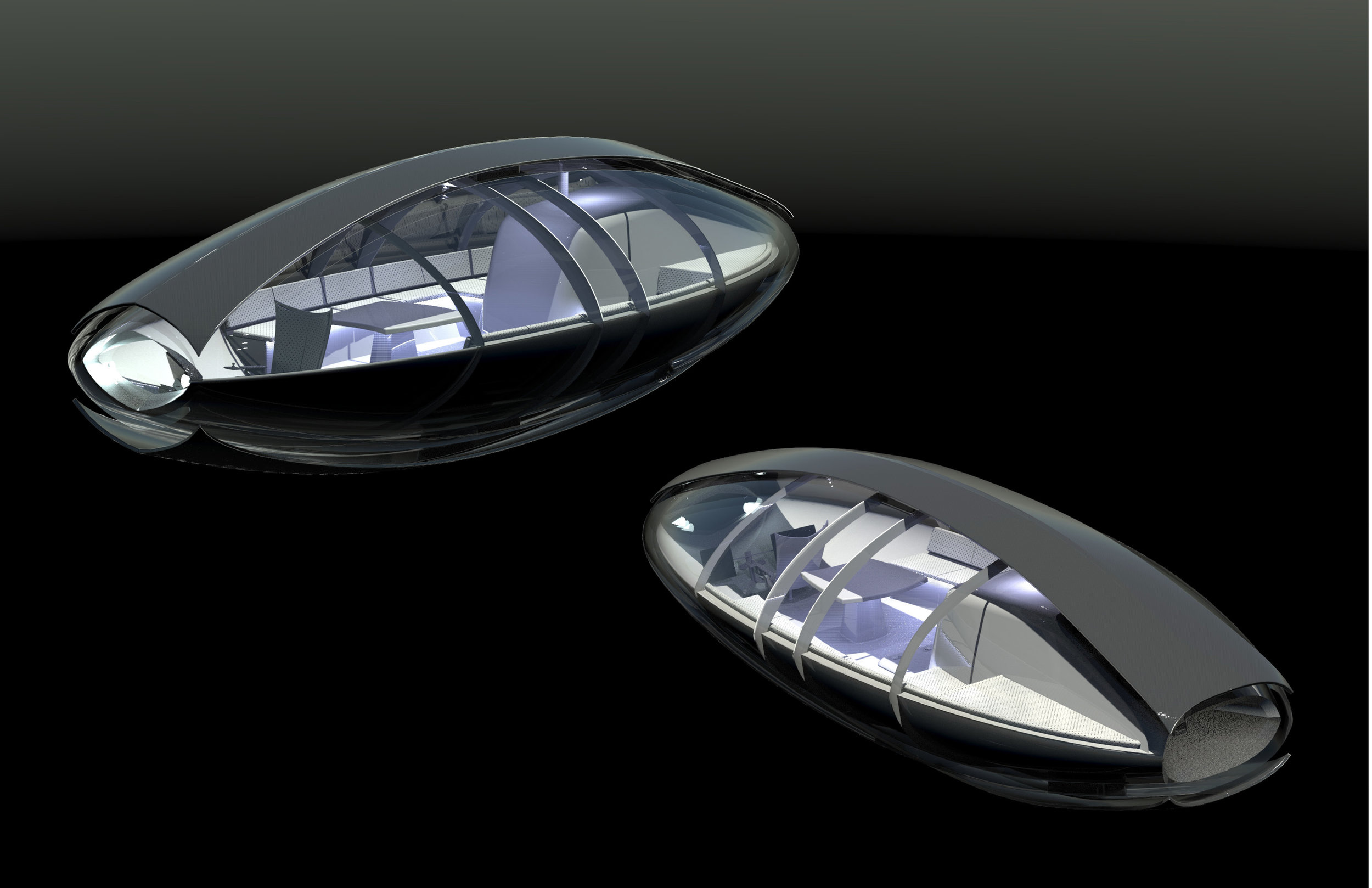
A submarine houses many necessities for it to function, so to employ all of those aspects and keep my initial design was pretty exciting. It involved a lot of mechanical engineering. The structure is two four-inch thick acrylic casted and polished shells bound by steel ribs. The finished shape is inspired by a puffer fish in its dormant state. The shape withstands the pressure to reach the ocean floor to explore marine life. During a hurricane, people on the yacht can get on the submarine and drop down below the effects of the waves and be safe and have enough battery power to keep them there until the hurricane passes.

Cero has two different propulsion types I designed. One is a diesel engine. The other is an environmentally friendly fully electric propulsion system. Typically for a sub, the engine runs on the surface, but here you have a fully-battery charged submarine using batteries charged on the yacht.

The current submarines on the market are cramped. I wanted to give Cero a communal feel with an open floor plan, and bring interior design and architecture into something that normally doesn't have that. It's not just about aesthetics, it's about creating something functional. Having an industrial design mindset and an engineering mindset working in tandem is important.

Renderings of Phillip Cox's submersible

At Cobalt, we're the industry leader for open-bow runabout boats. As the only industrial designer at the company, a lot of what I do is work with mechanical engineers to create functional pieces that are also attractive and luxurious.

Right now, I'm working on two boats that'll be in the 2020 lineup for Cobalt.  I'm working with Tim Kaiser, the manager of our advanced design team, to do everything from choosing thread color to designing the dash. We have upholsterers in our R&D team who work directly with me. I create renderings of the interior, then do mock-ups, source the materials, then gradually transform that into the interior of the boat.

Having an office and working in the Cobalt plant directly with the people who are physically making the boats is really a treat. It's an incredible experience seeing the process come to life.

See more at www.phillipcoxdesign.com.


'True Tail': fully funded!

July
2
2019
By
Tags:

Professor Zach Rich walks into Art's Café wearing his signature look: bright aloha shirt under a black vest, accessorized with a wide smile. The SCAD alumnus (B.F.A., animation, 2014; M.F.A., animation, 2017) explains that the Kickstarter campaign for "True Tail: School of Heroes" has exceeded its funding goal within a week of its launch. The action adventure animation, a product of Skynamic Studios, founded by Rich and Allison Sribnick (B.F.A., animation, 2012), is illuminated by its motto: "Every Hero Has a Tail."

Student work

Zachary Rich:

During my freshman year at Richmond Hill High School in Georgia in 2001, SCAD sent an informational packet in the mail with a DVD featuring student animation work. It inspired me to learn more about animation, and after graduating high school in 2005, I decided to apply to SCAD and got in. I knew I wanted to study animation at SCAD!

My sophomore year at SCAD, I decided that before making my senior film, I should do a practice run. At the time I was learning Adobe Flash, character animation, special affects animation, layout design and character design, but I needed experience in directing and managing a collaborative endeavor. For my practice film, I decided to use preexisting copyrighted characters, so that I could move right into preproduction. This also provided me with a finished product that I could study from and emulate, which would give me a better overall educational experience. I emailed Hasbro and Turner Home Entertainment, and received permission to use their characters in an educational context.

I then decided to combine characters from the shows "My Little Pony" and "The Powerpuff Girls" into a 30-minute animation called "Double Rainboom." It was a lot of fun, and provided me with a wealth of experience managing people and production pipelines. We wound up gathering an international crew of 105 artists spread all over the globe! Because we put the SCAD logo at the start of it, I still get students in my classroom to this day, who say, "You're the 'Double Rainboom' guy! I came to SCAD because of that!" I'm still shocked and humbled that it's been viewed over 60 million times on YouTube.

After finishing "Double Rainboom" in March of 2013, Allison Sribnick and I formed an artists' conglomerate called Skynamic Studios. That's when "True Tail" started, an original idea we came up with from scratch. After working on it for a year, in summer 2014 we pitched "True Tail" to Nickelodeon, and while they were impressed with our work, were told the version we had wasn't developed enough. So we kept working on it! And pitched it again. Then worked on it some more, and pitched it again, and worked on it further. Finally, after spending six years developing it, we decided to bypass the pitching process and pursue crowdfunding through Kickstarter, launching a three-and-a-half-minute animation on our Kickstarter page. We initially asked for $25,000 for a 3-5 minute pilot, but we did not expect it to fund so fast!

Now we get to sit back and see just how far the funding will surpass our original expectations. For example, reaching the $45,000 tier will allow us to make an 8-11-minute pilot. We already have the script, thanks to Allison's incredible writing skills. She handles all of the writing, while I focus more on animation supervision and technical direction. We both work on art direction together, and we have an excellent business relationship.

We're excited to Kickstart our pilot episode, and sometimes you need that crowdfunding buzz to attract the attention of a brick and mortar network. Hopefully a network will option our show, allowing us to create an entire Season (or two) of "True Tail" for our fans to enjoy. Our target demographic for "True Tail" is 7-10-year olds, although we definitely still want teenagers and young adults to watch and become fans of our show as well.

Aside from one day getting "True Tail" optioned as a cartoon series, I've also wanted to be a professor in a university environment since I was in grade school. I was a graduate mentor while I was a SCAD grad student, and spent a lot of my free time running weekly workshops, assisting professors with classes, and teaching Summer Seminars for high school students.

After I received my masters, I was hired as a professor at SCAD teaching computer art (CMPA). Starting fall 2019, CMPA is transforming into DIGI, which stands for digital communication. The name change reflects our renovated curriculum.  Students will still learn Photoshop and Illustrator and other computer software, but there will be a heavier focus on discussions, and reading about digital fluency, and what it means to live in a digital world. It's incredibly exciting!

Learn more at www.skynamicstudios.com