Skip to main content Accessibility Policy

SCAD Faculty Sabbatical Awards: Linda Warner Constantino

April
13
2019
By
Tags:

SCAD recognizes that continuous faculty professional development contributes significantly to the quality of teaching and learning at the university. The SCAD Presidential Fellowship and Sabbatical Awards programs provide eligible professors with opportunities to pursue professional growth and new or renewed professional achievement through study, research and practice.

In the past five years, a total of 86 SCAD faculty received sabbatical awards from the university. Two of the 2017-18 recipients were, intriguingly, SCAD professors specializing in botanical illustration: Linda Warner Constantino and Kristie Bruzenak. These simpatico professors, both highly accomplished botanical illustrators, have taken complementary paths to improvement as artists and educators, facilitated by SCAD Faculty Sabbatical Awards.

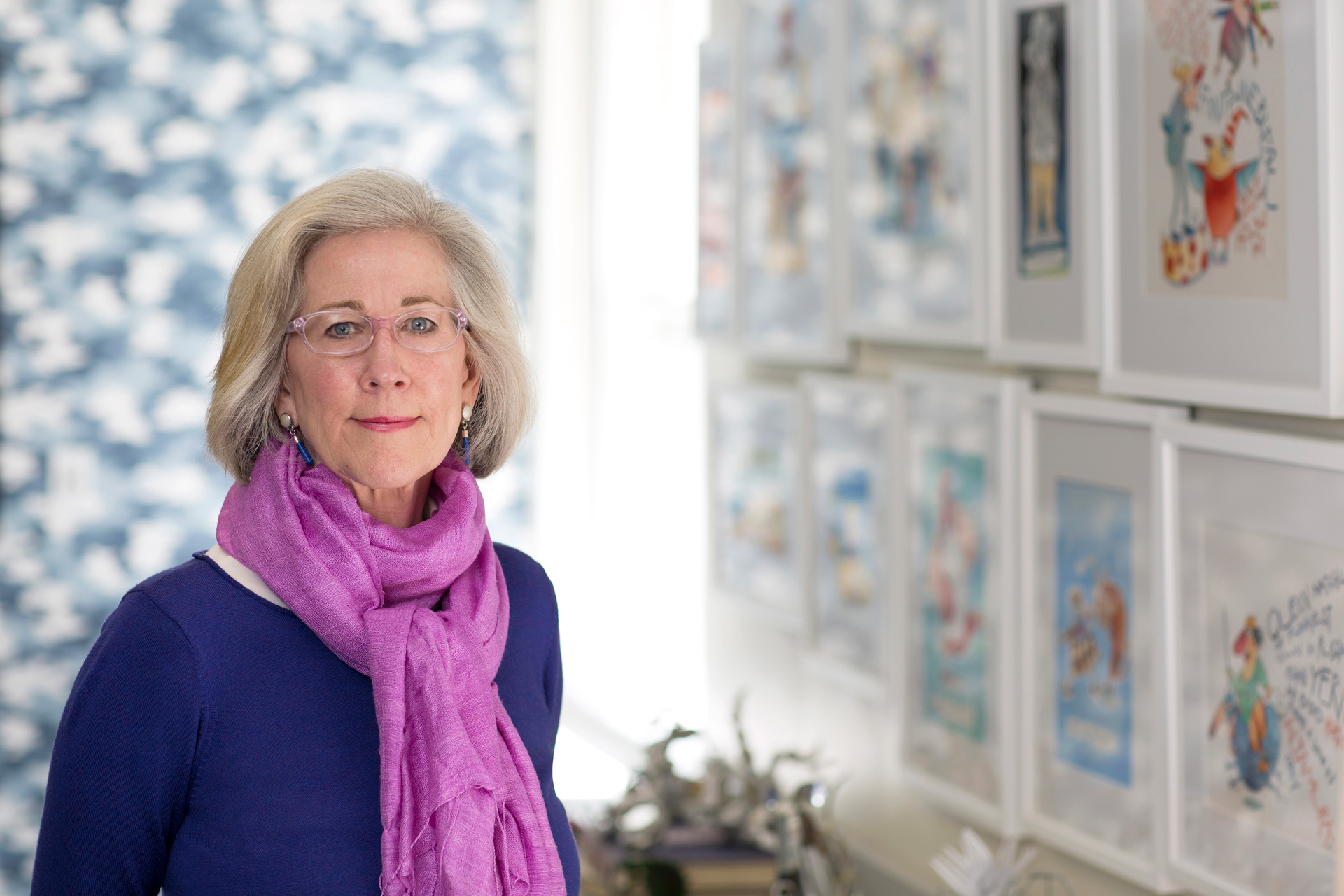
Linda Warner Constantino, professor of illustration, SCAD Savannah, received a 2017-2018 sabbatical award for her project "A Passion for Painting Plants: Botanical Painting Immersion for Professional Development." During her sabbatical, professor Warner Constantino attended two intensive botanical painting workshops led by Elaine Searle in Umbria, Italy in summer 2018. One workshop focused on botanical watercolor painting on vellum. The second workshop focused on creating botanical study sheets and observing the subject matter from a scientific rather than an artistic perspective.

Professor Warner Constantino also participated in a half-day workshop in London by noted botanical painter Billy Showell. Additionally, she attended the American Society of Botanical Art Conference in St. Louis, Missouri in fall 2018 where she participated in two workshops on botanical painting on vellum. The goals for her sabbatical project included improving her botanical watercolor illustration and learning new approaches to enhancing her skills. Throughout her project, professor Warner Constantino has been posting her work progress on Instagram.

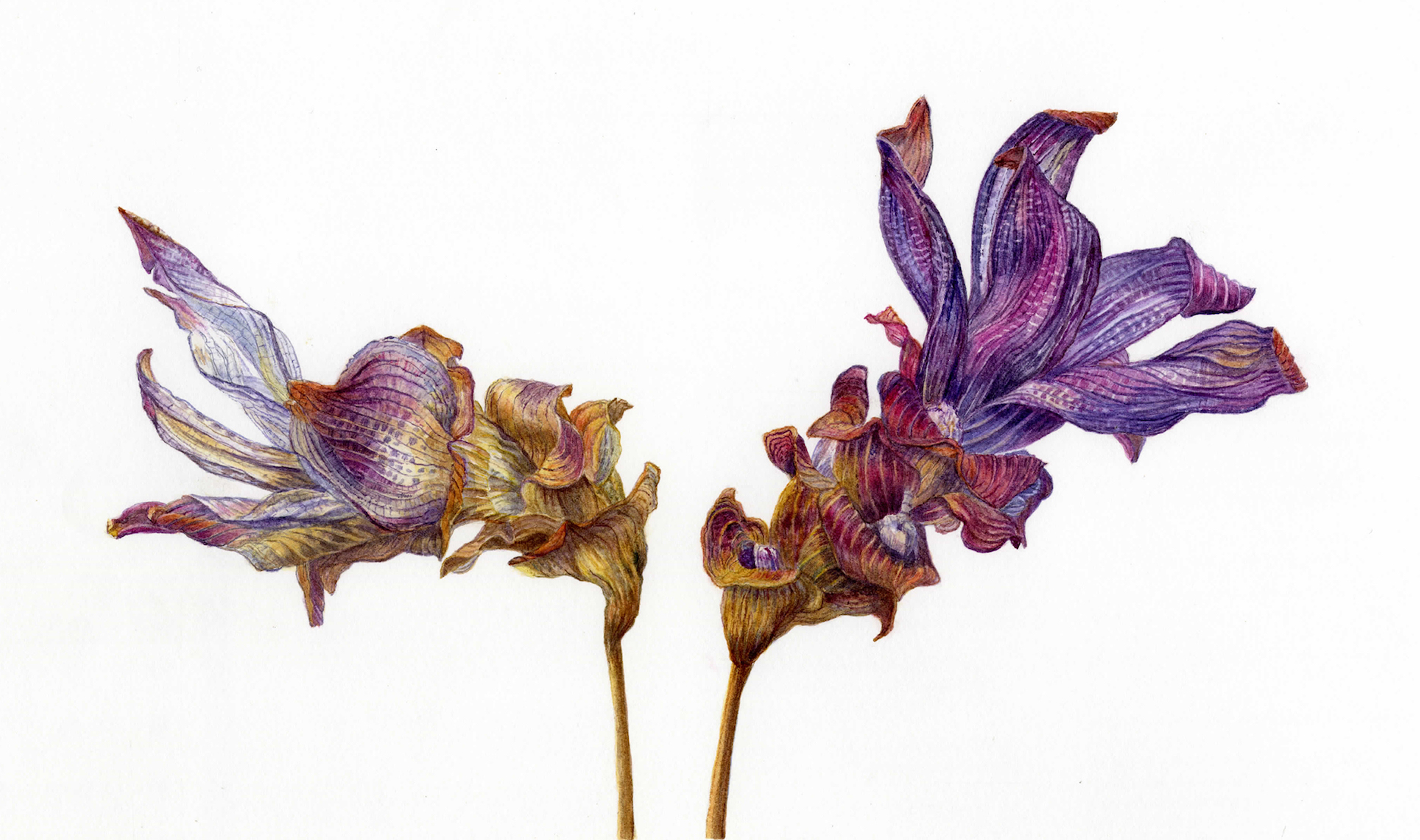
"Death with Dignity" (watercolor); curcuma flower.

"Death with Dignity" (watercolor); curcuma flower.

Warner Constantino

For the first installment of "A Tale of Two Sabbaticals," Warner Constantino spoke enthusiastically about her sabbatical award.

SCAD: How did you determine the subject of your sabbatical?

Professor Linda Warner Constantino: It chose me, in a way. I love watercolors, and am a loose landscape painter and illustrator. When the SCAD illustration department created a minor in scientific illustration, I asked to teach a class on botanical watercolor. I earned my certification in botanical painting through the British Society of Botanical Artists Distance Learning Diploma Course. This was funded by a SCAD Presidential Fellowship. The course was the most challenging creative thing I had ever done. I fell in love with it. My recent sabbatical award was dedicated to further improving myself as a botanical artist and illustrator. There is quite a lineage of botanical art in England and I have sought out the best to mentor me, so I can then pass what I learn on to my students.
 
SCAD: How will the sabbatical award influence your work as an educator at SCAD?

Warner Constantino: Before I even left for my sabbatical trip to Italy and London my students could sense my enthusiasm. I told them I couldn't wait to share what I learned upon my return. I enjoy teaching one-day all-day intensive workshops on botanical art where students get to slow down and focus. I emphasize focus, immersion, and skills and do not worry as much about completion in one day. Students enjoy connecting with nature in the creative way that only botanical art can.

The SCAD Presidential Fellowship and Faculty Sabbatical Award helped make me a better artist. Students respect SCAD professors as accomplished artists as well as capable educators. Enthusiasm is contagious.
 
SCAD: How will SCAD students benefit from your sabbatical experience?

Warner Constantino: I will be creating a series of four paintings on vellum and four study sheets as part of an exhibit that I will be having with my fellow professor Kristie Bruzenak in the winter of 2020.  This exhibit will be a celebration of nature and art with an emphasis on craftsmanship and process. My students enjoy connecting with nature in a creative way.

I held a well-attended leaf-painting workshop last fall. I also collaborated with professor Bruzenak to hold a series of workshops called the Orchid Project. Kristie held a workshop on drawing orchids and I held one on painting orchids in watercolor. Approximately 17 SCAD students who created orchid artwork entered their work in the Deep South Orchid Society show held in late March at the Coastal Georgia Botanical Gardens. Kristie's students won awards and so did mine. In the watercolor division, my students took first, second and third place and best of show.

I will be teaching a shell painting workshop during spring quarter in 2019. I also have incorporated study sheets into my botanical class. I am writing a botanical class elective for the graduate level, since there is growing interest as we evolve our curriculum. Professor Bruzenak and I both strongly believe that there is interest and opportunity to engage with this kind of art. These workshops and courses, supported through our sabbatical awards, create expanded learning opportunities for SCAD students.

Warner Constantino's work

See more of professor Warner Constantino's work at her website.

Stay tuned for part two of "A Tale of Two Sabbaticals" with professor Kristie Bruzenak.


Dr. Nelly Ben Hayoun's brainy bombardment

April
11
2019
By
Tags:

After three hundred-plus scintillating slides, amidst relentless positive verbosity, Dr. Nelly Ben Hayoun's hour-long lecture at SCAD MOA concluded with a neon projection: BE CURIOUS AND AMBITIOUS AND NEVER EVER GIVE UP. The students' ovation was a roar of joy.

The event, part of SCADstyle 2019, was Dr. Ben Hayoun's first visit to SCAD Savannah. A designer of immersive experiences for world-class clients including NASA, BBC, Mattel and WeTransfer, Dr. Ben Hayoun, a "Top 50 Creative Leader Driving Change in the World" (Creative Review) is the director of the forthcoming feature film "I Am (not) a Monster."

"The Williy Wonka of Design" was introduced by SCAD student Jenn Lee (B.F.A., UX design). "As a UX design major," Lee said, "people ask me how you design an experience. Dr. Ben Hayoun is an incredible example of how with enough creativity, discipline and passion, any experience, no matter how immersive and ambitious, is possible."

Ben Hayoun detailed the rigors of large-scale projects and running a growing studio, emphasizing the importance of specialization while expanding your base and range of knowledge.

"Change takes time. You want to get a design job that allows you to work long-term. Nurture your working relationships. Create trust."

A slide depicting Ben Hayoun in a hardhat at the Large Hadron Collider whizzed by. The energy in the room was commensurate with the Big Bang. "Ninety-five percent of the universe is made of dark energy," Dr. Ben Hayoun observed.

Amidst the seriousness of Ben Hayoun's projects, playfulness prevails. She described building an active volcano inside her London flat, and baking and serving a gooey cake to NASA scientists while pitching them on her International Space Orchestra. "At that point they agreed."

Among the attendees in the auditorium were students from professor Michael Chaney's Experimental Film and Installation class (FILM 365). The morning following her SCADstyle talk, Ben Hayoun visited their classroom at Savannah Film Studios.

"This class is an elective," explained Chaney. "These students take creative risks and want to learn more about creative risk-taking. They're introduced to different theories and philosophies including John Berger's 'Ways of Seeing' and Tom Gunning's ‘Cinema of Attractions'. We put it into practice, shooting films on our phones and screening them in different contexts. We call it contemplation in action."

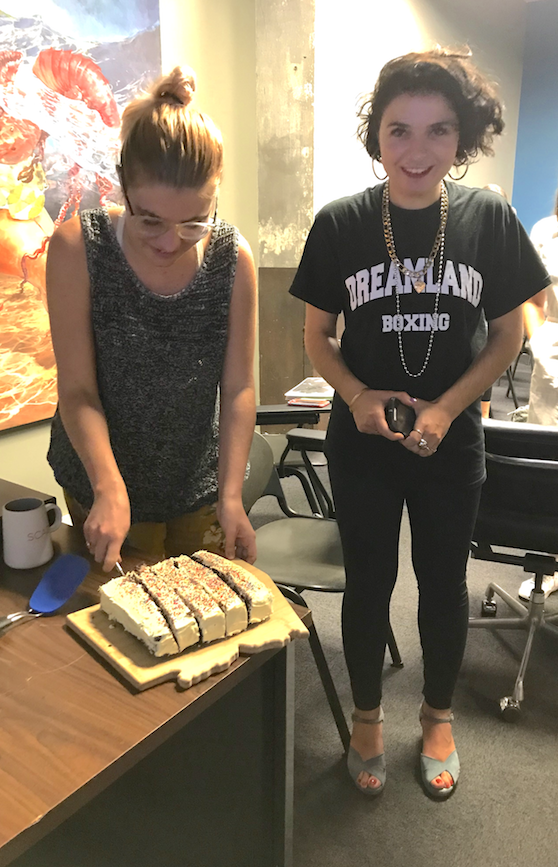
Dressed in a Dreamland Boxing shirt and the gold chains of a champion, Dr. Ben Hayoun beamed. "Sounds like a good time!" She asked the class: "What made you want to study film?"

Cassie Lee (B.F.A., film and television, 2019): "I come from a small town and documentaries were the way I learned about different perspectives in the world I'd never been exposed to. I'm interested in history and sociology. Films can manipulate and inform people's perspectives. Studying film helps me grow as a person."

The conversation was free-flowing, with students suggesting ideas including projecting experimental films around The Hive to attract passersby. Dr. Ben Hayoun gave practical advice. 

"Funding your film involves work. To write a grant application takes time. People who are awarded grants are methodical people. Look at the objectives and goals of the grants, what the committee are trying to achieve. Take their stated objective and write how you are going to accomplish exactly that. Read the guidelines and follow them. You have to do it."

Student Lizzy Bamford (B.F.A., film and television) edged forward. Inspired by Dr. Ben Hayoun's space orchestra anecdote, she presented the artist with a homemade chocolate sheet cake with buttercream frosting. Twenty-four hours of instructive inspiration concluded on a truly sweet note.

artist and student celebrating with cake

Learn more about Nelly Ben Hayoun Studios.


SCADstyle 2019


Illustrating the relevance of classical architecture

April
8
2019
By
Tags:

Sunlight streamed into the chapel of the Clarence Thomas Center for Historic Preservation on Friday afternoon as SCAD students from diverse degree programs and guests from the community gathered for a workshop spearheaded by the Institute of Classical Architecture & Art (ICAA). With materials placed neatly before them, attendees took their seats as Michael Mesko, ICAA fellow, introduced the first session.

"The purpose of this workshop," Mesko said, "is to demystify the language of classical architecture."

Over the course of the day, ICAA instructors expounded upon the adaptability of the classical language of architecture, its regional variations, and its relevance as a living and continuous tradition. The instructors presented erudite architectural concepts in an accessible manner. (At one point, Michael Mesko playfully described the capital of a Corinthian column as a "leafy salad.") Instructors referenced familiar examples of the classical orders in the city of Savannah and SCAD buildings, highlighting Kiah Hall as Doric, and the Scottish Rite building—which now houses Gryphon Tea Room and Art's café—as an example of the Ionic.

In a session on regional iterations of classical forms, Clay Rokicki, chair of the education committee of the ICAA's southeast chapter, described architecture as a form of narrative, possessing a particular thesis, storyline, and stylistic convention: "Just as you learn literary style and decorum as you learn to read, you learn to read the city by studying the language of classical architecture."  

Students put these concepts into practice as the workshop moved to Independent Presbyterian Church, where the Doric columns of the church's portico were used as a template for a drawing exercise. They scrutinized the granite columns, measuring tapes and sketchbooks in hand.

"This workshop has broadened my understanding of architecture itself," remarked James Christian (B.F.A., photography).

architecture student sketching outside

As the workshop drew to a close, students lined their sketchbooks along the steps of the church, a visual testament to the accomplishments of the day. Students and instructors commented on the unique elements of each sketch and the progress made throughout the workshop.

Aline Feijo (M.F.A., preservation design), emphasized the importance of studying the classical language of architecture: "The only way to create great architecture is to understand great architecture, architecture that has lasted for millennia."  

Earlier in the day, Stephen Chrisman, a principal at Ferguson & Shamamian Architects in New York City, had referenced 16th century drawings of the Pantheon by two anonymous French architects. The drawings had a particular poignancy for Dr. Geoffrey S. Taylor, dean of the SCAD School of Building Arts.

"Those architects used the Pantheon as a template for understanding the classical language of architecture," Dean Taylor remarked. "It's inspiring to see SCAD students going through the same process, five hundred years later."


Stay current with SCAD events here.


Celebrating a decade of SCAN Magazine

April
3
2019
By
Tags:

Founded in 2008, SCAN is the award-winning quarterly print magazine showcasing the SCAD Atlanta community from the student perspective. Ten years, thirty issues and more than 200 awards later, SCAN is going strong.

"From its inception, we always knew we wanted SCAN to be different, which is why we focused on a lifestyle theme," said Makensangla Payne (M.F.A., fashion, 2018; B.F.A., fashion, 2010), the first editor-in-chief of SCAN. "Being a global university, it was imperative to reflect SCAD's international flair and make SCAN diverse, fresh and relevant." Payne, currently SCAD executive director of international student recruitment and relations, has seen every subsequent issue. "Every contributing team has done an exemplary job of creating, designing and connecting with its audience."

cover of scad magazine

A typical issue of SCAN includes the work of approximately 35 students. From planning to printing, every bit of every issue — staff photos, tables of contents, sets for fashion shoots, makeup, illustrations — is completed by a team of dedicated students. As Anya Haber (B.F.A., fashion), 2018-2019 editor-in-chief, explained: "The collaboration among dozens of students with different perspectives and majors is what makes SCAN so visually stunning and engaging."

More than 500 students—freshmen through graduate students—have worked on SCAN, growing as artists and designers while preparing for creative careers.

Osayi Endolyn (M.F.A., writing, 2014), editor-in-chief, 2011-2012, said: "I'm proud of creating opportunities for other students to participate and find a place for themselves within student media. One student designer I recruited found a mentor on staff in a fellow student, and that connection changed the course of his early career. Another student was extremely shy and wasn't sure she could offer anything to the student media team. By the time I graduated, she was in a leadership role on staff. Both that writer and designer are still working in their respective fields."

Erin White (B.F.A., writing, 2014), editor-in-chief, 2012-2014, uses the skills learned at SCAN in her career. "So much of my perspective on journalism and media was shaped by my experiences at SCAN, from learning best practices as a proficient, responsible reporter, to operating in a newsroom setting as part of a team. I use the same content budget, interview basics and creative integrity that I learned working on SCAN. What I use most are the fundamentals!" 

SCAN has earned more than 200 regional and national awards, including two Gold Crowns (2015, 2019) and two Silver Crowns (2017, 2018) from the Columbia Scholastic Press Association. Students have earned awards individually for their photography, writing, illustration, advertising and graphic design from top national organizations for college media. Emma Dakin (B.F.A., graphic design, 2018), editor-in-chief, 2017-2018, said: "I'm proud that SCAN and the students who work so hard at making interesting and creative issues are consistently recognized with some of the nation's top awards for student media."
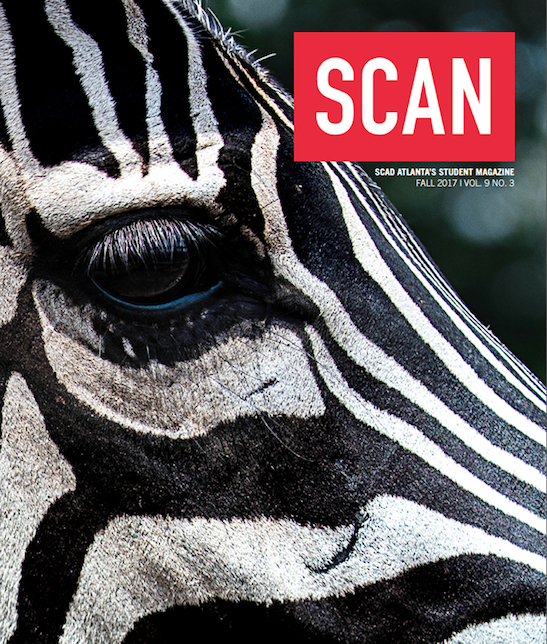
cover of scad magazine

Adam Crisp, director of student media, SCAD Savannah, said, "Though SCAN is principally an Atlanta campus publication, it is sought after at all SCAD locations for its impeccable photography, superior design and thoughtful storytelling. SCAN shows the talent of our students, and provides a superior out-of-classroom learning opportunity for its contributors and editors."

"I love seeing people reading SCAN," added Haber. "I'll miss being stopped in the hall by a student who recognized my picture from the staff page, telling me how much they loved the latest issue, and asking how they can get involved."

scan logo

Want to help celebrate SCAN's success?

Visit the ACA Library, Friday, April 19, 11-1 p.m. for "Friday Finds" to see back issues and ephemera from all 30 issues of SCAN.

Current and former editors will be there to discuss how you can get involved.
 

Alice Kandell: beyond Sikkim

April
1
2019
By
Tags:

"Objects that are considered art historical don't live in cultural vacuums," announced Dr. Arthur DiFuria, SCAD chair of art history, from the auditorium stage of the SCAD Museum of Art. "They don't sit on shelves or exist inside vitrines or hang on walls all their lives. They are woven into cultural fabrics, connected to the lives of the people who made them, use them, study them and are inspired by them. Perhaps tomorrow you will go into the classroom with a greater sense of this connectedness."

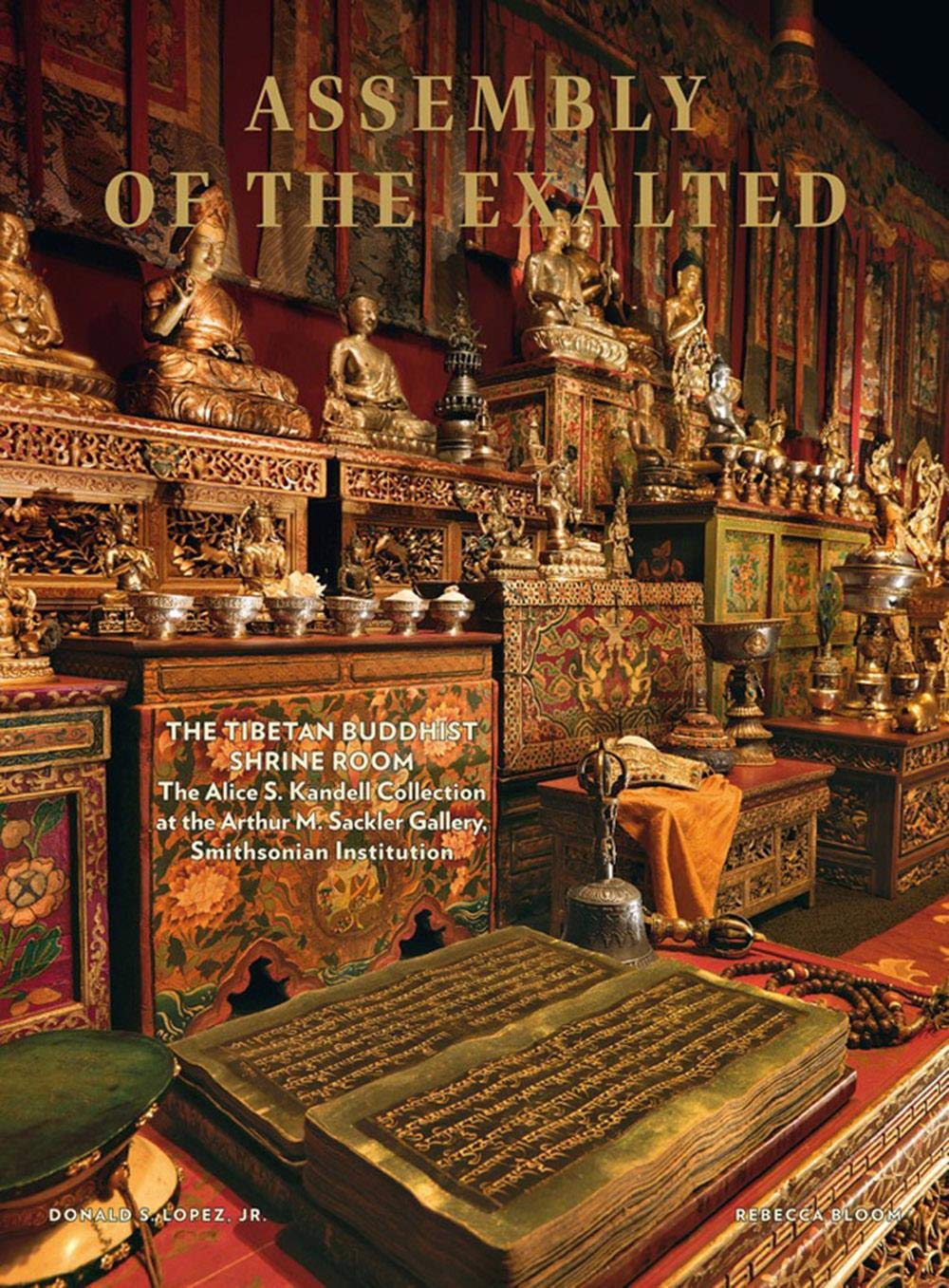
Dr. DiFuria's remarks were a preamble to a presentation by author and collector Alice Kandell, celebrating "Assembly of the Exalted: The Tibetan Shrine Room from the Alice S. Kandell Collection" (Officina Libraria, 2018), a new book about her half-century commitment to Tibetan art. Dr. Kandell's talk, ranging from sense memories of yak butter tea to the efficacy of tangling with the Smithsonian, was a fantastic example of the level of guest speakers and artists who visit SCAD.

Dr. Kandell's reminiscence began in 1965 when, as a graduate student in psychology, she traveled to attend the coronation of the new king and queen (the latter a friend from college) of Sikkim, a tiny nation in the Himalayas bordering India and Tibet.

"When I got to Sikkim," Kandell said, "I was totally overwhelmed by the beauty of the country: the mountains, the air, the people, and most of all the art. In a Buddhist country, the word ‘art' is a complete misnomer. It's not art, it's religious iconography, objects for use in the home and temples."

Sikkim man with buffalo

Photo: Alice Kandell


Since her initial trip to Sikkim, Kandell returned to the region, photographing widely at the king's behest. She also began a collection of religious objects, which now comprise the most comprehensive collection of Tibetan sacred art in the United States.

"Great art does not belong to any one person," Kandell said. "We're just guardians. In 2011, I decided it was time for my collection to go into the public domain. The Smithsonian finally agreed to present the pieces together as a shrine, as it would've been in Tibet."

As Kandell's slide show peaked with depictions of otherworldly richness, she pivoted. "You don't have to travel to coronations in foreign nations, you know. If you're a photographer, and you like to tell stories, you can go wherever you want. You can travel to the kitchen. I did."

After returning to the United States, Kandell explained, she married and became something of a homemaker, although she didn't stop creating: two books, featuring photographs of her then-toddler-aged sons, were the result: "Max, the Music-Maker" (Lothrop, Lee & Shepard, 1980) and "Ben's ABC Day" (William Morrow and Company, 1982). This seeming tangent was part of Kandell's larger point: inspiration is where you find it—just keep your camera with you.

The evening concluded with additional remarks on Kandell's work by Kerry Lucinda Brown, SCAD professor of Asian art history, and SCAD alumni mentor Paula Fogarty (M.A., art history, 2013). Following a Q&A, the magnetic Kandell remained in the museum lobby, surrounded by SCAD students whose creative horizons she had just widened, eager for more.

cover of assembly of the exalted

Learn more about the Kandell collection, and the free Sacred Spaces app, here.

Learn more about SCAD art history and stay up-to-date with SCAD events.


Matthew Sgambati: 'Sabi'

March
28
2019
By
Tags:

Veins in a wrist flow into the ribbing of a sweater. A hand is angled across a freckled clavicle.  An arched eyebrow suggests wisdom and wonder. Unembellished yet elegant, these images of women are the substance of "Sabi."

"Sabi," titled after the Japanese concept of transient beauty, was created by Matthew Sgambati (B.F.A., photography, 2019) for The Photographic Book (PHOT 405), a ten-week class taught by SCAD photography professor Jaclyn Cori Norman. Over the course of the quarter, each student conceptualized, shot, and laid out two complementary, physical versions of their own book of photographs: one handmade, the other produced via an on-line publishing platform.

In a class whose work encompassed diverse aesthetic and thematic visions, Sgambati's "Sabi" represents a remarkable standard of excellence.

Portrait by Matthew Sgambati

Matthew Sgambati:

I'm from Raleigh, North Carolina. I attended Broughton High School, and played saxophone in marching band, but it wasn't until I picked up my first camera, a Nikon D50, that I realized creativity is something I really have to offer the world.

I've always appreciated craftsmanship, whether that's ceramics, sculpture, bookmaking, or any traditional process of making something with your hands. Going into The Photographic Book, professor Norman said, "You're going to shoot more for this class than you ever have." I thought, She means businessgood.

My concept for "Sabi" was to photograph women of a certain age, and have the images be fashion-based. Professor Norman made me question what direction I wanted the book to go in. Did I want to depict the vulnerable side of aging? My idea was to emphasize beauty, and for the viewer to perceive the images as being beautiful. I didn't want to hide who these women are.

I had not heard of "the male gaze" before this class. It's something I think every male photographer should be aware of: Be mindful of objectification. To focus on elegance, rather than sensuality, was important for me. Those are two different things. But where is the line?

I always try and make the subject aware of what I'm trying to do. Photographing someone involves an equal distribution of effort. When the person you're photographing understands your intent, it means more emotional engagement and visual insight.

Portrait of a woman by Matthew Sgambati

Little details make a pose successful: position of the chin, looking towards or away from the light, hand in pocket without thumb, hand slightly out of pocket with thumb in pocket…these are the sort of details we experimented with. I directed every pose with Lian Najarian (B.F.A., fashion marketing and management), my stylist and collaborator. It was a team effort.

One focus of the class was how to lay out a spread so images interact with each another. Are you looking at photos that relate and flow in a certain way? In "Sabi" certain colors mimic each other from spread to spread. Noticing a monochromatic color scheme in an image, or a pop of red, I realized I could play on that while laying out the book. A woman leans in a certain direction, leading you across the page. Sequencing makes all the difference.

Everyone in the class went through the process of learning to communicate with each other respectfully about our work. That began with professor Norman, her intentional connection with the students, and how emotive she was as a professor. That helped build stronger connections within the class. I'm really proud of what we all accomplished.

Photograph of Matthew Sgambati by Eva Verbeeck (B.F.A., photography).

Photograph of Matthew Sgambati by Eva Verbeeck (B.F.A., photography).

"Sabi" styled and assisted by Lian Najarian, with clothing from Thread+Onion.


"Sabi" now available for purchase.


Matt Smith, running type

March
13
2019
By
Tags:

Matt Smith (B.F.A., graphic design, 2017) holds the SCAD record in the marathon (2:34:56 in Albany, Georgia, 2017) and in the 8000 meters (24:43 at Sand Shark Invitational, 2016). In February of this year, Smith returned to Savannah for a runners' reunion on Tybee Island, where SCAD men's and women's track team, along with alumni, swept the podium places at Critz Tybee Run Fest.

Smith currently lives in Bushwick, Brooklyn and works as a type designer at Louise Fili Ltd. Esteemed in the design world for the type foundry directory hosted on his website, Smith is also a keenly contemplative writer. Were he to devote himself to a career as an essayist, he could be Chesterton in track shoes. But for Matt, the font's the thing.

Matt Smith:

I grew up in Florida and attended New Smyrna Beach High School. My father is an airbrush artist and muralist. I have a brother and two sisters, all older than me, all artists. It's like I've always been interested in art and design.

I got a late start with running, my junior year of high school. I wasn't sure if I had a chance to run collegiately. Since I had an interest in art and design, SCAD seemed like the right place for me. I ended up walking onto the team. They were open to me giving it a shot.

Coach Patrick Reagan played a pivotal role in my running career and my focus as a student. When I arrived in the fall of 2012, Patrick wasn't running that much. He started to jump into workouts, and I witnessed his transformation into an elite ultrarunner who's made a mark on the world stage.

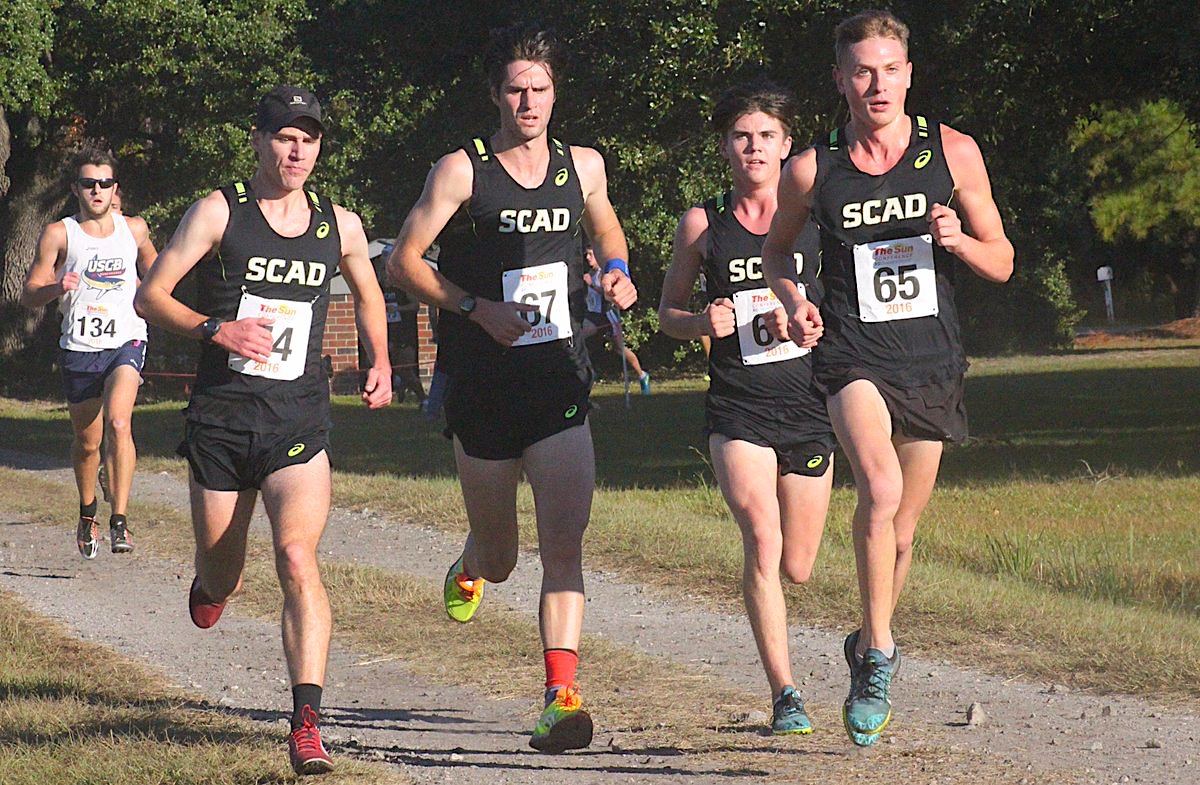
Smith, in black cap, running for SCAD, 2016.

Smith, in black cap, running for SCAD, 2016.

Running helped me become the self-disciplined person I am today. In New York, I've been doing more work recently with the Brooklyn Track Club, who are in the process of starting an elite team, BKTC Elite. I'm traveling to Berlin in the fall. One of my former teammates Emanuel Krieg (B.A., advertising, 2016) is in Germany, so I'll see him, get acclimated, then run the Berlin Marathon.

Studying graphic design at SCAD, I spent a lot of time reading and learning about type and lettering. Lettering is the drawing of letters, while calligraphy is the writing of them. Professor Jane Zash helped me explore hand-lettering in my Studio II class. My senior year, professor Patrick Hogan taught a type design class that helped me understand how letter forms are constructed.

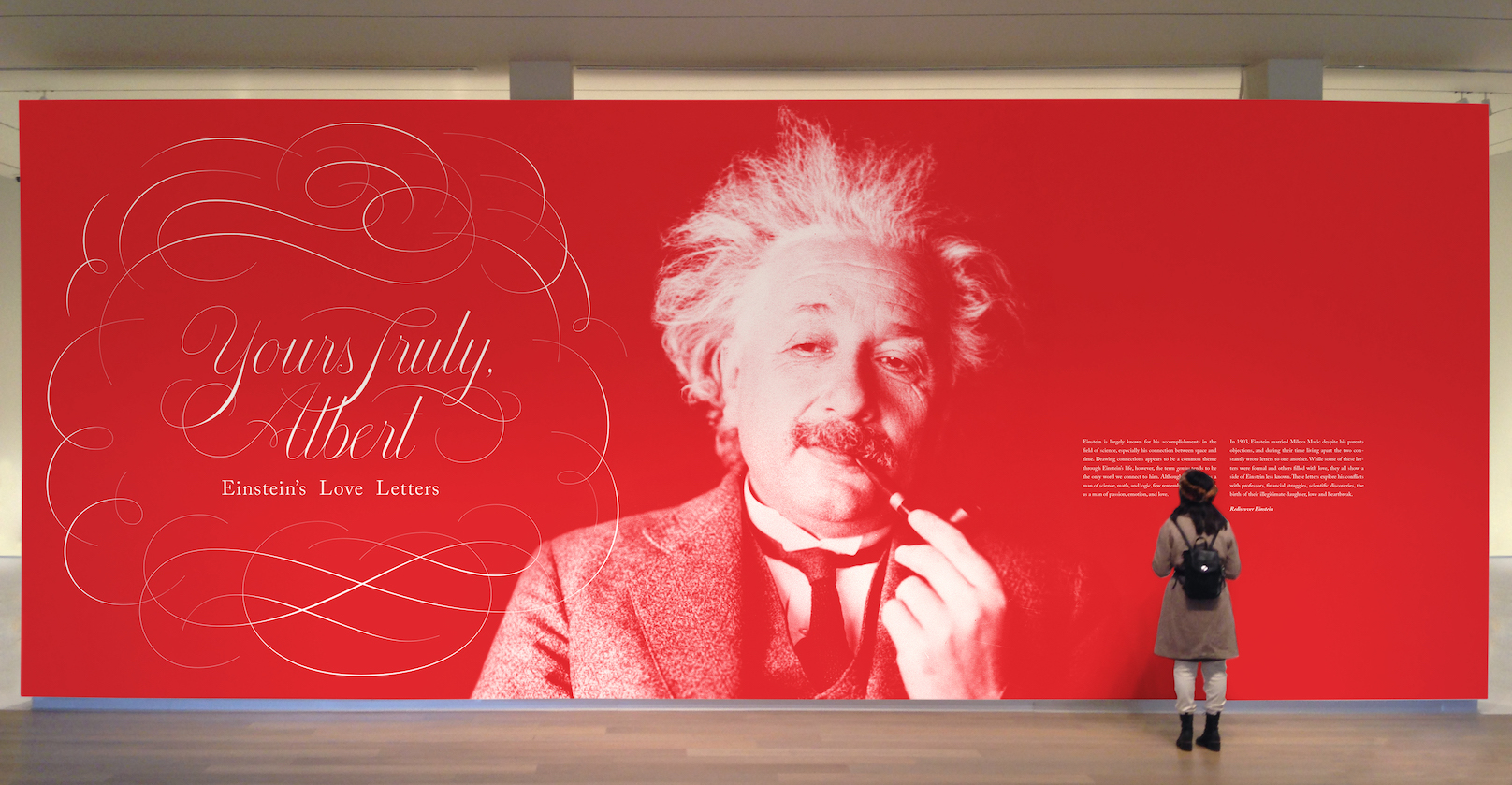
Matt Smith, exhibition concept, "Yours Truly, Albert" 2017.

Matt Smith, exhibition concept, "Yours Truly, Albert" 2017.

From drawing by hand with pen and paper, to drawing on the screen, to coding in Python, as soon as I've figured out something, there's something else to learn. As new technology arises, there are new ways to build fonts. People say we're in a contemporary renaissance of font and type design, because of how accessible it is and how many people are creating fonts. It'll be interesting to look back in twenty years and see which cultural artefacts have survived.

In July I'll have been a designer with Louise Fili for two years. Louise has a long history of creating custom typography and custom lettering. Our clients are often specialty food packaging and restaurants; we've done work for American Spoon and Sarabeth's. We're developing a mini-site for an upcoming release of a family of fonts we're developing. We're a small enough studio where I can take everything I've learned and put it to the test and learn new things while I'm doing it.

When I look at my life as a runner and designer, I’m thankful SCAD was the perfect match.

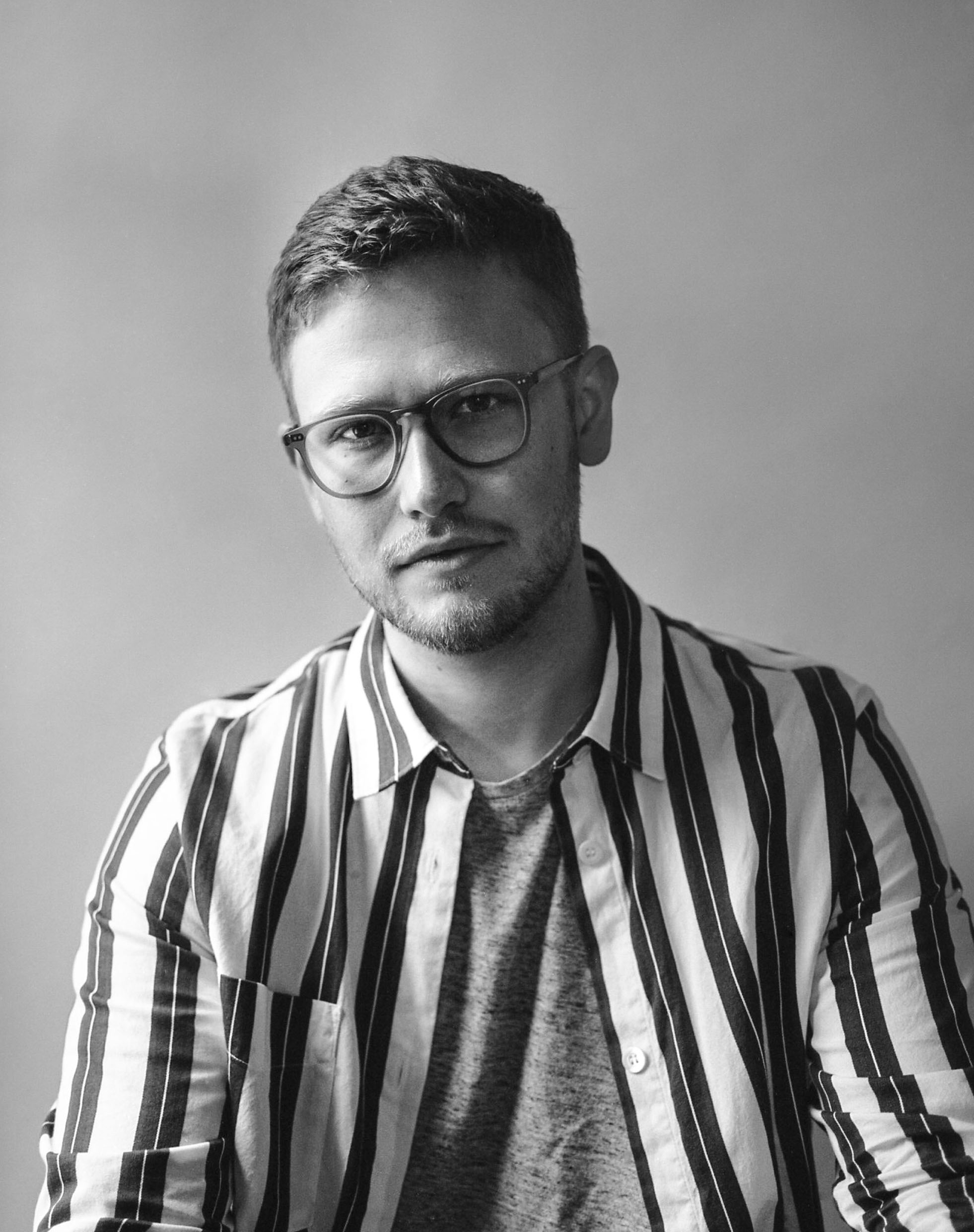
photo of Matt Smith

(Image courtesy Louise Fili Ltd)

See more of Matt Smith's work here.


Inside 'The Pages of Destiny'

March
7
2019
By
Tags:

At a special event Wednesday evening at Trustees Theater, Emily Dillard (B.F.A., advertising) and Nico Rinciari (B.F.A., film and television) stood together before the purple proscenium, the Savannah Arts Academy orchestra seated to their right.

Dillard, producer of "The Pages of Destiny" – a new short film written and directed by Rinciari – addressed the audience: "It's important to acknowledge how many families we have here tonight. It starts with the love and trust of your family for you to go and do something great. And then that new family you find, in that new place, the family of creators and collaborators who become part of a greater family. It means the world to all be here together tonight."

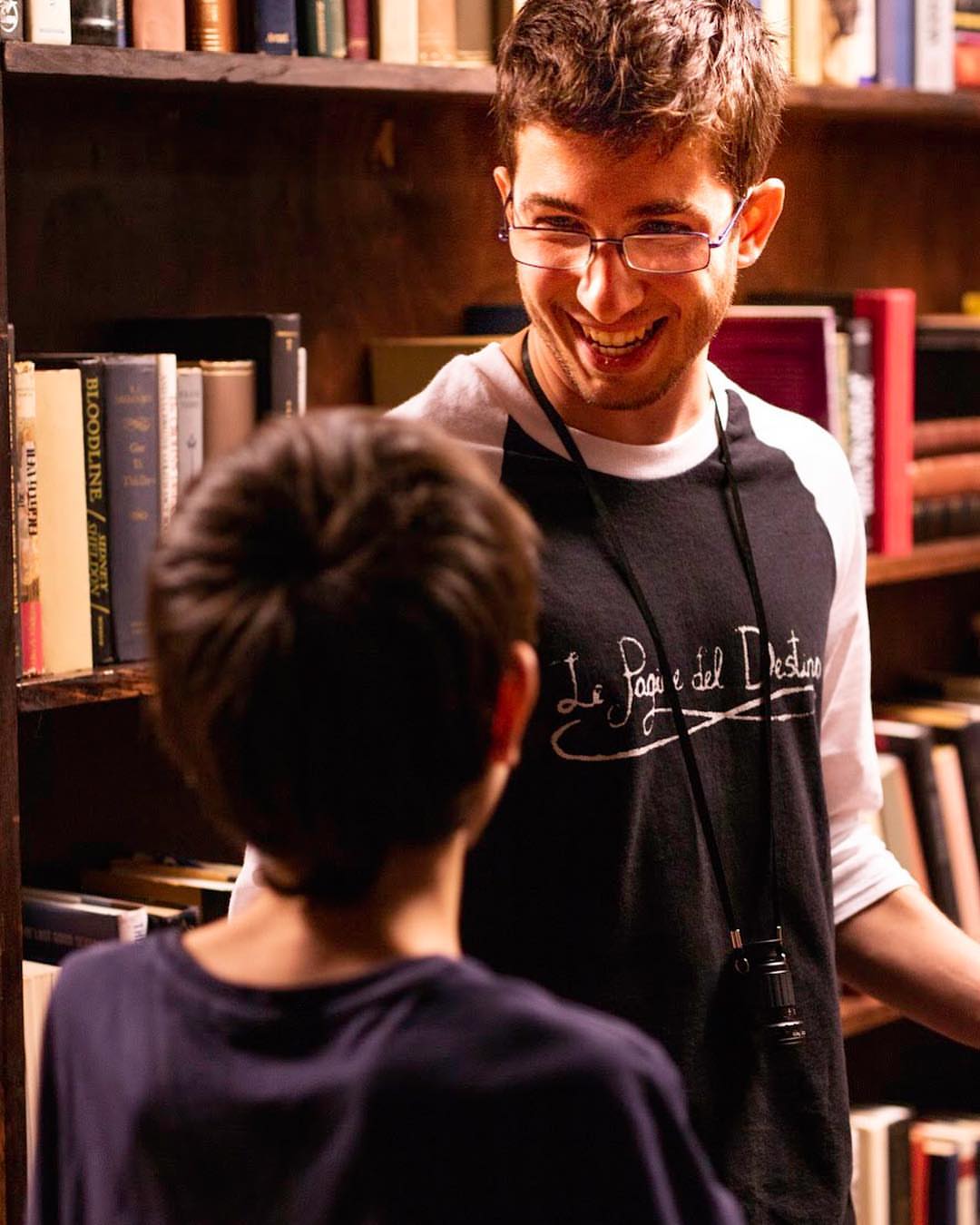
behind the scenes of The Pages of Destiny film

"The Pages of Destiny" is a short film about a boy's relationship with an extraordinary bookshop, created in collaboration by students from SCAD, the University of Siena, and Savannah Arts Academy. To emphasize the expansive unison effort, members of the production team and SCAD professors Mitch Gettleman (sound design) and Joe Pasquale (visual effects) delivered brief remarks from the stage. Screened clips from the work-in-progress were accompanied by excerpts from the film's score performed live by the high schoolers from Savannah Arts Academy. 

"We are honored to be able to work with the composer of this music," said Savannah Arts Academy music teacher and orchestra leader Emily Calhoun. "A lot of the music we perform is by composers who are long gone. To be able to talk with the composer, and have the composer sing the phrase as he imagined it when he wrote the music is phenomenal."

Visual effects supervisor Matthew Utterback (B.F.A., visual effects) spoke on the film's computer-generated aspects, including seasons changing as seen through a window, and a magical book jumping off a shelf: "Visual effects make the bookshop come alive."

Additional insight came from cinematographer Joseph An (B.F.A., film and television): "The best part of making a movie is doing it with people who want to make a movie. Storytelling is a language those of us here have learned to love and live for. I've been able to use our jib, dolly, Steadicam and lights. There are professional productions out there struggling to get access to the kind of gear we have here at SCAD."

Judging by the tantalizing screened scene, "The Pages of Destiny" has the enchanting aura of films like "Cinema Paradiso" and "Hugo" with a heart and soul all its own. The film demonstrates the power of books to bridge innocence and knowledge, its bookstore epitomizing a magical sanctuary. The astonishing score is done justice by the Savannah Arts Academy orchestra (who recently performed at the Kennedy Center). Flutes add delicacy to melody; a harp brings counterpoint to pizzicato violins; a vibraphone demonstrates pages turning in a dusty, glowing tome. "All the boy wants to do is find this golden book," producer Dillard said. "In the end, tonight, we'll let the music tell you if he finds it."

The orchestra performed the final sound cue with a flourish, as the maestro stepped forward. Rinciari's remarks were limited to brief, heartfelt thanks to the collaborators whose work had done the talking for him.

Afterwards, next door, Leopold's Ice Cream was serving a special Pages of Destiny Peanut Butter Sundae. A sweet evening to the last.

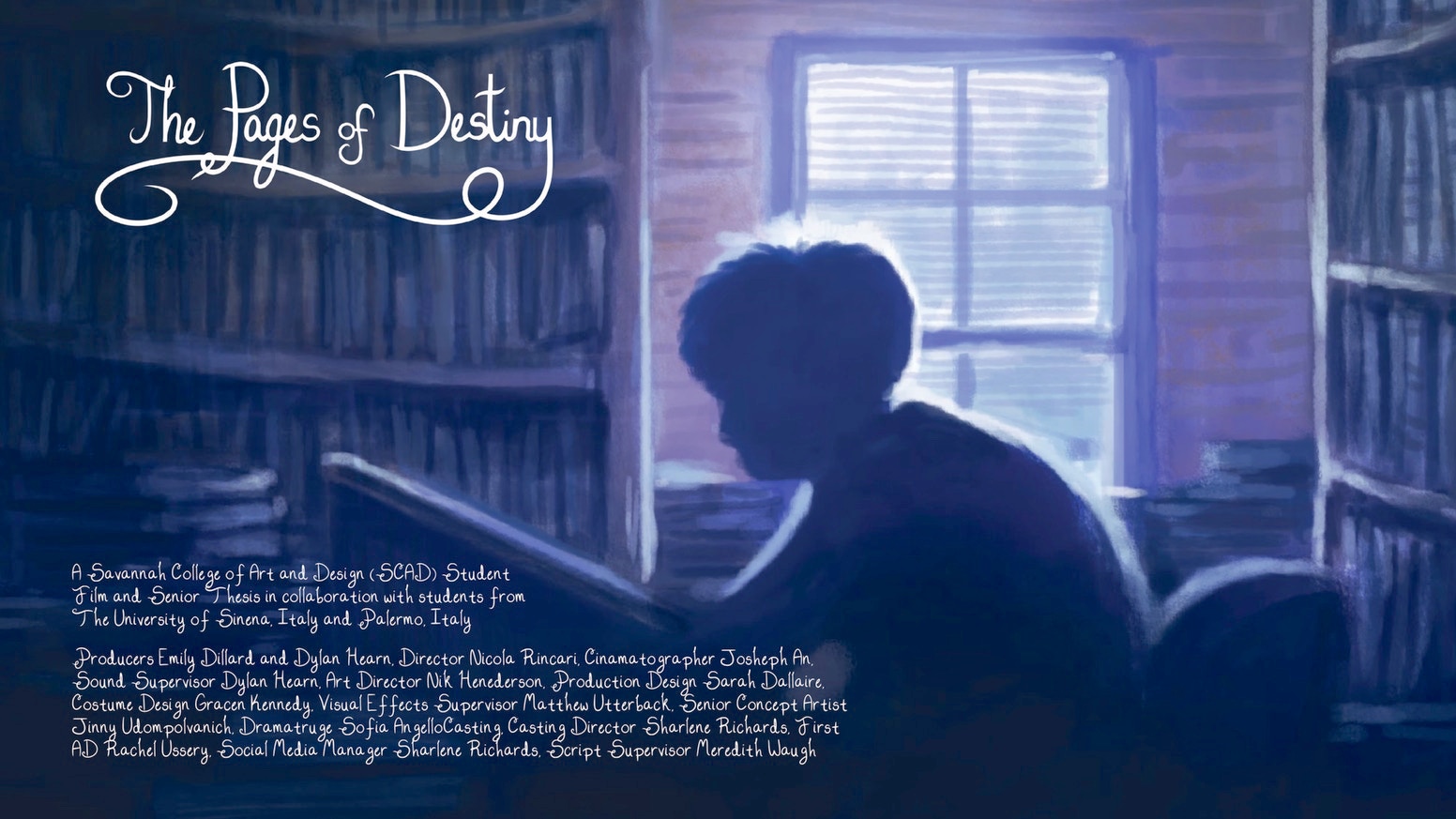
cover image for The Pages of Destiny film

Learn more about "The Pages of Destiny" at the film's official website and Instagram.


The value of Dierra Jones' jewelry

March
5
2019
By
Tags:

Dierra Jones' jewelry tells stories. Enameled tree branches, pocked ceramic brooches and tangles of copper wire suggest place, character and emotional upheaval. To witness her work is to learn something significant about her life.

A native of Petersburg, Virginia, Jones (M.F.A., jewelry) has worked the past two summers at arts camps in New York, and is currently a mentor for elementary school students in the Savannah public school system. "After I graduate, I would like to have my own studio space, and start a non-profit working with children," she says, "a place where we can create art together."

Dierra Jones:

With my studio practice, I experiment until I perceive an end goal. I enjoy tedious work and creating repetition. I don't think about it in the moment, I'm just doing. I allow my work to speak for itself, and to act as my voice. There's an act of transference that takes place. For the viewer, I hope they can take it in and reflect on their own lives.

Jewelry can be anything you want it to be. My jewelry often assumes a sculptural form. Rather than something intended to be worn, it's for seeing. With one piece I created, a letter to my mom, I printed words on pillows and a bedspread. I describe it as a piece of jewelry, because jewelry doesn't have to be a piece that you wear, it can be words that people speak that stick to you.

In Contemporary Issues in Jewelry (JEWL 724) with professor Lanelle Keyes, I started playing around with ceramics and different processes, making gestures and marks in clay. I began electroforming, a process where you take an object, coat it with copper conduct paint and connect it to a copper rod, so that copper particles build on top of it. I've created pieces of ceramic covered in electroforming. I electroform wood as well.

I'm drawn to the properties of copper. It's not about the value of the metal itself, it's about the value of the stories that come forth through the materials you use.

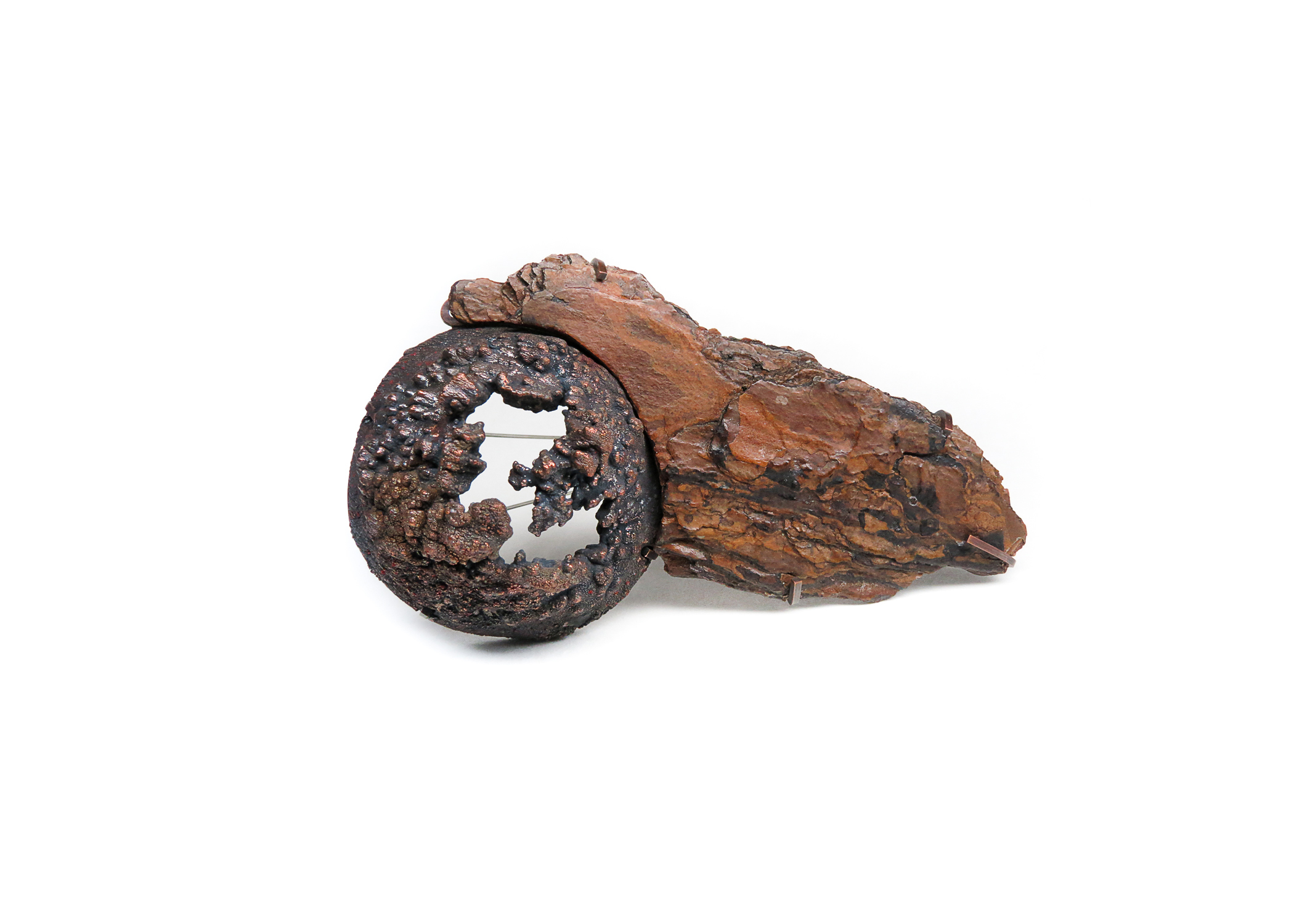
Brooch

Brooch, 2018 (ceramic, electroforming, tree bark, copper, sterling silver, patina, acrylic enamel) 5”  x  3”  x  1  1/4”


Growing up, I was called ugly. I was ashamed to look at people. I walked with my head down in public for many years. Taking Contextual Study II: Concept Development (JEWL 708) with professor Bonnie Kubasta, I was thinking of ways of finding healing from my childhood.

I created a piece called "Self Portrait" where I put water in a steel bucket to symbolize tears and the weight that I had to carry. I attached it to my head. When I cut the cord, the sense of water hitting me was very powerful. The performance was done in front of a wall behind the Savannah Theater. The photographs were taken by Mona Bozorgi (M.F.A., photography, 2018), who was integral to the project. It was a genuine collaboration.

My definition of what an artist can be has expanded at SCAD. In summer 2018, we formed SCAD Jewelry Graduate Association (SJGA). As graduate students, our core mission is to network and find new opportunities to exhibit our work. We went to the American Craft Council show in Baltimore in February, and we'll exhibit our work next quarter at the Smithsonian. We're an international group, with students from Colombia, Iran, China, Hong Kong and the United States.

I've met so many different people from different walks of life here. SCAD has so much to offer: the technology, the tools, the people, the professors, the artists and guest lecturers. Growing up, I could never have envisioned that this would be my life.

Dierra

See more of Dierra's work on her website and Instagram.

Learn more about the jewelry degree program at SCAD here.


Lawrence Weiner's deFINE time

March
1
2019
By
Tags:

"Lawrence Weiner is an inventor, an artist, and one of the earliest and most important figures in the conceptual art revolution almost 60 years ago," SCAD president and founder Paula Wallace declared from the stage of the Lucas Theater, extolling the deFINE ART 2019 honoree. "His decision to undertake a creative career happened in a time of cultural and artistic revolution. There were no universities like SCAD back then helping artists launch meaningful careers. But Lawrence Weiner believed. He created a name and a space for himself and transformed American art."

The keynote event of deFINE ART 2019 began with the presentation of the SCAD40 prize to alumna Le'Andra LeSeur (B.F.A., photography, 2014) in recognition of her remarkable artistic achievements. Dakin Hart, senior curator, Noguchi Museum, then settled in for a playful verbal spar with Wiener. "Talking to Lawrence about art is like talking to Galileo about the nature of existence," Hart told the crowd.

Weiner's conversational statements at times resembled the angled aperçus of his art. Here are ten memorable remarks he made during deFINE ART.

Lawrence Weiner:

"Art is a signpost for people to find their own place in the sun. Art is to be used. When you look at a painting, when you look at a sculpture, when you look at a book of art, you use it understand traversing society."

"If you're impressed with something, there's nothing wrong with trying to make a whole set of work like it. But that's not the function of art. If you know what it's going to be before you start, why make it? If it fits into the commercial structure of the time, why make it? Somebody else is obviously doing it well enough."

"Art is one of those things that once you understand it is about the relationship between human beings and objects, and it's about staking out a philosophical position, you're fine. You're not wasting your time."

"Honesty is not modesty."

"Never put out anything that you're not sure will not hurt somebody. Because making art is the most aggressive thing you can do in life. You can destroy people's dreams."

"You don't have to believe in alchemy or magic to believe in something special happening when you mix one material with another."

"The purpose of art is not to make something that fits into the structure, it's to make the structure adapt to the art."

"If people can understand a Mondrian, it's difficult for them to be a racist. If they understand one pixel and another pixel together, it's very hard to justify one being above the other."

"It's a great privilege to place something in the society and see how it works. Art is one of those things where if you don't take the chance when you make it, what a waste of a privilege."

"Art is about presenting something that you're sure of, that nobody else even understands."

deFINE ART logo

Thank you honoree Lawrence Weiner, and to all visiting artists and attendees of deFINE ART 2019.