Skip to main content Accessibility Policy

SCAD Hong Kong Fashion Showcase 2019

January
22
2019
By
Tags:

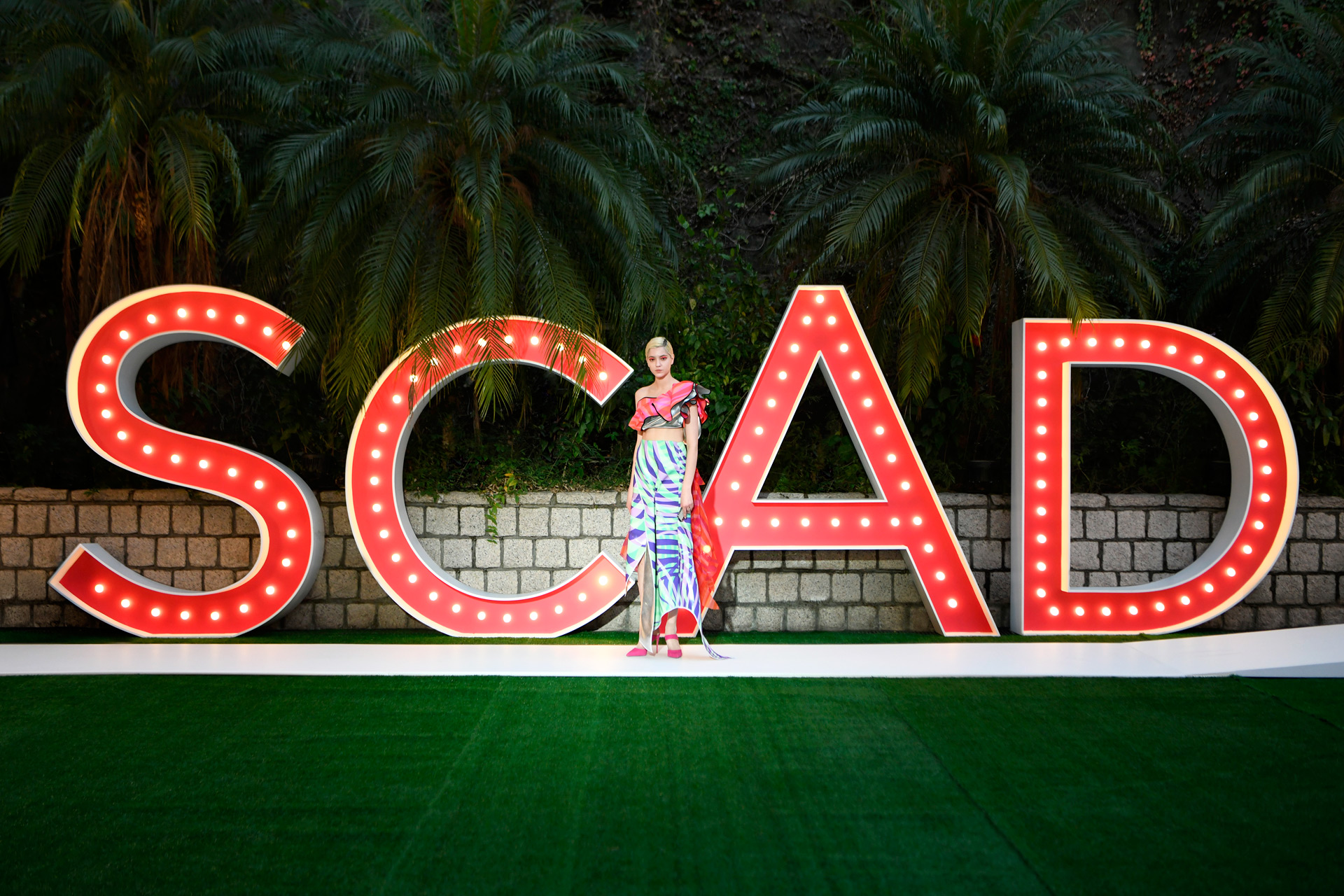
SCAD students presented elevated designs at the fifth annual SCAD Hong Kong Fashion Showcase, Jan. 10, 2019, an event that attracted 450 industry guests. Curated by Michael Fink, Dean of the SCAD School of Fashion, the showcase featured fashion vignettes throughout the former North Kowloon Magistracy building in Sham Shui Po. A total of 52 designs from 20 senior fashion students and recent alumni were spotlighted.

Held at the university's historic North Kowloon campus, the event hosted special guests including renowned Hong Kong supermodel Kathy Chow, and VIP industry representatives Ma Yao, Mimi Tang, Janice Wong and Lu Lu Cheung, in recognition of SCAD students' technical and conceptual achievement in fashion.

SCAD alumni designs showcased at the Hong Kong Fashion Showcase 2019.

SCAD alumni designs showcased at the Hong Kong Fashion Showcase 2019.

SCAD Hong Kong Fashion Showcase 2019 highlighted the university's commitment to professionally preparing young design talent for creative careers. The show provided a high-profile platform for students to connect with elite professionals from global leading brands including Chanel, Dior, Bulgari, Swarovski and YSL. The show was distinguished by the work of SCAD Hong Kong fashion students Maria Nava (B.F.A., fashion, 2018), Tammi Lau (B.F.A., fashion, 2018), Cheryl Ma (B.F.A., fashion, 2018) and Dylan Helyer (B.F.A., fashion, 2018).

Focusing on womenswear, Cheryl Ma is particularly interested in texture and tactile sensations as seen in her collection "RISE", inspired by the ability of fungi to continue to grow despite adversity. Ma is currently employed as a fashion designer for an established textile company in Hong Kong.

Maria Nava's collection "Green" is a futuristic women's collection inspired by movement and German Expressionism, visible in its custom fabrication, lenticular prints, odd silhouettes and distorted conventional shapes. Nava is currently developing her own label as a fashion designer.

Design from SCAD alumna Maria Nava’s "Green" collection, 2019.

Design from SCAD alumna Maria Nava’s "Green" collection, 2019.

Tammi Lau's abstract womenswear collection "Windaholic" draws inspiration from the movement of wind and its symbolic meanings. Incorporating illusion graphics, "Windaholic" creates a psychedelic mirage using neoprene fabrics. Tammi is currently working as an assistant fashion designer in the city.

Dylan Helyer's collection "Dream State" emphasized sustainability, incorporated Swarovski crystals, and was inspired by the ocean and aquatic life. Helyer currently works as senior fashion designer at ERTH.

SCAD fashion students gained first-hand experience running the show's backstage operations for this professional production, as special guest Kathy Chow shared her invaluable experience as a supermodel in the fashion industry in Hong Kong.

"The top ranked fashion program at SCAD offers a rigorous curriculum structured around principles of design, unbounded creativity and state-of-the-art technology, and this is evident in the latest fashion collections produced at SCAD Hong Kong," said Mr. Khoi Vo, Vice President for SCAD Hong Kong. "SCAD students are flawlessly prepared for leadership in the dynamic and ultra-competitive global fashion industry, and the creations presented at this year's Fashion Showcase 2019 are a true reflection of that."

Design from SCAD alumna Tammi Lau’s "Windaholic" collection, 2019.

Above: Design from SCAD alumna Tammi Lau’s "Windaholic" collection, 2019.

Top banner image: Design from SCAD alumna Cheryl Ma’s "Rise" collection, 2019.


Learn more about SCAD Hong Kong and SCAD fashion degree programs.


Whimsical illustrator Tamara Garvey

January
17
2019
By
Tags:

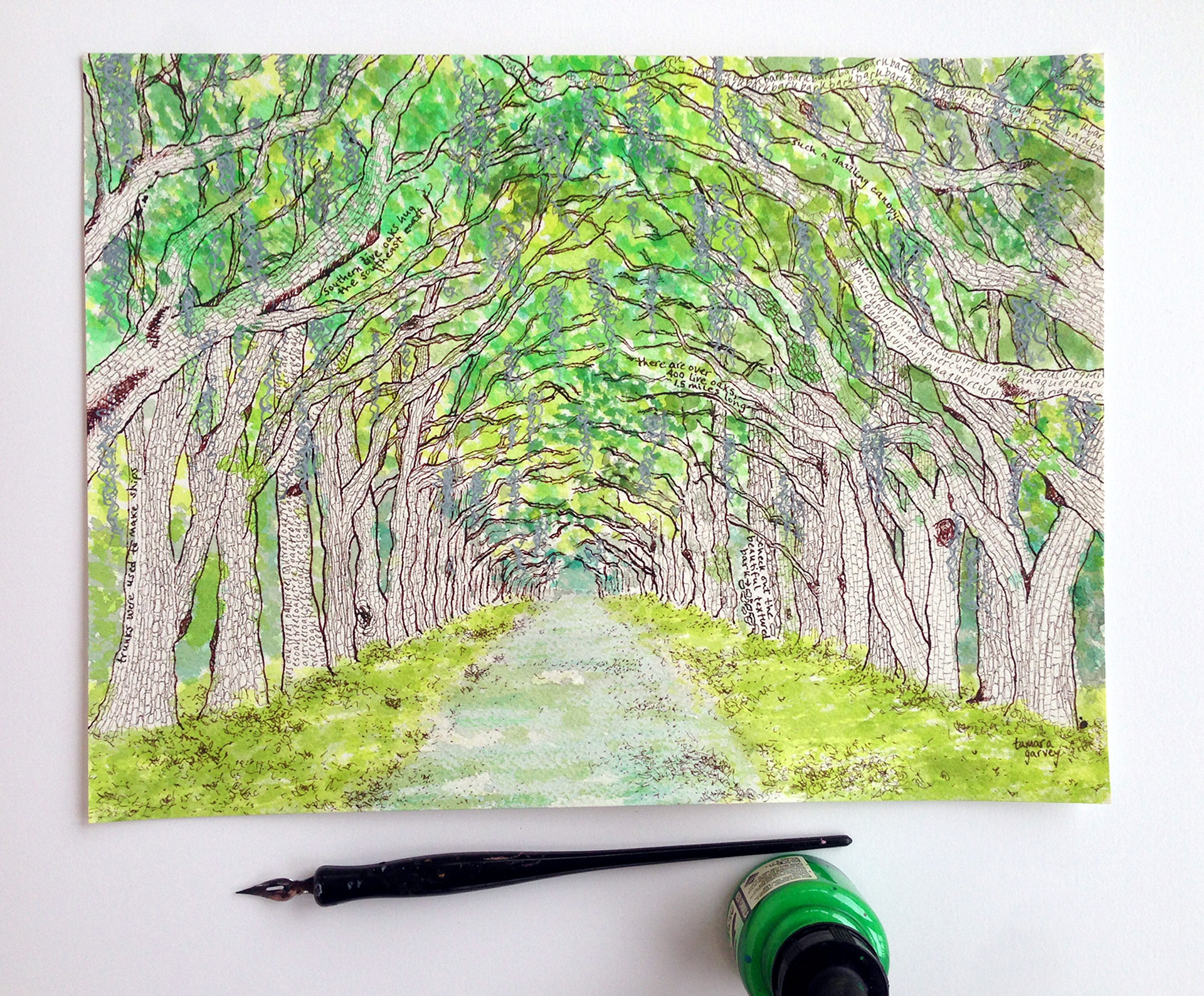
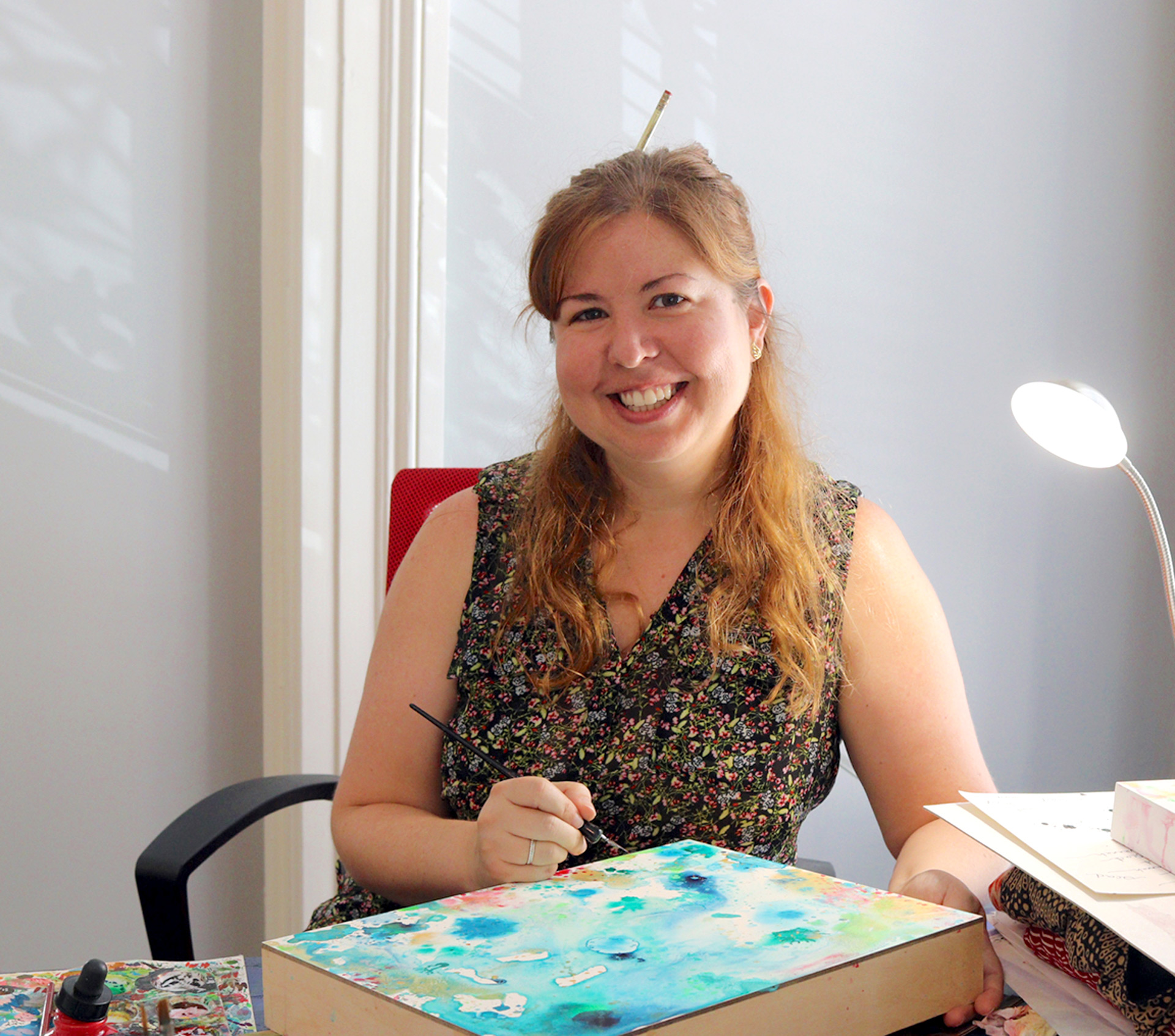
In 2018, after seven eventful years in New York City, Tamara Garvey (B.F.A., illustration, 2008) moved back to Savannah, bringing her delightfully detailed pen-and-ink works with her. Garvey's art currently features in Gutstein Gallery's "Small Works" show, and her affordably priced cards and prints sell like hotcakes at shopSCAD. Tamara's endearing insouciance belies a deep dedication to her work, and to growing a business model she believes in.

artwork

TAMARA GARVEY: I was 24 when I enrolled at SCAD. I had an undergraduate degree in biology and I'd lived on my own and paid my bills for a few years. I really appreciated being at SCAD because I'd sought it out. I felt confident that anything I wanted to do I could do eventually. Now I'm ten years out of university and happy with how things are going. I have an attainable career.

I sell prints at shopSCAD as well as working there part-time. I also worked at shopSCAD when I was a student here, and it's interesting to see what's different there now. shopSCAD now has 3-D printed items, and greeting cards where you hold a phone over them and they animate via an app. In 2008 we didn't have that!

It's been nice having a balance where I sell to shops wholesale, on-line with shops like Etsy, and at craft shows. I like having all three tiers of business. In Brooklyn, there is an Artists & Fleas warehouse craft show in Williamsburg where I was a permanent vendor every weekend. It was like having a little shop of my own. People who go to craft shows are interested in hand-made things, and they're excited to meet you face-to-face. My price point for my prints is $20. I believe art should be for every income level, and that there is room for art and design in all aspects of people's lives.

Of my two pieces in "Small Works", one is a pen and ink drawing of a birch tree which is very tight and precise, the other a gestural drawing of vegetables made with quick, loose brushstrokes. The pieces are different stylistically, but they happen to both be red and green so the colors look nice together.

Birch trees are fun to draw because they have nice hatching. While I was at SCAD, I made a drawing called "Birch Forest: Four Seasons" – it was an assignment for an illustration class to illustrate the concept of time. I did it ten years ago and the print is still a huge seller!

nesting dolls

Then I thought, what if in addition to birch trees I drew burglars with striped shirts and bandit masks, like old-timey French silent movie burglars? The trees are back and white, the characters are black and white…. I did a series of seven or eight pieces with birch trees and burglars and added an absurdist element in each one, like Russian nesting dolls. I like absurdism. 

I love the physicality of dipping the pen into the jar, being careful not to smudge when the ink is wet. I work on paper and the end result is going to be on paper as well, whether that's a print or a card. It's nice that cards are popular. People really like seeing their loved ones' handwriting. And people really like getting something in the mail that's not a bill.

portrait

See more of Tamara Garvey's work

and shop for cards and prints

at her website.


Muralist Millsap transforms SCAD spaces

January
15
2019
By
Tags:

Kyle Millsap (B.F.A., illustration, 2006) is in tune with the SCAD aesthetic. A muralist, maker and designer of environments, he has created numerous distinctive design elements adorning SCAD buildings.

Whip-stitched banquette covers add rustic notes to The Hive Coffee Bar. A wraparound lobby mural in Adler Hall is an outdoorsy delight. Banana leaf wallpaper brings lushness to Ruskin Hall's walls, while the mural upstairs bestows erudition upon the new SCAD Admission Welcome Center. Millsap's work is quite like the man himself: meticulous, expressive, and a lot of fun.

Muralist Millsap transforms SCAD spaces

KYLE MILLSAP: I grew up in Warrensburg, Missouri. One of my formative childhood memories is going to the Missouri State Capitol and seeing Thomas Hart Benton's murals on the walls. It stuck with me: Public art is fantastic! It activates your imagination and transforms a space.

My senior year in high school, I knew I needed something a state university couldn't offer me. SCAD was different: it's creative and polished. I was inspired by the fact that you can be an artist and be a professional.

I worked at shopSCAD from 2004 to 2010, and that was an education unto itself. It taught me about the market, people's desires and how they connect to artwork, and also how to sell artwork, including my own.

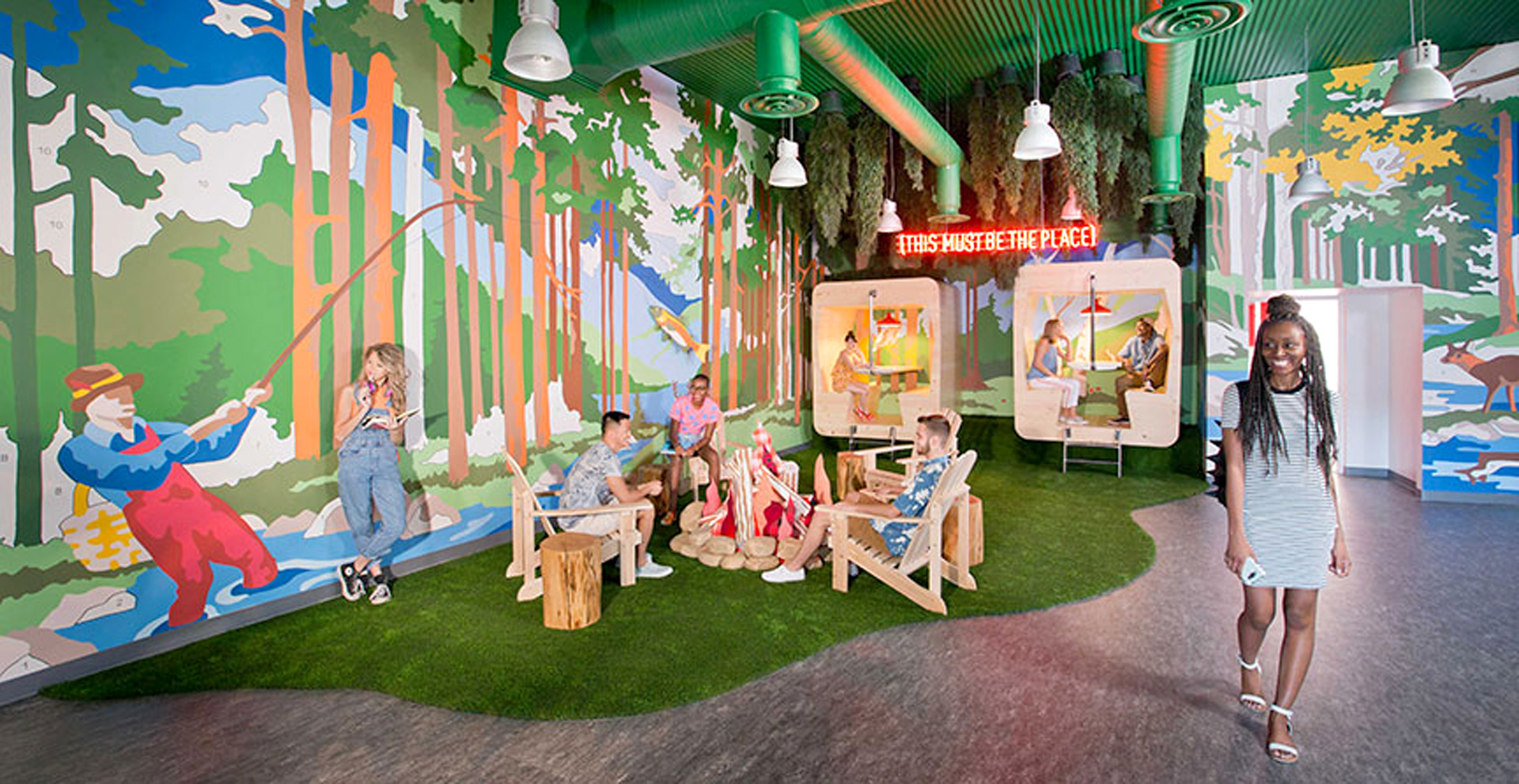
In 2016, I started my own business as Kipper Millsap, using my childhood nickname. Right away, SCAD asked me to paint a 360-degree mural in Adler Hall. I'd never painted a mural in my life. I said sure! My SCAD education prepared me for being thrown into a hot pot and figuring it out. Any suggestion is potentially actionable when you're working on a creative project with SCAD. The mural became a nature scene in the woods, with fishing, an Airstream trailer and a bear.

After completing the Adler mural, I was asked to create the mural for Facebook headquarters in Atlanta. Now, with selfie culture, businesses understand the importance of having unique, site-specific pieces. The commission was facilitated by SCAD Art Sales. It was a feather in my cap.

With my work and influences, I try not to overexpose myself to trends.  I've always been a thrifter and a picker. I love old weird things. I buy books on ornamentation from the early 20th century. I get stacks of old gardening magazines from the 1950s. I build a mental rolodex of things I've seen that are interesting, and that feeds my work.

The SCAD projects I've worked have been really fulfilling. Upstairs in Ruskin Hall is the new Admission Welcome Center, where I designed the mural around three walls. The concept is a genteel study, like a classical library of someone who has traveled the world and brought back treasures: a taxidermied peacock, a marching helmet, an antique drum. You'll notice "The Bee and The Acorn" is one of the books. I selected a burgundy and green color palette, rich but sophisticated, desaturated hues that still have a lot of contrast. It's a great space for people to come learn about SCAD.

Being a muralist is a lot of work. I draw everything by hand, then superimpose it onto the walls for a solid rendering of what it's going to look like. Where walls meet and transitions occur and windows and doorways appear is all taken into consideration in the creation of the mural. It's hand-painted, then I put a clear coat of polyurethane on it to preserve the piece. I don't name my pieces or sign them. I let them be what they are.

My art is accessible, there's no velvet rope. You can touch it, lean on it, take a picture with it. I've always gotten joy from other people enjoying the work.  It's for everyone.

Muralist Millsap transforms The Hive at SCAD

See more of Kyle's work at www.kippermillsap.com.

Rolling with bowling coach Katie Thornton

January
10
2019
By
Tags:

In 2015, Professional Women's Bowling Association member Katie Thornton became the first coach of the new SCAD Savannah men's and women's bowling program. Thornton, the 2013 NAIA Collegiate Player of the Year, and holder of an M.B.A. in international business, was named NAIA men's bowling Coach of Year in 2018. Along with SCAD Savannah assistant bowling coach and PWBA tour player Verity Crawley, Thornton forms a special force in the coaching world.

Katie Thornton: I was 24 when I was hired to be SCAD bowling head coach. I work to create intentional relationships with the players in terms of comfort and ability to trust my decisions, and a positive familial culture. I tell my bowlers that SCAD is your home away from home, that you have support and people you can go to in every situation. It starts with myself and Verity, and the team sees our focus on respect and excellence and genuine care for their success.

I didn't expect to win NAIA men's bowling Coach of the Year. All the coaches in the NAIA vote, from approximately 50 programs total. It's nice to receive the affirmation that we're building a nationally recognized program the right way.

SCAD bowling is one program but we have a men's team and women's team and we compete separately. The men's game is very different from the women's game. Men's side, there's more striking. Women, it's how to hit the pocket more consistently.

SCAD bowling begins practice the first week in the fall. Our last regular season tournament is at the end of February, and USBC nationals take place the second week of April. On competition days, we get up at 6 a.m., at the center by 7 a.m. and bowling until 5 p.m. My artist-athletes have to be good at time management.

In terms of recruiting, introducing the bowling world to what is possible with a SCAD degree is important. I have players on the team majoring in film and television, in fashion, in motion media design, in UX design, in furniture design, in social strategy and management, just to name a few. It's a diverse group in every sense.

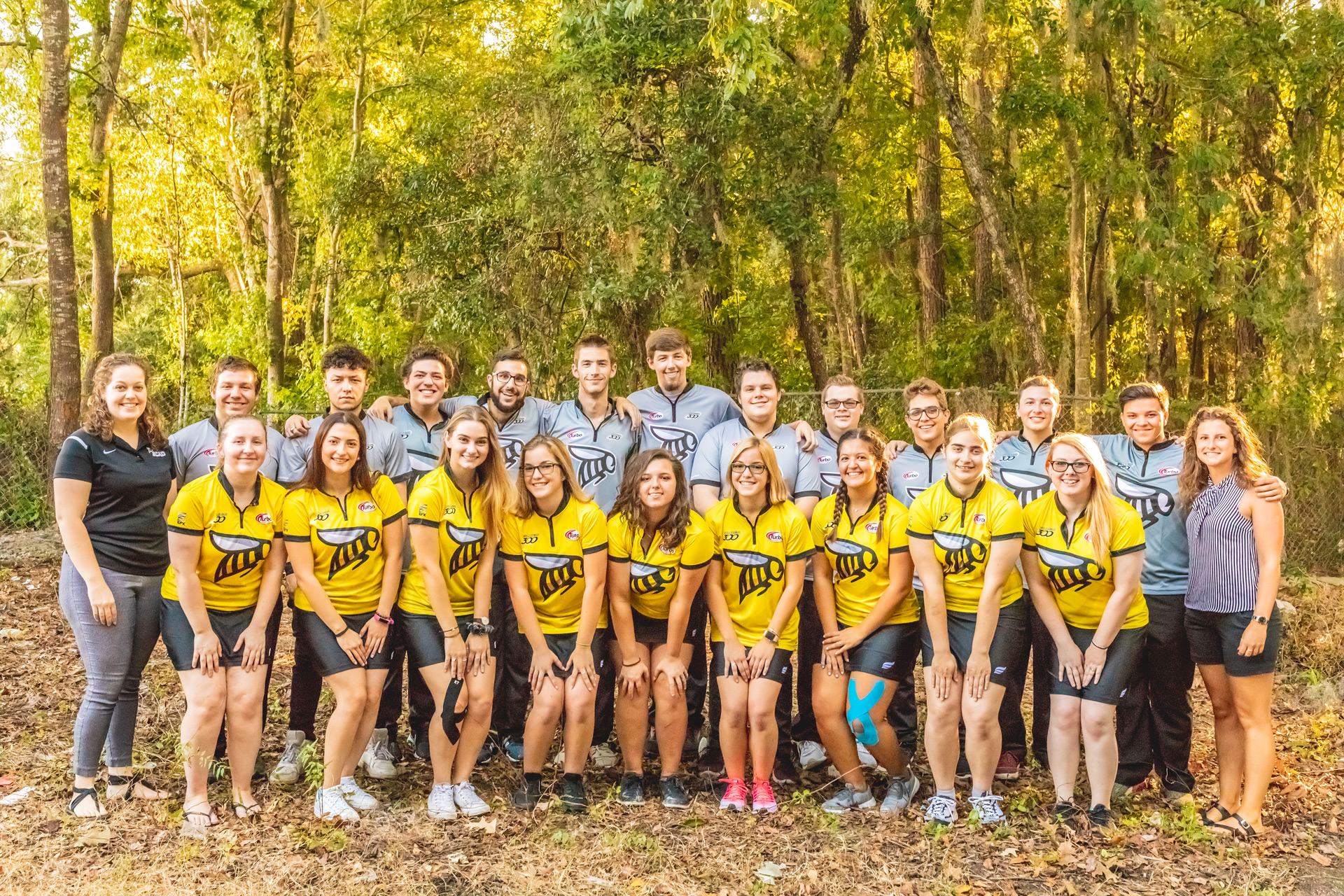
SCAD bowling teams

Fundamentals are important.  We drill the fundamentals every practice, unless we're mimicking tournament play. My job is making my bowlers versatile and fine-tuning their specific skill sets. One thing that makes bowling fun is that everyone does it differently. Bowling is an art form.

Being in bowling shape is essential. We have practices where a bowler teams up with a partner, and one of them is bowling while the other is doing an exercise, like a plank, until the other pockets a strike, then they switch. We work with SCAD strength and conditioning coaches on circuit training, weightlifting and running.

Collegiate bowling is on an upward curve. It's great to see. All USBC teams compete for the intercollegiate team championship. Everyone is a viable candidate to win the ITC. We want to raise the Helmer Cup at the end of the season. As an NAIA institution, we also compete in the NAIA invitational in late March.

Bowling has always been a male-dominated industry. But "we've always done it this way" is not a reason for keeping things the way they are. Women are just as knowledgeable about the technical aspects of bowling today. It's constructive to have a fresh perspective.

President Wallace is a person I look up to. We are an art and design university with a female founder and president and we're succeeding in extraordinary ways. You can't use the stipulation of man versus woman to limit that potential experience, whether that's leadership from an academic or an athletic standpoint. I didn't set out to be a pioneer, but I've learned to be a leader. I'm proud to be here at SCAD.

SCAD bowler Veronica Cepeda (photo: Lindsey Morgan).

SCAD bowler Veronica Cepeda (photo: Lindsey Morgan).

This weekend SCAD bowling competes at the Southeast Baker Challenge in Brunswick, GA. Follow the SCAD men's and women's bowling program at the SCAD Athletics site.

All photos courtesy Lindsey Morgan.


Julia Wilson photo show in NYC

January
8
2019
By
Tags:

Julia Kier Wilson (M.F.A., photography, 2018) is the winner of Trestle Gallery's annual international open call for work. Her affecting oversize prints are on view at Trestle in "Introductions 2019: Julia Wilson" with an opening reception and artist talk this Friday, January 11.

Wilson's work was selected by curator Jason Andrew of Norte Maar from nearly 400 submissions.

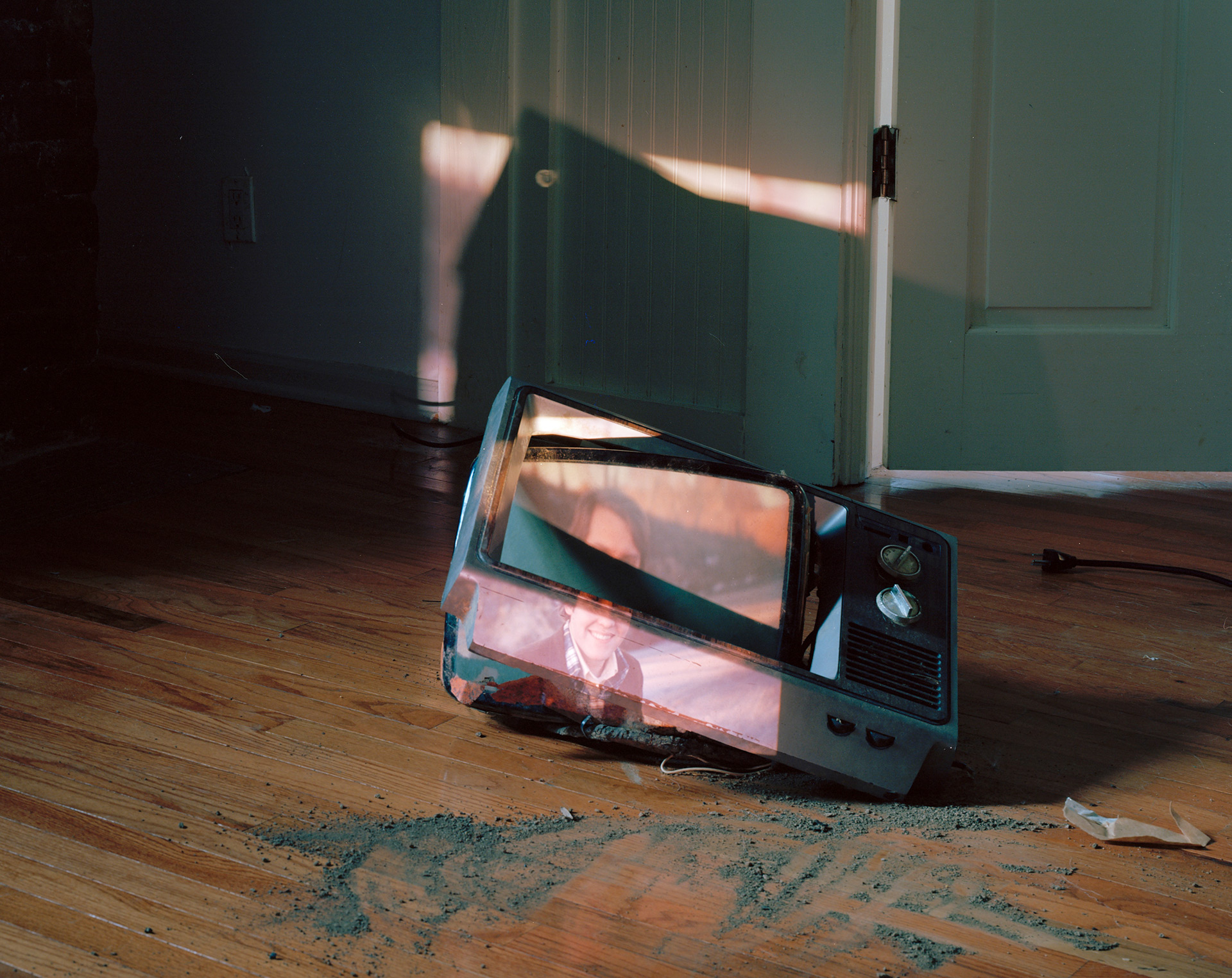
"It was exciting to see artists' submissions from around the world for this opportunity through Trestle Gallery," said curator Andrew. "Julia Wilson stood out as someone who has honed her skills in capturing the world around her. I gravitated to her painterly approach to the image and her unconventional use of her personal computer as camera. There is an intimacy yet universal experience that she captures in her work."

Wilson, recipient of the 2017 Passporte Prize Juror's Award in Surreal Photography Honoring Man Ray, currently works as a studio assistant at Cottage 8 Films in New York City. "Introductions 2019: Julia Wilson" is the first exhibition of Trestle's 2019 season.

Broken television on wood floor with image of young man projected over it

SCAD: How do you approach the daunting process of submitting your work to competitions and galleries?

Julia Kier Wilson: The amazing photography professors at SCAD really emphasize the importance of getting your work out there and how to do it without compromising the integrity of your art. My professors fostered the confidence in me to stand behind my work, and the tools to get it in front of the right people. It's a dance I'm constantly trying to figure out. I receive rejections constantly, but one acceptance in sea of submissions makes it worth it.

SCAD: Some images in your Trestle exhibition also appeared in your SCAD senior thesis show. How does re-contextualizing the work in a different gallery change its presentation?

JKW: My work is about the fluidity of interpretation and the cultivation and translation of experience with images and words, so naturally the show will change with time. Interpretation constantly changes by means of the individual viewer and shifting surroundings.

Working with Trestle curator Jason Andrew was wonderful. I came in with the set sequence in mind, and he obliterated that. Fresh eyes and a new perspective can completely alter how a show is perceived, and I look at my own work in a new way after going through this process with someone who, prior to my submission, had no idea who I was, where I came from, or what my work was about. It's been an incredible experience.

"Introductions 2019: Julia Wilson" on view through January 30.

Opening reception: Friday, January 11, 6:30-9 p.m. Art talk 7 p.m.

Trestle Gallery, 850 3rd Ave., Suite 411, Brooklyn, NY, 11232

For more information and gallery hours, visit Trestle.

Read SCADworks' previous interview with Wilson here.

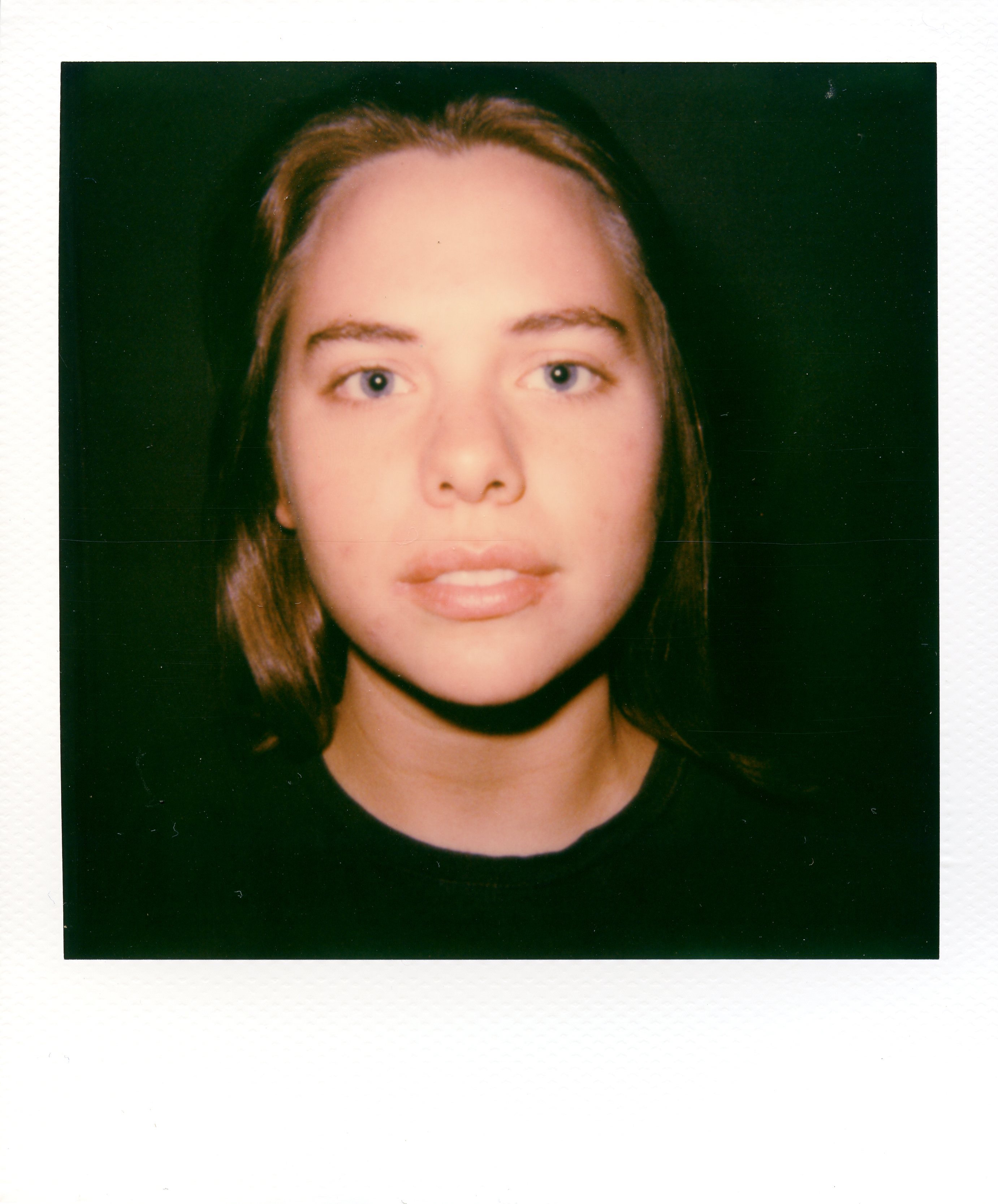
Julia Kier Wilson

www.juliakierwilson.com


Eddie Espinoza: stacking at Loot Crate

December
18
2018
By
Tags:

Growing up in Dallas, Eduardo Espinoza was a huge fan of World Wrestling Entertainment superstars The Rock, "Stone Cold" Steve Austin and Ric "Nature Boy" Flair. Today, Espinoza (B.F.A., graphic design, 2013) is senior designer at Loot Crate, the popular subscription box service for gaming- and sports-related merchandise. Espinoza's Loot Crate duties include curating their WWE Slam Crate, a monthly box brimming with official apparel, figurines, posters, and unique concept items. Dreams really do come true.

“Loot

Eddie Espinoza:

I'm from Texas, so my introduction to Savannah was my first day at SCAD. I fell in love with it instantly. I was fortunate to take multiple classes with graphic design professor Jorge Montero. He strived to push me harder: "When you have a great idea, you have to execute it." It wasn't until I started at Loot Crate that I started heeding that advice more proactively. Whether I'm learning a skill or creating a product, it's time to shine.

I've been at Loot Crate for three years, working a job that I absolutely love, with brands I looked up to in my childhood. I keep adding to my arsenal because of the needs of the company. Loot Crate is a start up, so I wear multiple hats in multiple departments. I've interacted with VPs of companies like Mattel who tell me that an employee at a big corporation for ten-plus years doesn't acquire the type of skills I'm learning at Loot Crate.

Our design director of marketing at Loot Crate is a SCAD alumna, Julie Arnold (B.F.A., graphic design, 2003). She's been my supervisor for two and half years now, and she encourages growth: If you want to learn a skill, learn it and apply it to the job. It adds value to the company, and I'll carry those skills forward in my career.

Learning motion graphics and how to code an email has allowed me to increase my knowledge of the direct marketing realm and be more versatile. Now I've expanded from email marketing to consumer goods.

We do a lot of physical products at Loot Crate. The figurines we make are amazing. They range from Mega Man to Hello Kitty to WWE superstars. I'm the full-time curator of the WWE Slam Crate that we offer. To create products for WWE and say "I made this!" is amazing. Curating products for both the nostalgia market and for the younger fans is the balance I have to achieve.

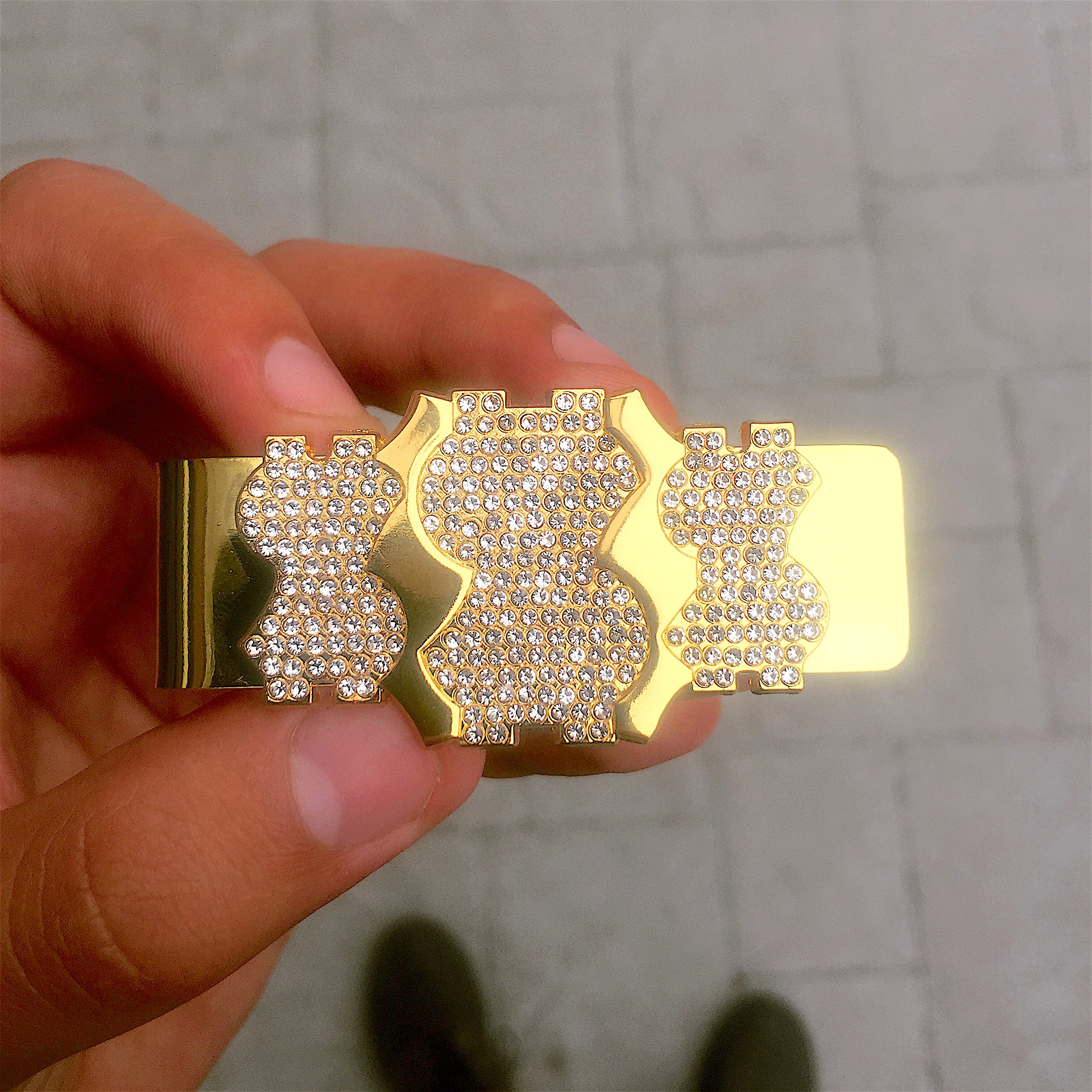
The first WWE Slam Crate product I created was based on "The Million Dollar Man" Ted DiBiase's Million Dollar Belt. I turned it into a money clip. I wanted to see how it would be received so I went on YouTube and watched videos by reviewers, and the reception was good. I made a product that other WWE fans appreciate. Surreal.

I hope to create products that fifteen years from now someone will look at as a portion of their childhood. My job constantly challenges me to come up with something that hasn't been done before. When I came up with the idea for Razor Ramon's toothpick dispenser, WWE was like, that's amazing! I'm always learning. I love it.

Gold money clip with crystal dollar signs

Visiting the Loot Crate website to peruse subscription options and see Eddie's expert handiwork.


Alec Burran: 'Embrace' the future

December
3
2018
By
Tags:

Alec Burran (B.F.A., architecture) is offering his "Embrace" to Savannah. His project, part of professor Dr. Christine Wacta's class Architecture Design Studio IV: Urban Context, addresses issues including sea rise, economic disparity and public transportation to envision a thriving Savannah of 2050.

Over the course of the quarter, Professor Wacta introduced her Studio IV students to concepts including psychogeography and the dérive, encouraging "playful-constructive" investigation of Savannah as a route to creating intelligent proposals for the city's future.

Burran's "Embrace" was one of nine student presentations delivered at fall quarter's close in the SCAD Museum of Art Theater. Attendees included SCAD faculty, local architects and city planners, and representatives from geographic information software firm Esri.

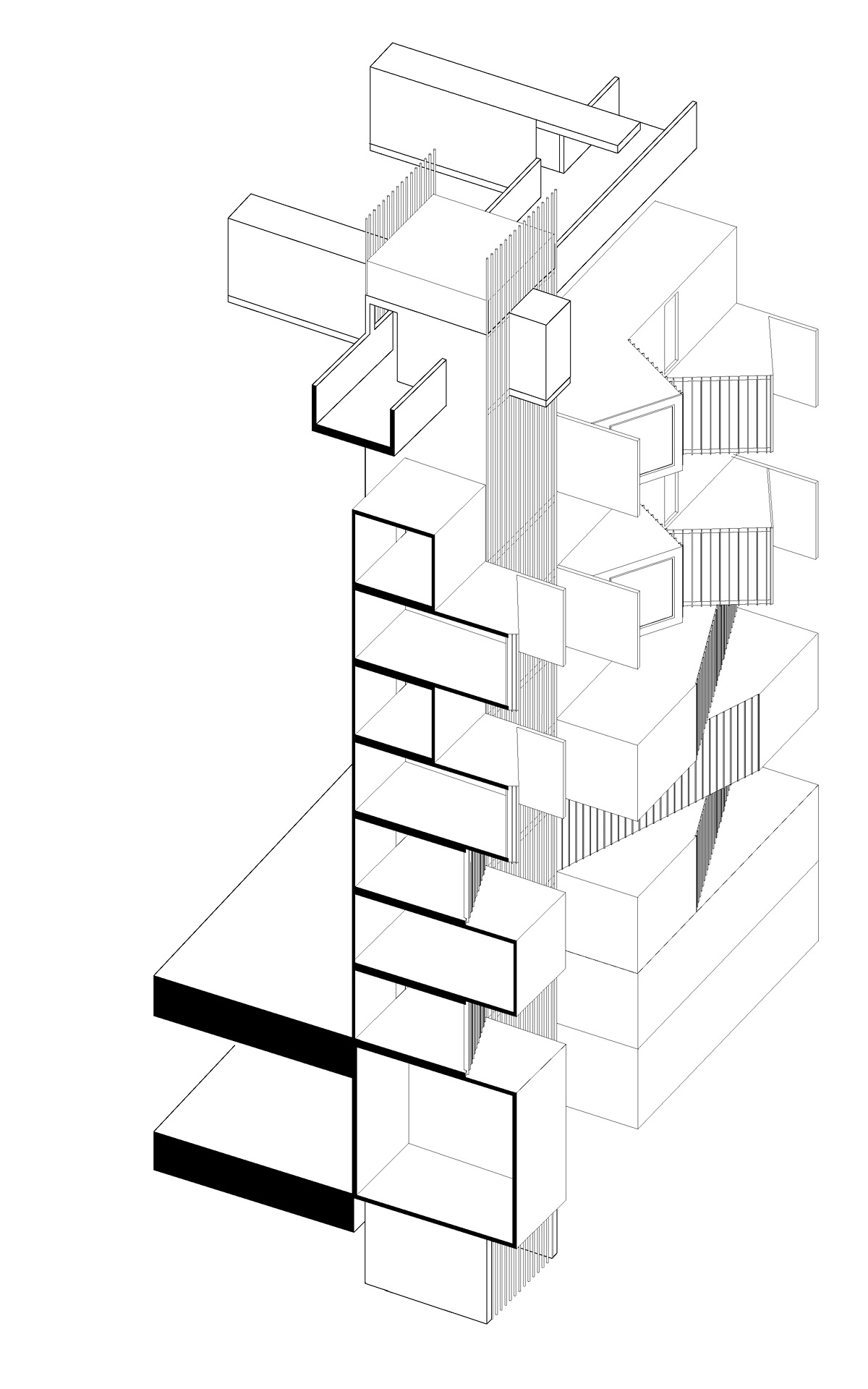
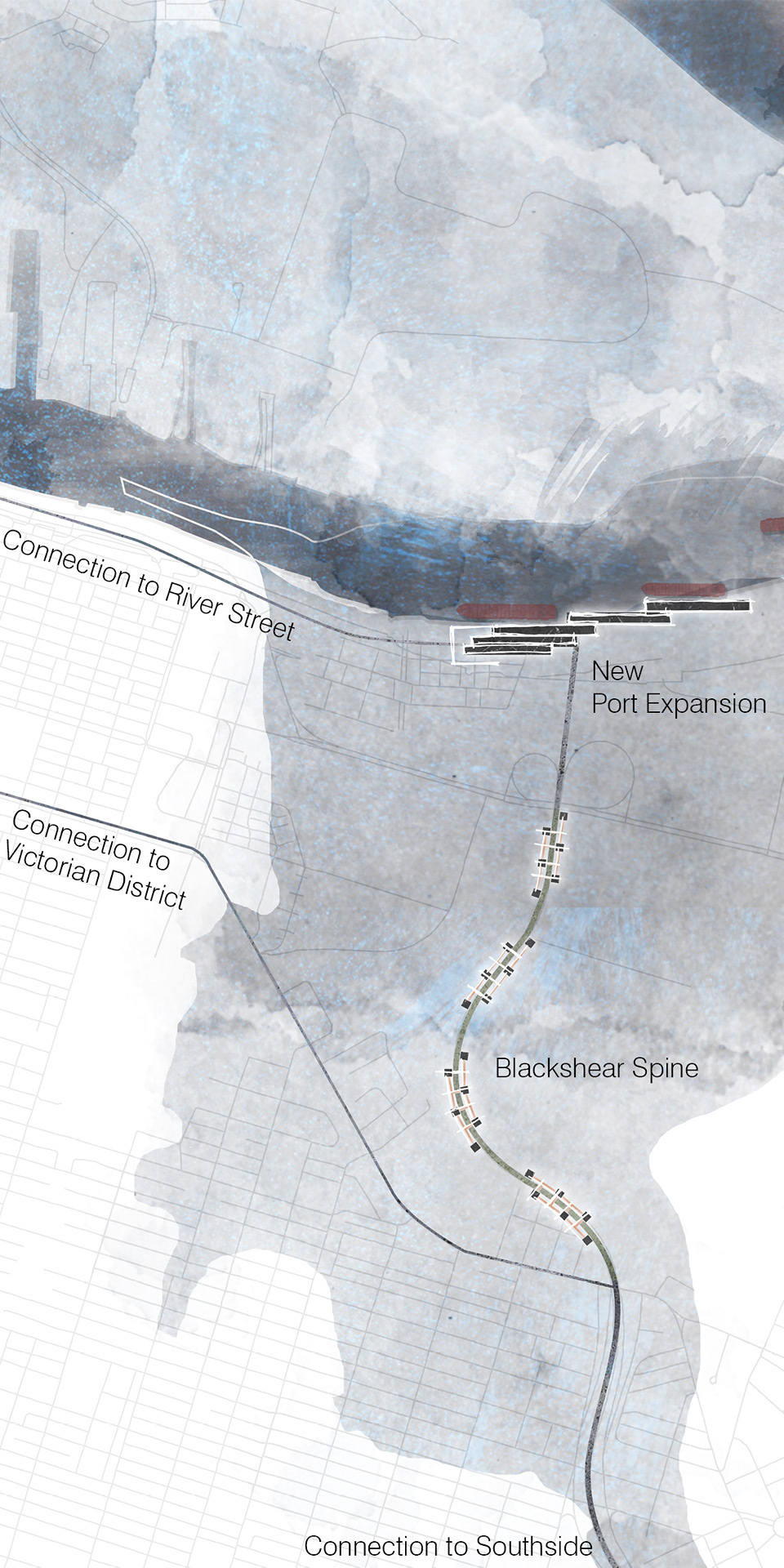
"Embrace" features affordable dynamic housing that will rise and fall with the storm surge, a tram line connecting myriad neighborhoods to the Victorian district, a port expansion to accommodate larger ships, and walk/bike "green breaks" facilitating wellbeing. Combining hard data, collage renders and technical drawings, Burran's presentation answers his own question: "How do we solve big issues through architectural intervention?"

A native of Denver, Colorado, Burran currently interns for renowned Savannah architect Dan Snyder. He will receive his SCAD diploma upon completion of his capstone project in May, 2019. The following insights come from a conversation subsequent to his presentation.

Rendering of dynamic modular housing

(Above: Dynamic modular housing rises and falls according to sea levels. Rendering: Alec Burran)

ALEC BURRAN: What will Savannah look like in 2050? I examined different issues on a city level: crime, traffic, pedestrian versus auto crashes, flooding, poverty. Why are certain regions of Savannah wealthier than others? How do these divisions happen?

Cities are conscious of how much they spend and how much they take in. With the expansion of the port, Savannah becomes a wealthier city—how does that translate into the wellbeing of its citizens? Can we use money like that to be proactive? Numbers get people's attention.

Hurricane Florence hit a week after fall quarter began. Hurricane Maria and Hurricane Florence caused combined $184 billion in damage—how far would that go in infrastructure? And the human lives that were lost are beyond any conceivable monetary value.

Savannah Port Authority has declared that our port will not be able to accept larger ships because our bridge is too short, and the city will have to build a new bridge. I looked at a map and saw two terminals eastward on the river that aren't impeded by that. Blackshear is a neighborhood relatively close to downtown and has the infrastructure of the Truman Parkway running through it.

Blackshear is one of the first areas to be overtaken by storm surge and sea level rise. It's also one of the poorest areas in Savannah. It's just a few feet from Bull Street but there's an enormous difference in terms of how it's affected by a storm. People who are less well-off can't escape danger when the storm hits.

Bringing a more substantial port to that area will create more jobs. Job creation will enhance the economy and elevate the people in the community.

Watercolor map of Savannah showing effect of storm surge

A lot of people walk to work in Savannah: 17 or 18 percent, an incredible number compared to other cities. Savannah is a very walkable city. But in Blackshear the number is only about five percent. People in Blackshear have less car ownership, and are more likely to take public transportation.

Being able to connect to downtown was important to my project. A tramline is the most viable type of public transportation. It's quick, and it allows you to look outside.

More architects are starting to work in city planning, to bring these ideas to the forefront. How architects talk to city planners is a really important issue. It's imperative that we address that now. To have a professor who understands geodesign as professor Wacta does is tremendous.

Headshot of Alec Burran

See more of Alec's work at his portfolio website.

DRAW 115: 'parti' time

November
16
2018
By
Tags:

Reposing on the SCAD Museum of Art floor, eighteen SCAD school of building arts students apply graphite pencils to oversize sketchpads, t-squares and tape measures at the ready. It's the mid-point of professor Ryan Madson's ten-week class DRAW 115 Graphics for the Building Arts. An afternoon field trip to SCAD MOA is underway, as student create section sketches—renderings of complete cross-sections of the museum's distinctive architecture.

Constructed atop the ruins of the 1853 Central of Georgia Railway Up Freight Warehouse, SCAD MOA incorporates the original brick walls as an aesthetic design element in the functional new classrooms and gallery spaces. The DRAW 115 students converse, compare, and look at the structure with newly aware eyes.

"When you're making your sketch, think about how the original brick wall works with the new architecture to create new spaces," Madson instructs.

Professor Madson conducts graduate-level architecture classes almost exclusively; he can make granular analysis of the work of Swiss architect Valerio Olgiati seem like casual banter. But here, in DRAW 115, Madson is teaching undergraduates at a key point of fundamental skill acquisition and design awareness. 

"These students learn to see the tangible link between visual thinking, design, drawing and architecture," he explains, "as well as how choosing materials affects space and human experience."

Required of all building arts majors, DRAW 115 supplies students with fundamental tools to carry forward into their respective majors and studios. Crucial to this class: students draw by hand.

"With the rise of computer assisted drafting, some aspects of traditional drafting fell by the wayside. Software, especially for a young student, can overly determine your process. When you can draw the structure, your possibilities are unlimited," asserts Madson. "It's something we do really well at SCAD: know how to make things by hand, and then recombine that with digital software."

In the weeks that follow, DRAW 115 field trips include an afternoon around Madison Square, where students draw a building of their own choosing, a sojourn to the intersection of Habersham and Jones Streets and its mix of 19th century houses and modern townhomes, and a day inside Poetter Hall, SCAD's flagship building, originally the 1892 Savannah Guard Armory, currently home to the SCAD welcome center, department of admission and shopSCAD.

"SCAD buildings are almost all adapted for use from existing historic buildings," Madson explains. "To achieve that, there are always thought processes and design decisions in play for interior architectural designers, this museum included. Our museum of art is not exactly adaptive reuse, it's more creatively incorporating the ruin of the brick wall into a totally new facility."

In week ten, the last day of class finds the students in an Clark Hall critique room, final projects pinned to the wall. Each student displays "parti" diagrams (showing the organizing concept of the SCAD MOA architecture), isolated hand renderings of critical details of the museum, and complex axonometric diagrams of the its eighty-six-foot-high steel and glass "lantern" tower. These are accomplished technical drawings, with watercolor, colored pencils and pens adding depth, texture and distinctive personal aesthetic choices to their work.

"You're not as plan-literate if you haven't hand-drawn it," says student Brian Lasack of the benefits of the class. "Doing the work is a hugely satisfying rite of passage."
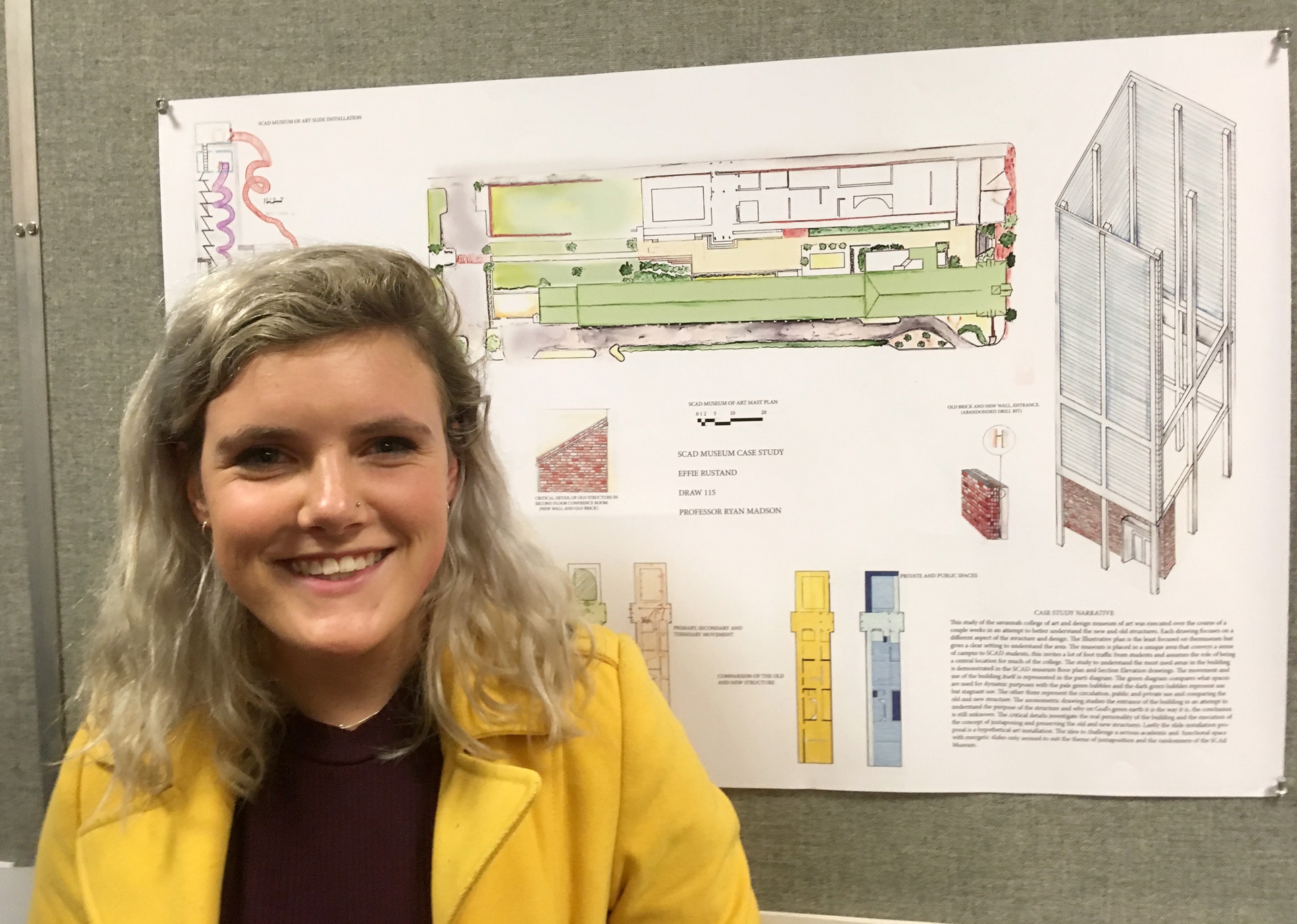
Effie Rustand smiles in front of a poster of her work

Effie Rustand shows her work.

"Professor Madson gives enough restrictions so an assignment is clear, but allows for personal freedom of choice," says Effie Rustand, a sophomore. "He has a lot of knowledge and he's passionate about sharing it. What I did in this class wasn't hypothetical—it's clear I'm going to use these skills in my major."

The final minutes of the quarter tick down. The last of the pastries on the conference table have disappeared.

"One more thing I want to mention as you go," Madson says to his class. "The future is you."
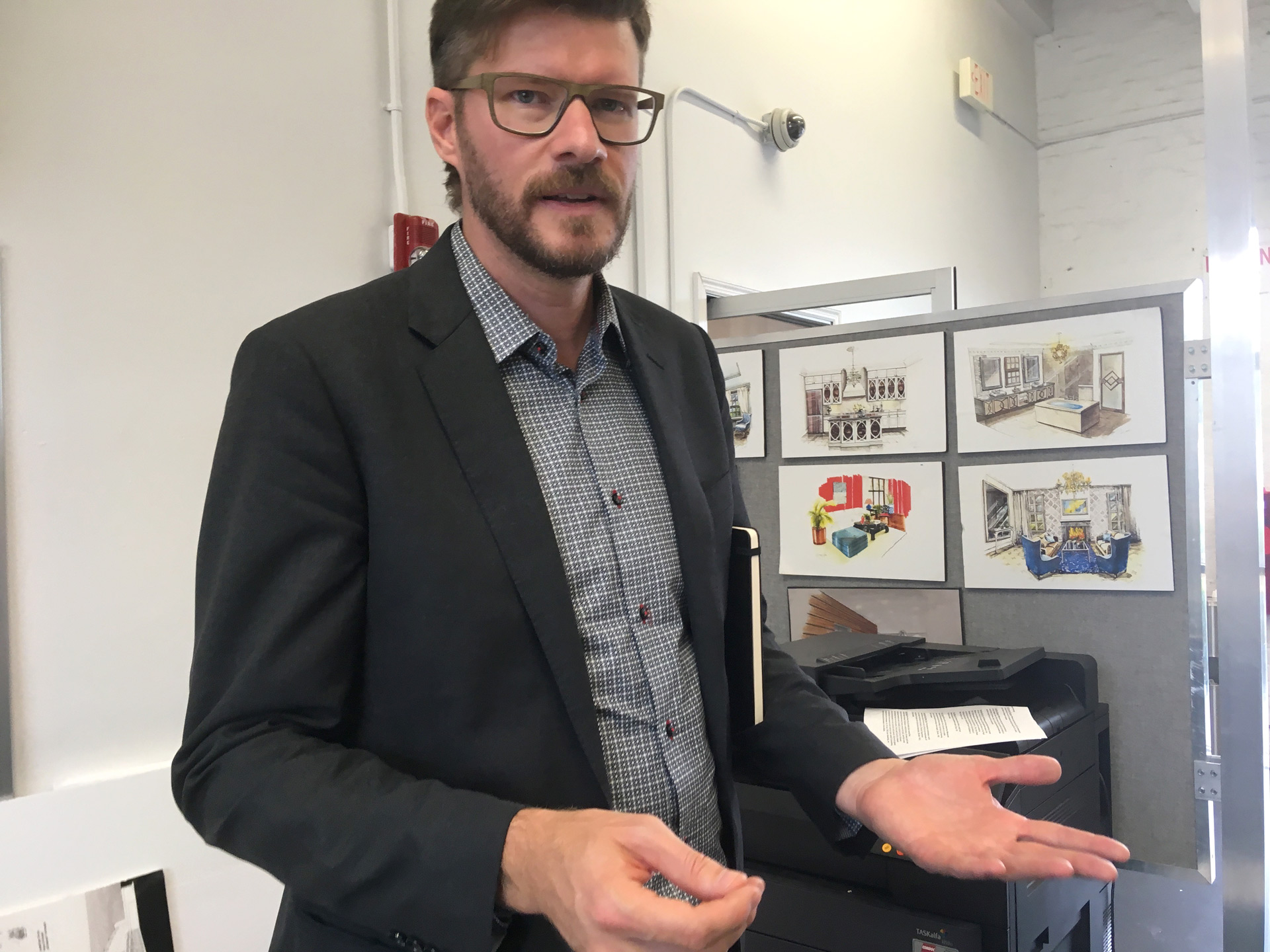
Professor Ryan Madson stands as he explains something

SCAD professor Ryan Madson


Thanks to the SCAD students of fall quarter DRAW 115:

Ellie Andrade (B.F.A., interior design)
Johnny Chang (B.F.A., architecture)
Emily Cook (B.F.A., interior design)
Alexa Diamond (B.F.A., interior design)
Rachel Eakin (B.F.A., interior design)
Alyssa Farmer (B.F.A., interior design)
Dara Holmberg (B.F.A., interior design)
Brian Lasack (B.F.A., interior design)
Yu (Liz) Liu (B.F.A., interior design)
Hanzhong Luo (B.F.A., interior design)
Alex Morse (B.F.A., interior design)
Ju Yuen Park (B.F.A., interior design)
Kaitlyn Pernas (B.F.A., interior design)
Effie Rustand (B.F.A., interior design)
Allison Thierry (B.F.A., interior design)
Mikiko Tsuchiya (B.F.A., interior design)
Caryn Turner (B.F.A., architectural history)
Ryan Tynan (B.F.A., architecture)

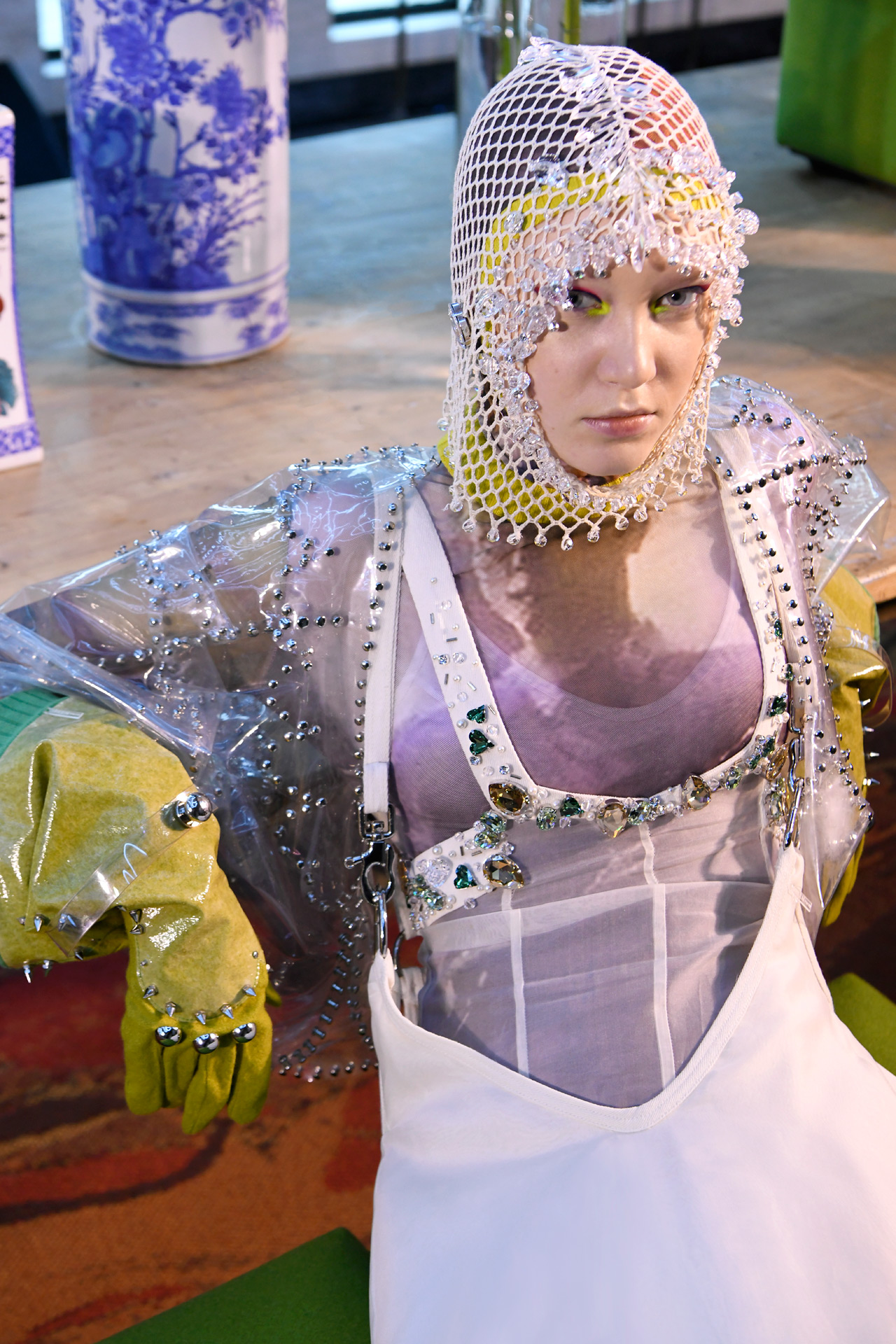
 

Dalal Bagabas' sublime 'Sukoon'

November
12
2018
By
Tags:

Dalal Bagabas (M.F.A., furniture design) created her master's thesis furniture collection SUKOON as a modern iteration of the makhlawan. Literally "the place of being alone," the makhlawan was a ground floor room and traditional part of Saudi Arabian homes before villa and apartment living became popular.

"It was a space for reflection in the home that has somehow been lost," explained Bagabas. "I want to bring that back—that's why I made this collection—to help the person find solitude and peace in the world."

She contacted management at Savannah furniture store West Elm and asked to show her collection in their Drayton Street location: "They said sure!"

It was an inspired choice. Experiencing the collection in the context of a block-long furniture store shows it is qualitatively comparable with the best of the retail offerings that surround it. Yet SUKOON is quite unlike anything else there.

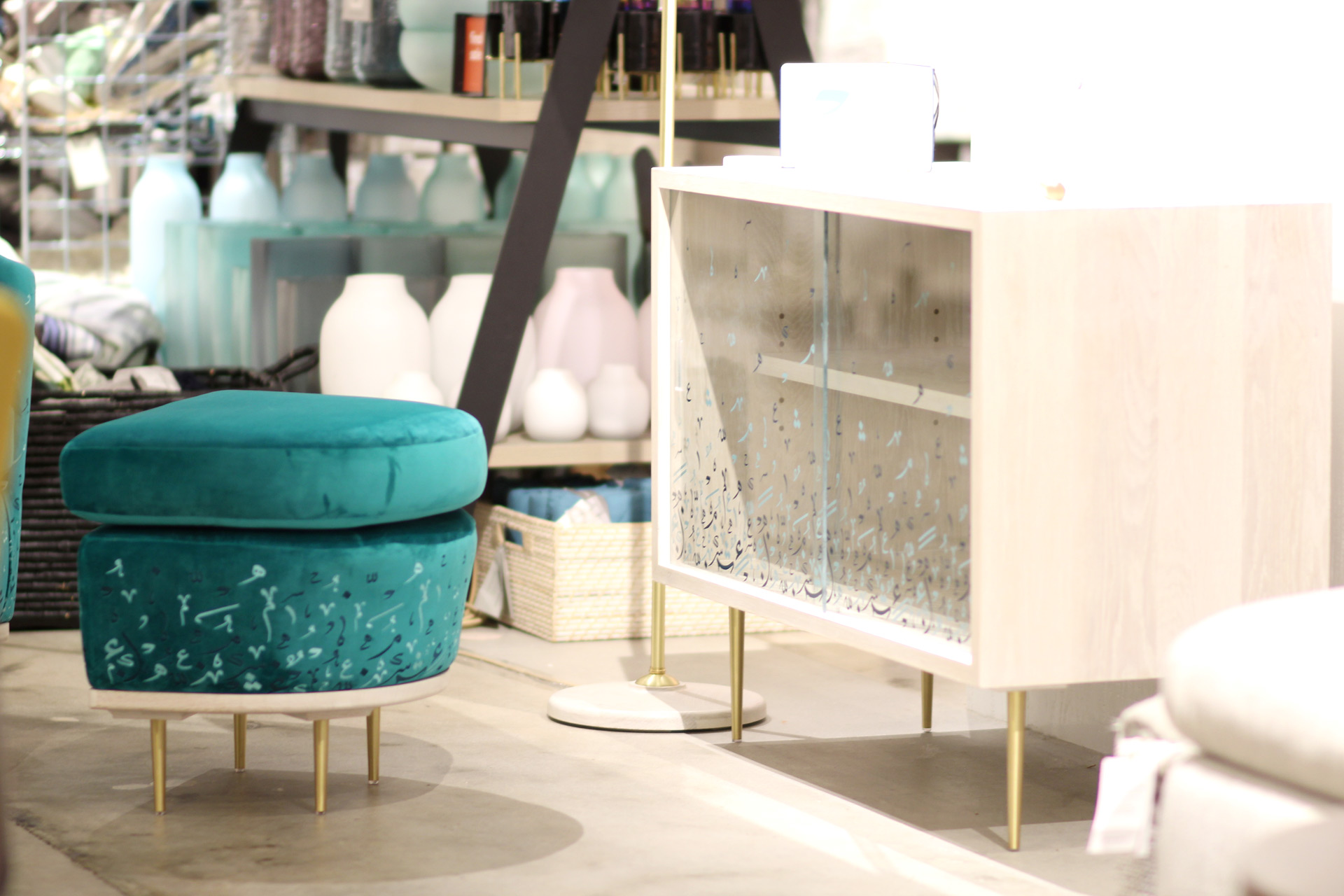
White two-shelve cabinet with gold legs and teal ottoman

At the opening reception, friends and fellow furniture design students stood conversing and nibbling on flaky pistachio baclava from a silver tray.

"Go ahead, sit in the chair," encouraged a tall, striking young man (who turned out to be Dalal's brother).

The armchair is deep-set but firm, its arms set wide to encourage a broad, meditative posture. It's super comfortable, the sense of peace it creates close to profound. There's no hurry getting up.

"If you want to use the foot rest you can, and if you don't that's okay," Bagabas suggested. "It's a personal choice I made when designing the two pieces, wanting the person to have their personal choice."

Careful examination of the chair adds to a sense of awe. There is beauty in diacritic marks, but never quite like this. The tashkil—the marks that affect pronunciation of the written Arabic language—wind around the sides and back of the teal armchair in flowing, florid embroidery. "This symbol is the sukoon," Bagabas explained, pointing at a sort of circumflex. "When you have it on a letter it makes the letter silent. That's the connection, through quietness and solitude."

Bagabas created her design in Adobe Illustrator and brought the file to the SCAD fashion department's digitized embroidery machine. "I separated the fabric into squares, then hand-stitched them onto the frame of the chair. The embroidery took one month."

A circular mirror hung above a sliding door glass cabinet, both part of the collection and similarly adorned with stylized diacritics. "In our Gulfstream DigiLab, SCAD has a flatbed printer that it can print on any flat material. I used this to print on the glass doors and the mirror."

SUKOON's aquamarine color palette is both soothing and invigorating. It makes sense when Bagabas explained the concept of her throw pillow: "The two sides of pillow are dark and light. This represents the duality in our nature."

Born and raised in Jeddah, Bagabas will return to Saudi Arabia as her SCAD studies conclude. She credits SCAD furniture design professors George Perez, Jr., Sheila Edwards and John Pierson for guiding her work. "I have been here in the States for almost five years—a long journey that's almost done. When I am home I will start my own business."

See more great work by Dalal Bagabas at her official site.


Film Fest: Georgia Production Panel

November
8
2018
By
Tags:

This year's SCAD Savannah Film Festival featured the Georgia Production Panel, moderated by Steve Gaydos, executive editor of Variety. The panel welcomed five top professionals responsible for Georgia's status as the number one state for film and television productions in the U.S. Notably, the panelists were all women. Here are selected highlights from their insights.

Panelists:
Kate Atwood, executive director, ChooseATL
Lisa Ferrell, co-president, Georgia Production Partnership
Beth Nelson, executive director, Savannah Film Office
Andra Reeve-Rabb, dean, SCAD School of Entertainment Arts
Michelle Sneed, president of production and development, Tyler Perry Studios

Lisa Ferrell: This is now the tenth year of the Georgia tax incentive. With a 500K-plus spend, filmmakers get a twenty percent incentive, and if you use the peach logo at the end of your production that's an additional ten percent. Georgia is also now known for gaming, animation and motion capture. This year we have a post incentive and a music incentive. People come here and see Georgia's infrastructure with our studios, and we've got professional crew thanks to places like SCAD.

Michelle Sneed: Tyler Perry Productions is celebrating our 25th anniversary this year. We have acquired 330 acres of production space, we have 11 stages up, and a backlot. The studio is half for Tyler productions and half for third party productions.

Andra Reeve-Rabb: SCAD is the only university that has a designated casting office that's professionally run. We built it based on what my office looked like when I was at CBS, where I worked in casting for ten years. Our students are literally building their resume while they're at SCAD. We have sophomores booking Netflix shows and then going back to class on Monday. We have production design students working on the Disney movie filming right now in Savannah.

Beth Nelson: Our local Savannah incentive is an extra ten percent local spend, funded by the Savannah Economic Development Authority (SEDA). Productions call me and then I call Andra and she finds students who are talented and ready. It's about creating jobs, creating an industry here, where people can live and work. It's having a huge impact on the community. Small businesses are thrilled.

Ferrell: Film can revitalize a small town. I say that if you're in Georgia, you're in the film industry. If you run hotels or sell clothes, if you're a carpenter or hairdresser, the money comes back to benefit your region.

Kate Atwood: ChooseATL is here to do make sure Atlanta stays a thriving place for talent. Last spring we launched THEA, a curated video streaming platform for Atlanta-based content creators. I show up every day to make Atlanta the place you want to be. SCAD has really anchored us for the past forty years with a wellspring of talent. These major production companies and talent agencies are realizing they can come here to discover you all.

Ferrell: I'm on the board of the International Animated Film Association (ASIFA). The executive director of ASIFA-South is a SCAD alumna, Marisa Tontaveetong (M.F.A., animation, 2018). I need young women to see there is a sisterhood of people who will help you in a traditionally male industry.

Reeve-Rabb: At SCAD, we have a real focus on diversity and women in film. The president of our university is a woman and she models that for us every day. My production design students are 86 percent women and they're going out and getting jobs in all these different avenues. Television productions in Georgia just keeps rolling from show to show to show. We are always promoting women in film from within.

Savannah Film Festival Logo

Learn more about SCAD film and television academic programs here.