Skip to main content Accessibility Policy

10 things we love about Karen McCullah

June
29
2018
By
Tags:

Screenwriter Karen McCullah came to SCAD Atlanta to inaugurate SCADFILM Storytellers with a screening of "10 Things I Hate About You," the beloved 1999 teen film she co-wrote with Kirsten Smith. Starring Heath Ledger, Julia Stiles, Gabriele Union and Joseph Gordon-Levitt, the cult classic is as well known for its exemplary cast as for its interpolation of the work of William Shakespeare.

At a talk moderated by SCADFILM senior executive director Leigh Seaman, McCullah shared insights and anecdotes from her vaunted career. In addition to "10 Things I Hate About You," McCullah penned popular films "Legally Blonde," "She's the Man" and "The Ugly Truth," and wrote comedic scenes for last year's blockbuster hit "Girls Trip." The day after the talk, McCullah led two SCAD masterclasses on the business of screenwriting. The events were presented as part of SCADFILM Storytellers, a series of special screenings, classes and discussions with top creatives in entertainment.

1. McCullah appears in "10 Things" but don't blink...
KM: "You know how Allison Janney's character Ms. Perky is writing romance novels in the guidance counselor office, and she has posters of romance novels on the walls? I'm in one of the photos on the covers of the romance novels. A guy like Fabio has me back in a dip. But it goes by so fast you can't see it."

2. The scene where Julia Stiles reads her "10 Things" poem still affects McCullah...
KM: "When she cries reading her poem in front of the class, that wasn't in the script. I cry every time I watch it knowing that she's really crying."

3. Heath Ledger suggested a key change...
KM: "The song that Patrick serenades Kat with was originally 'I Touch Myself' by The Divinyls. We thought that's what a cocky teenage boy would pick. But Heath thought, wisely, that it should be a more romantic song, and that's how it wound up being 'Can't Take My Eyes Off You.'"

4. "Legally Blonde 3" is happening...
KM: "Reese Witherspoon's always want to do it. It was a matter of getting all the elements lined up with the studio. Last year she spent a whole day on Snapchat putting all her costumes on from the first movie. That's when I thought, Oh, this is getting done."

5. McCullah puts something of herself in her protagonists...
KM: "There are pieces of myself in most of my main female characters. Like Elle Woods I don't take a lot of crap from people, I carry my small dog in a purse, I'm blonde, and I was in a sorority. Like Katherine Heigl in 'The Ugly Truth' I can be a bit of a control freak. Like 'The House Bunny,' I can be super dumb sometimes, although she was also optimistic and good-hearted."

6. McCullah believes in giving characters goals...
KM: "Characters pop into my head, what they're like and what they say. It's like giving birth to a person in your brain. Once I have a clear idea of what the premise is and who the character is, I sit down and start writing longhand as fast as I can: sketching out scene ideas, potential lines, where I want it to go, then I organize that all into an outline. You have to know the goal of the character, where they're going to end up."

7. Marketing matters...
KM: "Studio marketing can make or break a movie. If a movie is marketed poorly, no one will see it even if it's the best movie in the world. 'Legally Blonde' was massively marketed. They got Regis to go blonde for a week, they created National Blonde Week, it was crazy! 'Girls Trip,' everyone in the world knew that movie was coming out, they did a great job."

8. On meeting writing partner Kirsten Smith...
KM: "She had a job as a script-reader at a small production company. She read a few of my scripts and called me and told me she liked them. We started writing a script on cocktail napkins that night."

9. Adapting someone else's story can be fun...
KM: "If I'm hired to adapt something that's solid story-structure wise that's always a joy. I highlight all the parts that I think will work for the movie and try to organize that with the new stuff that I have to blend in. Things get changed, like at the end of 'Legally Blonde,' which was based on an unpublished manuscript, she ended up with the professor. I was like nope, she's getting with the hot boy."

10. McCullah admires SCAD...
KM: "SCAD has very small classes compared the university I went to. The classes are interactive which is valuable. They can feel more like a conversation than a lecture. SCAD gets people jobs, which is why we're here."

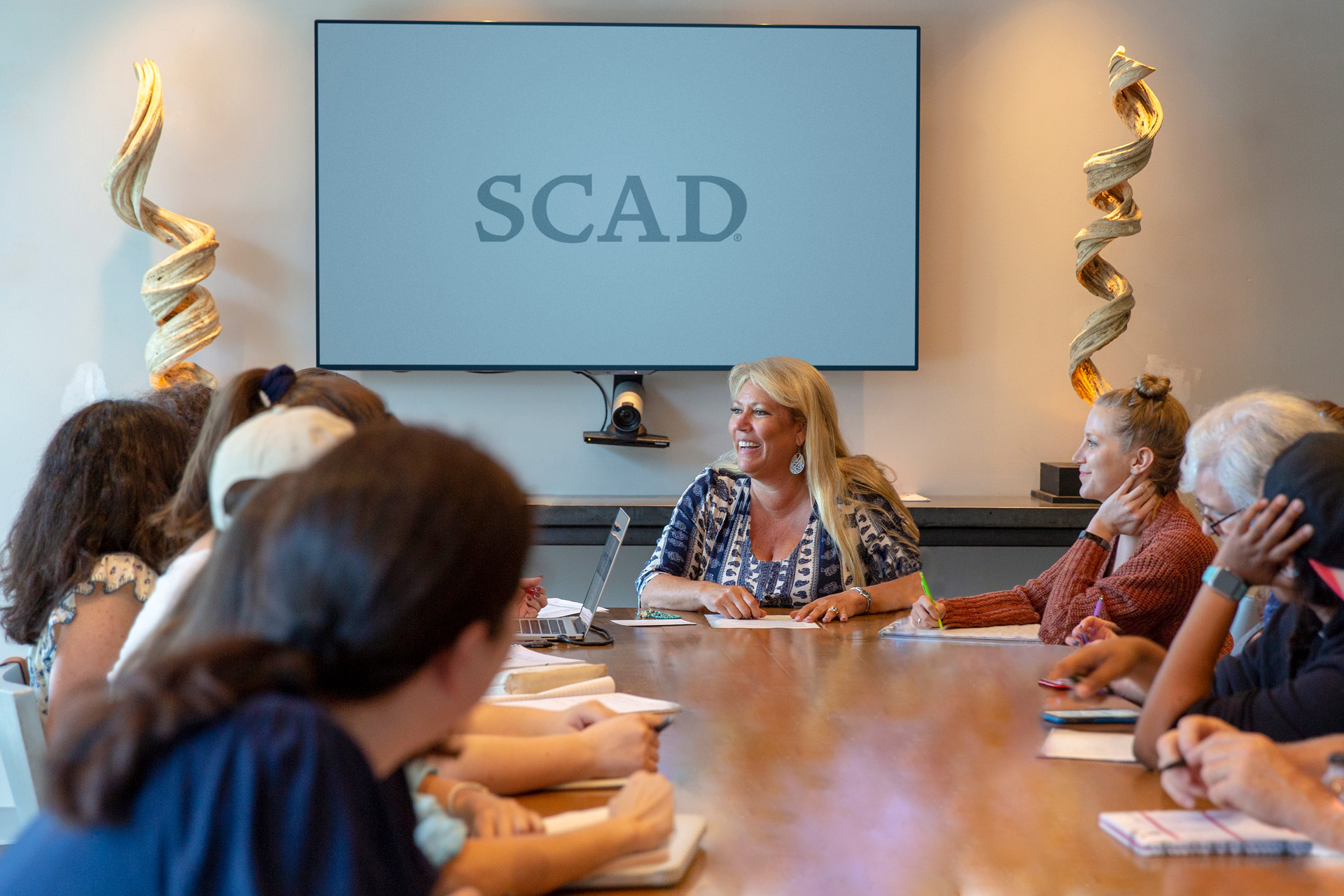
McCullah talks at head of a full conference table

Sage advice from a sequential artist

June
28
2018
By
Tags:

Sage Coffey (B.F.A., sequential art and animation, 2016) is a SCAD graduate, cartoonist, storyboard artist, wrestling enthusiast, and editor of "Sweaty Palms Anthology," a comic anthology about anxiety. As a successful sequential artist and author of a comic strip editorial about surviving as a freelancer, Sage imparts wisdom for those striking out on their own.

Cover of book with yellow background, large rain drops and blue creature

SCAD: You recently produced an excellent comic for The Lily, published by The Washington Post. How did you place your work there?

SAGE COFFEY: An editor from The Lilly contacted me after reading a recent work I did for The Nib, which is a media outlet focused on memoirs and politics. She asked me to pitch a few ideas and we went from there! Freelance, from my experience, has had a domino effect. Once I put something out for an outlet like The Nib, I usually get an email in response to it, and a client/artist relationship builds from there.

SCAD: Your piece addresses the challenges of being a freelancer. What key lessons have you learned?

SC: Have a contract and make sure that contract is clear on payment, time-frame and distribution rights. A good example is a "kill fee," where a client only has so much time before they have to pay a fee to pull the plug on whatever you've been working on. It's one way to protect yourself. Doing freelance, you end up working on a lot of different projects at once. It's a lot like running a small business only instead of fancy pastries, you're selling your time and skills.

SCAD: What advice you would give to a current or prospective SCAD sequential art (SEQA) student?

SC: SCAD is such a huge resource that exposes you to different people and career paths. "Networking" is a word you hear a lot, and the friends I've made at SCAD have served as a support system and broadened my horizons on what is possible for my career. There's a sense of camaraderie, like "we're all in this together!" regardless of major or background.

SCAD: How has SCAD uniquely prepared you to pursue your current career?

SC: It's going to be hard not to turn this into a thank you letter to the professors who essentially raised me artistically: Chris Schweizer, Jackie Lewis, Doug Dabbs. "You have to learn all the rules to break them," is something professor Shawn Crystal said that always stuck with me. We had visiting artist days where current working professionals would review our portfolios, and talk about their experiences in the industry. I still have sketchbooks filled with notes from visiting artists like Brian Stelfreeze and Eric Canete that I look at. All the SEQA professors want you to succeed and because of that, they're honest with you and push you.

SCAD: What’s next, Sage?

SC: One exciting thing is the "Sweaty Palms Anthology Vol. 2" Kickstarter launching in July. "Sweaty Palms" is a comic anthology about anxiety that SCAD alumna Liz Enright and myself started in 2015. It has blossomed into an international anthology where artists share their personal experiences living with mental illness. It's rare we talk about our mental health so having over forty contributors being vulnerable and candid about their experiences is important. The new volume’s contributors list includes SCAD SEQA students and alumni like Brian A. Prince and Ahmara Smith. I have more coming to The Nib and The Lily as well, so keep your eyes peeled!

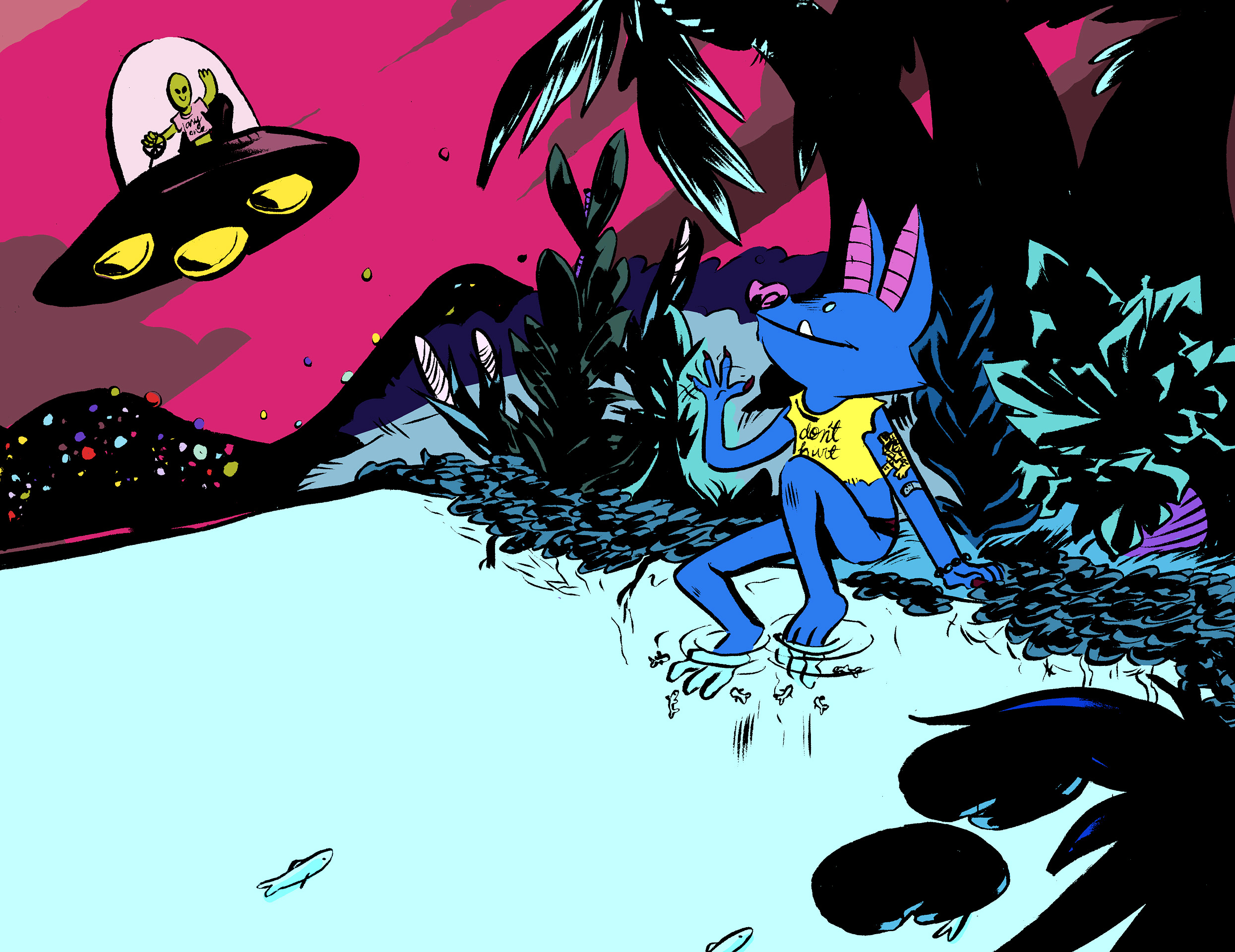
Illustration of blue creature dipping toes in body of water and waving to alien in a spaceship

View more of Sage's great work here!


Abel Macias opens portals to 'Every Place'

June
21
2018
By
Tags:

The portal is open.

"All at Once in Every Place," on view at SCAD Museum of Art, features 17 artworks by Abel Macias (B.F.A., illustration, 2002). Paintings of deserts and mountains and oceans project surreal naturalism; pidgin landscapes are entry points to other worlds, other dimensions. The dominant "A Pink Sky" is a force field drawing the viewer in.

"I wanted a visual representation of the sensation of a portal," Macias says. "A portal can transport you to a memory, the way a smell can. Vibrating lines hypnotize you, reinforcing this idea of going somewhere else."

Macias, the 2018 SCAD Sand Arts Festival alumni guest artist, is a striking presence with his batik shirt, shaved head and Zapata mustache. Born 1979 in Atlanta, Georgia, he lived in New York City for a decade and a half before relocating to Southern California. His new work reflects the palette of the Southwest.

"Making a new painting from scratch is always the most difficult thing for me. I start by putting a color down, to erase the evidence of the white canvas. After that I'll add texture, mixing dirt into the paint then scraping it off. I don't like things to be too precious. I purposely bang the painting on the floor and scuff it up. All these tricks I do make me feel like the image is coming up."

One of the small-scale oils in the show, "Floating Rock" depicts an eggplant-colored Seussian submersible with leaf-headed branches growing antennae-like from its surface. A cutaway window reveals its interior, where a fantastic world thrums at an opposite end of the color spectrum.

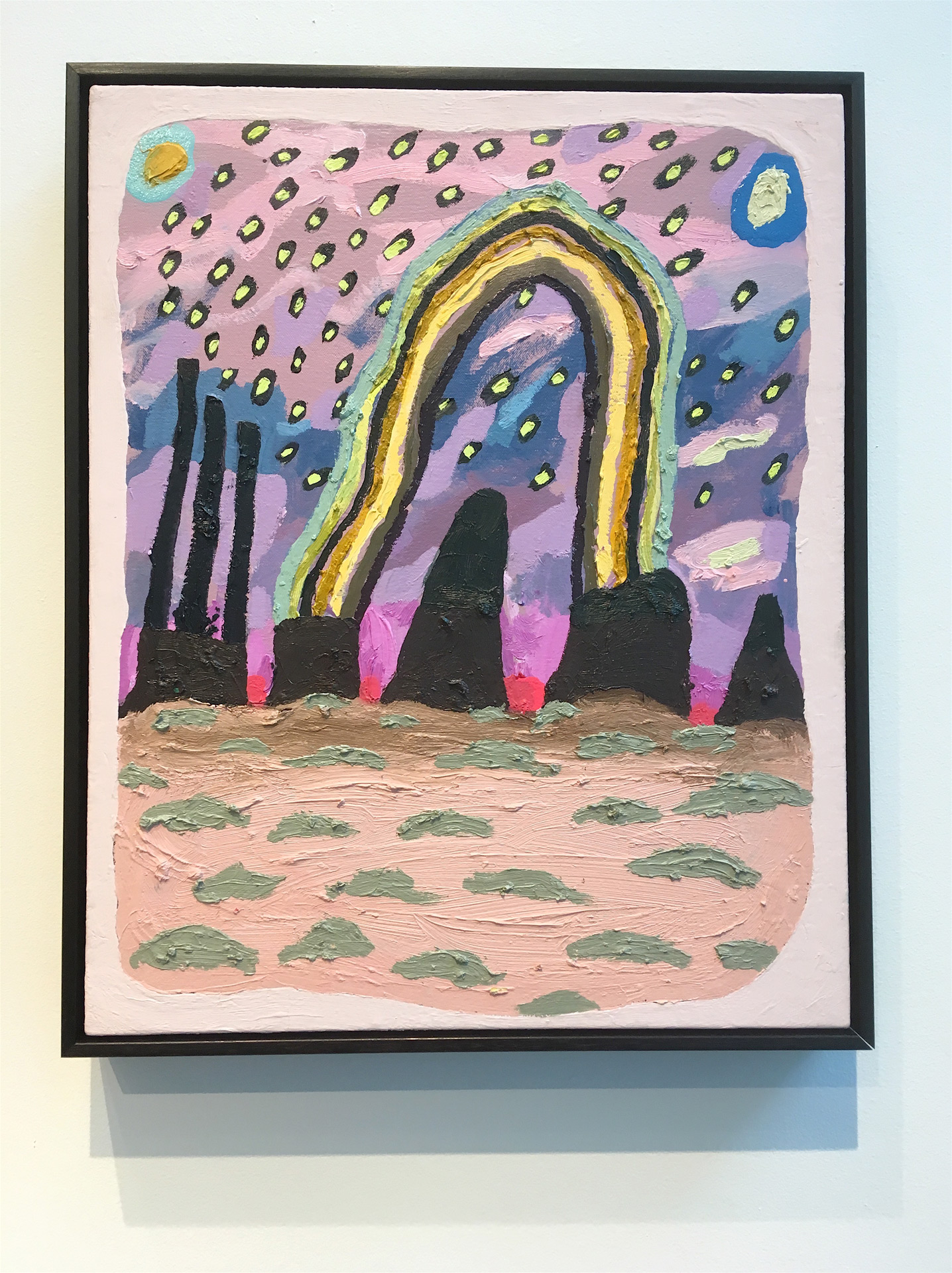
Hung on the same wall, "The Smog" admits pollution as beauty. An abstracted smokestack spews chiffon-yellow speckles into a sky familiar from Van Gogh's "Starry Night"; figures in the foreground could be flattened mounds of waste or dying cars. Lines vibrate at pigment's lurid limits. The effect is oddly playful.

"Desert Land" and "Rock Cave" are large, 46" x 64" paintings, pictorial representations of Macias' styrofoam and stone "Rocks" that rest, stacked, on adjacent shelves. Fake rock atop real rock; a riff on verisimilitude and the quest for authenticity, perhaps a response to Ugo Rondinone's similarly colored, similarly stacked "Seven Magic Mountains."

The exhibition's uncanny sculpture, "Prosthetic Tree" addresses humanity's attempts to improve upon nature and inability to transcend it.

"On a hike one day, I saw this perfect stick that could stand on its own," Macias explains. "In my studio I started sanding it down, but didn't alter it so much that it didn't look raw. It became this humanoid stick with prosthetic limbs. It reminds me of the walking brooms in 'Fantasia.'"

Wood, wire, rubber, rope: barely a tree, the way prostheses can barely resemble their intended limbs. Root tips are painted royal blue. A branch extended with a length of rubber approaches tumescence. An RCA plug and its electrical corollary dangle from the sculpture, asking to be plugged in. The work is deceptively simple, the structure full of potential; the viewer's imagination decides to what end.

"You can be stationary, but in all these different places at once in your head," Macias says. "In my studio I'll stare at an object and it will take me somewhere else. Again it's the idea of the portal that can transport you. I like the tone of the title."

Pastel painting of abstract landscape

"All at Once in Every Place" is on view through Sunday, August 5, 2018.

All quotes taken from Abel Macias' SCAD MOA gallery talk, moderated by curator Ben Tollefson.

See more of the artist's work at www.abelmaciasstudio.com.

On stage and sound with Stephen LeGrand

June
14
2018
By
Tags:

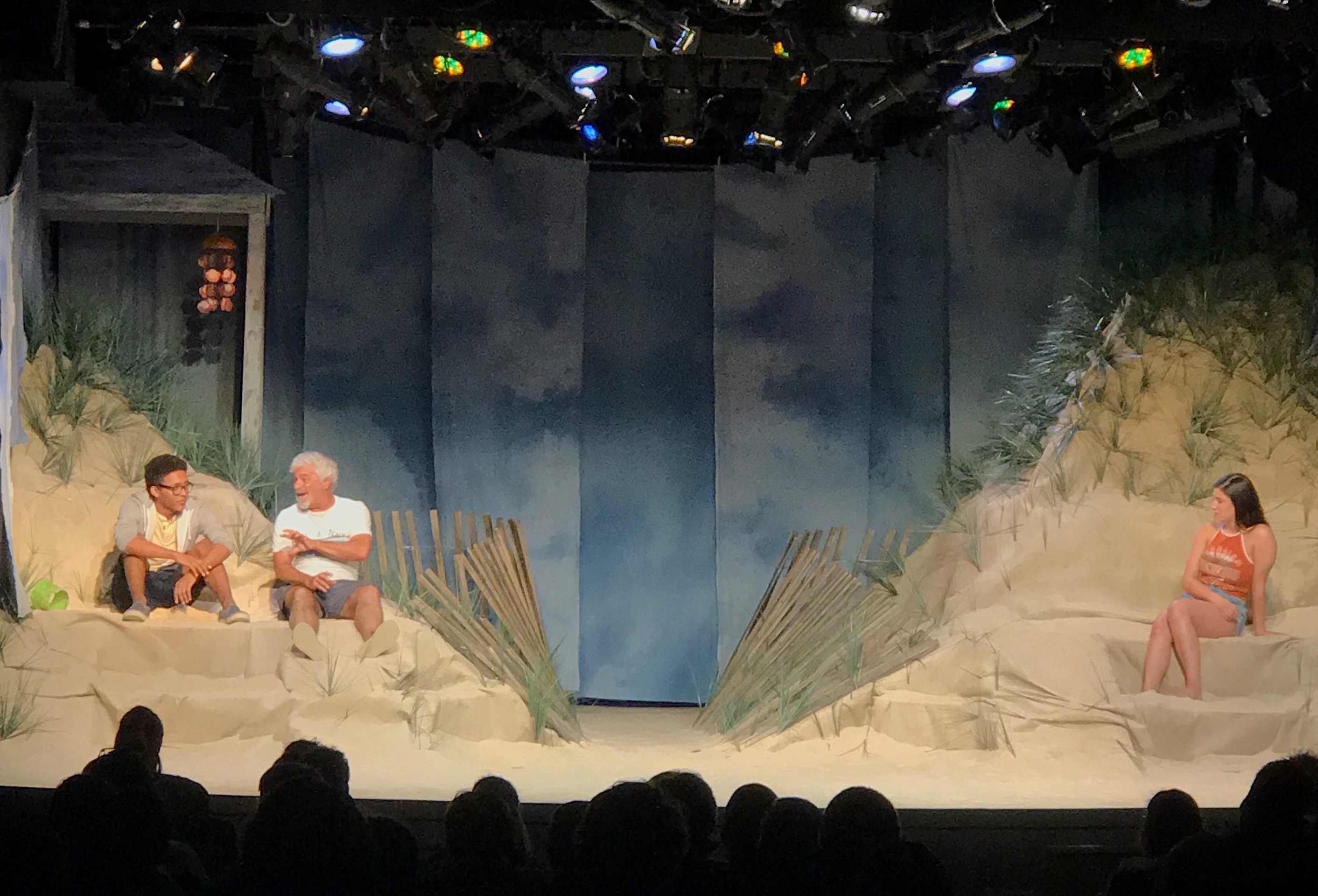
Professor Stephen Michael LeGrand is wearing an aloha shirt and strappy sandals when the wave hits. He's not at Tybee Island, but on stage at the Mondanaro Theater, as grizzled, goofy widower George in the SCAD school of entertainment arts production of Gregory S. Moss' play "Indian Summer." Trained as an actor, LeGrand spent decades working as a composer and sound designer, only to return to his thespian roots in the recent production directed by theater arts professor John Prosky.

As a SCAD sound design professor, LeGrand exemplifies the diverse professional experiences of SCAD faculty. Formerly the resident sound designer at American Conservatory Theater in San Francisco ("I worked over 110 productions, from Shakespeare to Sam Shepard"), he arrived at SCAD as a graduate student in 2008 when his spouse Sharon Ott was hired as a SCAD performing arts professor.

"Getting my SCAD degree was very important," LeGrand says. "Understanding the teaching styles of professors was highly instructive, as was understanding the culture of SCAD. Professor Robin Beauchamp really mentored me in how to be a professor of sound design." After earning his degree, LeGrand (M.F.A., sound design, 2009) began teaching at SCAD full-time.

Theater-goers look on at a beach set designphoto: Savanna Macri


SCAD: Your performance in "Indian Summer" was fantastic, with a rip current of pathos at the end. How long had it been since you appeared on-stage?

Stephen Michael LeGrand: I last acted on-stage 33 years ago, in a production of Sam Shepard's "The Tooth of Crime" — I played the space monkey. With "Indian Summer," our performing arts chair Mark Tymchyshyn suggested I meet with John Prosky, who asked me to be in the play. John told me, "Try and make every moment a discovery moment. If the audience sees you discover something, they're right there with you." That simple instruction was really helpful.

What I love about the theater is the process. You're developing something together with a family of people and you push through from that first table reading all the way to tech rehearsals and previews and then…opening! Backstage, you hear the audience buzz and you feel that juice. I was fortunate to be part of a cast with incredibly talented SCAD students who are able to find something new about every moment.

SCAD: What compelled you to remain at SCAD to teach after earning your degree here?

SML: SCAD has the preeminent sound design program in the country. Most university sound design programs are tucked into production design for live theater. At SCAD, sound design is its own specific degree program. The SCAD sound design department prepares our students to excel at a lot of different jobs. They're able to say yes to as many opportunities as possible in the world of sound design.

Also, SCAD emphasizes collaboration, and sound design is a collaborative art form. One of my graduate students Ana Marín (M.F.A., sound design, 2018) installed "Two Pieces," the recent Janet Cardiff and George Bures Miller exhibition at SCAD Museum of Art. For her thesis project, Ana collaborated with jewelry and industrial design student Maria Posada, designing wearable pieces that have sound elements to them. Phenomenal work, accomplished through collaboration.

SCAD: What's a sound design class you teach based around creative problem-solving?

SML: One example is "Foley Production Techniques" (SNDS 322). There's something called a Foley recipe where different objects make different sounds. For example, if you put a sharpened lead pencil between the keys of an old computer keyboard and turn it slowly, it makes the sound of a guy hanging on at the end of a creaking rope. The first assignment I give Foley students is to pick onomatopoetic words out of a hat, then find two objects that will create that sound, and then those objects go into our Foley closet. We work hard and have a lot of fun.

LeGrand lectures in the front of a computer lab

A joyous 2018 SCAD Hong Kong commencement

June
12
2018
By
Tags:

SCAD festivities continued across the globe with the joyous 2018 SCAD Hong Kong commencement, a week following the Savannah and Atlanta editions. The sun shone for the celebration, held in the glimmering Diamond Ballroom of the Ritz-Carlton Hong Kong on June 9.

SCAD president and founder Paula Wallace opened the ceremony touting the class of 2018's achievements: "Thank you for contributing your infinite gifts to SCAD. To earn this moment, you have had to call on your whole being—hand, head and heart—and we are so very proud of you!"

SCAD Hong Kong graduates, majoring in disciplines including animation, motion media design and fashion, study in the former North Kowloon Magistracy building in the dynamic Sham Shui Po district. Revitalized by SCAD to include technology amenities like digital labs and a green screen studio, the building welcomes students and visitors with vibrant art, created by students, faculty and alumni.

The 2018 SCAD Hong Kong commencement ceremony suffused students, friends and family with delight.

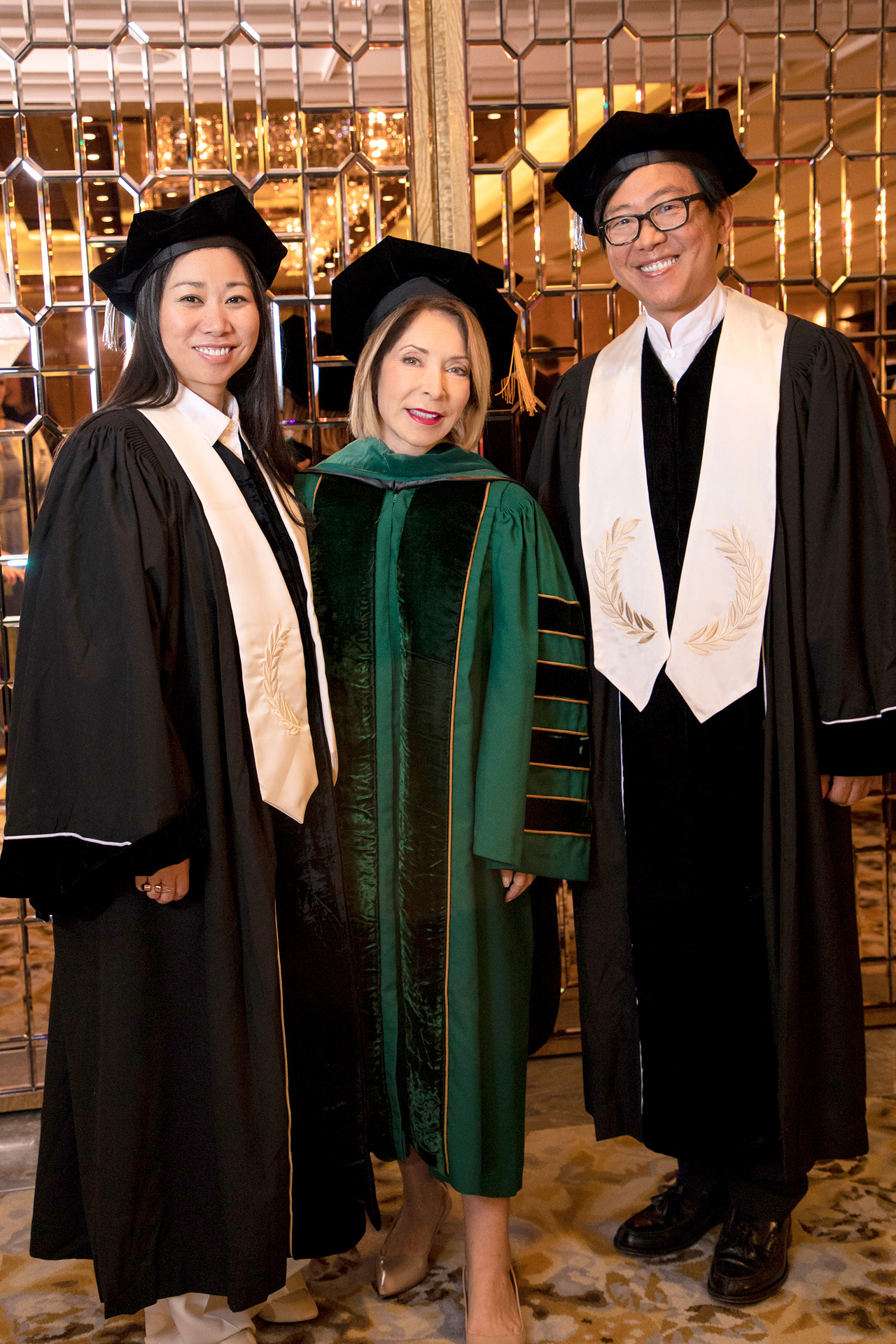
University president stands in green graduation gown and cap with two others

Here are five highlights from the festivities:

1. SCAD alumna Nikki Louise Palomaria (B.F.A., graphic design, 2015):

"During your studies, you’ve been surrounded by some of the most incredible people you’re going to meet. And as you continue from this point forward, you still have them. Stay in touch, show each other your work, make use of the SCAD family network to enrich your professional and personal life, to keep you creating and craving new knowledge and experience."

2. Valedictorian Michelle Claase (B.F.A., painting, 2018):

"At SCAD, I explored newfound interests in film and took a screenwriting class, opening up something inside me that I didn't know existed. It led me to minor in film and television and changed the course of my future."

3. Excelsus Laureate Jonathan Lau (B.F.A., photography, 2012; M.A., photography, 2018):

"As a child, I visited the North Kowloon Magistracy Building on a school field trip. When I returned years later as a SCAD student I felt a sense of déjà vu as the wood paneling and large podium in the main courtroom had transformed into SCAD Hong Kong. The regional emblem of Hong Kong remained, but the building has become a celebration of art, a place where my old and new stories meet."

4. SCAD Hong Kong vice president David Pugh, awarding SCAD Honorary Doctorate of Arts and Sciences to William Lim, founder and managing director of CL3 Architects Ltd.:

"His eye for the extraordinary permeates the objects he acquires for his pleasure, and the art he creates for ours."

5. Wen Zhou, CEO, 3.1 Phillip Lim, SCAD Honorary Doctorate of Humane Letters recipient:

"I am so impressed that 100% of SCAD Hong Kong graduates are employed or seeking higher education within the first ten months of graduation. As you seek your first job, on your first interview, ask not only about salary, benefits, and technicalities, but think about the company’s values and culture. Don’t be afraid to ask questions. You are our next generation of thinkers, of leaders. It is my honor and privilege to welcome you with open arms."

Group of students in cap and gowns hold diplomas

A luminous send-off to the SCAD class of 2018

June
5
2018
By
Tags:

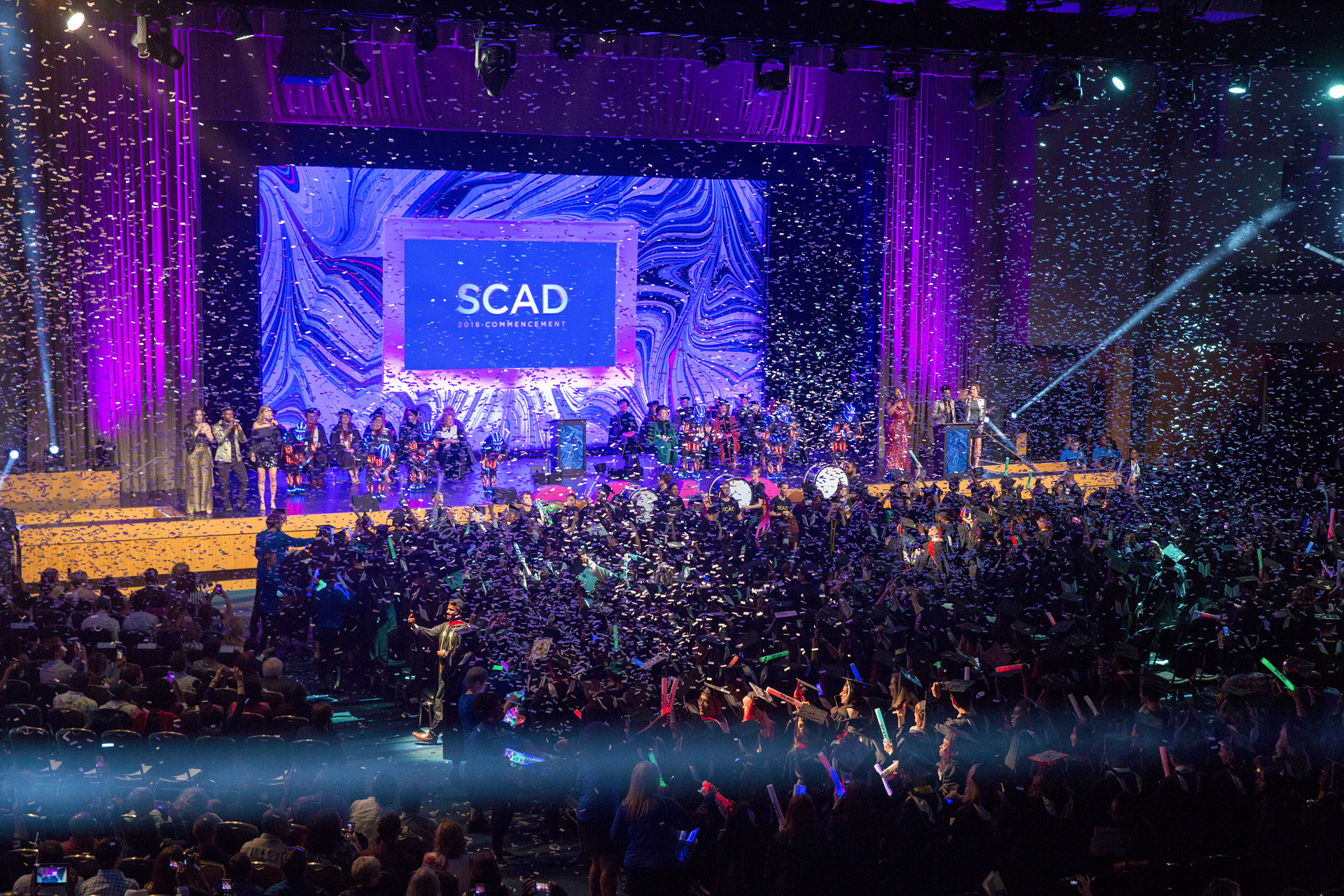
Friends, family, and fans of the SCAD Atlanta Class of 2018 convened at the Georgia World Congress Center on Saturday, June 2 for the university's commencement ceremony. Along with a global audience following online, they watched as each of the graduates filed across a stage that glowed under a backdrop created by SCAD alumna Lauren Clay (B.F.A., painting, 2004).

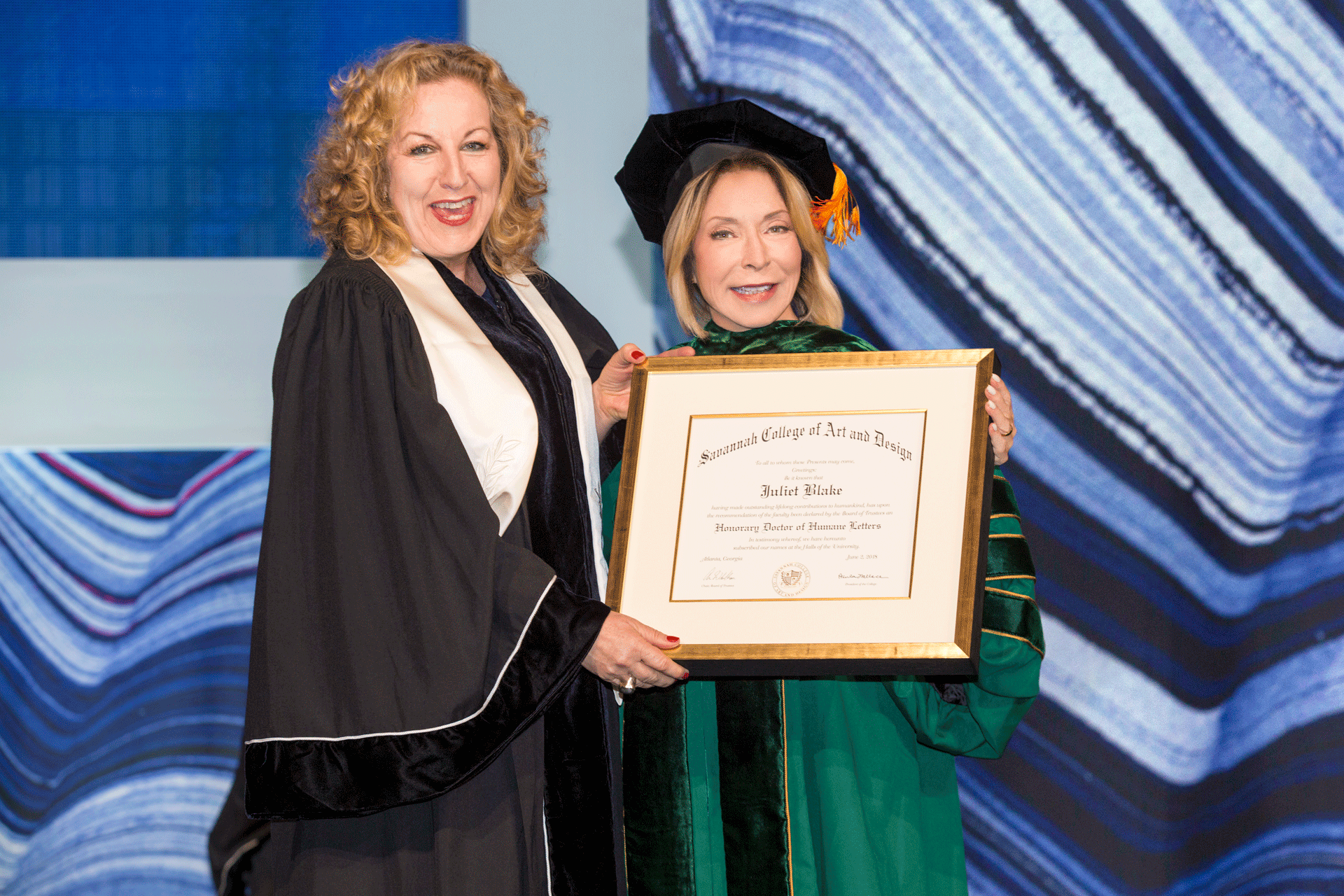
SCAD also presented an honorary doctorate of humane letters to Juliet Blake, head of TV and curator of special projects at TED, and later presented the same honor to Oprah Winfrey, media and performing arts magnate.

SCAD founder and president presents honorary degree to Blake

Diplomas in hand, graduates returned to their seats for the conferment of degrees and a final, joyous expression to mark their initiation as SCAD alumni.

The Bees, the dynamo SCAD student vocal ensemble, took to the stage with an emotional cover of "Stand By Me." As video screens overhead played congratulatory messages from luminous honorees and guests at the year's signature events, performers from the SCAD Drumline, the SCAD Performance Ensemble and iLuminate LED dancers entered the arena.

As performers belted out "Come Alive" from "The Greatest Showman," graduates rose from their seats and waved colorful LED light sticks with abandon. The moment punctuated an afternoon elevated by the remarks of speakers including outstanding graduates, honorary degree recipients, and an accomplished SCAD alumnus.

1. SCAD president and founder Paula Wallace:
"I imagined SCAD would be a new kind of higher education — with the audacity to put the words ‘professional careers' in our SCAD mission statement! … At SCAD, we teach our fashion students to design the clothes they want to wear, and we teach developers to design the game they want to play. And so I set out to create the kind of arts university that I wished I had attended."

2. Juliet Blake, honorary degree recipient:
"Stay connected. In the words of another TED Speaker, the brilliant Brene Brown: ‘Connection is why we are all here, it's what gives purpose and meaning to our lives.' This community extends well past commencement, and you still have a lot to share with each other."

3. Valedictorian Alexis Houpt (B.F.A., fashion, 2018):
"We've worked hard to arrive at this stage, ready to take the next leap in our careers. I, for one, know that when I was stretched to my limit this past fall, this day felt so far away. And yet, that's exactly when I interviewed and landed a position I'd dreamed of. The high expectations we set for ourselves — and were held to by our classmates, professors, and advisors — that's what led us to SCAD."

4. Excelsus Laureate Alexandra Badiu (M.F.A., illustration, 2018):
"The collaborative nature of these CLC projects resulted in friendships and partnerships that led me to more enjoyable work — creating backgrounds for senior films, working as a multimedia editor of SCAD Connector and SCAN magazine. The cover illustration I made for SCAN's 2017 spring issue won first place in Columbia Scholastic Press Gold Circle Awards, but to see the excitement in the eyes of my peers when they saw the cover, and feel the way we empower each other through our art was the best reward."

5. SCAD alumnus José Reyes (B.F.A., graphic design, 1995), founder, principal and creative director, Metaleap Creative:
"Your friends, siblings, parents, your elementary and high school art teachers — these people believed in you before you took your first drawing class. Take a moment to remember the people in this room and in your life who spoke into that decision. Remember all the ‘well dones' you heard from them, because each kind word was a step toward this moment."

Rows of graduates celebrate with confetti in the air and SCAD banner ahead

SCAD grads take center stage

June
3
2018
By
Tags:

The SCAD Savannah Class of 2018, the largest in the university's history, convened at the Savannah Civic Center for dual commencement celebrations on the morning and afternoon of Friday, June 1.

"You're sitting here today because you had a dream, and you chose to pursue it," said Hilary Swank, SCAD honorary degree recipient. The two-time Oscar-winning actor, producer and fashion entrepreneur spoke of the extensive preparation behind her career success and commended graduates on their achievements.

"You worked incredibly hard, applied your unique creativity to everything you touched, and did not stop until you crossed the finish line. So congratulations on successfully graduating from such a prestigious university. Given the elite education offered by this university, you couldn't have done a better job positioning yourself for whatever your next step in life may be."
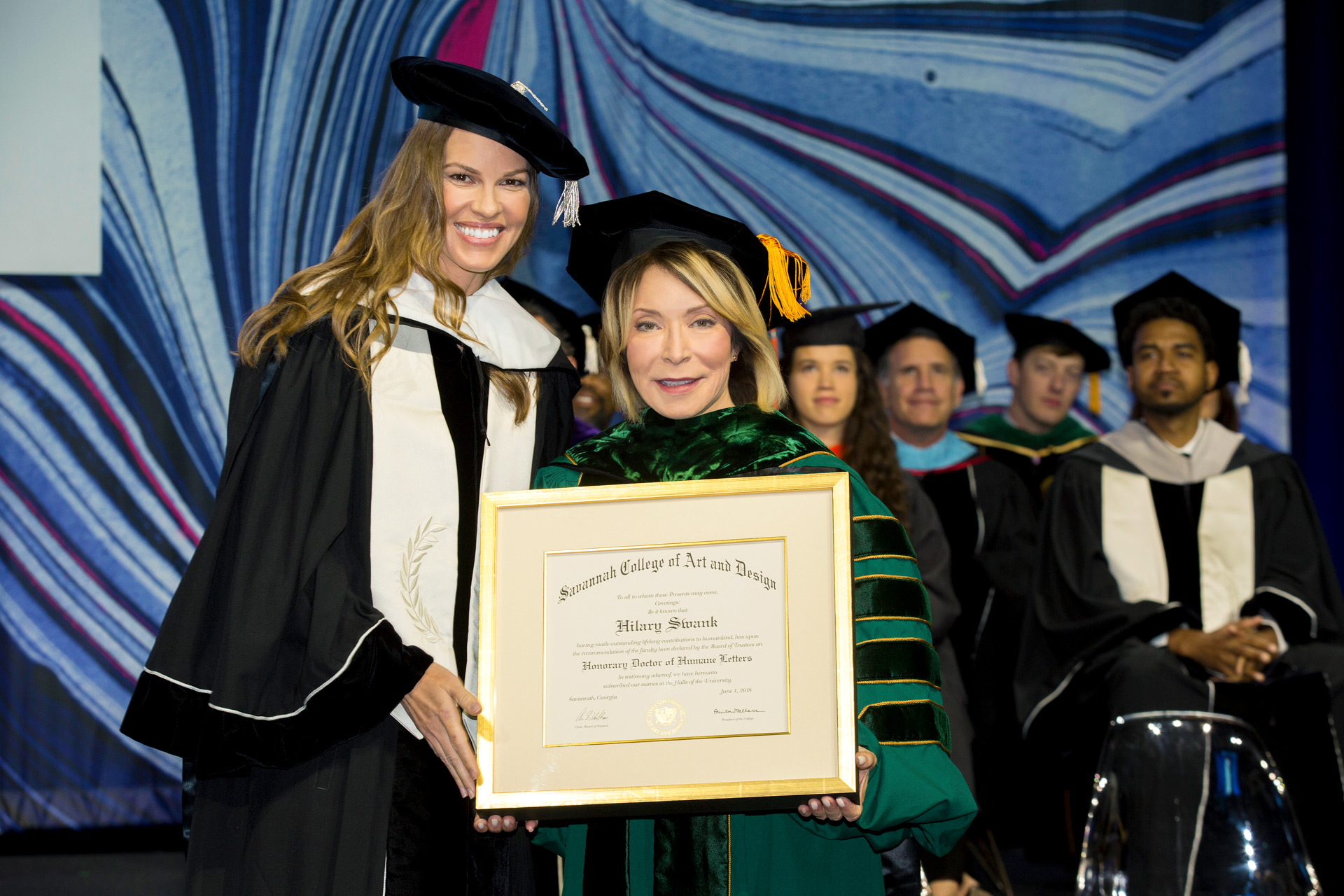
SCAD founder and president presents honorary degree to Hillary Swank

After degrees were conferred, all formalities were dispensed with and the jubilation flowed forth in earnest with a musical medley led by the dynamo SCAD performance ensemble, The Bees. Once the confetti cannons erupted in a final exclamation, the Class of 2018 processed from the auditorium to the sun-lit streets of Savannah as SCAD alumni, carrying with them the words of the illustrious commencement speakers:

1. SCAD president and founder Paula Wallace:
"Today, you are actors, architects, animators, designers, writers, filmmakers. And yet one day, as your dream unfurls like a proud banner across your life, you will find yourself playing surprising new roles: You will become parents, creative directors, studio founders, company presidents. What some call wishful thinking in you today will be hailed as fearlessness in the years to come."

2. SCAD alumnus An Le (B.F.A., photography, 2012), owner An Le Studio:
"The people who sit next to you, the friendships that you've made here at SCAD, and the valuable skills your professors have taught you will be all you need to succeed and achieve your dreams. I believe, as artists, we can make something out of nothing, create the extraordinary out of the ordinary. We can turn blank canvases into beautiful paintings, rolls of fabric into stunning creations."

3. Valedictorian Nicolas Barrera Castañeda (B.F.A., architecture, 2018):
"I know you'd all agree — reaching this stage has taken a tremendous amount of work, years of diligent effort. And now, as we move to the next stage of our SCAD careers — as graduates — I know that my first impressions of SCAD were spot on. This university is exactly what I sought."

4. Excelsus Laureate Shannon Vanderhill (M.F.A., design management, 2018; M.A., jewelry, 2018):
"My passion for jewelry led me here, to the nation's largest jewelry program, with its amazing studios and thoughtful faculty, where we create works of design and art that interact with people — as experiential, conversational, and sometimes sentimental objects. And SCAD led me to my work today. I found my stride as a designer in another program that matched my interests perfectly. In design management, I worked to research, synthesize and communicate insights — to facilitate conversations, experiences, and the design process from end-to-end."

5. SCAD alumnus Deron Bennett (B.F.A., sequential art, 2002), owner AndWorld Design:
"SCAD has prepared you in more ways than you know. It's because of my professors' and classmates' critiques that I can distinguish between design that works, and design that needs more work. Today, know that you chose the right path. After you walk across this stage and through those doors, more doors of opportunity await you. SCAD has given you the keys, and you have to open them."
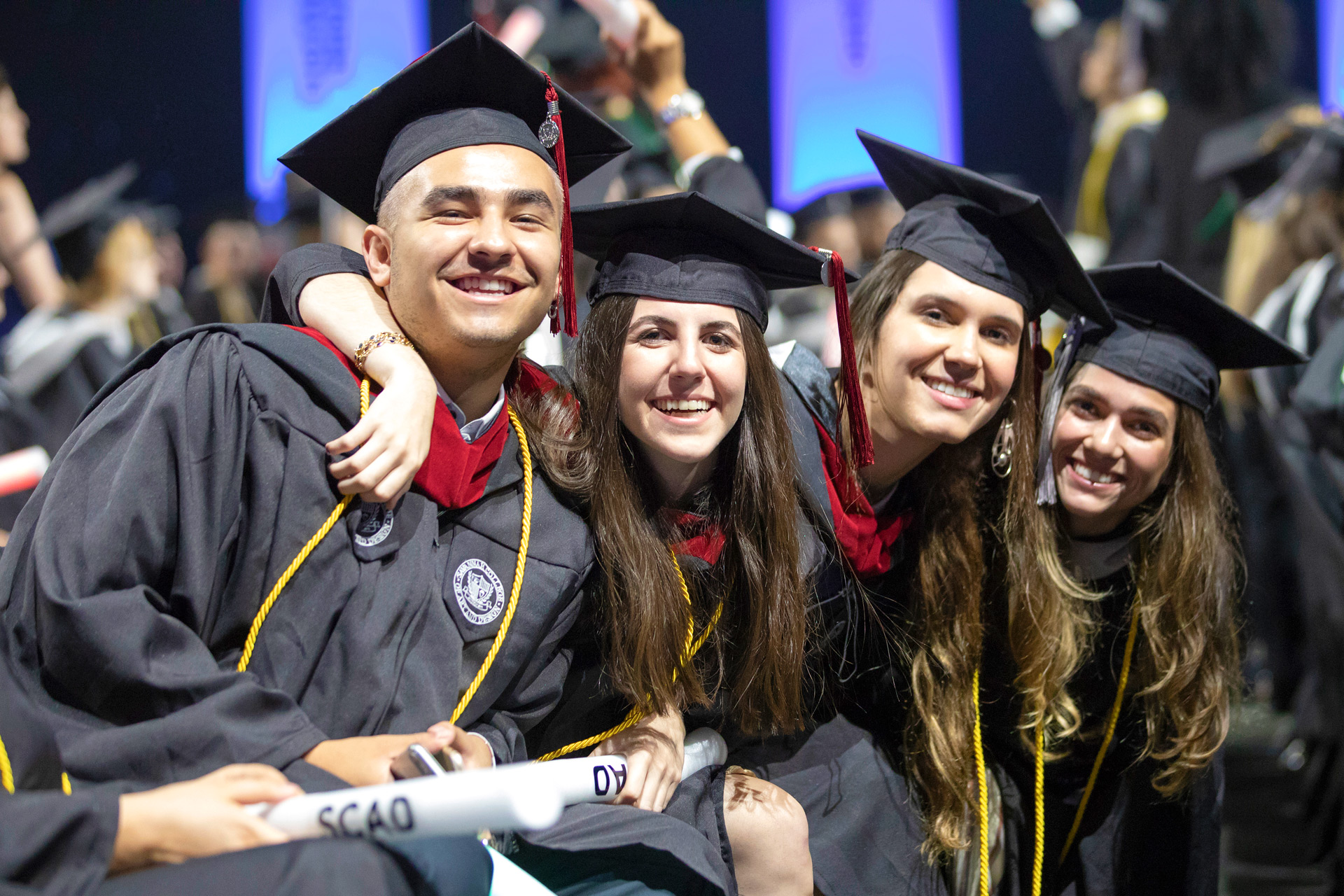
Four graduates holding diplomas and wearing cap and gown smile

Julia Kier Wilson reverses the surfeit

May
25
2018
By
Tags:

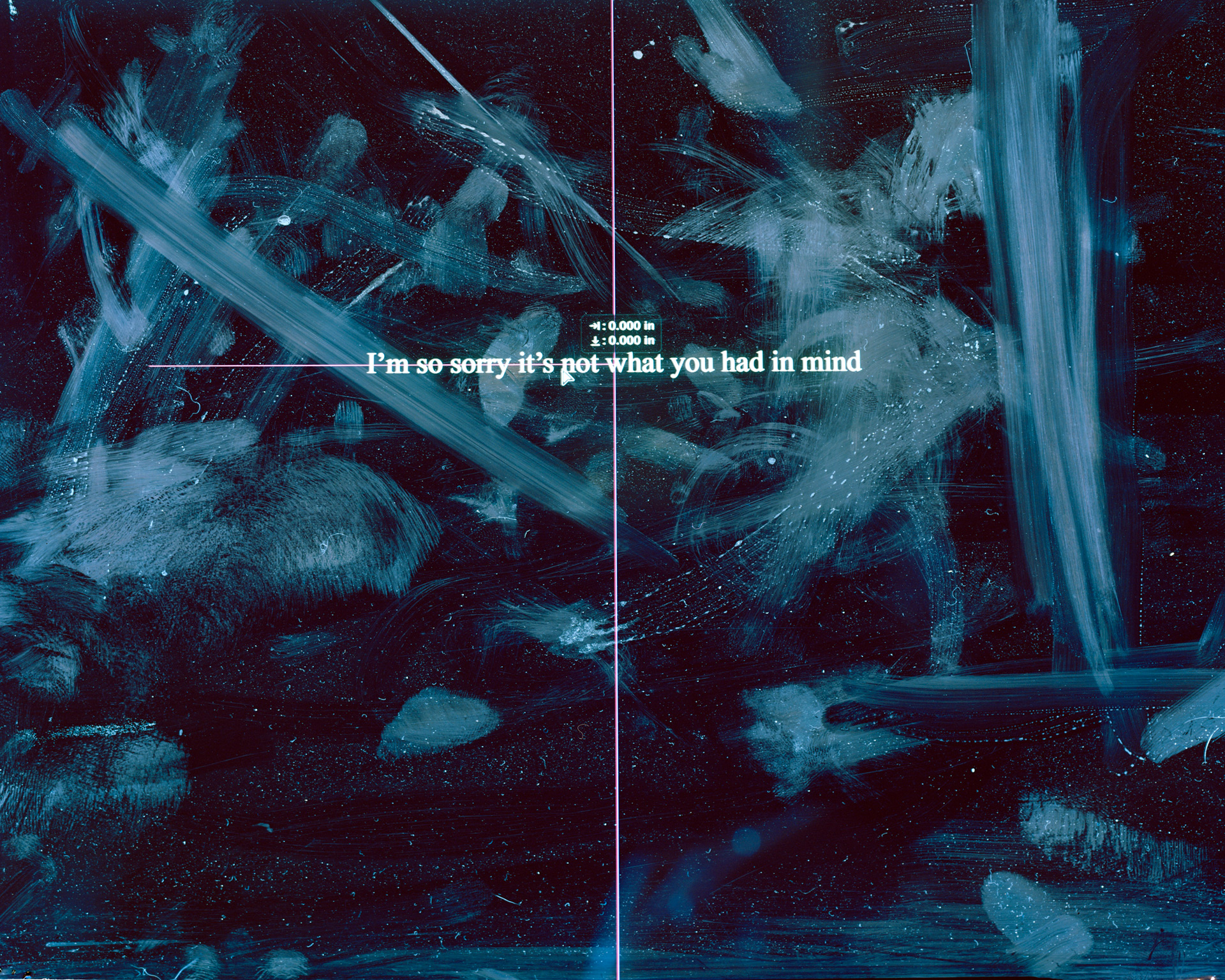
The smudges on her laptop screen are part of her palette. Julia Kier Wilson (M.F.A., photography, 2018) creates artwork that upends formal preconceptions. "As a fine art photographer I’m interested in the materiality of photography itself," Wilson says. Ideas of looking at and looking past are reassessed. The integration of text occludes and illuminates. Large scale archival ink jet prints nailed to the wall comprise "Splendid Failures," her new M.F.A. thesis exhibition.

Wilson’s unassuming erudition means that over the course of a forty-minute conversation the Charlottesville native and Ancient Greek and Latin scholar references the blinking female in Chris Marker’s "La Jeteé"; Barbara Kruger’s bold font choices; Mel Bochner’s "Misunderstandings (A Theory of Photography)"; Roland Barthes’ mother; John Baldessari ("a big influence in pairing text with images"); Georgia O’Keefe and the mystical essence of Lake Abiquiú; all the while going halfsies on a lavender donut.

Dark navy background layered with transparent white streaks and type

SCAD: What are you mining with "Splendid Failures," Julia?

Julia Kier Wilson: I’m emphasizing the importance of context when we receive information, and how word and image work together. In the age of information, we’re being bombarded by text and images. We’re not aware of how many because we’ve adapted to the climate. With our cell phones, we’re creating a surfeit of redundant images. It’s the photographer’s job, the artist’s job, to pull photography from its cultural debasement and make something new.

SCAD: How do you do that?

JKW: Shooting with the large format Canon 4x5, I take photographs with negatives that retain a lot of information. I’m photographing the screen of my laptop, the reflection of the smudges, double exposures with text, of images projected with pixels, the screen sprayed with water…all these layers come onto one plane: film. Then that’s digitally scanned back into the computer and digitized again, then printed with ink. The transfer from surface to surface is really cool.

SCAD: You won the 2017 Passporte Prize Juror’s Award in Surreal Photography Honoring Man Ray. How did you create the winning image?

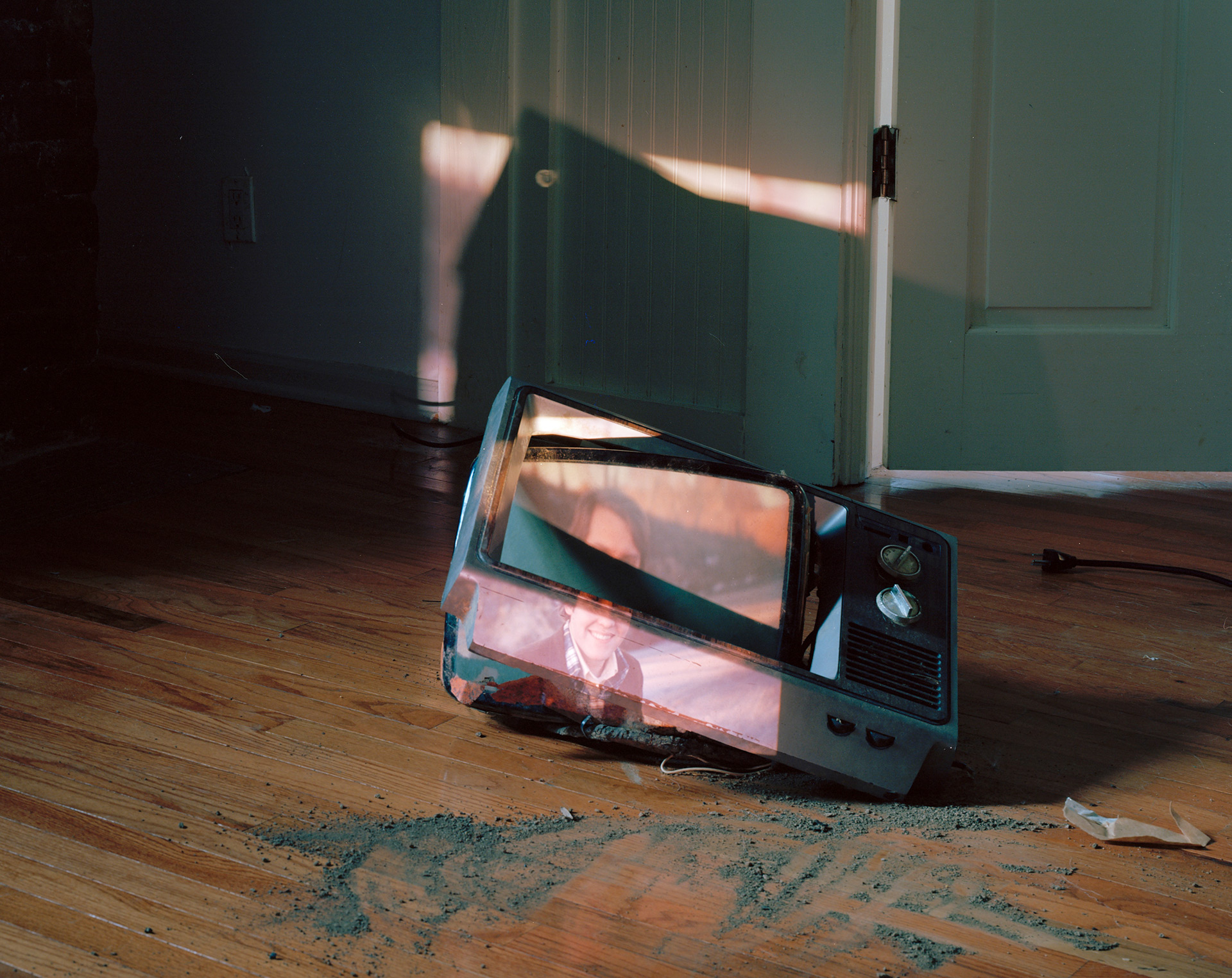
JKW: I was working with projections at the time. My mom gave me a 35mm projector with all her old slides, and I came across this one of my father in his twenties. So I took a photograph of a photograph of my father, projected onto a TV screen. It’s a way to look at television against its cultural use. How can something be viewed as beautiful apart from how we use it in its most mundane way? My sister found that TV while running through the woods in Stanton, bundled it up and brought it to me. When I unwrapped the TV the dirt fell out. The photo is also being used as the album cover for the new album by my brothers' band, Sons of Bill. It’s like a family collaboration, this picture.

Broken television on wood floor with image of young man projected over it

SCAD: What is a class at SCAD that challenged you to go beyond your extant notions of photography?

JKW: Professor Joshua Jalbert’s graduate critique class. It was the first portfolio class I was in, and I hadn’t integrated my language background with what I was doing yet. He assigned a reading called "The Aesthetic Dimension" by Herbert Marcuse that changed how I thought about work. Having a professor who assigned reading along with the technical aspects of photography made me think about what can be done with the medium of photography beyond documenting the world. That’s when I started working with images and text and eventually came upon my process.

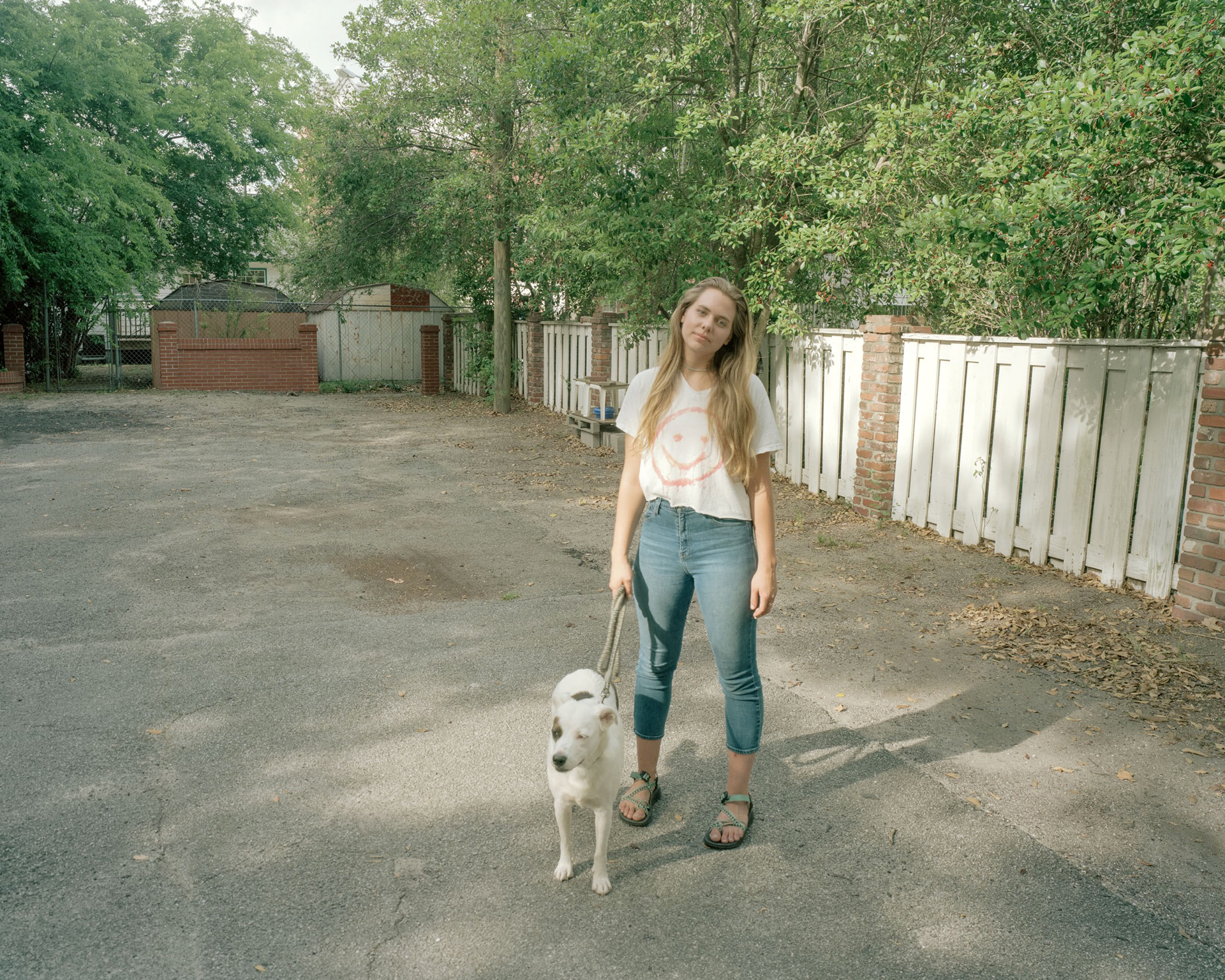
Young woman in sandals holds a leash with white dog and brown spots

Julia Kier Wilson’s "Splendid Failures" opens Friday, May 25, 2018 at Non-Fiction Gallery, with a reception from 6-10 p.m. "Splendid Failures" runs through Wednesday, May 30.

To see more of her work, visit www.juliakierwilson.com.

'Directing the Narrative' with Lubomir Kocka

May
8
2018
By
Tags:

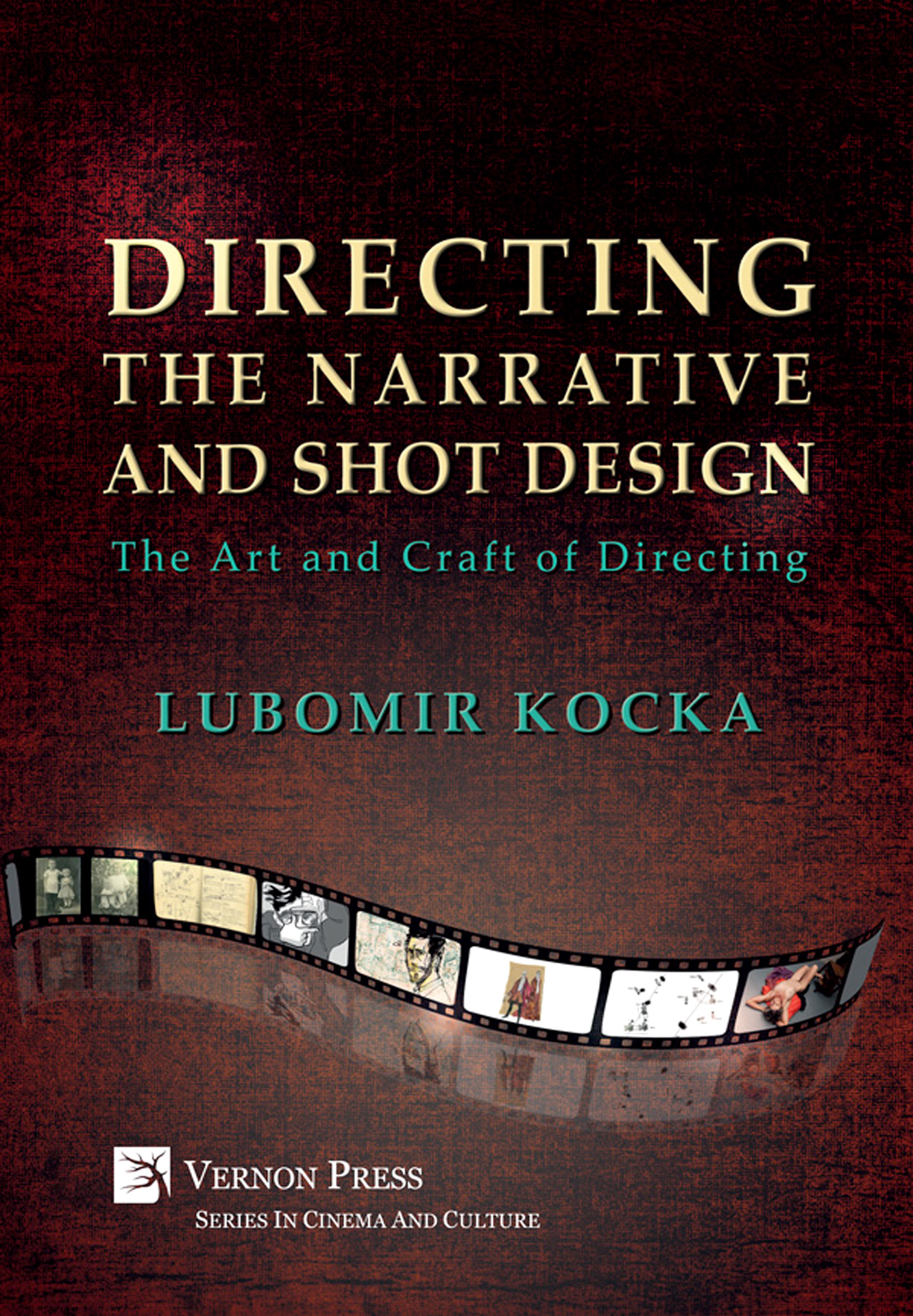
 "Directing is a painstaking process of translating your vision into film," writes SCAD professor of film and television Lubomir Kocka in his new book "Directing the Narrative and Shot Design: The Art and Craft of Directing" (Vernon Press, 2018). "You will be more likely satisfied with your directing if you feel in control of your directorial choices."

Kocka's book is both distillation and amplification of his life in cinema. A native of Žilina, Slovakia, and SCAD professor since 2002, Kocka is also a notable director, having directed nine feature films, 13 television dramas, and seven TV series and miniseries. To read his book is not unlike attending his class; one is prepared to direct and invigorated to create. As he writes in "Directing the Narrative": "The best films still remain unmade."

SCAD: What is the genesis of your book?

LUBOMIR KOCKA: When I began teaching at SCAD, I began to compose lecture hand-outs and booklets. In summer 2012 I compiled those booklets into the first draft of the book. In 2013, I received the SCAD Presidential Fellowship, and began shooting visuals for the book. Over the next three years, I set up and photographed over 200 scenes to demonstrate specific directorial techniques, like how to align the audience with one character and distance the audience from another character. Over 1000 visuals are in the book. The book utilizes visual learning alongside technical acumen, with an emphasis on narrative storytelling.

SCAD: How much of your personal experience as a director is expressed in "Directing the Narrative"?

KOCKA: I incorporate references to my own films, what I took from those films, and what can be applied generally to all films. My film "Fallacies of Our Traditional Morale" I made in 1989, on the verge of revolution in Eastern Europe, and the film reflects how I felt about that era. I use clips from that film when I talk about specific directorial concepts, and about how important it is to talk to a DP about a shot.

SCAD students' work is also reflected in the book. I refer to their comments on assignments, so readers can see how the benefits of those assignments on directing. I think both novices and professionals can benefit from the book. Directors, don't be stressed out! You can refer to my book.

SCAD: How does analyzing a scene impart larger lessons on filmmaking?

KOCKA: In the film "Blue" by Krzystof Kieslowski there is a scene where Juliette Binoche is sitting by herself and puts a sugar cube in her coffee. That sugar cube brings us to the center of her mind. Students are often taught to visualize isolation with a wide shot that shows a character lost in a landscape. I use that scene to demonstrate to students that they can physicalize the isolation of a character in a different way. There is a story that Kieslowski assigned his assistant to find a sugar cube that will suck the coffee not in three seconds, not eight seconds, but seven seconds. Specific! That's what I also try to teach students: they receive a preeminent education at SCAD, and when they graduate, differences can be made in their careers through painstaking attention to detail.

Lotti Zeiler's sweet slice of life

April
26
2018
By
Tags:

The swirling Buckeye burl of the handle complements the hamon-patterned Damascus steel as the blade lacerates the pomegranate. In the hands of creator Lotti Zeiler (B.F.A., industrial design, 2018), the hand-hewn knife is both work of art and superlative kitchen tool. Hailing from Reichertsheim, Germany, Zeiler is an elite SCAD artist-athlete, the Sun Conference "Runner of the Year" in 2014. Although recurring injuries forced Zeiler to stop running competitively, her indefatigable work ethic cannot be stopped.

SCAD: How did your knifemaking skills develop?

LOTTI ZEILER: I took a class called "Advance Model Shop" with professor Aaron Heisler. He taught me how to work with metal, how to weld and grind, how to clean metal up. He gave me the base I needed. From there it’s been a lot of trial and error. I began working with O1 steel, now I’m working more with Damascus steel. All my knives are custom. I only make knives to order.

Every day when I have spare time, I work on my knives. I’ll be in Gulfstream Center working on my senior project and if I’m waiting on my laser cut file to be cut or waiting for glue to dry I’ll go in the shop and work on my knives.

As I make the knives, at all times I check the balance and see if the handle is ergonomic. I sharpen it and do test cuts. Buy a chef knife for five dollars, use it and tell me how it compares to a handmade knife. It’s nice to have a unique, high-quality handmade knife. I'm currently fundraising for a knifemaking business I'll devote myself to after graduation.

SCAD: How is your senior project as an industrial designer coming along?

ZEILER: Originally, I planned on creating an aquaponic ecosystem where fish and plants work together. I went to aquaponic centers and got feedback from experts. Then I started prototyping and changed it up so now the project is aquaponic, aeroponic and vermiponic.

An aeroponic system is better for the environment; it needs less water. Vermiponics is a composting system where worms break down nutrients in the compost and filter the water. The combination between those three makes up my project. I want it to be an eye-catching centerpiece that you have in your backyard or in convention centers or hotels. It will be about six feet tall and four feet in diameter.

SCAD: Your career as a SCAD artist-athlete has not been without setbacks, specifically as a runner. How have you responded?

ZEILER: I first found out about SCAD through running. When I competed at German Nationals, there was an organization there called Scholarbook. They find German high school athletes who have a chance to get a scholarship to a university in the United States. They connected me with Coach Patrick Reagan, the SCAD running coach. When I learned of the creative opportunities here, I came to Savannah to run for SCAD, really successfully for two years. Then my injuries started. So last year I switched to cycling with Coach Ben Van Winkle. I’ve grown really close with my cycling team, I’m so happy they adopted me. I’m feeling really strong on the bike heading to Nationals in two weeks. The best is yet to come!

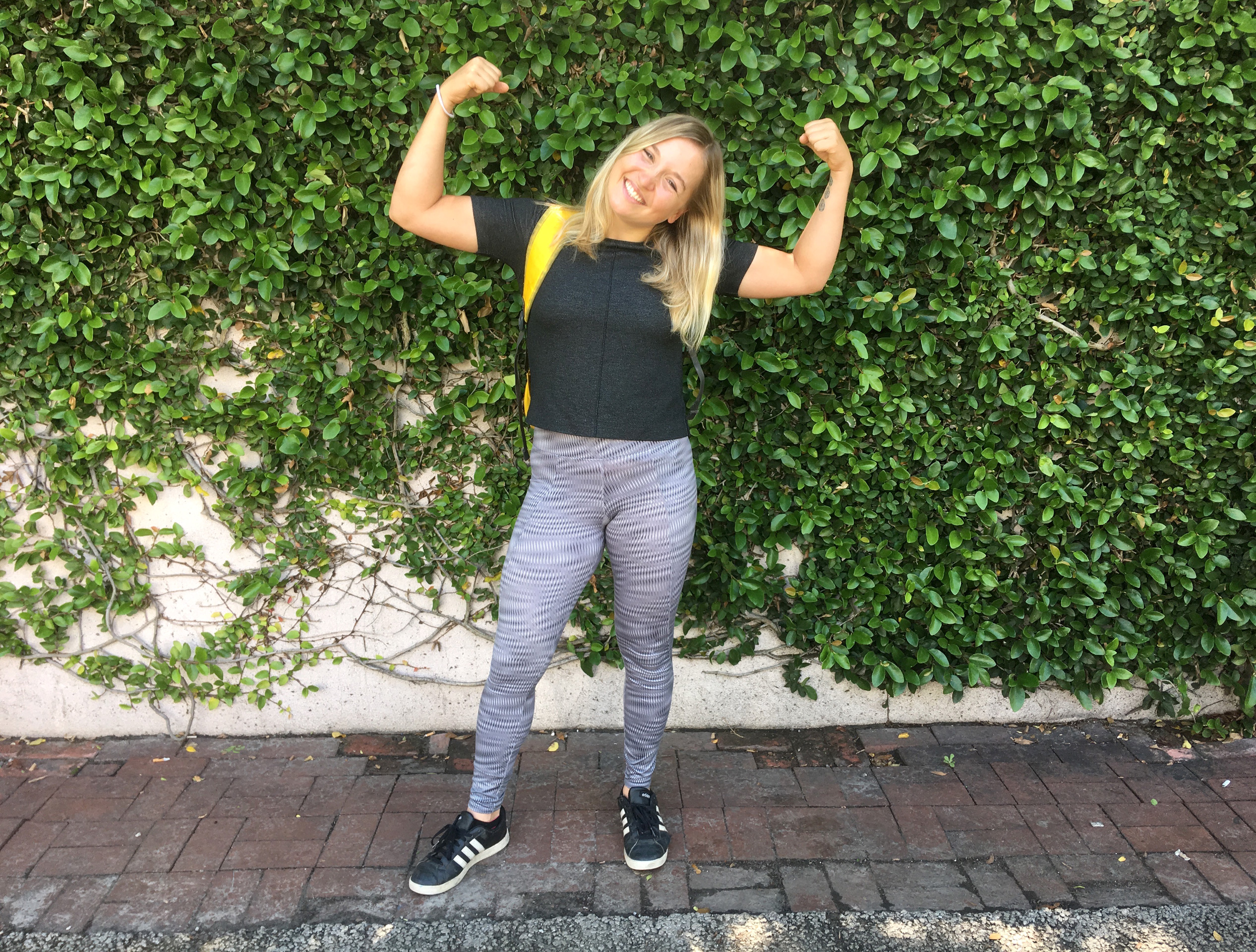
Student flexes muscles in front of vine covered wall

Lotti Zeiler and the SCAD cycling team head to Grand Junction, Colorado, May 5-6 for the 2018 USA Cycling Collegiate National Championships.

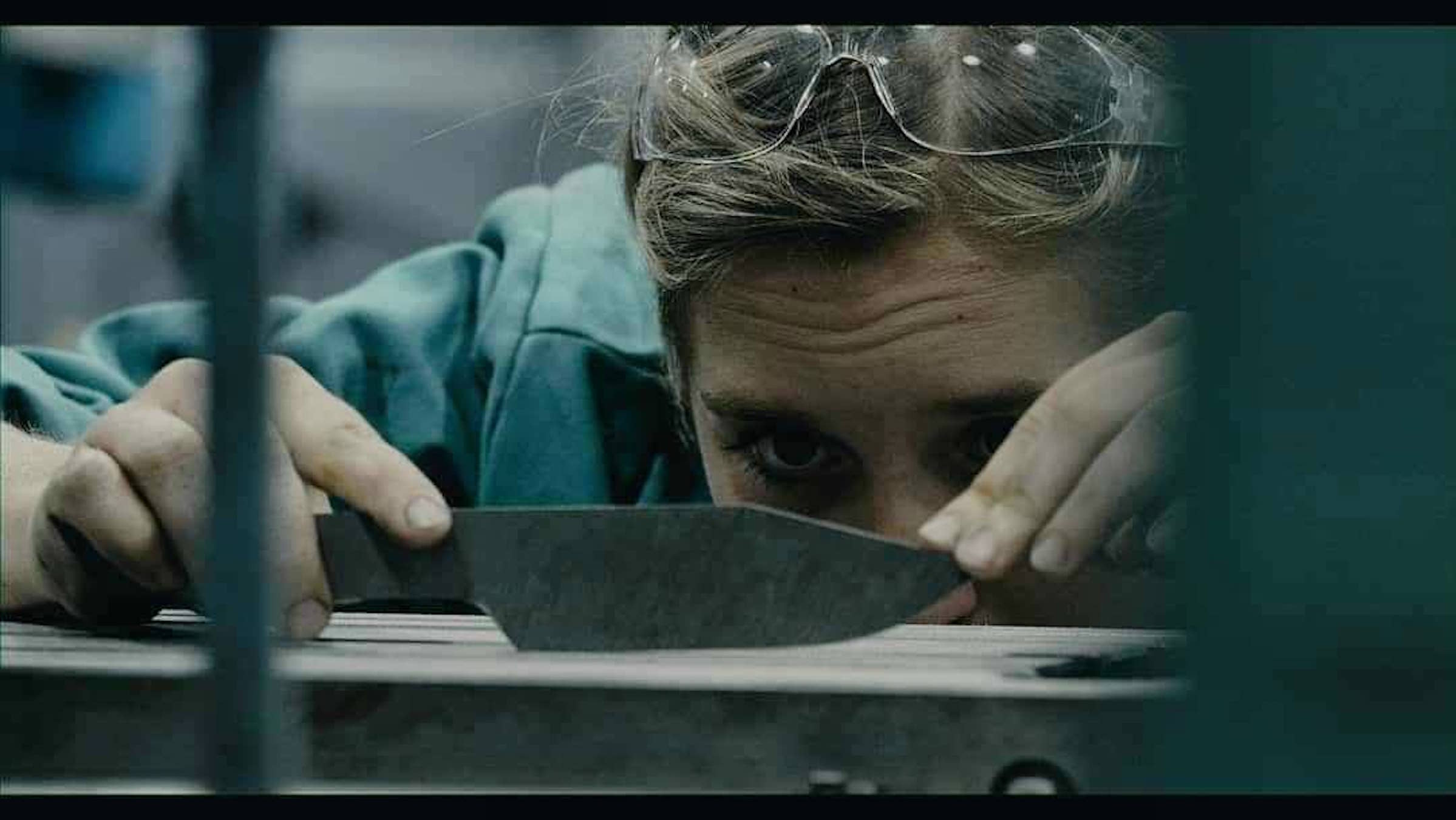
A documentary film "Sharp" about Lotti Zeiler, knifemaker, is in production and will screen later this spring. The film is a collaboration between SCAD film and television students Diana Gorin (director), Conrad Laga (director of photography), Spencer Hehl and Erin Bartomioli (assistant camera), Grey Gowder (producer), Susan McCormick (editor) and Matt Wilson and Reuben LaMons (sound).

Student looks closely at hand-hewn knife

Above still from "Sharp": Conrad Laga.