Skip to main content Accessibility Policy

Presidential Fellow: Robin Williams

August
3
2017
By
Tags:

Each year, President Paula Wallace awards deserving SCAD professors with Presidential Fellowships for Faculty Development to facilitate specific research projects. The program supplements opportunities for travel, conference support, sabbatical grants and professional advancement. SCAD spoke with Robin B. Williams, chair of the architectural history department, about his recent Presidential Fellowship experience exploring the history of pavement.

SCAD: Your SCAD Presidential Fellowship was awarded for “Researching the Local Identities of Historic Pavement: Midwest and West Coast.” Tell us about the project.

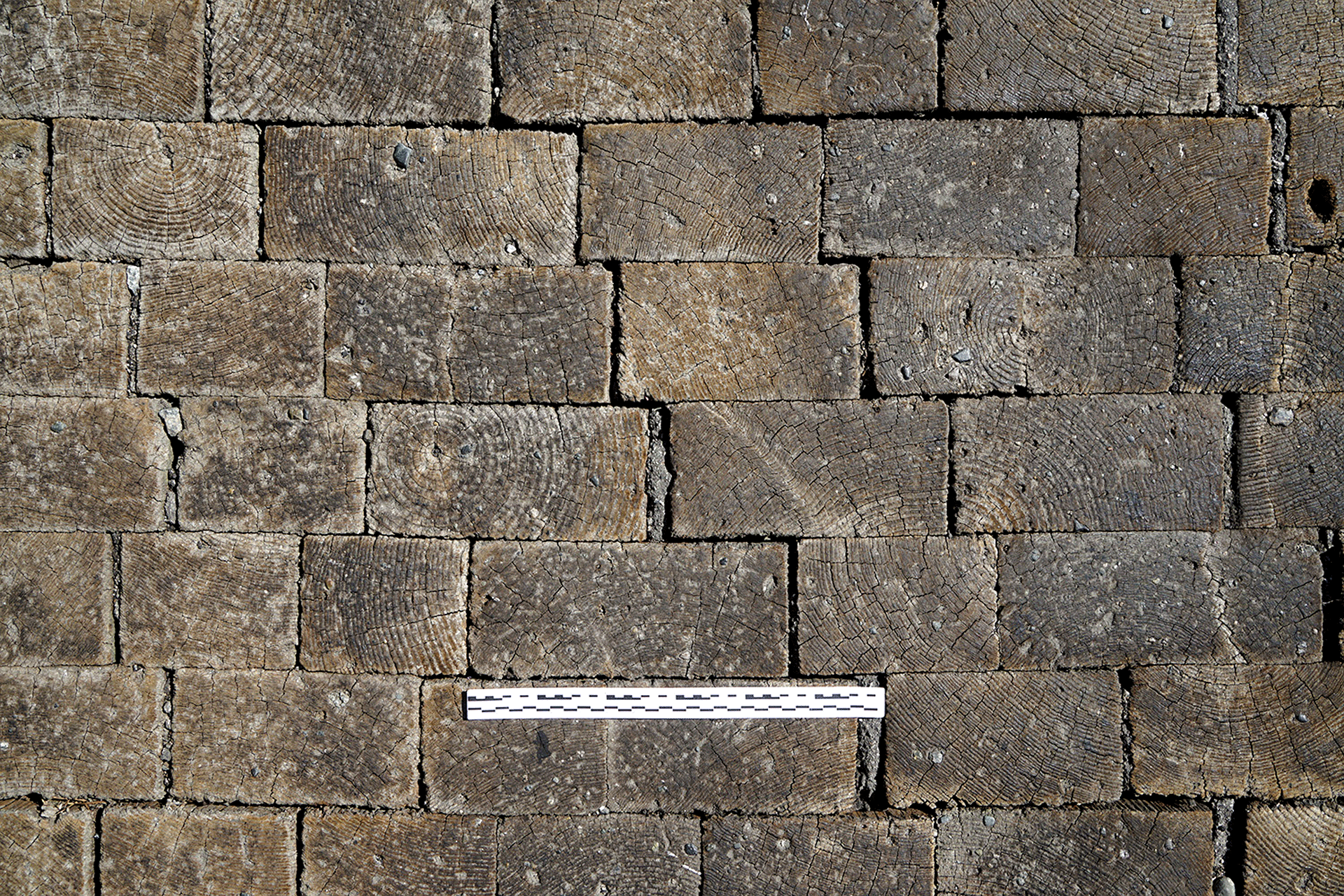
ROBIN WILLIAMS: The focus of the grant — to research pavement in cities on the West Coast and the Midwest — is part of my larger research project on historic street and sidewalk pavement in cities across North America. It builds on my research of Savannah street pavement, which I published a journal article on in 2013. I wanted to expand my scope, since no other architectural or urban historians were investigating this topic at that level.

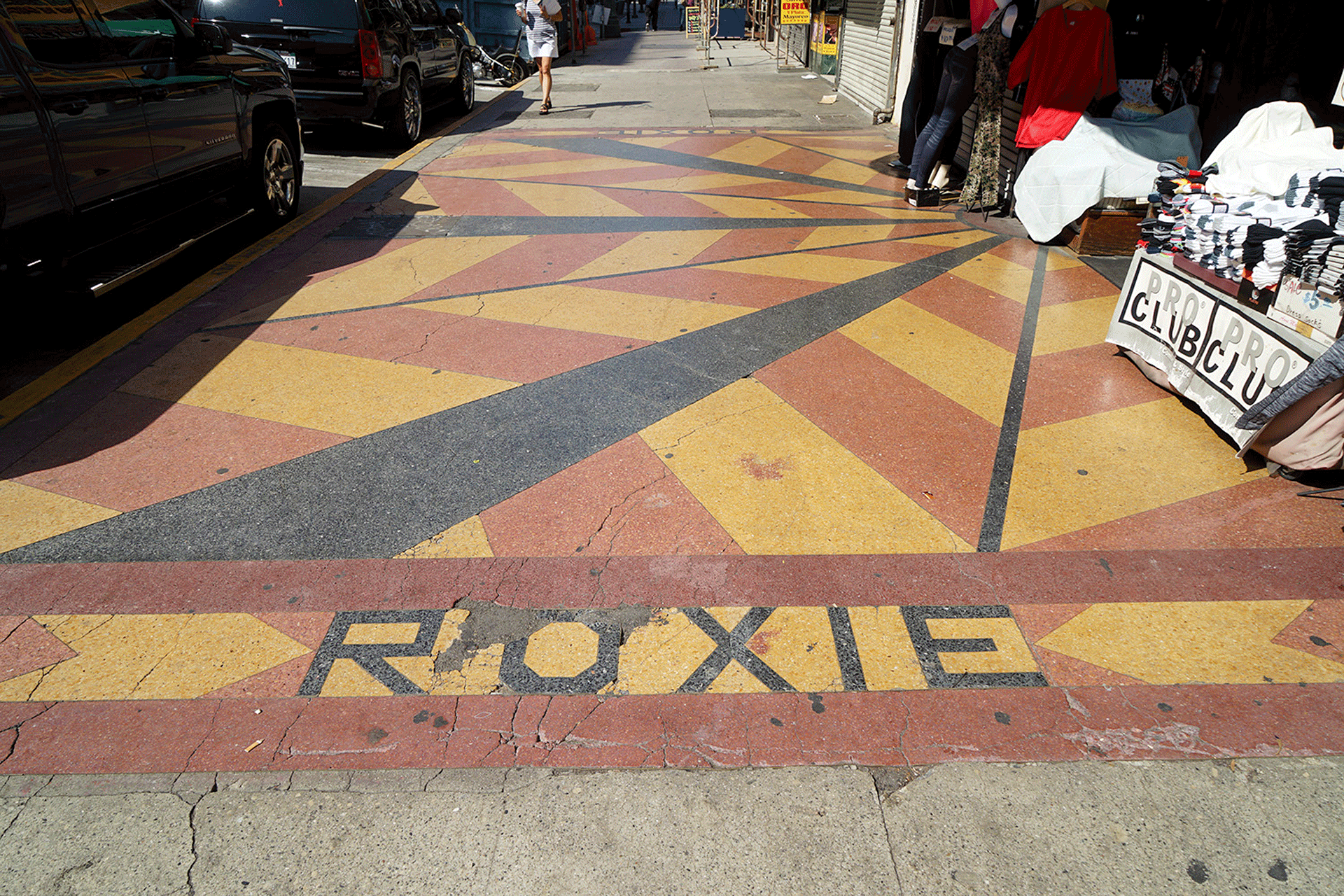
Red, yellow and black sidewalk in blocks with the word roxie

SCAD: How will the fellowship influence your work as an educator at SCAD?

WILLIAMS: The fellowship allows me to visit more cities, where I document existing historic pavement and visit archives to research historic documents. The archival research directly supports my ability to teach the “Research Methods in Architectural History” class. The experience of visiting multiple cities builds my firsthand familiarity with their pavement settings, buildings, streetscapes and transportation systems. This helps me provide a fuller understanding of those places in the classes I teach, which focus on modern architecture in Europe and North America.

Wooden blocks making up a sidewalk with ruler measuring a block

SCAD: What’s the most inspiring thing you experienced this summer?

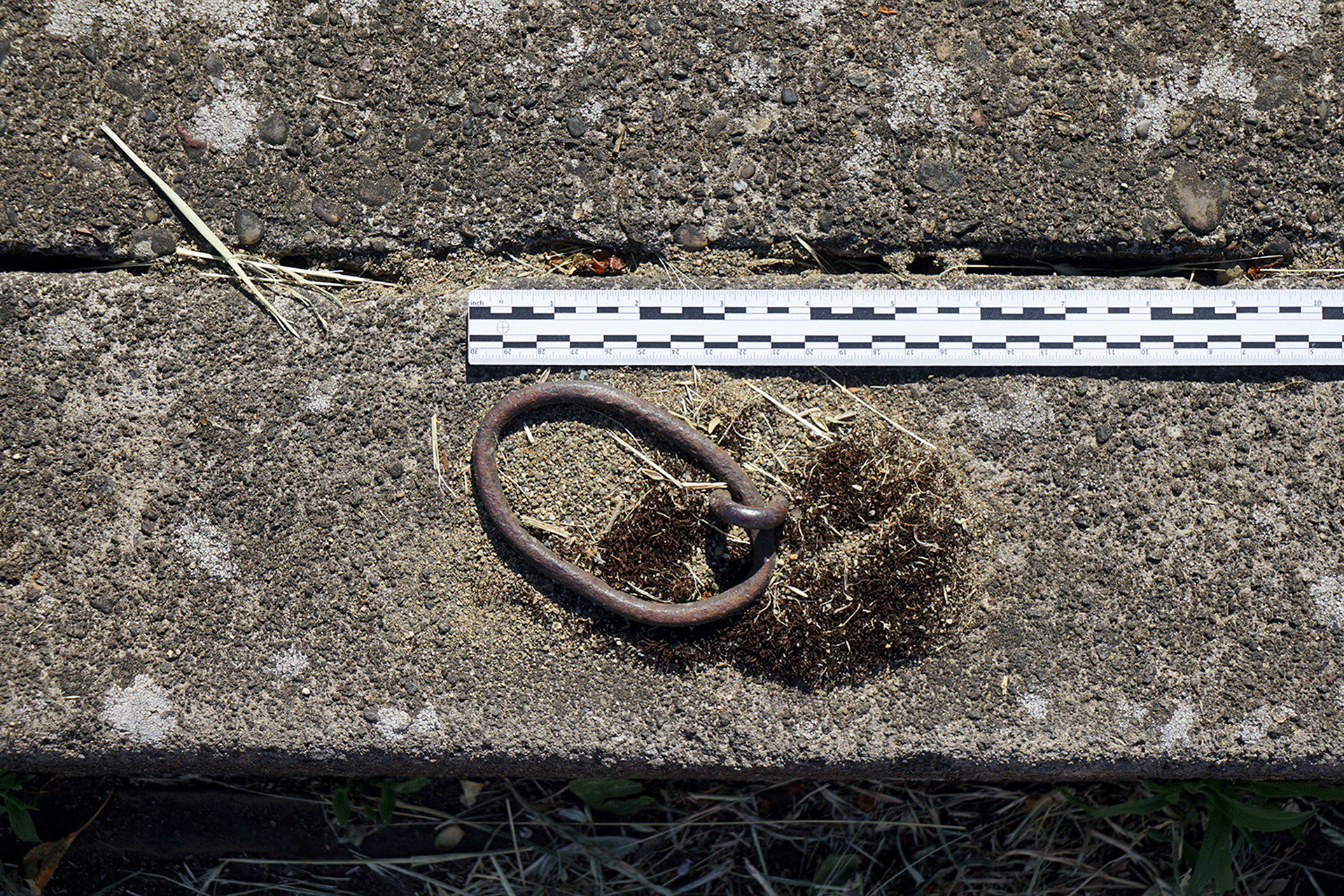
WILLIAMS: Discovering something new and unexpected in each city, be it out in the city or among documents in archives. Like the small three-inch diameter iron rings embedded into curbs across Portland, Oregon, which were installed to lash horses to the curb. I’ve never seen such rings in any other city. They’re preserved in great numbers in Portland, and citizens there are proud of them. It reinforced my belief that the physical materials that make up the streetscapes play an important role in defining local identity.

Detail of a metal hook affixed to a sidewalk


For more information visit: www.historicpavement.com


Check back soon for more SCADworks interviews with SCAD Presidential Fellowship recipients.

Cory Imig's 'Notes on Sculpture'

August
4
2017
By
Tags:

Cory Imig's site-responsive show "Notes on Sculpture" transforms the SCAD Museum of Art Emerging Gallery in ways bold and playful. Whether passing through or lingering in contemplation, visitors must assess their relationship to Imig's work.

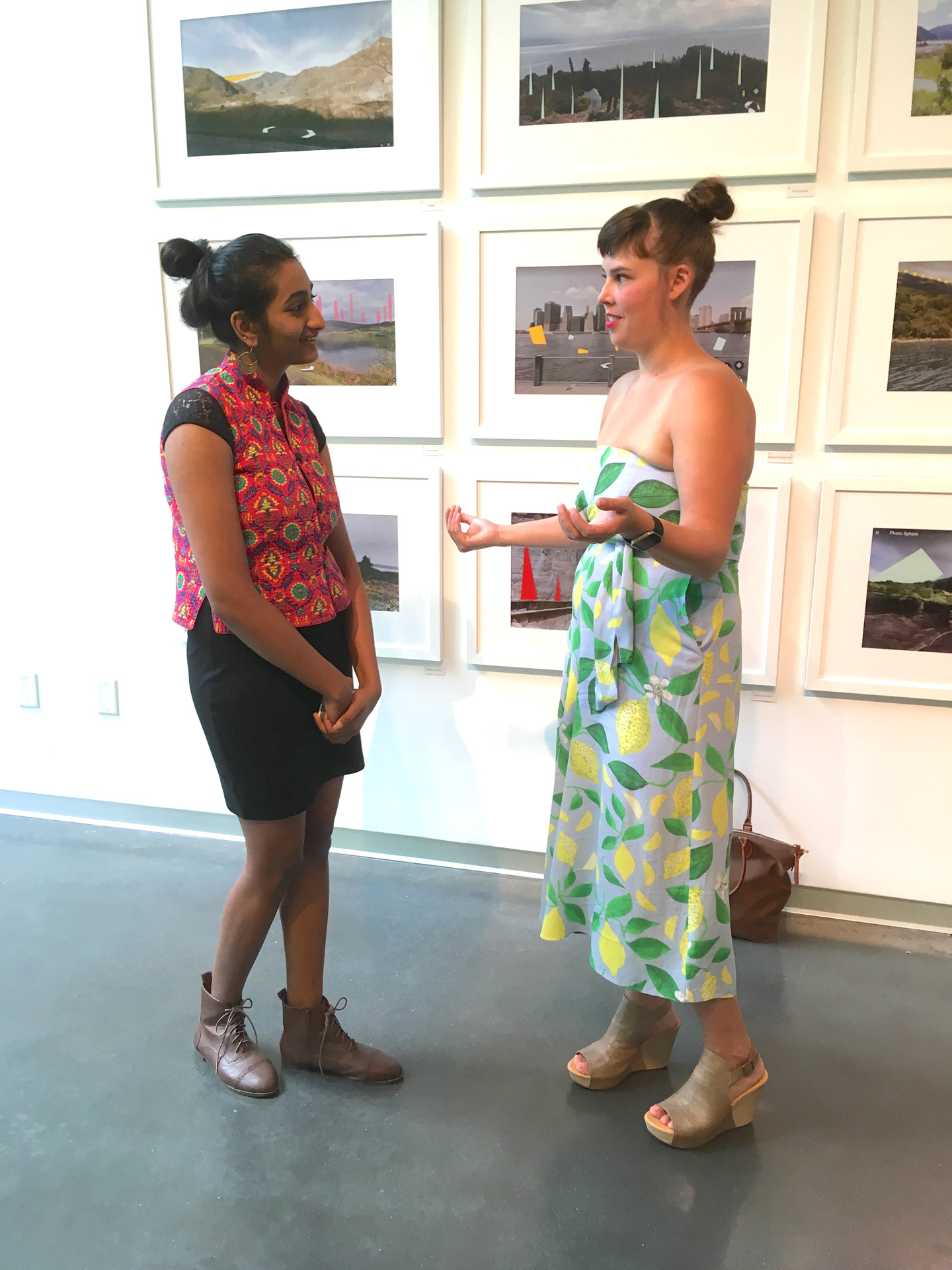
"It's interesting how the installation influences how people navigate the space," said Imig (B.F.A., fibers, 2008). During a gallery talk hosted by SCAD MOA curator Amanda York, attendees embodied the artist's point.

Imig's show follows her 2016 installation at Gutstein Gallery in the "Push and Pull" group exhibition, as well as her bravura striations adorning the Tybee Island pier at Sand Arts Festival 2017. Her show at Emerging Gallery further signifies her status as an important artist with expansive ideas about scale and space.

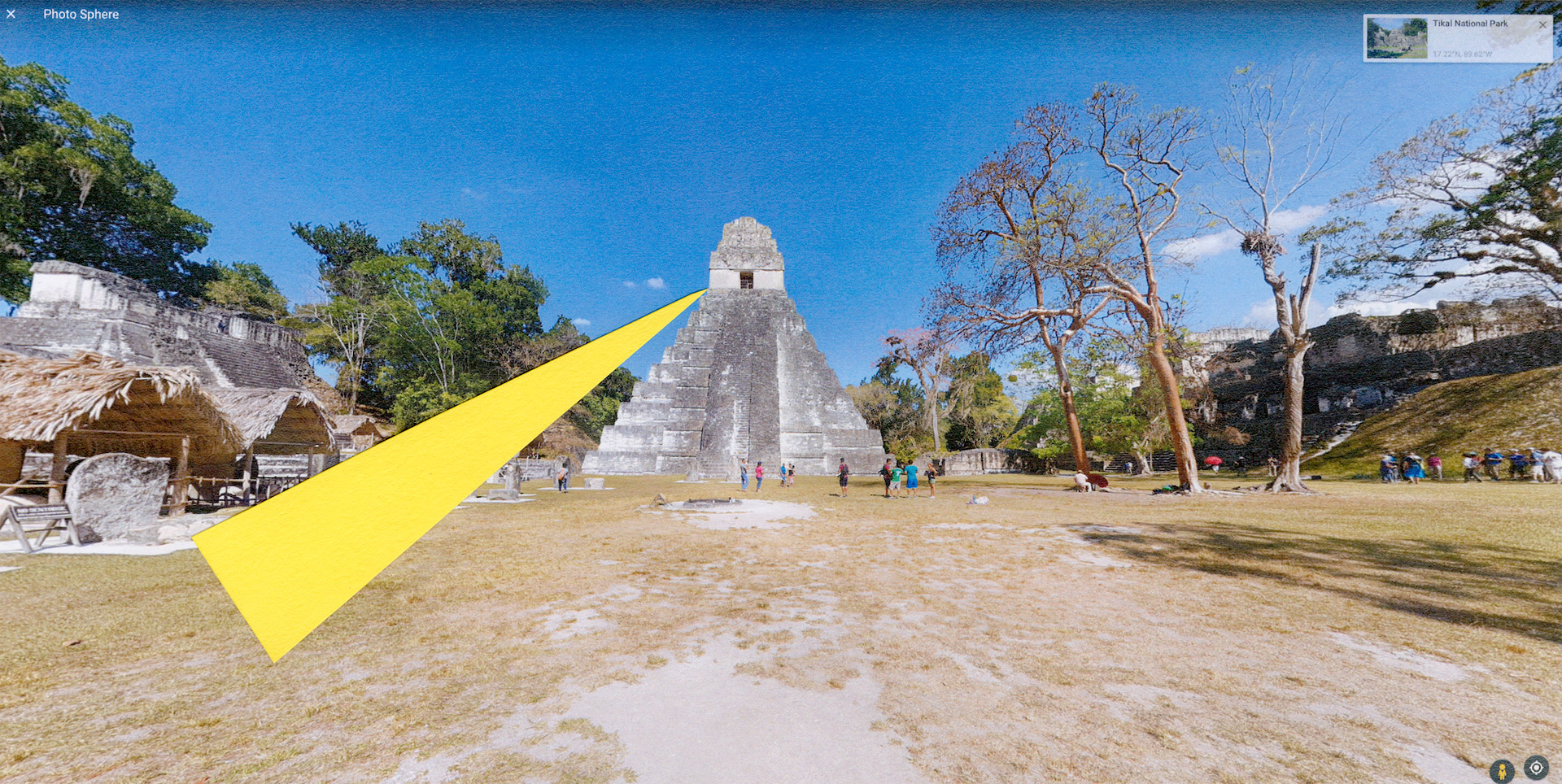
Yellow colored paper emanates from ancient ruin

The new exhibition features "Ribbon Piece," two intersecting, diagonal sections of green vinyl streamers secured to wall and floor by suction cups and ratchet straps. The gallery becomes a pelagic zoetrope, illuminating Imig's stated desire to create "a moment where people have to contemplate their relationship to the work and their relationship to the space. What type of art object is this? Is this a sculpture? Am I supposed to walk through it? Around it? Prompting people to question what type of experience they're having is something I'm interested in."

"Ribbon Piece" dominates, but other works are key to "Notes on Sculpture." One wall presents Imig's precise diagramming of Sol LeWitt's statement: "All ideas need not be made physical." The diagram gives the sentence a prehensile intensity, subverting and celebrating LeWitt's words.

"When I read LeWitt's 'Sentences on Conceptual Art' in 2007 it was another moment, like, 'Oh, this is interesting,'" Imig explained. "I went to the Writers' Studio in the Jen Library where Jennifer Trevisol spent countless hours with me diagramming all thirty-five of LeWitt's sentences. Some of the sentences are really complex so the diagrams became complex structures. One of the sentences is: 'These sentences comment on art, but are not art.' I loved the idea of turning those sentences into art. It fit so well with the conceptual movement."

Imig arrived for her SCAD MOA show fresh from a road trip to the American west where she witnessed epochal land art including Nancy Holt's "Sun Tunnels," Robert Smithson's "Spiral Jetty" and Michael Heizer's "Double Negative." Her interest in land art inspired fifteen framed pieces in "Notes on Sculpture," with strips of colored paper collaged across natural landscape photographs, rendering distances closer in the work than in reality.

"These are site proposals for possible installations that won't necessarily be built," Imig admitted. Of course, such epic installations are possible, as Imig proved with her red fabric opus at Tybee Island during Sand Arts.

As the gallery talk concluded, Imig greeted friends old and new. Exiting visitors navigated "Ribbon Piece" again. The work remained in play.

Artist discusses her work in gallery with museum goer

The prismatic visions of Coleman Camp

June
29
2017
By
Tags:

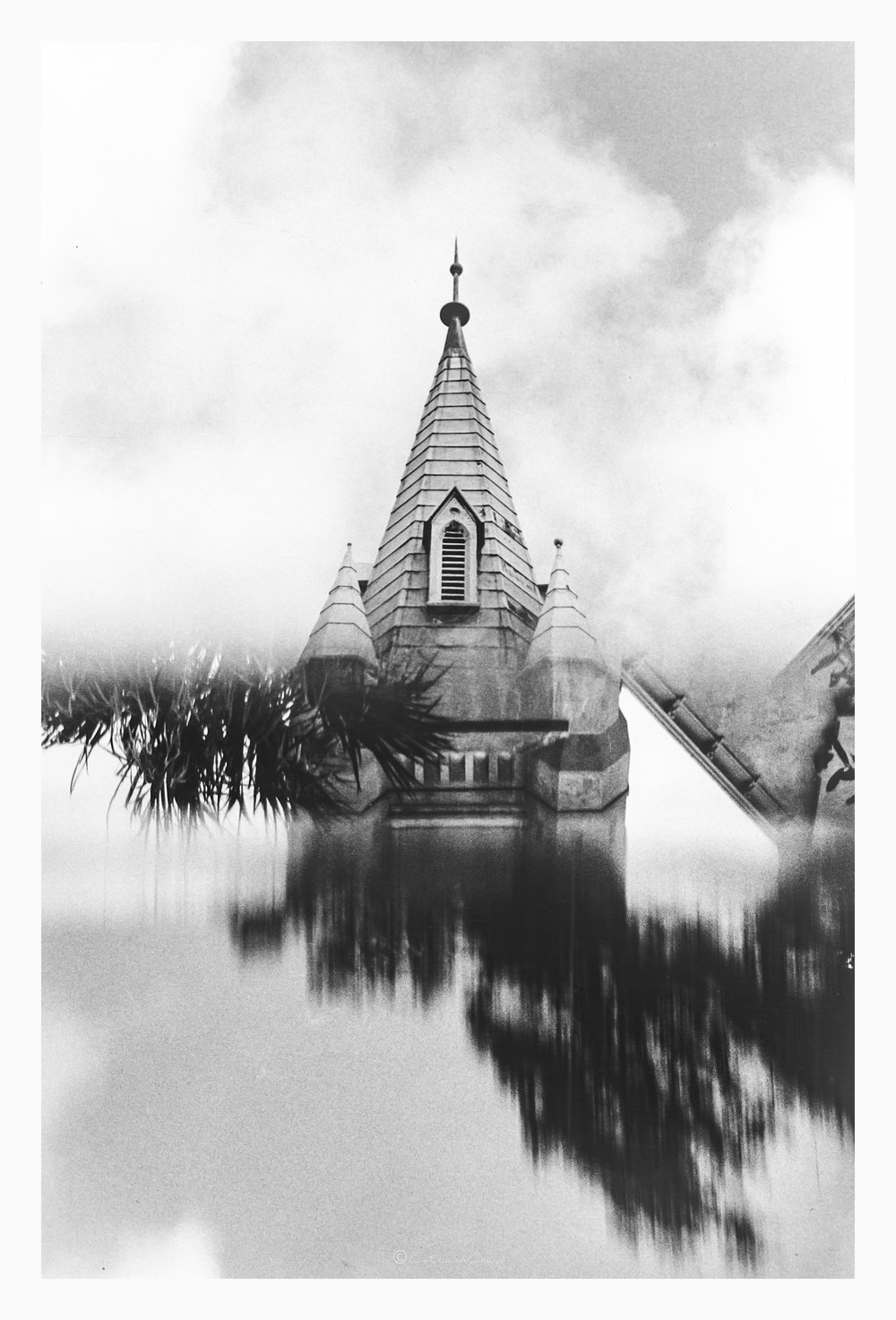
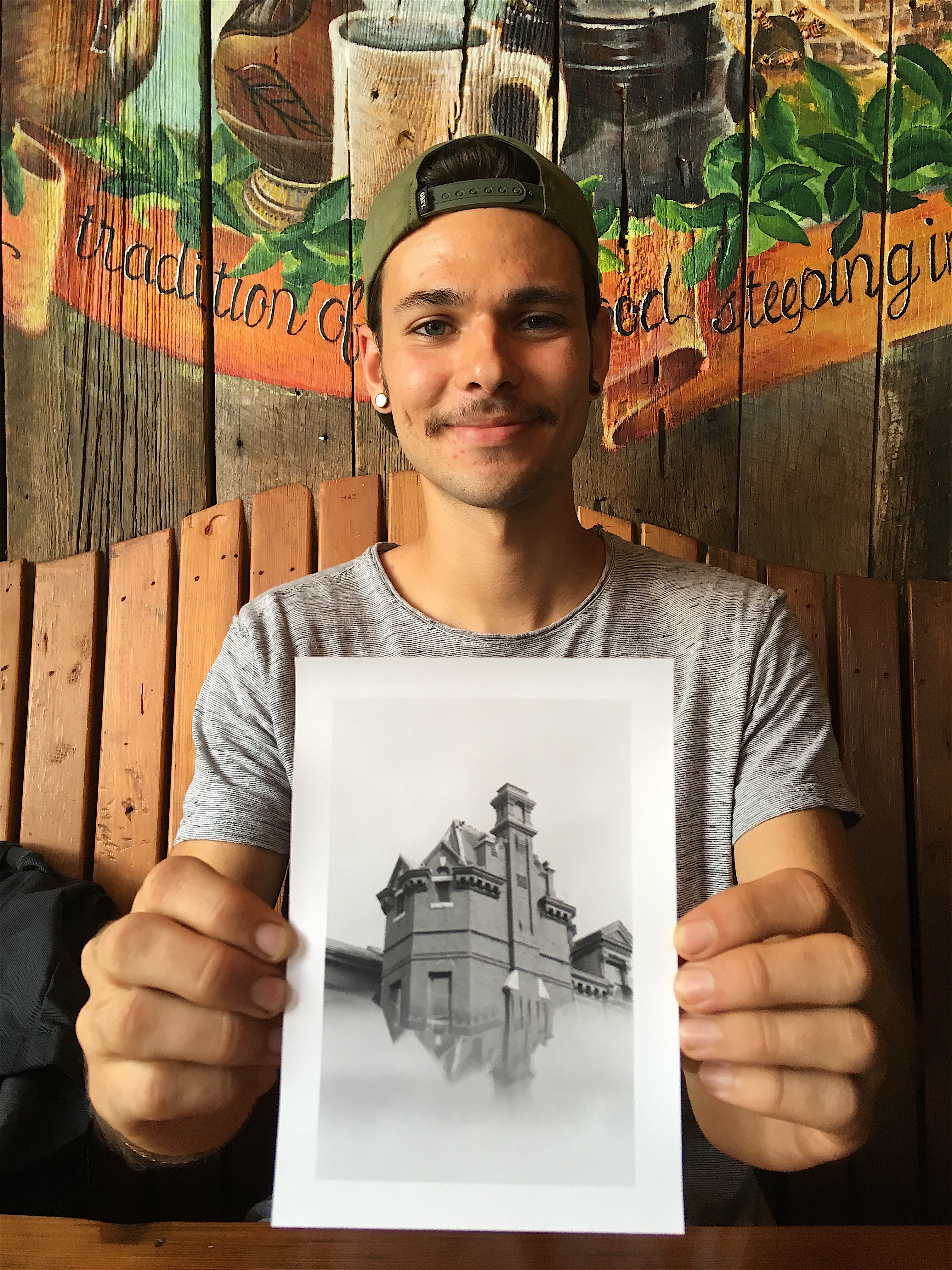
Baseball cap backwards, Coleman Camp coasts his black bicycle around the corner of Habersham onto East 37th Street. Opening a holster, Camp tips an equilateral glass prism across the lens of his Canon AE-1, aiming towards the cupola atop Wallin Hall. The resulting fine art photograph, hand-printed by Camp on matte paper in the lab at Bergen Hall, refracts a solid structure into something hyperreal, anthropomorphic architecture suspended in space. “Some people ask the question, ‘What is reality?’,” Camp says, “but why not simply wonder, ‘Is reality?’”

SCAD: How has being on the SCAD cycling team affected your development as a photographer?

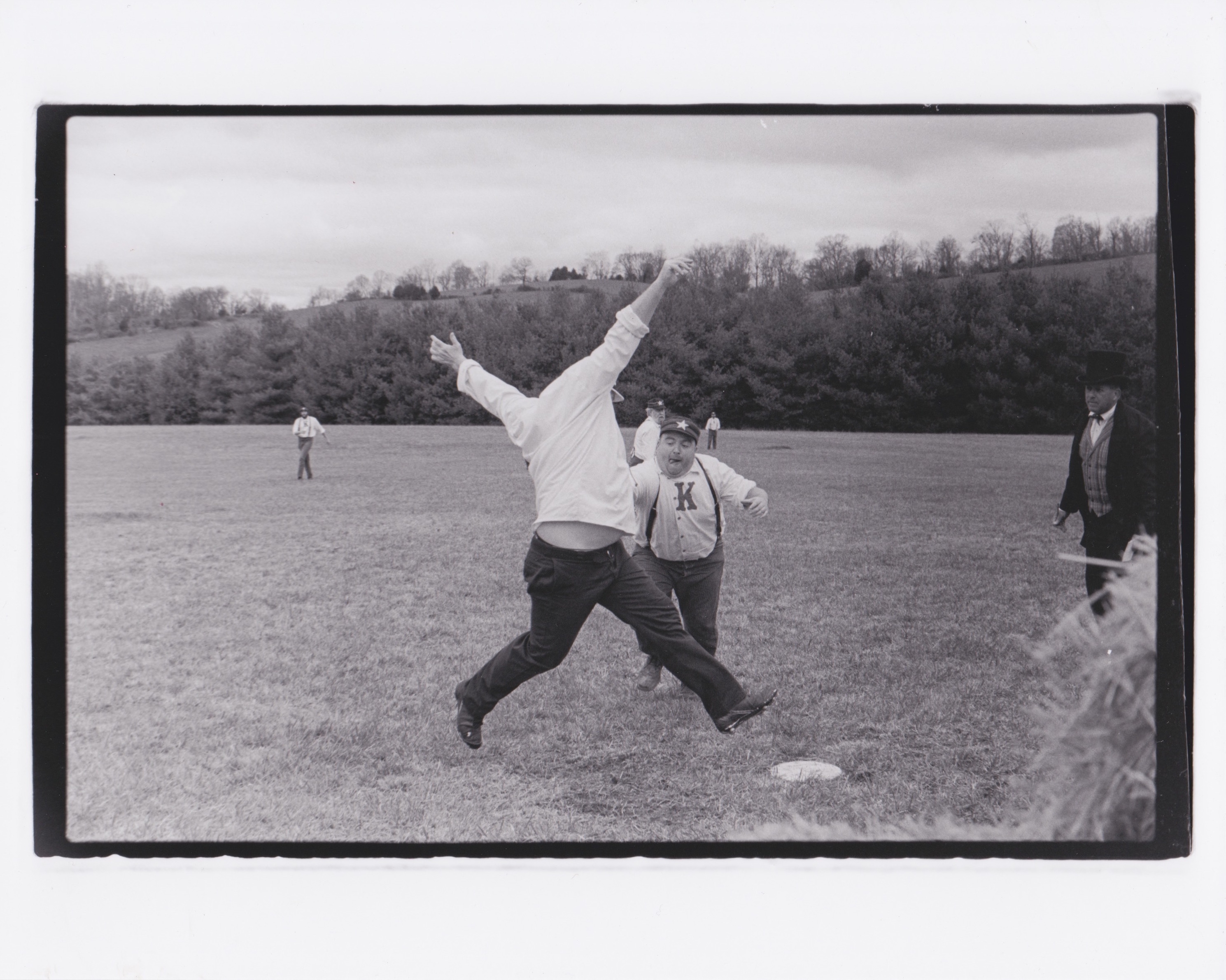
Coleman Camp: When the team rides in Savannah, we often pedal 30 miles beyond downtown, so we’re out seeing different things, and seeing the same things on different days. It’s opened up my visual awareness, and ability to be critical of light and perspective, plus I see places I want to shoot. Leaving Georgia for races has meant opportunities to see new things. When we traveled to Milligan for the conference championship, I rode past a field in Elizabethton where the Tennessee Vintage Baseball Association was playing a game next to an old farm, so I stopped and took photographs. When I came back with those images, my classmates were a bit incredulous.

Black and white image of man running to baseball base as player stretches to tag him out

SCAD: How did you wind up working with a light prism?

CC: I was taking Photography 218: Black-and-white Technique with Professor Jaclyn Cori Norman. I was playing around looking at buildings, and realized I could mirror them using a prism. It’s based on available light and how it relates to your field of vision. At the same time, I had been reading a book called “Mediated: How Media Shapes You and Your World” and conceived of a photo series using the prism to photograph objects indirectly, with a mediated view. Shooting the same idea all quarter, I came out with focused work reflective of my intent, beyond my initial idea.

Distorted black and white image of the top of a church column

SCAD: What is the difference between taking a picture and fine art photography?

CC: It’s a matter of intent. You can push buttons on a computer and create after-effects in your photos, but there is an art to creating with a prism in the moment. You have to explore techniques to make your ideas manifest.

The way Professor Norman described her intent as a large format black-and-white photographer is to make people think or feel something through her work. What I take away from that is that fine art photography is more than just making something look pretty, which you see in a lot of commercial work.

Make people think and reflect and feel. As a viewer, perceive freely and don’t limit yourself. We’re here to wonder. Adults are always striving to reconnect with childlike wonder. Why put away that wonder in the first place?

See more work by devoted artist-cyclist and SCAD dean’s list student Coleman Camp here.

Coleman Camp holds out one of his black and white images

Canoe dig it?

May
29
2017
By
Tags:

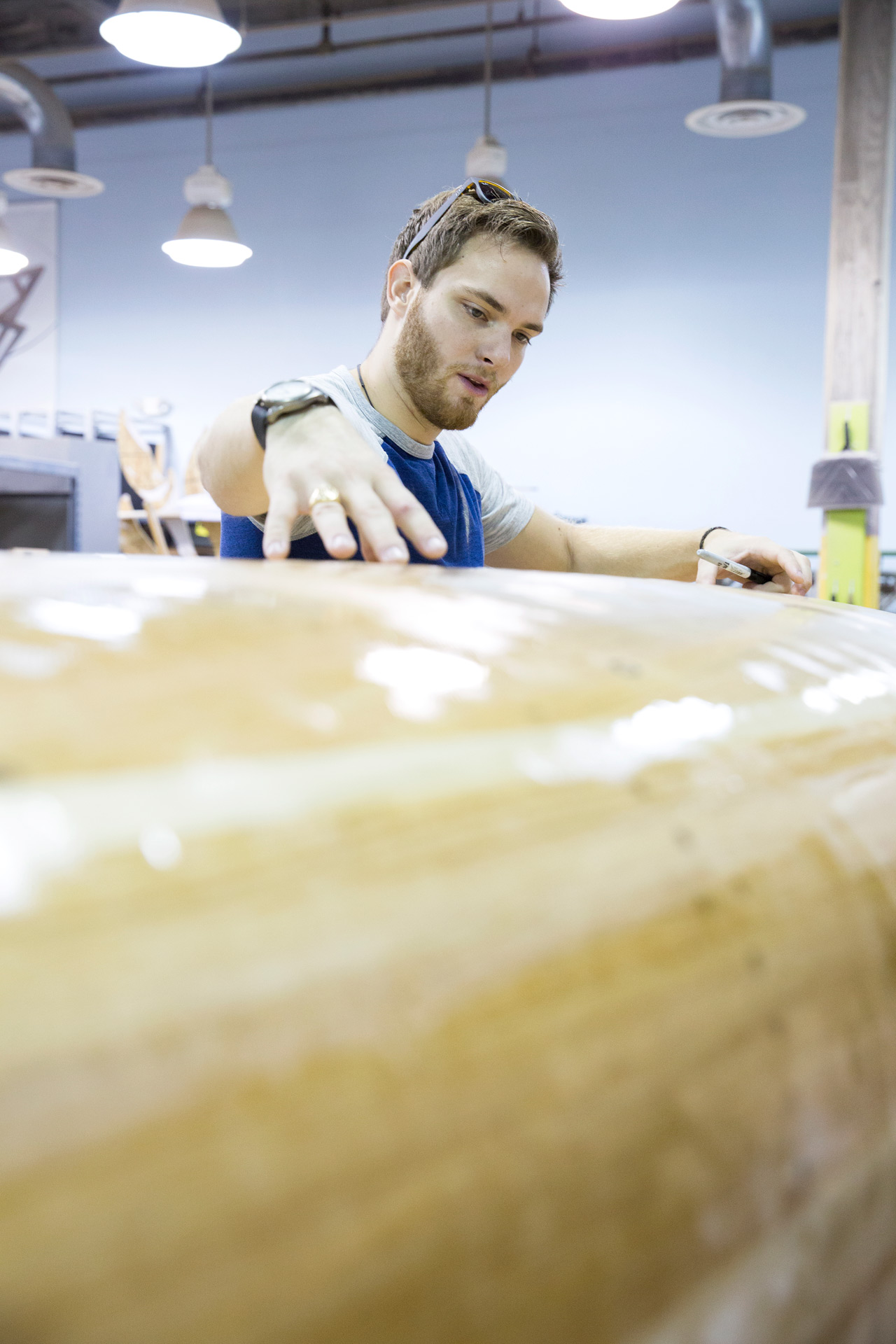
To the purr of a table saw and with a whiff of resin, "Lindy" took shape. The 14-foot canoe — the handiwork of SCAD senior Paul Hawkins (B.F.A., industrial design) — started out last summer during a 10-week Kayak Design and Fabrication class taught by professors Ben Bush and Clark DeLashmet. From modeling and milling to sanding and glassing, students learned essential facets of the craft while making their own boats. Hawkins' finished vessel, based on the "Prospector" design in Ted Moores' classic book "Canoecraft," will be on display during the industrial design department's senior show Friday evening, June 2 at SCAD Gulfstream Center for Design.

SCAD: What's the inspiration behind your canoe design?

Paul Hawkins: I designed and built my canoe with the intention of taking it to Lindbergh Lake in Flathead National Forest in northwestern Montana, about an hour and a half from where I grew up in Missoula. I wanted the canoe to have a shape where when the boat's sitting in the water and there's no one in it, the front and back — that's called the rocker — are out of the water. It will be good in flat water, stable and maneuverable. My girlfriend Anna Zlotnicki (B.F.A., photography) goes camping with me, so I wanted to make a canoe that can seat two.

Two young people paddle in a wooden canoe with Lindy painted along its side

SCAD: What types of wood have you used for your canoe?

PH: The bottom is red oak, then maple for the gunwale, seats, crossbar and center, giving it a contrasting lighter hue. Traditionally with canoes you have ribs that go across the inside, but because we have modern fiberglass and resin, the canoe is strong enough not to need those ribs.

SCAD: How has technology influenced the construction process?

PH: I used the Gulfstream DigiLab to build a scale model of the canoe based on my personal specifications. Being able to laser cut takes out a ton of human error.

I designed the entire paddle in the computer: the height, where the shoulder goes and the blade starts, the shape and placement of the handle. I went through 50 renditions with little tweaks until it was perfect, then laser cut the wood to get the exact shape I designed. By troubleshooting problems in the computer, you eliminate the margin for error.

Designing on a computer is wonderful because you can work out all the kinks, but it's only great if you can transfer it to a real object. Inevitably, it comes down to how much patience you have with taking each strip of wood and sanding the edges until it fits perfectly. You have to do that by hand. There are elements of craftsmanship that can't be taken away by technology.

SCAD: Where did your canoe get her name?

PH: One of the lakes in northern Montana is called Lindbergh Lake. Originally it was known as Elbow Lake until Charles Lindbergh landed his plane on it in 1927. There's a roundish rock about five feet in diameter out there, and Lindbergh signed it "Lindy ‘27." "The Lindbergh Prospector" seemed like a bit of a long name for a canoe, so I'll just call her "Lindy."

Paul Hawkins works over a wooden canoe

Faran Krentcil's ‘Realities of Fashion Media'

April
13
2017
By
Tags:

"When I was coming into the working world, the internet was for nerds," quipped Fashionista founder Faran Krentcil at the start of her SCADstyle lecture "Realities of Fashion Media." "That was certainly the fashion understanding. It was almost as if everyone was scared of the internet. The great thing about that is if people are scared of something, that means there's an opportunity to be had."

Aspiring fashion journalists, designers, marketers and more filled the second floor of SCAD Atlanta's historic Ivy Hall to hear Krentcil speak. She led them through her storied background to where she is today: a successful New York City-based writer and editor whose regular bylines include ELLE, Glamour and W. Her talk epitomized the top-line insights offered by the roster of guests at SCADstyle 2017, as well as SCAD as the preeminent source of visionary fashion degree programs.

Having founded Fashionista in 2007, Krentcil set the tone for that site's popular mix of commentary, breaking news and human-interest content. Subsequently Nylon magazine's first digital director from 2008 to 2014, Krentcil understands the online fashion landscape. She has collaborated with brands including Tiffany & Co., Marc Jacobs, Topshop and Diane von Furstenberg, and is a Tumblr fashion ambassador. With this almost overwhelmingly impressive resume, thankfully Krentcil wove relatable life mishaps into her talk.

"I came from a fantastic family. What I did not come from was a place where I could move to New York and work for free. So, I tutored middle school girls and made enough money to go to New York for a couple of months, right after college, on my own. Even though I didn't realize it, I was learning how girls' brains work and the cultural limitations of what they thought they could and couldn't do. That summer spent tutoring still informs the work I do in women's media today."

The lecture wrapped with a thorough Q&A, Krentcil peppering her responses with valuable advice. What does she consider essential reading? Forbes and The New York Times business section. What was the defining moment when she knew that Fashionista was going to be successful? She just never imagined that it wouldn't be.

To a room full of SCAD students anticipating their own creative careers, Krentcil emphasized: "That saying about opportunity being preparation and luck coming together? It's true."

'Flight Path' author Hannah Palmer

April
7
2017
By
Tags:

"There should be more overlap between the creative writing world and left-brain design," posited visionary urban planner Hannah Palmer. "That's why I'm excited to be here at SCAD, because you have both worlds at one university, and a lot of opportunities to collaborate."

The ostensible occasion for Palmer's Arnold Hall lecture was the publication of her new book "Flight Path: A Search for Roots Beneath the World's Busiest Airport" (Hub City Press, 2017). Addressing a rapt room of students and professors, Palmer elucidated her expansive notions of urban design as a form of storytelling, and how writers can tell captivating stories. This was no softcover sales spiel.

"Walking in here today I started gawking," Palmer said of Arnold Hall, home of the SCAD school of liberal arts, formerly the first public high school in Chatham County, built in 1920. "SCAD did an amazing job preserving what's cool about the original building, updating it so it feels spacious and light." Palmer's appreciation for SCAD's commitment to adaptive reuse has its origins in her peculiar childhood.

Palmer was raised in Mountain View, Georgia, a wily pocket of south Metro Atlanta. In the 1980s, her childhood home fell prey to an international airport intent on expansion. "The airport bought out the entire city, revoked the charter and abolished the city." Her hometown literally disappeared. "Writing my book became an act of historic preservation," explained Palmer, "because no one has heard of Mountain View."

Palmer described "Flight Path" as a "hybrid of urban design planning and my personal family history." Her SCAD lecture added references to Eudora Welty and Shawty Lo, as well as practical advice on how writers can use online mapping to understand the psychogeography of urban environments.

"The urban design world needs good writers and good storytellers," Palmer emphasized to the writing students in the room. "We need to understand a place, its history, its people, and bring that into our work." Fittingly, one of Palmer's current projects is at Hartsfield-Jackson Atlanta International Airport, where she is reimagining the moribund northern border of the airport as a multi-use space with pedestrian paths and observation decks.

The lecture was especially personal for one attendee, Hannah's husband Jason Mug Palmer (B.F.A., video production, 1998). Jason was still a SCAD student when the couple were courting, and Hannah recalled driving down to Savannah to visit: "Our associations with places are based on our experiences there. To me Savannah is the most romantic place in the world." (At this Jason blushed, perhaps abetted by a sunburn picked up earlier in the day on Tybee Island.) Hannah, a master at drawing together disparate strands of creative thinking, was turning romance into a teaching moment:

"I will continue to work on making cities better places, and work on deliberately creating those places where people fall in love. It doesn't always happen by accident. Sometimes it's by design."

Book cover for Flight Path

Hannah Palmer will deliver a writer's talk at SCAD Atlanta, Ivy Hall, Thursday, May 4, 6 p.m.
Get ready for SCADstyle 2017!

April
4
2017
By
Tags:

Clear your calendar and free your design mind, as SCADstyle 2017 comes alive this April 6—13! Join international luminaries of fashion, interior design, fragrance, typography, sustainability and much more as SCAD celebrates style as only SCAD can.

Headlined by Imran Amed, SCADstyle 2017 promises a week replete with inspiring lectures, panels and workshops at SCAD locations in Savannah, Atlanta and Hong Kong. All events are free and open to the public.

Amed, this year's honorary chair, is the founder, CEO and editor-in-chief of The Business of Fashion and a leading writer and industry thinker. He will speak about his work as an agenda-setting journalist at the SCAD Museum of Art theater, 601 Turner Blvd. in Savannah on Tuesday, April 11 at 6 p.m. Over the past decade Amed has grown BoF from an online passion project into an indispensable resource for the fashion industry, with more than one million unique visitors per month.

Best-selling author and editor Derek Blasberg, Fashionista creator Faran Krentcil, Bedrock Manufacturing founder Tom Kartsotis, and L'Oréal USA group president Carol Hamilton are among the other fêted guests who will share their expertise at this year's SCADstyle. As the preeminent source of design knowledge, SCAD is honored to directly connect these superstars with the next generation of design-minded Bees.

SCADstyle 2017 kicks off Thursday, April 6 at 6 p.m. at Arnold Hall with "Play at Your Own Risk," a presentation by Jessica Walsh, art director and partner at Sagmeister & Walsh. Walsh will offer advice on how to conscientiously cultivate freedom by working in a state of play.

The following Thursday, April 13 at 6 p.m., SCADstyle 2017 concludes at the SCAD MOA theater with a lecture by exalted designer Norma Kamali, inventor of the "sleeping bag coat” and vital presence on the design scene for over four decades. Kamali will lecture on timeless style as the quintessence of modern fashion.

The newest edition of this annual gathering is destined to transform preconceptions about design across all disciplines. Check the full schedule of SCADstyle 2017 events, and be part of the process!

SCAD Style 2017 logo

Developmental cycling with Ben Van Winkle

March
30
2017
By
Tags:

A chat with SCAD Savannah cycling coach Ben Van Winkle can flow from the minutiae of kinesiology to the capricci of Paganini. An active triathlete as well as a classical violinist, the 25-year-old is an eminently relatable figure for his young team of artist-cyclists. Under Van Winkle’s guidance, the Bees head to eastern Tennessee this weekend to compete for the conference championship at the Milligan Cycling Classic, the capstone event of their inaugural season.

SCAD: At the start of the season you said, “A push-up is a push-up. It’s also a metaphor for doing things correctly.”

BEN VAN WINKLE: Doing little things the right way adds up. Over the course of the season, it can mean the difference between finishing first and finishing 20th in a race. Our riders who are more cerebral picked up on the idea right away. With the more experiential learners, it takes a while. To set up a first-year program and make it good and wholesome, you’ve got to spend time with the team. One principle guiding me through it all is that before you are successful you have to be humane.

SCAD: Where does that come from?

VAN WINKLE: Those were my grandfather’s parting words to me: “First be humane, before you are successful.” He was from northern China, near the Sino-Mongolian border. The English translation of his name would be Spring Mountain. He told me when your convictions are challenged, the easy thing to do is yield. He said, “I urge you to do what is right when it is hard.”

SCAD: Doing the right thing as coach has meant creating a fitness regimen tailored to each artist-cyclist on your team.

VAN WINKLE: The only vehicle you don’t get to replace is the one you’re born with. As an athlete, you’re both sculptor and sculpture. The key is shifting from being purely results-oriented to a developmental mindset. The team knows that I understand they’re at SCAD to prepare for creative careers. It’s about balance. The way we define balance is you balance all things in sum, not all things at once. When we do one thing, we do it 100 percent, which is a way to show respect to the things we’re not doing at that moment.

SCAD: What kind of shape is the team in right now?

VAN WINKLE: They’re very sharp. You’ve got fitness fit, you’ve got competition fit, and then there’s another level you don’t often experience, being in control of both body and mind. This week our practices are short and we spend more time talking about how the team is feeling. It’s about setting up that mental framework, because if their minds are in it, their bodies are ready.

SCAD: What do you hope for from the season finale this weekend?

VAN WINKLE: Stay upright and finish the race. That’s the most important thing. I told the team that unlike in the other races, to take a chance and make something happen. This is the moment to risk making a tactical mistake. Rather than, “I finished fifth but maybe if I’d tried that attack I would have finished first,” put everything on the line. Decide what you want to prove to yourself, and go for it.

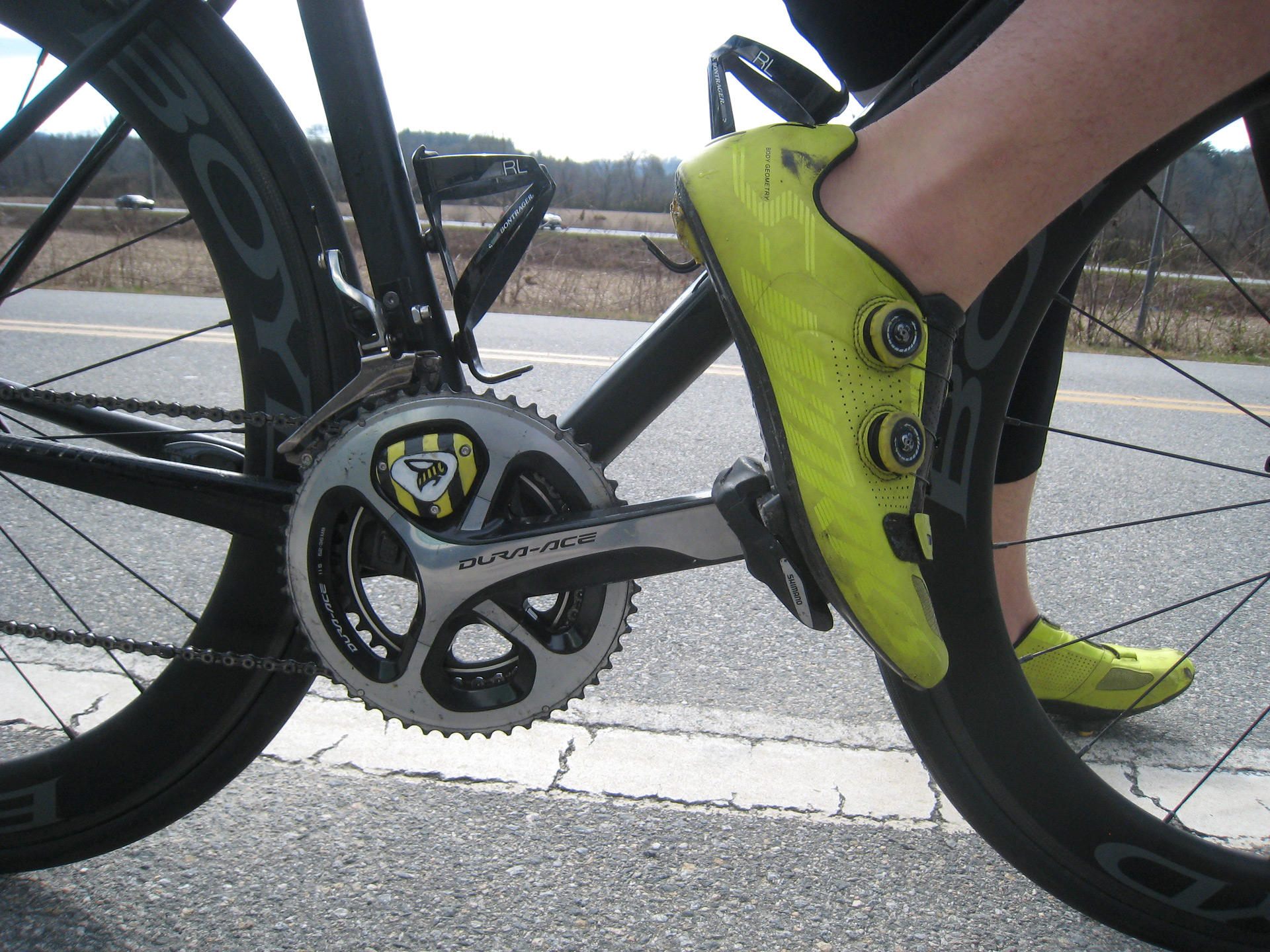
Close up of bicycle pedals with neon cycling shoes

Raquel Serebrenik Sultan: 'Chroma' and the maestro

March
16
2017
By
Tags:

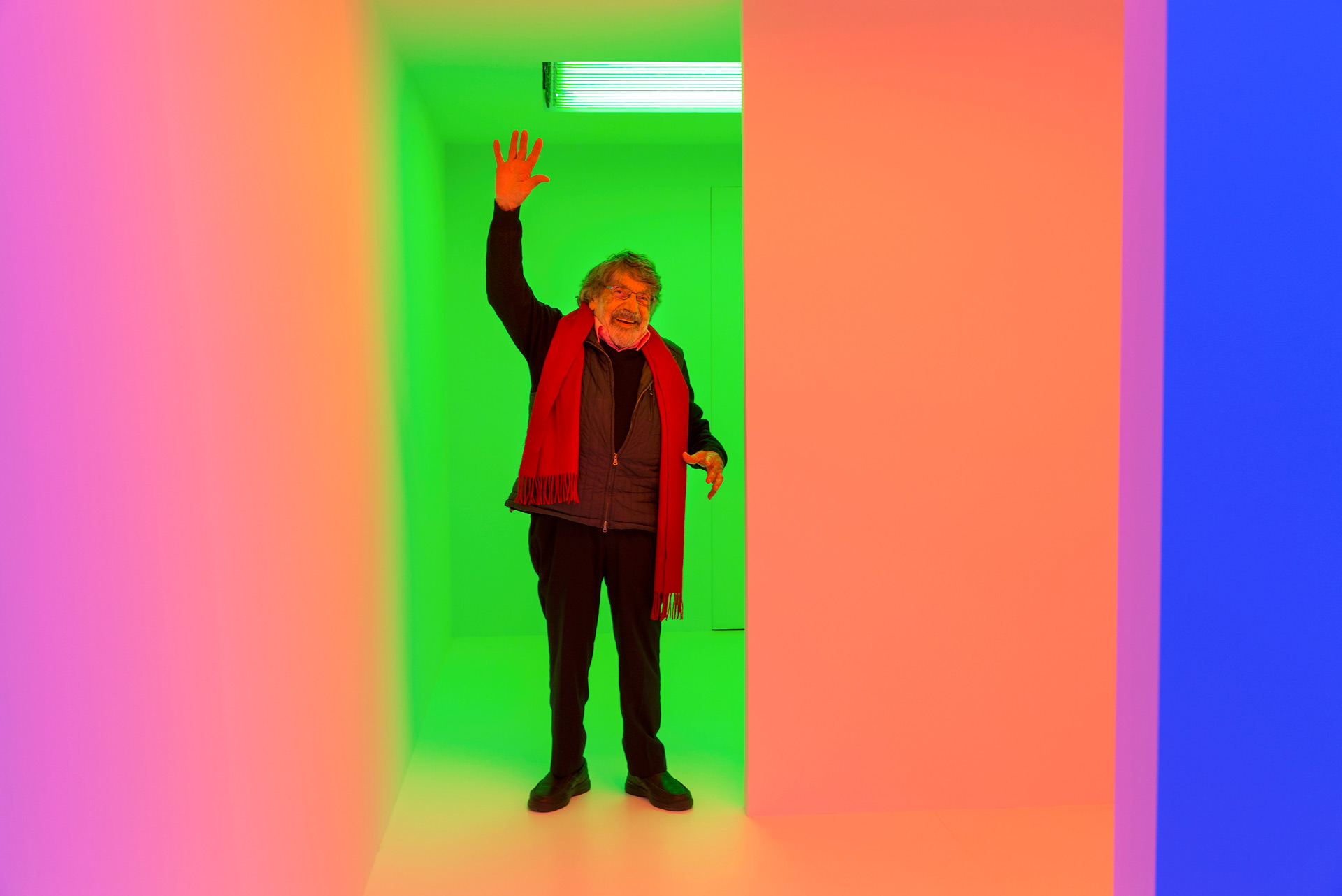
Raquel Serebrenik Sultan (M.A., business design and arts leadership; B.F.A., art history, 2015) is co-curator of "Chroma," an exhibition by Carlos Cruz-Diez at the SCAD Museum of Art through August 20. Collaborating with head curator Storm Janse van Rensburg, Articruz and the Cruz-Diez Art Foundation, Serebrenik Sultan has assembled a remarkable display of the 93-year old Venezuelan painter and color-theorist's recent work. Serebrenik Sultan, currently program manager at the Museo de Arte Moderno de Bogotá (MAMBO),  returned to Savannah for the exhibition opening and special presentation by President Wallace to Cruz-Diez of the deFINE ART honoree award.

RAQUEL SEREBRENIK SULTAN: I studied at an arts high school in Bogotá. One day my teacher put a newspaper on the table with a huge picture of the maestro Carlos Cruz-Diez and said, "His show is coming to La Cometa gallery!" I went and saw this chromatic environment with lights. I started moving the little pieces around. And you can't just move around things at an exhibition! I was kicked out of the gallery. I was 13 years old.

The next day my parents called me and said, "We're so excited! We met this artist and you have to meet him." I flew to Panama where he has one of his ateliers and it was full of artists and designers creating on a constant basis.

When selecting a university to attend, I visited Savannah and the activity and energy at SCAD reminded me of the maestro's atelier. I knew it was the place for me!

When I started my thesis at SCAD, I decided to make it about Carlos Cruz-Diez. I got in contact with his family to request an interview with the maestro. While we were on Skype he was showing me what he was painting in Illustrator. I said, "Maestro, you need to come meet SCAD." He said, "I would love to."

The maestro is not a fan of art schools in general because he thinks they teach in a traditional way. Everyone needs to know the basics, but everyone needs to innovate — that's what the maestro thinks. In fact, SCAD's mentality and his mentality are very similar. At SCAD you can be an architect or a designer and be interested in other disciplines.

The curatorial process for "Chroma" started with wanting it to be bigger than an exhibition in a gallery. Storm said, "Why don't we do a container?" Which is a perfect connection to Savannah as a port city, and also to Panama. So we have a shipping container in the SCAD MOA courtyard with three works: two on the outside of the container, one on the inside.

A lot of Venezuelan SCAD students took the initiative to help paint the sidewalks outside the museum. The maestro means a lot to them. He means hope, he means color, he means a part of Venezuela that the rest of the world doesn't know.

What the maestro really wants to do is affect how people see art and design. Art is about invention, being curious. Age doesn't matter, it's about the ability to adapt.

The maestro always tells me, "I don't trust people who do not laugh or smile." Every time we meet we're always laughing. It's not jokes, it's just being happy. And if you're not happy, move on to something else.

Topher Grace 'tames the beast' at performing arts series

March
10
2017
By
Tags:

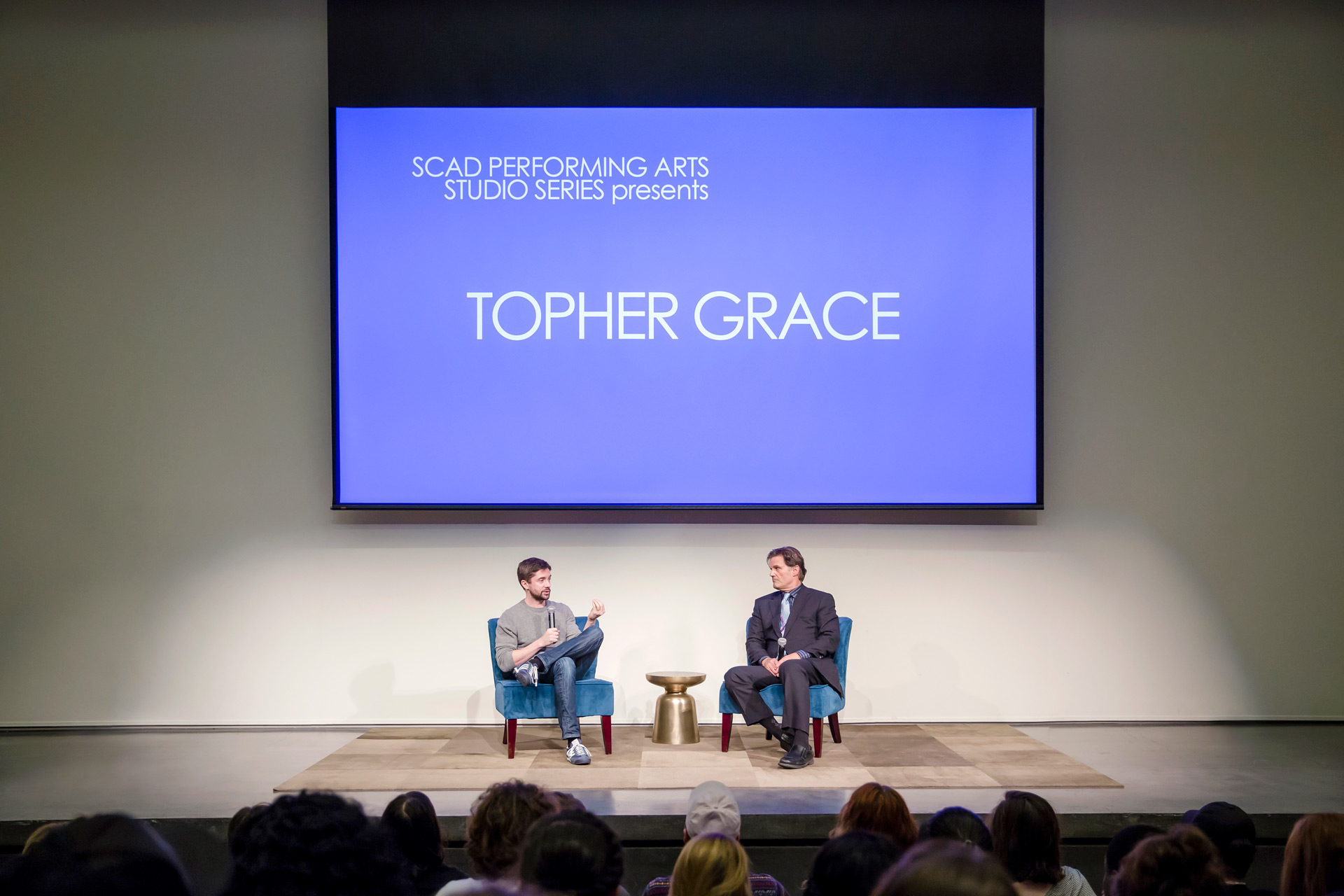
SCAD students enjoyed plenty of laughter along with sound advice from actor Topher Grace during the spring kickoff of the SCAD performing arts studio series at SCAD Museum of Art. Known best as bashful teenager Eric Forman on "That '70s Show," Grace has since appeared in notable films including "Spider-Man 3," "Interstellar," "Predators" and "American Ultra" — and now on the stage of the SCAD MOA theater too.

"The more you learn how the beast works, the more you can tame it," Grace told the audience of primarily performing arts students, referring to the film and television industry. He encouraged students to say yes to every opportunity at the start of their careers, before other life factors begin to weigh in: "If there's a door, you should go through it."

Actor Topher Grace on stage at SCAD's performing arts series

SCAD chair of film and television D.W. Moffett introduced Grace, whom he has considered a close friend since the two actors sat together at an awards dinner in 2000 for Grace's first film, "Traffic." Grace and Moffett both said they were a bit jealous of the resources available today, from smartphone recording capabilities to digital distribution systems, and joked about by-gone times collecting "short ends" of other people's film to make five-minute short videos.

"The technology is so in your favor," Grace told students.

Although Grace considers his start in the business a bit unusual — he earned his audition for "That '70s Show" after the producers saw him act in a play at their daughter's school — he shared what he has gleaned from his nearly two-decade career.

Referencing his early experiences with casting directors, Grace said students should dare to be different. His first headshot was a snapshot taken at Six Flags, and his résumé included jobs at Dunkin' Donuts and the video store at the mall.

"They knew they were getting someone who had a fresh point of view," Grace said with a chuckle.

Grace, who earned writing and producing credits on 2011's "Take Me Home Tonight," believes communication skills are a large part of a successful acting career. He cautioned actors to listen to each other, and to try to avoid working with people who are overly self-satisfied.

"The star of the project is the project — there's no human star," he said. Filmmaking is not a democracy, Grace pointed out, so actors should trust their director. "Great directors are really benevolent dictators."

The SCAD performing arts studio series invites artists and industry insiders to the university for immersive experiences with students as well as lectures that are open to the public. During his week at SCAD, Grace gave feedback on performances at a SCAD acting for comedy class, workshopped with 2017 performing arts showcase students, and visited the set of SCAD student sitcom "The Buzz."