Skip to main content Accessibility Policy

Commencement speaker John Lasseter’s advice to young artists

June
1
2015
By
Tags:

John Lasseter, Chief Creative Officer of Walt Disney and Pixar Animation Studios, isn’t a stranger to budding artists. His son graduated from Savannah College of Art and Design with a Bachelor of Fine Arts in sculpture. A member of the class of 2015, Sam Lasseter was one of 2,100 graduates in Savannah and Atlanta whom Lasseter encouraged with his wisdom-packed commencement address on the power of creativity. After all, Lasseter was a young artist once, sitting where Sam and his classmates sat. He laid bare the journey that began his freshman year of high school and led to one of the most influential careers in entertainment.

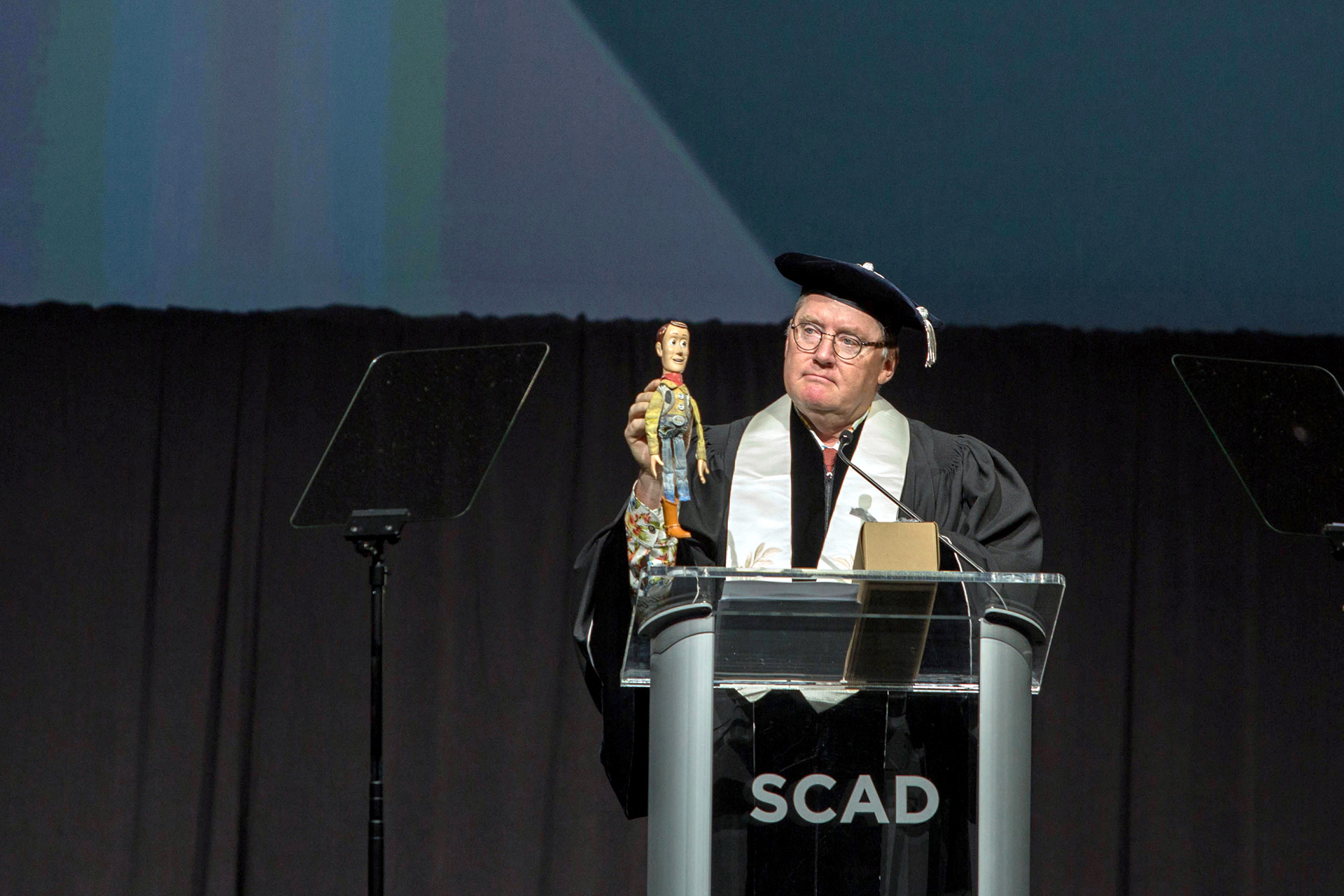
With the zeal of his character “Sheriff Woody Pride” — whom Lasseter carried on stage as an emblem of his dream come true — and the authority of a master, Lasseter shared these insights on making a creative career:

On discovering what you want to do
What Lasseter told his five sons says it all: “Choose something that you love to do and you will never work a day in your life.” He shared with the graduates that the core of his success is a love for cartoons and a profound desire to make animation for everyone, not just children. 

On getting fired for what you want to do
Coexisting with Lasseter’s passion for cartoons was a strong conviction that the future of the industry was computer animation. But during his first stint with Disney, as a young animator, Lasseter’s enthusiasm for this new approach wasn’t reciprocated and it cost him his job. Seemingly a set back, this unanticipated development actually freed him to pursue his vision and led to the formation of Pixar.

To be fired from the place of your dreams was so painful and embarrassing for me that it took decades before I could even tell people about it. - John Lasseter

On finding partners to help you do what you want to do
Attracted to his ideas, pioneers Ed Catmull and Steve Jobs embraced Lasseter. His desire to innovate was a beacon for like-minded partners who encouraged and challenged him to achieve what audiences had never seen before, movies like Toy Story, the number one film at the box office upon its released in 1995.

Commencement speaker John Lasseter holds a cartoon Woody doll

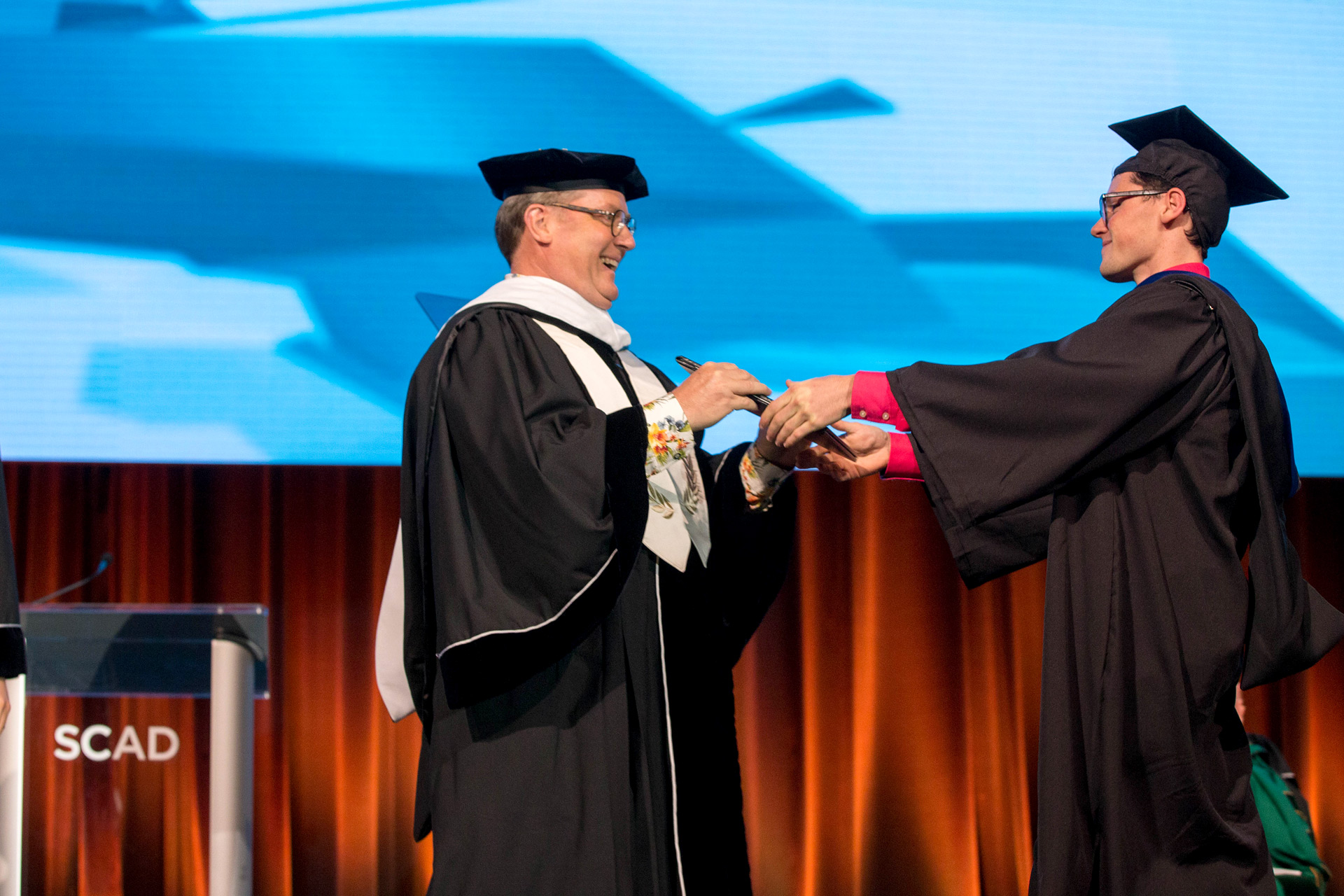
John Lasseter is handed a plaque on stage at SCAD's commencement ceremony

On sacrificing for what you want to do
Lasseter drove home that making something new comes with sacrifice. Sleep was only one of the things that Lasseter gave up along the way. Another was ego and being right. Opening his work up for his peers to critique, even before it was polished, was uncomfortable but essential to his growth as an artist.

To really truly be creative you have to be willing to take risks. You have to put yourself out there. You have to be willing to fail. - John Lasseter

On the privilege of doing what you want to do
An artistic career is hard work, but it is one where the rewards are — in the words of another Pixar hit — incredible. Of all the awards he has won, Lassetter remarked that a well-loved “Woody” doll is by far the most important acknowledgement of his legacy because it means that he reached and made an emotional connection to someone by doing what he loves well.

In sharing the story of his career, and his most prized possession, Lasseter answered with a resounding “yes” the question that is on every graduate’s mind. “Can I make a difference?”

Oscar de la Renta's Peter Copping on making a fashion career

May
27
2015
By
Tags:

For perspective on the legacy he inherited as creative director of Oscar de la Renta, Peter Copping visited the SCAD MOA exhibition, Oscar de la Renta: His Legendary World of Style. Recently, Copping returned to Savannah College of Art and Design, this time to SCADshow in Atlanta, for a discussion about careers in fashion and to share his insights on the future of the Oscar de la Renta brand.

In his discussion with Carmela Spinelli, fashion historian and international admission liaison for SCAD, Copping touched on subjects ranging from collection planning to designing couture for the everyday woman — offering students anecdotes from his career and his views on what it really takes to make it in the fashion industry.


Though not on his list, a powerful lesson is how gracefully Copping stepped in to his role as Oscar de la Renta’s first creative director. Originally, the idea was for Copping to work alongside de la Renta for a season or two, but the untimely death of the brand’s namesake accelerated Coppings learning curve.

This isn’t Copping’s first time leading a major fashion house; his resume boasts names like Christian Lacroix, Sonia Rykiel, Louis Vuitton and Nina Ricci. In the 1980s, with the love and support of his family, he moved to London to begin his career. Copping didn’t hesitate about his passion, which propelled him into a whirlwind career that has taken him from London to Paris and New York.

It’s an interesting time for fashion. The great thing is that it’s constantly needing new blood to come in and push things forward. - Peter Copping

Copping first met de la Renta in the design icon’s Park Avenue apartment, a meeting Copping described as “very natural.” Though they didn’t discuss fashion, the two connected on many other topics. But since Copping took over in October 2014, to really get a sense of the man de la Renta was and how his visions came to fruition, Copping has relied on the people who knew the mastermind best and worked with him the longest. Ultimately, Copping shared, it was de la Renta’s clothes that spoke to him and told him what he needed to know most.

Copping pointed out that while glamour can be found in fashion studios, he has tremendous respect for the designers in the atelier, whom he described as geniuses. He values garment structure, cutting, sewing and draping — preferences that align with de la Renta’s sensibilities. “I worked for twenty years in Europe, most of my career was spent in Paris, and I think that’s something I can bring to the house as well,” said Copping. “Oscar is one of the most Parisian designers you have in New York, he had a great appreciation for French couture — he worked in the south [of France] for a number of years. That was very important for him.”
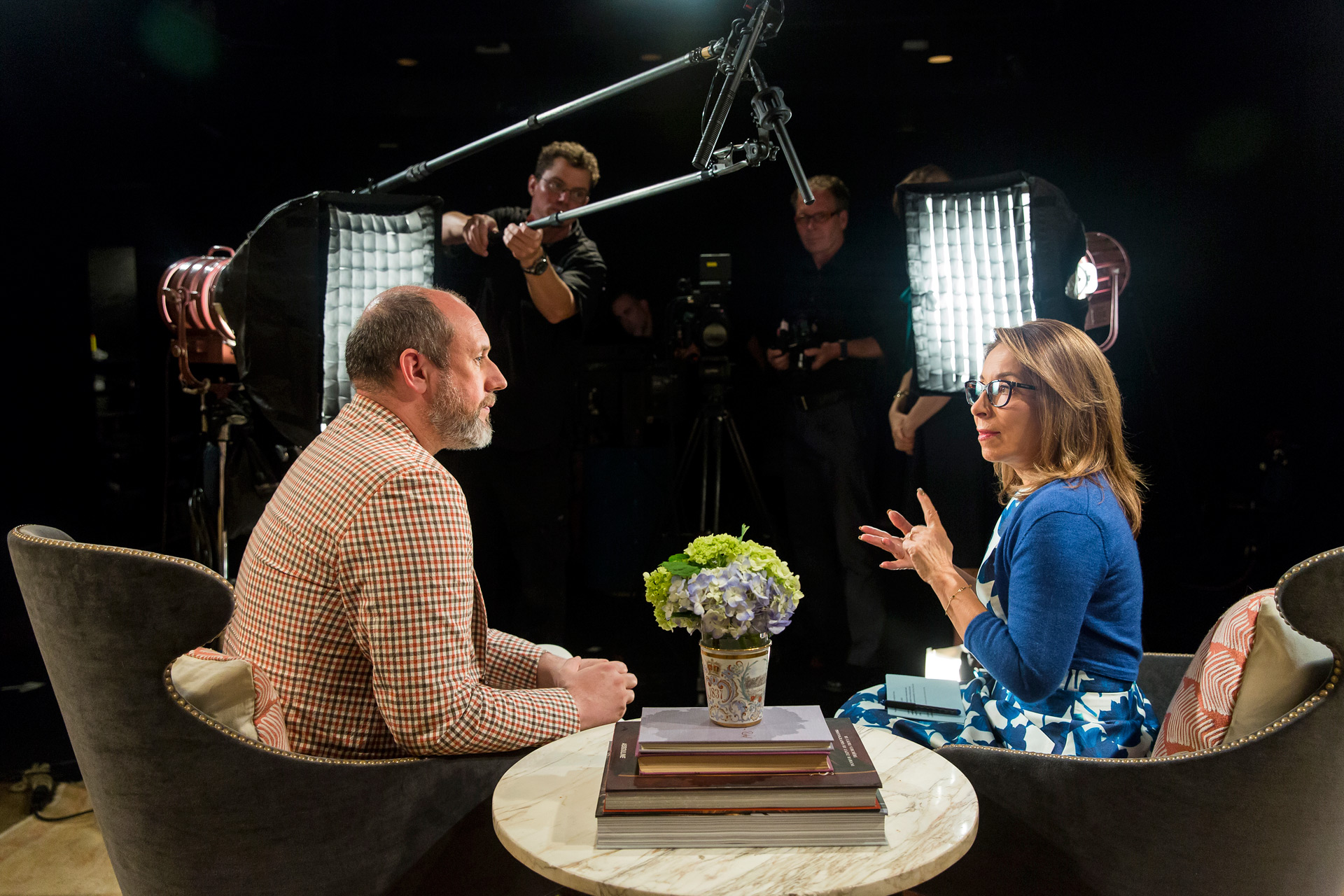
SCAD president Paula Wallace interviews Peter Copping in front of film crew
SCAD President Paula Wallace interviews Copping. 

Copping also touched on the pressure to create well-reviewed collections in rapid succession, for which he says he thinks forward to the next collection before the current one is even shown. And while he likes a zen atelier, he thrives under pressure. He attributes this to being a grounded person and cautioned students to not get sucked in to the pressure of pleasing critics: “Know that it is not the be all and end all of everything,” Copping warned.

In the question and answer portion of the discussion, Copping advised students who are curious to explore their entrepreneurial spirit to also honor the art of fashion by gaining as much experience as possible. “I learned a great deal at college, but once I actually arrived in Paris and could observe and work with a French atelier I even learned more,” he shared.

His final words of encouragement: “Fashion is a wonderful world to work in — there’s so many different careers within that — like I said, the ateliers, in marketing, in sales," said Copping. “So it’s a very rich and invigorating place to work. It’s an interesting time for fashion. The great thing is that it’s constantly needing new blood to come in and push things forward.”

Aspiring designers have only to watch Copping to get a sense of how it’s done.

Danielle Styles is a public relations manager at SCAD Atlanta.
Inside the preservation story of Atlanta's Ivy Hall

May
20
2015
By
Tags:

In honor of Preservation Month, we celebrate Savannah College of Art and Design's Ivy Hall. On May 21, 1917, the Great Fire of Atlanta spared one of the South’s rare examples of Queen Anne-style architecture, the Edward C. Peters House, or Ivy Hall after the Peters family symbol. Flanked at the time by a long dirt road, now the busy thoroughfare of Ponce de Leon Avenue, Ivy Hall landed in the National Register of Historic Places in 1971. In 2000, as The Mansion Restaurant, Ivy Hall barely survived another devastating blaze. It took more than fate to intervene and save the house a third time.

“We worked seven years on the process and we were glad to see SCAD come in on a white horse to really save the building,” said Boyd Coons, executive director of the Atlanta Preservation Center. "We stopped the destruction, but we needed SCAD to come in and be the steward of this.”

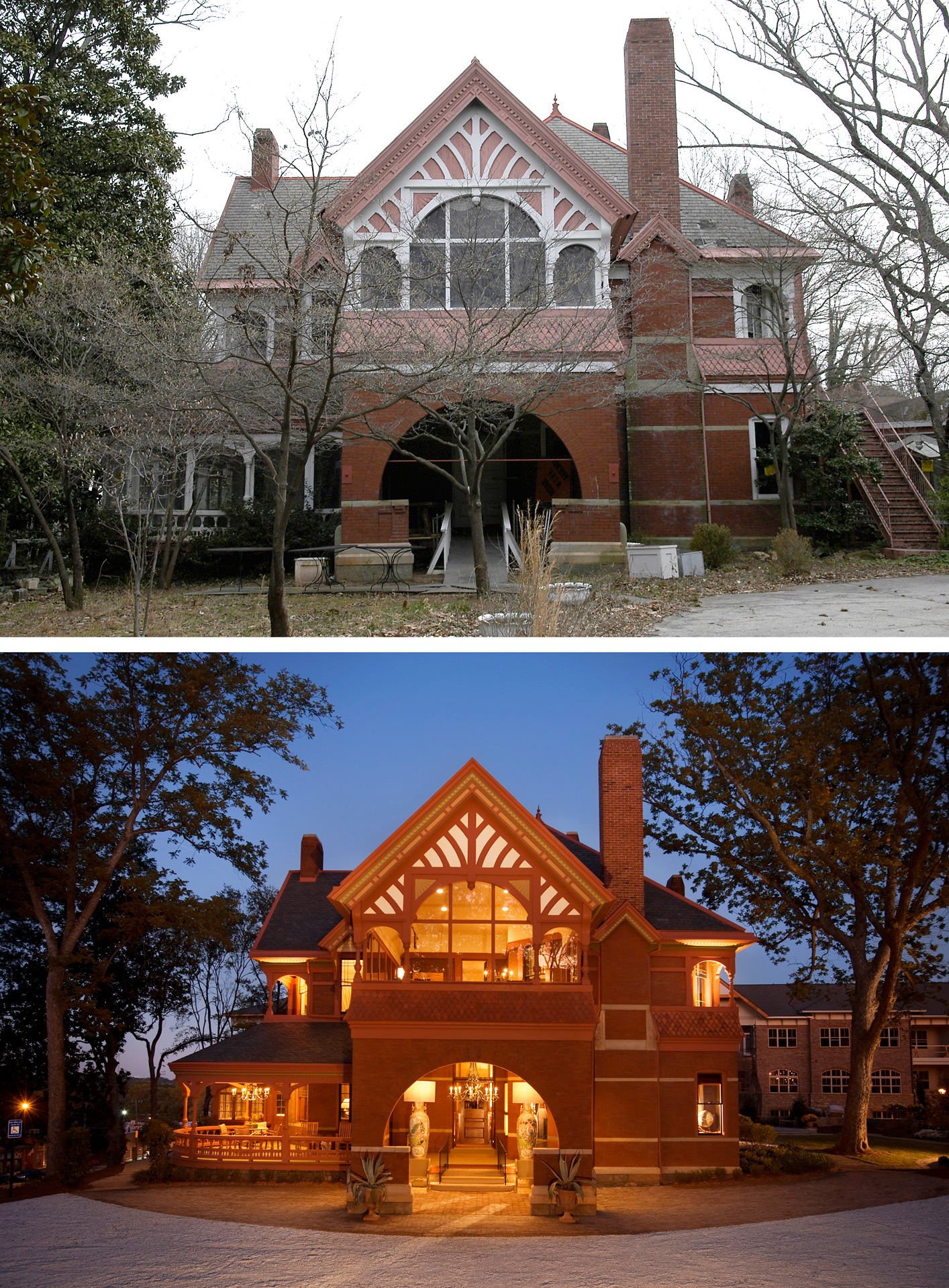
Exterior view of Ivy Hall before and after restoration

As Atlantans and tourists may recall, the once grand manor resembled a haunted house until SCAD received it as a donation in 2007. After undertaking an award-winning restoration that involved interior design and historic preservation students, the university reopened Ivy Hall in 2008 as home to SCAD Atlanta’s writing program.

That’s good preservation because it’s not just making a house a museum, it has a sustaining purpose. That kind of use and adaptive reuse is what’s really important. - Boyd Coons

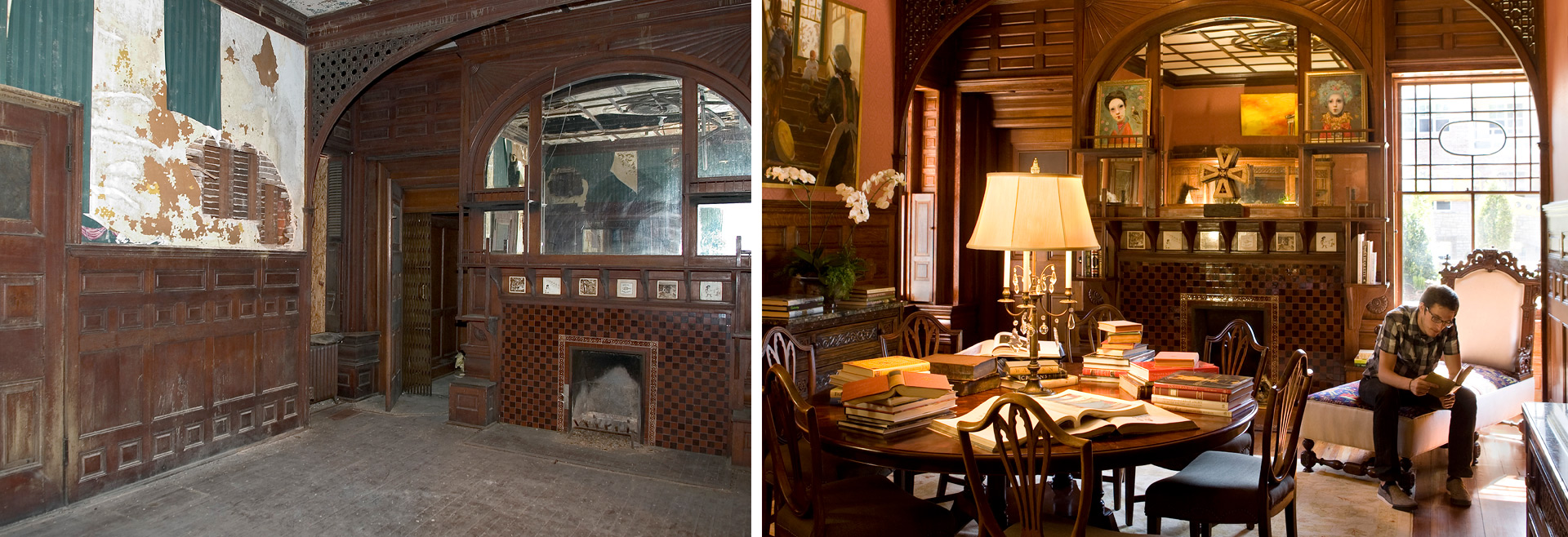
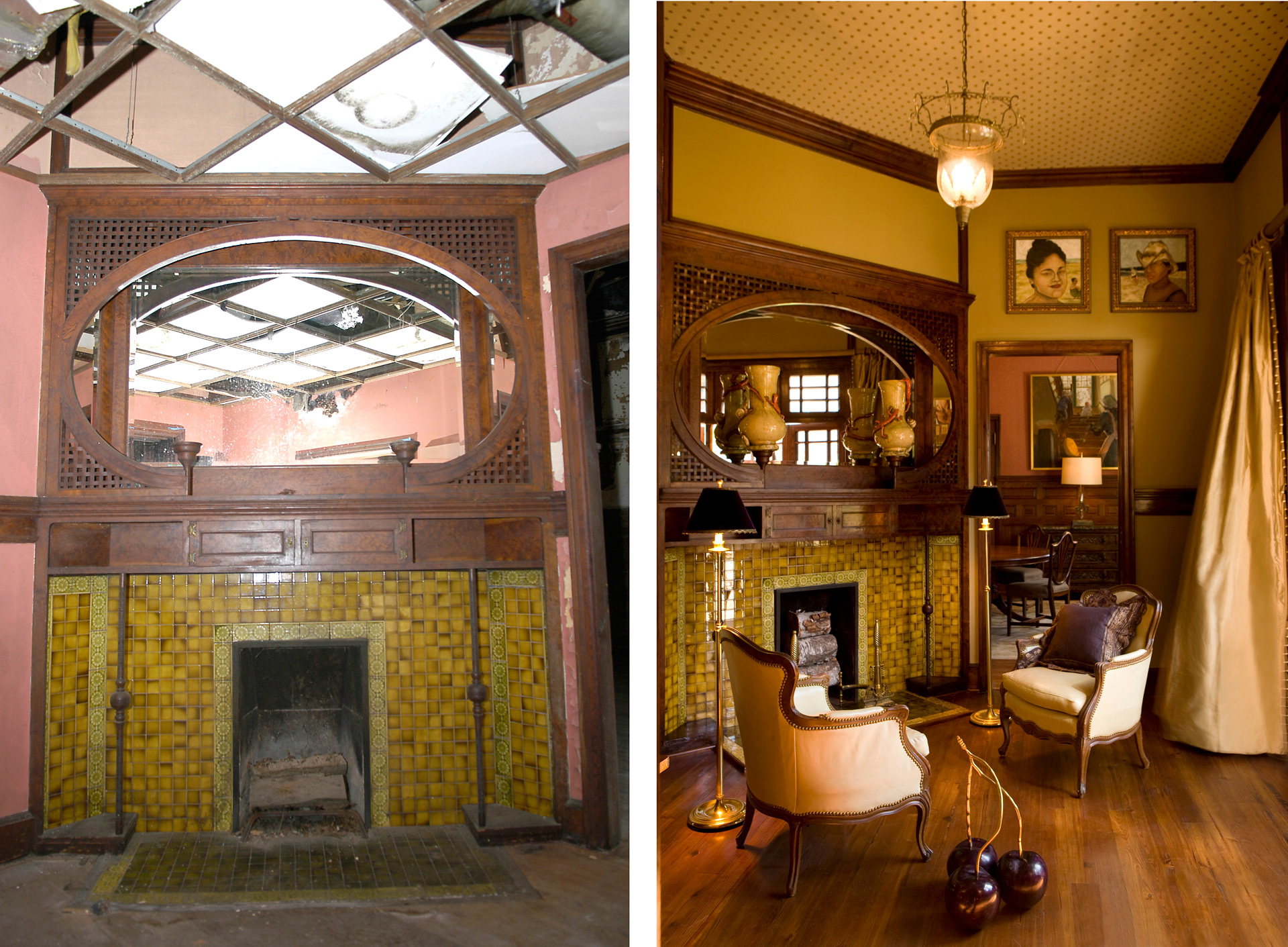
interior of Ivy Hall with fireplace before and after restoration

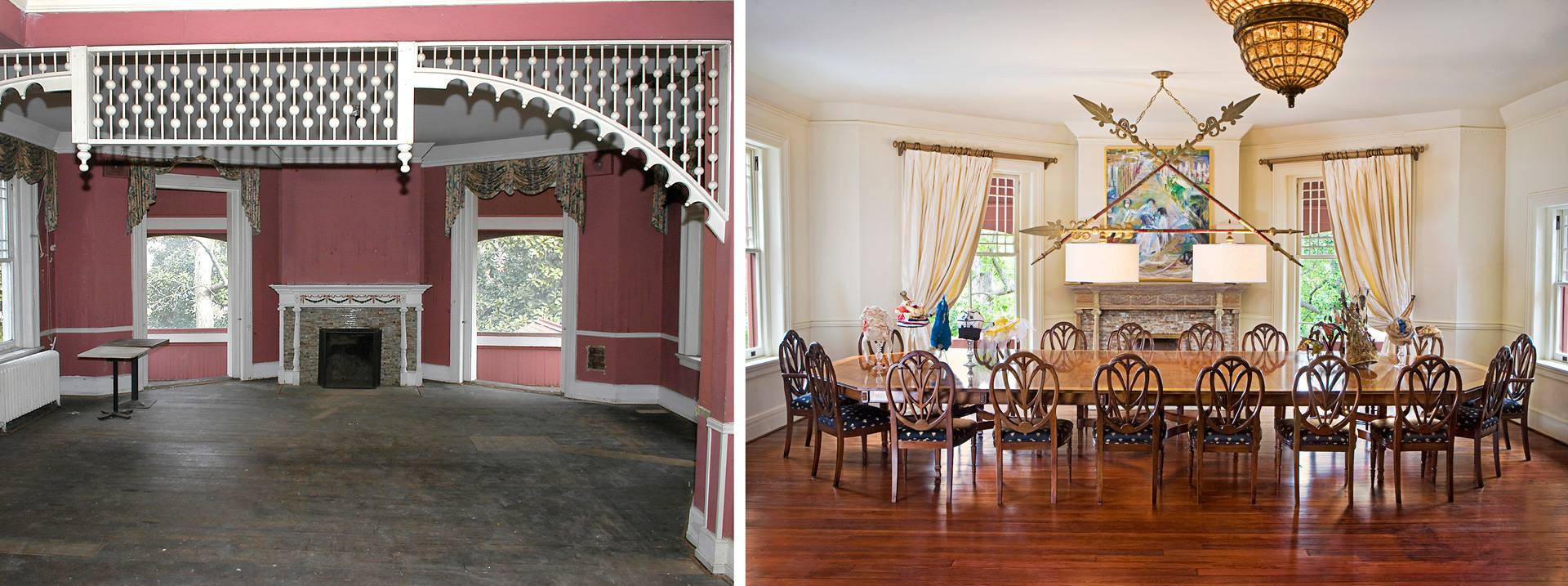
Large interior room of Ivy Hall before and after restoration

Ivy Hall hosts writing classes and connects students and the public to renowned writers like New York Times best-selling author Augusten Burroughs, Camille Paglia, Pearl Cleage and Cinda Williams Chima. In this way, Ivy Hall’s importance has come full circle.

Fireplace inside Ivy Hall before and after restoration

Another pivotal author, Margaret Mitchell, is said to have based Gone with the Wind’s character Rhett Butler on Richard Peters, father to Edward Peters who built Ivy Hall in 1883. His home lives on as a center for aspiring writers. Quite a journey for what was once considered one of Atlanta's most endangered places.

Vivienne Westwood's conversation with André Leon Talley

May
18
2015
By
Tags:

Fashion luminary Vivienne Westwood ignited the punk movement, illuminating a path for generations of designers to come. Regardless of how Dame Westwood shines, she is obsessed with turning off the lights. It’s her way of conserving energy and protecting Mother Earth. 

Upon receiving the André Leon Talley Lifetime Achievement Award at Savannah College of Art and Design, a precursor to SCAD Fashion Show, Westwood used the occasion to deliver an impassioned acceptance speech on climate change.

I can’t save the world, but sometimes I think maybe it’s me who somehow has got to do it. - Vivienne Westwood

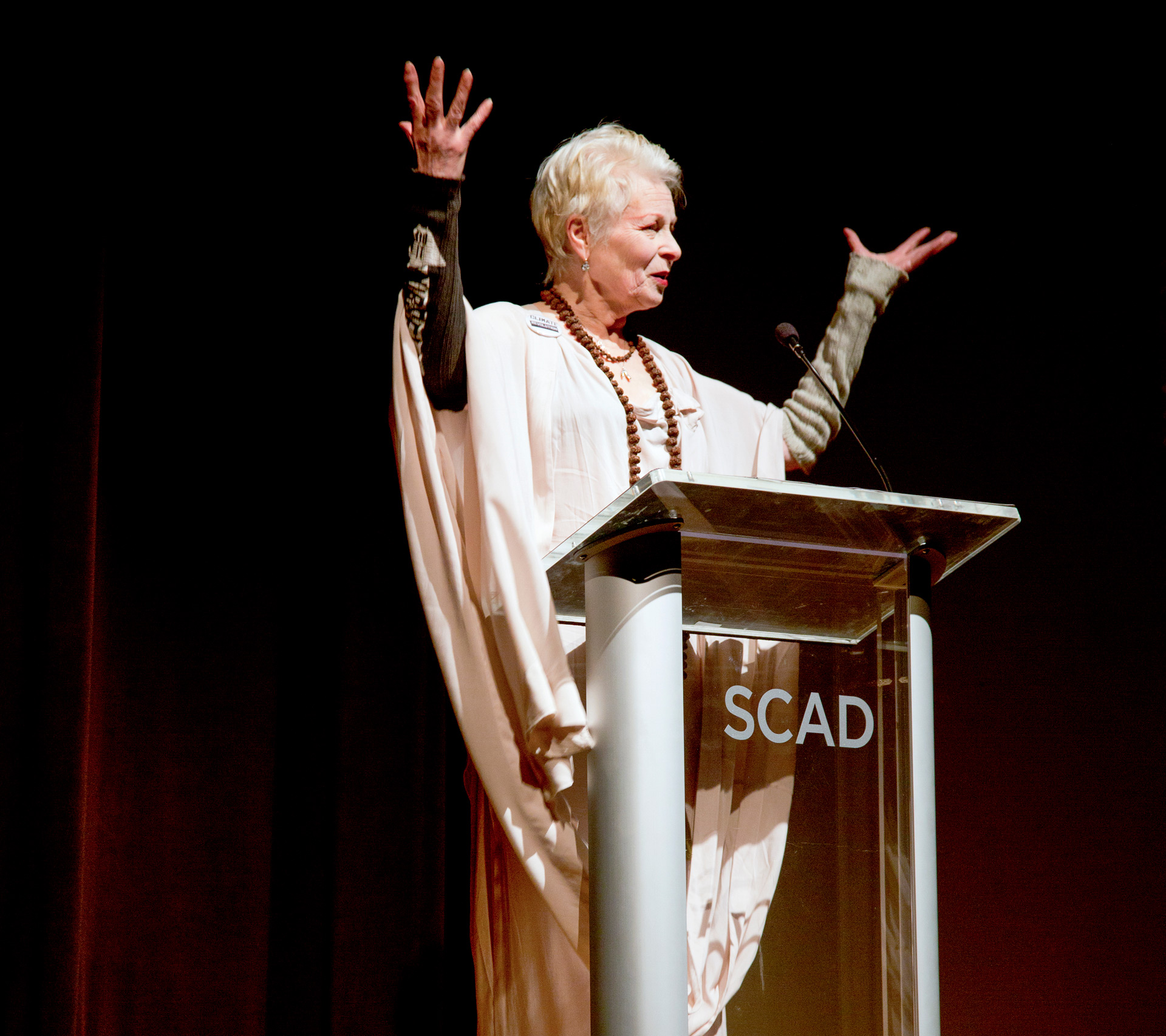
Vivienne Westwood raises her arms as she speaks at SCAD event

It was an unexpected topic. Previous honorees, like Oscar de la Renta in 2001, have held forth on subjects like the state of fashion. But Westwood surprises most people she encounters, including her husband, design partner and creative director, Andreas Kronthaler. “I was smitten, I was mesmerized,” said Kronthaler responding to SCAD Truestee André Leon Talley’s question about how he met Westwood.

Kronthaler joined Westwood on the stage with Talley and Véronique Hyland from New York magazine’s blog The Cut for a conversation dominated by Westwood’s social and political convictions, and punctuated with anecdotes from more than 30 years in fashion. Even if they didn’t expect to hear her strident assertions on politicians and big banks, and praise for NGOs of every stripe, the audience was riveted, won over by the graceful persuasiveness Westwood exudes, a quality she passes on to her clothes.

With punk, I was doing then what I am doing now: changing public opinion. - Vivienne Westwood

Her ideas raised many questions, but only one member of the audience at Trustees Theater−Tyrin Niles (B.F.A., fashion, sophomore)−had the opportunity to address Westwood directly. “First, I love you,” he said to raucous applause. “Thanks ever so much, that’s lovely,” replied, Westwood, opening the door for this volley from Niles: “If you ever need an intern, I would love to work for you.” Kronthaler didn’t hesitate, “You can come tomorrow,” he said. And the deal was done.

In his exploration of the avant-garde, Niles stumbled upon 430 Kings Road and came to admire Westwood for her awareness as much as her aesthetic. Though from a different time and place, her influence on this young designer is apparent. “It’s more about what the clothes do for you than just making clothes,” said Niles. Westwood also hopes aspiring fashion moguls pursue quality over quantity, an approach she says, “doesn’t not have to wreck the Earth.”

I don’t give up my job because it gives me a chance to open my mouth. - Vivienne Westwood

And it can be good business. Not just for profit’s sake. As Westwood has shown, fashion is a platform and making beautiful clothes can also yield a legacy of activism.

Randi Zuckerberg uncomplicates social innovation

April
28
2015
By
Tags:

Randi Zuckerberg is a busy woman. She’s the former director of market development for Facebook, the founder and CEO of boutique marketing firm and production company Zuckerberg Media, an author and, in her words, the Zuckerberg “who graduated from Harvard.” Also a sought-after speaker, Zuckerberg recently visited Savannah College of Art and Design in Atlanta. Keeping with the spirit of her online community and book Dot Complicated, Zuckerberg helped the audience at SCADShow decipher future trends in technology and social media. Interspersed with a technological ballad sung to the tune of Under the Sea and a nursery rhyme with lines like, “Eeny, meeny, miny, mode teach a toddler how to code,” Zuckerberg shared a list of trends we can’t ignore. Here are five takeaways from her talk What’s Next in Social Innovation and How We Interact with the 21st Century Consumer.

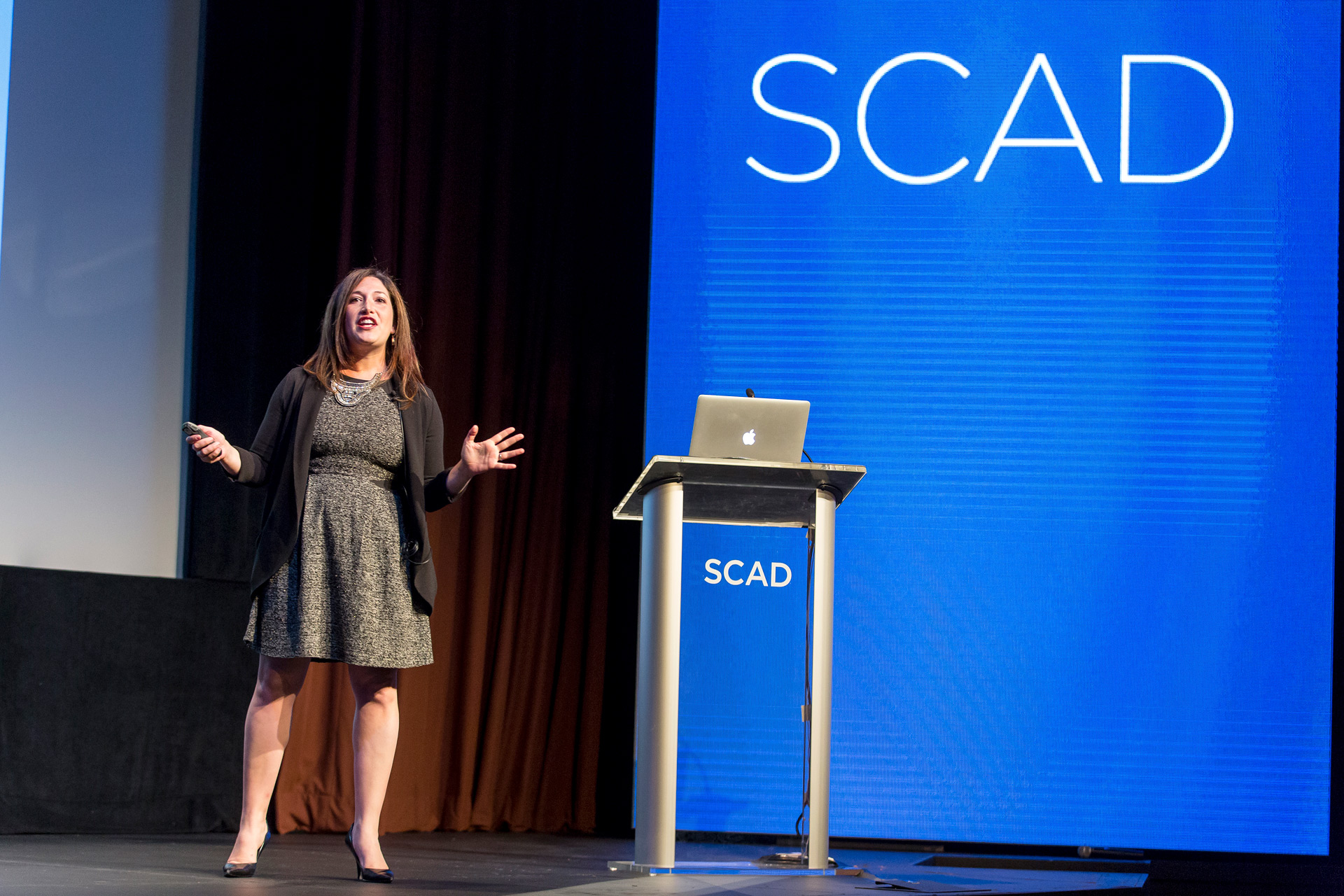
Randi Zuckerberg on stage at SCADshow in Atlanta

Entreployees rule
The maker movement has spawned the rise of the “entreployee,” people who work full-time for a business while launching one of their own. Many employers welcome this because they’re looking for creative people and problem solvers, which should make artists and designers optimistic about their career prospects. But be warned: changing employment trends mean changing hiring practices and your next interview might take place via Snapchat.

Social media is not optional
Social media is not a fad and smart companies are taking it seriously. There’s still unlimited potential for social media to revolutionize the business-to-consumer relationship. One example is the 1888 Hotel in Sydney, Australia where travelers with 10,000 Instagram followers stay free — yes, free.

Learn and learn from technology
From silly to serious, technology is achieving the unthinkable. 3D printers create everything from fashion accessories to prosthetics. Smart contact lenses will make it easier for diabetics to test their glucose levels. Online (and often free) educational tools mean people never have to stop learning and can learn just about anywhere. Fun toys and games can hook kids on science and engineering. We can learn a great deal from technology about how to think bigger in our respective professions.

Innovation is like a box of chocolates
With social and technological breakthroughs, you never know what you’re going to get. We have inventive educational toys, books and games. Then someone takes it too far and designs the iPotty. Fitbits are helpful, but does the world really need a scale that tweets the user’s weight? The same 3D printers that make shoes and iPhone cases can also make guns and bullets. Virtual reality can be used to help cure people of their phobias, but also to create first-person shooter games that, according to Zuckerburg, might be a little too realistic. Innovation inspires excitement, but also requires prudence.

Balance is best
The next great social innovation just might be unplugging. It is exactly what it sounds like: leaving technology behind for an afternoon or weekend. We can get ahead of this trend by enjoying the outdoors, wandering through a used bookstore, and talking to people without looking at our phone or taking a selfie. Not exactly the advice one would expect from a social media maven, but it's exactly why Zuckerberg is a breath of fresh air.

Catherine Ramsdell is the associate chair of liberal arts at SCAD Atlanta, and has been teaching writing and English courses at SCAD since 2000. She also writes for Popmatters.com, an online magazine of cultural criticism.

Architects will save the planet

April
22
2015
By
Tags:

Architecture students, get your super-suits ready. We need you. Other keystone players will also play critical roles in promoting climate change and halting resource depletion, but I’ll stick with the notion that architects are superheroes. You know the ones. We're masked (because few really know who we are, unless we design a big shiny thing in the center of a world-class city), mega-muscled, hyper-focused oddballs who fly straight at the metaphorical meteor and redirect it away from Earth in the nick of time. That’s us.

I teach architecture and urban design at Savannah College of Art and Design. My students are ready to wear the super-suit, and it fits them well. They understand the urgency to design better buildings and cities and see the opportunities to fix our broken environment through mindful design. It’s a sure bet that our emerging architects will change the game. Most of the architecture and urban design students I talk with want to earn LEED credentials before graduating, and, if they’re in my sustainable design class, probably will. They’re also designing beautiful bio-climatic projects in studio to meet the Living Building Challenge, modeling energy consumption and learning about topsoil science and the importance of nurturing healthy urban ecosystems. This isn’t your grandfather’s architecture school.

We now teach and practice creative and integrative design that demonstrates the approach we must all pursue as part of a global solution to resource depletion and climate change.

The urgency is in the numbers. In 2013, 40 percent of total U.S. energy consumption was attributed to residential and commercial buildings, according to the U.S. Energy Information Administration, and that number continues to rise due to growing building size, population and consumption. North Americans still consume three and half times more energy than the global average per capita. Many scientists and policymakers agree we only have a decade to definitively reverse our CO2 emissions before hitting a point of no return. 

The architect’s responsibility is evident in our market impact. There are 5.5 million commercial buildings in the U.S., with a conservative renovation cycle of 30 years and an estimated 15 percent demolition rate during that period, creating a potential retrofit market of around 150,000 buildings each year. Additionally, over a million new commercial buildings will be constructed within that same 30 years. Who is designing these retrofits and new buildings? Architects. That’s a call to don our capes and tights and save the planet. The majority of all renovated and new buildings must be designed for current or near-future net zero carbon operations with minimal ecological footprint, or we could lose the game.

This is a huge opportunity for architects to make better buildings, reduce greenhouse gas emissions, and save the planet. Mindfully designed buildings mean healthier people, happier clients, a robust economy, vibrant cities and healing ecology. Opportunity emerges in specialization, as well. Once you put on your super-suit, what will your superpower be? Designing hospitals that contribute to faster healing? Or schools that inspire better learning and nurture curious students? Maybe today’s architecture students will take a significant step toward moving residential design to high performance, low consumption, healthy environments for families.

If we’ve already reached the tipping point for sustainable design, then today’s architecture students are the beneficiaries of this momentum. To ride this wave, every architect needs to understand not only how to make a beautiful building that will be loved, but also how to make it perform like a symphony of integrated parts—generating more than it consumes, while contributing to a vibrant sustainable economy.

Elaine Gallagher Adams, AIA, LEED AP BD+C, is a professor of architecture and urban design at SCAD. Follow her on the SCAD Architecture Voices blog.

Finding creative talent: employers share 4 in-demand traits

March
3
2015
By
Tags:

More than 150 companies attended Savannah College of Art and Design’s annual career fair in search of the next great creative talent. They ranged from boutique outfits like animation house Bento Box Entertainment, to behemoths like Amazon and Proctor & Gamble. Whether these employers are design oriented in their function, or using design to enhance their mission, the talent they’re recruiting has never been better prepared or more sought after.

The awareness of and demand for what we do as artists and designers is ten times what it was 30 years ago. – Doug Grimmett, Primal Screen


Which path to success at #SCAD Career Fair will you take?

A video posted by @scaddotedu on


Doug Grimmett, whose motion graphics company Primal Screen created the psychedelic '60s trailer for the final season of Mad Men, has been recruiting at SCAD for seven years. He’s one of the industry leaders who weighed in on our question: What are the most important attributes for future creative professionals to posses? Four qualities emerged on which this diverse group of employers agreed. The way they see it, the next great designers, animators, producers, art directors and more will:

Be generalists
The employers in our informal focus group agreed that an influx of rapidly changing technology means that too much specialization could render young talent irrelevant. Instead, they prefer young recruits to have a broad range of abilities that will enable them to be the ultimate team players. This is definitely the case in the growing world of independent films, shared producer Tamanna Shah, where time and budget constraints make the adaptable staffer a commodity.

Be mobile
The project-oriented nature of creative initiatives, in which teams are built today and disbanded tomorrow, means that the prospect who’s willing to travel is the one who might get the most work. Keeping with the film industry as an example, this is especially so given the dependence on state tax incentives, which production companies and their crews routinely relocate to capture.

Be detail-oriented
Recruiters repeatedly stressed their interest in the candidate who minds the details and mines the details. Reps from fair flung industries emphasized their interest in prospects who can grasp intricacies well before production, in the planning phase, especially through their sketches and drawings. As IBM designer Rebecca Lemker explained, the details are so important that the software giant recently introduced the new position of design researcher, whose task it is to surface the finer points that will ultimately help shape a better product. Rebecca and the others use portfolio reviews not only to evaluate a candidate’s eye for details, but also the decisions they made to include them.

Be brand aware
There have never been more ways for companies to communicate the essence of their brands so, it follows, that artists and designers who can support these initiatives would be in high demand. If talent is just the price of admission, as one recruiter put it, then prospects can distinguish themselves by demonstrating a grasp of the brand they want to work for, before they work there. For BCBG Max Azria HR director Christina Chiaro, reviewing a portfolio and seeing designs that match the brand is a signal the candidate has done their homework and posses the skill needed to succeed at the label.

In addition to agreeing on these basic characteristics, the recruiters overwhelmingly recommended that job seekers, “Do what they love.” Unsurprisingly, that advice pairs well with the qualities they seek.

Virtual reality for all

February
23
2015
By
Tags:

A thick envelope carrying a letter of acceptance was once the most exciting thing a college bound student could anticipate receiving in the mail. But virtual reality is changing that, and much more. For 5,000 students accepted by Savannah College of Art and Design, a package containing VR goggles may just have upstaged their acceptance letter.

VR has long been pursued as a tool for immersive storytelling. SCAD is using it to help students get an idea of what their story could be here. What they’ll see through their goggles isn’t fantasy, but a 360-degree, real-life experience. Using the gyroscope in smartphones, the goggles create a display for the left and right eye, allowing the user to feel as though they’re walking around SCAD’s locations. If you can’t visit Atlanta from California, say, VR will take you there.

VR goggles

The cardboard goggles, which will arrive flat packed on students' doorsteps, and their predecessor Oculus Rift, are far sleeker than the first generations of clunky VR headsets. In addition to a wider field of view and better graphics, in the case of computer-simulated environments, the release of consumer oriented, open source Google Cardboard finally made VR an affordable and real tool for all manner of applications, including education. Oculus is expected to release a more affordable version of their headset in late 2015.

Experts, including SCAD interactive design and game development professor Josephine Leong, are enthusiastic about the possibilities that fresh VR technologies can create.

What we’re starting to see is VR for the masses. I show these tools to my students because they are going to be designing for this generation. Google put it out there, but it’s up to the individual to figure out how to use it. That's what’s going to make it innovative. – Josephine Leong

Ironically, in the 1990s, a growing focus on another phenomenon that brings more utility to VR – the rise of the internet – helped scuttle remaining hope for advancement. Up until that point, VR saw 20 years or more of halting progress for medical and military research and, of course, gaming. But VR also has roots in CAD, music and interactive art, which made us realize that VR can not only help art and design students preview where they’ll study, but what they’ll study, and what they’ll make.

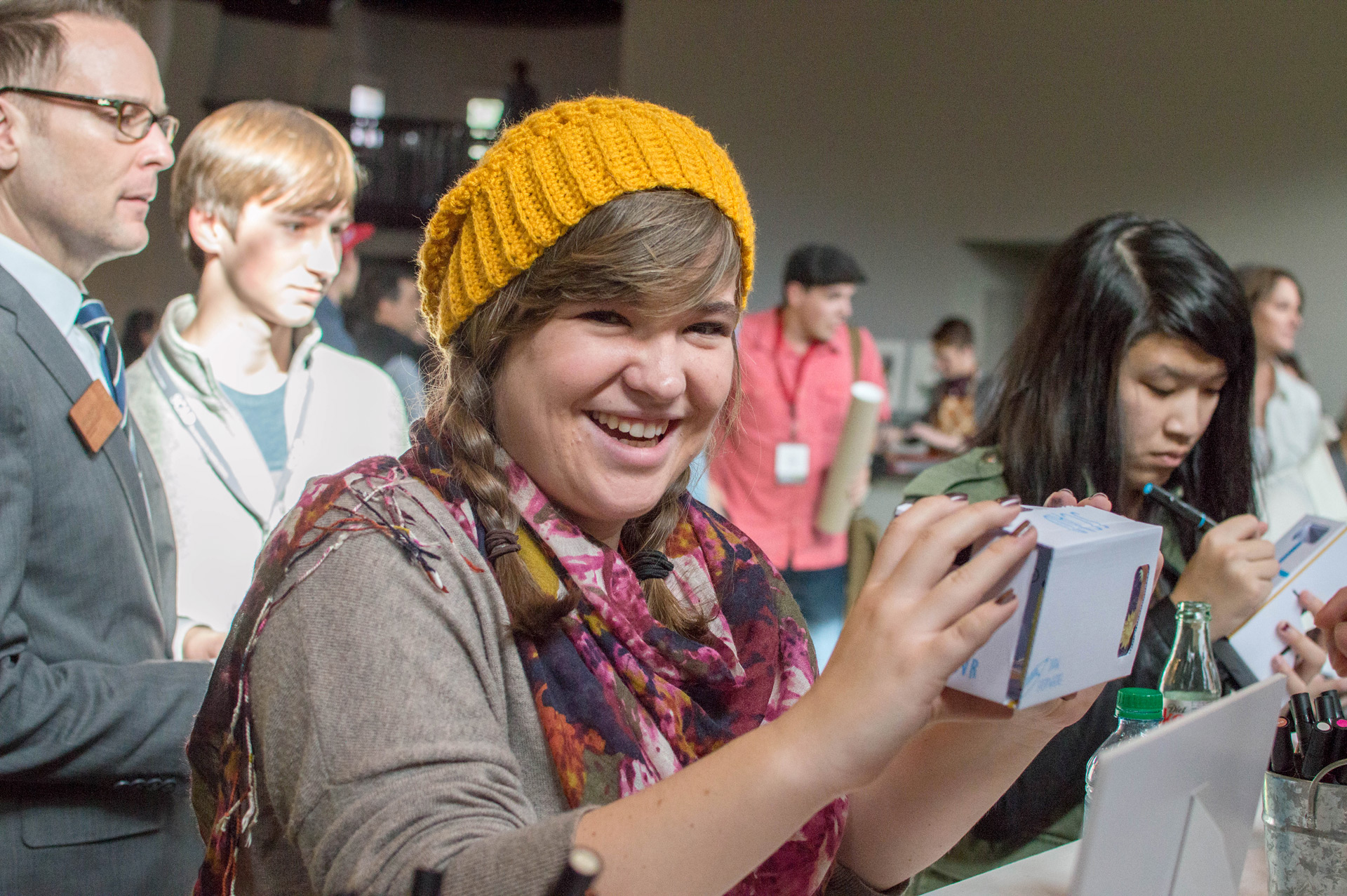
Student smiles while holding VR goggles

SCAD’s plans include expanding the targets for their goggles to high schools and teachers. The content will become more varied, too. Videos on university exhibitions and events like Chinese New Year and the university fashion show will help these experiences transcend geography and engage a wider audience, extending the classroom beyond the traditional brick and mortar.

In honor of Fashion Week: career advice from Oscar de la Renta

February
18
2015
By
Tags:

The debut of Peter Copping’s first collection as creative director of Oscar de la Renta at New York Fashion Week reminds us of the designer’s timeless advice to students of the industry. During his 2001 visit to Savannah College of Art and Design to accept the André Leon Talley Lifetime Achievement Award, Mr. de la Renta emphasized the importance of fresh ideas. Hear what he shared below and see his philosophy embodied in the exhibition Oscar de la Renta: His Legendary World of Style now through May 3 at SCAD Musuem of Art.

Livestream: aTVfest panel explores the future of television

February
7
2015
By
Tags:

On Saturday, February 7 at 11 a.m. EST, watch the aTVfest Television Roundtable live from Atlanta. TV journalists will offer their insight on the state of the industry, including why television is in a golden age, the impact of airing online versus broadcast and cable, their favorite TV shows and more.