Skip to main content Accessibility Policy

TV set as classroom and other reasons to get into television

February
4
2015
By
Tags:

The resurgence of TV is attracting a new generation of talent. Students are increasingly interested in jobs for the small screen, whether they are above or below the line. I tell them it’s a great time to get in, and that chances are good they’ll one day work for the same shows they binge watch. It seems that people used to get into the business because they were well connected, starry eyed, or gluttons for rejection. But the reasons why TV is a great career to shoot for are now better than ever. Here’s a few:

1.) There are more shows than there are staff to produce them.
When I was starting, jobs were scarce, and they were mostly limited to network. Not so today. For example, there are more than 60 network and cable TV shows and films now shooting in New York. This past summer there were 80. In Atlanta, there were 158 film and TV projects shot in 2014 alone, with frequent reports of new productions opening shop. Attached to each of these productions are a myriad of roles and responsibilities that show runners need to fill.

2.) You don’t have to move to New York or Los Angeles.
Seventy five percent of my graduate class moved to LA or New York for work. Now I tell my students to go wherever they have contacts, especially Atlanta, where the opportunities are equal to those in New York and LA. There are big incentives for shows to hire locally, and tax credits aren’t the only ones. I like to hire local crews because they know the area, are well connected and help a show run efficiently. If you build the labor force, the productions will come. Banking on this trend, I recently changed my DGA residency to Savannah believing that more production work will come to the city as the talent pool grows.

3.) New talent can grow with new platforms and content.
Viewers have an appetite for fresh content and for new ways to consume it. With original productions streaming on the likes of Amazon, and cable networks increasingly supplementing unscripted content with scripted, new talent can get in on the ground level of new shows with new forms of distribution and grow with them. Ratings buster Empire or Golden Globe-winning Transparent anyone?

4.) TV teaches on the job.
TV is still an industry that’s willing to teach on the job. We bring in students with little experience, train them in the strange and technical nuances of our business, and hire the promising ones. I placed recent SCAD grad Gabe Gilden as an intern on a Comedy Central pilot. That internship turned into a job as a set PA on Broad City.  Now he’s in the process of joining the DGA Trainee Program. To get there, Gabe had to experience a set and learn what the other 100 crew members do. The beauty is that because he was taught that way, one day Gabe will create opportunities for students, too, and keep the pipeline going.

TV will thrive with a well-trained work force, which will result by expanding pathways between the classroom and the set. The sooner students know what they want to do, the sooner faculty can train them and place them on shows for course credit and real world experience. Such is the case of senior Allie Schultz who, beginning in sophomore year, spent early morning classes repeatedly setting up and breaking down tripods. Her active interest in cinematography landed her at the top of the list we handed the The Walking Dead when producers called SCAD for interns. Later on set, when a camera op threw her the sticks, of course Allie put them up rapidly and evenly, much to the surprise and delight of the harried crew. There are dozens more like her ready to be tested; ready to show the industry that its future is in good hands. And with job prospects looking better than ever, their ranks will grow, starry eyed and business-minded.

Megan Lombardo is an adjunct professor of film and television at Savannah College of Art and Design. Her credits as 1st and 2nd AD include Broad City, airing on Comedy Central, MTV’s Eye Candy, Fox’s Glee and HBO’s VEEP. She holds an M.F.A. in film and television from SCAD.

Where to look for the next big idea in design? The university.

December
17
2014
By
Tags:

Given, there’s a universal quality to “good design.” But how far does universal go? When it comes to solving for design dilemmas and implementing these solutions in city-specific ways, does good design really mean the same thing in New York, London, Paris? Across all continents? In the case of SCADpad®, World Architecture News answered “yes” when it handed Savannah College of Art and Design its first international award for the SCADpad micro-house community.

Attracting more than 1,300 entries from 72 countries, the WAN Awards are among the largest of their kind, and a barometer for what’s trending in architecture and urban design on a global scale. SCADpad emerged a winner from a long list of submissions from countries as far flung as Singapore and Sydney, Florence and Monterrey.

Why does SCADpad resonate internationally? It goes beyond the three prototypes, inspired by and named for Asia, Europe and North America.

SCAD is a global institution with a presence on three continents and a diverse student body that hails from more than 100 countries worldwide. A natural and regular outgrowth of its composition are projects that transcend international borders and push the limits of what’s being done in design.

That’s a good idea! We have been talking about this for years and here they did it. -WAN Award judge Mark Mimram, Marc Mimram Architects, Paris

Even when SCAD acts locally, as it did when it built SCADpad in its back yard (well, parking deck), its agenda is global. Underpinning that agenda is a belief that design can change the world, and the world view of aspiring designers who are informed by experiences in their home countries, like industrial design student Chung-Hsiang Wang (Taichung City, Taiwan) who created 3-D objects for SCADpad.

I've lived in Bombay and seen the space constraints, especially in the slum area. Micro-housing units could be a solution. - Sharika Menon, interior design student and SCADpad resident

Secondly, when design efficiently addresses a pressing social concern, especially one that is widely held, it sparks conversation. Globally, the urban population is expected to increase to 5 billion people over the next two decades. With half the world’s population already living in urban areas, this increase will squeeze the global housing inventory even more. Simultaneously, the parking garage has reentered the dialogue and presented new opportunities for architectural ingenuity. Think 1111 Lincoln Road in Miami.

SCAD aligned these trends, added a dose of expertise in adaptive reuse, and created a laboratory where 75 graduate and undergraduate students from 12 academic programs - including furniture and interactive design, architecture and design for sustainability - could apply their solutions for the urban housing shortage.

The resulting SCADpads may not have been created outside of the university setting. If urban design by its nature is transdisciplinary, then very seldom do the resources exist outside of a collaborative setting like the academic one to solve for the kind of pressing global issues that rarely see breakthrough solutions.

So, it appears, SCADpad was recognized by an international body as much for the final result as it was for the process behind its creation.

Though it was the only university-sponsored project among WAN’s 2014 urban design contenders, SCADpad is evidence that, just as the world depends on research universities for scientific breakthroughs, we can look to art and design universities to inspire and deliver viable concepts for our most pressing social challenges. We should follow WAN's lead and take a closer look inside these classrooms for the next big ideas.

A museum’s worth: artists’ perspectives on SCAD Museum of Art

July
1
2014
By
Tags:

This week, the Savannah College of Art and Design brings home three honors from the American Institute of Architects convention: the AIA Young Architect’s Award, the AIA Fellowship for Emerging Leaders and the 2014 AIA National Honor Award for Architecture for the SCAD Museum of Art. The mission of the latter is to ‘establish a standard of excellence against which all architects can measure performance, and inform the public of the breadth and value of architecture practice.’

But what do artists think? Here, Kehinde Wiley, Liza Lou, Stephen Antonakos, Alfredo Jaar, Rosemarie Fiore and Trenton Doyle Hancock lend an artist’s perspective on the value of SCAD Museum of Art. They join the ranks of exhibiting artists like Jason Middlebrook, Fred Wilson and Nicola López who have responded to SCAD Museum of Art's distinctiveness by creating site-specific installations for the museum.

Congratulations, SCAD Museum of Art, for successfully connecting past and present, emerging artists with established artists, in both form and substance, and for being a magnet the draws the world in to contemplate the transformative power of art and design.

Studio Logic: inside the studio of Marcus Kenney

June
20
2014
By
Tags:

For the next post in our Studio Logic series, exploring the studios of professional artists and designers, we interviewed Marcus Kenney (M.F.A., photography, 1998). In a two-story Victorian in the heart of Savannah, Georgia, Marcus works across mediums - sculpture, paint, photography and collage - to mastermind reflections on wildlife and Americana. In addition to being among a collection of artists responsible for the aesthetic of Savannah College of Art and Design’s micro-house experiment, SCADpad® North America, Marcus recently completed a residency at Lux Art Institute and is currently showing his paintings at Georgia College Museum.

Collection of baby dolls organized on a shelf in Marcus Kenney's studio

Thread: What is your ideal work environment?
Marcus Kenney: I am pretty flexible when it comes to working space. I have worked in a variety of studio of spaces, from 5000 square feet warehouses, to a 100 square feet garage. My current studio has a bit of a domestic appeal as opposed to an industrial one. I enjoy the neighborhood and interaction with the neighbors. I have a large vinyl collection and during the workday I am constantly flipping over records and listening to random recording artist.
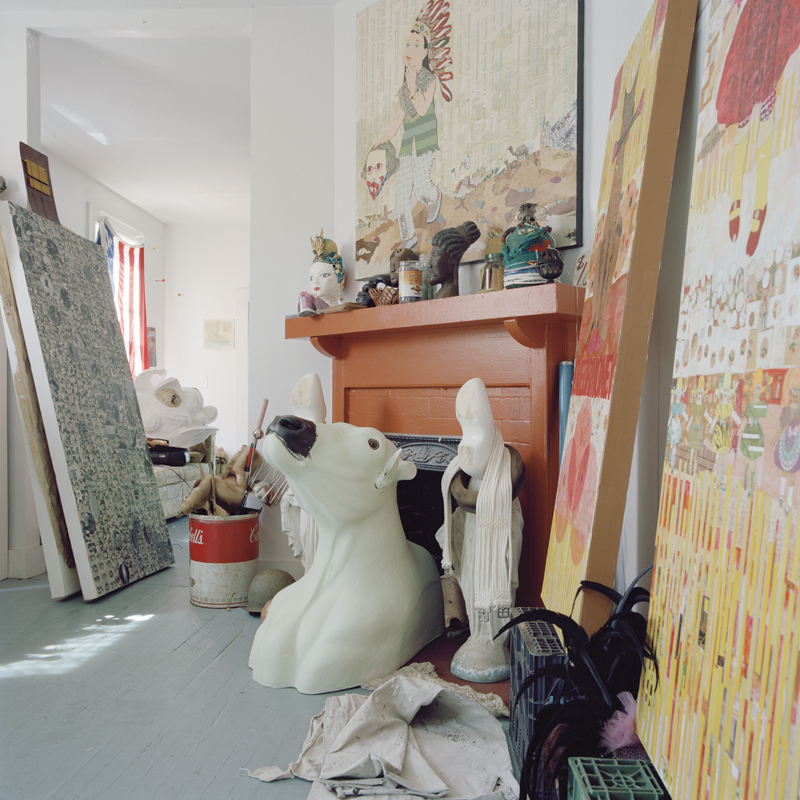
Paintings lean against the wall and sculpture fills a mantel in Marcus Kenney's studio
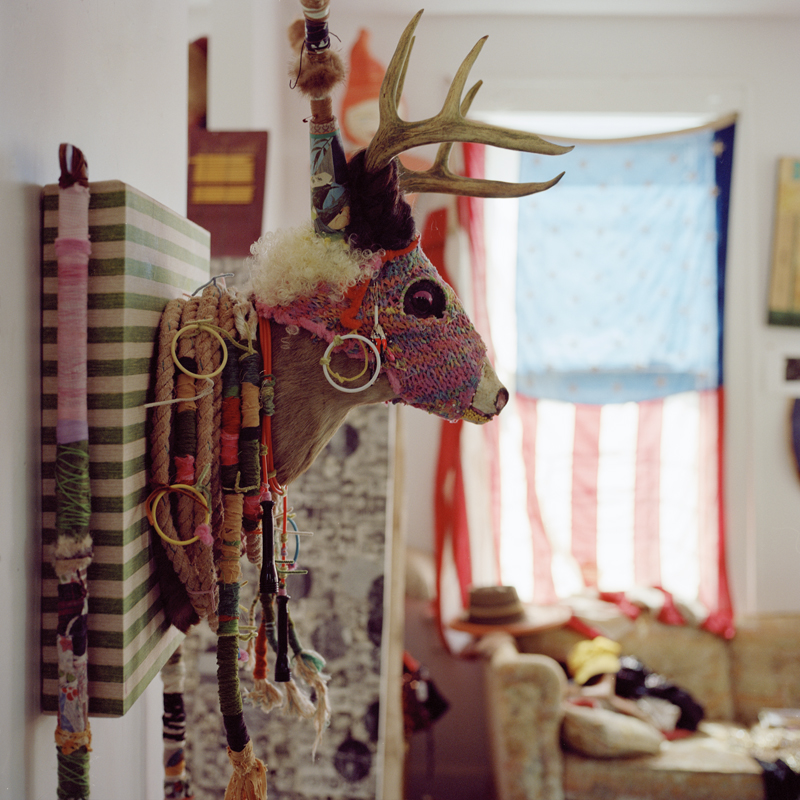
A deer head adorned in textiles hands in Marcus Kenney's studio

SCAD: Do you work best surrounded by objects that inspire you?
MK: Studios tend to reflect their owners and I admit that my studio is a mess and full of lots of contradicting objects. There are thousands of books, hundreds of small sculptures and boxes full of interesting objects like ladies dresses, wigs, fur coats and hats from around the world and rolls of wall paper. There are some cobwebs in the corners and surprises to be found; things I have forgotten I had and things that I haven't used in years. There are lots of reasons to create art and my art is about our culture. Historically, the way to study a culture is by the objects it produces. I find it responsible to study our ephemera and detritus and edit and shape them into valid cultural conversations.

I enjoy turning the world into my art supply store and making a game of searching for the right elements to create a work of art.

Shelves full of books in Marcus Kenney's studio

Sink and cup full of paint brushes in Marcus Kenney's studio

SCAD: Did your studio change when you evolved from 2D TO 3D work?
MK
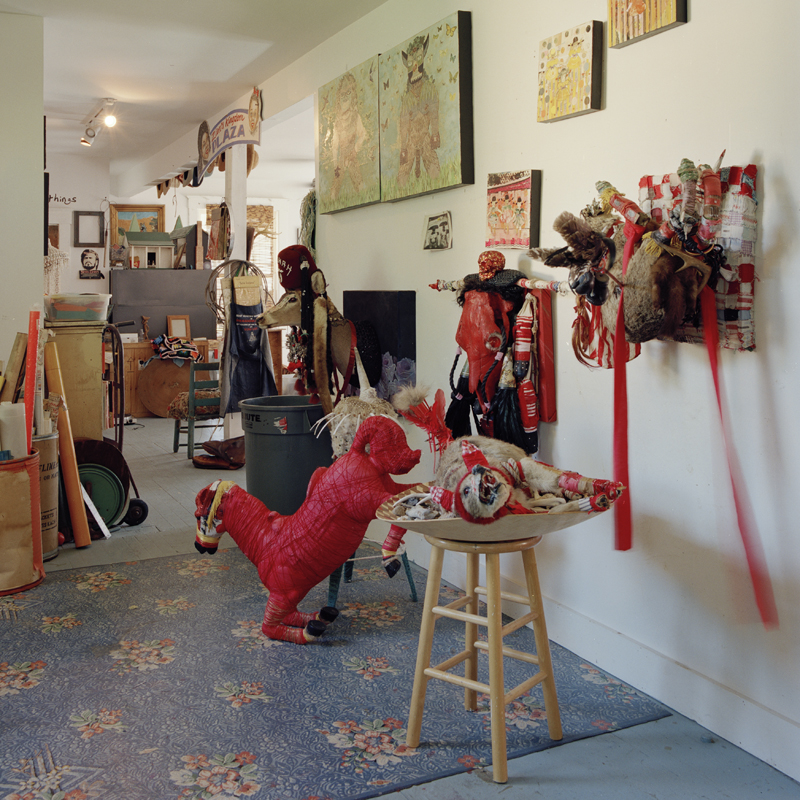
: I currently have four horses living in my studio! Honestly, it has not changed much. I have always created sculpture and so there are large amounts of materials lying around. I still paint occasionally, so all of my painting materials are there, as well. I like to keep lots of things on hand because I never know how the day is going to unfold and where inspiration may strike. Some days I may start a painting and other days I may work on sculpture. Often, I won’t go to the studio at all, but spend the day photographing or searching for materials to work with. The pleasure of being a contemporary artist is that there are no set rules.

“My studio is a super buffet with all kinds of options to feed my creative hunger.”

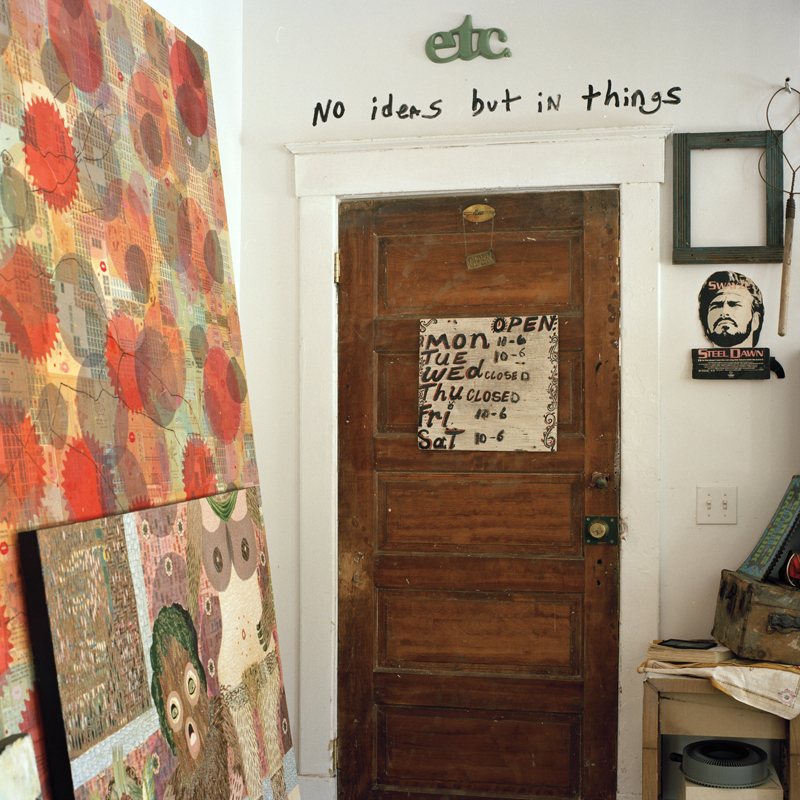
Wooden door with studio hours listed on it

Inside Marcus Kenney's studio

SCAD: What’s one thing you can’t work without?
MK
: Recently it has been a thimble on my finger. I have worked with one so much the last several years that my forefinger feels a little naked without it. For many years I carried a camera with me 24 hours a day, and before that it was an X-Acto knife with a box of new blades. It changes as my work changes. 

SCAD: What's another unique aspect of your studio?
MK
: I only work on the first floor. Upstairs has been reserved for other artists to work in. I have had some really special and unique artists work upstairs. Monica Cook (B.F.A., painting, 1996), Scott Griffin, Lorie Corbus (B.F.A., fibers, 2002), Paige Russell, Cedric Smith, Jameid Ferrin, Tobia Makover (M.F.A., photography, 2001) and others have all created inspired work upstairs.
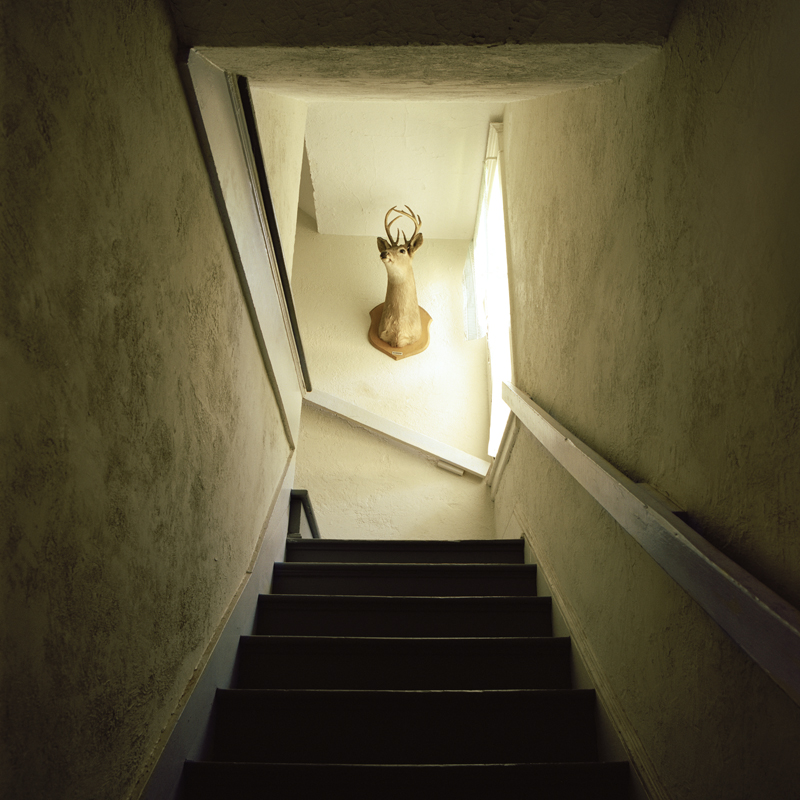
Stairwell to Marcus Kenney's studio

Here's to creating inspired work and the places where we make it.

The future of preservation: Will a new generation take up the cause?

June
16
2014
By
Tags:

Growing up, I regularly thumbed through family photo albums. This ritual of navigating the worn, yellowing pages of images, as if I were traversing history, was eye opening. The photos contextualized my place in that history. So I panic when I think that my daughter may not experience that same sense of belonging because these physical signposts do not exist for her to explore, at least not in a form that she can touch or feel, except to swipe at them on the screens of the devices behind which they’re trapped.
Image of the author's gradparents
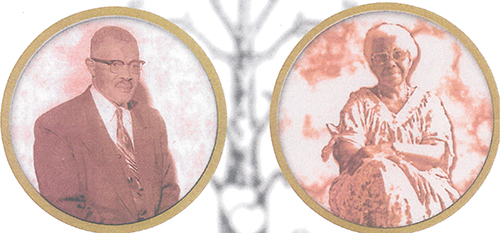
Photos of my great grandfather and grandmother from our family tree.

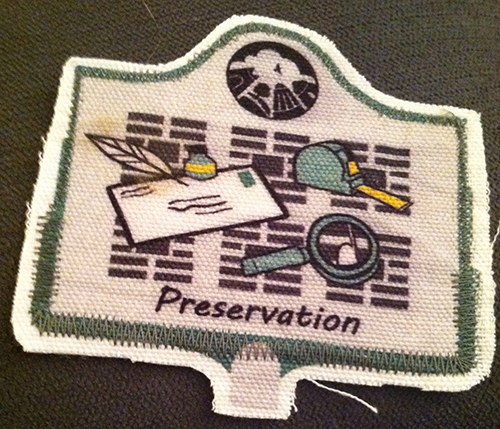
This angst I have over not being a better steward of our young family’s growing photo collection makes me a preservationist. That’s what a group of students from Savannah College of Art and Design helped me to understand. The last people you might associate with being champions for the old and non-digital, all younger than me, recently gathered to present their plan for engaging new generations in the pursuit of preservation. Their solution, a historic preservation patch for Girl Scouts, is a collaboration between SCAD’s historic preservation department, the National Trust for Historic Preservation and the Girl Scouts of Historic Georgia.
Prototype of Girl Scout patch
A prototype of the patch designed and created by SCAD students.

One of the first things the scouts needed to learn, they realized, is what exactly historic preservation is. It’s a good question, actually, for adults and kids, one that promotes an awareness of our surroundings and the laying down of our devices in order to delve into community. As the SCAD students, ages 21 and up, teach in their guide for leaders and scouts, historic preservation goes beyond saving buildings to include protecting artifacts, culture and, yes, even family history and photos. Though Savannah, where the students are pursuing their degrees, is an epicenter of historic districts and preservation, their guide is intentionally broad enough to relate to any city in the U.S.
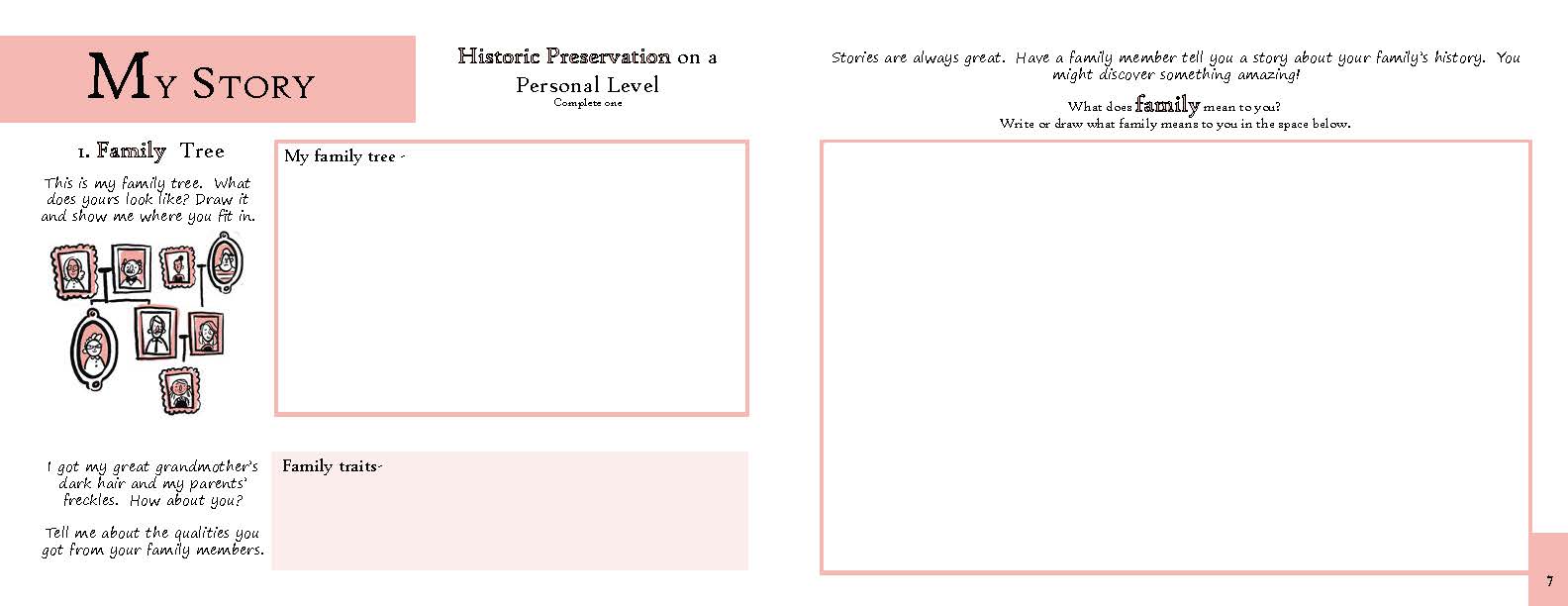
Junior Guide booklet
Pages from Junior Guide booklet
SCAD historic preservation students partnered with graphic design, dramatic writing, fibers and sequential art students to create the guide. To earn a patch, scouts must fulfill seven activities that fall under different categories of preservation, like personal history.

Any tool that promotes historic preservation to the next generation must be conducive to mass appeal, lest the fervor for ‘saving places’ dies with the present generation. One indicator that doesn’t bode well for the future of preservation, for example, is the average age of those who read Preservation Magazine: 61.

The apparent apathy toward historic preservation among young people is something that keeps preservationists like SCAD professor Connie Pinkerton, who led the students in the creation of the Girl Scout patch, talking.

Connie, a former Girl Scout whose daughter is also a Girl Scout, notes that her millennial generation students must carry the torch or, more appropriately, an LED light in support of historic preservation. A quick survey of her students about what could possibly have sparked their interest in historic preservation as an area of study is a case study for hope.

Savannah’s storied, historic buildings, many of them rehabilitated by SCAD, drew Bethany Emenhiser (M.F.A., historic preservation) to historic preservation. “People made things with their hands and those things and places are still standing. But today, even in our high-tech world, homes are being blown over by tornados,” she said of her admiration for preservation.

“Going green and sustainability are so in, but preservation was the first sustainability.”

That observation is astute for a student whose peers, by contrast, spend hours upon hours in a building near hers using the latest in 3D printing technologies.

Likewise, Jake Eichorn (B.F.A., historic preservation) became interested in preservation when studying at SCAD opened his eyes to the treasures of historic Savannah.  The 21-year-old, who will spend his summer helping a professor rehab a Victorian, gets starry-eyed talking about property record chains and a future career fixing up and flipping historic homes. For Jake, breaking down the fundamentals of historic preservation into a form that ten and 11-year-olds can understand was a rewarding challenge, just as the pursuit of the historic preservation patch will no doubt be also.

I’m glad my daughter, armed with our family photo album, will have the option to pursue this patch if she so chooses.

The historic preservation patch will be unveiled at the 2014 National Preservation Conference (Nov. 11-14) at SCAD Savannah.

How to get into the video game industry

June
12
2014
By
Tags:

Updated June 12: Savannah College of Art and Design’s team “Prisma” won the 2014 E3 College Game Competition. This is the second year in a row that SCAD has taken the top prize, awarded to them on the floor of the Electronic Entertainment Expo (E3) by president and CEO of the Electronic Entertainment Association (ESA), Michael Gallagher. A panel of industry professionals evaluated the five finalists and chose SCAD’s 2.5-D, side-scrolling platformer as the winner.

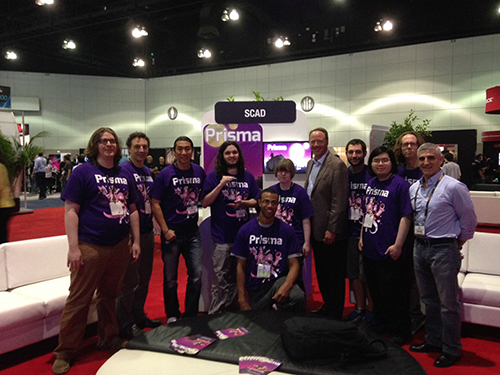
Posted June 11: They may not have landed their dream jobs yet, but check again after they show their game "Prisma" at the Electronic Entertainment Expo (E3) as finalists in the 2014 E3 College Game Competition.
Prisma team poses with trophy
SCAD's E3 team with the ESA's Michael Gallagher, ITGM faculty, program chair Luis Cataldi and Professor Tony Tseng.

Members of team "Prisma" from Savannah College of Art and Design are in the thick of it. The booth where they're showing the game is surrounded by leading publishers and developers, and they’re in the midst of searching for jobs where they can unleash the fundamentals they’ve acquired in SCAD's interactive design and game development program.

Who better to ask about this topic of getting a job in the video game industry than those who have done the research and have a completed game on their resumes to boot? Before we get to the advice from the student developers and recent grads, here's the interactive design and game development program coordinator from SCAD Atlanta, Professor Tony Tseng.

"Prisma" is the product of Professor Tseng's senior studio class, a three-quarter, nine-month process in which students work in teams to design and develop original games from scratch. On the topic of breaking into the industry and the demand for talent, Professor Tseng is quick to note that the surge in mobile devices and the direct digital distribution of content has pushed the game development industry into a ‘new golden age.’

Game developers no longer need incredible amounts of money and a giant publisher to put their games in the market for general consumers. They can publish and sell their games with a very affordable budget. As a result, students have the option to ‘go indie' and develop and sell their own games if they want to instead of working for an established game studio.

That’s good news for those who want to make a career out of video games. But let’s start at the beginning.
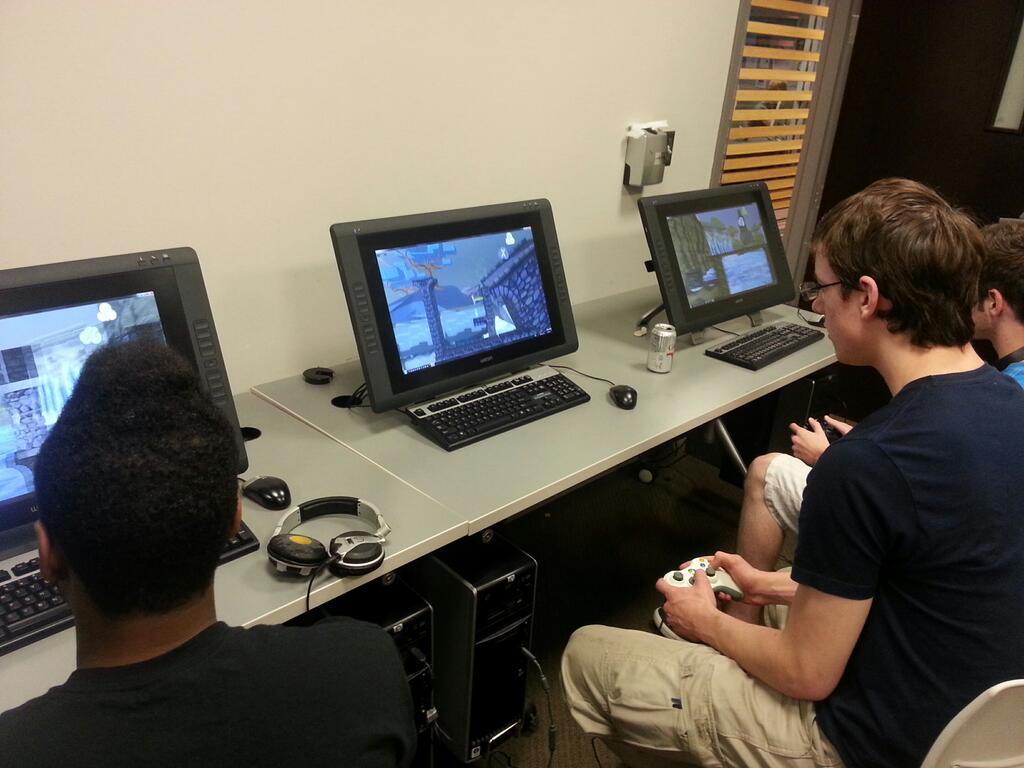
Students test the game in a computer lab
Playtesting of "Prisma" at SCAD Atlanta.

SCAD: How does having a degree in game development improve one’s job prospects?

Prof. Tseng: In the broadest sense, game design refers to the idea behind a game. But it's come to mean a whole lot more than that. In large immersive games, game design refers to the central theme or point and the core gameplay mechanics, as well as the story and plot and the characters' back-stories. Having good ideas for a game is not enough, a game designer needs to present the ideas clearly and communicate with the production team effectively. In our program, the students learn how to construct clear game design documentations and level diagrams, build non-digital and digital prototypes and create and execute production plans. In our senior studio we simulate a real game studio environment and students work in a team to create fully playable games. This education and training gives our game design students the capability to take on any game project on day one of their job in the industry.

SCAD: What can one do to become more appealing to hiring managers in the industry?

PT: First, preparing a strong and professional looking portfolio is the most important thing. At SCAD, we offer a very hands-on education, as we want our students to be able to build what they have in mind (not just talk about). Students produce portfolio-quality projects by working in pretty much every studio class in our program starting their sophomore year. In their senior year, we have a dedicated portfolio class in which we teach our students how to construct specific portfolios to target their dream jobs. Next, getting internships with well known game studios is important. At SCAD, for example, we have established internship programs with many game studios in metro Atlanta for our students. Winning major game design and development competitions such as E3 is also a way for new talent to get noticed, as is networking at other major gaming conferences like GDC, SIEGE, IndieCade.
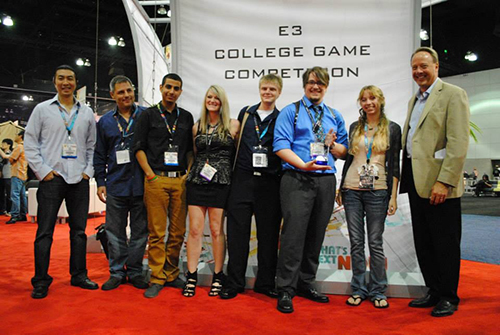
Previous SCAD winners pose with trophy
A team from SCAD was a co-winner of the 2013 E3 College Game Competition.

SCAD: What are different career paths in the industry?

PT: The industry recruits for game artists, animators, designers and programmers. Here's the path for each of these roles:

Game Art: Start as a 2d/3d character or environment artist building secondary/background/non-playable character and props -> senior 2d/3d character or environment artist building main characters and feature props = art director overseeing the entire art production and managing the art team.

Game Designer: Start as an associate game designer designing scenario/combat/event/dialogue -> game designer designing the core system of the game = creative director overseeing the game design team and developing original ideas for new titles.

Game Programmer: Start as junior programmer coding modular sections of a game like scenario/combat/event/dialogue/UI -> senior programmer designing and coding the main framework = technical director overseeing the entire technical production and managing the programming team

Now, back to some of the members of the E3 team who fulfilled these roles while making "Prisma" and what they’ve gleaned from their job searches.

Don't wait until college to learn how to program, or how to draw, or how to deconstruct a game's systems. Practice every day while you can.  Don't be afraid to show your work to people, and don't be discouraged when your work gets ripped apart. Pick up the pieces and keep trying.  We have a saying in the ITGM department, which is to 'Fail better.'

-Kyle Bolton, Prisma’s project manager, designer and programmer
Current job: Independent contractor at Thrust Interactive

Try to get involved. Start a personal blog where people can see and critique your work. Go to Lynda.com or YouTube to learn programs. Go to Polycount Forum’s Wiki for technique. Join a mod team (or the like) to have a shipped product on your resume.

-Hank Silman, Prisma’s art director and environment artist
Dream job: Game artist at Naughty Dog

Employers want to be wowed.  They want to be so captured by your work that they want to see more and get you in for that interview. 

-Angelica Rodriguez-Vazquez, Prisma’s environment artist
Dream job: 3D environment artist at Nintendo or Blizzard

Like every other industry, game development employers look for what you can do to contribute to the studio, from the hard skills needed to complete the tasks at hand, to the soft skills needed to promote a better and more productive work environment.  Since the game development pipeline incorporates many disciplines, what employers look for specifically will vary and every applicant should tailor what they demonstrate to the situation.

-Khoa Nguyen, Prisma’s technical artist and programmer
Dream job: Technical artist at Blue Mammoth, Xaviant or Thrust

Whether or not "Prisma" lands in the hands of the 181 million Americans who play video games, it’s fair to bet that with a start this strong, something these future industry leaders will work on will make it to the 21 billion dollar market. They'll meet you there.

AD's Margaret Russell's 'simple truths' for graduates

June
2
2014
By
Tags:

A good commencement address is irresistible. Whether graduating or firmly planted in career or school, the distilled life experience and wisdom are too convenient and enlightening to pass up. And so, in case you missed Savannah College and Art and Design's 2014 commencement ceremonies, here's speaker Margaret Russell's 'simple truths', which she delivered to SCAD's 1,560 graduates in Atlanta and Savannah after tracing her rise to the helm of Elle Decor and now Architectural Digest.

I’m going to end with some simple truths, some things to keep in mind as you enter the workforce. These are more pragmatic than they are profound. Actually, they’re tips to help you do well at work and to keep you from annoying your future bosses.

Be early.
I remain challenged by this, but I’m usually still the first person at the AD offices each morning. It’s better to consistently arrive early at work than to have to consistently stay late.

Be a trouble shooter and problem solver.
These are key qualities that everyone in every industry looks for when hiring. Think ahead and always anticipate the unexpected.

Expect good and don’t gossip.
Don’t ever write emails that might land you in trouble if read in public. Email should communicate facts, not emotion.

Be aware of the power of social media and never post a photo when it’s clear that you’ve had far too much fun.
Your bosses are also on Google, Facebook, Twitter and Instagram, and they will find you. Try imagining that your social accounts have a pause button and take a breath before you hit send.

Embrace change as it’s the most constant aspect of your future.
The happiest people around you are those who are flexible and adapt well.

Don’t be afraid to ask; ask for everything. Just never have a sense of entitlement when you do.
Some of the best stories published in the magazines I’ve edited are there because I had the nerve to go after them.

Don’t be afraid, period.
Life’s too short. Conquer your fears today.

Pay attention.
Listen, stay focused, be ambitious, have common sense, show good judgment.

Do the right thing.
You’ll never go wrong by doing what you truly believe is right.

Give back.
I love AD, but the most rewarding work I do is philanthropic or political. Volunteer, develop your personal sense of social responsibility and integrate it into your daily life.

Think green.
Please think green because your forebears did not. Use your genius to save our planet.

Find your passion and your joy.
I hire people who are passionate about their work. I’ve always been told that there’s no place for emotion at work, and indeed that’s true. But I know for sure that being passionate about what you do will drive you to far greater success.

Feed your creativity. Get off your iPhone. Look up.
Don’t passively email someone sitting a few feet from you in the office. Talk to each other, write thank you notes, read books.

Don’t settle. Expect the best. Want to be the best.

You are so well prepared to make your way and to change the world and we can’t wait to see what you’ll do. Congratulations, class of 2014. We honor and admire you. Here’s to your brilliant future. Here’s to tomorrow.

Share your favorite or most memorable piece of commencement advice by posting it in the comments below.


Dr. Maya Angelou's 1998 commencement address

May
29
2014
By
Tags:

In this season of graduations and rites of passage, we are pleased to feature one of the shining moments from Savannah College of Art Design's 35-year history: Dr. Maya Angelou's 1998 commencement address in Savannah, Georgia. Listening to Dr. Angelou's speech to SCAD grads reminds us of the gift of her legacy and our gratitude for her timeless life's work.


Studio Logic: the workspaces of professional artists and designers

May
14
2014
By
Tags:

Space. Invariably, it’s the object of focus for artists and designers, and often times the basis for their inspiration. This is definitely true for the spaces we’ll feature in our series Studio Logic, exploring the studios of professional artists and designers. For the first installment we travel to Brooklyn, where powerhouse duo Trish Andersen (B.F.A., fibers, 2005) and Maureen Walsh (B.F.A., fibers, 2004) set up the multi-disciplinary design studio Domestic Construction. Below they ‘show and tell’ how their space reflects their philosophy and fuels their work for clients like Google, Target, Bravo and Hewlett-Packard. Clearly recent projects, like the striking blue exterior and interactive fiber walls of the Savannah College of Art and Design’s micro-house SCADpad® Europe and the pair’s grounded mat line, bear the mark of a special muse. We couldn’t resist taking a closer look.

Thread: How did designing for SCADpad challenge your initial way of working and how has it challenged how you engage space?

Domestic Construction: We wouldn't necessarily say it challenged our way of working, but rather supported it. We are all about the belief that any space, whether living or working, should be one that inspires you. SCADpad is a prime example of how you can push the limits of space through the creative use of materials to be one that is constantly engaging and ever-changing.

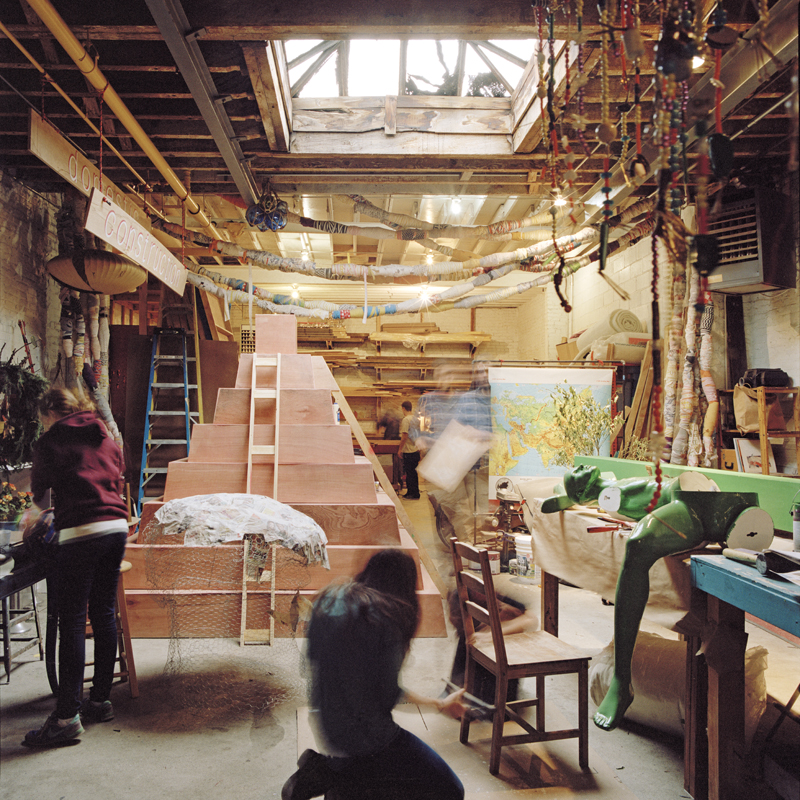
Large skylight inside the Domestic Construction studio

Book pages with bird cut-outs hang on a wooden wall

T: Being fibers artists, how does space inspire you? How does your personal work environment influence your products?

DC: Space is everything. As fibers artists, we like to challenge the preconceived notions of what a typical interior should be. Why should we live/work in white boxes? Have normal walls/floors? Isn't that getting boring? Our studio is an ever-changing exploration of what is inspiring us at the moment. A giant inspiration board of sorts. It is a playground that allows us to create without fear.

Inside the Domestic Construction studio

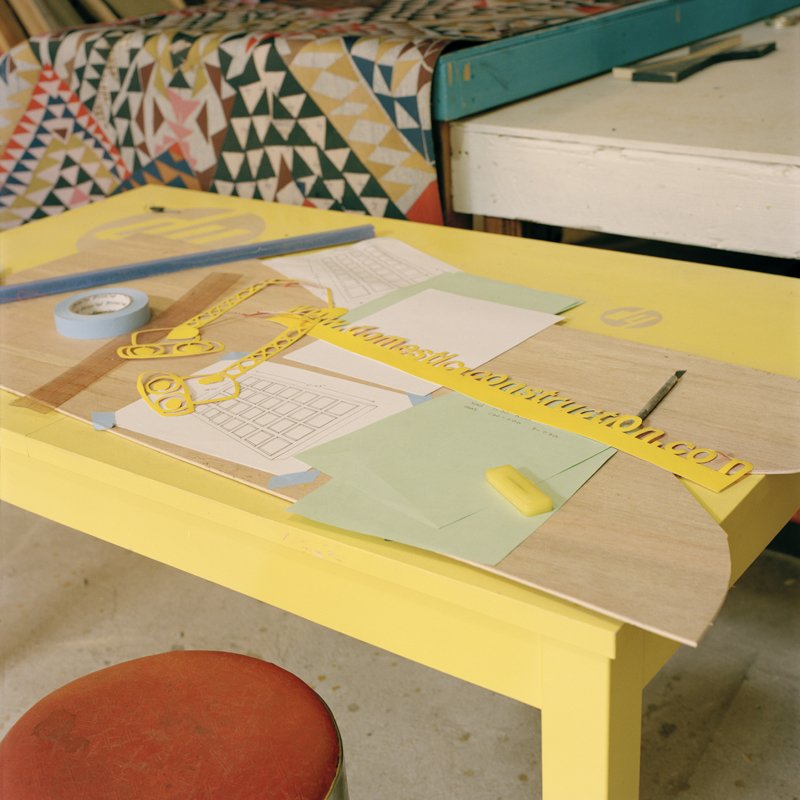
Yellow table with work on top that is in progress

T: Your studio seems to be full of color and décor. What is the significance of these things to you? Describe your ideal surroundings for work (i.e., time of day, temperature, noise level, music, company, setting). 

DC: We love color and texture, so naturally we crammed our space with it. We find that color promotes an upbeat and fun working environment. Most people who enter our space smile and that's just the best. Some of the best days at the studio are when we are working on a big project and we have a ton of crew jamming to tunes and making things happen.

Domestic Construction studio with pastel blue shovels hanging from the ceiling

Floral sundress on a dress form inside the Domestic Construction studio

T: What's one thing you must have around or close by in order to do your best work? 

DC: Our friends/crew that always jump in to help execute projects. We usually work on a large scale, so it takes an army. We feel fortunate to work with so many other creatives and we truly have a blast doing it.

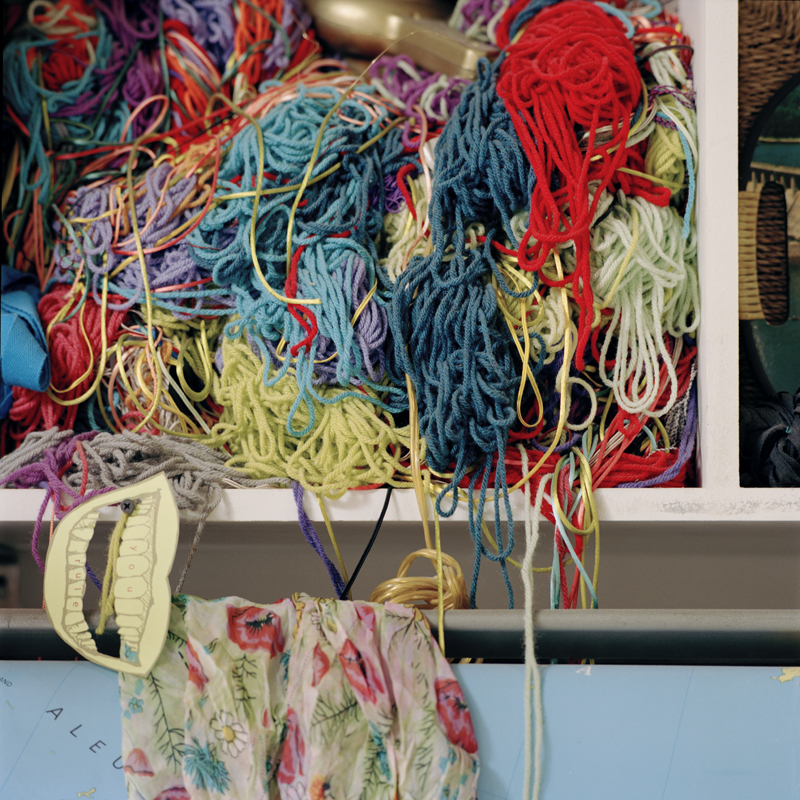
Bundle of different color yarn on a shelf in the Domestic Construction studio

Wooden shelf inside Domestic Construction studio

Turning the career fair on its head

May
1
2014
By
Tags:

Savannah College of Art and Design created a reverse career fair called Out to Launch (O2L) about seven years ago to empower students to amplify their bodies of work in their own voice. It’s a reversal in that the employers come to the students, instead of the students going to the employers at their headquarters or a conference hall. We invite industry representatives to view the portfolios of students at our Atlanta location right before they graduate, a preview of the new talent entering the marketplace.
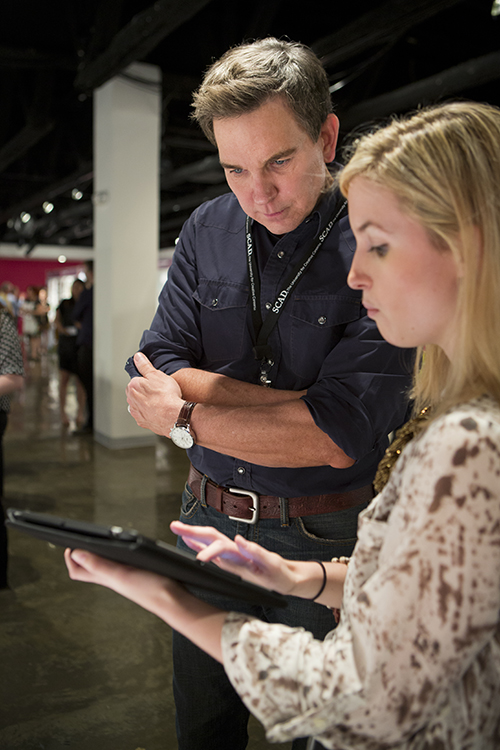
Student shows off her work on tablet to visitor

By requiring students to host potential employers ‘on their own turf,’ they come to understand the value of their education and active participation in it. They see the portfolios of their fellow students and begin to make professional connections that pay off earlier in their careers. The ownership they take in O2L enables them to better market their whole educational experience - facilities, pedagogy, faculty – and harness those elements for their benefit.

By way of example, one hundred percent of the animation students who participated last year reported earning a job opportunity at O2L.

Initially, we didn't realize just how successful the format would become, growing from 11 employers participating in 2008 to more than 120 in 2013. It turns out that industry relishes the idea of taking time to absorb an array of prospective interns and employees, asking questions at their own pace and truly understanding the educational environment that has contributed to their talents.
Student holds tablet for visitor to look at

As O2L grows, so does the buzz. We went from inviting only local agencies in the beginning to hosting a variety of national companies, and the success stories grow every year.

Through O2L, our students have landed internships and full-time positions at companies like Marvel Comics, The Home Depot, Wieden+Kennedy, Sony Pictures, MTV and more.  This year, employers like the Centers for Disease Control, IBM Interactive and MailChimp have signed on.

Our faculty members are proud to see our passion for preparing students for creative careers come to fruition. The broad range of students who participate in O2L proves that the format is beneficial to all students, regardless of discipline. Each year, more academic majors are represented at O2L, with students from 13 different programs participating last year.
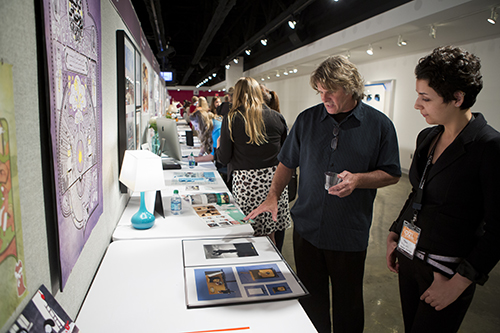
Visitors to the fair examine work on a table

In addition to drawing a pool of top-notch employers with opportunities to offer, we invite keynote speakers and a panel of professionals, handpicked from industries that are relevant to the students’ career paths. O2L may have turned the career fair upside down, but the students who participate and the employers who hire them are coming out on top.

This year, our keynote is motivational speaker and creativity advocate Kevin Carroll, founder of Carroll Katalyst, LLC. The panel, moderated by The Weather Channel's executive vice president and chief marketing officer, Scot Safon, includes:

Judy Salzinger is the advertising program coordinator at SCAD Atlanta. Previously, she was vice president and creative director at Cross Media/Golin-Harris International and led initiatives such as creative direction for top sponsors of the 2002 Salt Lake City Olympics and Fortune 500 companies.