Skip to main content Accessibility Policy

AnimationFest spotlight on 'Bearly'

September
18
2020
By
Tags:

What happens when a bear full of FOMO refuses to hibernate? Bearly, the new animated musical film and the first production of SCAD Animation Studios, tells the story of an adorable mammal who denies natural instincts to discover the beauty of the changing seasons. The project was written, developed, and realized by students in the university's top-ranked animation, dramatic writing, and sound design degree programs. Bearly will premiere during SCAD AnimationFest, Friday and Saturday, Sept. 25-26.

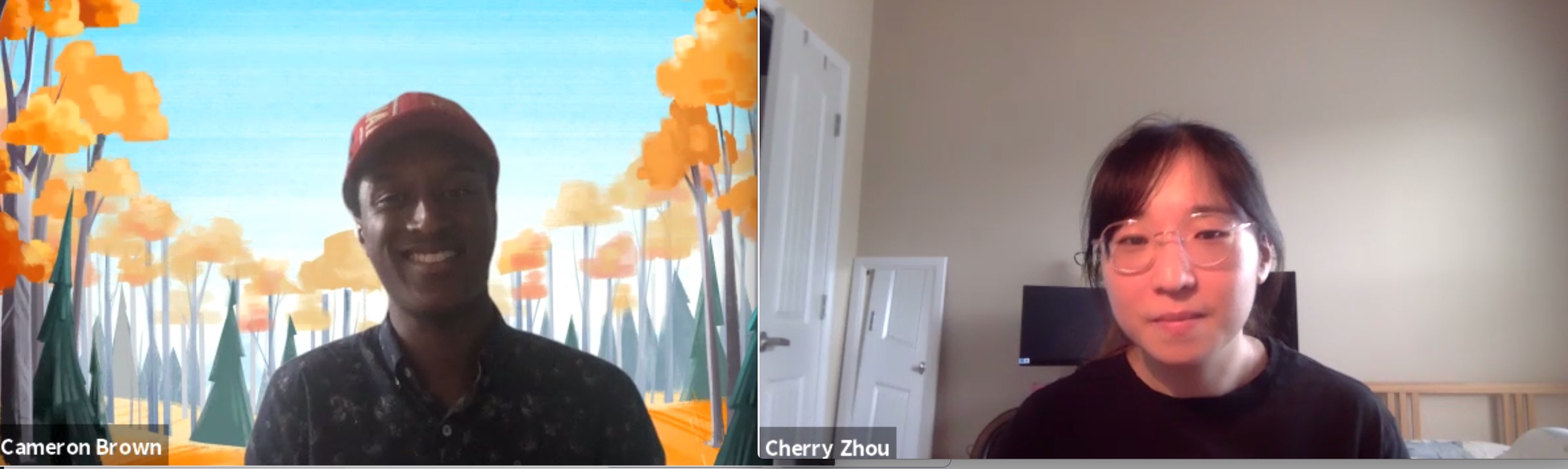
Producer Cameron Brown (B.F.A., animation) and director Cherry Zhou (M.F.A., animation) Zoom'd into SCADworks to discuss the film.

screen shot of zoom session

Cameron Brown: The initial processes began in summer 2019, when Colin Rhoades (B.F.A., dramatic writing) came up with the story of a bear who tries to see what winter is like and fight the urge to hibernate. Colin began writing the music, and once Fall 2019 quarter began, the project went into pre-production, which is when Cherry and I came aboard.

Cherry Zhou: During pre-production, we began storyboarding the film based on Colin's idea. The entire pre-production team met and discussed possible minor changes that could enhance the storyline. Because the song was the first thing we had, it finalized the timing of every single shot, whereas usually a production creates all the animation first, and then the music. All those story beats are very cohesive and quick in Bearly, and you can always read it very clearly.

Cameron Brown: Once we went into production, we started automation lighting tests and brought on a team of student animators. We already had the storyboards done, so it was simply a matter of communicating to the animators how to follow the follow the storyboard and interpret the story into the 3D space. On our art team, Natalya Gaida (M.F.A., animation) and Nicholas Piña (M.F.A., animation) worked to create the look in the style of a children's book. Their work was then handed over to our lighting team, who were working in Katana.

Cherry Zhou: I want to explain Katana a little bit more. In the animation department, most students have been using Autodesk Maya. We got the note to use a newer software called Katana that runs faster on lighting and rendering. It was a big plus, but in March 2020 we went into quarantine and the university was shut down for the spring quarter. Fortunately, SCAD got a system called Virtual Lab that allowed students remote access to our render farm.

Cameron Brown: One of the best things about an animation production is that everyone's got to work with everybody else. Bearly was an incredible team effort that involved the work of over 60 students. At AnimationFest, we're going to have a Bearly panel, including SCAD chair of animation Chris Gallagher, our executive producer Professor Bernardo Warman, along with myself, Cherry, our 3D animation lead Peter Kerkvliet (B.F.A., animation), and our lighting and compositing lead Taylor Saunders (B.F.A., animation). We're going to walk through our steps during production, and we're going to show the film. It's going to be awesome.

promo image for Bearly

For a full list of students who worked on Bearly, and to watch the trailer, visit the designated page.

Register for SCAD Animation Fest here.

Guo Fengyi: To See from a Distance

September
16
2020
By
Tags:

The SCAD Museum of Art presents Guo Fengyi: To See from a Distance, the first major institutional exhibition of the late Chinese artist's work in the United States. The exhibition is on view now through Nov. 29, 2020.

"Her drawing practice was a visionary practice," says Rosario Güiraldes, assistant curator, The Drawing Center. "Guo believed that through drawing she was really seeing and accessing places that were remote and distant to her. In the present, right now, being in the world, we're all confined and seeing or living at a distance. The title of the show, and her practice, feel so timely."

Born in 1942 in Xi'an, the site of China's historical capital, Guo began making art in her late forties after debilitating arthritis forced her into early retirement from a job at a chemical fertilizer factory. To alleviate her chronic pain, Guo devoted herself to qigong, the ancient Chinese wellness and healing technique that combines coordinated movements, breathing, and meditation, and subsequently developed a highly personal drawing practice. Producing an astonishing body of work in the last two decades of her life, Guo created more than 500 intricate ink drawings on subjects ranging from cosmology and Chinese mythology to traditional Chinese medicine and philosophy.

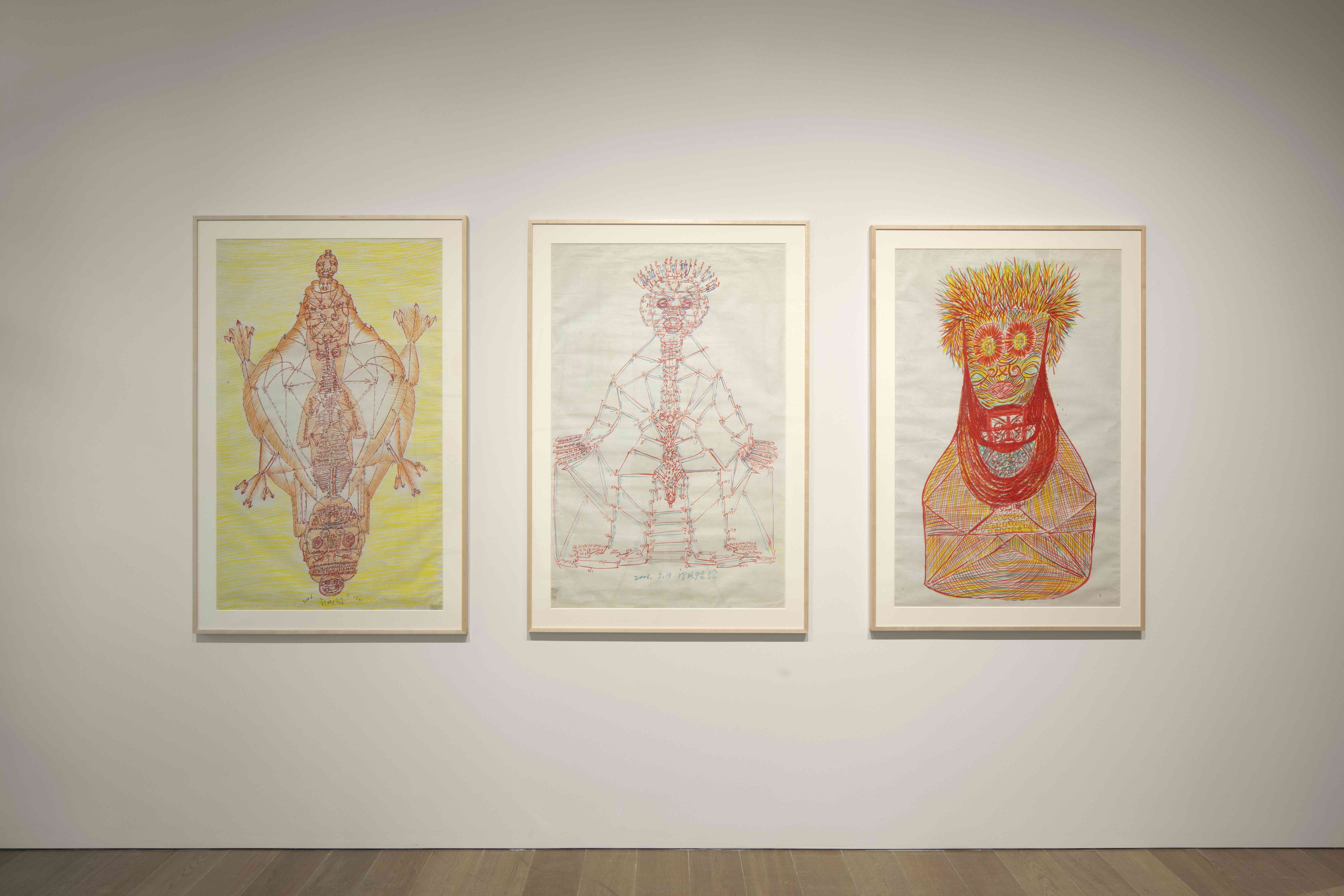
To See from a Distance features more than thirty works from Guo's career, including drawings executed on the backs of book and calendar pages and on cloth, as well as small- and large-scale drawings on rice-paper scrolls. The exhibition provides an overview of Guo's visionary drawings, which incorporate the diagrammatic, the mystical, and the wildly imaginative.

installation view of Guo Fengyi exhibition

"Guo Fengyi found a prolific source of inspiration in her meditations and created one of the most electrifying drawing practices in contemporary culture," remarks Humberto Moro, SCAD MOA adjunct curator. "Her work is incredibly fluid and potent, and she was a fearless, consistent practitioner who remained opaque to the Western world until recently."

Many of Guo's earliest drawings reference ancient Chinese history, depicting the contents of the sealed burial chambers of China's earliest emperors. By the mid-1990s, Guo had abandoned her journals, switching to paper scrolls. Over the last decade of her career, she amassed more than seventy drawings made on the backs of old calendars and on rice-paper scrolls that measure up to six-meters long. Together, Guo's works speak to the power of drawing as a means to comprehend and "see" the unknown. Deeply rooted in the understanding of the relationship between the human body and the universe that has persisted for millennia throughout Chinese culture, Guo's drawings incorporate both the micro and the macroscopic, revealing universes both internal and external.

Guo Fengyi: To See from a Distance is co-produced by The Drawing Center, New York, and SCAD Museum of Art, Savannah. The exhibition is curated by Rosario Güiraldes, assistant curator, and Laura Hoptman, executive director, The Drawing Center, and organized at the SCAD Museum of Art by Rosario Güiraldes and Humberto Moro.

SCAD MOA is open for in-person visitation. For more information, please visit www.scadmoa.org.

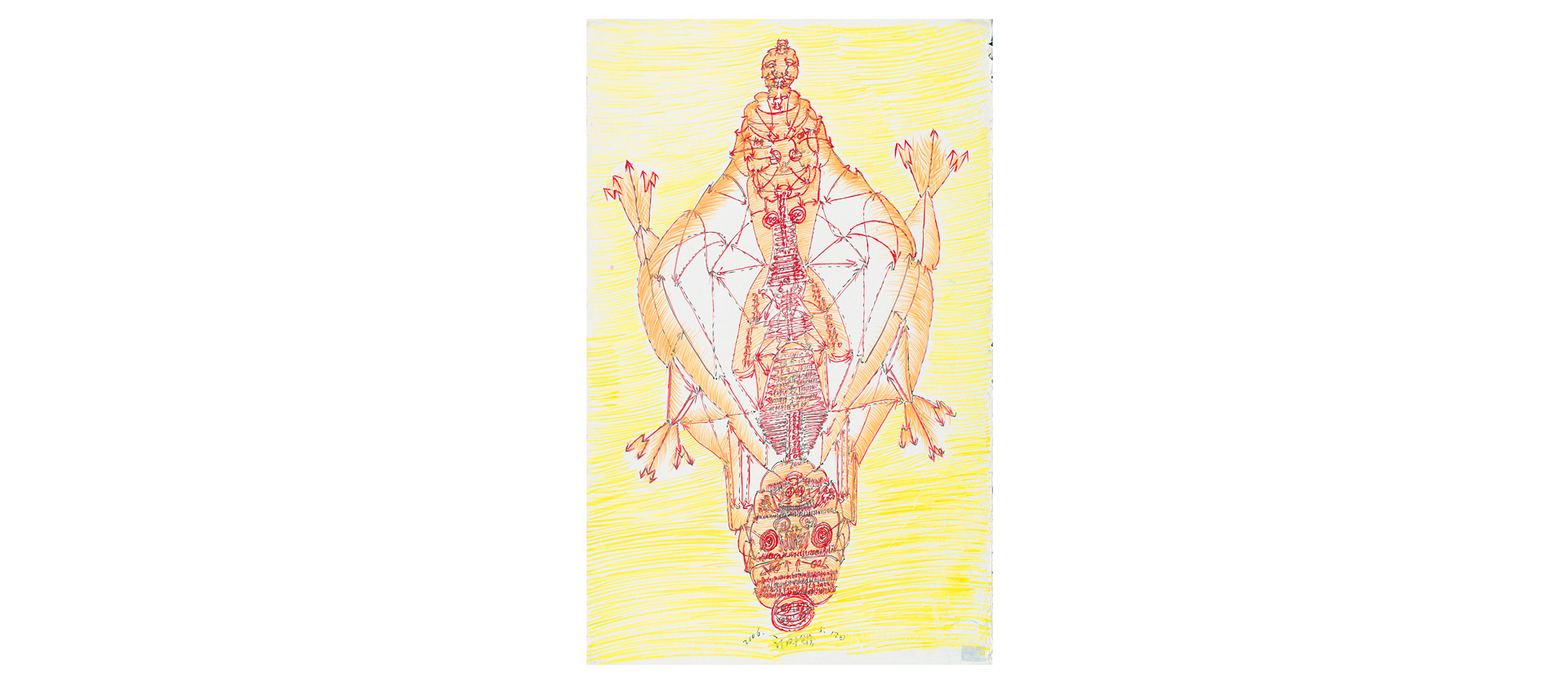
artwork by Guo Fengyi

"Organization Method of Human Numeric," ink on blueprint paper, 55" x 34", 2006. Courtesy of Long March Space.


Nicole Blackwood: Reading Creatively

September
14
2020
By
Tags:

"Reading is not a destination, but a process of becoming and being," declares Dr. Nicole Blackwood, professor of art history. "A good book continues to form and create new ideas within you even after the final word is read."

Renowned for her walking tours of Savannah, Dr. Blackwood is an associate member of the Appraisers Association of America, and founder and director of the Savannah-based art advising and appraising firm D I S E G N O, LLC. Her book selections are all written by artists, or by those she would call friends.

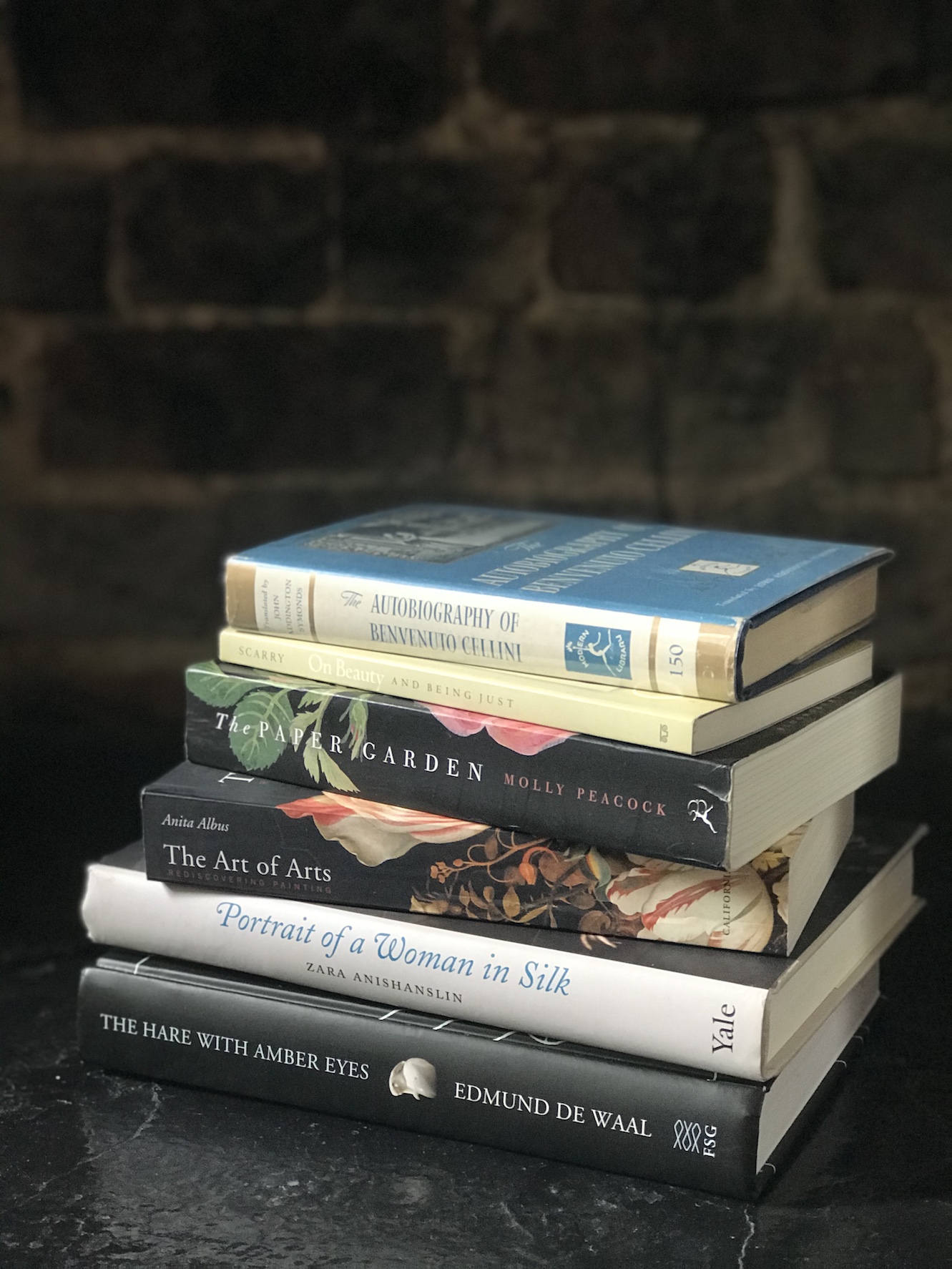
Molly Peacock, Paper Garden: Mrs. Delany Begins Her Life's Work at 72, (Bloomsbury, 2010):  "Mary Delany was seventy-two when she invented the art of collage, cutting paper-thin tissue into a perfect replica of a geranium; she would go on to make nearly one thousand papercut flowers before her death in 1788. Peacock, a poet herself, weaves together her life as a contemporary writer and that of this extraordinary eighteenth-century woman, articulating how the past and present speak to each other, literally and metaphorically."

Edmund de Waal, The Hare with Amber Eyes: A Hidden Inheritance (Farrar, Straus and Giroux, 2010): "As an art historian, I'm fascinated by how objects tell stories. In this autobiographical tale, the contemporary ceramicist De Waal traces the story of a collection of Japanese wood and ivory carvings called netsuke that he inherited from his great-uncle. Moving from the empire of Odessa to fin de siècle Paris, from occupied Vienna to postwar Tokyo, De Wall unravels a dramatic story of family and self through little objects that can fit in the palm of a hand."

Zara Anishanslin, Portrait of a Woman in Silk: Hidden Histories of the British Atlantic World (Yale, 2016): "This book encapsulates how entire worlds can be revealed through the examination of a singular painting. Using one picture as her starting point, Anishanslin unravels the complex interconnections between things both pictured and made. Through an image of a single silk dress, a new appreciation for the complexity and serendipity involved in the creation of any fabric is spun." 

Anita Albus, The Art of Arts: Rediscovering Painting (University of California Press, 2000): "This book completely changed how I thought about and approached early Netherlandish oil painting and the world of Jan van Eyck. Upon first seeing the brilliant work of van Eyck in a dimly-lit classroom during my undergraduate studies in Canada, I decided I wanted to study art history. But it was this book, read many years later during my art history doctorate in England, that revealed what I had seen in Van Eyck's luminous and reflective pigmented surfaces."

Benvenuto Cellini, Autobiography (Penguin, 1955). "The study and examination of self-portraiture and autobiography have been keystones in my academic work, and this book is as good as it gets. Cellini's own account of his life is an incomparable source on the nature of artmaking in sixteenth-century Italy. It's also a riveting story about the grit of the creative process filled with the blood, sweat, and tears. Anyone who has struggled with their own craft will be in good company reading this book."

Elaine Scarry, On Beauty and Being Just (Princeton, 2001). "Beauty, Scarry argues, provokes copies of itself, which can account for the replication of certain forms and shapes throughout the history of art. Beauty makes us more honest, more judicious, truer, and humbler – in short, better people.  For Scarry, admiring beauty is nothing to be ashamed of; on the contrary, beauty fosters the spirit of justice."

a stack of books

Learn more about Dr. Blackwood here.


Dr. Kenneth Foster: Reading Creatively

September
1
2020
By
Tags:

"Artists and scholars seem to have an intuitive understanding of the importance of human crossroads in life," says SCAD liberal arts professor Kenneth Foster. "My love for books and reading was my ticket to dispelling stereotypical expectations about the life trajectory of a young Black male living in public housing, especially in the 1950s."

Dr. Foster is a social psychologist specializing in issues including identity, social stigma and empowerment. His research and writing have led him down diverse literary paths, and for that the SCAD community is grateful.

Frans De Waal, Our Inner Ape (Riverhead Books, 2005): "De Waal is a world-renowned primatologist and this seminal work uses our evolutionary ancestors to explain much of why and who we are as humans. To quote De Waal, 'Ever since our ancestors swung from tree to tree, [human] life in small groups has been an obsession.' An audacious and provocative read."

Robert J. Sternberg, Psychology 101 ½ (APA, 2004): "Sternberg is a prolific author and broad thinker. His brief personal anecdotes explore topics such as why some artists periodically reinvent themselves. I have used this book for over a decade. Excellent for students' (and others') critical thinking, professional and personal development."

Sidney Langer, From Slavery to 9/11: Reading in the Sociology and Social Psychology of Extreme Situations (Taylor & Francis, 2012): "This volume is an essential service to the general public, as well as social scientists. It provides a set of stark analyses of treatment and often lingering effects of atrocities such as the Jonestown massacre, Armenian genocide, Jewish Holocaust, African slavery and more."

Walter Benn Michaels, The Trouble with Diversity: How We Learned to Love Identity and Ignore Inequality (Holt, 2006): "This provocative book is a timely examination of America's psyche. It is a short, fast read that I would argue implores us to take a long look at what we think diversity means in the 21st century.  A provocative polemic."

Claude M. Steele, Whistling Vivaldi: And Other Clues to How Stereotypes Affect Us (W.W. Norton, 2010): "Steele provides a riveting argument, based on extensive research, as to why it is important to note, accept and deal with the insidious and powerful reality that we are all stereotype targets. You might say that his upbeat narrative approach whistles while it works."

www.scad.edu

Danielle McCoy spells it out

August
26
2020
By
Tags:

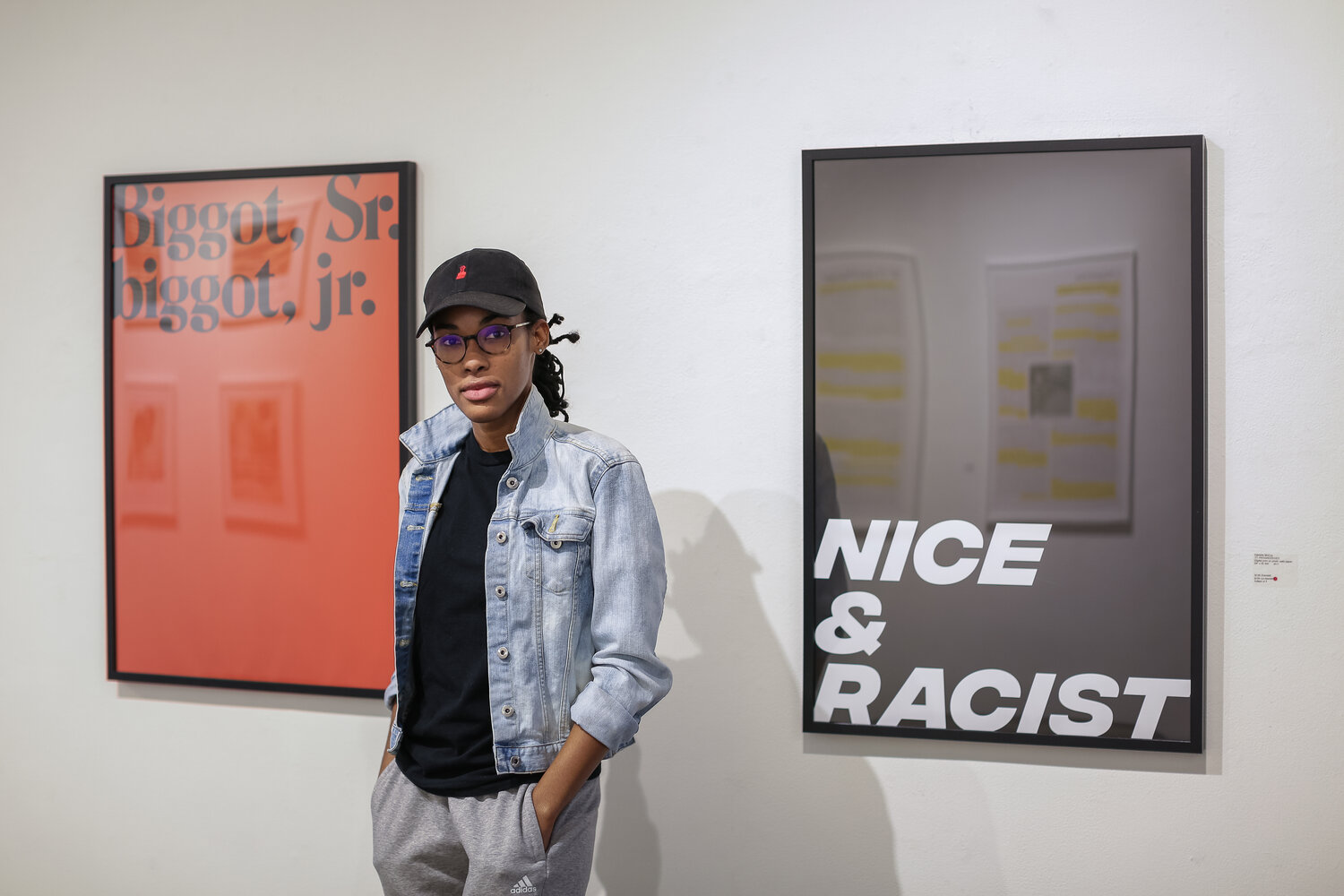
"We think that it's law and society that determine our behavior," says Danielle McCoy (B.F.A., advertising, 2015), "but the cultural components that art provides influence us as well."

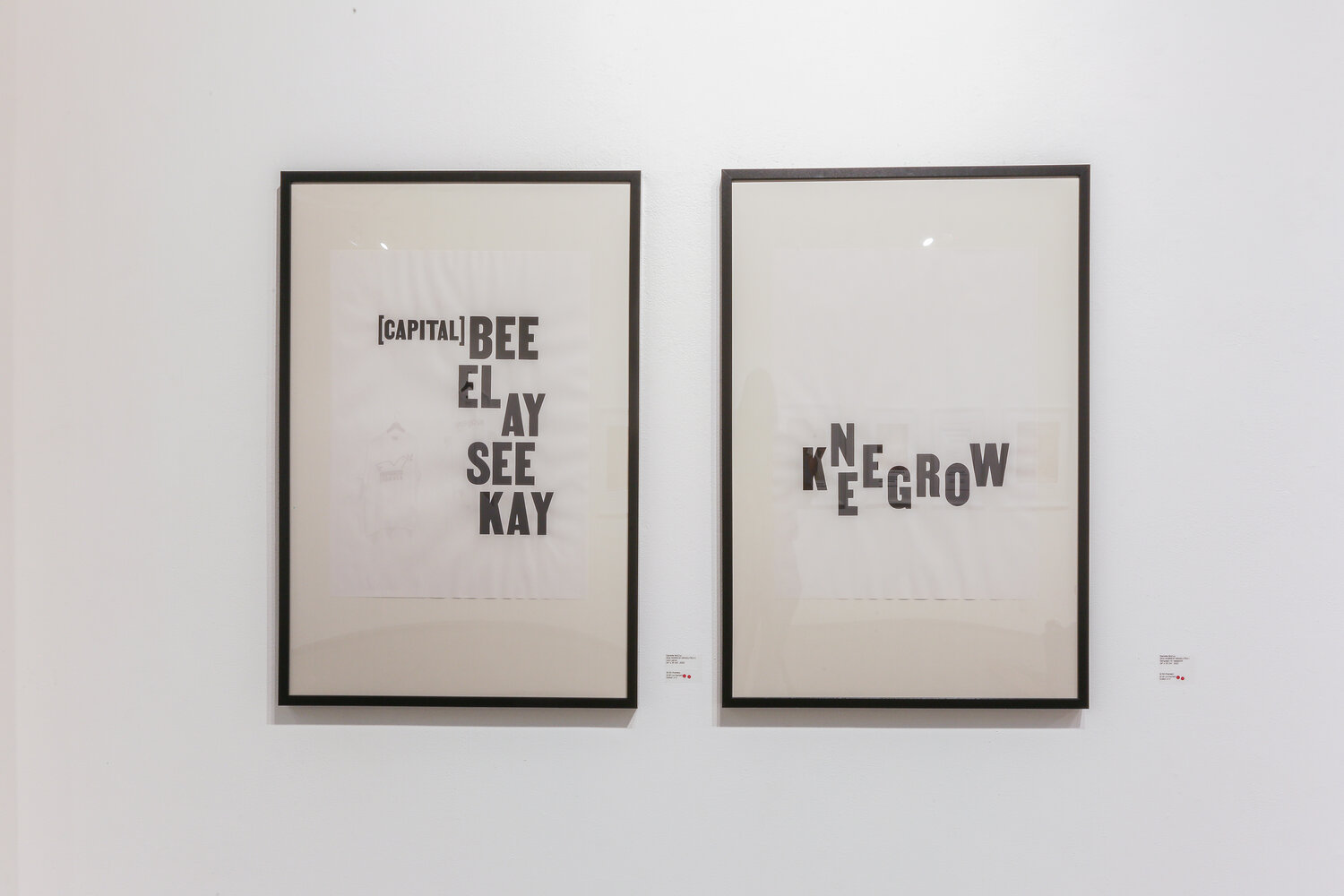
McCoy, a designer at Wieden+Kennedy in Portland, Oregon, has spoken alongside artist Hank Willis Thomas during a panel at the Portland Art Museum in 2019, and this summer showcased her work with fellow artists Christine Miller and Kareem Blair in the exhibition "Black Power Is A Color" at Blackfish Gallery. McCoy’s text-specific, screen-printed work, utilizing fonts from Tré Seals’ foundry Vocal Type, advances her professional acumen in a fine art context with social and political implications.

A native of Antigua, McCoy attended SCAD Atlanta, where her academic experience, as she says, "enabled me to be where I am today."

poitrait of danielle mccoy in a gallery

Danielle McCoy at Blackfish Gallery, 2020. Photo: Chloé Jarnac.


Danielle McCoy:

People conflate marketing with advertising without realizing that advertising is the creative side of the profession. It’s where people who have studied design and writing come together to solve a business challenge and focus a message that relies on visuals for its effectiveness.

When you are in the process of solving clients’ business problems, everything is game. Everything is creative inventory. Advertising folks know so many disparate facts and go down so many rabbit holes for research.

Wieden+Kennedy is arguably the best agency in the world. How did I get here? It started when I participated in Out to Launch at SCAD Atlanta. I had a booth and a Wieden recruiter stopped by and engaged. Senior year, I applied to Wieden+Kennedy's internship. I sent off the application, and a LinkedIn message to the recruiter, saying hey, I plucked up the courage to apply, hope you're doing well. After my very last portfolio class at SCAD, I received a message from the recruiter, who was also one of W+K Studio's Associate Studio Directors, saying, Hi, we've chosen you for an internship. I was like, Holy crap!

At SCAD, I minored in motion media design and in book arts. I learned to communicate in an advertising setting and apply that to fine art, and personal expression as well. An artists' book project in professor Lisa Hart's color theory class introduced me to book arts, and in book arts class with professor Cynthia Lollis, I began considering the fine arts something I could do seriously. A lot of my relationships from SCAD have lasted. I speak regularly with Dr. Imani Scott, my speech and communications professor.

I'm thinking a lot recently about Blackness. How can I use my skills to serve people who need to communicate a message? In the weeks leading up to the show, the Associated Press changed the AP style guide to capitalize Black. In a sketch book I wrote the words KNEEGROW. I was contemplating Colin Kaepernick kneeling, and Black bodies. The work relates to my love of language. In Antigua, there's this almost over-pronunciation that we do. Black people regionally and locally have unique ways of saying things. All these thoughts were percolating, about where we come from, how we speak, and what we've gone through. I needed a way to express those thoughts. It came into new focus when I made the work for "Black Power Is A Color."

I have to shout out my collaborators, Kareem and Christine. "Black Power Is A Color" ended up being so cohesive, even though for a good portion of the preparation, we didn't know what each other was doing. There's a really positive community of young creatives here in Portland. There's certainly the politics of being a transplant and reconciling with the history of the city. So much gentrification and displacement and disenfranchisement has happened here. More conversations need to be had. We need to reconcile our differences, and come together.

installation view of danielle mccoy exhibition

Visit Danielle McCoy at her wonderful website.

Photography courtesy Chloé Jarnac.

Van Duyn dines safely

August
19
2020
By
Tags:

Interior design professor Christine Van Duyn knows what it takes to accomplish world-class work. Before joining the faculty at SCAD, she worked as an architect specializing in award-winning restaurants, bars, and lounges, including marquee projects like the Columbia Room, named "The Best American Cocktail Bar" (Tales of the Cocktail, 2017) and The Dabney, both in Washington D.C.

A SCAD alumna, Prof. Van Duyn (B.F.A., photography, 2004) is challenging her students this quarter to examine the future of the restaurant industry as they design spaces that will function in a post COVID-19 landscape.

Christine E. Van Duyn:

Restaurants have unique obstacles in our world today. Social distancing guidelines, capacity limits, and mask requirements are all impacting businesses in ways that restauranters are still trying to figure out. Here in Savannah a few places have developed to-go menus, begun taking reservations, and changed their hours of operation.

Industry professionals learned numerous lessons over the summer, and those learnings are months if not years away from fully being implemented to ensure the struggles and shutdowns we've experienced will never happen again.

With that understanding, I am working closely with my interior design students this quarter to re-think, re-imagine, and re-understand what a restaurant experience will be going forward. The conversations have been fun to lead and I am excited to see how the students develop their projects over the course of the semester. Here are some of the original ideas that have really sparked our imaginations:

Outdoor Dining: We are seeing our downtown sidewalks and streets turn into funky pop-up patios. While these are fun and needed adjustments, they are not long-term solutions. Outdoor dining will be necessary in the world going forward. We must look to design designated outdoor spaces from the beginning rather than the end.

Back to Booths: We have all been to an old-school Italian restaurant where the lighting is dark, the décor is dated, and the waiters served your parents butter and noodles when they were young. The one thing that those restaurants did right was booths. Booths provide a barrier from other parties and will slow the spread of germs and air born pathogens. Booths will make a comeback, and we need to ensure the spaces we design allow for easy flow of movement and safety of staff.

To-Go Windows: Food delivery systems will only be more important to the success of our community as we move forward. Today, your delivery driver physically walks into a restaurant and often times interacts face to face with individuals in order to ensure they are walking out with your food. We can already see the inherent risks in this system. While that was fine 12 months ago, it will not be the norm going forward. Restaurants will design specific windows and locations for food pick-up, limiting risks for both the staff, delivery drivers, and patrons.

Safety has always been paramount when it comes to design, and these shifts will be seen as exciting new challenges throughout the industry. The fact that they will play out in real time, across the entire world, will be entirely brand new — and I can guarantee you that SCAD students will be right there as it happens.

Visit Christine Van Duyn at her wonderful website.


Park perks with Emily Schmidt

August
14
2020
By
Tags:

SCAD Atlanta foundation studies professor Emily Schmidt emphasizes the importance of storytelling through design. Before joining the SCAD faculty in 2015, she worked as a production artist at Marvel Entertainment and Image Comics. Professor Schmidt knows superheroes – and what it takes to be an everyday hero too.

As the necessities of public life are reassessed, professor Schmidt is challenging her students to reimagine city park systems through conceptual thinking and graphic design, making public social spaces safe and enjoyable for everyone.

Emily Schmidt:

Public parks are extremely important to our communities right now, not only for our overall health and mental well-being, but also the greater social benefits.

Parks provide a space where we can responsibly meet people while practicing safe social-distancing measures. Parks are the new home to yoga studios looking to survive current quarantine mandates. Parks are places where children can play outside of the home at a time when "home" often combines a virtual school, mom's office, and the screen-time capital of the world.

And yet, our parks, layouts, and capacity numbers have not yet adapted to our new COVID-19 world. In Atlanta, many people are not adhering to national safety regulations. Entrances and exits are not clearly marked, and citizens with pre-existing conditions are unable to fully feel safe in what is one of the only "safe-spaces" left.

I am working with my students to design and educate our fellow Atlantans on how we can keep our parks safe in our new normal, while challenging their problem-solving and design skills.

Three key ideas:

  1.  New way finding measures: Indicate where the entrances to the park are. Indicate where the exits are. Rather than having bottlenecks and people brushing past each other face to face, have consistent traffic flows to decrease the possible spread of the virus.
  2. Geolocation gamification: Adapt the popular principles of Pokemon GO. Everyone loves winning, regardless of the game itself. Gamifying social distancing at all times will slowly and positively train and re-shape our behaviors. People will look for ways to maintain the necessary six feet in the hopes that they will continue to climb the leaderboard. In turn, we all rise in the rankings.
  3. Social distancing lifeguard: Would a lifeguard look a little weird 300 miles away from the ocean, or 1,000 feet away from a pool? Perhaps. But lifeguards are here to help protect lives. Having health and safety experts on-hand to help educate, clarify, and at times enforce proper behavior would be an enormous help to the fighting of COVID-19.

My students will continue ideating, refining, and presenting their ideas to our community. Through a series of infographics and graphic design presentations, we will look to educate each other on the steps we can, and must, take to ensure the safety of everyone around us. It will take new ideas and a dedicated commitment from all of us to make sure we once again can return to the parks, restaurants, and lives we loved before this outbreak occurred. Together we will defeat COVID-19.

SCAD university logo

Read more think pieces by SCAD professors at the new SCAD Medium page.


SCAD supports RESIST COVID TAKE 6!

August
13
2020
By
Tags:

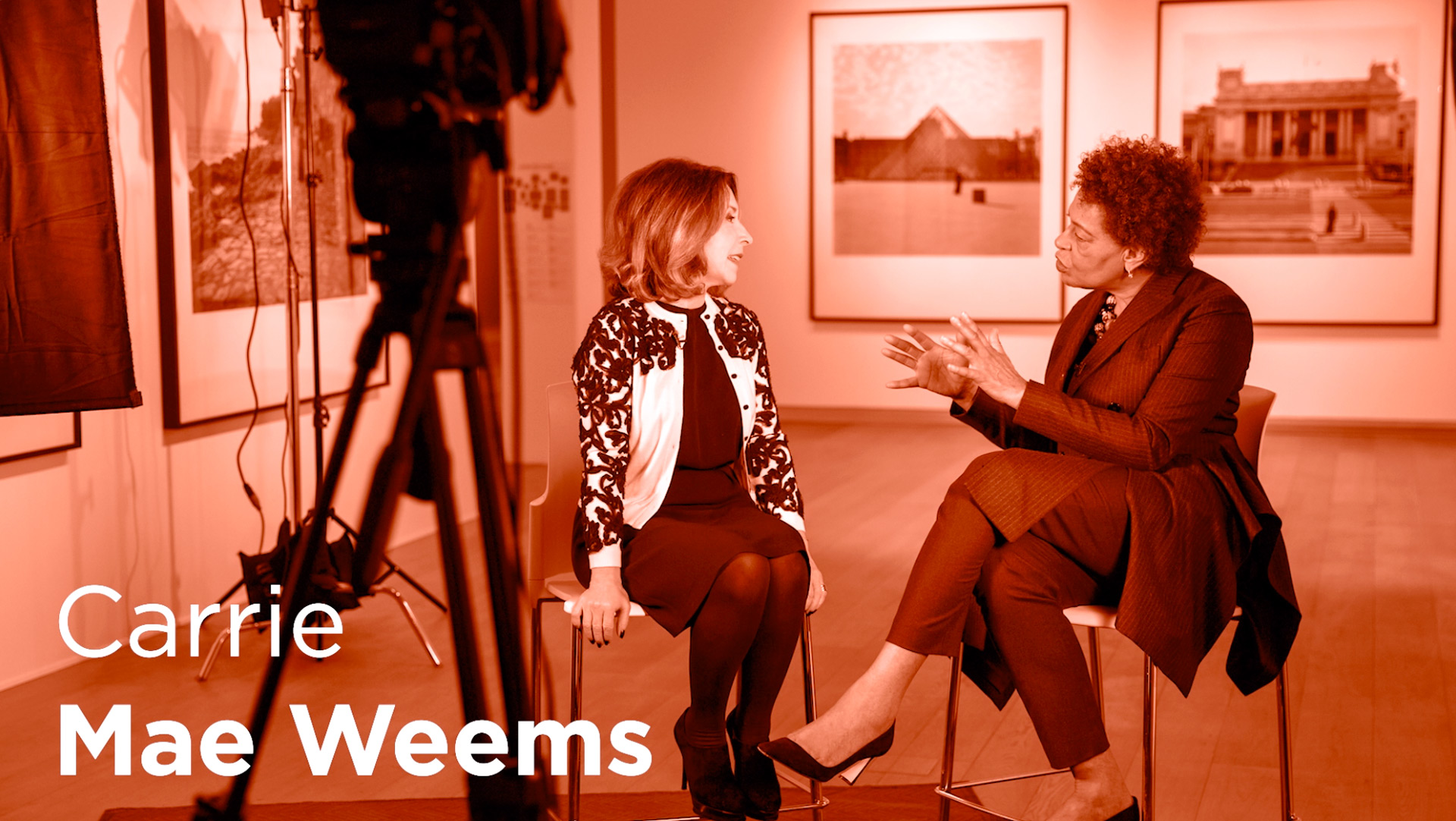
"COVID-19 is an ecological health crisis of epic proportion and we've all been impacted," says artist and activist Carrie Mae Weems. "We have indisputable evidence that people of color have been disproportionately impacted. This fact affords the nation an unprecedented opportunity to address the impact of social and economic inequality in real-time."

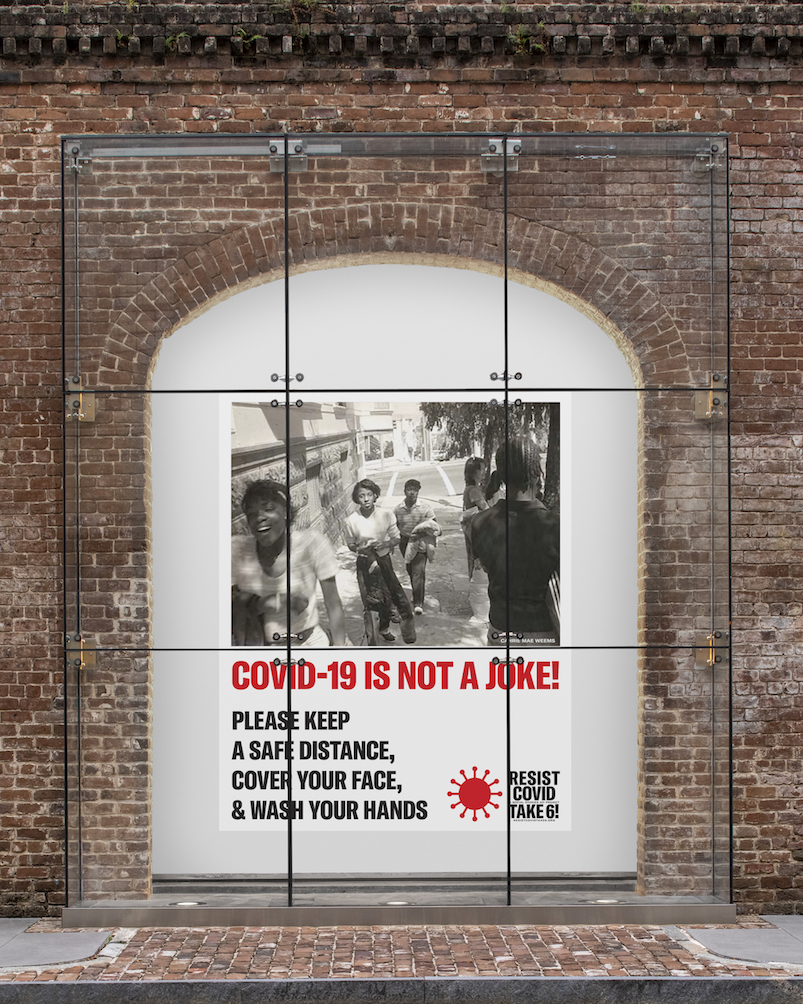
SCAD has partnered with Weems to launch the artist's new public art initiative, RESIST COVID/TAKE 6!, in Atlanta and Savannah, home to SCAD's two Georgia campuses. The artist-driven project emphasizes the precaution for people to maintain a six-foot distance from one another, and speaks to the urgency of Weems' call to action.

"Not only does RESIST COVID/TAKE 6! raise critical health awareness, it shines a light on how this pandemic has disproportionately affected Black, Latino and Native communities," says President Paula Wallace. "We are pleased to be partnering with Carrie Mae Weems, longtime friend of SCAD, to bring this important work to Atlanta and Savannah."

Window display

At the SCAD Museum of Art in Savannah, the museum's street-facing jewel boxes display large-scale photographs accompanied by the initiative's messages including "Don't Worry, We'll Hold Hands Again." RESIST COVID/TAKE 6! is also on view at public locations in and around SCAD Atlanta. Commanding billboards and bus shelters bring its message to the attention of residents in one of the country's highly impacted cities. Flyers, "church-style" fans, and bags will be distributed through Meals on Wheels Atlanta and organizations in Savannah. The printed pieces direct audiences to local resources including COVID-19 testing sites.

The works showcase the realities of the international health crisis while providing notes of gratitude to workers within the health and service industries and making direct appeals for people to take preventive safety measures.

SCAD has over a decade-long friendship with Weems. The artist has collaborated with the university on numerous exhibitions and initiatives to showcase her dynamic work. Weems has been a distinguished visiting professor at SCAD Atlanta and worked with students on a thought-provoking film, "Constructing History: A Requiem to Mark the Moment" for the National Black Arts Festival in 2008. In 2016, Weems was the SCAD deFINE ART honoree and keynote speaker. That same year she had an accompanying exhibition titled "Carrie Mae Weems: Considered" at SCAD MOA in the Walter O. Evans Center for African American Studies.

Most recently, Weems spoke with President Wallace for the ‘On Creativity' podcast where the artist discussed recent and upcoming creative work, the importance of the RESIST COVID/TAKE 6! initiative, and her legacy in the industry.
 
Weems began working on RESIST COVID/TAKE 6! this spring while artist-in-residence at Syracuse University, as the extent of the COVID-19 crisis became apparent. The idea came from a conversation of Weems and her close friend Pierre Loving, lamenting what they saw unfolding. The initiative is also being activated in cities nationwide including New York, Detroit, Dallas, Los Angeles, Chicago, and Philadelphia in support by producing collaborators, THE OFFICE performing arts + film.

"The arts allow us to get closest to our humanity," says Weems. "One of the important things is to understand the circumstances under which we live. This means unmasking inequity, because then you begin to see the power structures that are under it to keep you fighting one another as opposed to really looking at really the source of the problems. Denial does not solve a problem."

Artist talk

Listen to Carrie Mae Weems speak with President Wallace 'On Creativity' here.


Marvel-ous Noah Sterling

August
7
2020
By
Tags:

Noah Sterling (M.F.A., motion media, 2017; B.F.A., film and television, 2015) tells stories millions of people love to see. The producer, director, and writer has collaborated with some of the world's biggest names, from Noah Cyrus to Captain America to the Los Angeles Galaxy

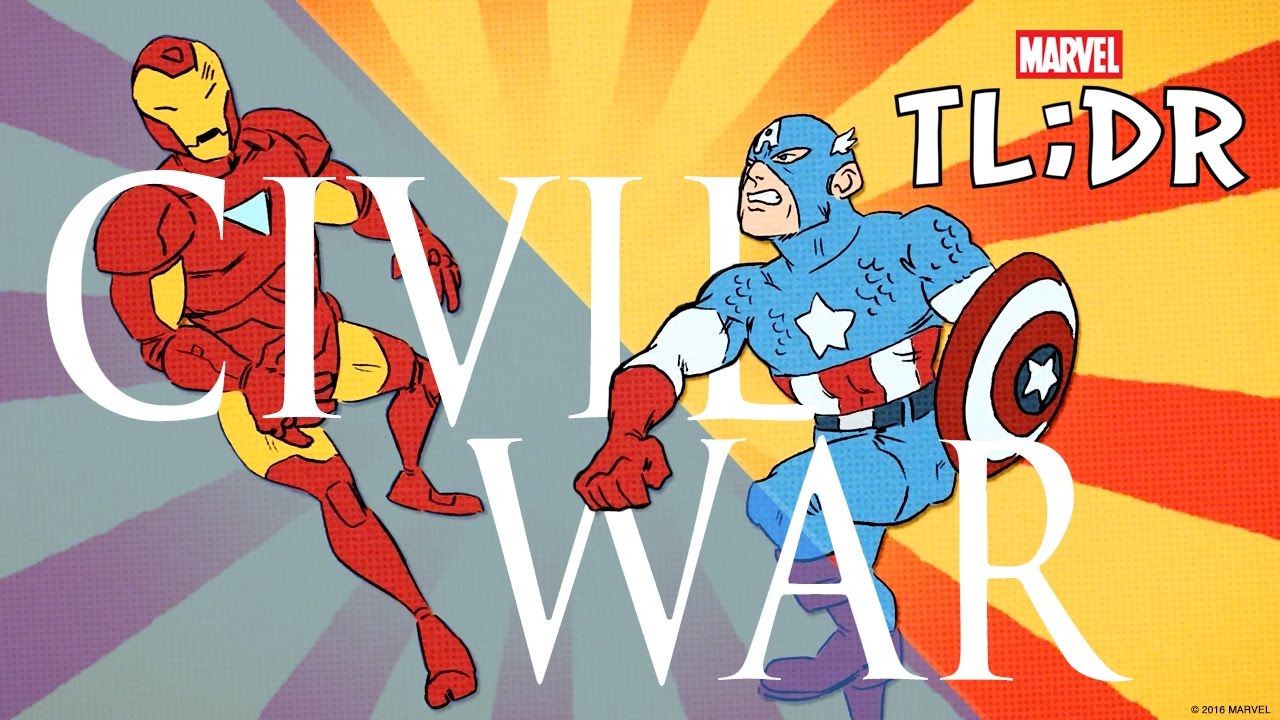
As a digital video intern at Marvel in 2015, Noah created "Marvel TL;DR", Marvel's highest-performing digital content and most-viewed webseries. In 2020, Sterling and his team won a Webby Award for the animated video series "Today in Marvel History." In big news for the new year, Noah is writing and directing pop star Zayn Malik's new comic book "Calamity," based on Zayn's third studio album, Nobody Is Listening (RCA Records, 2021). Sterling's work reflects his dedication to learning all facets of his craft, and his ability to tell a beautiful story through the art of animation.

 "Today in Marvel History."

Noah Sterling:

I will always be grateful to Marvel for the opportunity they gave me as a 19-year-old. I had the chance to work on and develop my own animated web series, where I was the director, producer, and writer. I understand the trust they placed in me. I can't imagine that level of creative control was easy to give to a young artist.

At first the Marvel team was a little unsure of the viability of my ‘Marvel TL;DR' series, but after we saw the initial response from the fans, it was easy to see this was going to be a success. We completed three seasons of the show, touching on everything from "Spider-Verse" to "The Unbeatable Squirrel Girl."

And it all started as a class project at SCAD.

SCAD professors helped me become a better storyteller and producer. Professors Michael Cheney and Austin Shaw expanded my palate and my knowledge of different forms of design and mixed media. They helped me push the boundaries to make movement exciting, which really came in handy when I started working with Marvel.

At first, I had limited assets to work with. My budget was small, and my team was not the same as on a Marvel blockbuster. I was faced with the challenge of having to create dynamic movement without traditional animation. That's when my SCAD motion design training really kicked in.

My professors at SCAD got me comfortable working within different styles, and understanding how to create something memorable within scope. The series really took on a unique style and I think the initial restraints actually helped us create something special.

SCAD was also the right place for me because I wasn't sure what I wanted to do when I graduated. I was interested in live action film, animation, visual effects, and motion graphics. Those don't all fall neatly into one discipline, but that didn't matter. At SCAD, I was able to explore different fields within the arts, and that's been a huge advantage as I work on different projects.

My most recent projects have been music videos. I am the director for Noah Cyrus's latest single "Young and Sad" and the art director for Doja Cat's "Like That." I'm going to focus on producing going forward. I love leading a team and seeing an idea come to life from the page. I am currently developing an animated series. Hopefully I will have exciting news to share soon!

Animation still from Noah Cyrus' "Young and Sad" (2020).

Animation still from Noah Cyrus' "Young and Sad" (2020).

See more at www.noahsterling.com.


Black creatives 'Pass the Mic'

August
7
2020
By
Tags:

On the last day of July, the Guests and Gusto online symposium "Pass the Mic: Conversations with Black Creatives" united leading professionals for three insightful panels exploring how diverse voices impact collaboration and creativity.

The "Black Beauty Matters" panel, moderated by Julee Wilson, beauty director at Cosmopolitan, featured Linda Arrington, former global brand GM at Estée Lauder Companies; Sarah Curtis Henry, chief marketing officer at Tatcha; and Sir John, global makeup artist, activist, and producer. They discussed their formative experiences with the concept of beauty, and the actions necessary to make the industry more inclusive.

Sarah Curtis Henry: "I think of beauty as an individual art form, because it is so unique and specific to each and every person. It's a state of being, a way of holding your head high and way of walking. As a Black woman, I was taught to walk a little taller and hold my head higher because my beauty was not the standard of beauty per se. It really does come from the soul."

Sir John: "I'm not allowing brands use my blackness as a shield or as an umbrella. This is not situational. This is a revolution. These changes are a grand awakening, you know. I've been in this game for almost 20 years now and seen so many different directions, but I feel so anchored in being a truth teller. It feels good to actually speak up for people who don't have a voice."

Linda Arrington: "One of the things that I look for when I'm hiring are people who have a tremendous amount of curiosity. If you have an insatiable curiosity, you're always looking to learn. You're always looking to figure out how you can do better, be better, be smarter and beat the competition. The best advice is to really maintain curiosity and keep learning."

The "Black in Fashion" panel, moderated by SCAD professor and footwear designer Michael Mack, featured leaders in fashion sharing their experiences navigating the industry. Panelists included celebrity stylist and creative director Jason Bolden; Nicole Chapoteau, fashion market director at Vanity Fair; and Lindsay Peoples Wagner, editor-in-chief of Teen Vogue.
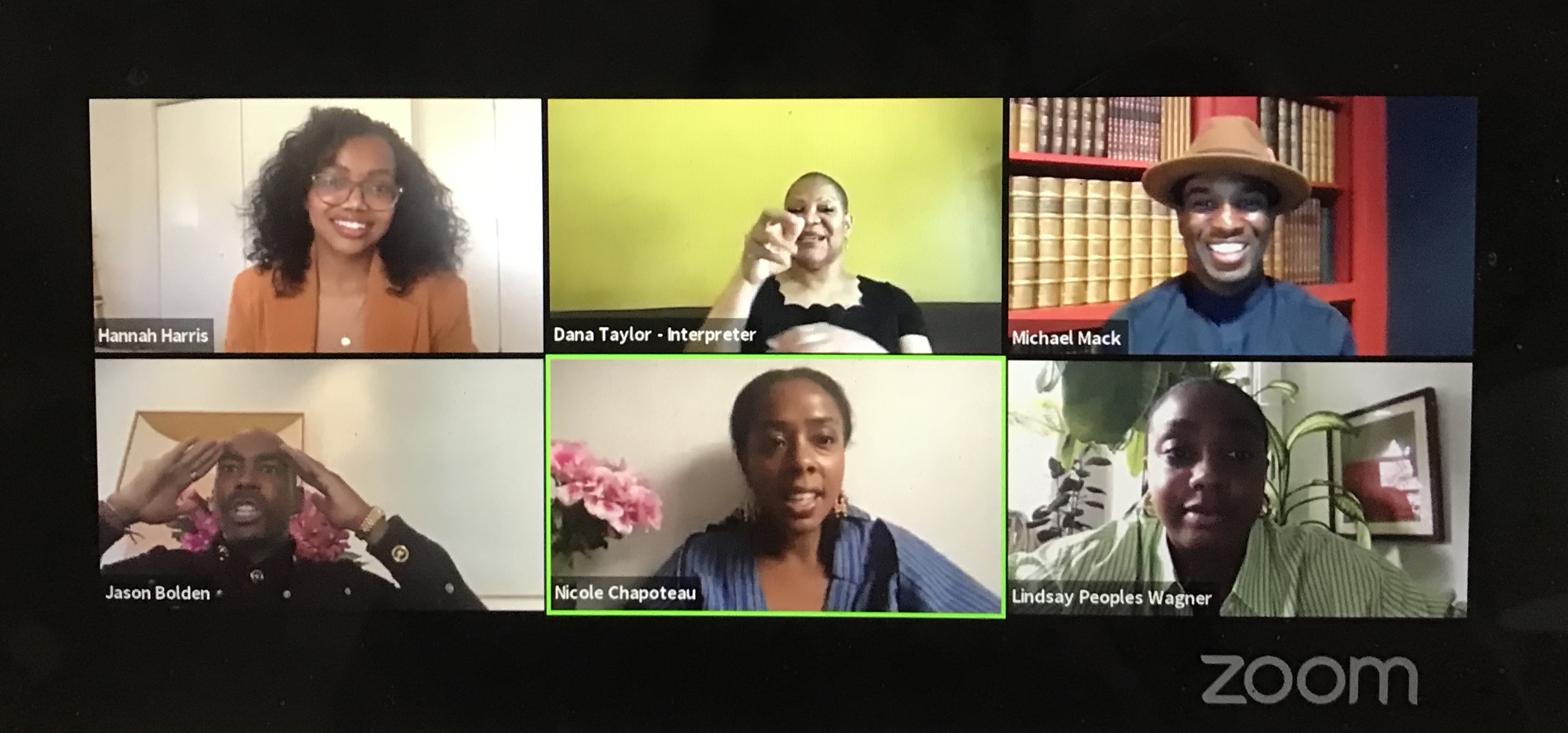
screen shot of zoom meeting

Jason Bolden: "Work ethic trumps talent. A lot of times you can be the most talented person, but if you don't have the work ethic, you fall to the wayside. You may not be the most talented designer, but if you have major work ethic that pushes through everything, those are the people who constantly rise higher in their profession."

Lindsay Peoples Wagner: "Editors shouldn't just be like, Oh, let me write up 15 Black brands because we're dealing with this time culturally right now. Have you reached out to them to try to establish a real relationship? Are you going past the performative level of saying that you're doing something? Because look, if you're not doing the real work, we're not interested."

Nicole Chapoteau: "We have to make sure this movement stays public, that it stays out there, and we have a tool now that our parents’ generation didn't have: We have the internet. You can get information out really quickly and let everybody know. We have the prime opportunity to keep it growing."

The day’s final panel, "Behind the Lens" with moderator Tiffany Reid, fashion director of Bustle Digital Group, featured director and photographer Christian Cody (B.F.A., photography, 2016);
 T. Cooper, celebrity makeup artist and founder of Major Face; and Candace Marie Stewart, social media strategist and founder of Black in Corporate. All three spoke about transformational professional experiences.

Christian Cody: "I make sure that whoever I have in front of me, no matter what their tone is, that they represent themselves. Working with Killer Mike for a GQ shoot for their new August issue, it was really great to connect with someone who has a purpose, politically, especially in the Atlanta area. I’m proud of that."

Candace Marie Stewart: "I wanted to find some way to help level the playing field. For me, it was about being in that luxury space and amplifying Black voices. I pride myself on making sure that voices that had never been heard before are able to use this platform. We deserve to have as many opportunities, resources and mentorship."

T. Cooper: "I love doing fashion shows and I love my sisters. A lot of times my team consists of all Black women. That makes me feel like I'm doing something special, because I'm adding an element that just didn't exist in fashion. And we continue to slay."

See more at scad.edu/guests-and-gusto.