Skip to main content Accessibility Policy

The curation of 'Afrofuturism'

January
27
2021
By
Tags:

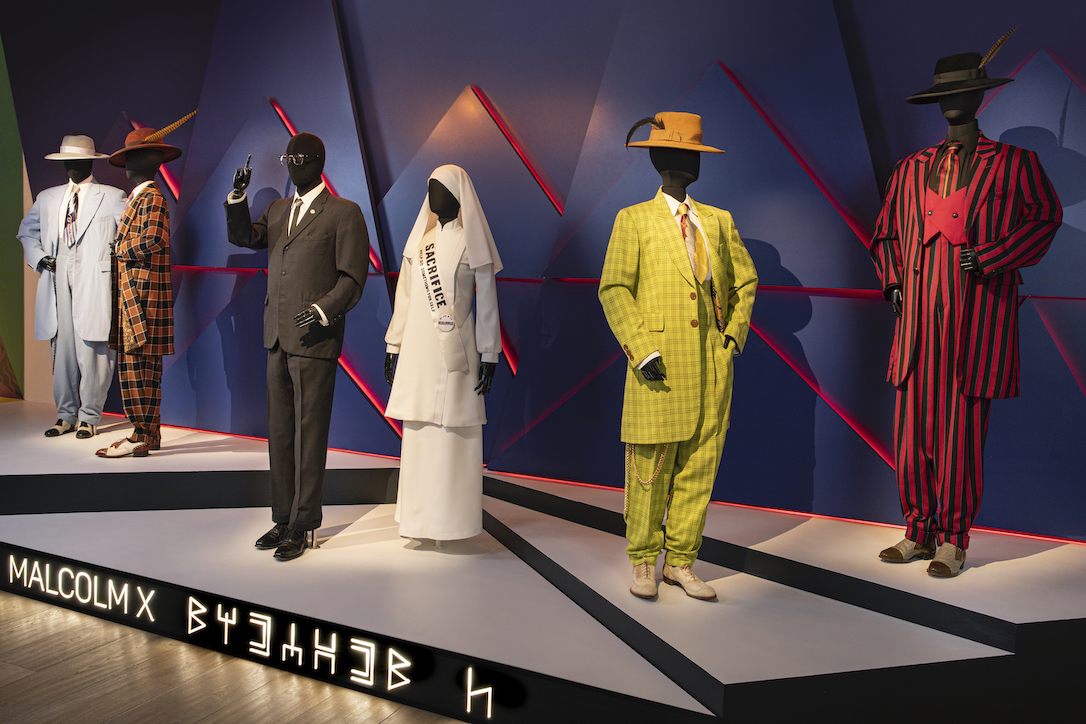
"We are so fortunate that Ruth put her faith in SCAD FASH to tell her story," says Alexandra Sachs, executive director, SCAD FASH Museum of Fashion + Film, speaking of Ruth E. Carter: Afrofuturism in Costume Design, now on view at the museum. Featuring over 60 costumes from Carter's career, along with sketches and ephemera, the dazzling retrospective was named by W Magazine as the number one fashion exhibition to see in 2021.

Ruth E. Carter: Afrofuturism in Costume Design is co-curated by Rafael Gomes, director of fashion exhibitions, and Christina Frank, assistant director of fashion exhibitions, in collaboration with guest curator Julia Long. A significant number of students and alumni worked on the show. Fashion designers Madi Smith (B.F.A., fashion, 2019) and Kahmani Zeon (B.F.A, fashion) created the perfect fit when dressing the mannequins and putting finishing details on costumes. Jonas Stewart (M.F.A., film and television) edited the film montage exploring the breadth and depth of Carter's career. The exhibition's Afrofuturistic installation incorporates original artwork by Brandon Sadler (B.F.A., illustration, 2009), whose murals were prominently featured in Black Panther.

Here, Sachs and Frank discuss the curatorial process and the wondrous result.

Alexandra Sachs: Ruth has been a friend of SCAD for a while. She was here several years ago for a faculty conference where she gave a lecture, and Rafael [Gomes, curator] and I had the pleasure of having lunch with her. When she was in Atlanta to work on Coming 2 America, we met up again. Then, as the pandemic caused us to reconsider our fall 2020 exhibition calendar, I thought, I'm just going to write Ruth to see if she'd be interested in working with us. Fortunately, she was.

Christina Frank: Ruth's archivist, Julia Long, presented us with a list of the film costumes they had available. It was immediately apparent there was an overarching narrative these films are telling about African-American history, starting with Roots, to Selma, to Do The Right Thing, culminating in Black Panther and Ruth winning the Academy Award for Best Costume Design in 2019. We wanted the exhibition to reflect that arc.

AS: Black Panther is the signature image for the exhibition, and it's the thing Ruth is best known for, but what might surprise visitors is how much she has done in her career. Ruth really sees the totality of her work as an expression of Afrofuturism, in the sense that drawing from the past is a means for thinking about possibilities of the future. She's been doing that throughout her career.

CF: A lot of our student docents who work in the galleries are international students who might not have grown up learning about the Civil Rights Movement. It's imperative that we provide educational tools for what's in the exhibition. We developed a digital guide that offers historical context for each costume in the exhibition, which helps people appreciate what they're seeing.

AS: Another really important aspect of this exhibition is its appreciation for the collaborative nature of creative pursuits. Just like our exhibition team is a large team that brought it together, there's an even larger team that brings together these films. We have a projection in the museum's front area where Ruth is talking about her process and also about the relationship between costume designer and production designer, and costume designer and director. That exchange of ideas helps develop concepts that then become manifest.

installation view of ruth e carter exhibition at scad fash

Ruth E. Carter: Afrofuturism in Costume Design is on view at SCAD FASH through Sept. 21, 2021.


Najja Elon Lawson's path less traveled

January
25
2021
By
Tags:

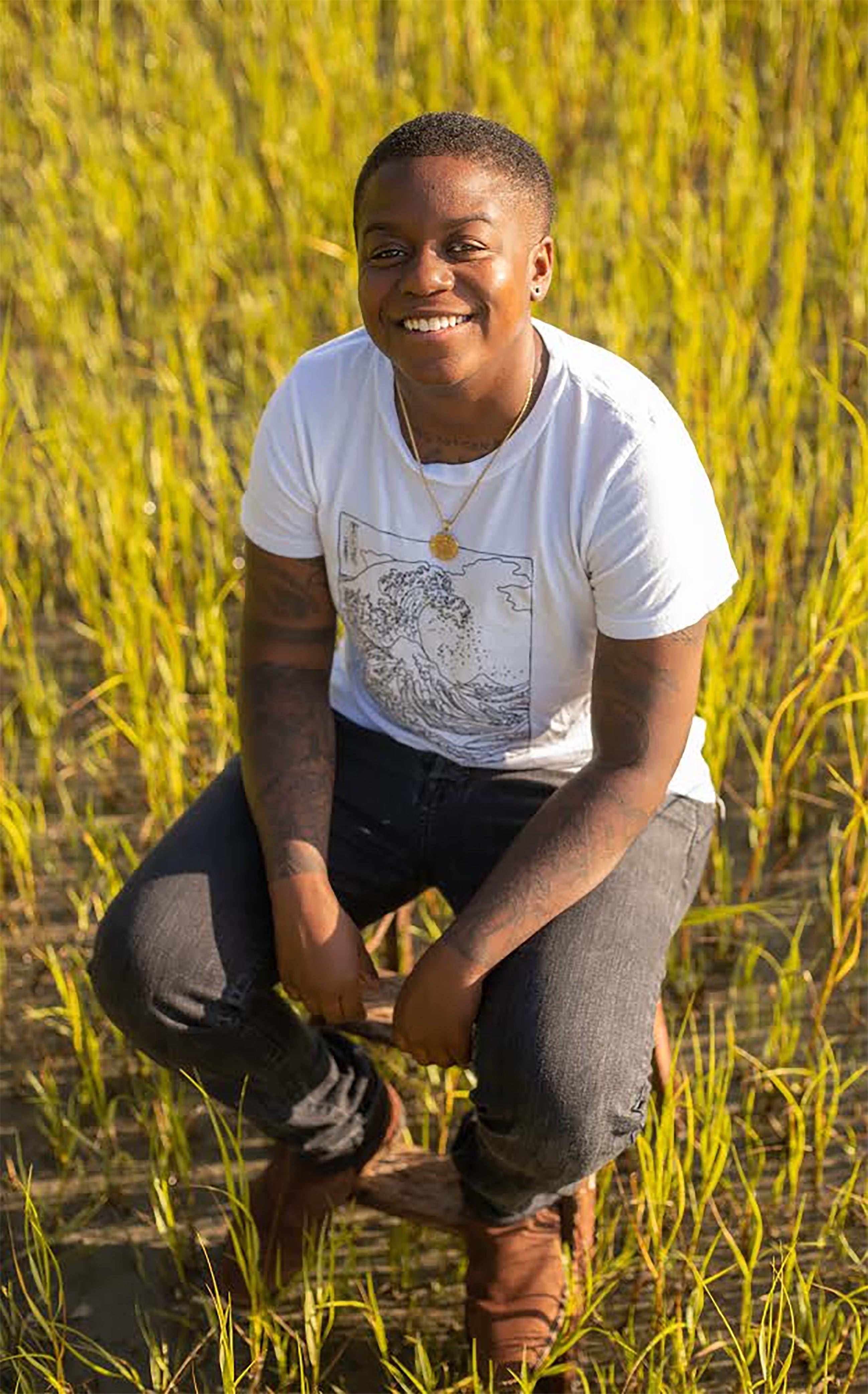
As long as Najja Elon Lawson's art is on display in Augusta Regional Airport, no passing traveler will have a mundane day. The presence of her paintings could even be a metaphor for her own vibrant and unconventional journey: After five years in the U.S. Navy, Lawson (B.F.A., graphic design) "knew I wanted to study art, and I liked how open and spacious SCAD Savannah is, how it's part of the city itself." She enrolled in fall 2019, and has been a Bee in clover ever since.

Najja Elon Lawson:

I'm originally from Philadelphia. When I graduated from Cheltenham High School, I realized I wanted to see the world, so at age 17 I joined the Navy. My first two years in the Navy, I lived in Japan. The workload in the Navy is so intense it's hard to explore your own hobbies. Then in 2016, while stationed in Jacksonville, I went on a whim to a "Painting with a Twist" event. I was so into it! I thought wait, I need to really do this.

When I came to SCAD, I didn't have any knowledge of digital applications or digital art, I just knew I wanted to broaden the scope of my abilities. I began investigating the Adobe Creative Suite, and earned my Adobe certification. I have a separate romance with the app Procreate, which I use to make work that's a digitally rendered version of my style.

Last year I saw a post online that Augusta Airport was looking for artwork. I thought, the worst they can do is say no. I submitted my portfolio, and a month later received an email from the airport public relations manager Lauren Smith saying: "We'll show your artworks as long as they fit the dimensions of the display case." I picked three paintings, drove them there, and as soon as she saw them, she said, "YES!"

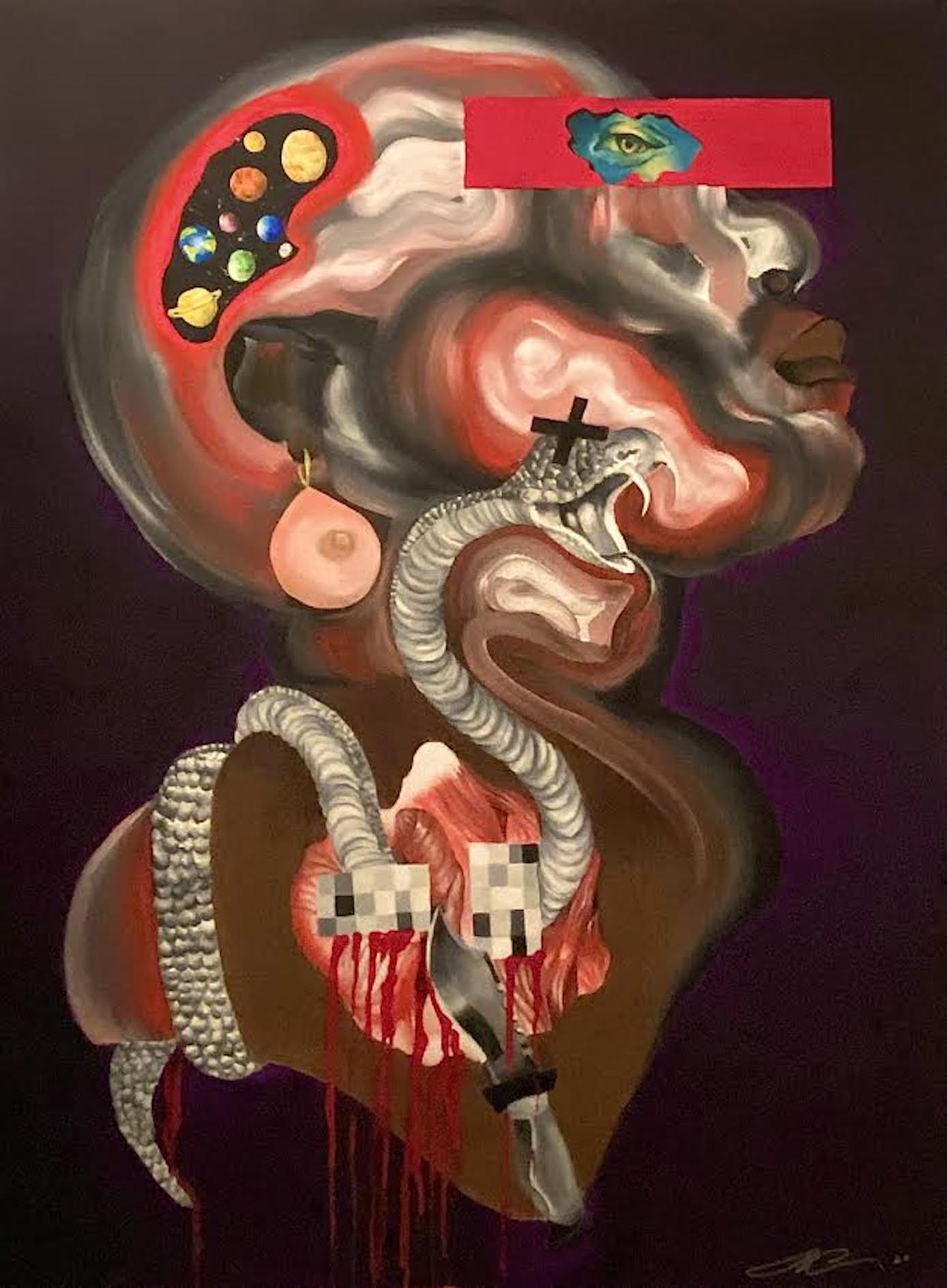
The larger painting is called "Living Later." It's about how some people try to stretch their youth throughout their entire lives. The painting "Oluwatoyin Salau" is a portrait of a BLM activist who was murdered. I want people to engage with the work and remember her name and the work she did.

It can be hard to make your work standout online because the internet is such a crowded place. The opportunity at Augusta Airport showcases how diverse my art is, and has made me more excited to experiment. That space is traversed by people nonstop. I mean, it's an airport!

In the Navy, I traveled to 23 countries. In the Philippines, there are people darker than me. In Malaysia, I met people with my skin tone. Places you wouldn't expect "us" to be. I think it's important for people to see different colors of Black. That's why I don't necessarily paint Black people black.

Najja Elon Lawson, "Target," 2020, oil on canvas, 30 x 40 in.

Najja Elon Lawson, "Target," 2020, oil on canvas, 30 x 40 in.

I'm attracted to color. Colors that complement. Colors that differ. I don't like to stick to one color, because your relationship with that color might be different than mine. The point of having a multi-hued palette is to allow people different interpretations of the work. I want you to have your own experience.

I didn't realize how many things I wanted to do until I got to SCAD. There are so many options here. This quarter, I'm taking Topography 1: Form & Space with graphic design professor Stephan Geissbühler, and Painting for the Non-Major with professor Denise Carson. I write down what my professors say and apply it to my art, even in different media. I want to be multidimensional.  I'm committed to learning new things.

Najja Elon Lawson

Visit Najja Elon.

Photos of Najja: Erin White (B.F.A., photography, 2019).


SCADpro Fund invests in Mini City Atlanta

January
21
2021
By
Tags:

SCADpro Fund has partnered with graphic design alumna India Hayes on her new venture, Mini City Atlanta. "We are proud to fund India’s work as she brings transformative change to under-served communities in Atlanta and beyond," says SCADpro Fund managing director Ray Crowell.

As stated on Mini City’s homepage, the challenge is clear:

US taxpayers spend $10 Billion annually due to homeless citizens remaining chronically homeless. This cost includes a range of services from ER visits to jail stays. This is inhumane for our homeless citizens and not sustainable for cities. ID alone cannot combat homelessness, but it is the key that can stop the cycle of homelessness.

Mini City Atlanta (MCA) helps the homeless population obtain government issued identification. Organizations and volunteers can access MCA’s web-based platform to assist those in need with filling out forms in order to acquire an ID that allows them to receive government-funded aid.

"Our primary goal is to combat chronic homelessness," says Mini City CEO Hayes (B.F.A., graphic design, 2010). "By placing identification cards into the hands of the homeless and those who care for them, we can help these individuals get housing, jobs, food resources, and educations."

As Hayes explains, a birth record is essential to solving this epidemic: "Our software is able to work with other states’ databases to ensure we are able to track down that information. If we can prove who you are, we can help you get the help you need."

Hayes grew up in a home of advocates. Her godmother founded the Southeast Regional Economic Justice Network and her mother, a founder of Youth for Social Change, traveled internationally to champion the rights of the oppressed and disenfranchised. "I learned a lot from those women and I felt I needed to continue that legacy," Hayes says.

After graduating from SCAD in 2010, Hayes joined CNN as a designer, creating info-graphics and transition screens. While she gained "a lot of experience working with high performing teams," she could not ignore an inner voice calling her back to social service and community activism.

Leaving CNN, Hayes joined the Atlanta Tech Village where she helped homeless women create resumes, a mission inspired by her favorite SCAD professor, Peter Wong.

"When I was at SCAD I had to create a resume for his graphic design class. He kept telling us to get rid of frilly fonts and dramatic designs in order to let our work shine. Once, when he returned a particular assignment, he pulled one out and said, ‘One person didn’t listen.’ It was me! That moment was important, and I have used his template going forward, integrating it with the individuals I work with. Professor Wong has probably helped hundreds of homeless persons get a job."

Hayes continues to build upon her goal to help the underserved and marginalized, and envisions MCA growing beyond Atlanta Metro area.

"We're looking to get resources into the hands of thousands of homeless citizens," says Hayes. "We can break the cycle of homelessness."

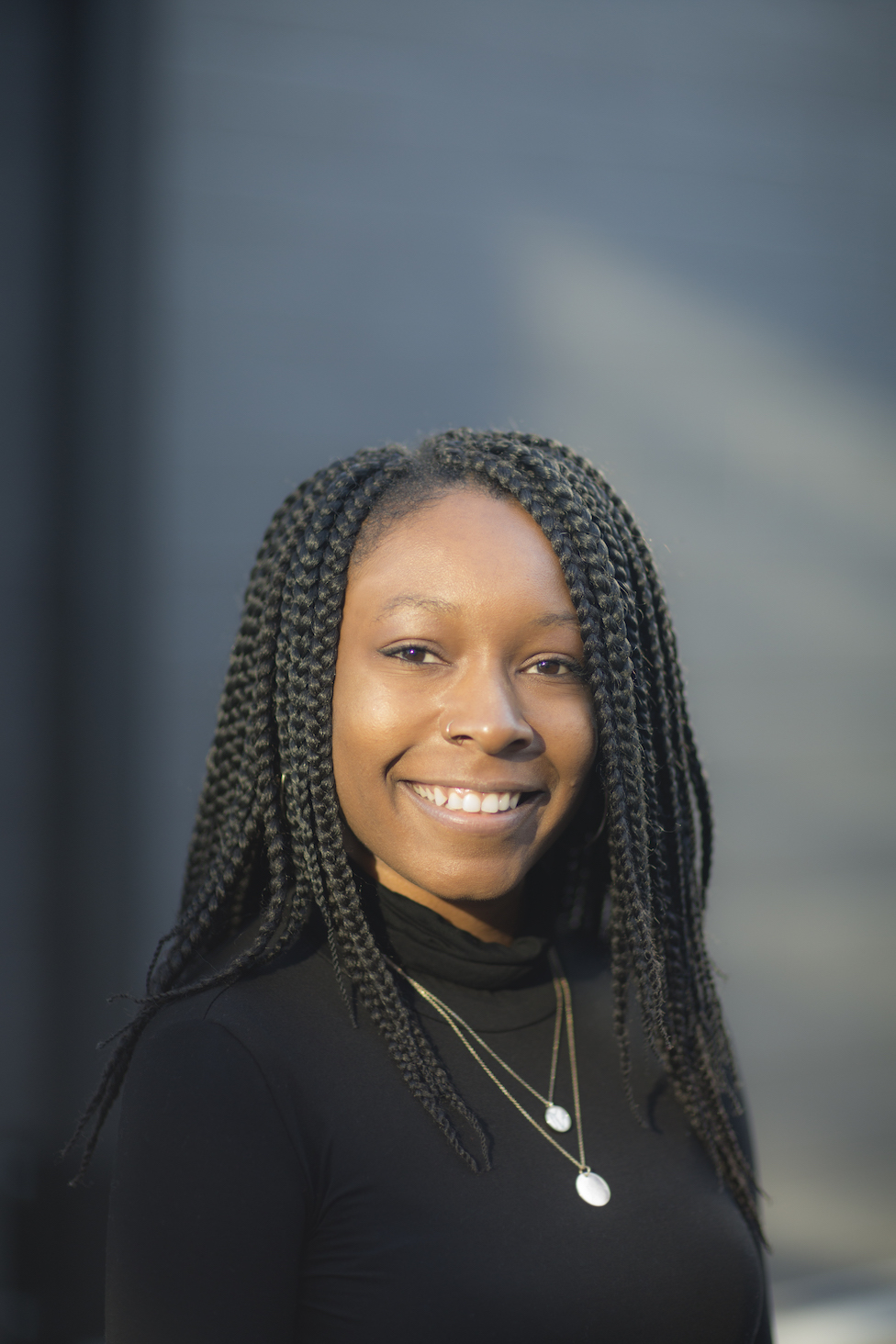
Mini City CEO India Hayes

Mini City CEO India Hayes.


Lubomir Kocka: Reading Creatively

January
19
2021
By
Tags:

"I was born a visual storyteller," says film and television professor Lubomir Kocka. "I inherited that quality from my grandfather, who was a painter and a priest. The frescos he painted almost a hundred years ago are still in churches in Vojvodina, Serbia. The Biblical stories he narrated launched my imagination."

Growing up in the former Czechoslovakia, Kocka (pronounced COAT-ska) was driven to improve his reading skills by his parents, who emphasized the relevance of literacy to artistic pursuits. "So I read everything, even the Communist newspaper Pravda."

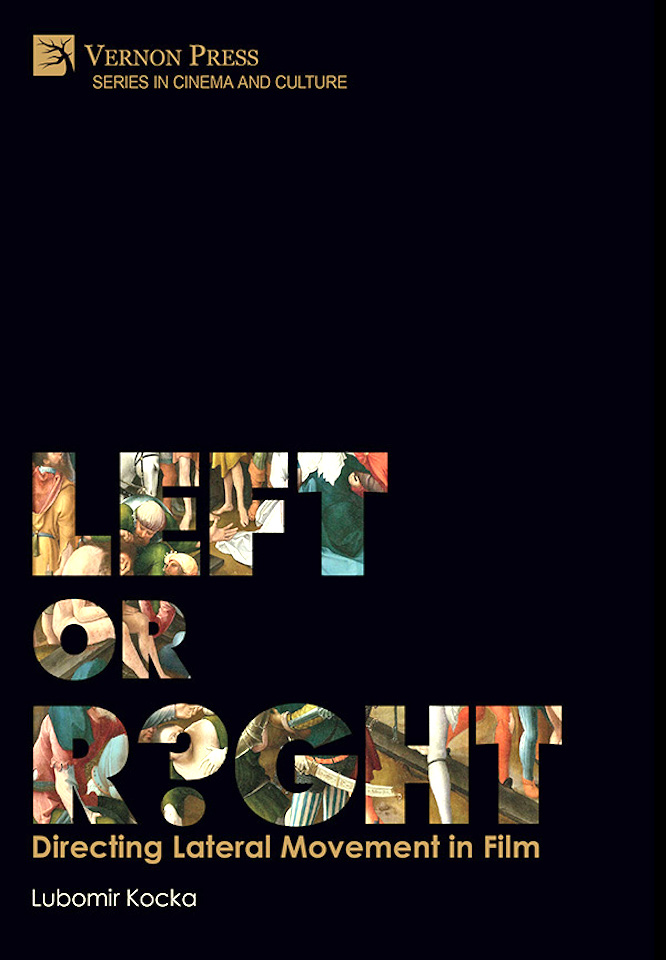
In addition to being a lauded director of feature films and television series, Kocka is the author of the new book Left or Right? Directing Lateral Movement in Film (Vernon Press, 2020). For his Reading Creatively selections, he reflects upon works that comprise his own formative "firsts."
 
Pavol Dobsinsky, David L. Cooper (ed., transl.), Traditional Slovak Folk Tales (Routledge, First American Edition, 2001). "My first encounter with literature, and the first bedtime stories my father read to me, and that I later read to both my sons, along with Grimms' Fairy Tales and Hans Christian Andersen's Fairy Tales. Along with radio dramas and children's vinyl LP records, these tales significantly influenced my visual thinking and storytelling skills."


Edgar Rice Burroughs, The Return of Tarzan (A.C.. McClurg, 1913). "The first book I read multiple times. Up to that point, when reading a book and nearing the end, I slowed down because I did not want to leave the characters. My father told me, 'If you want to meet a novel's characters again, you can start reading the book again.' Such a liberation! I still reread great books today."

Norman Mailer, The Naked and the Dead (Rinehart & Company, 1948). "A foot soldier in a platoon is walking through bushes when he gets his foot stuck in the branches of a shrub. But when he tries to pull it out, he realizes that his foot is trapped in the rib cage of the dead enemy. This journalistic visual detail left an unforgettable impression on me. This was the first book where I realized the power of visual writing, and how a literary detail can be comparable to a close-up in film."

E. R. Braithwaite, To Sir, With Love (Bodley Head, 1959). "The first book I read after seeing the film, Braithwaite's novel tells the story of a dedicated Black teacher who deviates from the standard curriculum to discuss issues with his students like poverty, sex, love, and death, while slowly breaking down the barriers of racial prejudice. I don't remember how many times I saw the 1967 film starring Sidney Poitier in the movie theater, crying each time. Reading the book, I cried again. That was the first time I realized a written story can be interpreted differently by a screenwriter or director."

George Orwell, Nineteen Eighty-Four (Secker & Warburg, 1949). "Orwell's dystopian political science fiction classic was the first samizdat I read. Living in a socialistic country with a real experience of violations of freedom of expression, the cult of personality, and culture of survival did not make me feel that I was reading something unique. I felt like I was living it."

John Irving, The World According to Garp (E.P. Dutton, 1978). "The first book I read after surviving a helicopter crash while scouting locations for Mountain Rangers, a TV series I directed. Laid up in the hospital with two broken vertebrae, I was visited by my friend, the screenwriter Zura Krizkova, who told me, 'It was not your time to die, and it is not time to be gloomy, you have to read this book.' I was in no mood to laugh, but I read it in one breath."

ubomir Kocka's book, Left or Right? Directing Lateral Movement in Film
Lubomir Kocka's new book, Left or Right? Directing Lateral Movement in Film, is the work of a creator and educator who has dedicated his life to the art of storytelling. The book includes a chapter-length contribution from fellow SCAD film professor Stephen Stanley on LGBTQ+ film. Learn more about the book at the official Vernon Press page, and from this brief talk by the author himself.


'Mainly for Women' opens at SCAD MOA

January
15
2021
By
Tags:

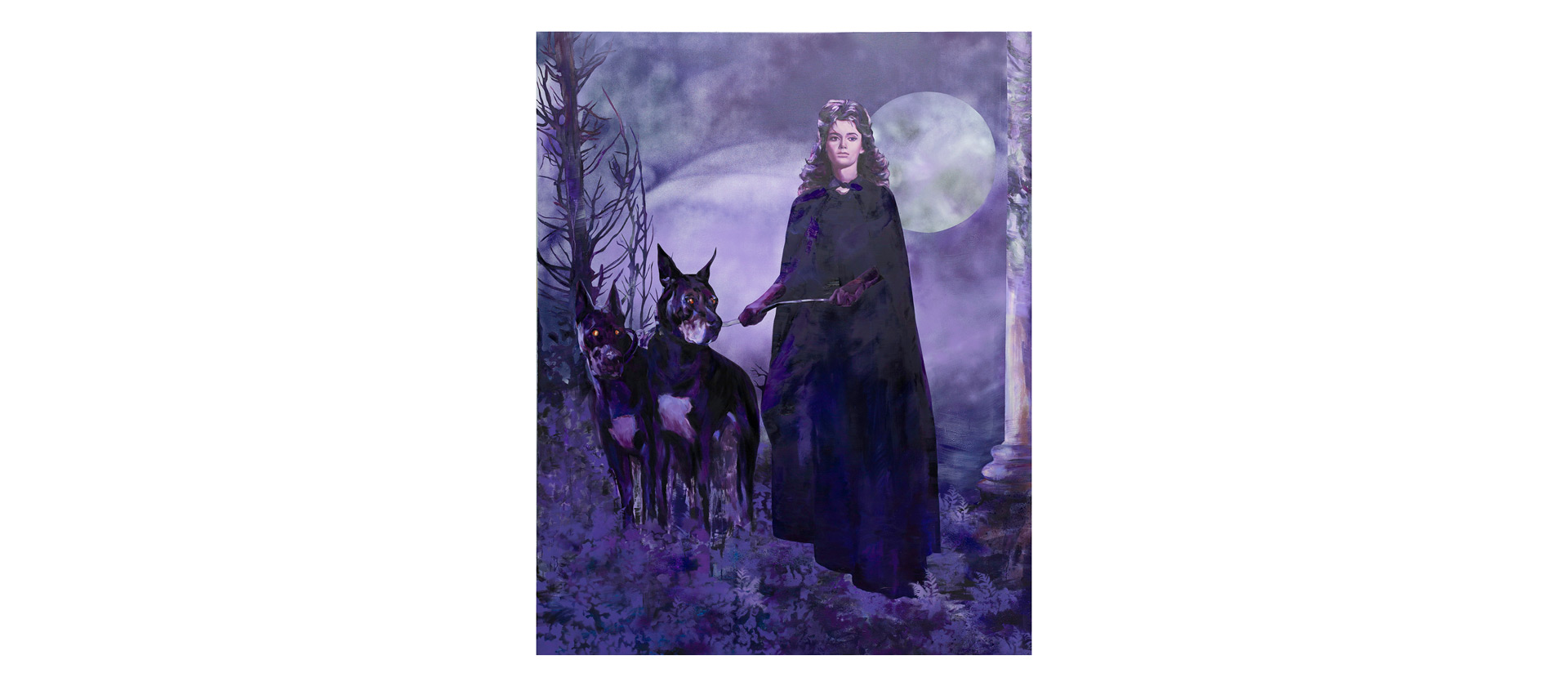
Stepping into the gallery means being struck by the colors of “Mainly for Women.” Many of the works are rich with purples and midnight blues. Arterial maroons and other dusky hues dominate. The colors are enticing, with a hint of the intentionally unknowable. There’s something playful yet uncanny at work.

"Mainly for Women" showcases a sumptuous array of paintings by Polish artist Paulina Olowska, highlighting her storied exploration into female archetypes. Olowska immerses herself within the world of womanhood via her mastery of appropriation and homage, creating paintings that draw out the psychosexual and sociopolitical constructs of female experience. Her rapid brushstrokes render naïve photorealist forms that are redolent with the feeling of bygone eras, as her colors appear softened by the passage of time.

Within her exploration of womanhood, Olowska brings the domestic act of playing hostess into the space of the gallery, inviting a group of women from the next generation of distinguished Polish artists to exhibit alongside her within the show. This collaborative act is definitive of Olowska's practice and indicates that her focus on portraying multiple representations of women is not just a conceptual preoccupation, but an active and performative aspect of her work. In the words of writer Jan Verwoert, "The house Olowska is building in her work is not a place of imaginary returns, but a site for gathering sister spirits."

The artists whom Olowska has invited to exhibit alongside her — Karolina Jabłońska, Dominika Olszowy, Agata Słowak, and Natalia Załuska — offer a dynamic range of female perspectives, creating an alchemical exchange of artistic approaches that reflects Olowska's focus on creating a complex and multifaceted vision of femininity. The group presentation, which takes on an almost mythic, séance-like quality, transforms the visuals created by these artists into an exposition of ideas. 

The exhibition's title, "Mainly for Women," takes its name from a 1960s "guide to love making" written by Robert Chartham, a pseudonym used by author Ronald Sydney Seth publishing under the guise of a sexologist. In the work, Chartham seeks to enlighten women on how to avoid harming their husbands' sexual self-respect while providing a biological play-by-play of the coital act, strictly to be enacted by a husband and wife only. This patriarchal bestowal of information is irreverently subverted by Olowska, who reclaims Chartham's title for her own purpose: to give name to a show of women artists who speak for themselves. Olowska's action of creating a female community suggests a valuing of subjectivities in which she and her fellow women artists are autonomous in determining their own image.

In their practices, Olowska, Jabłońska, Olszowy, Słowak, and Załuska grapple with the history and contemporary status of women in society. They contend with issues of female labor, patriarchal constructs of a woman's role, and visual manifestations of female interiority, with many of the featured works drawing from imagery related to pagan mythological narratives.

Through the distinct perspectives of formalism, portraiture, appropriation, and narrative painting, the artists use their work to disrupt our understanding of womanhood. Their erotic imagery, depictions of female agency, and labored methods of painterly execution are markers of how these women seek an uncompromised position of gender parity within art and society. With the recent attempt by Poland's constitutional court to impose a near-total ban on abortions — including in instances of rape and incest — this exhibition speaks with a sense of urgency for the dire need to insert female autonomy into biopolitics and society at large. In its presentation in the U.S., the exhibition holds a mirror to the country's own reckoning with women's rights.

Mainly for Women is curated by SCAD MOA assistant curator Ariella Wolens.

Paulina Olowska, "Romania," 2020, oil on canvas, 94 1/2 x 74 13/16 in. Private collection.

Paulina Olowska, "Romania," 2020, oil on canvas, 94 1/2 x 74 13/16 in. Private collection.

Banner image: the artist Paulina Olowska at SCAD MOA.

Visit scadmoa.org.


SCADpro Fund invests in computational design pioneer Parafin

January
12
2021
By
Tags:

SCADpro Fund has partnered with architecture alumnus Brian Ahmes on his new pioneering venture, Parafin, Inc.  "We are excited to be part of Parafin's growth and success," says SCADpro Fund managing director Ray Crowell.

Parafin, a software service, helps real estate developers understand the economic benefits and earning potential of current sites on the market. Users click on an available parcel of land and Parafin runs thousands of possible hotel layouts. Developers can see in real time how many floors, rooms, conference amenities, and parking spaces the ideal project will need, quickly guiding client decisions.

"The process of parcel evaluation can take months and cost between thirty and fifty thousand dollars per project," explains founder Ahmes (B.F.A., architecture, 2007; M.F.A. architecture, 2008). "Architects and financial analysts go back and forth, wasting time and resources before a developer is able to understand if the investment is financially feasible. Parafin will shorten the discovery process from months to minutes."

Ahmes and business partner Adam Hengels launched Parafin in March of 2020. Their partnership allows future Courtyard by Marriott franchisees the ability to evaluate land parcels nationwide at any time without putting a strain on their teams.

"It's all about value generation for developers," Ahmes says. "Every time a developer evaluates a parcel, they have to pull team members off of existing projects and spend limited capital on the initial feasibility study. We have given them a tool that removes those barriers."

Ahmes emphasizes that the software is easy to use: "Parafin gives a detailed understanding of a project's cost, from the stone finishes to the amount of plywood needed, to the amount of gypsum wall board that will be hung. We provide a tremendous amount of value to our customers."

While a student in the innovative SCAD architecture program, Ahmes blended his love of graphic design with his programming background: "I was doing everything software based. While some schools were still teaching the old hand model techniques, I worked with my professors Scott Dietz, Ryan Bacha, and Hsu-Jen Huang, who were all ahead of their time in terms of industry trends."

After graduation, Ahmes made a name for himself in the architecture industry. He worked as a designer for firms including Leo A Daly, Gonzalez Architects, and HKS. He then founded H.ME Inc. with fellow SCAD alumnus Scott Blew (B.F.A., architecture, 2007; M.F.A. architecture, 2008). That venture, backed by Hyatt, focused on developing hotel and housing products globally.

Ahmes remains deeply connected to SCAD. "Along with our partnership with SCADpro, we were fortunate to have two amazing interns from SCAD in 2020. Jazmyne Knox (B.F.A., architecture) joined us for the summer and helped on the drawing/modeling of some hotel brands. Currently, Preethi Chitharanjan (M.F.A., architecture) is working to understand the intersection of generative design and real estate development through architecture."

Ahmes envisions Parafin's software eventually being used internationally for every conceivable type of building use: "From home builders to commercial real estate developers to hoteliers, Parafin will help our industry leaders make more informed decisions, help stimulate development, and save money along the way."

"Brian joins an amazing group of creative leaders in business we're investing in through SCADpro Fund," says SCADpro's Crowell. "He's one of the creative leaders challenging the status quo, pioneering new market models, and manifesting what's next."

SCADpro Fund was established in November 2017 to provide a means for SCAD to support alumni-created enterprises in launching commercially-feasible products, while obtaining an equity interest in the respective businesses. SCADpro Fund invests in early-stage alumni-led startups solving problems through innovation by design.

Crowell: "We believe that our creative entrepreneurs have the power to give rise to valuable businesses that compete on a global scale. We're integrating entrepreneurial talent and the global communities they call home to expand economic opportunities."

SCADpro Fund's investments directly contribute to SCAD's mission to prepare talented students for creative professions through engaged teaching and learning in a positively oriented university environment. The university's support will help Parafin reach their market goals.
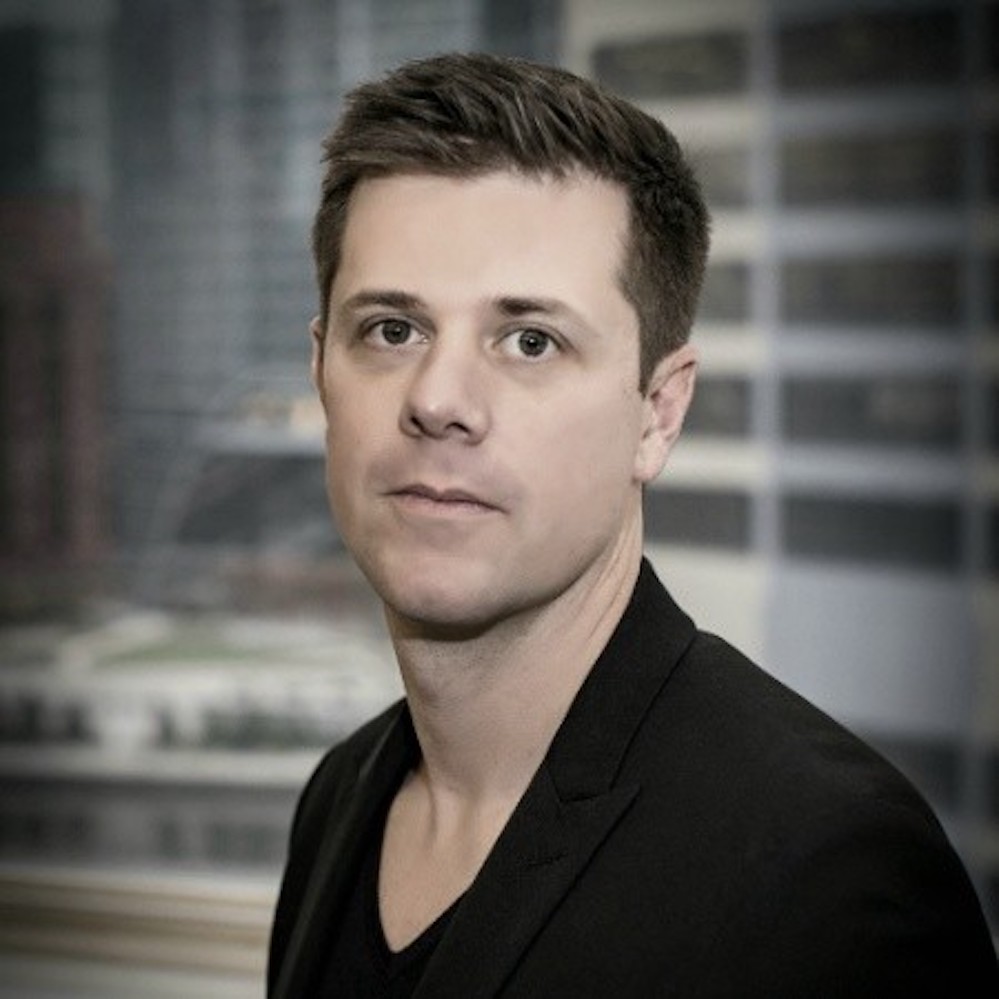
Parafin founder Brian Ahmes

Parafin founder Brian Ahmes.


Vek Neal: empower ranger

January
7
2021
By
Tags:

"I consider myself a hype man for creativity," says Vek Neal (B.F.A., illustration, 2004). "My aim is to listen to students, ask the right questions, and provide insights based upon my experiences."

As the new SCADamp visualization coach, Atlanta-based Neal conducts one-on-one sessions with students looking to improve their professional presentation skills. This winter quarter he will also lead two recurring workshops, Design Your Deck and Dress the Part. Believe it: Vek's colossal charisma feels transferable even via Zoom. And you can bet he'll be wearing a snazzy blazer when you see him.

Vek Neal:

The metaphor I use for a visualization coach is a trainer who helps you get in shape. They're not going to lift the weights for you, they're going to give you the techniques that allow you to exercise properly and perform your best. Visualization coaching is about best practices and starting great routines early on, so when you present within your SCAD academic experience and in the professional world, you perform in a way that comes naturally.

My sessions with students are 20 or 40 minutes. Within that time, we talk about the work they're focused on. My first priority is to listen to the student for what they're trying to amplify. That's when I ask questions and start bringing in tips. As a SCADamp visualization coach, I'm not here to place students into a box, I'm here to help them find creative solutions in their own voice. What's really going to sell who you are? You have to be authentic.

My professional skill set includes illustration, photography, video editing, strategic planning, marketing, graphic design — all of which are art. I've always been like a Swiss army knife. Give me a moment, or a day or week or month, and I can learn new tasks. It's the challenge that keeps me excited.

SCAD has grown so much since I graduated in 2004. SCAD Atlanta and SCAD Savannah are different in terms of location and layout, but the energy and the creative activity are united. I recognize myself in the students, because I'm also committed to expressing myself and doing my best work.

Everybody on Zoom, everyone physically walking into a space, we're all here because we want to be. SCAD has always been successful walking into the unknown, and providing new outlets for learning. The fact that SCAD is able to create new, innovative platforms to educate is so impressive.

My truth is aligning vulnerability with strength. There's a level that you have to go to in order to be present within your creativity and elevate your work. If I'm coaching you, I want you to go past what you might normally do, because that's what's really going to make people want to work in partnership with you.

With students, I'm coming from a place of, I want you to win. It's as simple as that. I want you to win.

Students can email Vek directly at [email protected] to arrange a personal coaching session.

SCADamp logo

Sign up for SCADamp workshops here.

(Image courtesy: VEKKING)


Top Posts of 2020: outstanding alumni

December
31
2020
By
Tags:

Alumni comprise a key facet of the growing SCAD family, with over 40,000 degree-holding Bees representing worldwide. Speaking with these alumni about their professional accomplishments brings light to the value and potential of the SCAD experience. Here are ten memorable posts from 2020 that focused on work being done by our stellar alumni.

Taylor Ayers, unequivocally: Ayers (M.A. creative business leadership; B.F.A., fibers, 2019) co-created the BLACK LIVES MATTER murals atop student residence hall FORTY in Atlanta and the exterior of Gutstein Gallery in Savannah.

“Say His Name”: Mickey Demas (B.F.A., industrial design, 2020) created potent new work, commissioned by BET, that captured the mood of a nation demanding positive change.

Danielle McCoy spells it out: The clever, text-specific, screen-printed work of McCoy (B.F.A., advertising, 2015) shone as part of the group show “Black Power is A Color.”

Danielle Elsener’s zero waste win: Proven problem-solver Elsener (B.F.A., fashion, 2013) got the attention of Virgil Abloh en route to winning the inaugural Activate Movement Program grant for her Zero Waste Scrub Set.

Victoria Wanjuhi’s creative upcycling: Fibers phenom Wanjuhi (M.F.A., fibers, 2020) took deconstruction as a prompt to building new ways to see and wear colorful creations cut from cast-offs.

Eleanor Turner: changing underwear: Entrepreneur Turner (B.F.A., fashion, 2008) is putting pima cotton where it counts with her new sustainable line of undergarments, The Big Favorite.

Ariel Felton, write on!: This year, Georgia native Felton (M.F.A., writing, 2015) published key pieces in outlets including the Washington Post, investigating the kind of stories that her home state tells about itself.

D.J. lights the way: Publishing powerhouse D.J. Kirkland-DeJesus (B.F.A., sequential art, 2009) is proud be raising the profile of Black and LGBTQ artists and storytellers in a rapidly evolving industry.

Alumni Atelier ambassador Kacie Willis: Willis (M.F.A., sound design, 2013) dedicated her Alumni Atelier experience to creating a new podcast, White Angle.

Generous gallerist Arnika Dawkins: The Atlanta gallery of Dawkins (M.A., digital photography, 2008) is dedicated to "speaking both to the moment we're in, and contributing to the grand dialogue across generations.”

Thank you for following SCADworks this year…see you in 2021!

Top Ten Posts of 2020: Student Work

December
21
2020
By
Tags:

It's the time of year to reflect on the accomplishments of our incredible students. Speaking with them (Zoom counts!) about their process and projects is one of the real treats of being part of the SCAD family. Here are ten memorable posts from 2020 that focused on student work.

Devon Vander Voort's Museum Mission: This museum studies minor (B.F.A., art history) presented her project "An American Tail Immigration Brochure" at this year's Southeastern Museums Conference.

Shark Tank of Wellness Winner Samii: Krysta Silva (B.F.A., advertising) collaborated with fellow SCAD Atlanta students Daranie Mor (B.F.A., advertising) and Megan Ip (B.F.A., advertising, 2020) to create Samii, first-place winner at the 2020 Global Wellness Summit.

Open Studio spotlight: "lé dieguê": SCAD Fall Open Studio artist Diego Cardenas (M.F.A., painting) enthused about the power of murals.

AnimationFest spotlight on 'Bearly': Producer Cameron Brown (B.F.A., animation) and director Cherry Zhou (M.F.A., animation) decided not to hibernate, and instead discuss their film about a bear who similarly refuses sleep.

Enya's themed entertainment journey: Yun Enya Huang (M.F.A., themed entertainment design) wrote about being an international student and learning to translate the theme park experience in a diverse world.

Jaylyn Lassiter: Open Studio spotlight: Virginia native Lassiter (M.F.A., painting) celebrated the “incredible feeling” of her new work connecting with her audience.

Actors grow 'Closer': In the tantalizingly brief window this year where live theater was a thing, Clare Tassinari and Sarah Smeltzer Wright (M.F.A. performing arts) brought the house down with their production of Patrick Marber's "Closer."

Erin Gabrielle Tutcher: A couch to faint for: Fearless fabricator Erin Tutcher (M.F.A., furniture design) put in the hard work, by hand, to make her dreamy furniture come to life.

Mora Medina talks Walky: Award-winning designer Armando Mora Medina (M.F.A., furniture design) decided that instead of reinventing the wheel, he'd simply to make the best chair around.

Lina Deeb Forrester's deep dive in the Kravet archive: SCAD fibers building Pepe Hall was transformed by Lina Deeb Forrester (B.F.A., interior design), who curated a display of fabrics from the archive of industry-leading textile company Kravet.

Thank you for following SCADworks this year...see you in 2021!

Ariel Felton, write on!

December
11
2020
By
Tags:

Ariel Felton (M.F.A., writing, 2015) is making her words matter.

In January, 2020, Felton's article "A Local's Guide to Savannah, Ga." was published in the Washington Post. When the tone and tempo of the city were changed by the pandemic, her next Post feature went deeper, addressing the role of (and response to) Black tour guides in a city where "the tourism industry is king" and history is full of discomfiting truths. Meanwhile, her essay "A Letter to My Niece" received a notable mention in the Best American Essays 2020.

A native of Byron, Georgia, Felton is currently the teaching artist and publications manager at Deep Center, the award-winning nonprofit providing free arts and leadership programs for young people in Savannah.

SCAD: What was the impetus for "A Letter to My Niece"?

Ariel Felton: I'd read Ta-Nehisi Coates' "Between the World and Me" and James Baldwin's "A Letter to My Son." I was inspired by both of them, while noticing they're written to younger men and wondering, where do the ladies come in? Racial discrimination is often compounded by gender. Sometimes having a young niece helps me think, "Thalia needs to hear this right now in the life stage she's in." I actually wrote the letter without considering getting it published. I wrote it as something I would give to her and hope she'd take something from it.

SCAD: How was "A Letter to My Niece" received by your family?

AF: I sent it to my niece and my mom and my sister before it was published. My mom told me Thalia thought it was sweet, and she said, "Your sister's okay with it being published." At the time, my mom was also okay with it being published. It wasn't until later that she was kind of worried about our family mistakes being put out there. I told her, "I don't think those are mistakes," which is really the point of the piece, that this is just living, and we shouldn't shame people for that.

SCAD: How did you choose running as the central metaphor in the piece?

AF: When I write non-fiction, my process often starts with a memory that I can't seem to forget. The writing becomes figuring out why. I'd written about my sister and me and my niece all being ten years apart, and about being a Black woman in the South, and I'd written a thousand versions of it and it just wasn't working. Somewhere in my drafts in my Google drive I had this little nugget of my mom telling me about when my niece ran away from home. When I put them all side-by-side, something finally clicked.

SCAD: How did you pitch your piece on Black tour guides in Savannah to the Washington Post?

AF: I originally pitched the piece on Black tour guides as four separate profiles that would run together. In my pitch, I was able to refer back to a previous Washington Post article about pushback from tourists in Charleston who didn't want to hear about slavery while touring the McLeod Plantation. I said here's an angle in Savannah, a city that's focused on tourism, where this issue is being addressed by Black tour guides. It was accepted, and I wrote it in April and it sat on an editor's desk for months, until the editor asked how the pandemic had changed things in Savannah and asked me to report on that and incorporate that into the story, which finally appeared in late November.

SCAD: How did you go from being a SCAD writing student to writing for top national publications?

AF: For me, it's meant returning to the roots of my undergrad journalism studies at Valdosta State, combined with elements from non-fiction writing classes at SCAD. At SCAD, I took magazine writing with Lee Griffith, business and professional writing with James Lough, and an elective humor writing class with Harrison Scott Key. In those classes, I was really able to explore my voice and how fiction and personal essay techniques can work in narrative storytelling to makes an article more compelling.

SCAD: As a Georgia native, do you feel a responsibility to tell the stories of this state?

AF: Absolutely. I love the South.

portrait of ariel felton

Visit Ariel Felton.