Skip to main content Accessibility Policy

Creative business leader Chris Peeler

October
4
2021
By
Tags:

"One of the first questions I ask my students is, ‘What do the words creative business leadership mean to you?'," says Chris Peeler. "One student this quarter nailed it right away: ‘It means being creative in our approach to business leadership, and creative in our business pursuits.'"

Peeler, a 27-year veteran of digital media and television (WarnerMedia, Sony Pictures, Turner Broadcasting), joined SCAD in January, 2021 as associate chair of creative business leadership. He bolsters an M.A. program that enhances the value of all undergraduate degrees.

"Creative business leadership is a master's program that fits with every one of our B.A. and B.F.A. programs," Peeler explains. "Undergraduate students should take it seriously if they want to become a manager or leader in their chosen field. An M.A. in creative business leadership will help you advance faster than your peers."

Peeler promotes the efficacy of taking classes in creative business leadership even if a student doesn't envision a career in management. "If you're creative and you want to function in business or start a business, what we teach will help you increase your likelihood of succeeding. You don't need to become a manager, but you need to learn how to work well with people."

Peeler arrived at SCAD following a decade at CNN, where he managed a team of two dozen-plus producers and editors during a period of exponential growth in the network's market share. One key was Peeler's commitment to effective workflow and staffing, as news consumption became increasingly mobile and around-the-clock. He was a persistent, prescient proponent of remote working capabilities and the virtual workplace.

"You have to treat everyone as an individual and meet them on their level. You have to adapt your management style, and how you get along with people," he says.

The son of educators from Gastonia, North Carolina, Peeler sees teaching at SCAD as part of his own prodigal narrative. He is a nonacademic thriving in an educational setting. Students revel in his stories about working in reality television, creating challenges for the hit TV show Survivor, and insights from his longtime friendship with Outer Banks creators Josh and Jonas Pate.

Of the creative business leadership degree track, Peeler considers Influencers and Innovators: Characteristics of Transformative Leadership (LEAD 725) among the most important classes. "We focus on leadership and emotional intelligence," he explains. "We help students become better leaders, and develop their entrepreneurial mindset."

This quarter Peeler is guiding a SCADpro project with Studio Designer, the leading digital project management, sourcing, and accounting platform for the interior design industry. "In order to scale up, Studio Designer is going to need to go global, and determine which territories make the most sense for global expansion," explains Peeler, who will coordinate a team of students from diverse degree programs to meet that challenge.

The SCADpro setting will provide Peeler with the opportunity to introduce more students to the benefits of creative business leadership. He leads, so they can too.

birdseye view of hands writing and using sticky notes

Learn more about creative business leadership at SCAD.


Johnathan Hayden flies high at NYFW

September
9
2021
By
Tags:

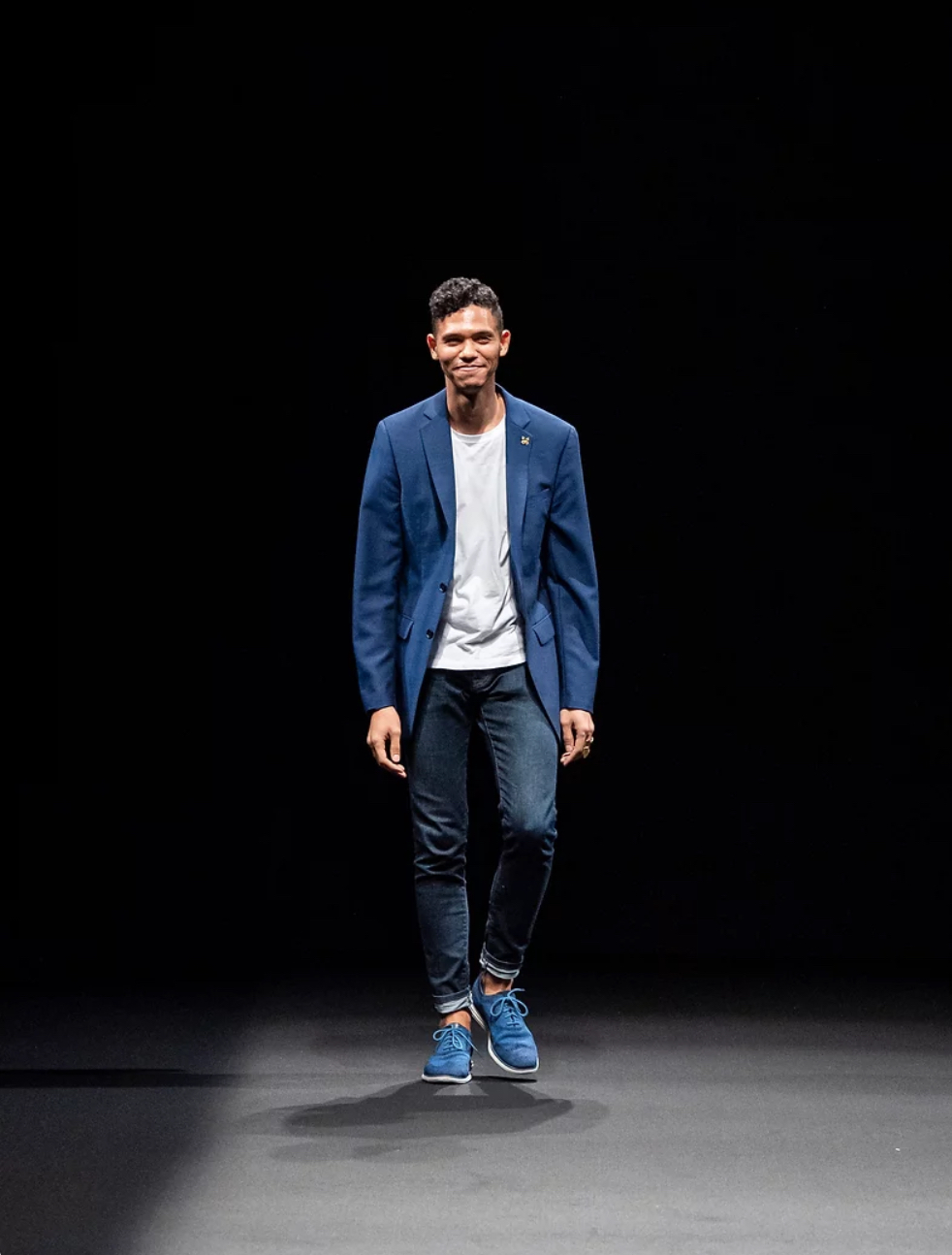
On a hot and starry Tuesday night in Harlem, the show began with birdsong. Specifically, "The Birds Belong to All of Us" by Pulitzer Prize-winning sound artist Ellen Reid, its avian trills accompanying the debut collection by designer Johnathan Hayden (M.F.A., fashion, 2016). As the models walked, the clothes seemed to sing in conversation with the music.

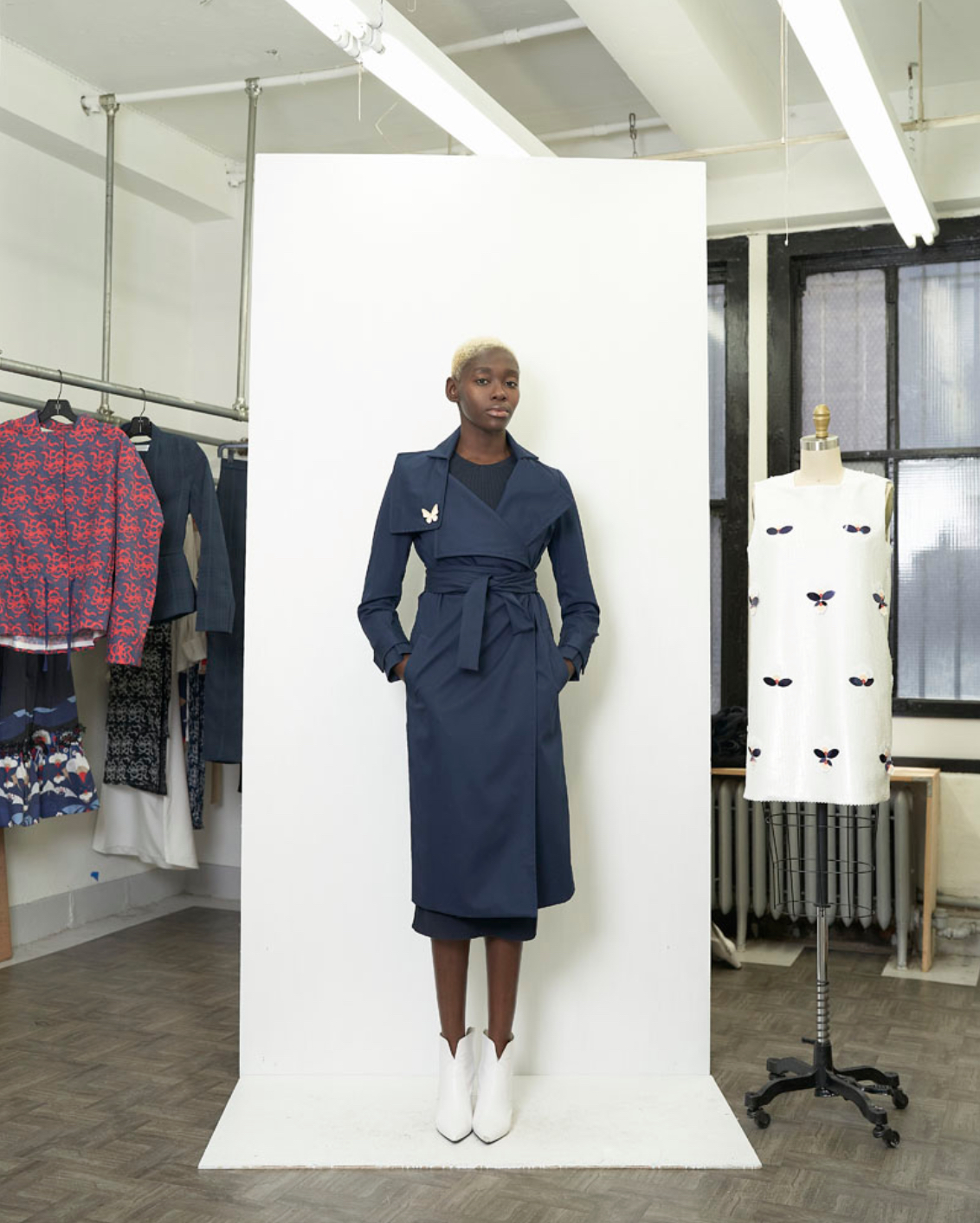
A sleeveless mini-dress, an acrylic-domed cloche hat, a dark blue belted trench coat with golden butterfly lapel pin; together in motion, the vision of the garments cohered. "As my debut, there's a lot of emotion behind these garments, and the collection is almost a wish-you-were-here postcard," Hayden explained. Sponsored by Harlem's Fashion Row and part of New York Fashion Week 2021, the outdoor runway show represents a major moment in the SCAD alumni's burgeoning career.

2022 Collection image courtesy Johnathan Hayden.

2022 Collection image courtesy Johnathan Hayden.

Hayden's commitment to collaboration is a sensibility he developed at SCAD. "As a graduate student, I worked with motion graphics students to make short films that opened up a whole realm of possibility I never thought possible, where my interests in fashion and animation and user experience and my background in music all came together in one. It was a tipping point for me." (The project led Hayden to create a dress included in the "Manus x Machina" exhibition at the Metropolitan Museum of Art in 2016.)

Hayden's cultural fluency is indivisible from his intellectual worldview and his kaleidoscopic creativity. In conversation, he flows from a soliloquy on Stravinsky to a detailed discourse on the history of labor practices in Manhattan's garment district. He is well positioned to be an industry sensation because he's already put in the work that deserves the attention.

"I've gone through life with people putting me in boxes of how they perceive me," says the mixed-race son of a military family from a small town outside Dallas, Texas. "I've never been enough for one group. Through merit alone I've been able to get accepted." 

While still a SCAD student, Hayden interned at Badgley Mischka ("I became their first paid intern, which turned into an apprenticeship"). After graduating, he ran Parsons' design for disability education program, "and I was working retail for a sustainable brand, and making samples of my own stuff." Hayden was building relationships, being patient, knowing his moment to show his first full collection would come. This week it did.

A model wearing a jacket from the 2022 Collection by Johnathan Hayden.

2022 Collection image courtesy Johnathan Hayden.

"Now I'm hoping we see a large order and the beginning of a retail relationship and expanding clientele," he says. "As a practical philosophy, I only want to show one collection a year, and slow down our consumption of fashion, give the audience something to savor. We can still align with the retail calendar, but I think the future is making people excited to see what we've been working on for a full year. That gives my collaborators time to really be inspired and develop ideas as well."

He originally heard his collaborator Ellen Reid on an NPR segment about her SOUNDWALK app. Reid's "The Birds Belong to All of Us" was first composed to soundtrack The Ramble in Central Park, a place made infamous during an altercation last year between a bird watcher and a dog walker. After Reid and Hayden met, the composer created a special extended version of the piece specifically for the runway. "The context of Ellen's song is how my show opens," says Hayden. "I thought it was a really effective way to acknowledge the year we went through, and also to give it a hopeful tint."

And the birds did sing.

Johnathan Hayden

johnathanhayden.com


Sabbatical spotlight: Hsu-Jen Huang

August
26
2021
By
Tags:

"Water is a live element that creates human engagement and informs the built environment," says architecture professor Hsu-Jen Huang, a two-time recipient of the SCAD Presidential Fellowship and Sabbatical Award. "Water moves."

Pre-pandemic, Huang traveled to the river towns of China's Jiangnan region—south of the Yangtze River, straddling Shanghai—where he inked his impressions, an artistic practice he calls "talking to the environment." Returning to Savannah, sequestered in his studio, he then hand-painted some two dozen paper parasols, which became the stars of his sabbatical short film "Beyond the River"—an exquisite rumble of color and movement, created with the participation of SCAD students.

Huang's practice of sketching his surroundings dates to his early ventures as a SCAD recruiter, when he would arrive in a U.S. town or city, sketch the sights, then integrate that work into his presentation to prospective students. This literal and symbolic through-line, from a professor who joined SCAD in 1998, assumes a cumulative power informed by his deep understanding of architecture and world history. When researching, visiting, observing and documenting, Huang says, "I always travel with an agenda, never with expectations."

 2012 sabbatical research, "Journey | Destination Tibetan Plateau: Views of the Tibetan Plateau."

Hsu-Jen Huang:

My sabbatical project focuses on the six famous historic water towns in the Jiangnan area of Southern China. I recorded and documented their current character through my personal graphic vocabulary of photography, sketches, and mixed media representations. My intent was to reflect the broader scope of each immediate setting, its relationship with its inhabitants, and its response to modern pressures and influences. 

The project advanced my professional and academic expertise in southern Chinese architecture and culture, and allowed me to research and document the unique water townscape. It enhanced my knowledge of Chinese architecture and the built environment, and how water influenced urban development. These are important areas that contribute to my architecture and urban design coursework for students across multiple disciplines within the SCAD School of Building Arts, and across the university. This is particularly important due to SCAD's role as an international institution with a diverse student body and an international approach to architecture education. 

With the increasing reliance on digital tools in education, I have noticed that students depend upon technology, and this significantly impacts the ways they conceptualize design and perceive the environment, as well as the depth of those perceptions. I want to promote documentation in the form of photographs, videos, drawings, and sketches, thereby ensuring that students gain skills that contribute to their understanding and appreciation of the physical environment. These are aspects that, as designers, affect a critical difference in the ability to create buildings, interiors, products, and other artifacts that contribute to our culture.

My sabbatical project provides valuable documentation of the southern Chinese architecture and the waterscape town design, as well as the impact of modernization on traditional and vernacular architecture. The impact of conservation efforts are a special area of consideration.

This project is a continuation of my 2012 sabbatical research, "Journey | Destination Tibetan Plateau: Views of the Tibetan Plateau." I want to thank President Wallace for endowing this fellowship which has contributed so much to my professional development and my role as a member of SCAD faculty.

Another scene from  "Journey | Destination Tibetan Plateau: Views of the Tibetan Plateau."

SCAD recognizes that continuous faculty professional development contributes significantly to the quality of teaching and learning at the university. The SCAD Presidential Fellowship and Sabbatical Awards provide eligible professors with opportunities to pursue professional growth and new or renewed professional achievement through study, research, and practice.


Ahna Phelps joins equestrian studies

August
17
2021
By
Tags:

Over a 25-year career as a professional equestrian, Ahna Phelps has built a reputation as an exceptional educator, talented trainer, and champion rider. Last year, Phelps made the transition from running her own 15-acre training and breeding ground in Allison Park, PA, to becoming associate chair and professor of equestrian studies at SCAD.

"I came to SCAD because I love teaching horsemanship," says Phelps, who holds her master’s degree in equestrian education. "SCAD has the best equestrian program and facilities in the nation. Our equestrian center is absolutely top notch and operates at the same level of professionalism and care as a private farm."

The Ronald C. Waranch Equestrian Center, home of SCAD’s equestrian studies program, is a 180-acre facility that houses over fifty-five horses and is designed to hold major equestrian events. The grounds include barns, paddocks, pastures, and arenas for competitions. It is also home to the multiple national championship-winning SCAD equestrian team, led by Coach Ashley Henry.

SCAD students working towards a B.A. in equestrian studies explore career paths amid a climate perfectly suited for year-round riding and stable-side education. Through a comprehensive academic program, students are prepared for careers across the spectrum in a $300-billion-a-year global equestrian industry.

"SCAD isn't your traditional equestrian program," Phelps says. "SCAD Bees have so many opportunities to follow their creative dreams. Our students are preparing themselves to be entrepreneurs in the equestrian industry at large. From photographers to marketers to horse clothing designers, SCAD students can choose any number of professional paths."

SCAD Equestrian Programs Eddie Federwisch believes Phelps’ presence strengthens an already peerless program: "Ahna brings great enthusiasm and industry experience to us. I’m extremely pleased she’s here at SCAD as we continue to grow the best program in the nation."

Phelps is looking forward to welcoming students and faculty back to the grounds this fall quarter. She will teach Riding Fundamentals: Stabilization (RIDE 102), Forward Seat Riding Methods (RIDE 201), and Equine Care, Behavior, and Handling (EQST 110). "My years of riding and showing experience are front and center in my teaching," Phelps says. "SCAD students are open, eager, and want to learn. These students are why I made the switch from industry to university."

Phelps’ plans for the future of the growing program include adding horses to the stable and strengthening student’s connections to the equestrian industry nationally. "I want to help students build connections to the industry," Phelps says. "Professionals from high-end competition stables on up to the World Equestrian Center are all going to want to hire SCAD grads."

Learn about earning a degree in equestrian studies at SCAD.


New faculty spotlight: Wioleta Kaminska

August
6
2021
By
Tags:

"As an educator, it's important to know more than just the subject I teach," says digital communication professor Wioleta Kaminska. "I keep my mind open, and learn, especially from the younger generation, who will surpass me someday, because their talent is amazing. It's my job to keep them moving forward."

An artist of international renown, Kaminska brings two decades of academic experience to SCAD. In winter quarter 2020, she joined the digital communication department, a new frontier in foundation studies. Kaminska teaches DIGI 130, where students investigate the diverse applications of digital tools including Photoshop and Illustrator, and learn how to develop strategies for confident communication while navigating their personal and professional identities online.

"In each class I have 20 students, who come from different majors, and different countries," she explains. "I tell them to look around, because this could be the one time in your life you are surrounded by so many diverse, talented artists. Now is the time to work together, and to be kind to each other, because you may need each other someday. Then I encourage them to connect on LinkedIn."

Kaminska instills in students the daily practice of dedicating ten minutes to their visual diary, and once a week posting something from that diary to Instagram. "I had a student ask me, ‘What will my job title be when I graduate?' I explained that maybe there's a job that hasn't been created yet, and you will invent it. Artists often see the need for a job that didn't exist before. You don't have to know your style or what you're going to be for the rest of your life."

A conversation with Kaminska feels both focused and expansive. While discussing pedagogy, she extols the poetry of Wisława Szymborska, the virtues of gluten-free pizza, and the work of Italian composer Valerio Sannicandro. These are not disparate tangents, but expressions of a holistic worldview where, as she explains, "The best time to make art is now." But how to locate the impetus to create? "Meeting people and having conversations, that's where the muse lives."

It's fitting that after arriving in Savannah she launched her podcast CrazyBird, documenting discussions with artists about process and what it means to be human. "I invite guests whose work I admire, and who I admire as people," she says. "Sometimes we think of artists as inaccessible, but when we hear them talking and making jokes, it makes it all more relatable, and when we hear them share their own doubts, it makes it more hopeful. I tell my students that having doubts is not a problem, it's part of the process, and part of their artistic growth."

Kaminska's own childhood provides a connection with the significant international student body at SCAD. "When I was six, my mother brought me a UNICEF postcard with a drawing of children of different colors standing in a circle holding hands. At that time in Poland, we didn't see people of different colors. And I thought, I want to be in that circle holding hands with those kids. I'm doing that here now at SCAD."

Still from Wioleta Kaminska's short film Oculis Magnis (2018).

Still from Wioleta Kaminska's short film Oculis Magnis (2018).


Alumni Atelier ambassador Mae Heidenreich

August
4
2021
By
Tags:

"My style is taking unexpected materials and transforming them," says Caroline Mae Heidenreich (B.F.A., fashion, 2009) as she tugs at the ripstop nylon wrap worn by student model Shiloh Smith (B.F.A., painting). Soon Smith is zipping on a moped down the corridors of Alexander Hall, gauzy garment billowing behind him to fabulous effect. The moment is part of a photo shoot documenting Mae's collection-in-progress FLY, the culmination of her work as SCAD Alumni Atelier Ambassador 2021. "Mae fills the room with light," says Smith. "As soon as she put me in the clothes, I felt uplifted."

While a SCAD undergraduate, Mae created a senior collection of gowns made from military parachutes, mosquito netting, and hand-painted canvas that earned her the Jeffrey Fashion Cares New Talent Award. From 2013-2021, she worked as creative and executive assistant for Madonna, creating costumes for the Madame X Tour. When Madonna posted a video of her son David Banda wearing a Mae Couture dress to Instagram earlier this year, it scored two million views. "Madonna is an idol of our lifetime who believed in me and helped me believe in myself," Mae says.

Mae is carrying that spirit forward. As a 2021 SCAD Alumni Atelier ambassador, she has mentored students, led virtual classroom workshops, and aligned with SCAD SERVE so that sales of her work will benefit the local community. During the new academic year, Mae's capsule collection will be exhibited at SCAD FASH in Atlanta, while her epic oil paintings — emphasizing themes of higher consciousness and "the self as light energy" — will be featured in Savannah at Alexander Hall.

Mae fashion collection

SCAD students Shiloh Smith and Emma Calverley model Mae, with assitance by Beckham Lin (far left) and Ann-Hammond Gift (far right).


Caroline Mae Heidenreich:

I'd always wanted to be an Alumni Atelier ambassador, but working full-time meant my schedule didn't allow it. I stayed in touch with President Wallace, sending her updates about my work, and she connected me with Alumni Atelier director Tiffani Taylor. Then there was an opportunity for me to become one of the first digital Alumni Atelier ambassadors during winter quarter 2020-2021. Now I'm here in Savannah, completing my work in person. I had so many transformational experiences as a student at SCAD that being back in Savannah, a place where I learned so much, feels so right.

The ability to connect with students and classrooms virtually was eye-opening. I began mentoring a student who is now one of my assistants, Ann-Hammond Gift. Ann-Hammond was a fashion major who switched to a painting major, and I was a fashion major who now paints on garments, and I love the energy that's come from that connection, and from working with talented, hardworking students, including Beckham Lin (B.F.A., fashion) who has also been an invaluable assistant to me.

For my Atelier, I found a massive, 66-foot parachute and realized, I can paint on this, this can be my canvas. Some of the garments are silk. The aim with the reversible pieces is for them to be black and white on one side and really colorful on the reverse. The language you see on the garments, like the word FLY, is about spreading your wings. That's symbolic in Andean shamanism, where you travel above the tree tops and truly see from a higher perspective. I paint it and flip it, so the mantras face the body. The repetition of the word LIGHT means the collection recognizes my light within myself and the light within others.

I love the feeling of one-of-a-kind work. Big corporate designers are what everybody is trained to think fashion is. As an artist, I want to make things that can't be mass produced. Even when we make a pattern and cut it out a hundred different ways, it's never going to be the same. Let art be art.

portrait of mae heidenreich

SHOP MAE COUTURE


Petra Richterová named Schomburg Fellow

July
26
2021
By
Tags:

Petra Richterová is ready to rumba.

The Schomburg Center for Research in Black Culture in Harlem has named SCAD professor of art history Dr. Petra Richterová as one of 12 exceptionally talented Scholars-in-Residence in its 2021-2022 cohort. This fellowship will facilitate the completion of Dr. Richterová's scholarly book project "Rumba: A Philosophy of Motion," illustrated with over 100 original photographs taken by the author in Cuba and the U.S. from 2001 until today. She will begin her six-month residency at the Schomburg Center in September of this year, before returning to teach at SCAD in 2022.

"My book project explores Cuban rumba, a unique Afro-Cuban dance and music complex that represents the foundation of contemporary Cuban popular culture," says Richterová, who holds her doctorate in the history of art from Yale, where she studied under renowned Afrocentric historian Robert Farris Thompson. "As a Schomburg Fellow, I'll research parallel performance and visual art traditions in north, west, and central Africa. I'll study the Schomburg holdings, and look at historical and theoretical considerations and the latest scholarship in the field and really dig in."

As a Scholars-in-Residence Fellow, Richterová will have access to the research collections and resources of the Schomburg Center, the preeminent repository for materials related to the history and cultures of peoples of African descent. "As the Schomburg moves prudently toward reopening its full range of resources and programs to the public, we are thrilled to welcome this new class of Fellows," said Brent Hayes Edwards, Director of the Scholars-in-Residence program.

"The work I'm doing is interdisciplinary and deals with many different cultures," Richterová explains. "I'm examining the African roots of the rumba complex from the perspective of dance. My research will focus on Afro-Cuban ethnomusicology, gesture in African art, and traditional African dance. The project is anchored in my Spanish fluency and twenty years of fieldwork in Cuba, including three full years of living in Havana. I am also proficient in French, which will be essential to reading Francophone literature on African dance and art. Specifically, I'll be looking at Sahara’s Imazighen [Berber] peoples, Nigeria’s Yoruba [Lucumí], Efik/Efut [Carabalí], Dahomey [Arará], Kongo civilizations, Mali’s Mande populations as well as the Banta of Liberia and Sierra Leone [collectively known as Gangá in Cuba]."

A widely published Africanist whose classes at SCAD, highly popular among students, include Art and Spirituality (ARTH 342) and Dancing the Diaspora: Critical Approaches to African and Afro-Atlantic Art (ARTH 796), Richterová is also an acclaimed director, cinematographer, and photographer. As a Scholars-in-Residence Fellow, Richterová will receive a stipend and the use of a private office at the Scholars Center at the Schomburg Center in Harlem.

She views the work that will be facilitated by her Schomburg Fellowship as wide-ranging. "Digitization of research tools has made it possible to create an ultimate product from the project, with various interfaces, and I'm hoping after I complete my book to make a documentary," she says.

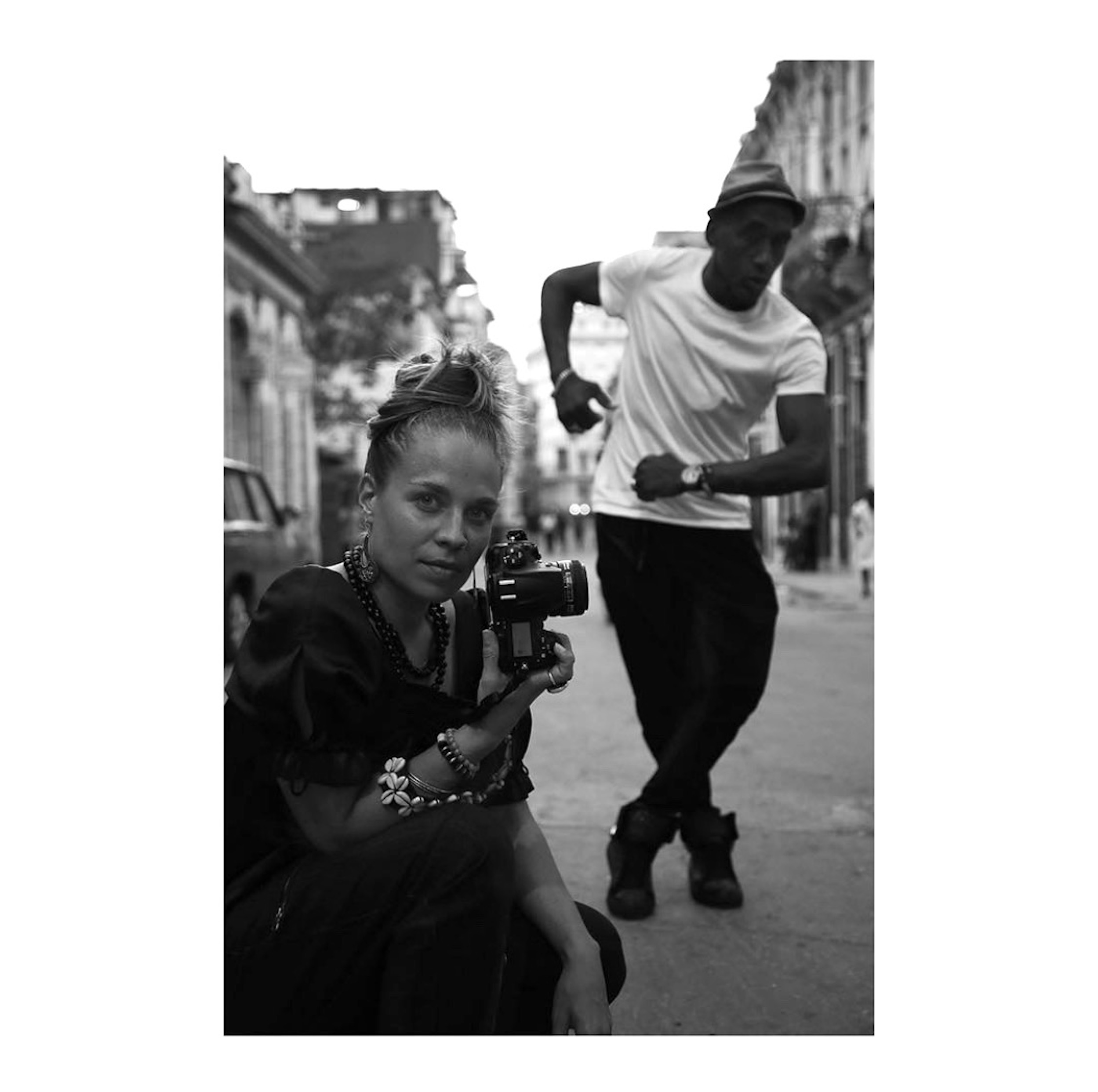
Black-and-white photo by Jose Sandoval, taken in Havana, shows Dr. Petra Richterová with one of Cuba's greatest rumba dancers, Bárbaro Ramos Aldazábal

Black-and-white photo (above) by Jose Sandoval, taken in Havana, shows Dr. Petra Richterová with one of Cuba's greatest rumba dancers, Bárbaro Ramos Aldazábal, principal dancer of the legendary rumba ensemble, Los Muñequitos de Matanzas.

Banner (color) photo of Dr. Petra Richterová by Sarah Escarraz.


Usman Ibrahim's 'busy' work

July
22
2021
By
Tags:

"Usman represents the best of what a creative thinker and maker should be," says SCAD associate chair of graphic design Michael Mikulec of his student Usman Ibrahim. "Usman finds idiosyncratic ways into projects, creating with an exciting sense of agency and command of subject matter. He follows through on his ambition with his outcomes."

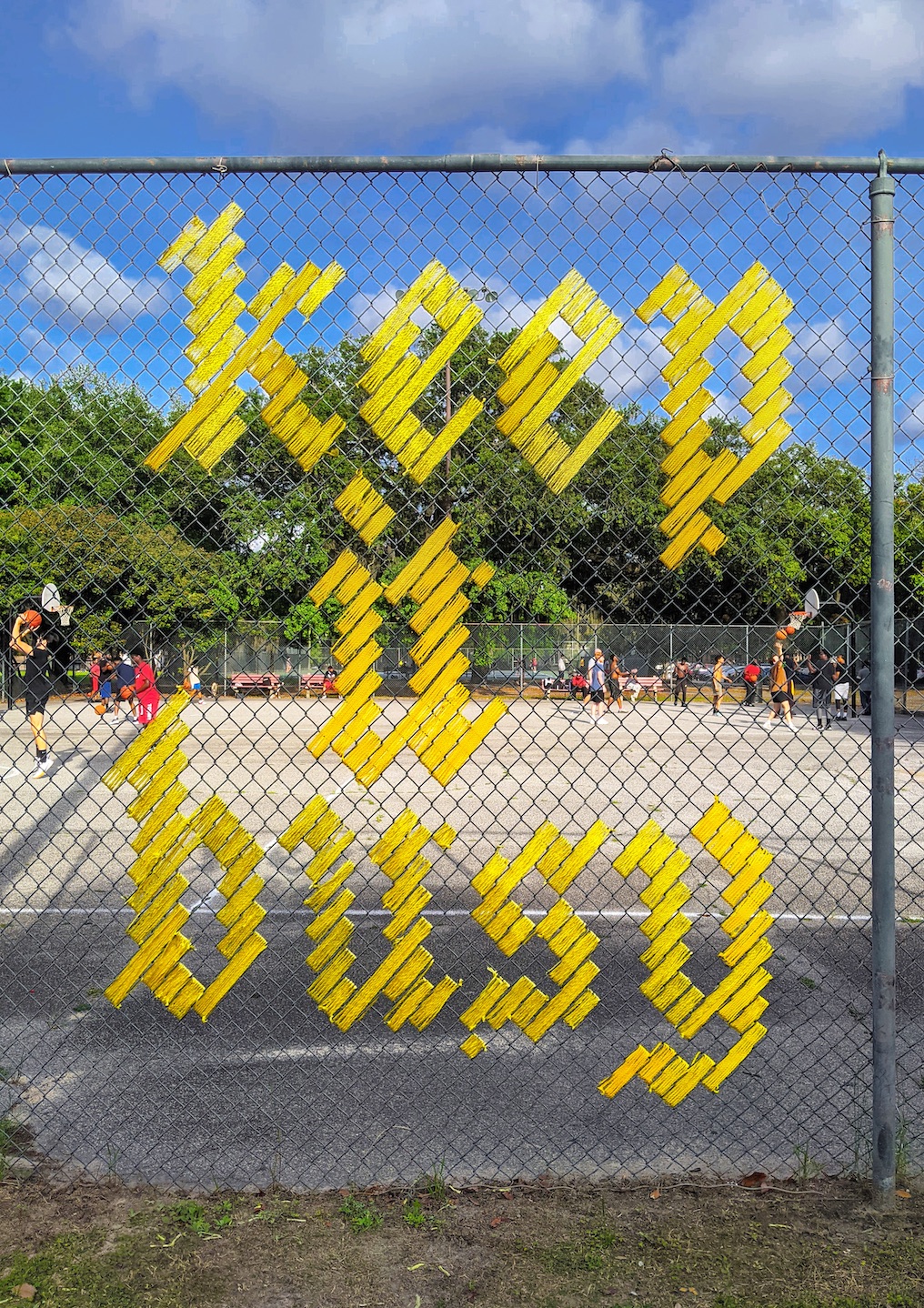
Professor Mikulec's praise is manifest in Ibrahim's vision. In recent months, anyone walking around the perimeter of the basketball courts in Savannah's Forsyth Park has seen a striking message stitched in yellow in its perimeter fencing: "Keep it busy." There, in the bucolic heart of the city, a place where locals, tourists, fitness enthusiasts, and socializing students all gather, Ibrahim's public art thrives.

Installation

"The initial prompt from professor Mikulec was to go on a dérive, an unplanned journey through an urban landscape," explains Ibrahim (M.F.A., graphic design). "The purpose of the dérive was to find a location in Savannah for creating an environmental poster that spoke to my experience. On my walk, I came across the fence and it felt natural to use that as a grid for creating blackletter typography. The words 'keep it busy' came from a freewriting exercise. Although they were written in a specific personal context, I picked them out so that anyone who came across the piece could make it their own, and find some inspiration and motivation to keep doing what they're doing."

Ibrahim's project was spurred by professor Mikulec's class User-centered Strategy and Process (GDVX 770). It took approximately 15 hours for Ibrahim to complete the installation, working by hand in the hot sun and fielding intrigued questions about his purpose from passersby.

In addition to the Forsyth installation, Ibrahim deconstructed that environmental iteration to create a motion poster and a digital print edition, to explore how an idea can be applied in different media. "Those posters were inspired by my process and the painstaking time and effort it took to weave the ropes into the fence," explains the native of Karachi, Pakistan. "It was about becoming more comfortable with creative freedom—something we as designers both dread and crave—and converging on what works and feels right."

Lest a temporary public art project confine perceptions, Usman's other projects are as varied as the depth of his talent. He is founder and creative director of Pin'd (billed as "Pakistan's first enamel pin company"), brand producer for TEDxLUMS, and an illustrator whose work has been featured on adda ("The online magazine of new writing from around the globe").

Ibrahim will return to SCAD Savannah in fall 2021 to begin work on his master's thesis, using graphic design to address the history of Pakistan and how external influences from colonialism through globalization affect his home nation's identity. "I want to address our visual identity as a community. We cannot lose the idea of having something to add to the discourse of the world."

Usman Ibrahim

Visit Usman Ibrahim.


Anthony TungNing Huang: dancing in ink

July
16
2021
By
Tags:

"La Bayadère is one of the greatest ballets in the world," says Anthony TungNing Huang (M.F.A., illustration, 2021) of the subject of his graduate thesis project, a speculative poster design for The Royal Ballet. "It's about love, it's about revenge, it's about forgiveness, and it's about closure."

The creative process that led Huang to his thesis began in Contemporary Art (ARTH 701) class with SCAD art history professor Dr. Rachel Hooper.

"Dr. Hooper introduced examples of artists who had opened up their worlds by using different materials," remembers Huang. "As an illustrator I thought, how can I use different materials to find myself and grow as an artist? I started off using watercolors, then tried acrylic — both were fun, but not it."

Then, in the winter of 2020, Huang signed up for Graduate Printmaking Processes (PRMK 602) with professor Curtis Bartone. That experience proved transformative. The first assignment was woodcut relief, and as Huang says, "The moment I touched the gouge, I knew."

"Printmaking taught me to slow down. I learned how to be more sensitive to values and textures. Becoming a printmaker changed me as an illustrator."

Huang had the opportunity to work alongside students majoring in a wide range of disciplines, including interior design, painting, and fibers. "It was fascinating to see how everyone's background manifested in their work, even when we were all working with the same materials." When winter quarter concluded and the world went into lockdown, Huang began to work on his thesis project largely from his apartment, without full access to studio tools.

"La Bayadère, also known as The Temple Dancer, is adapted from the Indian poetry drama by Kalidasa," explains the Taiwanese-American Huang. Under the guidance of his thesis chair, professor Arden von Haeger, Huang combined traditional media and new media to create the poster. "I tried to mimic some textures from printmaking. I used monochromatic tones to create a classic feel. I used the form of a ballet dancer to express the grace and sadness of the whole show. I used a sans serif font to echo the logo of the theater itself. And I used environmental elements, symbolic flowers like the lotus."

illustrated poster for La Bayadere

Huang's horizontal design can be cropped to create a billboard, flyers, or other promotional collateral. "I challenged myself by creating a huge image, with more information inside, and a sense of movement by using dancers' bodies."

Intriguingly, years before he came to SCAD, Huang was on a path to become a professional ballroom dancer in Shanghai before being waylaid by injury and turning towards visual arts. His sensitivity to movement is apparent in his work. (This physicality is evident in the film on his website that conveys the rhythms of his artistic process and his seriousness of purpose.)

"One reason I chose La Bayadère is because of the history of the story, which goes back to Asia. The more I grow, especially with globalization and the internet, I assume a world citizenship. I want to connect ancient cultures through my work, and make it modern."

Huang acknowledges another SCAD class, Business and Professional Practices in Illustration (ILLU 774), as influencing his thesis: "As an artist, it's important to show who you are. But as an illustrator you also need to work with the client. Trying to make your client see what's interesting about your work and who you are, and how that will make their product more successful, that's something I learned at SCAD."

portrait of anthony tungning huang

Visit Anthony TungNing Huang.


SCAD Lacoste reopens in incomparable style

June
29
2021
By
Tags:

Rebonjour! SCAD is pleased to announce the re-opening of SCAD Lacoste, an imaginative center for the study of art and design sited in the beautifully preserved medieval village of Lacoste in the Provence region of France. In 2002, SCAD acquired the site and meticulously revitalized more than 30 historic structures. This summer, SCAD will host dynamic activations throughout SCAD Lacoste, inspiring students, alumni, and visitors to the region.

The exhibition Notre Ami, Pierre Cardin, the university's latest ode and homage to the indomitable designer, is now open to the public. The exhibition features exceptional garments and two films produced by the university — including I Am Thinking of Pierre Cardin, awarded Best Fashion Documentary at the London Film Festival — celebrating Cardin's remarkable life story. The exhibition is set in an installation reminiscent of Cardin's famous Palais Bulles, his dream residence near Cannes and a future-forward architectural marvel that rivaled his greatest fashion creations.

Notre Ami, Pierre Cardin highlights the designer's long and treasured friendship with the university that began with the establishment of SCAD Lacoste in the historic village, which Cardin, a longtime resident, knew would serve as an endless source of inspiration for young artists. For nearly two decades, Cardin embraced the role of mentor, engaging hundreds of SCAD students across the university's top-ranked degree programs, from fashion to architecture and beyond.

An exhibit at SCAD Lacoste

In 2008, the university honored Cardin with the SCAD Étoile for his contributions to the fields of fashion and design as well as his role in the historic restoration and cultural life of Lacoste. In 2018, the university's SCAD FASH Museum of Fashion + Film in Atlanta originated the exhibition Pierre Cardin: Pursuit of the Future, a major retrospective presented in partnership with the Pierre Cardin Museum in Paris that included iconic looks from the 1950s held in the SCAD Permanent Collection. Notre Ami, Pierre Cardin is curated by Rafael Gomes, head of fashion exhibitions at SCAD, in collaboration with Pierre Cardin Paris and Rodrigo Basilicati.

Visitors to Lacoste can also experience the creative process firsthand as they observe working artists selected for the prestigious SCAD Alumni Atelier, an elite artist residency conceptualized and endowed by SCAD President and Founder Paula Wallace. Originated in 2015, the SCAD Alumni Atelier offers visionary graduates the time, space, resources, and business education to thrive creatively and professionally. As ambassadors or associates, alumni advance their careers, strengthen their connection to the university, and join a select cohort of emerging and established entrepreneurs, artists, designers, and scholars. Now in its sixth year, the SCAD Alumni Atelier has disbursed more than $1 million in support of new or expanded alumni ventures including fashion brands, jewelry collections, screenplays, feature films, exhibitions, and more — a testament to the university's lifelong commitment to the SCAD community.

Launched in 2021, the SCAD Alumni Atelier associateship encourages graduates to pursue their creative practice with a focus on engagement with the SCAD community. While creating, ideating, or brand building, associates reconnect with faculty, serve as student mentors, and engage with staff in admission, communications, and career and alumni success. SCAD Alumni Atelier associates Melinda Borysevicz (B.F.A., painting, 2011), Masako Maupu Masukawa (M.F.A., illustration, 1995; B.F.A., illustration, 1992), Liz Robb (M.F.A., fibers, 2014), Serge Ruffato (B.F.A., sculpture, 2012), and William M. Ruller (M.F.A., painting, 2013) will create new work in personal studios within the university's enchanting medieval caves and share their artistic practice with students and the public throughout the summer.

The university will also reopen shopSCAD in Lacoste. Nested on the Rue Saint-Trophime, the boutique retail space and gallery features an ever-changing melange of original jewelry, accessories, apparel, stationery, home décor, and unique gifts by SCAD students, alumni, and faculty.

"Summer sunshine bathes France's Luberon Valley in lavender hues and beckons adventurers to SCAD Lacoste, where enthralling exhibitions and explorations await," says President Wallace. "À bientôt!"
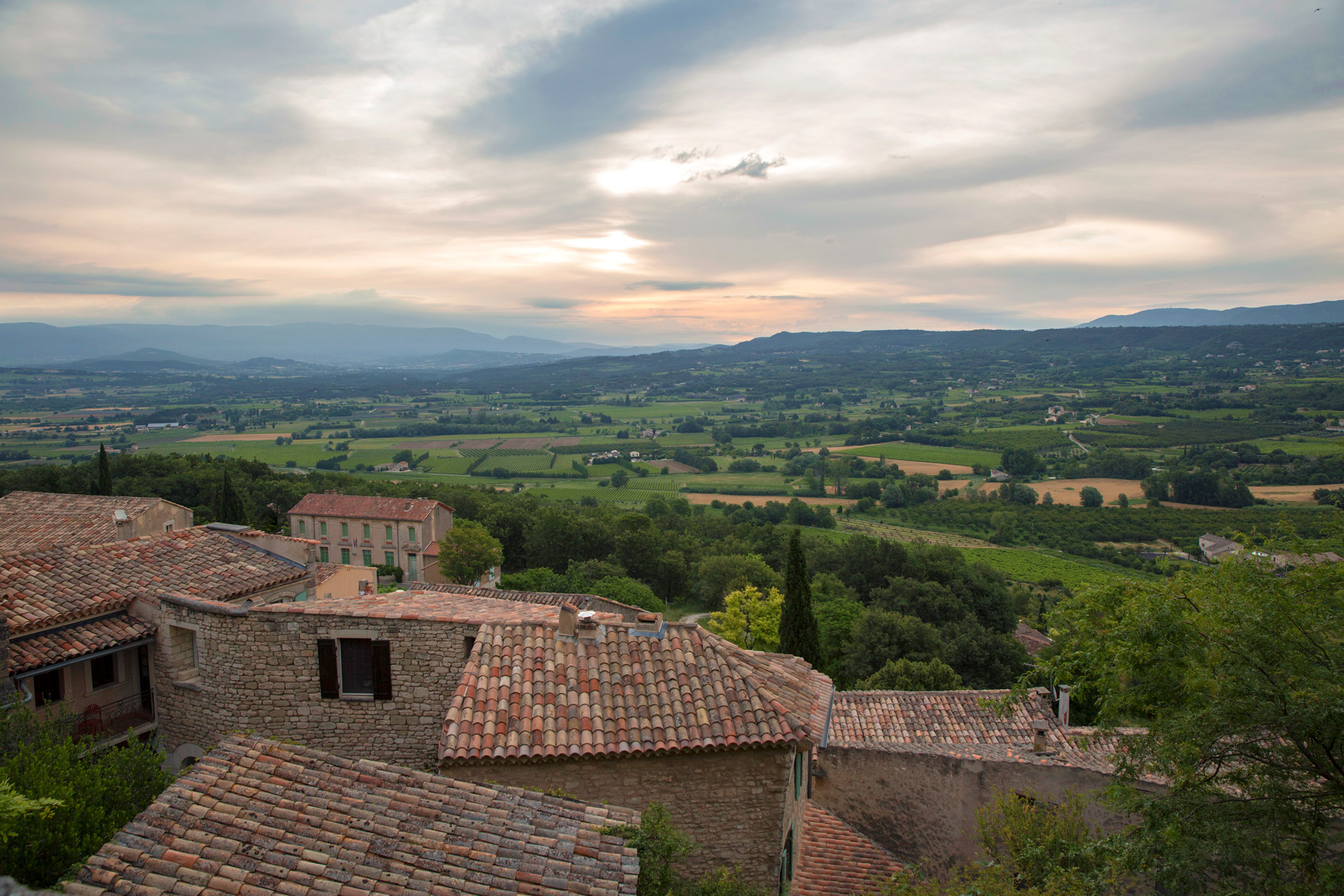
SCAD Lacoste area shot

Visit SCAD Lacoste!