Skip to main content Accessibility Policy

Hanna Allen: the perfect twist

March
1
2021
By
Tags:

"In my heart, I will always love toilet paper," says Hanna Allen (B.F.A., sculpture, 2020).

Allen has found a more refined use for Scott Single Ply, transforming standard white rolls into fine art. The Atlanta-based sculptor's pieces are strong enough to support climbing, swinging, and a child's embrace, yet are ruined in a light mist. Her sculptures can stand fifteen feet tall or be worn by a bride walking down the aisle. With each twist, braid, and plait, she shares herself with the viewer.

At first glance, viewers might not notice Allen's unusual chosen medium. Her pieces closely resemble macrame, fooling the eye for a moment of charmed disbelief. Whether umbrella, rope, or ladder, her unique pieces woven from toilet paper can contain up to forty rolls and take weeks to complete.
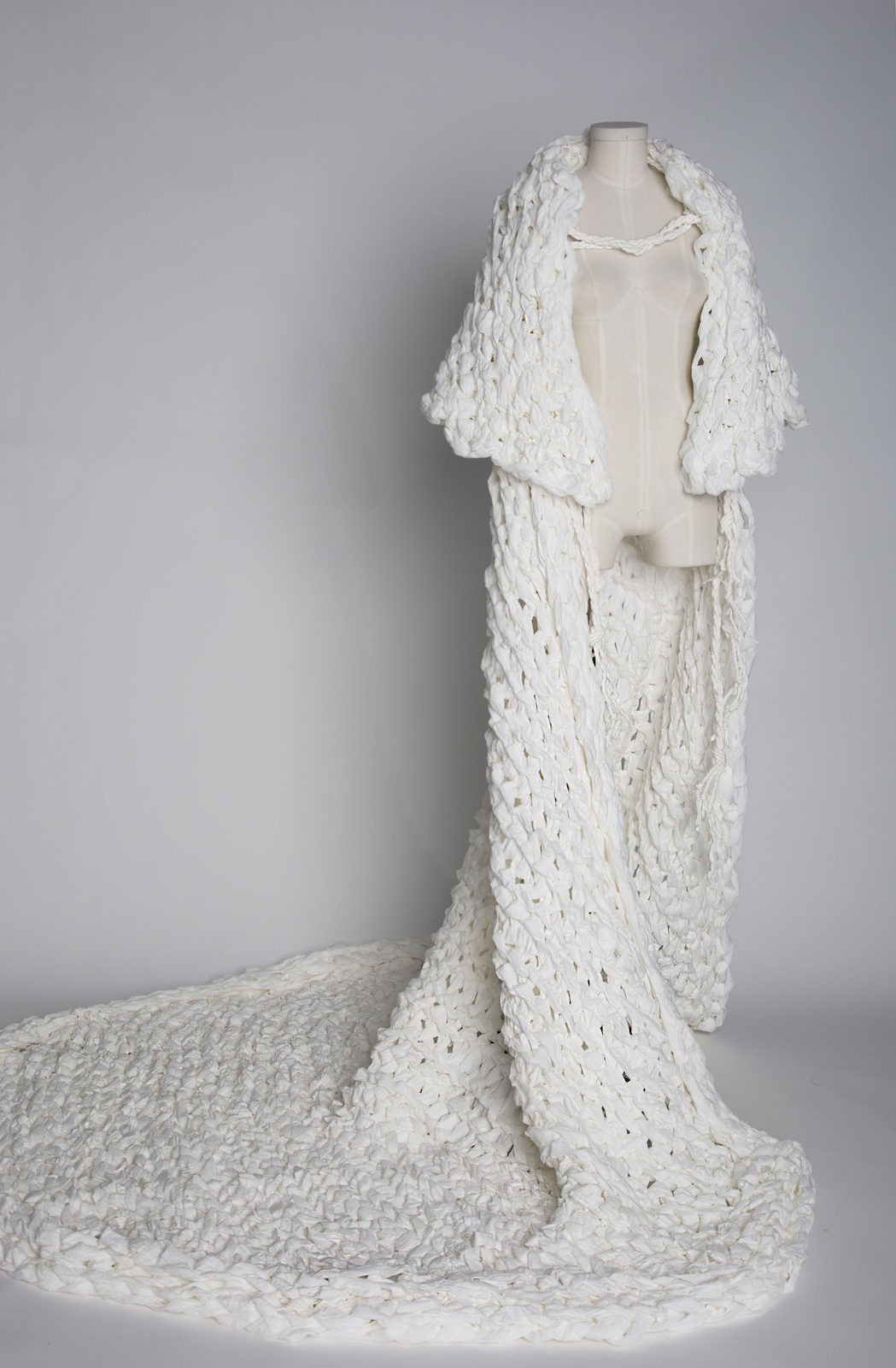
toilet paper sculpture by Hanna Allen

"Coronation Robe (Worth)," toilet paper, 2019.

Hanna Allen:

Toilet paper has a specific use. We all know what it is and why we need it. It is meant to be disposed of, flushed down a drain, never seen again. There is nothing inherently cool or noteworthy about the roll hanging on the wall, yet what would we do without it? Like most things in life, toilet paper can mean more if you let it.

The summer after I graduated high school, I was diagnosed with narcolepsy. I was planning to attend SCAD Savannah and swim on the swim team. Out of an abundance of caution, my mother persuaded me to change my plans. Later that year, I slipped and fell on some ice and received my second concussion. There I was, at home in Atlanta, not sculpting, and not sure what to do next. So, I re-applied to SCAD Atlanta and I got in. 

SCAD allowed me the freedom to experiment and find my creative voice. One night while I was working on a class project, I remembered an episode of Myth Busters where a prisoner used toilet paper to escape. I went and bought toilet paper to see if it would actually work. I didn't know what I was doing. I just started twisting.

The simple act of twisting the toilet paper together affected me. The toilet paper rope became stronger as I braided the three cords together. I watched this weak and disposable item become strong, intricate, and beautiful. I felt myself connecting with the experience in a way that moved me on a spiritual level.

Flash forward to 2018, my junior year at SCAD. I traveled to Nepal for the Gallery Mcube Interdisciplinary Students Residency. I was encouraged to go by the leaders of the SCAD Atlanta InterVarsity club, a campus ministry group. 

I was there with no tools and no SCAD studio to fall back on, wondering what I could do. I began sitting on my floor, twisting toilet paper into cords. Eventually the cords of three became cords of nine, eighty-one, and two-hundred and forty-three. My final product was a tree that suspended from the ceiling called "Chautari." It still hangs in Kathmandu today, it was too heavy to take home.

When I back to Atlanta, I made a swing, a ladder, and a tug-of-war rope. It was incredible how strong the pieces were. Then my focus shifted to the fragility of the pieces. Yes, they were strong, but only if they were dry. I began my Destruction Series with a coronation robe I titled "Worth." I wove an intricate garment and then walked outside and stood in the rain, allowing it to tear and fall apart.

As the garment deteriorated and failed, I felt a sense of relief. I felt myself let go of the stresses of being. I had made something I loved and let it go. I found my power as an artist through my Destruction Series. My beauty and worth aren't tied to my accomplishments as a sculptor. I am me. I am a woman of faith, a friend, and a creator.
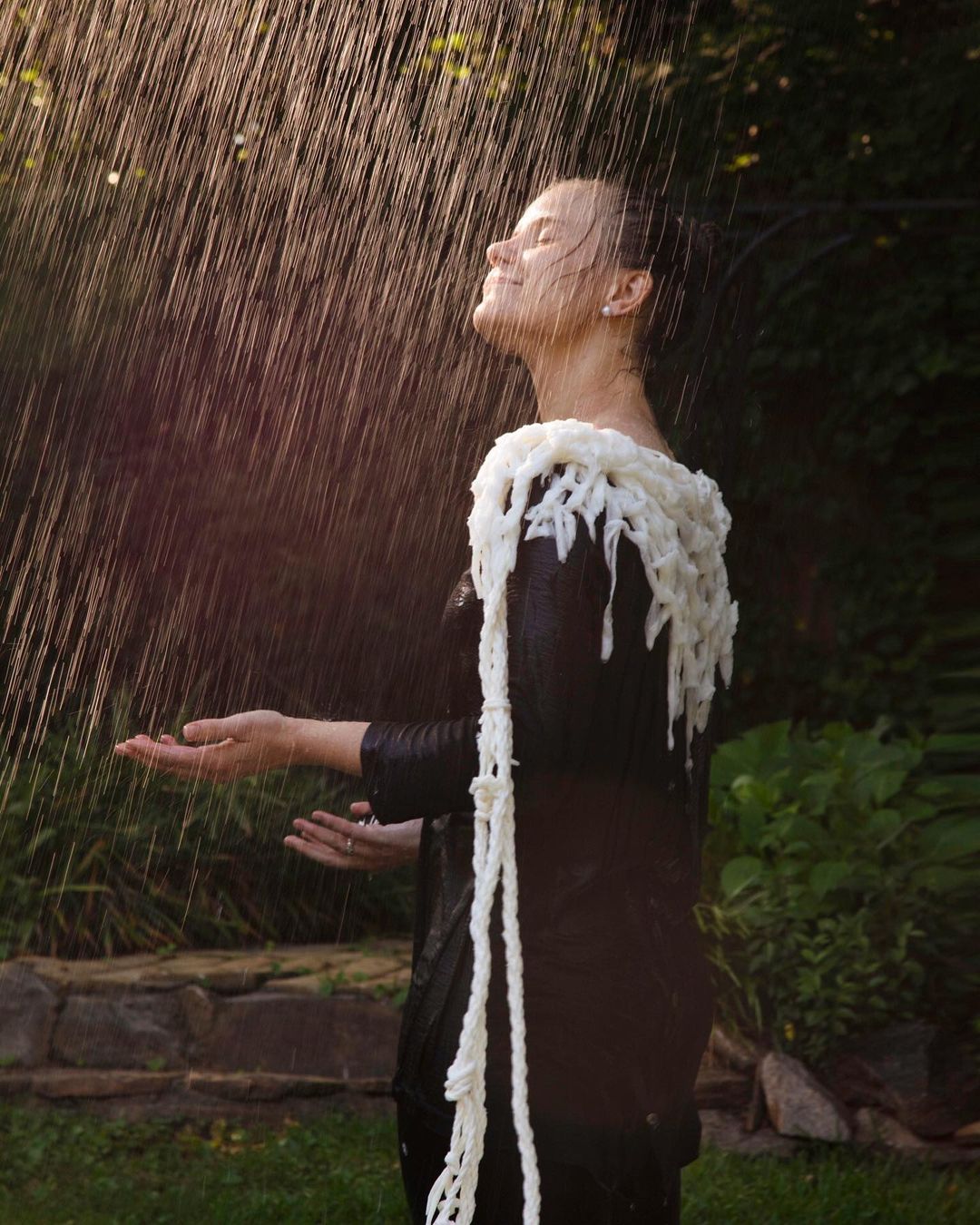
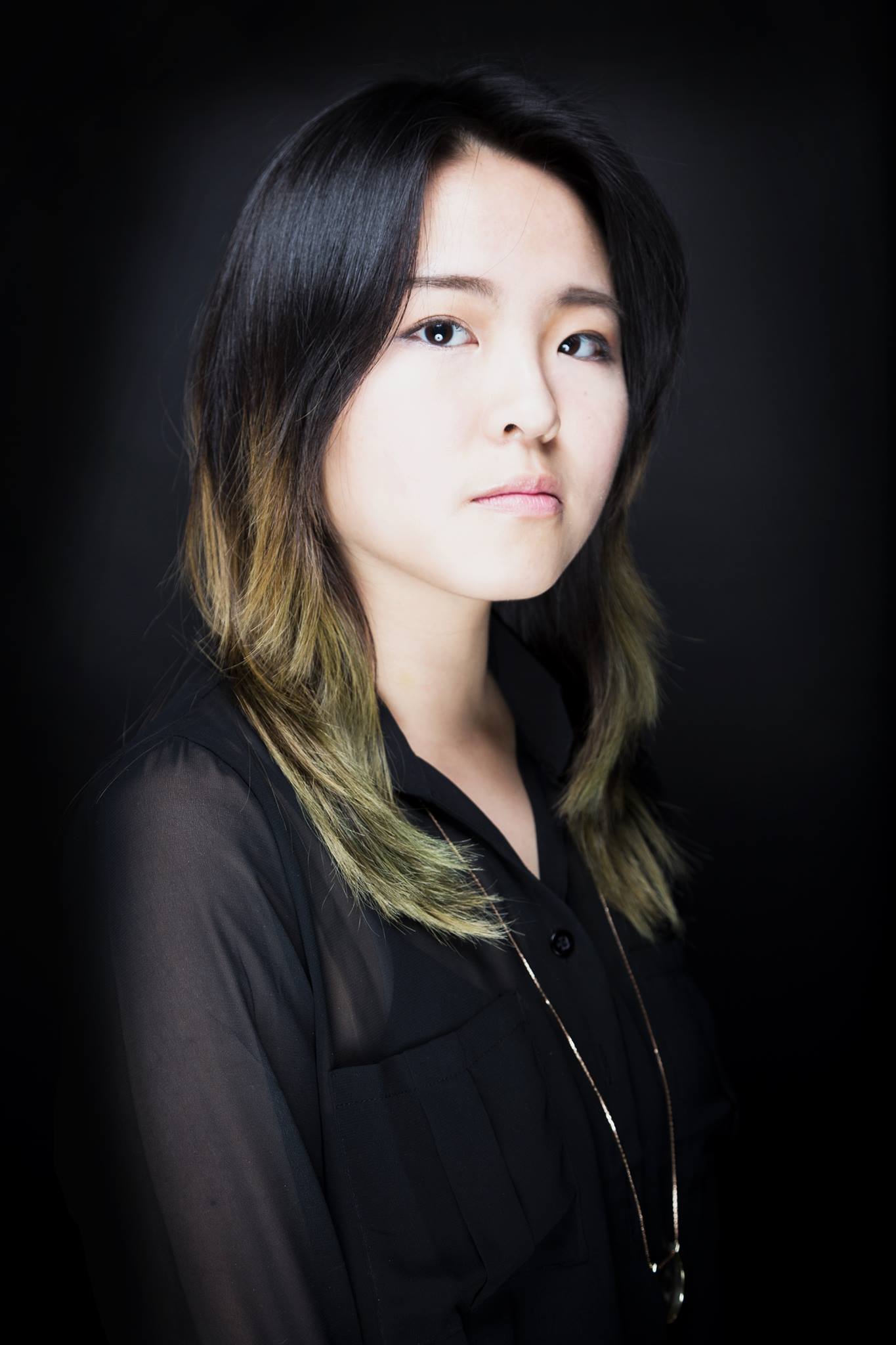
portrait of Hanna Allen

Hanna Allen.

Photograph by Cristina Mora (B.F.A., photography, 2019).
Rose B. Simpson's deFINE 'Countdown'

February
26
2021
By
Tags:

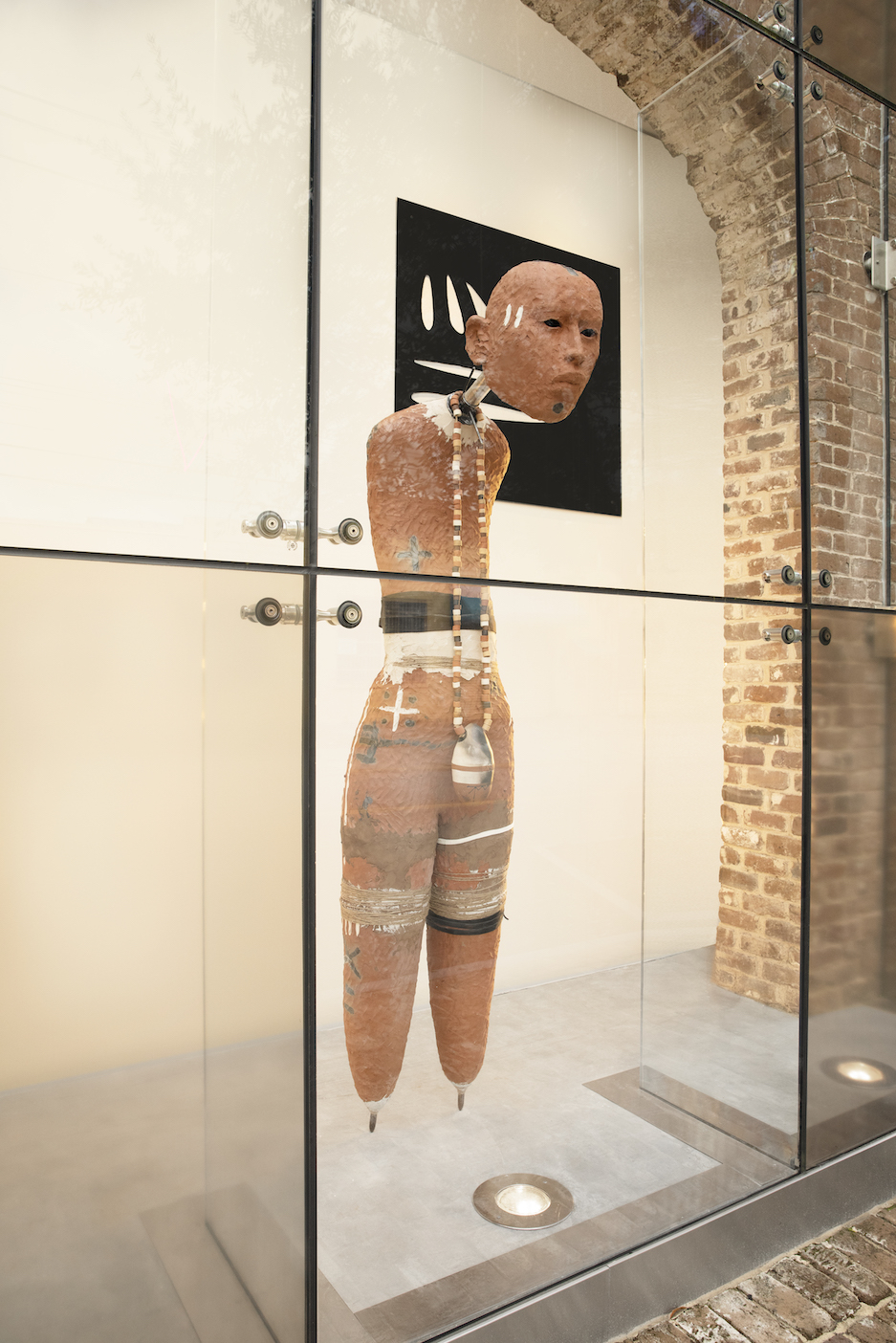
"Being in an agitated state wasn't going to allow these pieces to come into being," artist Rose B. Simpson said of the four large-scale sculptures that occupy the jewel boxes of the SCAD Museum of Art. "The water in the clay is listening to my internal molecular water, so it's going to respond and break. Or explode in the kiln. The tension is already in the work. These really heavy clay works are leaning against this glass…that's tension enough."

Simpson's frequent, sweet laughter when discussing her serious Countdown sculptures seemed particularly suitable to the moment. As she spoke with curator DJ Hellerman during this year's virtual SCAD deFINE ART, the artist was in her home studio in New Mexico's Santa Clara Pueblo, just across the Rio Grande from her tribal center ("If you yelled from the center of the pueblo, I could hear you") while the curator was in the museum in Savannah.

"I can't relate to the feeling of placelessness," Simpson said, "because I had the privilege of growing up in my ancestral homelands, spending time with my great-grandmother in the house that her great-great-great grandmother built."

Simpson credits her mother, the noted artist Roxanne Swentzell, with creating her foundation: "Ceramics was my mom's livelihood, and it fed our entire family. I didn't realize until I was in grad school that I had the privilege of coming from a family that supported itself through its artwork. That's a neural pathway I didn't have to build."

As Simpson peered through her computer screen, it made for a powerful if unintended corollary to her works at SCAD MOA, where the Countdown sculptures — enormous, armless stoic beings, adorned with glyphs — lean against the inside of the jewel boxes, in conversation with passersby.

"I see the glass as a material you work with, not a spacer between human and art," Simpson explained. "It's really a vital point of interaction."

Rose B. Simpson, “Countdown,” 2020, ceramic, metal, epoxy, cement, string, leather, and mixed media.

Rose B. Simpson, “Countdown,” 2020, ceramic, metal, epoxy, cement, string, leather, and mixed media.

Courtesy of the artist and Jessica Silverman.

The Countdown sculptures were created as a commission for SCAD MOA, although Simpson has only ever visited the museum virtually. "The first time I went onto Google maps and wandered around the streets and looked at these things, the metaphor that they provide is spectacular. The shape of the brick cut out from the side of the building is a threshold. The art has to engage with sunlight, with birds, with trees, that all becomes a part of it and that's so exciting."

Metal, epoxy, cement, string, leather, and mixed media all play literally supporting roles in Simpson's Countdown, though her primary material preference is set:

"I keep choosing clay. Clay is full of molecular water. Whatever your intentions are, it listens and responds to those intentions. I keep returning to clay because we have an ancestral, familial relationship, and clay keep me honest. It has the capacity to rip open my chest cavity and reveal what's inside. If we don't have compassion for ourselves, we will self-destruct, just like clay."

Rose B. Simpson

Visit Rose B. Simpson.


Sanford Biggers' deFINE keynote

February
25
2021
By
Tags:

"What is presented to you in an artwork is not the whole story," said honoree Sanford Biggers during his keynote address at SCAD deFINE ART 2021. "There is a lot of code, and a lot of layers, to what you're looking at."

A 2020 Guggenheim Fellow, Biggers was speaking not of a specific piece, but of resonant works that have informed his own practice and world view, from "Rapper's Delight" to the Venus de Milo to the quilts of Gee's Bend. He was referring too to the work in his current solo exhibition Contra/Diction at the SCAD Museum of Art's Walter O. Evans Center for African American Studies, the occasion for his deFINE presentation.

Biggers' keynote was an artwork unto itself.  He integrated aspects of his childhood in L.A., the subsequent mentorship of Spelman College's Frank Toby Martin, and the patronage and friendship of collagist Varnette Honeywood into the hour-long talk. Delivered virtually in an open-to-the-public format, his keynote specifically addressed the concerns and interests of SCAD students. Biggers' allyship was enhanced by the intimacy of the in-camera address.

"I started to consider myself an artist even before high school, maybe junior high," he said. "This was the early 80s, and I was a first-generation fan of Rap music. It was not hip-hop at that point. A cultural revolution was happening. As an early practitioner of the b-boy and b-girl arts, I found myself loving DJs, graffiti, and breakdancing. One of my earliest art experiences was sneaking out of my parents' house and painting graffiti in the train yards of Los Angeles. This was pretty influential to the way I perceive art as not something one does in a vacuum or just in a studio, per se. It has performative elements, it has collaborative elements, and it has resonance beyond the galleries and museums where we typically show. I always strive to make art that can translate between those different contexts."

Biggers discussed pieces from throughout his career, including ground-breaking works "LOTUS," "OM II," and "BLOSSOM." He addressed Shinto singing bowls, melted-down boom boxes, and how art objects need to be not merely created but "activated." He referred repeatedly to the formative experiences of his youth.

"In my high school AP class, I was assigned to paint portraits of the people around me," he said. "The final day, I showed my oil paintings of my family and friends, and the white teacher held up my work and said, ‘Why do you always paint black people? Is this something political?' I was 15. I thought it was a joke. Somehow painting my family and friends was a political statement? What we were considering normative was coming from one particular lens. Right there, I knew there was a polemic set up between my work and what my work was being perceived as. It had a profound effect."

Biggers' keynote culminated in a Q&A where he considered what students should do when they feel they have reached a limit in their art.

"Creativity presupposes output. If you've hit a wall, respect that and put it down for a while. You can overwork a muscle and at that point you're destroying the muscle, and it's time to work on other muscles. Creativity also has many different modes. It is not always output. Sometimes creativity is intake. It can mean taking time off to read, or not to think about art. I guarantee if it's in your bones, creativity will find a way out. You have to not be so hard on yourself sometimes. The creative process is an unwieldy beast — we can't control it all the time."

See Contra/Diction at SCAD MOA.

Brandon Sadler: deFINE the times

February
24
2021
By
Tags:

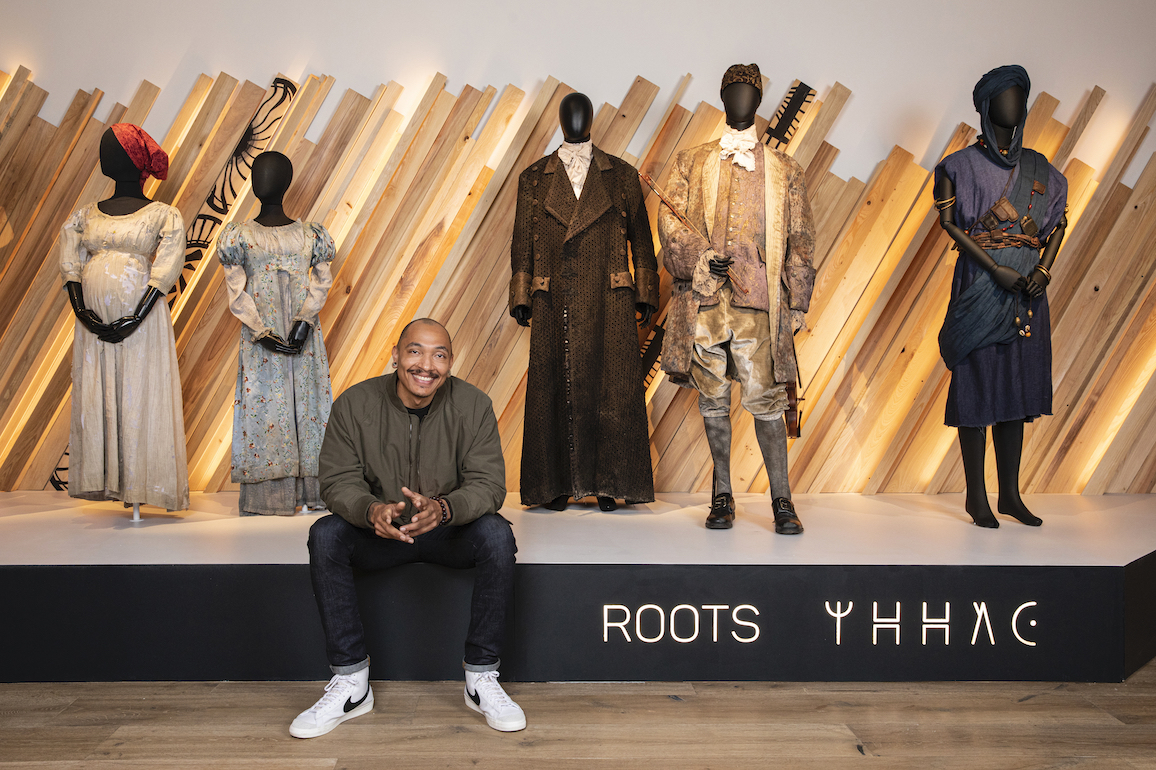
In the time it takes to sip a cup of tea, you can learn a lot from Brandon Sadler (B.F.A., illustration, 2009). Founder of the Atlanta-based studio Rising Red Lotus, and recipient of the SCAD Distinguished Alumnus Award winner in 2019, Sadler has created work for clients including Marvel Studios, Disney, Adidas, and the Atlanta BeltLine. His art is featured prominently in the film Black Panther, and he created site-specific wall paintings and digital illustrations for the exhibition Ruth E. Carter: Afrofuturism in Costume Design, at SCAD FASH Museum of Fashion + Film. 

On Wed., Feb. 24, 2 p.m., Sadler will conduct a virtual studio visit as part of SCAD deFINE ART 2021. In advance of that event, he checked in to chat.

Brandon Sadler:

My morning routine is I listen to a record on and make tea. Today is pretty cloudy outside so I'll probably put on some Chet Baker, drink a few bowls and then go to my studio. It's pretty simple, but that's how I get my day started.

What's my origin story? I was tossed in a vat of ooze and crawled out neon-colored! Actually, I attended SCAD at the very beginning of SCAD Atlanta. I come from a graffiti background, and I loved comic books, so I studied illustration, and learned the technical aspects of how to tell a story visually. I also wanted to focus on emotional and psychological content, so I studied in the painting department as well. My SCAD experience helped define my work ethic which was important, because I'm efficient in my industry today.

Seeing the impact that Black Panther had, to see how far it reached and what it did for people, is really special. And after the film came out, I've received related commissions that have kept the story alive. I just finished a mural for Trilith Studio, which used to be called Pinewood Studios, where some of Black Panther was filmed. The mural is in a similar style to what I created for Black Panther, and they're going to dedicate it to Chadwick Boseman. To have my work commemorate him is an honor.

My working connection with Ruth Carter began when she created a clothing line for H&M. I painted a Black Panther-inspired mural for the activation and that was the first time I met her. When she decided to do the show at SCAD FASH, she put my name out there and I was contacted by Alex Sachs and Trang Vu at SCAD FASH and everything followed. I wasn't even fully aware of all the movies Ruth worked on. It blew my mind that Ruth was this person who'd been with me my whole life, because I'd been watching her work on screen. To be involved in showcasing her legacy is a big deal.

With the SCAD FASH exhibition, my objective was to bring some continuity through those pieces, and create background pieces that allow Ruth's costumes to be in the forefront. I used different motifs in my painting to reflect the time period the costume is from and when the film is set.

I have a deep abiding interest in Eastern practices. In my work I try to find ancient practices that are applicable, that are the foundations of the contemporary creations I appreciate. I try to figure out how to bring them both together so you can have something contemporary that's full of historic substance.  The ritual of tea is connected to my approach to creating art, the nature of the process. It manifests in the tea room and the tea branding projects I've worked on. I have another big tea-related project brewing right now.

photo of brandon sadler

Sign up here to tune in to Brandon Sadler on Guests and Gusto during SCAD deFINE ART 2021.


Expanding VISIBILITY

February
16
2021
By
Tags:

You can't see Chris Fonseca boogie without smiling. The incantatory ritual of Vivian Chinasa Ezugha may make you cry out. Witness Ellice Patterson's beguiling pas de deux with an unexpected partner, and tune in to Syrus Marcus Ware's afrofuturistic transmission to ancestors. These, and other performances, are all part of VISIBILITY: A Selection of Black Deaf and Disabled Performance Artists, the amazing, ongoing online experience curated by Ikouii founder Aleatha Lindsay (M.A., arts administration, 2013).

"When I decided to curate this exhibition, I knew I had to build an assemblage of strong, unapologetically Black artists with work that celebrates the aesthetic sensibility of the Black disabled community," Lindsay says. "While each work presents a singular narrative, they all capture the ephemeral and enduring moments of the Black disabled experience. Every work within VISIBILITY explores the themes of race and disability, and importantly the intersection of the two."

VISIBILITY is free. Visit Ikouii to watch the performances. Dancer and choreographer Antoine Hunter, soul singer-songwriter Lizzie Emeh, and disabled arts pioneer Leroy F. Moore also all feature to stunning effect. Additionally, throughout the month of February, the Ikouii Instagram is home to virtual studio visits with VISIBILITY artists. Lindsay: "We want to provide a space specifically for our Black disabled artists to share and engage."

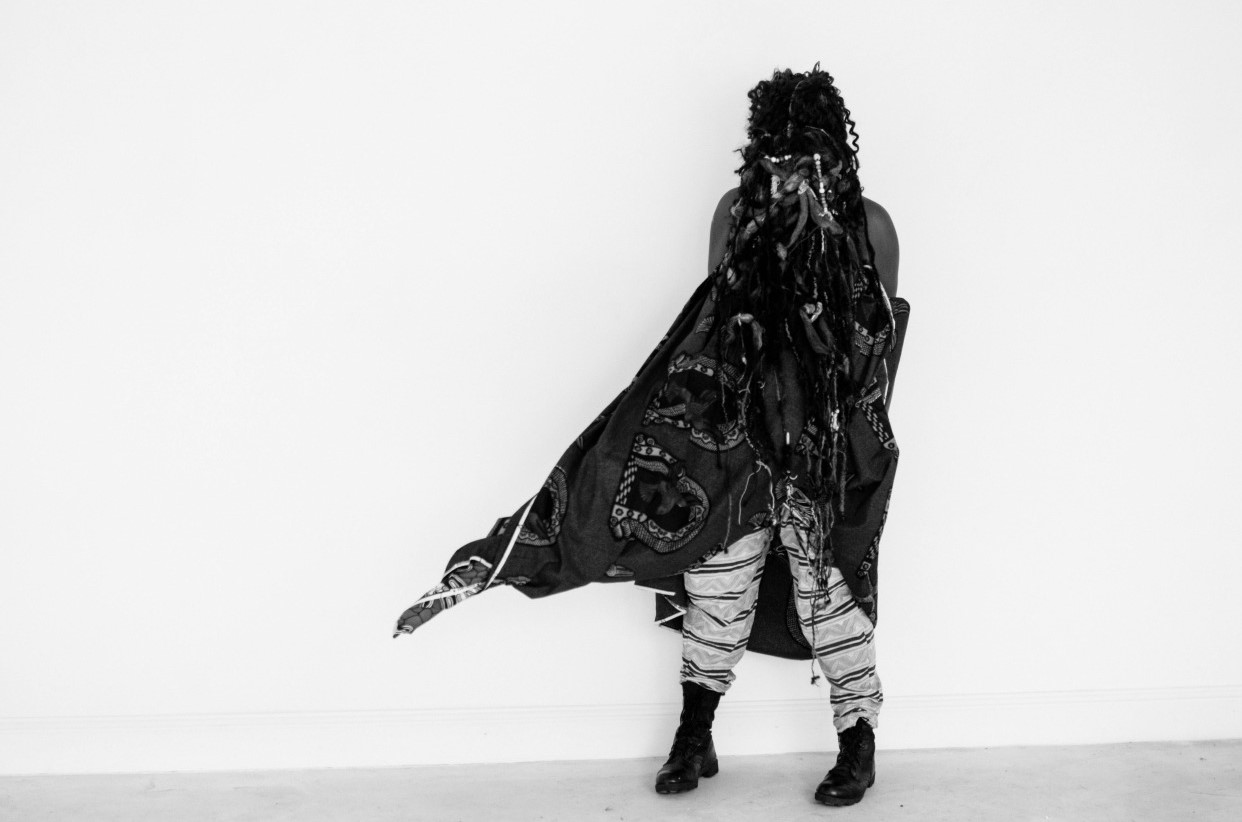
black and white photo

Photos of Vivian Chinasa Ezugha by Rosie Cooper are the iconic representative portraits for VISIBILITY. "These photos are from Chinasa's series Because of hair; the dichotomy of culture and identity," Lindsay explains. "Celebrating the intersection of Blackness, culture, humanity, and strength, the photos are really representative of the themes examined in VISIBILITY."

The precedent for Lindsay's work was set at SCAD. "I majored in arts administration, which is now called creative business leadership. I knew early on that I wanted to work with artists and audiences with disabilities, so I loved that my professors allowed me to structure my interests in disability arts, accessibility, and inclusion. My SCAD experience facilitated invaluable connections with arts organizations including Cobb Energy, Atlanta Celebrates Photography, and the Oglethorpe Museum of Art." Lindsay's senior thesis, a program designed for children on the Autism spectrum and their families to enjoy an art museum experience, won the SCAD Thesis Award.

Now this alumna is curating, collaborating, and connecting on another level. Check out VISIBILITY on view through March 10, 2021.

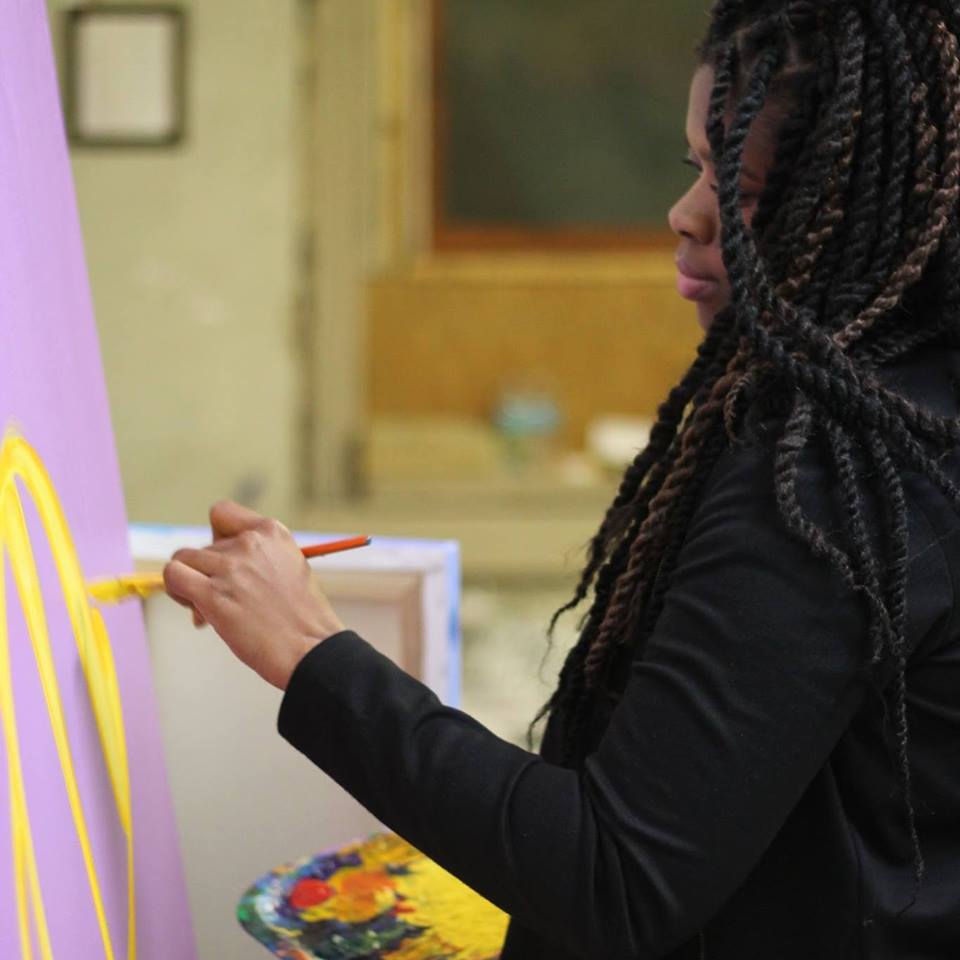
person painting at easel

VISIBILITY is brought to you by Ikouii, the Atlanta-based organization founded by Aleatha Lindsay. 

Karen Wilkin: talking Frankenthaler

February
13
2021
By
Tags:

"I can still see the carpet," Karen Wilkin says, remembering the moment she and Helen Frankenthaler stepped into Exhibit A.

In the spring of 1998, Frankenthaler (b. 1929, New York; d. 2011, Darien CT) came to Savannah for an exhibition of her work at a gallery on Bull Street called Exhibit A. At the time, SCAD was a significantly smaller institution than it is today; Exhibit A was SCAD's primary exhibition space (SCAD MOA did not open its doors until 2002). Frankenthaler: The Darker Palette, curated by Wilkin, ran through June 1998, before traveling to the Corcoran Gallery of Art and to Princeton University Art Museum. It marks the point of origin in the relationship between SCAD and one of the greatest modern artists in American history.

"Helen was the one that proposed The Darker Palette because she was so eager to have this side of her work acknowledged," says Wilkin, reflecting two-plus decades after the fact. "SCAD was certainly ambitious and could pay for an exhibition of this content, that is to say, do it properly in terms of security and air quality in the gallery. The work was not all recent, the work was from different times and was chosen because of its visual qualities. What we dealt with in that exhibition is something that's still very much an issue in Frankenthaler studies — her accurate insistence that she had a much wider range than she was often given credit for."

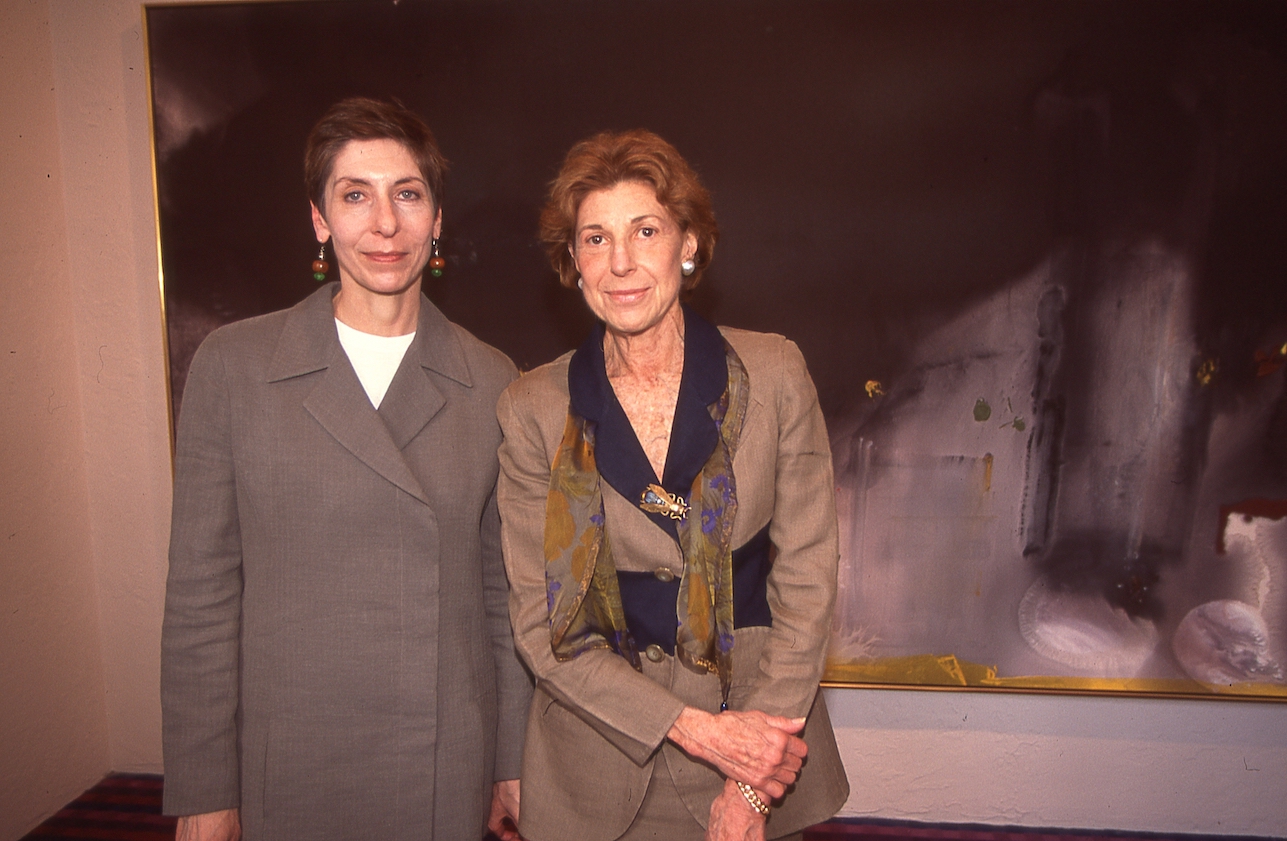
Karen Wilkin (left) with Helen Frankenthaler at SCAD, Savannah, GA, 1998.

Karen Wilkin (left) with Helen Frankenthaler at SCAD, Savannah, GA, 1998.


As critic, curator, and confidant, Wilkin has done some of the very best writing about Frankenthaler, including "Appreciation" (American Art, Fall 2012); Frankenthaler at Eighty: Six Decades (Knoedler & Company, 2008); and the superlative catalog essay for The Darker Palette. "She's been written about so much because she is such an important and prolific artist," Wilkin says. "Of course, the work is so subtle and so utterly dependent on direct firsthand encounters with things that are completely wordless. What you really want to do is shut up and point!"

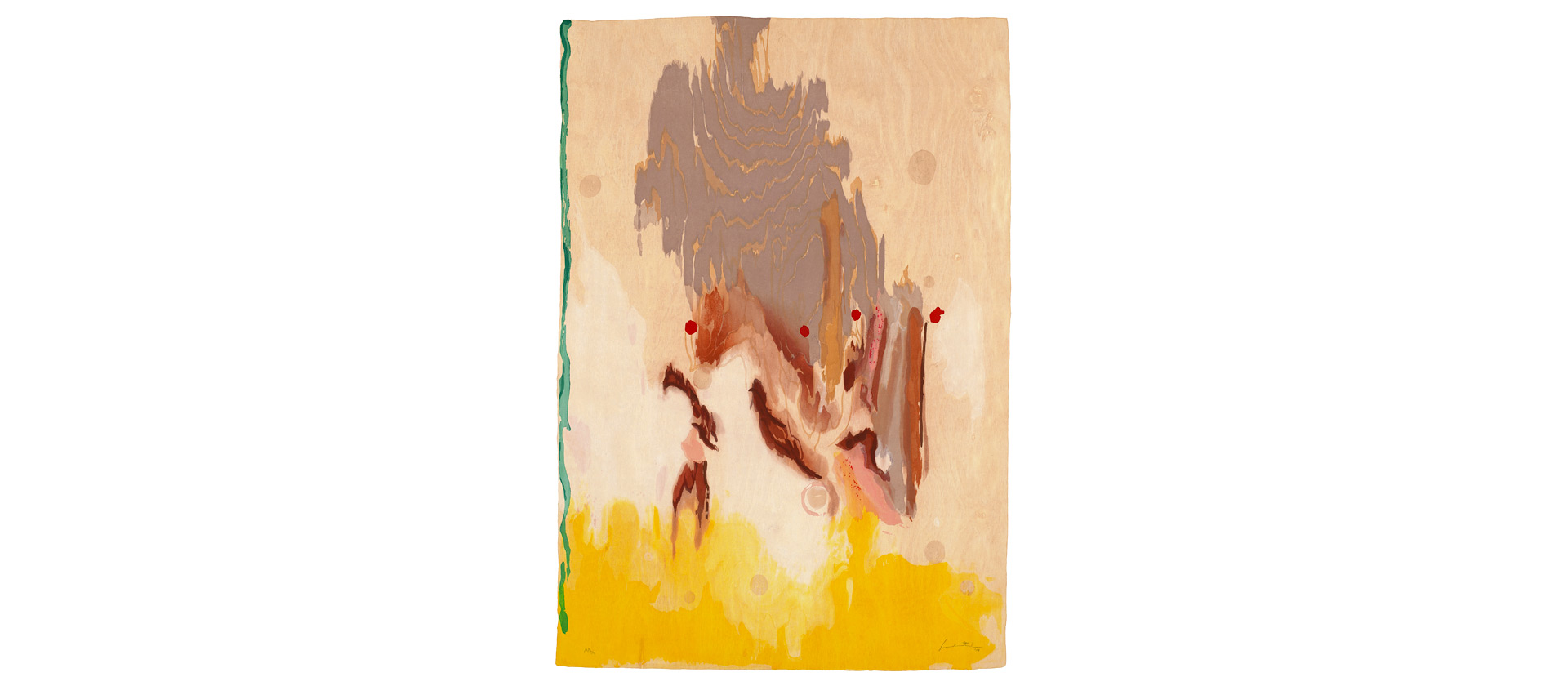
This year, SCAD MOA opened the new exhibition Deliberate Risks: Prints by Helen Frankenthaler. It features a rotating selection of ten prints and four proofs from the 1960s through the early 2000s, gifted to SCAD by the Helen Frankenthaler Foundation. The works include the dazzling woodcut "Geisha" (edition 4 of 14, 38 x 26", 2003) and the writhing lithograph "Bronze Smoke" (edition 31 of 38, 31 1/2 x 22 1/2", 1978).

Helen Frankenthaler, "Geisha," woodcut, edition 4 of 14, 38" x 26", 2003. Abstract art.

Helen Frankenthaler, "Geisha," woodcut, edition 4 of 14, 38" x 26", 2003. © 2020 Helen Frankenthaler Foundation/Artists Rights Society (ARS), New York/Pace Editions, New York.


Neither The Darker Palette nor Deliberate Risks represent Frankenthaler's heavily canonized period, which is to say the paintings she produced in her 20s, including 1952's epochal "Mountains and Sea." Rather, the exhibitions incorporate exceptional works from her unstintingly productive subsequent decades. Wilkin is a rightful proponent of Frankenthaler's sculpture, works on paper, and prints.

"I'm very glad SCAD has these prints, and that students will get to see them," she says.

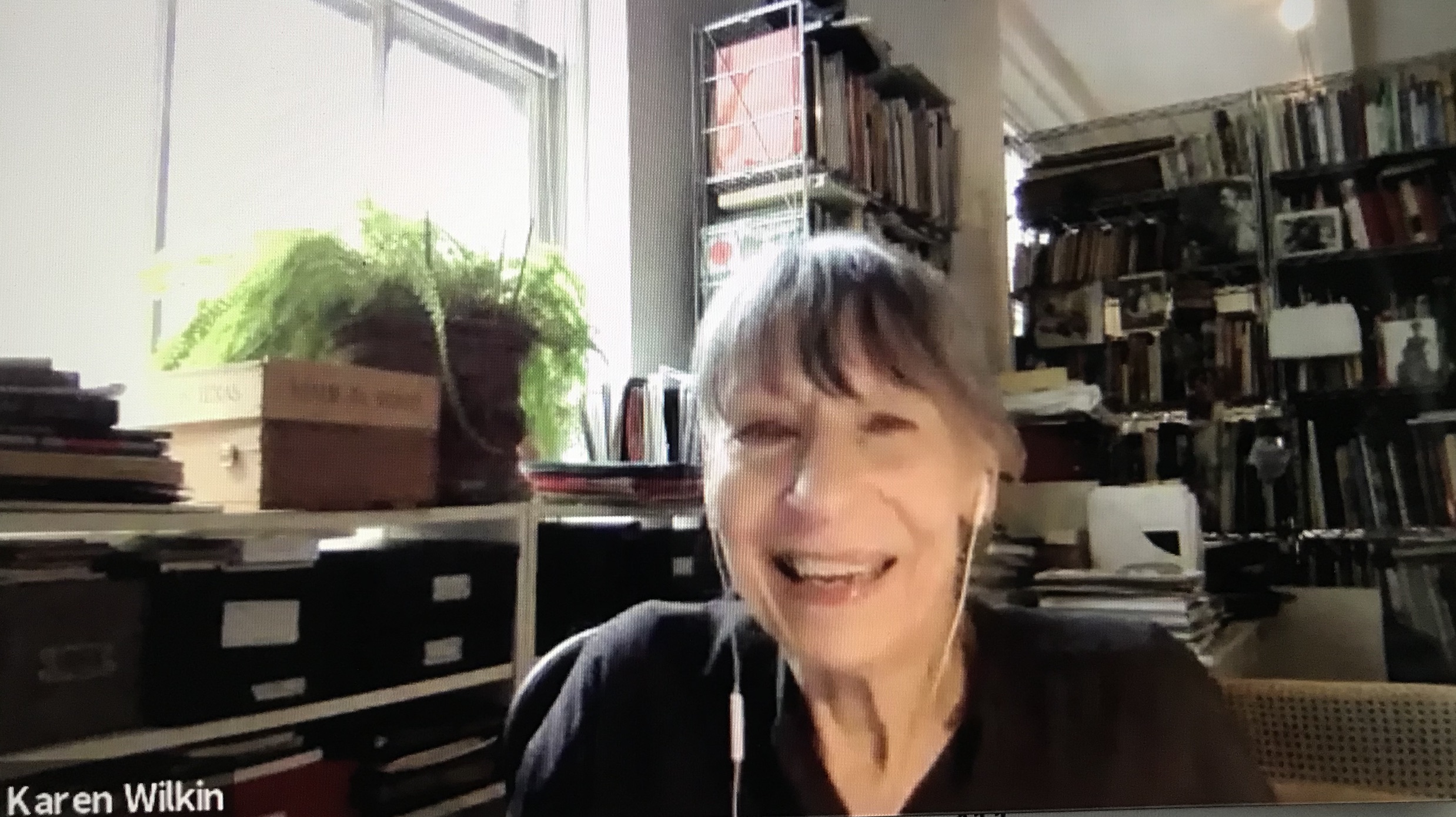
An hour speaking with Wilkin in 2021 means a peerless experience in art historical insights, as well stories about hanging out with Helen and getting deli sandwiches from Three Guys on the Upper East Side. Zooming from her office, its green plants outnumbered only by art books, Wilkin is friendly and direct, an undimmed glint in her eye, qualities all recognizable from photos taken together with Frankenthaler in Savannah in 1998. And so, about that carpet:

"We came down and the show was already installed. And we walked in there and the gallery had a carpet that had every color known to man in it in a geometric pattern and I thought we were both going to pass out. It was a real tribute to her work that it still stood up."

Karen Wilkin on a video call

Special thanks to SCAD community manager Rachel McDermott, who co-conducted the new interview with Ms. Wilkin that informs this article, and to SCAD Special Collections librarian Sauda Mitchell, who provided access to the Frankenthaler assets held at Jen Library.

Jenn Lee: excellence in user experience

February
10
2021
By
Tags:

"The heart of UX design is understanding and solving needs," says Jenn Lee (B.F.A., user experience design, 2019). "The simplicity of the task combined with the complexity of the technical process is what I love about my career."

A senior product designer at C3.ai in Redwood City, California, Lee works to facilitate small companies interfacing with artificial intelligence. She previously worked on UX projects with Google, IBM Watson, and Ford Motor Company, focusing on improvements to mobility assistance and IoT data visualization platforms. Chair of the SCAD UX design department BC Hwang praised Jenn as "one of the most promising UX designers this century."

Jenn Lee:

I grew up in the Bay area, the daughter of an engineer, surrounded by technology. At the same time, I enjoyed expressing myself through art. When I found SCAD, I knew I found a place where I could blend these disciplines together.

I took Human/Computer Interaction (IACT 315) with professor BC Hwang my sophomore year. The class was my first exposure to the full depth of the UX process. We had ten weeks to "create something humanity needs."

I worked to understand each step of the UX design process. Beginning with the initial research phase, then iterating the design, and finally creating a prototype, I did it all. Professor Hwang helped me understand how to research an idea and improve the concept, empowering me to present something I was proud of.

That's when it clicked. The work was iterative, collaborative, and incorporated hands-on design components. This was the type of career I wanted.

I participated in a SCADpro partnership with Ford Motor Company my junior year. My team researched and developed a personal voice assistant. The assistant would, over time, provide a multimodal mobility experience, unique to the individual user.

Senior year, I worked on a project for Google Maps. The team at Google asked us to reimagine the experience for 18-to-24-year-olds, specifically urban users. We conducted a lot of interviews and worked closely with the development team to get the final results. Google loved our ideas, and you can see components of our project on your phone now.

Those experiences prepared me for life after graduation. When I got to IBM, I knew how data shaped an initial idea, and how that idea needed to be tested, and tested again. SCAD taught me how to present my ideas and how to shape and tell the story of the product.

I entered the workforce with a solid foundation and transferable skills. Today, I am senior product designer at C3.ai. focused on democratizing AI. I want to empower people to do things that traditionally only very technically savvy individuals could do. I am taking complex concepts and making them more accessible for people who may not have STEM related backgrounds.

I want to make sure that I make decisions that connect my passions and aspirations. I went to SCAD to combine my interests into a career. Now that I'm living that reality, I'm determined to make a positive difference in this industry.

portrait of Jenn Lee

Visit Jenn Lee.

In 2015 SCAD, in collaboration with Google, launched the first UX design degree program at the university level. Learn more about the program here

Banner image: user flow storyboard created by Jenn Lee for IBM Watson, Internet of Things (IoT), 2020.

aTVfest 2021: Bees keys

February
8
2021
By
Tags:

From Bryan Cranston to Cynthia Erivo to Laurence Fishburne, the 2021 SCAD aTVfest was a star-studded success. Javivia Leslie discussed her groundbreaking role as Batwoman, Jurnee Smollett shared how she uses her voice as a Time's Up activist, and Kenan Thompson reflected on being the longest active cast member in the history of Saturday Night Live.

Many of the voices behind this current golden age of television are SCAD alumni. These Bees shared insights from their burgeoning careers during panels at this year's virtual festival. Here are a few of the most memorable quotes from SCAD alumni at aTVfest.

Madison Hamburg, (B.F.A., film and television, 2014), director and executive producer, Murder on Middle Beach (HBO): "When it comes to making a documentary, the subject matter is not the most important factor. What matters most is you. What is your goal? What story are you trying to tell? How can you use your unique vision to connect with the audience? There will always be a more brutal crime, a more salacious scandal, a better researched climate change film, but there will never be another you."

Brandon Nelson, (M.F.A., visual effects, 2008; B.F.A., visual effects, 2005), VFX supervisor: "Study and master the art of photography. Everything we do is based around the concept of the moving picture. Know how shutter speeds work. Understand how to use the camera as a component of the story you are trying to tell. Television is a blend between art and science, and the better you understand both, the more seamless and immersive your work will become."

Cynthia Adarkwa, (B.F.A., dramatic writing, 2012), story editor: "The most important lesson I can give a young writer and storyteller is to embrace the re-writing process. Writers write. Then they edit. Then they write again. Your first draft is never the final draft. You can always improve, so embrace that process. The more comfortable you are in the editing stage, the better your work will be on screen."

Emily Cardone-Dennis, (M.F.A., film and television, 2014), art department coordinator and production assistant: "Continue to evolve as a creative professional. Never stop learning new skills and look to work with people that will push you to try new things. SCAD has created an environment where you can collaborate with creative individuals form numerous backgrounds. Take advantage of this opportunity and don't be afraid to explore."

Marc Casey, (B.F.A., film and television, 2009), underwater cinematographer and assistant camera operator: "Don't ever give up on your dreams. Write, direct, and shoot your own stuff early. Connect with established filmmakers and work to get on the set as early as possible. Learn something new every day, and look for opportunities to acquire new skills. Understand the importance of set etiquette and how to be a team player, while taking those opportunities to grow as an artist."

Christian Magby, (B.F.A., performing arts, 2016), actor: "Participate in as many student films at SCAD as you can. Learn how a set works in the real world. The students creating at SCAD are running their sets exactly like we do in the industry. The more you can take advantage of your time at SCAD, the better you will be prepared for your career."

Zeke Waters, (B.F.A., production design, 2019), set designer: "Television is booming right now, so take advantage of the opportunities around you. That includes your time at SCAD. Say yes to the work that presents itself to you, and collaborate as often as possible. The more well-rounded you are, the more valuable you are on set."

SCADpro Fund backs Angela Benton's Streamlytics

February
4
2021
By
Tags:

Angela Benton is no start-up neophyte. Her previous ventures BlackWeb2.0 and NewME garnered hosannahs from CNN, Business Insider, and Marie Claire. She enlivened Fast Company's Most Influential Women in Technology and Goldman Sachs' 100 Most Intriguing Entrepreneurs lists. She made mind-meld business mates with influential actor Issa Rae.

Now, with her third company, Streamlytics, Benton (M.F.A., graphic design, 2007) is making an even bigger splash – this time with investment backing from SCADpro Fund.

"A lot of startups come across as versions of pre-existing services, while Streamlytics is something new," says Ray Crowell, SCADpro Fund managing director. "Making the decision to invest in Streamlytics also means committing to a more equitable internet, where users benefit from the sale of their personal data."

"Streamlytics enables users to get paid for their data," Benton explains. "We buy your data from you, clean it, enhance it, and then it gets sold to companies who can leverage it."

As more users get wise to being used by Big Tech, Streamlytics makes clear that personal data has value, and users should get paid accordingly.

"Data drives society," Benton says, "no ifs ands or buts. The problem is that our data is often exploited and our privacy violated. We see that with targeted ads and targeted misinformation that drives real-world consequences."

One benefit of her SCAD master's degree, explains Benton, "is that I'm able to conceptualize and manifest my ideas. I'm doing the design work to bring an idea to life. A lot of founders are reliant on other resources. I've been able to harness the creative education I received at SCAD to be successful in business."

That success is one of the reasons Benton was invited to Savannah in 2019 for StartUp, the annual week-long design sprint hosted by SCADFLUX and SCADpro. In a geographic twist, that was the first time Benton, a graduate of SCAD eLearning, visited the city of Savannah in person.

"Josh Lind [executive director, SCADpro] found me on LinkedIn and invited me to StartUp," Benton remembers. "I was so impressed by the students I met. We talked about their creative process, how to pitch and position your company, and how to raise funding. I was evaluating students' business plans and giving feedback, suggesting they use a certain methodology."

At StartUp, Benton and Crowell served as judges together. "Seeing Angela work with our students gave me significant insight into the type of founder and leader she is," recalls Crowell. "Having her among the portfolio of founders is an honor and significant benefit for our next generation of creative leaders in business."

As Streamlytics CEO, Benton believes SCADpro Fund may represent a new model of how institutions of higher education can promote alumni business development. "It's common for university endowments to invest in VC funds in the tech space, but what feels innovative about SCADpro Fund is that SCAD is investing directly in the alumni founders they believe in."

SCADpro Fund also functions as a creative consultancy for alumni entrepreneurs. "The education aspect of SCADpro Fund is compelling," Benton says. "I've been working with Ray on how to use creative methodology to set Streamlytics corporate strategy." The fact that SCADpro Fund is not a hands-off investment, but an engaged, ethical partner may prove to be a key to Streamlytics' success.

Nathaniel Adair's 'Balancing Act'

February
1
2021
By
Tags:

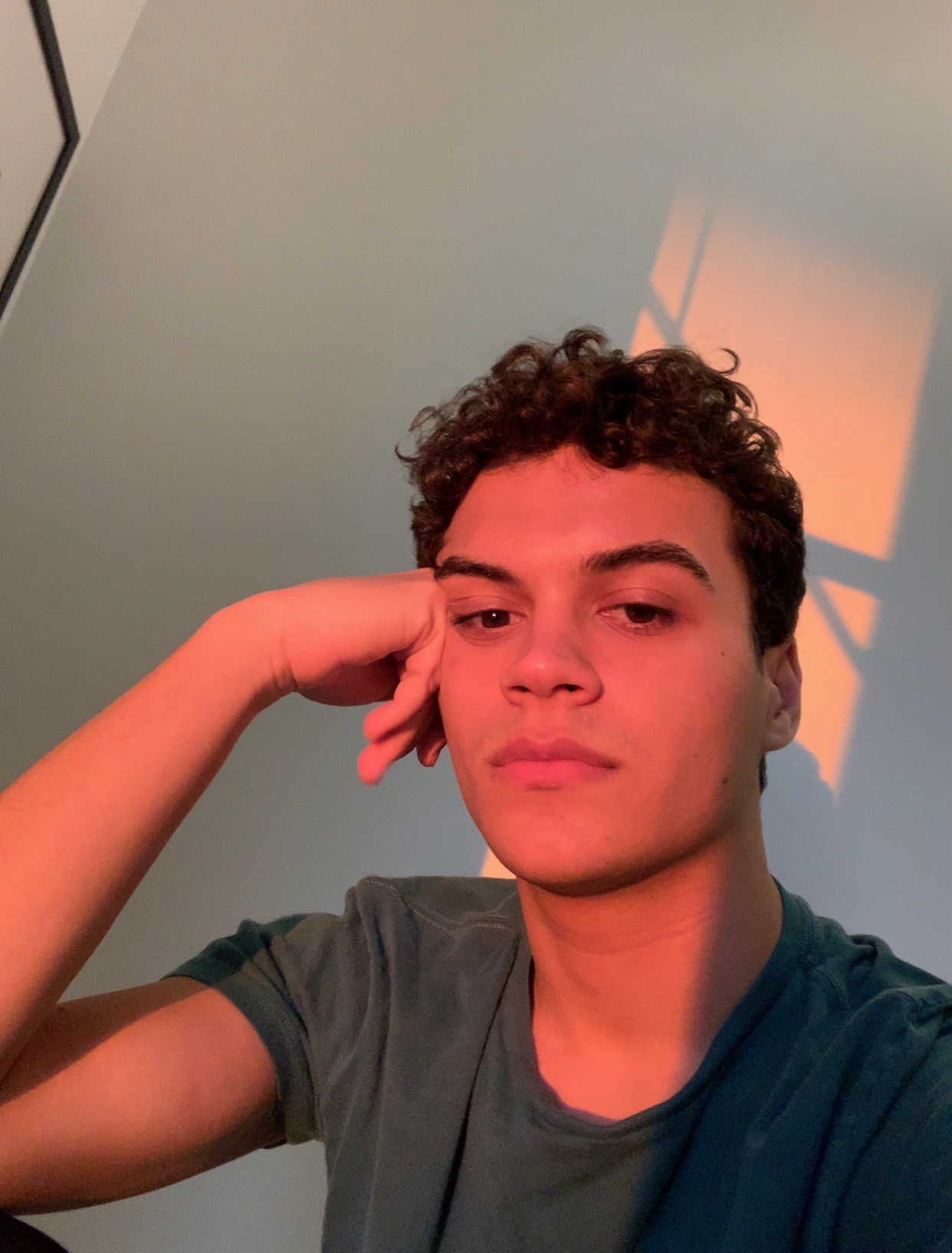
"I take a complicated thought, refine it, then I refine it again," says Nathaniel Adair (B.F.A., sculpture). "I repeat that process until I reach the very essence of the idea."

Nathaniel is a sculptor. A storyteller. A new disciple of 3D printing. He uses acrylic, wood, iron, and paint to share his perspective with the world and is combining traditional techniques with cutting edge technologies. A student at SCAD Atlanta, he creates inside SCAD Studio, the 16,700-square-foot industrial design and sculpture facility in Midtown Atlanta, considered one of the finest in the Southeast U.S.

In his own words, Nathaniel is committed to "exploring new ways to tell stories through the physical form." He is a soft-spoken nature lover, and highly regarded by his professors and peers.

Nathaniel Adair:

I wanted to pursue art from a young age. I attended Osceola County School for the Arts in Kissimmee, Florida, and have always been drawn to sculpture. I feel as though sculpture is a literal extension of me. It's physical. It's tangible. It takes up space. Where it is, I am too. It tells my story.

This year, I have focused on pushing myself to try new things and really showcase the skills and techniques I've learned at SCAD. Professor Chris Rothermel has helped me focus on getting to the emotional core of my pieces. Our conversations have challenged me to strip away nonessential components. The result is the essence of the piece itself.

I worked on several pieces this past year that showcase my artistic journey. The pieces tell the story of 2020 and the world as I am experiencing it today. They reflect highs and lows and my artistic progression.

I had never worked with 3D printers or laser cutting machines before coming to SCAD. SCAD has allowed me to explore not only my desire to create, it has also given me the opportunity to collaborate with other incredible artists. I got to be a part of a SCADpro project where I worked alongside industrial design students to create bronze coins. I was able to show my fellow students the traditional green sand approach to bronze work, and they showed me how to 3D model. It gave me access to a whole new set of skills I didn't have before.

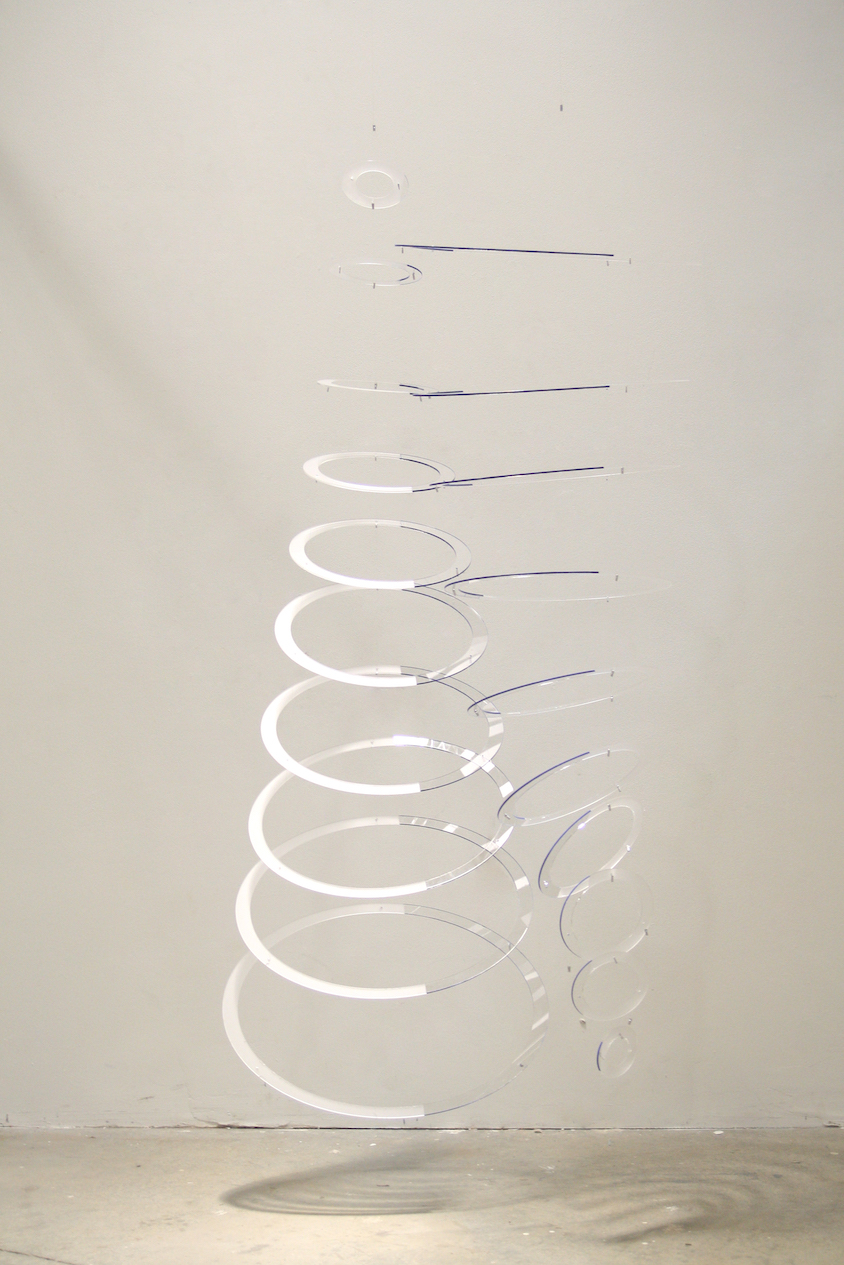
This year, I wanted to utilize those tools in combination with more traditional materials like wood and iron. As I got more comfortable with the tools, I began incorporating new elements. Paint. Plastics. Fiberboard. Having the ability to bring in new elements allowed me to play with shapes, light, and space. In "Frozen" I brought acrylic and wood components together to create a water scene. In a piece called "Balancing Act" I incorporate the two halves of myself into one cohesive piece, the perfect circles slowly shrinking and warping into the shape of creativity and perfect imperfection.

"Dancing," 2020, acrylic and paint, 6’x 4’ x 2.5’.

"Dancing," 2020, acrylic and paint, 6’x 4’ x 2.5’.

My year's work concludes with "Dancing": twenty perfect circles floating, twenty circles for my age, one set ascending and the other descending, symbolizing the ups and downs we face in our lives. The column of air formed between the two represents my family and friends who have supported me.

My fine art education and my experience as a SCAD sculpture student has prepared me to turn rough ideas into final deliverables. After graduation, I envision myself creating as part of a team, sharing my creative process with others. Always learning, always sculpting.

Nathaniel Adair

Visit Nathaniel Adair.

Learn more about SCAD sculpture.

Banner image: "Balancing Act," , 2020, acrylic and paint, 18’’x 3’ x 16’’.