Skip to main content Accessibility Policy

Start me up: professor Jeanne McPhillips

June
29
2021
By
Tags:

"Entrepreneurship is all about understand the problem you are solving and who you are solving it for" says SCAD professor Jeanne McPhillips. "I tell my students that developing relationships and collaborating in teams are key to any business, and that in start-ups, where less is more, teams are even more powerful."

McPhillips, an industry expert and founder of coaching consultancy SuperGirlls LLC, started at SCAD in September, 2020. Her business management and entrepreneurship curriculum is rooted in her 30-plus year career as private sector executive at Macy's, General Mills, Limited Group, and The Walt Disney Company. Her experiences range from focusing on merchandising and product development on Seventh Avenue in Manhattan to overseeing the overhaul of a $75 million dress division spanning seven hundred stores, with trips overseas to ensure sourcing needs were met.

"I worked with amazing talent and amazing brands, traveling the world learning the fashion business first hand," McPhillips says, her hands punctuating each sentence as though she were still competing with the sounds of New York City. "As I moved up, I got to start coaching teams. I loved it and I got the teaching bug."

She considers one key career moment to be her pivot into digital commerce—"from fashion to digital fashion," as she puts it—leading to her time as an executive at Overstock.com, Inc. and Ascena Retail Group, Inc.

The shift provided McPhillips with insights about how to retain relevance in the marketplace, which informs her SCAD classroom instruction, where she focuses on real world scenarios and entrepreneurial problem-solving. Assignments are often structured around group work and the need to form collaborative connections with peers.

McPhillips is currently working alongside the SCADpro innovation studio and professor Oscar Betancur to develop a pilot course called Brand Studio. The course will pair SCAD students with entrepreneurial alumni who are developing their own ventures. McPhillips and her students will be working with SCADpro Fund recipients including Angela Benton (M.F.A., graphic design, 2007) of Streamlytics, Austin Webster (B.F.A., industrial design, 2006) of Deepr, and The Big Favorite's Eleanor Turner (B.F.A., fashion, 2008).

"We are pairing SCAD dream teams with SCADpro funded startups," McPhillips said. "Our students are going to test marketing strategies, design social media campaigns, and conduct customer research to help our SCAD grads succeed. It will be a powerful way to help these companies achieve their objectives."

"I am here to help SCAD students flourish," she emphasizes. "Study what you want to study, have fun being true to yourself, and make sure you are always addressing a problem that someone will pay you to solve."

Strengthen your core at SCAD!


Celebrating Pride with Daniel Roa

June
23
2021
By
Tags:

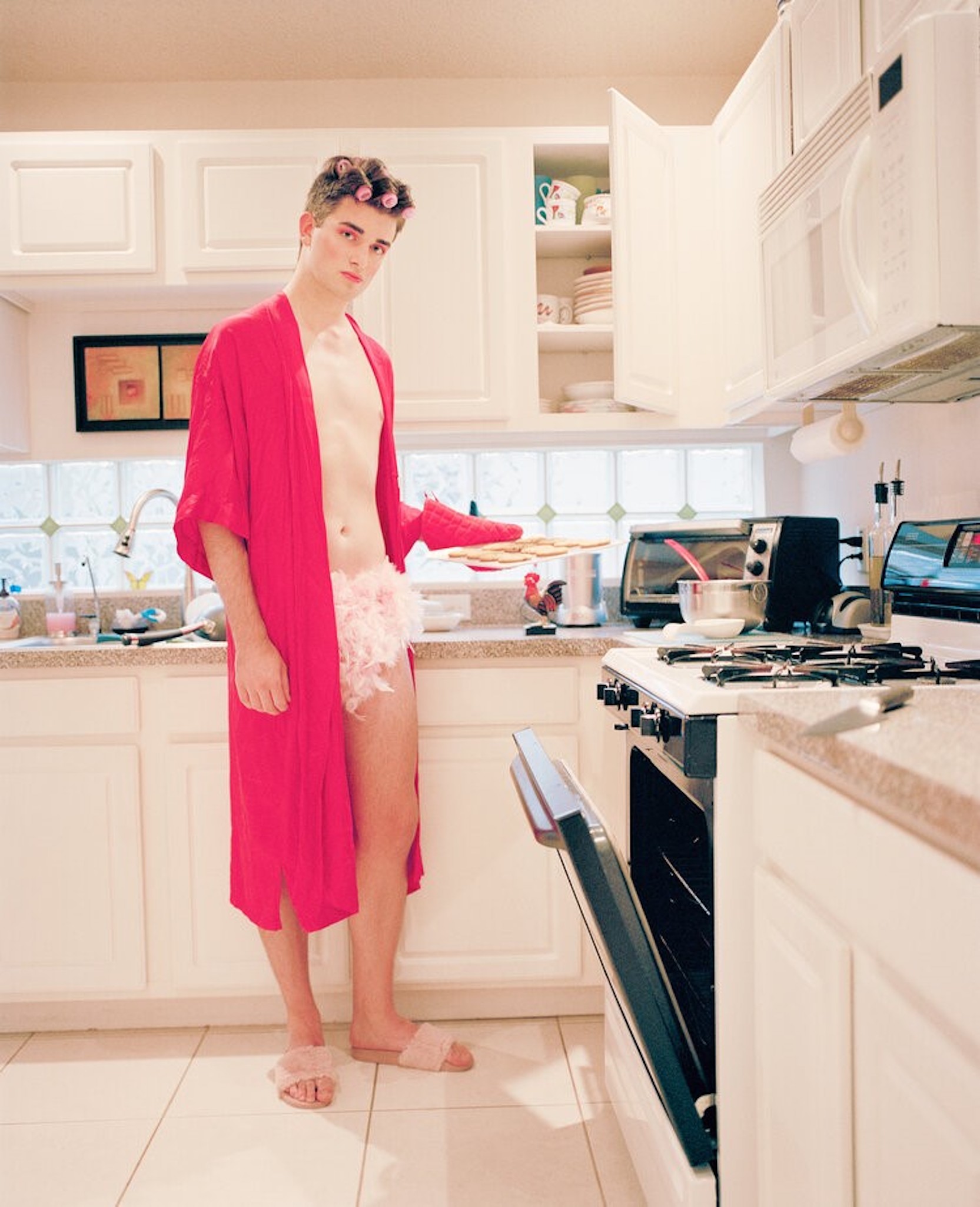
Daniel Roa (B.F.A., photography, 2019) is a nonbinary photographer who is blurring gender norms and burning cookies.

Roa developed the photo series "My Queer Identity" celebrating Queer and nonbinary individuals while studying at SCAD. Each photo—including the cookie-tinged "Josh ii"—is an ode to Roa's eccentricity, and often draws from their Colombian heritage.

"I want to educate people on what being Queer is and show others that I exist. Gender is a spectrum and I am in it, on it, and around it," Roa says. "I'm human just like you."

Roa's work has been showcased in Vogue Italia, FOTOFILMIC, and FotoFika All-Stars. This has helped them connect with some of fashion's biggest names, including Steve Klein and David LaChapelle. "I shoot fashion in New York today because of SCAD. The university helped me explore what I like, who I am, and the stories I want to tell."

self portrait by Daniel Roa

Daniel Roa, "Josh ii," 120 film, 2020.


Daniel Roa:

I applied to SCAD with the goal of becoming a photographer. I loved my initial foundations courses and came to enjoy painting. I took my first film photography class, Camera Exploration and Technique (PHOT 113) with professor Steven Mosch, who helped me see that I was talented and capable and taught me to love film photography.

As a junior, I got to work on a SCADpro project with furniture designer Maria Yee. I had never worked with furniture before, but I knew how to use an image to convey a story. It was an opportunity to test myself and learn a new skill set. At the same time, it helped me define my personal style as a photographer. From there I began focusing on fashion photography.

I began developing "My Queer Identity" series senior year with professor Rebecca Nolan's guidance. Each photo in the series is a representation of myself. "Josh ii" depicts an individual in their kitchen baking cookies and getting ready for their day. I am obsessed with the color pink. I am also an avid baker, a little chaotic, and slightly messy.

I wanted the image to be simple and accessible to everyone. We can all see ourselves wearing a robe and slippers in an ordinary kitchen. What is more mundane than that? The only thing that is fantasy, for me, is that the cookies aren't burned. I can't bake to save my life.

The project helped me get an internship with David LaChapelle and then Steven Klein. As I completed the work, professor Nolan encouraged me to reach out to fellow SCAD grads. Through that process I met my mentor, David Mollé (B.F.A., photography, 2016). His work and guidance has inspired me to continue to stretch myself. I just shot my first ad campaign for Depop with fellow SCAD grad, Angel Emmanuel (B.F.A., fibers, 2016).

As a student, SCAD prepared me for my career. As a professional, SCAD has helped me connect, grow, and thrive. SCAD is a place of love and acceptance that changes and saves lives. For so many of us, the community at SCAD is a family working to make a more beautiful world.

self portrait by daniel roa

Visit Daniel Roa.


Professor Stephen Stanley's Pride picks

June
17
2021
By
Tags:

Stephen Stanley (M.F.A., film and television, 2007) is a prolific producer, writer, filmmaker, and since 2018, professor of film and television at SCAD. In April of this year, he racked up a #1 hit on Netflix as producer of What Lies Below, a feature film directed by Braden Duemmler that was test-screened for SCAD students before its general release. Professor Stanley is highly esteemed at SCAD for his popular classes covering production, direction, and the business of film.

Steve Stanley:

A key to visibility is having agency in how your community is depicted in media. Growing up in the 1980s, it was virtually impossible for me as a young gay boy to see other Queer people on TV or in movies, primarily due to FCC regulations and studio prejudices. The few LGBTQ+ characters who did show up were typically either troubled souls or outlandish stereotypes, most often created by straight writers and directors.

With some notable early—and mostly coded—exceptions, it wasn't until the emergence of New Queer Cinema in the early '90s that Queer directors and producers were able to shape their own image on screen. The result was revolutionary. Audiences were able to see fully formed LGBTQ+ characters who reflected the diversity of our community. While visibility exposes us in a way that can feel uneasy, it also helps connect, unite, and protect us.


This Pride month, I want to recommend five films from that period made by LGBTQ+ filmmakers of enduring power.

1. Mala Noche, Gus Van Sant (1986): While 1991's My Own Private Idaho is justifiably Van Sant's most lauded work from this period, Mala Noche offers a look at the auteur as he developed his signature style. Set, like Idaho, in a world of street hustlers, Van Sant delivers a raw look at urban Queer life and the uneasy coexistence of gay people alongside vulnerable populations.

2. Poison, Todd Haynes (1991): Anticipating the breakthrough of his tour-de-force Safe, Poison captures Todd Haynes at his best:  thoughtful, audacious, and visually stunning. Haynes explores power, male sexuality, and the sensationalizing of the AIDS crisis in this richly provocative triptych.

3. I Am My Own Woman, Rosa Von Praunheim (1992): A bold and experimental hybrid of narrative and documentary about trans woman Charlotte Von Mahlsdorf, who lived through Hitler's Third Reich and the Communist East German regime. Mahlsdorf plays herself and narrates this remarkable look at joy and bravery in the face of constant danger. 

4. Go Fish, Rose Troche (1994): A fun, funky look at the diversity of lesbian culture at a time when Queer female characters lacked agency in Hollywood (except as villains). Troche embraced her budget limitations with a raucous approach to experimentation that enchants, most notably in her deconstruction of classic Hollywood love scenes. 

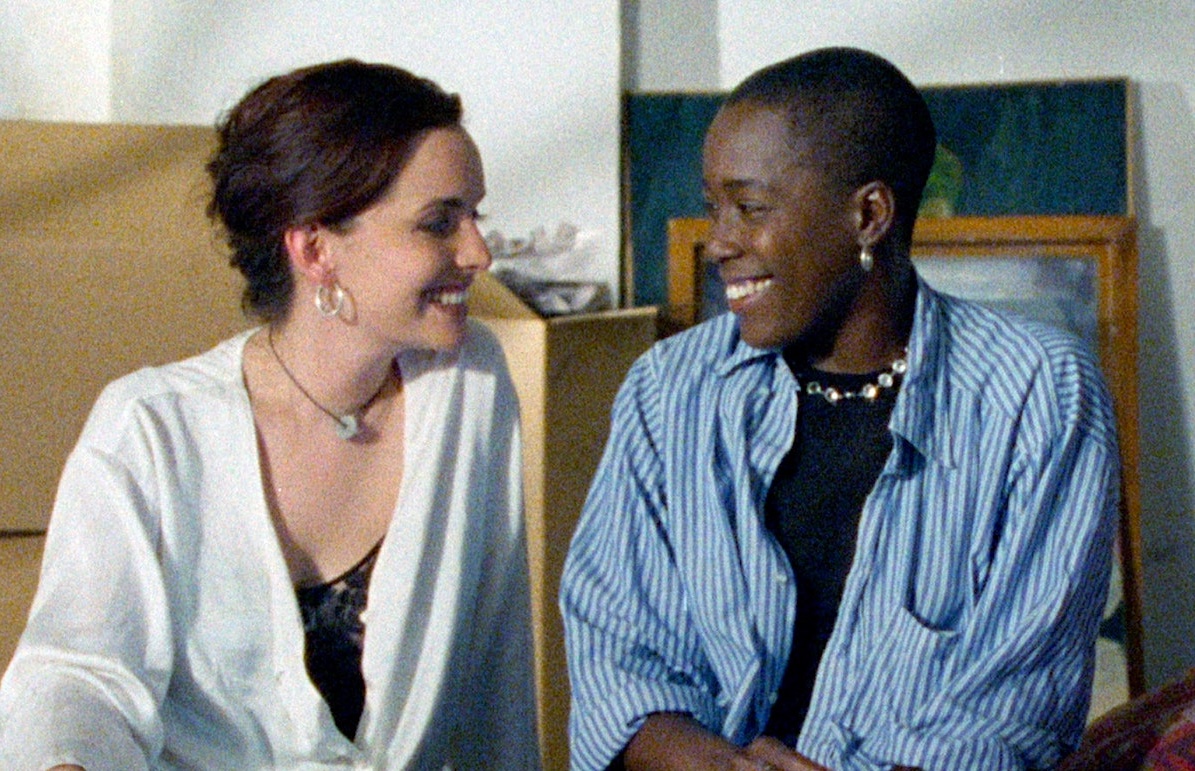
5. The Watermelon Woman, Cheryl Dunye (1996): Dunye wrote, directed, edited, and stars in this landmark film about a young African-American lesbian who, after watching a film where a black actress in a Mammy role is credited as simply "The Watermelon Woman," decides to investigate her identity. Using comedy, drama, and behind-the-scenes intrigue, Dunye shatters traditional storytelling boundaries while examining issues of race, sexuality, and media.

Still (detail) from The Watermelon Woman, dir. Cheyl Dunye.

Still (detail) from The Watermelon Woman, dir. Cheyl Dunye.


Read more of Stephen Stanley's writing on LGBTQ+ films in his contribution to professor Lubomir Kocka's book Left or Right? Directing Lateral Movement in Film (Vernon Press, 2021).


Sierra Lawson tells her story

June
15
2021
By
Tags:

"I love to write about children in the eye of a hurricane who keep picking flowers," says Sierra Lawson (M.F.A., dramatic writing, 2021). "Later on, they think, How did I get through that?"

When Sierra speaks, her voice is recognizable from her scripts: witty, wily, unafraid of unvarnished truth. Her writing registers a musicality that swings from big smooch to gut punch, like the young woman in "Gin, Rocks" who tells her mother: "You could've checked in yesterday, or tomorrow. Or never quite frankly. Any of those options would have done me just fine."

"Sierra's world-building and characters produce some of the most layered and compelling work the dramatic writing department has seen," says SCAD professor Renee Bishop.  "She marries myth to action, driving her scripts to surprising and satisfying endings."

Told she's working in the potent tradition of playwrights like Edward Albee and Lorraine Hansberry, Philadelphia native Lawson demurs, choosing to celebrate TV shows she loved growing up like One Tree Hill. "I really want to write for television," Sierra says. "Still, my heart is open to anything, as long as I'm telling stories."

Sierra Lawson:

One theme I tackle in my writing is broken familial connections. That's what I know well. I spent many years wondering if I was going to be saved, but I had to be the savior. After my dad passed, I raised my little brother and sister. I couldn't hang with friends, I had to be home cleaning and cooking. I was 13, 14 years old. I had a lot of resentment towards my mother. Of course, I feel the need to write about it. People can relate to having someone who's a titan in your life who lets you down, as humans do.

"Gin, Rocks" is a spin-off of what I submitted when I applied to SCAD. I couldn't shake these two characters, so I wrote another telling of their fractured relationship. When an idea comes to me, it's rarely fleshed out or deep or profound; it's almost always one line of dialogue, and I will craft a whole story around that one line.

My final quarter, I took Writing the Television Comedy Pilot Script (FILM 434) with professor Chris Auer—love him, but he's tough. And I took Immersive Storytelling: Writing for Virtual Reality (DWRI 755) with Renee Bishop—adore her, such a ham. For my final thesis, I wrote an hour-long drama pilot about a reporter with a dark past who secures an interview with a world-famous recluse author who claims her success is due to an African river goddess no one has heard of.

Joseph Schwartzburt in SCAD career success encouraged me to follow people on LinkedIn who work at places that interest me, and share my pilot work. I sent thirty connection requests to individuals, with personal notes. One woman from Blumhouse Productions got back to me, and that led to my internship there during fall quarter 2020. I read scripts, wrote coverage, and gained insight into how a studio works. I was also one of 16 semi-finalists from over 2000 applicants for Circle of Confusion's Discovery Fellowship for my pilot "Sleeping Titans," about a single mother whose daughter becomes possessed by an ancestor.

As a Black woman, I can never forget our collective past. You can't negate the barriers we've overcome to get a fraction of what our counterparts have. If this wasn't supposed to be my path, I wouldn't be walking it. Genuine fulfillment comes from knowing what your gift to the world is, being able to do it, and impacting someone positively because of it. Which is what we're all here to do: make the world a little brighter for somebody else.

Graduate

Visit Sierra Lawson!

Photos: Najja Lawson (B.F.A., graphic design)


Jillian Nadolski is homeward bound

June
9
2021
By
Tags:

As spring quarter crested towards commencement, Jillian Nadolski (B.F.A., preservation design, 2021) focused on completing two key projects.

Her collaborative vision "Suyay," a vaccine storage unit, was being readied for submission to the 2021 Biomimicry Global Design Challenge. Meanwhile "Homeward Bound," her plan for transforming decommissioned South Shore Line train cars into Little Free Libraries, conceived and completed in Studio VII: Luxury Design in the Built Environment (PRES 410), was due for presentation at Popular Culture Virtual Conference 2021 mere days after graduation.

"Having prided myself on being a pragmatic person, I initially faced the luxury design assignment with a little bit of resistance, because I was unsure how luxury fit into what I deemed to be a world of functionality," says the summa cum laude alumna. Tasked with creating a meaningful experience for end users, "I discovered the pure simplicity that can lie within the notion of luxury. I learned that knowledge itself is a luxury."

Jillian Nadolski:

I'm from Saint Joseph, Michigan directly east across the lake of Chicago. I'm born and raised on Lake Michigan, and when I wanted to be culturally enriched, Chicago was the place to go. I remember one day in a snow storm my dad insisted we jump in the car and go to Museum of Science and Industry. I recognize how lucky I've been to have parents who've fostered my creativity and thirst for knowledge and who helped me get to SCAD.

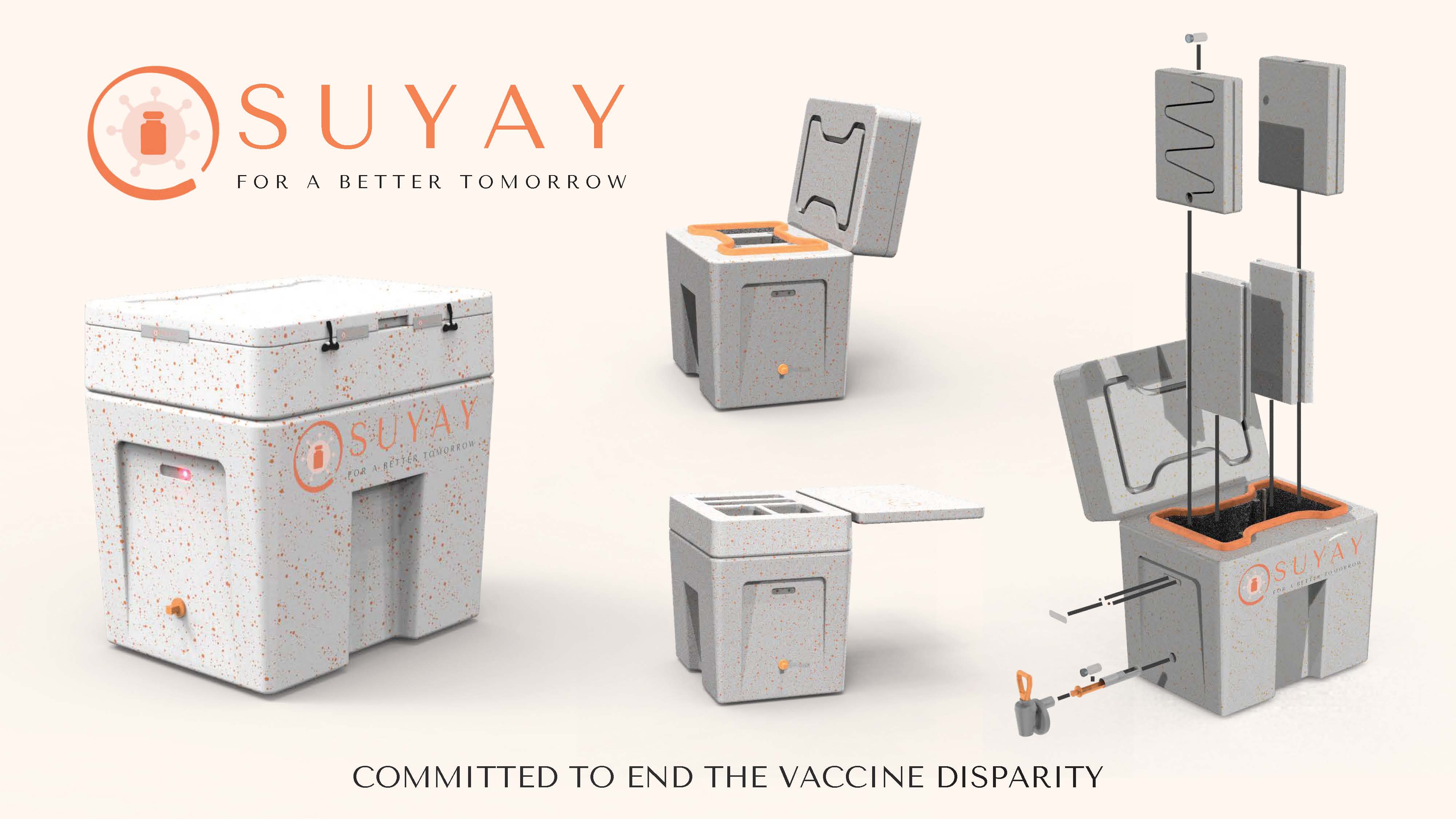
"Suyay: For a Better Tomorrow" was a group project for the class Biomimicry: Collaborative, Nature-inspired Innovation (SUST 439), part of my design for sustainability minor. The word "suyay" means hope in Quechua, the native language of Peru, where my teammate Marialejandra is from. Naming our project "Suyay" represents our commitment to deliver Covid-19 vaccines to the most vulnerable and remote communities in Peru. Our goal is to bring attention to the vaccine disparity that affects developing countries all over the world.

rendering of Suyay vaccine storage

We looked at strategies of different organisms in nature. We studied the goldenrod gall fly, which chews into the stem of a goldenrod and creates an insulating gall, which helps protect it from external conditions. We took inspiration from the fly and designed a vaccine storage box with a mechanism that acts as a plug for the vial. To emphasize sustainable innovation, "Suyay" has a secondary application whereby the twist mechanism can be replaced with a water tap, so the box becomes a potable storage unit. Professor Scott Boylston guided us with positivity and expertise.

Those of us in developed countries usually don't have to struggle to have access to basic resources like running water and medicine. Here I am 22 years old, fully vaccinated, whereas elderly people in vulnerable communities around the world don't have the advantage that I have. It's truly a privilege check. It's not only knowledge that's a luxury, it's general access. 

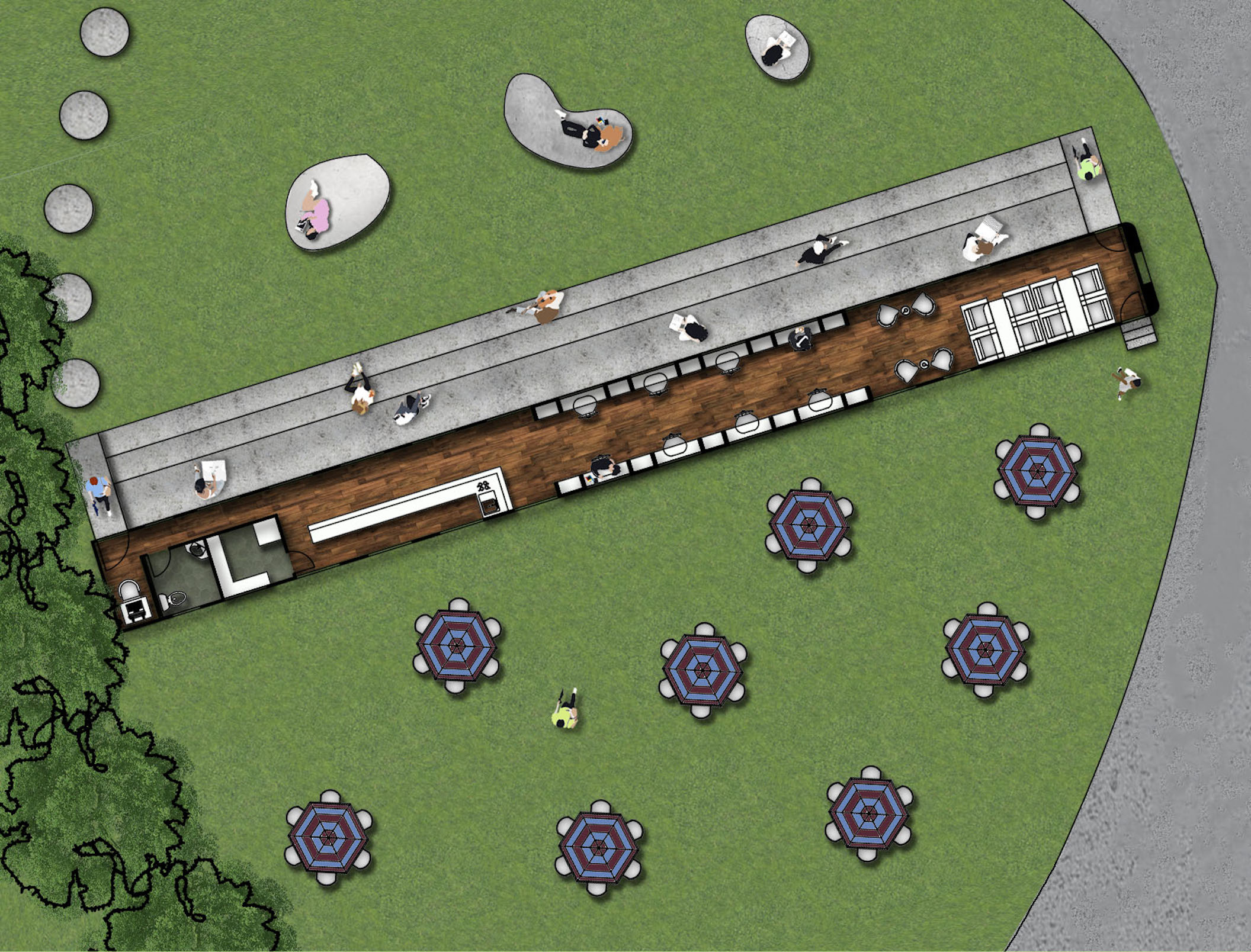
rendering of Homeward Bound floor plan

Jillian Nadolski, "Homeward Bound" floor plan, top view, 2021.


With "Homeward Bound: Little Free Libraries from Decommissioned Train Cars," I leaned into the idea of the luxury of being cared for with compassionate design. I sourced information from the Chicago Literacy Alliance, including the fact that 61% of low-income households do not own any children's books. I designed a Little Free Library with a café, a place where visitors become as enveloped in the stories they're reading as they are enveloped in the books around them, a place to encourage and facilitate literacy. Professor CT Nguyen, chair of preservation design, was an invaluable resource as I refined the design.

My projects were influenced by circumstances I could not have predicted. Members of my graduating class know that the reality of the past year made our SCAD experience unique. We really, truly made the best of it. As a pioneer for a sustainable future, I'm looking forward to designing a better world.

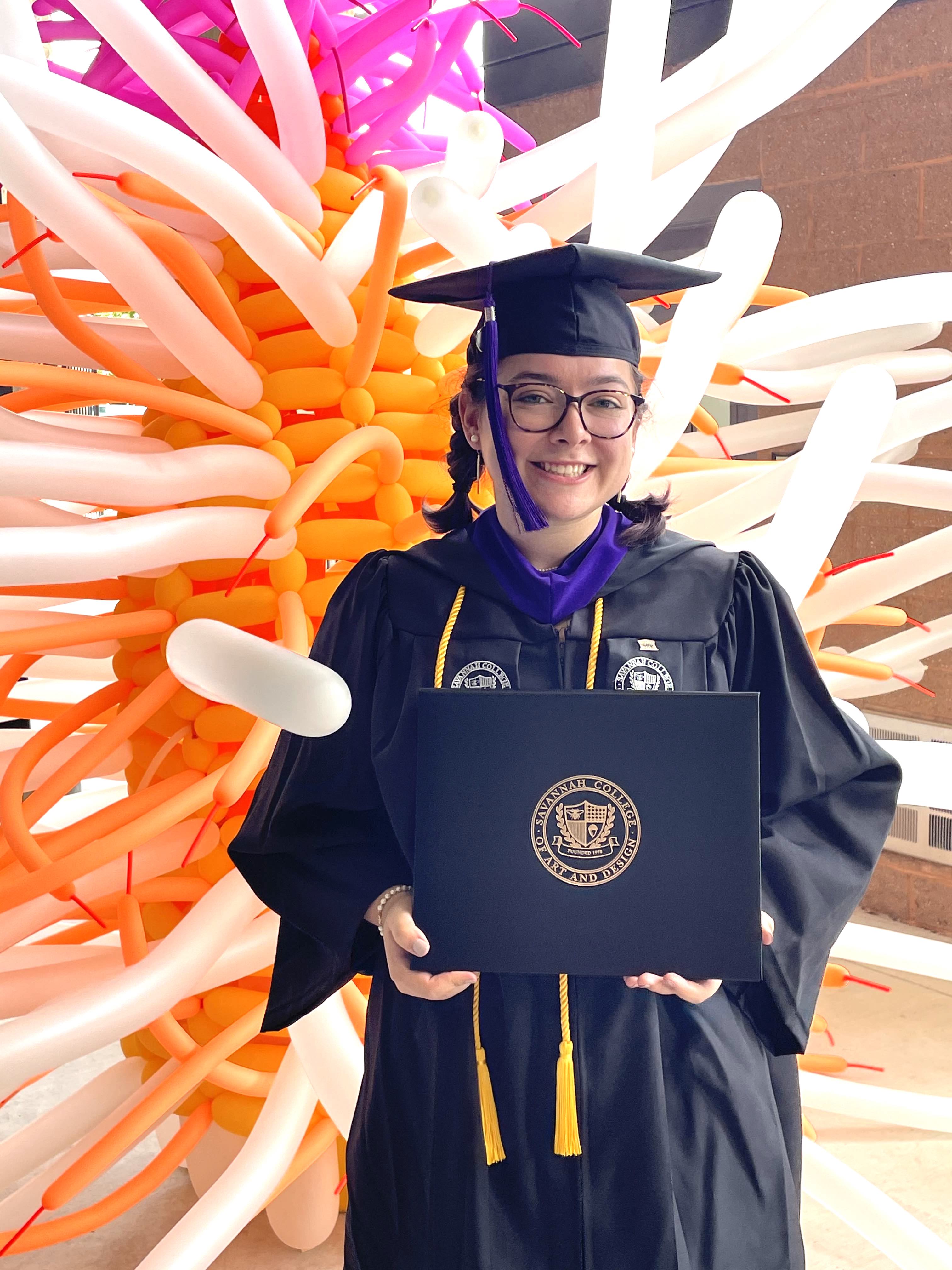
portrait of Jillian Nadolski at graduation

Congratulations, Jillian!


Maren Krings' vision

June
7
2021
By
Tags:

"How can we sacrifice our planet with no thought for future generations?" asks Maren Krings (B.F.A., photography, 2003). "Are we not willing to give up even the smallest amount of luxury?"

What this photojournalist is saying certainly sounds familiar: Environmentalists have been decrying catastrophic consumerism long before Greta Thunberg stared down the world. What differentiates Krings is her dedication to promoting a single, actionable solution: industrial hemp.

In 2016, Krings, a German citizen, was on assignment in Italy, documenting traditional practices of hand-harvested wheat. There, she met a farmer who gave her a glimpse of the role hemp will play, she says, "in the creation of a system reset that can mitigate the damages of our modern economies."

That vision led Krings on a five-year mission. Living out of her car, she traveled to 26 countries—including Mongolia, China, Morocco, Iceland, Russia, Turkey, and Sweden—meeting industrial farmers, working with indigenous communities, and chronicling a journey both scientific and personal.

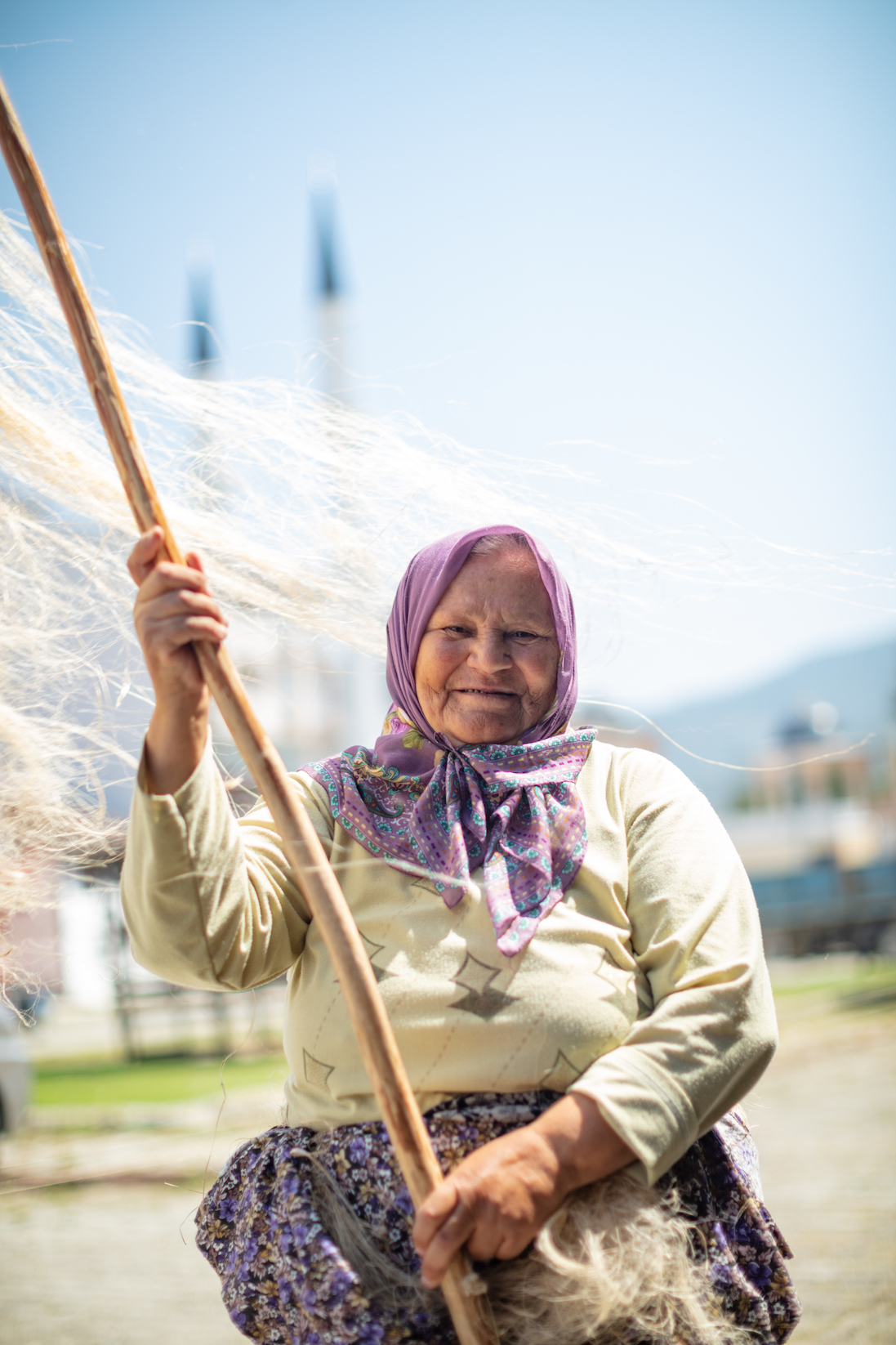
Photo by Maren Krings taken in Hanönü, Black Sea region, Turkey.

Photo by Maren Krings taken in Hanönü, Black Sea region, Turkey.


The publication of a book about the experience is now on the horizon. "It's a matter of finalizing the text, and assembling all the charts, data, and science that need to be translated into my concept," she says. Krings' book will include insights from more than eighty interviews she has conducted with industry experts.

While the climate impact storyteller is already something of a spokesperson for industrial hemp—Krings delivered a keynote address at the Swedish hemp industry's annual conference in early May, and recently published a feature in Sensi—she intends this book to be accessible to the casual consumer, and to include elements of her own Hero's Journey. "Our climate crisis is a crisis of perception. You can't fully explain it in numbers because statistics don't speak to our emotional state of being."

Krings is impressed by how today's SCAD students embrace sustainability, an awareness that has grown exponentially within a generation. She references the implementation of sustainable practices in photography studios, and the introduction of SCAD's design for sustainability program. In 2019, Krings reconnected with her former printmaking professor Robert Brown, and traveled to SCAD Atlanta to make photogravures on hemp paper. That experience helped create a sort of moral mandate for Krings, who is determined to have her book sustainably printed on hemp paper.

"My SCAD experience is intrinsic to my work," Krings says. "Professors Jenny Kuhla, Rich Gere, and Rebecca Nolan all contributed significantly to my development. At SCAD, I became interested in social documentary photography, then deeply engaged in that practice, until the camera became an existential part of my personality." Which brings Krings back to the matter at hand: a planet being edged over the brink by an occupying force called homo sapiens.

"Ours is a messed-up world, but if you are an optimist, that presents a challenge," she says. "There are wonderful solutions to be found."

Maren Krings

Visit Maren Krings.


Ivana stays on brand

May
18
2021
By
Tags:

Ivana Mantovani (B.F.A., branded entertainment) is drinking it all in.

As a SCAD student she partnered with iconic global beverage brands on projects that helped shape her skills as a marketer, creator, and designer. When she graduates this spring, the daughter of Venezuelan immigrants will work with her parents to rebrand their restaurant business, Bocas Group, in Miami, Florida.

"Ivana is one of those students who lets nothing get by her," says associate chair of advertising and branded entertainment Judy Salzinger. "Her curiosity is her fuel. Her contribution to every collaborative project she works on is fearless, passionate, and always on-point."

Ivana Mantovani:

I love understanding people, why they make decisions, and why they choose to have specific brand loyalty. That knowledge helps me craft stories that will connect well beyond traditional advertising. As a storyteller, I connect brands with their audience. I don't sell products. I sell emotions, experiences, and memories.

While working last year on a SCADpro project with Coca-Cola and AMC Theatres to improve the in-theater experience, professor Judy Salzinger saw I enjoyed the art of researching and creating brand identity. Professor Salzinger encouraged me to challenge myself and find key details that further connect with the audience. She taught me that branded entertainment is more than marketing or advertising. Branded entertainment means telling stories that connect with people so deeply, they want to engage with your brand.

To millions of people, Coca-Cola isn't just a beverage company. Coca-Cola is synonymous with relaxing, friends, and fun. They have enormous brand loyalty, and every company in the world wants to emulate that success. Before I worked with Coca-Cola, I took Introduction to Branded Entertainment (BREN 200) with professor Salzinger thinking it would help me enter the world of TV production.

As part of that class, I was challenged to find a new message for Budweiser. I immersed myself in the history of the company, how they define themselves, and why they were looking to engage a new audience. I worked with graduate students including Caroline Semler (M.A., advertising) and Maggie Walker (M.A., advertising). They were incredible designers, and I got to be the storyteller. We discussed product positioning, market groups, and the story we wanted to tell in the moment. Our final product showcased Budweiser's power to bring people together and create community. That class allowed me to really grow as a marketer through creating emotional connections with my viewers.

After I graduate, I am going to take everything I learned at SCAD and help my family's restaurant group, the Bocas Group, continue to grow and connect with our patrons. Implementing the lessons I learned working with Coca-Cola, AMC, and Budweiser, will allow us to continue to grow and shape the culture and future of our business.

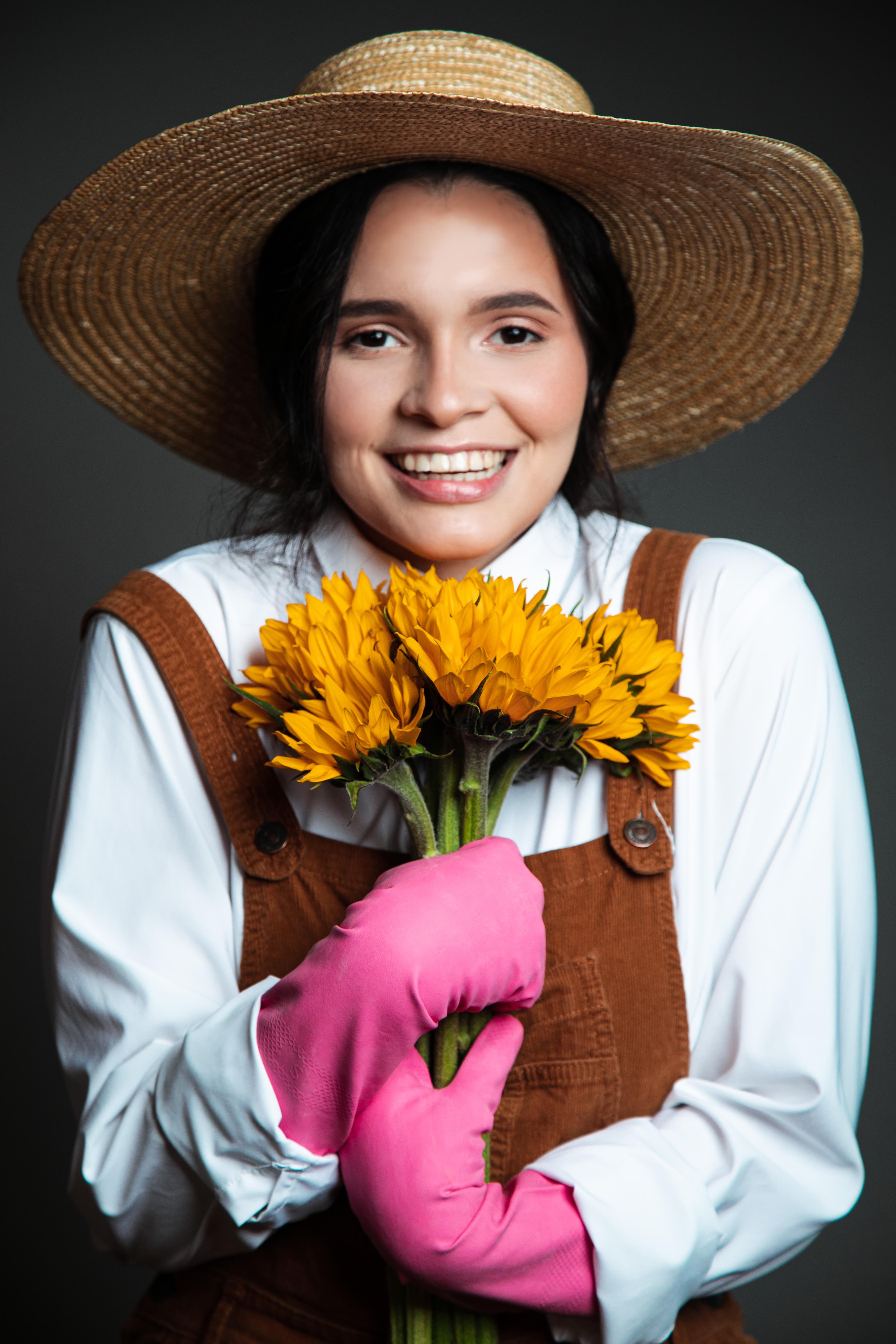
portrait of Ivana Mantavani

Connect with Ivana Mantovani.


Stina Wen: like a fist

May
17
2021
By
Tags:

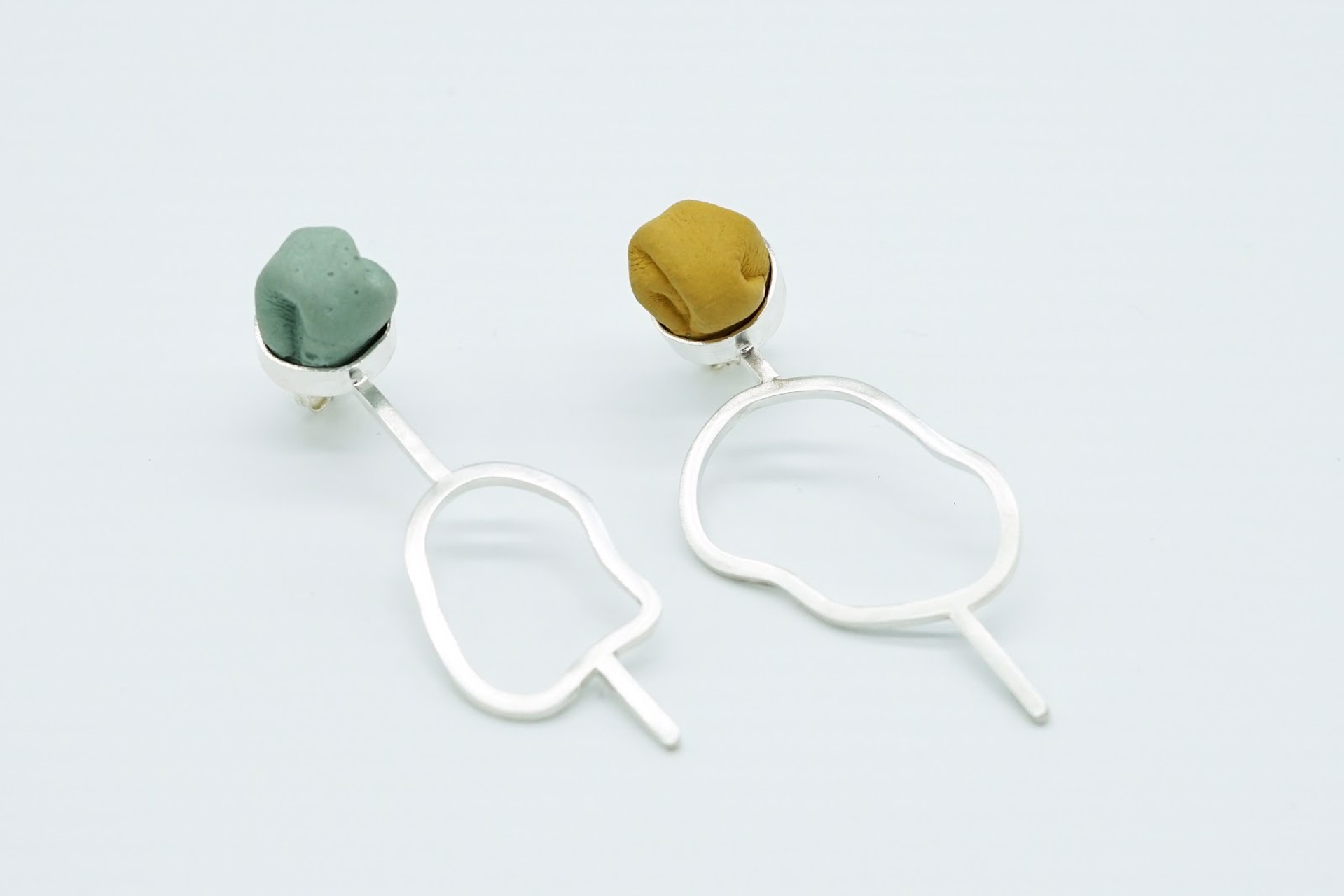
Concrete and silver may not seem like a complementary combination. In the hands of Stina Siqiong Wen (M.F.A., jewelry), these materials are fused to create jewelry that is desirable, delicate, and strong. No element is dominant, no quality sacrificed in rings and earrings whose pops of color add attractive punctation.

A native of Guangzhou, China, and member of Ethical Metalsmiths' EM Students program, Stina is an exemplar among SCAD international students, having worked as a graduate mentor in both group and one-to-one settings, and as a project translator for this year's SCADpro initiative with Chanel.

Stina demonstrates a sensitivity to materials. Her creations, she says, "create a dynamic interaction between wearer and viewer." When the concrete in her jewelry becomes patinated by the natural oils of the skin, water and soap on a soft toothbrush are all that's required for maintenance.

Under the guidance of department chair Jay H. Song (M.F.A., jewelry, 2000), Stina's jewelry was featured to popular success at this year's Trunk Show, part of SCAD Fashion Week.

Earrings

Stina Wen, earring, concrete and sterling silver, 2 x 2.50 x 1 in.


Stina Siqiong Wen:

My undergraduate coursework mainly focused on traditional jewelry and metalsmith techniques. As I advanced into the jewelry graduate program at SCAD, I began to explore alternative materials, including concrete. Concrete usually gives us a cold and stiff feeling. I make it colorful because I want to show how interesting the material can be. I experimented with several ways to add color to concrete, and found that colored powder and acrylic paint work best.

I love both traditional metals and innovative materials in jewelry, and the combination inspires me. I always want to challenge the material. When I challenged the reality of concrete, I decided to make it look as soft as fabric. I made some molds out of leather, which allowed me to create interesting shapes. Some people think it looks like a fist. I like that comment, and yes, jewelry can sometimes show our power.

SCAD Fashion Week is a big event for the SCAD jewelry community, which includes students, alumni, and faculty. People who visit are genuinely interested in art and fashion and willing to accept new things. Therefore, I decided to sell my contemporary concrete pieces instead of traditional commercial precious-material-only pieces. I hope people see how beautiful or interesting jewelry can be regardless of the value of the material.
 
As a graduate student at SCAD, I cultivate my willingness to show people outside of the jewelry department how amazing I am: I not only appreciate diamonds and gems, I am a creative and innovative future-forward artist who creates beautiful new work. While I promote myself regularly through posting on my social media and telling my friends, Trunk Show is an excellent opportunity to show our department and students' works. I am so glad we were able to have a virtual show this year, which proved to be an even better way to show our work to a larger audience.

Stina Wen

Visit Stina Wen.


'Star Tap' turns it on

May
5
2021
By
Tags:

"We're definitely taking the full dose," says Emily Furr (B.F.A., graphic design, 2000). She's referring, of course, to taking in the "Acid Tongue" series featured in her solo exhibition Star Tap, at SCAD Museum of Art.

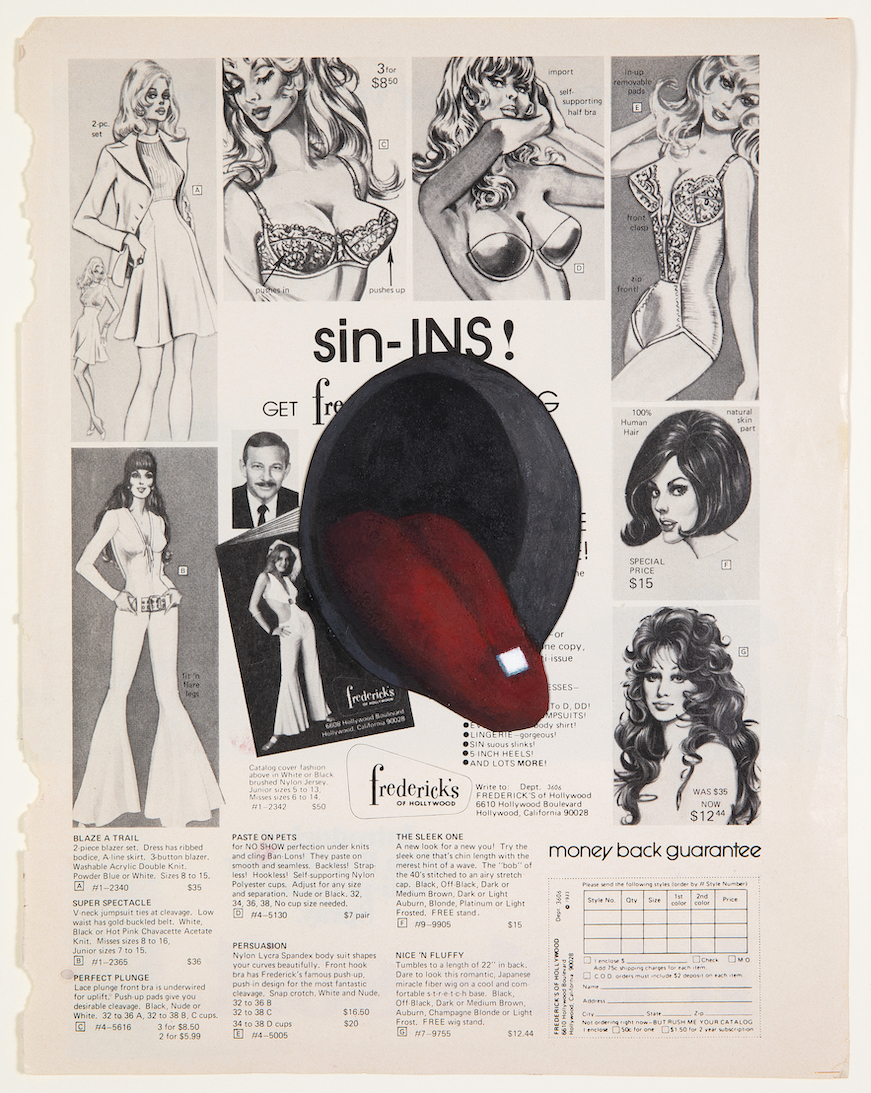
Each "Acid Tongue" depicts a ruddy appendage emerging from a suggestive void, on the verge of gobbling up a psychoactive substance. The seven gouaches, collaged onto tawdry advertisements torn from the back pages of old magazines, are as deranging as the dreaded lysergic itself. One senses that Furr, standing beside her work in the SCAD Alumni Gallery, her face half-hidden behind a precautionary mask, is smiling.

"It's fun to work on something outside your comfort zone," she says of the series, which she painted in 2020 at home in Greenpoint, Brooklyn. "And you can't do oil paintings around a toddler."
Ad

Acid Tongue #1, 2020, gouache cutout on advertisement, 8 x 10 inches.


The gouaches are something of an outlier for an artist better known for her oils (which also feature prominently in Star Tap). The series' Pop aspect demonstrates a kinship to Pauline Boty's 1960s collage paintings, while its more explicit correlation is to British artist John Pasche's infamous, lascivious logo for The Rolling Stones. "Acid Tongue" is not, Furr says, a direct homage, "but it's the same sort of Mick Jagger energy, like, I'm so great, I'm going to lick you!"

Furr's great licks of paint have been presented in solo exhibitions at 12.26 Gallery, Dallas; Marfa International; and Sargent's Daughters, New York, where Mother Lode drew acclaim from Artforum and Artnet in 2018. In 2019, she was artist-in-residence of The Watermill Center, and in 2021, a featured artist at SCAD deFINE ART, conducted virtually. When the coast-is-clear call finally came this April, Furr traveled to Savannah to see own show.

The return prompted a trip down memory lane. "SCAD opened up a new language for me," she says of her time as a student. "I loved the foundational classes, meeting likeminded people, exploring the city. I had so much fun living in O-House, where I made fast friends. I had a great education at SCAD, and stayed in Savannah all four years."

After graduation, the Edwardsville, Illinois native worked as a graphic designer for major New York City agencies, while painting by herself at night. In 2018, she began pursuing her M.F.A. at Hunter College, which helped further unlock both professional connections and doors of perception.
Artwork

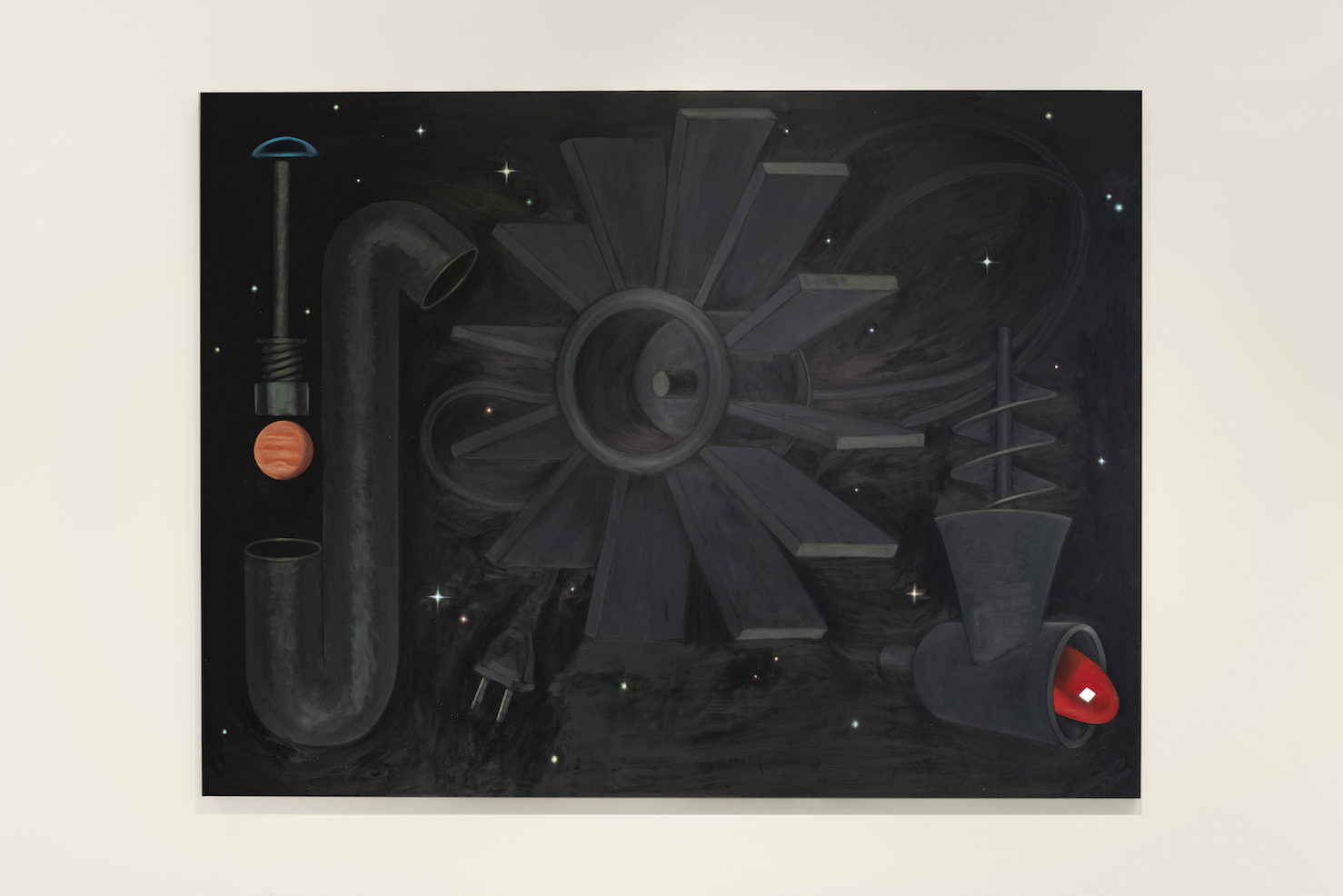
Thirst Trap, 2020, oil on canvas, 96 x 72 inches.


The blockbuster oil "Thirst Trap" epitomizes Furr's cheeky cosmology, literally plumbing outer space on the Rube Goldberg tip. "That painting shows a planet as a pinball that's going to go through a crazy maze," Furr observes. "Most of my work depicts industrialism coupled with nature or the cosmos to show how incongruent they are."

An ability to combine precision with intuition is manifest. "If the paintings look controlled it's because they begin in a digital realm. I do all my initial sketching in Photoshop. I don't like to use the word 'design' [when I talk about painting] because that implies a function, but I map out a composition similar to how a designer would. Then when I'm painting, I let the painting dictate where it wants to go. I have fun."
Student portrait

Star Tap is on view through Sunday, May 9, 2021.

Quotes are from the writer's interview with Emily Furr, and from curator DJ Hellerman's virtual talk with Furr during deFINE ART 2021.
Swiping places with Liist's Allan Holmes

May
3
2021
By
Tags:

Debuting a travel app on the cusp of a global lockdown might not sound overly auspicious. For Liist founder and CEO Allan Holmes (B.A., advertising, 2011), it was an opportunity: "We'd launched in January 2020, and two months later people couldn't travel. We thought, ‘What do we do?' But people had more time at home to talk about traveling, so we spoke with as many users as possible, and ramped up research and development to make our product awesome."

A year, a few months, and a vaccine rollout later, Liist's moment has arrived. The user-friendly and visually-appealing app is for people who want to go places recommended by friends, and check out attractions based on their own investigations. "Before I travel somewhere, I'll check it out on Street View, and look at location-tagged photos on Instagram," Holmes says. "Exploring visually is more important and more possible now than ever."

Liist makes organizing it all easy; Holmes himself is not unlike his ideal user. "I've always loved to travel. My key takeaway is that when you go someplace, you want to do something different, whether that's go to a dive bar, or take a weird podcast walking tour. Recommendations from friends are important. If I was in Thailand and you said, ‘You have to go to this little surf shop,' I'd do it."

At launch, Liist's goal was to organize users' Google Maps, making them "beautiful and sharable." Since then, Liist has been integrated into IOS, and can be used on Instagram, complete with bespoke emoji-pins. Roll out on additional platforms including TikTok is imminent. Holmes doesn't hesitate to compare Liist to a well-known dating app. "With Liist, you swipe places, not faces, but the user experience is quite similar," he says.

Liist isn't Allan's first rodeo. He co-founded software company PopularPays in 2013, then worked as a creative director at Instagram for five-plus years, including a sabbatical in Berlin where he took a coding boot camp, an undertaking that helped him understand what developers go through when they're trying to make an idea into a reality.

Allan's inquisitive drive is part of what makes Liist a compelling fit for SCADpro Fund. "We're delighted to partner with Allan," says SCADpro Fund managing director Ray Crowell. "He's ahead of the tech curve in terms how people want to interact with the world around them."

Holmes shares Crowell's enthusiasm: "Before the pandemic I came to Savannah to conduct a tutorial with SCADpro students, which was a great experience. I speak with Eleanor [Turner, founder of The Big Favorite] at least once a month to bounce ideas. Rarely do you meet creatives who are CEOs and founders. We prop each other up as much as we can. I love being part of the SCADpro family."

Ad

Try Liist: www.liist.com/download.


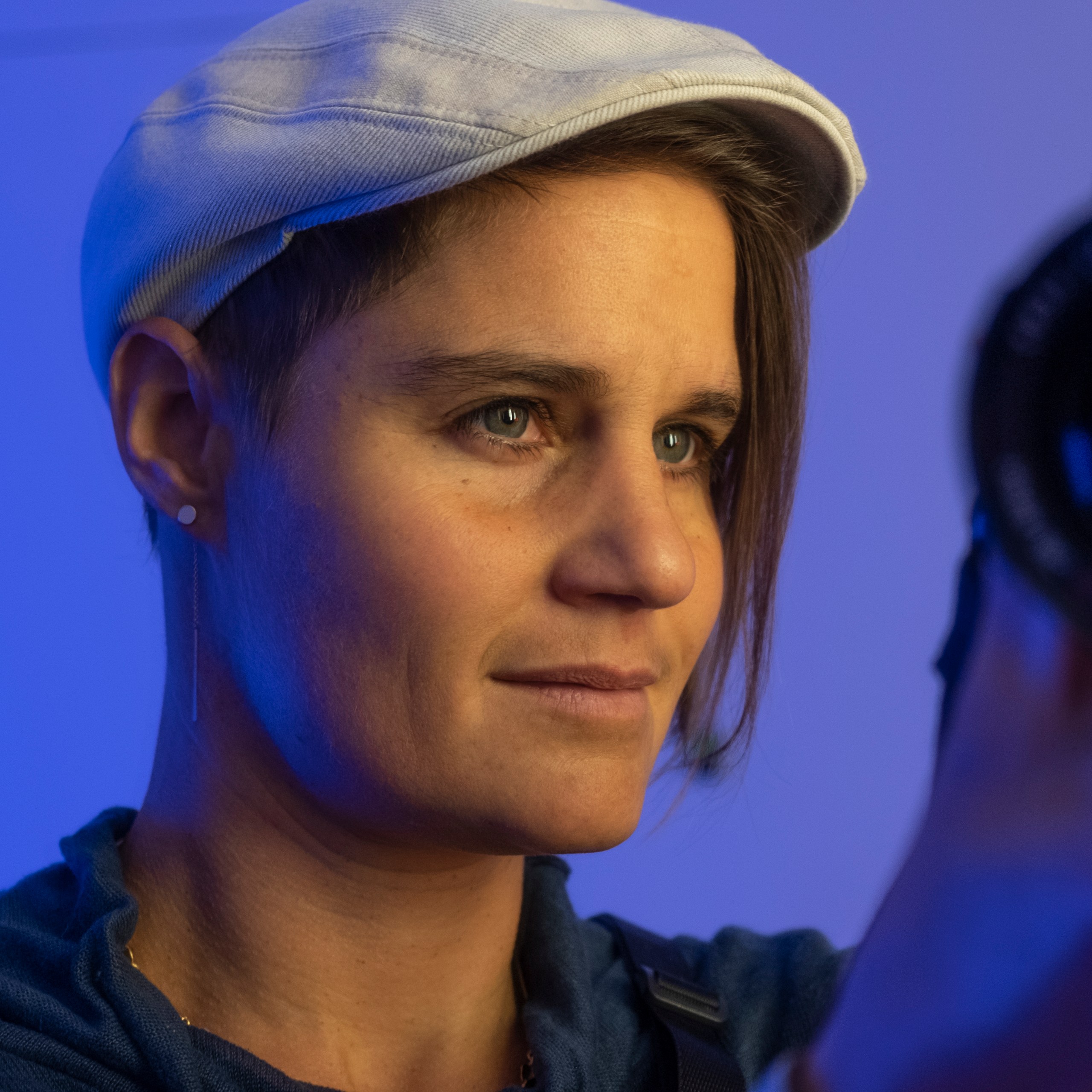
Banner photo taken during SCAD StartUp 2020. Allan Holmes (in cap) served as mentor in the design sprint sponsored by FLUX and SCADpro.