Skip to main content Accessibility Policy

Paula Chamorro: naturally disruptive

May
3
2021
By
Tags:

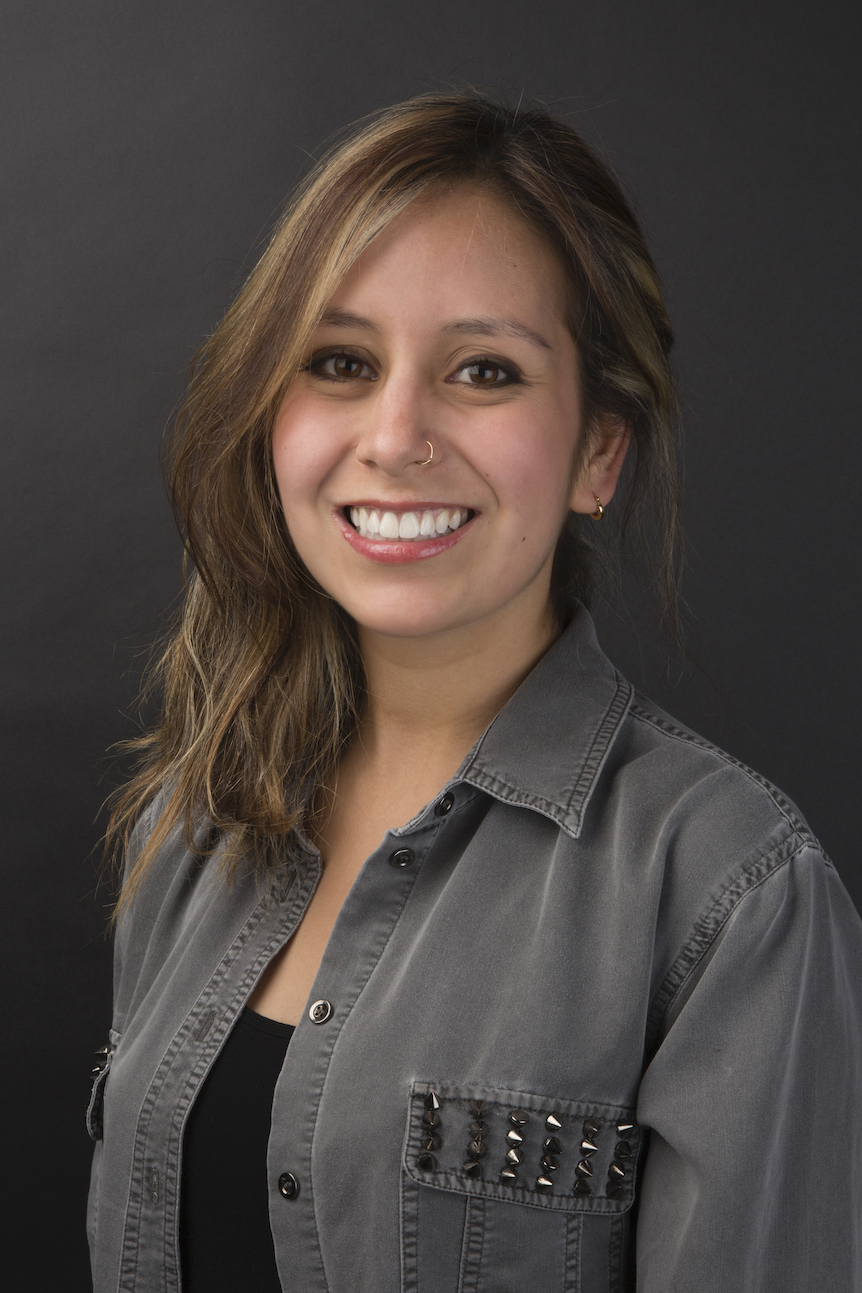
"We need to change the way we design," says Paula Chamorro (M.A., design for sustainability, 2018; M.F.A., design management, 2018). "We need to help people live happier lives, and that means taking care of our planet and reconnecting with nature."

The daughter of a social worker and a progressive politician, Paula grew up in Bogota, Colombia. "Watching my parents, I knew I could influence people's lives. I decided to do that through my ability to design better systems." Today, Paula is a design researcher at Start Something Bold, where she combines her talents as a systems thinker with her passion for developing a better world.

Paula Chamorro:

As a young designer, you're designing for yourself. You don't understand that your taste isn't universal. While I was studying towards my undergraduate degree in industrial design at la Universidad de Bogotá Jorge Tadeo Lozano, I realized I needed to challenge myself in order to break my own biases and grow as a creator. Before graduating, I accepted an internship in Jaipur, Rajasthan in India.

In Jaipur, I was hired to design jewelry. The only issues were, one, I had never designed jewelry before. Two, I didn't know anything about India. And three, I had to speak English all the time and I wasn't as proficient as I am today.

I fully jumped into the culture and researched the people, their customs, and the meanings behind their celebrations. I loved that experience, and when I came back home to Bogotá I was determined to advance my skills as a designer. I came to SCAD to earn my M.F.A. in the unparalleled design management program.

At first, I was not planning on earning two masters degrees. That changed when I began working with professor Scott Boylston. Professor Boylston is so passionate about preparing and elevating the next generation of sustainable designers that I made the decision to pursue a masters in design for sustainability as well.

I traveled back to my home country as part of my coursework to understand and learn sustainability best practices from the Misak people of Cauca, Colombia. When I got on the plane, I thought I knew everything there is to know about sustainable design. I even thought I would teach them a few things, but I quickly figured out I was wrong.

Indigenous people are masters of what we call zero waste efficiency and eco-friendly lifestyles. I was fascinated by their understanding of the world around them. I was able to understand their practice or stewarding resources and designing sustainable systems, and how I could translate that into the developed world.

In my current role as a design researcher and innovation strategist, I work with medical device manufacturers and health care experts to create more sustainable business practices. By implementing key learnings from my time outside of modern society, I help our partners develop strategies that will impact the patient-provider life-cycle. By taking a holistic approach to the design process, I help clients make incremental steps that will create lasting impacts for the health of their business and the planet.

As designers, we intend to create critical value. Good designs need to benefit the user and the business. Today, we know more, and we have to include a benefit to the earth. This is our only home. We must design a better future for it.

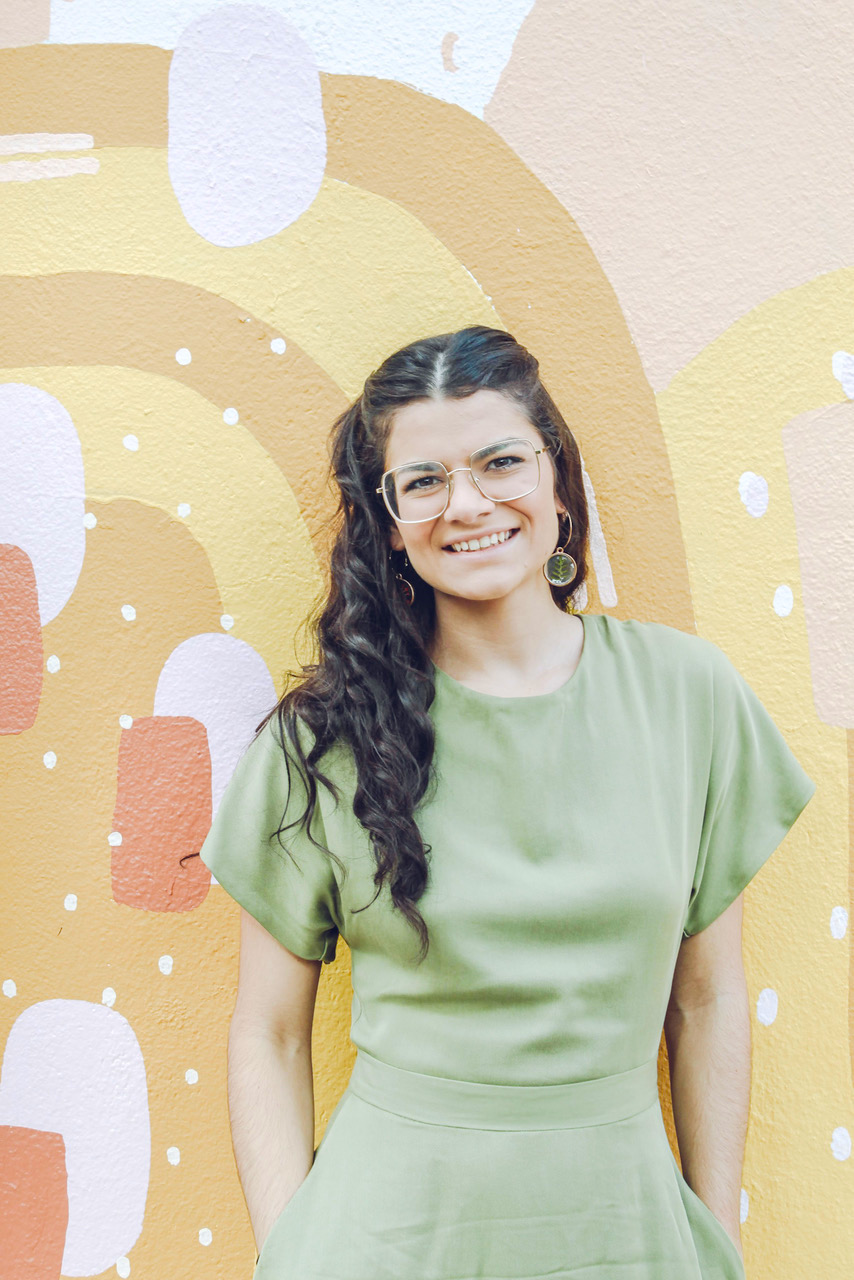
portrait of Paula Chamorro

Visit Paula Chamorro.


Aastha Agarwal makes FASH fab

April
16
2021
By
Tags:

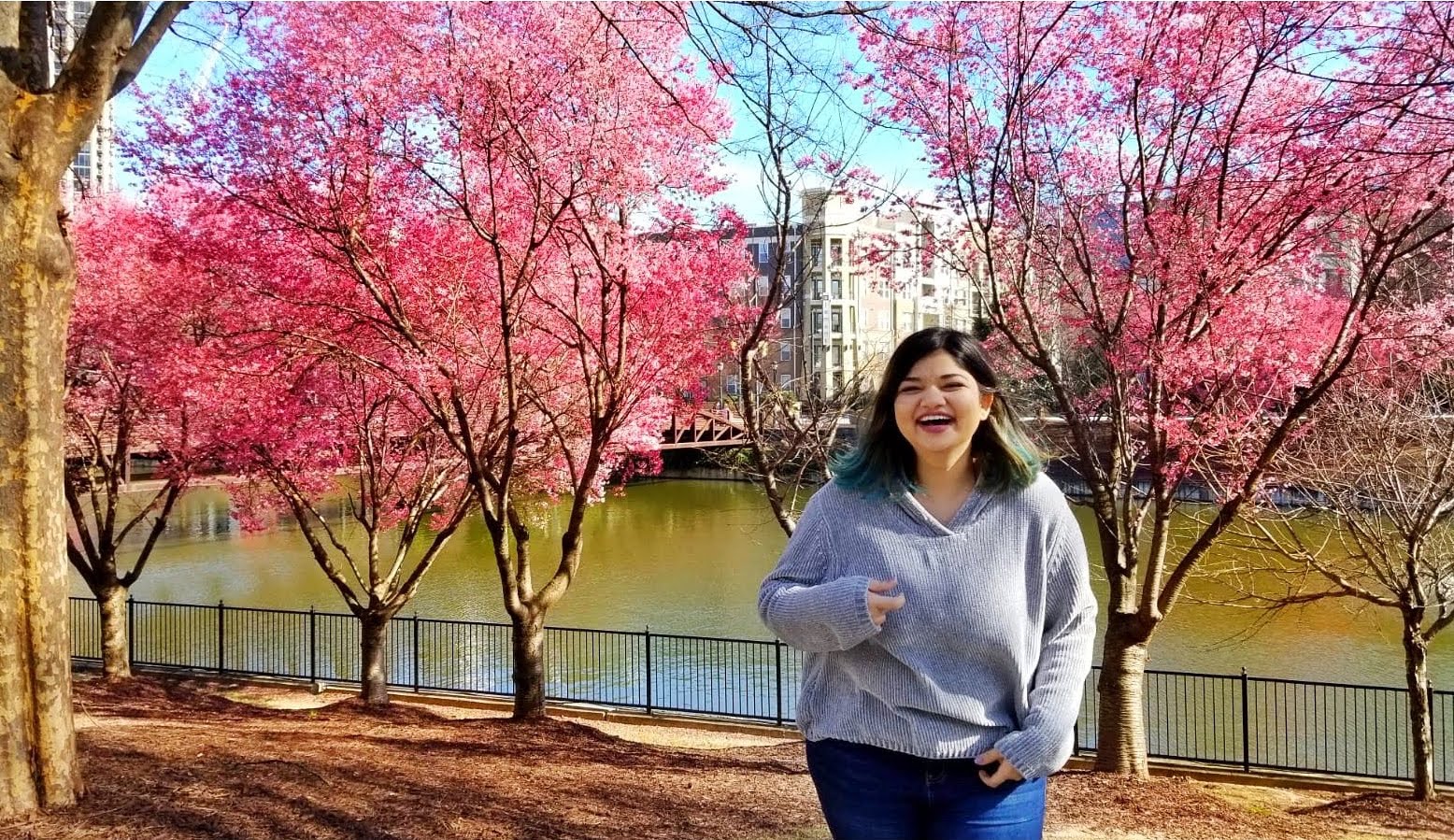
"When I try my best to get the most from my SCAD experience, I feel really happy," says Aastha Agarwal (M.F.A., luxury and fashion management). The master's candidate is a SCADpro project manager, a SCAD FASH docent and content creator, a Fernbank-friendly nature-lover, and part of a trend of talented students from NIFT Mumbai choosing to earn their graduate degrees at SCAD. A native of Dahanu Road, India, Agarwal is committed to cultivating leadership skills to affect global change. Don't let her kaleidoscopic coiffure fool you — Aastha means business.

Aastha Agarwal:

I applied to SCAD because I wanted to go to the best place in the world to study the business of fashion. I received a scholarship and decided to pursue my dreams in Atlanta, a city of the endless opportunities. A year and a half later, two of my best friends from NIFT, Aarohi and Sneha, have joined me at SCAD Atlanta. It's nice to see students from Mumbai finding a home here.

I want to build my career within the social responsibility sphere, either as a sustainability expert or being a part of a brand’s corporate social responsibility team. Studying luxury and fashion management at SCAD is equipping me with the tools and resources I need to be a part of the companies that can actually bring about this change.

Last quarter I was part of a SCADpro project with Fox Sports. We had a brilliant team, students from three different countries and five different majors, representing from Mumbai to Mexico to Myrtle Beach. We worked together to create graphic inserts for major league baseball and college basketball for national TV. This quarter I'm project manager on another SCADpro project with Deloitte Digital. As a student, SCADpro is an excellent way to make initial contact with a company, show them what you can do as an individual and as part of a team, and create the preconditions for employment.

One of my favorite SCAD professors is [creative business leadership] professor Kobus. My first class with him was Financial Reporting and Analysis [BUSI 710], part of my LXFM studies. For most of the international students in the graduate program it was our first quarter at SCAD, and we were all a little scared, and not just from the math! By week seven, we were all trading virtual stock and competing in a game based in accounting, learning and laughing together. The last day, professor Kobus brought in kimchi that he and his wife made from cabbage in their garden. It was so good! SCAD professors really care.

I currently work as a docent at the SCAD FASH Museum of Fashion + Film. I absolutely love working at SCAD FASH because I get to be a part of history. I wish everyone could experience the magnificence that is "Ruth E. Carter: Afrofuturism in Costume Design."

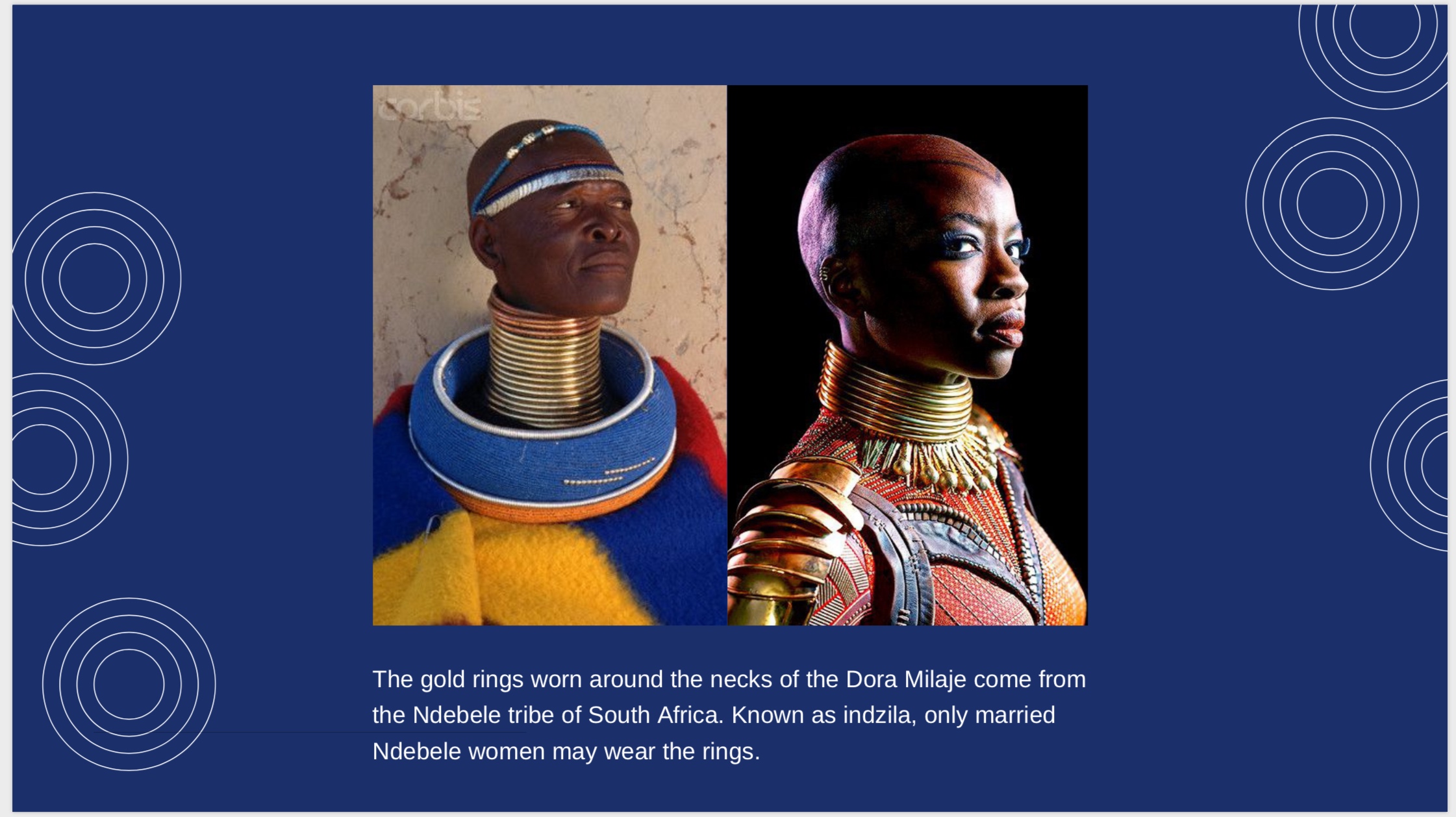
Golden ring work

I created a presentation for the museum that highlights the different tribes who inspired the costumes featured in Black Panther, alongside details about the costumes from other films including Roots, Amistad, Do The Right Thing, and Selma. It's incredible to watch the twinkle in the eyes of the visitors as soon as they step into the exhibition. If I could, I’d be here everyday, especially to point people in the direction of my favorite piece in the exhibit — the aquarium shoes with the goldfish in them, from I'm Gonna Git You Sucka!

Student image

Follow Aastha on IG.


Lauren Hawley's hundred-acre vision

April
13
2021
By
Tags:

Growing up on a hundred-acre farm in Clark County, Kentucky, Lauren Hawley (M.U.D., urban design, 2013) spent her afternoons playing barefoot in a creek and sketching the landscape around her. "The whole farm was my playground," she says. "I would collect sticks and leaves and build fairy houses in the shed. My parents used to say, "She's going to be a designer.""

Hawley earned her undergraduate degree in landscape architecture in her home state before entering SCAD's graduate program in urban design. "I knew at SCAD I would be able to tap into the things that keep me motivated and creative." This included the city of Savannah itself. "I still have dreams where I'm walking home from my studio class and the trees are swaying above me while the flowers are in bloom."

At SCAD, Hawley formed a sincere connection to the urban design teaching cohort. "Professor Ryan Madson was an important mentor to me. He pushed me to think on a grander scale and helped me understand every aspect of my work. As a result, I've been able to transition into larger projects and grow as a professional."

Professor Madson continues to champion Hawley's work and talent. "Lauren is an outstanding practitioner who models the attributes of an urban designer: creativity, problem solving, and seeing the world through the lens of making places better for people and more resilient for nature. Her advanced studies in urban design at SCAD prepared her for a career as a design leader. I'm excited to follow Lauren's future projects, which are shaping our cities in profound and lasting ways."

For the past eight years, Hawley has worked as a landscape architect and urban designer at Perkins+Will in Atlanta. "The best things we can do for a city and our citizens is to make better parks, better trails, and improve the open spaces we have," she says. "Research shows that people need to be connected to nature. Bringing people together fosters community in ways that we have lost through urban settings. I work with developers to shape how our spaces will be used and enjoyed. I am committed to making public places that inspire us."

Hawley is currently working on a Candler Park Conservancy project including a vision plan for a "beaver walk." The project will combine exploration, education, and entertainment so that parents and children can enjoy nature together while learning about the ecological roles beavers play in the region. "We want people of all ages to come and watch wildlife and learn about beaver habitats. We also want to create a place that promotes peace of mind for parents to let their little ones roam."

Hawley remains committed to transforming traditional thinking: "Our outdoor spaces should embrace nature and the natural beauty around us. Children should be able to explore, get lost briefly, and feel safe in their play experience. I want people to experience the outdoors in the ways that I got to as a child. I'm trying to give everyone the hundred-acre experience."

Landscape architect and urban designer Lauren Hawley.

Landscape architect and urban designer Lauren Hawley.


Sam Hartman: superhero of sustainability

March
31
2021
By
Tags:

"Preserving the world for future generations is my superpower," says Sam Hartman (M.F.A., design for sustainability). "I love figuring out how we can do better, be better, and provide a brighter future for us all."

Sitting in her home in Cleveland, Ohio, surrounded by small plants housed in pots she sculpted herself, Hartman shared her fondness of art, records, and furniture restoration. "When I was young, my mother would take me to the Cleveland Museum of Art and I would sit and draw the suits of medieval armor on display. She constantly championed the power of creative expression. Being an artist is in my blood."

Today, Hartman is applying her creativity in the service of sustainability. "Caring for our natural world is beautiful, relaxing, and therapeutic. It all starts by being more mindful of our habits."

Sam Hartman:

After receiving my undergraduate degree, I was at jobs in the design field and it seemed like every potential employer I wanted to reach out to had SCAD on their resume. It was a recurring pattern and I realized I needed to take the next step. I remember shaking with excitement when I received my acceptance letter for the M.F.A. program in Savannah.

At SCAD I fell in love with sustainability design after I took a class with professor Scott Boylston. As part of his course, I worked on a project for the Tybee Island Marine Science Center where we used the design philosophies of biomimicry to educate visitors on our impact to the local ecosystem. That was when my superpower began to come to life.

I then participated in two SCADpro projects, one with Gulfstream Aerospace and the other with Delta Air Lines.

Delta approached SCAD with a request to reimagine how their drink carts could have a second life after they were unusable for commercial flights. Usually, old drink carts end up in landfills. My SCADpro team came up with five alternative options. My favorite one involved transforming each cart into a small wind turbine for homes. Delta originally thought we were going to design trash cans or small planters, but that isn't what SCAD students do. They adored our solutions.

Sustainable design is imperative for the future of business. We need to change how companies traditionally operate and design their services and products. Waste needs to be factored in from the beginning. By designing for sustainability first, we will deliver better results for people, planet, and profits.

Alongside our corporate partners, individual consumers need to make a dramatic shift in our habits, design practices, and priorities for our world to continue to thrive. We need to support legislation on plastics and hazardous materials for manufacturers, and we need to take responsibility for our buying habits. In today's economy our decisions affect everyone and everything.

What we really need to do is stop being lazy. People don't fix their own clothes anymore, they just buy new ones. Stores sell pre-peeled oranges in individual plastic containers. We throw away home furnishings rather than re-upholster them or repurpose them in fun new ways. We cannot continue to waste in the way we have become accustomed.

We have the power to create long-lasting positive changes in our world, and I am committing myself to that end. SCAD presented me with the knowledge and tools to preserve and conserve for future generations and I am excited to get to work. We have do it now.

Sam Hartman

Visit Sam Hartman and learn more about her vision for our sustainable future.


SCADstyle 2021: Jungalow love

March
26
2021
By
Tags:

"Sometimes design can be intimidating, stuffy, and serious," said Jungalow founder Justina Blakeney. "I'm interested in letting people know that they can have fun with design. They can tap their own roots, history, and personality as they design a space for themselves and their family."

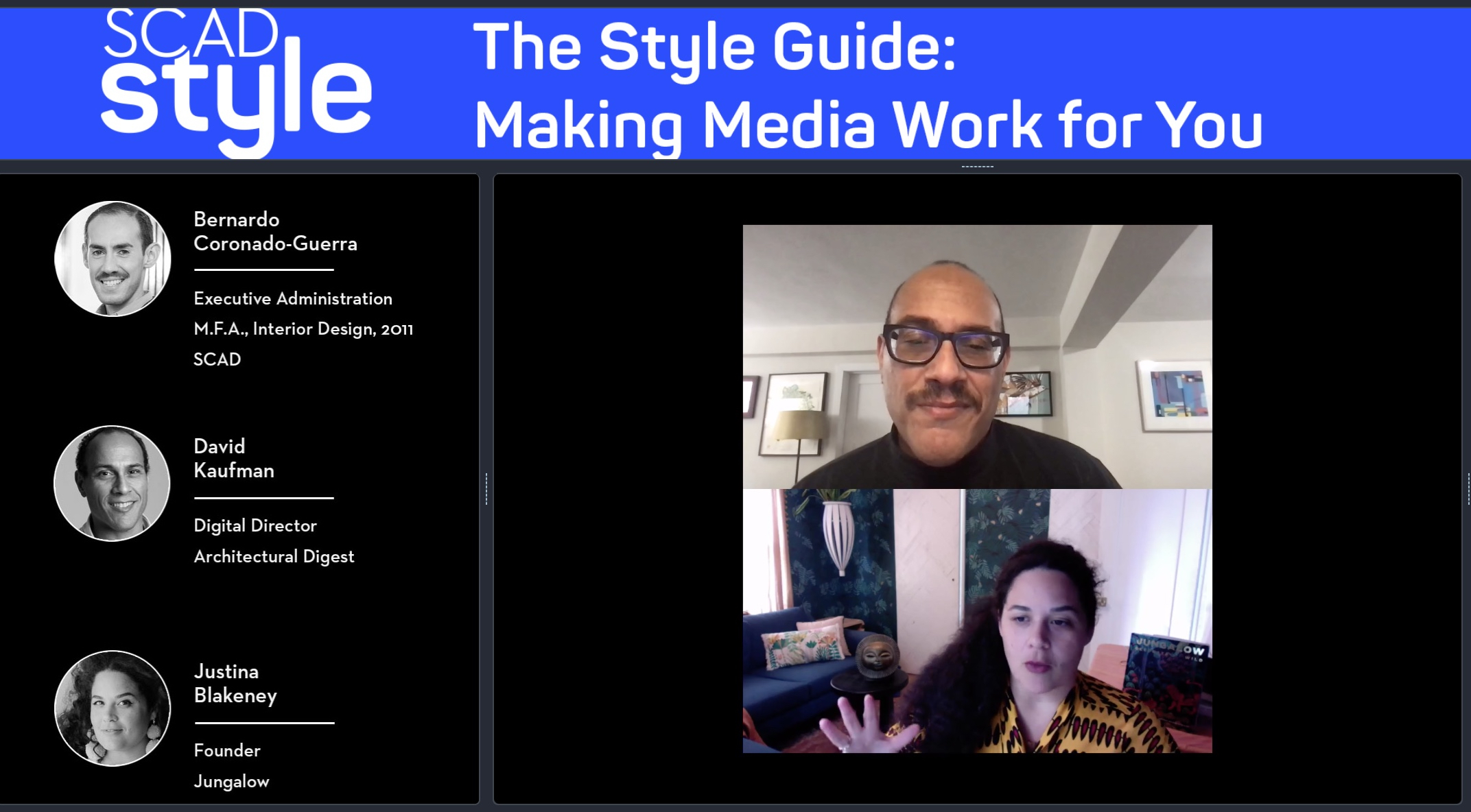
Blakeney was speaking during "The Style Guide: Making Media Work for You," her SCADstyle 2021 conversation with Architectural Digest digital director David Kaufman, moderated by Bernardo Coronado-Guerra (M.F.A., interior design, 2011). As the final event of this year's virtual SCADstyle, the conversation was especially suited to the moment, starring a cool influencer turned creative director who has built a popular home décor brand with her fun, funky personality as a key driving force.

"I had this idea that if I could build an audience, I could do whatever I wanted," Blakeney remarked of her beginnings as a blogger. "I was seeing that happen with other celebrities and influencers, where they'd just build an audience, and then oh, I don't know, come out with a pantyhose line. I thought, I'll see if I can build a following around what I love, then I'll be able to do whatever I want too. Somewhat miraculously, it worked!"

Jungalow now enjoys a fervent social media base (1.5 million Instagram followers). Its founder is a fixture on the New York Times bestseller list (this spring Abrams will publish her newest book, Jungalow: Decorate Wild). Words matter, of course, and Kaufman was interested in the etymology of her neologism.

"The word came when I moved back to L.A, after living in New York and Italy for a decade," the Jungalow founder explained. "I was living in a place that had botanical wallpapers and tons of plants. My girlfriends visited and loved it and said, 'Yours is like a jungle bungalow.' The word felt good in my mouth. So that's what I called my blog, my brand, the whole thing."

Kaufman lauded Blakeney for her strategic partnerships, noting Jungalow's licensed collaborations with Target, Pottery Barn, and Anthropologie, and asked: "How do you ensure these business pursuits don't overtake your creativity?"

"Doing these collaborations, I learned that one my deepest passions is product design and surface pattern design," Blakeney said. "I love designing all the rugs I have with Loloi, for example, and our Peking Handicraft bedding. These products allow me to practice the things I love from a creative standpoint. I don't feel that it drains me, I feel that it fuels me. But we are very selective with the partners that we take on and don't take on too many at once. That's how I put guardrails around my bandwith."

The conversation remained fixated on creative fuel. Specifically, how Blakeney keeps her tank filled. "Nature is my number one way to stay inspired. Hikes, or even walks around the neighborhood. Number two, I'm a total magazine freak. I get them from all over the world. I had someone DM me recently and they were throwing away a dozen boxes of vintage design magazines mostly from the seventies and did I want them? Now when I'm feeling low on inspo, I dive into a box of 40-year-old magazines and get fueled up."

Kaufman had one last question for the Jungalow founder: "What's the one thing that you haven't done yet that you'd most like to design?" Blakeney didn't hesitate: "A hotel!" Kaufman announced he'd be the first one there to check in. Blakeney decided this would be wonderful, as long as he put her on the cover of Architectural Digest. Kaufman didn't say no. Perhaps this media thing is working out after all.

Virtual presentation screenshot

Thanks for everyone who attended SCADstyle 2021!

Banner image courtesy Jungalow.

SCADstyle 2021: epigrams by the pound

March
25
2021
By
Tags:

SCADstyle 2021 presented a sumptuous slate of panels, talks, and conversations, enhanced by students and public attendees plying honored guests with questions and comments in a virtual format. Here are a few notable quotes from this year's event.

Amanda Lindroth, award-winning interior designer with offices in Charleston, Nassau, and Palm Beach, spoke with Justin DiPiero (B.F.A., interior design, 2013). Their conversation "Island Living for All" was a lovefest of brass tacks and sea breezes. Lindroth: "A rigid work ethic is critical in all métier. Style is style. Fashion and decorating are really not that far apart. If you find a woman with great personal style, very often her home will also be stylish. I prefer to be around other women who work. Those of us who keep jobs that are intense and have client relations and vendor relations and make payroll, we do have a different way of reacting to problems. We recognize each other, because we're carrying a lot on our shoulders."

Curt Moody, C.E.O. of architecture firm Moody Nolan, Inc., spoke with CT Nguyen, Chair of Preservation Design about "Building Better Architecture." Moody reflected on his experience as a collegiate student-athlete: "Studying architecture, I didn't have time to delay decisions on concepts like my classmates. I had to get to basketball practice. So, I came up with an approach to decide on a design scheme and move forward quicker. I didn't know at the time in that pushing myself like that was going to be a positive thing. I did it due to circumstance. Even today, I can come up with five concepts and narrow the field to the actual one faster than my competitors because they dwell on factors that I deem unnecessary."

During "The Future of Mobility: Curated Concepts for Automotive Design," automotive designer and electric car expert Tadeusz Jelec addressed the need for cities and citizens to "divorce themselves from the idea of unnecessary travel. We can be anywhere, at any time, with anyone. We must see mobility as the ability to be in a new place, and we have that technology today." Fellow automotive designer and entrepreneur Marek Simko added: "We already have the technology to remove drivers from the road and standardize safe, autonomous vehicles. Some nations will be able to be fully autonomous in ten years, others could take much longer due to laws and road conditions.

For "Clean and Green: Redefining the Beauty Industry," panelist Cashmere Nicole, founder of Beauty Bakerie, said: "I am hyper-aware of the products I use. Nothing is more important than your health, and I take that belief with me throughout every aspect of my company." Rose-Marie Swift, founder of RMS Beauty, said: "When I first began making green beauty products, I was doing it for the health of the models I worked with. Now, I do it to help everyone who wants healthier, more natural skin. We are going to make our industry better for every consumer." Joining Cashmere and Rose-Marie was fellow entrepreneur Brian Lamy (B.F.A., advertising, 2016), founder of Hello Good Lookin': "As a maker, I can help people find natural, organic ways to create happy moments, moments that heal and rejuvenate. The industry has a long way to go, but I know we can do it right."

Two leading voices in the service design field spoke during "Good for Business: Designing for Humans." Birgit Mager, president of Service Design Network, said: "Designing for humans is obsolete. We are ruining our planet by designing just for humans. We need to think about the ecology of the planet as a whole. Humans are one component of that system, but not the only component we need to design for any longer." Jamin Hegeman, VP of design, Capital One: "Companies have forgotten that customer satisfaction starts with satisfied employees. Employees are the first customers of an organization, and if you want exceptional service and customer loyalty, you need to have happy people on the front lines."

Stay tuned for more notable quotes from SCADstyle 2021!

SCADstyle logo


A visit to Colas Modern

March
16
2021
By
Tags:

"When you invite someone into your space, they should see the essence of your intentions," says David Colas (B.F.A., furniture design, 2012), greeting a visitor to the meticulous Colas Modern design studio. The combination workspace and marketplace proves his point: "I'm in love with order flow and how things get made. When the process is efficient, the pieces speak for themselves."

Modern Heritage is appropriately eloquent: hand-hewn furniture, stylish and timeless, the collection at the heart of Colas Modern. David and his wife founded Colas Modern in 2014 after Lara, then a local curator, displayed David's SCAD senior collection in her gallery. Today, the young parents run a burgeoning business where family is key. The Colas lineage of French master craftsmen goes back eight generations, explains David, proudly displaying a prized relic, his great-grandfather's antique wooden hand plane: "When I hold this in my hands, it's almost like a mission. I feel driven to do it, on both good and challenging days."

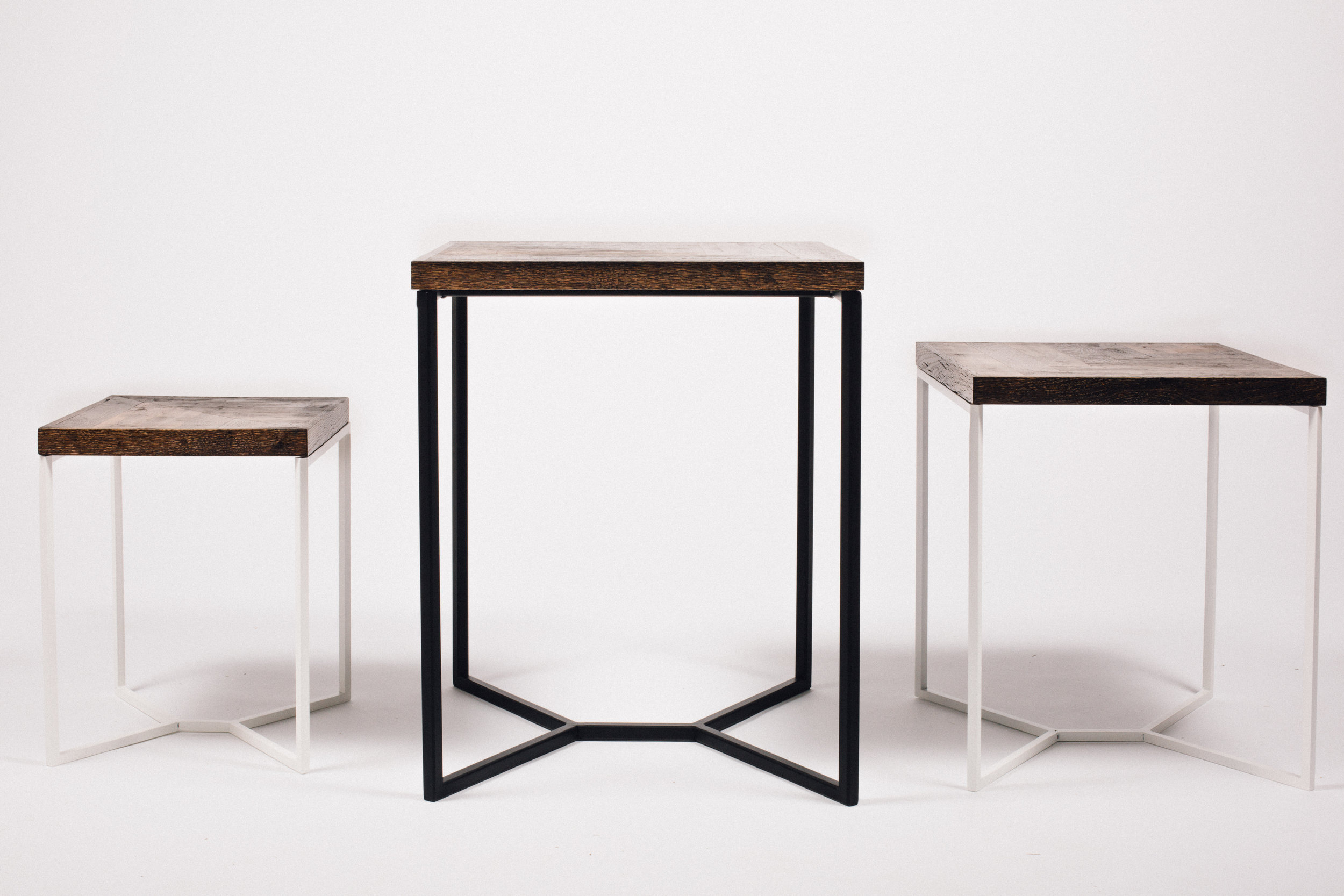
Tables

David Colas:

Everything with Colas Modern is concerned with wellbeing in your home. Our goal is to bring people in to see the Colas Modern marketplace because that's where you get to see our Modern Heritage collection: the bar top, the shelving units, the stools, the coffee table, that nightstand, everything is part of the collection. All the woodworking and welding, we do in-house. Potential customers can see this is being built here in Savannah and say, "Hey, this is very different than what I could get at Target!"

All our materials are locally sourced. Our wood comes from a supplier in Savannah that I've been shopping with since I was at SCAD in 2010. As a SCAD student, I would stay at Gulfstream Design Center as long and late as I wanted, working in the 3D printing and laser cutting and rapid prototyping areas. SCAD students have an incredible amount of technology at their fingertips. That Gulfstream production space has been a direct influence on how I've designed our shop and how we maintain it. Everything is cleaned and put away so that when we come in the next day, it's ready.

My journey to SCAD began when in 11th grade at Mont'Kiara International School of Kuala Lumpur (MKIS). My plan was to play basketball at a Division III college in the U.S. When my class at MKIS took a trip to Petronas Towers to see an exhibition by the artist Latiff Mohidin, it was an epiphany. A recruiter from SCAD visited MKIS, and SCAD became my first choice.

We offer Colas Modern internships for SCAD students that are about real-world practical training and providing a look at operating a small business. Lara posts the internship positions the SCAD portal for employment. One recent intern, Griffin Feeney, we saw his SCAD portfolio and could tell he made everything himself. We're looking for interns who love the building and fabricating process.

shopSCAD currently sells our Savannah Beehive cutting boards. They're fun, they're original, and have a message. The fruit boards include papaya, avocado, and pear, a nod to our favorite superfoods. The Irobo boards are inspired by my West Cote d'Ivoire heritage, with the look of the board based on African textiles.

Ours is truly a family business. If you want to get better at this trade, pay attention to details. It's extra work to maintain quality, but if you start out that way, it's not something you build towards, it's part of who you are.

Portrait

Visit Colas Modern.


SCADpro Fund digs Deepr

March
12
2021
By
Tags:

"Technology has advanced everyone's access to music," says Deepr founder and CEO Austin Webster (B.F.A., industrial design, 2006). "As music lovers in the streaming era, there's nothing nicer than making a music discovery that speaks to your soul."

At this nexus of exploration and curation, Webster and co-founder and COO Darrell Thompson have created a suite of Deepr products, chief among them the Deepr App, rooted in an unabashed love of music.

"The first time I met Austin and Darrell, we spent hours breaking bread and swapping stories about Muscle Shoals, Muddy Waters, and the future of music and tech," says SCADpro Fund managing director Ray Crowell. "Their passion, business hustle, and devotion to creators made it an easy choice for SCADpro Fund to invest." 

A streaming discovery tool, currently available to download for iOS and Android devices, the Deepr App coordinates with users' Apple Music, Spotify, and/or YouTube accounts, using audio recognition technology to instantly identify a song, as well as diving into advanced options including songwriting, sampling, and musician and production credits. "Our proprietary technology connects the dots between millions of songs, enabling listeners to craft personalized playlists in an instant," Webster explains.

'Deepr' app and web mockups

As a high school student at Ridgeway H.S. in Memphis, Tennessee, Webster hoped someday to design sneakers like the coveted joints he saw in Kicks Magazine, leading him to pursue an industrial design degree at SCAD. He continues to view his SCAD experience as foundational to his business development.

"At SCAD I had an influential professor named Jon Kolko. I told him I was trying to get into athletic apparel, and he encouraged me to take an intro class centered on human and computer interaction. My team's project was a music startup that included a music player where a listener would interact with their device. I came out knowing how to build out a concept and create a user journey, which became two of the keys to the creation of Deepr."

As a music-obsessed youth, Webster scoured the credits in CD booklets to see artist and producer credits, building an associative database in his mind of music he figured he'd dig based on its creators: "That was my process of discovering new music, and learning what I liked." Deepr, then, is a smarter, more attuned way of discovering music than the often-homogenous algorithmic approach of other apps. "The spirit of discovery birthed our company," Webster says. "With the Deepr App, we've eliminated those pain points where you'd have to use Google or Wikipedia to learn more about an artist, album, or song."

An interview with Webster can encompass recommending new female artists like Flo Milli and Arlo Parks, or how the samples of 1970s Motown mack Willie Hutch run through the Grammy-winning anthems of Three6Mafia. It's all love, Webster explains: "Deepr is for all music. You'll find country, pop, rock, hip-hop. Our mission includes making sure creators get the respect and due that they deserve."

"In a time when music listeners have no shortage of options for accessing content, Deepr is offering a substantially more thoughtful option," says Crowell.

In late 2020, Deepr was backed by Google For Startups new Black Founders Fund. Now with the support of SCADpro Fund, financial investment is paired with developmental consultancy.

"Getting SCADpro behind us is important not only from the significant funding, but from the business acumen that Ray and SCADpro executive director Josh Lind bring to the table," says Webster, who served as mentor at StartUp 2020 and 2021, and SCAD FutureProof and Diversity in Design 2020.

"I'm grateful to SCADpro Fund for having made this investment in us, and to Ray and Josh for connecting us with all the other incredible entrepreneurs in the SCADpro family."

Banner photo: Deepr founders Austin Webster (left) and Darrell Thompson.
Alexandra Tunstall: Reading Creatively

March
4
2021
By
Tags:

Dr. Alexandra Tunstall, professor of art history, SCAD Atlanta, is an expert in the Chinese woven tapestry art of Kesi (K'o-ssu). Dating to the Tang dynasty (618 to 907), Kesi thrived for over twelve hundred years, until the end of the Qing dynasty in the early 20th century. The Kesi weaving process was used to create royal garments, tapestries, and paintings, requiring meticulous techniques and a special loom, irreplicable by modern machines. 

Dr. Tunstall has lectured and written about the art form's refinement throughout Imperial China, and is known as a prominent voice on the ancient technique. In October, 2020, New York Textile Month, she delivered her virtual lecture "Technology of Imitation: Silk Tapestry Weave in Imperial China" at the annual Talking Textiles Conference. Her Reading Creatively recommendations focus on artistic mediums, Asia, and the blending of Eastern and Western cultures.

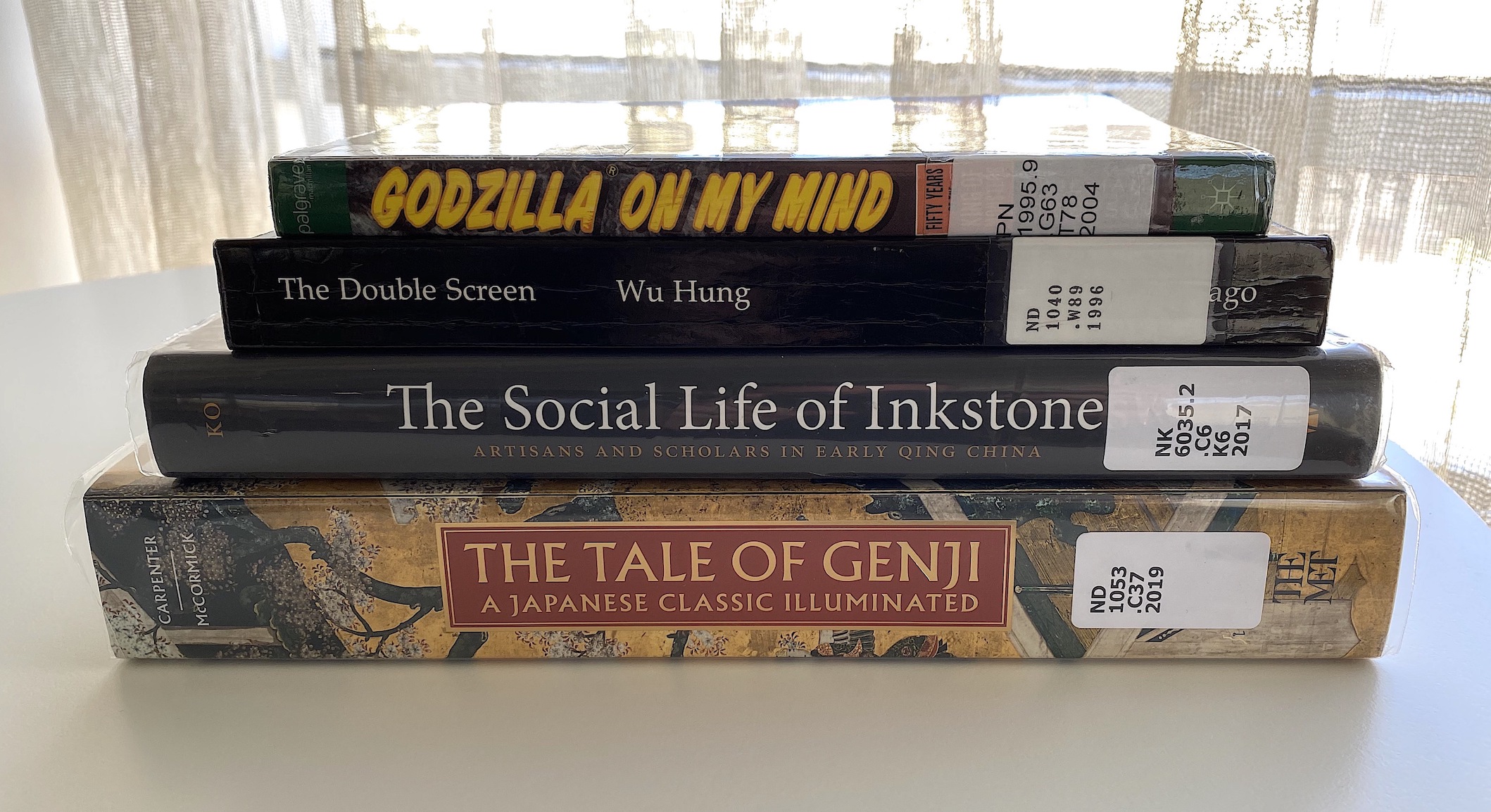
Wu Hung, The Double Screen: Medium and Representation in Chinese Painting (University of Chicago Press, 1996). "This text addresses Chinese paintings and their formats, focusing on the screen. Wu Hung studies paintings, not simply as images, but as objects.  By examining how the viewer's interaction with a work of art creates meaning, Wu Hung gives depth and specificity to the study of scrolls, screens, murals, and fans, among other painting formats."
 
Dorothy Ko, The Social Life of Ink Stones: Artisans and Scholars in Early Qing China (University of Washington Press, 2017). "Ko, a brilliant historian of China, writes about an important object for scholars throughout the history of China – the inkstone. By exploring the object and different histories of making, owning, and using inkstones, Ko writes a history of early Qing China that includes women, artisans, emperors, scholars, and merchants, always touching on the material object that unites these different groups."

Craig Clunas, Pictures and Visuality in Early Modern China (Princeton, 1997). "This book challenges how we define what a picture is and redefines the term "picture" according to how words and images were used in early modern China. Clunas breaks down the divide between artist and artisan, showing how high culture was incorporated into popular culture."

Francesca Bray, Technology and Gender: Fabrics of Power in Late Imperial China (University of California Press, 1997). "In her study of early modern Chinese history, Bray focuses on women and technology. Bray's work has opened the dialogue about technological innovations, and asks the reader to rethink ways textile artisans approached pictorial problems in their weaving, re-positioning pictorial problem-solving as technological breakthroughs in tapestry weave."

William Tsutsui, Godzilla on My Mind (St. Martin's Press, 2004). "Tsutsui, a renowned Japanologist, writes a joyful study of the famous movie kaiju. While focusing on Godzilla, the author incorporates political and cultural history as well as the history of filmmaking in the U.S. and Japan in the 1950s. This book provides the reader with a deeper understanding of how Godzilla was developed and became a beloved icon in Japan and the United States."

John T. Carpenter, Melissa McCormick, and Mónika Bincsik, The Tale of Genji: A Japanese Classic Illuminated (Metropolitan Museum of Art, 2019). "This catalogue for a recent exhibition at the Metropolitan Museum of Art offers a beautiful approach to images from "The Tale of Genji," the most famous work of literature in Japan. The exhibition explores how myths and stories emerged around the author of the tale and how the novel took on different meanings for different readers. This catalogue breaks new ground in giving historical interpretations for a wide variety of Genji images."

stack of library books

Learn more about the SCAD art history department.


Saif sees the light

March
3
2021
By
Tags:

Late last year, the NY-based clothing designer Wiederhoeft reached out to Saif Al-Sobaihi (B.F.A., film and television, 2017) for his lighting expertise as they photographed their Spring/Summer 2021 collection. "I told them I wanted to light the set with continuous light, using LED panels," says Saif, who minored in fashion photography at SCAD. "It's much smoother to the eye than the flashing lights used on most fashion shoots, and it means I'm not interrupting the photographer or models. The light is seamless and beautiful."

In a world where intense specialization is often a precondition of desirable employment, Saif is a multi-hyphenate lighting designer, composer, athlete, writer, and award-winning cinematographer. He dodges the dangers of dilettantism by stepping towards the light. Always the light.

"When you don't have confidence as an artist, you think you have to focus on one thing," says Saif. "With confidence comes the ability to conduct your talents in many directions."

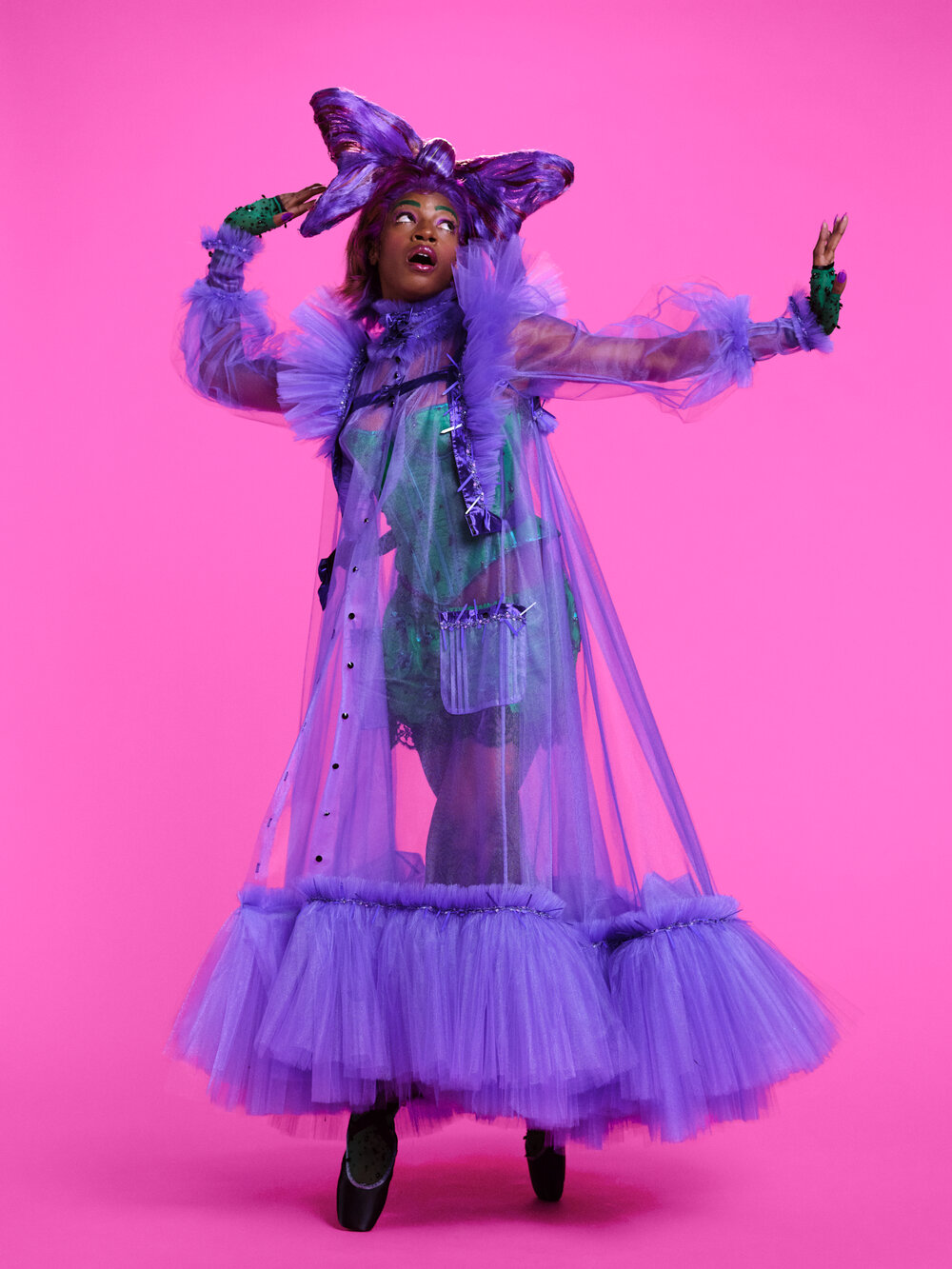
Image from Wiederhoeft SS/21 | designer: Jackson Wiederhoeft, photographer: Paul Simon, chief lighting tech: Saif Al-Sobaihi.

Image from Wiederhoeft SS/21 | designer: Jackson Wiederhoeft, photographer: Paul Simon, chief lighting tech: Saif Al-Sobaihi.

From Jeddah, Saudi Arabia, Saif first came to the United States a decade ago to commit to an immersive ESL program in Georgia. On a day off, he went to lunch with a friend who insisted they stop by the SCAD Atlanta welcome center at 1600 Peachtree Street NW. "We went inside, and a recruitment representative approached me and handed me a catalog," Saif remembers. "I opened it and the first thing I saw was a picture of the SCAD equestrian team. I asked, ‘Where do I apply'?"

Having grown up riding, Saif was a natural fit for SCAD's national championship-winning equestrian program. As a film and television major, he collaborated on two 16mm films that incorporated his love of horses. "Hamood in America" is a wry short comedy starring Saif's younger brother Mohammed (B.F.A., fashion), while "Rider" is a mini-doc featuring SCAD equestrian captain Ryan Genn (B.F.A., equestrian studies, 2016). Both films showcase Saif's stunning sensitivity to the emotional and psychological properties of light.

"In one of my SCAD cinematography classes, [our professor] gave us a fantastic exercise. He handed us cheap, disposable cameras and said, ‘Make a scene, light it and compose it as beautifully as possible, as if you're shooting a film.' Those disposable cameras are flashy and weird and you can't see what you're shooting, but everyone in the class got incredible results. Trust your eye, love what you see, no matter the camera."

"Hamood in America" caught the attention of Steve Cossman, founder of the Brooklyn-based non-profit cinema arts organization Mono No Aware. Cossman made the film a selection at Mono No Aware XI Film Festival 2018, and invited Saif to lecture in analogue filmmaking, adding "educator" to his CV. "I teach workshops in 16 millimeter filmmaking," Saif says, "how to maintain the camera and lenses, how to edit, how to create a film from the moment you order your stocks until your film is finished, printed, and being screened."

As the conversation winds down, Saif plays some instrumental tunes he's released under his moniker TheSaif, including his new single "Freelance Angel." Cool, warm, laid-back, and thoughtful, with the bluesy R&B feel of Tom Scott's "Today," the music captures the same lambent, radiant qualities as his cinematography.

"Instead of being a single-focus artist, every artist should explore what they want," Saif says. "By exploring different disciplines, you understand how they go hand in hand. Art is more fluid now."

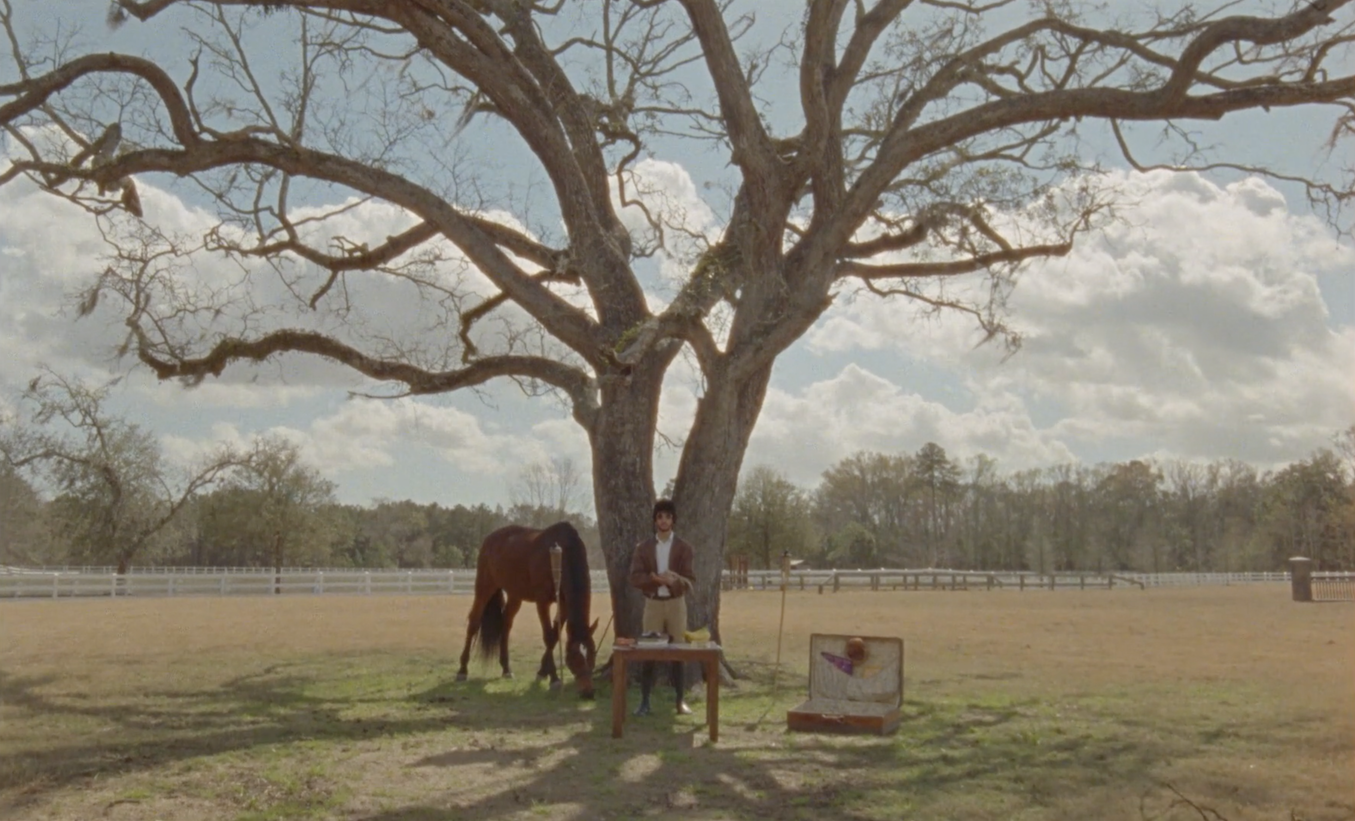
Still from "Hamood in America" (2017) dir. Ryan Hance, produced and photographed by Saif Al-Sobaihi.

Still from "Hamood in America" (2017) dir. Ryan Hance, produced and photographed by Saif Al-Sobaihi.