Skip to main content Accessibility Policy

Alexandra Tunstall: Reading Creatively

March
4
2021
By
Tags:

Dr. Alexandra Tunstall, professor of art history, SCAD Atlanta, is an expert in the Chinese woven tapestry art of Kesi (K'o-ssu). Dating to the Tang dynasty (618 to 907), Kesi thrived for over twelve hundred years, until the end of the Qing dynasty in the early 20th century. The Kesi weaving process was used to create royal garments, tapestries, and paintings, requiring meticulous techniques and a special loom, irreplicable by modern machines. 

Dr. Tunstall has lectured and written about the art form's refinement throughout Imperial China, and is known as a prominent voice on the ancient technique. In October, 2020, New York Textile Month, she delivered her virtual lecture "Technology of Imitation: Silk Tapestry Weave in Imperial China" at the annual Talking Textiles Conference. Her Reading Creatively recommendations focus on artistic mediums, Asia, and the blending of Eastern and Western cultures.

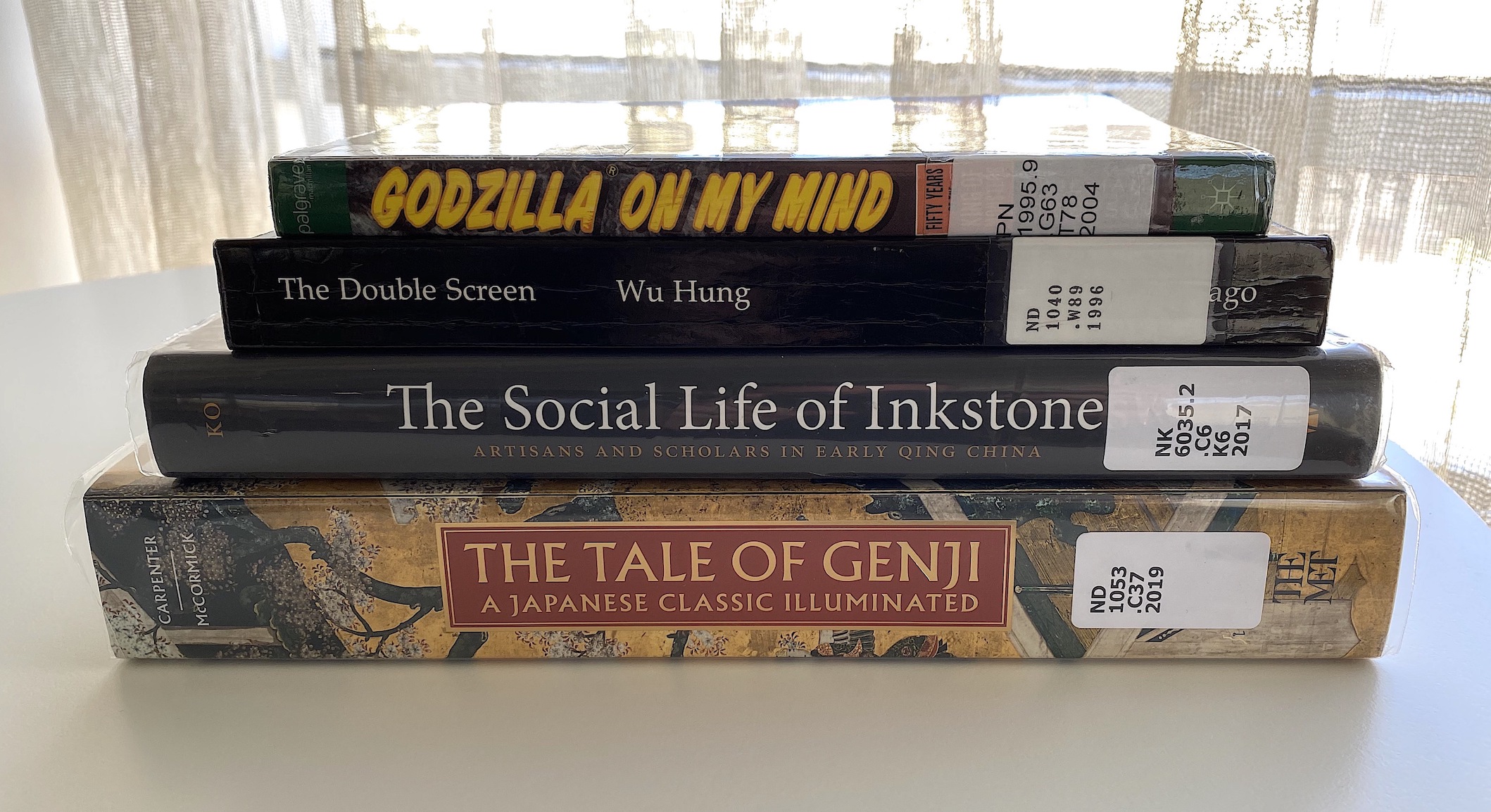
Wu Hung, The Double Screen: Medium and Representation in Chinese Painting (University of Chicago Press, 1996). "This text addresses Chinese paintings and their formats, focusing on the screen. Wu Hung studies paintings, not simply as images, but as objects.  By examining how the viewer's interaction with a work of art creates meaning, Wu Hung gives depth and specificity to the study of scrolls, screens, murals, and fans, among other painting formats."
 
Dorothy Ko, The Social Life of Ink Stones: Artisans and Scholars in Early Qing China (University of Washington Press, 2017). "Ko, a brilliant historian of China, writes about an important object for scholars throughout the history of China – the inkstone. By exploring the object and different histories of making, owning, and using inkstones, Ko writes a history of early Qing China that includes women, artisans, emperors, scholars, and merchants, always touching on the material object that unites these different groups."

Craig Clunas, Pictures and Visuality in Early Modern China (Princeton, 1997). "This book challenges how we define what a picture is and redefines the term "picture" according to how words and images were used in early modern China. Clunas breaks down the divide between artist and artisan, showing how high culture was incorporated into popular culture."

Francesca Bray, Technology and Gender: Fabrics of Power in Late Imperial China (University of California Press, 1997). "In her study of early modern Chinese history, Bray focuses on women and technology. Bray's work has opened the dialogue about technological innovations, and asks the reader to rethink ways textile artisans approached pictorial problems in their weaving, re-positioning pictorial problem-solving as technological breakthroughs in tapestry weave."

William Tsutsui, Godzilla on My Mind (St. Martin's Press, 2004). "Tsutsui, a renowned Japanologist, writes a joyful study of the famous movie kaiju. While focusing on Godzilla, the author incorporates political and cultural history as well as the history of filmmaking in the U.S. and Japan in the 1950s. This book provides the reader with a deeper understanding of how Godzilla was developed and became a beloved icon in Japan and the United States."

John T. Carpenter, Melissa McCormick, and Mónika Bincsik, The Tale of Genji: A Japanese Classic Illuminated (Metropolitan Museum of Art, 2019). "This catalogue for a recent exhibition at the Metropolitan Museum of Art offers a beautiful approach to images from "The Tale of Genji," the most famous work of literature in Japan. The exhibition explores how myths and stories emerged around the author of the tale and how the novel took on different meanings for different readers. This catalogue breaks new ground in giving historical interpretations for a wide variety of Genji images."

stack of library books

Learn more about the SCAD art history department.


Lubomir Kocka: Reading Creatively

January
19
2021
By
Tags:

"I was born a visual storyteller," says film and television professor Lubomir Kocka. "I inherited that quality from my grandfather, who was a painter and a priest. The frescos he painted almost a hundred years ago are still in churches in Vojvodina, Serbia. The Biblical stories he narrated launched my imagination."

Growing up in the former Czechoslovakia, Kocka (pronounced COAT-ska) was driven to improve his reading skills by his parents, who emphasized the relevance of literacy to artistic pursuits. "So I read everything, even the Communist newspaper Pravda."

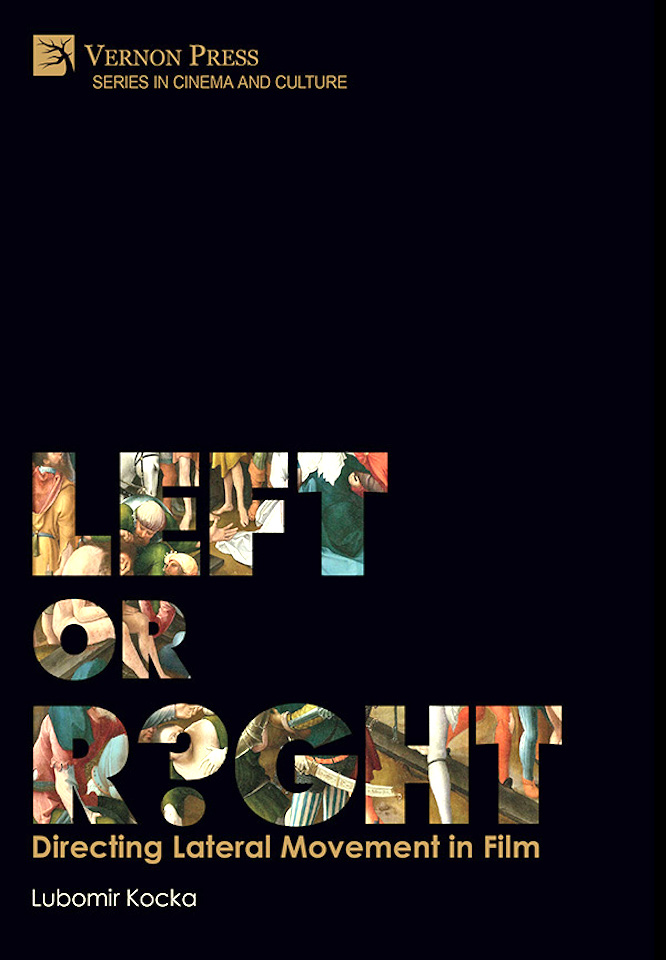
In addition to being a lauded director of feature films and television series, Kocka is the author of the new book Left or Right? Directing Lateral Movement in Film (Vernon Press, 2020). For his Reading Creatively selections, he reflects upon works that comprise his own formative "firsts."
 
Pavol Dobsinsky, David L. Cooper (ed., transl.), Traditional Slovak Folk Tales (Routledge, First American Edition, 2001). "My first encounter with literature, and the first bedtime stories my father read to me, and that I later read to both my sons, along with Grimms' Fairy Tales and Hans Christian Andersen's Fairy Tales. Along with radio dramas and children's vinyl LP records, these tales significantly influenced my visual thinking and storytelling skills."


Edgar Rice Burroughs, The Return of Tarzan (A.C.. McClurg, 1913). "The first book I read multiple times. Up to that point, when reading a book and nearing the end, I slowed down because I did not want to leave the characters. My father told me, 'If you want to meet a novel's characters again, you can start reading the book again.' Such a liberation! I still reread great books today."

Norman Mailer, The Naked and the Dead (Rinehart & Company, 1948). "A foot soldier in a platoon is walking through bushes when he gets his foot stuck in the branches of a shrub. But when he tries to pull it out, he realizes that his foot is trapped in the rib cage of the dead enemy. This journalistic visual detail left an unforgettable impression on me. This was the first book where I realized the power of visual writing, and how a literary detail can be comparable to a close-up in film."

E. R. Braithwaite, To Sir, With Love (Bodley Head, 1959). "The first book I read after seeing the film, Braithwaite's novel tells the story of a dedicated Black teacher who deviates from the standard curriculum to discuss issues with his students like poverty, sex, love, and death, while slowly breaking down the barriers of racial prejudice. I don't remember how many times I saw the 1967 film starring Sidney Poitier in the movie theater, crying each time. Reading the book, I cried again. That was the first time I realized a written story can be interpreted differently by a screenwriter or director."

George Orwell, Nineteen Eighty-Four (Secker & Warburg, 1949). "Orwell's dystopian political science fiction classic was the first samizdat I read. Living in a socialistic country with a real experience of violations of freedom of expression, the cult of personality, and culture of survival did not make me feel that I was reading something unique. I felt like I was living it."

John Irving, The World According to Garp (E.P. Dutton, 1978). "The first book I read after surviving a helicopter crash while scouting locations for Mountain Rangers, a TV series I directed. Laid up in the hospital with two broken vertebrae, I was visited by my friend, the screenwriter Zura Krizkova, who told me, 'It was not your time to die, and it is not time to be gloomy, you have to read this book.' I was in no mood to laugh, but I read it in one breath."

ubomir Kocka's book, Left or Right? Directing Lateral Movement in Film
Lubomir Kocka's new book, Left or Right? Directing Lateral Movement in Film, is the work of a creator and educator who has dedicated his life to the art of storytelling. The book includes a chapter-length contribution from fellow SCAD film professor Stephen Stanley on LGBTQ+ film. Learn more about the book at the official Vernon Press page, and from this brief talk by the author himself.


Melissa Kuperminc: Reading Creatively

December
11
2020
By
Tags:

Professor Melissa Kuperminc is a life-long book lover. As a child, she enjoyed visiting the Margate City Public Library in Margarte City, NJ, a two-room Tudor cottage where she remembers curling up in a shaft of sunlight, reading for hours. That's where she learned to treasure all facets of the reading experience: the discovery of a book, its cover design, chosen typeface, the feel of the paper, and the contents themselves.

The SCAD Atlanta graphic design professor's selection of beloved books includes two new ones she has been saving for winter break.

Diane Ackerman, A Natural History of the Senses (Vintage, 1990): "Ackerman is a poet, and this is a beautifully written book and a mesmerizing investigation of the five senses. Her writing is rooted in science and driven by curiosity. I'm on my fourth copy of this book, having pushed it into the hands of interested students who didn't want to let it go."

Roland Barthes, Camera Lucida: Reflections on Photography (Farrar, Straus and Giroux, 1981): "I had to read a good bit of Barthes in graduate school seminars, and often found it tough but rewarding reading. This slender book was written after the death of Barthes' mother, and near the end of his life. It's a moving meditation on how and why photography is meaningful."

Simon Garfield, Just My Type: A Book about Fonts (Gotham, 2011): "Typography is one of my passions. Letterforms have personality, character, provenance, and a surprisingly rich history. Garfield reminds me of a sort of British Malcolm Gladwell, and this book about the history and mysteries of letters is a fascinating joy."

Johannes Itten, The Art of Color: The Subjective Experience and Objective Rationale of Color (Van Nostrand Reinhold, 1973): "Itten was a legendary master professor in the Weimar Bauhaus. Between 1919 and 1922, he taught at the Bauhaus, developing the required and innovative preliminary course which still influences art school foundations classes to this day. This big book taught me just about everything I know about color, and let me see it in a new way."

Rebecca Solnit, Hope in the Dark: Untold Histories, Wild Possibilities (Haymarket Books, 2016): "This slender book has become even more relevant over time. It shows that while social change happens along an unpredictable path, there are reasons for hope that can power the fight for social justice. Solnit is one of the great writers and thinkers of our time, and this is a great introduction to her work."

Alice Yin Cheng, This is What Democracy Looked Like: A Visual History of the Printed Ballot (Princeton Architectural Press, 2020): "This is the first illustrated history of US printed ballot design, featuring essays on the ballot as well as a visual history of ballot design in the 19th and early 20th century."

Peter Mendelsund and David J. Alworth, The Look of the Book: Jackets, Covers & Art at the Edges of Literature (Ten Speed Press, 2020): "This gorgeous book about book cover design "examines art at the edges of literature through notable covers and the stories behind them," according to the authors. I haven't gotten to this one or the book on ballots yet, but that's part of the joy of the holiday season...curling up with a good book!"

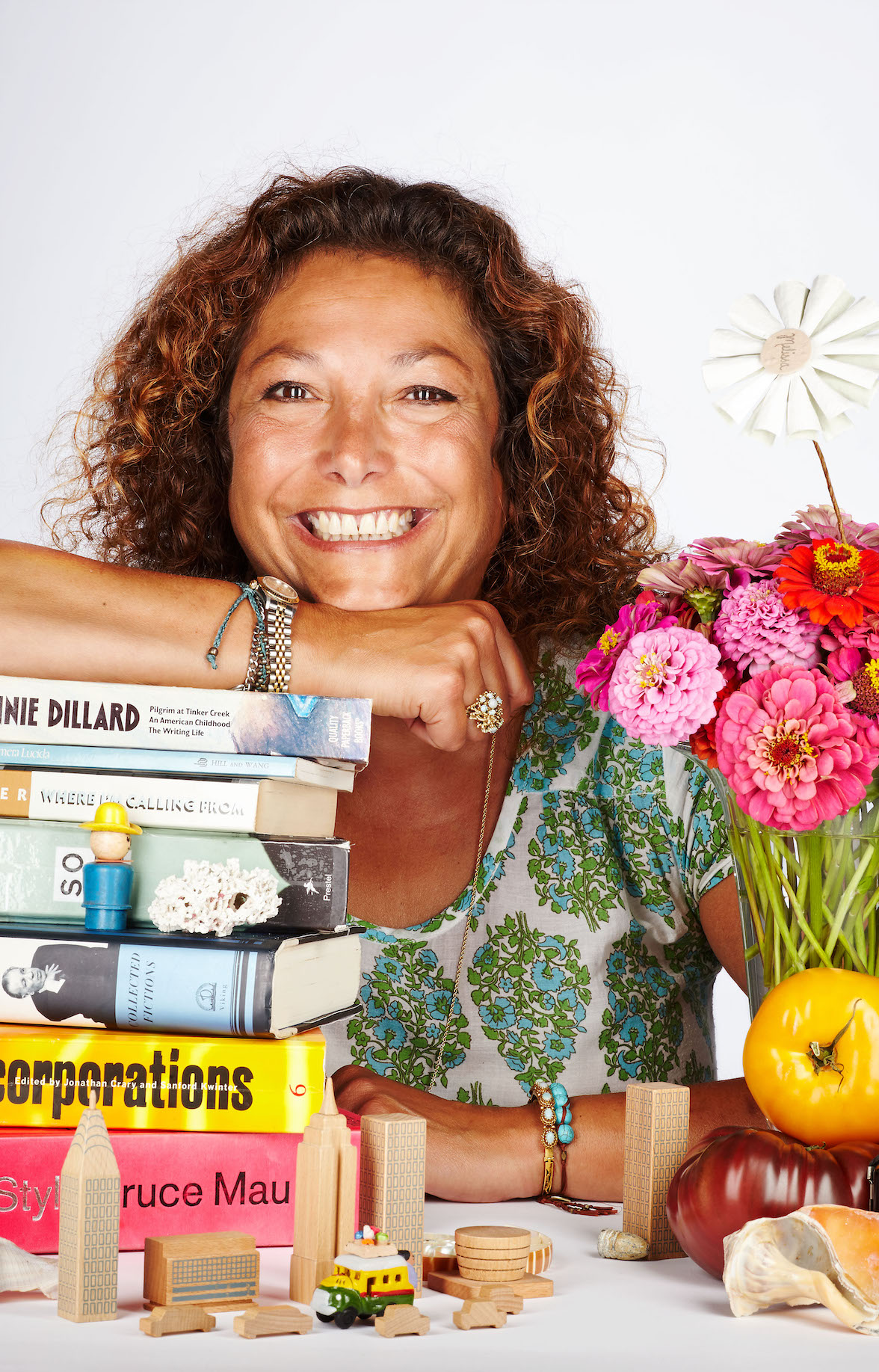
Melissa Kuperminc

Teresa Burk: Reading Creatively

November
9
2020
By
Tags:

"Books about books are my favorite," says Teresa Burk (M.A., historic preservation, 2016). As head librarian, SCAD Atlanta, Burk is in her element. The library, located in the university's main academic building at 1600 Peachtree, offers students an abundant and growing catalog of books, periodicals and visual resources. It's also home to Atlanta Print Collection and Artists' Book Collection, two teaching collections that Burk uses to facilitate student learning experiences complementary to classroom curricula. "Part of the instruction I do is referring students to books about artists' books," she explains.

Here are a few Burk picks, all of them in SCAD Libraries:

Andrew Roth, Philip E. Aarons, and Claire Lehmann, eds., Artists Who Make Books (Phaidon, 2017): "The SCAD Atlanta library has an incredible collection of artists' books. Numbering 2,300 volumes, it is one of the largest in the southeast. We have deep holdings in work from the 1960s and 1970s and from Atlanta's artist-run Nexus Press. We continue to build on the collection, and a point of pride is the student work we collect during the annual student artists' book competition. This book is a great place to start exploring the history of artists' books—you'll find many of the artists mentioned here in our library collection."

Jeff Brouws, Wendy Burton, and Hermann Zschiegner, eds., Various Small Books (MIT Press, 2013): "This book is a tribute to the artist Ed Ruscha. Ruscha is sometimes called the godfather of artists' books because of the small, photo-based books he made in the 1960s and '70s. Those books are highly collectable and we are fortunate to have some of them in the SCAD Libraries. This book shows the impact they had on other artists. It's also about looking and noticing what is interesting in the often-mundane world around you."

Martin Parr and Gerry Badger, The Photobook: A History (Phaidon, vol.1 2004, vol.2 2006, vol.3 2014): "This three-volume set about the history of the photobook brings together an incredible range of material. Parr and Badger discuss the photobook as propaganda, the stream-of-consciousness photobook, the artists' photobook, the company photobook, the protest photobook, and the identity photobook. This set is indispensable inspiration for photography students and all students involved in telling stories with pictures."

Sina Najafi (foreword), Curiosity and Method: Ten Years of Cabinet Magazine (Cabinet Books, 2012): "This is a book about a magazine in the form of an encyclopedia. In other words, not your average reference book. What I love is the range of topics covered–from animal architecture to synesthesia–things I find myself wanting to know more about. Because Cabinet magazine aims to 'encourage a new sense of curiosity,' this book is perfect for artists, designers and creatives. We also have the magazine available in the Atlanta Library."

Fleur Cowels, ed., The Best of Flair (Rizzoli, 2014): "Recently I was working with a graphic design class researching unusual publication design. We looked at some artists' books and contemporary, collectible magazines and when we got to Flair...yes! Goldmine. Flair was a short-lived (1950-51), innovative, lavishly produced magazine famous for its die-cut covers and superb coverage of the arts. You know a magazine that only lasted a year is special if a deluxe book about it has a third edition. We have some original issues of Flair in the special collections and several copies of this book in the SCAD Libraries."

Jane Jacobs, The Death and Life of Great American Cities (Random House, 2011): "This is the 50th anniversary edition of an influential and poetic book about the city, originally published in 1961. Jane Jacobs approaches cities from a humanistic perspective and writes about the ballet of street-life. I was introduced to Jacob's writing and activism during my graduate work in preservation studies here at SCAD. Her perspective helped me look at my surroundings with fresh eyes, not unlike Ed Ruscha's photobooks. I love books that prompt you to take another look, and consider another angle."

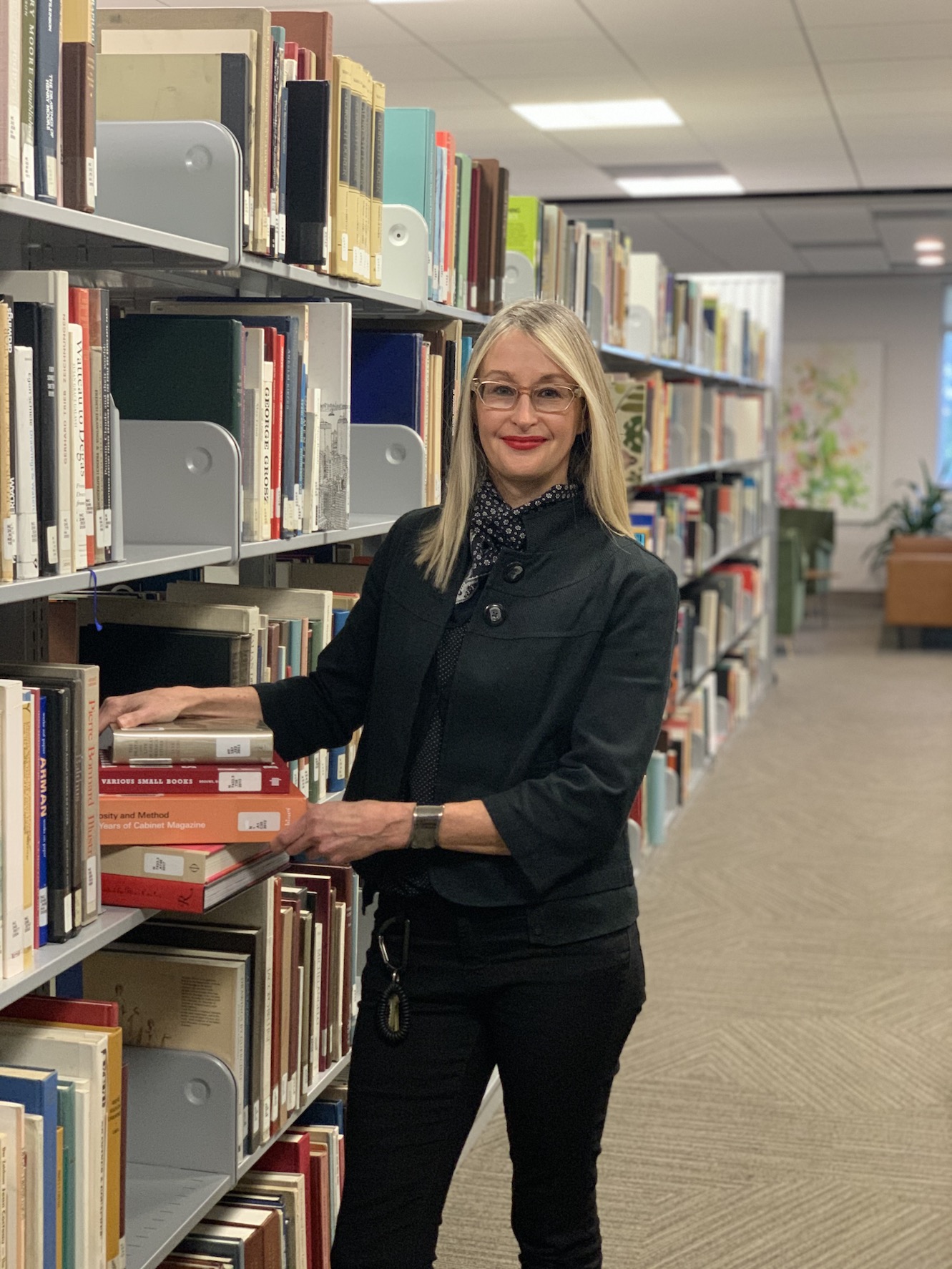
Portrait

Teresa invites you to browse the Artist’s Book Collection.


Jackie Dunn: Reading Creatively

October
6
2020
By
Tags:

As the collection strategy librarian at the Jen Library, SCAD Savannah, Jackie Dunn knows books. She estimates the Jen Library added 2700 new print titles in the past year, as the award-winning facility reopened for fall quarter with new safety precautions, enabling students to continue to check out materials, and to use computers, scanners, and study areas.

A concerted focus on e-book titles is facilitating an enriched experience for students learning remotely and via eLearning. "We also acquired over 300 new e-book titles this past spring and summer," Dunn says. "The trend of collecting larger volumes of digital materials will continue."

Dunn's personal reading habits are inextricable from her professional dedication. Here are a few books Jackie loves, all of them in the SCAD Libraries holdings.

Robin Wall Kimmerer, Braiding Sweetgrass: Indigenous Wisdom, Scientific Knowledge and the Teachings of Plants (Milkweed Editions, 2013): "Authored by an indigenous woman who is also a botanist, this book offers profound insights into the natural world. Spirit and science unite, inspiring gratitude and offering essential lessons on ecology at a time when sorely needed."

Paul Koudounaris, Heavenly Bodies: Cult Treasures & Spectacular Saints from the Catacombs (Thames & Hudson, 2013): "The word ‘relic' brings to mind a timeworn, dusty object; not so with the relics captured in these photos. Bejeweled and adorned in intricate textiles, the bodies of the catacomb saints challenge our ideas of corporeality, death, and holiness. Gaining access to these treasures was no small feat for Koudounaris, and the stories accompanying the photos are often surprisingly humorous."

Kate Atkinson, Life After Life (Back Bay Books, 2013): "This novel ponders the question: What if we could live our lives again and again, until we finally got it "right?" Set against the dramatic backdrop of World War II in England, the reader follows the life (lives, rather) of Ursula Todd, as she tinkers with her destiny and challenges fate time and again. " 

Christopher Marley, Pheromone: The Insect Artwork of Christopher Marley (Pomegranate Communications, 2008): "Marley's images of jewel-like insects captivate and inspire. His photography is unaltered; colors have not been adjusted or saturated for visual affect. Many of the photos have been printed with fifth-color metallic ink and are accompanied by essays on insects, color, and design. If you are looking for visual stimulation, let this book be your muse."

Madeline Miller, The Song of Achilles (Ecco, 2012): "The story of Achilles has been told countless times, but never in quite so intense or gut-wrenching a fashion. This unique homage to The Iliad is a story of war, but also of love and sacrifice. Miller brings the heroes and heroines of ancient Greece back to life, with unforgettable dimensionality."

Sabrina Scott, Witchbody: A Graphic Novel (Weiser Books, 2019): "One of the unfortunate aspects of adulthood is that we often become disenchanted with our world. The sense of wonder that accompanied childhood is replaced by the stresses of everyday life. Witchbody reignites feelings of wonder and mystery through unique stream-of-consciousness text and beguiling illustrations, reminding us that the magic of our universe is always within reach."

portrait of Jackie Dunn

Jackie invites you to search the SCAD Libraries catalog and databases and use the online feature "Ask A Librarian"!


Nicole Blackwood: Reading Creatively

September
14
2020
By
Tags:

"Reading is not a destination, but a process of becoming and being," declares Dr. Nicole Blackwood, professor of art history. "A good book continues to form and create new ideas within you even after the final word is read."

Renowned for her walking tours of Savannah, Dr. Blackwood is an associate member of the Appraisers Association of America, and founder and director of the Savannah-based art advising and appraising firm D I S E G N O, LLC. Her book selections are all written by artists, or by those she would call friends.

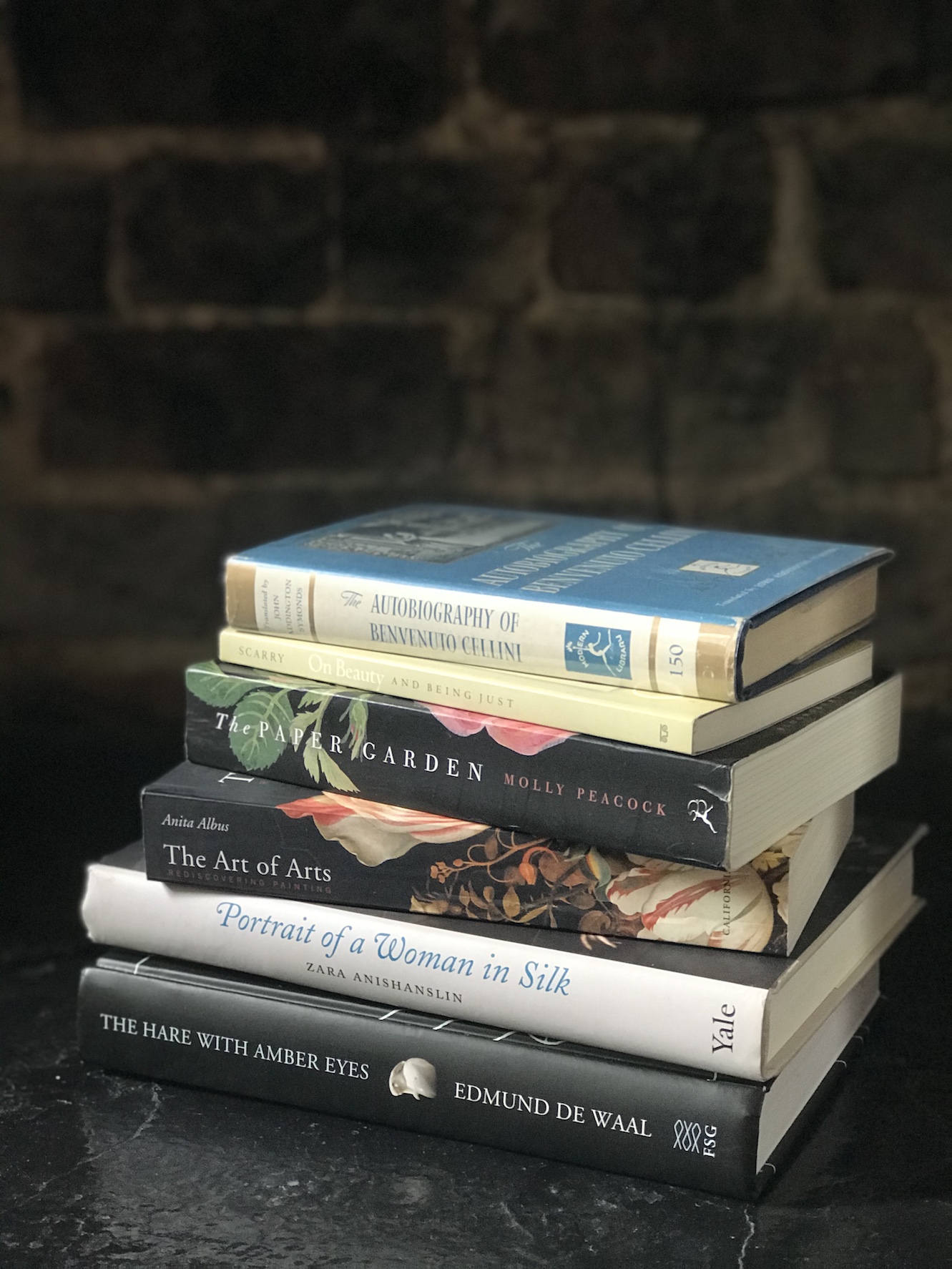
Molly Peacock, Paper Garden: Mrs. Delany Begins Her Life's Work at 72, (Bloomsbury, 2010):  "Mary Delany was seventy-two when she invented the art of collage, cutting paper-thin tissue into a perfect replica of a geranium; she would go on to make nearly one thousand papercut flowers before her death in 1788. Peacock, a poet herself, weaves together her life as a contemporary writer and that of this extraordinary eighteenth-century woman, articulating how the past and present speak to each other, literally and metaphorically."

Edmund de Waal, The Hare with Amber Eyes: A Hidden Inheritance (Farrar, Straus and Giroux, 2010): "As an art historian, I'm fascinated by how objects tell stories. In this autobiographical tale, the contemporary ceramicist De Waal traces the story of a collection of Japanese wood and ivory carvings called netsuke that he inherited from his great-uncle. Moving from the empire of Odessa to fin de siècle Paris, from occupied Vienna to postwar Tokyo, De Wall unravels a dramatic story of family and self through little objects that can fit in the palm of a hand."

Zara Anishanslin, Portrait of a Woman in Silk: Hidden Histories of the British Atlantic World (Yale, 2016): "This book encapsulates how entire worlds can be revealed through the examination of a singular painting. Using one picture as her starting point, Anishanslin unravels the complex interconnections between things both pictured and made. Through an image of a single silk dress, a new appreciation for the complexity and serendipity involved in the creation of any fabric is spun." 

Anita Albus, The Art of Arts: Rediscovering Painting (University of California Press, 2000): "This book completely changed how I thought about and approached early Netherlandish oil painting and the world of Jan van Eyck. Upon first seeing the brilliant work of van Eyck in a dimly-lit classroom during my undergraduate studies in Canada, I decided I wanted to study art history. But it was this book, read many years later during my art history doctorate in England, that revealed what I had seen in Van Eyck's luminous and reflective pigmented surfaces."

Benvenuto Cellini, Autobiography (Penguin, 1955). "The study and examination of self-portraiture and autobiography have been keystones in my academic work, and this book is as good as it gets. Cellini's own account of his life is an incomparable source on the nature of artmaking in sixteenth-century Italy. It's also a riveting story about the grit of the creative process filled with the blood, sweat, and tears. Anyone who has struggled with their own craft will be in good company reading this book."

Elaine Scarry, On Beauty and Being Just (Princeton, 2001). "Beauty, Scarry argues, provokes copies of itself, which can account for the replication of certain forms and shapes throughout the history of art. Beauty makes us more honest, more judicious, truer, and humbler – in short, better people.  For Scarry, admiring beauty is nothing to be ashamed of; on the contrary, beauty fosters the spirit of justice."

a stack of books

Learn more about Dr. Blackwood here.


Dr. Kenneth Foster: Reading Creatively

September
1
2020
By
Tags:

"Artists and scholars seem to have an intuitive understanding of the importance of human crossroads in life," says SCAD liberal arts professor Kenneth Foster. "My love for books and reading was my ticket to dispelling stereotypical expectations about the life trajectory of a young Black male living in public housing, especially in the 1950s."

Dr. Foster is a social psychologist specializing in issues including identity, social stigma and empowerment. His research and writing have led him down diverse literary paths, and for that the SCAD community is grateful.

Frans De Waal, Our Inner Ape (Riverhead Books, 2005): "De Waal is a world-renowned primatologist and this seminal work uses our evolutionary ancestors to explain much of why and who we are as humans. To quote De Waal, 'Ever since our ancestors swung from tree to tree, [human] life in small groups has been an obsession.' An audacious and provocative read."

Robert J. Sternberg, Psychology 101 ½ (APA, 2004): "Sternberg is a prolific author and broad thinker. His brief personal anecdotes explore topics such as why some artists periodically reinvent themselves. I have used this book for over a decade. Excellent for students' (and others') critical thinking, professional and personal development."

Sidney Langer, From Slavery to 9/11: Reading in the Sociology and Social Psychology of Extreme Situations (Taylor & Francis, 2012): "This volume is an essential service to the general public, as well as social scientists. It provides a set of stark analyses of treatment and often lingering effects of atrocities such as the Jonestown massacre, Armenian genocide, Jewish Holocaust, African slavery and more."

Walter Benn Michaels, The Trouble with Diversity: How We Learned to Love Identity and Ignore Inequality (Holt, 2006): "This provocative book is a timely examination of America's psyche. It is a short, fast read that I would argue implores us to take a long look at what we think diversity means in the 21st century.  A provocative polemic."

Claude M. Steele, Whistling Vivaldi: And Other Clues to How Stereotypes Affect Us (W.W. Norton, 2010): "Steele provides a riveting argument, based on extensive research, as to why it is important to note, accept and deal with the insidious and powerful reality that we are all stereotype targets. You might say that his upbeat narrative approach whistles while it works."

www.scad.edu

Michael O'Brien: Reading Creatively

August
6
2020
By
Tags:

"How do we transcend our origins?" asks Michael O'Brien, associate chair of photography, SCAD Atlanta. "Can we create family in a greater sense of the word? Are we able to shed preconceived notions and follow our true selves? It has never been more important than it is now to understand and embrace the truth: You are responsible for your own life, and ultimately beholden only to yourself."

Professor O'Brien's personal journey towards enlightenment began around the time he started supplementing his ninth grade French homework with the works of James Baldwin and Virginia Woolf. Having studied under Walker Evans at Yale in the 1970s, O'Brien is an acclaimed photographer in his own right. His work, featured in publications including The New Yorker, Rolling Stone, L'Uomo Vogue, and Elle Décor, also resides in the permanent collections of the National Portrait Gallery in London and the Cleveland Museum of Art.

Michael O'Brien

James Baldwin, Giovanni's Room (Dial Press, 1956): "Baldwin's publisher refused to publish the work at first, because of the homosexual content of the book. Mirroring his own life, Baldwin's protagonist travels to France to escape both his conservative upbringing and his engagement to a woman he has no intention of marrying, only to truly find himself in a foreign land. The book addresses the politics of America in the late ‘40s and early ‘50s, and ultimately parallels the history of black community in our nation."

Jean Genet, Our Lady of the Flowers (Marc Barbezat — L'Arbalete, 1943): "Genet wrote this while in prison on sheets of brown paper in the hopes that it would be circulated. When a prison guard found the work, he burned it. In response, Genet wrote it again. The book tells the story of a drag queen in the Parisian underworld. The book also influenced a hero of mine, David Bowie. His song ‘The Jean Genie' is based on Our Lady of the Flowers."

Virginia Woolf, Orlando (Hogarth Press, 1928): "This book is an imaginative biography of Vita Sackville-West, who was a close friend and lover of Woolf. The book addresses the transition of genders and untraditional love, while exploring the possibility of living more than one life."

E.M. Forster, Howard's End (Edward Arnold, 1910): "Forster's work was groundbreaking since it challenged social norms, the class system in place, and ‘acceptable' relationships. The characters form a family on their own terms, and shed societal conventions in order to find happiness. All that matters to the characters is connection and true happiness."

Josephine Tey, The Daughter of Time (Peter Davies, 1951): "I love mysteries and spy novels, so this work, based on the life of Richard the Third and murder of his nephews in the Tower of London, is a favorite. The main character is a detective living in London in the 1900s working to solve a 500-year-old cold case from his hospital bed."

Albert Camus, The Stranger (Hamish Hamilton, 1946): "My earliest understanding of this work was that you choose the rules of your life and, in doing so, you choose the life you live. Your life is not dependent on a system of values that come from a political party, a church, or a government. Your life is based on your decisions and choices. That was incredibly impactful as a young man, and has helped shape my life going forward."

www.michaeljamesobrien.com


Katie Glusica: Reading Creatively

July
14
2020
By
Tags:

"The words 'text' and 'textile' share the same Latin root, 'texere', which means 'to weave'," points out Katie Glusica, SCAD fibers professor, artist, and avowed bibliophile. "We impress upon our fibers students how other disciplines use the language of tapestry and cloth as descriptors. When we talk about writing, for example, we might say 'weaving a story'. There is a fundamental relationship between words and fibers."

A peek into Glusica's personal library shows the diversity of her interests: poetry, astronomy, religion, history, quantum mechanics, fiction. Well-thumbed tomes sport copious Post-Its colored like parakeets' plumage. Currently conducting SCAD Summer Seminar classes for high school students interested in fibers, Katie is happy to make time to discuss a few topical titles.
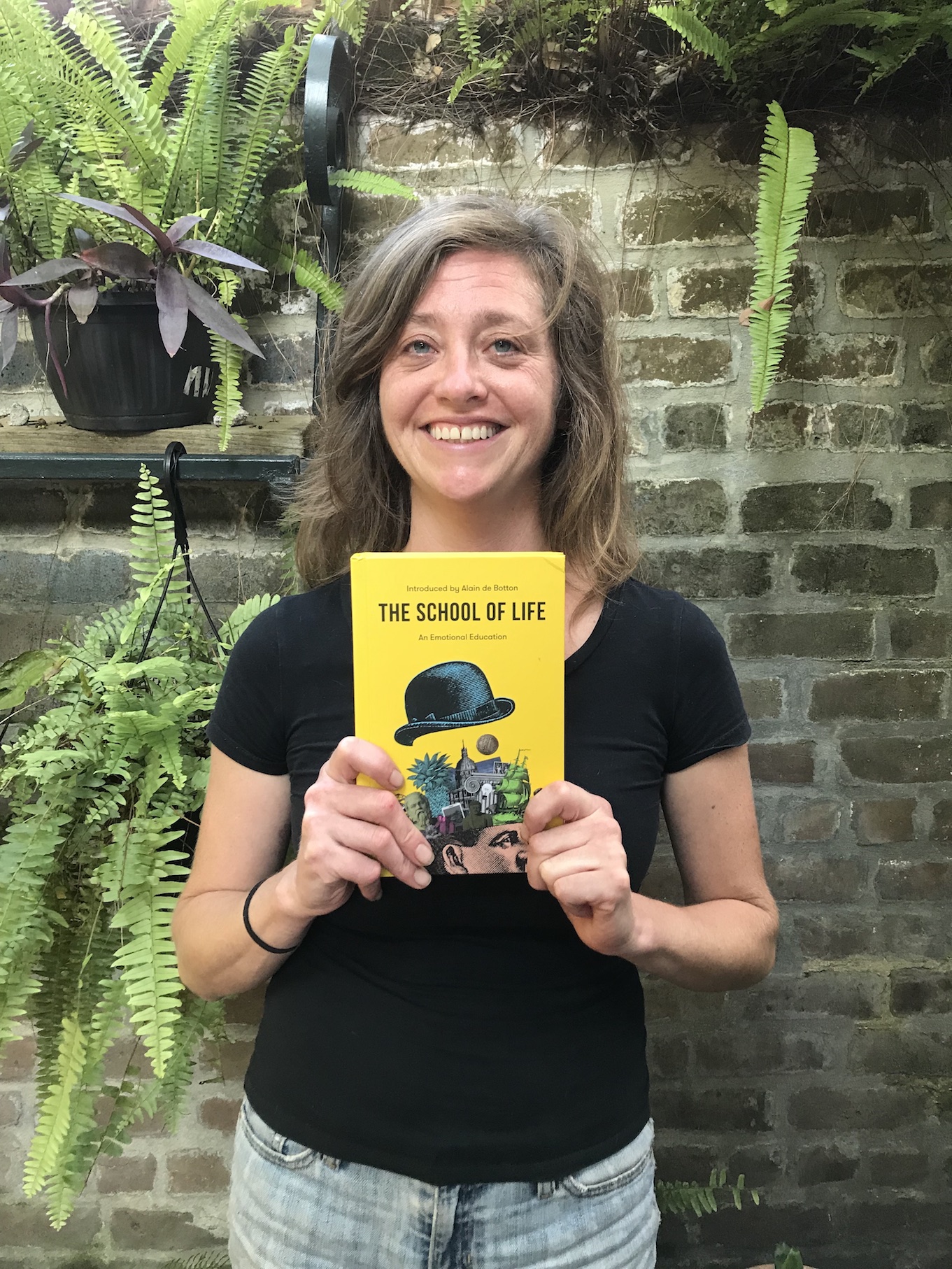
Katie Glusica holding the book, "The School of Life"

Jen Bervin, Silk Poems (Nighboat Books, 2017): "These experimental poems move across the page based on the DNA of silk and the movements of silkworms. This book, as an object, is part of the work itself—the cover and pages feel like silk. A great example of text meets textile."

James Essinger, Jacquard's Web: How A Hand-Loom Led to the Birth of the Information Age (Oxford University Press, 2007): "The invention of the Jacquard loom in the early 1800s spurred the Industrial Revolution and ultimately led to the invention of the computer. Because weaving is such a time-consuming process, the Jacquard loom enabled people to afford more material goods and affected socioeconomic dynamics. Fascinating history."

Brian Greene, Until the End of Time: Mind, Matter, and Our Search for Meaning in an Evolving Universe (Knopf, 2020): "I learned of this book from an interview with the author on New Books Network. I found myself scribbling notes, talking back to the podcast. Greene is a mathematics and physics professor, and he's big into interdisciplinary thinking, which I like. As humans, we have a crisis if we don't know what meaning is. So, how do we mine our material for meaning, as artists?"

Tatyana Tolstaya, Aetherial Worlds (Vintage, 2019): "Short short stories, beautifully written. Notes about the human condition and soul from a very humanistic and humoristic place. The language is amazing. There's almost a sense of magical realism. Yes, she's a descendant of Tolstoy, who makes an appearance in one of the stories. I've read this whole book twice. Do you want to borrow it?"

Joan Livingstone (editor) & John Ploof (editor), The Object of Labor: Art, Cloth, and Cultural Production (The MIT Press, 2007): "This is a textbook used in the SCAD fibers department, typically with graduate students. It's a series of essays. I'm particularly fond of ‘Material and Memory' by Mary Jane Jacob, where she makes connections between cloth, daily life and ‘the fabric of society.'"

Ching-In Chen (editor), Jai Dulani (editor), & Leah Lakshmi Piepzna-Samarasinha (editor), The Revolution Starts at Home (AK Press, 2011) and Alain de Botton (editor), The School of Life: An Emotional Education (The School of Life, 2019):  "Conflict can happen in any situation, including in the classroom. De-escalating conflict is a form of integrity. These are valuable books on creating healthy interpersonal relationships, the importance of emotional intelligence, and how to form and strengthen movements that can create positive change. Timely!"
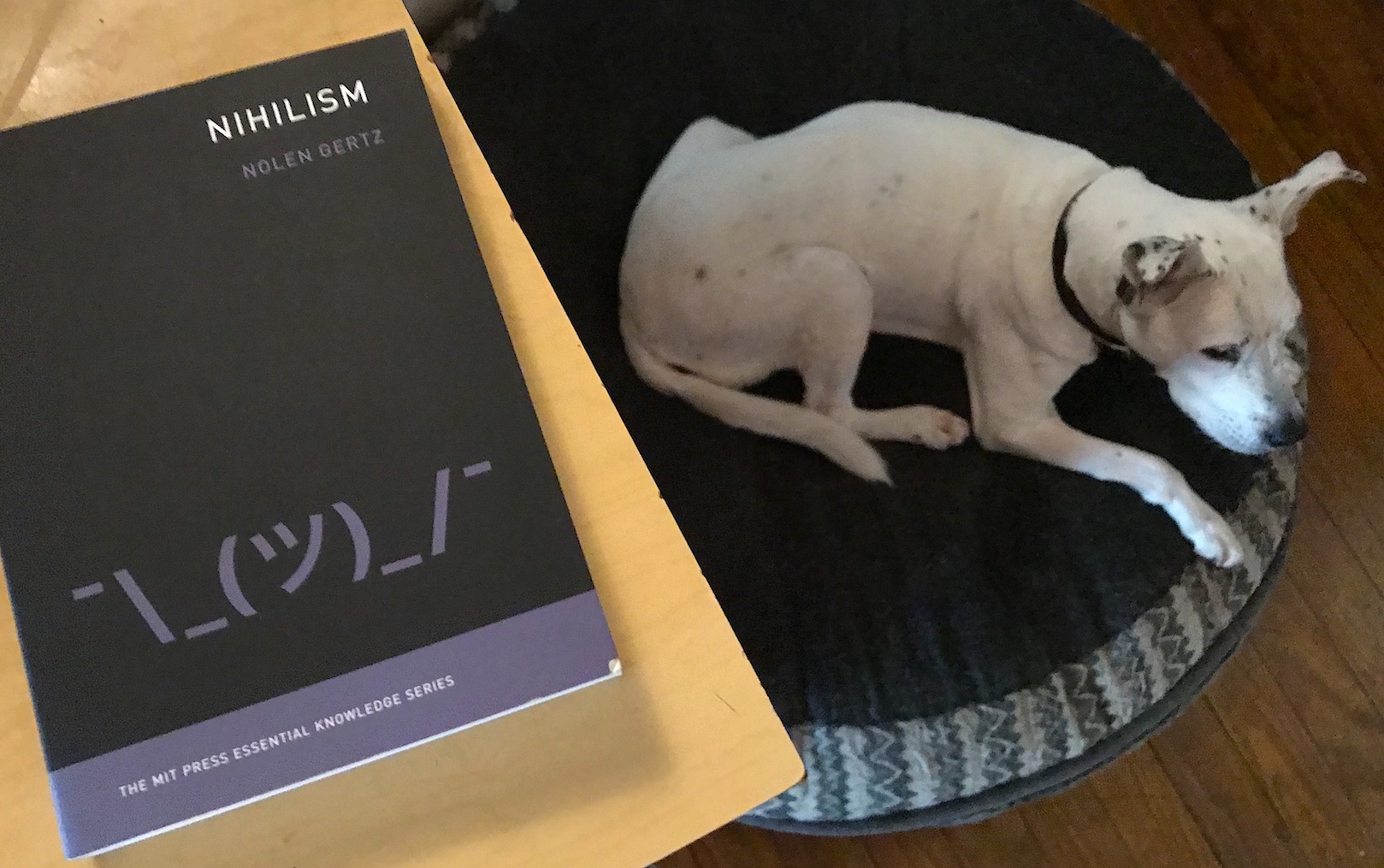
The book "Nihilism" sitting on a table near a dog.

www.katieglusica.com


Rashad Doucet: Reading Creatively

July
8
2020
By
Tags:

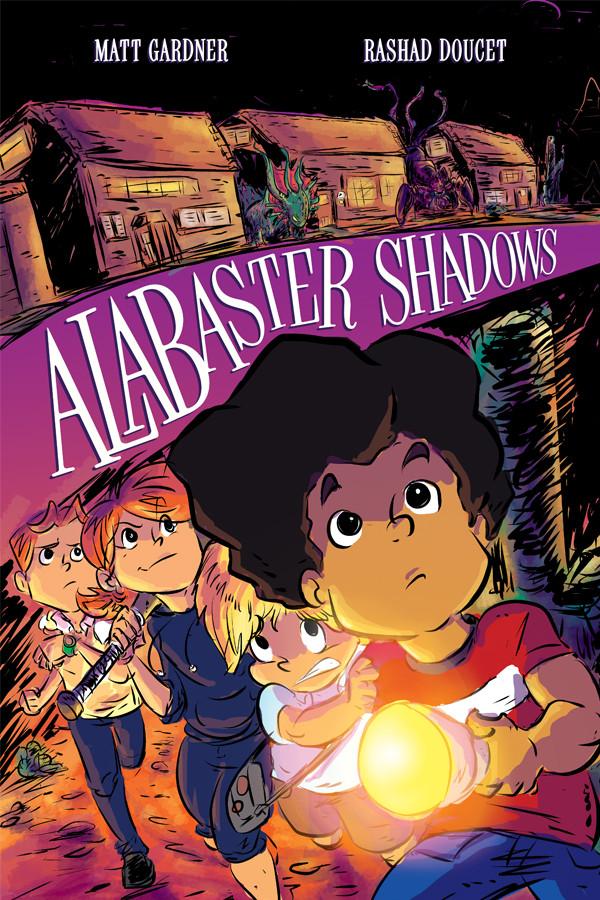
"My goal as an artist is to make something universal everyone can enjoy," says sequential art professor Rashad Doucet (M.F.A., sequential art, 2009). An Eisner Award winner, Doucet has worked with LucasArts, Nickelodeon, Cartoon Network, and Zuda Comics. His new projects include Alabaster Shadows (Oni Press), a book about an African-American kid facing mysteries in his new town involving H.P. Lovecraft-inspired monsters, and Jeremiah Justice Saves The Day, a children's picture book celebrating a special needs superhero. As an artist, Rashad always delivers diversity, inclusion, and fun. So, what's he reading this summer that’s bringing him joy?

Gene Luen Yang and Gurihiru, Superman Smashes the Klan (DC Comics, 2019): "A comic based on a 1940s radio serial that responded to the rise of the KKK after WW2. The radio series played a huge role in discrediting the Klan in pop culture. The graphic novel adapts it from the perspective of an immigrant family meeting Superman and running into trouble with their new neighbors. It explores racial and cultural issues from different perspectives while still being a classic superhero tale."

Kat Leyh, SnapDragon (First Second, 2020): "This graphic novel deals positively with issues kids are facing today. A child of mixed race growing up in a small town befriends the rumored local "witch" and discovers a good bit about herself, her family's past, and the world around her. The story has a great twist mid-way through."

Jason Aaron, Russell Dauterman and Matt Wilson, The Mighty Thor Volume 1: Thunder in Her Veins (Marvel, 2017): "The story of how cancer patient Dr. Jane Foster became the new Thor (Natalie Portman will play this character in an upcoming movie). Deals with a hero who balances a very serious illness while still finding time to save the world and deal with legacy of being Thor."

Mark Waid and Alex Ross, Kingdom Come (DC Comics, 2019): "A beautiful painted superhero comic that explores what happens when Superman, Batman, and Wonder Woman have retired in old age but have to return due to the rise of new heroes who may have gone too far. It shows how the weight of being icons has a heavy effect on their personal lives, especially after decades of doing it."

Saladin Ahmed, Javier Guerron, and David Curiel, Miles Morales Vol. 1: Straight Out Of Brooklyn (Marvel, 2019): "For fans of the Spiderverse movie who want to see how a slightly older Miles Morales handles the balance of being a hero and teenager, try this fun romp showcasing more of the character we all loved from the movie."

Mariko Tamaki, Laura Dean Keeps Breaking Up With Me (First Second Books, 2019): "A teenager wrestles with leaving her on-and-off unhealthy relationship with her girlfriend behind while realizing that she may not have been supportive enough for one of her best friends because of it. The artwork is atmospherically stunning with a limited color palette that really fits the story."

Rashad Doucet's Alabaster Shadows

Be sure to check out Matt Gardner and Rashad Doucet's Alabaster Shadows!