Skip to main content Accessibility Policy

Inside 'The Pages of Destiny'

March
7
2019
By
Tags:

At a special event Wednesday evening at Trustees Theater, Emily Dillard (B.F.A., advertising) and Nico Rinciari (B.F.A., film and television) stood together before the purple proscenium, the Savannah Arts Academy orchestra seated to their right.

Dillard, producer of "The Pages of Destiny" – a new short film written and directed by Rinciari – addressed the audience: "It's important to acknowledge how many families we have here tonight. It starts with the love and trust of your family for you to go and do something great. And then that new family you find, in that new place, the family of creators and collaborators who become part of a greater family. It means the world to all be here together tonight."

behind the scenes of The Pages of Destiny film

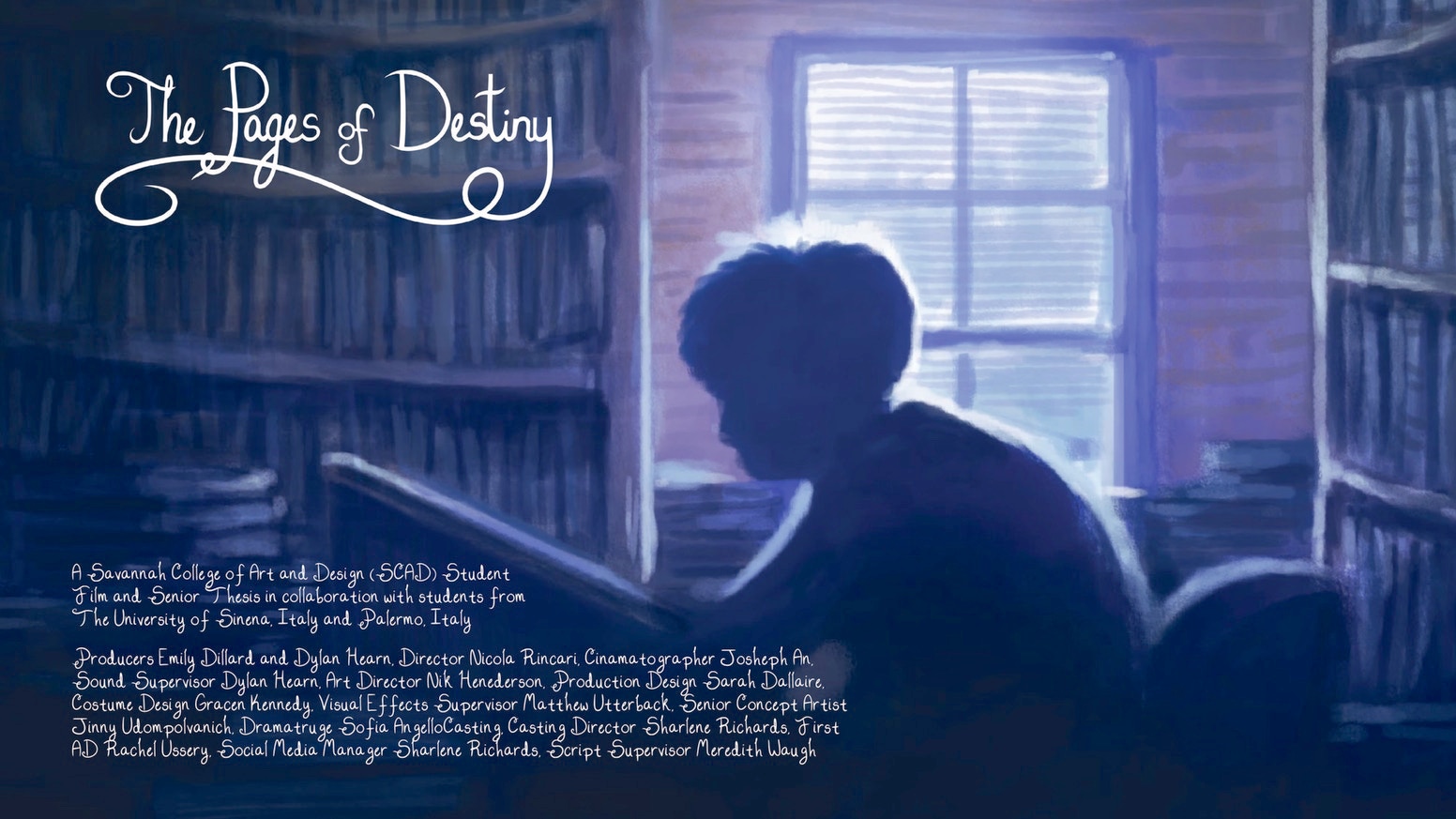
"The Pages of Destiny" is a short film about a boy's relationship with an extraordinary bookshop, created in collaboration by students from SCAD, the University of Siena, and Savannah Arts Academy. To emphasize the expansive unison effort, members of the production team and SCAD professors Mitch Gettleman (sound design) and Joe Pasquale (visual effects) delivered brief remarks from the stage. Screened clips from the work-in-progress were accompanied by excerpts from the film's score performed live by the high schoolers from Savannah Arts Academy. 

"We are honored to be able to work with the composer of this music," said Savannah Arts Academy music teacher and orchestra leader Emily Calhoun. "A lot of the music we perform is by composers who are long gone. To be able to talk with the composer, and have the composer sing the phrase as he imagined it when he wrote the music is phenomenal."

Visual effects supervisor Matthew Utterback (B.F.A., visual effects) spoke on the film's computer-generated aspects, including seasons changing as seen through a window, and a magical book jumping off a shelf: "Visual effects make the bookshop come alive."

Additional insight came from cinematographer Joseph An (B.F.A., film and television): "The best part of making a movie is doing it with people who want to make a movie. Storytelling is a language those of us here have learned to love and live for. I've been able to use our jib, dolly, Steadicam and lights. There are professional productions out there struggling to get access to the kind of gear we have here at SCAD."

Judging by the tantalizing screened scene, "The Pages of Destiny" has the enchanting aura of films like "Cinema Paradiso" and "Hugo" with a heart and soul all its own. The film demonstrates the power of books to bridge innocence and knowledge, its bookstore epitomizing a magical sanctuary. The astonishing score is done justice by the Savannah Arts Academy orchestra (who recently performed at the Kennedy Center). Flutes add delicacy to melody; a harp brings counterpoint to pizzicato violins; a vibraphone demonstrates pages turning in a dusty, glowing tome. "All the boy wants to do is find this golden book," producer Dillard said. "In the end, tonight, we'll let the music tell you if he finds it."

The orchestra performed the final sound cue with a flourish, as the maestro stepped forward. Rinciari's remarks were limited to brief, heartfelt thanks to the collaborators whose work had done the talking for him.

Afterwards, next door, Leopold's Ice Cream was serving a special Pages of Destiny Peanut Butter Sundae. A sweet evening to the last.

cover image for The Pages of Destiny film

Learn more about "The Pages of Destiny" at the film's official website and Instagram.


The value of Dierra Jones' jewelry

March
5
2019
By
Tags:

Dierra Jones' jewelry tells stories. Enameled tree branches, pocked ceramic brooches and tangles of copper wire suggest place, character and emotional upheaval. To witness her work is to learn something significant about her life.

A native of Petersburg, Virginia, Jones (M.F.A., jewelry) has worked the past two summers at arts camps in New York, and is currently a mentor for elementary school students in the Savannah public school system. "After I graduate, I would like to have my own studio space, and start a non-profit working with children," she says, "a place where we can create art together."

Dierra Jones:

With my studio practice, I experiment until I perceive an end goal. I enjoy tedious work and creating repetition. I don't think about it in the moment, I'm just doing. I allow my work to speak for itself, and to act as my voice. There's an act of transference that takes place. For the viewer, I hope they can take it in and reflect on their own lives.

Jewelry can be anything you want it to be. My jewelry often assumes a sculptural form. Rather than something intended to be worn, it's for seeing. With one piece I created, a letter to my mom, I printed words on pillows and a bedspread. I describe it as a piece of jewelry, because jewelry doesn't have to be a piece that you wear, it can be words that people speak that stick to you.

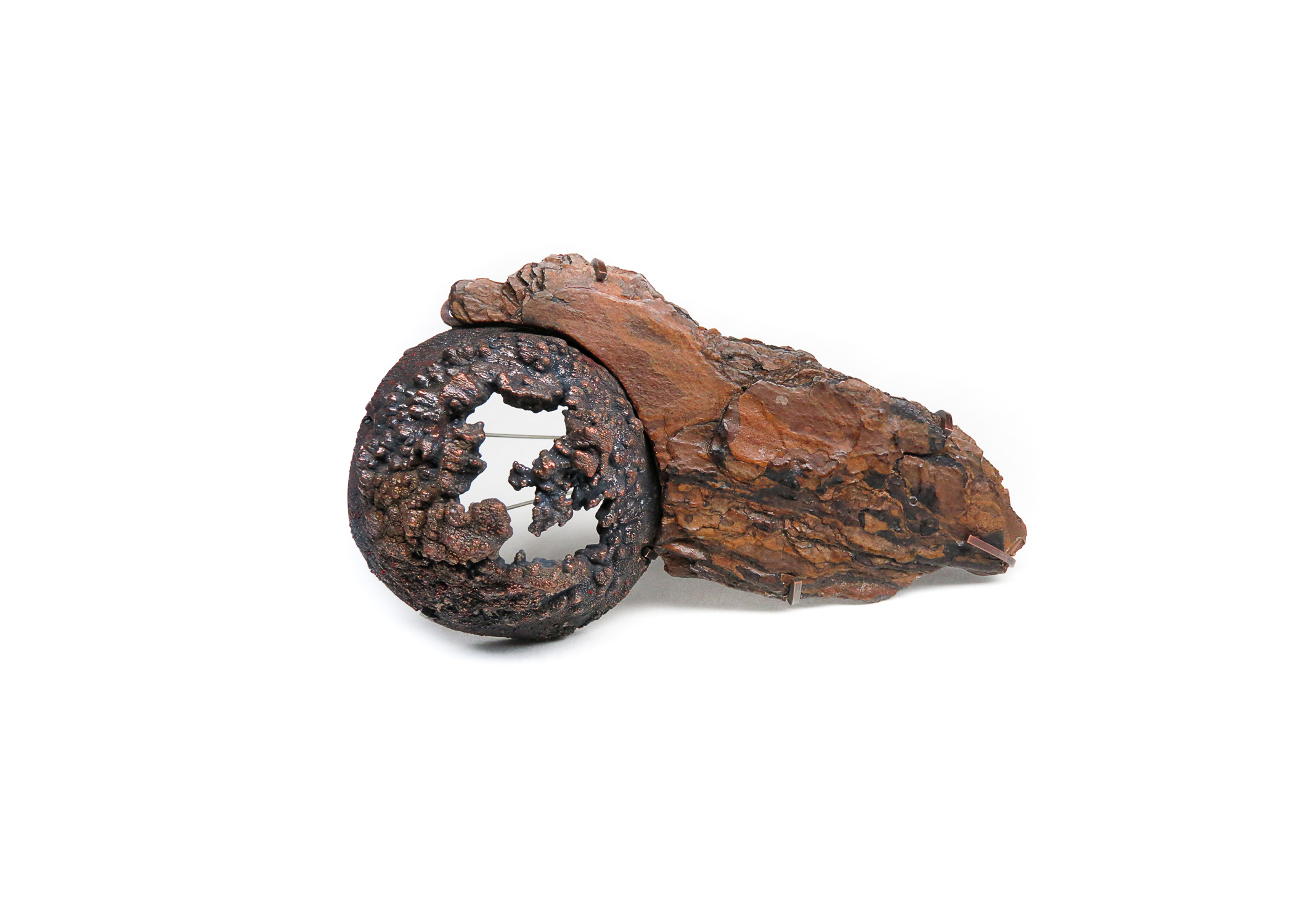
In Contemporary Issues in Jewelry (JEWL 724) with professor Lanelle Keyes, I started playing around with ceramics and different processes, making gestures and marks in clay. I began electroforming, a process where you take an object, coat it with copper conduct paint and connect it to a copper rod, so that copper particles build on top of it. I've created pieces of ceramic covered in electroforming. I electroform wood as well.

I'm drawn to the properties of copper. It's not about the value of the metal itself, it's about the value of the stories that come forth through the materials you use.

Brooch

Brooch, 2018 (ceramic, electroforming, tree bark, copper, sterling silver, patina, acrylic enamel) 5”  x  3”  x  1  1/4”


Growing up, I was called ugly. I was ashamed to look at people. I walked with my head down in public for many years. Taking Contextual Study II: Concept Development (JEWL 708) with professor Bonnie Kubasta, I was thinking of ways of finding healing from my childhood.

I created a piece called "Self Portrait" where I put water in a steel bucket to symbolize tears and the weight that I had to carry. I attached it to my head. When I cut the cord, the sense of water hitting me was very powerful. The performance was done in front of a wall behind the Savannah Theater. The photographs were taken by Mona Bozorgi (M.F.A., photography, 2018), who was integral to the project. It was a genuine collaboration.

My definition of what an artist can be has expanded at SCAD. In summer 2018, we formed SCAD Jewelry Graduate Association (SJGA). As graduate students, our core mission is to network and find new opportunities to exhibit our work. We went to the American Craft Council show in Baltimore in February, and we'll exhibit our work next quarter at the Smithsonian. We're an international group, with students from Colombia, Iran, China, Hong Kong and the United States.

I've met so many different people from different walks of life here. SCAD has so much to offer: the technology, the tools, the people, the professors, the artists and guest lecturers. Growing up, I could never have envisioned that this would be my life.

Dierra

See more of Dierra's work on her website and Instagram.

Learn more about the jewelry degree program at SCAD here.


Cody Reppert's UX power

February
22
2019
By
Tags:

Ambling around Savannah in cowboy boots and a Cowboys jersey, Cody Reppert resembles a typical Texan. On another day, dapper Reppert (B.F.A., user experience design) might be found presenting at a SCADpro summit to UBER execs, or leading the winning team at SCAD StartUp 2018 with Bolus, a storage management device for diabetics. A captivating public speaker, Reppert starts a new full-time position as product designer at Thumbtack this summer.

Cody Reppert:

I attended Hebron High School, in Carrollton, Texas. I took a graphic design class at a nearby career center, where the teacher spoke about students who had gone on to SCAD, including Ryan Brownhill (B.F.A., motion media design, 2014). When I came to tour SCAD Savannah, Ryan showed me around. He was a senior at the time. Ryan went on to work at IBM and is now a product designer at Instagram. In a sense I've been following in his footsteps.

Starting freshman year at SCAD, I was part of FLUX, the SCAD UX club. It was a problem-solving club led by Evan Smith (M.A., interactive design and game development, 2016) and Hannah Moyers (B.F.A., interactive design and game developement, 2016). We'd brainstorm and create solutions to challenges like the parking situation in Savannah. The process was healthy. I loved it. At the time I was focused on majoring in advertising. SCAD didn't yet offer a degree in user experience.

I've always been interested in doing things to help people, especially children. During the first UX studio class ever at SCAD, with professor BC Hwang, I was part of a team that created Seedly, a wearable necklace for children that helps them learn how to grow plants for food. Seedly wound up winning a Red Dot Design Award.

mockup of seedly design

During Seedly's research phase we spoke with Brienne Arthur, a landscape designer and gardener who wrote "The Foodscape Revolution" (St. Lynn's Press, 2017). We applied her insights about the suburban landscape to help shape the core of our project. With Seedly, the child grows 26 food-producing plants per year. Seedly is designed to improve the earth, and have kids doing it.

My first SCADpro project was with UBER. I then took part in the SCADpro project with the Ford Motor Company, where we were creating a voice-user interface for the future of Ford mobility. I love working with different majors on SCADpro projects because that's what it's like in the real world. Collaboration, and being with a diverse group of people, helps shape the best ideas coming out of the room.

One thing these projects have in common is that they involved presenting. I learned public speaking at SCAD, starting with a foundation studies class called Speaking of Ideas (COMM 105). In UX classes, there's a presentation almost every single class. That's valuable. It's not just the size of the crowd, it's the people in it who evoke thoughts and feelings. Every time I present, I see public speaking as an opportunity for improvement.

The 16 of us who were the first SCAD graduating class in UX design are like a power squad. We brought additional skills from different disciplines to UX when the major was created. UX allowed me to take the principles I was learning in advertising and apply them in a different context. It'll be interesting to see where SCAD UX will go with students who are coming here to study user experience. There's a lot to build on.

portrait of cody reppert

See more of Cody Reppert's work at his website.

Learn more about the SCAD UX degree program here.


Go behind the screen at aTVfest

February
6
2019
By
Tags:

SCAD aTVfest, Atlanta's only festival dedicated to all things television, is happening this week, Feb. 7-9, 2019!

Now in its seventh year, the university's annual signature event celebrating the television industry attracts industry-leading producers, directors, writers and actors to SCADshow in Midtown Atlanta. The festival focuses on design, creativity and innovation in television and media production, bringing together professionals to discuss the current industry trends while showcasing the best work in the field.

This year, Entertainment Weekly (EW) will serve as the first ever Official Media Partner for SCAD aTVfest, delivering unparalleled talent and screenings throughout the three-day event.

"Georgia's only festival dedicated to television, SCAD aTVfest gives attendees direct access to performers, producers, and industry experts as well as screenings, exclusive looks, and program premieres," said SCAD president and founder Paula Wallace "The world needs SCAD aTVfest to stay current on everything from streaming platforms to network news. This year, we fête the funny and wildly talented Ellie Kemper as well as everything about the small screen. And with EW as our first official media partner, we've drawn in more talent and unique programming than ever before. I can't decide who's luckier: SCAD students, or the industry professionals who get to meet our rising stars and hear their best pitches!"

Ellie Kemper, star of Netflix and Universal Television's "Unbreakable Kimmy Schmidt", will receive the annual Spotlight Award. NBC and Universal Television's "New Amsterdam" will receive the Outstanding Cast Award with cast members Ryan Eggold, Freema Agyeman, Anupam Kher, Tyler Labine and Jocko Sims attending. Honorees are scheduled to attend screenings of their respective episodes. In honor of the university's 40-year anniversary, SCAD alum Mir Zafar Ali (B.F.A., visual effects, 2015) will receive the SCAD40 prize.

The Emmy award-winning team behind "The Buzz" will debut "G.R.I.T.S." (Girls Raised In The South), SCAD's latest student-produced sitcom created by dramatic writing student Chad Morton (B.F.A., dramatic writing, 2018). "G.R.I.T.S." is an all original student-produced sitcom written, directed, produced and performed by African-American SCAD students. This sitcom stars Candice Glover (B.F.A., dramatic writing) and George Lovett (M.F.A., performing arts). The show will premiere opening day of the festival.

As Official Media Partner for SCAD aTVfest, EW helped curate this year's programming and will have staff on-site to moderate select talent panels. EW will also host a photo and video studio for talent to come through and galleries will be available exclusively on EW.com and its social platforms, as well as special events.

Shows and representatives attending this year's festival include: "All American" (The CW), "American Gods" (Starz), "Bosch" (Amazon Prime Video), "The Enemy Within" (NBC), "The Gifted" (FOX), "i'm sorry" (truTV), "Manifest" (NBC), "Miracle Workers" (TBS), "New Amsterdam" (NBC), "The Oath" (Sony Crackle), "The Other Two" (Comedy Central), "The Passage" (FOX), "PEN15" (Hulu), "Proven Innocent" (FOX), "The Resident" (FOX), "Schooled" (ABC), "SEAL Team" (CBS), "Unbreakable Kimmy Schmidt" (Netflix) and "The Village" (NBC).

For SCAD students, SCAD aTVfest offers valuable insight into the world of agents, managers, casting, comedy, integration, pitches, production partnership, programming placement, reality television, visual effects, post-production, and the convergence of digital media and television. An integral part of aTVfest is premiering SCAD student work alongside their professional counterparts. A juried showcase will include dramas, comedies, web productions and more from SCAD's School of Digital Media.

More than 8,100 SCAD students and alumni work in the fields of animation, entertainment, motion pictures, media production, writing, editing, broadcast media and performing arts, with over 2,800 in Georgia alone. A unique, project-based approach to film, TV and performing arts provides SCAD students a distinct advantage before they graduate with unparalleled access to industry tools, experts and life-changing opportunities.

graphic for tv fest

For more information visit atvfest.com.


Field trip enlightens architecture students

January
29
2019
By
Tags:

Early on a recent weekday morning, approximately forty SCAD Studio II architecture students traveled two-and-a-half hours north from Savannah to Moncks Corner, South Carolina. There, they visited Mepkin Abbey, a Trappist monastery on the Cooper River, the first stop on a day out to site-specific structures designed by visionary environmental architect W.G. Clark.

"For our Studio II students, this academic quarter is about architecture as it relates to site and site manipulation," explained professor Scott Singeisen. Singeisen has led field trips to Mepkin Abbey since 2011, inspired in part by his appreciation for Corbusier's Monastery of Sante Marie de la Tourette in Lyon, France. "Corbusier told the monks he was an atheist. And they said, in effect, that's exactly why we want you to design our monastery. The idea at play is that the architect doesn't have to be religious to design a monastery, he or she only needs to respect space."

To provide students with an intimate understanding of W.G. Clark's intentions, Singeisen assigned Clark's essay "Replacement." In it, Clark writes: "Architecture, whether as a town or a building, is the reconciliation of ourselves with the natural land."

"I read the essay on the way there, so I was thinking about it at the site," said Elisa Dogor  (B.F.A., architecture). "Clark wants to do as little harm as possible, and integrate architecture into nature. We saw how he was practicing what he was writing about. To do that that towards the beginning of the quarter helps get your mind in a good place when there's a lot of work to do."

interior of Mepkin Abbey

"You walked into the chapel and it was filled with divine light," remarked Devon Carberry (B.F.A., architecture). "Compared to a gothic cathedral, this was simple, comforting and warm. Architecture can change your views and beliefs on life."

After a tour by Father Kevin, and picnic lunch at the terraced gardens, the group traveled sixty minutes south to The Inn at Middleton Place (recipient of the 1987 AIA Honor Award), designed and executed by Clark in partnership with Charles Menefee III. Over three decades, façades have conceded to wild vegetation. As students descended into the courtyard bracketed by the L-shaped inn with its view of the Ashley River, there was a collective gasp.

exterior of middleton place

"Both the monastery and Middleton offer a sense of tranquility," said Sheryl Wadehra (B.F.A., architecture). "The dichotomy between the materials was beautiful to see – concrete and wood used in equal ways, neither overpowering the other. You felt how the architect wanted you to feel."

There was much to see: stucco walls, flourishing camellia, wooden fitments painted Charleston green; architecture, integrated with nature through profound appreciation of history and place.

"One of the great takeaways from visiting architecture like this is you realize how well thought-out everything must be," Singeisen said. "If students can set that as something to strive to, they're approaching something good."

group photo of scad architecture students

Thanks to Alessandra Canedo, Devon Carberry, Elisa Dogor, Priscilla Maura and Sheryl Wadehra for taking extra time to discuss their experience.

Location photography courtesy Elisa Dogor.

Learn more about SCAD architecture degree programs here.


Invitation to BEAU open house

January
28
2019
By
Tags:

This is an open invitation to all SCAD Savannah students to attend the business of beauty and fragrance (BEAU) open house, Friday, February 1, 10 a.m., Morris Hall, Room 102. As chair of fashion marketing and management and luxury and fashion management, I will join professors Meloney Moore and Carin Wightman during the open house to share our program goals for the business of beauty and fragrance B.F.A. degree program, as well as the core curriculum and class activities and projects associated with BEAU. Faculty will be happy to answer any questions about BEAU at this time.

Please be aware that Beauty and Fragrance through the Ages (BEAU 210), the introductory course for BEAU, is offered spring quarter, 2019.

BEAU open house, Friday, February 1, 10 a.m., Morris Hall, Room 102.

Looking forward to seeing you there!

About SCAD BEAU:

SCAD launched its new B.F.A. degree program, business of beauty and fragrance (BEAU), fall quarter 2018. This unique and innovative program of study prepares students to become the leaders, innovators and entrepreneurs who will shape the future of the beauty and fragrance industries. A unique course curriculum endows this degree program with creative content that is comprehensive and at the leading edge of new developments in the world of beauty and fragrance.
 
The magic of beauty and fragrances powers a $445 billion industry that abounds with opportunity. Within the context of the world's preeminent art and design university, SCAD business of beauty and fragrance students will gain in-depth knowledge of aesthetics, style, cosmetics, fragrance and adornment, empowering them to find their niches in this growing global landscape. At SCAD, BEAU students will learn how to launch new products, develop packaging, engage modern consumers, maximize financial outcomes and build long-term brand equity as part of a creative team.

For more information contact Daniel Green, chair of fashion marketing and management and chair of luxury and fashion management: [email protected].


Alec Burran: 'Embrace' the future

December
3
2018
By
Tags:

Alec Burran (B.F.A., architecture) is offering his "Embrace" to Savannah. His project, part of professor Dr. Christine Wacta's class Architecture Design Studio IV: Urban Context, addresses issues including sea rise, economic disparity and public transportation to envision a thriving Savannah of 2050.

Over the course of the quarter, Professor Wacta introduced her Studio IV students to concepts including psychogeography and the dérive, encouraging "playful-constructive" investigation of Savannah as a route to creating intelligent proposals for the city's future.

Burran's "Embrace" was one of nine student presentations delivered at fall quarter's close in the SCAD Museum of Art Theater. Attendees included SCAD faculty, local architects and city planners, and representatives from geographic information software firm Esri.

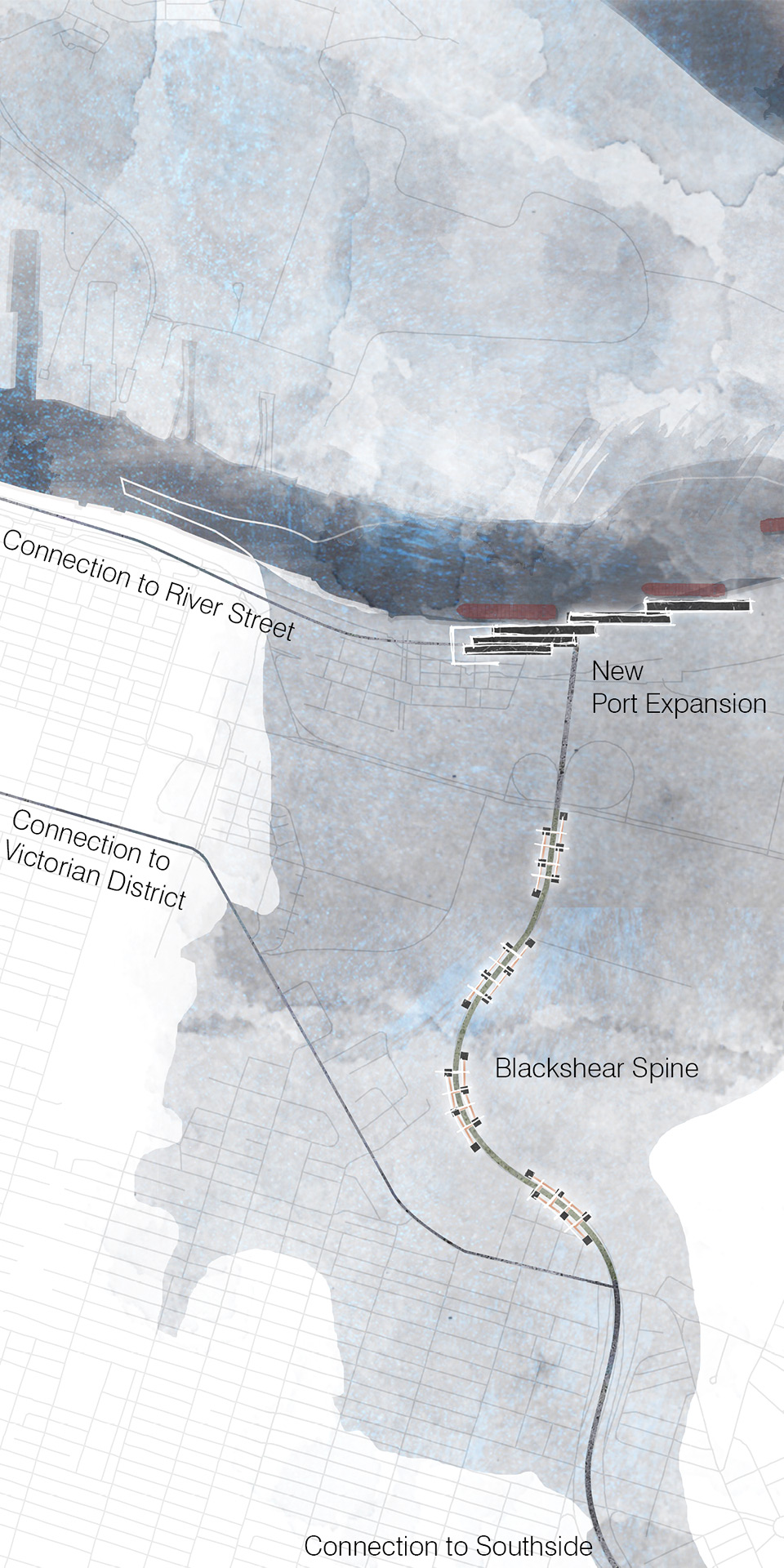
"Embrace" features affordable dynamic housing that will rise and fall with the storm surge, a tram line connecting myriad neighborhoods to the Victorian district, a port expansion to accommodate larger ships, and walk/bike "green breaks" facilitating wellbeing. Combining hard data, collage renders and technical drawings, Burran's presentation answers his own question: "How do we solve big issues through architectural intervention?"

A native of Denver, Colorado, Burran currently interns for renowned Savannah architect Dan Snyder. He will receive his SCAD diploma upon completion of his capstone project in May, 2019. The following insights come from a conversation subsequent to his presentation.

Rendering of dynamic modular housing

(Above: Dynamic modular housing rises and falls according to sea levels. Rendering: Alec Burran)

ALEC BURRAN: What will Savannah look like in 2050? I examined different issues on a city level: crime, traffic, pedestrian versus auto crashes, flooding, poverty. Why are certain regions of Savannah wealthier than others? How do these divisions happen?

Cities are conscious of how much they spend and how much they take in. With the expansion of the port, Savannah becomes a wealthier city—how does that translate into the wellbeing of its citizens? Can we use money like that to be proactive? Numbers get people's attention.

Hurricane Florence hit a week after fall quarter began. Hurricane Maria and Hurricane Florence caused combined $184 billion in damage—how far would that go in infrastructure? And the human lives that were lost are beyond any conceivable monetary value.

Savannah Port Authority has declared that our port will not be able to accept larger ships because our bridge is too short, and the city will have to build a new bridge. I looked at a map and saw two terminals eastward on the river that aren't impeded by that. Blackshear is a neighborhood relatively close to downtown and has the infrastructure of the Truman Parkway running through it.

Blackshear is one of the first areas to be overtaken by storm surge and sea level rise. It's also one of the poorest areas in Savannah. It's just a few feet from Bull Street but there's an enormous difference in terms of how it's affected by a storm. People who are less well-off can't escape danger when the storm hits.

Bringing a more substantial port to that area will create more jobs. Job creation will enhance the economy and elevate the people in the community.

Watercolor map of Savannah showing effect of storm surge

A lot of people walk to work in Savannah: 17 or 18 percent, an incredible number compared to other cities. Savannah is a very walkable city. But in Blackshear the number is only about five percent. People in Blackshear have less car ownership, and are more likely to take public transportation.

Being able to connect to downtown was important to my project. A tramline is the most viable type of public transportation. It's quick, and it allows you to look outside.

More architects are starting to work in city planning, to bring these ideas to the forefront. How architects talk to city planners is a really important issue. It's imperative that we address that now. To have a professor who understands geodesign as professor Wacta does is tremendous.

Headshot of Alec Burran

See more of Alec's work at his portfolio website.

DRAW 115: 'parti' time

November
16
2018
By
Tags:

Reposing on the SCAD Museum of Art floor, eighteen SCAD school of building arts students apply graphite pencils to oversize sketchpads, t-squares and tape measures at the ready. It's the mid-point of professor Ryan Madson's ten-week class DRAW 115 Graphics for the Building Arts. An afternoon field trip to SCAD MOA is underway, as student create section sketches—renderings of complete cross-sections of the museum's distinctive architecture.

Constructed atop the ruins of the 1853 Central of Georgia Railway Up Freight Warehouse, SCAD MOA incorporates the original brick walls as an aesthetic design element in the functional new classrooms and gallery spaces. The DRAW 115 students converse, compare, and look at the structure with newly aware eyes.

"When you're making your sketch, think about how the original brick wall works with the new architecture to create new spaces," Madson instructs.

Professor Madson conducts graduate-level architecture classes almost exclusively; he can make granular analysis of the work of Swiss architect Valerio Olgiati seem like casual banter. But here, in DRAW 115, Madson is teaching undergraduates at a key point of fundamental skill acquisition and design awareness. 

"These students learn to see the tangible link between visual thinking, design, drawing and architecture," he explains, "as well as how choosing materials affects space and human experience."

Required of all building arts majors, DRAW 115 supplies students with fundamental tools to carry forward into their respective majors and studios. Crucial to this class: students draw by hand.

"With the rise of computer assisted drafting, some aspects of traditional drafting fell by the wayside. Software, especially for a young student, can overly determine your process. When you can draw the structure, your possibilities are unlimited," asserts Madson. "It's something we do really well at SCAD: know how to make things by hand, and then recombine that with digital software."

In the weeks that follow, DRAW 115 field trips include an afternoon around Madison Square, where students draw a building of their own choosing, a sojourn to the intersection of Habersham and Jones Streets and its mix of 19th century houses and modern townhomes, and a day inside Poetter Hall, SCAD's flagship building, originally the 1892 Savannah Guard Armory, currently home to the SCAD welcome center, department of admission and shopSCAD.

"SCAD buildings are almost all adapted for use from existing historic buildings," Madson explains. "To achieve that, there are always thought processes and design decisions in play for interior architectural designers, this museum included. Our museum of art is not exactly adaptive reuse, it's more creatively incorporating the ruin of the brick wall into a totally new facility."

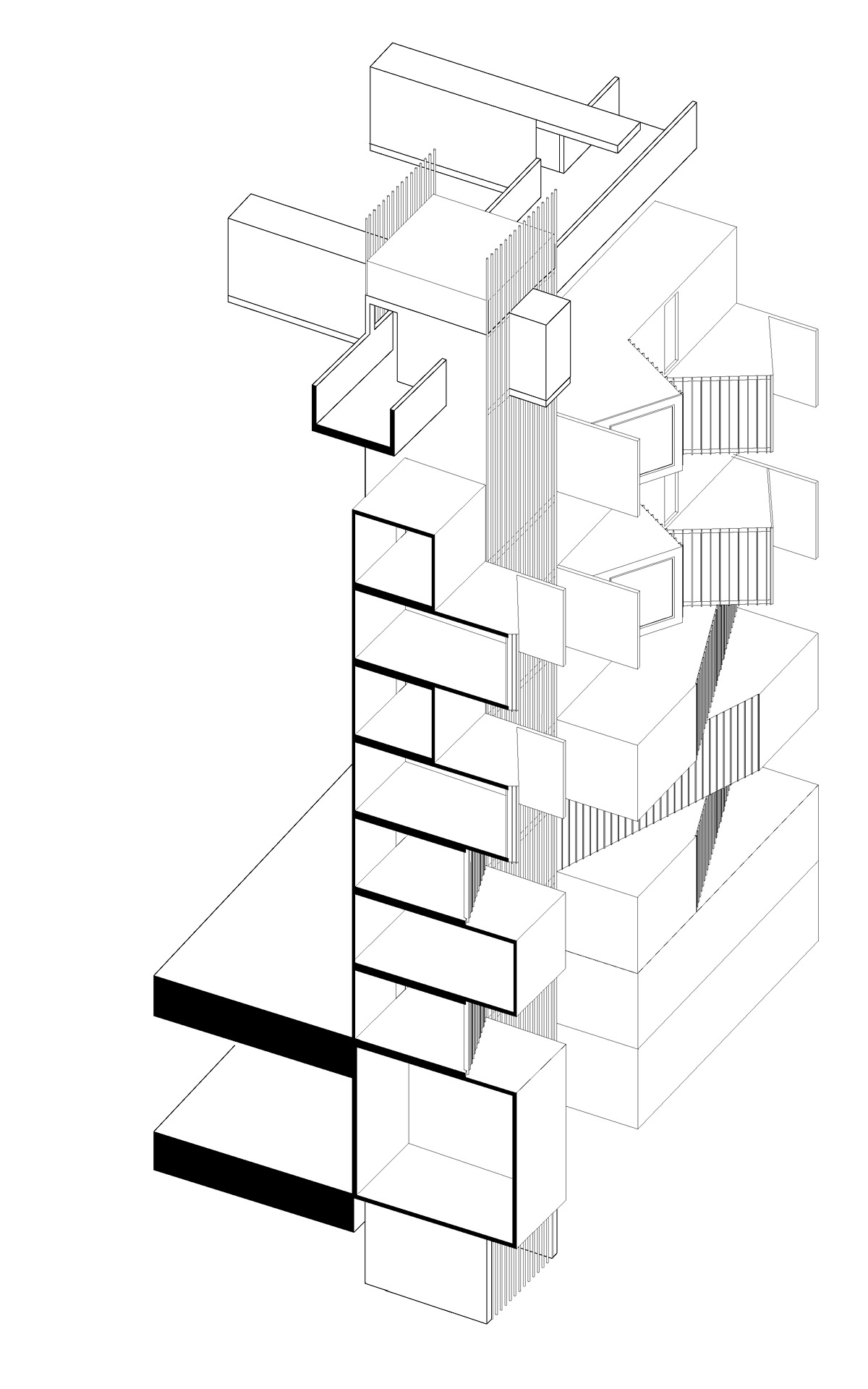
In week ten, the last day of class finds the students in an Clark Hall critique room, final projects pinned to the wall. Each student displays "parti" diagrams (showing the organizing concept of the SCAD MOA architecture), isolated hand renderings of critical details of the museum, and complex axonometric diagrams of the its eighty-six-foot-high steel and glass "lantern" tower. These are accomplished technical drawings, with watercolor, colored pencils and pens adding depth, texture and distinctive personal aesthetic choices to their work.

"You're not as plan-literate if you haven't hand-drawn it," says student Brian Lasack of the benefits of the class. "Doing the work is a hugely satisfying rite of passage."
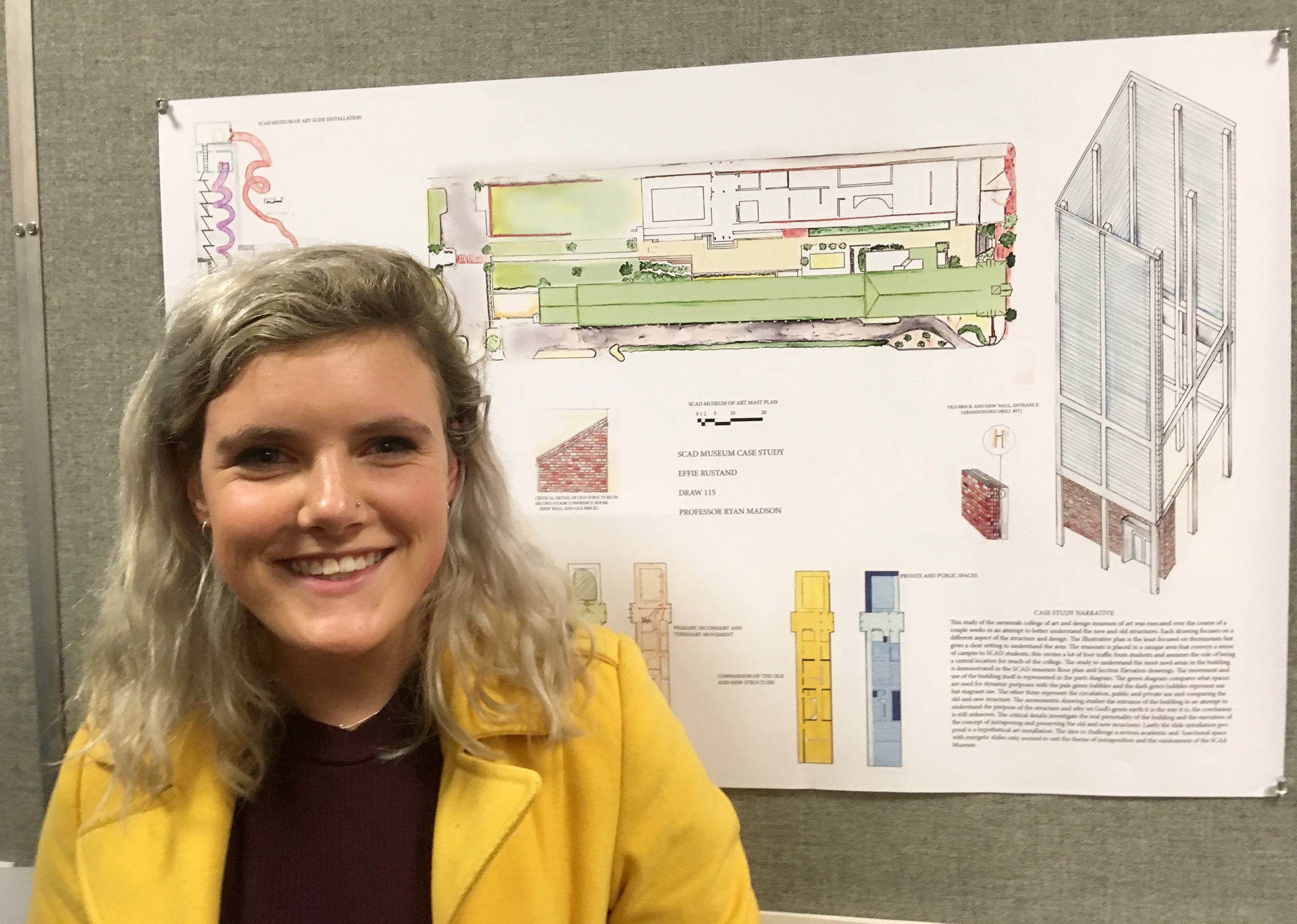
Effie Rustand smiles in front of a poster of her work

Effie Rustand shows her work.

"Professor Madson gives enough restrictions so an assignment is clear, but allows for personal freedom of choice," says Effie Rustand, a sophomore. "He has a lot of knowledge and he's passionate about sharing it. What I did in this class wasn't hypothetical—it's clear I'm going to use these skills in my major."

The final minutes of the quarter tick down. The last of the pastries on the conference table have disappeared.

"One more thing I want to mention as you go," Madson says to his class. "The future is you."
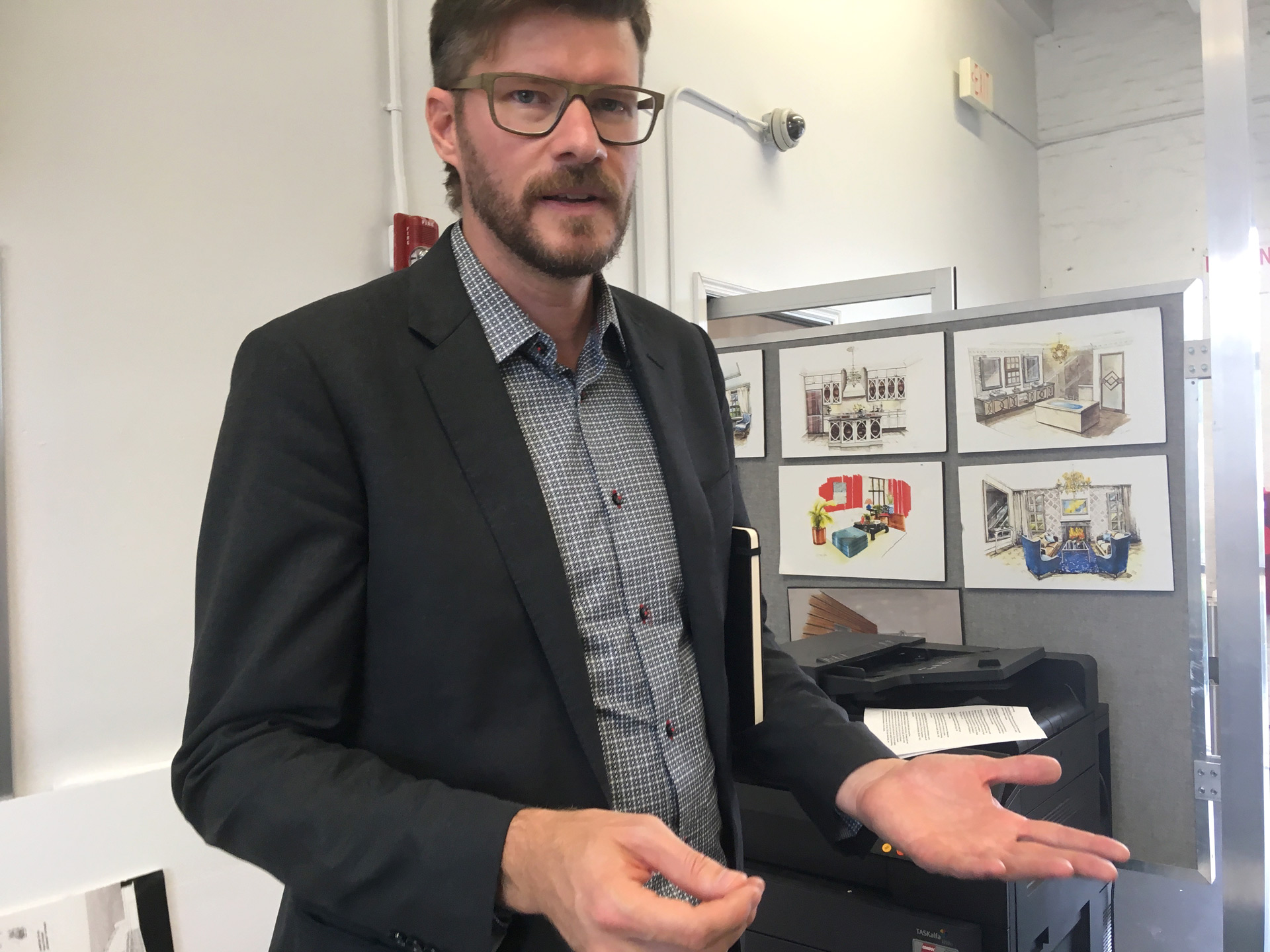
Professor Ryan Madson stands as he explains something

SCAD professor Ryan Madson


Thanks to the SCAD students of fall quarter DRAW 115:

Ellie Andrade (B.F.A., interior design)
Johnny Chang (B.F.A., architecture)
Emily Cook (B.F.A., interior design)
Alexa Diamond (B.F.A., interior design)
Rachel Eakin (B.F.A., interior design)
Alyssa Farmer (B.F.A., interior design)
Dara Holmberg (B.F.A., interior design)
Brian Lasack (B.F.A., interior design)
Yu (Liz) Liu (B.F.A., interior design)
Hanzhong Luo (B.F.A., interior design)
Alex Morse (B.F.A., interior design)
Ju Yuen Park (B.F.A., interior design)
Kaitlyn Pernas (B.F.A., interior design)
Effie Rustand (B.F.A., interior design)
Allison Thierry (B.F.A., interior design)
Mikiko Tsuchiya (B.F.A., interior design)
Caryn Turner (B.F.A., architectural history)
Ryan Tynan (B.F.A., architecture)

 

Dalal Bagabas' sublime 'Sukoon'

November
12
2018
By
Tags:

Dalal Bagabas (M.F.A., furniture design) created her master's thesis furniture collection SUKOON as a modern iteration of the makhlawan. Literally "the place of being alone," the makhlawan was a ground floor room and traditional part of Saudi Arabian homes before villa and apartment living became popular.

"It was a space for reflection in the home that has somehow been lost," explained Bagabas. "I want to bring that back—that's why I made this collection—to help the person find solitude and peace in the world."

She contacted management at Savannah furniture store West Elm and asked to show her collection in their Drayton Street location: "They said sure!"

It was an inspired choice. Experiencing the collection in the context of a block-long furniture store shows it is qualitatively comparable with the best of the retail offerings that surround it. Yet SUKOON is quite unlike anything else there.

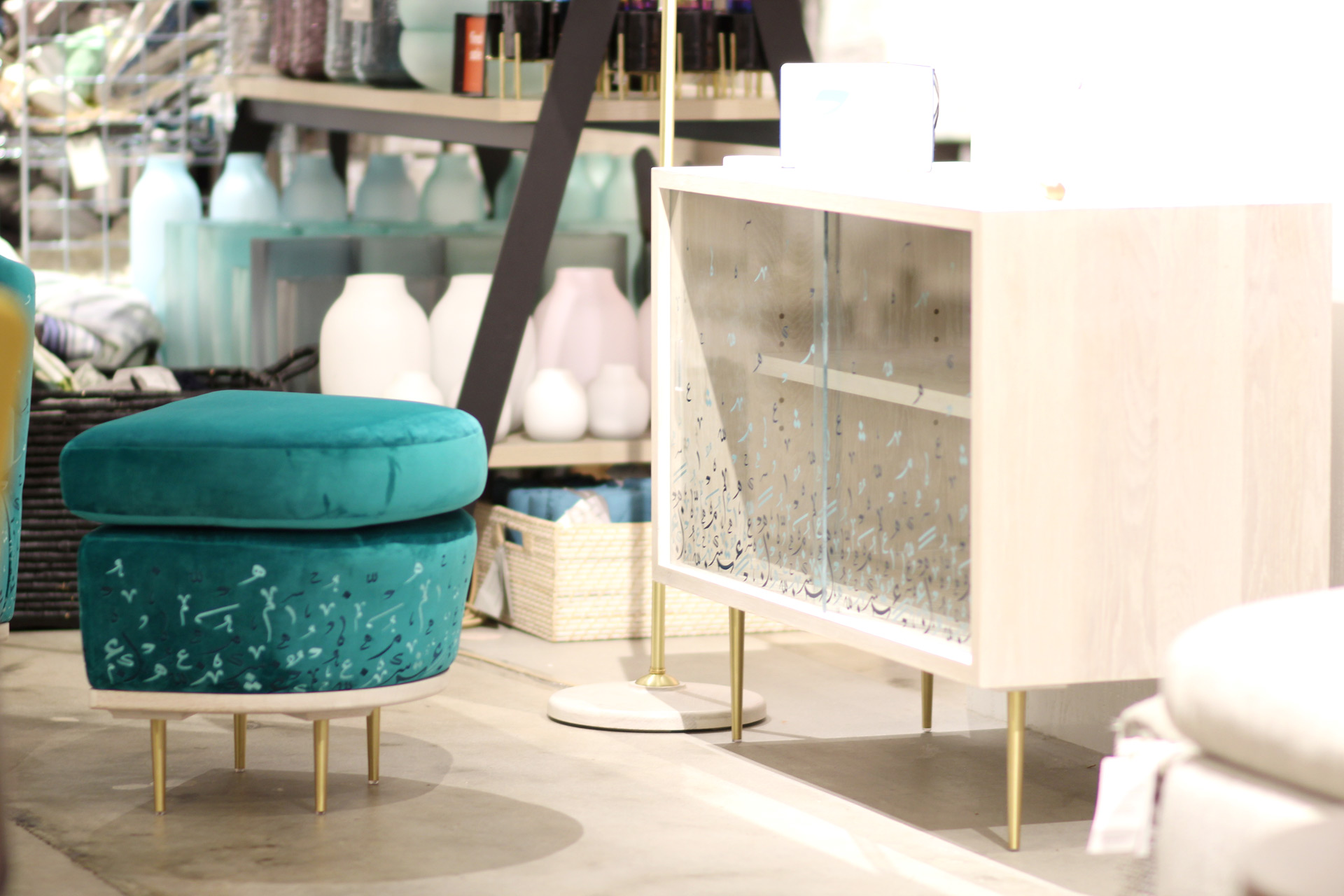
White two-shelve cabinet with gold legs and teal ottoman

At the opening reception, friends and fellow furniture design students stood conversing and nibbling on flaky pistachio baclava from a silver tray.

"Go ahead, sit in the chair," encouraged a tall, striking young man (who turned out to be Dalal's brother).

The armchair is deep-set but firm, its arms set wide to encourage a broad, meditative posture. It's super comfortable, the sense of peace it creates close to profound. There's no hurry getting up.

"If you want to use the foot rest you can, and if you don't that's okay," Bagabas suggested. "It's a personal choice I made when designing the two pieces, wanting the person to have their personal choice."

Careful examination of the chair adds to a sense of awe. There is beauty in diacritic marks, but never quite like this. The tashkil—the marks that affect pronunciation of the written Arabic language—wind around the sides and back of the teal armchair in flowing, florid embroidery. "This symbol is the sukoon," Bagabas explained, pointing at a sort of circumflex. "When you have it on a letter it makes the letter silent. That's the connection, through quietness and solitude."

Bagabas created her design in Adobe Illustrator and brought the file to the SCAD fashion department's digitized embroidery machine. "I separated the fabric into squares, then hand-stitched them onto the frame of the chair. The embroidery took one month."

A circular mirror hung above a sliding door glass cabinet, both part of the collection and similarly adorned with stylized diacritics. "In our Gulfstream DigiLab, SCAD has a flatbed printer that it can print on any flat material. I used this to print on the glass doors and the mirror."

SUKOON's aquamarine color palette is both soothing and invigorating. It makes sense when Bagabas explained the concept of her throw pillow: "The two sides of pillow are dark and light. This represents the duality in our nature."

Born and raised in Jeddah, Bagabas will return to Saudi Arabia as her SCAD studies conclude. She credits SCAD furniture design professors George Perez, Jr., Sheila Edwards and John Pierson for guiding her work. "I have been here in the States for almost five years—a long journey that's almost done. When I am home I will start my own business."

See more great work by Dalal Bagabas at her official site.


Interior design, fibers and Kravet unite

November
9
2018
By
Tags:

On a cinematically misty Wednesday evening, a group of SCAD interior design and fibers students gathered in a corner classroom of Pepe Hall for an awards presentation. Representatives from Kravet, the industry leader in to-the-trade fabric and home furnishings, were joined by SCAD chair of fibers Cayewah Easley, chair of interior design Ryan Hansen, school of building arts dean Geoffrey Taylor and honorary dean Margaret Russell, as well as a number of SCAD fibers and interior design professors.

Thirty-four student teams, each comprised of one SCAD fibers student and one SCAD interior design student, displayed mock-ups of collections based on historic and current Savannah. It was the culmination of the Kravet Design of Distinction Competition, part of the company's Design Grad initiative facilitating students becoming working professionals. It was a full house.

At the front of the room stood Beth Greene, Kravet executive VP of marketing and strategic branding. "You know the guy at the end of 'Fiddler on the Roof' holding the sewing machine? That's our founder, Samuel Kravet," Greene said. A film commemorating the 100th anniversary of the family-owned business was screened, depicting its founder sourcing fabric on the Lower East Side and scenes inside the company's current spacious design studio in Manhattan. Then it was award time.

"We judged based on your inspiration," Greene told students, "the way you told your story, the way you presented it visually, and the way you interpreted the prompt to create fabrics."

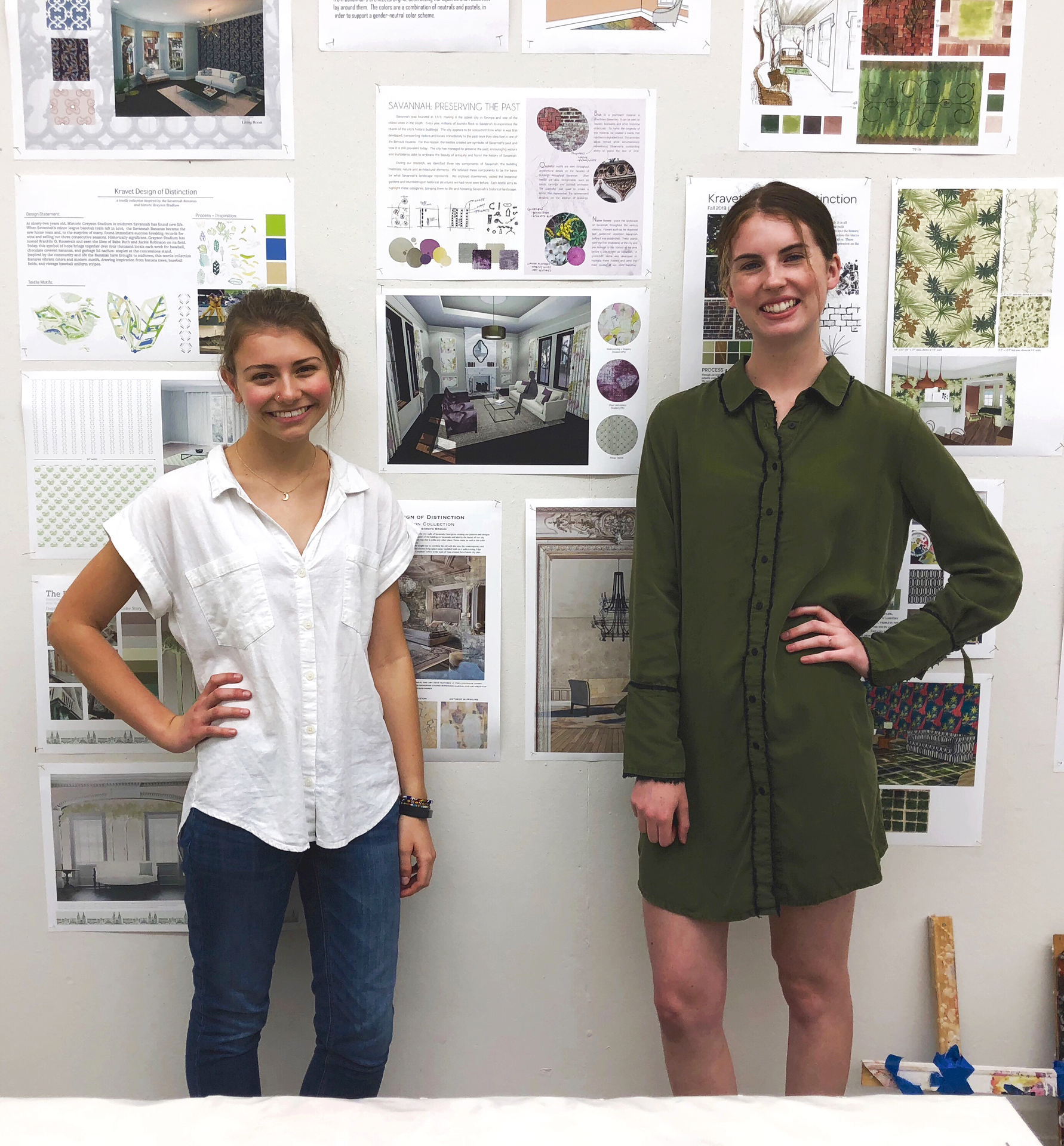
Four runners-up received lavish coffee table books and certificates, before Greene announced "the winning team…Shelby and Sheridan!" An extended ovation followed as Shelby Pogue (B.F.A., fibers) and Sheridan Markham (M.F.A., interior design) threaded their way to the front of the room. "As a special treat for winning the competition," Greene told them, "we're going to bring you to New York to visit our archive and design studio." (Sheridan: "Trying not to cry right now." Shelby: "Thank you so much. Can I hug you?")

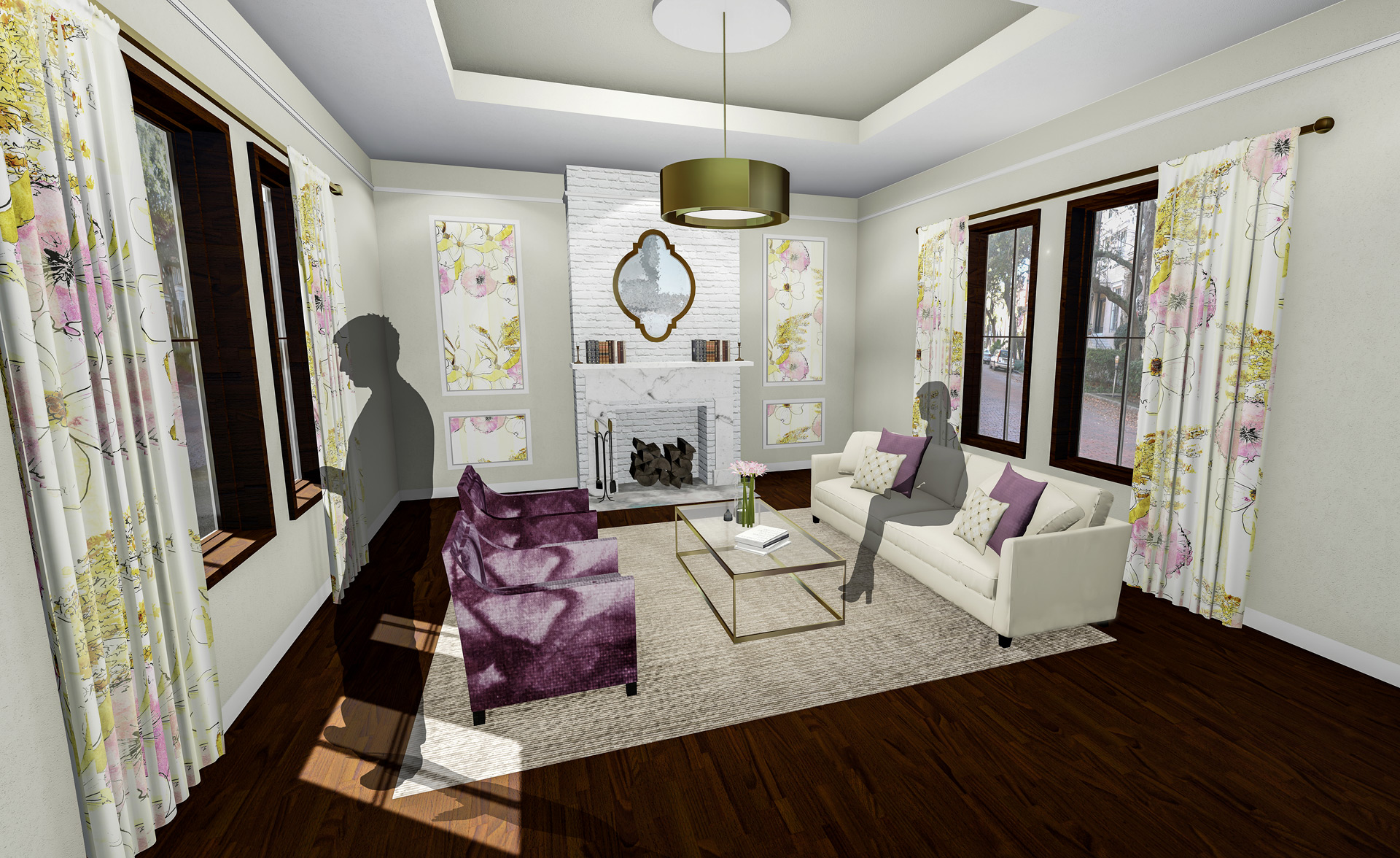
Rendering of room concept with floral curtains, purple chairs, and white couch

Room concept, part of Markham and Pogue's winning design.

After the winning duo enjoyed bonus kudos from their fellow students, everyone crowded around a table where Kravet sales representatives Tim McAlpin and Savannah Emerson unfurled sumptuous patterned fabrics from the company's Modern Tailor collection with names like London Calling, Pocket Square, Proxmire, and Catwalk.

"Wool is one of our favorite fabrics because it has breathability," McAlpin said. "Mohair velvet will last forever."

"Paisley and plaids are coming back," added Emerson. "The generational skip and granny chic are real."

The Kravet fabrics were wonderful to look at and feel. (Touching was encouraged). Afterwards, the winning team spoke about their work.

Sheridan Markham: "We're actually friends. We're both from Clearwater, Florida."

Shelby Pogue: "I went to the fibers club interest meeting for this Kravet competition, and thought, maybe Sheridan will want to do it with me. Then she reached out to me and said, why don't we work together?"

Sheridan: "We started by identifying three key elements of Savannah: native plants, building materials like Savannah brick, and distinctive architectural motifs."

Shelby: "I love to draw flowers, so we went to a botanical garden and found flowers native to Georgia. Our color palette came from that, as well as the print that wound up on the curtains and planters."

Sheridan: "It was amazing to watch Shelby work because she drew all the flowers herself, scanned them in after she watercolored them, then pieced them all together. And as we were walking around town, we started seeing the quatrefoil everywhere. It's a detail from the historic homes of Savannah, and we used that motif in our fabric design."

Shelby: "That inspired the print on the pillows. I took a potato and carved that shape into the potato and put in ink and stamped it and made an embroidery stitch."

Sheridan: "She used a real potato!"

At the event's conclusion Kravet's Beth Greene came forward with a final enticement to all participating SCAD students.

"We've made a commitment as a company to support the future of this business, and that starts with you," Greene said. "When you're in the New York vicinity, you have an open invitation to visit us."

Sheridan Markham and Shelby Pogue are already on their way.

Pogue and Markham smile in front of print-outs of their design

Kravet Design of Distinction Competition winners Shelby Pogue (left) and Sheridan Markham.