Skip to main content Accessibility Policy

Luxury and fashion management students visit Shanghai

November
7
2018
By
Tags:

Shanghai is a city of expansive spaces and opportunities for growth. This quarter, five luxury and fashion management (LXFM) students from SCAD Hong Kong spent an insightful week in China's biggest city, accompanied by SCAD professor of fashion and fashion marketing and management Cristina Kountiou and SCAD associate chair of building arts, fashion and language studio Robert Meeder.

The group visited multiple events, including the Inaugural Summit on Sustainability initiated by yehyehyeh, the Business of Fashion (BoF) Summit, and Shanghai Fashion Week, part of Shanghai International Fashion Culture Festival. Along the way, SCAD students met and interviewed industry professionals, influencers and entrepreneurs, all of whom spoke with enthusiasm about the rapid evolution of society and industry in China.

At SCAD, students are exposed to circular design thinking, which means thinking of the "death" of an item during its conception. As the Chinese luxury fashion marketplace matures and the meaning of "Made in China" is redefined, the need for a conversation surrounding sustainability grows.

During the Inaugural Fashion Sustainability Forum, held at the Edition Hotel in the Bund, Nike senior director of sustainable business and innovation Virginia Rustique-Pettini spoke about the company's innovative sustainability efforts in developing the Flyknit and Air sneakers. Event host Shaway Yeh, yehyehyeh founder and co-creative director for NOWNESS China, is a leading force behind the push for sustainable thinking in China. The subject remains at the forefront of concern for all those in fashion.

The BoF Summit, the primary catalyst for the SCAD visit to Shanghai, was an eye-opening experience. The summit began with a fashion principal smashing the proverbial bottle of champagne on the BoF China Summit yacht. The dazzling presence of the glitterati of China's fashion scene made the event a style watcher's delight. 

The keynote conversation between Gucci CEO Marco Bizzarri and BoF founder Imran Amed focused on how Shanghai's "fashion industry is gaining global credibility" and the future of Gucci. Bizzari spoke about how his management style fosters innovative thinking and the importance of letting his team be creative without controlling them. He stressed Gucci's continuing growth in Asian markets, specifically China. 

The SCAD students in attendance were privileged to have met the professionals at the conference, who spoke freely about their international work experiences. The summit demonstrated how motivated China is for the luxury fashion industry to grow and admit innovation into the sphere of the spending superpower.

Shanghai Fashion Week was infused with nostalgic references to 1920s Shanghai. Once regarded as the "Paris of the East," it's only fitting that the city, with its rich heritage, is the setting for new designers and artistic creativity.

Fashion Week in Shanghai is like a contact sport: the coolest shoes, most watched stories and best parties win. Balenciaga sneakers, tight plaid suiting, two phones (one for China and one for Hong Kong), WeChat, Weibo, and Douyin were all in. Attendees were fast and fierce with scanning each other's contact info. Shanghai continues to open itself to artists and creators alike—making it the ideal location for SCAD students to have this unique learning experience.

Five students smile while holding Business of Fashion magazines

Participating SCAD Hong Kong students: Vivien So, Lynn Serulla, Nikita Mitla, Jeng Yiu Chan and Odelia Wong.

Architecture students rev up with CityEngine

October
25
2018
By
Tags:

This quarter, architecture professors Christine Wacta and Alice Guess brought two classes together for a guest workshop by visionary city planning consultant Jeff Herzer, focused on geodesign software program CityEngine.

Herzer, who holds a master's degree in geographic information systems (GIS), and whose consultancy Jeffcity.io works under the banner "Geo + Media + Design," met Wacta at the Esri Geodesign Summit in Redlands, California in January of this year.

"I watched her presentation and we clicked and she invited me to SCAD," said Herzer, whose work includes public outreach projects and media for large transportation projects. "I recognize the value of the geodesign process and the need for CityEngine training. It's a valuable tool, one I'm impressed is already being used by SCAD students."

As defined by mapping tech company Esri, CityEngine is a three-dimensional modeling application for generating 3D urban environments, supporting the creation of large-scale city models. A key tenet of CityEngine is treating a city as an interconnected, holistic system—precisely the approach Guess and Wacta instill in their students.

As Wacta explained: "CityEngine is a procedural, meaning it taps right into the data of the city. In CityEngine, we can place a building in Savannah at a specific location and conduct solar calculation to see what the shadows and light will be like each day of the year. As architects we design and measure buildings. CityEngine is a tool to help us make the right decisions."

This quarter, Wacta is teaching ARCH 404 (Architecture Design Studio IV: Urban Context), a class of fourth year undergraduates, while Guess's class ARCH 717 (Graduate Architecture Studio I: Urban Design and Development) is comprised of first year graduate students.

"For my graduate students, knowing how to use CityEngine gives them a highly competitive skill," professor Guess said. "Learning how to use this program prepares them for their professional careers, and in the immediate sense sets them up for their independently driven thesis. It's another tool in the tool box in terms of how students understand the data that they research and how they represent their data to others."

CityEngine, part of the architecture curriculum at SCAD for the past four years, allows users to take authorship of their designs by coding, as Herzer emphasized during his workshop. "He showed our students the power of coding in CityEngine," said Guess, "and how it can have demonstrable effect on their work."

Wacta, whose students are designing sustainable plans for Savannah in the year 2050, observed how Herzer's workshop had a direct effect of broadening her students' visions for their creative careers: "One student told me, ‘I'm now looking at government jobs where I can affect policy changes'—something beyond the type of job you might expect an architecture student to consider."

"Seeing these SCAD students work directly speaks to the multidisciplinary nature of geodesign as a whole and why it's important," concluded Herzer. "I'm impressed by SCAD, and I look forward to coming back."

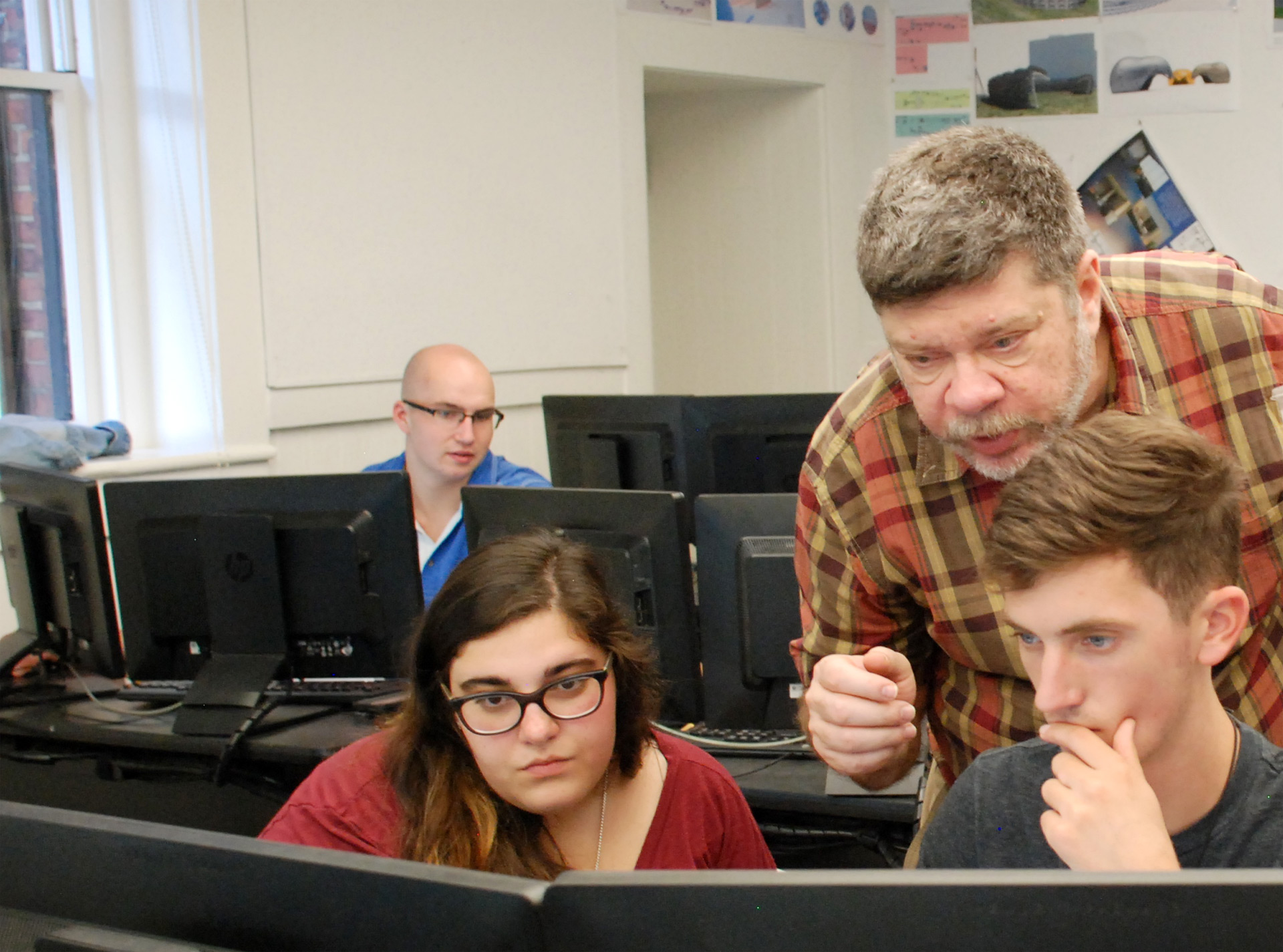
Herzer looks over the shoulder of two students on computers

Above: Jeff Herzer working with SCAD architecture students.


The passion and vision of Calvin Bellas

October
10
2018
By
Tags:

A native of Trinidad and Tobago, Calvin Bellas (B.F.A., film and television, 2018) grew up in the decidedly non-tropical clime of Michigan's capital city, Lansing. While attending Lansing Community College, he heard about SCAD from a digital media professor. “I'd never been to Savannah before," Bellas says. “I visited SCAD online, and was immediately captivated." Awarded the prestigious May and Paul Poetter Scholarship, Bellas arrived at SCAD in September, 2016 to study film and television.

As a SCAD student, Bellas worked on a wide variety of film and television projects. He color-corrected a music video for NYC-based Colombian band Salt Cathedral (directed by SCAD alumna Susan O'Brien); conducted cinematography for Vivian Griefhan's senior thesis film “Locked-In"; and volunteered as engineer for the College Television Emmy Award-winning SCAD sitcom “The Buzz."

For his own senior project, Bellas created “Meraki," a compound profile of multiple SCAD artist-athletes that is less traditional documentary and more akin to artful, acclaimed sports films like “Zidane: A 21st Century Portrait" and “The Art of Flight."

In fall 2018, Bellas began working full-time at SCAD as post-production support technician.

Calvin Bellas:

My passion has always been athletes and the outdoors. For my senior capstone project, I wanted to push my boundaries. I wrote and directed and shot “Meraki," a documentary about the SCAD artist-athlete student experience.

Bellas films swimmer underwater

The title “Meraki" is a Greek word that relates to the soul, creativity, and love that someone puts into their work. I wanted to explore the connection between SCAD students' athleticism and their artistry.

SCAD doesn't have a football, basketball, or baseball team. We have other interesting sports, like fishing and cycling. I wanted to combine lesser-known sports with better-known sports, like swimming, and make a film that shows the breadth of the SCAD artist-athlete experience. Through word of mouth, and by talking with our athletic director Doug Wollenburg, I found the students featured in “Meraki." I'm really thankful for all the athletes who participated.

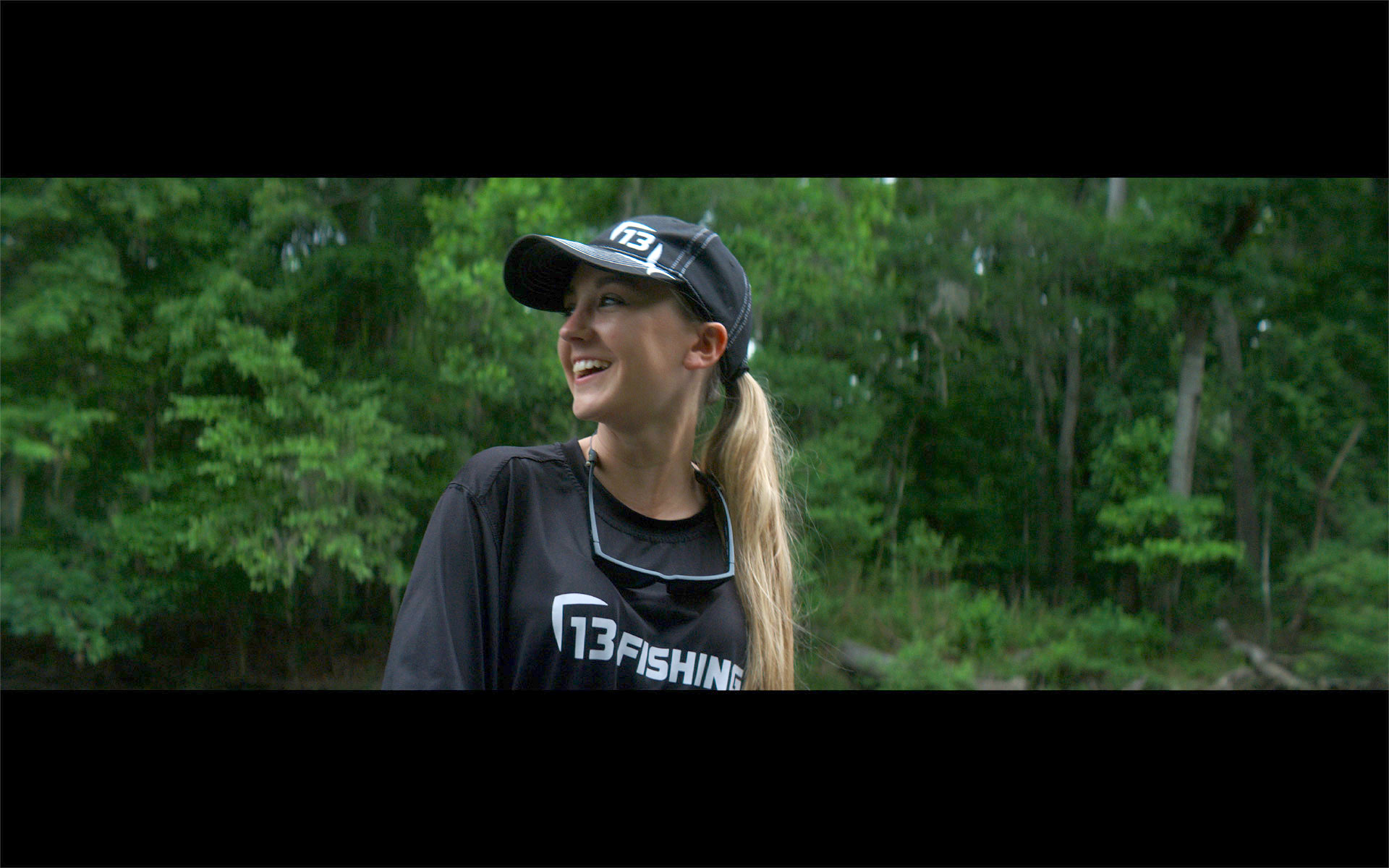
Ryleigh Tyson is a young woman who's at SCAD studying industrial design, she's on the SCAD fishing team, and she's sponsored by a fishing company called 13 Fishing. Ryleigh is extremely passionate about tournament fishing. I filmed her on her favorite river in South Carolina, on a boat with the wind blowing, to show her calculated casting and release and concentration.

Still of woman wearing a fishing shirt

We shot “Meraki" in its entirety all in four consecutive days. Those four days of shooting were embedded within thirty weeks of work across three academic quarters, from pre-production and planning through to post-production and editing, under the guidance of professor Alexander Newton (M.F.A., film and television, 2009). My two producers, Dany Ramirez and Grey Gowder, were essential.

I took all the things I learned at SCAD to make “Meraki" as cinematic a documentary as possible. “Meraki" is, in a sense, a spec piece for branded content. I wanted it to be in the realm of a Nike or Adidas ad, quality-wise. I'm really interested in creating branded short films that show the connection between brand and customer.

I'm always trying to connect with the audience. As a cinematographer I strive to convey a story visually to an audience in the most effective way possible. Regardless of whether the audience has ever been in the situation they're watching on-screen, they can connect on a human level. Studying film at SCAD, my two areas of focus were cinematography and color correction. I love back-end technical work. That's what led me to my new job at SCAD as post-production support technician.

Now I have the opportunity to help incoming students via my job. To start my professional career here at SCAD is part of an incredible continuum of opportunities for growth. I'm grateful.

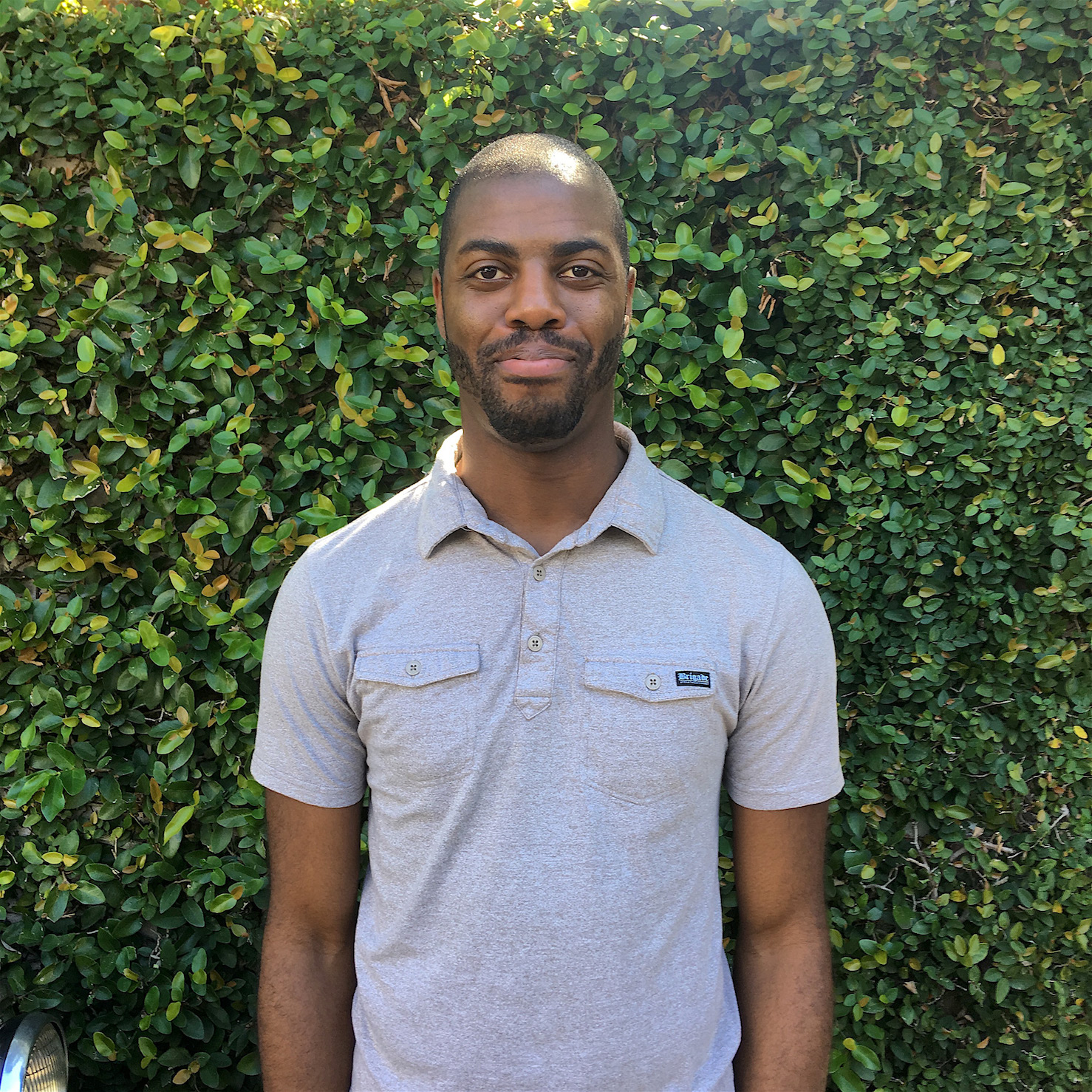
Portrait of Bellas in front of wall covered in green ivy

See more of Calvin's work at his official website www.calvinbellas.com.

And be on the lookout for "Meraki" on the film festival circuit...coming soon.


Architecture graduate students tour WestEdge

September
27
2018
By
Tags:

"One thing I tell my class," says SCAD architecture professor Alice Guess, "is to anticipate the future needs of a city in the design that you create today."

Last week, students in Guess' class "Graduate Architecture Studio I: Urban Design and Development" (ARCH 717) visited the under-construction WestEdge center in Charleston, South Carolina. An expansive iteration of the ubiquitous urban mixed-use development, WestEdge bills itself as Charleston's new "Discovery District," a hub for research, collaboration, and innovation – as well as a place to work, shop, and live.

Guess' students were given an exclusive "hard hat" tour by WestEdge CEO Michael Maher, whose insights bridged the theoretical, technical and practical.

Professor Alice Guess:

This visit to WestEdge was a good match for this particular studio class, because we are an urban design studio, and the class project this quarter is concepting redesigns for the Savannah Civic Center site.

The concepting for WestEdge started 13 years ago, and anticipated an industry that would need a place like this. WestEdge is unlike your typical mixed-use development, because it has components for biotech and lab facilities for the Medical University of South Carolina. That relates to what I tell my students: Anticipate the future needs of the city.

We toured a number of structures within the WestEdge hub, including the structure called 10 WestEdge, which has a Publix grocery store as the anchor retail on the ground level. The mid-level has beautiful views across the Ashley River, and from the other corner you can see Ravenel Bridge and all of Charleston.

Michael Maher, WestEdge CEO, worked for the Charleston Civic Design Center when this project first germinated. I was formerly a partner in an architecture firm in Charleston, so he and I have been colleagues for some time, and that's how I was able to arrange the visit.

It's interesting for my students to see the development at this stage. We were standing on the seventh floor of a building under construction, wearing vests and hard hats. It was the second week of class, and we were in the middle of the exact sort of development that the students are studying.

At SCAD, and in this class, we have students from all over the world. My students from India who have more experience in construction were very interested in the structural systems WestEdge are using. The apartment areas are steel framed and they were asking, why not concrete? It began a conversation about what drives these types of decisions, and how the answers are different for different regions.

The CEO spoke about designing the WestEdge streetscape, and explained the ratio between the height of the buildings and the width of the street and how that's optimized. He also talked about the review process with the Board of Architectural Review and what it means for building heights, earthquake-proofing and hurricane resistance. He explained how the mechanical systems for the ground floor grocery store affected the construction process. The students gained tools and insights they can use in their own work.

My class came back with focused ideas for a mixed-use site that can speak to both the present and future condition of Savannah. Fall quarter is off to a great start. I'm enthusiastic about what my students are going to create.

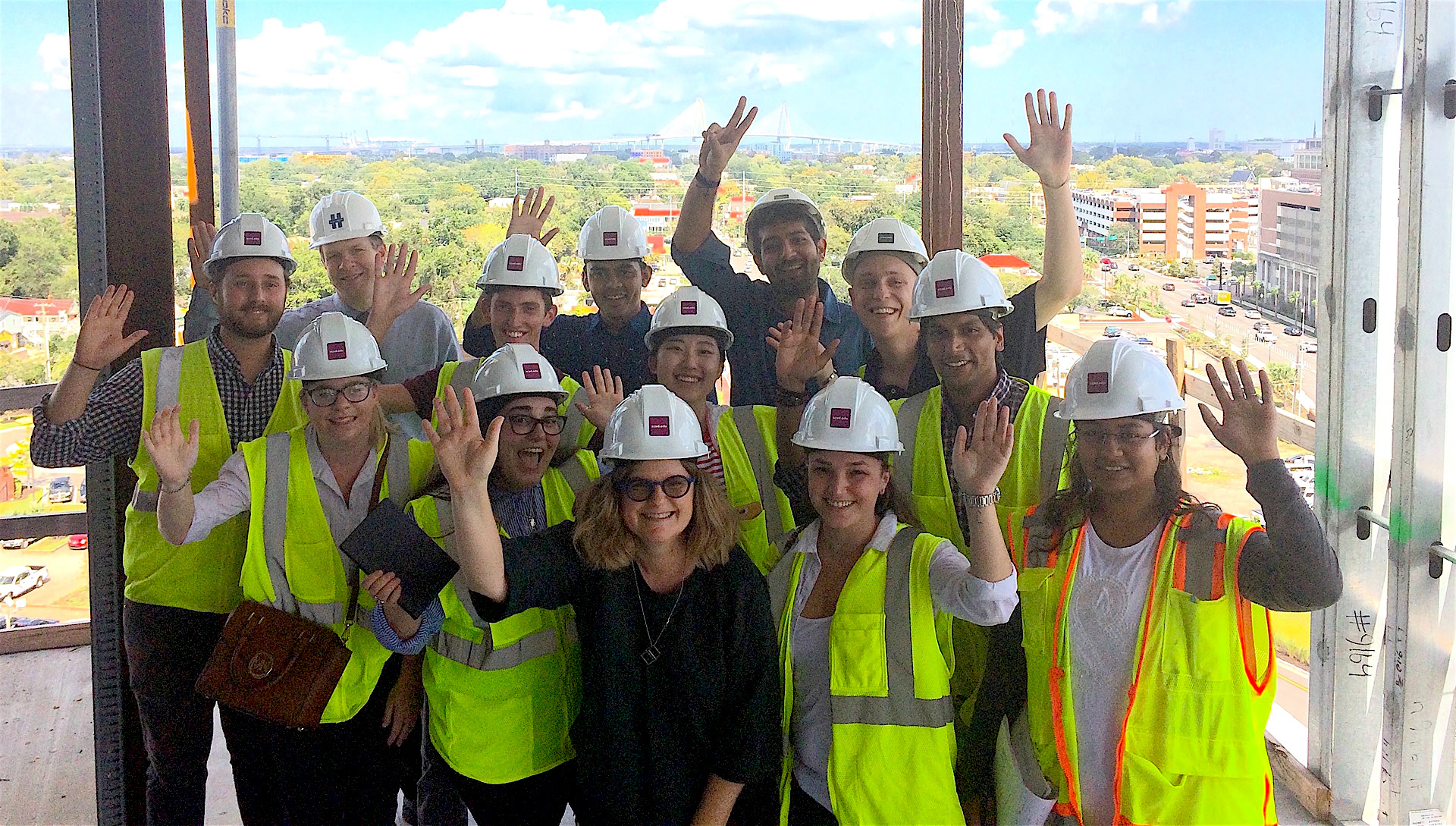
Group of students in construction vests and hard hats wave to camera

ARCH 717 student participants:
Hamilton R. Brindley, Hemantsingh Choudhary, Sunny Samir Desai, Joshua L. Hall, Taylor L. Hankinson, Saloni Jaiswal, Xiaoyue Jin, Analis M. Ramos, Divy Timbadiya, Olivia G. Vargas, Austin K. Young.

Success looms for Ellie Gilchrist

September
20
2018
By
Tags:

Ellie Gilchrist (M.A., fibers, 2018) grew up engrossed while watching her parents and grandparents hand-tailoring fine clothing. “I knew it was my calling just from it being in my family,” she says.

Her senior thesis, “An Exploration from Tradition to Modern Transformation,” consists of fabric swatches intended for use in luxury womenswear. Drawn to using bright and intense colors in her pieces, the Dallas, Texas native implements techniques including hand painting, laser cutting, weaving, digital print and heat press to create her swatches. Gilchrist also utilizes an array of objects in her work, including chain mail, acrylics, vinyl and cellophane. Her textures, colors and prints create effects that mimic movement in her work.

This summer, Ellie completed her master’s degree while working with fibers and fashion students in Pepe Hall as a work study lab monitor. She currently resides in New York City pursuing opportunities in product development and textile design within luxury womenswear.

Example of fibers on four models

SCAD: Did you always want a career in fashion?

Ellie Gilchrist: My family background is in tailoring and fine apparel, so I’ve grown up around textiles and fashion. It was natural. It’s my legacy and I knew I wanted to pursue it as a career.

SCAD: How has SCAD uniquely influenced your career path?

Gilchrist: SCAD provided me with new perspectives on what’s happening in the industry, and offered me the perfect angle to acquire and use that information as a student. Being at SCAD also gave me the exposure and motivation to enter different design competitions.

Sara Rabinowitz was my studio professor and she inspired me more than anyone. She is so intelligent, so mindful. She was a wonderful person to bounce ideas off of because she challenged me in all the right ways. She produced a creative drive in me that really stood out.

SCAD: Were you introduced to new technology while studying fibers in Pepe Hall?

Gilchrist: Definitely! One of the main reasons why I wanted to study fibers was to try out the Jacquard loom and to learn Jacquard weaving. I ended up taking two classes in it. The primary portion of my thesis work was Jacquard. I learned laser cutting and digital printing. Most of the techniques that SCAD offers were incentives for me to go there.

SCAD: What was your thesis project?

Gilchrist: I created a thesis collection of fabric swatches for women’s apparel. The inspiration came from my background in suiting and tailoring and exploring techniques on the loom. I put those together and made geometric, colorful, bright fabrics that can be incorporated into womenswear suiting.

Some of the pieces currently are in the Dorothy Waxman Textile Design Prize showcase. They have the finalists’ work displayed at the Mohawk Group showroom in Chelsea, New York. The rest of my designs are being photographed for promotional work for future collaborations and freelance work.

SCAD: What was your experience like working as a work study lab monitor at Pepe Hall this summer?

Gilchrist: I loved being able to work in Pepe Hall. I got to know the ins and outs of the building and its resources. It helped my machine learning. I was able to assist students with technical issues of any kind and help with inspiration. As a grad student, I had a lot of experience and perspective to offer.

Ellie’s most recent awards and recognitions include:

Dorothy Waxman Textile Design Prize Finalist, 2018
Council of Fashion Designer of America (CFDA) Fashion Future Graduate Showcase, 2018
CFDA+ Design Graduate spotlight, 2018

Fabric in the process of being made

See more of Ellie Gilchrist’s work at her website.


New degree program: social strategy and management

September
18
2018
By
Tags:

Instagram, Facebook, Twitter and Snapchat: From the initial interaction with a brand to customer retention, these are the places online where consumers most often connect with products and experiences. Social media is now the key driver of e-commerce, and social media professionals are the architects of this experience. They are the creative directors, content creators and community managers who orchestrate videos, photography, graphics and copywriting across digital channels to launch authentic conversations and accelerate growth.

A comprehensive social strategy is the cornerstone of success for today’s businesses and brands. SCAD social strategy and management students are prepared to capitalize on influential professional opportunities. Merging elements of advertising, branding, photography, film, television and writing, the new B.F.A. degree program, introduced fall 2018, part of the SCAD school of liberal arts, features a focused exploration of text-based communication and web-based immersive experiences. Students learn to critically analyze performance metrics to build creative approaches that foster brand allegiance, develop new markets and connect global audiences.

At the preeminent art and design university in the world, where advanced technology and a spirit of innovation infuse every campus location, SCAD students become adept in all aspects of creating compelling campaigns across platforms. Students develop a distinctive voice as they author blog posts, podcast and video scripts and marketing copy that entertains, informs and attracts organic traffic.

SCAD social strategy and management students also master account management on behalf of clients, customer service and support, campaign budgets, analytics, vendor evaluation and brand integration. They learn how to measure and optimize campaign performance, and to refine strategy and recommend improvements based on measurable results. Students coordinate online brand advocacy and cross-promotion, manage influencer relations, and chart marketing and media partnerships that monetize brand strategy across social media.

SCAD social strategy and management students customize their degree programs en route to a skillfully directed creative career through minors in advertising, branded entertainment, film and television, graphic design, marketing for mobile and interactive environments, motion media design, and writing. Learn more about the new degree program here.

New degree program: immersive reality

September
10
2018
By
Tags:

Immersive reality today is what the internet was 20 years ago: a revolutionary force on the precipice of changing the way we interact with the world. Its frontier extends far beyond entertainment to encompass applications in science, travel, retail, real estate, manufacturing, fashion, industrial design, advertising, journalism, education and more. It’s at this auspicious juncture that SCAD introduces one of three new B.F.A. degree programs for fall 2018: immersive reality.

At SCAD, with pioneering technology and collaborative professional resources like SCADpro at their fingertips, students prepare to explore this expanding field as they invent experiences, tell stories, devise design concepts and develop programs.

SCAD is at the vanguard of augmented, virtual and mixed reality education. In 2017, the university announced SCAD+, a business launcher for gaming and digital products. The yearlong entrepreneurial program is designed to help SCAD alumni develop viable, tech-driven businesses. One of the inaugural SCAD+ projects is the VR game "TSA Frisky," created by alumni Remy Bustani (B.F.A., sequential art, 2017), Preston O’Bryan (B.A., interactive design and game development, 2017), and Christian Willet (B.A., interactive design and game development, 2017), where players enter the role of airport security agents and earn points while demonstrating the practical everyday applications of the technology.

In 2017, an integrated SCAD student team launched "Dialect Effect: A Tale of Two Tongs," an immersive Chinese language and culture learning simulation that utilizes voice recognition technology, authentic environments and engaging animated non-player characters to teach entry-level Mandarin. In 2016, SCAD debuted the world’s first VR musical short film, “Say It with Music,” a 360-degree collaboration among students from 14 different degree programs, including film and television, sound design, animation, themed entertainment design, dramatic writing, visual effects and motion media design. In 2015, SCAD introduced the first virtual reality experience in its acceptance letters to students, featuring customized Google VR goggles that enable students to virtually visit SCAD’s four global campuses, followed shortly by the first-ever augmented reality university catalog.

As part of this tradition of tech firsts, SCAD immersive reality students create original content that supports the vision and breadth of their virtual designs. Through coursework, classroom experience and sponsored SCADpro projects, students gain valuable technical skills across physics, scripting, programming, visual effects compositing and more. With an understanding of storyboarding, film, animation, game design, visual effects, sound design, interactivity and motion design, students conceive, develop and produce narrative-driven experiences across immersive reality platforms. Using a suite of industry-standard tools, including augmented and virtual reality resources across locations and a full suite of VR headsets for Oculus Rift, HTC Vive and Samsung Gear, students deliver professional quality work that engages consumers and clients in the virtual sphere.

Learn more about the new immersive reality degree program at SCAD here.

Pull up a chair: Quinn Orear

September
5
2018
By
Tags:

"Being a student filmmaker can be challenging because you're navigating how you fit into a very competitive marketplace, while trying to tell the story that you're passionate about," says Quinn Orear, associate chair, film and television; associate chair, film producing, SCAD Atlanta. "Part of the challenge is telling your story the way only you can."

Formerly a producer at New York production and post services house Sixteen19, Orear led the finishing process on feature films "A Walk in the Woods" and "Bleed for This" and television projects including HBO's "Becoming Mike Nichols." As a freelance director and producer, Orear has created branded content for Airbnb, Chase Bank and Fisher-Price. In 2017, his film "Seeking: Jack Tripper" won the Audience Award for Best Narrative Short at Newport Beach Film Festival and was accepted into the Atlanta Film Festival.

It was that visit to Atlanta that won Quinn over: "I fell in love with the city, the people, the energy, the culture." In January 2018, he and his husband relocated to the A, where Orear joined SCAD during an ongoing statewide boom: film and television productions generated $9.5 billion in economic impact in Georgia in fiscal 2017. This summer Quinn completed his new short film "Passerby," shot in Atlanta using all-local talent.

Quinn Orear:

As a professor, I have a syllabus to teach, while I also bring my own expertise to form the classroom experience. I've worked professionally as a producer, director, writer, and editor. Building out a course curriculum is exciting because of those perspectives. I can speak with authority on how the post-production process connects to the script-writing process, and how those iterations connect to directing on-set. Expertise means thinking in terms of fulfilling the learning outcomes of a class.

This summer the screenwriter Karen McCullah ("Legally Blonde"; "10 Things I Hate About You") came to my FILM 704 Producing for Film and Television class and conducted a master class. She spoke about screenwriters working with producers – it was really helpful. I always take my classes to SCAD FILM events, and work with program and outreach manager Brantly Watts on the programming. This past May at SCAD FASH Museum of Fashion + Film, I introduced Jean Cocteau's 1946 film "La Belle et la Bête" in conjunction with their Pierre Cardin: Pursuit of the Future exhibition. The caliber of events here at SCAD is incredible.

Bringing casting directors and production designers into my classes is part of how I work to connect SCAD students with industry professionals. I've brought local line producer Will Greenfield into my class a couple times, and he hired four of my students as interns on his most recent film.

This fall I'm teaching FILM 240: Postproduction: Cutting the Story, which is fun because I get to go back to my professional roots in post-production. I'm also teaching my graduate level class on producing for film and television, another favorite of mine.

I'm invested in the collaborative process of filmmaking. All the cogs in the machine are valuable. My most successful creative endeavors have been when I've looked at myself as a catalyst of collaboration. Being at SCAD has reinvigorated my own professional passions, while serving the utilitarian purpose of sharing my expertise with students. I'm enjoying it immensely.

Graphic treatment of SCAD Film

Learn more about SCADFILM events, festivals and memberships here.


Jessica Rubinstein competes in Supima

September
5
2018
By
Tags:

At the age of 4, Jessica Rubinstein was shopping for her own clothes because her mother claimed she was just too picky. Rubinstein (B.F.A., fashion, 2018) says this was when her family knew she was destined for a career in fashion.

Now, in 2018, Rubinstein is hustling through her whirlwind journey to the Supima Design Competition.

The Supima Design Competition is an annual event where finalists from multiple top design schools in the U.S. create runway collections from five types of cotton provided by Supima. The finalists will have their designs featured at New York Fashion Week, Sept. 6-Sept. 14, 2018. The winner will be announced on September 6. One look from each finalist's collection will also be shown during Paris Fashion Week, Sept. 25-Oct. 3.  

Jessica discovered the Supima Design competition her freshman year, when she saw the collection of SCAD alumna and 2015 1st place winner Kate McKenna-Schliep (B.F.A., fashion, 2015). From that moment, Rubinstein was determined to represent SCAD at the Supima Design Competition her own senior year.

"I decided I really wanted to apply for this competition because I love evening wear," said Rubinstein.

The skills Rubinstein acquired at SCAD allowed her to reach her Supima goal. Jessica claims that before SCAD she didn't even know how to sew.

"SCAD was my first everything," said Rubinstein with a laugh.

These SCAD firsts culminated her senior year, which she says were filled with long nights spent perfecting her senior collection. Over winter break, Rubinstein also interned with Project Runway finalist Merline Labissiere (B.F.A., fashion, 2011). On top of all this, Jessica had to submit her application for SCAD to choose their Supima finalist.

Two weeks before the end of senior year Rubinstein was announced as the Supima finalist for SCAD; the Monday after graduation she was at Eckberg Hall bright and early getting started on what would become the 21.21 collection.

The inspiration for Rubinstein's line 21.21 sprouted from her close relationship with her twin brother Jonathan Rubinstein (B.F.A., accessory design) and their desire to officially collaborate on a project. Jonathan, a senior, has been an integral part in the 21.21 process, helping create the acrylics for Jessica's evening wear pieces, as well as additional accessories.

The name 21.21 is laden with meanings that bring Jessica's interests and relationship with her brother to light. Jessica wanted to represent connection, especially between her and Jonathan. They were born on the 21st of November and by using the number twice Jessica wanted to represent the unique relationship between twins.

The name 21.21 also represents a major facet of Jessica's collection: technology.

"We think that technology is going to be a big part of the world. It already is," said Rubinstein.

Jessica and Jonathan initially played around with featuring technology in the pieces via electricity. Ultimately, they decided the garments would be created using the cutting-edge technology SCAD has to offer at the lab in Fahm Hall where Jonathan works, such as 3D printers and laser cutters.

"The main idea was creating a garment through technology," said Rubinstein. "That's how we got the idea of acrylics and laser cutting and scanning."

Rubinstein's collection 21.21 features white evening wear pieces made of Supima cotton, covered in blue, angular acrylics. Jessica and Jonathan have already diligently swaddled the pieces in bubble wrap to transport them to New York for Fashion Week. As arranged by Supima, Rubinstein will also be interviewed by 15 different major designers and labels.

Jessica praises SCAD for allowing her to achieve her goal of competing in Supima.

"I really encourage SCAD students who want to reach for Supima to do it," Rubinstein said. "It's a great opportunity."

Rubinstein in front of three of her garments on mannequins

The winner of the Supima Design Competition 2018 will be announced on Sept. 6 at NYFW.

Tune into the live stream at 4 p.m., Thurs. Sept. 6, here.

 

New degree program: business of beauty and fragrance

August
24
2018
By
Tags:

It is with great excitement that SCAD announces the launch of a new B.F.A. degree program, business of beauty and fragrance (BEAU), for fall quarter 2018. This unique and innovative program of study has been created to prepare students to become the leaders, innovators and entrepreneurs who will shape the future of the beauty and fragrance industries. A unique course curriculum endows this degree program with creative content that is comprehensive and at the cutting edge of new developments in the world of beauty and fragrance.
 
The magic of beauty and fragrances powers a $445 billion industry that abounds with opportunity. Within the context of the world's preeminent art and design university, SCAD business of beauty and fragrance students will gain in-depth knowledge of aesthetics, style, cosmetics, fragrance and adornment, empowering them to find their niches in this growing global landscape. At SCAD, BEAU students will learn how to launch new products, develop packaging, engage modern consumers, maximize financial outcomes and build long-term brand equity as part of a creative team.

The first course, Beauty and Fragrance Through the Ages (BEAU 210), is currently available for student registration. BEAU 210 is scheduled for Tuesday and Thursday, 11:00 a.m.-1:30 p.m. in Morris Hall, Room 202. The course will be taught by the newest SCAD fashion marketing and management (FASM) professor, Meloney Moore, who joins SCAD from Estee Lauder with extensive professional experience in beauty and fragrance. Seats for this course are limited. Students should register at their earliest convenience.

For more information contact Daniel Green, chair of fashion marketing and management and chair of luxury and fashion management: [email protected].

Three students sit at table with perfumes and use pipettes to sample scents