Skip to main content Accessibility Policy

New shelf life at Jen Library

August
16
2018
By
Tags:

What do the following books have in common?

  • "The Radium Girls: The Dark Story of America's Shining Women," by Kate Moore (Sourcebooks)
  • "Zahav: A World of Israeli Cooking" by Michael Solomonov and Steven Cook (Rux Martin/Houghton Mifflin)
  • "Pachinko," by Min Jin Lee (Grand Central Publishing)
  • "Olio," by Tyehimba Jess (Wave Books)
  • "Made in North Korea: Graphics from Everyday Life in the DPRK," by Nicholas Bonner (Phaidon Press)
  • "Ingenious Patents," by Ben Ikenson and Jay Bennett (Black Dog & Leventhal)

The answer, of course, is that they (along with a couple dozen other diverse titles) have been assembled on a snazzy silver cart by SCAD collection strategy librarian Jackie Dunn, to demonstrate the depth and breadth of recent acquisitions by the SCAD Jen Library.

"The Jen Library houses approximately 175,000 volumes," says Dunn. "We acquired approximately 5,000 new titles in the last academic year, and will likely acquire at least as many this upcoming year.

"I select items for the library to acquire, and we have four other SCAD librarians called 'selectors.' They are primarily reference librarians who ensure we have balanced and diverse collections."

The Jen also acquires specific titles at the behest of students, faculty and staff. As Dunn emphasizes: "If you would like the library to acquire a certain book, use our 'Suggest a Purchase' form on-line. It's two easy steps. 'Suggest a Purchase' has been getting more and more activity and I hope that continues to trend upwards."

Dunn, who holds a master's degree in library science from Queens College, possesses the affable intelligence of the professional bibliophile. She also fosters kittens through Coastal Pet Rescue.

Jackie Dunn:

We don't offer an entomology degree at SCAD, so why would the library have "The Book of Beetles: A Life-Size Guide to Six Hundred of Nature's Gems" by Patrice Bouchard (University of Chicago Press)? I noticed a lot of artworks being done by students and faculty had a naturalism theme involving animals and plants, so it makes sense to have reference titles on insects and different types of animals.

The awesome thing about "The Book of Beetles" is that it is relevant to many degree programs here at SCAD: jewelry, industrial design, animation, illustration…. There is so much inspiration in this book on beetles. It's a science book that's also an art book. I could sit here and read this cover to cover. If you gave me the time.

Before acquiring a book, I ask: "Do we already have a lot of items on this particular subject?" And I check for duplication, to see if we already have the title. It's a good thing if our other locations also have copies; we try to be consistent with our holdings in Savannah, Atlanta, and Hong Kong. SCAD users in Savannah can also request a book from Atlanta and vice versa, if the title is not held at one SCAD Georgia location.

We have a number of recent titles written by SCAD faculty, including "Buildings of Savannah," by Robin B. Williams (University of Virginia Press), chair of architectural history; "Rome's Female Saints: A Poetic Pilgrimage to the Eternal City," by Nicol Nixon Augusté (WestBow Press), liberal arts professor;  "Color a love story: a color theory course companion," by Deborah Cherry Mosch (Lulu Publishing), foundations professor; and President Wallace's book "SCAD: The Architecture of a University,” by Paula Wallace, Margaret Russell and Chuck Chewning (Assouline Publishing).

We mirror what's going on at SCAD with upcoming events and exhibitions. Every year before deFINE ART, I make sure we have all the relevant titles, including exhibition catalogs.

This fall SCAD is introducing a new degree program in business of beauty and fragrance. We have acquired chemistry texts, and purchased a whole range of perfume and scent related titles. They will be on the shelf in circulation before fall quarter starts Sept. 10. When SCAD introduces a new degree program, we make sure the library holdings reflect and support that new degree program.

Some students come into the library looking for information on a particular artist or subject area. Then there are students who come in to browse, to get ideas to spark the process. Browsing is just as important as knowing what you're looking for specifically when you come in. Both are valid and valuable ways of using the library. The Jen is here for you!

Jackie Dunn smiles broadly while holding book Retronesia

Search the SCAD libraries' holdings and use on-line resources here.


Pedro Covo’s life aquatic

August
14
2018
By
Tags:

The raised foot suggests the submerged body. Colors are refracted by light in water. Shifting turquoise and desaturated red comingle beside frothing white and swathes of black. This tour de force of aquatic gesturalism is "Swimmer #2," a painting by Pedro Covo (M.F.A. painting), part of "FIGURE/GROUND," the current group exhibition at Gutstein Gallery featuring work by SCAD students, alumni, faculty and staff.

"Movement is the thing that anchors my work," Covo says. The prodigal Cartagena, Colombia native published his first illustration in airline magazine Avianca at age 18. His work appeared in newspapers El Tiempo and El Espectador before his burgeoning commercial illustration career landed him jobs in Berlin and Rio de Janeiro. At age 30, he arrived at SCAD Savannah to earn his M.F.A. in painting.  

In his studio in Alexander Hall, an Atlanta Braves cap roosting atop his easel, Covo explains how his extraordinary "Swimmer" series finally surfaced.

Painting of swimmer nearly submerged in blue water

SCAD: How do you combine abstract and figurative elements in a single "Swimmer" painting?

Pedro Covo: The swimmers are not posing. They're moving and I'm sketching live really fast, to capture that movement. When I make the sketch into a painting I like to focus on one detail, feet for example. I enjoy painting figuratively, but I don't like to over-render. I leave space for other things to happen, different textures and values and shapes where you can get lost.

Every time I go to the beach or a lake or the pool I find myself staring at the colors and situations, the transformation between the body and the water. The things that happen in terms of shapes, you don't see anywhere else.

My "Swimmer" paintings originated in Colombia, when I was not working on illustrations. I was making paintings of people I know at the beach on weekends. I started publishing this personal work on my social media. The overwhelming response motivated me to pursue a career as a painter. I had first heard about SCAD back when I was attending high school at Colegio Jorge Washington in Cartagena, and SCAD came to give a presentation. Ten years later this SCAD idea came back to me, and I accepted a scholarship to come here.

Gregory Eltringham has been an important professor for me at SCAD. I had been painting with oils. He said, "You want to produce a lot of work here in Savannah? Oil takes a while to dry. Use acrylics." It was outside my comfort zone but I decided to try. He has also recommended that I read "A Portrait of Giacometti" by the art critic James Lord. Fantastic book.

SCAD: Will this continue to be your designated studio space throughout your time at SCAD?

Covo: Yes. I'm here every day. It's the reason I'm here, and I'm grateful for it.

Actually, President Wallace was here in my studio a few weeks ago. She was in Alexander Hall, I had left my door open, and she walked by and came in. I had "Swimmer #18" on a stretcher. She asked me, "What's this big painting?" I said, "It's going to Gutstein Gallery for FIGURE/GROUND." She said, "How are you going to transport it?" I said, "Maybe put it on top of a friend's car." She said, "I think we can help." As soon as she said that, there were people here figuring out how to get the painting to Gutstein. What can I say? I love SCAD.

Covo works on large canvas with red fish set against a blue background

See Pedro Covo's "Swimmer" paintings in "FIGURE/GROUND" at Gutstein Gallery through Oct. 6, 2018.

Visit his homepage and shop for giclée prints at www.pedrocovo.org.

All work in "FIGURE/GROUND" available for purchase through SCAD Art Sales.

Pump up the vellum!

August
9
2018
By
Tags:

"How would you describe your day in a color?"

As the SCAD Summer Seminars students offer their answers ("orange," "greenish," "sort of gray," "light blue"), professor Jennifer Lee Hallsey walks around the upstairs aerie in Wallin Hall, peeling off correspondingly hued sheets of construction paper and placing them beside the acid-free notepads on each desk.

After Hallsey passes out pages ripped randomly from discarded dimestore novels, students scissor letters, words, and phrases, and glue them to the vellum. The construction paper is cut or torn and likewise affixed. Adornments are added with Micron pens and Prismacolor pencils atop flat washes of watercolor. Abstract artworks appear, borne of rhythmic improvisation. "Let the process dictate what you're doing," Hallsey says.

Over the next five days, these high school students will take a deep dive into the world of mixed media. Professor Hallsey's workshop is part of a series of weeklong immersive experiences for high schoolers interested in all things SCAD. Hallsey is herself a SCAD alumna thrice over: B.F.A. painting, 2005; M.A. jewelry, 2015; M.F.A. jewelry, 2016. "This is my fifth year teaching summer seminars, and my third year teaching foundation studies at SCAD. My experience teaching Summer Seminars led me to realize I wanted to be a professor."

"We're here to create process-based work, versus product-based work," Prof. Hallsey tells the class. "Product-based work is when we sit down with an idea in our head. I want us to create process-based work, which is about constantly generating new ideas. To do that, we have to have a common language."

Writing on a whiteboard, Hallsey explains elements and principles of art and design, including space and proximity, scale and proportion, variety and economy, emphasis and repetition. "Form in support of content is unity," Hallsey says. "Now, what's the opposite of unity?" "Chaos!" comes the chorused response. "Right! The message of your artwork may be chaos. It's fine to have that message, but have your form support that message."

From a front table laden with supplies, students select felt-tipped pens, glue sticks, pink-handled X-ACTO knives, filbert brushes and water-soluble graphite sticks. "Respect your tools," Hallsey says. "Healthy bristles make for happy brushes."

By mid-week, Hallsey has put mixed media in historical context, showing students the work of Hannah Hoch and Robert Rauschenberg, and connecting Caspar David Friedrich's 1818 "Wanderer above the Sea of Fog" to the calligraphic expressionism of Cy Twombly. She screens an inspiring episode of Netflix program "Abstract" about British set designer Es Devlin. When the students return to work, a playlist of songs by the Breeders and Dressy Bessy keeps the vibe rocking.  

Morgan Gross, a rising junior at School of the Woods in Houston, Texas, learned about Summer Seminars after a SCAD representative gave a presentation at his school. "I actually felt more motivated in school because I had a goal to come here this summer." By Friday, Gross has completed a mixed media piece incorporating stark, repeated images of birds in cages, exploring themes of obedience and liberation.

Talbot Potter, a rising sophomore at St. George's Episcopal School in Milner, Georgia, is finishing a layered work in an accordion notebook. "I signed up through the SCAD website to receive emails because I'm interested in art. When SCAD sent me a notice about Summer Seminars, I thought, sounds great! I loved being here this week. In the mornings I took acrylics class, which ties in with mixed media in the field of visual art. I'd love to come back next year."

"It's exciting to bump into students I taught at Summer Seminars who are now attending SCAD," Hallsey says. "I hope some of these students here today feel that inspired."

Student shows off large collage

Above: SCAD Summer Seminars student Talbot Potter.

Top photo (l-r): Talbot Potter, Morgan Gross, Prof. Jennifer Lee Hallsey, Mickenzie "Mickey" Millsap, Charlotte Clark.

SCAD Summer Seminars return in 2019. Learn more about the program here.

Margaret Daniel's winning interior design

August
7
2018
By
Tags:

SCAD Bees know that perseverance pays off, even in the summer months. This July, Margaret Daniel (B.F.A. interior design) was awarded a 2018 Angelo Donghia Foundation Senior Student Scholarship for a project assigned last spring in Interior Design Studio II: Specialized Interior Environments. With the guidance of SCAD faculty, Daniel reimagined the assignment to win the maximum $30,000 scholarship towards her education. Daniel, from North Augusta, South Carolina speaks on how SCAD encourages her to continually put her best work forward.

SCAD: Why did you choose to pursue a career in interior design?

Margaret Daniel: All the different careers I've considered in my life have involved structures. In 5th grade I thought I would love to be a realtor. Later I realized I wanted to have more control over the process, and help people see how their space could reflect who they are, how interior design could impact day-to-day life and how they conduct business.

When it was time to decide where I wanted to go attend university, I contacted employers in New York, Atlanta and Augusta, and asked who they were hiring and what they were looking for in new graduates. SCAD's No. 1 standing with DesignIntelligence, combined with these employer recommendations, made SCAD the perfect fit for me.

I'm thankful for the amount of time I've spent at SCAD improving my drawing abilities, especially in my early foundation classes. Those courses helped me gain a greater appreciation for people who render professionally and interior designers throughout history who have inked or drawn their own spaces.

SCAD: How did you become involved in the Angelo Donghia Foundation Senior Student Scholarship competition?

Daniel: I was in professor Sarah Boehm's Studio 2 class. She asked the class to reimagine the historic Kilkenny House as a dual cooking school and restaurant that was completely ADA compliant. Later, Ivan Chow, dean of the School of Building Arts, asked me to rework the same project for the Gensler Brinkmann Scholarship, and rework it again for the IIDA Student Design Competition--neither of which I won.

By the time I was selected to represent SCAD in the Angelo Donghia Foundation Senior Student Scholarship competition, I was doubting myself, but professor Boehm kept encouraging me. I revised the project once more, to be more conceptual and reflect a connection to the land. It was actually professor Boehm who broke the news to me that I'd won two weeks later!

SCAD: How did your faculty mentor help you succeed?

Daniel: Sarah Boehm has been an incredible professor to me at my time at SCAD, including mentoring me for this scholarship project. I'm thankful for her patience and her willingness to work with me, even spending time after class to help me make sense of the concepts in my head and review schematic designs. She exemplifies excellence in everything she does, including the way she teaches. I couldn't have done it without her support!

Daniel arranges pink flowers

See more of Margaret's award-winning designs at her website: www.margaretidaniel.com.

Summer Seminar: Hong Kong

July
27
2018
By
Tags:

This summer at SCAD Hong Kong, three generations of one family took part in SCAD summer programs. While grandmother Betty Chung and mother Princess Go participated in the SCAD Educator Forum, daughter Bianca Go took part in the SCAD Summer Seminars. Here, Bianca shares her special summer experience.

My name is Bianca Go. I am a 16-year-old student from Manila, Philippines. I applied to SCAD in hopes of honing my passion for art by attending their Summer Seminar program. The day SCAD delivered their decision regarding my application, I rushed home to check, and a surge of happiness and excitement came over me: I had been awarded a bronze scholarship to SCAD's summer program. As the start of my Summer Seminar approached, I was almost overcome with feelings of anticipation. I was looking forward to experiencing what SCAD had to offer: courses and excursions, as well as an international environment and friendly fellow students.

My Summer Seminar program consisted of two intensive classes per day. My graphic design class was taught by SCAD alumnus Adam Newbold (B.F.A., graphic design, 2015). His classes were insightful and thought provoking. My classmates and I were tasked to redesign packages utilizing Adobe Illustrator. Mr. Newbold guided me through every step of the way, providing detailed instructions and advice that best suited my needs, since I was initially unfamiliar with the software. In three days, I was able to create my first product design.

Additionally, I took a class in oil painting led by fine artist Thomas Dang Vu (B.F.A, painting, 1994). As a class, we were tasked with creating still life oil paintings. My peers and I painted several different arrangements of ceramics and fruit. Mr. Vu challenged us to incorporate several stylistic devices into our artwork, including underpainting, blending, and shadowing. Mr. Vu also took into consideration our own targeted areas that needed improvement. As a result of his keen mentorship, I was able to refine my painting skills and create a masterpiece within days.

Not only was I able to fully experience what SCAD had to offer, but I found myself immersed in Hong Kong's culture. Every night, we went to different locations showcasing Hong Kong's beauty and wonders.

My favorite excursion was the trip to Sky100, located on the 100th floor of the International Commerce Center in West Kowloon. The observation deck provided beautiful 360-degree views of the Hong Kong skyline. Looking out onto the vast horizon, it dawned on me that my own opportunities in Hong Kong were, thanks to SCAD, as limitless as the scenery before me.

The diversity at SCAD gave me a wider global perspective, providing insight on other cultures around the world. I made new friends from different backgrounds with their own unique stories. Their thoughtfulness and support encouraged only the best from me. Our ability to share opinions and ideas in a classroom setting meant discussing topics from a global perspective, adding depth and broadening the conversation. Being in another country, I appreciated the hospitality and friendliness of everyone around me. SCAD made me feel right at home.

The blend of all these elements at SCAD provided a wholesome and holistic Summer Seminar experience. I am grateful for the opportunity SCAD contributed to my development in the arts. Within one week, I grew to become a global citizen, cognizant of the universal language of art. SCAD's Summer Seminar program proved to be a tremendously memorable and impactful one. It made me want to pursue a career in the arts. Thank you SCAD for an unforgettable week of my life.

Hong Kong skyline at dusk

Take a virtual reality tour of SCAD Hong Kong here!


Summer Seminar: botanical illustration

July
25
2018
By
Tags:

"I want to show you about dancing with your pencil," says foundation studies professor Kristie Bruzenak to the half-dozen high school students assembled for her SCAD Summer Seminar in botanical illustration. "Make a visual connection with your botanical specimen, and remember your paper is flexible. Move it, turn it, find the energy and create!"

The students sit at individual drawing tables along the windowed western wall of Haymans Hall, communing with the single botanical specimen stood before them: hydrangea, peony, perennial sage, begonia, purple coneflower, black-eyed Susan. The room is quiet save for the occasional whir of the pencil sharpener, Satie's "Gymnopédie" stirring softly in the background.

Bruzenak moves around the room, sitting with each student, encouraging different ways of seeing: "When you look at the whole plant it's too complex. Break it down into simple elements, one characteristic at a time. Look at the plant from the top, stare at the tips, see how they're aligned in spirals. These are living things and will continue to move."

Professor Bruzenak's botanical illustration workshop is one of over forty classes offered during SCAD Summer Seminars, a series of weeklong immersive experiences for students who have completed their freshman, sophomore or junior years of high school. Students participate in two distinct workshops, one in the morning and one in the afternoon, taught by SCAD professors, alumni and select graduate students. Additional activities including silent discos, trips to Tybee Island, and a rain-delayed Savannah Bananas baseball game augment the experience. But first: plants.

"Botanical illustration is wonderful, soothing, and a lot of fun," Prof. Bruzenak explains. "It's also slow. Each day you'll probably only be able to get a little more done than you did the day before."

Incremental progress in pursuit of an ideal: Over the course of the week, Bruzenak's class gains heightened proficiency with colored pencils and graphite, and an understanding of botanical illustration as a branch of scientific illustration. Pollinators and herbariums; new vocabulary too. By end-of-day Friday, students depart having made new friends, and carrying one complete, full-color botanical illustration, mounted on stylish matte board.

Earlier this summer, Prof. Bruzenak spent a fortnight in England, researching arabesque patterns in the work of 19th century textile designer William Morris. A board member of the American Society of Botanical Artists, she is versed in the discipline's professional applications. She explains art licensing to students, showing them stationary, beverage labels, and tissue boxes that all utilize botanical illustration in packaging. "The company purchases the privilege of using the illustration for an arranged period of time; the artist retains their copyright."

By Friday afternoon, the students are all hyper-focused, finish line in sight. "You're working like professionals," Bruzenak tells them.

Abigail Hanlon, a rising high school senior from Williamsburg, Virginia, peers into the fuchsia bloom of her bromeliad. Negotiating between colored pencils to achieve verisimilitude, Hanlon puts the finishing touches on her illustration: "My grandparents have bromeliads at their house and they're massive. They've always been one of my favorite plants."

At home, Hanlon tends to create abstract works in acrylic paint. Working with colored pencils in pursuit of botanical realism has been a new, positive challenge, and her summer seminar experience has cemented her desire to pursue a creative career in art therapy. "I can't remember the last time I felt this happy. I can actually make something out of the career I want. SCAD is now my top choice."

Student shows off framed botanical drawing

SCAD Summer Seminar student Abigail Hanlon.


Additional reporting by Emily Burns.

Cesar Idrobo steps up at YEEZY footwear

July
24
2018
By
Tags:

Award-winning designer Cesar Idrobo (M.A., accessory design, 2016; B.F.A., industrial design, 2012) is steadily climbing the ranks in the footwear industry. His résumé includes pattern-making and product design for well-known brands ADIDAS, Altra Running, and Nike. Idrobo landed his newest role as head pattern cutter at Kanye West's YEEZY shoe line in part through the power of social media and smart networking.

SCAD: What drew you to SCAD initially, then compelled you to return for your master's degree?

Cesar Idrobo: When I visited SCAD for the first time, I was impressed by the facilities and equipment. It was eye-opening to see so much space and so many high-tech tools for students to execute projects, explore and be creative. I felt lucky to have access to it all.

At the end of my undergraduate program, I wanted to explore something new for my industrial design senior project, so I decided to design a traveling bag for short business trips. I wasn't fully versed in the technical aspects of making a bag, so I collaborated with an accessory design student Christine Hartzog (M.F.A., accessory design, 2017; B.F.A., accessory design, 2013). Through this project, I realized how collaborating with others can enhance the creative process and discovered my interest in accessory design. I knew I had to come back to SCAD.

SCAD: Your footwear line "The Flash Collection" won gold at the A'Design Award Competition last year. What inspired that line?

Idrobo: The inspiration for that line came from watching the TV show "The Flash." It was an interesting exercise for me to connect the dots from the character and the shoes. The character is being used as an emotional attachment to appeal to people who have or had special memories with comics, superheroes, or simply love the color red.

SCAD: How did you land the job at YEEZY?

Idrobo: I was finishing up a project with Nike when a YEEZY recruiter reached out to me via Instagram to say there was an open position in footwear development and asked if I wanted to apply. Of course, I said yes! The day after the Nike project ended, I got a call from the design director at YEEZY; he offered me the job and said I'd be hearing from one of "his people" soon. Forty minutes later, I got a call and it was Kanye West saying how excited he was to bring me aboard.

I'm enthusiastic about having the opportunity to learn from all the amazing designers on the team. It is always a pleasure to be in collaborative environments with talented artists.

SCAD: How does SCAD play a role in your creative career?

Idrobo: When applying for jobs, I always show the work I did at SCAD because it best highlights my capabilities and expertise. I showed Kanye the footwear collection I did at SCAD, one of the most complete projects I have ever done. Many places I've interviewed at have a hard time believing I've made not only a shoe, but an entire footwear collection while at SCAD. SCAD provided me with the right space, tools and academic program to bring my ideas to reality.

Four pairs of red shoes and one pair of black shoes with red accents lined up against wall

Above image: from “The Flash Collection” by Cesar Idbrobo, winner of the 2017 A’Design Award Competition's “Gold A’ Design Award.”

See more of Cesar’s sensational work here!

10 things we love about Karen McCullah

June
29
2018
By
Tags:

Screenwriter Karen McCullah came to SCAD Atlanta to inaugurate SCADFILM Storytellers with a screening of "10 Things I Hate About You," the beloved 1999 teen film she co-wrote with Kirsten Smith. Starring Heath Ledger, Julia Stiles, Gabriele Union and Joseph Gordon-Levitt, the cult classic is as well known for its exemplary cast as for its interpolation of the work of William Shakespeare.

At a talk moderated by SCADFILM senior executive director Leigh Seaman, McCullah shared insights and anecdotes from her vaunted career. In addition to "10 Things I Hate About You," McCullah penned popular films "Legally Blonde," "She's the Man" and "The Ugly Truth," and wrote comedic scenes for last year's blockbuster hit "Girls Trip." The day after the talk, McCullah led two SCAD masterclasses on the business of screenwriting. The events were presented as part of SCADFILM Storytellers, a series of special screenings, classes and discussions with top creatives in entertainment.

1. McCullah appears in "10 Things" but don't blink...
KM: "You know how Allison Janney's character Ms. Perky is writing romance novels in the guidance counselor office, and she has posters of romance novels on the walls? I'm in one of the photos on the covers of the romance novels. A guy like Fabio has me back in a dip. But it goes by so fast you can't see it."

2. The scene where Julia Stiles reads her "10 Things" poem still affects McCullah...
KM: "When she cries reading her poem in front of the class, that wasn't in the script. I cry every time I watch it knowing that she's really crying."

3. Heath Ledger suggested a key change...
KM: "The song that Patrick serenades Kat with was originally 'I Touch Myself' by The Divinyls. We thought that's what a cocky teenage boy would pick. But Heath thought, wisely, that it should be a more romantic song, and that's how it wound up being 'Can't Take My Eyes Off You.'"

4. "Legally Blonde 3" is happening...
KM: "Reese Witherspoon's always want to do it. It was a matter of getting all the elements lined up with the studio. Last year she spent a whole day on Snapchat putting all her costumes on from the first movie. That's when I thought, Oh, this is getting done."

5. McCullah puts something of herself in her protagonists...
KM: "There are pieces of myself in most of my main female characters. Like Elle Woods I don't take a lot of crap from people, I carry my small dog in a purse, I'm blonde, and I was in a sorority. Like Katherine Heigl in 'The Ugly Truth' I can be a bit of a control freak. Like 'The House Bunny,' I can be super dumb sometimes, although she was also optimistic and good-hearted."

6. McCullah believes in giving characters goals...
KM: "Characters pop into my head, what they're like and what they say. It's like giving birth to a person in your brain. Once I have a clear idea of what the premise is and who the character is, I sit down and start writing longhand as fast as I can: sketching out scene ideas, potential lines, where I want it to go, then I organize that all into an outline. You have to know the goal of the character, where they're going to end up."

7. Marketing matters...
KM: "Studio marketing can make or break a movie. If a movie is marketed poorly, no one will see it even if it's the best movie in the world. 'Legally Blonde' was massively marketed. They got Regis to go blonde for a week, they created National Blonde Week, it was crazy! 'Girls Trip,' everyone in the world knew that movie was coming out, they did a great job."

8. On meeting writing partner Kirsten Smith...
KM: "She had a job as a script-reader at a small production company. She read a few of my scripts and called me and told me she liked them. We started writing a script on cocktail napkins that night."

9. Adapting someone else's story can be fun...
KM: "If I'm hired to adapt something that's solid story-structure wise that's always a joy. I highlight all the parts that I think will work for the movie and try to organize that with the new stuff that I have to blend in. Things get changed, like at the end of 'Legally Blonde,' which was based on an unpublished manuscript, she ended up with the professor. I was like nope, she's getting with the hot boy."

10. McCullah admires SCAD...
KM: "SCAD has very small classes compared the university I went to. The classes are interactive which is valuable. They can feel more like a conversation than a lecture. SCAD gets people jobs, which is why we're here."

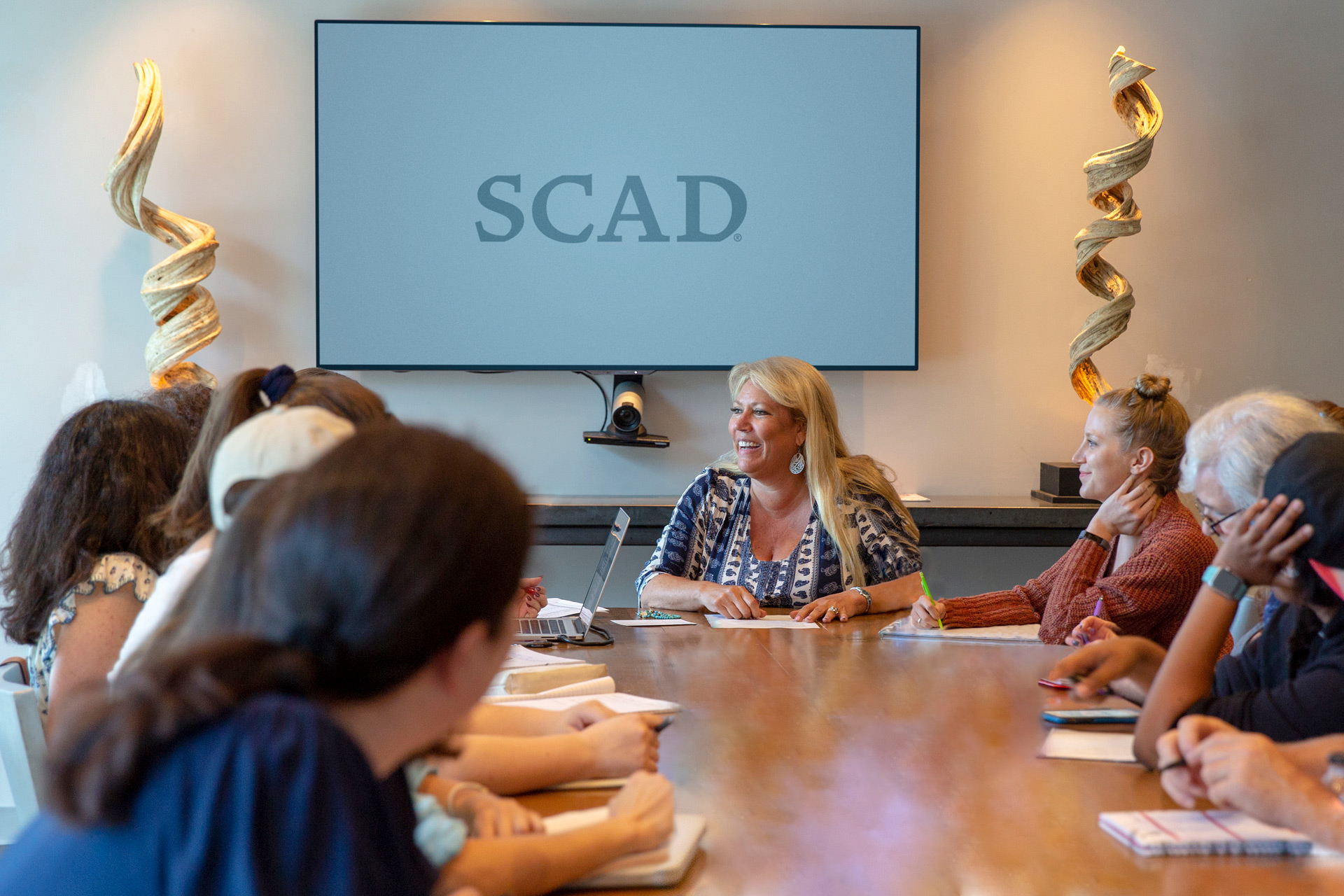
McCullah talks at head of a full conference table

Sage advice from a sequential artist

June
28
2018
By
Tags:

Sage Coffey (B.F.A., sequential art and animation, 2016) is a SCAD graduate, cartoonist, storyboard artist, wrestling enthusiast, and editor of "Sweaty Palms Anthology," a comic anthology about anxiety. As a successful sequential artist and author of a comic strip editorial about surviving as a freelancer, Sage imparts wisdom for those striking out on their own.

Cover of book with yellow background, large rain drops and blue creature

SCAD: You recently produced an excellent comic for The Lily, published by The Washington Post. How did you place your work there?

SAGE COFFEY: An editor from The Lilly contacted me after reading a recent work I did for The Nib, which is a media outlet focused on memoirs and politics. She asked me to pitch a few ideas and we went from there! Freelance, from my experience, has had a domino effect. Once I put something out for an outlet like The Nib, I usually get an email in response to it, and a client/artist relationship builds from there.

SCAD: Your piece addresses the challenges of being a freelancer. What key lessons have you learned?

SC: Have a contract and make sure that contract is clear on payment, time-frame and distribution rights. A good example is a "kill fee," where a client only has so much time before they have to pay a fee to pull the plug on whatever you've been working on. It's one way to protect yourself. Doing freelance, you end up working on a lot of different projects at once. It's a lot like running a small business only instead of fancy pastries, you're selling your time and skills.

SCAD: What advice you would give to a current or prospective SCAD sequential art (SEQA) student?

SC: SCAD is such a huge resource that exposes you to different people and career paths. "Networking" is a word you hear a lot, and the friends I've made at SCAD have served as a support system and broadened my horizons on what is possible for my career. There's a sense of camaraderie, like "we're all in this together!" regardless of major or background.

SCAD: How has SCAD uniquely prepared you to pursue your current career?

SC: It's going to be hard not to turn this into a thank you letter to the professors who essentially raised me artistically: Chris Schweizer, Jackie Lewis, Doug Dabbs. "You have to learn all the rules to break them," is something professor Shawn Crystal said that always stuck with me. We had visiting artist days where current working professionals would review our portfolios, and talk about their experiences in the industry. I still have sketchbooks filled with notes from visiting artists like Brian Stelfreeze and Eric Canete that I look at. All the SEQA professors want you to succeed and because of that, they're honest with you and push you.

SCAD: What’s next, Sage?

SC: One exciting thing is the "Sweaty Palms Anthology Vol. 2" Kickstarter launching in July. "Sweaty Palms" is a comic anthology about anxiety that SCAD alumna Liz Enright and myself started in 2015. It has blossomed into an international anthology where artists share their personal experiences living with mental illness. It's rare we talk about our mental health so having over forty contributors being vulnerable and candid about their experiences is important. The new volume’s contributors list includes SCAD SEQA students and alumni like Brian A. Prince and Ahmara Smith. I have more coming to The Nib and The Lily as well, so keep your eyes peeled!

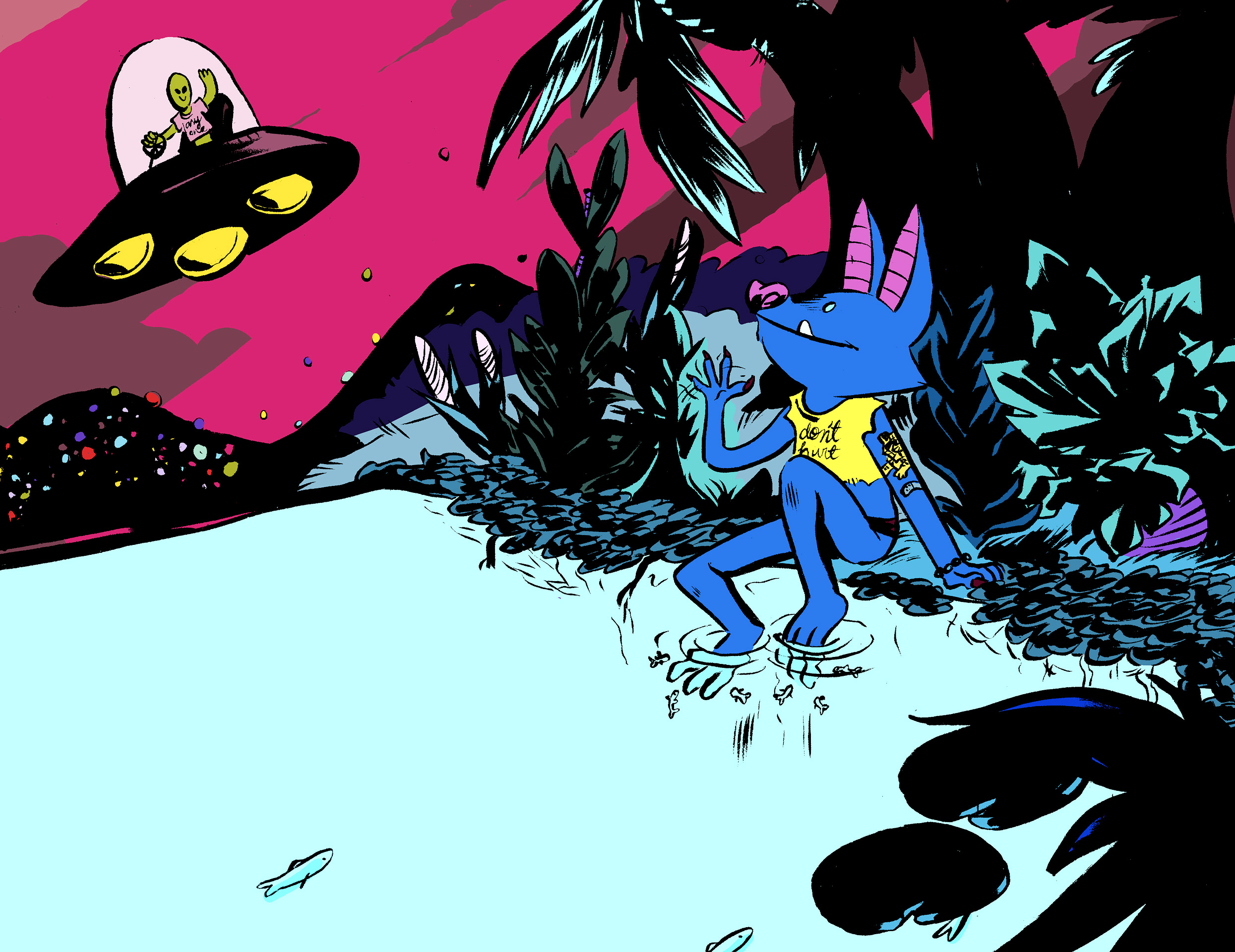
Illustration of blue creature dipping toes in body of water and waving to alien in a spaceship

View more of Sage's great work here!


On stage and sound with Stephen LeGrand

June
14
2018
By
Tags:

Professor Stephen Michael LeGrand is wearing an aloha shirt and strappy sandals when the wave hits. He's not at Tybee Island, but on stage at the Mondanaro Theater, as grizzled, goofy widower George in the SCAD school of entertainment arts production of Gregory S. Moss' play "Indian Summer." Trained as an actor, LeGrand spent decades working as a composer and sound designer, only to return to his thespian roots in the recent production directed by theater arts professor John Prosky.

As a SCAD sound design professor, LeGrand exemplifies the diverse professional experiences of SCAD faculty. Formerly the resident sound designer at American Conservatory Theater in San Francisco ("I worked over 110 productions, from Shakespeare to Sam Shepard"), he arrived at SCAD as a graduate student in 2008 when his spouse Sharon Ott was hired as a SCAD performing arts professor.

"Getting my SCAD degree was very important," LeGrand says. "Understanding the teaching styles of professors was highly instructive, as was understanding the culture of SCAD. Professor Robin Beauchamp really mentored me in how to be a professor of sound design." After earning his degree, LeGrand (M.F.A., sound design, 2009) began teaching at SCAD full-time.

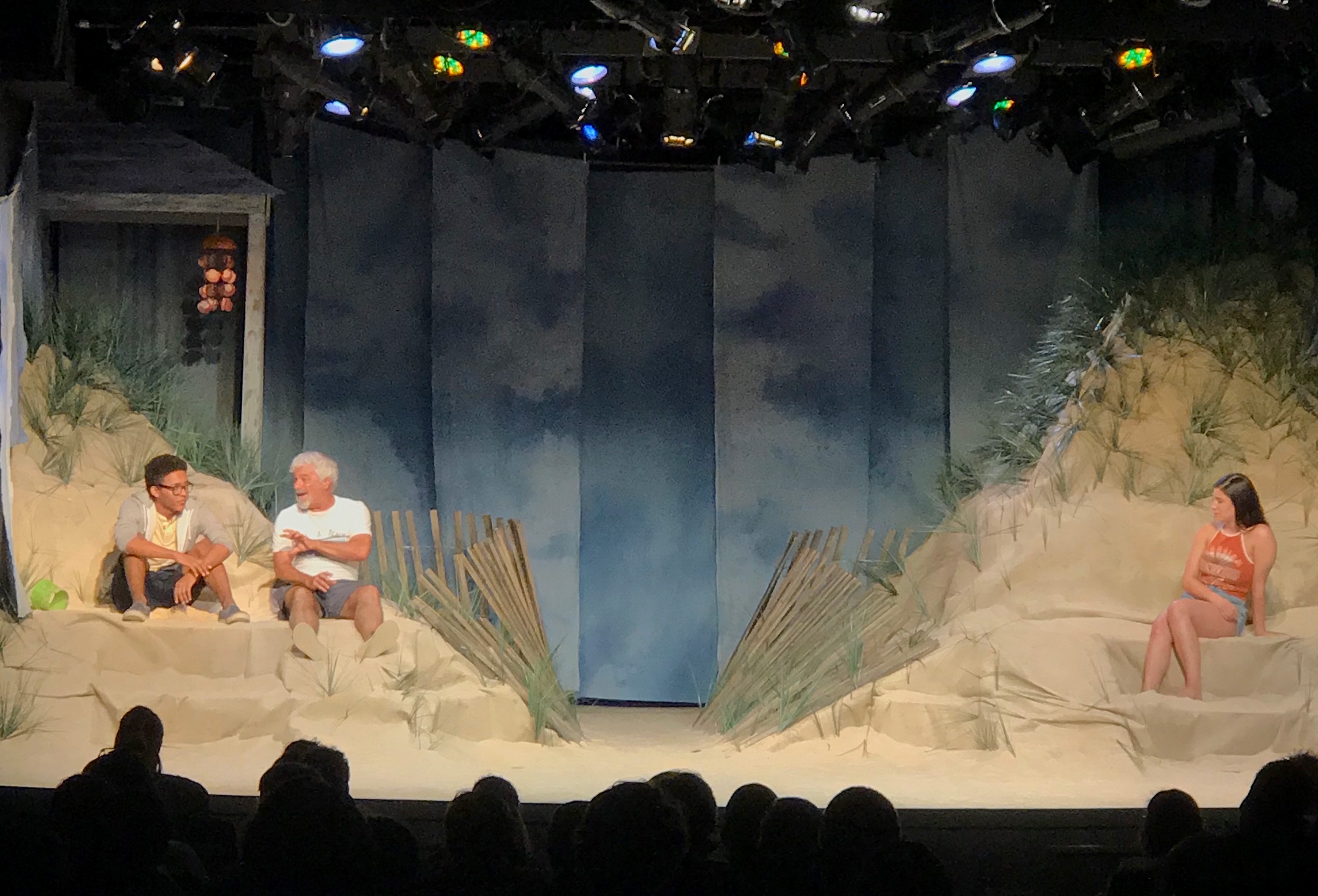
Theater-goers look on at a beach set designphoto: Savanna Macri


SCAD: Your performance in "Indian Summer" was fantastic, with a rip current of pathos at the end. How long had it been since you appeared on-stage?

Stephen Michael LeGrand: I last acted on-stage 33 years ago, in a production of Sam Shepard's "The Tooth of Crime" — I played the space monkey. With "Indian Summer," our performing arts chair Mark Tymchyshyn suggested I meet with John Prosky, who asked me to be in the play. John told me, "Try and make every moment a discovery moment. If the audience sees you discover something, they're right there with you." That simple instruction was really helpful.

What I love about the theater is the process. You're developing something together with a family of people and you push through from that first table reading all the way to tech rehearsals and previews and then…opening! Backstage, you hear the audience buzz and you feel that juice. I was fortunate to be part of a cast with incredibly talented SCAD students who are able to find something new about every moment.

SCAD: What compelled you to remain at SCAD to teach after earning your degree here?

SML: SCAD has the preeminent sound design program in the country. Most university sound design programs are tucked into production design for live theater. At SCAD, sound design is its own specific degree program. The SCAD sound design department prepares our students to excel at a lot of different jobs. They're able to say yes to as many opportunities as possible in the world of sound design.

Also, SCAD emphasizes collaboration, and sound design is a collaborative art form. One of my graduate students Ana Marín (M.F.A., sound design, 2018) installed "Two Pieces," the recent Janet Cardiff and George Bures Miller exhibition at SCAD Museum of Art. For her thesis project, Ana collaborated with jewelry and industrial design student Maria Posada, designing wearable pieces that have sound elements to them. Phenomenal work, accomplished through collaboration.

SCAD: What's a sound design class you teach based around creative problem-solving?

SML: One example is "Foley Production Techniques" (SNDS 322). There's something called a Foley recipe where different objects make different sounds. For example, if you put a sharpened lead pencil between the keys of an old computer keyboard and turn it slowly, it makes the sound of a guy hanging on at the end of a creaking rope. The first assignment I give Foley students is to pick onomatopoetic words out of a hat, then find two objects that will create that sound, and then those objects go into our Foley closet. We work hard and have a lot of fun.

LeGrand lectures in the front of a computer lab