Skip to main content Accessibility Policy

SCAD40 WKND is happening!

April
26
2019
By
Tags:

A fabulous three-day weekend, 40 years in the making. This Thurs.-Sat., April 25-28, join SCAD friends and families for SCAD Sidewalk Arts Festival, the unveiling of SCADstory, SCAD40 Block Party and much more as we celebrate SCAD40 WKND.

In recognition of the university’s 40th anniversary, Family and Alumni Weekend is part of the larger SCAD40 WKND celebration. This three-day event features activities and opportunities for students, families and four decades of alumni to return to the hive.

For a full listing of the sumptuous schedule of events, including registration and ticketing information, visit the dedicated SCAD40 WKND site.

Highlights include the SCAD40 Block Party, Friday, 6-8 p.m. at Madison Square on Bull Street, celebrating the 40th anniversary of SCAD where it all began. Join the fun with fellow alumni, faculty, staff, students and families. Visit shopSCAD for live artist demonstrations, Gryphon for live music, Art’s Café to purchase keepsake SCAD40 merchandise, SCAD food trucks for tasty treats and much more. This event is open to everyone in the SCAD community.

Friday evening, 8-10 p.m., Poetter Hall 342 Bull St., it’s the SCAD40 Celebration and the premiere of SCADstory, an immersive 360-degree experience through 40 years of SCAD history. Enjoy craft beverages, hors d’oeuvres and live music from Yacht Rock Schooner playing top hits from 1978 and more. Tickets are $78 and SCAD will match ticket sales to a scholarship fund for continuing students of the 2019–20 academic year.

On Sat. April 27, 10:00 am-4:00 pm, a very special edition of Sidewalk Arts Festival takes place in Forsyth Park. Sidewalk Arts Festival 2019 is the 38th iteration of one of the university's most beloved annual events. SCAD president and founder Paula Wallace dedicated a chapter "Sidewalks" in her memoir "The Bee and the Acorn" (Assouline Publishing 2016) to the role Sidewalk Arts has played in the evolution of SCAD.

"None of us could have known that the SCAD Sidewalk Arts Festival would go on to become the single largest annual outdoor arts event in Savannah, drawing fifty thousand guests. I'd conceived of it as a one-time event, an experiment, an early sketch to see if anything was there, as fleeting as chalk art, as unlikely as our new college."

Long since relocated from its original location around Madison Square to Forsyth Park, Sidewalk Arts has seen its number of participants increase accordingly. This year, upwards of 1000 SCAD students and alumni as well as high school guest artists will create colorful chalk masterpieces and compete for coveted prizes.

The artists represent a wide range of the carefully curated degree programs offered by SCAD. Chalk distribution happens at 10 a.m. and drawing commences an hour later. Prizewinners will be announced and prizes awarded at 4 p.m. For more information regarding day-of-the-event standby squares, and a dedicated map of the square, visit Sidewalk Arts 2019 registration page.

SCAD40 WKND logo

See you soon at SCAD40 WKND!


Levi's: riveting history

April
16
2019
By
Tags:

"This year is the 50th anniversary of Woodstock. Guess what Jimi Hendrix was wearing when he was playing 'The Star-Spangled Banner'? Yes, bell-bottom jeans!"

The person asking the question knows her denim. Fitted in a clean tee with iconic red logo, white jean jacket and dark denim jeans, Tracey Panek, Levi Strauss & Co. official brand historian, appeared at the SCAD MOA theater during SCADstyle 2019.

Across locations in Savannah, Atlanta and Hong Kong, SCADstyle 2019's esteemed speakers included Ariel Foxman, Mary Katrantzou, Steve Madden, Phillip Picardi, and Sally Singer. Panek's presentation, moderated by Mobolaji Dawodu, fashion director, GQStyle, focused on brand history and the customization of cool.

"I refer to Levi's as the 166-year-old startup," Panek said. "It's San Francisco-born, a stone's throw from Silicon Valley. A start-up, just with a longer history than the Lyfts of the world."

At Levi's, Panek manages the company's archive, facilitating work requiring historical materials. Embroidered, sequined, patched, painted—Panek explained how the company embraces customization, to the point that tailoring stations now feature inside Levi's stores.

The start-up's story: Bavarian immigrant Levi Strauss arrived in San Francisco in 1853 to sell working men's pants during the gold rush. "They weren't called blue jeans, they were called waist overalls. You'd pull them up over your long underwear and get to work."

In 1872, Levi received a letter from a tailor in Reno named Jacob Davis with an unusual idea: add tiny copper rivets in the pockets. "When you do that," Panek said, "they won't tear and will last longer. The patent for the rivet was granted on May 20, 1873, the day we refer to at the company as the birth of blue jeans."

Early customizations were practical: a hand-sewn tool pocket or a patch where a cowboy's reins had worn a thigh thin. Panek showed an image of a pair of wizened 501s from 1917 worn by a hard rock miner from Wickenburg, Arizona. Of a photo of WWII-era jean jacket, she observed: "That plaid lining was added for extra weight and warmth. What's unique about this one—and a favorite of our designers—is the heart stitched onto the back. That's not about practicality, that's about style."

History continued as customization exploded. "In 1967, a young woman named Melody Sabatasso came to San Francisco. When she was invited to a wedding all she had to wear were jeans, so she cut them up into a dress. She got such rave reviews on her outfit that Lauren Bacall commissioned her to do a piece, which kickstarted her career. She still creates pieces with Levi's today."

Panek stitched together surf culture, Hell's Angels' knife-cut vests, punk rock, bum flaps, Beavis and Butthead, military patches, Elton John, and a pair of bedazzled chaps once worn by N'Sync's Lance Bass. Then she took questions.

Linden Grace Colby (B.F.A., fashion) asked: "How do these historical pieces inspire future designs? How do you navigate the balance between history and innovative design?"

"The main users of the collections are designers," Panek said. "They take anything from a button design to a pocket shape and use it for inspiration for a new piece. We have a line called Levi's Vintage Clothing that reproduces pieces from the archives so you can buy an 1890 pair of Levi's, or WWII-era jeans.

"We introduced an innovation a year ago for finishing jeans using lasers, the FLX process. Google came to us and we created a jacket with copper threads added to the sleeve and cuff that connect to your Bluetooth and mobile device. We mix heritage with innovation pretty well at Levi Strauss."
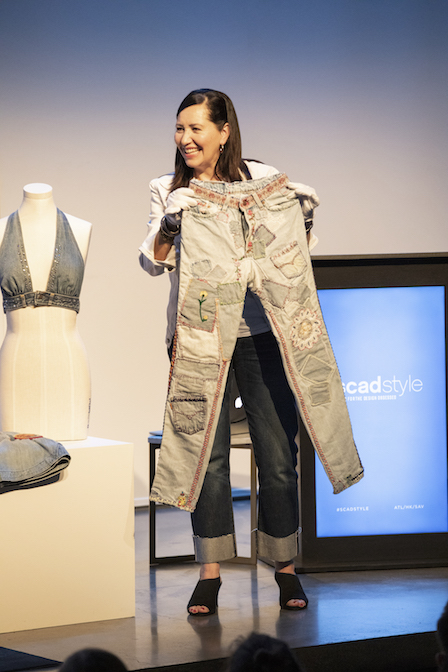
Woman holding a pair of Levi's jeans

During her SCADstyle visit, Panek also spent time at Pepe Hall visiting with two SCAD fibers classes, Senior Studio I (FIBR 440) taught by professor Jessica Smith, and Business Practices for Fibers (FIBR 337) taught by professor Katie Buchanan.

"Tracey was generous with students, insightful into the way research and history play into contemporary design, specifically Levis Strauss," professor Smith said. "She spent an hour speaking with the students about her career, the role of a historian in a brand, and how the archives support designers today. It was a fun discussion with high student engagement."
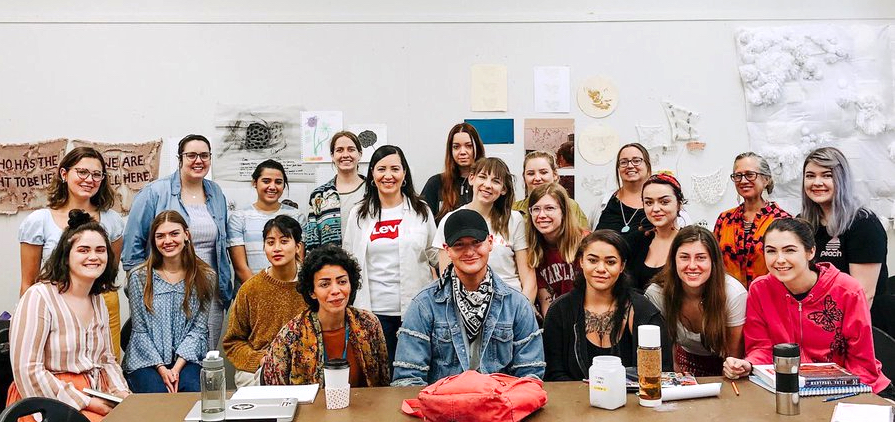
Tracey Panek, Mobolaji Dawodu, and attendees of SCADstyle 2019.

Thanks to Tracey Panek, Mobolaji Dawodu, and all attendees of SCADstyle 2019.

 

Dr. Nelly Ben Hayoun's brainy bombardment

April
11
2019
By
Tags:

After three hundred-plus scintillating slides, amidst relentless positive verbosity, Dr. Nelly Ben Hayoun's hour-long lecture at SCAD MOA concluded with a neon projection: BE CURIOUS AND AMBITIOUS AND NEVER EVER GIVE UP. The students' ovation was a roar of joy.

The event, part of SCADstyle 2019, was Dr. Ben Hayoun's first visit to SCAD Savannah. A designer of immersive experiences for world-class clients including NASA, BBC, Mattel and WeTransfer, Dr. Ben Hayoun, a "Top 50 Creative Leader Driving Change in the World" (Creative Review) is the director of the forthcoming feature film "I Am (not) a Monster."

"The Williy Wonka of Design" was introduced by SCAD student Jenn Lee (B.F.A., UX design). "As a UX design major," Lee said, "people ask me how you design an experience. Dr. Ben Hayoun is an incredible example of how with enough creativity, discipline and passion, any experience, no matter how immersive and ambitious, is possible."

Ben Hayoun detailed the rigors of large-scale projects and running a growing studio, emphasizing the importance of specialization while expanding your base and range of knowledge.

"Change takes time. You want to get a design job that allows you to work long-term. Nurture your working relationships. Create trust."

A slide depicting Ben Hayoun in a hardhat at the Large Hadron Collider whizzed by. The energy in the room was commensurate with the Big Bang. "Ninety-five percent of the universe is made of dark energy," Dr. Ben Hayoun observed.

Amidst the seriousness of Ben Hayoun's projects, playfulness prevails. She described building an active volcano inside her London flat, and baking and serving a gooey cake to NASA scientists while pitching them on her International Space Orchestra. "At that point they agreed."

Among the attendees in the auditorium were students from professor Michael Chaney's Experimental Film and Installation class (FILM 365). The morning following her SCADstyle talk, Ben Hayoun visited their classroom at Savannah Film Studios.

"This class is an elective," explained Chaney. "These students take creative risks and want to learn more about creative risk-taking. They're introduced to different theories and philosophies including John Berger's 'Ways of Seeing' and Tom Gunning's ‘Cinema of Attractions'. We put it into practice, shooting films on our phones and screening them in different contexts. We call it contemplation in action."

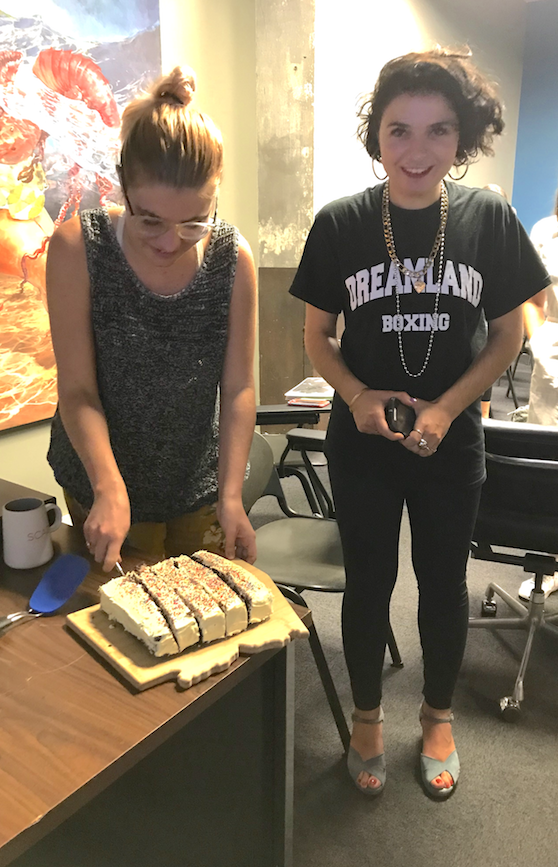
Dressed in a Dreamland Boxing shirt and the gold chains of a champion, Dr. Ben Hayoun beamed. "Sounds like a good time!" She asked the class: "What made you want to study film?"

Cassie Lee (B.F.A., film and television, 2019): "I come from a small town and documentaries were the way I learned about different perspectives in the world I'd never been exposed to. I'm interested in history and sociology. Films can manipulate and inform people's perspectives. Studying film helps me grow as a person."

The conversation was free-flowing, with students suggesting ideas including projecting experimental films around The Hive to attract passersby. Dr. Ben Hayoun gave practical advice. 

"Funding your film involves work. To write a grant application takes time. People who are awarded grants are methodical people. Look at the objectives and goals of the grants, what the committee are trying to achieve. Take their stated objective and write how you are going to accomplish exactly that. Read the guidelines and follow them. You have to do it."

Student Lizzy Bamford (B.F.A., film and television) edged forward. Inspired by Dr. Ben Hayoun's space orchestra anecdote, she presented the artist with a homemade chocolate sheet cake with buttercream frosting. Twenty-four hours of instructive inspiration concluded on a truly sweet note.

artist and student celebrating with cake

Learn more about Nelly Ben Hayoun Studios.


SCADstyle 2019


Illustrating the relevance of classical architecture

April
8
2019
By
Tags:

Sunlight streamed into the chapel of the Clarence Thomas Center for Historic Preservation on Friday afternoon as SCAD students from diverse degree programs and guests from the community gathered for a workshop spearheaded by the Institute of Classical Architecture & Art (ICAA). With materials placed neatly before them, attendees took their seats as Michael Mesko, ICAA fellow, introduced the first session.

"The purpose of this workshop," Mesko said, "is to demystify the language of classical architecture."

Over the course of the day, ICAA instructors expounded upon the adaptability of the classical language of architecture, its regional variations, and its relevance as a living and continuous tradition. The instructors presented erudite architectural concepts in an accessible manner. (At one point, Michael Mesko playfully described the capital of a Corinthian column as a "leafy salad.") Instructors referenced familiar examples of the classical orders in the city of Savannah and SCAD buildings, highlighting Kiah Hall as Doric, and the Scottish Rite building—which now houses Gryphon Tea Room and Art's café—as an example of the Ionic.

In a session on regional iterations of classical forms, Clay Rokicki, chair of the education committee of the ICAA's southeast chapter, described architecture as a form of narrative, possessing a particular thesis, storyline, and stylistic convention: "Just as you learn literary style and decorum as you learn to read, you learn to read the city by studying the language of classical architecture."  

Students put these concepts into practice as the workshop moved to Independent Presbyterian Church, where the Doric columns of the church's portico were used as a template for a drawing exercise. They scrutinized the granite columns, measuring tapes and sketchbooks in hand.

"This workshop has broadened my understanding of architecture itself," remarked James Christian (B.F.A., photography).

architecture student sketching outside

As the workshop drew to a close, students lined their sketchbooks along the steps of the church, a visual testament to the accomplishments of the day. Students and instructors commented on the unique elements of each sketch and the progress made throughout the workshop.

Aline Feijo (M.F.A., preservation design), emphasized the importance of studying the classical language of architecture: "The only way to create great architecture is to understand great architecture, architecture that has lasted for millennia."  

Earlier in the day, Stephen Chrisman, a principal at Ferguson & Shamamian Architects in New York City, had referenced 16th century drawings of the Pantheon by two anonymous French architects. The drawings had a particular poignancy for Dr. Geoffrey S. Taylor, dean of the SCAD School of Building Arts.

"Those architects used the Pantheon as a template for understanding the classical language of architecture," Dean Taylor remarked. "It's inspiring to see SCAD students going through the same process, five hundred years later."


Stay current with SCAD events here.


SCADFILM presents SCAD GamingFest 2019

April
2
2019
By
Tags:

This Thursday through Saturday, April 4-6, SCAD Atlanta hosts SCADFILM's annual SCAD GamingFest. The three-day global gathering brings together working professionals, industry luminaries and the next generation of talent from the innovative world of gaming.

Featuring panel discussions, presentations, and exclusive sneak peeks and live demos, SCAD GamingFest will be held at the state-of-the-art SCADshow facility in the heart of midtown Atlanta. Participating industry luminaries will be celebrated at an opening reception on Thursday.

“Since SCAD pioneered its degree program in game design and development a generation ago, we've launched careers for programmers, visual effects artists, writers, audio designers, and even eSports athletes," said SCAD president and founder Paula Wallace. “SCAD GamingFest celebrates and extends the conversation with panels, demonstrations, and screenings, culminating in a massive Super Smash Bros. Ultimate showdown. Level up to this year's GamingFest!"

The festival focuses on the innovative game development incorporating sound design and motion capture. The programming lineup will include “Gaming Off the Grid"; “The Wild World of Writing for Games"; “Giving Games Gusto: Audio Design for Interactive Media"; “Producing eSports with Skillshot Media" and “Motion Capture Performance for Interactive Design."

Industry influencers scheduled to appear at SCAD GamingFest 2019 include Kat DeShields (M.F.A., writing), senior esports community manager, Skillshot Media; Alex Lieu, chief creative officer, 42Entertainment; Micah Wright, chair, WGA Videogame Writers Caucus; Harrison Pink (B.F.A., interactive design and game development, 2008), senior game designer, Blizzard Entertainment, and Eric Lorenz (B.F.A., sound design, 2014), sound designer, Wabi Sabi Sound.

Approximately 1500 guests are anticipated to attend, including SCAD Savannah and Atlanta students of animation, motion media design, visual effects, and sound design and interactive design and game development.

The festival will also showcase SCAD eSports athletes under the guidance of eSports director Ian Escalante, competing in “Super Smash Bros Ultimate." SCAD eSports athletes are enrolled in SCAD's top-ranked degree programs. Over 125 game development companies are based in Georgia, further emphasizing the connection between competitive gaming and creative careers.

SCAD GamingFest logo

View the complete SCAD GamingFest 2019 line-up here.


Alice Kandell: beyond Sikkim

April
1
2019
By
Tags:

"Objects that are considered art historical don't live in cultural vacuums," announced Dr. Arthur DiFuria, SCAD chair of art history, from the auditorium stage of the SCAD Museum of Art. "They don't sit on shelves or exist inside vitrines or hang on walls all their lives. They are woven into cultural fabrics, connected to the lives of the people who made them, use them, study them and are inspired by them. Perhaps tomorrow you will go into the classroom with a greater sense of this connectedness."

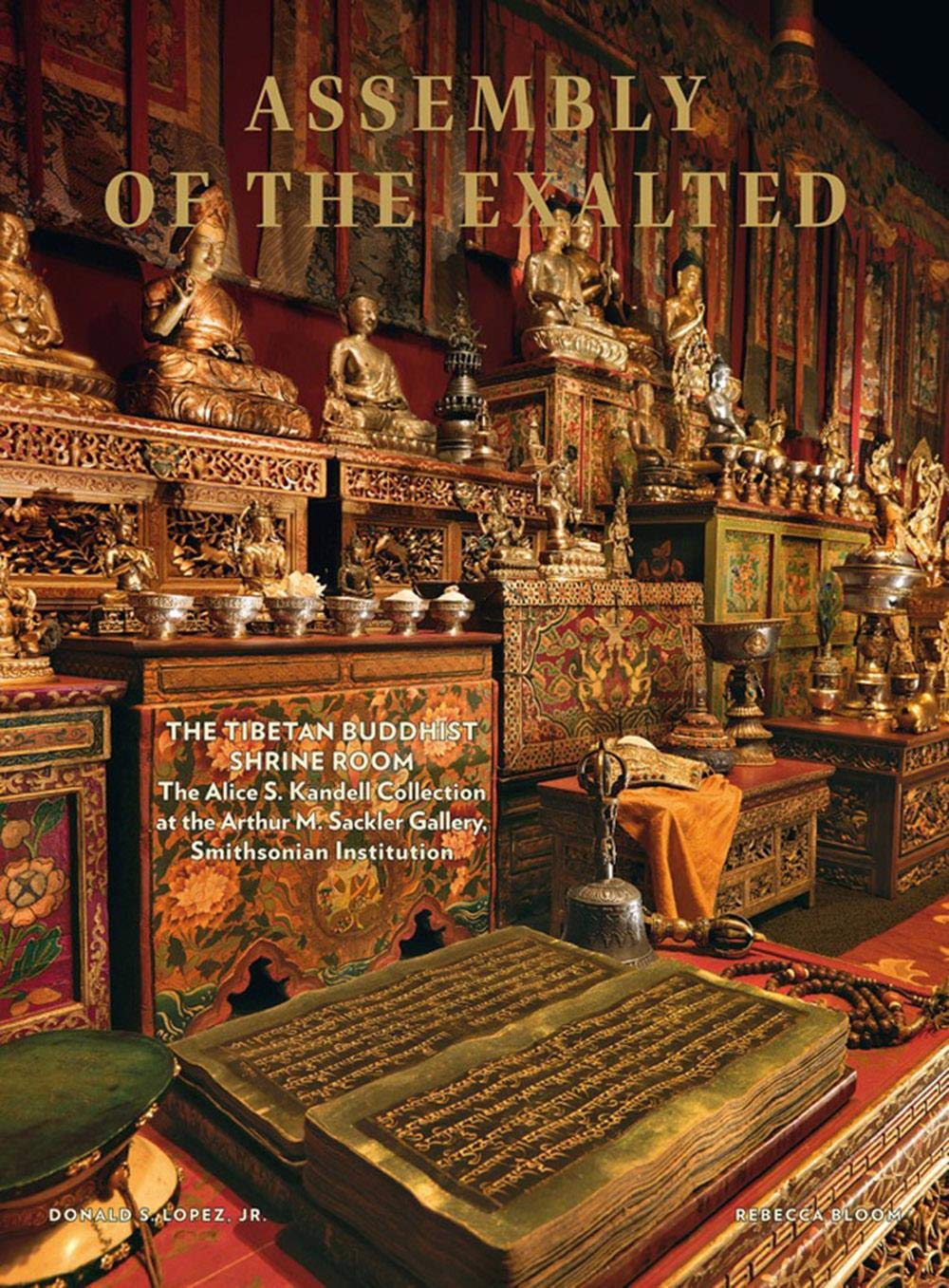
Dr. DiFuria's remarks were a preamble to a presentation by author and collector Alice Kandell, celebrating "Assembly of the Exalted: The Tibetan Shrine Room from the Alice S. Kandell Collection" (Officina Libraria, 2018), a new book about her half-century commitment to Tibetan art. Dr. Kandell's talk, ranging from sense memories of yak butter tea to the efficacy of tangling with the Smithsonian, was a fantastic example of the level of guest speakers and artists who visit SCAD.

Dr. Kandell's reminiscence began in 1965 when, as a graduate student in psychology, she traveled to attend the coronation of the new king and queen (the latter a friend from college) of Sikkim, a tiny nation in the Himalayas bordering India and Tibet.

"When I got to Sikkim," Kandell said, "I was totally overwhelmed by the beauty of the country: the mountains, the air, the people, and most of all the art. In a Buddhist country, the word ‘art' is a complete misnomer. It's not art, it's religious iconography, objects for use in the home and temples."

Sikkim man with buffalo

Photo: Alice Kandell


Since her initial trip to Sikkim, Kandell returned to the region, photographing widely at the king's behest. She also began a collection of religious objects, which now comprise the most comprehensive collection of Tibetan sacred art in the United States.

"Great art does not belong to any one person," Kandell said. "We're just guardians. In 2011, I decided it was time for my collection to go into the public domain. The Smithsonian finally agreed to present the pieces together as a shrine, as it would've been in Tibet."

As Kandell's slide show peaked with depictions of otherworldly richness, she pivoted. "You don't have to travel to coronations in foreign nations, you know. If you're a photographer, and you like to tell stories, you can go wherever you want. You can travel to the kitchen. I did."

After returning to the United States, Kandell explained, she married and became something of a homemaker, although she didn't stop creating: two books, featuring photographs of her then-toddler-aged sons, were the result: "Max, the Music-Maker" (Lothrop, Lee & Shepard, 1980) and "Ben's ABC Day" (William Morrow and Company, 1982). This seeming tangent was part of Kandell's larger point: inspiration is where you find it—just keep your camera with you.

The evening concluded with additional remarks on Kandell's work by Kerry Lucinda Brown, SCAD professor of Asian art history, and SCAD alumni mentor Paula Fogarty (M.A., art history, 2013). Following a Q&A, the magnetic Kandell remained in the museum lobby, surrounded by SCAD students whose creative horizons she had just widened, eager for more.

cover of assembly of the exalted

Learn more about the Kandell collection, and the free Sacred Spaces app, here.

Learn more about SCAD art history and stay up-to-date with SCAD events.


Call for entries: 'Anthropocene'

March
27
2019
By
Tags:

"Anthropocene" is an art exhibition addressing how humans are profoundly affecting Planet Earth. The term "Anthropocene" describes the epoch in geological history beginning with the Industrial Revolution. It is the name applied by global change activists to the ongoing period of formidable alterations made by human beings to our planet's ecosystems and geology.

“Anthropocene” is a call to action. The art work in "Anthropocene" aims to reflect artists' observations and responses to our climate crisis. Curated by Kathleen Varadi (B.F.A., painting, 2018; M.F.A., painting), “Anthropocene" opens May 10, 2019, Alexander Hall, SCAD Savannah. SCAD students from all academic degree programs, as well as SCAD alumni, faculty and staff are invited to submit work for consideration.

Climate change and global warming have far reaching-consequences for the world. The issue is especially pertinent for the current generation of students. This exhibit is informed by Greta Thunberg and her speech to the United Nations calling for immediate change to the current situation. If a 16-year-old student can speak out, why not artists?

Artists are keen and skilled observers of the world, and throughout history have called attention to important crises and events of the human race. Artists have been called "canaries in the coal mine" because they sound the warning of impending dangers in society. Artists have always been the activists and the megaphones for change in civilizations.

The global environmental crisis can feel overwhelming to the individual. Change has to be accomplished collectively. This spirit of collaboration is reflected in this exhibition's inclusion of artists from many diverse degree programs throughout Savannah College of Art and Design. All levels of experience from students to alumni to professors and staff are represented. 

"Anthropocene" will address local as well as global environmental issues, including recovery and preservation of the Savannah River and Coastal Georgia. This exhibition strives to present solutions and demand change now. Ideas and artworks are presented in many formats and styles. Events surrounding "Anthropocene” include guest speakers, artist talks, artist tours, readings, screenings and workshops. All events are free and open to the public.

The spirit of the "Anthropocene" exhibition of 2019 can be summed up in the words of Nobel Peace Prize nominee Greta Thunberg, speaking to the United Nations Climate Change Conference in Katowice, Poland: "You are never too small to make a difference."

To submit work for "Anthropocene" visit SCAD Fine Arts Submittable.

Submissions accepted through April 18. Notification of acceptance date April 22.

"Anthropocene" opening reception: Friday, May 10, 2019, 5-9 p.m., Alexander Hall.

Anthropocene logo

www.anthropocene2019.com


SCAD Hong Kong students visit Sri Lanka

March
11
2019
By
Tags:

This quarter, sixteen students from SCAD Hong Kong fashion marketing and management, luxury and fashion management, and interior design programs traveled to Sri Lanka under the supervision of professors Robert Meeder and Laura Cavanna. The four-day trip was an extended learning opportunity for Supply Chain Management in the Global Marketplace (LXFM 720) and Global Sourcing and Import Buying for Fashion (FASM 420) classes, focusing on sustainable practices within the garment supply chain.

Our first day began with a bus for a tour of Colombo, Sri Lanka’s capital. We visited the showroom of Selyn, a Fair Trade Certified handloom company, where we were able to observe and purchase traditional Sri Lankan woven textiles and goods. At a garden café called Barefoot, we had lunch on the open veranda and spoke with local stylist Jude Gayantha Perera and designer Kasun Gunawardana, who shared their experiences working within the manufacturing hub. We visited the Urban Island retail space, which works in collaboration with the Academy of Design (AOD) school of fashion design to showcase local student designers. We then visited AOD itself to see student work. We had a short break at the Galle Face Hotel before our meeting with Robert Hilton, Deputy Chief of Mission, U.S. Embassy, who spoke on trade relations. Nike apparel innovation director Michael Steen also joined us, speaking about textile development in Sri Lanka and creating products for the market.

Our second day in Sri Lanka we visited the Selyn factory. Selyn uses traditional handlooms to ensure the sustainability of local crafts. Cotton threads are imported from India are dyed, and when the threads are finished, they are sent to weaving houses where workers weave the fabrics used to make the products. The Selyn neighborhood factories were set up to empower women and ensure that these skilled artisans can work as sole proprietors, providing for their families in a safe environment, managing their own time and workload. The women are paid per piece of fabric that they weave. When the fabrics reach a significant amount, they are sent to the production hub, where orders are put in for a wide range of products, from toys to clothing.

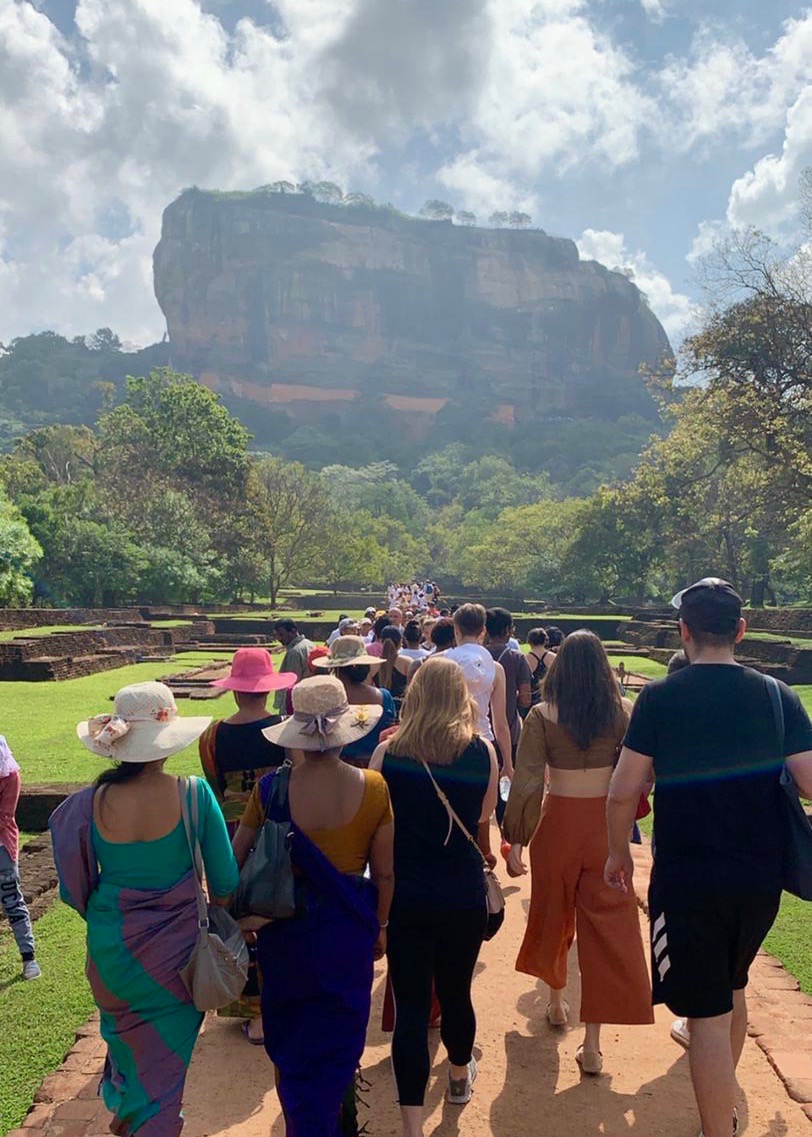
On our third day, we traveled to Sigiriya Rock, a fortress overlooking the Central Province. This ancient wonder was selected in the fifth century by King Kashyapa as his new capital. Inside the cave area, beautiful frescoes adorn the walls. Halfway up, a large lion is carved into the side of the rock, which serves a gateway to the top. It was incredible to see the preservation efforts on an ancient example of urban planning and culture. After descending, we bussed to the Kandalama Hotel in Dambulla, designed by Sri Lankan architect Geoffrey Bawa. Built on natural rock, the hotel incorporates natural elements into its living spaces. Built to minimize environmental impact, the hotel provided us with insights on different aspects of sustainable design.

We started our final day by visiting the Mihila factory of the apparel manufacturer Hirdaramani. We were given a full tour of the carbon neutral factory, from the raw materials to the garments being produced. The scarves the workers wore on their heads were color-coded, so people would be more considerate when giving work to, for example, pregnant women. We were given a presentation on the values and goals of the factory, such as employee satisfaction and sustainability development goals. Afterwards, we made our way to Cinnamon Lakeside Colombo hotel, where Nikhil Hirdaramani, director of the Hirdaramani Group, spoke to us about sustainability and ethics.

The four days we spent in Sri Lanka were eye-opening and inspiring. The trip changed the way we view the fashion industry, and provided us with first-hand knowledge and experiences. Between speaking to industry professionals, visiting cultural landmarks and exploring sustainable factories, we left feeling enriched. We are thankful to SCAD Hong Kong for providing us with an incredible experience.

SCAD Hong Kong students visiting Sri Lanka

Learn more about SCAD Hong Kong.


Special thanks for writing this piece to Guin Joyce Ballard (B.F.A., fashion marketing and management), Tori Penaherrera (B.F.A., fashion marketing and management), Soemaya Anand (B.F.A., fashion marketing and management) and Shreya Lunawat (B.F.A., fashion marketing and management).


Inside 'The Pages of Destiny'

March
7
2019
By
Tags:

At a special event Wednesday evening at Trustees Theater, Emily Dillard (B.F.A., advertising) and Nico Rinciari (B.F.A., film and television) stood together before the purple proscenium, the Savannah Arts Academy orchestra seated to their right.

Dillard, producer of "The Pages of Destiny" – a new short film written and directed by Rinciari – addressed the audience: "It's important to acknowledge how many families we have here tonight. It starts with the love and trust of your family for you to go and do something great. And then that new family you find, in that new place, the family of creators and collaborators who become part of a greater family. It means the world to all be here together tonight."

behind the scenes of The Pages of Destiny film

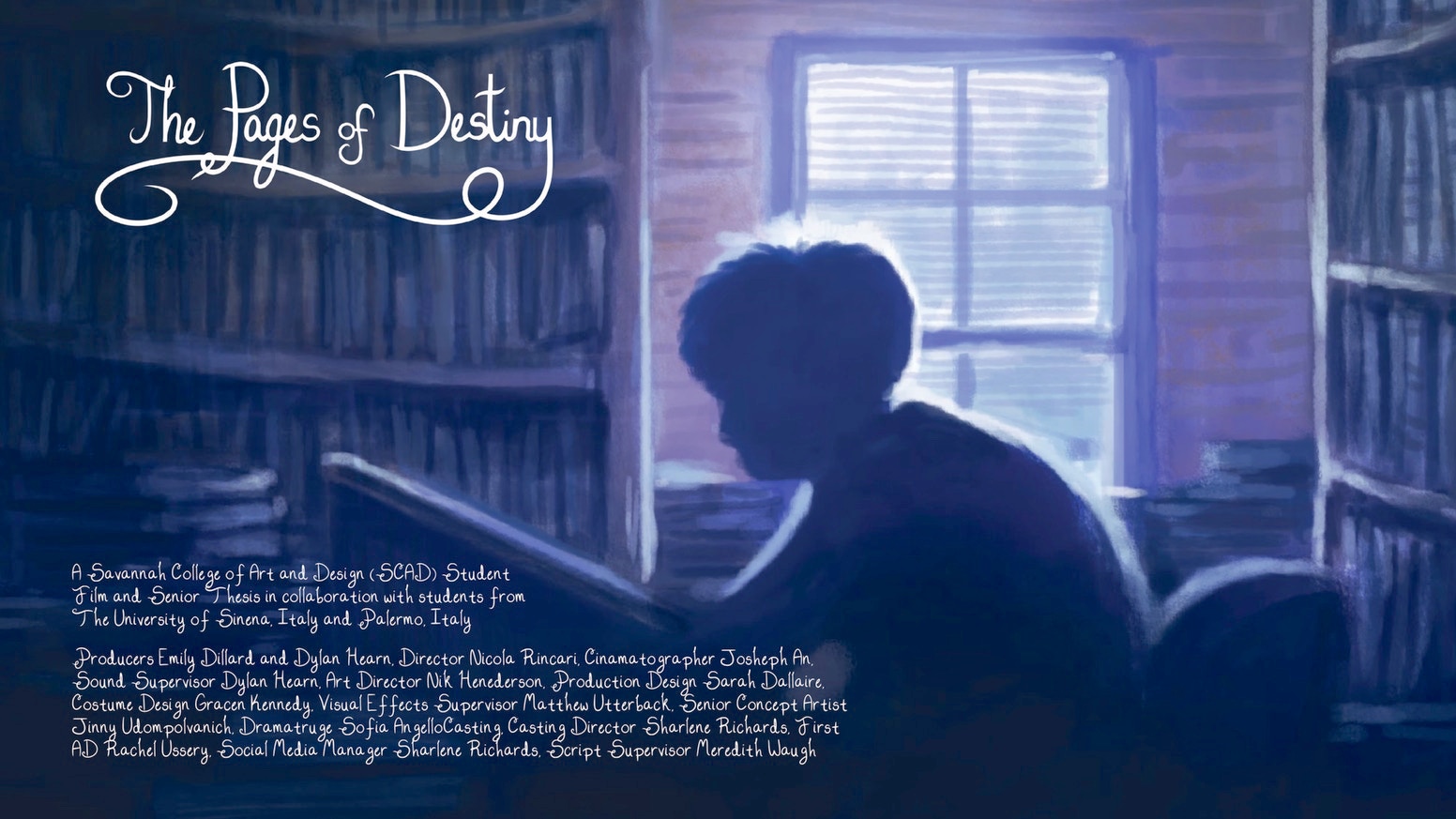
"The Pages of Destiny" is a short film about a boy's relationship with an extraordinary bookshop, created in collaboration by students from SCAD, the University of Siena, and Savannah Arts Academy. To emphasize the expansive unison effort, members of the production team and SCAD professors Mitch Gettleman (sound design) and Joe Pasquale (visual effects) delivered brief remarks from the stage. Screened clips from the work-in-progress were accompanied by excerpts from the film's score performed live by the high schoolers from Savannah Arts Academy. 

"We are honored to be able to work with the composer of this music," said Savannah Arts Academy music teacher and orchestra leader Emily Calhoun. "A lot of the music we perform is by composers who are long gone. To be able to talk with the composer, and have the composer sing the phrase as he imagined it when he wrote the music is phenomenal."

Visual effects supervisor Matthew Utterback (B.F.A., visual effects) spoke on the film's computer-generated aspects, including seasons changing as seen through a window, and a magical book jumping off a shelf: "Visual effects make the bookshop come alive."

Additional insight came from cinematographer Joseph An (B.F.A., film and television): "The best part of making a movie is doing it with people who want to make a movie. Storytelling is a language those of us here have learned to love and live for. I've been able to use our jib, dolly, Steadicam and lights. There are professional productions out there struggling to get access to the kind of gear we have here at SCAD."

Judging by the tantalizing screened scene, "The Pages of Destiny" has the enchanting aura of films like "Cinema Paradiso" and "Hugo" with a heart and soul all its own. The film demonstrates the power of books to bridge innocence and knowledge, its bookstore epitomizing a magical sanctuary. The astonishing score is done justice by the Savannah Arts Academy orchestra (who recently performed at the Kennedy Center). Flutes add delicacy to melody; a harp brings counterpoint to pizzicato violins; a vibraphone demonstrates pages turning in a dusty, glowing tome. "All the boy wants to do is find this golden book," producer Dillard said. "In the end, tonight, we'll let the music tell you if he finds it."

The orchestra performed the final sound cue with a flourish, as the maestro stepped forward. Rinciari's remarks were limited to brief, heartfelt thanks to the collaborators whose work had done the talking for him.

Afterwards, next door, Leopold's Ice Cream was serving a special Pages of Destiny Peanut Butter Sundae. A sweet evening to the last.

cover image for The Pages of Destiny film

Learn more about "The Pages of Destiny" at the film's official website and Instagram.


Lawrence Weiner's deFINE time

March
1
2019
By
Tags:

"Lawrence Weiner is an inventor, an artist, and one of the earliest and most important figures in the conceptual art revolution almost 60 years ago," SCAD president and founder Paula Wallace declared from the stage of the Lucas Theater, extolling the deFINE ART 2019 honoree. "His decision to undertake a creative career happened in a time of cultural and artistic revolution. There were no universities like SCAD back then helping artists launch meaningful careers. But Lawrence Weiner believed. He created a name and a space for himself and transformed American art."

The keynote event of deFINE ART 2019 began with the presentation of the SCAD40 prize to alumna Le'Andra LeSeur (B.F.A., photography, 2014) in recognition of her remarkable artistic achievements. Dakin Hart, senior curator, Noguchi Museum, then settled in for a playful verbal spar with Wiener. "Talking to Lawrence about art is like talking to Galileo about the nature of existence," Hart told the crowd.

Weiner's conversational statements at times resembled the angled aperçus of his art. Here are ten memorable remarks he made during deFINE ART.

Lawrence Weiner:

"Art is a signpost for people to find their own place in the sun. Art is to be used. When you look at a painting, when you look at a sculpture, when you look at a book of art, you use it understand traversing society."

"If you're impressed with something, there's nothing wrong with trying to make a whole set of work like it. But that's not the function of art. If you know what it's going to be before you start, why make it? If it fits into the commercial structure of the time, why make it? Somebody else is obviously doing it well enough."

"Art is one of those things that once you understand it is about the relationship between human beings and objects, and it's about staking out a philosophical position, you're fine. You're not wasting your time."

"Honesty is not modesty."

"Never put out anything that you're not sure will not hurt somebody. Because making art is the most aggressive thing you can do in life. You can destroy people's dreams."

"You don't have to believe in alchemy or magic to believe in something special happening when you mix one material with another."

"The purpose of art is not to make something that fits into the structure, it's to make the structure adapt to the art."

"If people can understand a Mondrian, it's difficult for them to be a racist. If they understand one pixel and another pixel together, it's very hard to justify one being above the other."

"It's a great privilege to place something in the society and see how it works. Art is one of those things where if you don't take the chance when you make it, what a waste of a privilege."

"Art is about presenting something that you're sure of, that nobody else even understands."

deFINE ART logo

Thank you honoree Lawrence Weiner, and to all visiting artists and attendees of deFINE ART 2019.