Skip to main content Accessibility Policy

Curation and divination with Billie Stultz

May
5
2017
By
Tags:

Billie Stultz (B.F.A., art history, 2016) is executive director and head curator of the Savannah African Art Museum (SAAM), a new, non-profit institution focusing on the art and culture of West and Central Africa. Built around the extraordinary personal collection of Donald Kole, the museum provides unique educational experiences for SCAD students and the entire Savannah community.

SCAD: How did your role as museum curator begin?

BMS: Last year, Dr. Geoffrey Taylor, SCAD chair of art history, asked if anyone was interested in exploring the collection of Mr. Donald Kole, who has been collecting African art for over three decades. At SCAD, I was studying African art history intensely, and working as a docent at SCAD Museum of Art. After I graduated, working with the Kole collection wound up being a perfect fit.

My SCAD art history degree prepared me for my role, along with my museum studies minor, which includes museum education, museum curation and museum administration. At SCAD, Dr. Edwin Johnson taught an African Art class that started me on this path.

My base of academic research involves a lot of verifying information with other institutions. With African art, the academic field is comparatively sparse. But that also offers a good opportunity for study.

SCAD: What will people experience at the Savannah African Art Museum?

BMS: The museum will be a source of education and information for everybody. The concept for the museum is a reverse timeline: You enter the museum during the 21st century and are brought back to the slave trade, then even further to colonial and pre-colonial Africa. All the objects in the collection are ceremonial and spiritual. Traditionally speaking, "art for art's sake" is not a thing in Africa. Everything is made to serve a certain purpose within the community.

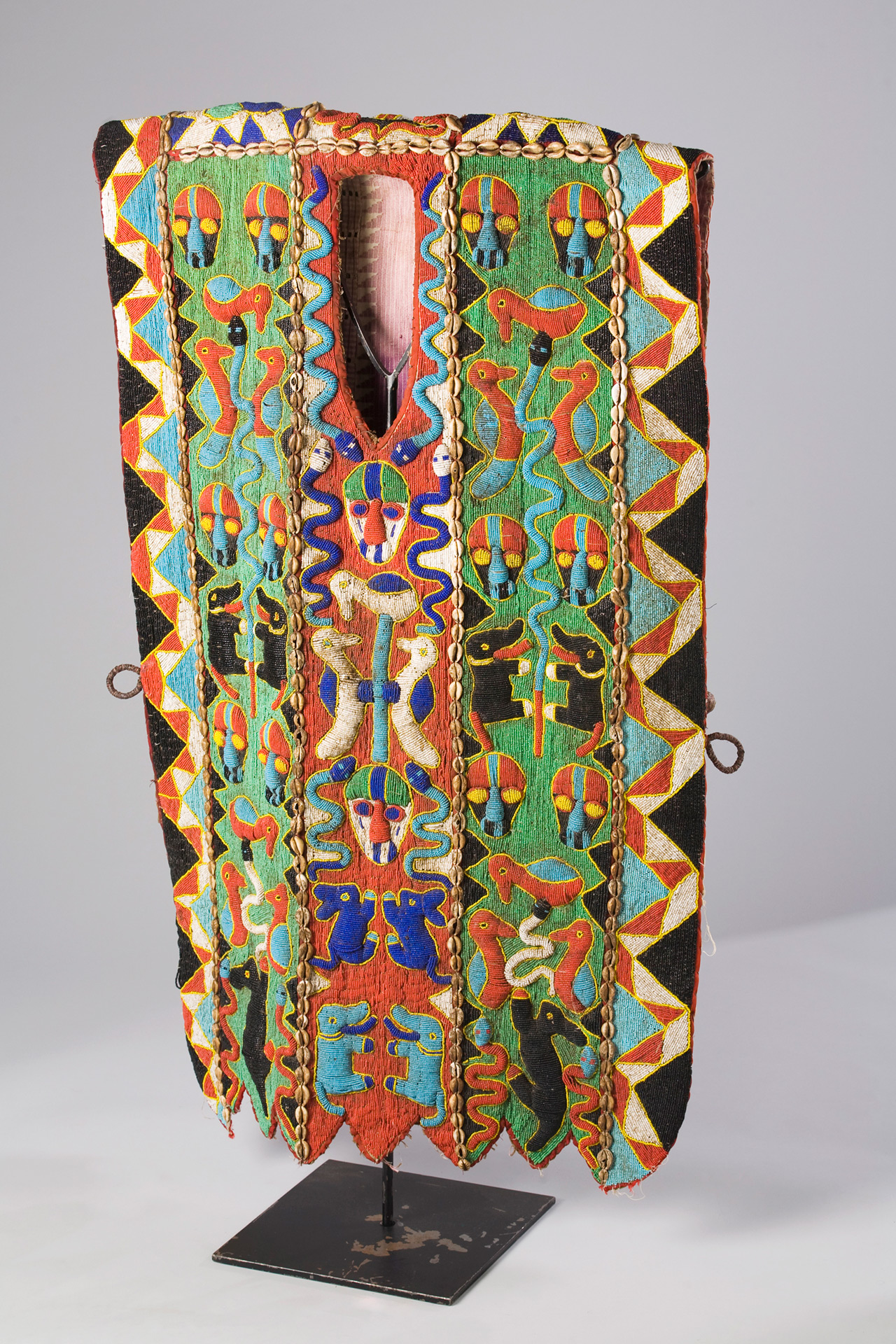
Colorfully embroidered fabric in greens and reds

On display, you'll see artifacts from as far west as Guinea and as far east as Tanzania. We have a terracotta room, filled with terracotta vessels as well as wooden doors, animals, and a Benin king on a horse. Also pots from the Lobi people of Burkina Faso for storing honey.

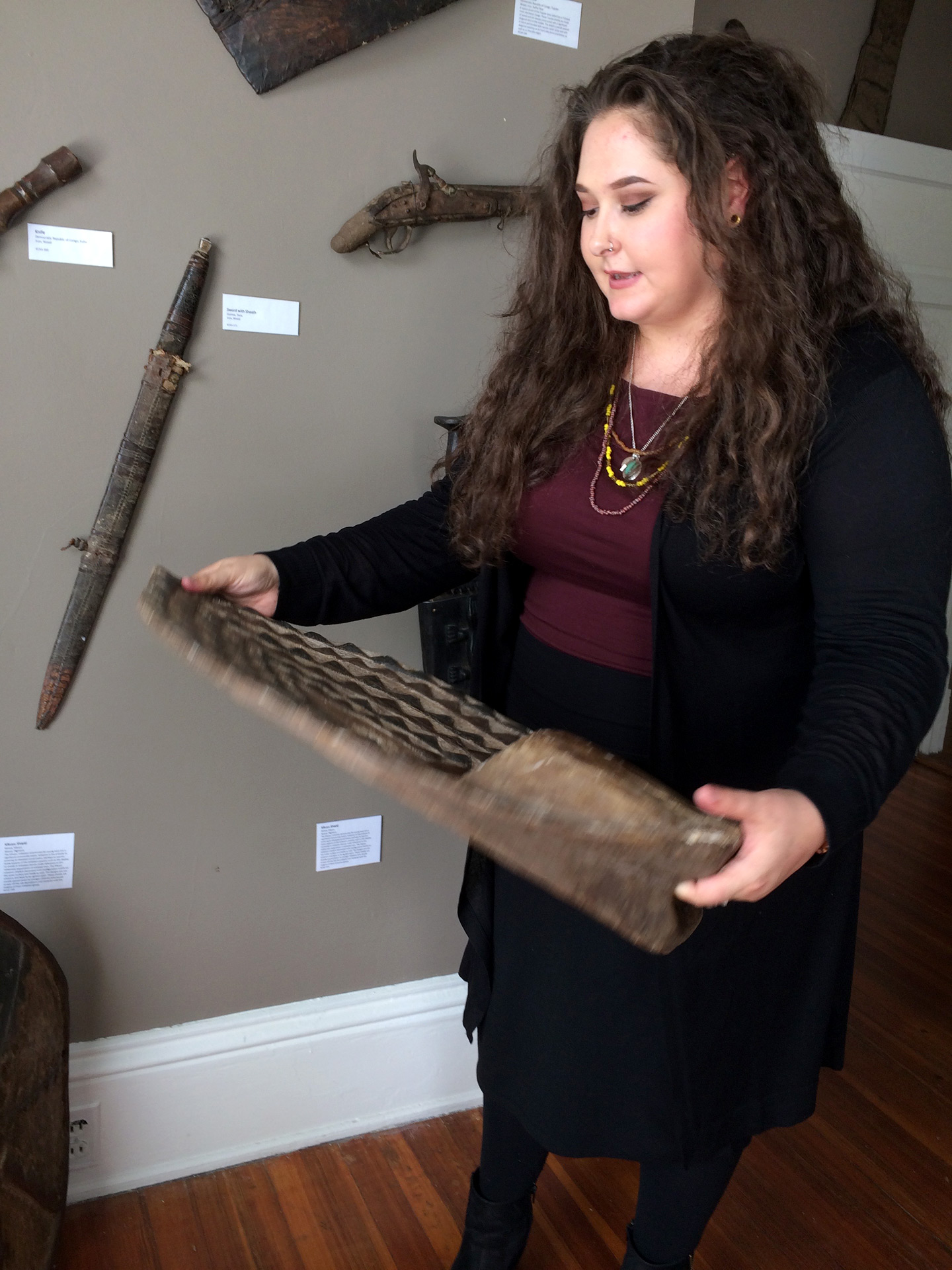
We have a divination corner with divination tools, part of the Yoruba culture of Nigeria. A Babalawo or high priest divines on the divination tray. He would have drawn the crossroads across the center of the board and interpreted the will of Eshu Elegua, he is the Orisha of the crossroads. Any decision you make, he has a hand in.

SCAD: On that note, congratulations on the museum's official grand opening!

BMS: Thank you, it's an exciting time. We're already working with SCAD to create docent opportunities here, so that students can gain museum experience and learn the behind-the-scenes too.

The museum is located at 111 East 34th Street in Savannah. We're open Thursdays, Fridays and Saturdays from 11 a.m. until 4 p.m. Admission is free and complimentary tours are provided. Our aim is to provide an engaging experience and start conversations about the power, diversity and spirituality of African Art. We welcome you all to join us in experiencing the art of Africa!

Curator holds artifact in gallery

Unveiling Jedd Novatt's new SCAD MOA sculpture

May
2
2017
By
Tags:

On a warm evening on the final Friday of April, art aficionados gathered in the SCAD Museum of Art's Alex Townsend Memorial Courtyard as SCAD president and founder Paula Wallace presided over the unveiling of "Chaos Concepción,” a new sculpture by artist Jedd Novatt.

"'Chaos Concepción' arises to lift the eyes and aspirations of all who study and visit here," President Wallace declared. "Jedd Novatt's work conquers gravity, expressing the soul unbound in an eternal echo of hope."

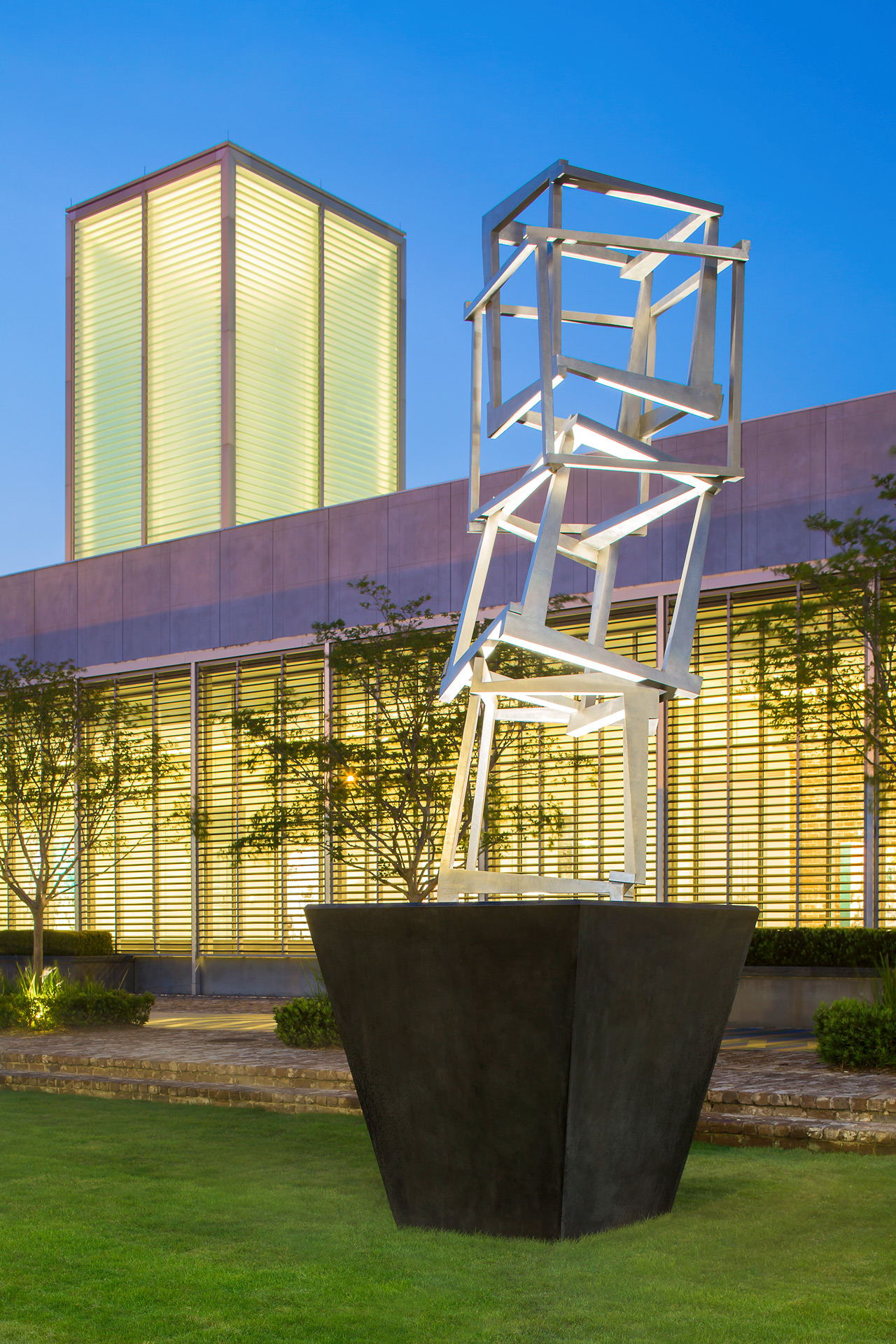
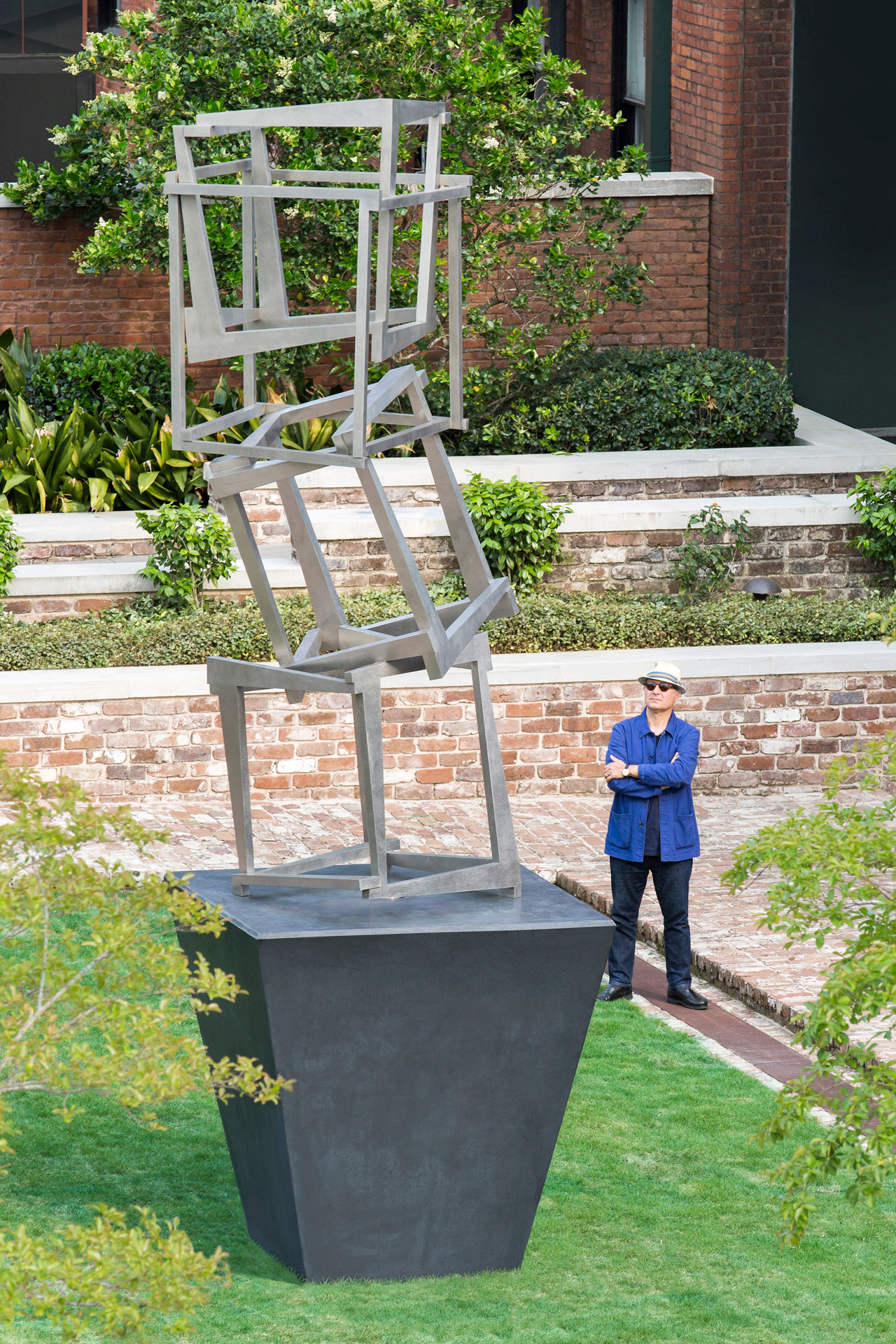
Novatt's sculpture may have cubism and minimalism as precedents, yet the work projects its own peculiarly provocative dynamism. Conjoined notes of strength and vulnerability rise from an ebony plinth. Stainless steel boxes stack at unsettled angles.

Sculpture of large square outlines in front of SCAD's Museum of Art

As SCAD MOA head curator Storm Janse van Rensburg stated in his opening remarks: "Jedd creates art that challenges our expectations of scale and structure and imbues our environments with undeniable energy. He doesn't just sculpt works, he sculpts the spaces that surround."

An artist whose work is exhibited and collected internationally, Novatt has a connection to SCAD dating to 1980, when he spent a year working and studying in France at the site of what is now SCAD Lacoste. "Chaos Concepción" is the second permanent Jedd Novatt sculpture donated to SCAD, following the installation of "Chaos Mundaka" in the front green of the SCAD Atlanta's Peachtree Street campus. Furthermore, a series of Novatt's monotypes entitled "Chaos Pacific" is on view at SCAD MOA now through June 4.

Any trip to SCAD MOA is a boon. Now, in the courtyard, a new reason has arisen.

The artist looks at his work in the Museum's courtyard

Design legend Carl Magnusson zeroes in

April
19
2017
By
Tags:

"The discovery of zero is maybe the most important moment in mathematics," declared design master Carl Gustav Magnusson from the stage of the SCAD Museum of Art theater. "Without it there'd be no binary code, no computers, and we wouldn't be here today."

Magnusson was lecturing about the history of design, not programming or mathematics, yet as the image of a zero illuminated the screen behind him, the ovoid's sublime beauty revealed itself afresh. In design terms, it turns out, zero counts for a lot.

Magnusson's presentation — "3,500 Years of Design in 2,000 Seconds Flat!" — was part of the ongoing "Integration" lecture series presented by the SCAD School of Building Arts. Comprised of six connected disciplines — architectural history, architecture, furniture design, interior design, preservation design and urban design — SCAD School of Building Arts provides graduate and undergraduate students with key opportunities for guidance and inspiration from industry luminaries like Magnusson.

As an industrial designer and inventor, Magnusson's resume is as sturdy and stylish as an Eames chair. It should be: He worked with Charles and Ray Eames in the 1960s before becoming director of design at Knoll for three decades. He has received thirty design awards in the past decade, including Contract Magazine's Legend Award for Lifetime Achievement in 2012.

"You can have an innovation, and it can be a millennium before it has an impact," Magnusson said, keying his idea that design exists on a long, spry timeline punctuated by apparent breakthroughs.

Magnusson correlated the medieval Toscano scissor chair with Mies van der Rohe and Lilly Reich's design for the Barcelona chair circa 1929. He credited da Vinci with inventing the selfie. He pointed out that Vetruvius' "Ten Books on Architecture" was thought lost, only to be rediscovered 1500 years after its composition, when it assumed its rightful place as a cornerstone of architectural theory.

Magnusson's visual projections shifted like the sands of time, awash with iconic glimpses from design history. When an enormous, circular edifice appeared on screen, Magnusson said: "Peter Brueghel was an artist of the people, and here he showed what his conception of the Babel tower looked like. I think Frank Lloyd Wright looked at it and said, ‘If we turn this upside down, we've got a museum.'" A picture of the Guggenheim appeared like a well-timed punchline.

During the Q&A, Magnusson was asked specifically how he sees furniture design changing in the digital age.

"I'm actually shocked in how little furniture design changes," the designer replied. "We design something good, something different, something better, but is it new? How about the inflatable chair from the 1950s? That was something new. Are we still using it? No, it deflated. I think of design as a continuum. I don't think furniture is going to change much. In the digital age, we're immersed in everything from sketching to developing to manufacturing, all that is done digitally. But the furniture itself will not change significantly."

Magnusson's 2,000 seconds were up. He'd covered 3,500 years of design and then some. Zero looked better than ever.

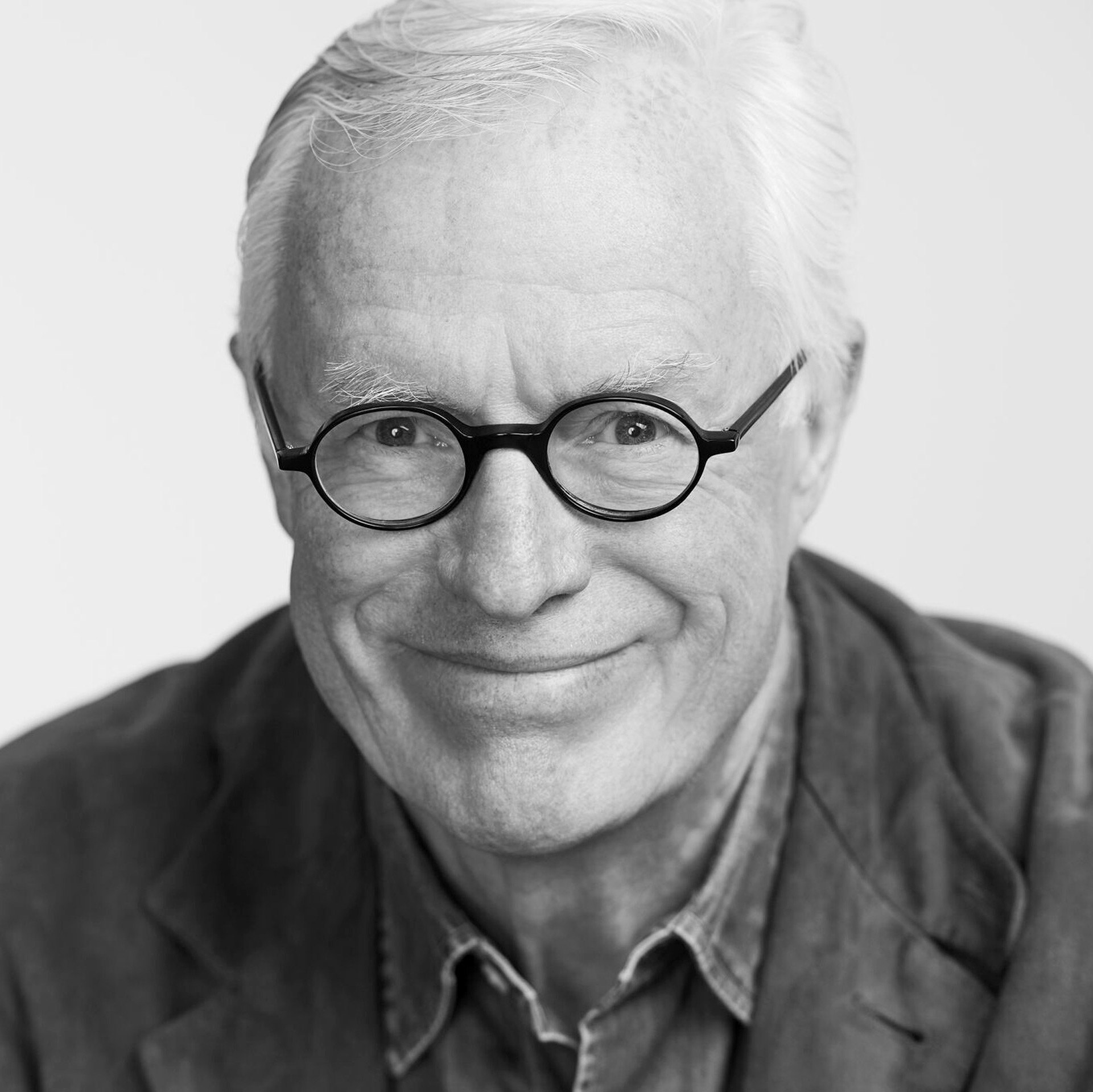
Black and white headshot of Carl Magnusson with round, black-framed glasses

SCAD School of Building Arts "Integration" lecture series continues Tuesday, May 2, 5:30 p.m. as William Sofield presents "Designing Places of Memory and Legacy" at SCAD MOA theater.


Raquel Serebrenik Sultan: 'Chroma' and the maestro

March
16
2017
By
Tags:

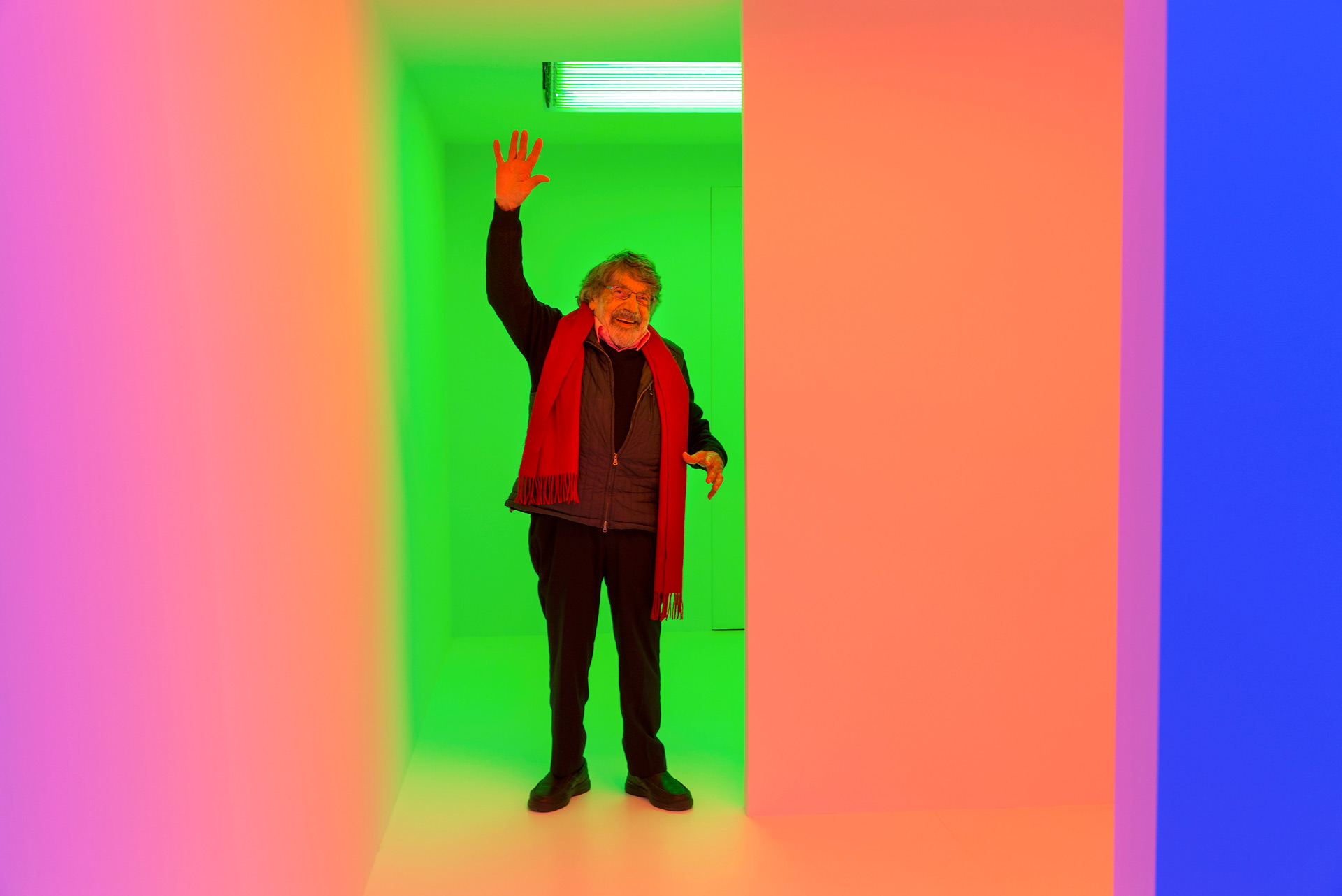
Raquel Serebrenik Sultan (M.A., business design and arts leadership; B.F.A., art history, 2015) is co-curator of "Chroma," an exhibition by Carlos Cruz-Diez at the SCAD Museum of Art through August 20. Collaborating with head curator Storm Janse van Rensburg, Articruz and the Cruz-Diez Art Foundation, Serebrenik Sultan has assembled a remarkable display of the 93-year old Venezuelan painter and color-theorist's recent work. Serebrenik Sultan, currently program manager at the Museo de Arte Moderno de Bogotá (MAMBO),  returned to Savannah for the exhibition opening and special presentation by President Wallace to Cruz-Diez of the deFINE ART honoree award.

RAQUEL SEREBRENIK SULTAN: I studied at an arts high school in Bogotá. One day my teacher put a newspaper on the table with a huge picture of the maestro Carlos Cruz-Diez and said, "His show is coming to La Cometa gallery!" I went and saw this chromatic environment with lights. I started moving the little pieces around. And you can't just move around things at an exhibition! I was kicked out of the gallery. I was 13 years old.

The next day my parents called me and said, "We're so excited! We met this artist and you have to meet him." I flew to Panama where he has one of his ateliers and it was full of artists and designers creating on a constant basis.

When selecting a university to attend, I visited Savannah and the activity and energy at SCAD reminded me of the maestro's atelier. I knew it was the place for me!

When I started my thesis at SCAD, I decided to make it about Carlos Cruz-Diez. I got in contact with his family to request an interview with the maestro. While we were on Skype he was showing me what he was painting in Illustrator. I said, "Maestro, you need to come meet SCAD." He said, "I would love to."

The maestro is not a fan of art schools in general because he thinks they teach in a traditional way. Everyone needs to know the basics, but everyone needs to innovate — that's what the maestro thinks. In fact, SCAD's mentality and his mentality are very similar. At SCAD you can be an architect or a designer and be interested in other disciplines.

The curatorial process for "Chroma" started with wanting it to be bigger than an exhibition in a gallery. Storm said, "Why don't we do a container?" Which is a perfect connection to Savannah as a port city, and also to Panama. So we have a shipping container in the SCAD MOA courtyard with three works: two on the outside of the container, one on the inside.

A lot of Venezuelan SCAD students took the initiative to help paint the sidewalks outside the museum. The maestro means a lot to them. He means hope, he means color, he means a part of Venezuela that the rest of the world doesn't know.

What the maestro really wants to do is affect how people see art and design. Art is about invention, being curious. Age doesn't matter, it's about the ability to adapt.

The maestro always tells me, "I don't trust people who do not laugh or smile." Every time we meet we're always laughing. It's not jokes, it's just being happy. And if you're not happy, move on to something else.

Sharing the MOME Love at CoMotion 2017

March
8
2017
By
Tags:

Sporting pink MOME Love lanyards along with their business-casual best, SCAD motion media design students flocked to the SCAD Museum of Art, March 3 and 4, to make connections, present work and establish contacts during CoMotion, one of their most anticipated annual events.

Now in its eighth year, CoMotion features panels, portfolio reviews, networking receptions and a student work showcase. CoMotion is run by MOME Love, SCAD's motion media professional organization. This year's event attracted industry heavy hitters including Gentleman Scholar, The Mill and loyalkaspar, whose chief creative officer Beat Baudenbacher delivered the keynote address.

Offering the world's first specialized program in motion media design, SCAD presents undergraduate and graduate curricula that prepares students for top-level professional success. As SCAD chair of motion media Kelly Carlton explained: "These companies are here to see the wealth of work being done. At CoMotion, they see not only the work but how well the event is organized by students."

CoMotion showcases both the initiatives and talents of the students in a wide-ranging major. For the uninitiated, MOME Love co-president and current M.A. candidate Jamie Gray (B.F.A., motion media design, 2016), offered a description of the discipline.

"Motion media design is the combination of graphic design, film and television and animation," Gray said. "It's one giant major that showcases it all. We can be 2D animators but also UX designers. We know how to work a camera but can also do film editing and cinematography. Motion media encompasses diverse skills that are all shared by our love of design."

Friday's student showcase packed the SCAD MOA theater with cheering students as professional designers evaluated their motion media design projects. Work on display included moving infographics on public health issues such as plastic bag overuse, and typographic representations of the poetry of spoken word star Shane Koyzcan. 

Connections made at CoMotion often lead to internships and jobs. Gray secured her internship last year at (n+1) design studio in Jacksonville after showing her work to company representatives at CoMotion. Alumnus Duarte Elvas (M.F.A., motion media design, 2014; B.F.A., film and television, 2003), now a designer at Sarofsky in Chicago, has experienced the event from both sides.

"As a student, it was an amazing experience to have, connecting with these companies," Elvas said. "From a company standpoint, it's refreshing to see emerging talent and to get facetime with them. Everyone is so well-prepared. We keep coming back to SCAD."

CoMotion 2017 was livestreamed for the SCAD eLearning, Atlanta and Hong Kong locations.

Madame Gandhi inspires students at deFINE ART

February
27
2017
By
Tags:

"We should look inward to discover our immediate passions," said artist-activist Madame Gandhi, addressing the packed theater inside the SCAD Museum of Art, with her hand on her heart. "What do we care about?"

As part of deFINE ART 2017, SCAD presented two events with Madame Gandhi, the stage name of Los Angeles-based musician and feminist activist Kiran Gandhi. During her opening-night performance, Gandhi shared insights from her own career path and stressed the importance of putting passion first.

After a camp counselor introduced her to the drums at a young age, Gandhi abandoned her "oppressive piano lessons" and took to practicing the drums every day. As she began to identify as a drummer, Gandhi realized her passion for percussion wasn't fully shared by her parents.


"I got the sense — especially from my dad — that drumming was just extracurricular," Gandhi told the audience. 


After studying mathematics as an undergraduate student, she landed an internship with Interscope Records, where she began accruing valuable experience in the music industry.

"[My dad] would call me, questioning 'What's the next move? Are you going to get a job?'" Gandhi told the audience. "I said 'Papa, I'm not going to take your calls if they're oppressive.'" At this, several students laughed and clapped in approval.

Post-internship, Gandhi accepted a job at Interscope analyzing Spotify streaming plays. Then, just as she'd been accepted to business school, a chance meeting with M.I.A. led to Gandhi securing a spot as the drummer in London-born Sri Lankan rapper and activist's all-female band.

With grad school approaching and M.I.A.'s world tour about to kick off, Gandhi knew she had to make a choice. She chose both. 


"On a Monday I'd go to class, and then catch a 3 p.m. shuttle from Boston's Logan to New York to play the first of five shows," Gandhi said, counting her steps on her fingers. "At 4 a.m. I'd go back to the airport and fly back for class. That was all week long. And it worked!"

As busy as this time was, Gandhi told the audience she felt "focused on her mission."

"I was an artist, traveling the word and getting to make music," Gandhi said. "What else is there?"


Madame Gandhi plays the drums at theater inside the SCAD Museum of Art

Gandhi closed the discussion with two songs from her 2016 EP "Voices," alternating from vocals to percussion and proudly proclaiming "the future is female" at the end of the evening.

The next day, Gandhi returned to the SCAD MOA theater to host a workshop titled "Own Your Voice," about "atomic living," which she explained means using spontaneity more productively.

"Teachers would ask about my 10-year plan," Gandhi admitted to the theater crowd, rolling her eyes. "A 10-year plan? I don't know what I'm doing 10 hours from now!"

Gandhi instructed students to fold a sheet of paper into three panels and number each section. In the first panel, students wrote things that brought them joy. The second panel was for students to write things they disliked about the world. The third panel was to brainstorm ideas on using the passions from panel one to correct the issues in panel two.

Gandhi concluded by encouraging students to revisit their lists and to always work towards their own happiness.

"Don't be afraid to fail," she said, as students and professors alike applauded. "Why do we teach perfection, but not bravery?"

Celebrating and memorializing the Craft legacy

February
16
2016
By
Tags:

As a part of this year’s celebration of fine art exhibitions, lectures and performances — also known as deFINE Art — SCAD will honor two inspiring figures in Georgia history: William and Ellen Craft.

The legacy of their daring journey to freedom will be commemorated with a bronze medallion of a train bounding toward the North Star, designed by SCAD Foundations Studies professor Andrew MacDonald, which will be on display in SCAD Museum of Art foyer.

The dedication of this emblem will be followed by a special dialogue between Craft scholar and author Barbara McCaskill, Ph.D. and visual artist Xaviera Simmons, moderated by art historian and curator Isolde Brielmaeir, Ph.D. SCAD invites students and the Savannah community to be a part of the this moment tonight at 6 p.m. in the SCAD Museum of Art Theater, located at 601 Turner Blvd.

In 1848, the Crafts, an enslaved African-American couple, escaped from their life in Macon, Georgia, to embark on a four-day journey to the Northern free states. To make their escape, they devised a plan for fair-skinned Ellen to pose as a white man and William as her attendant. Upon completing the first stage of their journey, the Crafts arrived in Savannah, passing through the Central of Georgia Railway depot — the very place where the SCAD Museum of Art stands today.

“The story of Ellen and William Craft will be told — and retold — for as long as the torch of freedom blazes,” said SCAD President and Founder Paula Wallace. “Theirs was an escape from the inferno of slavery, whose fires consumed the dross of race, gender and class to reveal the ingot of humanity.”

The Crafts: An Extraordinary Path to Freedom — a new book detailing the Crafts’ legacy that was researched and authored by SCAD staff and illustrated by alumnus Awadh Baryoum (M.F.A., painting) — will be available for purchase at the SCAD Museum of Art, shopSCAD and shopSCAD.com.

Ask Vivienne Westwood: insights on the SCAD MOA exhibition

May
16
2015
By
Tags:

Vivienne Westwood traveled to Savannah College of Art and Design to receive the André Leon Talley Lifetime Achievement Award. The fashion icon and activist joins a distinguished cohort of designers who have attended the student fashion show and exhibited their work at SCAD Museum of Art, and she’s the first to answer your questions submitted via social media. Westwood’s responses provide perspective on her body of work, including 33 looks that comprise Dress Up Story – 1990 Until Now, an exhibition curated in her honor by Talley at SCAD Museum of Art (May 19-Sept. 13).

I never participated in a fashion trend. I always invented them. - Vivienne Westwood

What fashion trend did you participate in but now regret?

VW: I never participated in a fashion trend. I always invented them. I never knew what other people were doing. In fact, every now and again, I do something and someone might say, “Someone just did that.”

So many industries look to fashion for inspiration on emerging trends and color. Where do you find inspiration for your work?

VW: The ideas are not just invented. They come from a whole lifetime experience of looking at things and following your deep interests, if you’re interested in culture. I mean everybody is in the end. Whatever you’ve been following there. Culture, as I defined it the other day, is the best that has ever been thought or said or shown. That’s what culture is and that’s what you’re following. For example, when you’re looking at paintings you start to understand what is the best. There’s a French expression that the best is the enemy of the good. The good, you’re no longer interested in it. I used to send my students to the art galleries. I said, "Before you move from one gallery to the next, if the fire bell went which picture would you save?" If you keep going, in six months' time you will choose a different picture, you are cultivating your taste. You are developing. You start to see something else.

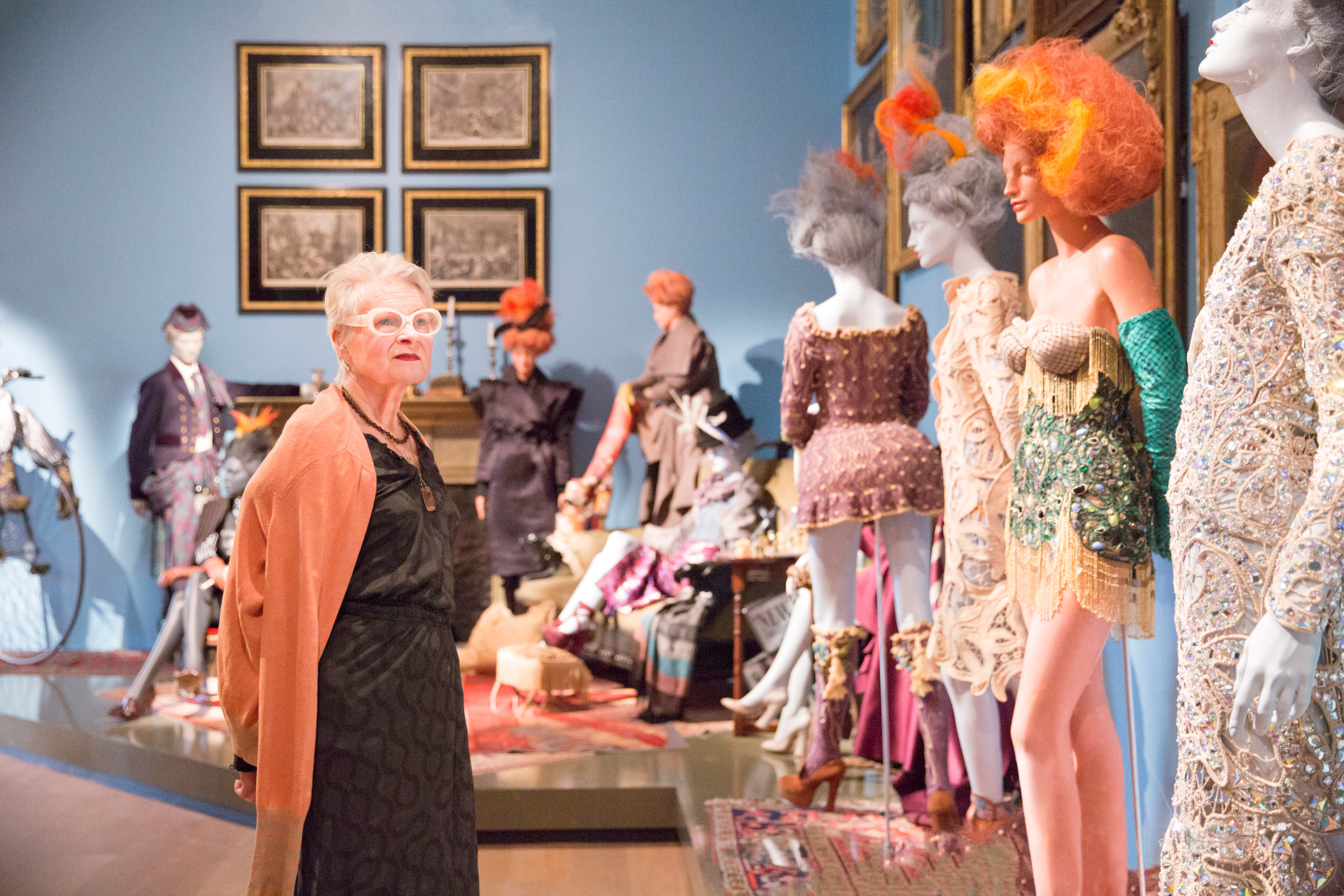
Vivienne Westwood looks at her body of work in the SCAD Museum of Art exhibition in her honor

How do you approach a design challenge?

VW: I like to start with knitwear. It’s very good because you’re waiting for fabrics quite a lot of times. Knitwear is brilliant because you’re not limited by the yarn, you’re limited by the fabric and what you’re going to do with it and how you’re going to sew it. Knitwear is a bit like a computer, you know, you’ve got a stitch that loops one way and a stitch that loops another way, and that’s all there is. You just do permutations of that and you just loop two of them together. You can shape the thing by the actual technical process, and I find knitwear a very easy thing to start with while I’m waiting for fabrics as well, and I always start from tailoring. That’s where I always start to get the look of something.

What will you look for on the runway at SCAD Fashion Show?

VW: Something different. That is a phrase I cannot stand. ‘Something different’ is so boring. It doesn’t work. If people are searching for something different they’ll never find it. It’s like searching for an unusual experience. It just won’t happen. It will happen when you’re not searching, when you’re following your deep interests. That’s when the exciting experiences will happen.

Experience Dress Up Story - 1990 Until Now at SCAD MOA to learn more about Dame Westwood. 

Director Greg Brunkalla to André 3000 Benjamin: 'I feel ya.'

December
1
2014
By
Tags:

Director Greg Brunkalla (B.F.A., video/film, 2001) belongs to the triumvirate of artists whose work comprises the Savannah College of Art and Design exhibition, i feel ya (Dec. 3 – 14 at Mana Miami). André 3000 Benjamin’s signature jumpsuits, worn during Outkast’s 20th anniversary reunion tour, anchor the exhibit and inspired Greg’s film, Trumpets. Accentuating both Trumpets and the jumpsuits are Jimmy O’Neal’s (B.F.A., illustration, 1989) oversized mirrored paintings.

To make the film, Greg, his crew, SCAD students and André traveled to a dozen locations in and around Savannah. Here’s Greg on the organic evolution of Trumpets and working with André. Their collaboration and mutual respect illuminate the meaning behind the exhibition’s title, i feel ya.

Thread: This will be your first time exhibiting in Miami during Art Basel. Congratulations. Any thoughts on being able to show your work in this environment?

Greg Brunkalla: I’m all about having an audience for my work, so the more people that get to see this, the happier I’ll be. I’m thankful for the team that made it all happen and hopefully everyone will get a chance to see the finished product.

T: Describe your approach to filmmaking. How did your education at SCAD contribute to it?

GB: To me, SCAD represents what an artist should represent – skill and individuality. While I looked at other film schools, what stood out to me at SCAD was that it felt unique. It has all the right tools and is in an environment and landscape you can’t get anywhere else.

Two SCAD director chairs on set

T: You mentioned that you jumped to do this film because it’s atypical. What’s different about it? What attracted you to the i feel ya project?

GB: As if working with André wasn’t enough of a selling point. Initially, the door was wide open to what this film could actually be. André had some thoughts, but he was completely open to anything and everything – that’s attractive to me. Being able to show a film in a gallery environment is not something I get to do often, so that was also a huge incentive. Being able to come back to SCAD and utilize their resources and the students was an incentive as well.

T: How did you come up with Trumpets as a cinematic extension of André's jumpsuits?

GB: André’s statements or thoughts are literally words screen-printed onto jumpsuits. Every night he performed wearing a different jumpsuit displaying a different statement across the chest. So the jumpsuit was the medium for the message. I thought a lot about how to translate that relationship to film. I asked: “How do you put words over picture as a separate element?” That’s when I decided that I wanted to use old fashioned slide projectors to project the messages over images. I also think a lot about my audience and there should be a reason this is in a gallery. The slide projector brings the process into the space as opposed to just screening a film.

Filming woman in jumpsuit

T: Watching the jumpsuits in the film versus watching André in them on stage are two different experiences. What do you hope audiences will take away from your contribution to the exhibit?

GB: The film is not supposed to represent anything close to André’s performance. If anything that’s the main difference.

The jumpsuits and their messages are the common thread. I’m hoping that people observe how a message’s meaning can change, or at least feel different, depending on its context.

T: What’s it like collaborating with an artist like André? Do you have any anecdotes from production about matching up artistic visions?

GB: André and I talked several times before the final idea came to be.

The first thing I felt from André was an appreciation and respect for my work and I hope he felt that tenfold from me. He’s known as a musician, but the feeling I get from him is that his creativity is boundless.

Throughout the process I wanted to respect André’s initial vision and approach, while still creating something that felt like it came from me. He was involved throughout the entire process, but ultimately he let me do my thing.

Director Greg Brunkalla and André 3000 on set

T: What was the mood on the set?

GB: I wish all my sets were like this. The mood was relaxed enough to keep the ideas flowing, and buttoned-up enough to get all of the locations and shots we needed.

T: What did being in the familiar setting of Savannah and in the company of fellow SCAD students and alumni lend to the process?

GB: Savannah has a landscape you just can’t find anywhere else, so we embraced it. Having passionate students and alumni around to make things happen made things even better. Filmmaking is a team sport and there’s nothing better than having people show up that want to be there, and that’s how it felt working with SCAD.

T: Which was your favorite shot to direct?

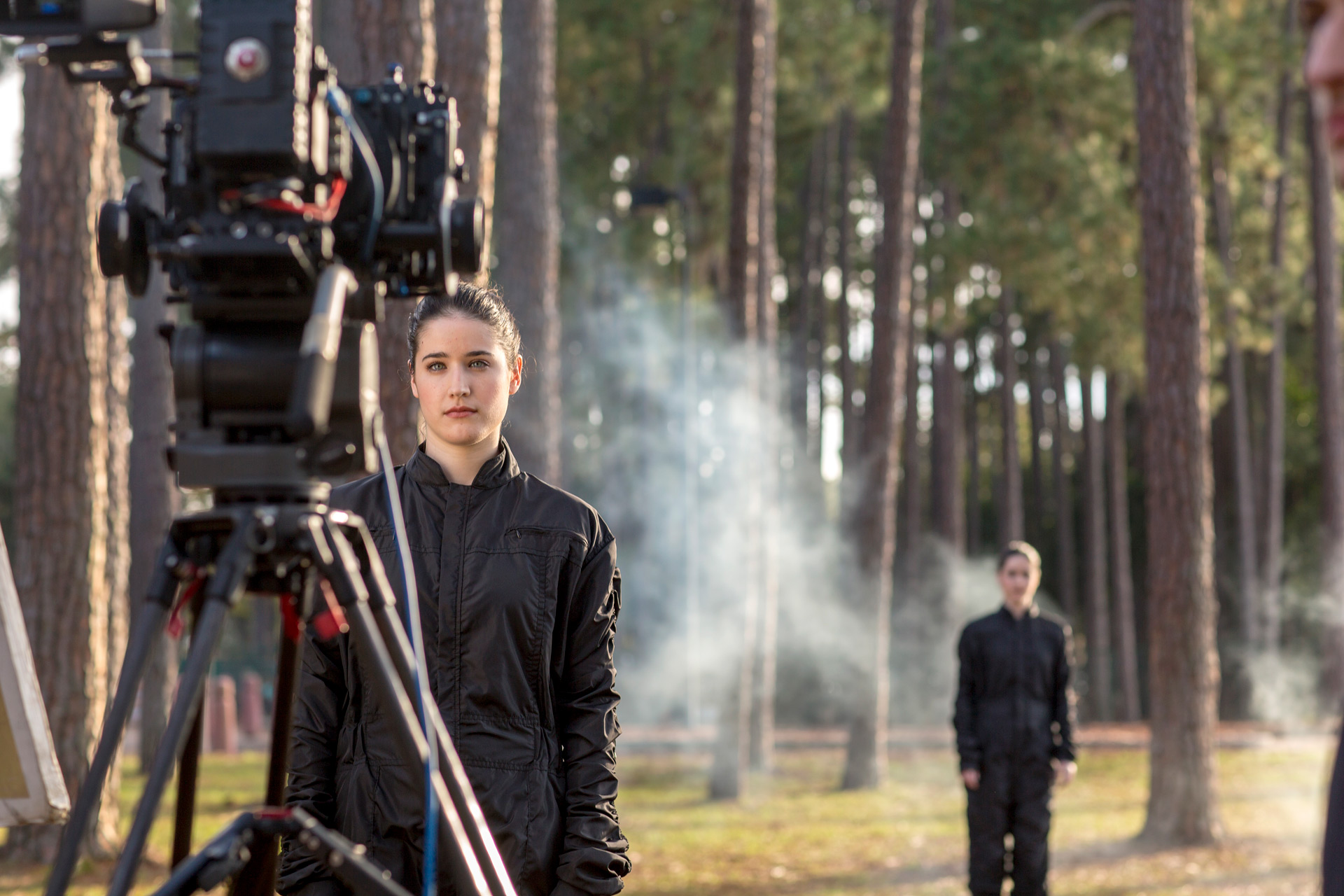
GB: I think my favorite shot was in front of the forest with the smoke machine. We were trying to use it to create a little atmosphere, but it ended up just looking like a fire was starting, so we embraced it. I liked shooting on the beach too, but those sand gnats totally killed the vibe.

Two models in jumpsuits stand in front of camera

T: Would you recommend that young filmmakers and artists in general take on projects like this to stretch themselves creatively or experiment with various platforms?

GB: It definitely doesn’t hurt. You learn something on every project – something about the process and something about yourself. I’ll never be the same after this one (in a good way).

T: Why do you think cross-platform and trans genre collaborations are especially important for artists to participate in right now?

GB: Honestly, André has the spotlight here and he’s cool enough to share a piece of it. My hat is off to him.

I think the most creative people around are the people that can see things in other people that others can’t.

When we first started talking André said something like, “I wanna be on set so you can teach me how it works.” I’m not sure if he learned anything, but we had a good time.

There are so many platforms out there to show and absorb content, the more we can collaborate, the more we can share, the more we can learn.

T: Describe working in SCAD’s Savannah Film Studios. How do you think it will help prepare current film and television students to be ready to work in the industry?

GB: Okay the first time I walked into that building, I knew we were off to a good start. The facilities there were on par with or better than many professional places I’ve worked in. My advice to students, use it like it’s yours!

Filming in green room

T: What other projects do you have in the works?

GB: Besides trying to lock in a feature film, I just finished up a documentary short commissioned by Vimeo about the colorblind cyborg, Neil Harbisson.

T: Name your favorite cross-platform or creative collaboration, be it musical or visual.

GB: Well, I haven’t seen it yet, but I have tickets and couldn’t be more excited. Mica Levi is conducting her score to Under the Skin (directed by Jonathan Glazer) with a live orchestra in January.

Hear more from Greg and André during the panel discussion on Dec. 3 at Mana Miami. We'll post the entire conversation immediately following the event here on the blog.

The jewelry of 'Downton Abbey' with designer Andrew Prince

April
28
2014
By
Tags:

English jewelry maker Andrew Prince is across the pond for a U.S. tour that includes Bergdorf Goodman, which sells his designs, and Kleinfelds in New York City. He’ll give a public lecture at Savannah College of Art and Design on April 30 at 5:00 p.m.

Andrew Prince at work

Andrew’s impeccable taste and encyclopedic knowledge of jewelry and fashion could convince the most unadorned of us to match our bling and bouffant. Coexisting with Andrew’s unflinching sense of humor and style is a scholarly seriousness about his craft that will change the way you watch the PBS hit series Downton Abbey, now filming its fifth season, or any other period piece on television, big screen or stage. Here’s the designer on the virtues of costume jewelry, his commissions for legends like Michael Jackson and, of course, how he bejewels the ladies of Downton.

SCAD: Give us a sneak preview of the talk you’ll give at SCAD Museum of Art.

Andrew Prince: It’s about how fashion and jewelry are usually treated as two entirely different subjects, yet they are absolutely intertwined. So many people in the clothes industry know nothing about jewelry, and so many people in the jewelry industry know nothing about fashion. Jewelry follows fashion and it’s a talk that explains how the fashions change and why they change and why at the beginning of the 20th century there was such a revolution in jewelry design.

SCAD: What’s the relationship between jewelry and costume design in film and TV?

AP: With costume design, one of the important things is not so much to match the jewelry with the costume, but to match the jewelry with the age of the person. You might get someone in the 1930s in their 60s wearing a modern dress, but her jewelry would be 20 or 30 years older than that. It wouldn’t be up to date because most people buy their jewelry in their 30s, 40s and 50s when they look their best. Using Maggie Smith’s Downton character the Dowager Countess as an example, all her jewelry would have been Victorian and Edwardian pieces. She would not have had Art Deco piece. Sometimes you see period dramas where you have a matron wearing modern jewelry and that’s totally wrong. It’s like if you can imagine someone in their 60s today wearing someone like Stephen Webster. It wouldn’t happen or it would be very unusual.

Diamond necklace
Necklace for Dowager Countess of Grantham that was worn at a formal dinner along with a choker. This style and combination is typical of the late Victorian or Edwardian period.

SCAD: How does your jewelry aid the development of Downton’s characters?

AP: The jewelry is more of a background really because it’s supporting an image. It was never meant to take the characters over. For example, Cora, who is the American heiress, she would have had very large jewelry, diamond pieces to hold her own against the English aristocracy who had some very large pieces themselves. At that time, England was a very wealthy country because it had an empire and lots of money was coming in. So the families were able to afford these very lavish pieces of jewelry. So the jewelry is more of a frame for the character rather than part of the character. It’s a little bit of decoration to enhance the character.

Diamond tiara
Tiara made for Cora of pear shaped diamonds. This is a very dressy tiara worn for court and, being an American heiress, Cora would have come to England with a lot of diamonds as an indicator of great wealth.


Hairpiece made for Cora. She wore this tucked in back of her hair for dinners at home. Because of the eclectic influences, such as exotic countries, during the Art Deco period this design was based on a Japanese plum blossom.

SCAD: Do you loan pieces to the production or are they commissioned?

AP: Some of the early pieces were ones that I already had in stock, but some of the pieces, particularly for the presentation of court and Lady Mary’s feather piece, they were made specifically for the character. The one for Caroline McCall, the show's costume designer, she basically said, "This is the period, this is the person, this is what’s happening. What do you think needs to be done?" There is one particular tiara, the one Queen Mary was wearing during the presentation, and when it came to two days before shooting I had a panicked call from Caroline who said, “We need her tiara to be bigger because Cora’s is going to be bigger than the queen’s and it does not look good.” So I spent 24 hours on the new crown and delivered it two days later.

Diamond and pearl tiara

Tiara that Queen Mary wore during the court presentation. Closely resembling a crown, this piece had to be very big and grand because she is the queen. Pearls were very expensive during these times, and a matched set of pear shaped pearls would have been out of reach for most everyone except royalty.

Maggie Smith is very specific on her jewelry. She’s particular about her character. I was concerned about what she would think about the choker and the tiara. And when it was shown to her she said, “Oh it’s wonderful, it’s exactly what I want,” I was relieved because it could’ve been a case of making something else.

Diamond and crystal choker
The Dowager Countess of Grantham’s signature choker. She wears this in almost every scene, as she models herself on Queen Mary and Queen Alexandra (who were both very into chokers). The style is Late Edwardian/Belle Époque and is typical of a piece that a wealthy man would have bought for his wife while she was in her 30s.
Choker
The choker is a big piece of jewelry that shows wealth, and while it is not considered blindingly flashy or ostentatiously vulgar, it is something she would have used almost as “armor” to show the world her social and financial status.

SCAD: What are these pieces worth or is it a matter of worth?

AP: The most expensive thing that goes into them is time. A lot of the stones are especially cut for me so that the cuts are correct. For example, a 1930s piece would have a different style of cut than a piece from the Victorian times. So quite often you find that when films loan real jewelry that it’s too bright. Under the lights in the studios the stones are too dazzling, so they have to be dulled down. Costume jewelry works best up under film lights because it’s not as bright as diamonds. Diamonds are blinding. There’s a particular tiara that Judy Dench wears in the film “Mrs. Henderson Presents” that is emeralds and crystals. In the studio I toned them down with graphite, which makes the stones look darker and can be washed off, because under the lights they were too strong. The pieces have to be tailored to the filming. Also, insurance on jewelry is too expensive, so studios tend to commission very good costume jewelry.

SCAD: We saw your quote: "You can’t have fun with diamonds." You must be joking.

AP: Seriously. It’s because if you have a $25,000 pair of earrings you will spend the entire evening wondering if they’re still on, or whether the event you’re going to justifies the occasion to bring them out. If you have a string of pearls for $10,000 or glass beads, which one are you going to where more often?

SCAD: What are the most memorable commissions that you've made?

AP: A friend of mine was making Michael Jackson a jacket. I had made a very large piece of jewelry for me - a shoulder jewel - that I was going to wear to a party. She saw it and she said, “I know someone who would like that, but can you make it bigger?” And that’s how that commission came about. That was a fun one. The other is a shoulder strap that runs down the back of a dress. It was for an Oscar lady. I can’t really say who. It went through the dress designer.

Examples of jewelry

SCAD: Mentorship is a big part of your story. What do you tell your mentees?

AP: One is to keep at it. The second one is don’t blow the profits. You always have bills coming in. When you start off and the money comes in, it seems fantastic and it builds up and builds up. You’ve got to put something aside every month, just in case something happens because everybody’s business goes down. It’s never an easy ride. Also, there are two things you’ve got to listen out for when dealing with clients. One is, “Don’t worry, I’m very easy to please.” You’ve missed out on a word. I’m “not” easy to please. And the second one is, “I don’t mind how much it costs, just go ahead.” They don’t mind how much it costs, but they’re not going to pay you. You’ve got to give them a price. Otherwise they’re going to refuse to pay.

SCAD: What designers influence you?

AP: I’m rather ashamed to say it, but Cartier. Cartier from about 1900 to about 1939. They were outstanding. So much better than they are today. At that time the company was run by Louis Cartier himself and he was the driving force. They were modern. Now the company is not a driving force because it has so much history to rely on. So like Stephen Webster, he’s a fantastic designer. Cartier would never produce pieces like that because it’s too groundbreaking and they’d alienate their traditional customers that have been with them for 30 or 40 years. Lalique was also groundbreaking. I wish my brain worked like that because he was a genius in every single way. From a jeweler’s point of view, Cartier is wonderful for technical reasons and commercial reasons, but for sheer artistic extravagance and amazement Lalique is unsurpassable.

Diamond tiara
Tiara for the Earl of Grantham’s sister for the post court presentation reception at their London house. This piece is a copy of an actual Cartier tiara that was worn by a titled English woman and is reflective of the appropriate style that an extremely wealthy woman would have worn during that period.

SCAD: What’s next for you?

AP: I’m going to start doing some more lavish pieces. I want to do impact pieces. So I’m being influenced by the Duchess of Cambridge’s things at the moment; big necklaces. I love big necklaces, so there’s some big necklaces coming out. I’ll also be working with English dress designer Sharon Cunningham. She did a lot of bridal stuff years ago and wants to do more couture things, and she’s a beautiful cutter. We want to create wonderful gowns incorporating lavish jewelry. 

And that takes us back to where we began, fashion and jewelry. Hear more from Andrew on April 30.