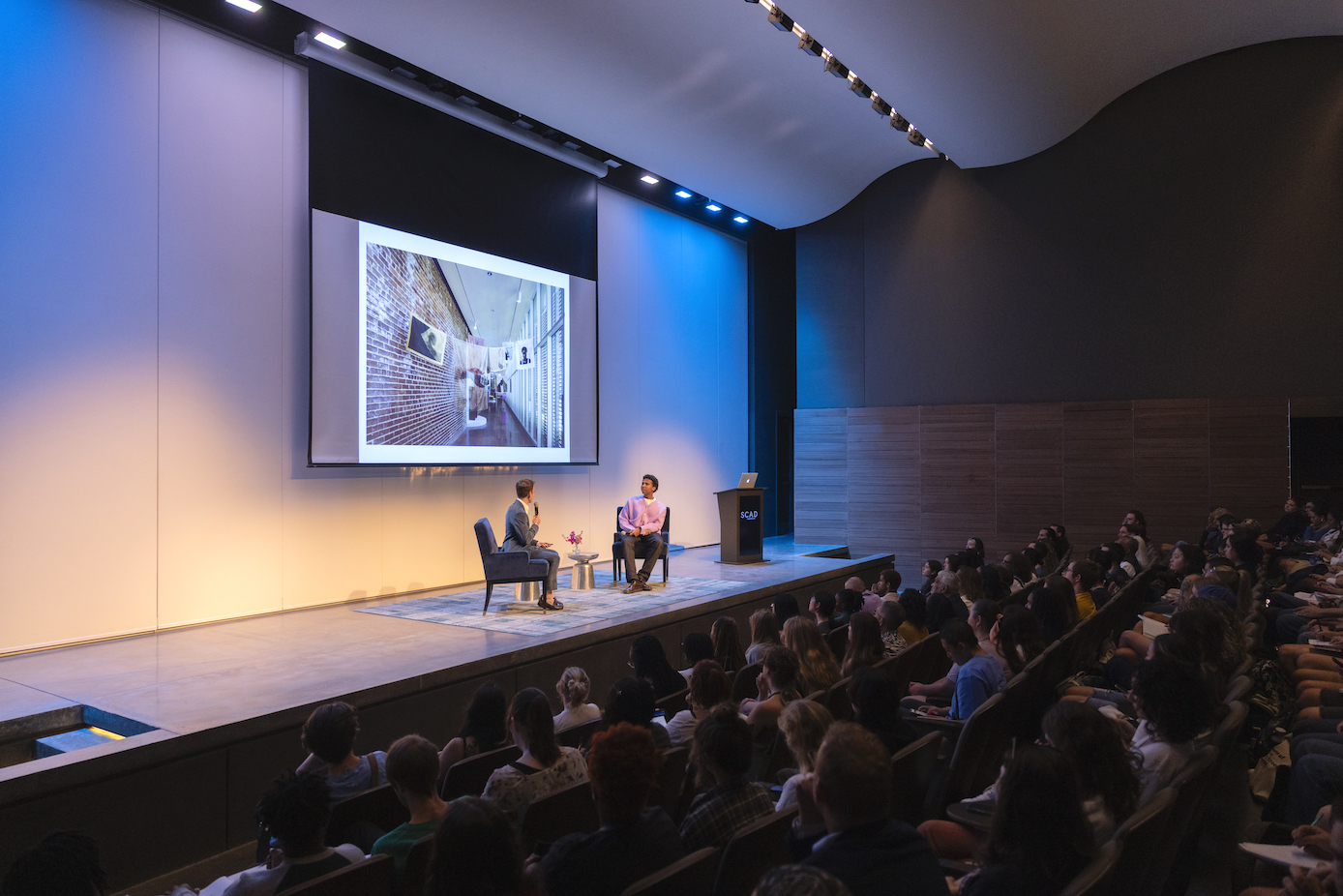
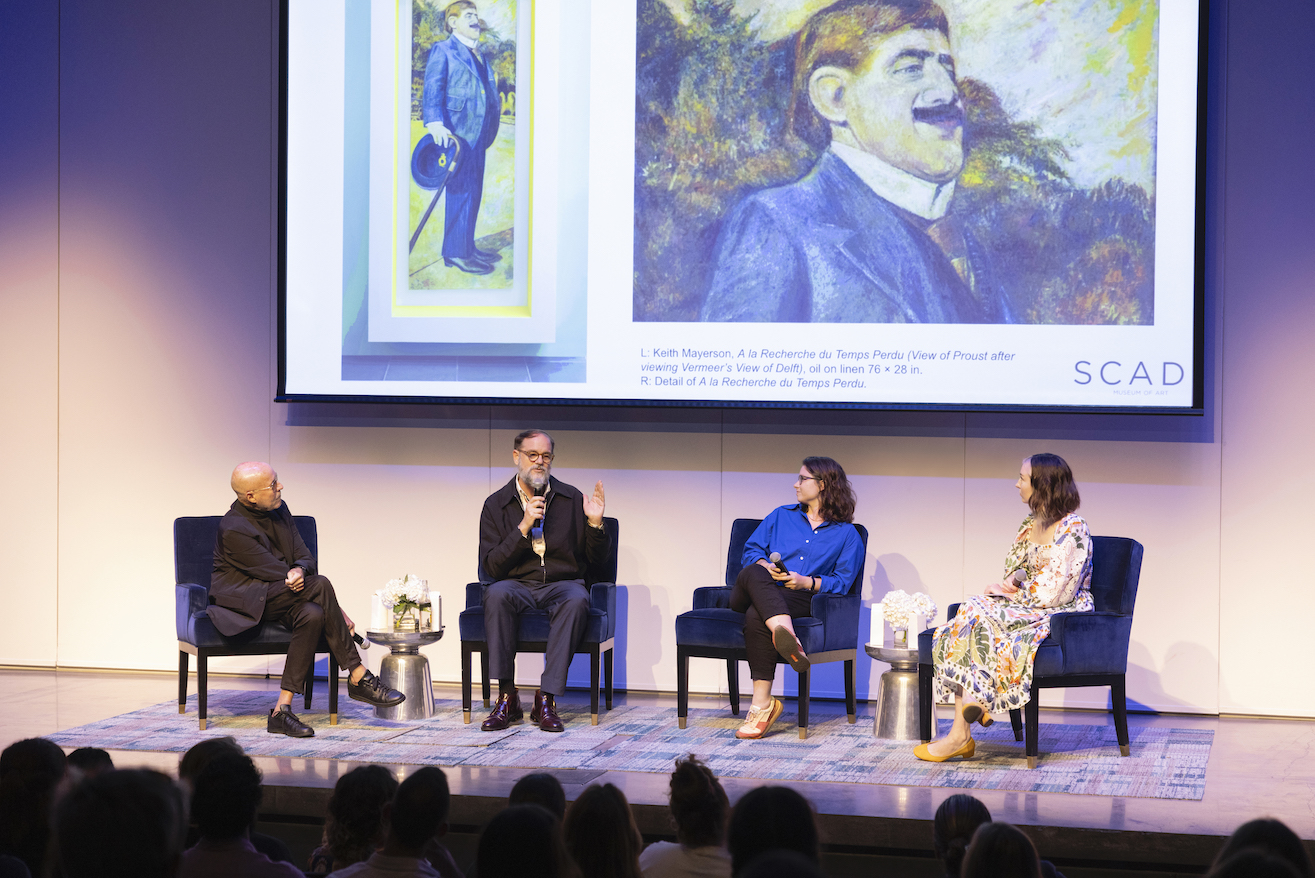
"How do you photograph the unphotographable?" asked artist Farah Al Qasimi, her head tilted at a curious angle. The artist also known as Frequently Asked Question then offered her answer: "A little bit of intervention."
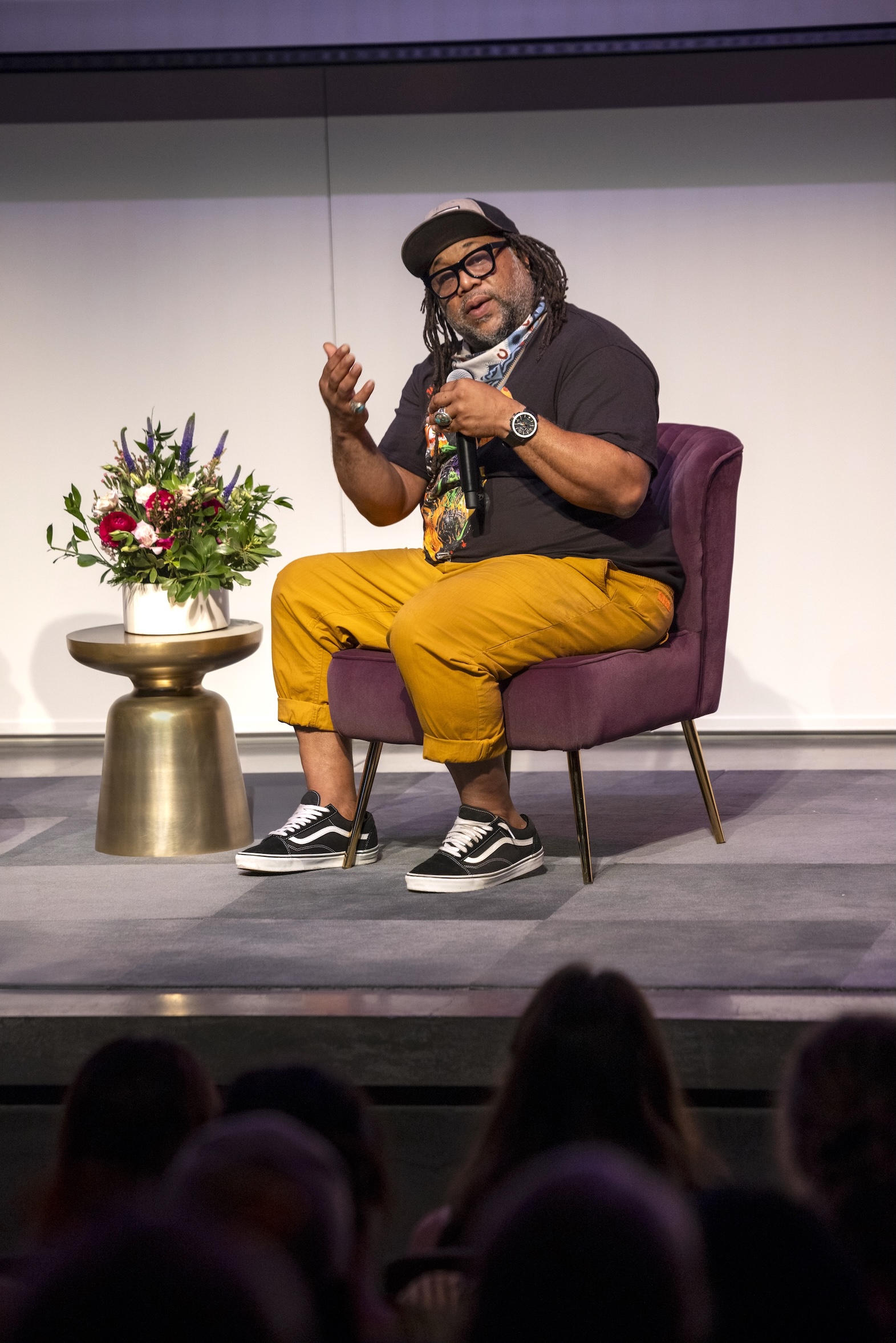
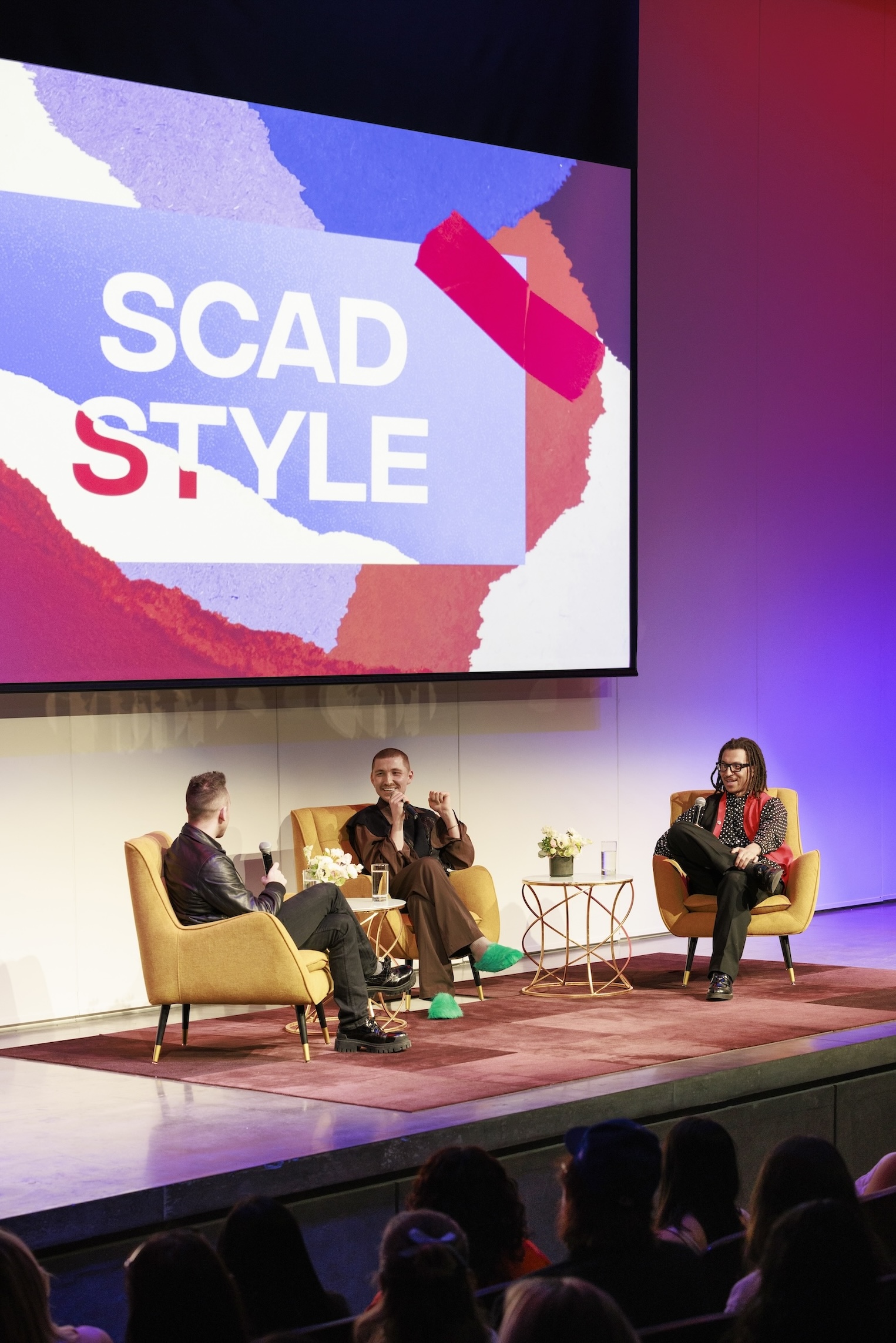
Al Qasimi was in conversation with museum exhibitions associate curator Brittany Richmond. It was deFINE Art 2026 live on the SCAD MOA theater stage, and it was awesome.
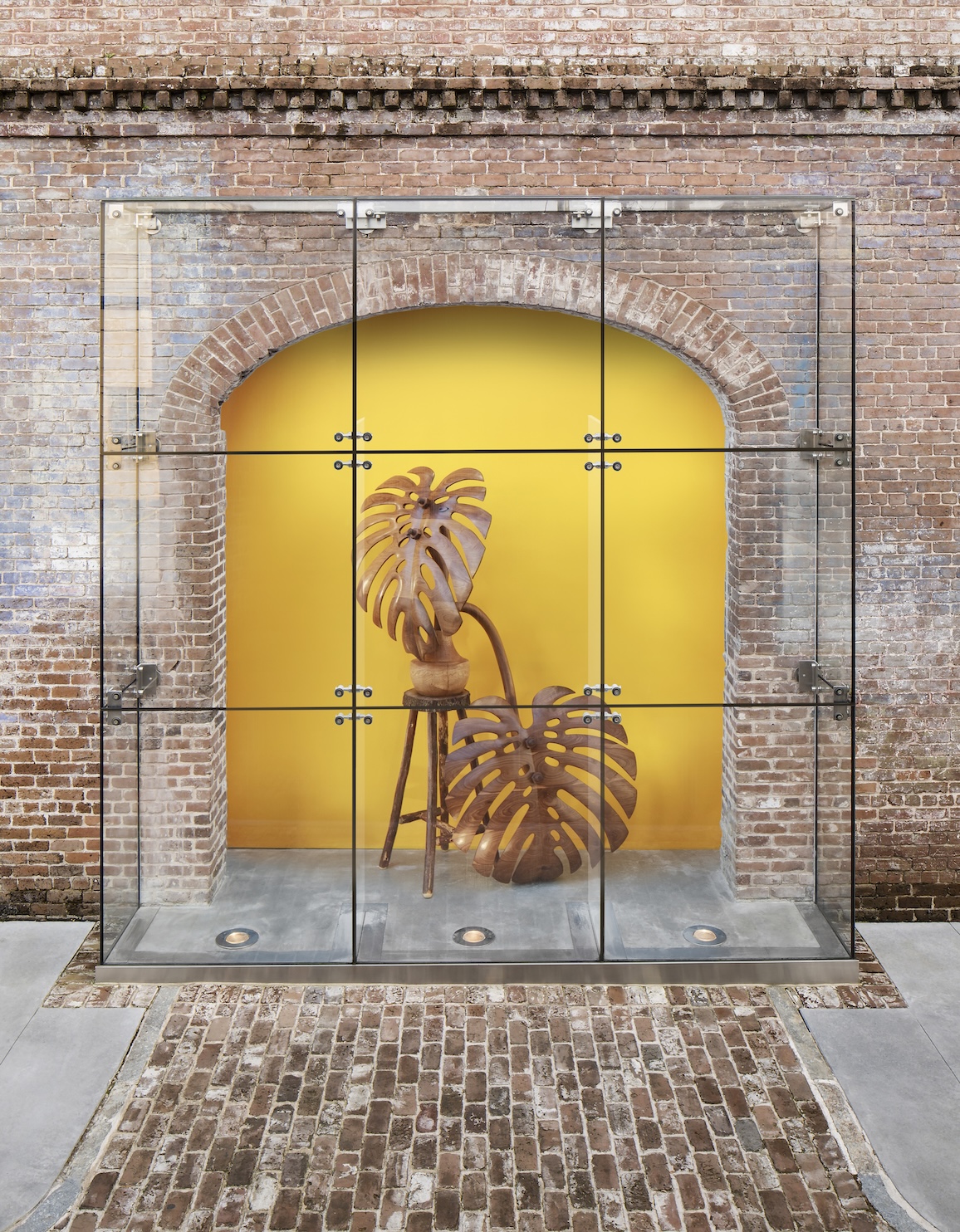
The occasion was the opening of Psychic Repair, Al Qasimi's double whammy activation of the museum's street-facing marquee vitrines and trippy inner gallery. "You're an image maker and you have a very specific relationship to images," Richmond began, prompting Al Qasimi to explain the dynamic between Instagram posts and museum-ready fine art.
"For photographers there's often this hierarchy where something made with your camera is an art object, and things made with your phone somehow count less," Al Qasimi replied. "I think of it all as the same enterprise, the same project of world-making."
What a world she's made: the Abu Dhabi-born, Brooklyn-based artist spoke of her "collaged sense of identity" (Emirati father, Lebanese mother, fluent in Photoshop and the Ivy League scene) that has left her "feeling like an outsider everywhere. Luckily that's a very good quality for a photographer to have, because you can find something a little bit fantastic or otherworldly in the everyday."
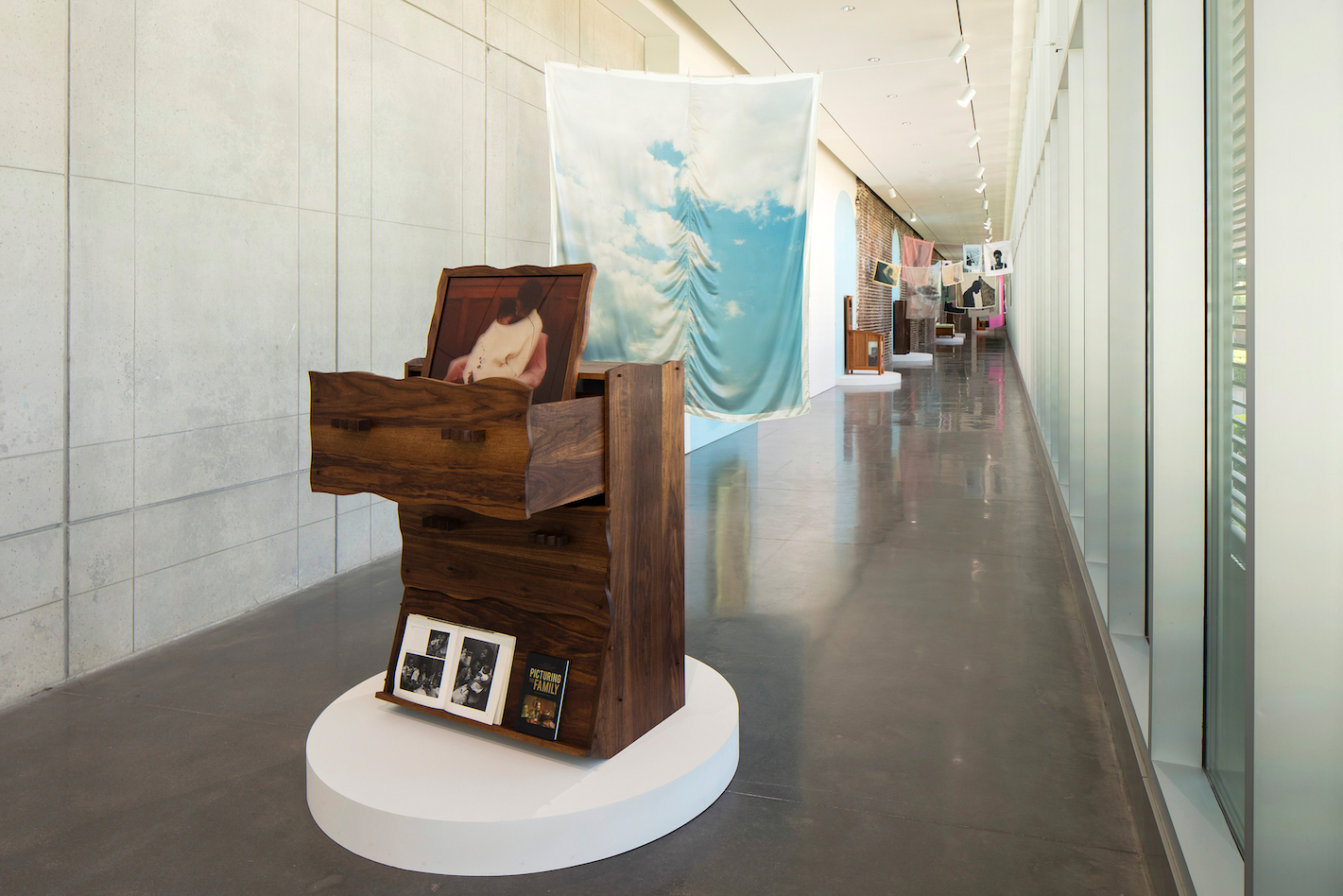
Psychic Repair (per the exhibition's promo collateral) presents "highly saturated images that explore rituals of self-presentation and their ties to identity, memory, and belief formation." Photographs like "Absolute Radiance" vibrate at freakish peaks of the chromatic spectrum, seductive and strange.
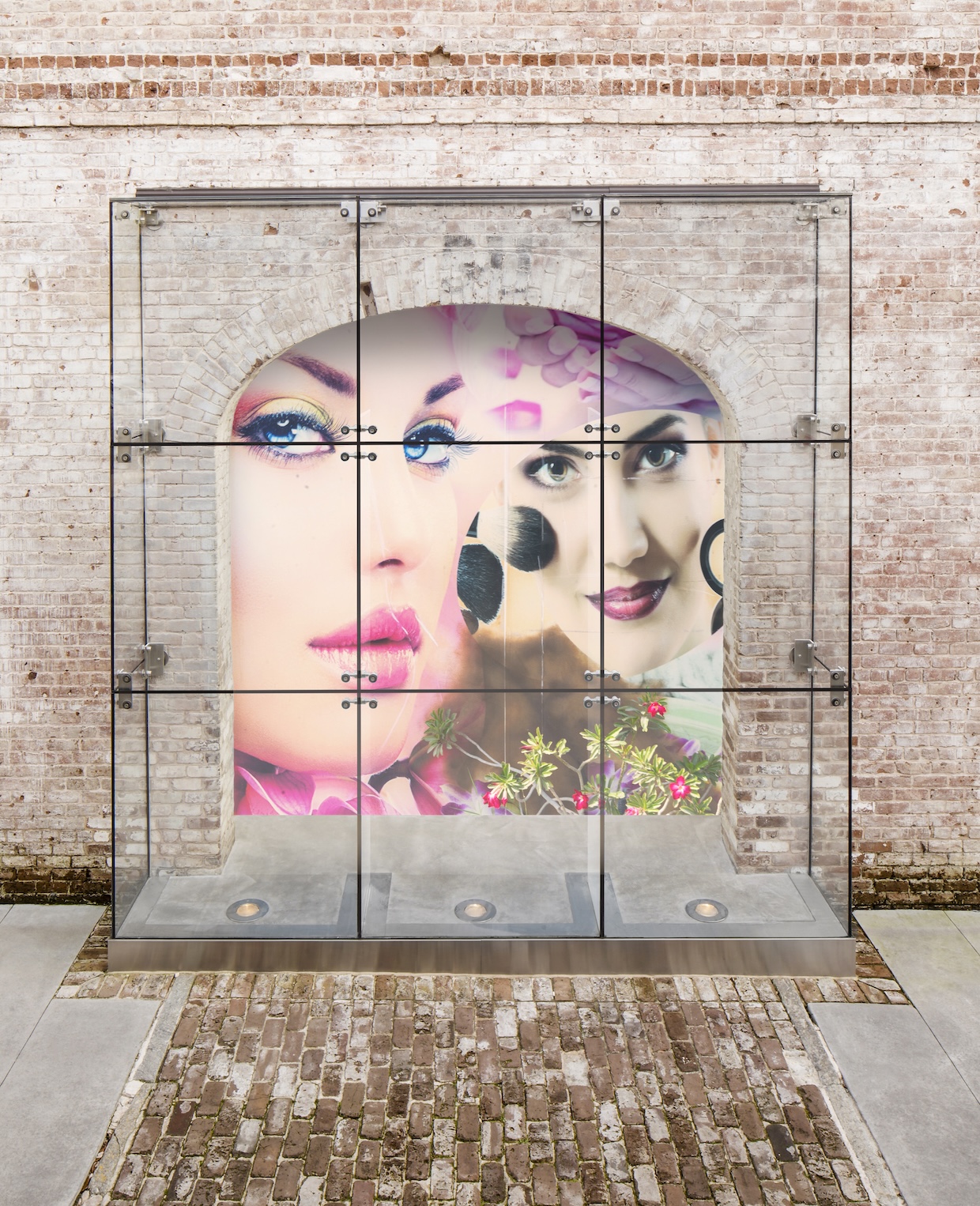
Farah Al Qasimi, Psychic Repair, exterior museum view, 2026.
Al Qasimi then name-checked doyenne of dancing dolphins Lisa Frank, and mentioned "something a little bit more sinister underneath the surface of all that celebratory color." "We are so accustomed to images trying to sell us something," Richmond observed.
"I like the idea that these [photographs of mine] aren't trying to sell you on anything except maybe a deeper understanding of the language of consumerism and the seduction of the image," Al Qasimi replied, shuffling her boots.
At one point, the artist referred to Psychic Repair's video installations as "moments to pause." When the curator encouraged the audience to go experience the exhibition, those moments had arrived.
In the museum, TV screens flickered. One was labeled "How I Learned to Stop Worrying and Love My Room," its title a riff on Kubrick's Dr. Strangelove. Headphones beckoned.
There was Al Qasimi on screen, dressed in a suit like Robert Palmer in his iconically vapid 1986 MTV smash "Addicted to Love." Then she appeared as a dorky Dubai teen, smitten with Iron Maiden and high on skin whitening cream, crooning through her karaoke machine: "Hey dad / I bought a guitar / I'm in a band / please don't be mad."
Post-sinister, parody-ready pop pantomime became a fun way to beat time. FAQ's little bit of intervention had gone the distance.
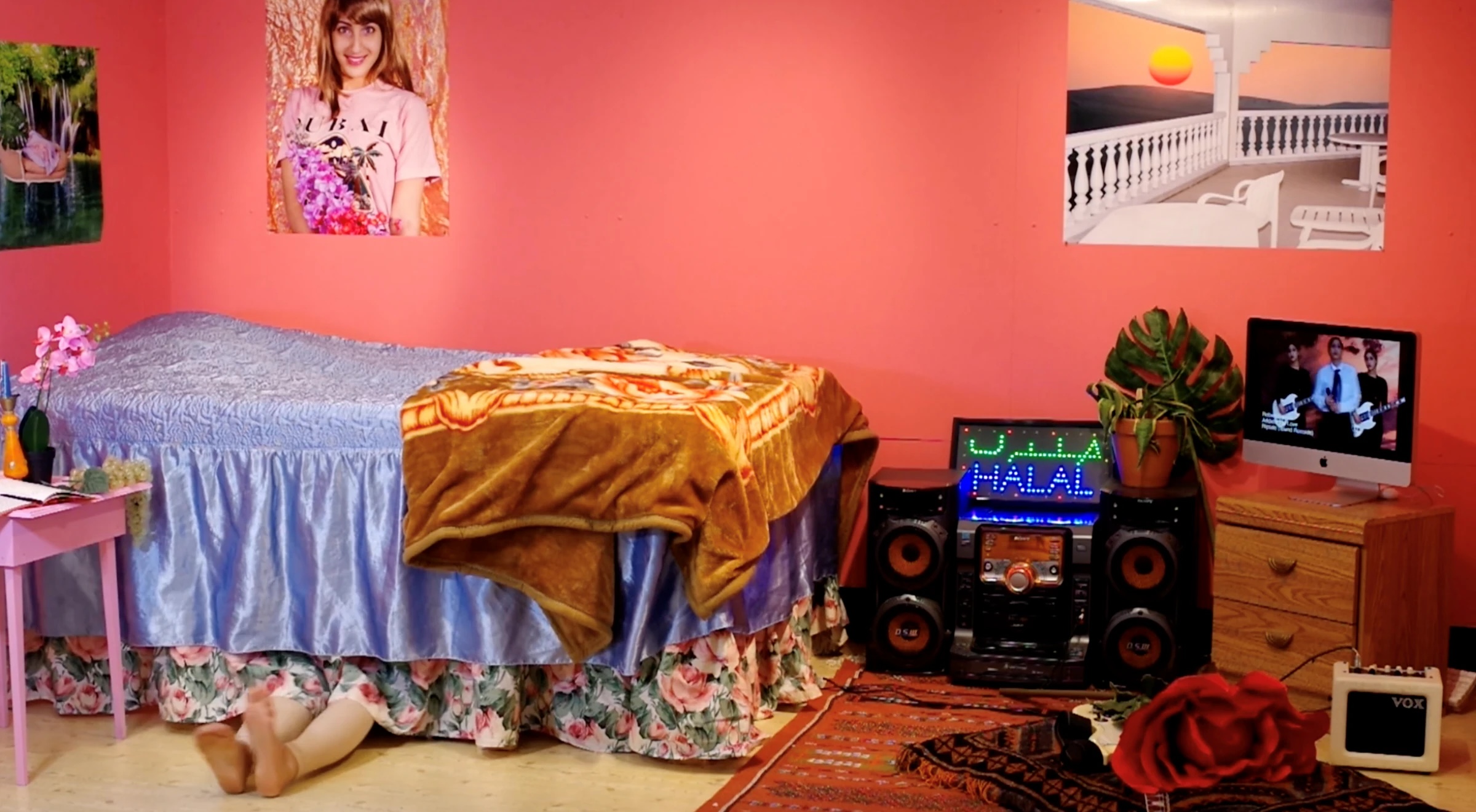
Farah Al Qasimi, "How I Learned To Stop Worrying and Love My Room," video still from digital video, 2016.
Courtesy of the artist and Francois Ghebaly, Los Angeles / New York.