Skip to main content Accessibility Policy

'Star Tap' turns it on

May
5
2021
By
Tags:

"We're definitely taking the full dose," says Emily Furr (B.F.A., graphic design, 2000). She's referring, of course, to taking in the "Acid Tongue" series featured in her solo exhibition Star Tap, at SCAD Museum of Art.

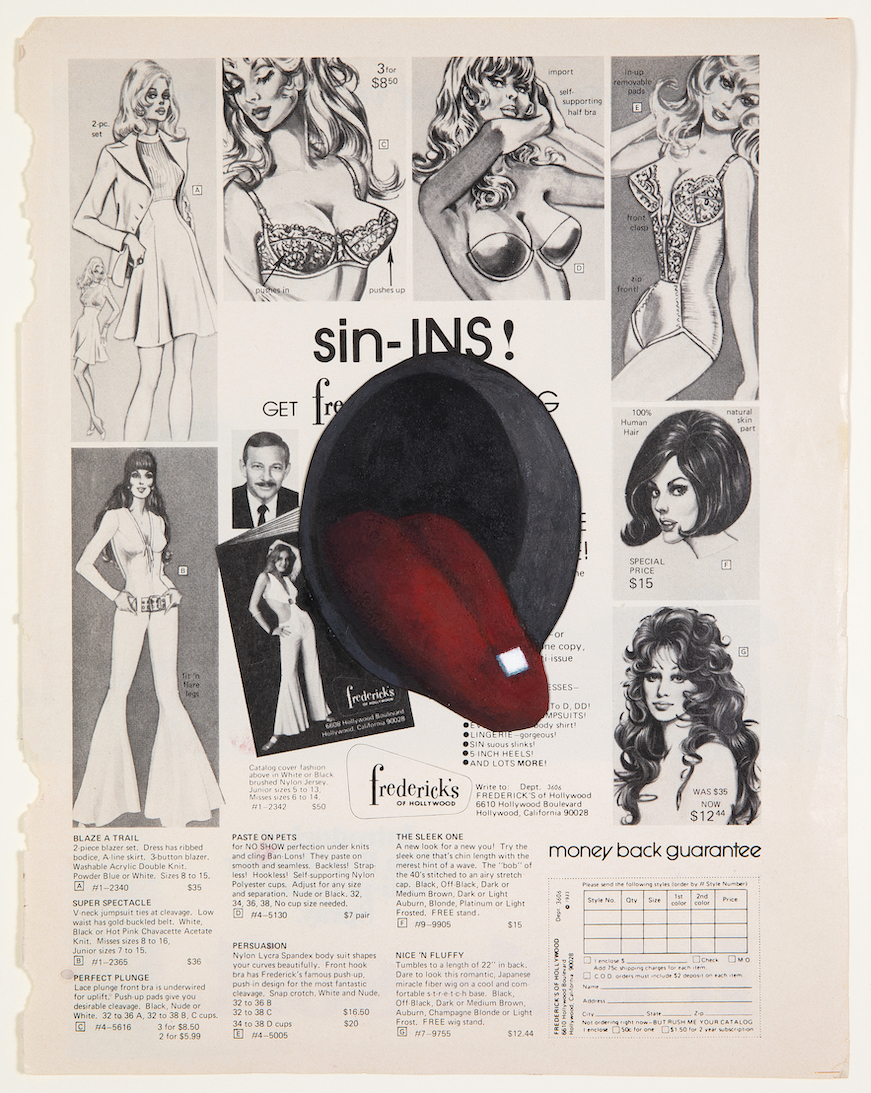
Each "Acid Tongue" depicts a ruddy appendage emerging from a suggestive void, on the verge of gobbling up a psychoactive substance. The seven gouaches, collaged onto tawdry advertisements torn from the back pages of old magazines, are as deranging as the dreaded lysergic itself. One senses that Furr, standing beside her work in the SCAD Alumni Gallery, her face half-hidden behind a precautionary mask, is smiling.

"It's fun to work on something outside your comfort zone," she says of the series, which she painted in 2020 at home in Greenpoint, Brooklyn. "And you can't do oil paintings around a toddler."
Ad

Acid Tongue #1, 2020, gouache cutout on advertisement, 8 x 10 inches.


The gouaches are something of an outlier for an artist better known for her oils (which also feature prominently in Star Tap). The series' Pop aspect demonstrates a kinship to Pauline Boty's 1960s collage paintings, while its more explicit correlation is to British artist John Pasche's infamous, lascivious logo for The Rolling Stones. "Acid Tongue" is not, Furr says, a direct homage, "but it's the same sort of Mick Jagger energy, like, I'm so great, I'm going to lick you!"

Furr's great licks of paint have been presented in solo exhibitions at 12.26 Gallery, Dallas; Marfa International; and Sargent's Daughters, New York, where Mother Lode drew acclaim from Artforum and Artnet in 2018. In 2019, she was artist-in-residence of The Watermill Center, and in 2021, a featured artist at SCAD deFINE ART, conducted virtually. When the coast-is-clear call finally came this April, Furr traveled to Savannah to see own show.

The return prompted a trip down memory lane. "SCAD opened up a new language for me," she says of her time as a student. "I loved the foundational classes, meeting likeminded people, exploring the city. I had so much fun living in O-House, where I made fast friends. I had a great education at SCAD, and stayed in Savannah all four years."

After graduation, the Edwardsville, Illinois native worked as a graphic designer for major New York City agencies, while painting by herself at night. In 2018, she began pursuing her M.F.A. at Hunter College, which helped further unlock both professional connections and doors of perception.
Artwork

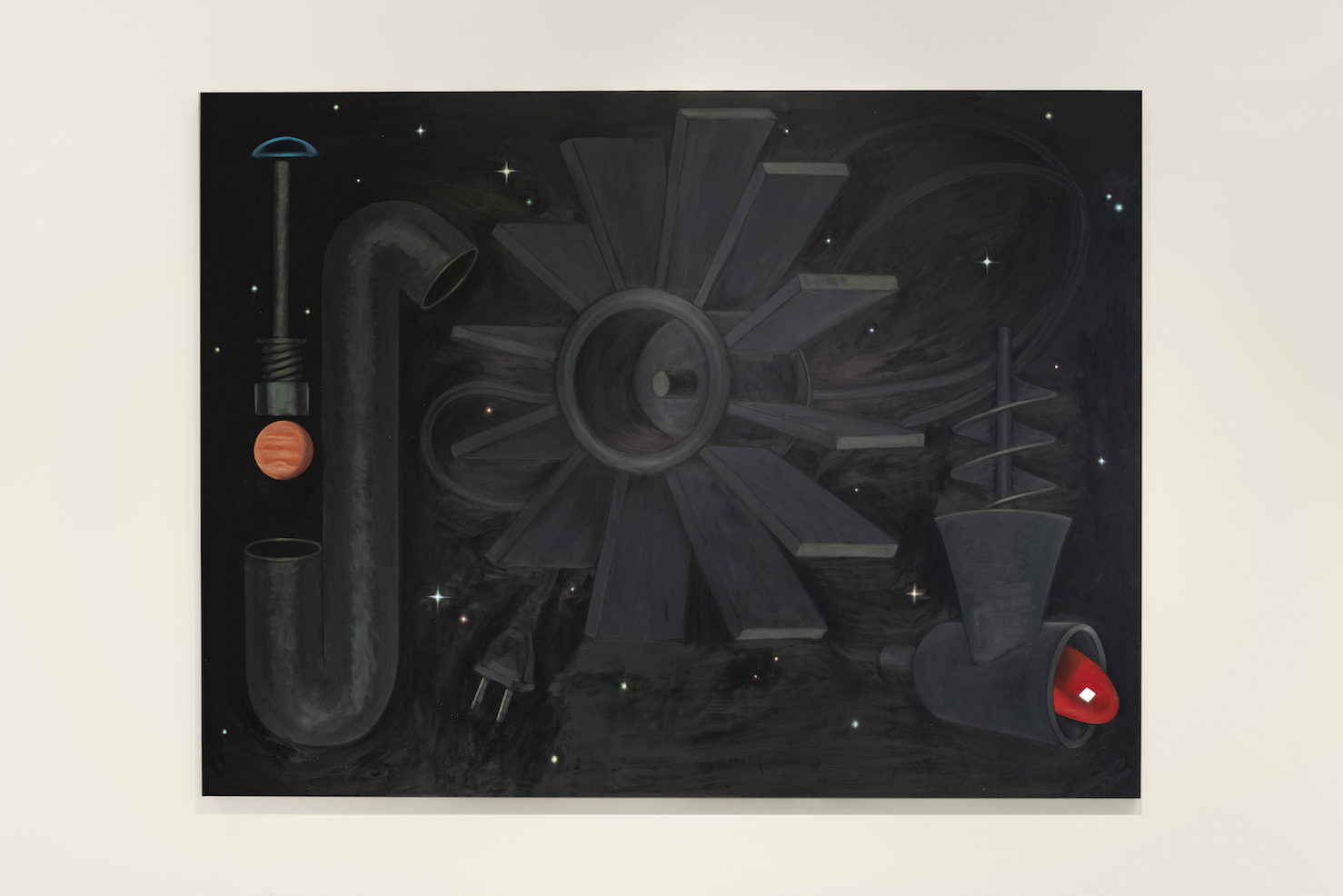
Thirst Trap, 2020, oil on canvas, 96 x 72 inches.


The blockbuster oil "Thirst Trap" epitomizes Furr's cheeky cosmology, literally plumbing outer space on the Rube Goldberg tip. "That painting shows a planet as a pinball that's going to go through a crazy maze," Furr observes. "Most of my work depicts industrialism coupled with nature or the cosmos to show how incongruent they are."

An ability to combine precision with intuition is manifest. "If the paintings look controlled it's because they begin in a digital realm. I do all my initial sketching in Photoshop. I don't like to use the word 'design' [when I talk about painting] because that implies a function, but I map out a composition similar to how a designer would. Then when I'm painting, I let the painting dictate where it wants to go. I have fun."
Student portrait

Star Tap is on view through Sunday, May 9, 2021.

Quotes are from the writer's interview with Emily Furr, and from curator DJ Hellerman's virtual talk with Furr during deFINE ART 2021.
Rose B. Simpson's deFINE 'Countdown'

February
26
2021
By
Tags:

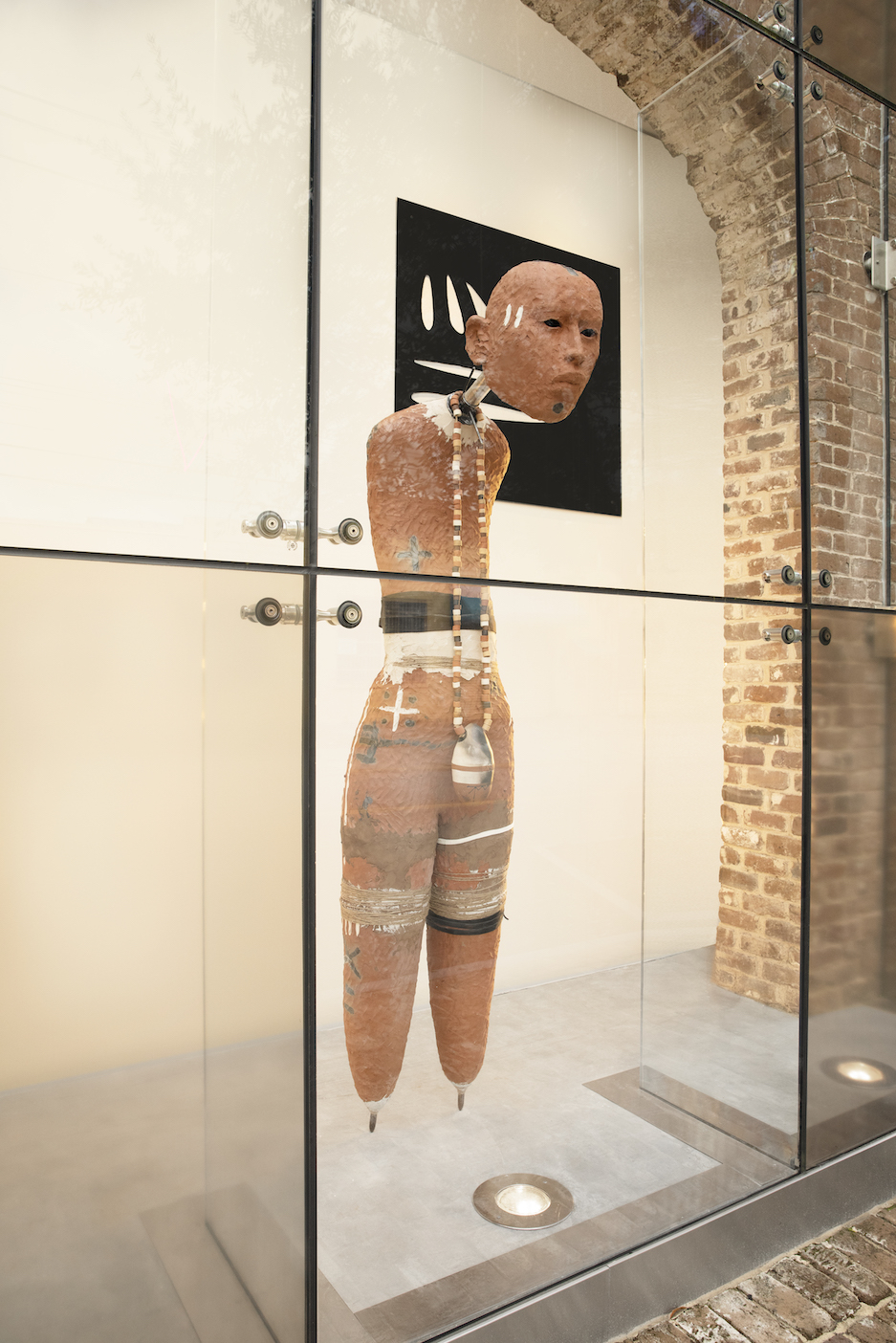
"Being in an agitated state wasn't going to allow these pieces to come into being," artist Rose B. Simpson said of the four large-scale sculptures that occupy the jewel boxes of the SCAD Museum of Art. "The water in the clay is listening to my internal molecular water, so it's going to respond and break. Or explode in the kiln. The tension is already in the work. These really heavy clay works are leaning against this glass…that's tension enough."

Simpson's frequent, sweet laughter when discussing her serious Countdown sculptures seemed particularly suitable to the moment. As she spoke with curator DJ Hellerman during this year's virtual SCAD deFINE ART, the artist was in her home studio in New Mexico's Santa Clara Pueblo, just across the Rio Grande from her tribal center ("If you yelled from the center of the pueblo, I could hear you") while the curator was in the museum in Savannah.

"I can't relate to the feeling of placelessness," Simpson said, "because I had the privilege of growing up in my ancestral homelands, spending time with my great-grandmother in the house that her great-great-great grandmother built."

Simpson credits her mother, the noted artist Roxanne Swentzell, with creating her foundation: "Ceramics was my mom's livelihood, and it fed our entire family. I didn't realize until I was in grad school that I had the privilege of coming from a family that supported itself through its artwork. That's a neural pathway I didn't have to build."

As Simpson peered through her computer screen, it made for a powerful if unintended corollary to her works at SCAD MOA, where the Countdown sculptures — enormous, armless stoic beings, adorned with glyphs — lean against the inside of the jewel boxes, in conversation with passersby.

"I see the glass as a material you work with, not a spacer between human and art," Simpson explained. "It's really a vital point of interaction."

Rose B. Simpson, “Countdown,” 2020, ceramic, metal, epoxy, cement, string, leather, and mixed media.

Rose B. Simpson, “Countdown,” 2020, ceramic, metal, epoxy, cement, string, leather, and mixed media.

Courtesy of the artist and Jessica Silverman.

The Countdown sculptures were created as a commission for SCAD MOA, although Simpson has only ever visited the museum virtually. "The first time I went onto Google maps and wandered around the streets and looked at these things, the metaphor that they provide is spectacular. The shape of the brick cut out from the side of the building is a threshold. The art has to engage with sunlight, with birds, with trees, that all becomes a part of it and that's so exciting."

Metal, epoxy, cement, string, leather, and mixed media all play literally supporting roles in Simpson's Countdown, though her primary material preference is set:

"I keep choosing clay. Clay is full of molecular water. Whatever your intentions are, it listens and responds to those intentions. I keep returning to clay because we have an ancestral, familial relationship, and clay keep me honest. It has the capacity to rip open my chest cavity and reveal what's inside. If we don't have compassion for ourselves, we will self-destruct, just like clay."

Rose B. Simpson

Visit Rose B. Simpson.


Karen Wilkin: talking Frankenthaler

February
13
2021
By
Tags:

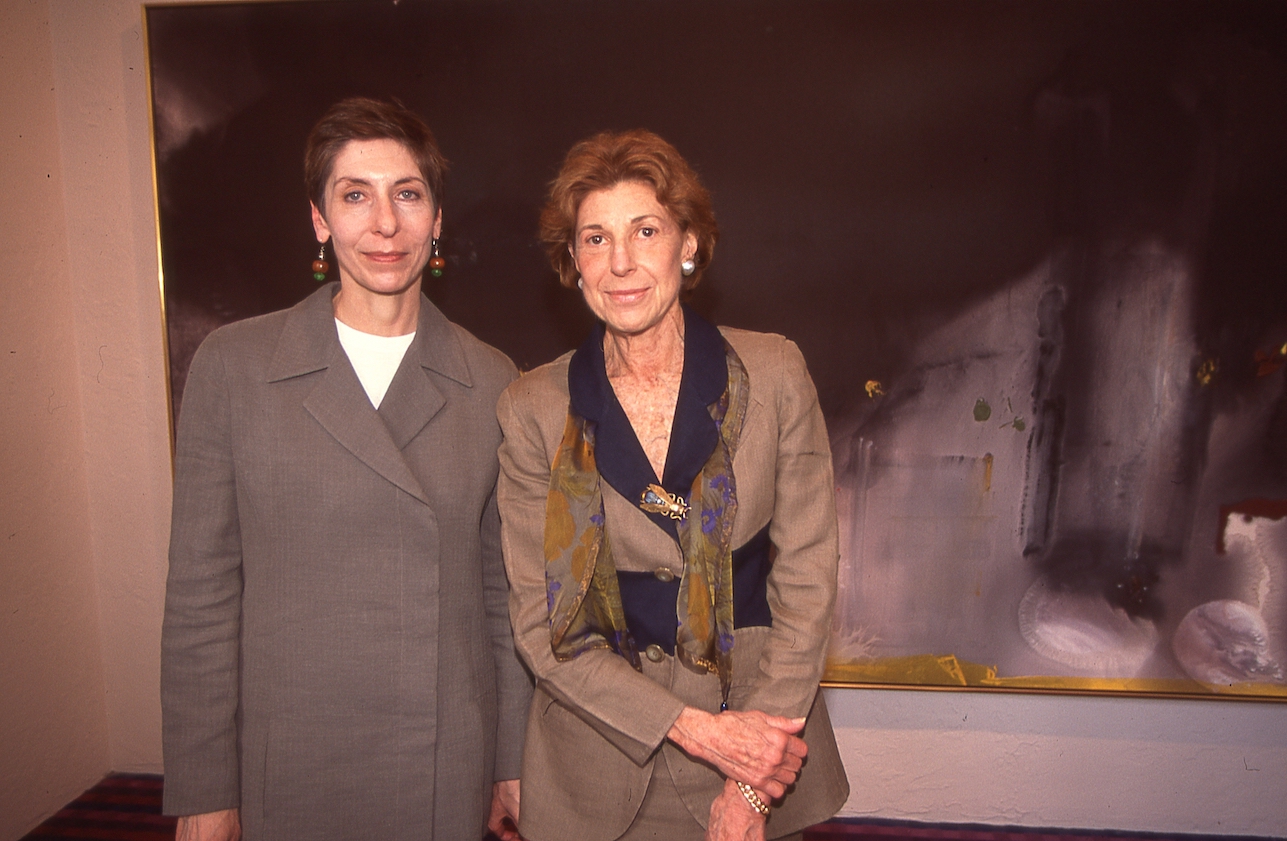
"I can still see the carpet," Karen Wilkin says, remembering the moment she and Helen Frankenthaler stepped into Exhibit A.

In the spring of 1998, Frankenthaler (b. 1929, New York; d. 2011, Darien CT) came to Savannah for an exhibition of her work at a gallery on Bull Street called Exhibit A. At the time, SCAD was a significantly smaller institution than it is today; Exhibit A was SCAD's primary exhibition space (SCAD MOA did not open its doors until 2002). Frankenthaler: The Darker Palette, curated by Wilkin, ran through June 1998, before traveling to the Corcoran Gallery of Art and to Princeton University Art Museum. It marks the point of origin in the relationship between SCAD and one of the greatest modern artists in American history.

"Helen was the one that proposed The Darker Palette because she was so eager to have this side of her work acknowledged," says Wilkin, reflecting two-plus decades after the fact. "SCAD was certainly ambitious and could pay for an exhibition of this content, that is to say, do it properly in terms of security and air quality in the gallery. The work was not all recent, the work was from different times and was chosen because of its visual qualities. What we dealt with in that exhibition is something that's still very much an issue in Frankenthaler studies — her accurate insistence that she had a much wider range than she was often given credit for."

Karen Wilkin (left) with Helen Frankenthaler at SCAD, Savannah, GA, 1998.

Karen Wilkin (left) with Helen Frankenthaler at SCAD, Savannah, GA, 1998.


As critic, curator, and confidant, Wilkin has done some of the very best writing about Frankenthaler, including "Appreciation" (American Art, Fall 2012); Frankenthaler at Eighty: Six Decades (Knoedler & Company, 2008); and the superlative catalog essay for The Darker Palette. "She's been written about so much because she is such an important and prolific artist," Wilkin says. "Of course, the work is so subtle and so utterly dependent on direct firsthand encounters with things that are completely wordless. What you really want to do is shut up and point!"

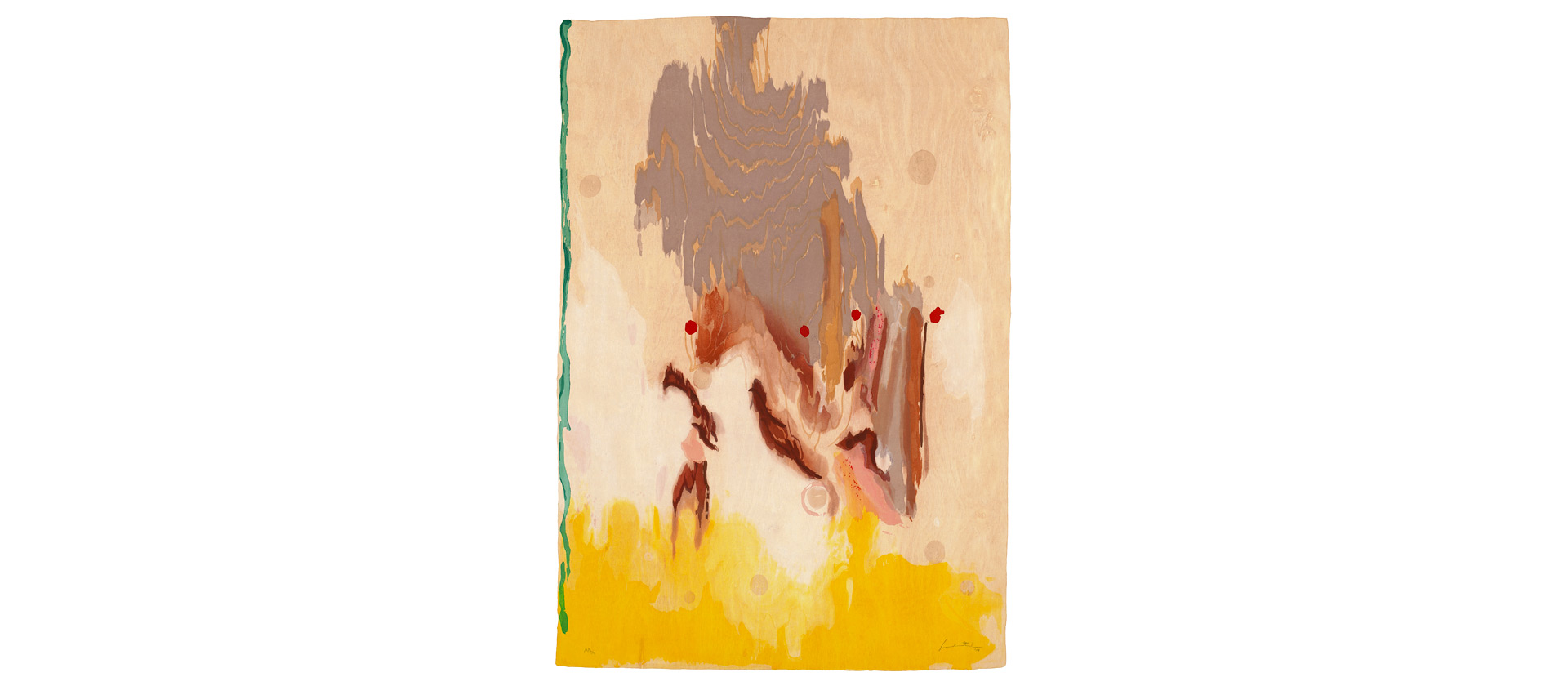
This year, SCAD MOA opened the new exhibition Deliberate Risks: Prints by Helen Frankenthaler. It features a rotating selection of ten prints and four proofs from the 1960s through the early 2000s, gifted to SCAD by the Helen Frankenthaler Foundation. The works include the dazzling woodcut "Geisha" (edition 4 of 14, 38 x 26", 2003) and the writhing lithograph "Bronze Smoke" (edition 31 of 38, 31 1/2 x 22 1/2", 1978).

Helen Frankenthaler, "Geisha," woodcut, edition 4 of 14, 38" x 26", 2003. Abstract art.

Helen Frankenthaler, "Geisha," woodcut, edition 4 of 14, 38" x 26", 2003. © 2020 Helen Frankenthaler Foundation/Artists Rights Society (ARS), New York/Pace Editions, New York.


Neither The Darker Palette nor Deliberate Risks represent Frankenthaler's heavily canonized period, which is to say the paintings she produced in her 20s, including 1952's epochal "Mountains and Sea." Rather, the exhibitions incorporate exceptional works from her unstintingly productive subsequent decades. Wilkin is a rightful proponent of Frankenthaler's sculpture, works on paper, and prints.

"I'm very glad SCAD has these prints, and that students will get to see them," she says.

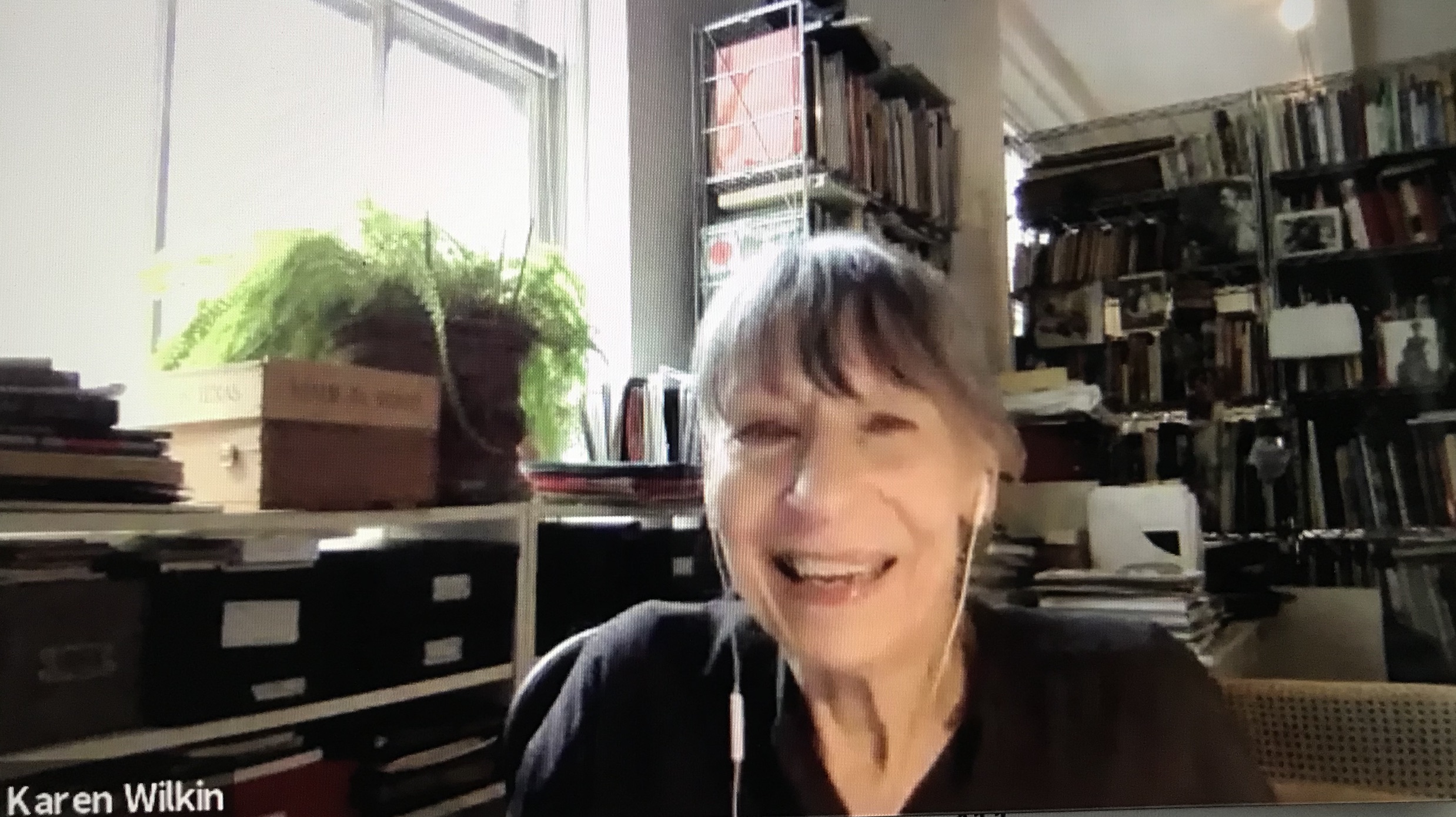
An hour speaking with Wilkin in 2021 means a peerless experience in art historical insights, as well stories about hanging out with Helen and getting deli sandwiches from Three Guys on the Upper East Side. Zooming from her office, its green plants outnumbered only by art books, Wilkin is friendly and direct, an undimmed glint in her eye, qualities all recognizable from photos taken together with Frankenthaler in Savannah in 1998. And so, about that carpet:

"We came down and the show was already installed. And we walked in there and the gallery had a carpet that had every color known to man in it in a geometric pattern and I thought we were both going to pass out. It was a real tribute to her work that it still stood up."

Karen Wilkin on a video call

Special thanks to SCAD community manager Rachel McDermott, who co-conducted the new interview with Ms. Wilkin that informs this article, and to SCAD Special Collections librarian Sauda Mitchell, who provided access to the Frankenthaler assets held at Jen Library.

'Mainly for Women' opens at SCAD MOA

January
15
2021
By
Tags:

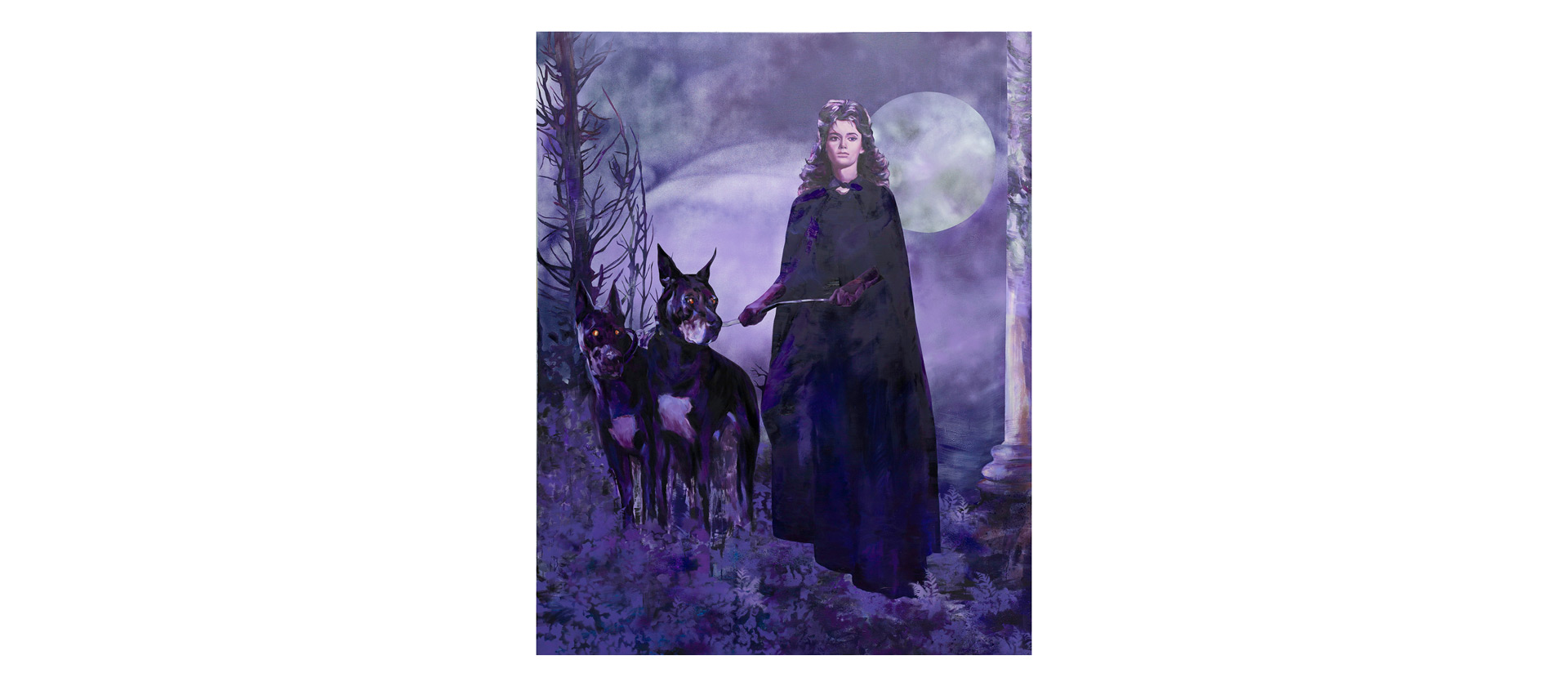
Stepping into the gallery means being struck by the colors of “Mainly for Women.” Many of the works are rich with purples and midnight blues. Arterial maroons and other dusky hues dominate. The colors are enticing, with a hint of the intentionally unknowable. There’s something playful yet uncanny at work.

"Mainly for Women" showcases a sumptuous array of paintings by Polish artist Paulina Olowska, highlighting her storied exploration into female archetypes. Olowska immerses herself within the world of womanhood via her mastery of appropriation and homage, creating paintings that draw out the psychosexual and sociopolitical constructs of female experience. Her rapid brushstrokes render naïve photorealist forms that are redolent with the feeling of bygone eras, as her colors appear softened by the passage of time.

Within her exploration of womanhood, Olowska brings the domestic act of playing hostess into the space of the gallery, inviting a group of women from the next generation of distinguished Polish artists to exhibit alongside her within the show. This collaborative act is definitive of Olowska's practice and indicates that her focus on portraying multiple representations of women is not just a conceptual preoccupation, but an active and performative aspect of her work. In the words of writer Jan Verwoert, "The house Olowska is building in her work is not a place of imaginary returns, but a site for gathering sister spirits."

The artists whom Olowska has invited to exhibit alongside her — Karolina Jabłońska, Dominika Olszowy, Agata Słowak, and Natalia Załuska — offer a dynamic range of female perspectives, creating an alchemical exchange of artistic approaches that reflects Olowska's focus on creating a complex and multifaceted vision of femininity. The group presentation, which takes on an almost mythic, séance-like quality, transforms the visuals created by these artists into an exposition of ideas. 

The exhibition's title, "Mainly for Women," takes its name from a 1960s "guide to love making" written by Robert Chartham, a pseudonym used by author Ronald Sydney Seth publishing under the guise of a sexologist. In the work, Chartham seeks to enlighten women on how to avoid harming their husbands' sexual self-respect while providing a biological play-by-play of the coital act, strictly to be enacted by a husband and wife only. This patriarchal bestowal of information is irreverently subverted by Olowska, who reclaims Chartham's title for her own purpose: to give name to a show of women artists who speak for themselves. Olowska's action of creating a female community suggests a valuing of subjectivities in which she and her fellow women artists are autonomous in determining their own image.

In their practices, Olowska, Jabłońska, Olszowy, Słowak, and Załuska grapple with the history and contemporary status of women in society. They contend with issues of female labor, patriarchal constructs of a woman's role, and visual manifestations of female interiority, with many of the featured works drawing from imagery related to pagan mythological narratives.

Through the distinct perspectives of formalism, portraiture, appropriation, and narrative painting, the artists use their work to disrupt our understanding of womanhood. Their erotic imagery, depictions of female agency, and labored methods of painterly execution are markers of how these women seek an uncompromised position of gender parity within art and society. With the recent attempt by Poland's constitutional court to impose a near-total ban on abortions — including in instances of rape and incest — this exhibition speaks with a sense of urgency for the dire need to insert female autonomy into biopolitics and society at large. In its presentation in the U.S., the exhibition holds a mirror to the country's own reckoning with women's rights.

Mainly for Women is curated by SCAD MOA assistant curator Ariella Wolens.

Paulina Olowska, "Romania," 2020, oil on canvas, 94 1/2 x 74 13/16 in. Private collection.

Paulina Olowska, "Romania," 2020, oil on canvas, 94 1/2 x 74 13/16 in. Private collection.

Banner image: the artist Paulina Olowska at SCAD MOA.

Visit scadmoa.org.


Gonzalo Hernandez keeps mixing emotions

December
2
2020
By
Tags:

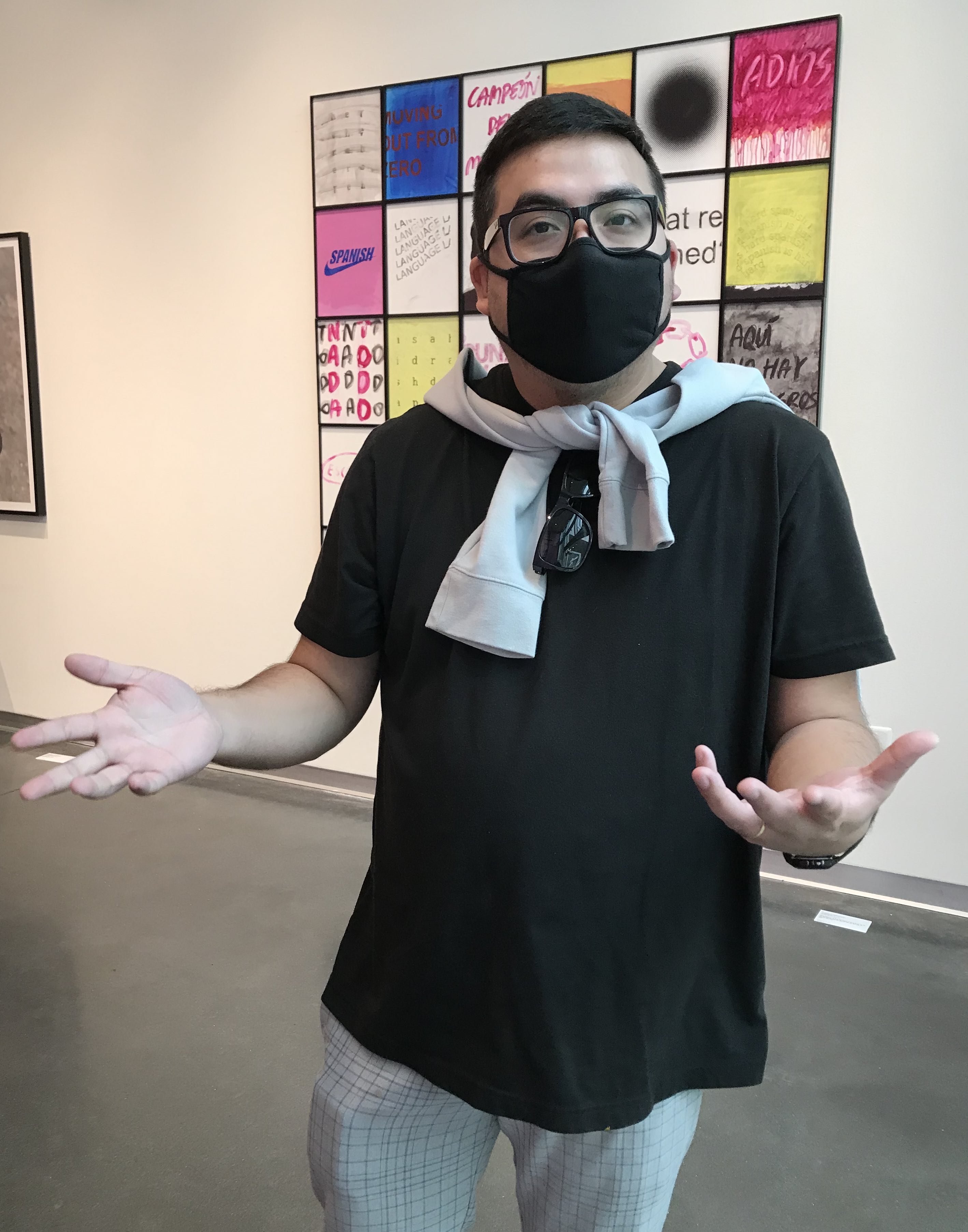
"I reject the idea of the artist being dependent on mystic inspiration," says Gonzalo Hernandez (M.A., painting, 2018; M.F.A., fibers, 2019). "The idea I'm pushing is that everyone is an artist and this is a job."

The Peruvian multi-disciplinarian stands in the light-dappled Alumni Gallery of the SCAD Museum of Art on a brisk autumn morning. Behind him, two drill-wielding workers in backwards baseball caps affix one of his new works to a wall. While installing Hernandez's exhibition, their actions emphasize his point.

One wall exposes the gallery's pink innards, which will be covered when the installation is complete. Except a closer look reveals…it is the work itself, titled PPP. Hernandez has created a floor-to-ceiling vinyl simulation of Owens Corning Energy-Saving Insulation with its familiar Pink Panther logo, adding subtle adornments to the repeat pattern, including his web address and an enigmatic emoji ):).

"I was researching symbols and that's how I found the title of the show," Hernandez explains. "The closed parenthesis followed by a colon and another closed parenthesis is both a sad face and a happy face. The emoji represents mixed emotions, and that's how I feel right now — having my first museum show at SCAD MOA is a big step for me, while the whole world is dying!"

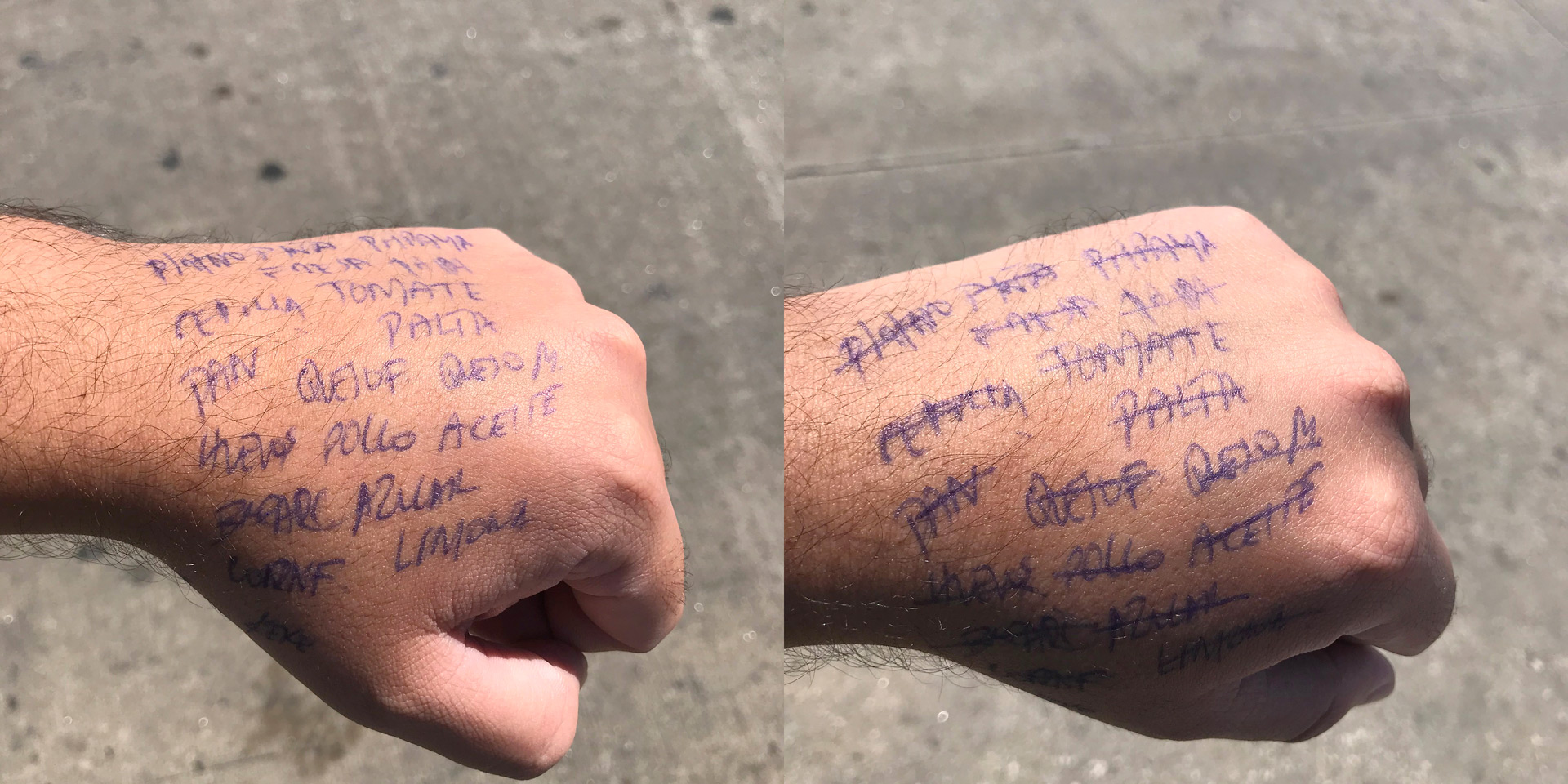
The artist is building himself as he goes. What might sound like fatalism in conversation inspires intrigue in person. In and Out, a photographic diptych of a shopping list written in Spanish on the back of a fist, carries implications about sustenance and consumption in a Corona-stricken year when even the supermarket can seem unsafe.

photographic prints by Gonzalo Hernandez

Gonzalo Hernandez, "In" (left) and "Out" (right), photographic prints, 40" x 40" each, 2020.


A video piece, 45", depicts Gonzalo wielding an advertising board featuring the word "SUCCESS" as he stands in different locations: an art fair, a soccer match, Damien Hirst's studio, a political rally, Machu Pichu. There is no sign twirling, the artist's stoicism questioning notions of location, reward, and who's doing the real work to make success possible.

In a moment of uncertainty and upheaval, Hernandez has embraced possibility. Shortly before the opening of his SCAD MOA show, he completed a monthlong residency with the nonprofit Erie Artists & Culture in Pennsylvania, where he collaborated with a piñata maker and a group of local musicians. In March, he and his wife Pierina Sanchez (M.U.D., urban design, 2019) launched ABRIR, an online gallery featuring an international network of artists including Leia Genis (B.F.A., painting, 2019; B.F.A., sculpture, 2019) and beloved painting professor Todd Schroeder.

"Todd is one of my big influences," Gonzalo says, nodding towards ):) (gracias Todd), a painting of the titular emoji on a sheet of Tyvek paper, a brand favored by Schroeder in his own work. "The English word ‘tribute' is not quite right," Gonzalo clarifies. "It's something closer to what we say in Spanish, homenaje."

Straddling cultures and countries, exploring art as language: Gonzalo Hernandez is on the job.

portrait of Gonzalo Hernandez

):) is on view through Sunday, January 24, 2021.

The exhibition is curated by Ben Tollefson.


SCAD welcomes Joël Díaz to new role

October
21
2020
By
Tags:

SCAD is proud to announce the appointment of Joël Díaz as the director of the Walter O. Evans Center for African American Studies. Díaz is an experienced leader and community builder within education and the arts.

As director of the Evans Center, Díaz will work closely with students, faculty, and staff to develop programming that enhances public knowledge, understanding, and appreciation of Black art and culture. His essential guidance will enrich SCAD's long history of engagement with renowned Black artists and cultural leaders and bring new horizons to the university's preeminent educational experience.

"Since its founding a decade ago, the Walter O. Evans Center has shined a brilliant, prismatic light on the story of contemporary Black culture," stated SCAD President and Founder Paula Wallace. "The hiring of Joël Díaz, a gifted storyteller and educator, ensures that SCAD reaches and engages more students and SCAD Museum of Art visitors than ever before. The future of the Evans Center is bright!"

In 2011, SCAD established the Walter O. Evans Center for African American Studies within the historic SCAD Museum of Art. Through the generous gift of Ruskin Society member Dr. Walter Evans and his wife Linda, the SCAD Museum of Art is home to more than 60 important works of art by renowned African American artists such as Romare Bearden, Elizabeth Catlett, Robert S. Duncanson, Richard Hunt, and Jacob Lawrence. The collection forms the foundation of a multidisciplinary center for the study, understanding and appreciation of African American art and culture.

"Art reveals to us the possibilities of life lived and life imagined, I am grateful to continue the work that SCAD,  Dr. Evans, and Linda Evans began many years ago by celebrating, interrogating, interpreting, and expanding our understanding of what has been deemed possible for Black life through the lens of African American art and culture," said Joël Díaz regarding his new role.

In addition to the donated historic works in the center, a permanent gallery space in SCAD Museum of Art is dedicated to exhibiting the work of contemporary African American  artists. In the decade since its founding, the Evans Center and SCAD MOA have continually exhibited and celebrated Black artists, including internationally heralded exhibitions focused on the legacies of Jacob Lawrence and Frederick Douglass, as well as contemporary exhibitions by Lorraine O'Grady,  Hank Willis Thomas, Carrie Mae Weems, Fred Wilson, Toyin Ojih Odutola, Kenturah Davis, and many others.

Prior to joining SCAD, Díaz worked with many leading arts and advocacy organizations and institutions, including the Schomburg Center for Research in Black Culture, and the nonprofit New York cultural center Pioneer Works. More recently, Díaz led a museum education immersion program for nontraditional students and created curriculum for historical research and interpreting material culture at the Museum of the City of New York.

For more information, please visit scadmoa.org.


Ask A Curator 2020 recap

September
28
2020
By
Tags:

What does a fashion curator do? What is the best part of being a curator? Ask A Curator Day, started in 2010 by MuseumNext founder Jim Richardson, allows the public to engage with curators at institutions across the globe using the social media hashtag #AskACurator. On September 16, the @scadfash social audience addressed questions to SCAD FASH Museum of Fashion + Film executive director Alexandra Sachs. Here are five memorable exchanges from Ask A Curator Day.

1. How do curators decide which designers they will invite for an exhibition at SCAD FASH?

Alexandra Sachs: "SCAD FASH curators work collaboratively to identify artists and designers who reflect the diversity of our student body and community, and who align with our mission to celebrate fashion as an artform and conduit of identity. Curators and staff oversee fashion-focused exhibitions, events, and programs that resonate across the university. Our curators also organize exhibitions at the SCAD Museum of Art, plan an annual summer exhibition at SCAD Lacoste, and assist with the SCAD FASHION runway shows. 


2. What does your typical day look like?

AS: "Every day is dynamic and ever-changing! Whether I’m collaborating with artists, designers, and galleries on exhibitions and events, scrolling the latest fashion news, media, and art books, or writing texts for catalogs and digital publications, I’m constantly seeking new information and connections to bring the best programming to SCAD."


3. What are the most challenging moments of your day?

AS: "Working in a creative field requires adaptability and a willingness to change while still working toward your overall vision. When I find something frustrating — a challenging installation perhaps — it’s often a sign that I need to consider different perspectives and reevaluate my approach to realize my goals.

"

4. What do you love about your job?


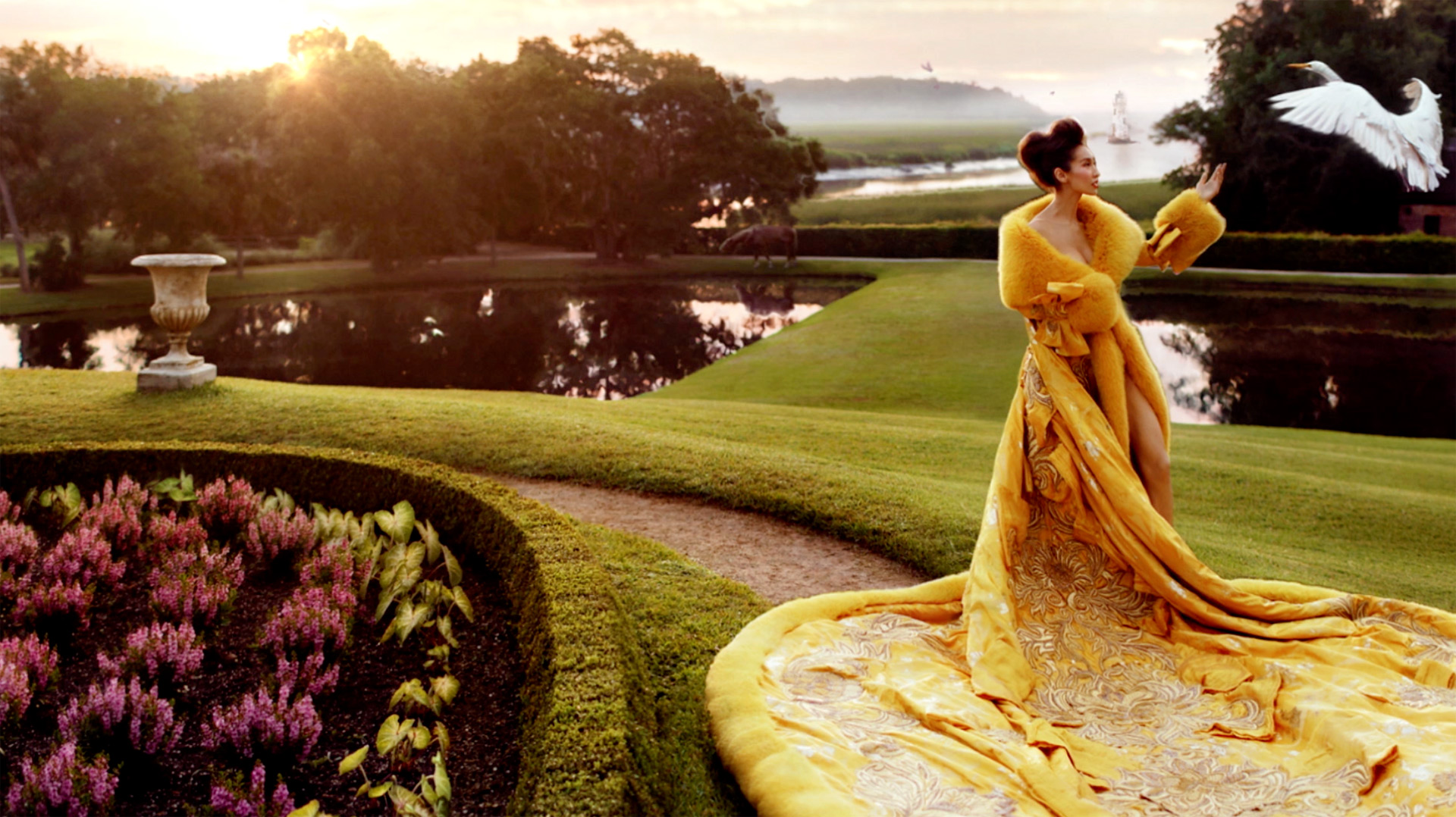
AS: "I am extremely fortunate to work with incredible artists, designers, professors, and colleagues. We’ve presented so many spectacular exhibitions in the past five years, including work by Guo Pei, Pierre Cardin, and the indomitable Ane Crabtree, who designed costumes for "The Handmaid’s Tale." For me the most memorable part of the job is the people I meet along the way. They make the work gratifying."

5. What kind of university should someone attend if they’re interested in becoming a curator?

AS: "For a fashion curator, it’s essential to have a solid foundation in fashion history. It also helps to have knowledge of contemporary fine art and art history. SCAD offers a minor in museum studies as part of our art history degree program, enabling students to gain practical experience in our university museums, and interact with museum professionals across different disciplines. If you’re looking for a hands-on, project-based learning experience, SCAD is the place to be!"

SCAD FASH is excited to share what happens before, during, and after an exhibition is on view. We’re expanding the visitor experience by making more behind-the-scenes content, providing a closer look at specific garments on view and in the collection, in a new IGTV series coming this October on @scadfash. Please connect by sending us a DM if you have any questions. We hope to see you at SCAD FASH and for a virtual program soon!

fashion by Guo Pei

Plan your next SCAD FASH visit. Museum Hours: Thursday–Saturday, 11 a.m.–5 p.m.


Guo Fengyi: To See from a Distance

September
16
2020
By
Tags:

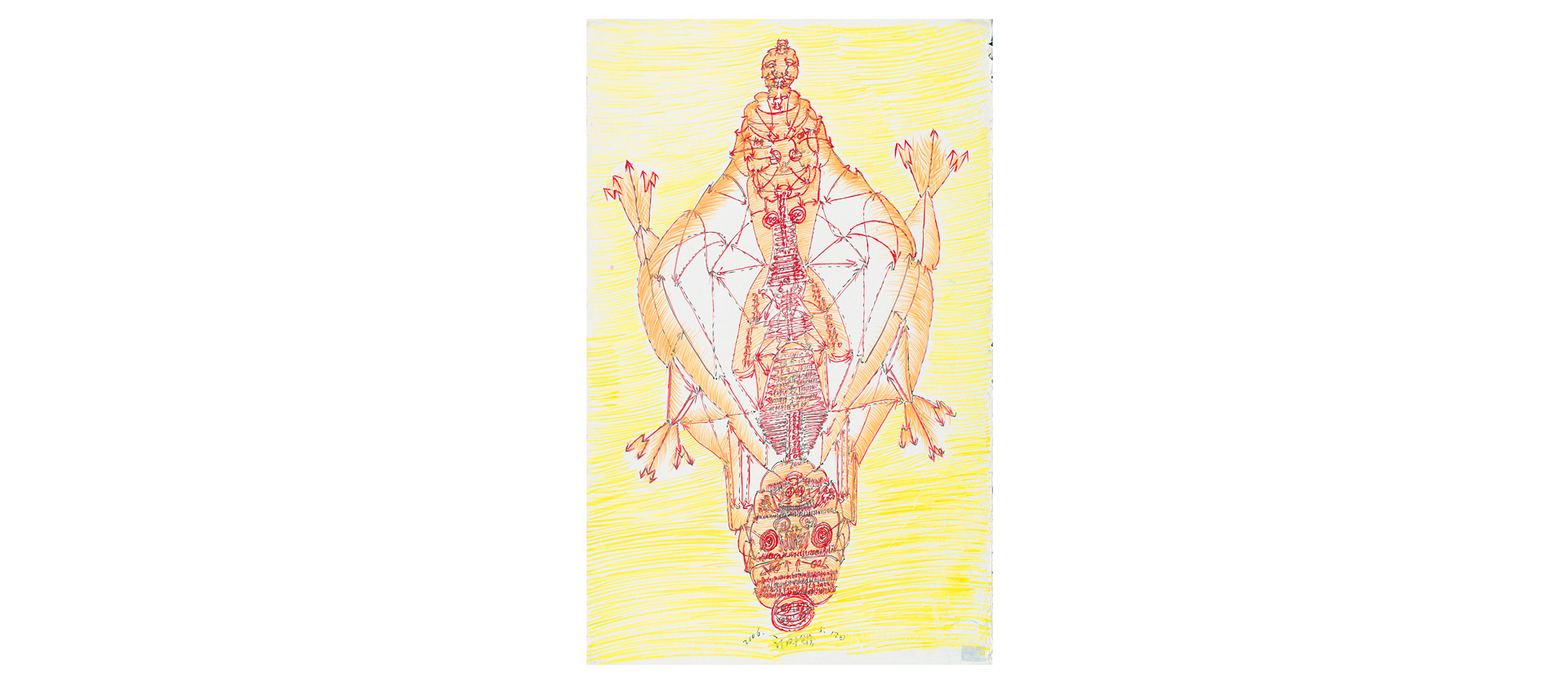
The SCAD Museum of Art presents Guo Fengyi: To See from a Distance, the first major institutional exhibition of the late Chinese artist's work in the United States. The exhibition is on view now through Nov. 29, 2020.

"Her drawing practice was a visionary practice," says Rosario Güiraldes, assistant curator, The Drawing Center. "Guo believed that through drawing she was really seeing and accessing places that were remote and distant to her. In the present, right now, being in the world, we're all confined and seeing or living at a distance. The title of the show, and her practice, feel so timely."

Born in 1942 in Xi'an, the site of China's historical capital, Guo began making art in her late forties after debilitating arthritis forced her into early retirement from a job at a chemical fertilizer factory. To alleviate her chronic pain, Guo devoted herself to qigong, the ancient Chinese wellness and healing technique that combines coordinated movements, breathing, and meditation, and subsequently developed a highly personal drawing practice. Producing an astonishing body of work in the last two decades of her life, Guo created more than 500 intricate ink drawings on subjects ranging from cosmology and Chinese mythology to traditional Chinese medicine and philosophy.

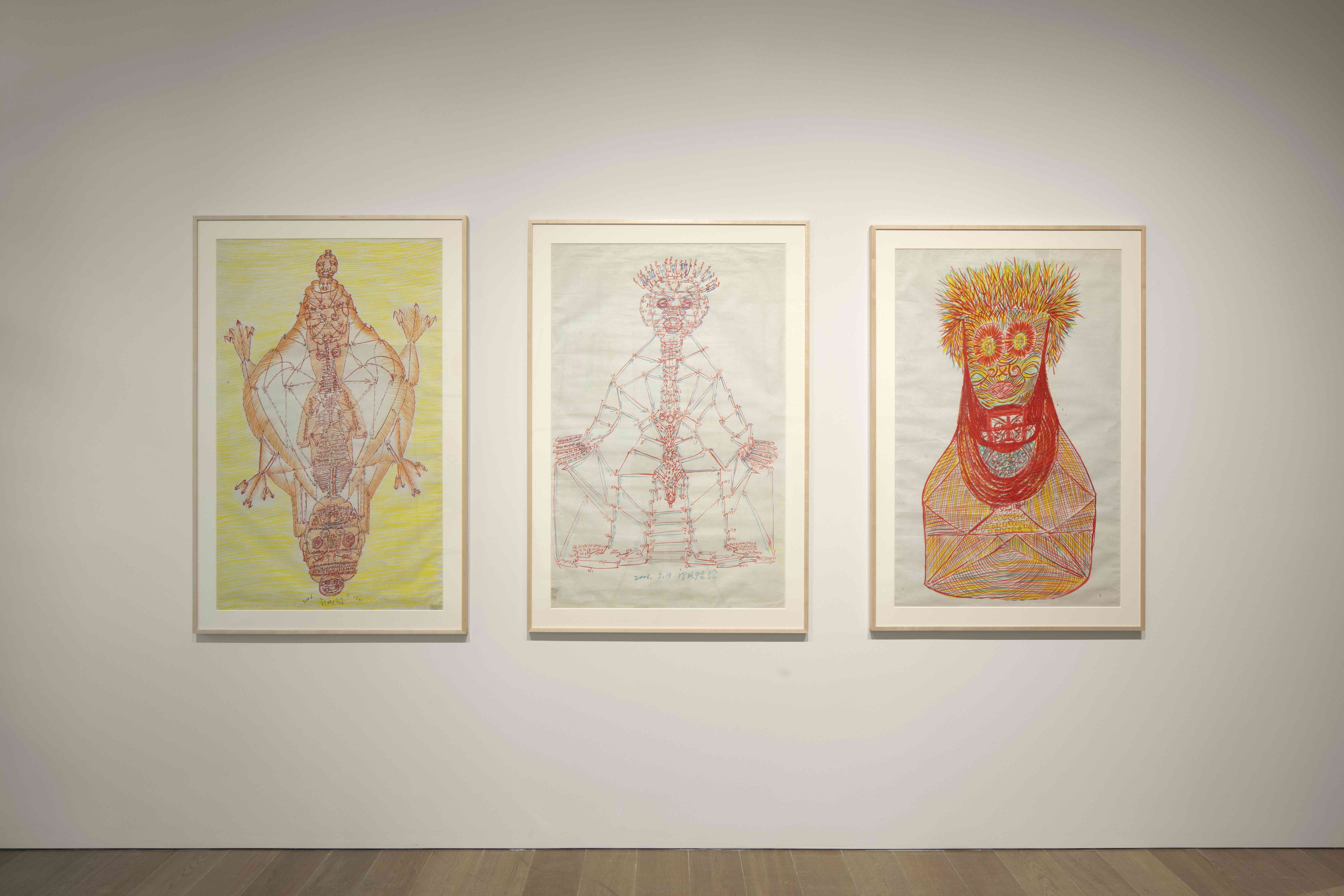
To See from a Distance features more than thirty works from Guo's career, including drawings executed on the backs of book and calendar pages and on cloth, as well as small- and large-scale drawings on rice-paper scrolls. The exhibition provides an overview of Guo's visionary drawings, which incorporate the diagrammatic, the mystical, and the wildly imaginative.

installation view of Guo Fengyi exhibition

"Guo Fengyi found a prolific source of inspiration in her meditations and created one of the most electrifying drawing practices in contemporary culture," remarks Humberto Moro, SCAD MOA adjunct curator. "Her work is incredibly fluid and potent, and she was a fearless, consistent practitioner who remained opaque to the Western world until recently."

Many of Guo's earliest drawings reference ancient Chinese history, depicting the contents of the sealed burial chambers of China's earliest emperors. By the mid-1990s, Guo had abandoned her journals, switching to paper scrolls. Over the last decade of her career, she amassed more than seventy drawings made on the backs of old calendars and on rice-paper scrolls that measure up to six-meters long. Together, Guo's works speak to the power of drawing as a means to comprehend and "see" the unknown. Deeply rooted in the understanding of the relationship between the human body and the universe that has persisted for millennia throughout Chinese culture, Guo's drawings incorporate both the micro and the macroscopic, revealing universes both internal and external.

Guo Fengyi: To See from a Distance is co-produced by The Drawing Center, New York, and SCAD Museum of Art, Savannah. The exhibition is curated by Rosario Güiraldes, assistant curator, and Laura Hoptman, executive director, The Drawing Center, and organized at the SCAD Museum of Art by Rosario Güiraldes and Humberto Moro.

SCAD MOA is open for in-person visitation. For more information, please visit www.scadmoa.org.

artwork by Guo Fengyi

"Organization Method of Human Numeric," ink on blueprint paper, 55" x 34", 2006. Courtesy of Long March Space.


Edgar Sanchez Cumbas at SCAD MOA

September
9
2020
By
Tags:

The expressive art practice of Edgar Sanchez Cumbas (B.F.A., illustration, 1994) includes painting, drawing, and found object sculpture. Many of his paintings incorporate multiple layers of thick impasto, which accumulate into allusions to skin and human bodies. The artist uses abstraction and raw material in tandem with his deeper commentary on subjects like colorism, identity, and pervasive racism. The exhibition NO. This Is Not the Color of Flesh at the SCAD Museum of Art includes recent paintings and drawings that demonstrate the artist's varied approach to media.

"When you see the work in the flesh, you can't help but be able to investigate the richness of the pieces," says Sanchez Cumbas. "Even though some are three-dimensional, some are a flat surface, and some are paper drawings, they all have this rich, tactile quality. There's a unity to all of the work."

Sanchez Cumbas injects his abstract compositions with explorations of important contemporary cultural issues. His heavily tactile and layered paintings spring from complex identity politics and are informed by his Puerto Rican heritage.

Sanchez Cumbas: "When I was growing up in Puerto Rico, my grandmother had a popular portrait of Jesus, 'Head of Christ' painted by Warner Sallman. This one was a 3D hologram, and as a little kid I fascinated by it. I kept looking at the side and wanting to see what was behind. It was a visual thing, but at the same time there was a sense of suffering that I saw in that picture, and hope too.

"In 2015, I took a trip down the Danube in Austria and saw the cathedrals. Once I came back from that trip, I knew my work would tie into the intersection between religion and racism. At that moment that picture by Sallman popped up again. I was aggressively pushing the paint to mimic the feel of that print of 'Head of Christ'. It wasn't until I laid down the last color, the flesh tone, that the first thing I said in my head was, 'No, this is not the color of flesh!' At that moment I knew the piece was done.

"That piece is a reinterpretation of a holographic picture, to a sculptural piece. We still have to look to the side and see the details of the violently laid-down paint, the strong, aggressive marks. Then we get to the top surface which is flat and smooth, indicative of our skin and our sensitivity to these issues."

artwork by edgar sanchez cumbas

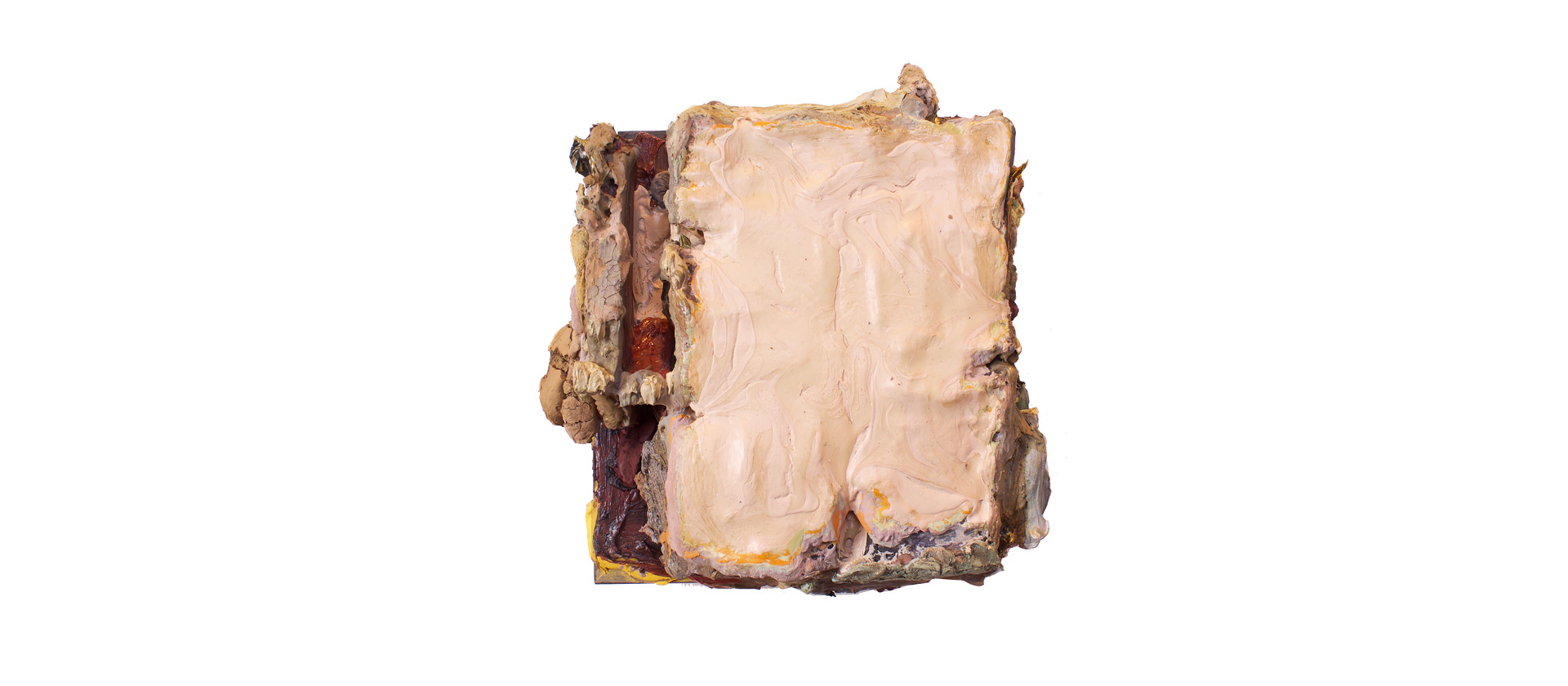
"NO. This Is Not the Color of Flesh," wood, heavy gesso, acrylic polymer paint, and unsanded mortar, 12" x 11" x 8", 2018


The title of the exhibition takes its name from the central painting on view. The work, while small in scale, juts out into space with its chunky, accumulated layers of paint in myriad colors, from muted green and subtle brown to deep maroon and saturated yellow. This work, like many of the artist's paintings, rejects the inherent "flatness" of the traditional picture plane, offering viewers an objecthood and corporeality more akin to their own bodies than to painting and image-making.

The top layer of this work is a swath of beige-pink, a color commonly associated with Caucasian skin. Beiges have historically been the unchecked default "flesh tone" of everything from Crayola crayons to makeup foundation to academic painting instruction. In No. This Is Not the Color of Flesh, Sanchez Cumbas confronts the concept of beige as the assumed human coloring. By finishing the top layer of the work in this color while roughly exposing the multihued underlayers on the sides of the work, the artist suggests the violence and suppression of culture that occurs when societies place a higher value on those with lighter skin.

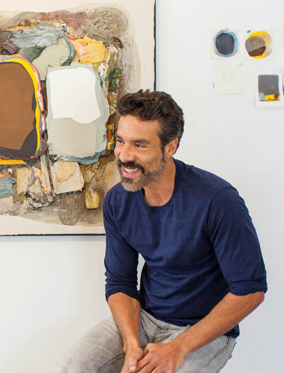
portrait of edgar sanchez cumbas

The award-winning SCAD Museum of Art will reopen to the public Thursday, September 10 with a roster of new and extended international exhibitions.

NO. This Is Not the Color of Flesh is curated by Ben Tollefson, associate curator of SCAD exhibitions.

www.edgarsanchezcumbas.com

SCAD supports RESIST COVID TAKE 6!

August
13
2020
By
Tags:

"COVID-19 is an ecological health crisis of epic proportion and we've all been impacted," says artist and activist Carrie Mae Weems. "We have indisputable evidence that people of color have been disproportionately impacted. This fact affords the nation an unprecedented opportunity to address the impact of social and economic inequality in real-time."

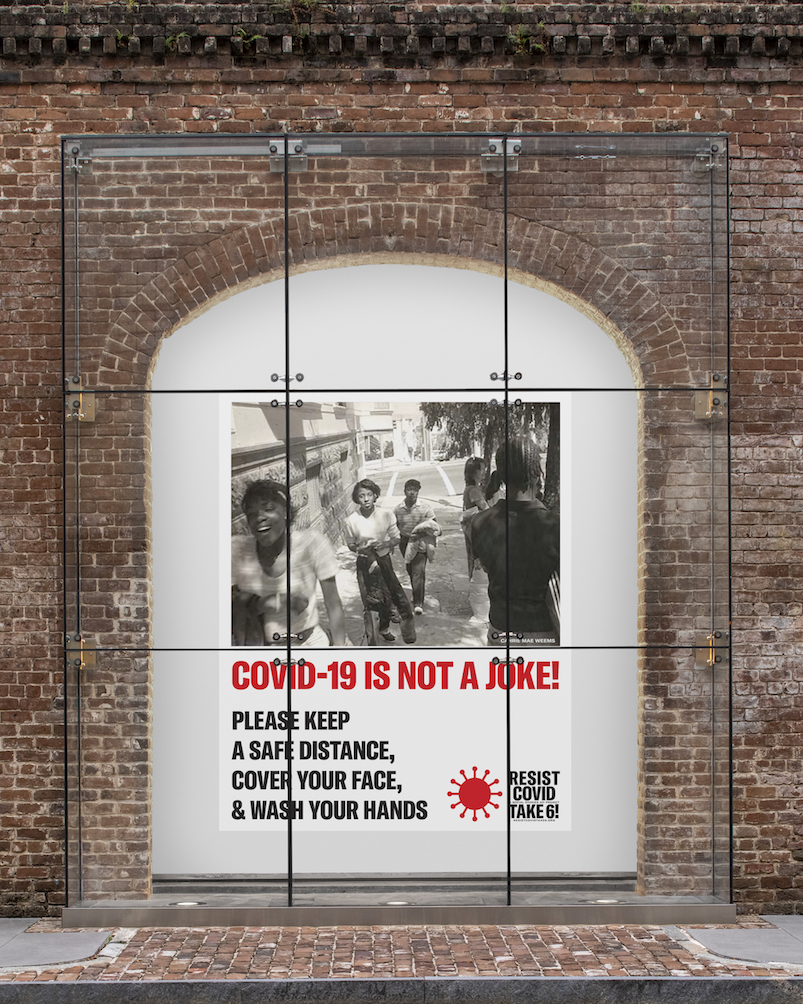
SCAD has partnered with Weems to launch the artist's new public art initiative, RESIST COVID/TAKE 6!, in Atlanta and Savannah, home to SCAD's two Georgia campuses. The artist-driven project emphasizes the precaution for people to maintain a six-foot distance from one another, and speaks to the urgency of Weems' call to action.

"Not only does RESIST COVID/TAKE 6! raise critical health awareness, it shines a light on how this pandemic has disproportionately affected Black, Latino and Native communities," says President Paula Wallace. "We are pleased to be partnering with Carrie Mae Weems, longtime friend of SCAD, to bring this important work to Atlanta and Savannah."

Window display

At the SCAD Museum of Art in Savannah, the museum's street-facing jewel boxes display large-scale photographs accompanied by the initiative's messages including "Don't Worry, We'll Hold Hands Again." RESIST COVID/TAKE 6! is also on view at public locations in and around SCAD Atlanta. Commanding billboards and bus shelters bring its message to the attention of residents in one of the country's highly impacted cities. Flyers, "church-style" fans, and bags will be distributed through Meals on Wheels Atlanta and organizations in Savannah. The printed pieces direct audiences to local resources including COVID-19 testing sites.

The works showcase the realities of the international health crisis while providing notes of gratitude to workers within the health and service industries and making direct appeals for people to take preventive safety measures.

SCAD has over a decade-long friendship with Weems. The artist has collaborated with the university on numerous exhibitions and initiatives to showcase her dynamic work. Weems has been a distinguished visiting professor at SCAD Atlanta and worked with students on a thought-provoking film, "Constructing History: A Requiem to Mark the Moment" for the National Black Arts Festival in 2008. In 2016, Weems was the SCAD deFINE ART honoree and keynote speaker. That same year she had an accompanying exhibition titled "Carrie Mae Weems: Considered" at SCAD MOA in the Walter O. Evans Center for African American Studies.

Most recently, Weems spoke with President Wallace for the ‘On Creativity' podcast where the artist discussed recent and upcoming creative work, the importance of the RESIST COVID/TAKE 6! initiative, and her legacy in the industry.
 
Weems began working on RESIST COVID/TAKE 6! this spring while artist-in-residence at Syracuse University, as the extent of the COVID-19 crisis became apparent. The idea came from a conversation of Weems and her close friend Pierre Loving, lamenting what they saw unfolding. The initiative is also being activated in cities nationwide including New York, Detroit, Dallas, Los Angeles, Chicago, and Philadelphia in support by producing collaborators, THE OFFICE performing arts + film.

"The arts allow us to get closest to our humanity," says Weems. "One of the important things is to understand the circumstances under which we live. This means unmasking inequity, because then you begin to see the power structures that are under it to keep you fighting one another as opposed to really looking at really the source of the problems. Denial does not solve a problem."

Artist talk

Listen to Carrie Mae Weems speak with President Wallace 'On Creativity' here.