Skip to main content Accessibility Policy

Vote the best, vote SCAD!

March
7
2018
By
Tags:

Voting is now open for Savannah Morning News' annual "Best of the Best" awards. SCAD has been nominated as "Best College" while the SCAD Museum of Art is in the running for "Best Museum." You are invited to vote for SCAD in these categories, by visiting Savannah Now.

Choose a category, click the vote button next to your favorite and you'll be asked for your email address. Fill in the registration form and you can vote for your favorites in each category once a day until March 15, 2018!

"The University for Creative Careers," SCAD is a place where career preparation is woven into every fiber of the university. Each SCAD student is assigned a career advisor to help establish goals, develop a distinctive resume and portfolio, rehearse for interviews and presentations and build a professional network.

Prestigious national and international companies conduct more than 600 visits to recruit SCAD students and alumni. According to a recent study, 98 percent of Spring 2016 graduates were employed, pursuing further education or both within 10 months of graduation.

SCAD enlivens the Savannah community with annual events including the SCAD Savannah Film Festival, Sidewalk Arts Festival in Forsyth Park, and SCAD Sand Arts Festival on Tybee Island. The Savannah Women of Vision investiture celebrates an elite cadre of trailblazers whose remarkable ideas, insightful leadership and distinguished service have sculpted the city of Savannah.

The SCAD Museum of Art is a premier contemporary art museum established to enrich the education of SCAD students and to attract and delight visitors from around the world. Introducing new exhibitions every academic quarter, the museum showcases work by a range of highly acclaimed professional artists, inspiring and challenging students across disciplines to push the boundaries of their creative practice.

Discover additional alumni success stories at SCAD career resources.

Voting remains open until March, 15 at 11:59pm EST.

Winners will be announced at a Savannah Now "Best of the Best" event on April 26, 2018.

'Fade Into Black' goes with everything

February
19
2018
By
Tags:

More than a lark in the park, it’s the art activation of the season: it’s Pia Camil’s "Fade Into Black."

On Tuesday, Feb. 20 at noon, in the salubrious setting of Forsyth Park, join the SCAD Museum of Art for a public, participatory performance featuring a new, specially commissioned work. "Fade Into Black" is the Mexico City-born and based artist’s most monumental expression of her ongoing interest in T-shirts as repositories of cultural information. All members of the SCAD community and intrigued Savannah citizens are welcome to attend and participate. The event kicks off SCAD deFINE ART 2018 in memorable fashion.

Seen hanging from the ceiling in the long, slender Pamela Elaine Poetter Gallery in the SCAD MOA, "Fade Into Black" appears at first to be a semi-permeable membrane of esoteric origin. A closer inspection reveals the piece is formed from over 1,000 repurposed t-shirts, split at the seams and sewn back together. Were SCAD MOA the piece’s sole destination, its impressiveness remains assured. But this stylized super-garment has wondrous utility. Everyone who gathers in Forsyth Park on Tuesday is invited to wear it, collectively and simultaneously, celebrating diversity, inclusivity and community.

The performance, accompanied by the legitimately funky SCAD Drumline, is free and open to the public. All who attend are invited to participate.

"Fade Into Black" is part of SCAD deFINE ART 2018, held Feb. 20–23 at university locations in Savannah and Atlanta, Georgia, and Hong Kong. SCAD deFINE ART is an annual program of exhibitions, lectures, performances and public events that highlights emerging and established artists and visionaries.

For more information on the full program of events, visit the official SCAD deFINE ART 2018 website.


Thomas, Mokgosi celebrate 'Lines of Influence'

October
26
2017
By
Tags:

"History is always there to be told," said artist Hank Willis Thomas, addressing attendees of "History and Iconography: The Power of Image," part of a two-day symposium at the SCAD Museum of Art to commemorate the centennial of the birth of painter, storyteller and educator Jacob Lawrence.

Moderated by Kimberly Drew, creator of the blog Black Contemporary Art and social media manager at The Metropolitan Museum of Art, the panel examined the creative processes of Thomas and fellow artist Meleko Mokgosi. Thomas and Mokgosi are both featured in "Legacy," part of the current SCAD MOA exhibition "Lines of Influence," which investigates Lawrence's impact on modern working artists.

Though their practices diverge, Mokgosi and Thomas steep their works in research, spending as much time mining archives for untold stories as in the tactile practice of creating. Both artists combat narrative clichés and shed light on overlooked issues — much like Lawrence, who pioneered new ways of portraying the African-American experience.

Thomas, working with themes relating to identity, history and popular culture, spoke about his piece "Untitled," a sculpture of powder-coated steel. The sculpture is based on runaway slave advertisements he uncovered, and points to the story of William and Ellen Craft, an enslaved African-American couple who, en route to freedom, passed through the Central of Georgia Railway depot — the very place where the SCAD Museum of Art stands today.

Thomas said that he owes his love of archives as well as his early encounters with the work of Jacob Lawrence to his mother, Deborah Willis, a renowned artist, curator and historian who celebrates and preserves the work of black photographers in books, exhibitions and documentaries.

Botswana-born Mokgosi identifies with Lawrence's research-based practice because it echoes his own. Moksogi's large-scale, project-based installations grapple with subjects including psychoanalysis, post-colonial theory and nation-building. He spends months reading, researching, taking pictures, traveling and sketching until his ideas solidify. A frequent theme is his native country's path to democracy after achieving independence 50 years ago.

"I don't paint until I have everything figured out," Mokgosi said.

His paintings typically take just a week or two to complete, he said. The diptych "Letter from Home (Letter from Africa)" features one 144" x 96" x 2" panel with lettering in permanent marker done in one session.

"That's amazing," Thomas said with a hint of jealousy, as the audience laughed.

When Drew asked what the artists want their legacies would be, Thomas said he hoped his own work will be preserved and catalogued for future generations. Mokgosi declared that, like Jacob Lawrence, he aims to "capture unspoken narratives" and make them part of the conversation.

"Jacob Lawrence: Lines of Influence" is on view through Sunday, Feb. 4, 2018. The exhibition is made possible by the generous support of the Jacob and Gwendolyn Knight Lawrence Foundation and the Ford Foundation.

SCADMOA symposium honors Jacob Lawrence

October
23
2017
By
Tags:

The SCAD Museum of Art hosted a symposium Oct. 19-20, 2017, in honor of "Jacob Lawrence: Lines of Influence," a group exhibition celebrating the centennial of the birth of the acclaimed painter, storyteller and educator. The symposium included lectures, exhibition tours, performances and panel discussions, with leading scholars, artists, SCAD alumni and students commemorating Lawrence's life and legacy.

On Thursday, "Blocked at Five Points," a riveting performance by SCAD alumnus Masud Olufani (M.F.A., sculpture, 2013) and singer Minka Wiltz explored Southern oral traditions and the psychogeography of a former slave auction block, currently the site of a MARTA station, in Atlanta, Georgia. Attendees then learned about the themes and effects of Lawrence's expressive cubism at "The Moral Compass of Jacob Lawrence/Why Black Artists Matter," a keynote lecture by Patricia Hills Ph.D., professor emerita at Boston University.

Thursday's final event, "The Builders, 1947," was a collaborative multidisciplinary, performance by exhibiting artist Derrick Adams and a group of SCAD students in front of a large projection of Lawrence's painting "The Builders" (1947). The painting demonstrates Lawrence's preoccupation with the representation of everyday activities and elevation of labor as a noble activity. Adams and SCAD students mimed the movements of construction workers, bringing the painting to life with the sounds of popular 1940s music, commercials and important moments in African-American history, including an on-air interview with author James Baldwin.

The symposium continued Friday with a tour of the "Lines of Influence" exhibition hosted by Derrick Adams and fellow exhibiting artists Barbara Earl Thomas, Aaron Fowler and Meleko Mokgosi. Additional symposium events included a screening of "Moon Rising," a video created by multimedia concept band Moon Medicine, a lecture by art historian and curator Julie Levin-Caro on Lawrence's teaching experience at Black Mountain College in the summer of 1946, and a panel discussion exploring the importance of Lawrence's legacy as a teacher and art historical figure across multiple generations.

"Jacob Lawrence: Lines of Influence" is on view through Sunday, Feb. 4, 2018. The exhibition is made possible by the generous support of the Jacob and Gwendolyn Knight Lawrence Foundation and the Ford Foundation.

SCAD student collaborators on "The Builders, 1947":
Madison Alford (B.F.A., dramatic writing)
Kasey Appignani (B.F.A., film and television)
Daniel Arguello (B.F.A., performing arts)
Audrey Barbe (B.F.A., fashion)
Zara Bell (M.F.A., painting)
Steven Blevins (B.F.A., sound design)
Scott Boyd (B.F.A., film and television)
Hunter Brown (B.F.A., sound design)
Jordan Denton (B.F.A., sound design (sound)
Melissa Dodge (B.F.A., performing arts)
Kali Lewis (B.F.A., performing arts)
Blaine Little (B.F.A., art history)
Enrique Lopez (B.F.A., sound design)
Celine McDuffie (B.F.A., film and television)
Joe McGregor (B.F.A., performing arts)
Madison Parisi (B.F.A. dramatic writing)
Alex Pepper (B.F.A., performing arts)
Antonina Ramon (B.F.A., film and television)
Sydney Seabron (B.F.A., film and television)
Burke Swanson (B.F.A., performing arts)

WordCast offers media insights

October
4
2017
By
Tags:

Students filled the halls of the SCAD Museum of Art Saturday, Sept. 30, 2017, for WordCast, a day-long media conference connecting students with industry leaders in journalism, broadcast and multimedia storytelling through hands-on seminars, career advice workshops and one-on-one critiques.

Presented by SCAD Student Media, WordCast speakers included Adam Cole, science writer and multimedia journalist for National Public Radio, Mary Anthony Green, featured columnist for GQ magazine, Miguel Fuller, WPOI Hot 101.5 radio personality, and documentary filmmaker Gabriella Garcia-Pardo (B.F.A., film and television, 2012).
 
"Making it as a food and travel writer," a workshop led by Hannah Hayes (M.A., arts administration, 2013), associate travel editor at Southern Living, offered a meme-filled PowerPoint presentation complete with straight-talk about the business of being a freelancer. Hayes began her workshop discussing the current state of magazine industry, including recent editorial cutbacks and decreasing freelance rates.

"But there's good news!" Hayes said among a wave of relieved laughter. "There's never been a better time to be a younger person in the industry — we know how to do all the things!"

Hayes encouraged students to learn skills that complement their writing, including video production and editing, and experience with CMS, coding and analytics. On a slide titled "What do you need to show people to get a job?," Hayes spoke about the importance of holistic storytelling.

"Consider all the different ways to tell your story," she said. "If you can show an editor real reasons to spend money on a video component, they'll be impressed by the amount of research you already put into the story."

Following Hayes' class was "Editing for broadcast," a technical audio editing workshop taught by Tracie Hunte, a reporter for RadioLab/WNYC.

With the Avid Pro Tools application projected onto a monitor, Hunte reviewed the post-interview steps she took in one of her favorite RadioLab stories, "One Vote," about how a single state legislator's vote in 1920 changed the outcome of the American suffrage movement. Throughout her presentation, Hunte played clips from the both the edited and unedited versions of the interview, showing how audio was changed.

"The first thing I do with an interview is cut anything unusable and group by topic," Hunte said, cutting and pasting her favorite quotes from the interview to demonstrate. "I'm already thinking about the story arc when I do this—how should we open the story and what will make a good ending?"

Another tip Hunte shared concerned the process of finding and logging each interjection in an interview — every time a person says "and," "but," "yes," "no," and other connective words.

"Once I have a log of interjections, it is much easier for me to connect sentences and ideas when I edit an interview," Hunte said.

Hunte concluded her workshop by suggesting resources for students interested in podcasting, from books about ethical editing to the best microphones and other equipment.

"Always feel free to pitch me story ideas," Hunte said. "Maybe you're more interested in the storytelling aspect than the technical editing. We need it all!"
Wordcast logo

'Temporal' wonders

September
25
2017
By
Tags:

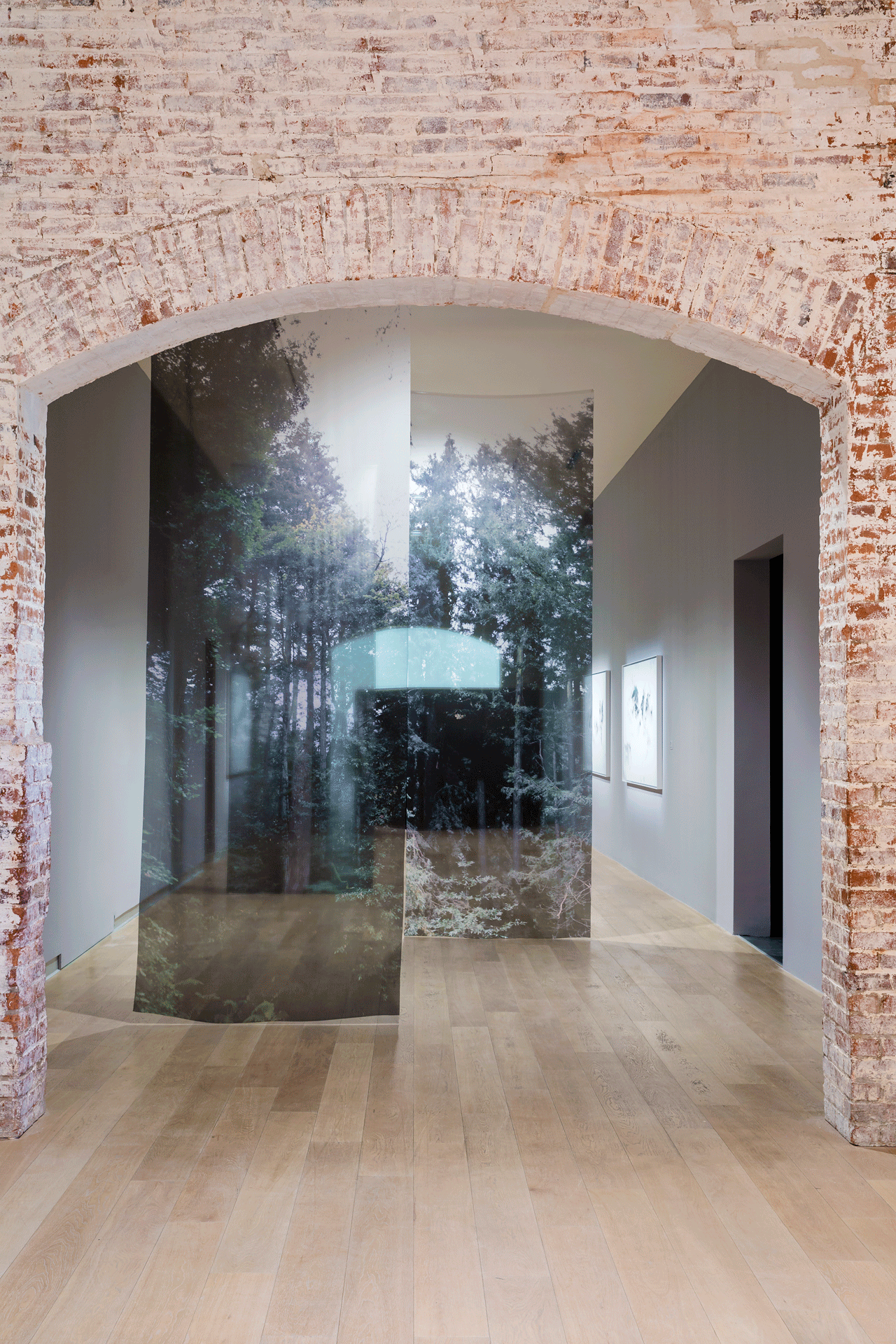
There are redwoods rising inside the museum. Printed on silk chiffon hung ceiling high, "Redwoods (Spirit)" are part of "Temporal," the ongoing show by Miya Ando at SCAD Museum of Art. Ando, of Japanese-Ukranian heritage, incorporates elements of her childhood in Japan and Northern California into works that soothe and move. During a gallery talk with SCAD head curator Storm Janse van Rensburg, Ando stated: "I'm looking for a vocabulary that is universal. I love the vernacular of nature." An edited version of her remarks follows.

MIYA ANDO:

We are all part of a system of nature. We are all having a transitory experience: the metal, the trees, our thoughts, we as people. There's beauty in recognizing the impermanent nature of our existence. There's a beauty in interconnectivity.

When I was a child living in the redwood forest in Santa Cruz, I saw that redwood trees, because they're so tall, would frequently get struck by lighting and become charred on the inside. My dad actually built my sister and I a fabulous redwood treehouse. I noticed that the charred wood on the inside of my treehouse was the same as the charred wood called Shou Sugi Ban, a traditional and regional exterior cladding in Japan.

Long vertical chiffon panels printed with redwood hang in gallery

My mother is Japanese and my grandfather was the head priest in a small Buddhist temple. Several generations prior to my grandfather becoming a Buddhist priest, my grandfather made swords. When I was a young woman being of mixed identity meant looking into my heritage. I became an apprentice in metalsmithing. There's a particular form of metalsmithing that is used on blades, it's very refined, and when the metal is folded and hammered and heated, something forms called a "hamon" – a cloudlike pattern on the edge of a sword.

With this exhibition, I thought a lot about the five elements. In Japan, there is an element that is air, or void. The title of my piece "Emptiness the Sky" stems from a "kanji," a word called "Ku" which means empty, but its second meaning is "sky." A poetic notion. In the east you have a glass half full with water and half full with emptiness. There is thing-ness to space. There is such-ness that takes volume.

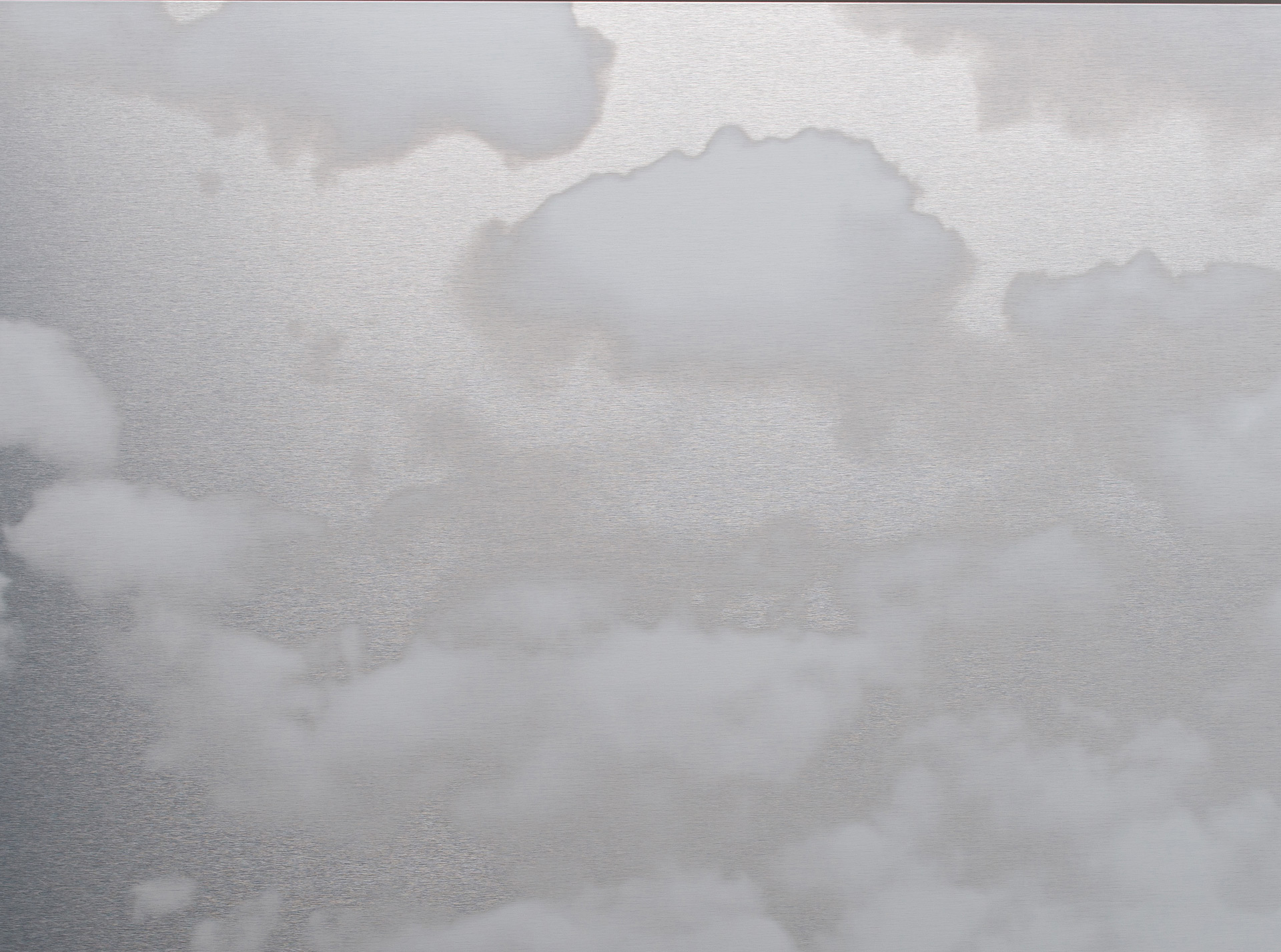
White clouds float against a steely gray background

The material choices of these works prepare one for what the metaphysical or spiritual underpinnings of the pieces are. The charred wood has been through a transformation, and then inside you have empty space.

These are experiential works, activated by the viewer, that change as your viewpoint changes, from different angles, as you move about the piece, so that one angle does not comprise "the piece." These are works that are difficult to Instagram.

We know we're inside of a museum but when trees are inside, when clouds are inside, it gives a different perception of what a space can be.

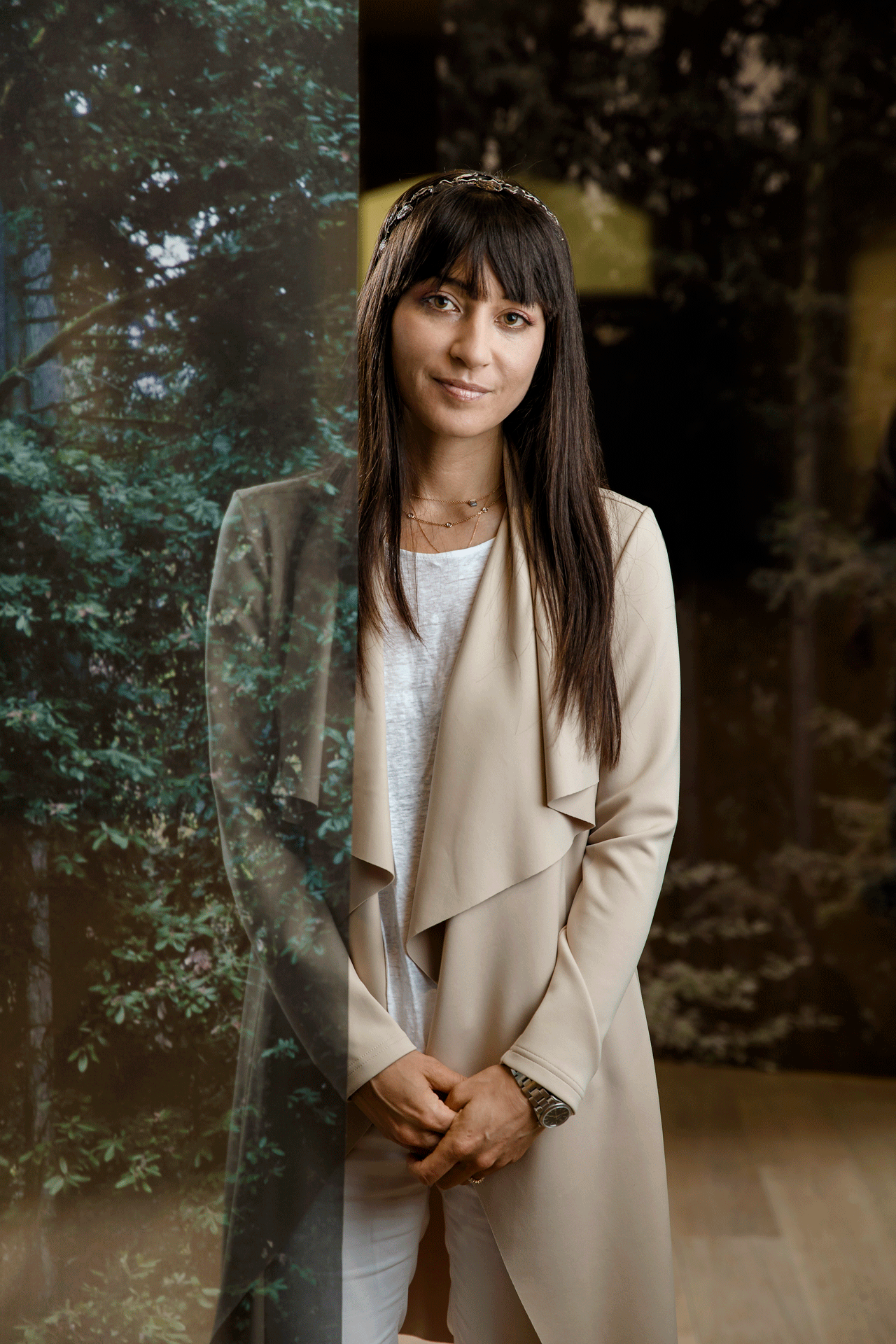
Miyo Ando poses amongst her work, half her body is covered by transparent panels featuring images of redwoods

"Temporal" is on display through Sunday, Jan. 14, 2018 at SCAD MOA.


Liliana Porter's 'Other Situations'

August
30
2017
By
Tags:

Students, faculty, and guests turned out en masse at the SCAD Museum of Art for the opening of "Other Situations" by Liliana Porter. The exhibition presents 30 object-based works and two video pieces by the New York-based Argentinian artist.
 
Porter and SCAD curator of exhibitions Humberto Moro reposed as the crowd coalesced. Prints and photographs lined the walls. Platforms topped with sculptural works were scrutinized by admiring attendees.
 
Moro introduced the gallery talk by describing the exhibition as "a revision" of Porter’s works from a career spanning five decades. Porter ruminated on the role of time in her creations. "I am really interested in the possibility of making simultaneous things that are fragmented," she said.
 
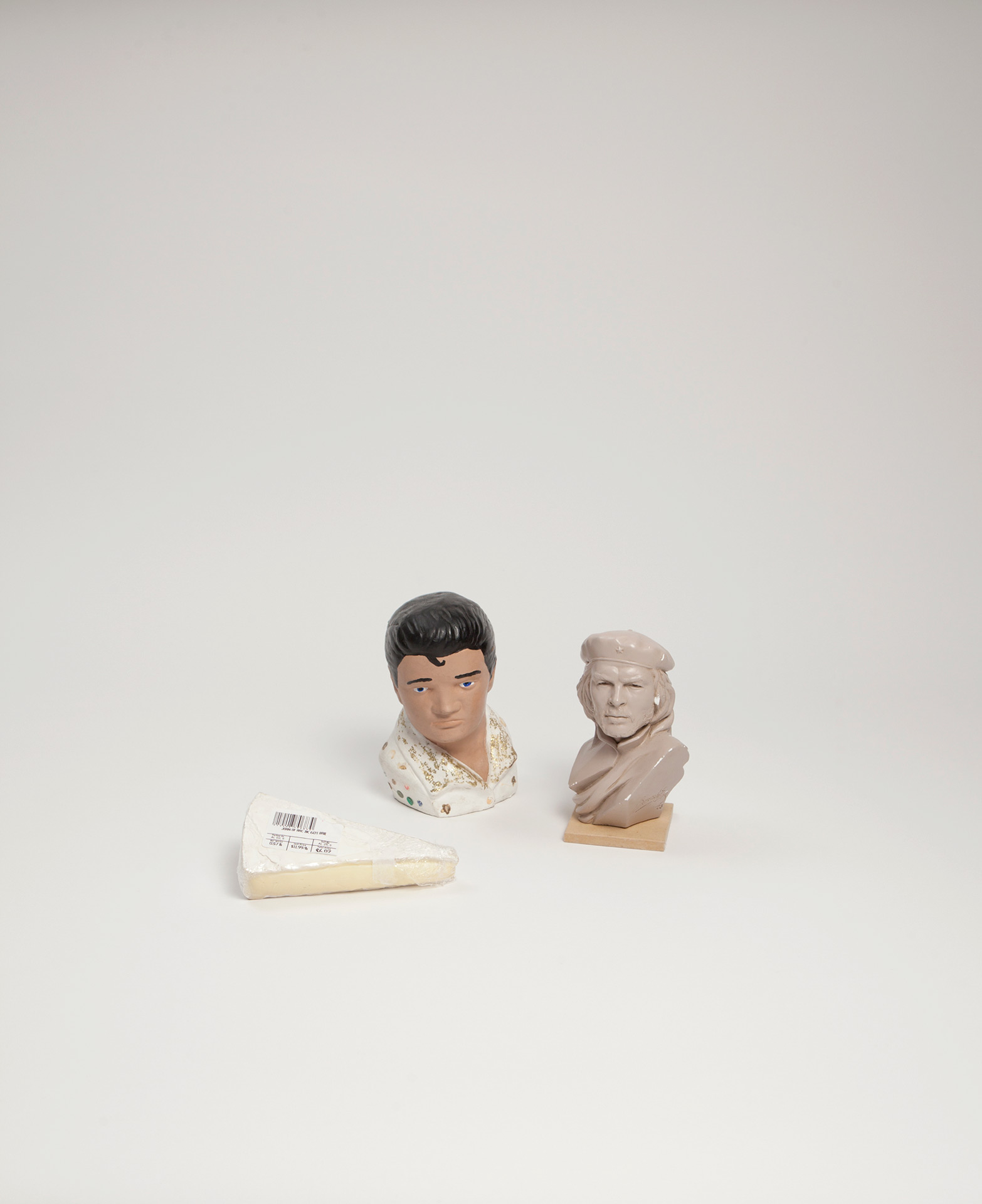
One of the exhibition’s thematic groupings collects several of Porter’s photographs of novel iterations of cultural icons. A Che Guevara mousepad and a Jesus keychain appear alongside a photograph titled "Joan of Arc, Elvis, Che." Miniature busts of Elvis Presley and Che Guevara are depicted with a slice of Brie from a brand named for the Maid of Orléans. As Porter previously noted, "This is what time does to heroes."

Miniature busts of Elvis Presley and Che Guevara with a slice of Brie

 
The bare settings of the work are intentional. "In general my work happens in an empty background, to try not to use context," she explained. "Context implies time. If you take the context away, you are able to see more directly, as a pure metaphor."
 
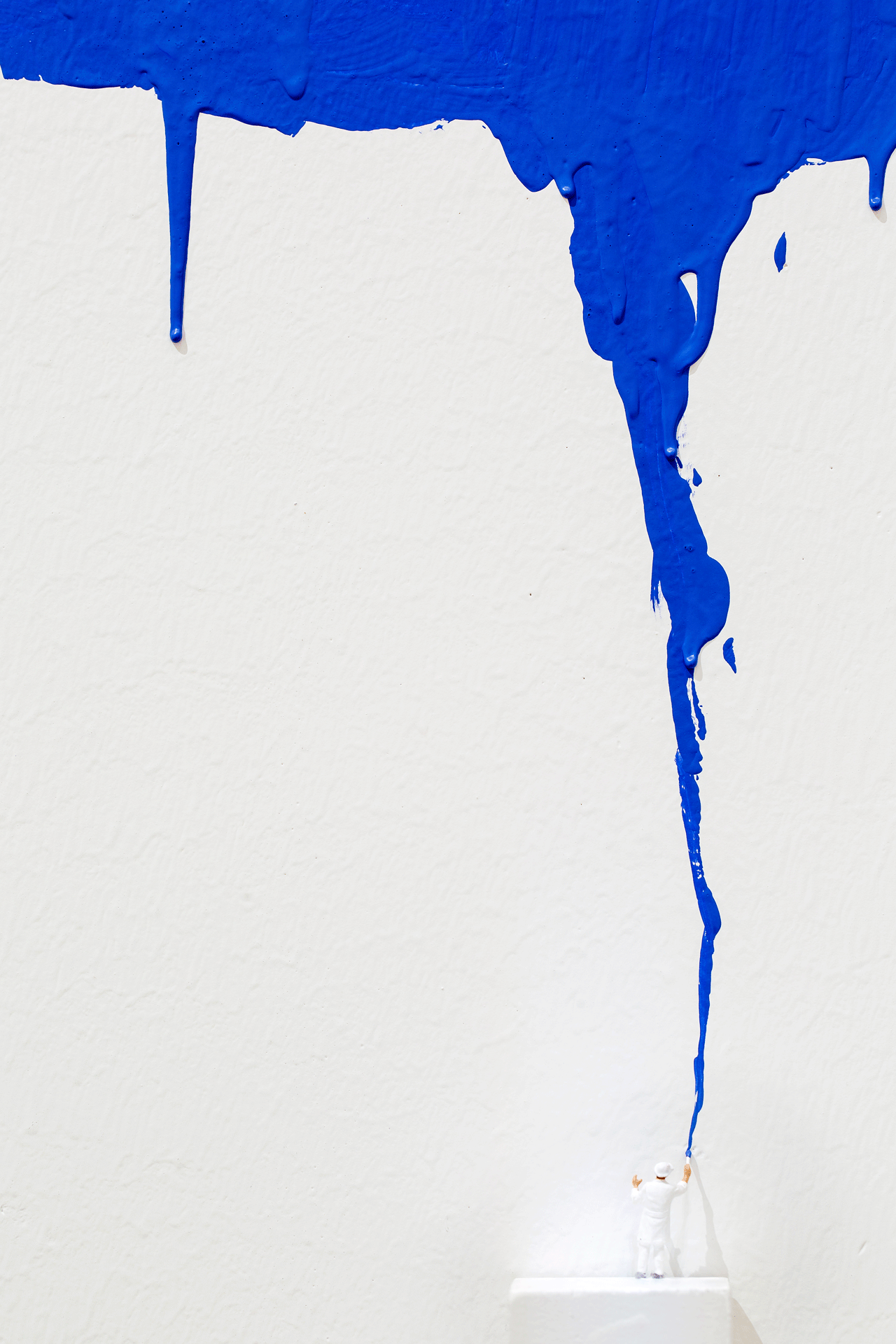
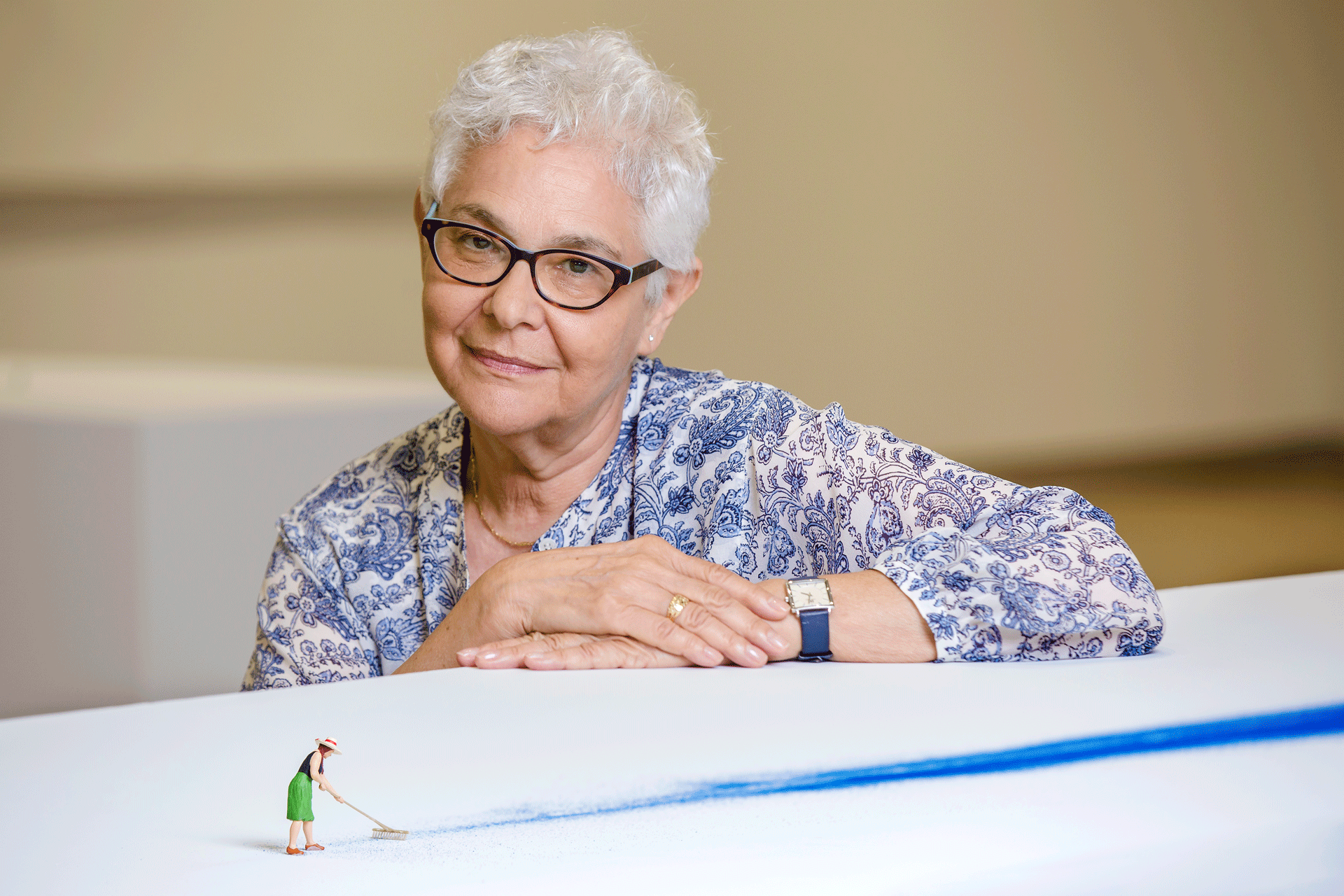
Porter’s installations include several from her "Forced Labor" series: Tiny figurines holding a paintbrush, a pickaxe, or a broom appear to be working on a relatively gargantuan scale.

 
"They are metaphors of us in front of tasks that are superior to our ability," Porter noted. "They don’t seem to be aware that maybe they won’t be able to succeed. That ignorance creates humor."

Tiny figurine paints oversized white background with blue paint

 
Porter discussed her small sculpture, "Disguise Dog," a canine figurine wearing a mask of another canine. "The subject of disguise is perfect for me because it is impossible to have a disguise. The mask you choose describes you."
 
Earlier this year, Porter wrote a description of one of her mixed media pieces, "Breaking News/The Way Out." Cards printed with Porter’s essay guide the viewer through "Other Situations," suggesting interpretations. The essay adds another layer to the combination of objects, drawings and photographs that comprise the exhibition.
 
The center of the gallery includes a space for viewing Porter’s video works "Matinee" and "Actualidades/Breaking News." Porter explained that her original foray into video arose from one of the subjects of her photographs, a toy that plays cymbals. She noticed the silence that followed each cymbal crash. "In order to show that silence, I have to show the noise. The only way to do it was with video."
 
At the conversation’s conclusion, the crowd mingled in the galleries. In the lobby, guests of a certain age joined General Consul Jorge López Menardi to sample Argentinian libations, courtesy of the Consulate General of Argentina in Atlanta. The art and conversation of Liliana Porter filled the evening with meaning for all.

Liliana Porter sits behind her work of a figurine woman sweeping a long trail of blue paint

"Other Situations" is on view through Sunday, Jan. 7, 2018 at the SCAD Musuem of Art.


Fashionista asks alumni to vote in style

August
21
2017
By
Tags:

Supremely savvy style site Fashionista is currently assembling their annual list of the world's top fashion schools. If you're a SCAD alumnus with a degree in fashion, take a moment to make your voice heard. And if you're here familiarizing yourself with what the SCAD School of Fashion has to offer, read on.

At the undergraduate and graduate level, SCAD fashion students prepare to lead the ever-evolving world of fashion through a rigorous curriculum anchored by creative thinking and dynamic technology. Led by Michael Fink, dean for School of Fashion, and guided by professors with extensive industry experience, students explore fashion from the conceptual to the commercial, merging technical dexterity with personal vision to develop original fashion collections.
 
The SCAD School of Fashion offers degrees in accessory design, fashion, fashion marketing and management, and luxury and fashion management. SCAD offers related minors in menswear, fashion photography, fashion journalism, jewelry, fragrance marketing and management and more, allowing students to refine their focus and build expertise in their disciplines.
 
At SCAD, students converse with critics, designers, buyers and thought leaders like Imran Amed, Norma Kamali, Robin Givhan, Brandon Maxwell and Carolina Herrera who visit SCAD's global campuses to share their experience and insight. Each year, the Style Lab Mentor program affords SCAD fashion students the opportunity to interact one-on-one with established designers like Zac Posen, Catherine Malandrino, Stephen Burrows, Rachel Roy, Christian Siriano and Rafé Totengco. Students liaise with top industry professionals during signature events SCADstyle and SCAD FASHWKND, and the many unique workshops and critiques that bring fashion elite to the university.
 
In May 2017, at the inaugural SCAD FASHWKND, 43 students debuted their collections at a runway show in Savannah, held in the courtyard of the SCAD Museum of Art, featuring a recent installation by the internationally renowned Carlos Cruz-Diez. In Atlanta, the collections were displayed in tableaux vivants throughout the third floor of the university's main building. Both SCAD FASHWKND events featured a Shop The Runway retail component, where SCAD alumni shared and sold their designs.
 
In 2017, SCAD students won 20 YMA Fashion Scholarships, more than any other university in the history of the competition. SCAD graduates have won the Supima Design Competition for two consecutive years: In 2016 womenswear designer Jeffrey Taylor (B.F.A., fashion, 2016) earned the $10,000 grand prize in the 9th annual Supima Design Competition. He was invited to show his collection at Lincoln Center during NYFW, and later showed his collection during Paris Fashion Week. In 2015 SCAD alumna Kate McKenna-Schliep (B.F.A., fashion, 2015) won the Supima competition and showed her collection during Paris Fashion Week.
 
In Atlanta, SCAD FASH Museum of Fashion + Film hosts exhibitions of work by world-renowned designers like Oscar de la Renta and Carolina Herrera, as well as historic compendiums including “Embellished: Adornment Through the Ages” and “Shoes: Pleasure and Pain.” To elucidate the themes of each exhibition, SCAD commissions complementary films that are screened in the adjacent SCAD FASH Film Salon. Students can further their studies through the SCAD FASH permanent collection, an archive of more than 1,000 museum quality garments from designers like Oscar de la Renta, Coco Chanel, Marc Jacobs, Yves Saint Laurent, Vera Wang, and Givenchy.

Visit SCAD to learn more about the university's incomparable contributions to the world of fashion.

Cory Imig's 'Notes on Sculpture'

August
4
2017
By
Tags:

Cory Imig's site-responsive show "Notes on Sculpture" transforms the SCAD Museum of Art Emerging Gallery in ways bold and playful. Whether passing through or lingering in contemplation, visitors must assess their relationship to Imig's work.

"It's interesting how the installation influences how people navigate the space," said Imig (B.F.A., fibers, 2008). During a gallery talk hosted by SCAD MOA curator Amanda York, attendees embodied the artist's point.

Imig's show follows her 2016 installation at Gutstein Gallery in the "Push and Pull" group exhibition, as well as her bravura striations adorning the Tybee Island pier at Sand Arts Festival 2017. Her show at Emerging Gallery further signifies her status as an important artist with expansive ideas about scale and space.

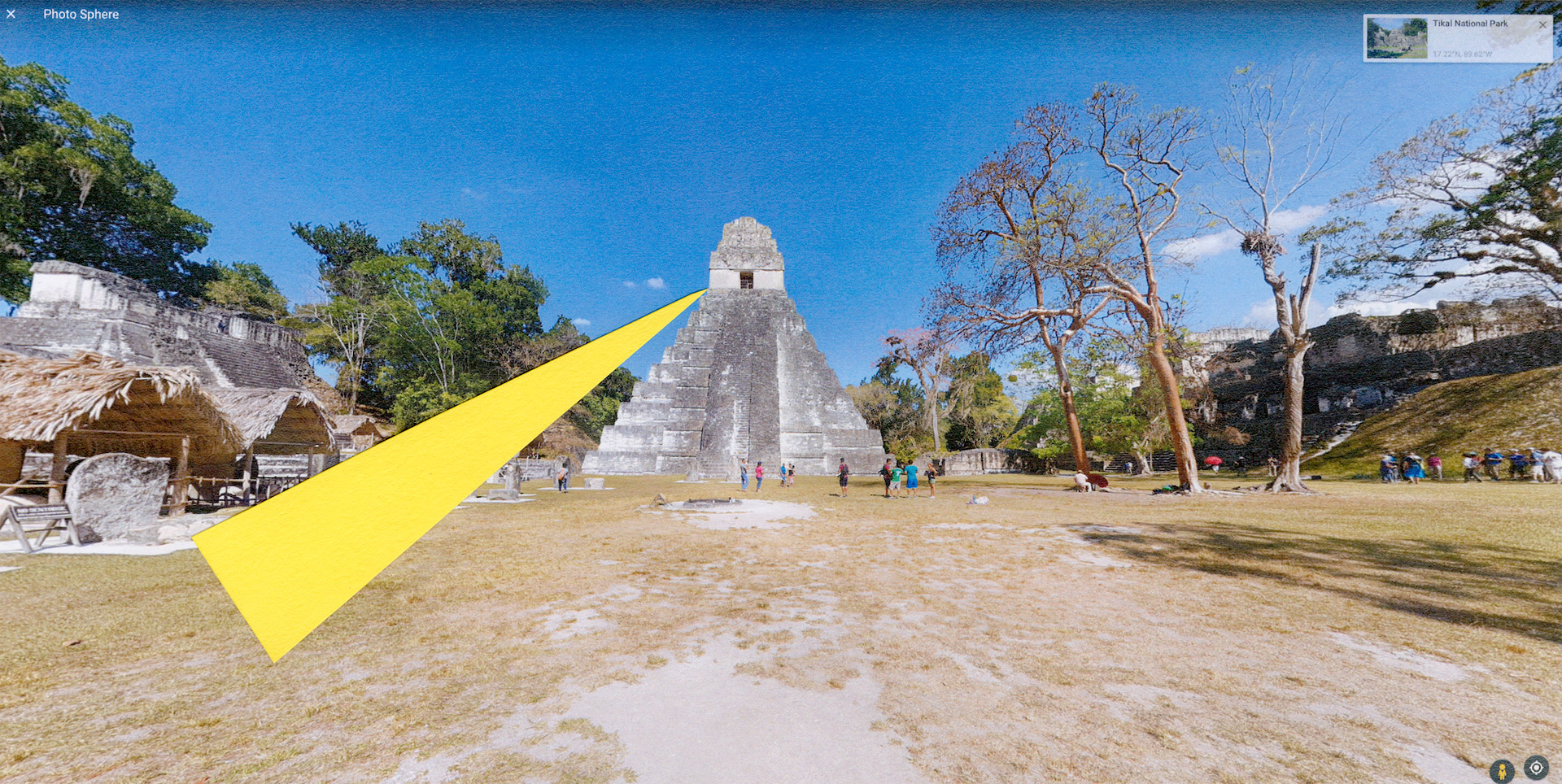
Yellow colored paper emanates from ancient ruin

The new exhibition features "Ribbon Piece," two intersecting, diagonal sections of green vinyl streamers secured to wall and floor by suction cups and ratchet straps. The gallery becomes a pelagic zoetrope, illuminating Imig's stated desire to create "a moment where people have to contemplate their relationship to the work and their relationship to the space. What type of art object is this? Is this a sculpture? Am I supposed to walk through it? Around it? Prompting people to question what type of experience they're having is something I'm interested in."

"Ribbon Piece" dominates, but other works are key to "Notes on Sculpture." One wall presents Imig's precise diagramming of Sol LeWitt's statement: "All ideas need not be made physical." The diagram gives the sentence a prehensile intensity, subverting and celebrating LeWitt's words.

"When I read LeWitt's 'Sentences on Conceptual Art' in 2007 it was another moment, like, 'Oh, this is interesting,'" Imig explained. "I went to the Writers' Studio in the Jen Library where Jennifer Trevisol spent countless hours with me diagramming all thirty-five of LeWitt's sentences. Some of the sentences are really complex so the diagrams became complex structures. One of the sentences is: 'These sentences comment on art, but are not art.' I loved the idea of turning those sentences into art. It fit so well with the conceptual movement."

Imig arrived for her SCAD MOA show fresh from a road trip to the American west where she witnessed epochal land art including Nancy Holt's "Sun Tunnels," Robert Smithson's "Spiral Jetty" and Michael Heizer's "Double Negative." Her interest in land art inspired fifteen framed pieces in "Notes on Sculpture," with strips of colored paper collaged across natural landscape photographs, rendering distances closer in the work than in reality.

"These are site proposals for possible installations that won't necessarily be built," Imig admitted. Of course, such epic installations are possible, as Imig proved with her red fabric opus at Tybee Island during Sand Arts.

As the gallery talk concluded, Imig greeted friends old and new. Exiting visitors navigated "Ribbon Piece" again. The work remained in play.

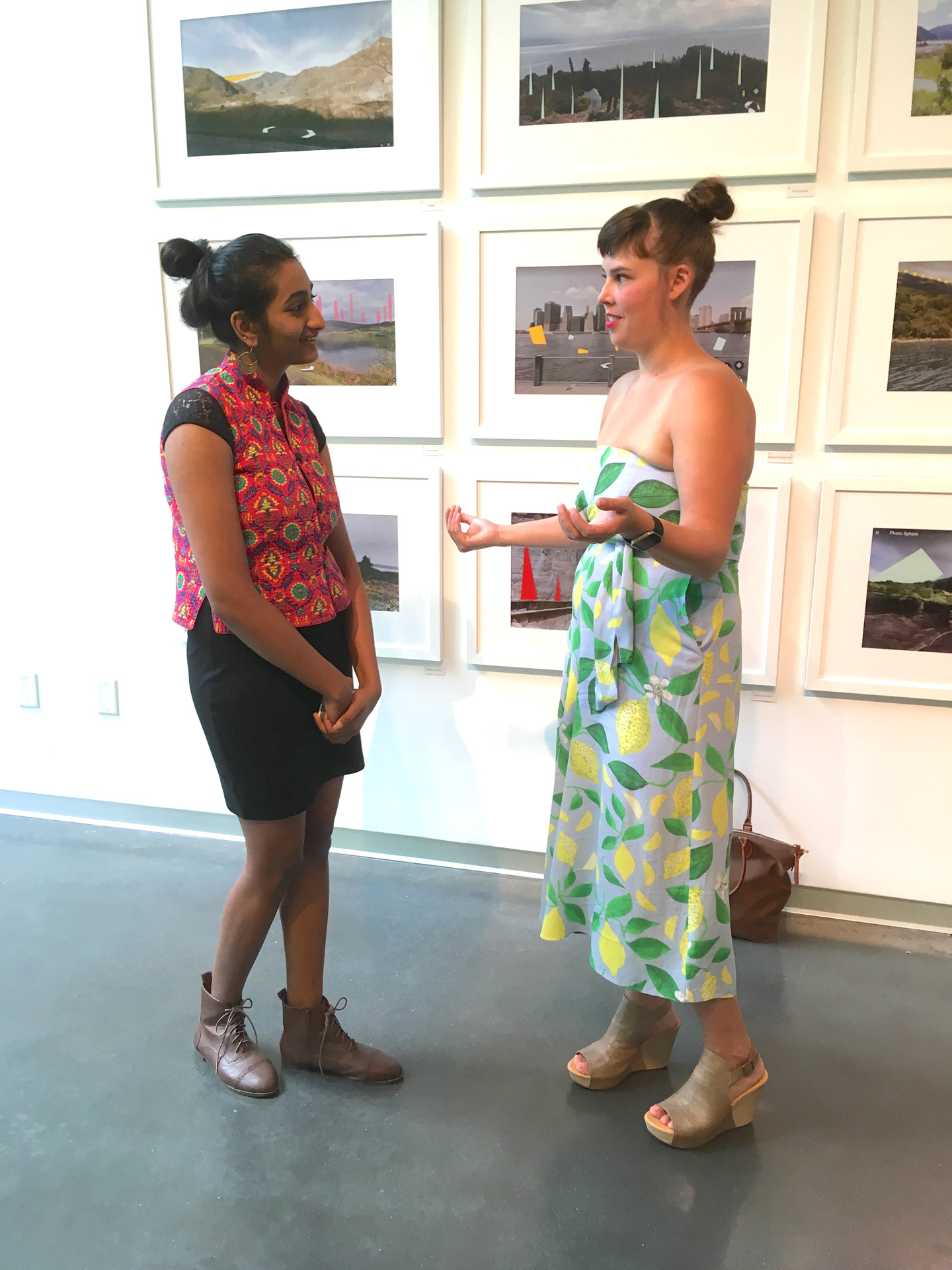
Artist discusses her work in gallery with museum goer

A study in 'Chroma'

July
20
2017
By
Tags:

Deborah Mosch (M.F.A., illustration, 1991) is a SCAD foundation studies professor specializing in color theory. Here she shares her informed perspective on the remarkable "Chroma" exhibit by Carlos Cruz-Diez, on view at the SCAD Museum of Art through August 20.

Deborah Mosch: I wrote a book "Color, a love story: a color theory course companion." It's for students and anybody who wants to learn about color. My main influences are Josef Albers and Georges Seurat. Seurat had a lot to do with finding light in paint and Albers is all about color relativity. Carlos Cruz-Diez took those developments to the highest power. Cruz-Diez is so far ahead of his time.

I'm fascinated with Cruz-Diez because his work is about color. Color is a character. It's a surrounding. It is a personality. I think of color as having life.

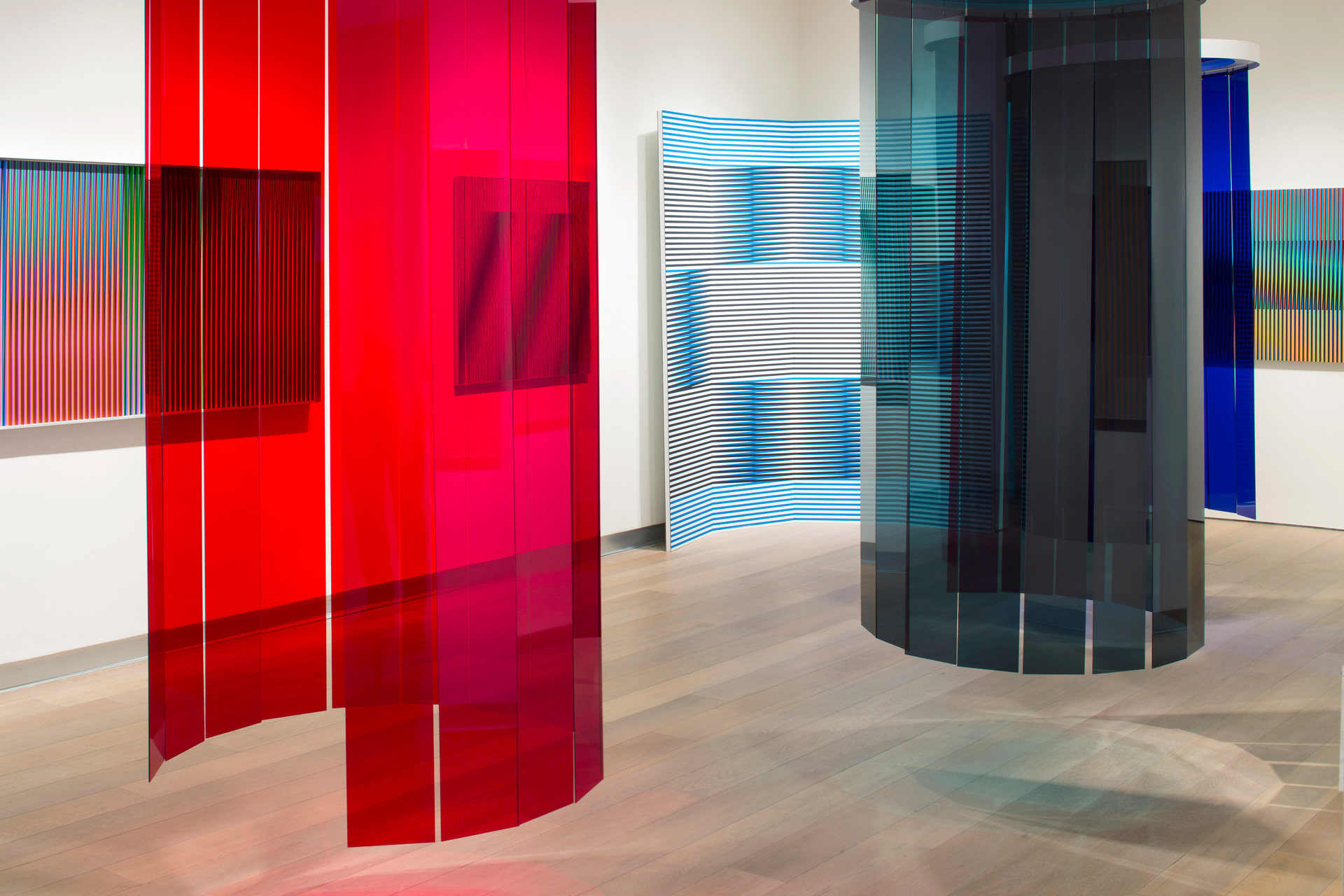
Two vertical tubes in translucent red and a second in blue

Back in the 1940s, Cruz-Diez was thinking, 'I can't paint these ideas I have fast enough.' So he started working collaboratively with lots of people, and fast-forward to today, that's how people work. He's in his nineties now, and still has thousands of new ideas in his head.

I just can't believe how prolific he is and how many new ideas he’s come up with, especially when you think about what was unfolding in the mid-20th century when a lot of contemporary art really exploded. He had to really stick to his guns and be very strong.

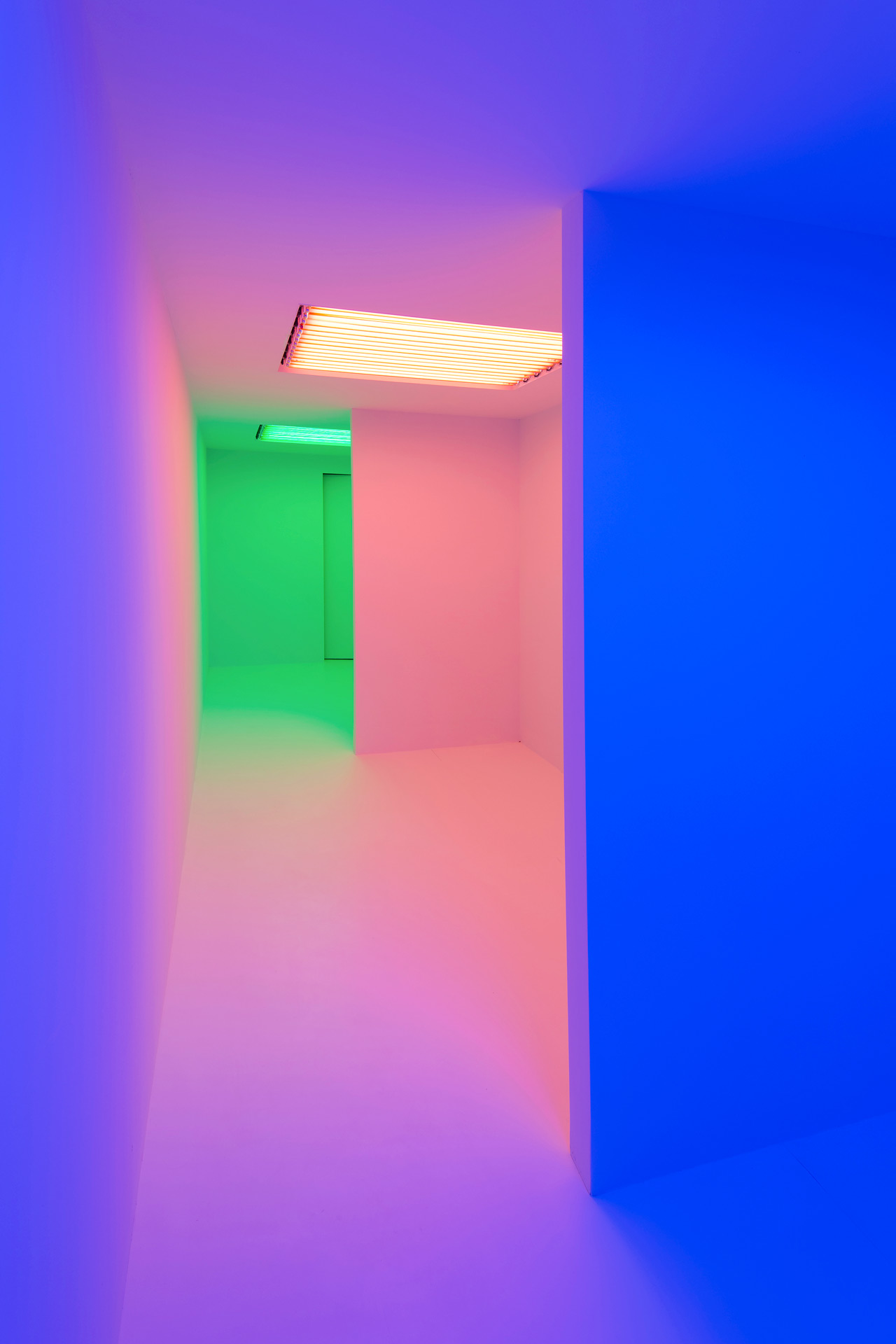
He puts color in big spaces so you have to interact with it. If you look at it an inch off one side, or another side, or you get further or closer, even by a foot, it changes the experience.

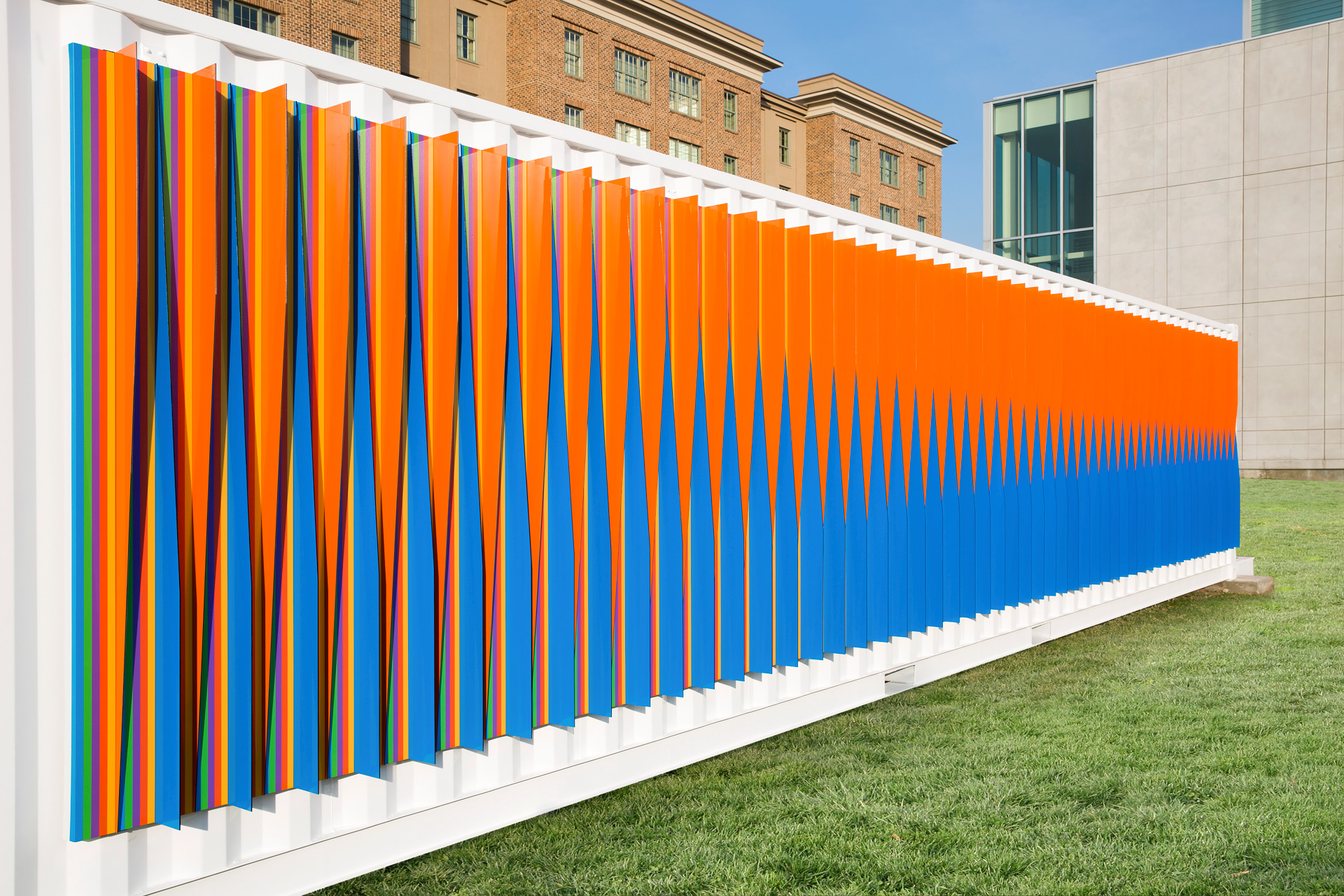
Bright orange and blue stripes on outdoor wall

The word "experience" is important with his work. That is his gift to the world. He's giving us experiences, not just a theory, an experience. Clearly his work is non-representational. The way I teach color theory is with all non-representational or non-objective imagery because I want students to think only about color so we do it in shape and line.

With his work, it's incredible that he can create so many compositions with just line. Most of his pieces don't have more than six or eight colors in them, but in how they're distributed and how they start and stop and interconnect with each other, they form or imply other shapes. A line and a few colors — it's a very simple concept really, but he puts them together over and over and over in different computations.

I can't help wondering if he ever thinks in terms of, Will this work calm my viewer down or will it activate them? He seems so activated himself and I tend to think that his work isn't meant to be peaceful. It reminds me of "2001: A Space Odyssey." It feels like another dimension.

Series of three rooms each bathed in different colors starting with blue, pink then green

Cruz-Diez has figured out how the brain reacts to color. He gets it so completely and he understands that it is such a big subject. His work excites me. That someone can say so much with so little is incredible.

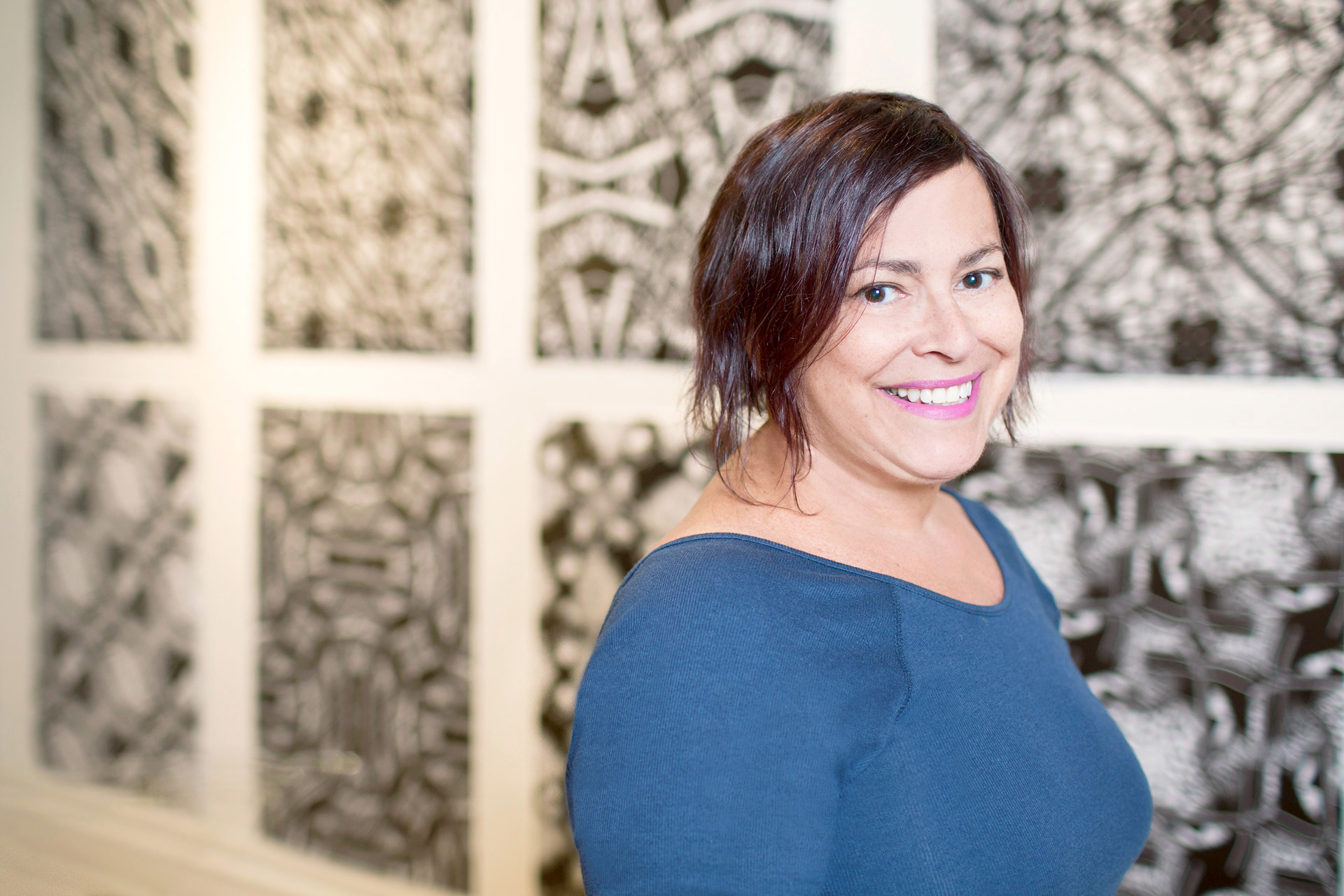
Deborah Mosch in blue shirt smiles