Skip to main content Accessibility Policy

Toyin Ojih Odutola: "Testing the Name"

July
13
2020
By
Tags:

The work is more than skin deep. Yet the epidermis is important. In 2018, SCAD Museum of Art presented "Testing the Name," an exhibition of new drawings by Toyin Ojih Odutola. The exhibition continued her exploration of the merger of two fictional aristocratic Nigerian families through the marriage of two men. Working primarily in pastel on paper, Ojih Odutola constructed an episodic, virtuosic body of work. The following remarks are edited for concision from Ojih Odutola's conversation with SCAD MOA curatorial staff.

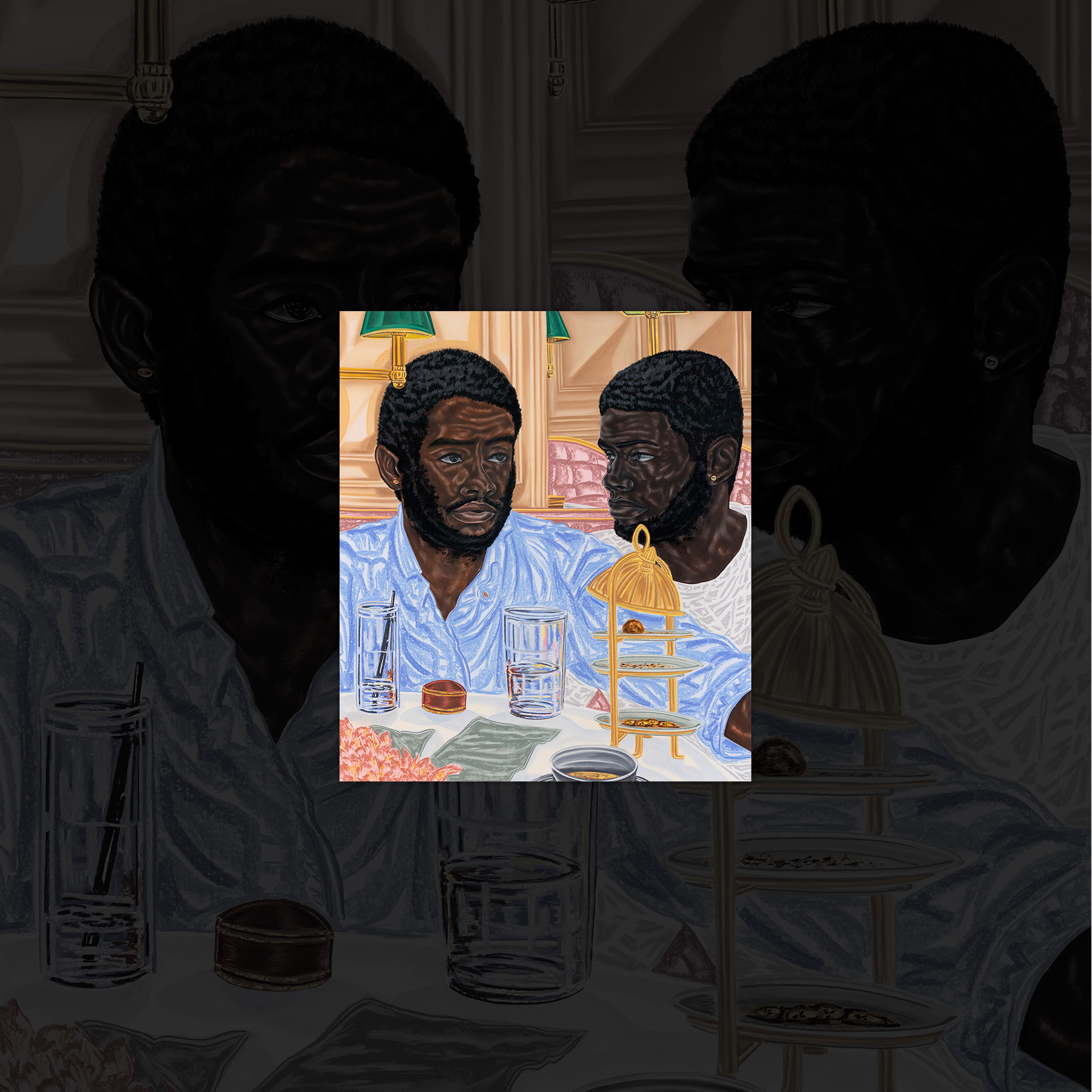
"The Proposal"

Toyin Ojih Odutola, "The Proposal," pastel, charcoal and pencil on paper, 53.5" x 47.9" x 2.5", 2017.

Courtesy of the artist and Jack Shainman Gallery, New York, New York. © Toyin Ojih Odutola.


Toyin Ojih Odutola:

"Testing the Name" is part of a larger project that I've been working on since 2016. It was predicated by the idea of analyzing and dissecting wealth through historically oppressed bodies, and having the spaces they occupy not be a factor in what they consider themselves to be. The whole experiment was to depict one family who weren't smiling for you, who didn't care about your comfort as a viewer, it was about what they chose to do.

From that, I started to hone in on the marriage of two Nigerian men, one Igbo, one Yoruba. It is illegal to be gay in Nigeria. People say, "Why would you tell this story? It's fictive!" But it could be true. It's about testing the honor of the family name. And the father is saying "The family name is not affected by this." So, you're coming into a space of acceptance, and being human, and the son's narrative is just as important as anyone else in the family. That's the core.

When I first started my career, I was working in ballpoint pen. I was engaging with not only blackness as a material, but also skin. I wanted to show an activated surface, a surface that didn't feel flattened and monolithic. Every material choice I've made since then has explored that or expanded that.

Skin is a dynamic entity. The stare that the subject gives is very direct, but the skin is unsettled and dynamic. It feels like they're breathing, that they could come to life at any moment. But their gaze is very direct, whether that's at you or somewhere else in the picture plane.

When I first came to this country, I was immediately aware of how this covering, my epidermis, read before I entered a room. It was somehow a cloud or a front that people would engage with before even speaking to me, before they got to know me. And that fascinated me as a kid, because I am a person. There are contradictions about me, there are a lot of things that come together to make me, and it can't just be one thing. I can't be one person based on an epidermis. So, I play on skin as one way to push against that idea of what we presume to be a person.

My advice for students is stay hungry. The thing that always drove me is that I was hungry, not just for respect and recognition, but to draw. There's a certain compulsion you have to have. There were times when I was in my apartment in Alabama, and I didn't know what my drawings were, but I loved them so much, because I thought: I just want to see this for me. That can be so powerful. And if you hold on to that, whatever comes will come. You have to be satisfied with your mark.


Toyin Ojih Odutola.


Experience SCAD MOA at home

May
19
2020
By
Tags:

The SCAD Museum of Art is pleased to premiere new exhibition videos by four artists: Raúl de Nieves, Shoplifter, Igshaan Adams, and Kenturah Davis. These unique walk-through videos provide the opportunity to experience the process and output of these acclaimed international artists. The videos are free to view at www.scadmoa.org.

All four exhibitions opened to sensational response at SCAD deFINE ART 2020, the annual signature event featuring exhibitions, lectures, and performances. Held in February, deFINE ART brought all four artists in-person to Savannah for the festivities.

These videos exemplify the mission of SCAD MOA: to expand learning opportunities beyond the classroom, and inspire and challenge SCAD students to push the boundaries of their creative practices. They provide museum members, SCAD students and alumni, and audiences around the world an inside look at these dynamic exhibitions.

The concise videos (each approximately two minutes in duration) include artist and curator interviews, detailed shots of exhibitions, and time-lapse sequences of artists at work. They provide creative joy and public art programming at a time when physical access to the museum is stymied.

"The work derives from a personal story," Raúl de Nieves says, "an understanding of yourself." His exhibition, "Reemerge the Zero Begins Your Life, Eternal is Your Light" utilizes the distinct encasement-like structure of the SCAD MOA Jewel Boxes to position his sculptures as allegories within shrines. Using beading, sequins and textiles, the artist sublimates spiritual energies into agendered representations of characters like The Fool, the tarot's eternal figure of rebirth, and chromatic delineations of the seven chakras.

"When it comes to being a creative person, I think it's very important to find comfort in being uncomfortable," remarks Hrafnhildur Arnardóttir, aka Shoplifter, in the video celebrating her exhibition, "Chromo Zone." As a medium, hair represents both the viewer's identity and what Shoplifter calls the "remnant of the beast in us." Her sculptural installation, made from synthetic hair extensions, presents cave-like dwellings whose dynamism translates well to video.

"If I can be deeply honest about my own lived experiences, the work becomes universal," says South African artist Igshaan Adams, exploring materiality, phenomenology, and identity. in his first solo museum exhibition in the U.S. Adams lined the walls and floors of SCAD MOA's Pamela Elaine Poetter Gallery with used linoleum extracted from working-class homes across Cape Town, South Africa. The title of the show "Getuie" is in Afrikaans, Adams' mother tongue, and directly translates as "witness."

"It's all up for grabs," says Kenturah Davis with a knowing smile. "Everything That Cannot Be Known" explores mark-making in relation to the representation of Black bodies and the intangibility of personal and collective identities. Her multilayered process includes different forms of translation: from text to image and reality to representation. Her figures often intersect with words, or appear to be in the act of movement. The video includes insights from Humberto Moro, adjunct curator, SCAD exhibitions.

Videos:

Raúl de Nieves
www.scadmoa.org/exhibitions/2020/reemerge-the-zero-begins-your-life-eternal-is-your-light

Shoplifter
www.scadmoa.org/exhibitions/2020/chromo-zone

Igshaan Adams 
www.scadmoa.org/exhibitions/2020/getuie

Kenturah Davis
www.scadmoa.org/exhibitions/2020/everything-that-cannot-be-known


Thanks to Raúl de Nieves, Shoplifter, Igshaan Adams, and Kenturah Davis.


Welcome to the 22nd annual SCAD Savannah Film Festival

October
24
2019
By
Tags:

Come celebrate the 22nd SCAD Savannah Film Festival, an acclamation of cinematic excellence, Oct. 26 – Nov. 2, 2019. The largest university-run film festival in the country honors professional and emerging student filmmakers during an eight-day film celebration, welcoming more than 63,000 attendees from around the world, including directors, writers, filmmakers and actors from the big screen.
 
The festival kicks off Saturday, Oct. 26, with the Opening Night Gala Screening of "The Aeronauts" directed by Tom Harper. The festival closes on Saturday, Nov. 2 with the Closing Gala Screening of "A Beautiful Day in the Neighborhood" directed by Marielle Heller. A key stop on the Oscar festival circuit, SCAD Savannah Film Festival will screen a total of 159 films, including 35 narrative films, 15 documentary films and 109 shorts, more than any previous year.
 
"SCAD alumni and students alike will join in the festivities at the 22nd annual SCAD Savannah Film Festival. With so many SCAD grads living in Georgia, they don't have far to come!" said SCAD President and Founder Paula Wallace. "SCAD is a global leader in entertainment arts, and it's our pleasure to host the best film festival anywhere."
 
"This year's festival is one of our best and most exciting film line-ups we've put together," said SCAD Savannah Film Festival Executive Director Christina Routhier.  "We are thrilled to present eight days of premiere screenings, panels, workshops, and a one-of-a-kind Immersive VR experience to SCAD, our students, and the City of Savannah. One of the highlights of this year's festival is our annual Wonder Women series which includes award winning and rising directors, producers, writers, and below the line artists. I am even more proud that the festival will be screening films from over 50 female filmmakers making us one of the few festivals that are celebrating the work of female artists from around the world."

SCAD's preeminent School of Entertainment Arts is creating world-class, industry-ready talent that fills needs in Georgia, and in the industry globally. More than 10,000 SCAD alumni have graduated from the schools of digital media and entertainment arts, and nearly 5,000 students are currently enrolled in majors that cover fields of animation, entertainment, motion pictures, media production, writing, editing, broadcast media and performing arts.

Celebrating its 22nd year, the festival and the competition provide SCAD students with opportunities as unique as the selected films. This year, the SCAD Savannah Film Festival received over 1,800 submissions for the competition film series. During the festival, students from every academic discipline connect with leaders from the entertainment industry through master classes, coffee talks, lectures, workshops and panel discussions. Savannah, a premier film hub in the Southeast, promotes quality movies produced by independent and studio filmmakers.
 
Tickets and passes are available for purchase online at savannahboxoffice.com, by telephone at 912.525.5050, or in person at the Trustees Theater, located at 216 E. Broughton St., Savannah.

Festival logo

View the festival schedule for a complete list of films and screening locations.


Madi Alspector's architectural history

September
25
2019
By
Tags:

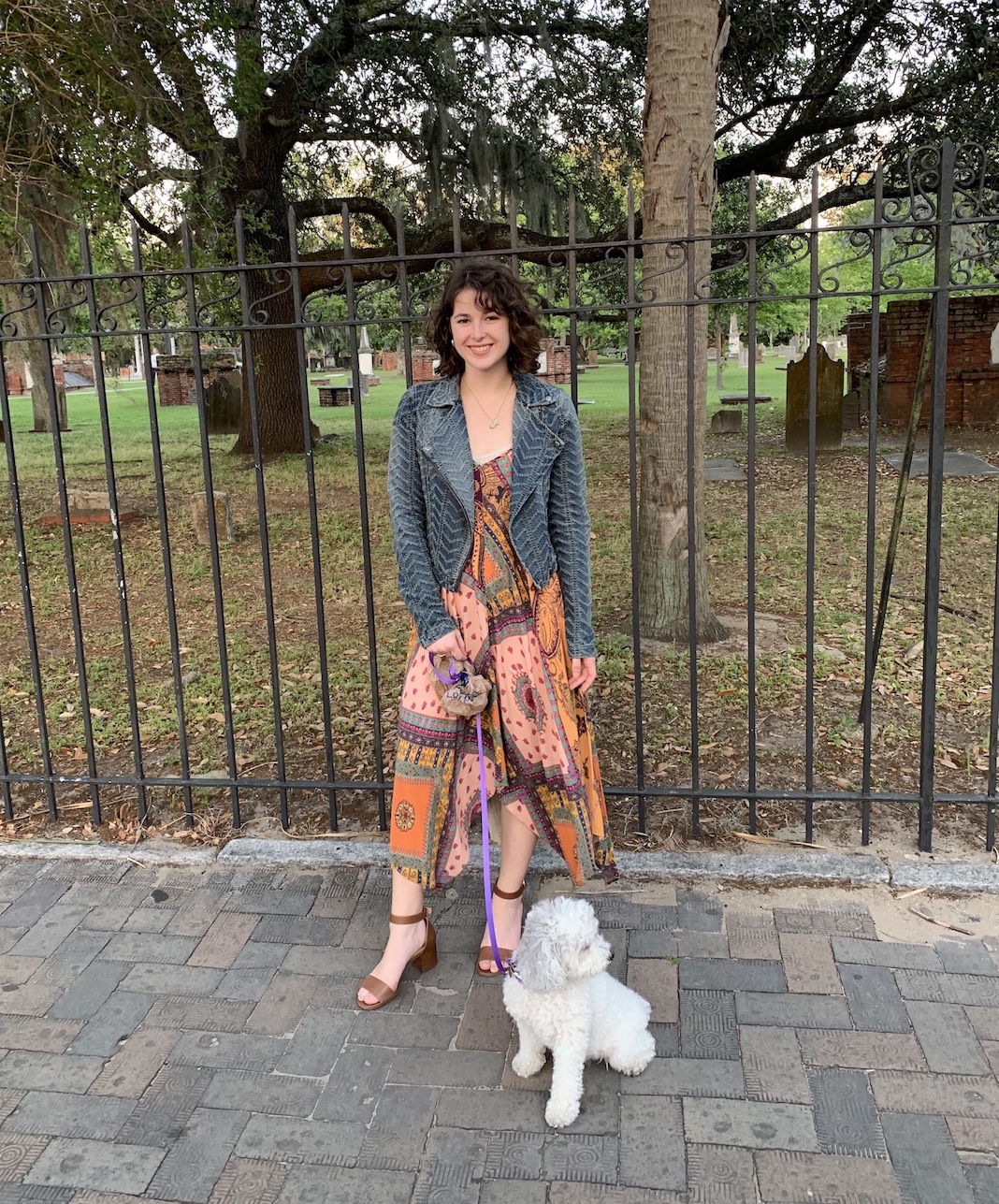
"I've grown up in historic cities," says Madi Alspector (M.F.A., architectural history). "Being informed about histories of place has always been part of my life."

A graduate of Wando High School in Charleston, Alspector selected SCAD in order to pursue her master’s degree in Savannah, one of the best-preserved urban landscapes in the country. She attends class in the upper rooms of the SCAD Museum of Art, a National Historic Landmark housed in a former railway depot for the Central of Georgia Railway dating to 1853: “I love going to class in rooms with preserved historic brick.”

The devoted scholar complements her academic achievements with hands-on work in the field. In summer 2018 she was easements department intern at the non-profit Historic Charleston Foundation, and is currently interning for credit with HALLETT & Co. in Savannah's historic downtown district. For Madi, historic architecture lives in the present.
 

Madi Alspector:

I'm beginning my final academic year here at SCAD as a masters candidate in architectural history. This quarter I'm taking Urban Form and Civic Ideals through History (ARLH 739), tracing city-building from the ancient Near East through post-modernism. I'm also taking Contextualizing Ancient Architecture (ARLH 724), and doing a Graduate Internship (ARLH 779) with Matthew Hallett at a firm called HALLETT & Co., learning to translate the historical lessons taught in class into field work skills.

The internship has been wonderful. I spend half my time at HALLETT & Co. doing research and half on-site working on renovation and historic preservation projects. I love being in the field. My plan after graduation is to work with a restoration group and be active in conservation. I want to work on projects that impact my field of study.

In October, I'm presenting a paper called "Highway Revolts" at the 2019 conference of the Southeast Chapter of the Society of Architectural Historians in Greeneville, South Carolina. Last year I took "Power and the Built Environment" (ARLH 759) with SCAD professor Robin Williams and began researching highway revolts. From the 1950s through 1970s, federal highways were being built and tearing through inner cities. The most famous protest happened in New York City with Jane Jacobs challenging Robert Moses over the proposed Lower Manhattan Expressway, but there were over 350 smaller revolts around the country. I studied articles written at the time, human interest pieces documenting different protests, and more recent scholarship.

My paper discusses what happened in San Francisco and Miami. In San Francisco, protests led to proposed freeways being canceled, while in Miami the interstate wiped out a whole neighborhood downtown. I grew up traveling down the I-95 Expressway through Miami, never considering that its construction was problematic.

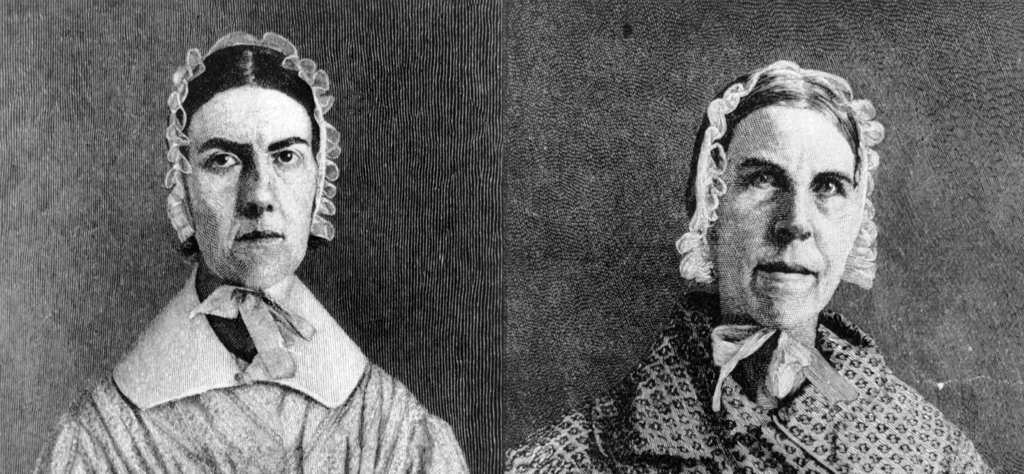
"Highway Revolts" is the second paper I've delivered at a conference this year. In February I received a SCAD travel grant to Montgomery to attend the Southern Studies Conference 2019 and deliver my paper "The Grimke Sisters of Charleston: their influences on changing urban societies as abolitionists and early feminists."

The Grimke sisters

A few years ago there was a best-selling novel by Sue Monk Kidd called "The Invention of Wings" (Viking, 2014) based on the story of Sarah Grimke. My mom read it and had me read it. I fell in love with it. The Grimkes were highly outspoken early on as abolitionists. As women in Charleston, they were kicked out of the city and banned from coming back. I toured their house in Charleston and integrated that research into my paper.

The Grimke sisters stood up and helped the cause of justice as much as they could. Everyday people like me might say, what can I do? Any time you can use research and show the historical record and say, "Something was wrong and somebody stood up against it and it led to necessary change" that's important. We are making progress.

Madi Alspector

Learn more about the SCAD architectural history program.


Grimke sisters image courtesy Library of Congress.

Banner image courtesy San Francisco Chronicle via Foundsf / Creative Commons.


Brushing up with Lara Favaretto

September
16
2019
By
Tags:

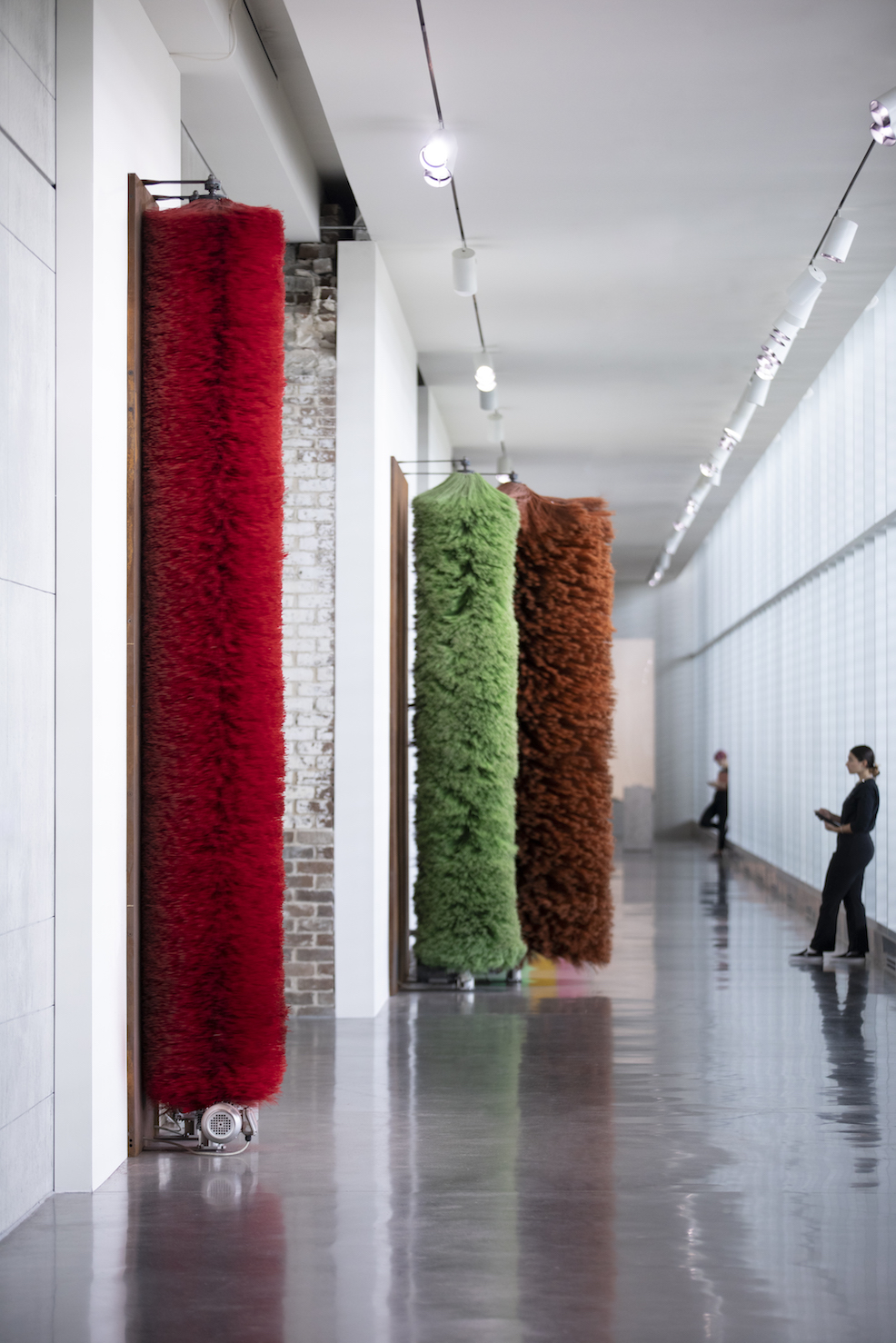
"There's nothing better than watching something as practical as car wash brushes," said Wendy Chang, director of the Rennie Collection, during a gallery talk on Lara Favaretto at the SCAD Museum of Art. The museumgoers filling the 300-foot Pamela Elaine Poetter Gallery to witness Favaretto's bristling "Simple Couples" during Summer Celebration keyed in on Chang's point.

"Simple Couples" is part of "Lara Favaretto: Works from Rennie Collection," a selection of works curated by Abaseh Mirvali, executive director and chief curator of Museum of Contemporary Art Santa Barbara, and organized by Humberto Moro, curator of SCAD exhibitions. The exhibition, on view through Dec. 22, includes an enigmatic suitcase, concrete sculptures, and a glassed-in room billowing confetti. The pairs of car wash brushes are the vibrant stand-out stars.

"The brushes are exhibited in a gorgeous way where you can see all of them in their different rhythms," guest curator Mirvali said. "No two of us have the same rhythm in life. We all move at a different pace and have different relationships with different people."

"Simple Couples" alternate between rotation and stillness. Liberated from their original context, the brushes touch, flare outwards, retreat and grow still, like people trying to relate, their attempts at connectivity furtive or bold. Brushes spin against backboards and each other, deteriorating over time, leaving behind particulate matter that resembles the residue of a relationship.

"Lara uses materials that are otherwise considered mechanical and practical, infusing them with the human spirit," explained Chang. "Her ability to connect on a human level in the most unexpected ways with the most unexpected materials is really what draws us."

Background reading (provided by helpful, iPad-wielding SCAD student docents) reveals Favaretto's inspiration: Each of the "Simple Couples" was inspired by an infamous cinematic couple, including "Harold & Maude" (dir. Hal Ashby, 1971), Maria & Felix of "Garage Olimpo" (dir. Marco Bechis, 1999), and Shirley & Cyril from "High Hopes (dir. Mike Leigh, 1988).

"It's an amazing exhibition that speaks to Lara's capacity to make art from the everyday," remarked SCAD curator Moro. "It has a strong dialogue with the architecture of the gallery, which we can all enjoy."

installation view of Lara Favaretto exhibition

Learn more about "Lara Favaretto: Works from the Rennie Collection" including hours and admission.


Levi's: riveting history

April
16
2019
By
Tags:

"This year is the 50th anniversary of Woodstock. Guess what Jimi Hendrix was wearing when he was playing 'The Star-Spangled Banner'? Yes, bell-bottom jeans!"

The person asking the question knows her denim. Fitted in a clean tee with iconic red logo, white jean jacket and dark denim jeans, Tracey Panek, Levi Strauss & Co. official brand historian, appeared at the SCAD MOA theater during SCADstyle 2019.

Across locations in Savannah, Atlanta and Hong Kong, SCADstyle 2019's esteemed speakers included Ariel Foxman, Mary Katrantzou, Steve Madden, Phillip Picardi, and Sally Singer. Panek's presentation, moderated by Mobolaji Dawodu, fashion director, GQStyle, focused on brand history and the customization of cool.

"I refer to Levi's as the 166-year-old startup," Panek said. "It's San Francisco-born, a stone's throw from Silicon Valley. A start-up, just with a longer history than the Lyfts of the world."

At Levi's, Panek manages the company's archive, facilitating work requiring historical materials. Embroidered, sequined, patched, painted—Panek explained how the company embraces customization, to the point that tailoring stations now feature inside Levi's stores.

The start-up's story: Bavarian immigrant Levi Strauss arrived in San Francisco in 1853 to sell working men's pants during the gold rush. "They weren't called blue jeans, they were called waist overalls. You'd pull them up over your long underwear and get to work."

In 1872, Levi received a letter from a tailor in Reno named Jacob Davis with an unusual idea: add tiny copper rivets in the pockets. "When you do that," Panek said, "they won't tear and will last longer. The patent for the rivet was granted on May 20, 1873, the day we refer to at the company as the birth of blue jeans."

Early customizations were practical: a hand-sewn tool pocket or a patch where a cowboy's reins had worn a thigh thin. Panek showed an image of a pair of wizened 501s from 1917 worn by a hard rock miner from Wickenburg, Arizona. Of a photo of WWII-era jean jacket, she observed: "That plaid lining was added for extra weight and warmth. What's unique about this one—and a favorite of our designers—is the heart stitched onto the back. That's not about practicality, that's about style."

History continued as customization exploded. "In 1967, a young woman named Melody Sabatasso came to San Francisco. When she was invited to a wedding all she had to wear were jeans, so she cut them up into a dress. She got such rave reviews on her outfit that Lauren Bacall commissioned her to do a piece, which kickstarted her career. She still creates pieces with Levi's today."

Panek stitched together surf culture, Hell's Angels' knife-cut vests, punk rock, bum flaps, Beavis and Butthead, military patches, Elton John, and a pair of bedazzled chaps once worn by N'Sync's Lance Bass. Then she took questions.

Linden Grace Colby (B.F.A., fashion) asked: "How do these historical pieces inspire future designs? How do you navigate the balance between history and innovative design?"

"The main users of the collections are designers," Panek said. "They take anything from a button design to a pocket shape and use it for inspiration for a new piece. We have a line called Levi's Vintage Clothing that reproduces pieces from the archives so you can buy an 1890 pair of Levi's, or WWII-era jeans.

"We introduced an innovation a year ago for finishing jeans using lasers, the FLX process. Google came to us and we created a jacket with copper threads added to the sleeve and cuff that connect to your Bluetooth and mobile device. We mix heritage with innovation pretty well at Levi Strauss."
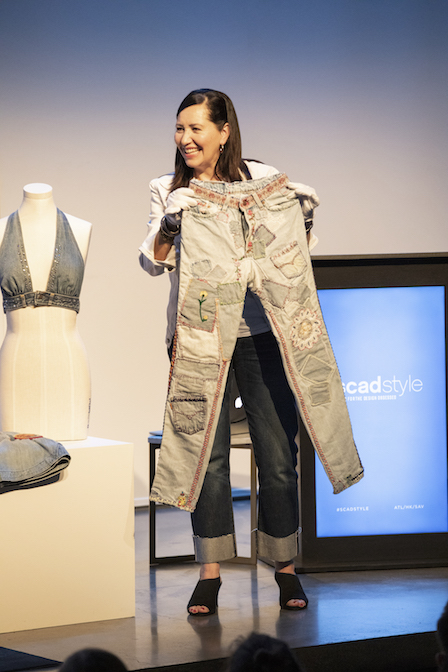
Woman holding a pair of Levi's jeans

During her SCADstyle visit, Panek also spent time at Pepe Hall visiting with two SCAD fibers classes, Senior Studio I (FIBR 440) taught by professor Jessica Smith, and Business Practices for Fibers (FIBR 337) taught by professor Katie Buchanan.

"Tracey was generous with students, insightful into the way research and history play into contemporary design, specifically Levis Strauss," professor Smith said. "She spent an hour speaking with the students about her career, the role of a historian in a brand, and how the archives support designers today. It was a fun discussion with high student engagement."
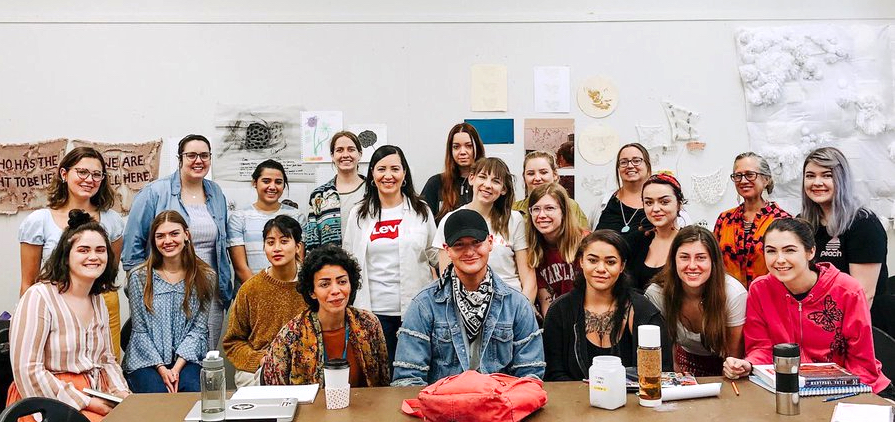
Tracey Panek, Mobolaji Dawodu, and attendees of SCADstyle 2019.

Thanks to Tracey Panek, Mobolaji Dawodu, and all attendees of SCADstyle 2019.
 

Dr. Nelly Ben Hayoun's brainy bombardment

April
11
2019
By
Tags:

After three hundred-plus scintillating slides, amidst relentless positive verbosity, Dr. Nelly Ben Hayoun's hour-long lecture at SCAD MOA concluded with a neon projection: BE CURIOUS AND AMBITIOUS AND NEVER EVER GIVE UP. The students' ovation was a roar of joy.

The event, part of SCADstyle 2019, was Dr. Ben Hayoun's first visit to SCAD Savannah. A designer of immersive experiences for world-class clients including NASA, BBC, Mattel and WeTransfer, Dr. Ben Hayoun, a "Top 50 Creative Leader Driving Change in the World" (Creative Review) is the director of the forthcoming feature film "I Am (not) a Monster."

"The Williy Wonka of Design" was introduced by SCAD student Jenn Lee (B.F.A., UX design). "As a UX design major," Lee said, "people ask me how you design an experience. Dr. Ben Hayoun is an incredible example of how with enough creativity, discipline and passion, any experience, no matter how immersive and ambitious, is possible."

Ben Hayoun detailed the rigors of large-scale projects and running a growing studio, emphasizing the importance of specialization while expanding your base and range of knowledge.

"Change takes time. You want to get a design job that allows you to work long-term. Nurture your working relationships. Create trust."

A slide depicting Ben Hayoun in a hardhat at the Large Hadron Collider whizzed by. The energy in the room was commensurate with the Big Bang. "Ninety-five percent of the universe is made of dark energy," Dr. Ben Hayoun observed.

Amidst the seriousness of Ben Hayoun's projects, playfulness prevails. She described building an active volcano inside her London flat, and baking and serving a gooey cake to NASA scientists while pitching them on her International Space Orchestra. "At that point they agreed."

Among the attendees in the auditorium were students from professor Michael Chaney's Experimental Film and Installation class (FILM 365). The morning following her SCADstyle talk, Ben Hayoun visited their classroom at Savannah Film Studios.

"This class is an elective," explained Chaney. "These students take creative risks and want to learn more about creative risk-taking. They're introduced to different theories and philosophies including John Berger's 'Ways of Seeing' and Tom Gunning's ‘Cinema of Attractions'. We put it into practice, shooting films on our phones and screening them in different contexts. We call it contemplation in action."

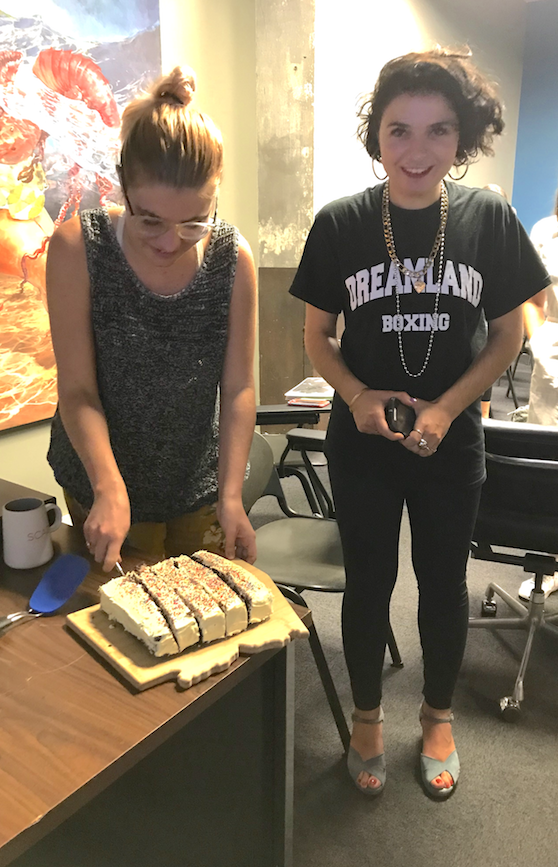
Dressed in a Dreamland Boxing shirt and the gold chains of a champion, Dr. Ben Hayoun beamed. "Sounds like a good time!" She asked the class: "What made you want to study film?"

Cassie Lee (B.F.A., film and television, 2019): "I come from a small town and documentaries were the way I learned about different perspectives in the world I'd never been exposed to. I'm interested in history and sociology. Films can manipulate and inform people's perspectives. Studying film helps me grow as a person."

The conversation was free-flowing, with students suggesting ideas including projecting experimental films around The Hive to attract passersby. Dr. Ben Hayoun gave practical advice. 

"Funding your film involves work. To write a grant application takes time. People who are awarded grants are methodical people. Look at the objectives and goals of the grants, what the committee are trying to achieve. Take their stated objective and write how you are going to accomplish exactly that. Read the guidelines and follow them. You have to do it."

Student Lizzy Bamford (B.F.A., film and television) edged forward. Inspired by Dr. Ben Hayoun's space orchestra anecdote, she presented the artist with a homemade chocolate sheet cake with buttercream frosting. Twenty-four hours of instructive inspiration concluded on a truly sweet note.

artist and student celebrating with cake

Learn more about Nelly Ben Hayoun Studios.


SCADstyle 2019


Alice Kandell: beyond Sikkim

April
1
2019
By
Tags:

"Objects that are considered art historical don't live in cultural vacuums," announced Dr. Arthur DiFuria, SCAD chair of art history, from the auditorium stage of the SCAD Museum of Art. "They don't sit on shelves or exist inside vitrines or hang on walls all their lives. They are woven into cultural fabrics, connected to the lives of the people who made them, use them, study them and are inspired by them. Perhaps tomorrow you will go into the classroom with a greater sense of this connectedness."

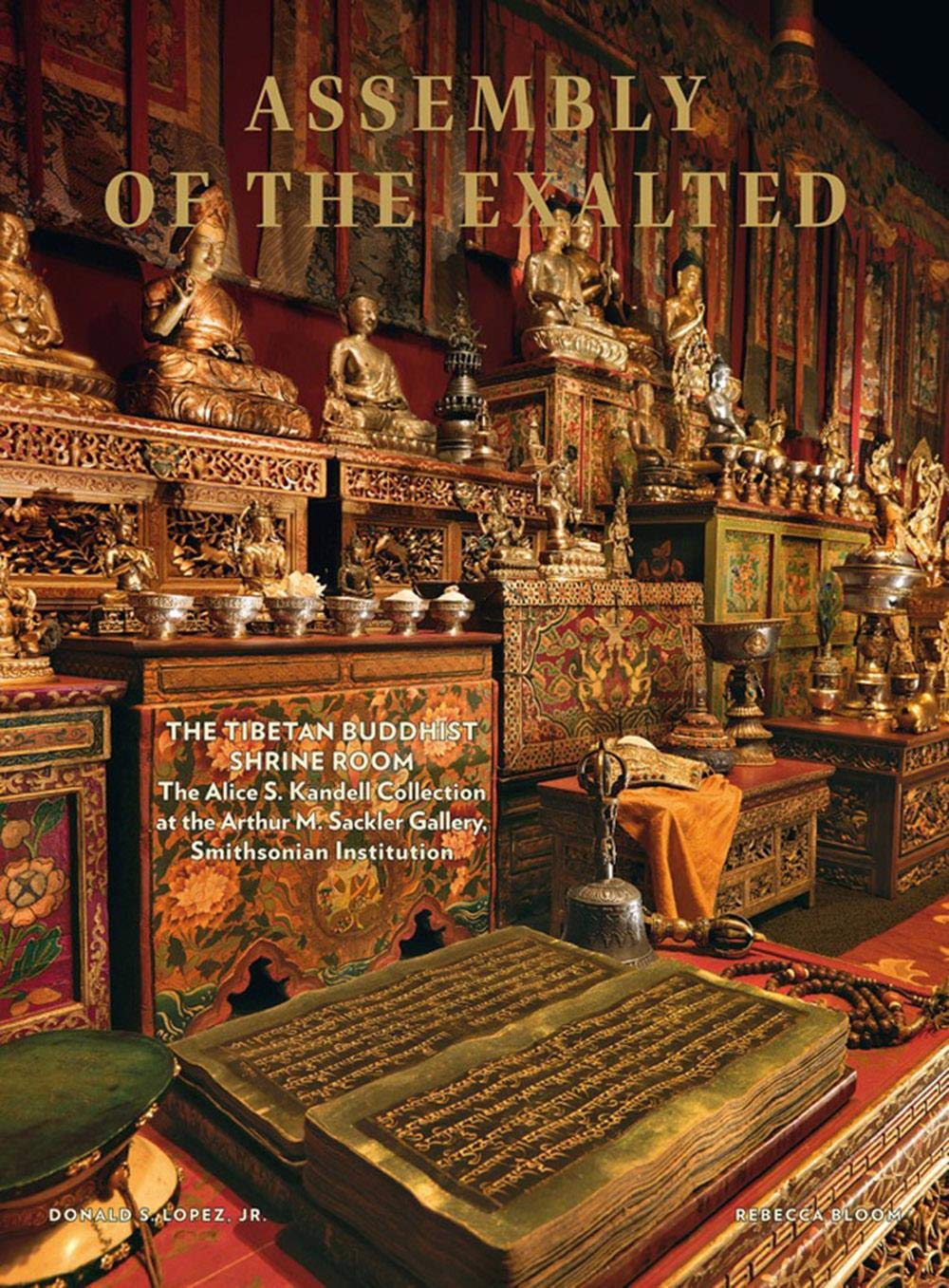
Dr. DiFuria's remarks were a preamble to a presentation by author and collector Alice Kandell, celebrating "Assembly of the Exalted: The Tibetan Shrine Room from the Alice S. Kandell Collection" (Officina Libraria, 2018), a new book about her half-century commitment to Tibetan art. Dr. Kandell's talk, ranging from sense memories of yak butter tea to the efficacy of tangling with the Smithsonian, was a fantastic example of the level of guest speakers and artists who visit SCAD.

Dr. Kandell's reminiscence began in 1965 when, as a graduate student in psychology, she traveled to attend the coronation of the new king and queen (the latter a friend from college) of Sikkim, a tiny nation in the Himalayas bordering India and Tibet.

"When I got to Sikkim," Kandell said, "I was totally overwhelmed by the beauty of the country: the mountains, the air, the people, and most of all the art. In a Buddhist country, the word ‘art' is a complete misnomer. It's not art, it's religious iconography, objects for use in the home and temples."

Sikkim man with buffalo

Photo: Alice Kandell


Since her initial trip to Sikkim, Kandell returned to the region, photographing widely at the king's behest. She also began a collection of religious objects, which now comprise the most comprehensive collection of Tibetan sacred art in the United States.

"Great art does not belong to any one person," Kandell said. "We're just guardians. In 2011, I decided it was time for my collection to go into the public domain. The Smithsonian finally agreed to present the pieces together as a shrine, as it would've been in Tibet."

As Kandell's slide show peaked with depictions of otherworldly richness, she pivoted. "You don't have to travel to coronations in foreign nations, you know. If you're a photographer, and you like to tell stories, you can go wherever you want. You can travel to the kitchen. I did."

After returning to the United States, Kandell explained, she married and became something of a homemaker, although she didn't stop creating: two books, featuring photographs of her then-toddler-aged sons, were the result: "Max, the Music-Maker" (Lothrop, Lee & Shepard, 1980) and "Ben's ABC Day" (William Morrow and Company, 1982). This seeming tangent was part of Kandell's larger point: inspiration is where you find it—just keep your camera with you.

The evening concluded with additional remarks on Kandell's work by Kerry Lucinda Brown, SCAD professor of Asian art history, and SCAD alumni mentor Paula Fogarty (M.A., art history, 2013). Following a Q&A, the magnetic Kandell remained in the museum lobby, surrounded by SCAD students whose creative horizons she had just widened, eager for more.

cover of assembly of the exalted

Learn more about the Kandell collection, and the free Sacred Spaces app, here.

Learn more about SCAD art history and stay up-to-date with SCAD events.


SCAD celebrates ten years of deFINE ART

February
21
2019
By
Tags:

This year, SCAD celebrates the 10th edition of deFINE ART, the annual program that brings together an international roster of emerging and established visionaries with new commissions, exhibitions, performances, lectures and screenings. The signature event, February 26-28, highlights the university's rich history of art programming and exhibitions since president and founder Paula Wallace established SCAD in 1978.

"SCAD's annual deFINE ART continues into its 10th season, delighting Savannah and Atlanta communities alike with exhibitions of the most influential artists of our time," said President Wallace. “2019 guests Carla Fernandez, Pedro Reyes, and Azikiwe Mohammed, among many others, are shaping contemporary art and inspiring the next generation."

SCAD deFINE ART 2019 honoree and keynote speaker Lawrence Weiner is a trailblazing conceptual artist and renowned figure in the international art world. Born in 1942 in South Bronx, New York, Weiner is an avid proponent of the use of language as art.

Storm Janse van Rensburg, SCAD head curator of exhibitions, stated: “We are thrilled to welcome Lawrence Weiner to SCAD. He epitomizes qualities that we aim to install in our students: intellectual dexterity, boundless creativity and a continuous curiosity about art and the world. His influence on young artists and creative minds is immeasurable."

SCAD will bring a roster of esteemed artists creating in an array of mediums to the three-day event. SCAD students from top-ranked degree programs including painting, illustration, performing arts, sculpture, film and television, fashion, photography, and immersive reality will interact with artists during the signature event through master classes, interactive installation collaborations, public art programming and gallery talks. 

Featured exhibitors at SCAD's award-winning Museum of Art in Savannah include contemporary sculpture and installation artist Lee Bul (South Korea); performance artists Ania Catherine and Dejha Ti (USA); painter Monica Cook (USA; B.F.A. painting 1996); fashion designer Carla Fernândez (Mexico); multidisciplinary artist Azikwe Mohammed (USA); architect and artist Pedro Reyes (Mexico); painter Alex Gardner (USA); sculptural artist Nicholas Hlobo (South Africa); multidisciplinary artist Gonzalo Lebrija (Mexico) and sculptor Berta Fischer (Germany).

Other SCAD Savannah exhibitions include a group exhibition show featuring SCAD alumni titled “News from Nowhere" at Gutstein Gallery, as well as a fashion photography exhibition “Rebel Rebel" comprised of work from SCAD Savannah and Atlanta alumni on display at Alexander Hall.

SCAD FASH Museum of Fashion + Film in Atlanta will exhibit art works by visual artist and photographer Trine Sondergaard (Denmark) in dialogue with objects from the SCAD fashion collection. At the Trois Gallery, the thesis show of M.F.A. photography candidates Charlie McCullers and Cecilia Montalvo is titled “Where The Light Enters."

Programming highlights for deFINE ART 2019 include an opening night reception at the SCAD Museum of Art, Tuesday, February 26, including performances by exhibiting artists Azikwe Mohammed, Dejah Ti and Ania Catherine. The museum courtyard will feature an illustration battle, live music, food trucks, and art projections by Sean Capone. On Wednesday, February 27 two other notable performances will take place; a puppet show “Manufacturing Mischief" by writer and director Pedro Reyes, as well as a sonic journey performed by special guest artist and SCAD alumna BOSCO with video projections by artist Emeka Alams.

To mark the closing of the annual event on Thursday, February 28, deFINE ART 2019 honoree Lawrence Weiner will discuss his expansive career and impact on the art world. Following the lecture, President Wallace will award the prestigious SCAD40 Prize to alumna Le'Andra LeSeur (B.F.A. photography, 2014) for her innovative accomplishments in the field of photography.

At SCAD Atlanta, a featured lecture will be presented by visual artist Derrick Adams at SCADShow on Wednesday, February 27. There will also be a special reception for artist Trine Sondergaard and designer Carla Fernandez at SCAD FASH Museum of Fashion + Film on Thursday, February 28. The reception will include artist talks and marks the official opening of Fernandez's pop-up boutique in the museum.

All deFINE ART events, including opening night celebrations, are open and free to the public.

SCAD deFINE ART logo

For more information visit www.scad.edu/defineart2019.


'In the Present': Elaine Mayes

October
9
2018
By
Tags:

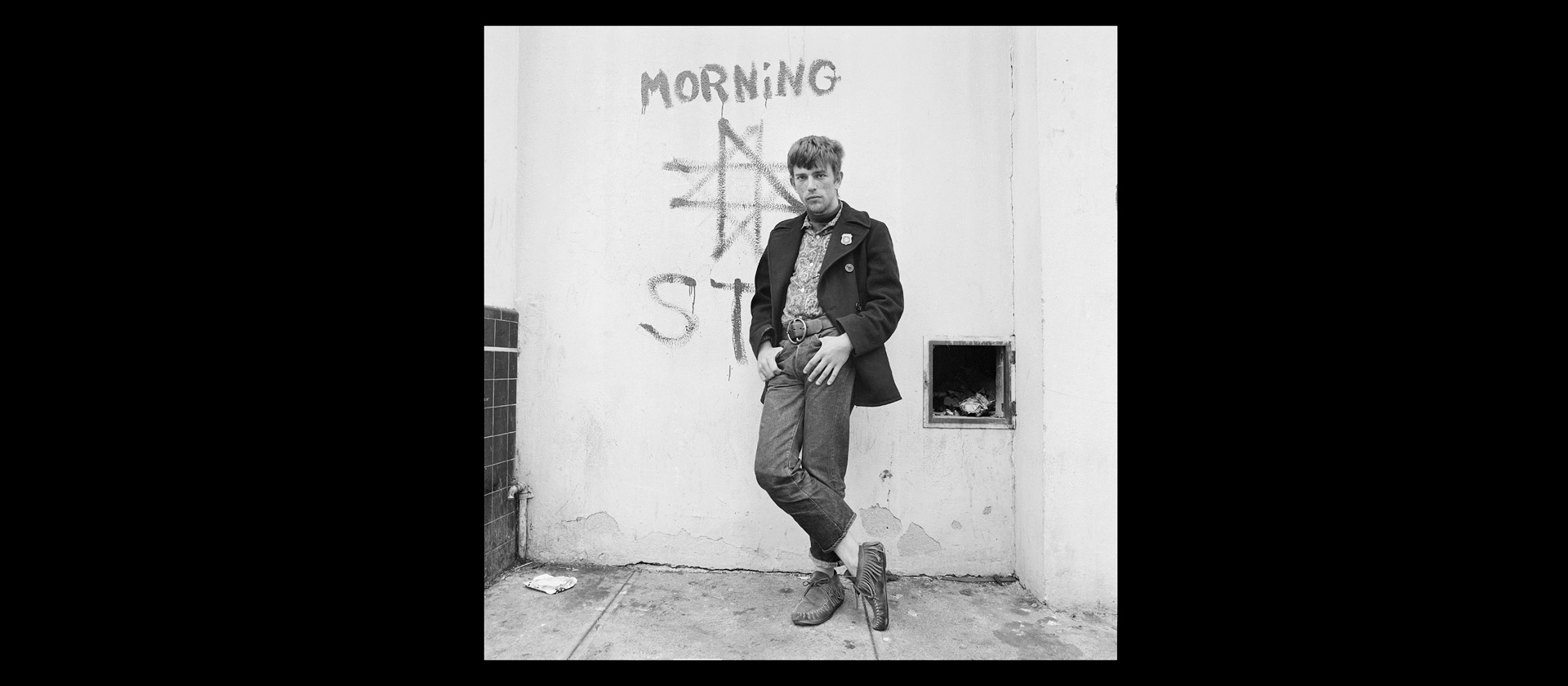
Pea coat, buckskin boots, thumbs jammed in front pockets, a haircut no professional barber could possibly countenance, his weary face still open to possibility: this is "Russell in Front of Morning Star Graffiti" (1968), one of thirteen photographs from Elaine Mayes' "Haight Ashbury Portraits," displayed at SCAD MOA as part of the new exhibition "In the Present: Five Decades."

"In the Present" includes more than 90 examples of Mayes' photographic explorations of travel, movement, and the everyday. The first woman to teach film and photography in an American university, Mayes has been an active visual artist since 1960, and worked as a photojournalist, filmmaker and educator during her singular career.

The SCAD MOA exhibition includes landscape images from Mayes' black-and-white series "Autolandscapes," photographed from a moving car, and features her lesser-known color photography, including key examples from her "Long Island Survey Project" documenting families hanging out on Jones Beach in the late 1970s. 

In 1967, Berkeley native Mayes photographed the Monterey Pop Festival, the subject of her book, "It Happened in Monterey" (Brittania Press, 2002). By the time of her Haight Ashbury series, the Summer of Love was over. Yet there is an innate sympathy in the faces of her subjects, even the hard-edged ones: Mayes, in her early thirties when she took the photos, was a fellow traveler, able to capture her subjects as equals.

Her "Haight Ashbury Portraits" seem more like Civil War-era daguerreotypes than the average fashion-conscious image of today. Part of it is process; Mayes' use of silver gelatin resembled the daguerreotype in sharpness and detail. There is a sense, too, that Mayes' souls come from the old world. They are children of a counterculture whose commodification has only accelerated in the subsequent decades, subsuming what is was meant to represent. It is hard to imagine her subjects wearing advertising.

In the spacious, well-lit environ of SCAD MOA, thirteen digital prints of Mayes' Haight photos are displayed on a single wall. Stepping back and looking at more than one photo at once creates a composite of the artist's vision. A similar effect happens with the "Autolandscapes" in the adjacent room.

Mayes' 1973 photograph "Bay Street West Mall, Window with Mannequin and People on Sidewalk, Springfield, Massachusetts" depicts a bearded young man eating a banana and a cigar-smoking older bald man wearing a suit and fat necktie. They stand only a few feet away from each other, but could not be further apart. The mannequin in the window appears to possess the most charged potential for movement.

"Recording my life has become second nature," Mayes says in her newly-completed film "Summers with Helen," which screened at the SCAD MOA theater to celebrate the opening of her exhibition, with Mayes in attendance. The film, a document of the decade she spent sharing summer vacations in the Catskills with photographer and documentary filmmaker Helen Levitt, is a minor key masterpiece, revealing something of the inner lives of these two important artists though their mundane interactions.

During the Q&A following the film, Mayes was asked what she thinks about first when she wants to take a photograph. Her response: "I don't think ahead of time. I see it. I go back later and make a value judgement. The world inspires me. My work comes out of what I see."

Photographed in black and white, man stands with legs crossed in front of graffitied wall

“In the Present: Five Decades” is on view through Jan. 13, 2019. The exhibition is supported by a grant from Mrs. Robert O. Levitt. The exhibition is curated by Storm Janse van Rensburg, head curator of SCAD Exhibitions and Susan Laney (B.F.A, photography, 1998), guest curator.

The exhibition is free for all museum members, and SCAD students, faculty and staff with a valid SCAD Card. Open to the public with the cost of museum admission.