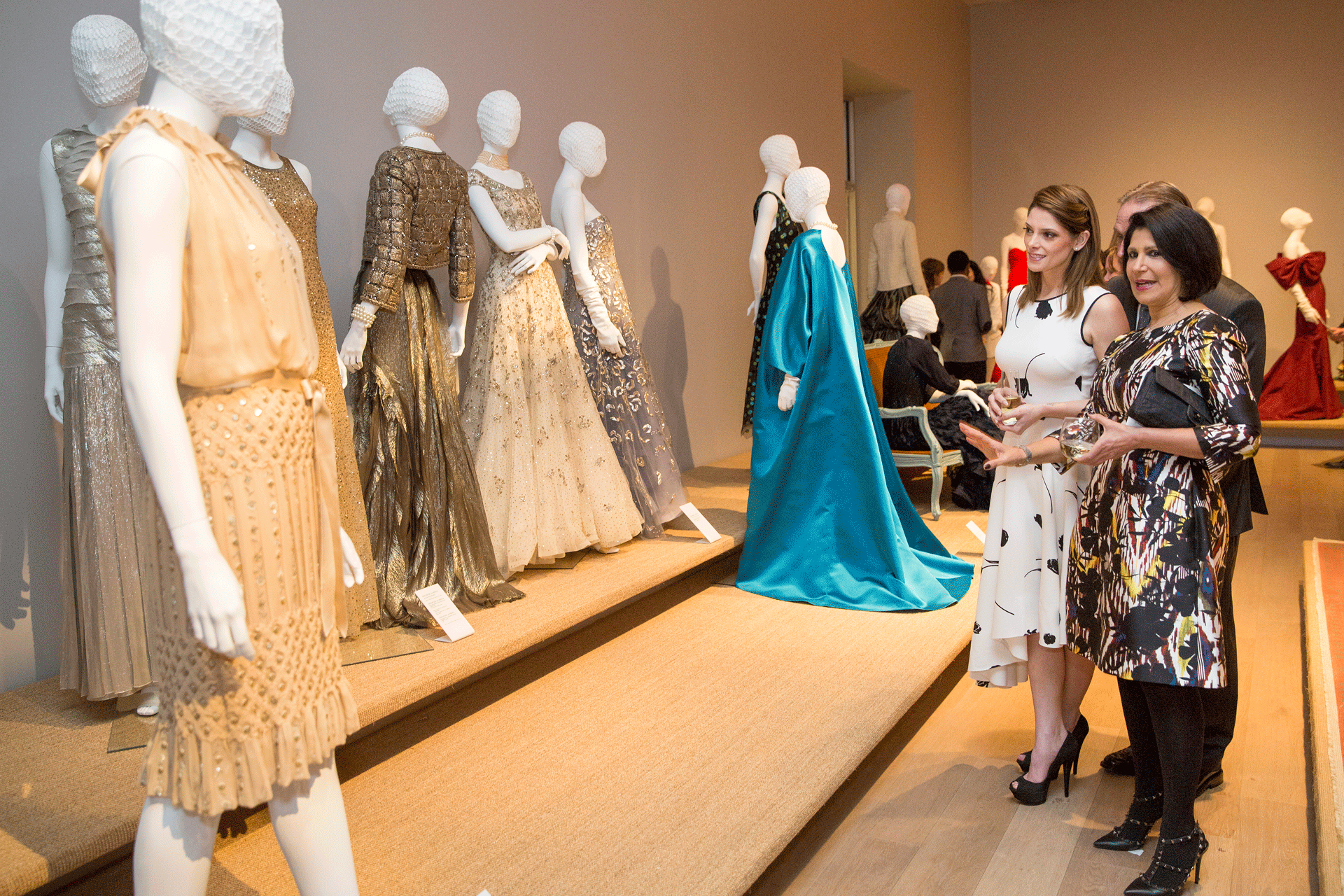
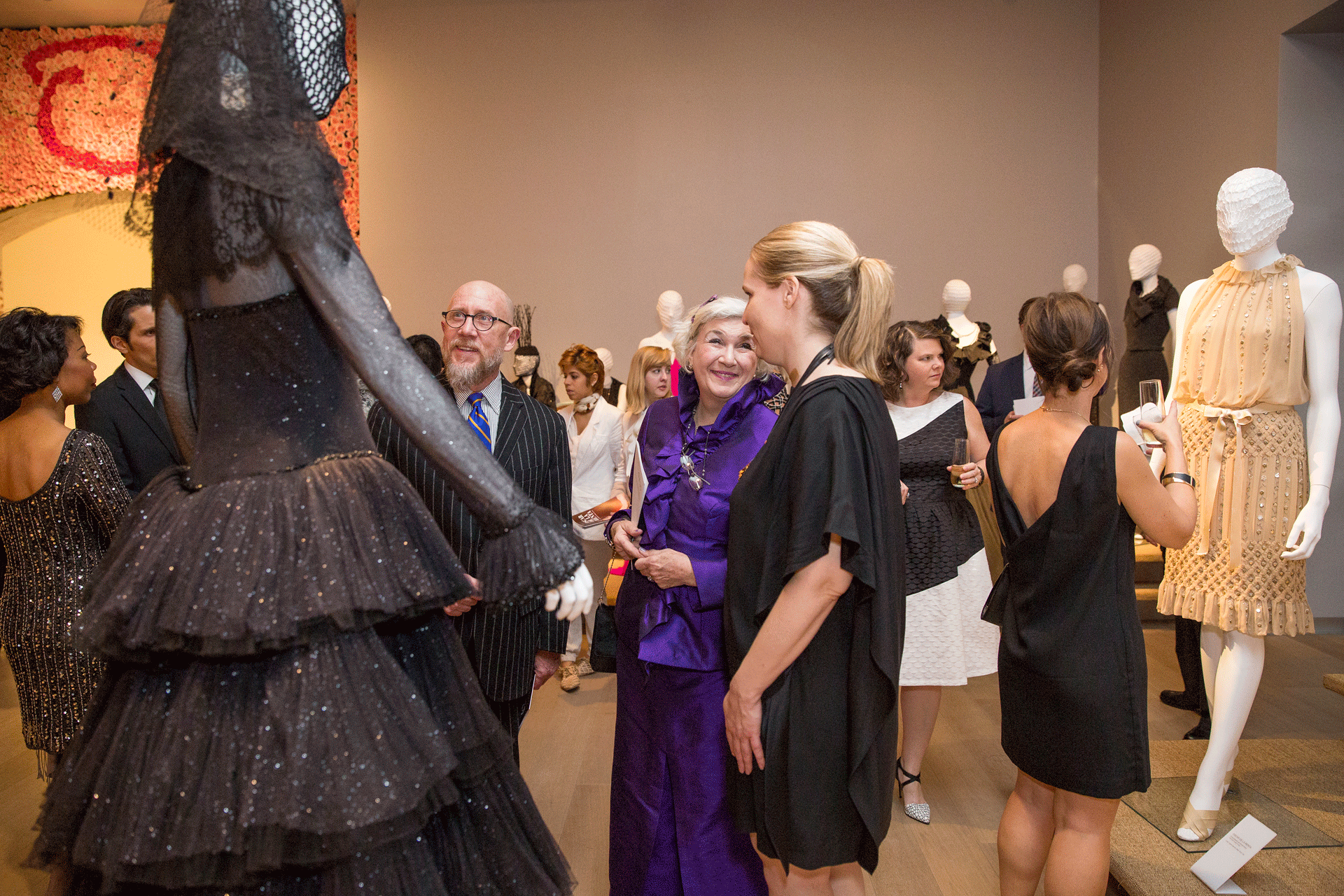
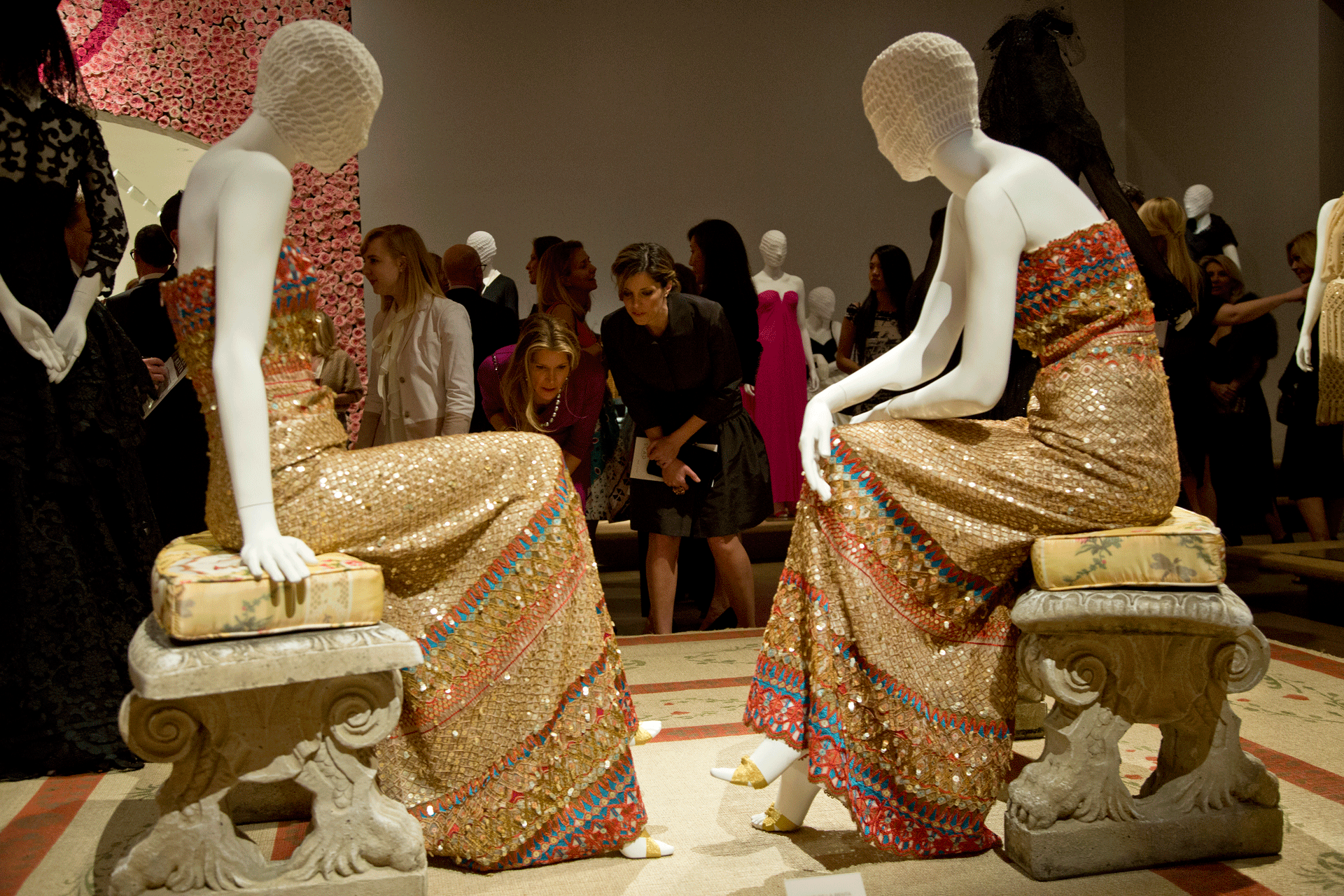
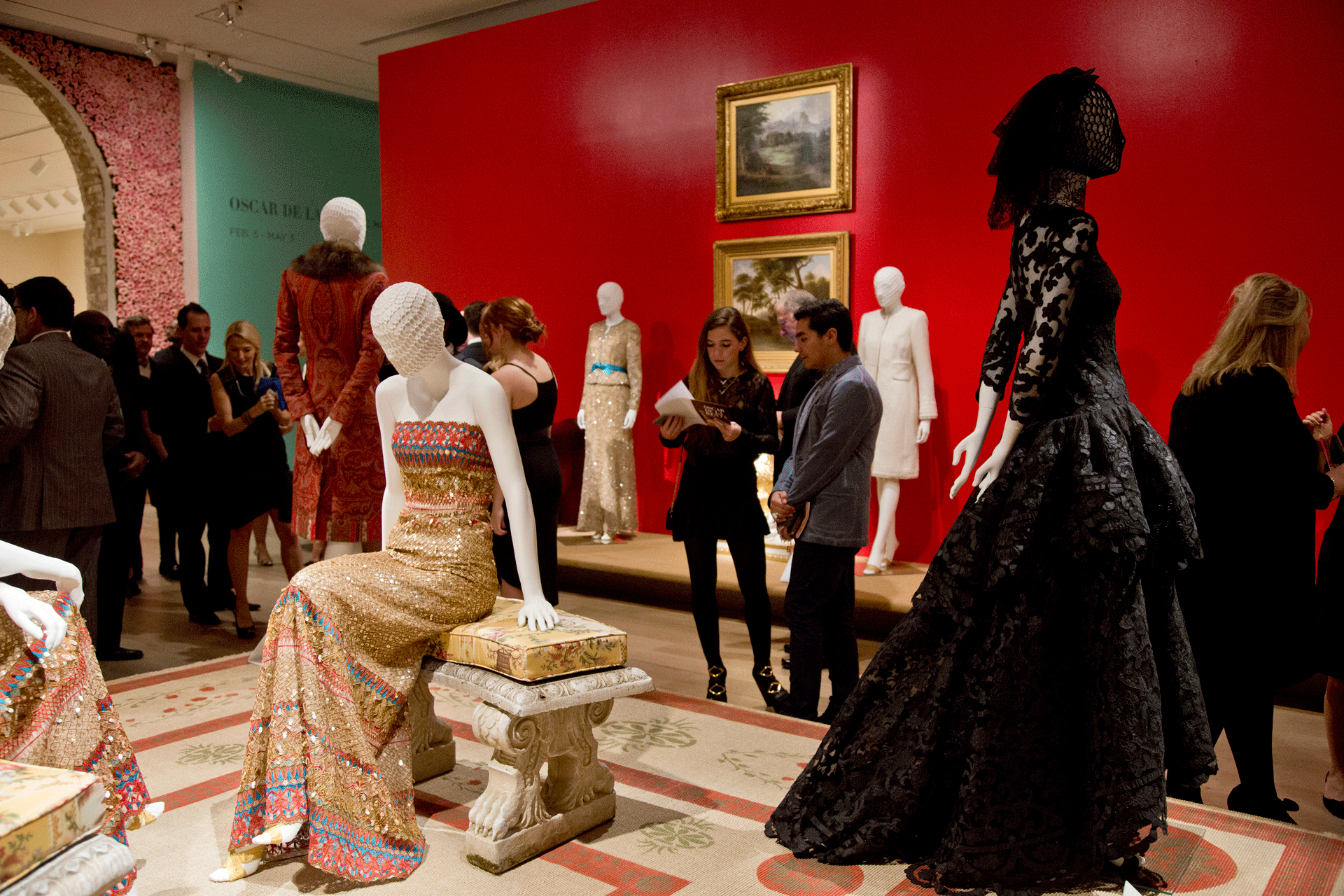
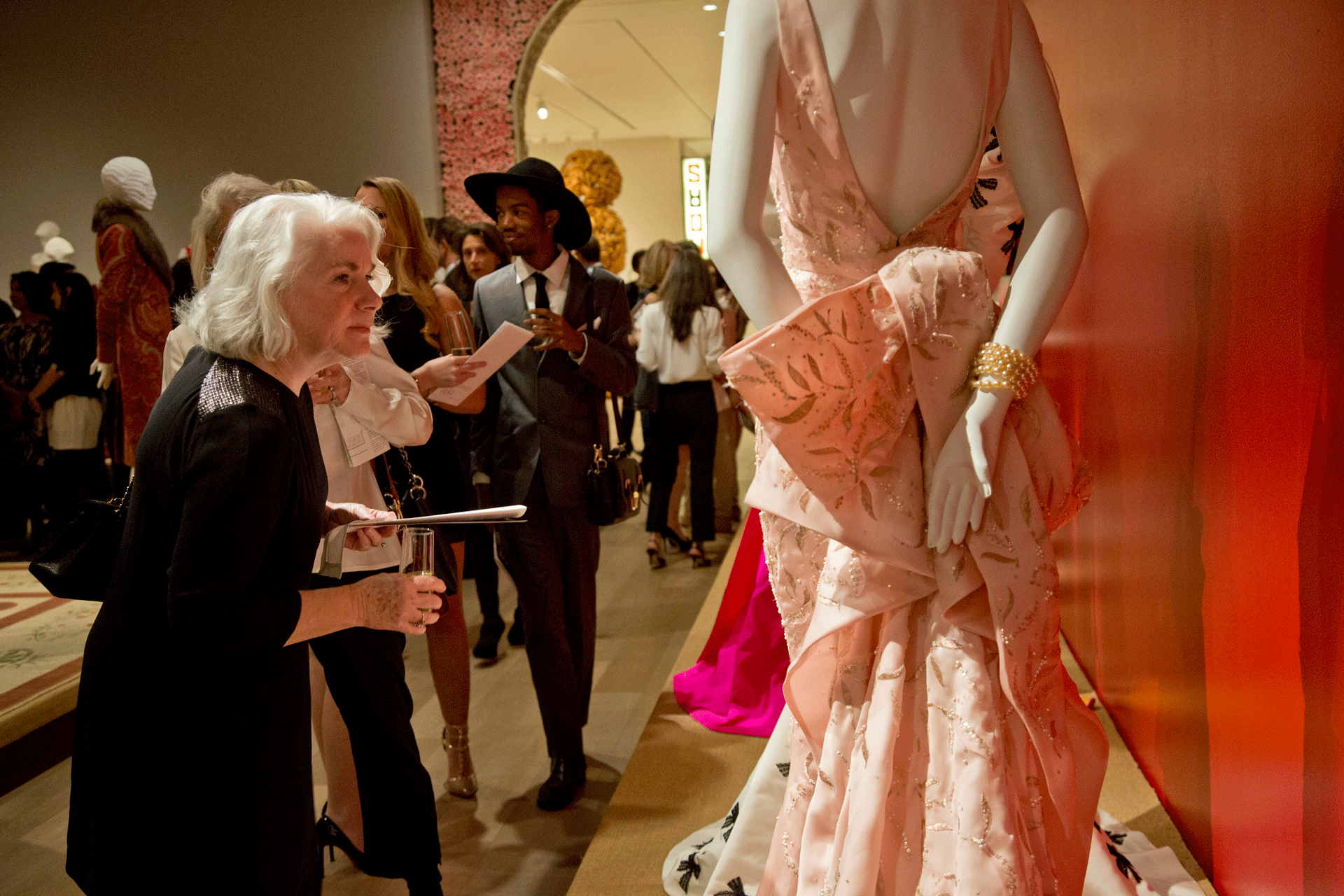
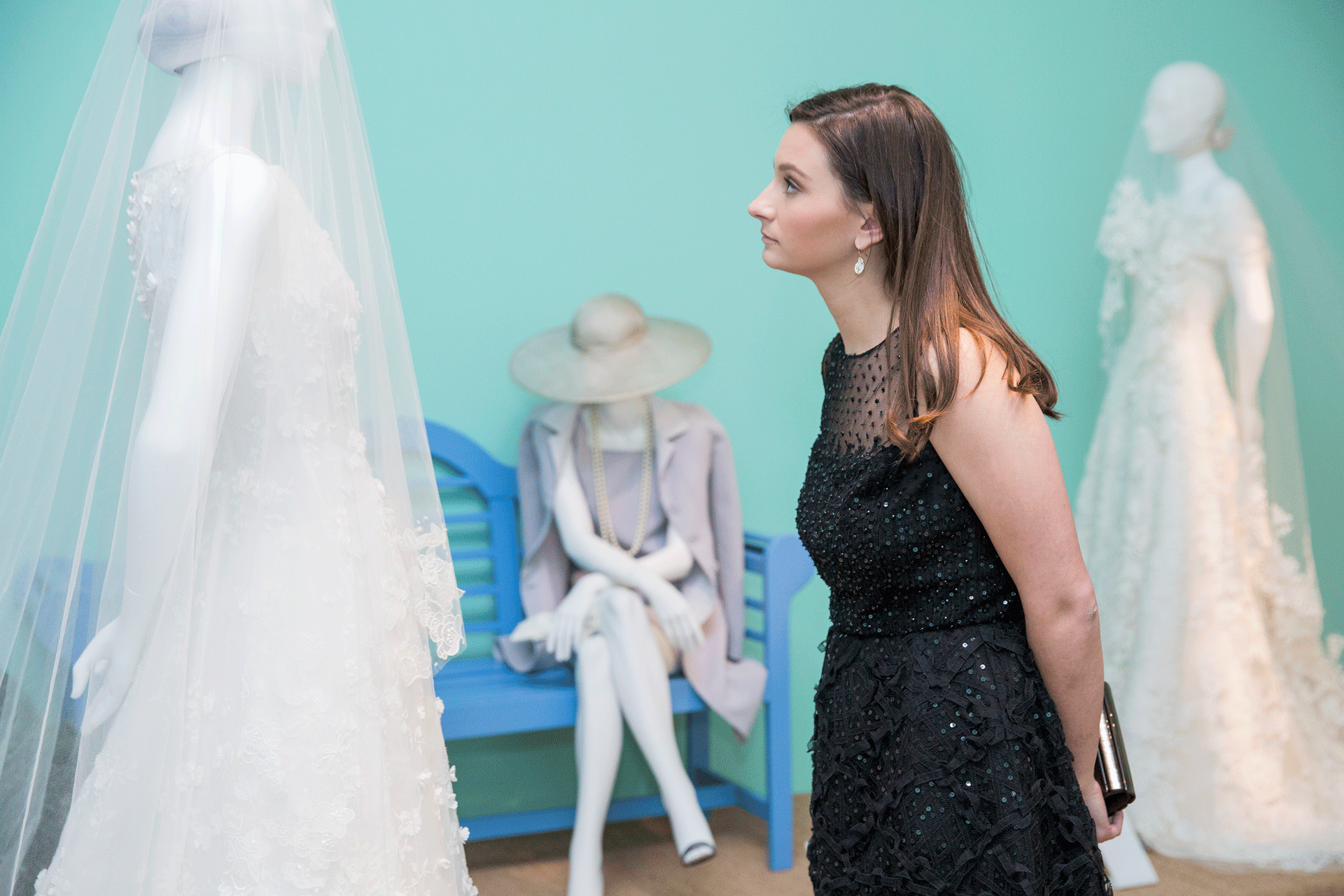
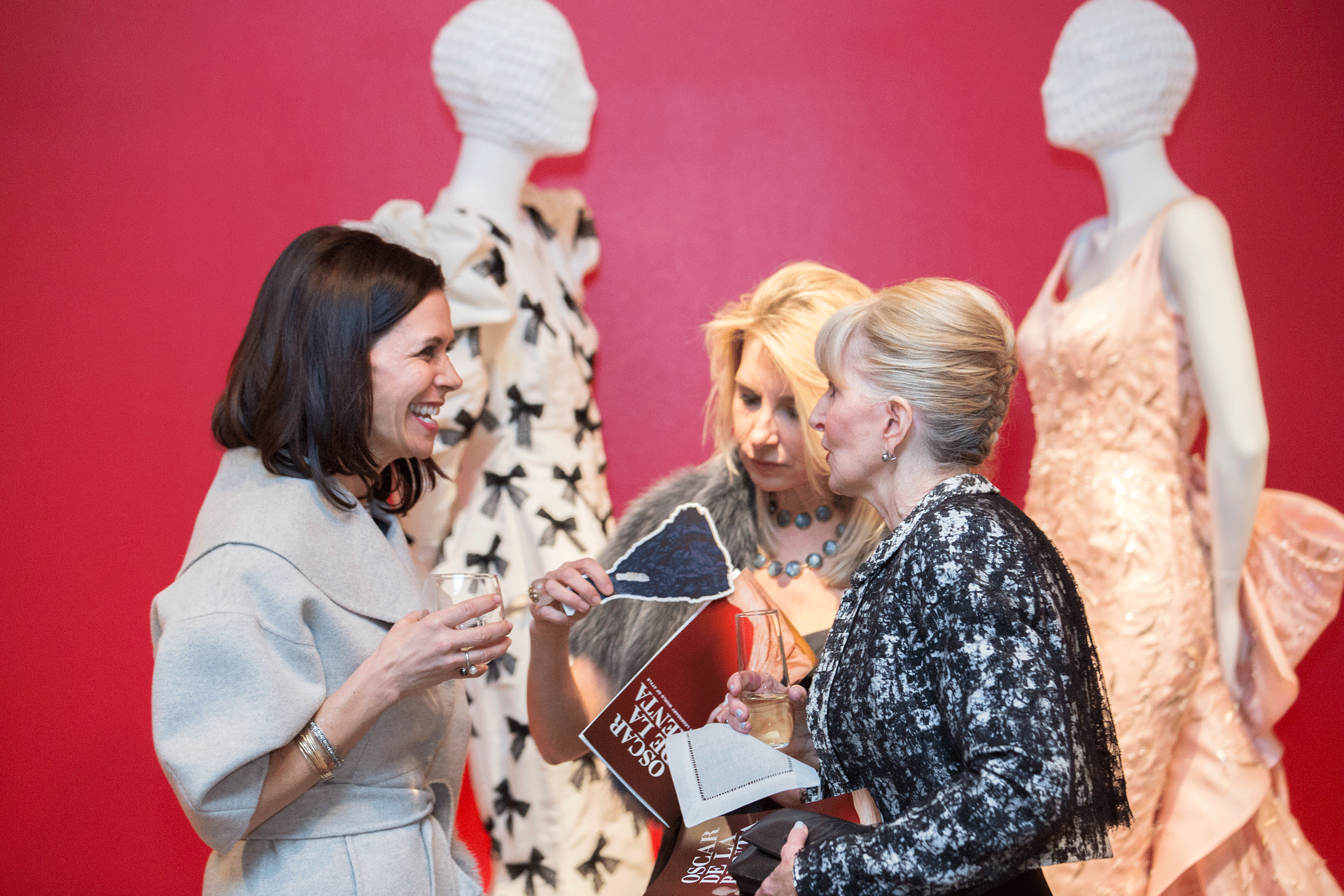
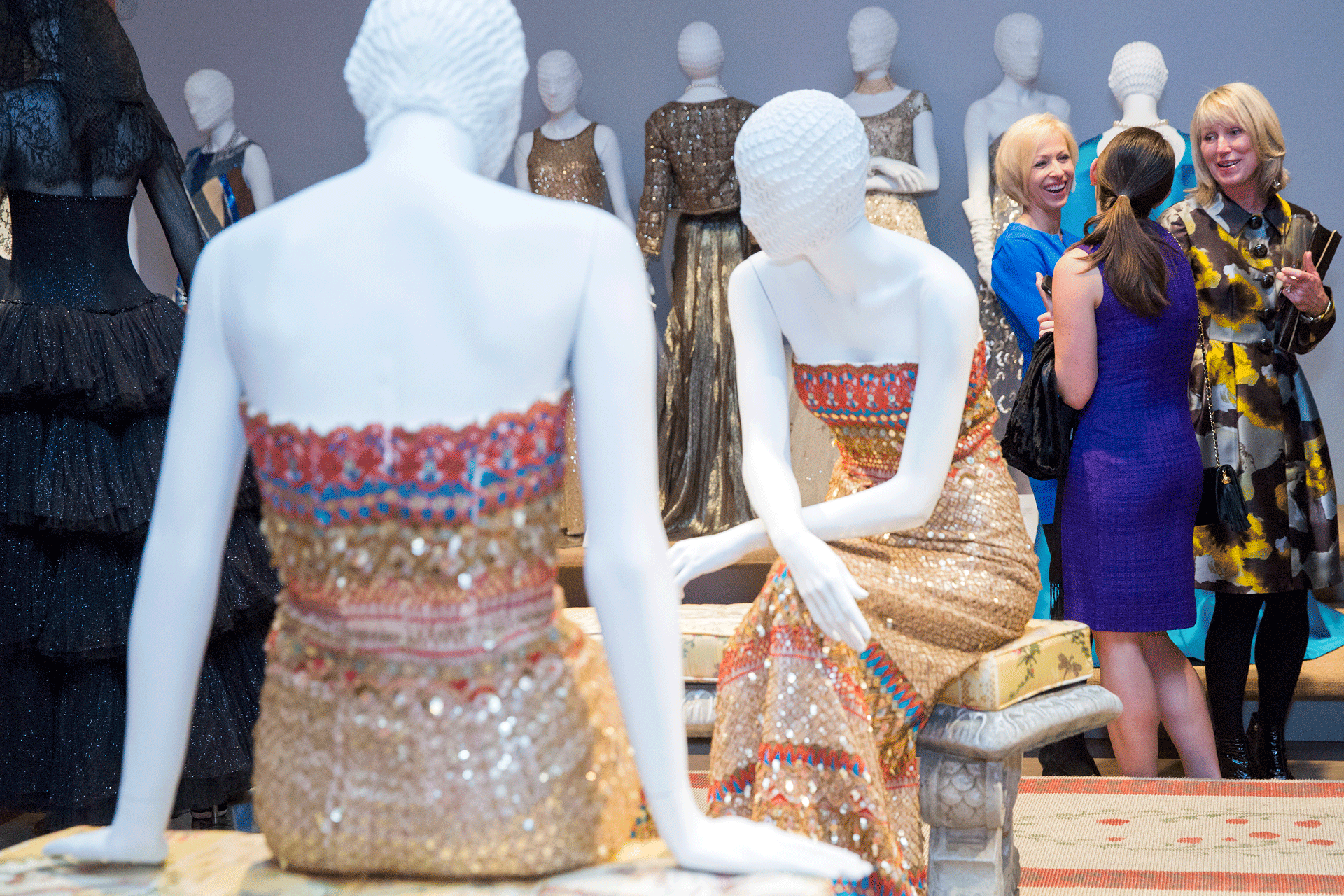
Savannah College of Art and Design opened André Leon Talley’s Oscar de la Renta: His Legendary World of Style (Feb. 5 – May 3) with a celebratory preview at SCAD Museum of Art. The fifty gowns, chosen by Talley for the first posthumous show to honor the designer, were the most illustrious VIPs in attendance. The dresses, loaned by Mr. de la Renta’s friends and clients, such as Taylor Swift, Sarah Jessica Parker and First Lady Laura Bush, were poised to show what all know about the designer’s pivotal contributions to the world of fashion:
Oscar de la Renta designed clothes for women who wanted to look and feel beautiful, at their most elegant best. -André Leon Talley
It’s no wonder, then, that the garments seem to come alive under the gaze of their entranced admirers, and to interact with them in the way that any dignified and gracious woman would.
The resurgence of TV is attracting a new generation of talent. Students are increasingly interested in jobs for the small screen, whether they are above or below the line. I tell them it’s a great time to get in, and that chances are good they’ll one day work for the same shows they binge watch. It seems that people used to get into the business because they were well connected, starry eyed, or gluttons for rejection. But the reasons why TV is a great career to shoot for are now better than ever. Here’s a few:
1.)There are more shows than there are staff to produce them.
When I was starting, jobs were scarce, and they were mostly limited to network. Not so today. For example, there are more than 60 network and cable TV shows and films now shooting in New York. This past summer there were 80. In Atlanta, there were 158 film and TV projects shot in 2014 alone, with frequent reports of new productions opening shop. Attached to each of these productions are a myriad of roles and responsibilities that show runners need to fill.
2.)You don’t have to move to New York or Los Angeles.
Seventy five percent of my graduate class moved to LA or New York for work. Now I tell my students to go wherever they have contacts, especially Atlanta, where the opportunities are equal to those in New York and LA. There are big incentives for shows to hire locally, and tax credits aren’t the only ones. I like to hire local crews because they know the area, are well connected and help a show run efficiently. If you build the labor force, the productions will come. Banking on this trend, I recently changed my DGA residency to Savannah believing that more production work will come to the city as the talent pool grows.
3.)New talent can grow with new platforms and content.
Viewers have an appetite for fresh content and for new ways to consume it. With original productions streaming on the likes of Amazon, and cable networks increasingly supplementing unscripted content with scripted, new talent can get in on the ground level of new shows with new forms of distribution and grow with them. Ratings buster Empire or Golden Globe-winning Transparent anyone?
4.)TV teaches on the job.
TV is still an industry that’s willing to teach on the job. We bring in students with little experience, train them in the strange and technical nuances of our business, and hire the promising ones. I placed recent SCAD grad Gabe Gilden as an intern on a Comedy Central pilot. That internship turned into a job as a set PA on Broad City. Now he’s in the process of joining the DGA Trainee Program. To get there, Gabe had to experience a set and learn what the other 100 crew members do. The beauty is that because he was taught that way, one day Gabe will create opportunities for students, too, and keep the pipeline going.
TV will thrive with a well-trained work force, which will result by expanding pathways between the classroom and the set. The sooner students know what they want to do, the sooner faculty can train them and place them on shows for course credit and real world experience. Such is the case of senior Allie Schultz who, beginning in sophomore year, spent early morning classes repeatedly setting up and breaking down tripods. Her active interest in cinematography landed her at the top of the list we handed the The Walking Dead when producers called SCAD for interns. Later on set, when a camera op threw her the sticks, of course Allie put them up rapidly and evenly, much to the surprise and delight of the harried crew. There are dozens more like her ready to be tested; ready to show the industry that its future is in good hands. And with job prospects looking better than ever, their ranks will grow, starry eyed and business-minded.
Megan Lombardo is an adjunct professor of film and television at Savannah College of Art and Design. Her credits as 1st and 2nd AD include Broad City, airing on Comedy Central, MTV’s Eye Candy, Fox’s Glee and HBO’s VEEP. She holds an M.F.A. in film and television from SCAD.
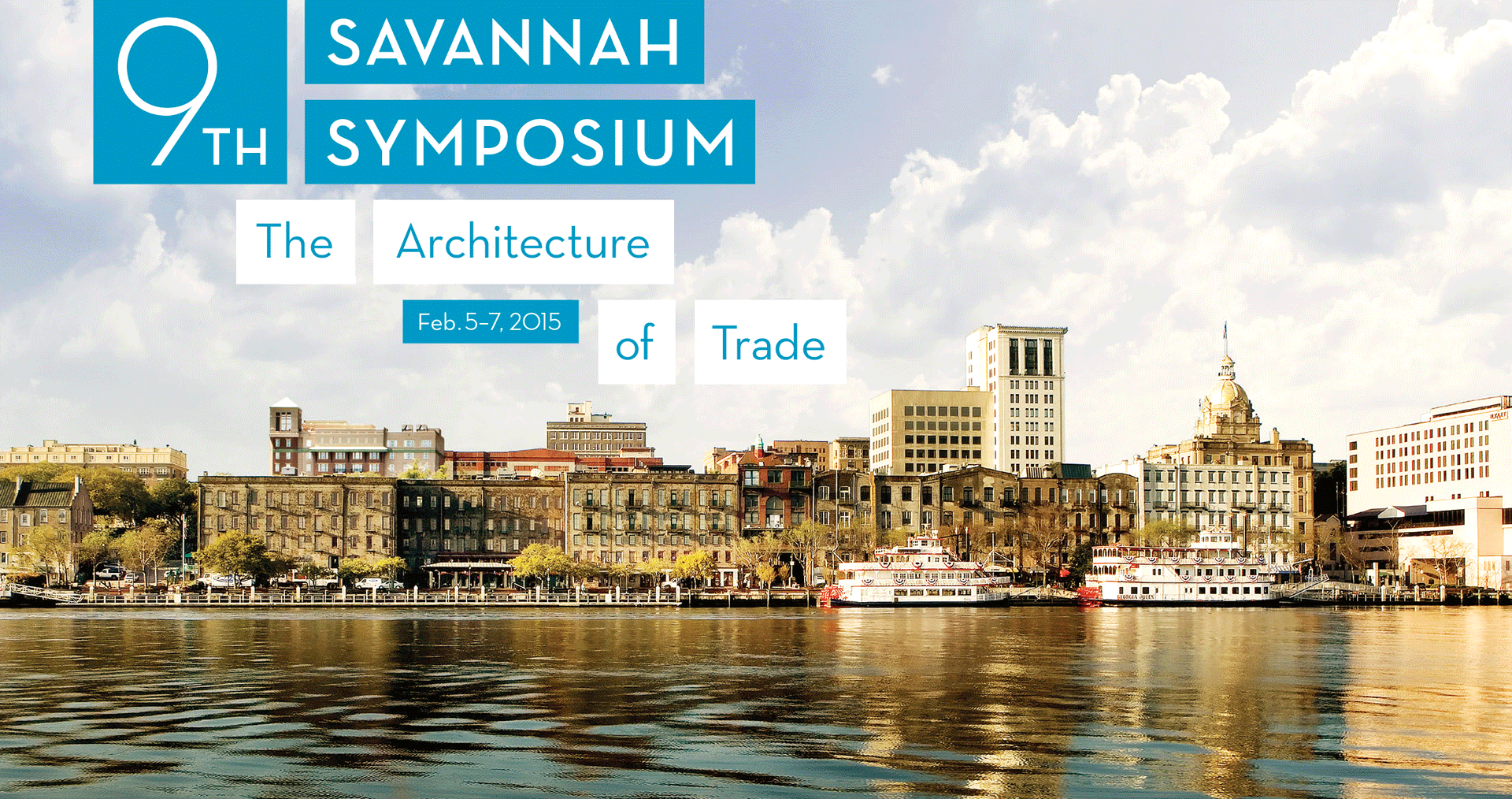
What does Savannah have in common with Hong Kong, Cartagena, Venice and Mumbai? As a port city, it has long been connected to global trade networks that have existed as long as the oldest human civilizations. Consider a lowly piece of Savannah pavement – a remarkable cobblestone etched with Chinese characters that began its life as a tombstone in China in 1798, became ballast in a ship in the 19th century, and ended up in Savannah as a cobblestone. The story of Savannah’s Chinese cobblestone aptly illustrates the global forces that have directly shaped cities throughout history and around the world.
The cobblestone is the perfect symbol for the 9th Savannah Symposium (Feb. 5 - 7): “The Architecture of Trade.” Since its inception in 1999, the biennial event, presented by Savannah College of Art and Design’s architectural history department, has attracted almost 400 speakers from over 30 countries worldwide, bringing together historians, anthropologists, economists, and sociologists with architects, planners, designers and preservationists to connect history to issues that are relevant today.
Issues of trade increasingly dominate the news as the forces of globalization, shifting economics, and even the spread of diseases and political radicalism define our lives. Exploring the complex relationship between trade, architecture and cities, “The Architecture of Trade” is particularly timely given Savannah’s rising profile as the nation’s fastest growing port, now the fourth busiest after Los Angeles, Long Beach and New York City.
The 9th symposium will bring 50 speakers from around the United States and from Brazil, Canada, Croatia, Germany, Israel, Italy, and South Africa to Savannah, which shares the history and experiences of other trade centers, but is also an anomaly. Like other port cities around the world, Savannah is preparing for the arrival of the gigantic “post-Panamax” cargo ships in the coming years that will dwarf the current freighters. Yet Savannah also boasts one of the best preserved historic waterfronts, with most of its 19th-century warehouses intact, along with the unique network of masonry retaining walls, terraced lanes (called Factors Walk), and iron bridges.
The symposium leads off with a walking tour of this most extraordinary urban landscape. Also opening the event is the keynote lecture, “Cities of Incense and Myrrh,” given by Dr. Nasser Rabbat, director of the Aga Khan Program in Islamic Architecture at the Massachusetts Institute of Technology. Thematic paper sessions will follow on subjects ranging from the impacts of vast trade networks in past centuries to how trade shapes the built environments of today. The symposium closes with the keynote lecture, “How Capitalism Shaped the Built Environment,” given by Dr. Joyce Appleby, professor emerita of history at the University of California, Los Angeles.
The Savannah Symposium showcases the role SCAD plays in supporting scholarship and contributing to the broader understanding of our world. The lectures, receptions and tours provide valuable opportunities for students, faculty and community members to interact with leading academics and practitioners. Beyond the events, representative papers from the 3rd and 6th symposia have been published as books edited by the department’s faculty – Commemoration in America: Essays on Monuments, Memorialization and Memory, edited by David Gobel and Daves Rossell (University of Virginia Press, 2013), and World Heritage and National Registers: Stewardship in Perspective, edited by Thomas Gensheimer and Celeste Lovette Guichard (Transaction Publishers, 2014). Papers from the 8th symposium will be published in late 2015 in Modernities Across Time and Space: Architecture and History in Context, edited by Patrick Haughey (Cambridge Scholars Publishing).
We invite you to participate. Keynote lectures are free and open to the public, while paper sessions and tours require conference registration.
Robin B. Williams has chaired the SCAD architectural history department since its founding in 1996. He specializes in the history of the built environment of the modern period in Europe and North America. He earned his B.A. at the University of Toronto and his M.A. and Ph.D. at the University of Pennsylvania. Since joining SCAD in 1993, Williams has made Savannah the focus of his research, directing the award-winning online Virtual Historic Savannah Project from 1996 to 2005 and is the lead author of a new architectural guidebook, Buildings of Savannah (2015). Read more by Robin here.
Legacy can be tangible and intangible. In the case of Oscar de la Renta, it is both, and it is flourishing in a place where young designers begin their careers.
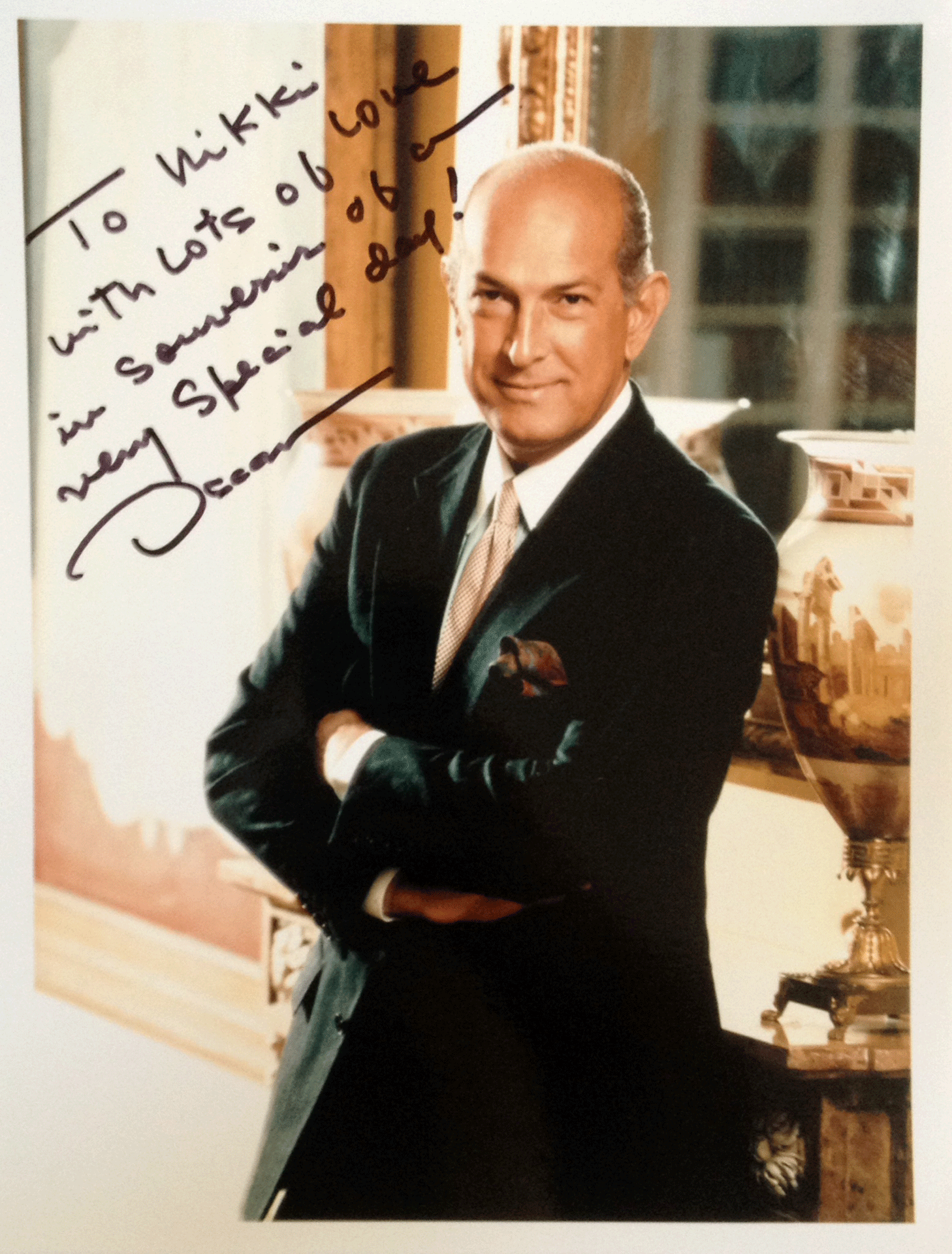
During his 2001 visit to Savannah College of Art and Design’s fashion show to accept the André Leon Talley Lifetime Achievement Award, the designer shared this wisdom for breaking into the industry based on his own start with Cristóbal Balenciaga.
Everyone should seek the opportunity to go somewhere they can work and observe how it happens. - Oscar de la Renta
This is the story of how two industry hopefuls are living that advice and what they learned from hands on experience in Mr. de la Renta’s studio.
A prom dress and a purpose
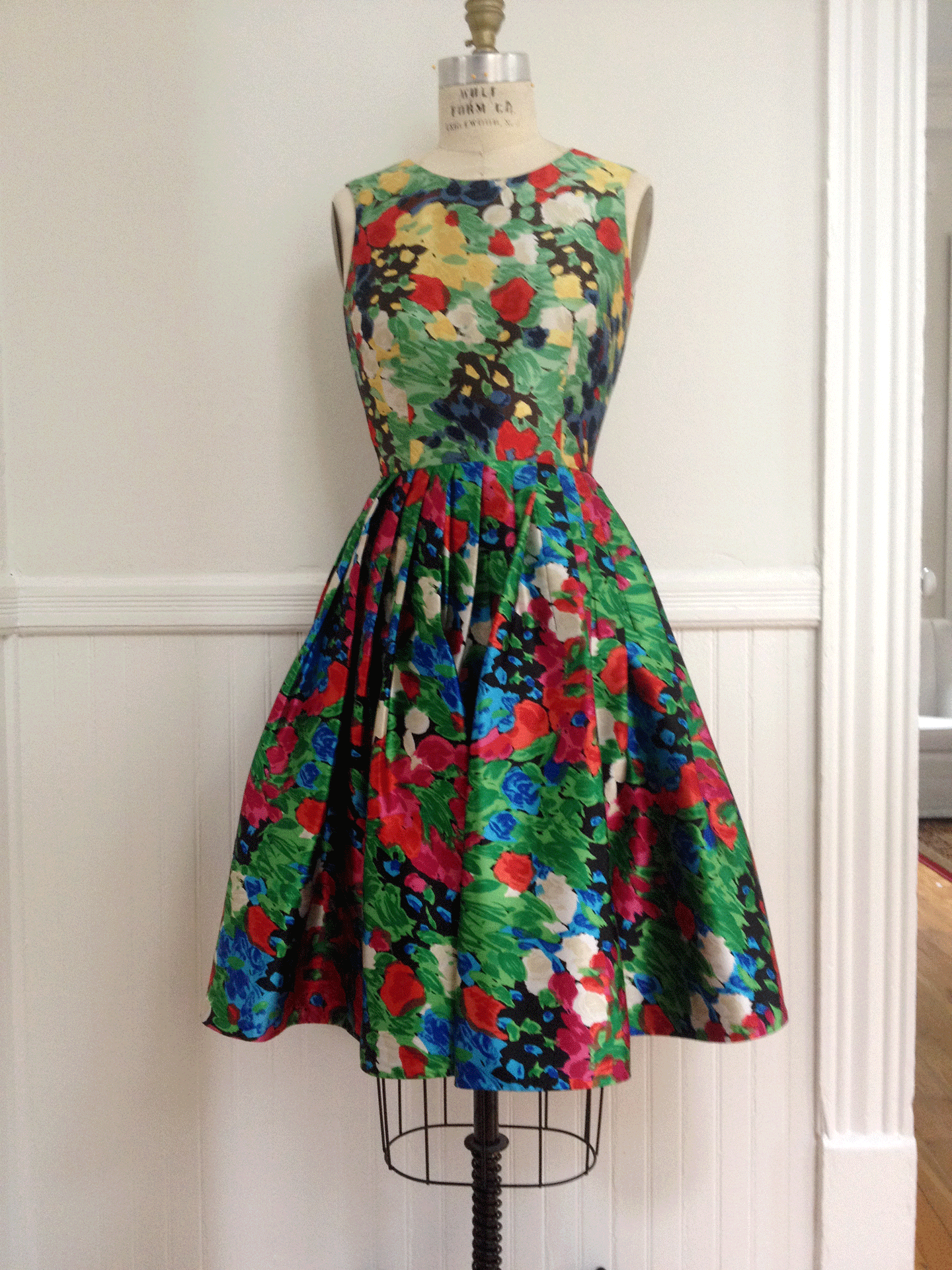
Nikki Kaia Lee first encountered the tangible aspect of Mr. de la Renta’s legacy as a 14-year-old girl: a beautiful dress the designer chose just for her. This rare gift, which she later wore to prom, was a momento from a special day spent with him in New York. SCAD graduates, whom Nikki met through her mother, a SCAD architecture professor, conspired to bring her to New York as a distraction from cancer treatments. The dream trip grew, and soon insiders like WWD’s Bridget Foley were opening doors to opportunities such as lunch with Mr. de la Renta in his studio.
I was just this girl from Georgia, but to him it didn’t matter where you come from. He treated everyone with such dignity and respect. - Nikki Kaia Lee
Nikki, now 20 and a junior at SCAD double majoring in fashion design and fibers, learned her first lessons from this dress, fitted for her right there in Mr. de la Renta’s atelier. Its lines, the slight variation in color, the way it made her feel. Her cancer long in remission, Nikki has spent the last four summers as a design intern for Oscar de la Renta in New York. Working in all areas of the studio – including stints with design assistants, in the atelier, and with the embellishment designer – has informed Nikki’s design approach and moved her to pursue a career in textiles.
What I took from Oscar’s work was how he formed space around the garment. A lot of his garments, especially eveningwear, were like sculptures. -Nikki Kaia Lee
Needless to say, she eagerly awaits the opening of the exhibition, Oscar de la Renta: His Legendary World of Style at SCAD Museum of Art.
I think people have a preconceived notion about fashion. They think it’s frivolous. But I think that when people see his work in person they will truly understand why it can be an art form. - Nikki Kaia Lee
Thanks to the diligence of her fellow fashion student Sloane Mayberry, who is assisting SCAD Trustee André Leon Talley with the exhibition and corresponding catalogue, the public will have this opportunity.
Young hands help surface Oscar de la Renta classics
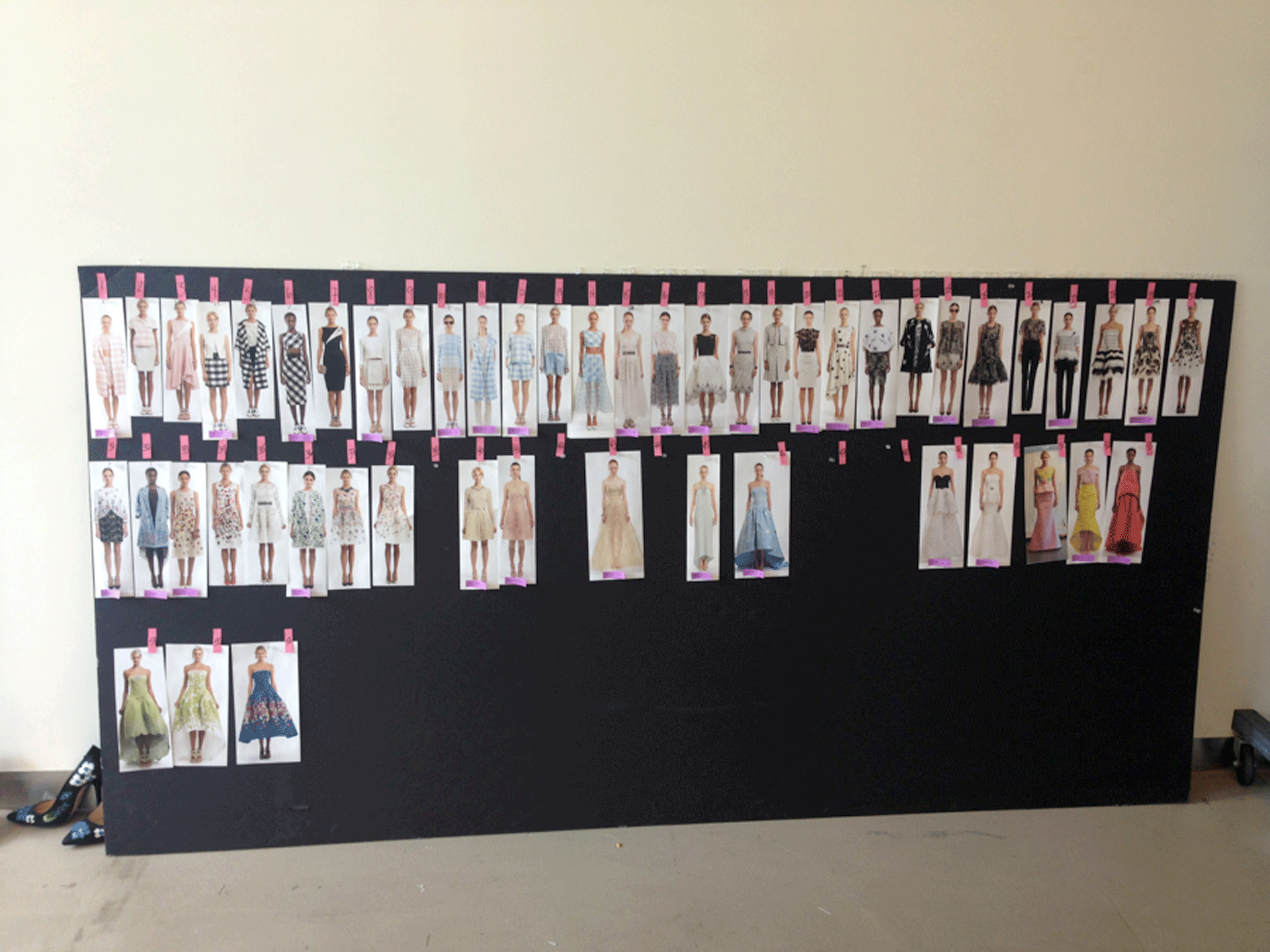
This summer, Nikki ran into Sloane in the elevators at Oscar de la Renta. Unbeknownst to her, Sloane was a merchandising and buying intern there. Organizing garments, assigning style numbers, and collecting sketches for the ODLR Spring 2015 fashion show put Sloane’s studies in perspective and conditioned her for the rigorous process of bringing the ODLR exhibit to SCAD MOA.
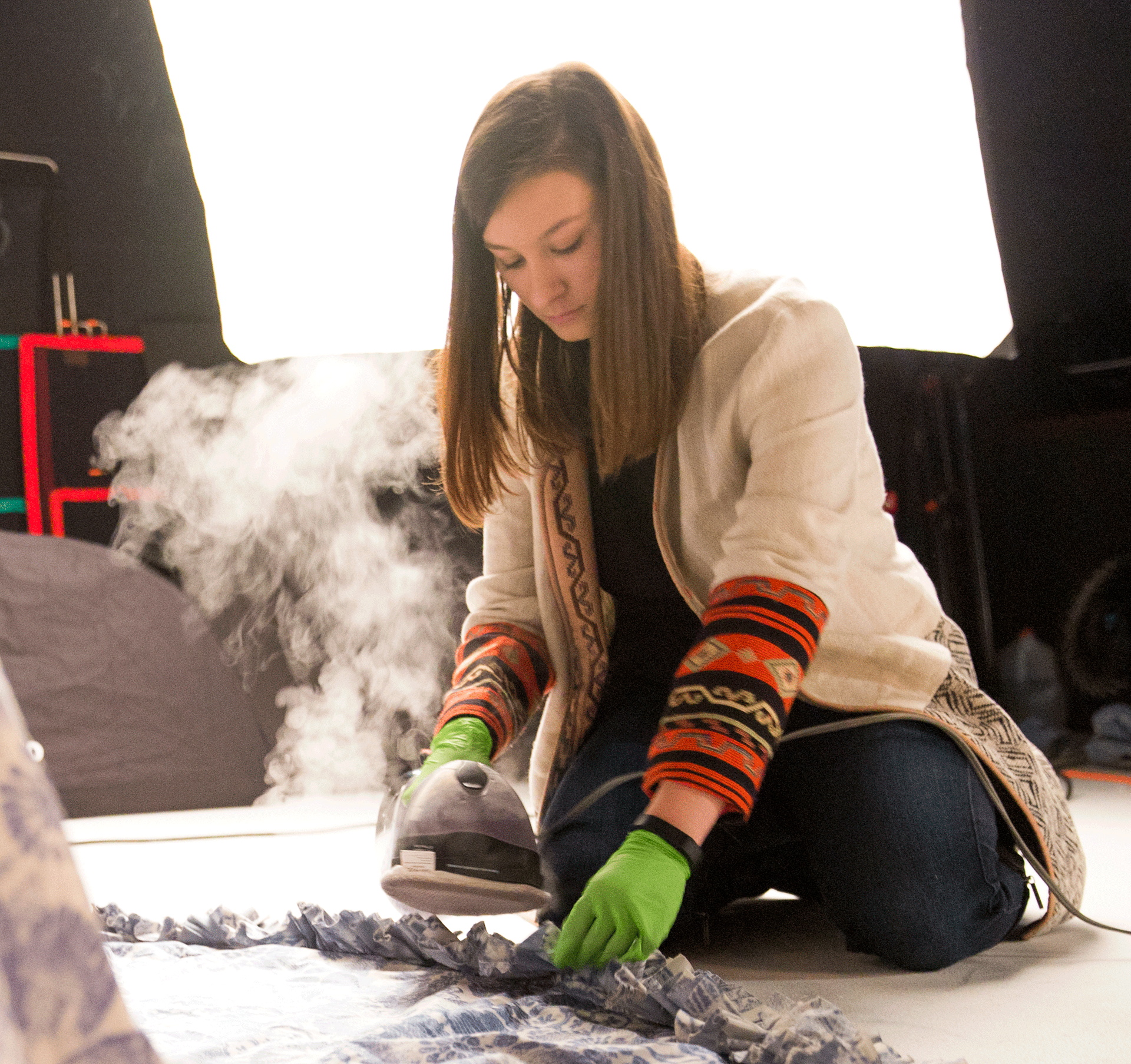
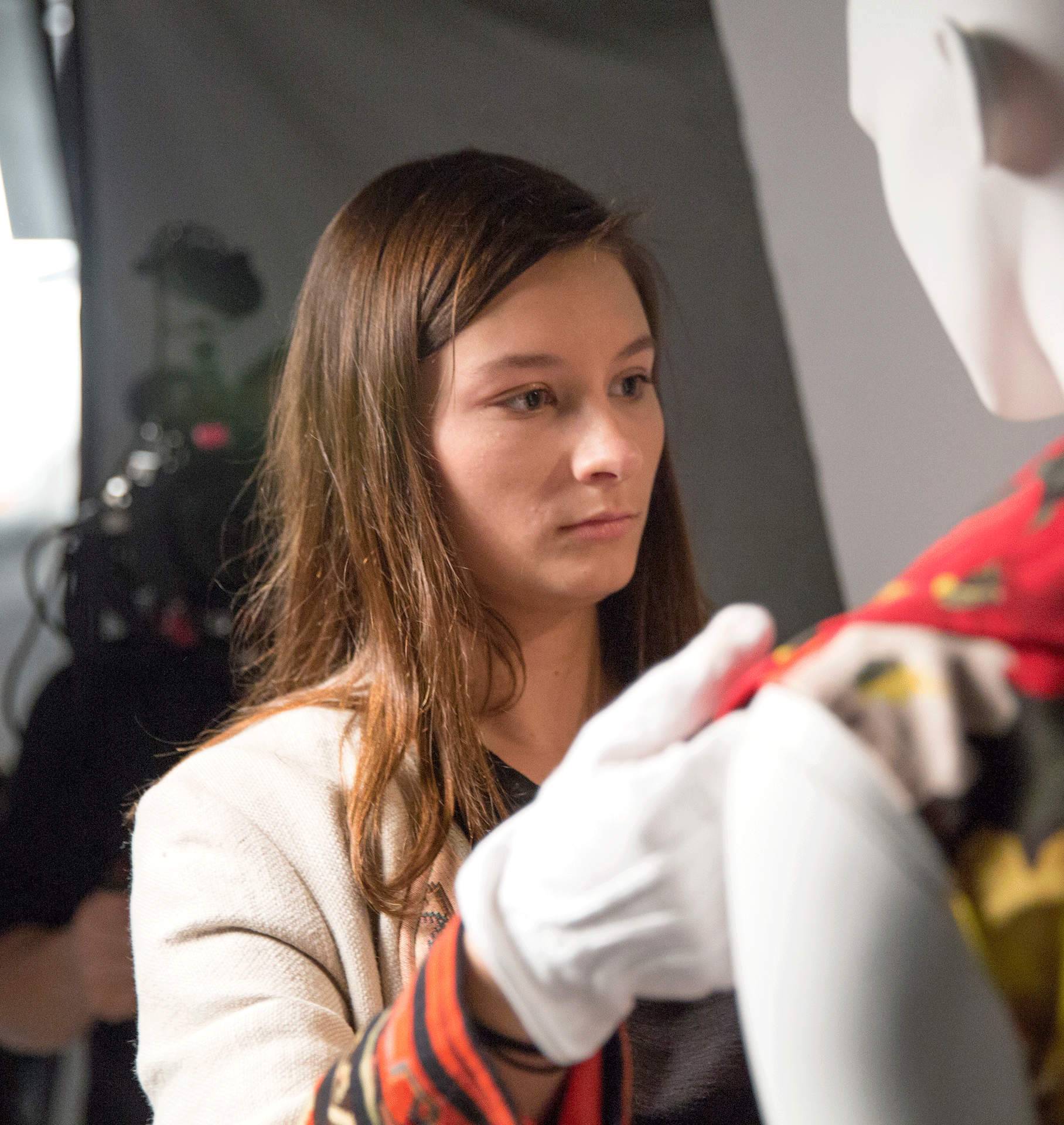
Learning of her internship at the designer's study and with his archive, Mr. Talley tapped Sloane to work on the exhibition. If her long days in New York didn't drive it home, then her apprenticeship on the exhibition did: fashion may be a glamorous, but it is also arduous. As Mr. Talley told her, “Put your gloves on and get to work.” And she did by taking possession of rarely seen couture gowns belonging to Mr. de la Renta’s wife, assisting with the exhibition’s layout and fitting mannequins to Mr. Talley’s specifications.
This project is like a class in itself. I am learning more than I ever thought I possibly could at such a young age, and in such a short amount of time. - Sloane Mayberry
Pouring over lookbooks and canvassing eBay and Google for custom gowns quickly paid off. Sloane’s trained eye prevented a photo of the wrong white jacket, worn by Laura Bush for the 2005 presidential inauguration, from making it into the exhibition. “It’s the pockets,” she observed. They were square.”
Messrs. de la Renta and Talley have taken Sloane a long way away from being that high school student who didn’t know anyone who attended art school. Now her education, reinforced by proximity to fashion legends, has raised her expectations for her career.
I think my exposure to such influential figures in fashion has changed my career path exponentially. This is the best education for what I want to do. - Sloane Mayberry
Along with the exhibition, these students, two paths indelibly changed, would certainly make Mr. de la Renta proud.
The rise of the Asian fashion market means up and coming designers no longer exclusively eye New York or Paris as launching pads for their careers. Nor does the industry expect that the next generation will hail from one of the traditional fashion capitols. Think Hong Kong’s Henry Lau. In addition to its proximity to the juggernaut of the Chinese market, for example, Hong Kong is home to major brands like Gucci, D&G, LV and Prada – all of which need new talent to thrive and evolve. And so, along with Henry, executives from giants like Polo Ralph Lauren, DKNY and Shanghai Tang attended Savannah College of Art and Design’s inaugural Hong Kong fashion showcase to see what students there have in store for the industry.
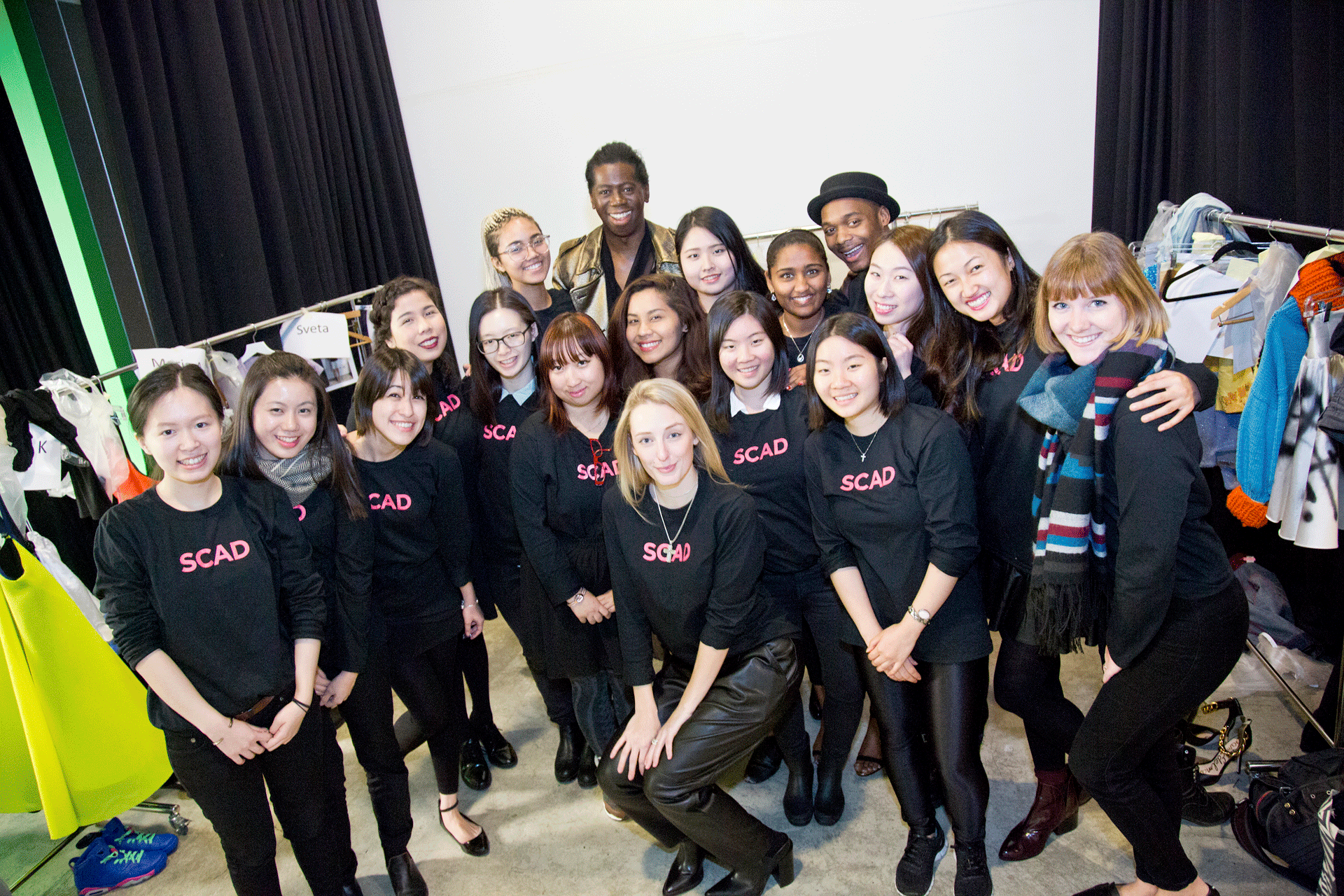
With perennial fashion mentor and "America's Next Top Model" staple Miss J Alexander working alongside them behind the scenes, students sent 30 original designs down the runway.
[R]ight now everyone is running to come to China, because China is a huge market that keeps developing and growing. –Miss J Alexander
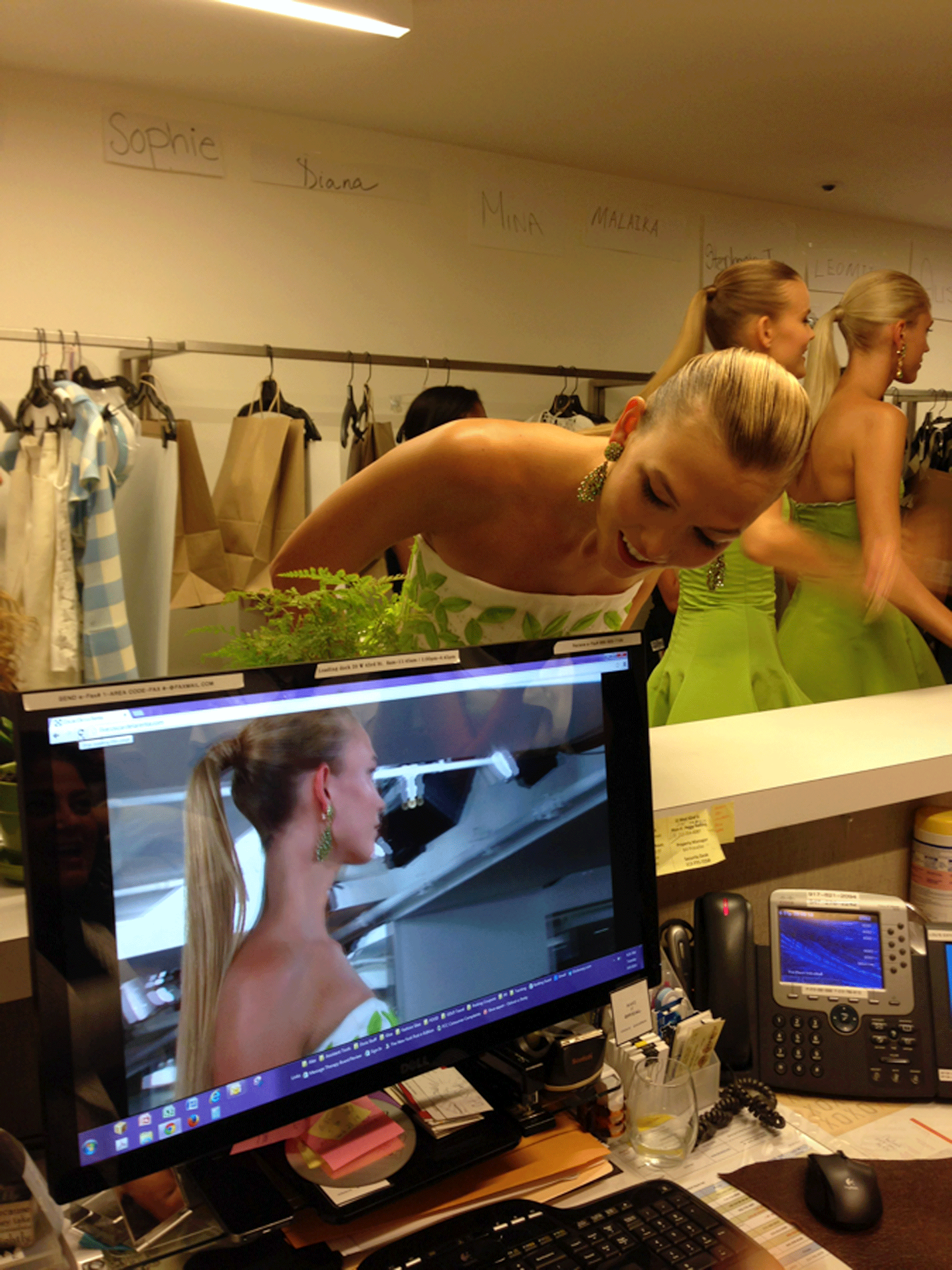
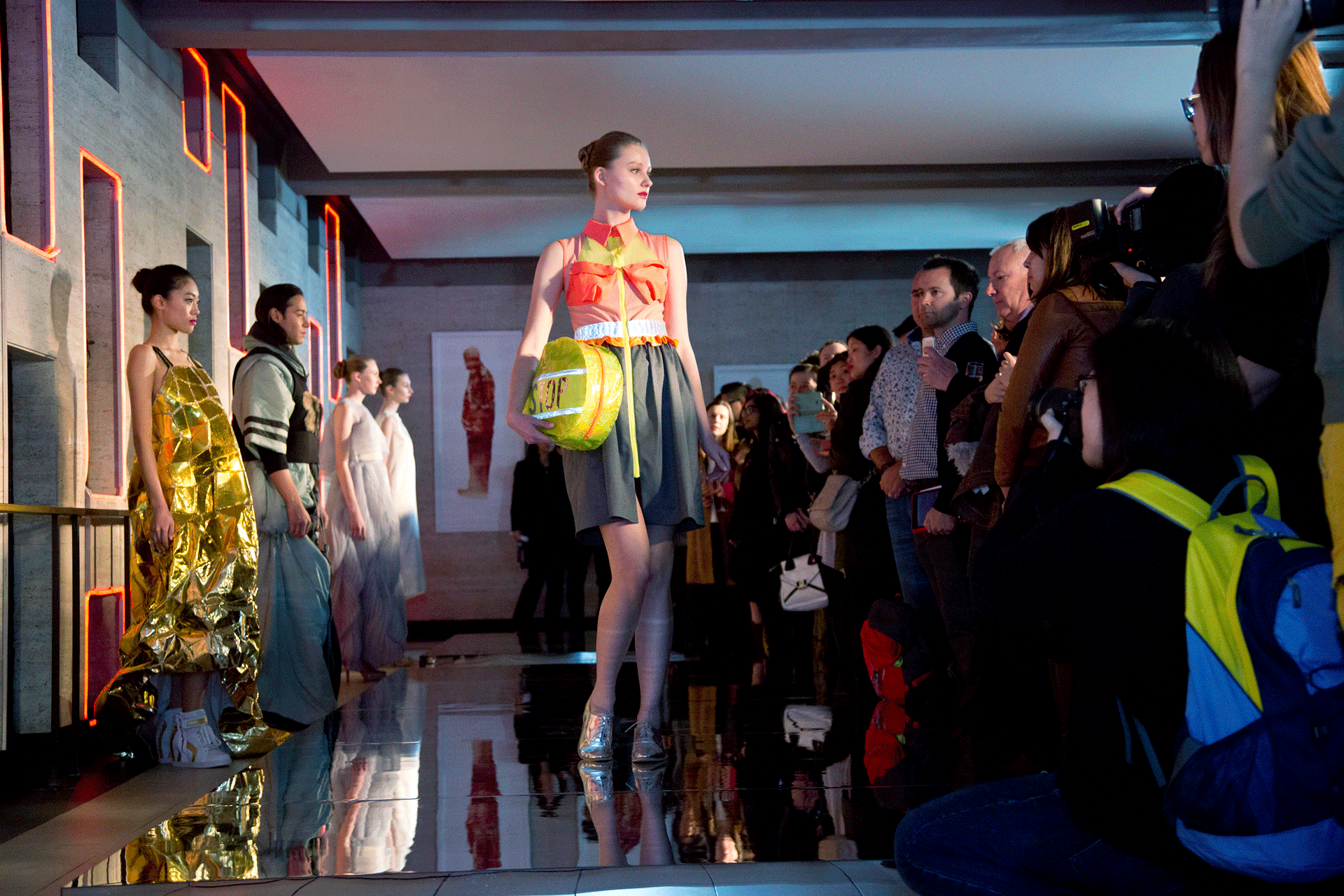
Hong Kong native Janet Wong and Singapore native Dawn Bey, both SCAD Hong Kong fashion students, showed pieces from their collections and worked as dressers backstage, assisting models with fitting and changing garments, accessories and shoes.
Dawn showed a dress from her “Detour” collection, designed to send the message that women can do any job. In this garment, the road worker’s vest was transformed in to a dress, and touches of neon pink pop against a yellow mesh vest and gray skirt that’s reminiscent of cement.
[W]hen it comes to being a designer, you have to think about how your customer will eventually wear your clothes. The show also taught me about styling and how to communicate with people. – Dawn Bey
This look by Janet resulted from an assignment to create a collection that combines sportswear and an ethnic group. Janet merged the sport of hunting with a Scottish theme to create garments made of jersey.
As a fashion designer, it is important to know how runway backstage works. From styling, rehearsal, to the final presentation, each step is indispensable for a good fashion show. – Janet Wong
Referencing standards of beauty in China and Western cultures, her second look was inspired by foot bindings, corsets and Greek sculpture.
With history and culture serving as the basis for her collections, young designers like Janet will inevitably perpetuate the mounting East to West transfer of influence and style.
The convergence of our celebrity culture and the proliferation of platforms for visibility have succeeded in putting artists on a pedestal. In an environment where, as the saying goes, ‘content is king’, we’ve come to perceive those who create it as being the ultimate authorities. But is the artist really the authority? And does being called an artist make you one?
These are two of the topics that panelists tackled during a lively conversation surrounding the opening of i feel ya: SCAD + André 3000 Benjamin at Mana Miami. Because of the fields they represent (SCAD founder and president Paula Wallace, art and design education; Grammy-Award winning rapper André 3000 Benjamin, music; painter Jimmy O’Neal, fine art; director Greg Brunkalla, film), the panelists who collaborated on i feel ya serve as a weather balloon, delivering a read on the atmosphere of art and creativity in the age of social media.
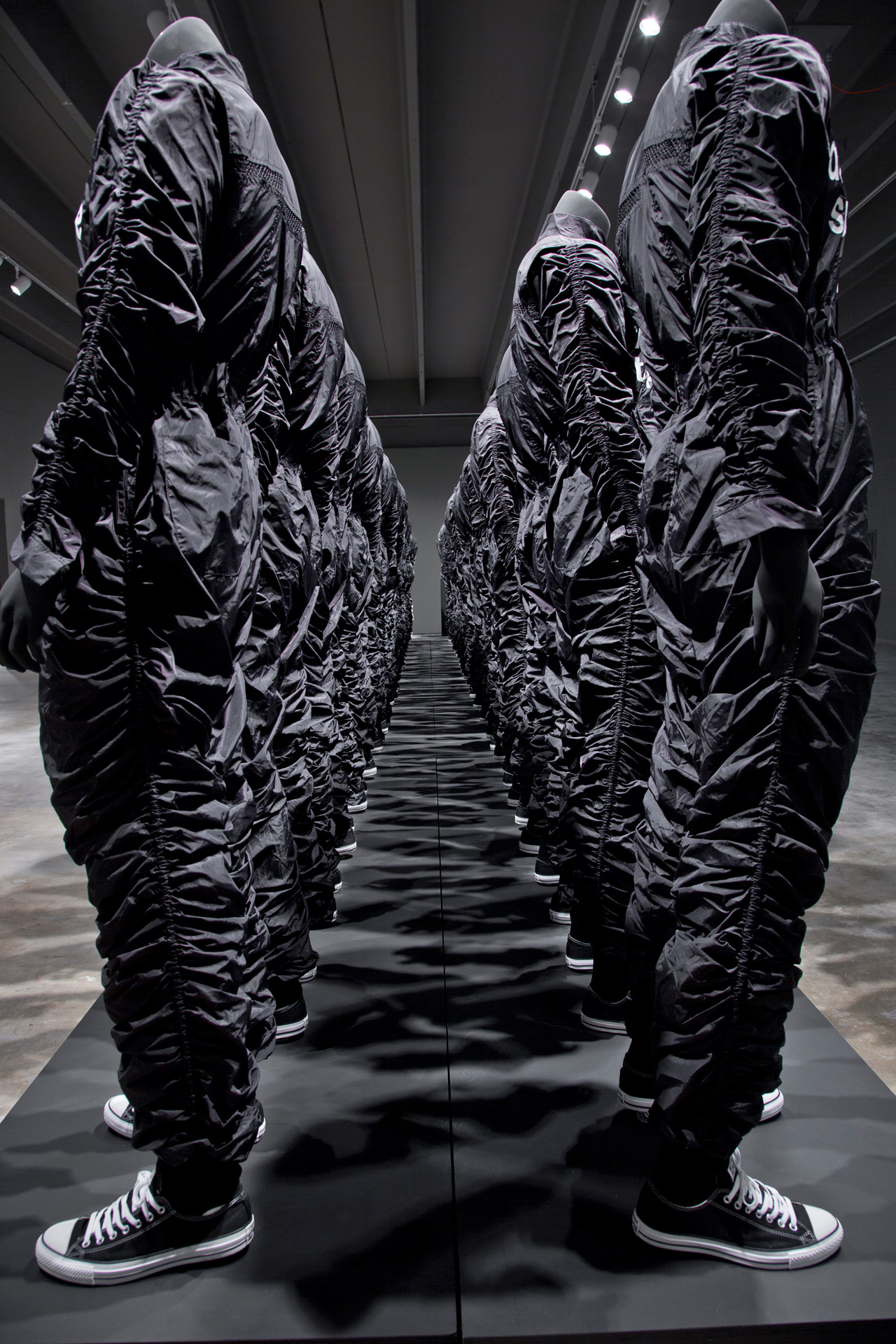
After seeing i feel ya and how seamlessly André’s 47 jumpsuits, Jimmy’s mirrored paintings and Greg’s film play together in the fertile soil tilled by Savannah College of Art and Design, one would expect the three to get along well. They did more than that during the panel at Mana Miami. Their dialogue was a living testimony to how art is a common language we can speak when our social, racial and economic backgrounds might threaten to create an impasse or breakdown in communication.
Here are three important areas in which they concur:
1.) Social media is a medium not mandatory
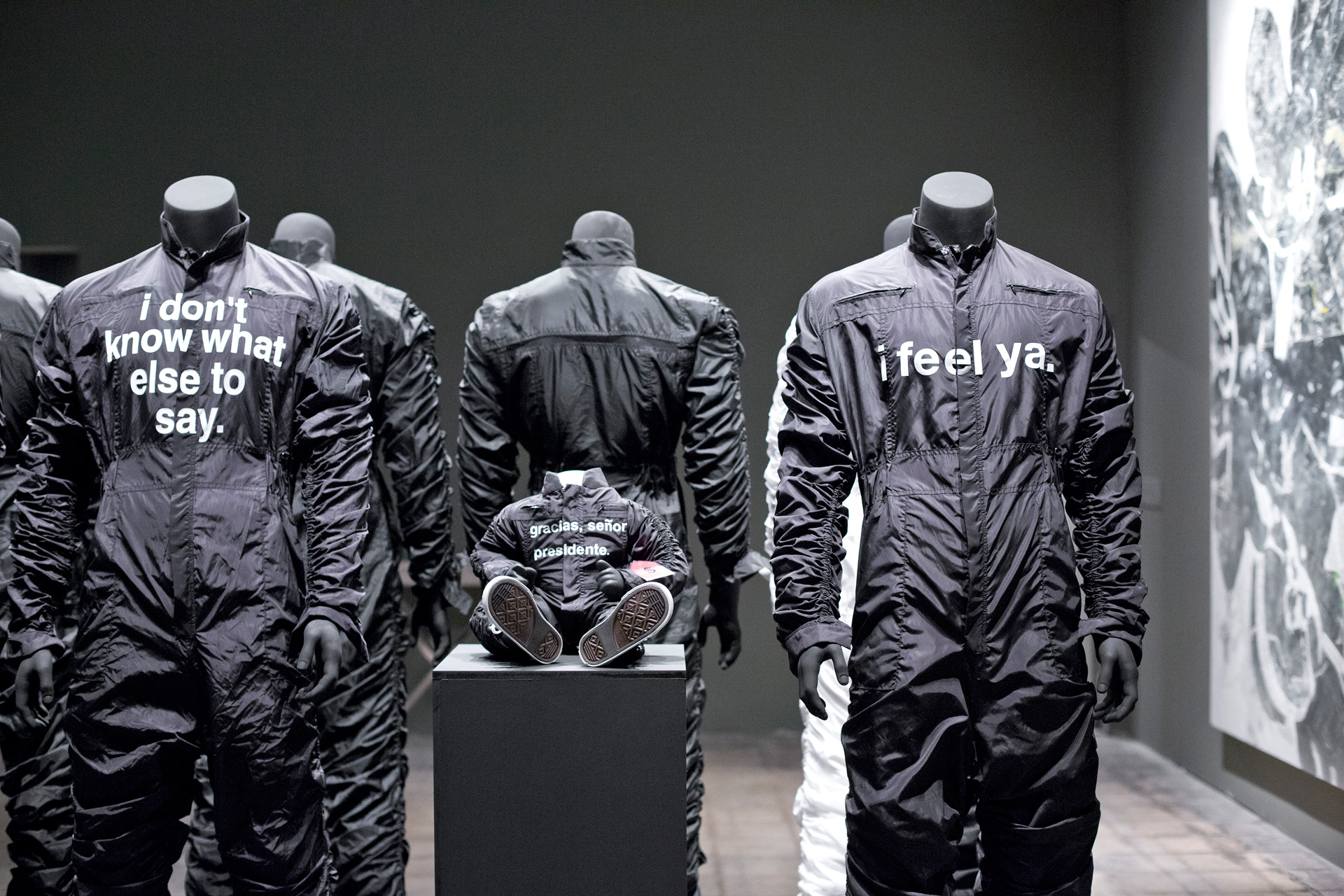
The ability of social media to broadcast an artist’s work doesn’t make it an inevitable part of an artist’s identity. It’s just one, tool, mused André who, along with Jimmy and Greg, refreshingly maintains no major, official social media presence. The artists don’t eschew social media, but feel they’re still able to effectively share their work without it. (For his part, André explained that he feels he already shares enough of himself with the public.) But their absence on the social media landscape doesn’t mean they’re tone deaf to it. As Greg reasoned to chuckles from the audience, “André, you are social and you are media. You’ve already mastered it.” One look at André’s character-conscience messages on his black suits and Jimmy’s selfie inducing reflective paint and you get it: artists can be inspired by social media without being slaves to it, and find ways to connect to their followers without it.
2.) Art's value is in the eye of the beholder
To explain what inspired some of the messages on his jumpsuit, André told several stories. One of the best was about the game he plays with his son, Seven, when they encounter a piece of art. The two take the work in and then ask one another: “Art or fart?” Is this a serious work or a just spectacle created for show? This exercise embodies what Jimmy, André and Greg agreed is the answer to moderator Andrew Bevan’s question: Who decides what art is or what is good art? They overwhelmingly concurred that the viewer is the authority.
3.) Not knowing is an advantage
In this information age it’s easy to assume that the more you know the better off you are. Not true, say André, Jimmy and Greg. A profound example of this mutual truth was when these artists - steeped in their respective disciplines - shared that they believe one doesn’t have to know art to make it or judge its value. To illustrate this, André pointed to his lack of formal training in music, which he says was a benefit not a curse. “Sometimes having a disadvantage causes your mind to focus elsewhere,” he said. Because he didn’t know the rules, André could create his own sound. Likewise, said Greg, if you’re not obsessed with knowing you can actually accomplish a good bit. For this, he held up his friend Jimmy as an example. When Greg discovered during their stay in Miami that Jimmy was oblivious to the public transportation craze Uber, he was simultaneously astounded and heartened. “I love when I find out that I don’t know things,” Greg said, “It just means that I was busy doing something else.”
Clearly their ability to be in touch with the zeitgeist without being overwhelmed by it, and to appropriate the culture for their art without permitting it to manipulate their art, has worked for these masters of their genres. It’s also the reason they were able to bring us i feel ya.
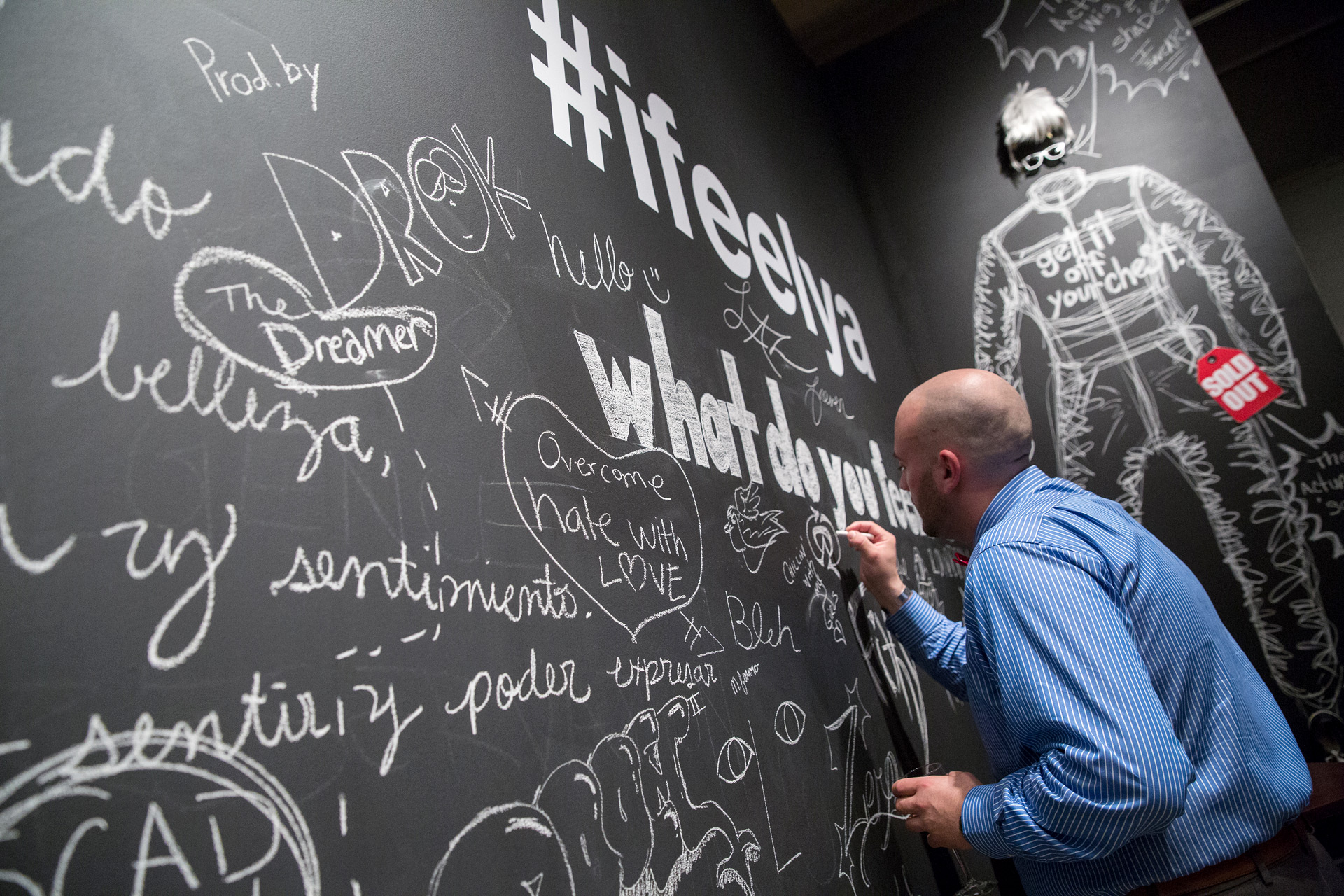
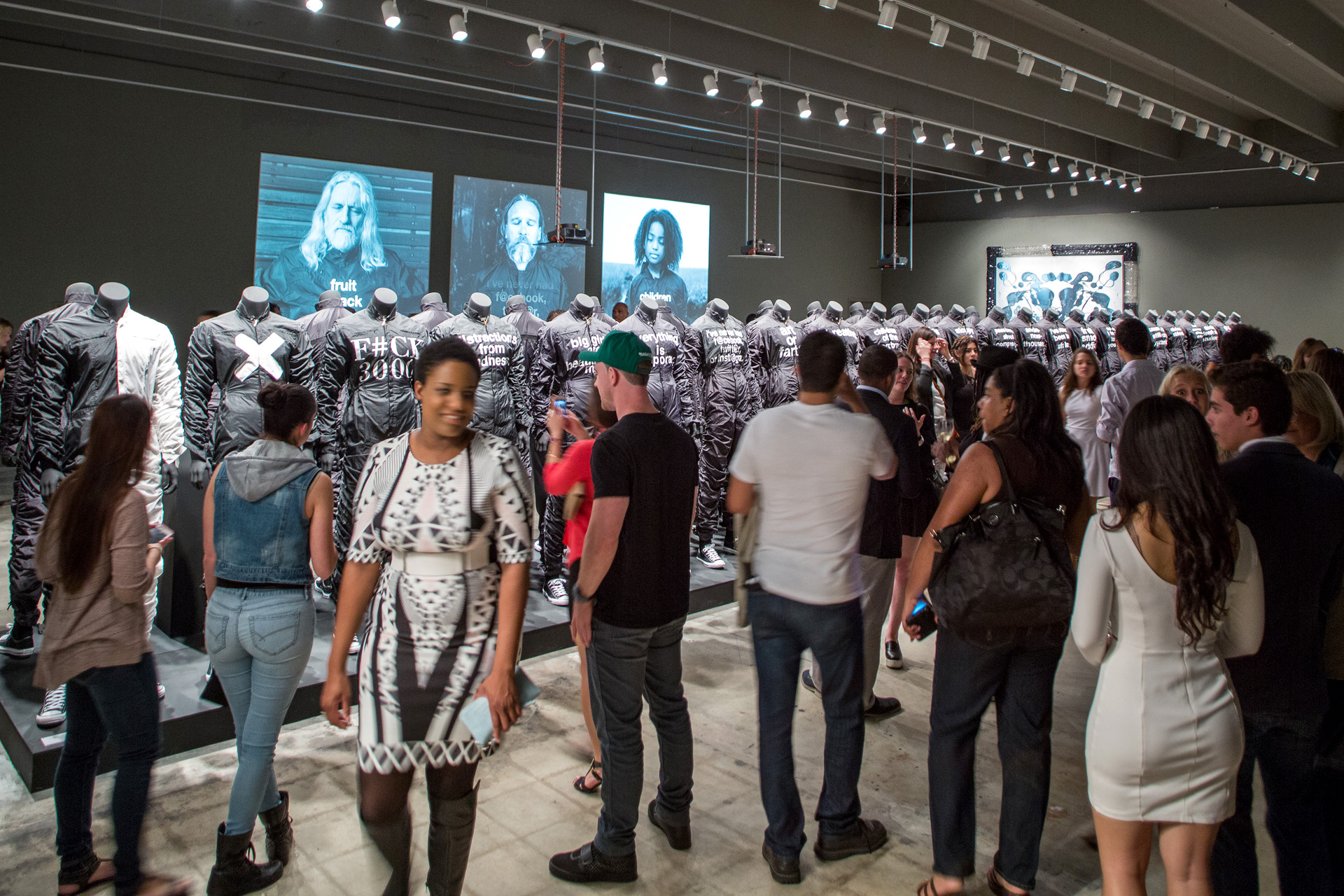
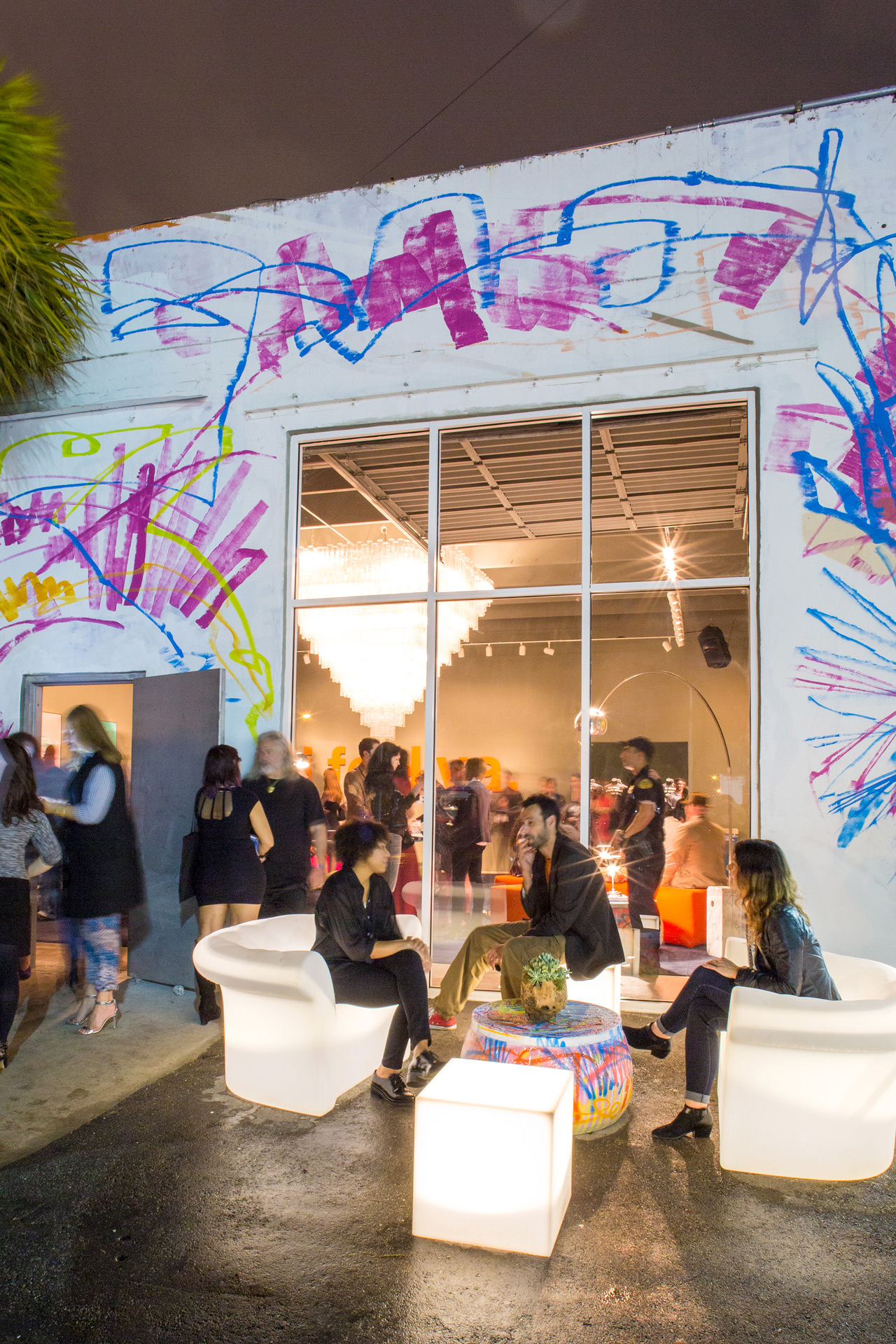
Savannah College of Art and Design and André 3000 Benjamin opened the co-produced exhibitioni feel ya at Mana Miami this week, letting the public in on their longstanding relationship. The crowds that flocked to the VIP reception represented interests as diverse as the pieces in the installation, from SCAD alumni and students in fields like performance, sequential art and film, to die hard fans of hip-hop. After absorbing the interplay between the army of 47 suits André wore for Outkast’s reunion tour, Greg Brunkalla’s (B.F.A., film and television, 2001) film and Jimmy O’Neal's (B.F.A., illustration, 1989) reflective Rorschach-like paintings, guests left their reactions on an expression wall where André's drawing of his suit stood watch, ripped from the pages of his sketch book.
How could a simple black suit emblazoned with basic white words inspire a film and six paintings? Come visit and you may see.
Director Greg Brunkalla (B.F.A., video/film, 2001) belongs to the triumvirate of artists whose work comprises the Savannah College of Art and Design exhibition, i feel ya (Dec. 3 – 14 at Mana Miami). André 3000 Benjamin’s signature jumpsuits, worn during Outkast’s 20th anniversary reunion tour, anchor the exhibit and inspired Greg’s film, Trumpets. Accentuating both Trumpets and the jumpsuits are Jimmy O’Neal’s (B.F.A., illustration, 1989) oversized mirrored paintings.
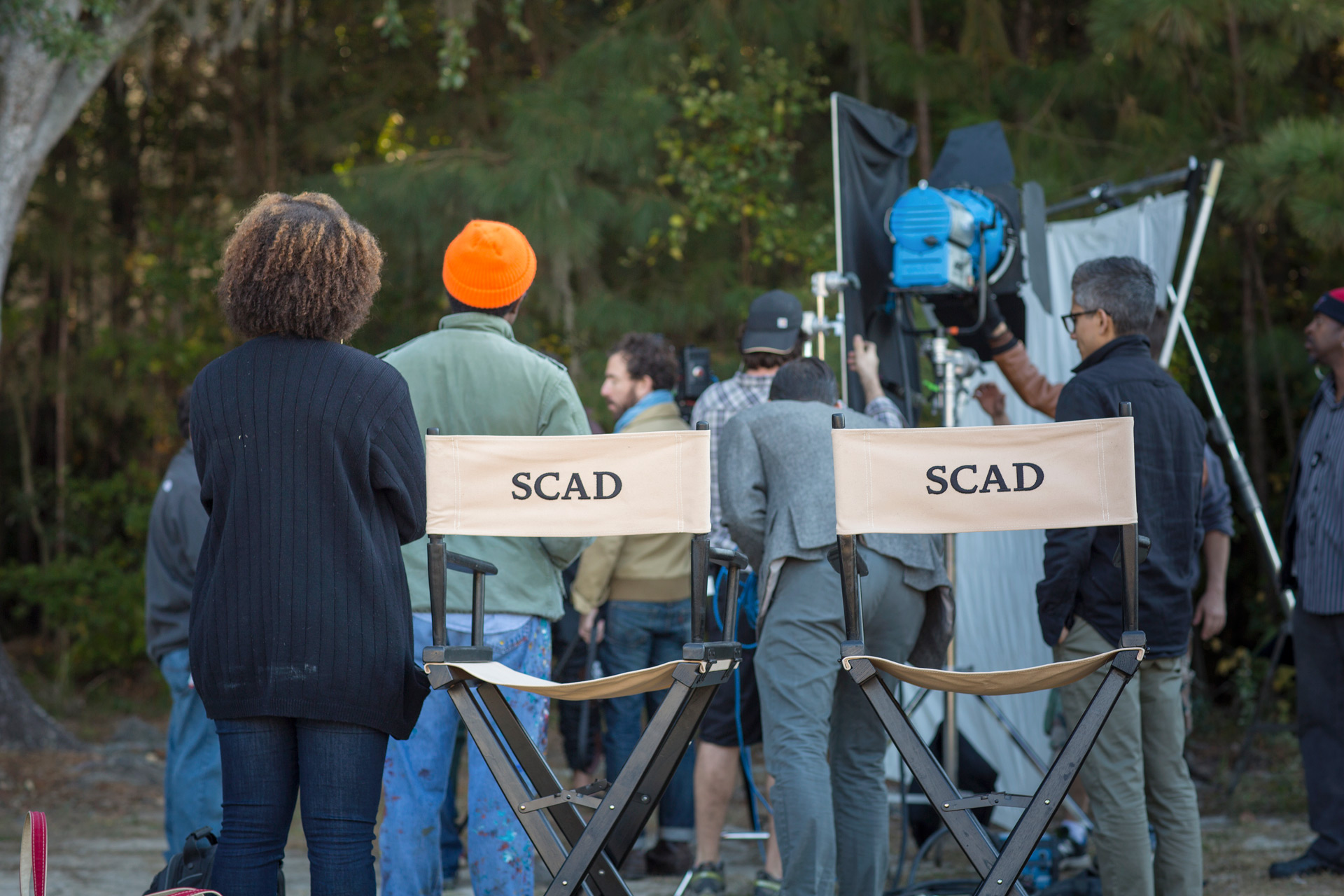
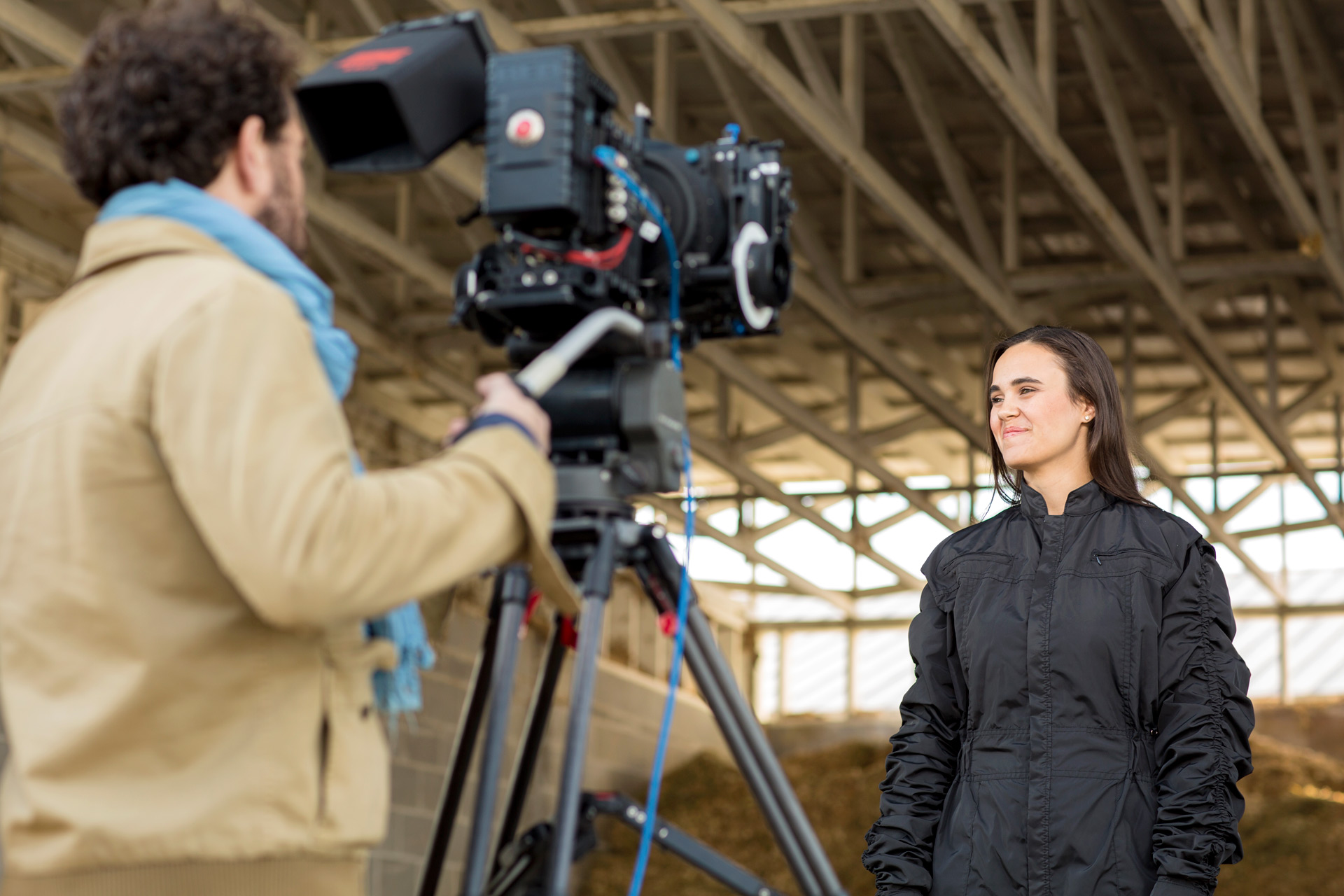
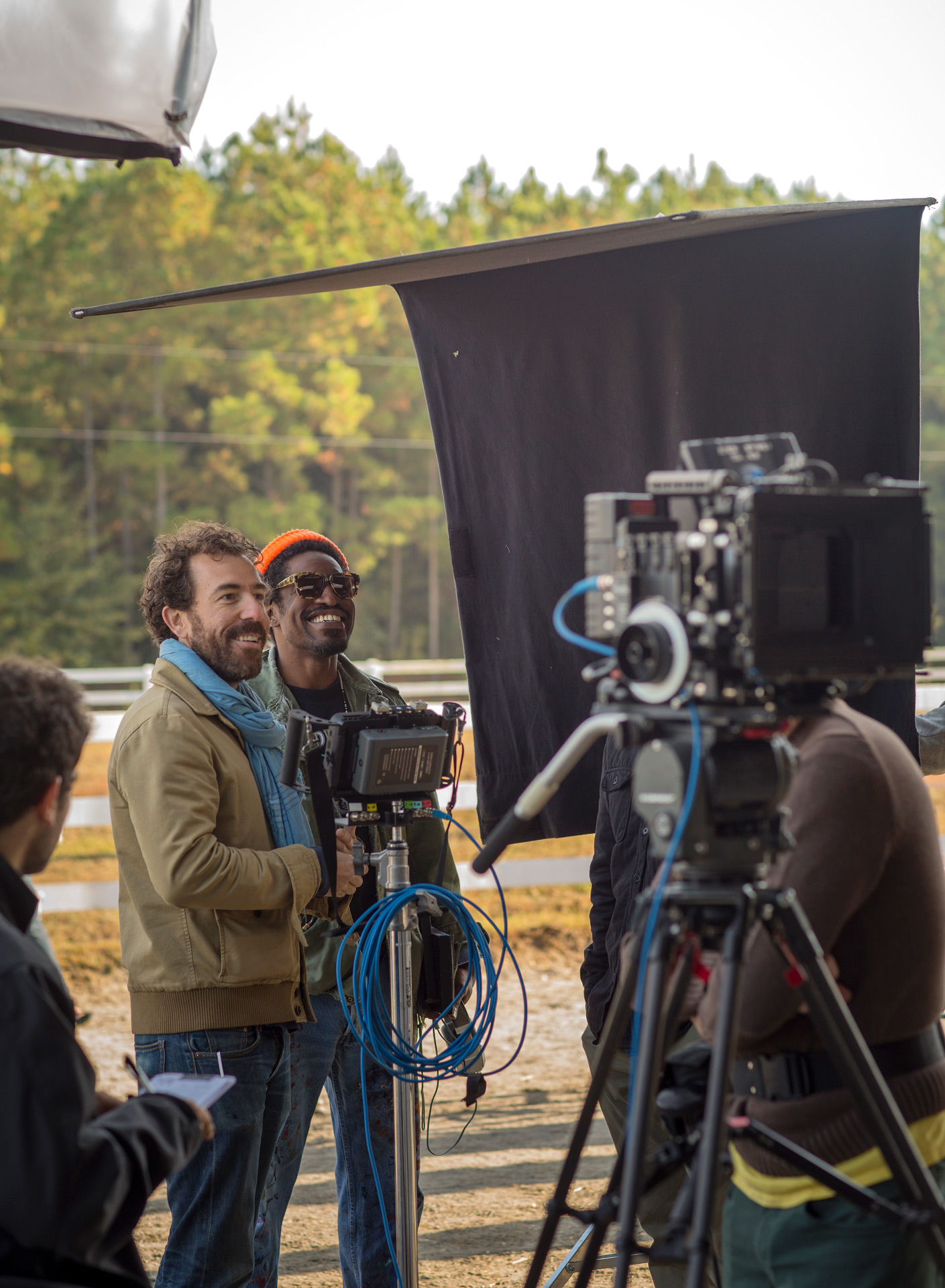
To make the film, Greg, his crew, SCAD students and André traveled to a dozen locations in and around Savannah. Here’s Greg on the organic evolution of Trumpets and working with André. Their collaboration and mutual respect illuminate the meaning behind the exhibition’s title, i feel ya.
Thread: This will be your first time exhibiting in Miami during Art Basel. Congratulations. Any thoughts on being able to show your work in this environment?
Greg Brunkalla: I’m all about having an audience for my work, so the more people that get to see this, the happier I’ll be. I’m thankful for the team that made it all happen and hopefully everyone will get a chance to see the finished product.
T: Describe your approach to filmmaking. How did your education at SCAD contribute to it?
GB: To me, SCAD represents what an artist should represent – skill and individuality. While I looked at other film schools, what stood out to me at SCAD was that it felt unique. It has all the right tools and is in an environment and landscape you can’t get anywhere else.
T: You mentioned that you jumped to do this film because it’s atypical. What’s different about it? What attracted you to the i feel ya project?
GB: As if working with André wasn’t enough of a selling point. Initially, the door was wide open to what this film could actually be. André had some thoughts, but he was completely open to anything and everything – that’s attractive to me. Being able to show a film in a gallery environment is not something I get to do often, so that was also a huge incentive. Being able to come back to SCAD and utilize their resources and the students was an incentive as well.
T: How did you come up with Trumpets as a cinematic extension of André's jumpsuits?
GB: André’s statements or thoughts are literally words screen-printed onto jumpsuits. Every night he performed wearing a different jumpsuit displaying a different statement across the chest. So the jumpsuit was the medium for the message. I thought a lot about how to translate that relationship to film. I asked: “How do you put words over picture as a separate element?” That’s when I decided that I wanted to use old fashioned slide projectors to project the messages over images. I also think a lot about my audience and there should be a reason this is in a gallery. The slide projector brings the process into the space as opposed to just screening a film.
T: Watching the jumpsuits in the film versus watching André in them on stage are two different experiences. What do you hope audiences will take away from your contribution to the exhibit?
GB: The film is not supposed to represent anything close to André’s performance. If anything that’s the main difference.
The jumpsuits and their messages are the common thread. I’m hoping that people observe how a message’s meaning can change, or at least feel different, depending on its context.
T: What’s it like collaborating with an artist like André? Do you have any anecdotes from production about matching up artistic visions?
GB: André and I talked several times before the final idea came to be.
The first thing I felt from André was an appreciation and respect for my work and I hope he felt that tenfold from me. He’s known as a musician, but the feeling I get from him is that his creativity is boundless.
Throughout the process I wanted to respect André’s initial vision and approach, while still creating something that felt like it came from me. He was involved throughout the entire process, but ultimately he let me do my thing.
T: What was the mood on the set?
GB: I wish all my sets were like this. The mood was relaxed enough to keep the ideas flowing, and buttoned-up enough to get all of the locations and shots we needed.
T: What did being in the familiar setting of Savannah and in the company of fellow SCAD students and alumni lend to the process?
GB: Savannah has a landscape you just can’t find anywhere else, so we embraced it. Having passionate students and alumni around to make things happen made things even better. Filmmaking is a team sport and there’s nothing better than having people show up that want to be there, and that’s how it felt working with SCAD.
T: Which was your favorite shot to direct?
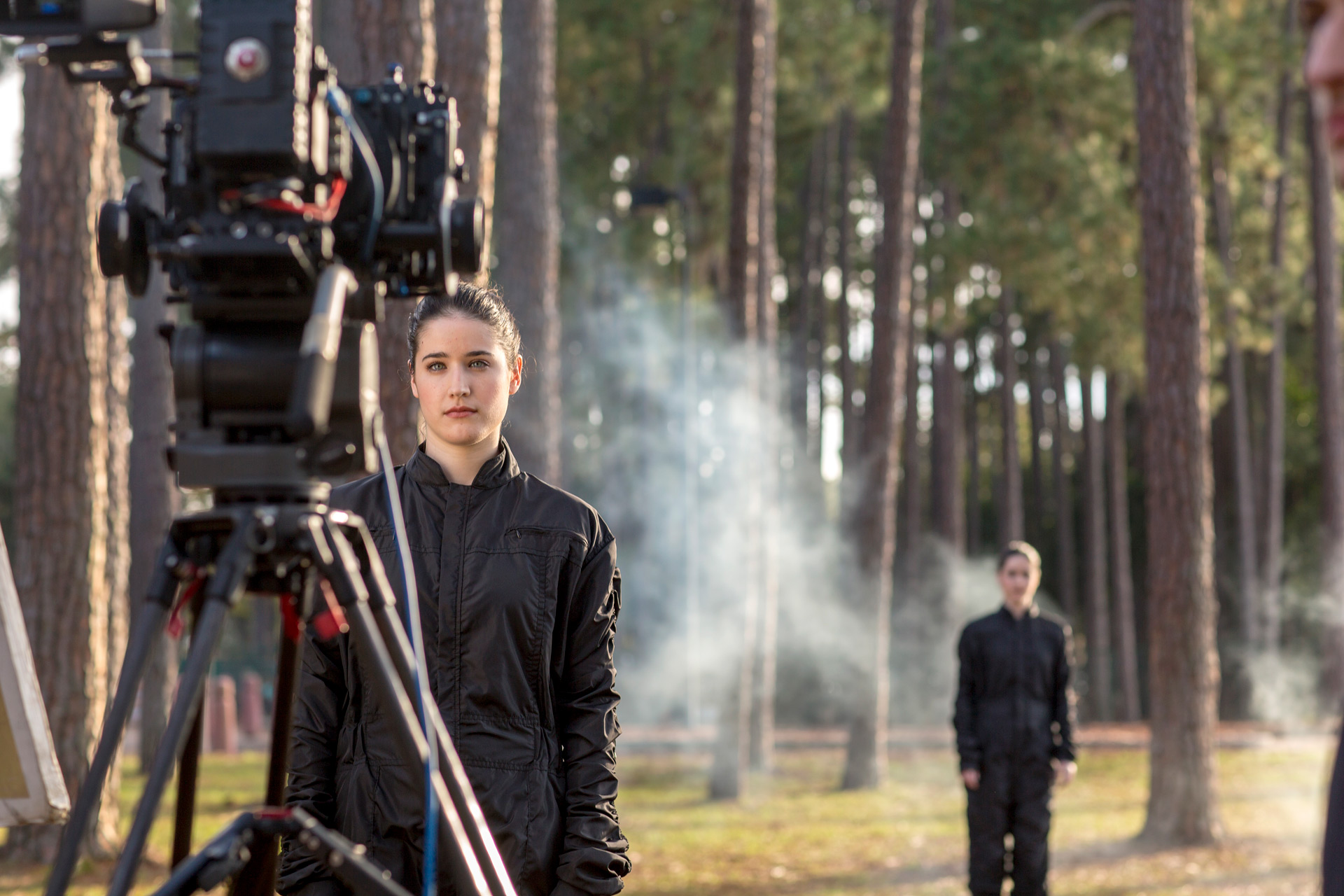
GB: I think my favorite shot was in front of the forest with the smoke machine. We were trying to use it to create a little atmosphere, but it ended up just looking like a fire was starting, so we embraced it. I liked shooting on the beach too, but those sand gnats totally killed the vibe.
T: Would you recommend that young filmmakers and artists in general take on projects like this to stretch themselves creatively or experiment with various platforms?
GB: It definitely doesn’t hurt. You learn something on every project – something about the process and something about yourself. I’ll never be the same after this one (in a good way).
T: Why do you think cross-platform and trans genre collaborations are especially important for artists to participate in right now?
GB: Honestly, André has the spotlight here and he’s cool enough to share a piece of it. My hat is off to him.
I think the most creative people around are the people that can see things in other people that others can’t.
When we first started talking André said something like, “I wanna be on set so you can teach me how it works.” I’m not sure if he learned anything, but we had a good time.
There are so many platforms out there to show and absorb content, the more we can collaborate, the more we can share, the more we can learn.
T: Describe working in SCAD’s Savannah Film Studios. How do you think it will help prepare current film and television students to be ready to work in the industry?
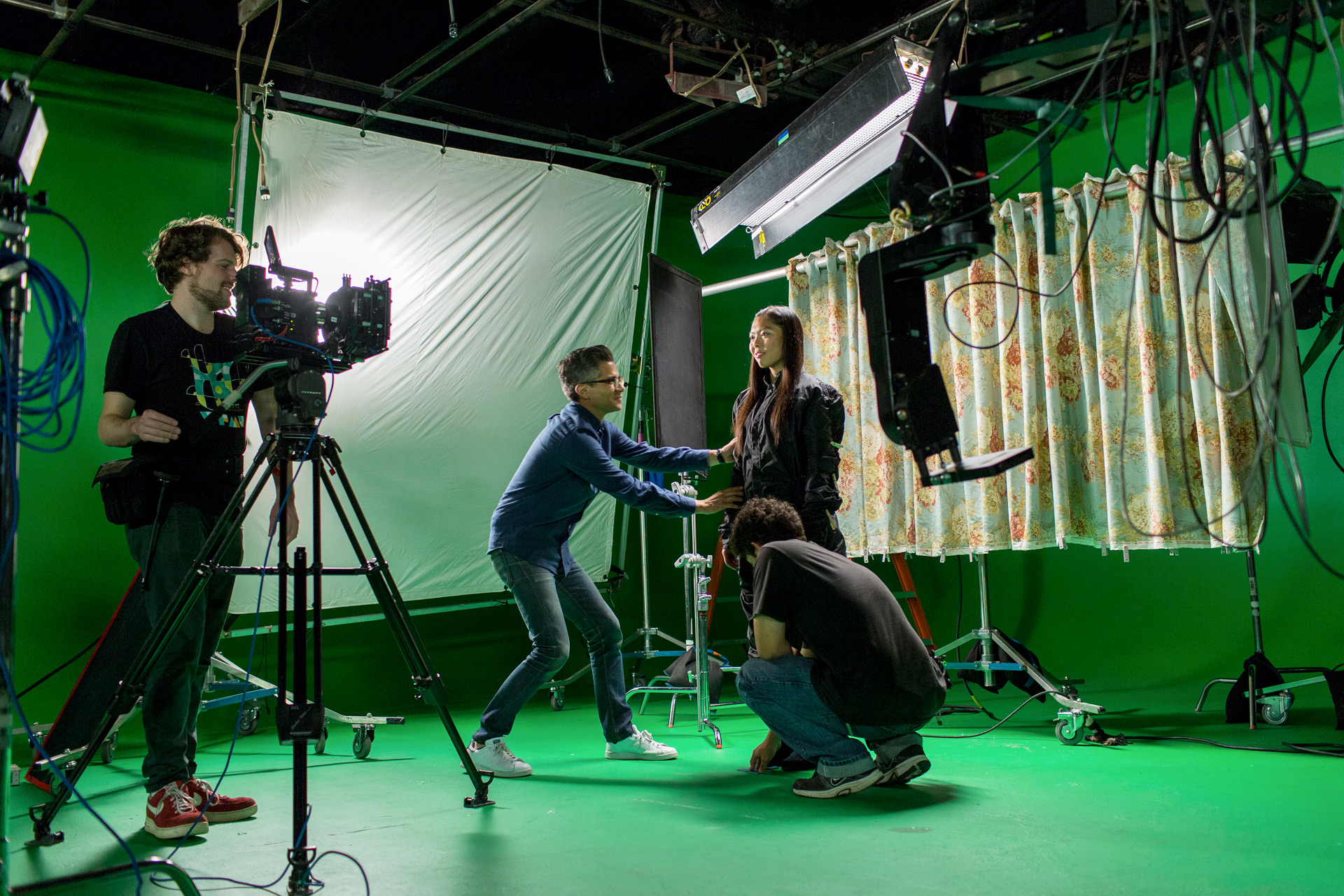
GB: Okay the first time I walked into that building, I knew we were off to a good start. The facilities there were on par with or better than many professional places I’ve worked in. My advice to students, use it like it’s yours!
T: What other projects do you have in the works?
GB: Besides trying to lock in a feature film, I just finished up a documentary short commissioned by Vimeo about the colorblind cyborg, Neil Harbisson.
T: Name your favorite cross-platform or creative collaboration, be it musical or visual.
GB: Well, I haven’t seen it yet, but I have tickets and couldn’t be more excited. Mica Levi is conducting her score to Under the Skin (directed by Jonathan Glazer) with a live orchestra in January.
Hear more from Greg and André during the panel discussion on Dec. 3 at Mana Miami. We'll post the entire conversation immediately following the event here on the blog.
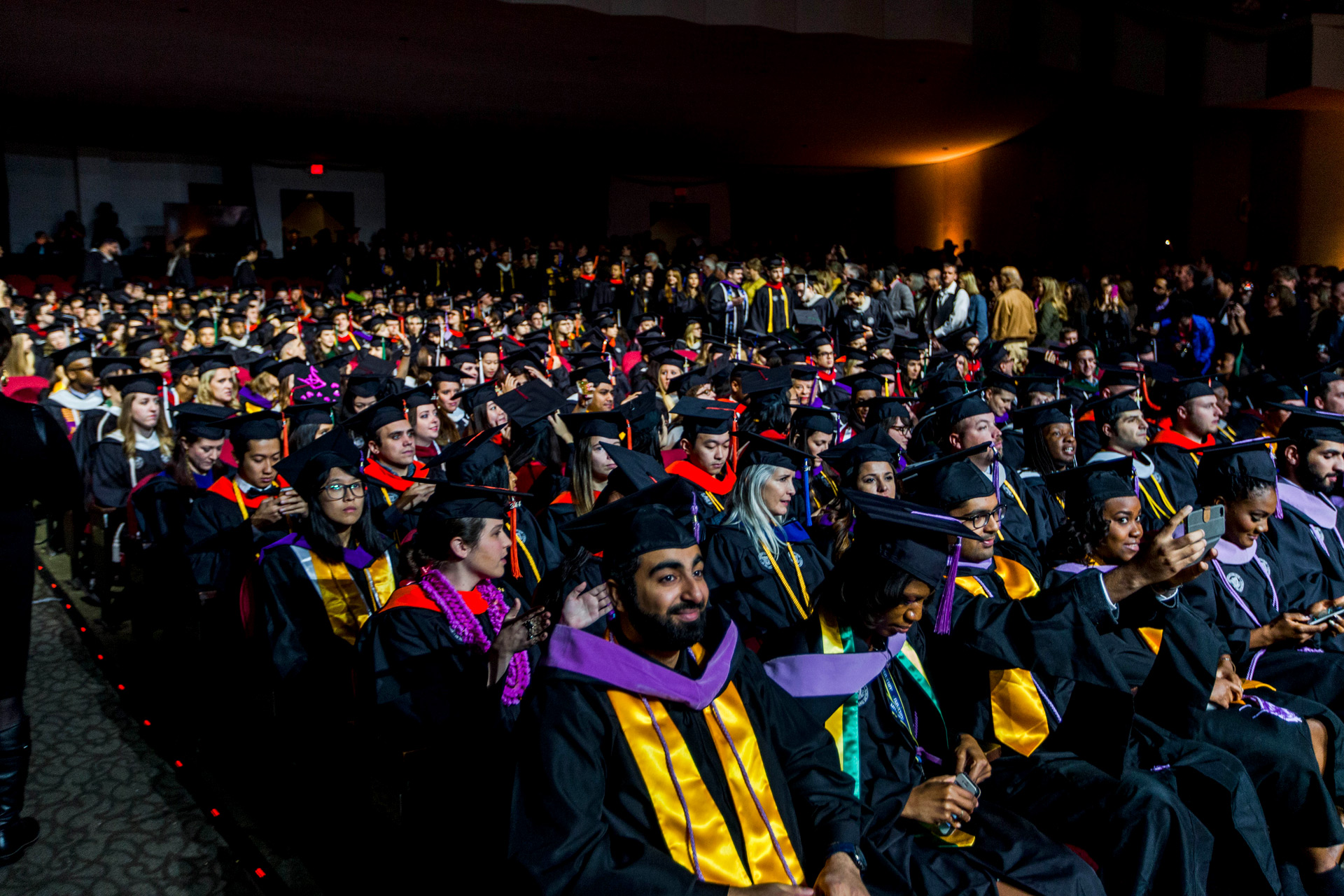
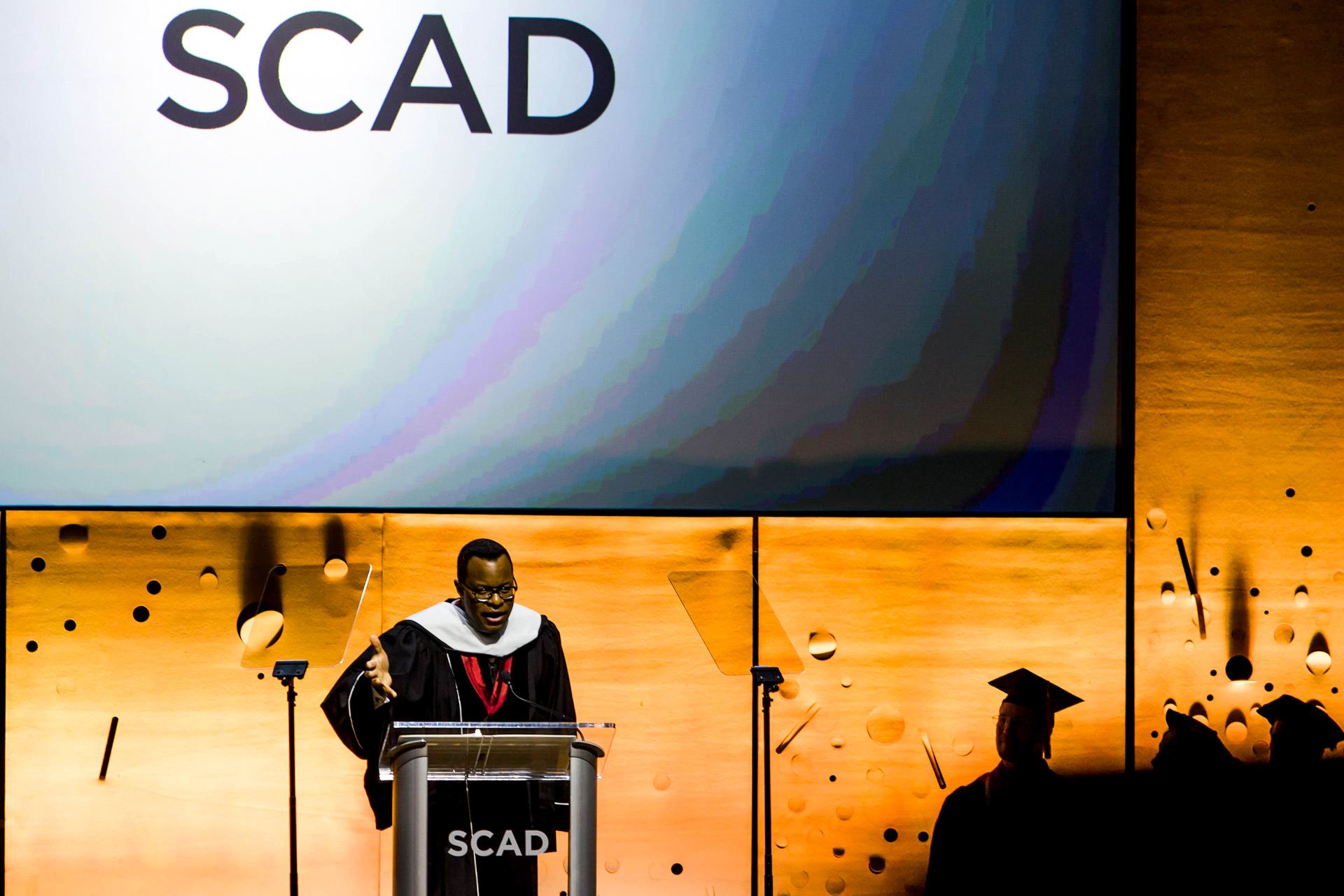
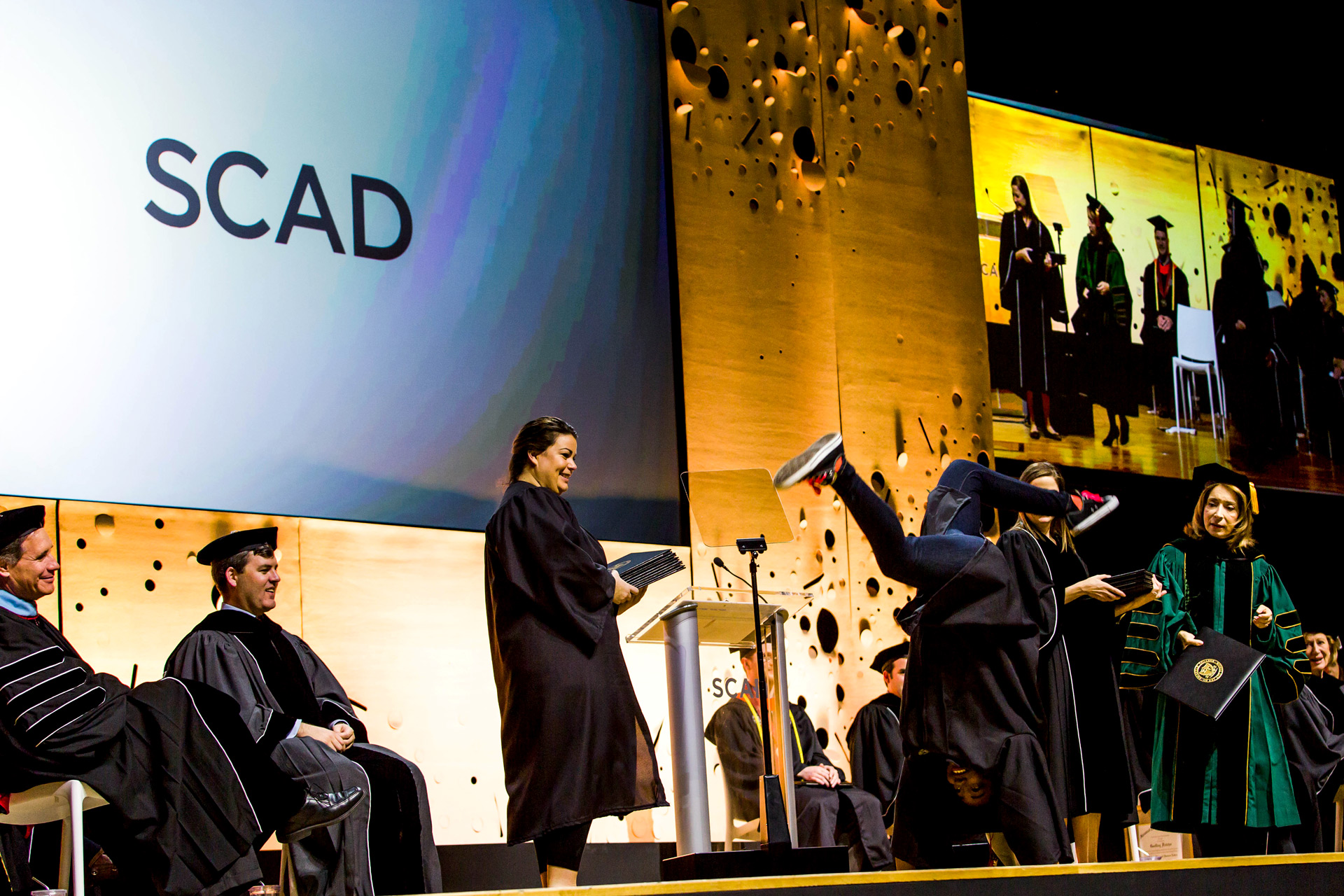
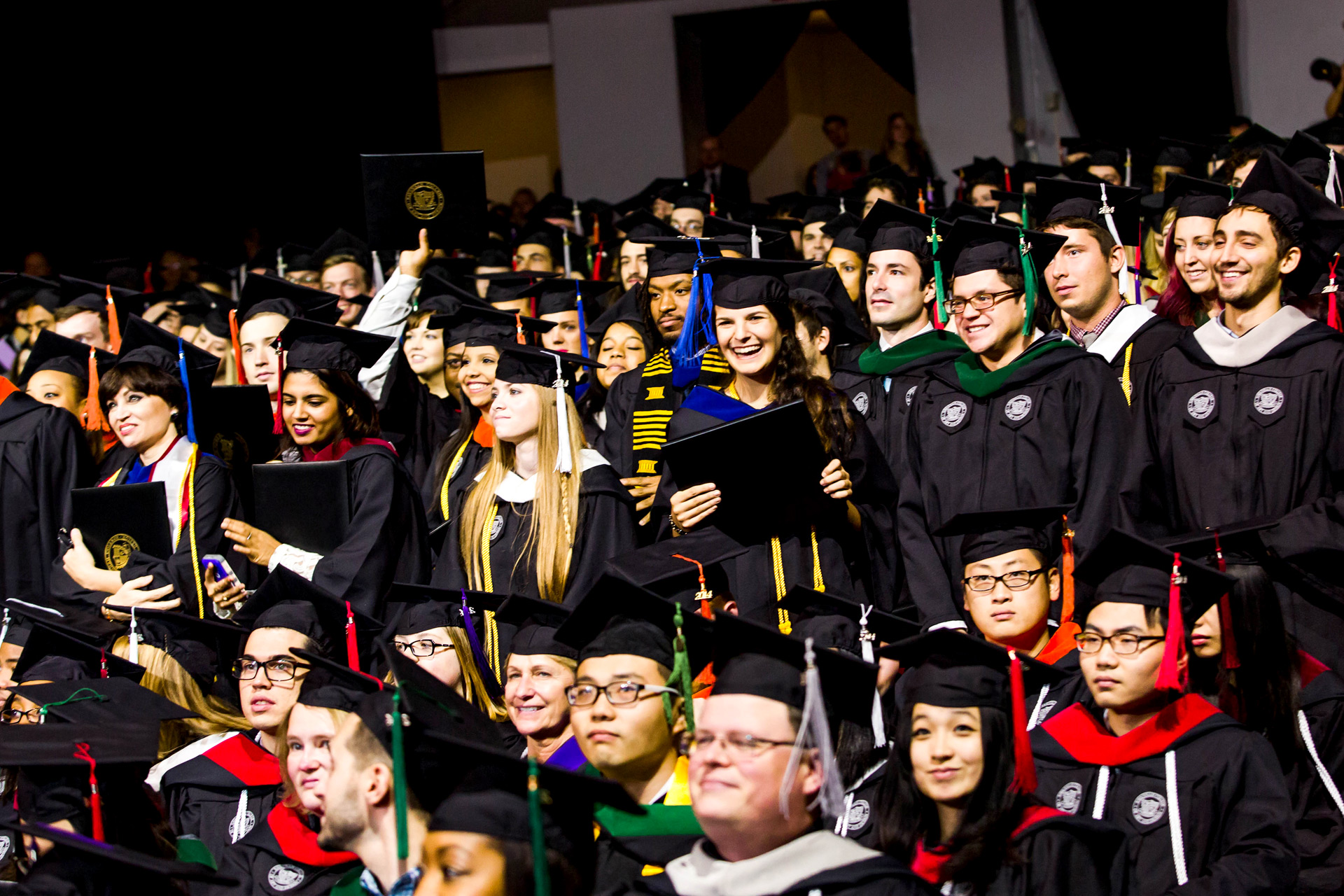
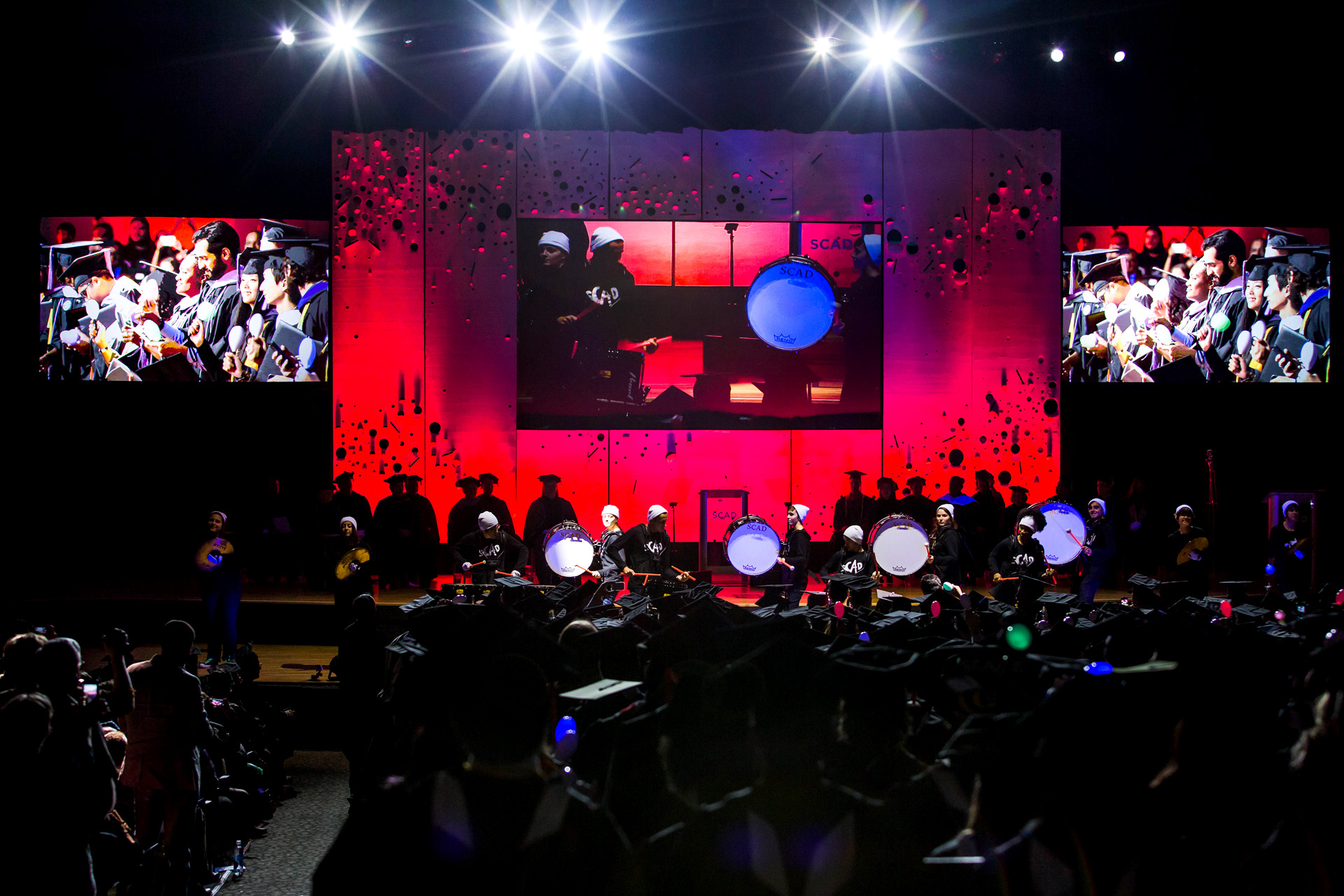
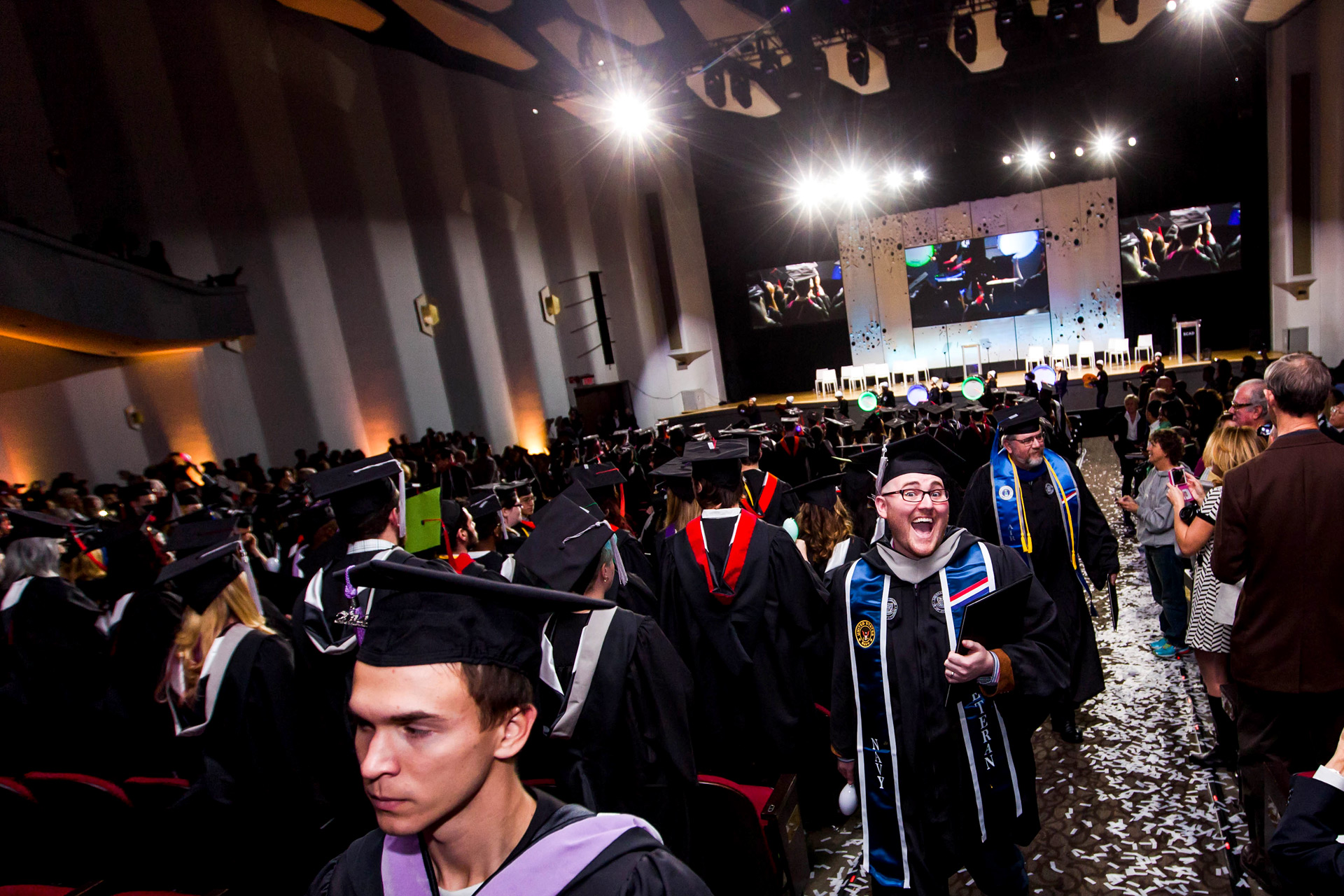
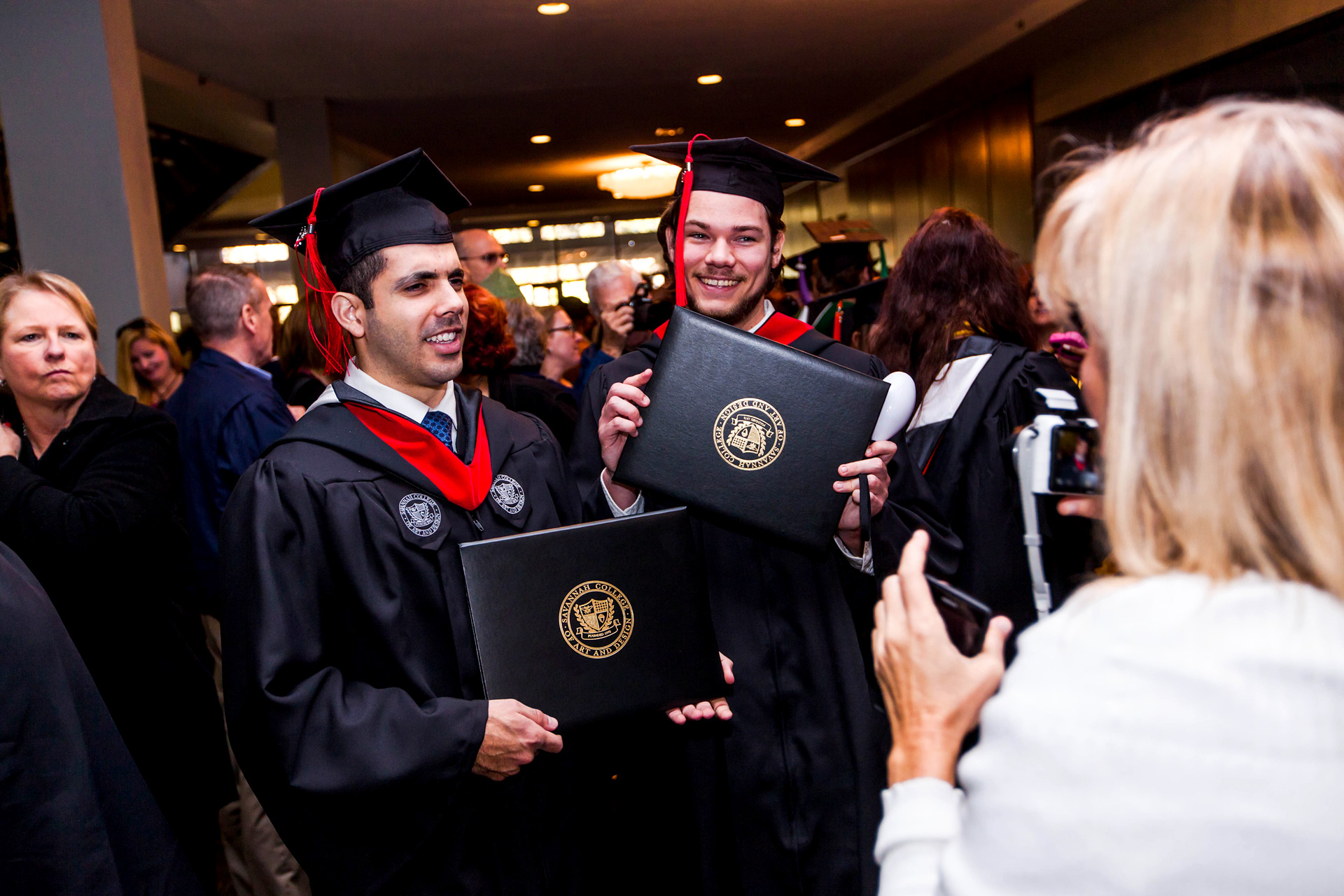
Here's to the 413 new alumni from Savannah College of Art and Design who graduated in the university's 35th commencement ceremonies. We agree with Academy Award-winning screenwriter Geoffrey Fletcher's characterization of you as individuals and as a class: you are brilliant 'containers of gifts that you will share with the world.' Please keep us posted on all that you do.
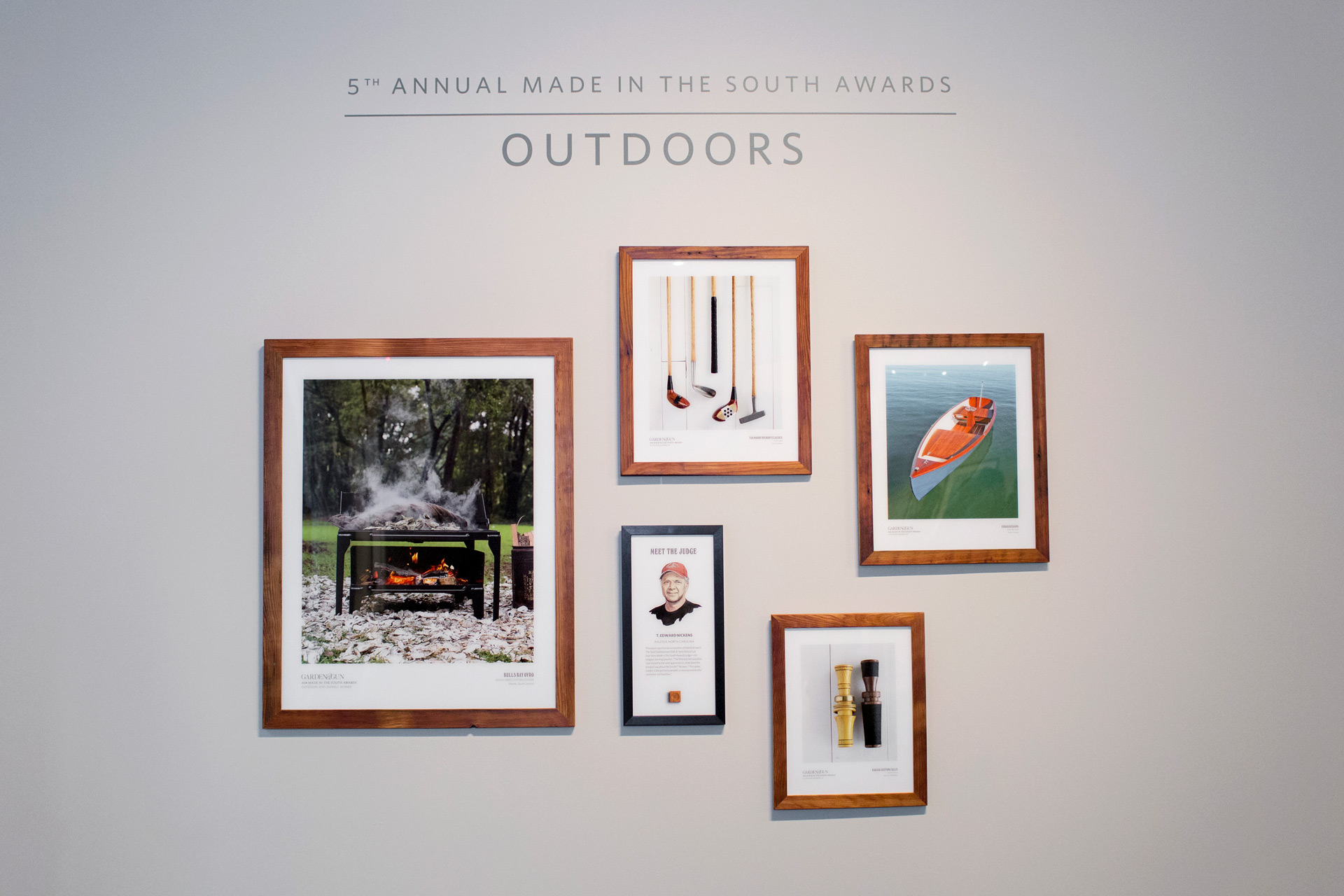
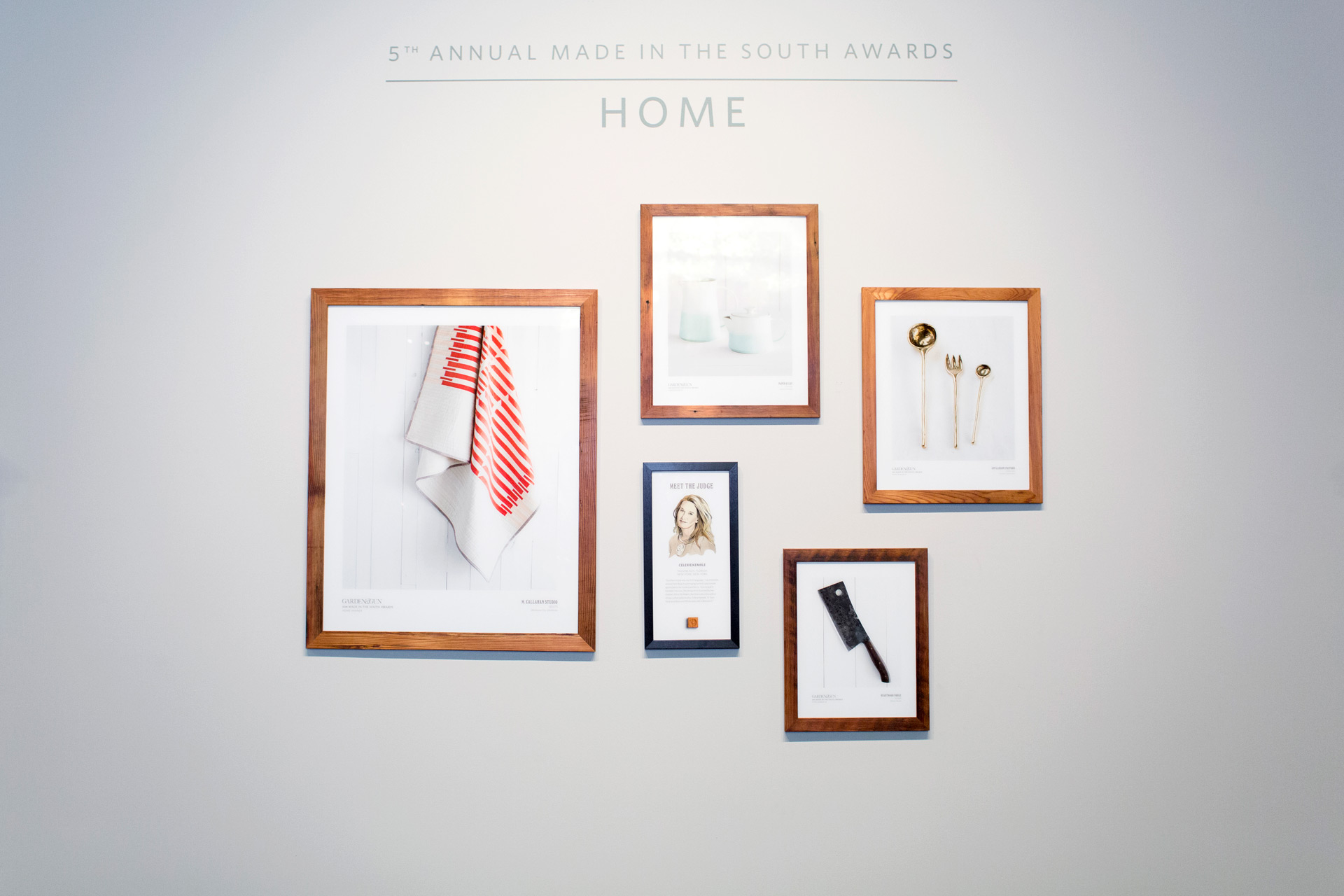
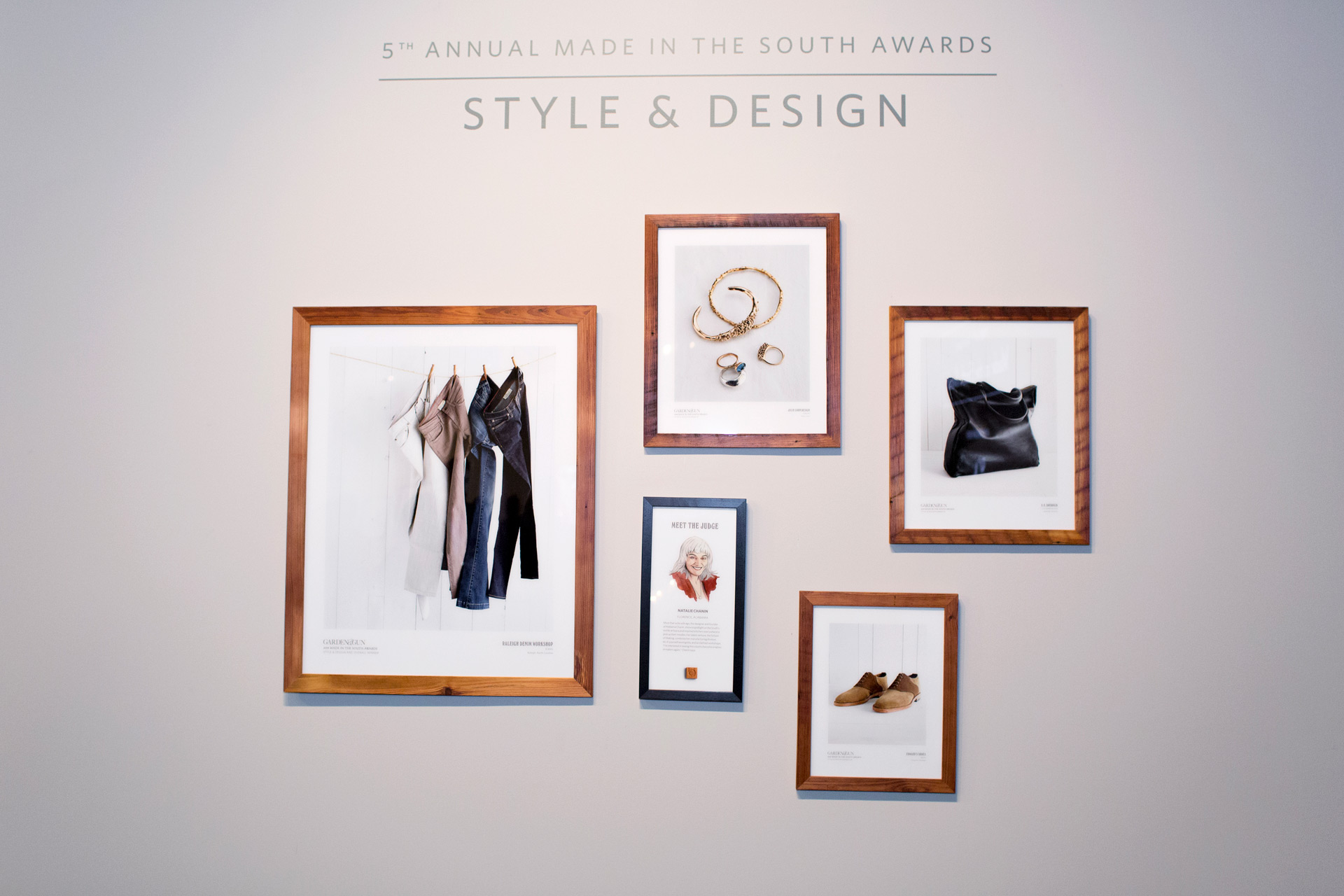
The fifth installment of Garden & Gun’sMade in the South Awards issue is on newsstands. Who better to partner with to honor regional artisans than Savannah College of Art and Design, a clearinghouse of emerging makers? Before they were announced, this year’s Made in the South trophy-takers in the categories of Outdoor, Food, Home, Drink and Style & Design were celebrated at SCAD. Below are a few of our own Made in the South stars who got their start in SCAD classrooms.
Groovebox by Eric Green
Made In: Savannah, GA and San Luis Obispo, CA
Est.: Launching Spring 2015
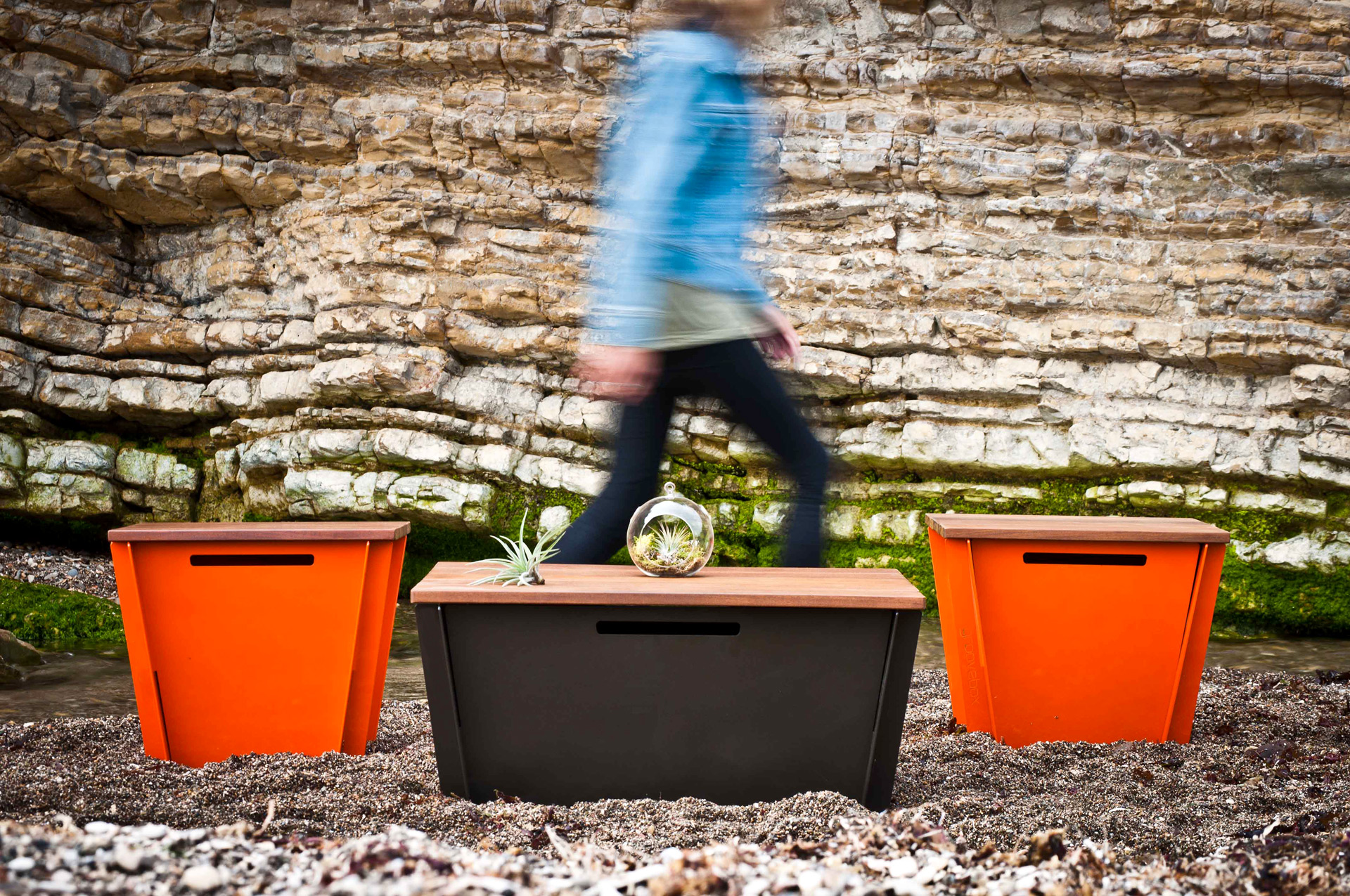
Price: Dependent on product/size When SCAD was building its experimental micro-house community, SCADpad®, it needed a solution for the community garden and found it in Eric Green’s (M.F.A., design management) Groovebox. The modular planters fulfilled the mandate for a sustainable, adaptable design. The transformer of indoor-outdoor furniture, all pieces in the collection - planters, table, fire pit and stool – come flat-packed for snappy assembly. Eric’s user-centered design approach recently caught the attention of TED Talks organizers who invited him to furnish the outdoor spaces of their annual event in Vancouver, BC.
Q’wik 15 by John Gray Parker
Made In: Savannah, GA
Est.: Coming soon
Price: $10,000 for one deck and two hulls John Gray’s (M.A., industrial design; M.F.A., service design) passion for sailing and certification as a US Sailing Level 1 instructor is reflected in Q’wik 15, a modular catamaran boating system for junior sailors. The ultimate racing boat is easy to learn, but complex enough to build skills. And it’s versatile. Q’wik 15 can transition from high-performance powerboat to sailboat and rowboat, adding value for families making a life-long investment in the sport. A model of Q’wik 15 turned heads at IBEX, even before John Gray built the full-scale prototype with help from SCAD’s marine design students. Q’wik 15 will have the rare distinction of fostering both promising young designers and sailors.
Frannie’s Gluten Free Muffins by Frances Shaw
Made In: Atlanta, GA
Est.: 2010
Price: $6.49 for the 4pk
Non-GMO organic fruits, veggies, eggs and coconut oil are among the ingredients in Frances Shaw’s muffins. But it’s what’s not included that makes her products a staple in the natural foods section of 200 Kroger stores. Frances didn’t partner with certified gluten-free bakery Pure Knead to be hip, she did so out of necessity. Celiac Disease forced Frances to leave SCAD during her senior year, seven credits shy of earning her degree. But she turned a set back into a line of baked goods that are safe for people with most major food allergies. Natasha Sokulski (B.F.A., advertising; B.F.A., graphic design, 2011) designed the packaging and branding.
Folk Fibers by Maura Ambrose
Made In: Austin, TX
Est.: 2011
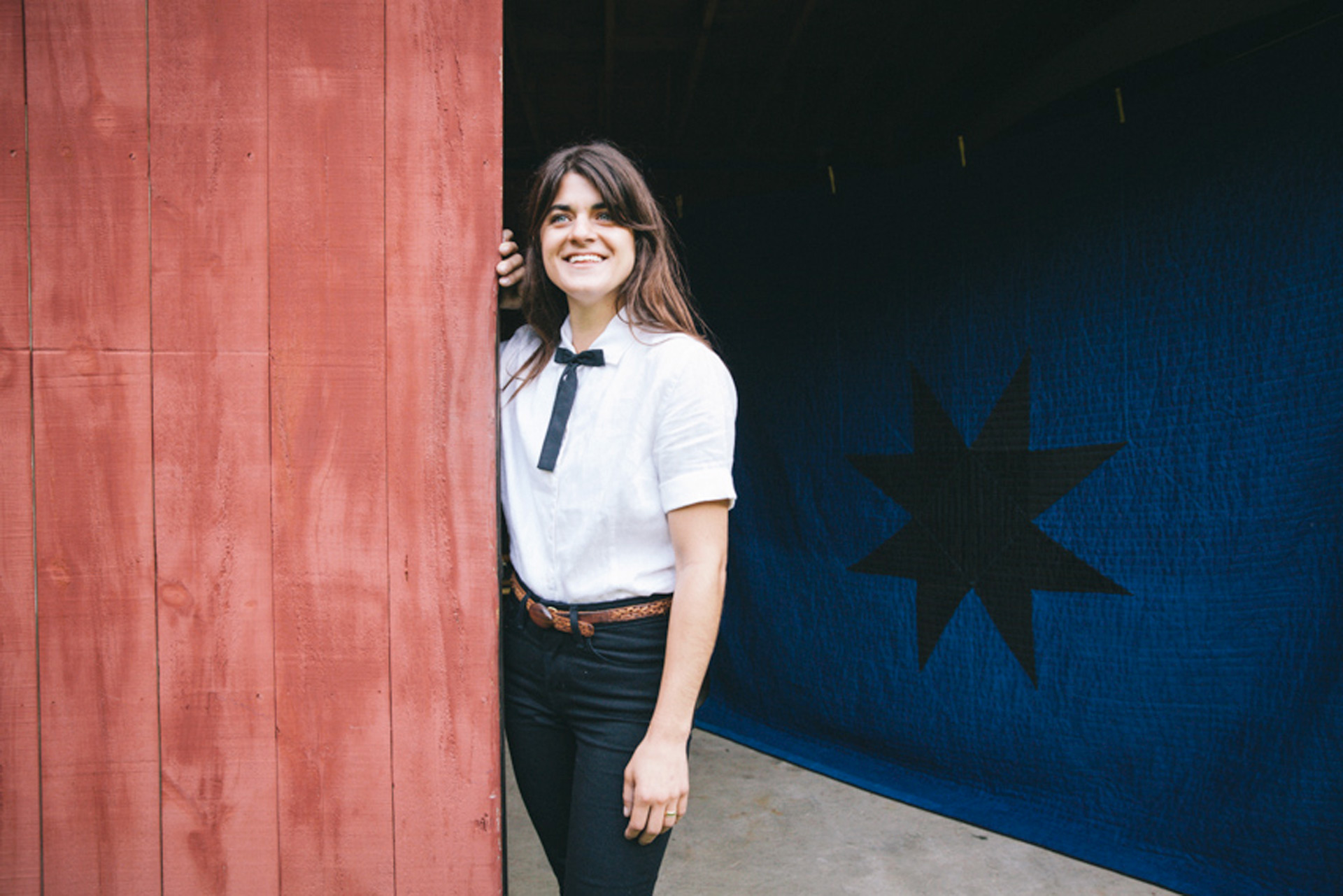
Price: $3,900 for Indiana quilt shown Maura Ambrose’s (B.F.A., fibers, 2006) Folk Fibers was born from a love of farming, natural dyes and quilting. Her live-off-the-land philosophy and skilled hands turn weeds like goldenrod and worn out scraps into stunning quilts that will be around long after we’re gone. Color drives Maura’s approach to her new works of art. It also might be the spark that flamed the interest of Martha Stewart and John Mayer, who tapped her to stitch the cover art for 'XO'. If your work could draw the world to wherever you were, wouldn’t you also choose to live in your own personal paradise?
Service Brewing Co. and Meredith Sutton
Made In: Savannah, GA
Est.: 2014
Price: $8.99 for the 6pk
Meredith Sutton (B.F.A., metals and jewelry, 2003) didn’t know her gift of a home brewing kit to Kevin Ryan would pack such inspiration. Three years later and her office is the tasting room she designed for Service Brewing Co., a veteran owned craft brewery. Meredith presides over the creative branding for the brewery started by Kevin and Master Brewer Dan Sartin, both Army veterans. Her artistic vision is reflected in the bottles and labels, which also bear the mark of house illustrator and Army vet Katherine Sandoz (M.F.A., illustration, 1997; MF.A., painting, 2005). Meredith quite literally also creates buzz by keeping the brewery bees, whose honey fuels the fermentation process and adds local flavor to Service Brewing Cos.’s small batch brews.
Heidi Elnora
Made In: Birmingham, AL
Est.: 2006
Price: $2,200 and up Heidi Baker (B.F.A., fashion, 2002) launched her bridal atelier with her signature Build-A-Bride collection, which included one simple silhouette and a dozen different trims. The permutations and combinations that brides could create were endless and so, it seems, are the customers who knock on Heidi’s door in search of a work of art to wear on their big day. Today she has three different dress collections, which can be found in more than 30 boutiques nationwide. But Heidi is most proud that every one of the trims she has designed is handmade in her home state. Previously a contestant on Project Runway, Heidi returns to television in Spring 2015 on the TLC show inspired her customizable gowns, Bride by Design.
Morgan Rhea by Morgan Richards
Made In: Charleston, W. VA
Est.: 2014
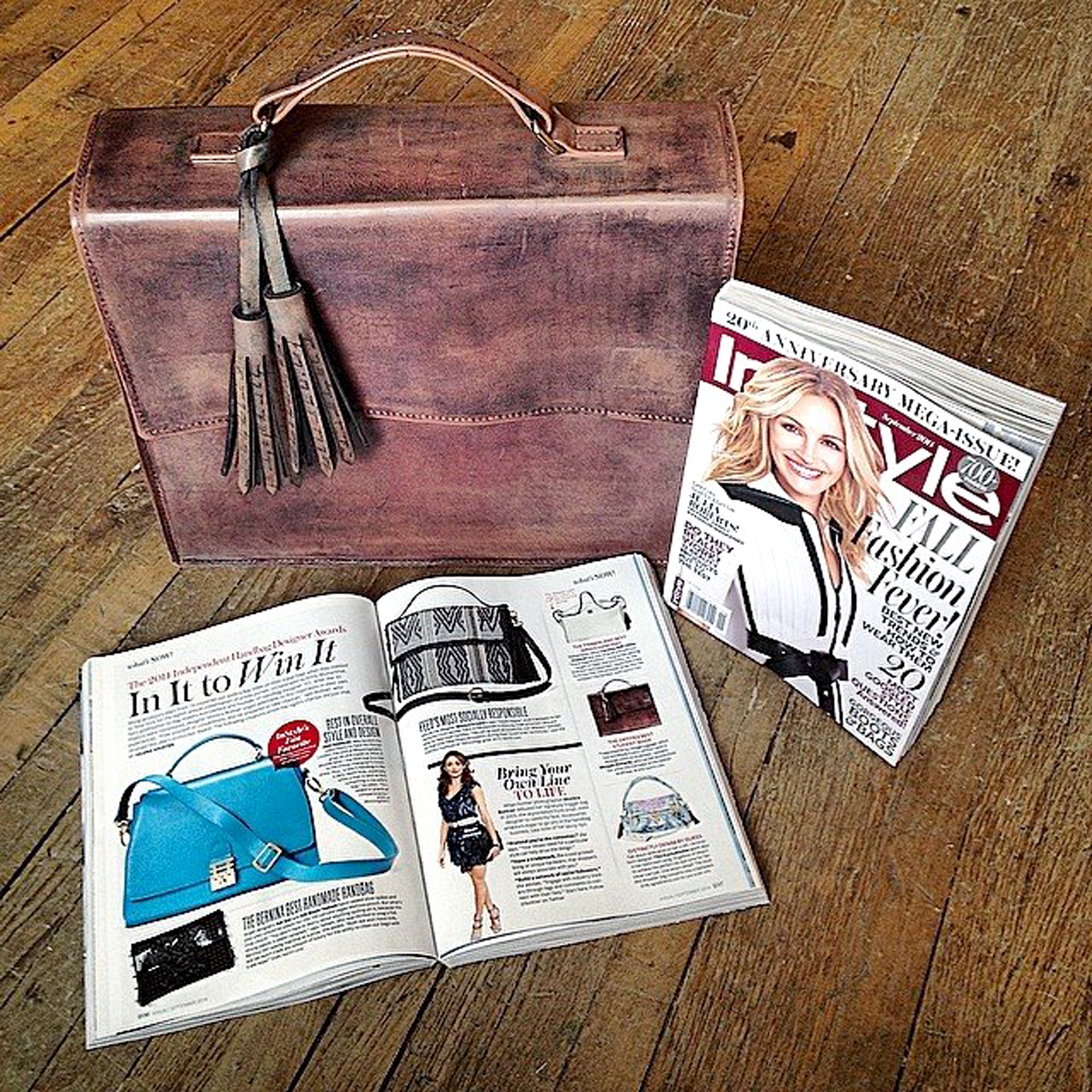
Price: $2,500 The “Silently Speaking Gratitude" collection by Morgan Richards (B.F.A., accessory design, 2014) is inspired by loved ones who have influenced her life. Morgan inscribes personal stories into hand-made leather goods to create one-of-a kind, heirloom-quality pieces. As if the gesture of painstakingly etching one’s gratitude into bags and accessories crafted of Buffalo hide wasn’t enough, consider the attention these tokens of affection have garnered. Her Ronald Briefcase won the Best Student Made category of the Independent Handbag Designer Awards and was featured in InStyleMagazine. Morgan and those she commemorates won’t be forgotten anytime soon.







 When SCAD was building its experimental micro-house community,
  John Gray’s (M.A.,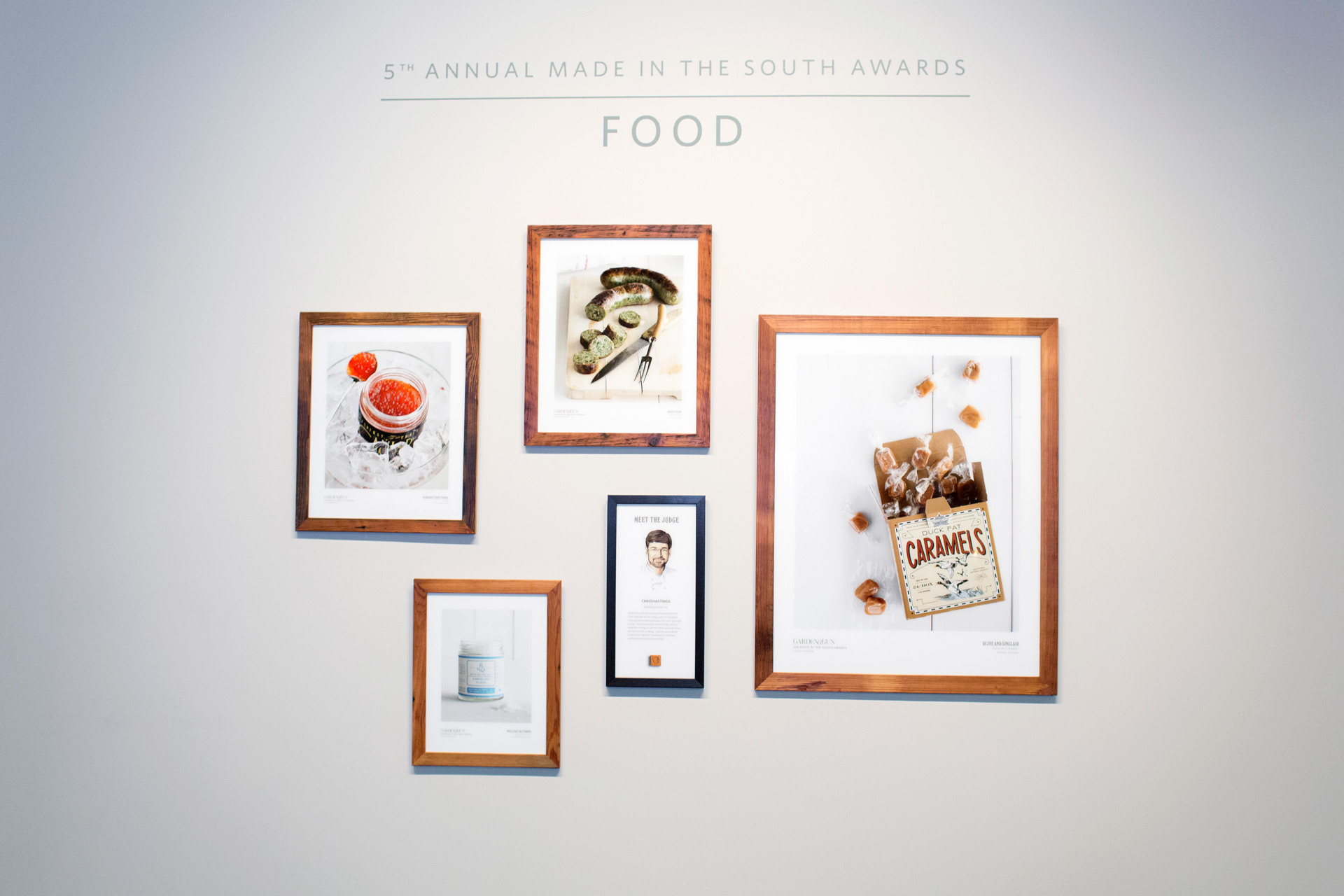

 Maura Ambrose’s (B.F.A.,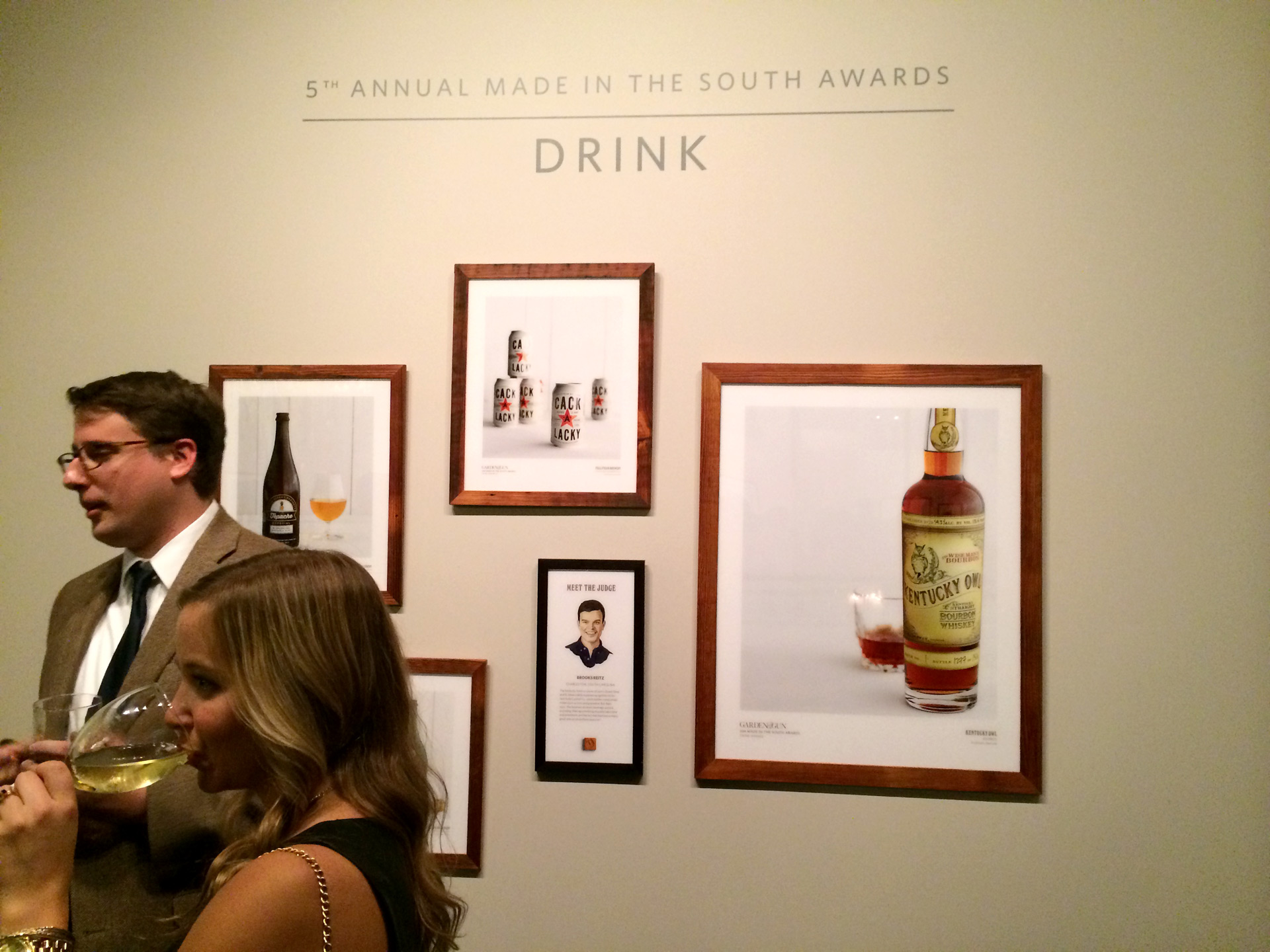


 The “Silently Speaking Gratitude" collection by Morgan Richards (B.F.A.,