Skip to main content Accessibility Policy

Is that real? Uses for virtual and augmented reality in TV

February
9
2014
By
Tags:

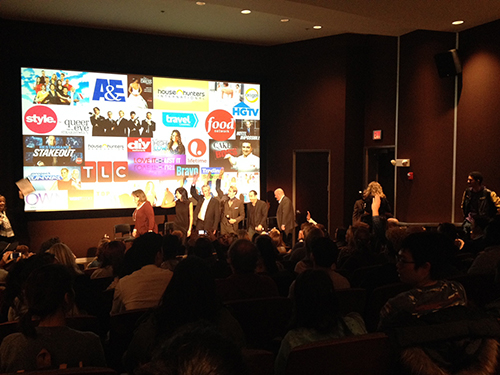
The Virtual and Augmented Reality panel at aTVfest, with Janet Arlotta and John Howell from North Carolina-based (n+1) designstudio, opened my eyes to how 3D and motion media are giving producers on live TV sets unlimited possibilities.

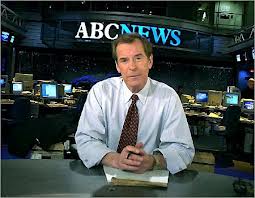
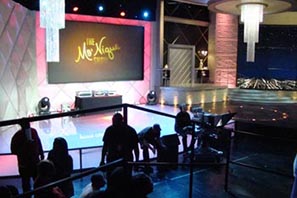
For a producer, a physical set is like home base. You block segments around the set. You visualize how the host will engage the audience and cameras. You know exactly where to perch to make eye contact with your talent while the make-up artist touches up their foundation.

A few of the sets I became cozy with over the years:

Television sets

From that reference point, I assumed that a virtual set would be totally disorienting and cold. (Could an audience really relate to augmented reality over the cushiness of Oprah’s coach?) But the case studies Janet and John presented demonstrate that these increasingly used and essential methods for engaging an audience create storytelling opportunities that vastly outweigh the temporary discomfort of operating outside of a traditional set.

With clients like Inside Edition, Food Network and Tennis Channel, some of the best work with virtual and augmented reality isn’t happening in sci-fi, as I erroneously believed, but in nonfiction television, especially sports. And it’s all done in real-time, not post-production.
UFC set
Virtual sets like, UFC’s for example, have smaller space requirements but posses more specialized features, like ‘baked-in’ lighting and shadows, which mean less man hours needed for live broadcasts. For Tennis Channel, a virtual set offered a two-in-one for US Open coverage: one set for "US Open Tonight" and one for "Breakfast at the Open." That’s two shows built around one desk, sitting on one green screen.

Probably the best known use of augmented reality in TV is the neon first down line, now ubiquitous in NFL games, along with the line of scrimmage and the world record marker that you’ve seen hovering above Olympic swimmers.
People watch demonstration
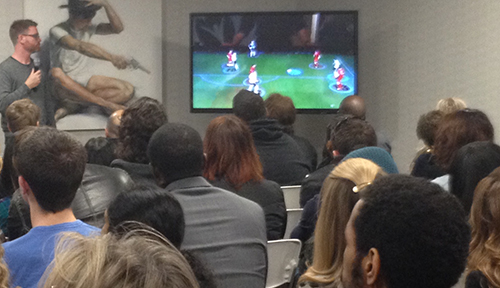
John Howell shows how ESPN diagrams a soccer play using augmented reality.

But AR also means ESPN can diagram plays using animated 3D players, and that CNBC’s hosts can walk in and around the financial data they’re reporting using corresponding infrared dots on their hands and Steadicam.
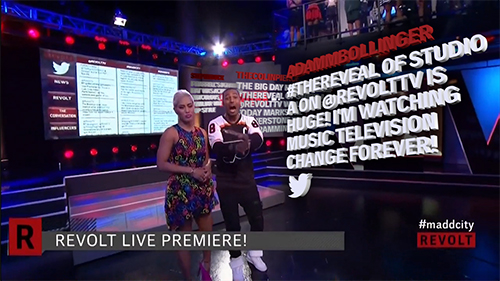
Set of music network REVOLT
Then there’s social media. No, not the kind that sits in a screen beside the talent on a set. That’s so 2010. Sean “Diddy” Combs approached (n+1) designstudio for help with the set for his new music network REVOLT.  With social media interaction being a major player in REVOLT’s mission, (n+1) took that traffic out of the screen and literally made live Tweets float in the air around the talent. Instead of a Twitter wall built into the set, AR enables those screens to move and fly around the hosts.

And you thought Oprah’s coach was immersive.

CeeLo Green, Angie Harmon headline aTVfest Day 2

February
8
2014
By
Tags:

Here's day two of aTVfest in pictures.

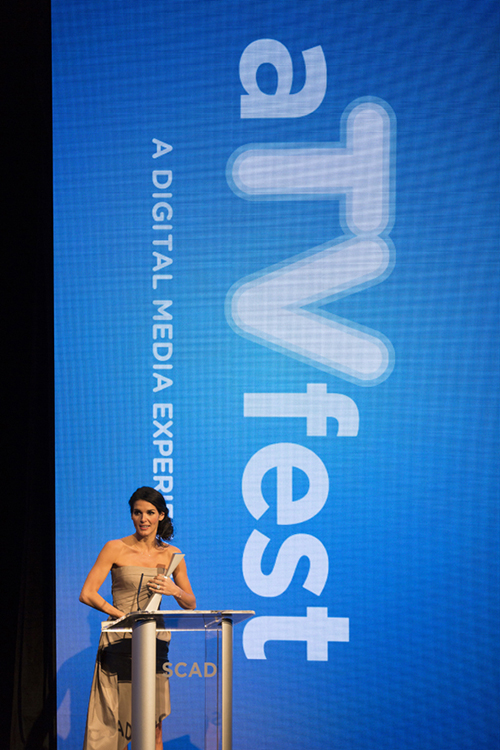
Angie Harmon a podium
Actress Angie Harmon, who plays "Jane Rizzoli" on "Rizzoli and Isles," receives the Spotlight Award.
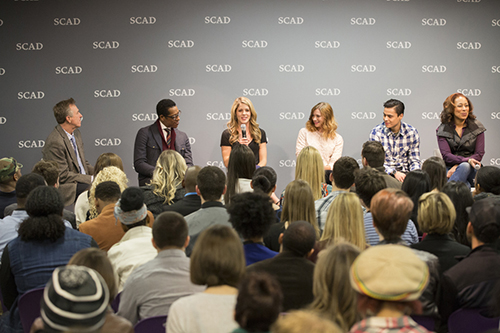
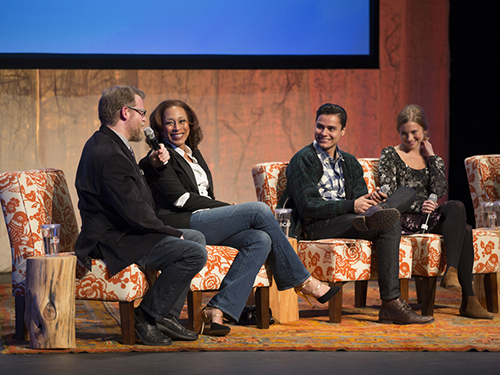
Actors at panel
The Inside Acting: Acting for TV panel with actors Orlando Jones, Keahu Kahuanui, Allie Gonino, Kiowa Gordon and Tamara Tunie.
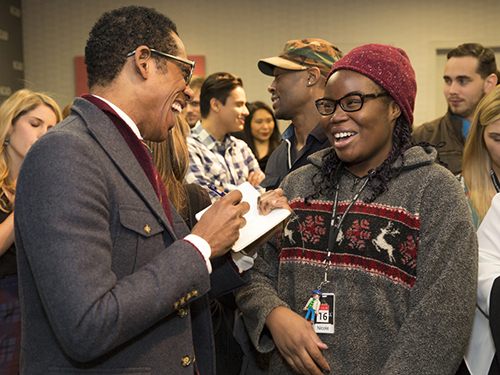
Orlando Jones with student
"Sleepy Hallow" actor Orlando Jones chats with a student at SCAD Atlanta.
Goodie Mob on the red carpet
Members of Goodie Mob, T-Mo, Big Gipp, CeeLo Green and Khujo, on the red carpet before discussing their reunion and reality show "CeeLo Green's The Good Life" set to premiere on TBS.
Audience films and takes photos
Goodie Mob and CeeLo Green receive an enthusiastic welcome by students and press.
Panel with members of "The Red Road"
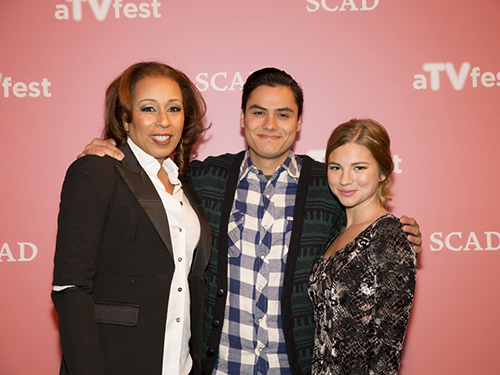
A screening of Sundance Channel's "The Red Road" with moderator and SCAD professor Michael Chaney and actors Tamara Tunie, Kiowa Gordon and Allie Gonino.
Cast of "The Red Road" on the red carpet
The cast of "The Red Road" on the red carpet.
Panel
The Lifestyle Television Series We'll Never Forget panel with Leigh Seaman, Hildi Santo-Tomas and Douglas Wilson from "Trading Spaces;" Carson Kressley from "Queer Eye for the Straight Guy;" Jay Blumenfield of "Restaurant Stakeout;" and Freddy Wilson from HGTV.


Executive Producer Tim Gibbons's truths for surviving TV

February
7
2014
By
Tags:

Hosted by TV Week's Hillary Atkin, aTVfest's Q-and-A with Tim Gibbons, the executive producer of HBO’s monumental comedy Curb Your Enthusiasm and BET’s runaway hit Real Husbands of Hollywood, two shows that thrive on improvisation, fittingly gave the audience an improvised list of Truths for Surviving TV. Here’s what Tim knows that helped him evolve from $20-a-day production assistant to six-time Emmy nominee.

Students take note during the discussion

Talent will help you keep a job but a friend will help you get it
Tim’s dream was to work in TV, so in 1976 when a friend called him for a day player role as a PA with Dick Clark Productions, he was ready. The process of getting the gig sounded simple, “Someone said Tim could be a PA.” But it’s through nurturing and growing a network, and making genuine friendships in the business, that Tim has had such a successful run in the business.

Every job I got since then has been the same. I don’t think I was ever hired once by sending out a resume. It’s because someone I knew said, ‘What about Gibbons.’

No job is beneath you and there are no shortcuts to the top
Once in the door at Dick Clark, which Tim called ‘my college,’ he made an effort to know what every role at the production company involved. Then he broke into comedy as an associate producer, learning budgeting, scheduling, how to work with writers and the costume department, all knowledge that would serve him when he became a show runner.

I became a sponge. I tried to learn about every department and every job, whether it was a tech job or Xeroxing scripts all night.

Know when your time is done and go
Tim lasted four years at Dick Clark Productions, riding the ranks, which went from PA, to head PA, to coordinator, and on up to associate producer, the role Tim was angling for. Though 20 dollars a day had turned into 300,  Tim was passed over for the next position up and knew he had to leave or remain stuck. So at 27 he took a lateral position as production manager on President Reagan’s inauguration. Not exactly the promotion he was looking for, but a gig that gave him experience coordinating a major production and a stepping stone to his next job.

Sometimes reputation is helped by a dose of chemistry
The opportunity to work on Curb came knocking three times. Tim was under contract with Ripley’s Believe It or Not, but HBO kept calling on the strength of the previous work he’d done for them. Their enthusiasm about Tim, though, didn’t excuse him from a final interview with Larry David, who wanted to get a feel for him. While in the interview Larry made a bald joke about neither one of them having hair. Tim laughed and Larry later told him that’s why he got the job. Reputation got Tim in the door, but being relatable to the ultimate decision-maker sealed the deal.

He was testing me to see if I had his comic sensibility.

Persistence, Persistence, Persistence
Regardless of the accolades that have come Tim’s way, he most credits persistence for his longevity in the business. Of the 20 PAs that Tim started out with, he’s one of only two that are still working. Persistence, he said, is what helped him sell a show he pitched 56 times. Persistence is what will distinguish you and help you get ahead.

In the job world you’re selling you and you have to be better than the 20 others who landed in LA that day and want the job.

Tim Gibbons talks to students after discussion

Whether you got your start in the 70s or are just now shoving off, some things, it seems, don’t change.

Why you can't afford to miss the One Spark crowdfunding festival

January
24
2014
By
Tags:

The Bowerbags 2011 Kickstarter campaign was my first foray into crowdfunding.

You know the feeling you get when you empty your pockets on laundry day only to find a five or ten dollar bill that you had completely forgotten about? There is arguably nothing more satisfying than when you find free money, especially if it’s for your growing business.

It was precisely that feeling that moved me to load up my car and spend five days sharing my project in downtown Jacksonville last year at the inaugural One Spark festival, slated this year for April 9-13.

One Spark, dubbed the ‘world’s crowdfunding festival,’ is a creative safe haven of music, art, and technology, designed to help creators showcase their talents and score some cash for it. Whether you’re a musician, a maker, mural painter, printmaker, hacker, or even an organic farmer, the sky is the limit at this event.

Imagine the scene: creators displaying and demoing their projects, which span every imaginable genre, while festival goers vote for as many projects as they like through a mobile app. Every vote my company, Bowerbags, took in last year wound up being worth somewhere around five dollars. (Not too bad for spending the days with my girlfriend and brothers strolling downtown Jacksonville, and far more interesting than anything I do on laundry day.)
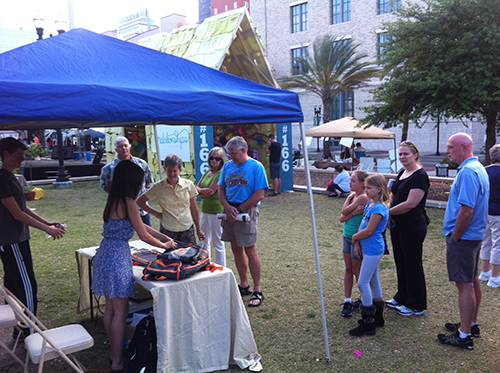
Demonstration tent

Outside of the money, it was a great way to validate the product line with face-to-face consumer feedback. We also gained some great industry contacts and further press coverage just from people stopping by the booth.

Woody Allen said, “90% of success is just showing up.” I definitely found this to be the case with last year’s One Spark. Based on that turn out of 130,000 people, I’d say it’s a fair wager that this year’s festival will be even bigger, and more profitable.

If five days of art, music, and technology sounds fun, but you’d rather not do any work, then get down to Jacksonville anyway. The One Spark events go all day and all night and, even if you don’t have a business yet, the festival is a great way to network and meet project supporters.

To read some festival success stories and register your project for One Spark, go to http://www.beonespark.com/participate-creator. Students with a .edu email address can register for free until January 31, which is the deadline for Creator applications.

Jamie Bowerman (B.F.A., Graphic Design, 2004) is a SCAD graduate student (M.A., Industrial Design) and founder of Bowerbags. Jamie enjoys all things innovative and spends most of his time thinking of new ways for people to carry things. Follow Jamie on Twitter @bowerbags.

'Look Inside' to win $100k

December
20
2013
By
Tags:

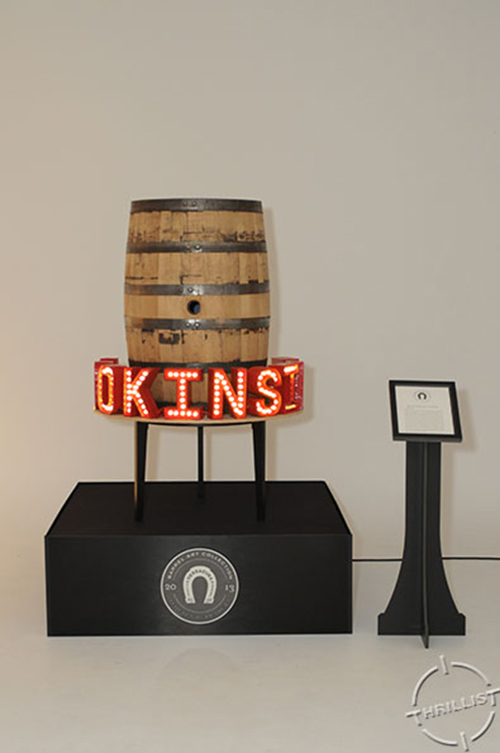
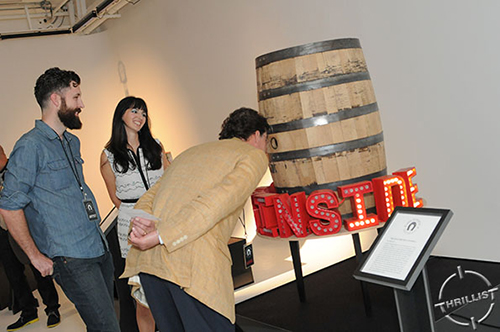
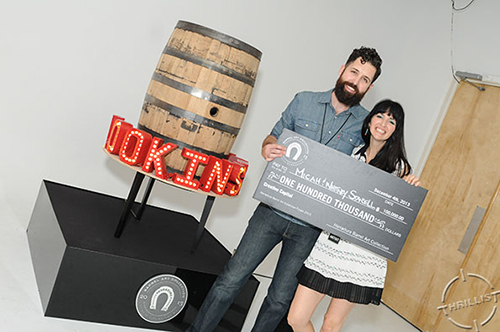
The acres of art and design on display at Art Basel Miami Beach was mind numbing. By day three, I’d slipped into a bit of an art coma until the news that Savannah College of Art and Design alumna Whitney Stansell (M.F.A., Painting) and her husband Micah Stansell hit a veritable ABMB lottery jarred me from my stupor. The $100K prize they pocketed, though, wasn’t due to luck, but the barrel, yes, barrel, they tricked out for Herradura Tequila’s Barrel Art Collection contest.

Hint: their winning entry proves the well quoted adage that ‘what’s on the inside matters more than what’s on the outside.’ Or, I might add, that the work matters more than the canvas.

To start, this was one of 80 plain oak barrels – used for aging tequila – that Herradura dispatched around the country to be transformed by local artists. A list of 77 participating artists was honed to 8 finalists, including Whitney and Micah, who were invited to Miami for a grand finale party created by Thrillist Media with the help of event producer Adrienne Wright (B.F.A., Fashion).

Here’s the artist's statement on the barrel "Look Inside":

"Though a 150-pound tequila barrel is not our usual medium, we set about the process of 'making art' in our usual way; anthropologically. We considered the barrel not just as an aesthetic object, but as a utilitarian one; an object with a particular historical purpose. Here we struck upon the idea to use the inside of the barrel, leaving the outside of the barrel unchanged save for a marquee sign with a simple call to action: 'look inside'.”

"We’ve created a zoetrope, an early 'cinema' device, inside the barrel. The running horse pays homage to Muybridge, a pioneer of the moving image, and the marquee sign and the act of peering into the barrel are a nod to the kinetoscope/mutoscope. Early alchemists believed the distilling of 'spirits' to be magic. In the same way, early cinema devices like the zoetrope were used to conjure spirits and were presented as magical objects. We think there’s still something pretty magical about the inside of our Herradura barrel. Look inside and see for yourself."

So what will they do with the money? Here's what Whitney had to say on bringing that fat check back to their home in Atlanta:

"It's hard to overstate what one hundred thousand dollars means to a working artist. I think more than anything it carries with it a feeling of freedom. The sense that we are free to continue making art on our own terms. Maybe the less-than-glamorous truth is that this prize, in a way, is a return on more than ten years of investing in our art (and much of it will go to servicing debt from many of those past projects and student loans!). Likewise, it's equally hard to overstate what it means for a company to invest in artists in this way. For Herradura to stand up and say, 'We think that art and artists are important and we're going to put a significant and substantial amount of money behind that belief,' is incredibly encouraging to a talented group of artists. A heartfel thank you to all of those involved in in administering this prize."

I think more than anything it carries with it a feeling of freedom. The sense that we are free to continue making art on our own terms.

I'd say that's enough incentive to always look a little closer, and not to be afraid to take a different approach.

On the trail of SCAD artists at ABMB

December
7
2013
By
Tags:

Dotting the massive and brilliant landscape of Art Basel Miami Beach and surrounding fairs are the bright lights of artists who have studied or exhibited at Savannah College of Art and Design. Whether you’re in Miami or following the fairs from afar, here’s a guide to their piece of the action.

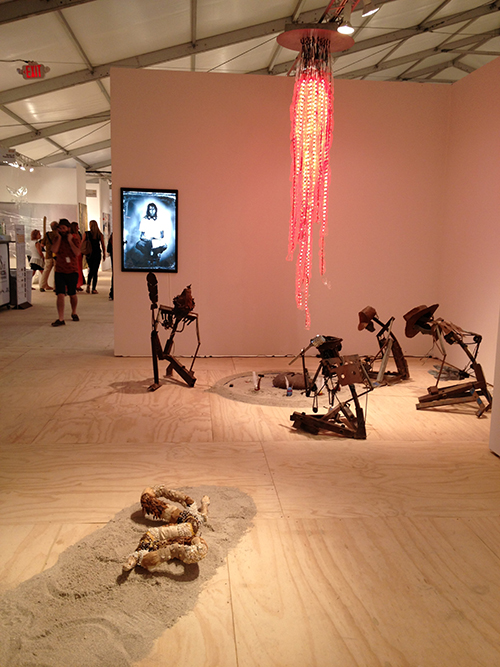
At SCOPE, Eileen Braziel Gallery is showing Marcus Kenney (M.F.A., Photography) taxidermy in a booth that previews the artist’s upcoming collaboration and exhibition with artists from the Navajo Nation. Marcus is also showing at North of Modern, presented by Florida Mining Gallery.

Installation art

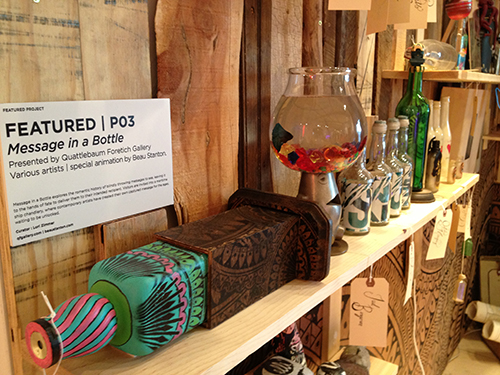
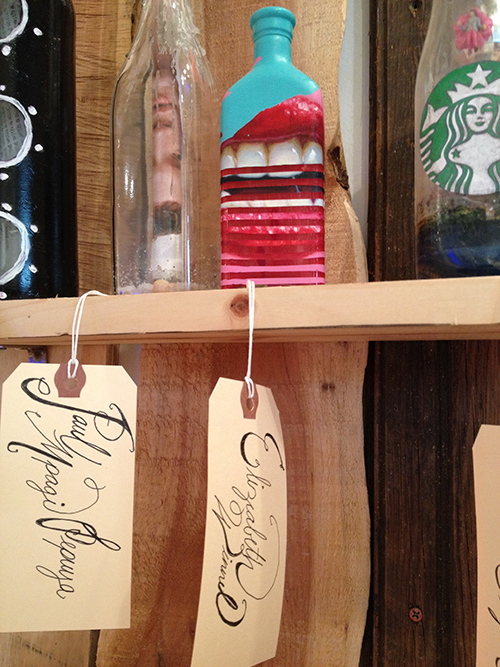
In a neighboring booth, Elizabeth Winnel’s (B.F.A., Illustration; M.F.A., Painting) work is featured in curator Lori Zimmer’s project Message in a Bottle. Elizabeth’s captivating vessels are coming soon to ShopSCAD, where you’ll be able to collect one of your very own.

Bottles on shelfDetail of bottles on shelf with tags

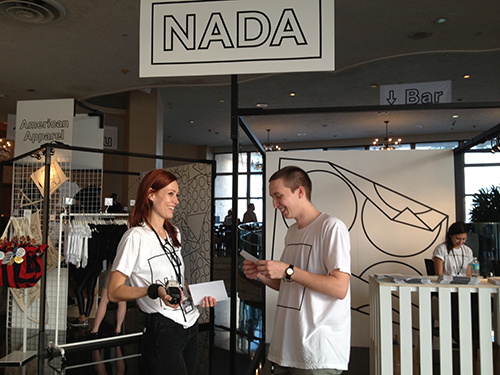
Though showing at SCOPE, Elizabeth’s days are filled with NADA, hosted by the New Art Dealer’s Alliance. Elizabeth nabbed a gig as a floor manager for the fair after reuniting with Charlotte Walters (B.F.A., Photography), one of NADA’s two fair managers. Charlotte, who manages the domestic dealers showing at NADA, has her hands full year-round with fairs in Miami, Cologne and New York, but also works in her craft by officially documenting the fair through photography.

Floor managers talk Floor managers laugh

Joining Elizabeth and Charlotte, also as a floor manager at NADA, is SCAD senior Kyle Joseph, candidate for a B.F.A. in painting.

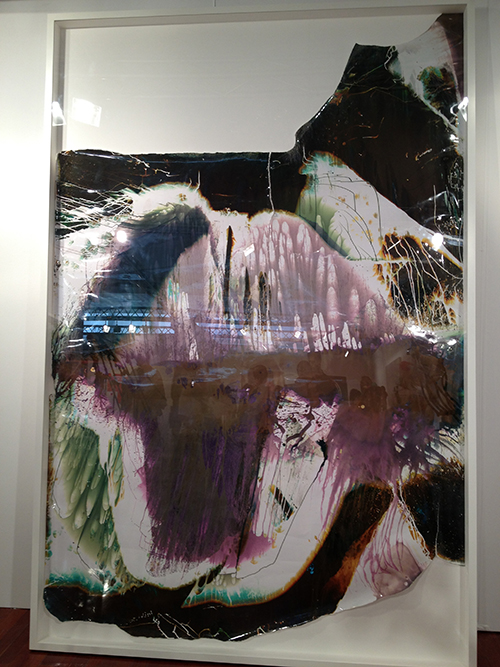
The three regularly pass by the booth of American Contemporary Gallery and the work of Mariah Robertson, who previously exhibited at SCAD Museum of Art

Abstract artwork

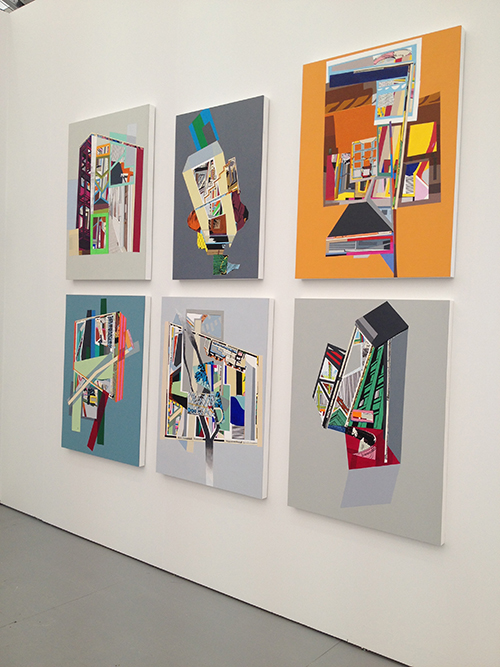
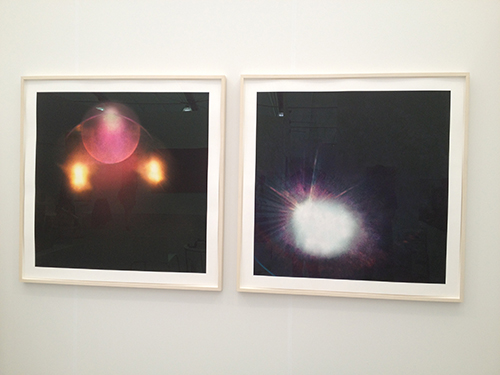
Further down Collins Avenue, on the beach at UNTITLED., you’ll find Mary Lum and Dario Robleto, whose work has also graced the galleries of SCAD MOA.

Six works of art hung on gallery wall

Two pieces of artwork hung on gallery wall

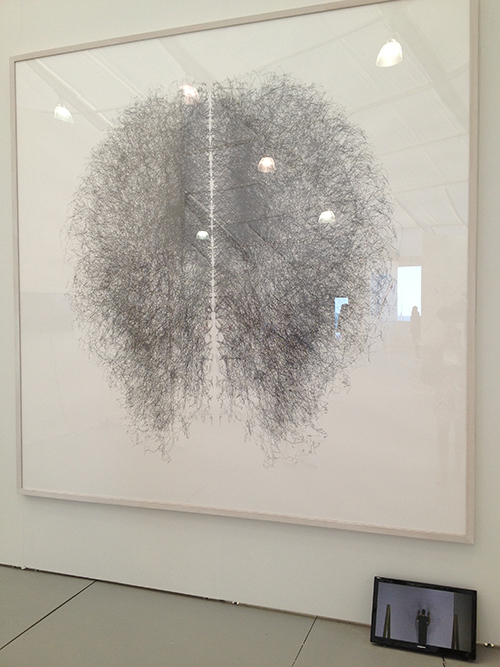
In the same corridor at UNTITLED. hangs Tony Orrico’s Penwald: 4. Tony will be featured at SCAD deFINE ART in February.

Large artwork hung on gallery wall

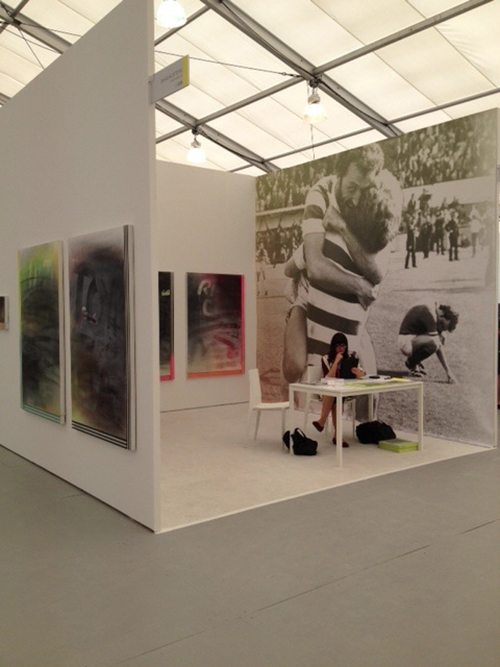
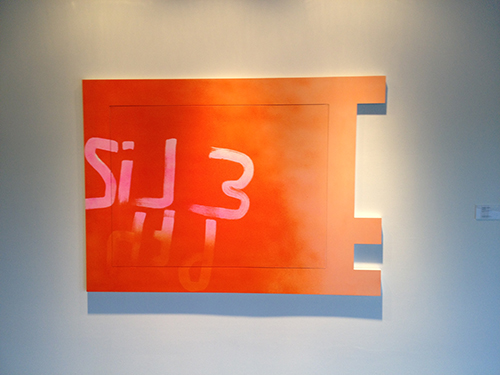
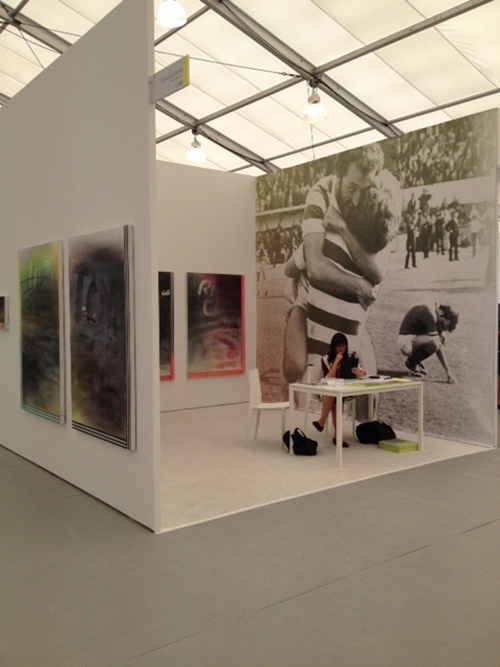
Showing both at UNTITLED. with Anna Kustera Gallery and at the M Building, Wendy White (B.F.A., Fibers) has tread the well worn path between the beach and her exhibition, CURVA, in Wynwood.

Woman sits at desk inside galleryRed artwork hung on gallery wall

Please keep us posted on the SCAD treasures you find along the way.

CURVA: In Wendy Whites' Adidas

December
6
2013
By
Tags:

Donning her signature shoes, whose iconic stripes are prominently referenced along the borders of her work, Wendy White (B.F.A., Fibers) took visitors through the logic of CURVA. The exhibit opened this week at the M Building in Miami with a VIP preview that was attended by hundreds of connoisseurs of contemporary art, Art Basel attendees, and Wendy’s fellow alumni from Savannah College of Art and Design. CURVA will remain on display through Dec. 20.

The five pieces that compose CURVA seamlessly blend the boundaries between art and sport, between fine and urban art. Here, Wendy describes why sport, and soccer in particular, served as the impetus for collection.

Wendy on why she incorporates the Adidas stripe as a frame.

A soccer ball conspicuously hangs from the edge of Tietz. Wendy uses the structural element to connote pace and movement.

Using Green Brigade, which evokes the atmosphere created by the fierce rivalry between Scottish teams the Rangers and the Celtics, as an example, Wendy explains her use of photography.

Inside Design Miami

December
5
2013
By
Tags:

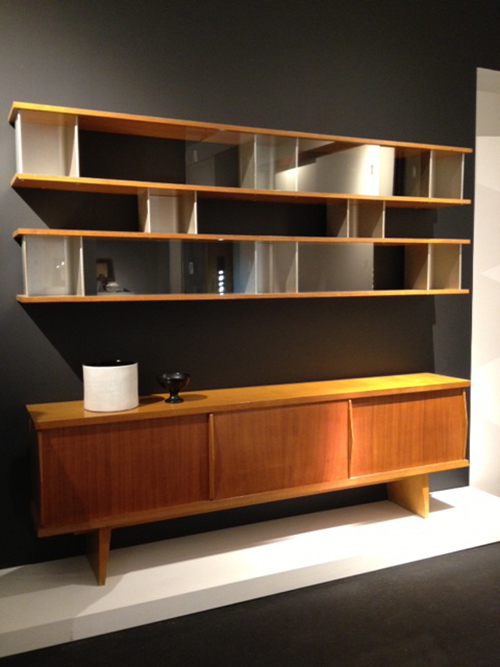
Fittingly, my tour of Design Miami began with an introduction by Michelle DiLello whose firm, Susan Grant Lewin Associates, helped launch the fair in 2005. Here’s Michelle’s perspective on how the fair has grown in the last eight years and Laffanour Galerie Downtown, booth G/10, which she is currently representing.

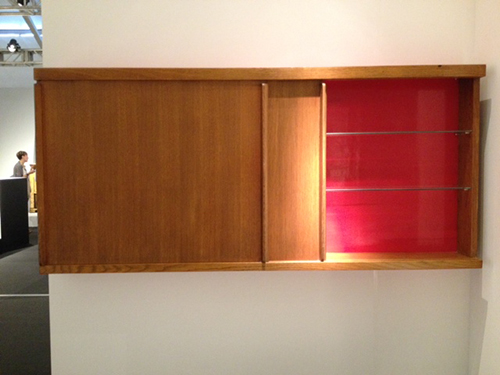
More images of the 1950s residence created by architect/designer Charlotte Perriand.

1950s residence created by Charlotte Perriand

1950s residence created by Charlotte Perriand

1950s residence created by Charlotte Perriand

In reverance to the holiday season, here are a 'few of my favorite things' that I found at the fair.

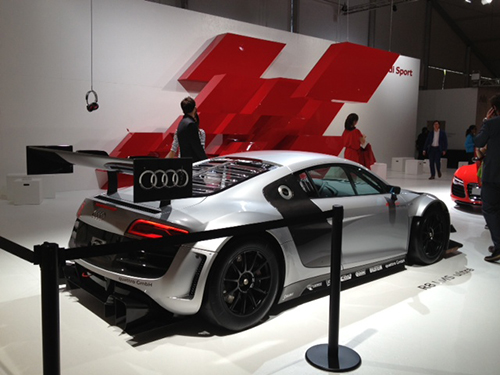
The R8 LMS Ultra displayed in Audi's Fragmentation exhibit.

R8 LMS Ultra

Campana Brothers Ocean Collection at Carpenter's Workshop Gallery.

Ocean Collection

Design you can feel. Of course, I managed to find the one piece you can probably touch at the fair: Touchable by father-son team Thalen & Thalen at Francis Janssens Van der Maelen.

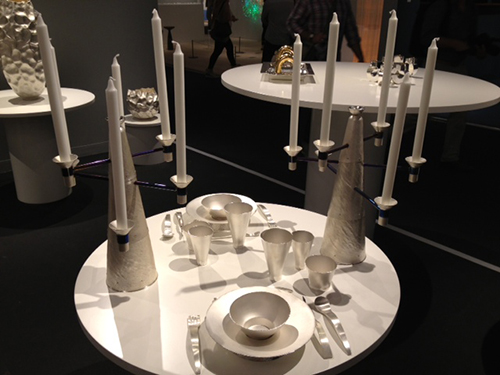
Also by Thalen & Thalen, this table setting, for which a menu will soon be especially created.

Table setting

Finally, thanks to the help of Artsy.net, I rechared, both literally and figuratively, at the online art collection platform's power station.

Power station


A gallerist and a curator dish on art and UNTITLED

December
5
2013
By
Tags:

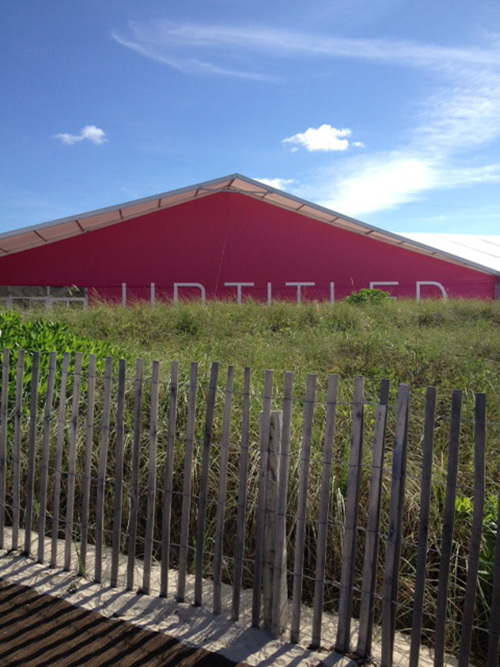
UNTITLED International Contemporary Art Fair Miami Beach

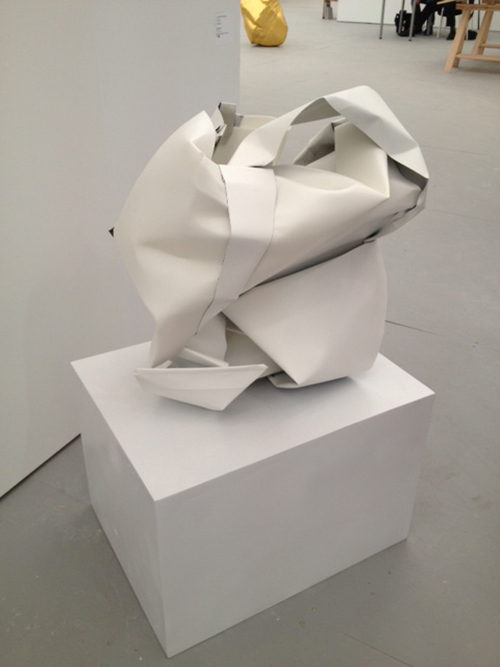
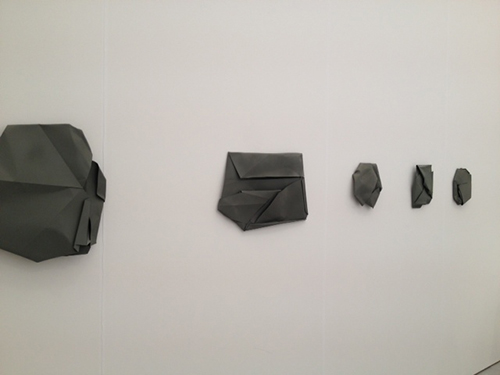
Wandering through UNTITLED’s airy pop-up tent on Miami Beach, I bumped into Savannah College of Art and Design curator Alex Sachs in the booth of Andrew Rafacz Gallery, which represents Wendy White (B.F.A., Fibers) in Chicago. Always curious about the works that catch a curator’s eye, I asked Alex to tell me what has her attention at the fair. In this case, it was the geometrical forms, beguilingly folded aluminum, by artist Robert Burnier that drew Alex in.

What followed, after Andrew approached us in the booth, was an enlightening and organic conversation about Robert and why UNTITLED is the best fair in Miami Beach.

Andrew Rafacz: Robert is Chicago-based and studied at the art institute but he is in his 40s and started as a software engineer years ago and decided to go back to school for art, because it was his first love. And that kind of informs his work because these start as designs in the computer and some of the lines are very precise and then he’s manipulating them by hand in his studio. So they have that hand-involved quality, but they straddle different lines. For me they’re about drawing. They look like folded paper, they’re sculptural and they have this mystery of materiality that I think is really epiphanic.

Alex Sachs: When you walk up to the booth you have no idea what they are. You really need to approach them to see what the materials are and to see the intricacy of the folding. The discovery is also why they’re really intriguing.

AR: This piece, you know, I stared at it in the studio and then we had it in the gallery, but having it in here, I was walking up to it and there are so many crazy folds inside this thing and it’s revealing itself even further.

Robert Burnier Thirty Six primer on aluminum

Tarana Mayes: Andrew, have you exhibited at UNTITLED before?

AR: This is my second time exhibiting here. These guys are doing something really special. It’s a curated fair. I feel like some art fairs have said they are curated, but nobody curates a fair like Omar Lopez-Chahoud, who curates this. Because he is hands-on from day one all the way through this fair. He has been on site every day.

AS: Did he make any changes to your presentation?

Artwork on display at UNTITLED

AR: He didn’t. I feel like – last year he loved it, too. I had Wendy’s work here last year. I’ve watched him make changes here and there, which is an amazing thing, actually, to have somebody that dedicated, because sometimes you do art fairs and the person across from you, maybe the booth’s over hung or things don’t visually line-up. I mean a fair is always about a multiplicity of artistic voices, so it’s never going to be seamless.

AS: Yeah, the diversity.

AR: But you also want it to be like, we’re here as exhibitors for seven days. You want it to be visually arresting and not oppressive. So the combination of a really well curated fair with a tent bathed in natural light during the day makes it a joy to be in.

AS: The other thing I’ll say about this fair is that there’s a lot of restraint. A lot of times at art fairs there are a lot of people taking photos. I think it’s so overwhelming.

AR: Yes, they’re over-stimulated.

AS: Often times at fairs people are just taking photos and they’re like, “I’ll think about it later, I’ll look at it later.” But here it’s open and bright, and there’s plenty of wall space so that you really see each work individually, the way that you’d want to see them in a gallery. So it’s proximate to an ideal situation for showing art. Lots of natural light, lots of white space between the walls, and plenty of room between the booths, so it’s really open.

Wendy White with Anna Kustera Gallery at Untitled Miami Beach

AR: And what’s amazing is that all of the things you said…having a fair take those things back, which we know worked in the first place, that is radical. It’s radical in what it’s not, actually.

TM: Having a fair remove the things that weren’t working?

AR: Remove the things that work for the big fair, I guess, or work for selling a lot of product, but they don’t work for taking in art in any sort of substantial way. I’d even go a step further and say the art fairs are starting to eclipse what happens in the gallery. So many galleries are struggling to stay open because they only sell art at an art fair. Well, that is truly problematic in the long run, because if you don’t have a space for an artist like Robert Burnier or Wendy White to develop and articulate a solo idea or exhibition in a space like that, what do we have left? We don’t have artists who can evolve like they need to. My point is that [UNTITLED] is taking it back by not reinventing the wheel.

So many galleries are struggling to stay open because they only sell art at an art fair. Well, that is truly problematic in the long run, because if you don’t have a space for an artist like Robert Burnier or Wendy White to develop and articulate a solo idea or exhibition in a space like that, what do we have left?

AS: Again, I’ll just say restraint. It just feels elegant and shows great restraint, which enables the viewer to see the work in it’s best light.

Art Basel Miami Beach: an artist's perspective

December
2
2013
By
Tags:

Art fairs are uncharted territory for me. So as I prepared for my first trip to Art Basel Miami Beach (Dec.5-8), I caught up with Marcus Kenney (M.F.A., Photography) to see what ABMB looks like through an artist’s eyes. I was relieved to learn that even for the most seasoned ABMB participant – Marcus has exhibited at various fairs there for most of the last ten years - this annual phenomenon can be overpowering. If you’re in Miami, look for Marcus and his work at North of Modern, presented by Florida Mining Gallery, Eileen Braziel at SCOPE, and at Savannah College of Art and Design’s Artistic Professional Practices panel on Dec. 6 at The M Building.

TM: Describe ABMB? What’s the atmosphere like for an artist?

MK: It’s kind of crazy. It’s hard not to be overwhelmed because there’s so much art. As an artist I am around art all the time, but when you see it in a setting like this where there’s a dozen art fairs and each fair has probably at least 50 galleries and then each of those galleries has at least three, four, five artists exhibited...you do the math on that.

It’s like going into a museum and never leaving for a week. It’s hard not to be overwhelmed. From an artist’s perspective, it’s kinda hard not to question where you fit in with all of this. You see things that you like and you see things that you don’t like. I think it’s kind of a requirement for any serious artist to know what’s being made.

You can see dead artists' work, you can see people from Jeff Koons, you know top-shelf artists, all the way down to students’ work and people just getting out of school. So it kind of runs the gamut of what’s available.

Marcus Kenney artwork Marcus Kenney artwork

TM: Have you had a particular ah-ha moment at ABMB? Has it influenced your work when you go back home?

MK: I’m sure it does. I don’t know that there’s been anything specific where I’ve been like, “Wow, let me try something like that.” As a visual artist, you’re basically influenced by everything. Last year I went and there was a lot of taxidermy stuff, so it has kind of influenced me not to want to do it as much (laughs). Basically you have the world’s art market represented in one location for a week. You can see what’s being made in China, you can see what’s being made in South America, you can see what’s trending in design. You can see everything all in one location, so it’s pretty fascinating.

TM: That's why it's so iconic. What’s the perception of ABMB among artists?

MK: It’s love-hate. As artists you want your work to be down there because the whole world is there, all the major art dealers, all the major art collectors, all the major museums, all the major magazines, not even major, anybody who is connected to the art world is there that weekend. So I think it’s important from an artist’s perspective to have some sort of representation there because it’s all about getting your work seen. At the same time, it’s there to be sold. So that’s always difficult from an artist’s point of view because it’s kind of like a flea market style. There are booths after booths after booths, and they’re not selling used vinyl and old bottles, they’re selling art. People’s attention spans are very small and it’s different than having a show in a gallery that’s going to be up for a month or two and people are able to spend time with it. In Miami, they’re just looking and five seconds and they’re out because they know that there’s a million other things to see. So you really have to have something that really stands out to get people to look at it. If it’s a real serious work it’s hard to get the attention it deserves.

TM: On a lighter note, who throws the best parties at ABMB?

MK: Artists’ parties are the best ones, where the artists will get together, get DJ’s and stuff. Usually a lot of the party scene…there’s so many of them and it’s kind of like I was saying with the art fairs. You go to one and somebody will say, "There’s another one over here." So you don’t ever really get to settle in. It’s kind of like bar hopping, but you’re party hopping. Some of the best times are when you just get a group of people together and go to a restaurant and have a conversation.

TM: There's plenty of good places to eat in Miami for sure. Would you say ABMB is more business or pleasure?

MK: It’s both. That’s why they do it in Miami because Miami is such a great place to be, especially in a…what is it 30 degrees here today? We’re in Savannah, so imagine people coming from New York and London, you know, the cold parts of the world. Who wouldn’t want to go to Miami for a week? It’s a beautiful place to be. It’s both. As an artist, it’s both. It should always be both. Every day it’s pleasure because you get to do something that you love to do, but it’s also business. If you’re doing it right, I think.

TM: Is there an artist that you’ve either met or learned about at the fair that you follow now because you first encountered them at ABMB?

MK: Last year I met a photographer who I was familiar with - Lori Nix - and I was at Pulse sitting outside and met her and started talking about her work and my work. We were familiar with each other’s work, but had never actually met. Now she has a solo show in New York. It’s always nice to put a face with the work. You meet a lot of people. Tony Fitzpatrick out of Chicago, I’ve been in shows with him and seen his work before and he does these nice little collages. But I had never actually met him. So it’s nice to be able to put a face to the work.

TM: What do you have your eye on this year? What’s your agenda for this installment of ABMB?

MK: The more you go somewhere the more you feel comfortable with it and you know you’re not gonna see it all, so you’re able to slow down and enjoy it. Having gone so many times now I don’t feel like I have to see everything. This year I just want to enjoy it and really take my time, try not to get to every single thing because it’s impossible anyway. Just to enjoy looking at other artists’ work and see what’s going on in the art world right now.

TM: Tell me about the two exhibits you’ll have going on?

MK: Florida Mining is a gallery in Jacksonville that I just had a show with. They have a project – there are tons of these things, too. It’s not just the actual fairs, but there’s all these little independent projects that people do. It’s called North of Modern. Mine will be a mix of installation, sculpture and painting. I’ll have a good bit of work there, which is nice. At SCOPE, I’m showing with a lady out of Santa Fe that I’ve shown with in the past. She works with the Navajo Nation and we’re gearing up to do a project with them next summer. They’re doing a site-specific installation. There’s Navajo artists and they’re also inviting outside contemporary artists, so I’m really excited about this. Eileen Braziel is the gallery.

Marcus Kenney artwork

TM: I'll definitely stop by. What’s your advice for getting the most out of the fair?

MK: It would benefit you to do a little bit of research before and figure out what you want to see. There’s the big far, Art Basel, which is huge. You could spend many days there. When I was first going I would go there and try to do too many fairs. If you researched it and had an itinerary – though it’s hard to keep one while you’re down there – that would probably be helpful. And then just make sure you have some down time because it can really turn your brain into mush. Coming back is always difficult.

TM: How’s that?

MK: You’re exposed to so much. It’s so much to process.

Because I’m a visual artist, everything is so visual to me that when I come back I am just kinda overwhelmed, over-stimulated might be the correct word. It just takes a while to figure out what you’ve seen and how you’re going to put it to use going forward.

I really like that. It’s the end of the year. After Art Basel, then it’s the holidays and I tend to not do a whole lot of work during that time, so by the time January comes back around I am ready to get back at it. You’re gonna love it, it’s great.