Skip to main content Accessibility Policy

Ask Vivienne Westwood: insights on the SCAD MOA exhibition

May
16
2015
By
Tags:

Vivienne Westwood traveled to Savannah College of Art and Design to receive the André Leon Talley Lifetime Achievement Award. The fashion icon and activist joins a distinguished cohort of designers who have attended the student fashion show and exhibited their work at SCAD Museum of Art, and she’s the first to answer your questions submitted via social media. Westwood’s responses provide perspective on her body of work, including 33 looks that comprise Dress Up Story – 1990 Until Now, an exhibition curated in her honor by Talley at SCAD Museum of Art (May 19-Sept. 13).

I never participated in a fashion trend. I always invented them. - Vivienne Westwood

What fashion trend did you participate in but now regret?

VW: I never participated in a fashion trend. I always invented them. I never knew what other people were doing. In fact, every now and again, I do something and someone might say, “Someone just did that.”

So many industries look to fashion for inspiration on emerging trends and color. Where do you find inspiration for your work?

VW: The ideas are not just invented. They come from a whole lifetime experience of looking at things and following your deep interests, if you’re interested in culture. I mean everybody is in the end. Whatever you’ve been following there. Culture, as I defined it the other day, is the best that has ever been thought or said or shown. That’s what culture is and that’s what you’re following. For example, when you’re looking at paintings you start to understand what is the best. There’s a French expression that the best is the enemy of the good. The good, you’re no longer interested in it. I used to send my students to the art galleries. I said, "Before you move from one gallery to the next, if the fire bell went which picture would you save?" If you keep going, in six months' time you will choose a different picture, you are cultivating your taste. You are developing. You start to see something else.

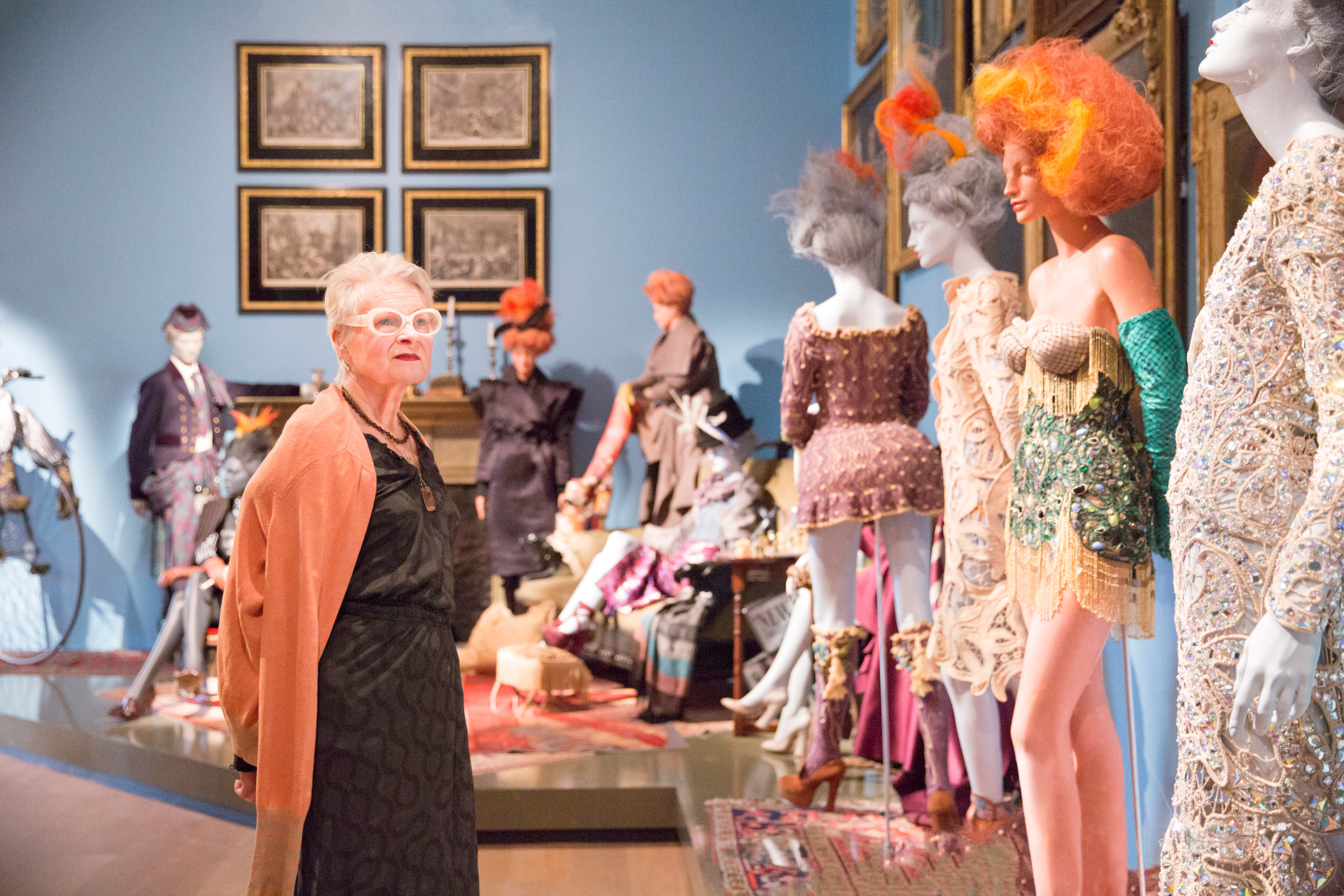
Vivienne Westwood looks at her body of work in the SCAD Museum of Art exhibition in her honor

How do you approach a design challenge?

VW: I like to start with knitwear. It’s very good because you’re waiting for fabrics quite a lot of times. Knitwear is brilliant because you’re not limited by the yarn, you’re limited by the fabric and what you’re going to do with it and how you’re going to sew it. Knitwear is a bit like a computer, you know, you’ve got a stitch that loops one way and a stitch that loops another way, and that’s all there is. You just do permutations of that and you just loop two of them together. You can shape the thing by the actual technical process, and I find knitwear a very easy thing to start with while I’m waiting for fabrics as well, and I always start from tailoring. That’s where I always start to get the look of something.

What will you look for on the runway at SCAD Fashion Show?

VW: Something different. That is a phrase I cannot stand. ‘Something different’ is so boring. It doesn’t work. If people are searching for something different they’ll never find it. It’s like searching for an unusual experience. It just won’t happen. It will happen when you’re not searching, when you’re following your deep interests. That’s when the exciting experiences will happen.

Experience Dress Up Story - 1990 Until Now at SCAD MOA to learn more about Dame Westwood. 

Hong Kong's chalk-over

May
6
2015
By
Tags:

More than 50 student-artists gathered in the north parking lot of Savannah College of Art and Design in Hong Kong to participate in the Sidewalk Arts Festival, a tradition that connects the university's locations around the globe. 


Inspired by nature, typography, comics, Hong Kong culture and more, the contestants arrived with a vision and a plan. They found their assigned squares and their creativity flowed. Throughout the day, 200 festival-goers watched as the artists blended, shaded and sketched their way to cash prizes worth 3,500 HK$, and judges evaluated the resulting 29 chalk art masterpieces.


Let the creativity shine bright like the sun! #scadhk #scadintl #sidewalkarts #festival #chalk #scadchalk

A photo posted by Flora Lee (@scadflora) on


First-time participants Chaaya Prabhat, Arundhati Prasad and Bhavishyaq Sharadhi won the Group Award for their take on artist Salvadore Dali.

“We wanted to draw someone iconic, someone instantly recognizable. We drew Salvadore Dali as his moustache is unmistakable."


Winner of the Spirit Award, Shann Larsson drew the SCAD mascot Art the Bee. "I love the process and enjoy challenges in media," Larsson said of her third showing at the festival. "The stylized bee was a drawing I sketched out in ink on paper and then attempted to recreate with thick chalk on concrete." 


The chalk quickly disappears upon meeting the rough surface again and again. But Larsson and the other winners can use their prize money to stock up on art supplies and chalk in time for the next Sidewalk Arts Festival. 

SCAD descends on Tybee for Sand Arts sculpting contest

May
2
2015
By
Tags:

Savannah College of Art and Design students adorned Tybee Island, Georgia for the annual Sand Arts Festival, a sculpting contest that is a rite of spring. Angling for prizes totaling $11,400, the competitors had more than cash to spur them on. This year, visiting artist and world champion sand sculptor Ted Siebert of the Sand Sculpture Company elevated the game with an ornate sculpture created with students from SCAD's Art of the Spectacle class.
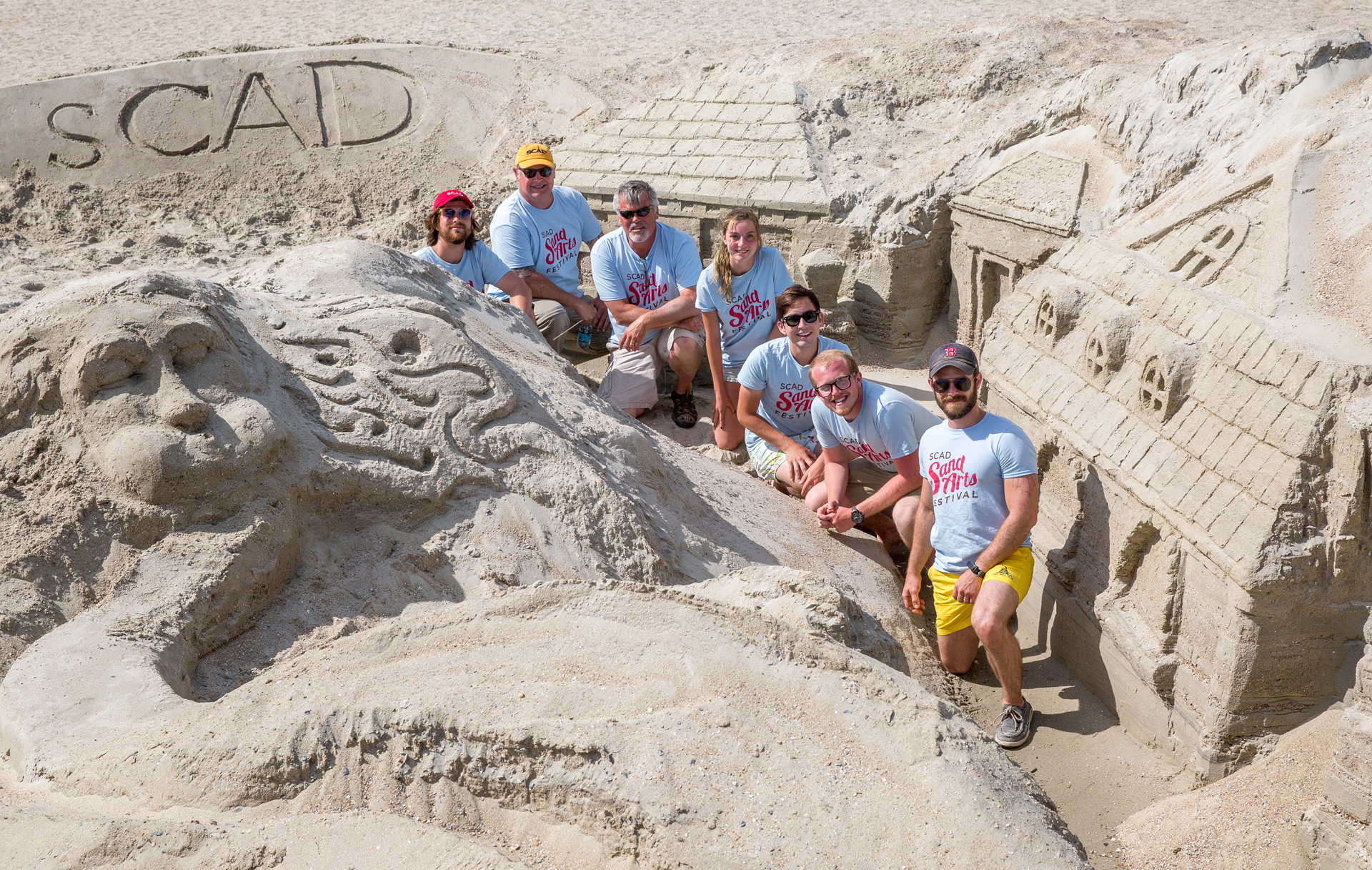
Sculptors at the annual SCAD Sand Arts Festival

Siebert was both teacher and judge. His quarter-long workshops, in which he taught students the finest sand sculpting techniques, prepared them to face his scrutiny at Sand Arts. Siebert judged the newly added Most Ambitious category. Prize-winning or not, in our eyes, any artist who attempts to master the tricky medium of sand is ambitious. Congratulations to all. Here are the first place winners:

Most Ambitious and Sand Sculpture Awards:
Sand Sculpture No. 16 — Submerged Dragon
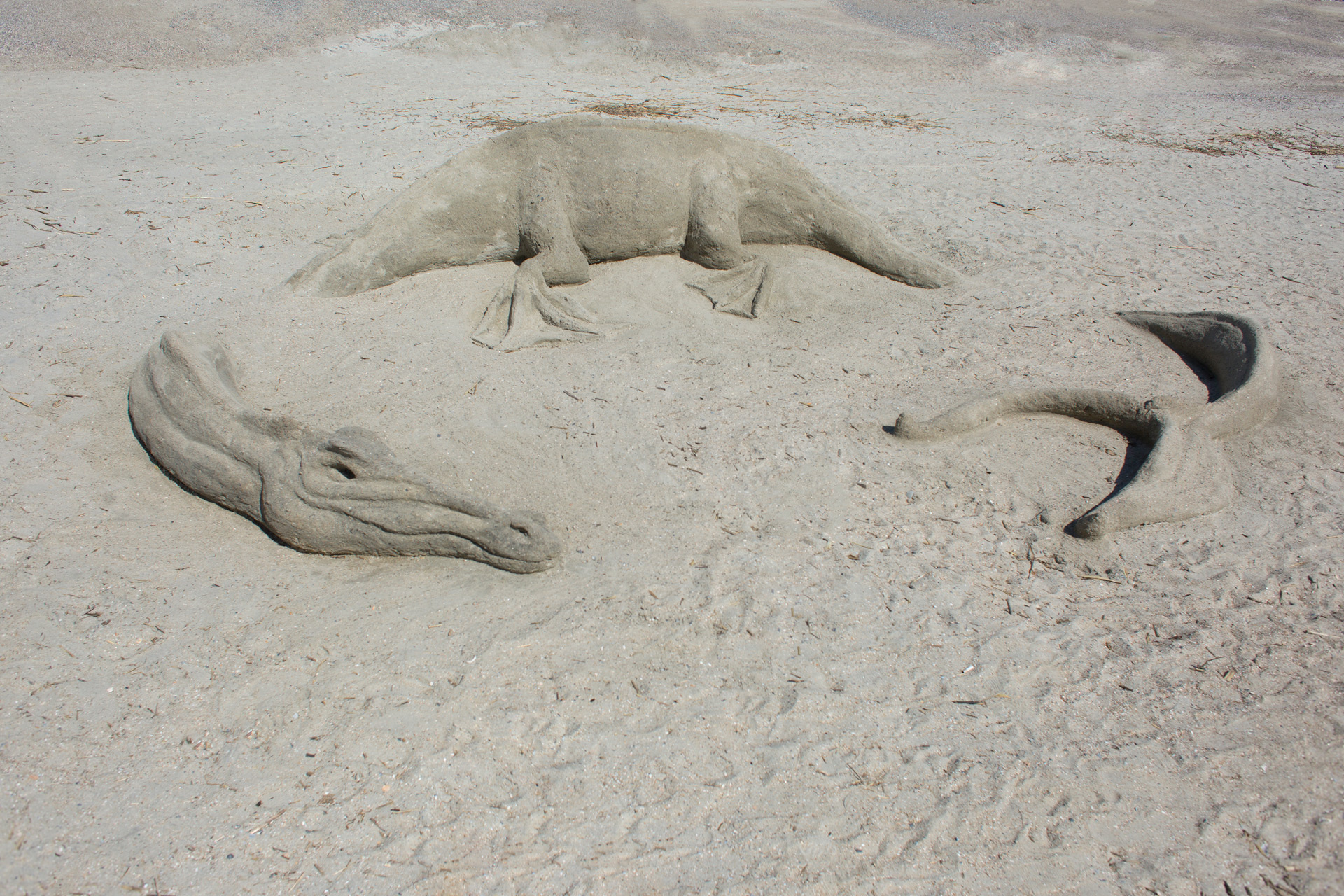
Sand Sculpture No. 16, Submerged Dragon

Spencer Kohl, B.F.A. painting, St. Johns, Florida
Madison Ellis, B.F.A. animation, California, Maryland
Samantha Greene, B.F.A. animation, Wake Forest, North Carolina
Julia Chamberlain, B.F.A. animation, Guilford, Connecticut

SCAD Spirit Award
Sand Relief No. 15 — Let It Bee
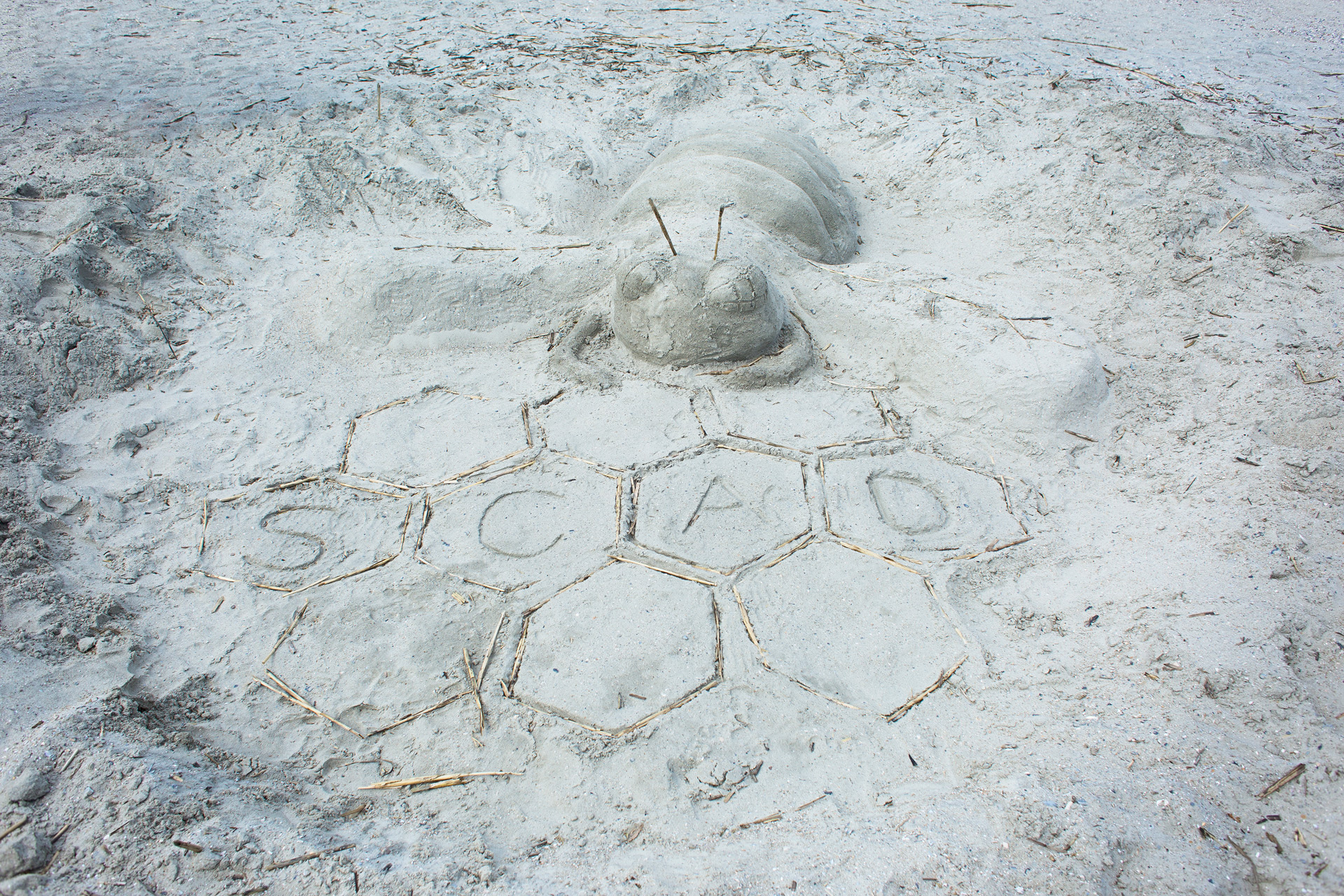
Sand Relief No. 15, Let It Bee

Danielle McGotty, B.F.A. photography, Wall, New Jersey
Nicci Aguiar, B.F.A. sequential art, Nantucket, Massachusetts
Sydney Schulz, B.F.A. graphic design, Liberty, Missouri
Michael Decker, B.F.A. graphic design, Spring, Texas

SCAD Castle Award

Sand Castle No. 3  — Poetter Hall
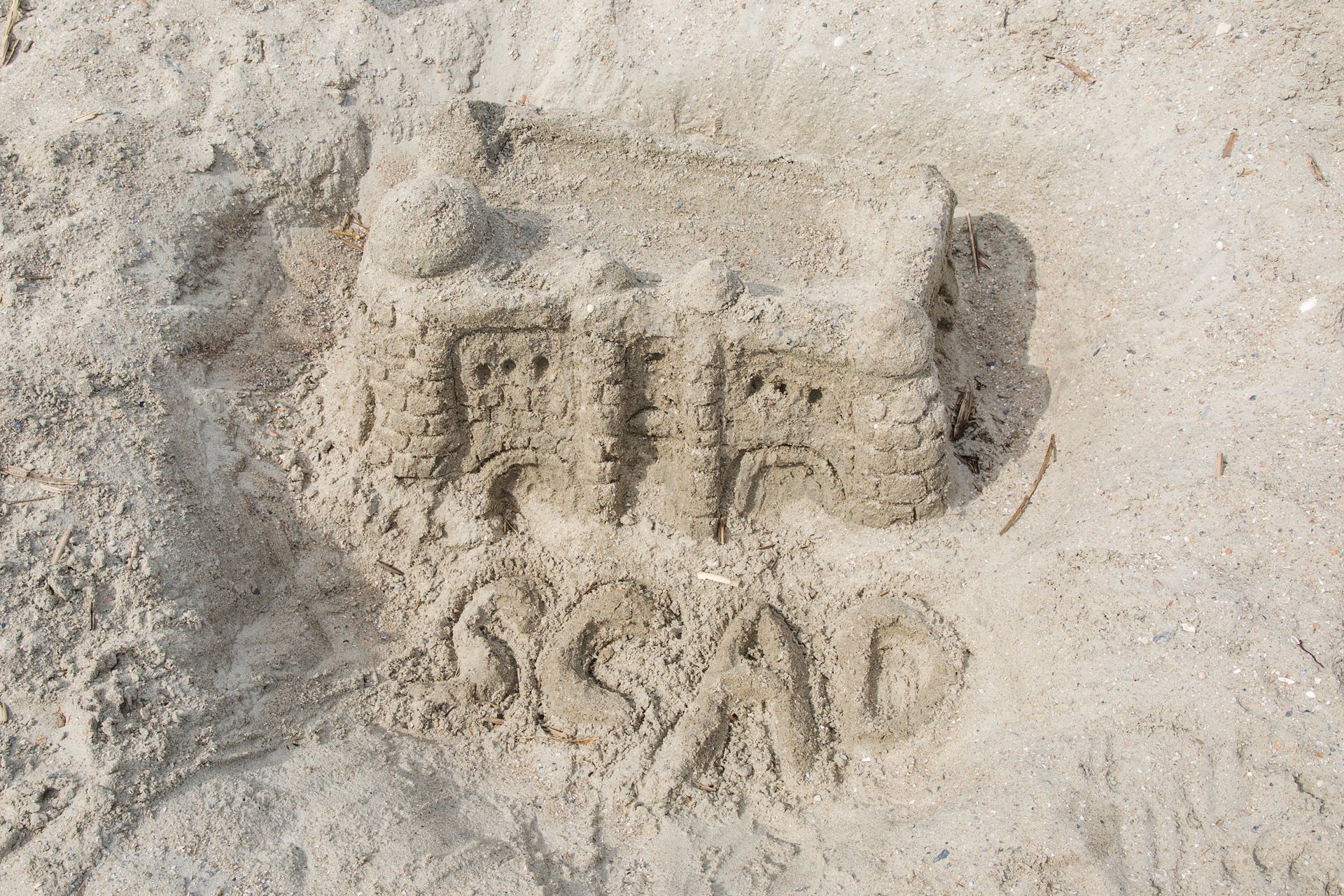
Sand Castle No. 3, Poetter Hall

Sabrina Shankar, B.F.A. production design, Nesconset, New York

Alumni Choice Award

Sand Relief No. 13 — Lesley from Wisconsin
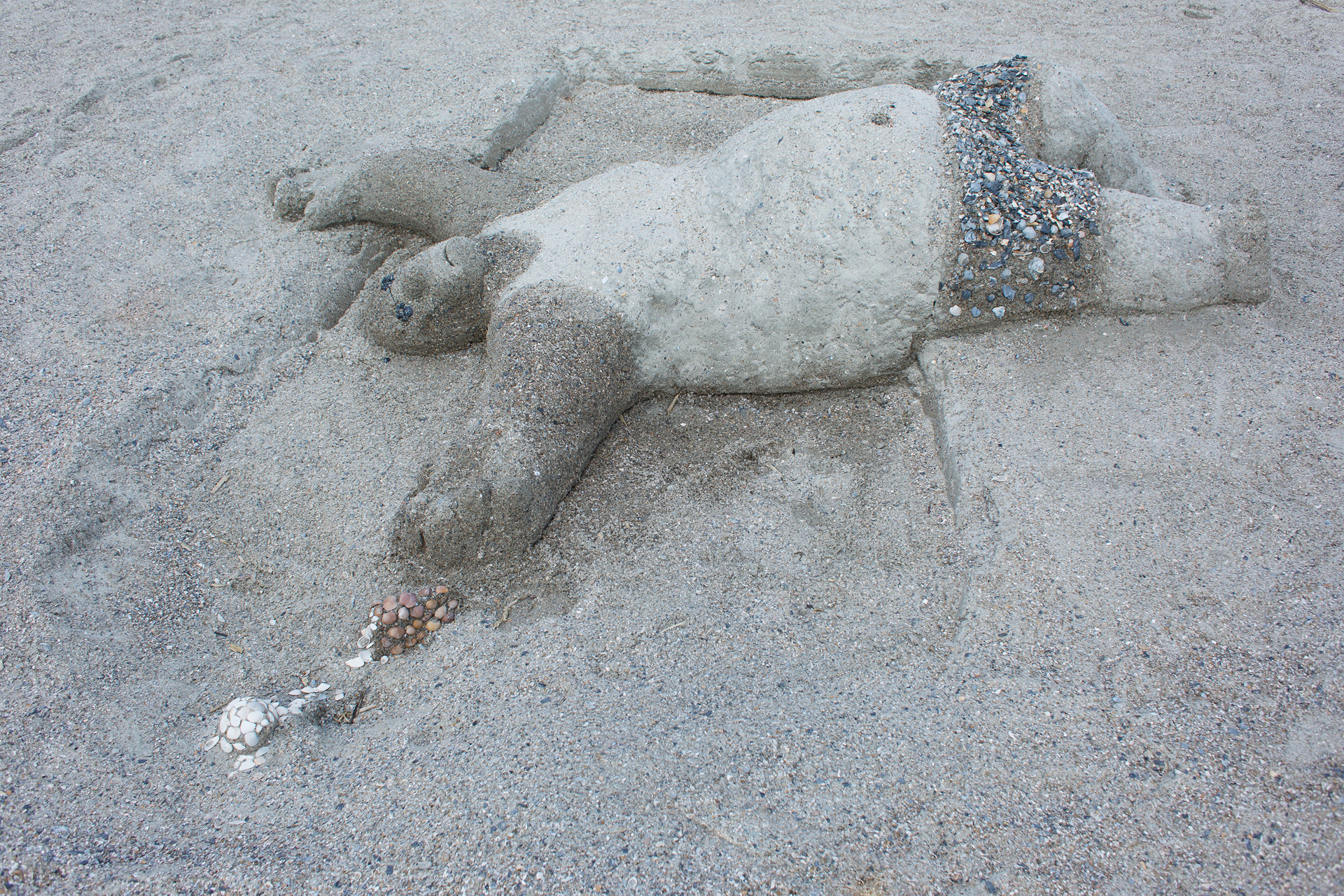
Sand sculpture of sunbathing beachgoer

Kat Morgan, B.F.A. illustration, Matthews, North Carolina
James Nichols, B.F.A. interactive design and game development, Chester, South Carolina
Grant Whitsitt, B.F.A. animation, Jackson, Tennessee
Chandler Jernigan, B.F.A. photography, Brunswick, Georgia

Gray’s Reef Best Underwater Creature and Sand Relief Awards:

Sand Relief No. 3 — Sand Bubbler
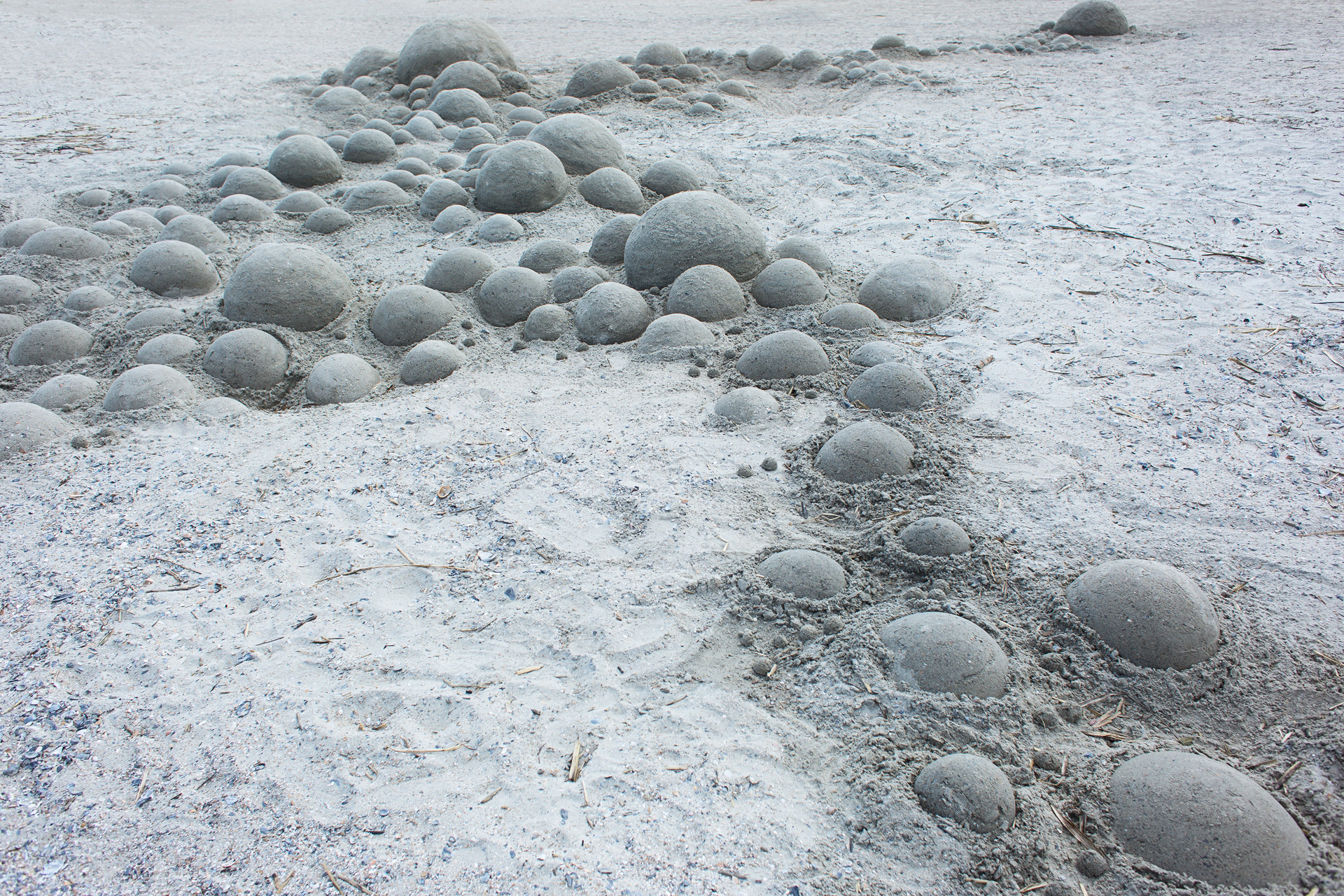
Series of round bubbles sculpted in sand

Toni Dammicci B.F.A. fibers, 2012
Emily Brodowski B.F.A. metals and jewelry, 2012, Hampstead, Maryland
Krystal Sokolis B.F.A. accessory design, 2012, Lemont, Illinois

Wind Sculpture

Wind Sculpture No. 9 — Mobius Plane
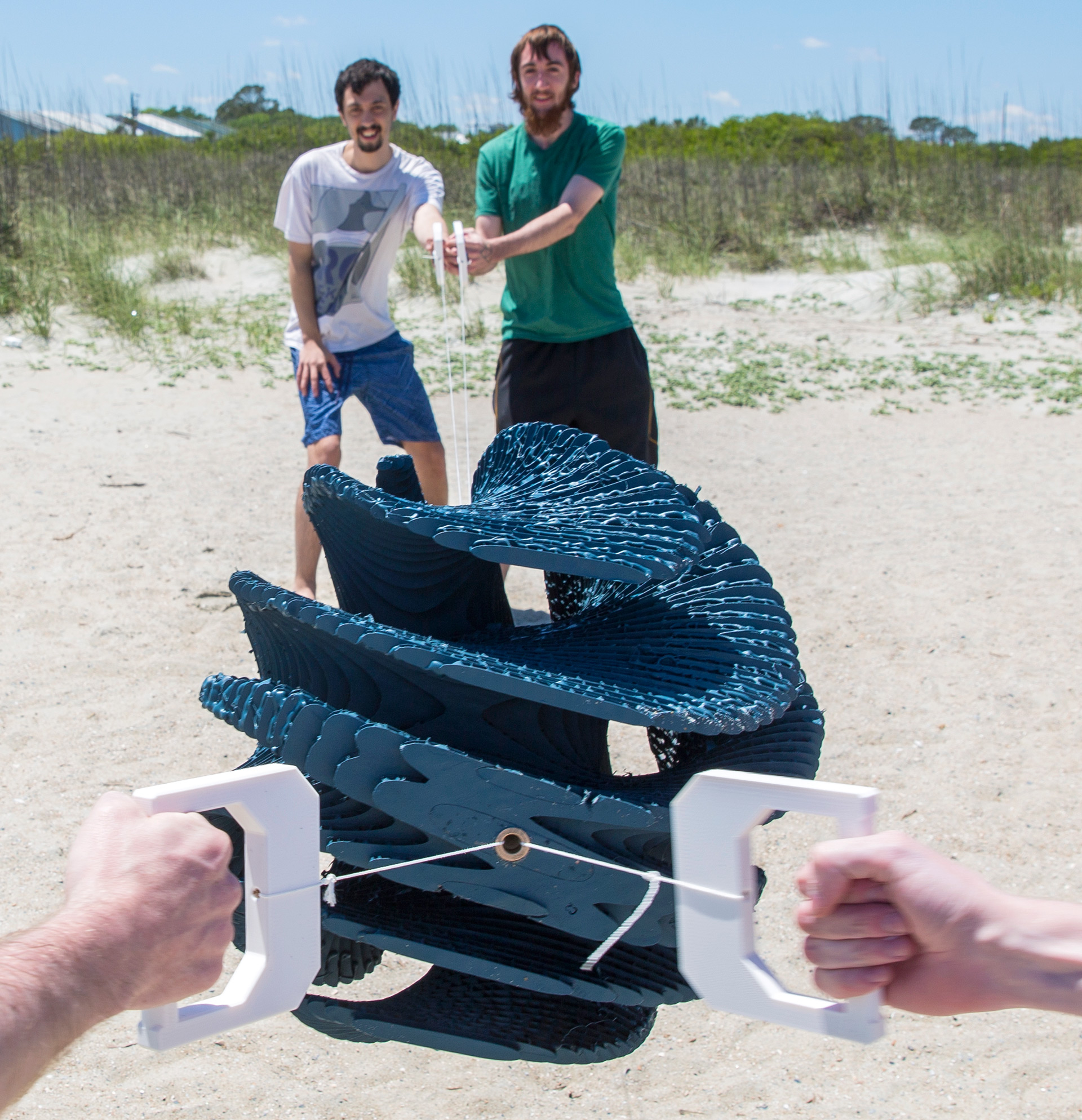
Students hold two ends of a wind sculpture

John Warfield Sibert, B.F.A. industrial design
Blake Gunderson, B.F.A. industrial design, Tavares, Florida

Sand Castle
Sand Castle No. 21 — Hollow Hermit
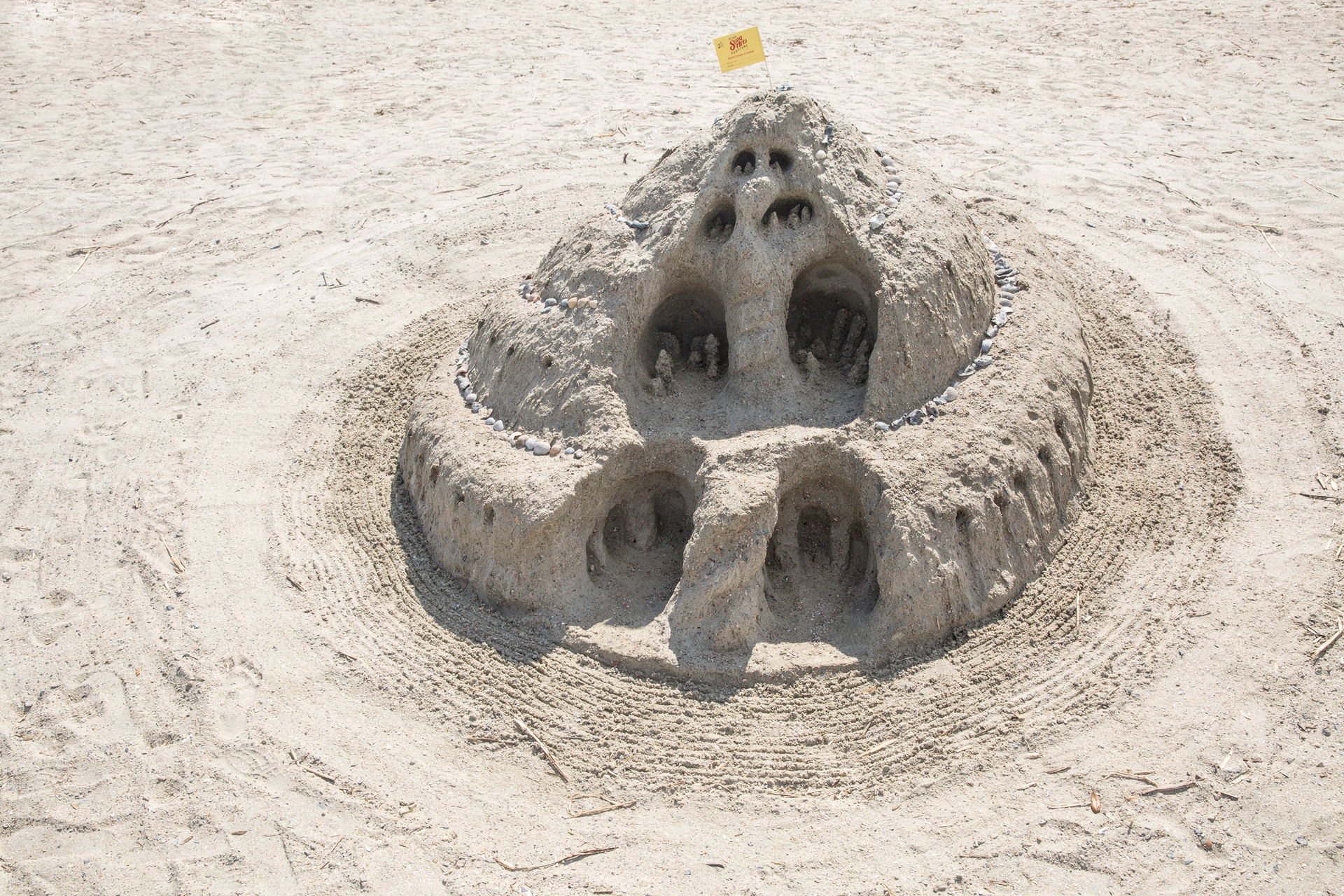
Sand castle

Kaela Proctor, B.F.A. industrial design, Sebastopol, California
Cait Dorshefski, B.F.A. industrial design, Ft. Washington, Maryland
Taylor Hester, B.F.A. industrial design, Florence, Alabama
Randi Zuckerberg uncomplicates social innovation

April
28
2015
By
Tags:

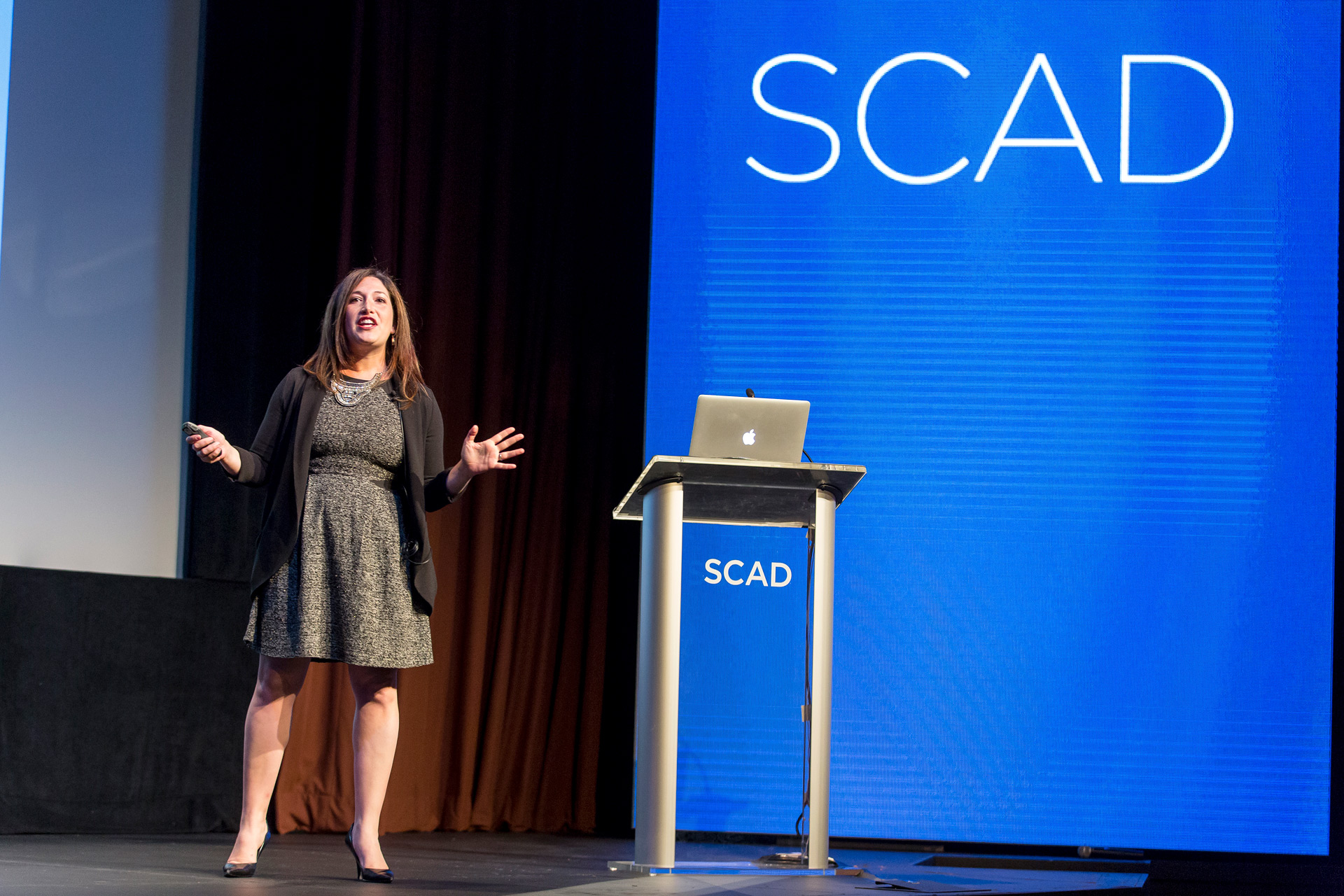
Randi Zuckerberg is a busy woman. She’s the former director of market development for Facebook, the founder and CEO of boutique marketing firm and production company Zuckerberg Media, an author and, in her words, the Zuckerberg “who graduated from Harvard.” Also a sought-after speaker, Zuckerberg recently visited Savannah College of Art and Design in Atlanta. Keeping with the spirit of her online community and book Dot Complicated, Zuckerberg helped the audience at SCADShow decipher future trends in technology and social media. Interspersed with a technological ballad sung to the tune of Under the Sea and a nursery rhyme with lines like, “Eeny, meeny, miny, mode teach a toddler how to code,” Zuckerberg shared a list of trends we can’t ignore. Here are five takeaways from her talk What’s Next in Social Innovation and How We Interact with the 21st Century Consumer.

Randi Zuckerberg on stage at SCADshow in Atlanta

Entreployees rule
The maker movement has spawned the rise of the “entreployee,” people who work full-time for a business while launching one of their own. Many employers welcome this because they’re looking for creative people and problem solvers, which should make artists and designers optimistic about their career prospects. But be warned: changing employment trends mean changing hiring practices and your next interview might take place via Snapchat.

Social media is not optional
Social media is not a fad and smart companies are taking it seriously. There’s still unlimited potential for social media to revolutionize the business-to-consumer relationship. One example is the 1888 Hotel in Sydney, Australia where travelers with 10,000 Instagram followers stay free — yes, free.

Learn and learn from technology
From silly to serious, technology is achieving the unthinkable. 3D printers create everything from fashion accessories to prosthetics. Smart contact lenses will make it easier for diabetics to test their glucose levels. Online (and often free) educational tools mean people never have to stop learning and can learn just about anywhere. Fun toys and games can hook kids on science and engineering. We can learn a great deal from technology about how to think bigger in our respective professions.

Innovation is like a box of chocolates
With social and technological breakthroughs, you never know what you’re going to get. We have inventive educational toys, books and games. Then someone takes it too far and designs the iPotty. Fitbits are helpful, but does the world really need a scale that tweets the user’s weight? The same 3D printers that make shoes and iPhone cases can also make guns and bullets. Virtual reality can be used to help cure people of their phobias, but also to create first-person shooter games that, according to Zuckerburg, might be a little too realistic. Innovation inspires excitement, but also requires prudence.

Balance is best
The next great social innovation just might be unplugging. It is exactly what it sounds like: leaving technology behind for an afternoon or weekend. We can get ahead of this trend by enjoying the outdoors, wandering through a used bookstore, and talking to people without looking at our phone or taking a selfie. Not exactly the advice one would expect from a social media maven, but it's exactly why Zuckerberg is a breath of fresh air.

Catherine Ramsdell is the associate chair of liberal arts at SCAD Atlanta, and has been teaching writing and English courses at SCAD since 2000. She also writes for Popmatters.com, an online magazine of cultural criticism.

Adventure to a college Emmy

April
24
2015
By
Tags:

How do I travel for free and make this my job? Many ask this question, but Joey Katz (B.F.A., film and television, senior) answered it. Winner of a College Television Award, the Adventure Katz web series is the culmination of two years spent documenting shoe-string-budget trips to Europe, Malaysia, Hong Kong and Jacksonville, Florida. And those are just the episodes in the can. The thing that differentiates Adventure Katz from other travel series is Katz’ mission to inspire his audience to do more than watch.

I hope to create something that will change how we look at reality TV. I want to make something that teaches people how to make their own adventures.

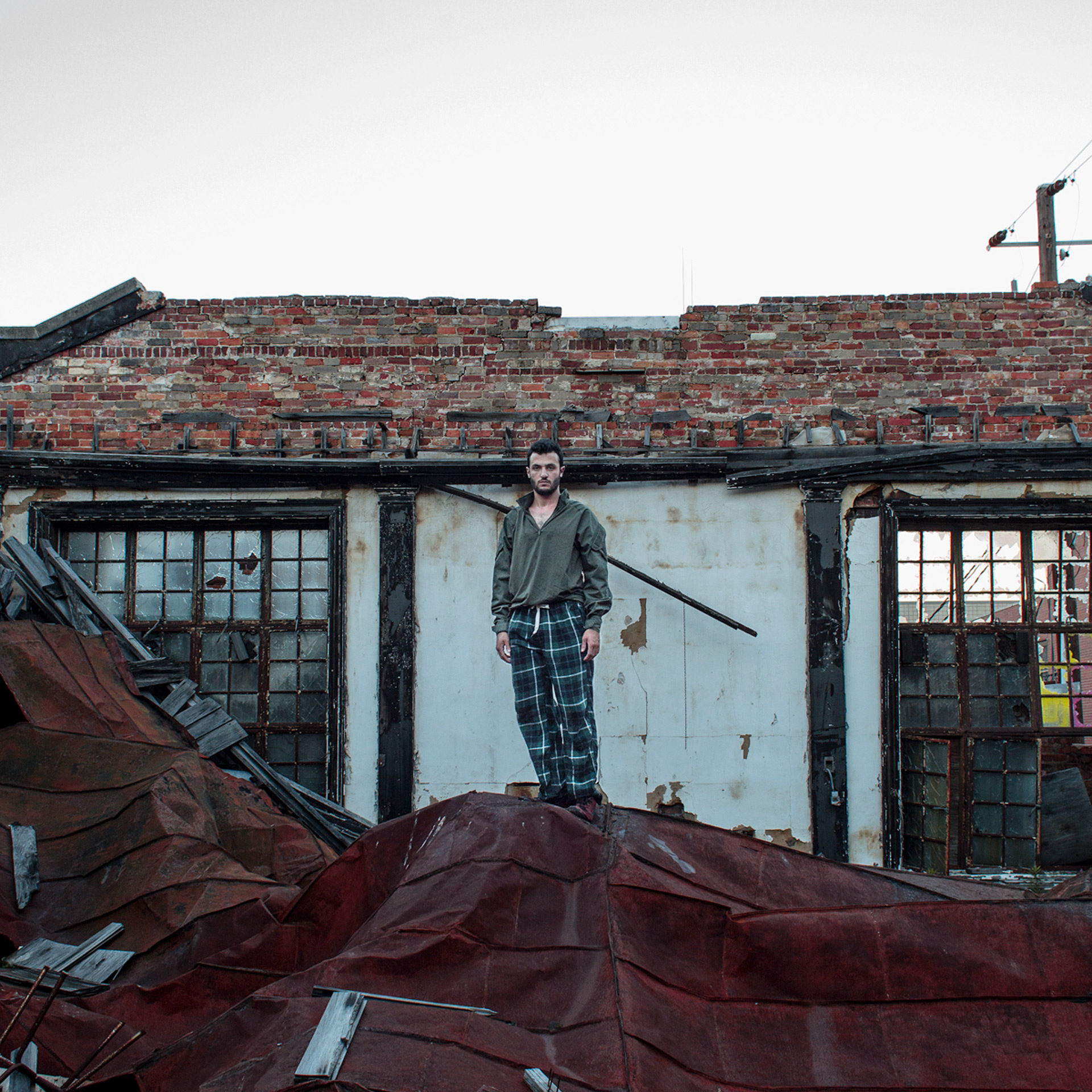
Joey Katz stands on mound of debris

It’s a strategy for attracting young viewers, an audience Katz believes is underserved by reality TV, and he just might get the chance. He is pitching Adventure Katz to producers during a time when networks like Travel Channel want immersive, rugged content.

That’s one hook Katz has going for him. Another is his savvy use of social media to build a loyal following. “When I make a film, I shoot something that’s worth sharing on Reddit,” he said. To promote the episode Wales: MADMAN or Poet? Katz posted an image of the Cader Idris mountain in Reddit subgroups and included a YouTube link to his video. The image received 1.8 million views, persuading thousands to watch and hundreds to subscribe to his channel. In the episode, Katz endeavors to scale Cader Idris and test the legend that climbing the mountain turns hikers into madmen or poets.

Cadair Idris mountain in Wales

Katz’ love affair with filmmaking began in seventh grade when his parents gave him a cell phone. He began shooting and editing videos on the mobile device, eventually graduating to a laptop and professional editing software. After becoming disenchanted with a string of internships as a production assistant, he was inspired by Andrew Wonder, director of the viral film Undercity, to hit the road. He started watching YouTube in 2007, but Wonder’s videos helped him realize he had everything he needed to break out of the traditional production routine. What’s in his bag?

I carry the least amount of gear I can. You need something you can shoot on really quickly. I shoot on the Canon PowerShot S100, a point and shoot camera. Batteries are cheap and if I break it I can replace it. Content is more important than what you shoot on. I carry a lightweight tripod and edit on Adobe Premiere.

True to their commitment to help film students develop projects beyond narrative films, Savannah College of Art and Design professors encouraged him to develop Adventure Katz for his  senior project. That led to a nomination for best reality series by the Television Academy.

So did Katz return from Cader Idris a madman or a poet? Teaser alert: Katz says the trip made him a bit of both. “My video is my poetry," he said. "But it takes both to not know where you’re sleeping for the next few nights.”

Watch and tell @AdventureKatz what you decide.

Sandcastle like a pro

April
23
2015
By
Tags:

Master sand sculptor Ted Siebert’s enormous creations - more than 700 sculptures in 30 years – makes the practice of sandcastling look effortless. But the world record holder knows differently: the tools are simple but the techniques require skilled hands.

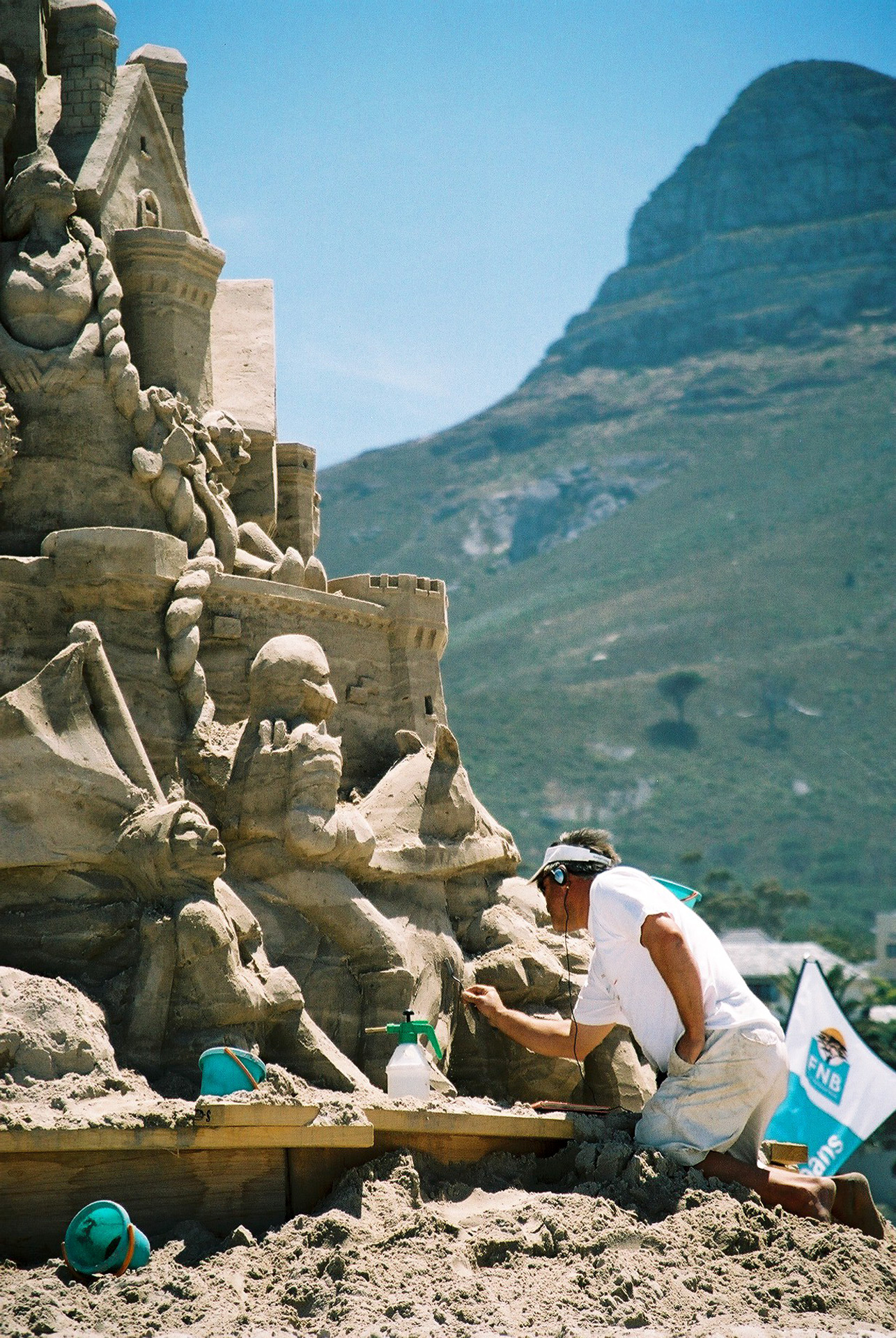
 Ted Siebert working on large sand sculpture
A sand castle by Ted Siebert in Cape Town, South Africa. Courtesy of The Sand Sculpture Company.

The misconception is that sandcastling is a lot of fun. It’s hard work. - Ted Siebert

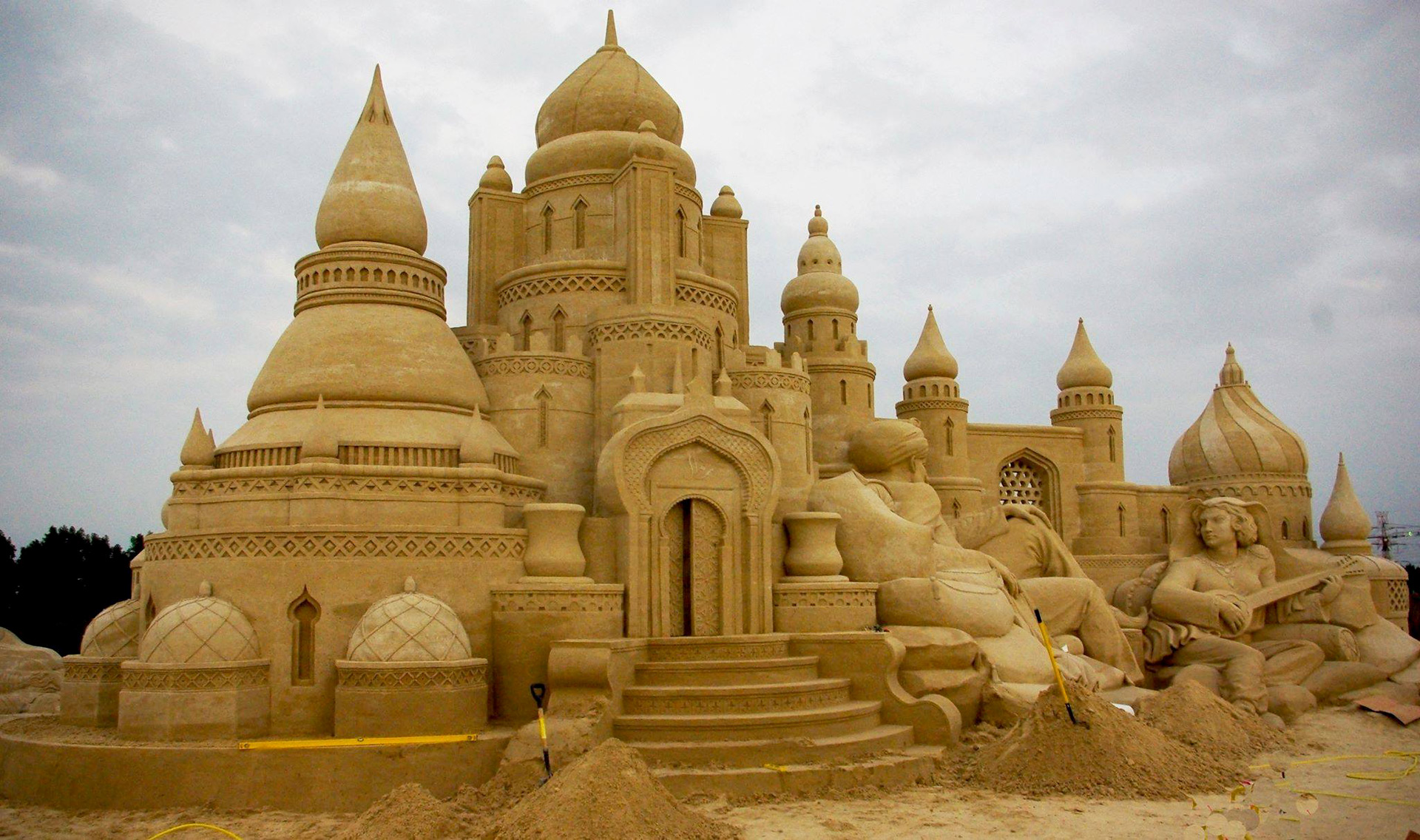
Massive palace sculpted in sand
The King's Palace in Kuwait, courtesy of The Sand Sculpture Company.

To prepare Savannah College of Art and Design students for the annual Sand Arts Festival (May 1), Ted brought the beach to the classroom. He’s teaching best practices he developed as owner of The Sand Sculpture Company, like packing, subtractive processes and layout. An authority in a small community of professional sand sculptors, the opportunity to work alongside Ted, also an oil painter, is rare. The students will be able to apply the lessons they learn from Ted to their professional art practices. "The hope is that they'll take these lessons down to Tybee and have more technically adept works," said SCAD foundation's study professor Matthew Toole.

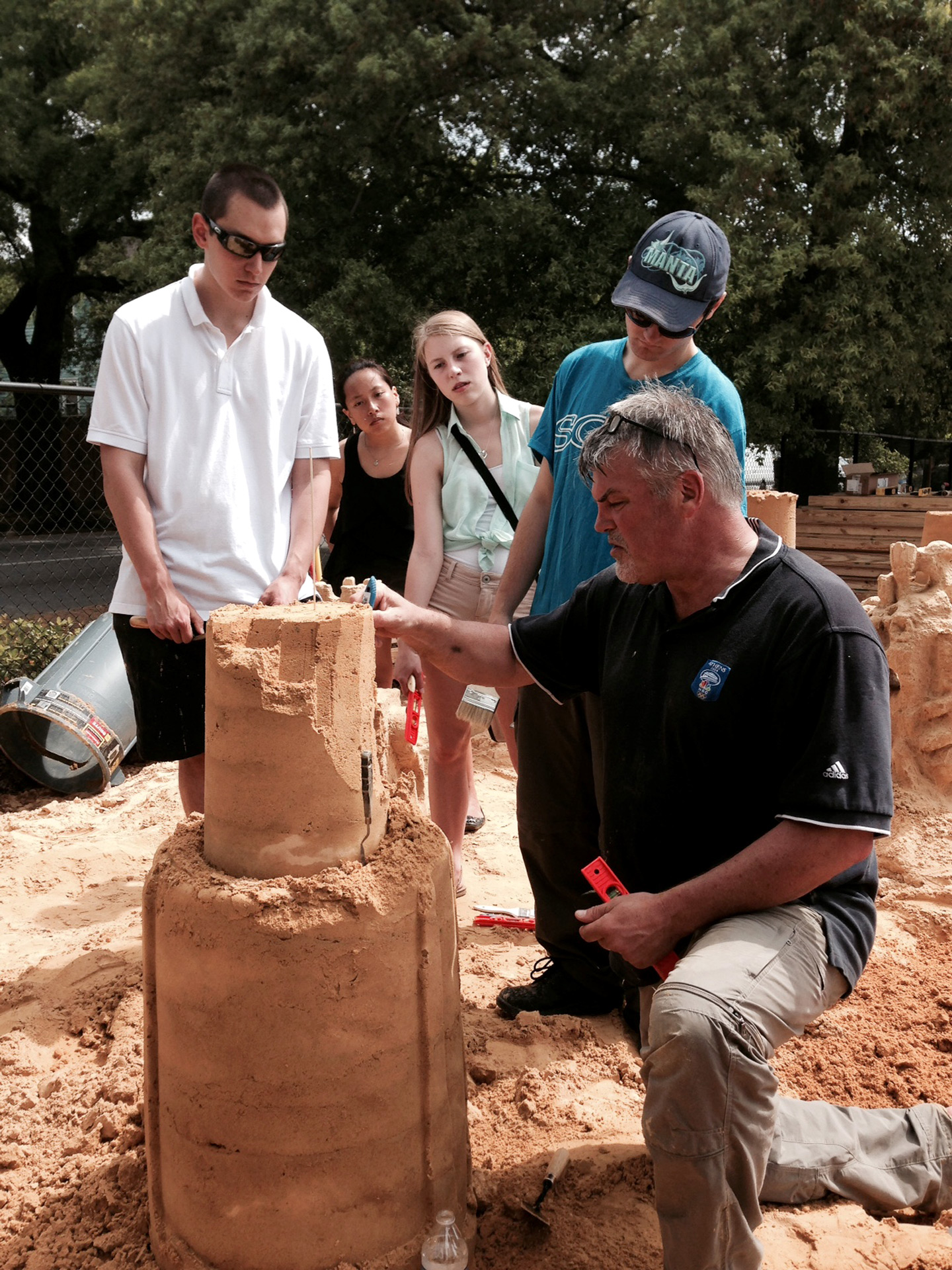
 Ted Siebert demonstrates sand sculpting techniques to SCAD students
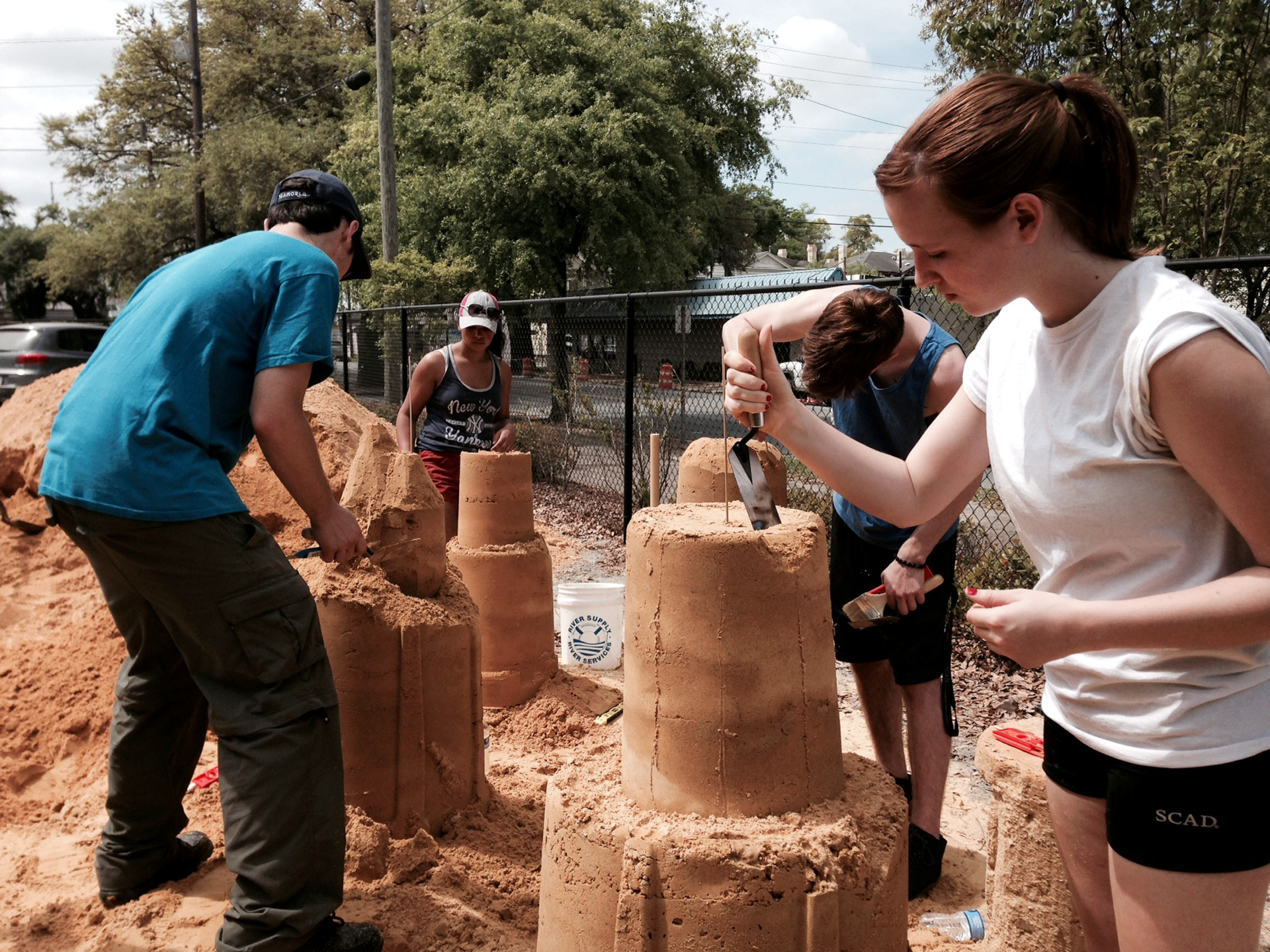
In Ted's workshop, SCAD students learn how to sculpt sandcastle towers, made from 400 pounds of compact sand.

SCAD students work on sand sculpture

Childhood memories of sandcastling competitions in Cannon Beach, Oregon led Ted to write The Art of Sandcastling and make the world’s beaches his palette. He’ll unveil his collaboration with SCAD students at Sand Arts 2015 in Tybee Island, Georgia. Fittingly, he’ll also judge the contest's Most Ambitious category.

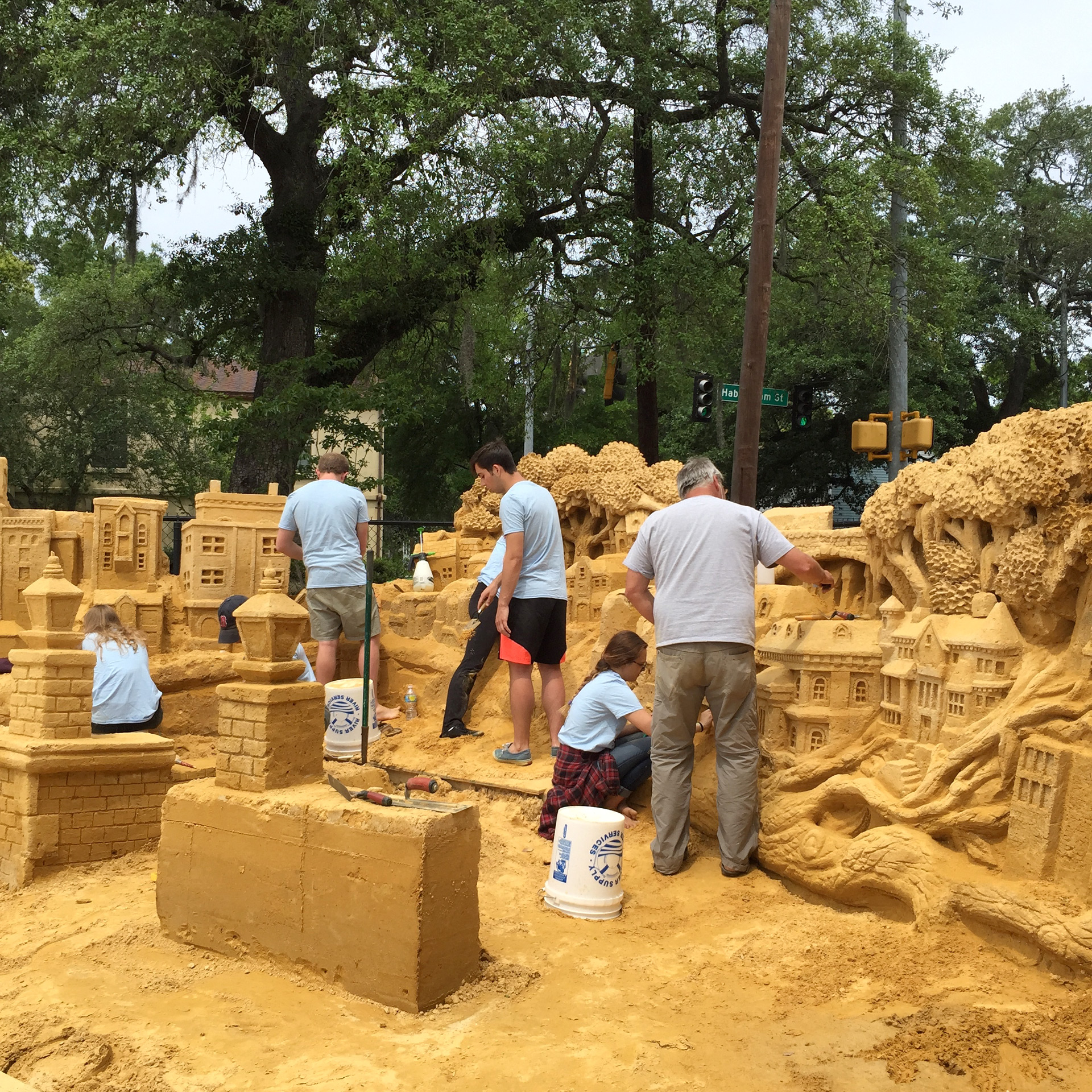
SCAD students assist Ted Siebert in a large sand sculpture

In process, Ted's first sculpture with a university, a collaboration with Professor Matthew Toole's Art of the Spectacle class.

Here are Ted's tips for sandcastling like a pro:

• Use a lot of water. The sand has to be very wet. Bring spray bottles to wet the sand as you work.

• There’s an angle that all sand will stack at. Find it. If you’re too ambitious and try to build something too steep you’re going to have a collapse.

• Pack the sand, then pack again. Compaction is crucial.

• Be organized and sculpt from the top down or the center out so you don’t walk all over your work.

• Use the right tools: sharp knives, straws and brushes. Pallet knives are ideal. Plastic knives are too dull and won’t work.

• Bring suntan lotion.

• Make a plan. If you don’t bring an idea, you’ll waste time shoveling something you don’t have to shovel.

• It’s a collaborative sport. Divide and conquer.

Ted uses compact sand. Some beaches, including Tybee, have loose sand, making it difficult to achieve the height his sculptures reach in places like Asia, the Middle East and Hampton Beach, New Hampshire. If the temporary nature of a sand sculpture doesn't seem worth the effort, consider that winning professional sand sculpting contests can net a sculptor tens of thousands of dollars in prize money.

Chalk it up to 30 years at Sidewalk Arts Festival

April
17
2015
By
Tags:

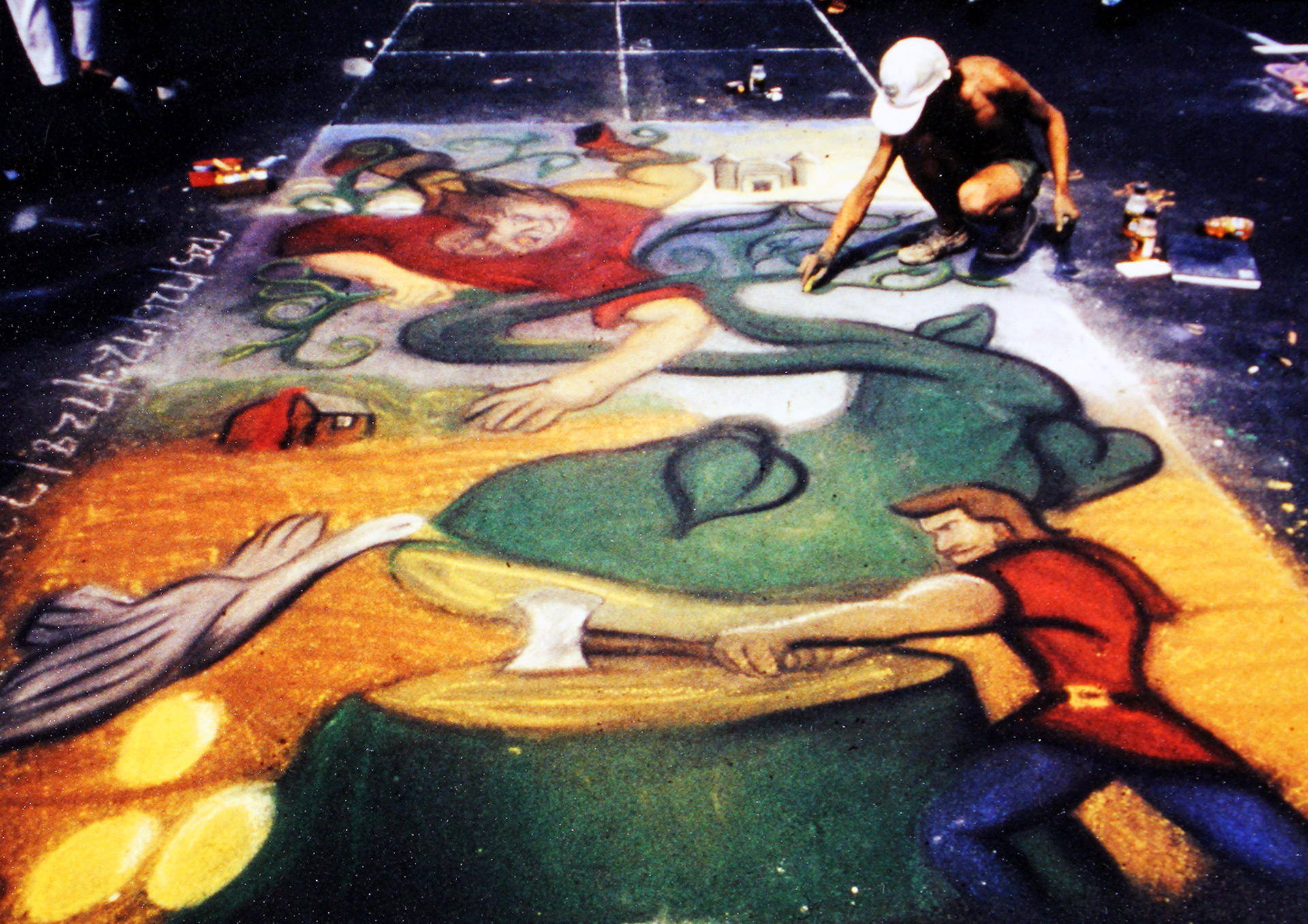
In today’s world of sophisticated gadgets and apps, simpler tools like chalk and cement wouldn’t seem capable of producing a wow moment. Yet 34 years after its start, the annual Sidewalk Arts Festival (April 25) still draws a mesmerized crowd and creates the rare occurrence of gridlock in Savannah.

Among the chalked-up squares festival-goers have marveled at over the years are those belonging to Troy Wingard (B.F.A, graphic design, 1992). This year marks Troy’s 30th festival in a row. He was 15 when he entered his first Sidewalk Arts contest, one in a group of high school students ferried to Savannah from Lexington, South Carolina by art teacher Marion B. Mason.

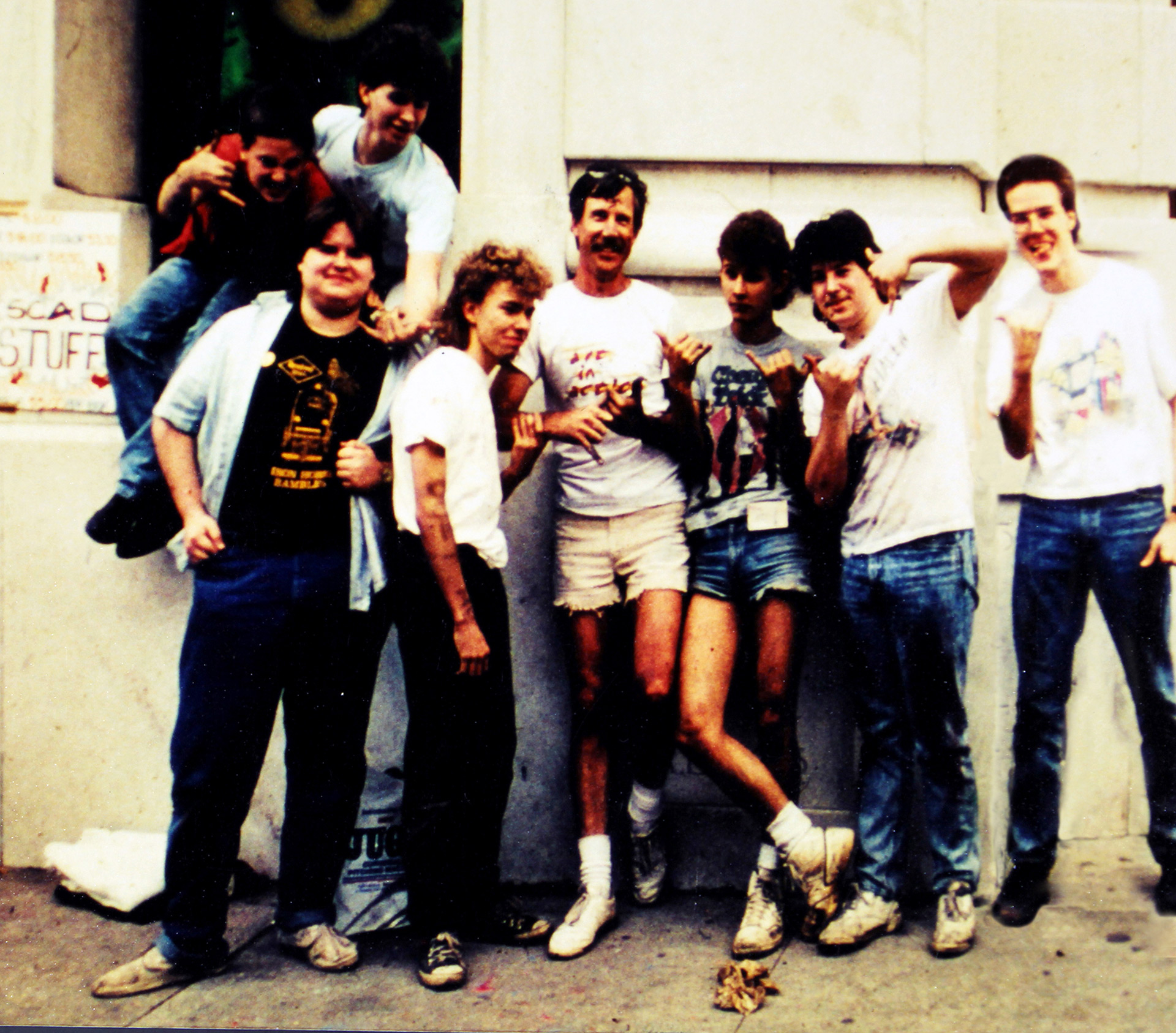
High schoolers with their art teacher at the 1987 Sidewalk Arts Festival
1987 Sidewalk Arts Festival (from left to right): Cecil Davis, Anthony Hightower, Doug Gregory, Troy Wingard, Marion B. Mason, Joe McClendon, Scott Kirchner and Matt Mossholder. 

After a long, hot day of drawing on the sidewalk in Madison Square, we were filthy, tired and hungry, but we were hooked. - Troy Wingard

That marked the beginning of a long tradition. The students, who came to call themselves the Lexington Art Council, continued to return to the festival, which eventually moved to Forsyth Park. Meanwhile, they grew up and became convinced their artistic inclinations were more than a hobby. "To see a college based around different art programs blew our minds," said Wingard. It was like we had died and gone to heaven. Everyone who was there was interested in making art."

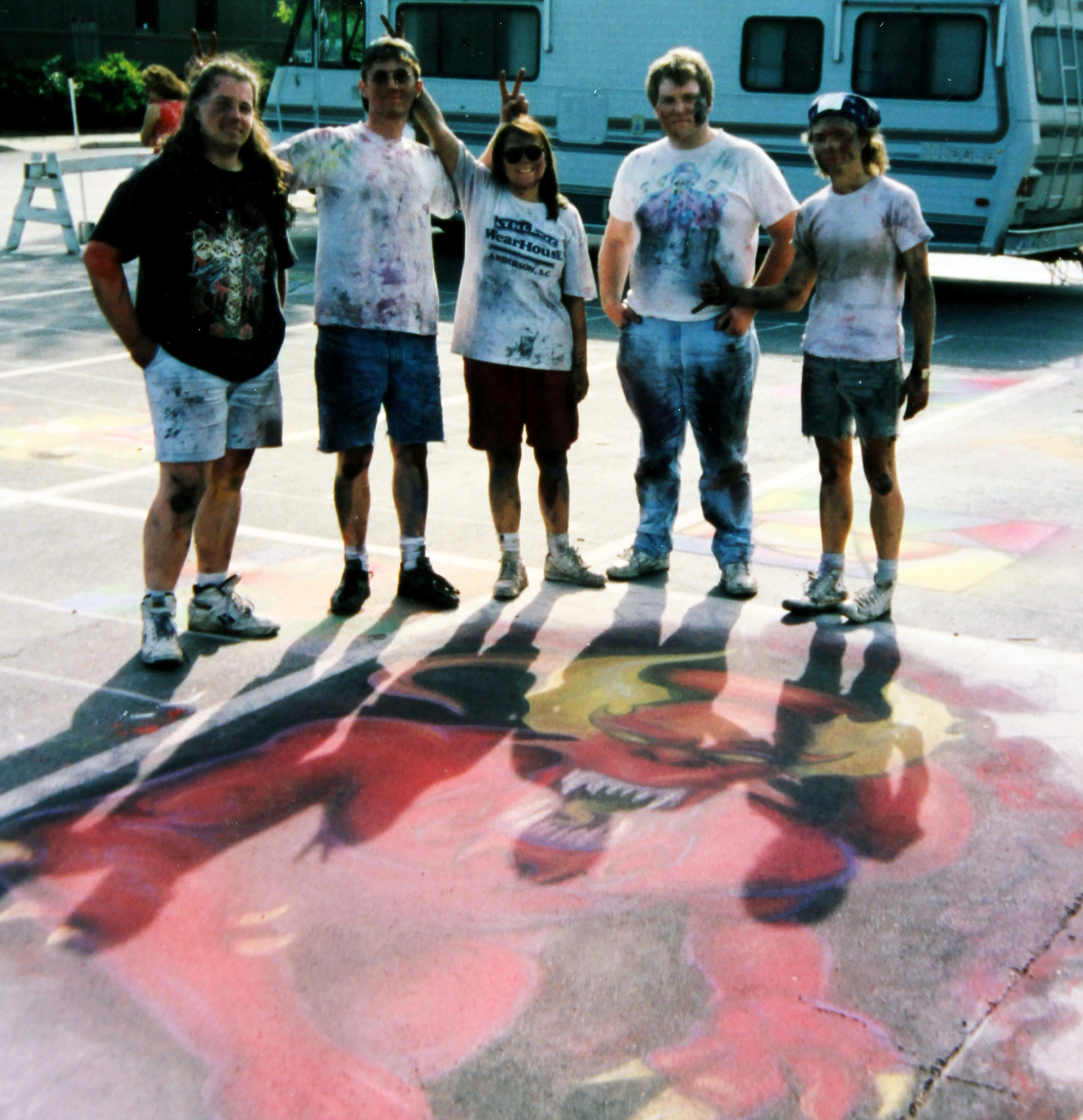
Students stand over their work at the 1993 Sidewalk Arts Festival
1993 Sidewalk Arts Festival (from left to right): Scott Kirchner, Stan Jennings, Julie Buffington, Hap Proctor and Troy Wingard.

Troy Wingard working on his artwork for the 1994 Sidewalk Arts Festival
1994 Sidewalk Arts Festival: Troy Wingard.

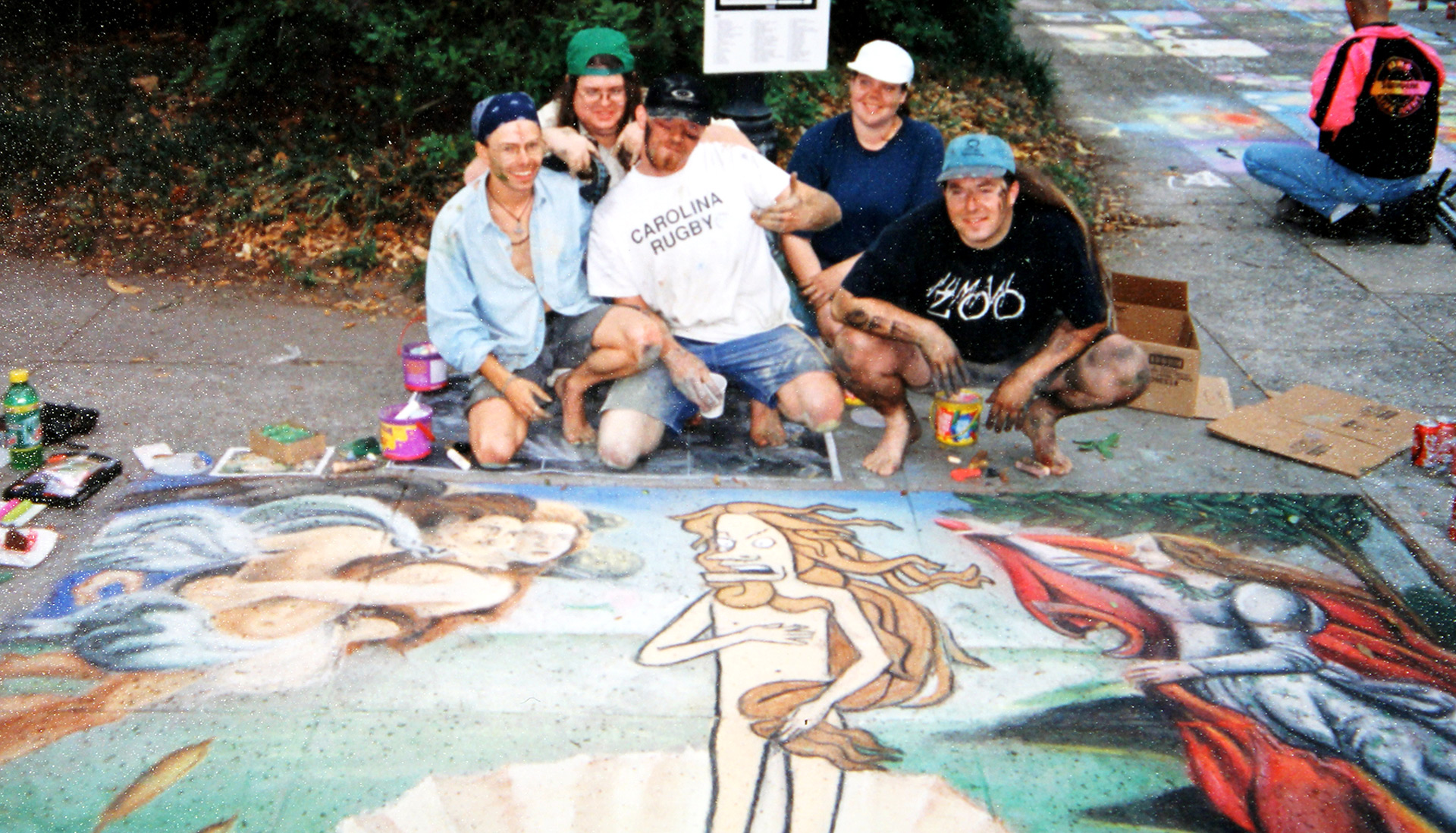
Mr. Mason did more for Wingard and the Lexington Art Council than introduce them to a fun spring affair. He taught them how to take themselves and their art seriously. It didn’t take long before the group was debating what they should draw for the entire two-hour trip to Savannah. “Sidewalk Arts became the tradition that proved we were all best friends," said Wingard. "You don’t know somebody until you’ve worked with them.”

Finally, in their 11th year, they won an honorable mention. For the next four years, the group topped that by taking first place in the alumni category and celebrating their wins with seafood dinners.

Troy Wingard and friends kneel over their work at the 1997 Sidewalk Arts Festival
1997 Sidewalk Arts Festival (from left to right): Troy Wingard, Anthony Hightower, Stan Jennings, Ginger Stephens and Scott Kirchner. 

For the last 15 years, the Lexington Art Council has participated as exhibitors only. To them, having a dedicated 12-by-16-foot space in the alumni section where thousands of visitors tread to see their large-scale chalk drawings is prize enough. Their favorite piece commemorated one of their own, Scott Kirchner, who passed away in 2012.

Troy Wingard and his high school art teacher at the 2006 Sidewalk Arts Festival
2006 Sidewalk Arts Festival (from left to right): Troy Wingard and Marion B. Mason.

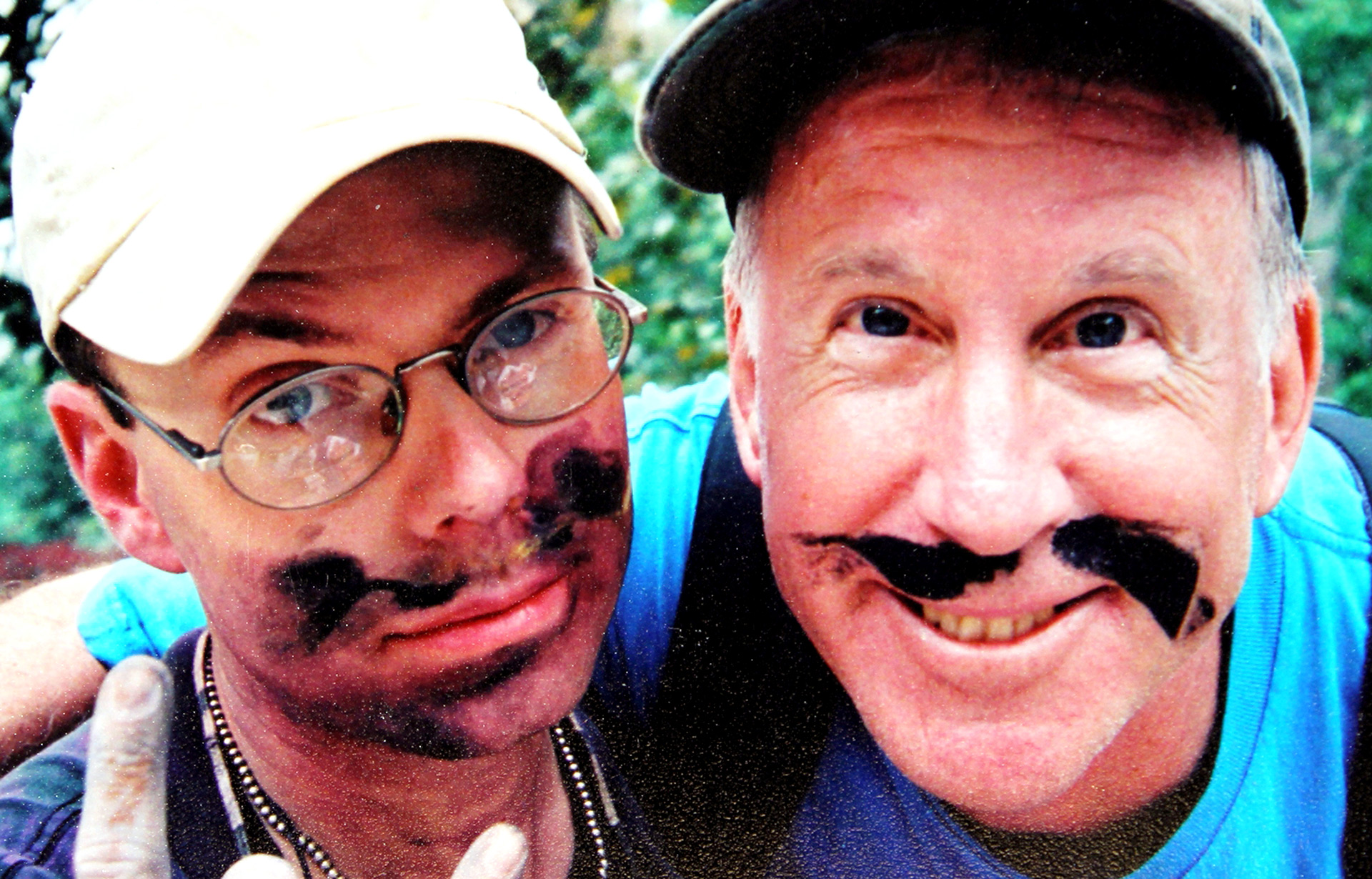
If you’ve photographed the Lexington Art Council throughout their history you probably captured Mr. Mason working alongside them. He’ll be there again this year, as he always is. The festival encouraged Wingard to attend SCAD, and Mr. Mason influenced his decision to teach art, as he does now as a professor at The Art Institute of Washington-Dulles in Dulles, Virginia. 

Everybody has a preconceived notion that artists are poor. My purpose is to tell my students, ‘You are here to show that you’re special and have something important to say and that you know how to say it in a way that garners respect.' - Troy Wingard

At Sidewalk Arts 2015, 700 high school and college students will discover just how much a simple piece of chalk can inspire, as Wingard did all those years ago.

Johannes Torpe: rock star of holistic design

April
16
2015
By
Tags:

From food to music to fashion, Copenhagen, Beijing and Padova, the practice of Danish designer Johannes Torpe is without borders. Or, as he says, holistic. It’s an approach rooted in his upbringing by an artist mother and musician father. He arrived at design by way of music, leaving home at 15 to become a professional drummer. Along the way, he produced the hit song Calabria 2007 and became CEO of Johannes Torpe Studios and creative director of Bang & Olufsen. Not only is his career unconventional but — as with Bang & Olufsen’s BeoVision Avant television — it’s like magic.

He commutes from continent to continent, managing a global team and leaving enchanting restaurants, retail stores and furniture in his wake. But it’s not just magic. Hard work, guided by core principles, allows Torpe to achieve his potential.

Here are 10 of these principles for building a holistic design practice, gleaned from Torpe during his recent visit to Savannah College of Art and Design for SCADstyle.

1. Start with a story. Design has less to do with process and more to do with the influences shaping it. Exploring everything surrounding design yields something more interesting, relevant and intuitive.

It doesn’t matter what we touch, the story behind it is very important. - Johannes Torpe

2. Reach beyond design. A designer’s work isn’t necessarily done when the project is complete. It extends, for instance, to marketing the product so the consumer experiences or perceives it as the designer intended.

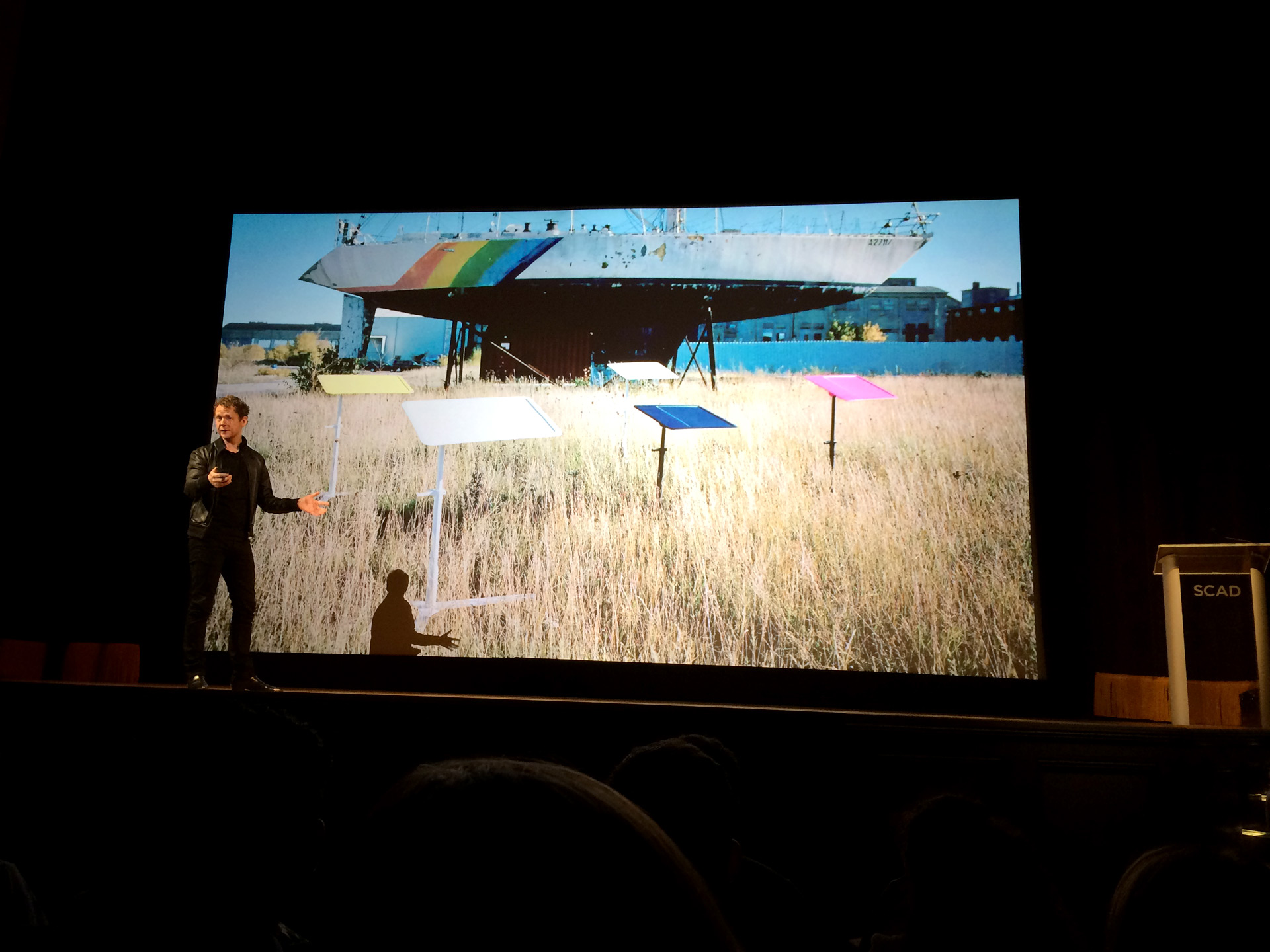
Johannes Torpe presents on stage to SCAD audience

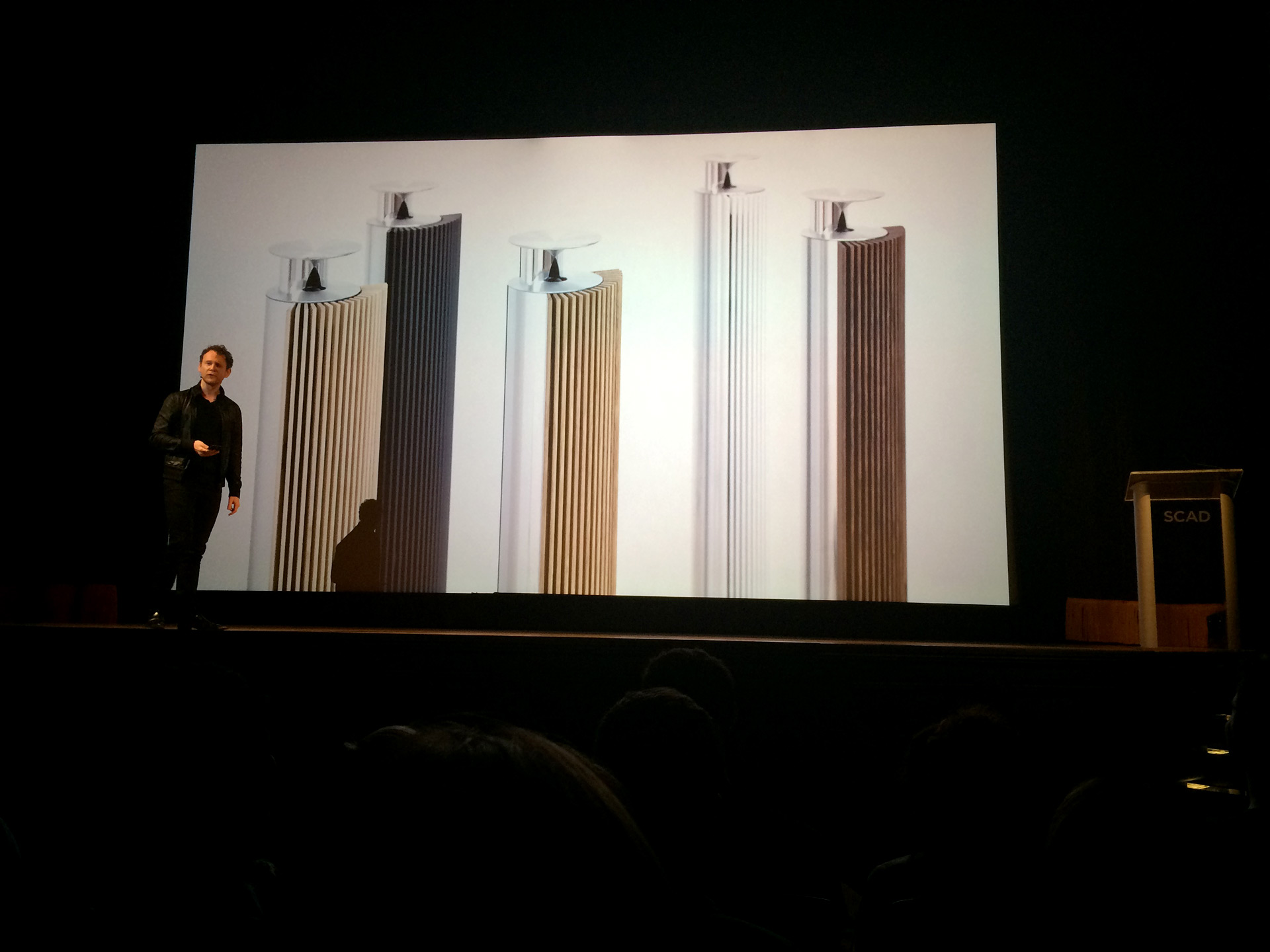
3. Look at the past to get to the future. In 2012, Bang & Olufsen's CEO chose Torpe to be the company’s first-ever creative director and asked him to reinvigorate the 90-year-old brand. To do this, Torpe had to study its history. So he created a book of rules about the brand to inform new products. He also took classic models that captured Bang & Olufsen’s identity and revived them with modern twists.

Johannes Torpe presents on stage

4. Concept is everything. Design can’t begin without broad thinking. We prevent disruptive design from taking place when we approach a project without a well-developed concept and become distracted by doing.

5. If it feels like work you’re doing it wrong. Torpe transitioned from lighting design to graphic design to cinematography to nightclub design and even designing men’s suits. His zigzaggy path, and success, justifies his conviction that we produce our best work when we pursue things that move us.

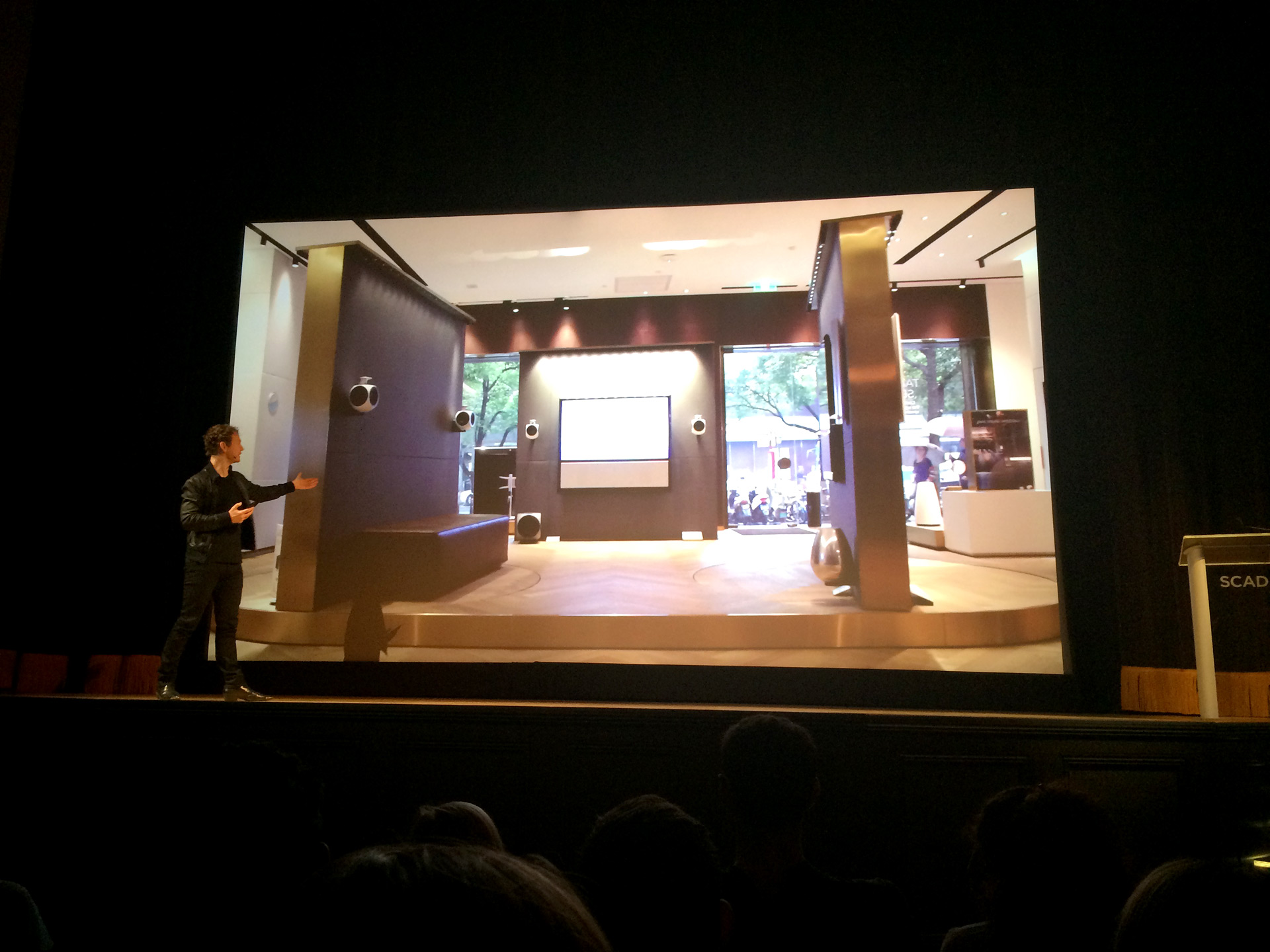
6. Engage with retail. Extraordinary design shouldn’t be showcased in passive environments. Torpe’s studio redesigned all of Bang & Olufsen’s stores to enhance how consumers experience the products. Introducing furniture that’s easily replicated anywhere in the world ensured practicality didn’t have to be sacrificed for interactivity.

Johannes Torpe shows interior while presenting on stage

7. Use music as fuel. Of course music would inspire a drummer. But blessed with musical talents or not, Torpe believes there are few muses that evoke memories or emotions in us like music. Reach for your iPod and see what happens the next time you feel stuck.

8. Believe in magic. Bang & Olufsen customers, interviewed for insight into why certain products attracted them, repeatedly named magic as the factor that drew them to their purchases. It’s both a tangible and intangible variable Torpe tries to include in all of his projects and, inevitably, the one that makes the difference.

If you do something that’s magical in any way, something that’s simple and clear, you will reach people’s hearts. – Johannes Torpe

9. Pursue relationships. Tying together his far-flung interests are people who propelled Torpe from one job to the next. His connection to others and his effort to reach out and understand them fast tracked his evolution as a designer and the growth of his practice.

10. Think globally. From Italian to German and Japanese, it seems Torpe can do spot-on impressions of every client with whom he has worked. It’s a sign he’s truly listening, and a testament to the power of a place to shape us. By doing restaurants in Taiwan, resorts in China and retail stores in Europe, Torpe’s practice has achieved a universality that speaks for itself.

Livestream: One-of-a-kind rides by JT Nesbitt

April
14
2015
By
Tags:

Bienville Studios' lead designer JT Nesbitt drove his vehicle the Magnolia Special from New York to Los Angeles. It wasn’t your average drive because the 89-hour trip was powered purely by natural gas. What’s more, the car was crafted to be functional and to delight. It’s the result of a career spent pursuing the unconventional, one that began at Confederate Motorcycle, where Nesbitt created the Wraith and the G2 Hellcat. We’ll livestream Nesbitt’s talk “Reimagining the art and allure of the American motorcycle” below on Tuesday, April 14 at 6 p.m. EDT. This SCADstyle lecture is free and open to the public.

Lauren Bush Lauren feeds hunger with fashion

April
14
2015
By
Tags:

One of Fortune Magazine’s “Most Powerful Women Entrepreneurs” and Inc. Magazine’s “30 Under 30,” Lauren Bush Lauren has mastered the art of ‘creating good products that help feed the world.’ Since launching FEED in 2004, Lauren has proved that unlimited good can come from aligning consumer tastes with social causes. The result: 87 million meals provided to children around the globe. To learn how she did it, tune into the livestream from SCADstyle below on Wednesday, April 15 at 6 p.m. EDT. This lecture is free and open to the public.