Skip to main content Accessibility Policy

Inside Outsmartly: Shalom Volchok

January
30
2024
By
Tags:

"If we don't have experimentation, we don't have a way to learn," says Shalom Volchok (B.F.A., graphic design, 2001). "If user metrics don't improve, it doesn't matter what we think of the design."

Make no mistake: Volchok is a lover of beautiful design. As CEO of optimization platform Outsmartly, he is devoted to building technology that drives conversion. His essential question: "How do we push ecommerce further?"

Volchok founded Outsmartly with CFO Emily Adler in 2020, their tagline promising "50x growth potential for Shopify stores at 100x less cost." For online merchants who use Shopify, Outsmartly has become an indispensable tool to help grow, manage, and scale up a business. (Shopify itself has praised Outsmartly's role in the ten-million-sold success of the portable BlendJet blender. That's beaucoup smoothies.)

"Shalom has a pedigree that is different than most," says Ray Crowell, managing director of the SCADpro Fund, the university's alumni start-up investment arm. "His ability to optimize performance for other companies demonstrates the business-model relevancy of Outsmartly. His focus and self-awareness make him an ideal mentor for SCAD students."

portrait of Shalom Volchok

Outsmartly CEO Shalom Volchok.

The "many years" of tech-building that Volchok mentions are real. After graduating from SCAD in 2001, he revolutionized his parents' direct-to-consumer company Blessed Herbs, designing all its packaging and marketing, creating an ecommerce strategy, and turning it into an online sales juggernaut. The keys were analytics and A-B testing, two approaches he is refining towards perfection with Outsmartly.

"When a consumer comes to an ecommerce website, that site needs creativity, it needs beauty, it needs design, it needs function, and all that needs to serve a purpose," he says. "By pulling data together, we can manage the levers that are going to drive profitability and the growth of the business."

Volchok excels at explaining business concepts according to his audience. It's hard to imagine anyone more enthusiastically unpacking the challenges of integrating on-site advertising and inventory management. "Paid advertising is probably one of the things that's nearest and dearest to me," he says with a grin.

His appearances on Cloudflare TV and JAMstack go neck-deep in tech-speak, yet they reveal an essential truth: Shalom is an excellent communicator. As he says, "If we don't talk, nothing moves."

Shalom attributes his commitment to effective communication in part to his "intensely isolated" home-schooled childhood. He says he lacked proper peer socialization until arriving at SCAD, where he remembers being "hypercompetitive" and finding success as a member of the SCAD men's golf team. (Volchok was a nationally rated player under Coach Fred Fruisen.)

In turn, communication is the key to Shalom managing his own workforce. "The best people want to do what needs to be done and do it right. The challenge is, how do you get those things to happen together, where it provides a lot of value to the individual, and significant value to the company?"

Backed by SCADpro Fund, Volchok will return as a mentor this year at SCAD. "I love SCAD," he says. "Savannah remains dear to my heart." And for many fully optimized years to come.

logo for outsmartly

   Connect with Shalom Volchok.


Walking through 'Patterned Fields'

January
22
2024
By
Tags:

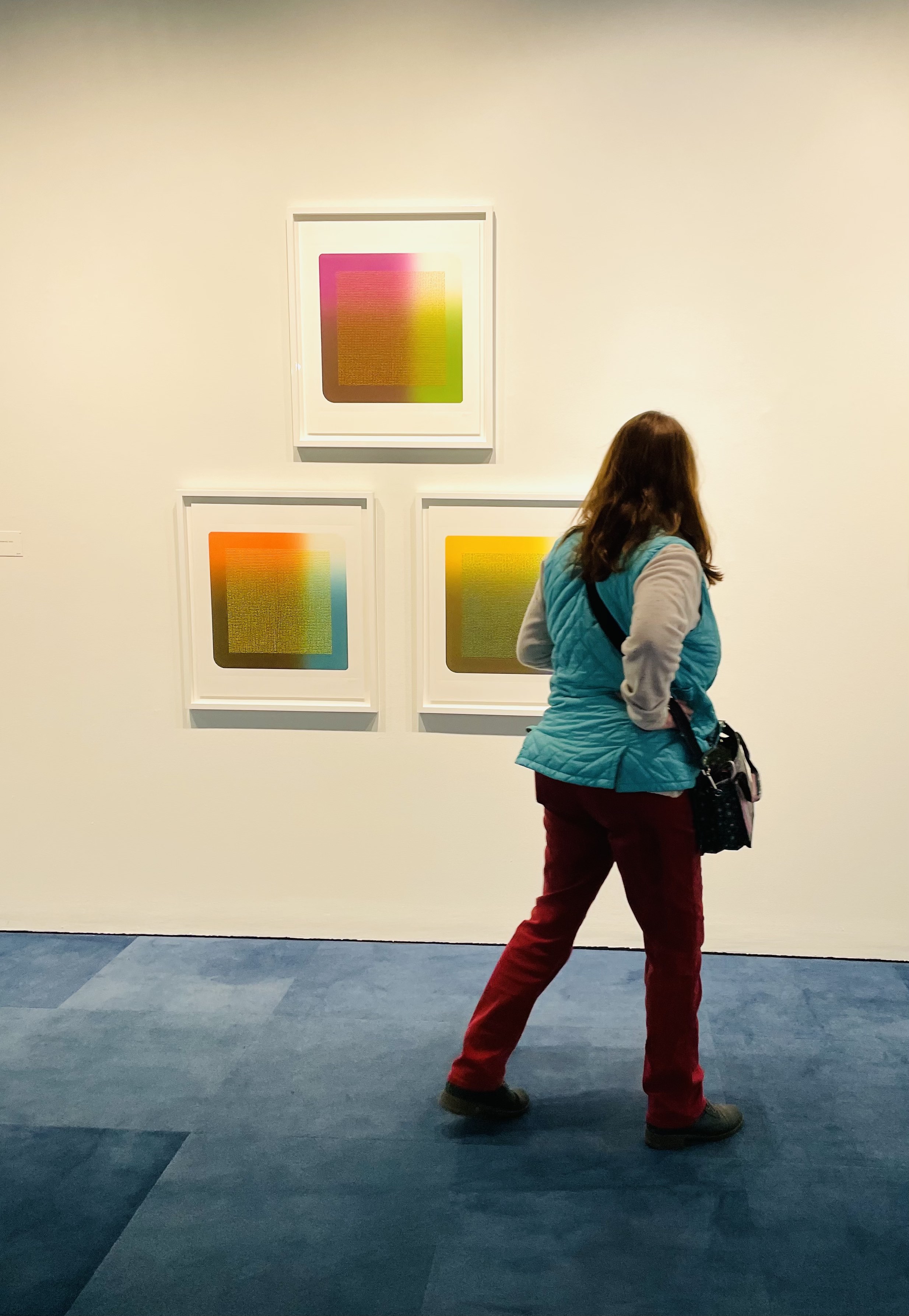
"The desire is to drive a different color interaction," said Gretchen Wagner during the exhibition-closing gallery talk for Patterned Fields. "The intention is to make it look like the embroidered layer is shifting in front of you."


Desires and intentions were being gratified. Wagner's glass bead embroidered monoprints on paper seem kinetic and sentient, like they enjoyed being at Gutstein Gallery just like everyone else.

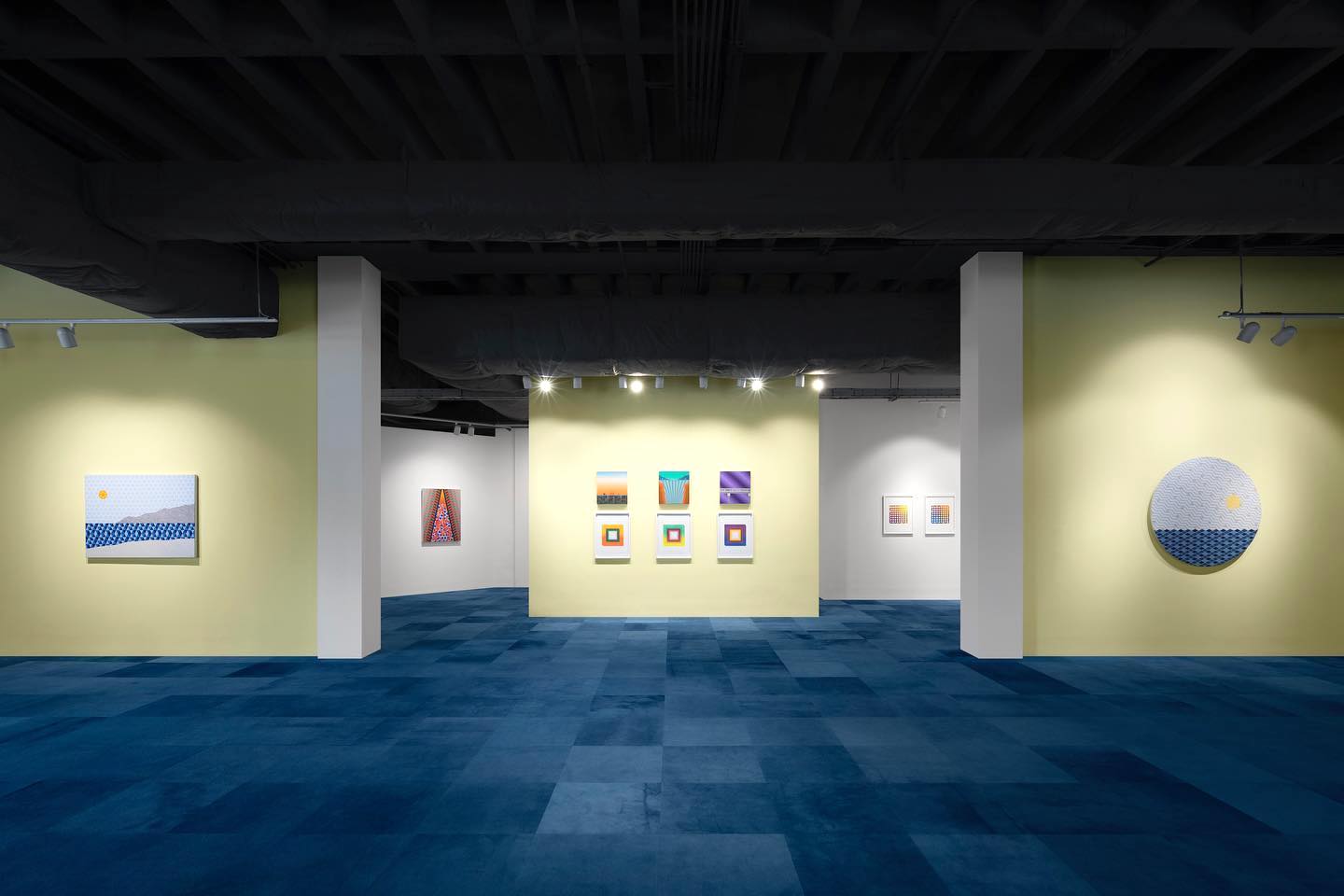
Gallery installation

On a Thursday afternoon, Gutstein bustled with gallery-goers, both SCAD students and members of the art-loving public. The occasion was literally two-fold: to hear two alumni artists talk about their work, and to give their work a more enlightened look.

Wagner (M.F.A., painting, 2023; B.F.A., fibers, 2011) and Jeremiah Jossim (B.F.A., photography, 2010) were conjoined in conversation by SCAD Museum of Art assistant curator Haley Clouser. The discussion focused on the neat conceit of Patterned Fields: that the two artists share an interest in how pattern can transform the picture plane.

"Your works or styles seem very different," said Clouser. "The lynchpin is pattern and the way you're approaching dimensionality."

Jossim explained that his approach to refining his patterns is to leave no trace, or to do so as a form of commentary. "I do intensive pencil drawings underneath before I begin painting that no one will ever know. The work I've made now, sometimes you can see screw holes on the side [of the frames]."

Jossim's admiring paintings of the American landscape question the nature of recreation. His psychedelic oils (particularly the circular works he calls Portals) are evocative of nature, yet hardly naturalistic.

Wagner, currently a professor of foundation studies at SCAD Atlanta, remarked upon the influence of Josef and Anni Albers, Bridget Riley, and her own family. "I come from a family of engineers and architects who draw on graph paper, and that's what I do too. I love that level of precision." Of her bead-embroidered prints, she said: "The way the embroidery happens, you start to get this undulation and this hand manipulation of the surface of the work, and that disrupts the near-perfection you see in the print."

Installation

Haley Clouser nudged the artists to talk about their respective beginnings as students at SCAD.

Jossim said: "At SCAD I felt a level of care applied throughout my classes. Savannah is really special. It was a nice cocooning place for me as an artist. I was able to make a lot of art. Some of it was bad." The crowd hooted.

Wagner: "I came to SCAD because I wanted to be a shoe designer. I was going to go into fashion, then I heard about fibers and thought, 'Wouldn't it be good to make some of my own textiles for my fashion classes?' I took a fibers class and changed my major to fibers immediately."

After graduation Wagner went to work in the commercial textile industry for a decade. "That design work influenced my art practice and vice versa. We often separate the words art and design. I actually think the best scenario is when they're tangled up with each other."

As the talk concluded, Clouser sounded a final note of encourageent: "Enjoy the space, look more closely, and think more deeply about the work."

Drape expectations

January
10
2024
By
Tags:

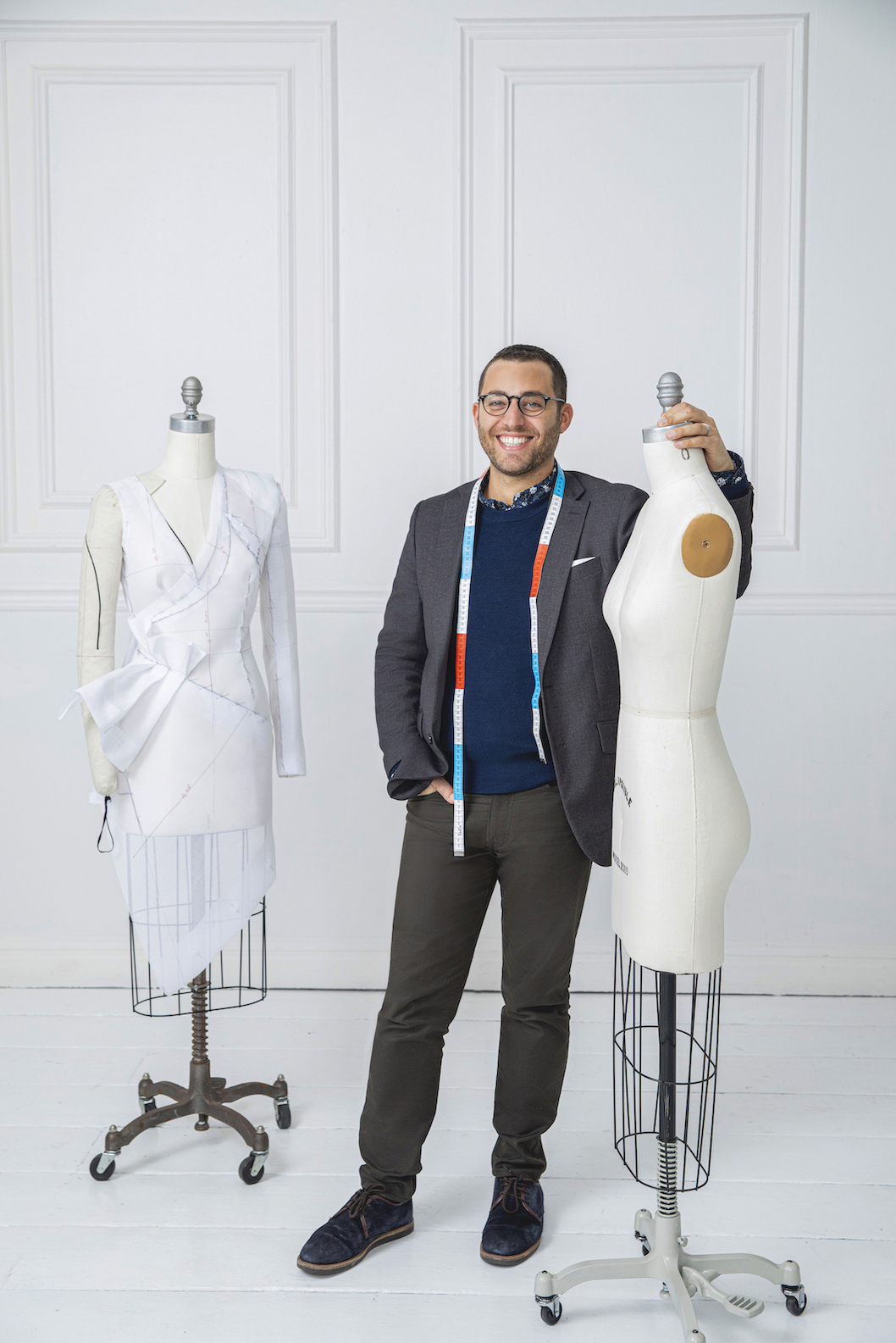
Julian Robaire (B.F.A., fashion, 2013), assistant head of the tailoring workshop in CHANEL's haute couture division, has worked for some of the biggest names in fashion since graduating from SCAD a decade ago. His preternatural gift for draping and design leading to commissions for everyone from Catherine Deneuve to Kirsten Dunst. Like so many SCAD alumni, Julian comes back to campus often to share his wit and wisdom with our students. I was honored to sit with him recently for an all-around delightful conversation about his career and the made-to-measure magic of couture.

President Paula S. Wallace: Julian, SCAD is so proud of you! Tell us about your first steps toward SCAD and your rockstar career in luxury fashion.

Julian Robaire: I was always interested in luxury. My great-aunt spent her whole career working for Hermès, and I remember, as a young child, always seeing her wearing Hermès shoes and scarves, even at home! She helped me discover luxury fashion and why it's so important. With SCAD's reputation in fashion, I knew where I wanted to study— and SCAD is where I fell in love with draping. After graduation, I moved to Paris to attend L'Ecole de la Chambre Syndicale de la Couture Parisienne, and then I went on to work at Christian Dior and John Galliano before moving on to Jean Paul Gaultier and CELINE, and now CHANEL.

PSW: Right to the top! Of course, you were no stranger to Paris, growing up in a Francophile household.

JR: I have grandparents from North Africa, and I've always had French influences around me. My parents took me to meet family in France for the first time when I was eight years old, and I fell in love with Paris—the most magical, most beautiful, most amazing city. It was the luxury so specific to Paris, I think, that made me want to move there after SCAD.

PSW: If I recall, you got your start at Christian Dior after a conversation with someone at a café?

JR: SCAD always taught me to have my business card with me and a killer portfolio ready because you never know who you might meet, whether you're sitting next to them on the Metro or introduced in a restaurant. I started talking to a guy at a café who turned out to be the technical director at Dior ready-to-wear. The number two person there! I gave him my business card, and he said, "Well, show me your work!" I pulled up my website with my SCAD portfolio on my phone. The class critiques at SCAD taught me how to discuss my work with an intelligent vocabulary, and I explained to him what I wanted to do in my career. Two weeks later, I had an interview and was hired on the spot.

PSW: Preparation meets opportunity. Since you mention critiques—your interview process with Jean Paul Gaultier was quite a different process than at Dior. What was that like?

JR: My first meeting at Gaultier was also an interview, but from there, it got interesting. My second interview was with JPG himself, who challenged me to create a garment in the aesthetic of the house of Gaultier that still stayed true to my design philosophy. A week later, I presented to him a half-draped, half-structured, tailored bustier jacket. He loved it and asked for a few alterations and adjustments. Over four weeks, each time we met, Mr. Gaultier reviewed my work and suggested more changes. This is precisely what SCAD prepared me for—learning to listen to what a client wants. Anything I created would have Mr. Gaultier's name on the label, so that interview process was about demonstrating I could adapt my ideas for his brand. Ultimately, he said oui and I was hired.

PSW: After proving yourself indispensable in haute couture for years, CHANEL came calling.

JR: CHANEL found its way to me, yes. I had three different people reach out to me within a three-month span: a recruiter, a freelance headhunter, and someone from within CHANEL. There were several serendipitous circumstances that accumulated to one outcome. I'm extremely happy to have found a home with CHANEL.

PSW: Okay, so let's back up a second. How exactly did you find out about SCAD?

JR: My high school English teacher had a SCAD poster in her classroom, and I started researching. I knew I wanted to study fashion, but SCAD wasn't just a fashion school: it had the most well-rounded education on the market, with foundations classes in sketching and 3D design and opportunities for collaboration across majors.

PSW: Accessory design, fibers and textiles design, filmmaking, we have it all.

JR: Plus, SCAD understands that all design is also business, so every class not only teaches you craft but also how to market and innovate within the industry. I wanted that knowledge.

PSW: Do you remember a favorite collab with your SCAD classmates?

JR: I worked with students from film, graphic design, and sound design on a fashion film featuring my work. It wasn't even for a class—we just loved working together and wanted to create something beautiful for our portfolios! The project really gave life to everything we had learned during our years at SCAD.

PSW: Which SCAD classes set you up most for the success you have today?

JR: I'm always going back to the principles I learned in foundations. I'm not a designer: I work after the designer sketches. I drape fabric on the mannequin and develop the garment's proportions and lines, the movement, the volumes. My foundations and structural design background set me up to look at sketches from a different perspective and really bring them to life.

PSW: I'm so honored that you come back to SCAD to share your experiences! A few years ago, you spoke at the launch of SCADamp, our in-house studio that teaches the fine art of communicating your work to any audience.

JR: SCAD is always ahead of its time. Recently, someone I know professionally asked what I was proud of having done in the last couple of years, and I brought up my keynote talk to SCAD faculty—that was really a big deal for me. I mean, that's a lot of people for me to speak in front of, and they all are experts in their fields! Having been trained to tell my story like that by SCADamp was such a rewarding experience. That type of coaching is something other universities don't give their students and alumni.

PSW: What does a normal workday at CHANEL look like for you?

JR: There really isn't a typical workday in my world! When we're developing a collection, I work with the fabric manager to choose all the ornaments and notions we need to make a garment. I'm also draping garments and taking them down to the studio for model fittings. Some days, clients come to view the collection and order pieces. I'll take their measurements, since haute couture is made-to-measure, before creating a mannequin that fits the client's proportions. There, I'll drape the garment before the workshop prepares the pieces for subsequent fittings. My work really depends on what part of the season we're in.

PSW: Your work involves fine hand tailoring—truly an ancient craft.

JR: My work is very traditional—the same traditions have existed since the time of Coco Chanel and Christian Dior. We still drape simple cotton fabric on a mannequin to make patterns. When I take measurements, I notice body structure and how garments will drape because the life drawing and anatomy classes at SCAD developed my ability to visually analyze the morphology of a client's body. A measurement of a hundred centimeters doesn't tell the whole story. The client can be more developed on one side of the body or have one shoulder lower than the other. No single body is perfectly symmetrical. You can have a hundred centimeters a billion different ways. Those morphological details are really specific, which is why we create every pattern by hand.

PSW: That's what's so special about haute couture—no two pieces are ever the same. Can you remind readers what defines haute couture?

JR: The term haute couture is actually protected by French law—there are only sixteen official haute couture houses in the world. It's not a designation taken lightly. When it comes down to it, haute couture is high fashion made to measure and made to order by an atelier. There are no sizes. We create patterns and garments to perfectly fit the models who walk down the catwalk. Everything is precise, because each piece is completely custom to each client.

PSW: What inspires you most in your work?

JR: I've always been drawn to the post-war liberation of female silhouettes—that point in time really fascinates me. During the Second World War, so many people naturally forgot about luxury and the fun of living. All of that came back in such a big way in the post-war period, and that's really similar to what we're seeing happen today in the post-Covid era. That big boom of relearning and embracing enjoyment again is seen in the music, the art, the fashion, and the films of that time.

PSW: Films like Gilda, An American in Paris, Sunset Boulevard, Roman Holiday.

JR: Exactly!

PSW: The silhouettes from that era are timeless. Moving from the classic to the current, what's a contemporary design trend you especially love?

JR: I spend so much time speaking French I sometimes have difficulty finding the English word, but...lightness, overall not too serious, not too heavy.

PSW: Maybe ethereal?

JR: Yes! Just in general, light fabrics, light colors, fun, easy-going, I think, are all keywords that the industry is looking to moving forward. The embodiment of joy.

PSW: Julian, I'm so happy to see you thriving in your dream career. SCAD loves you!

JR: Merci, Paula! I'm always so thrilled to buzz back to the SCAD hive!
portrait of juilan robaire

Connect with Julian Robaire!

After Miami: Paola Maldonado

January
2
2024
By
Tags:

In December, Paola Maldonado (B.F.A., fibers, 2018) traveled from her home in Quito, Ecuador to SCAD AT MIAMI. Her distinctive, large-scale textile installation adorned the booth at Design Miami, the prestigious art fair and global forum where SCAD is the official university partner.

Maldonado's work honors the legacy of textile craftsmanship with a contemporary edge. Produced in her own textile studio in Quito, her installation for SCAD AT MIAMI created sublime context for the work on display by Seth Carlson (B.F.A., jewelry, 2007), Xinia Guan (M.F.A., jewelry, 2020), Miao He (M.F.A., jewelry, 2019), Xun Liu (M.F.A., jewelry, 2020), and Andrea Ortiz (M.F.A., jewelry, 2023).

After returning to Quito, Paola reflected upon the experience.

Paola Maldonado:

"When SCAD contacted me to create an installation for Miami, I was so excited. The commission involved a textile technique I was already working in. Before this project for SCAD AT MIAMI, I created two commissioned pieces for residential clients here in Ecuador. I knew the technique I would use, how to calculate materials. Still, there were challenges, including time. How could I make the work in Quito, and get it shipped to Miami?

SCAD sent me the dimensions of the booth. The left and right walls were mirror images of each other. I usually choose bright colors and more rustic yarn, but they wanted metallic finishes because the work in the booth was going to be jewelry. There's gold, there's silver—we chose the yarn because of the jewelry.

I always like to be involved in every part of the process: yarn wrapping, buying yarn, going to the supplier, packaging the work. That's what I love about the work—it means being in touch with materials. I'm an artisan. With an installation, if I'm doing it here in Ecuador, I can cut off a yarn that is not in place. For Miami, I didn't have the space at my studio in Quito to hang both walls. So, for me to see the booth in person meant looking at a huge project I had done in parts. Seeing it installed, I was like, oh, wow! This is how it looks! I was just as surprised as any other person.

At the fair, people would look at it from a distance, then they would come up close and touch it. Everyone had questions on the method of production, the design process, how it was made, was it paint or yarn, and how we shipped it there. I loved meeting people interested in the work.

I opened my studio three years ago when I came back to Quito. I'm an entrepreneur. Starting from scratch, having my own studio, getting clients through my Instagram, it's all been very organic. The objective for me is doing my art and transmitting it to people with love. It's one of the few careers that you're really working with your hands. It's super emotional work that creates sensitivity and love.

Design Miami was…how do you say “high point in your career”? La cima. I don't feel like I've reached my highest point yet. Thanks to SCAD commissioning me for Design Miami, it has made this year a huge step. It's awesome."

[As told to Peter Relic.]

Connect with Paola Maldonado.


Nanyan Chen: from internship to dream career

December
18
2023
By
Tags:

"Every architect and interior designer will tell you the same thing: it is a unique feeling when you step into the space you designed," said Nanyan "Vincent" Chen (M.F.A., interior design, 2022), interior designer, Lissoni & Partners. "You know everything about it, every detail, every flaw, and the backstory. It is your child."

For Chen, a native of Nantong, China, the choice to pursue a career in interior design was clear. He had long nurtured his passion and worked in China on suburban renovation projects with S5 Design Co. Ltd., where he found inspiration in natural elements and absorbed insights from industry leaders who influenced him as a designer in his own right. SCAD Atlanta was the perfect place to make the next step happen.

"SCAD provided a friendly environment that allowed me to build on my past experiences and merge them into my design language," Chen said.

Interior design drawings by Vincent Chen from his SCAD project "Journey & Space," 2022.

Interior design drawings by Vincent Chen from his SCAD project "Journey & Space," 2022.

Chen's professors encouraged and supported his creative journey toward a career in a sophisticated design studio. Interior design professor Peili Wang, who taught Chen in the course Graduate Interior Design Studio III: Inclusive Design for Special Populations (INDS 751), said: "He is gifted, diligent, quick-minded, and serious in his design study."

For Chen, whose job search presented challenges including a language barrier, the comprehensive resources at SCAD were crucial touchstones. Workshops, industry connections, and the SCAD Job Portal provided Chen with clarity and professional focus. As an international student, he gained valuable insight into how the interior design industry operates in the U.S., all of which led to his internship with Lissoni & Partners in New York in March 2022.

Interior design renderings by Vincent Chen from his SCAD project "Journey & Space," 2022.

Interior design renderings by Vincent Chen from his SCAD project "Journey & Space," 2022.

Chen's excellent performance during his internship led to a full-time position with Lissoni & Partners. The transition brought more responsibility, including projects with the Ritz-Carlton and Waldorf Astoria. Working on high-end projects allowed Chen to apply his understanding of design processes learned at SCAD.

Lissoni co-founder and CEO Stefano Giussani said: "Chen is a reliable designer, creative, and professional with any task, able to meet deadlines, is well organized, and follows the design process being a detail-oriented member of our firm."

"SCAD taught me how to use design thinking throughout the design process ,which allows me to keep the creativity and open-mindedness to embrace what Lissoni offers," Chen said.

At this moment in his career, Chen favors renovation projects for their sustainable approach. He notes the importance of environmentally friendly materials and is passionate about minimalist design.

Chen's advice to aspiring interior designers includes staying passionate, nurturing curiosity, and having a clear vision.

"For me, it is not only a profession about design but also lifestyle. It is important to check different designs, visit different spaces, travel, and meet people with an eye for interior design. All of your experience and knowledge will be reflected in your design."

Learn more about SCAD's award-winning interior design degree programs.

Connect with Chen in LinkedIn.

Nanyan Chen

Portrait photo: Wenyi "Bebe " Li (M.F.A., photography, 2022)

Jey Odin makes drawing fun

November
17
2023
By
Tags:

"I lucked out with this project: I was prepared, and then opportunity came," said Jey Odin (B.F.A., sequential art, 2010) of his work on the new book Rick and Morty: The Manga Vol. 1—Get in the Robot, Morty! (Oni Press, 2023).

Based on the smash hit Cartoon Network TV show, the 175-page book—written by Alissa M. Sallah, with art by Odin—delivers the multiversed misadventures of mad scientist Rick and his squeamish grandson Morty in the dynamic style of Japanese manga. First impression: it's awesome.

"I've always liked Rick and Morty, it's very funny and very dark," said Odin during a recent weeknight appearance at Neighborhood Comics in Savannah. Sporting a tight fade haircut and canary-yellow-framed eyeglasses, the artist stood at the shop's front counter beneath a gigantic hanging replica of the Millennium Falcon. "I knew that my style could not only duplicate Rick and Morty, but also look like manga. The more I drew, the more I got used to it. This was a very fun book to draw."

cover of rich and morty graphic novel

Odin (the nom de plume of Louisiana native Jonathan Mullins) has been called a "graphic novel demigod" and "a true legend." During his in-store artist talk hosted by Neighborhood managing partner Lee Heidel, he also came across as naturally friendly—and more than willing to divulge the inner workings of his art and career.

"When I was in sixth grade, I turned on the TV one day. It was Toonami, with Vegeta rising out of the water, screaming! I didn't know what it was, but I needed to find out." Inspired by his initial encounter with Japanese television anime Dragon Ball Z and the bubbly renderings of artist Akira Toriyama, young Jey began drawing in a similar "cartoony" style.

"Jey is one of my earliest students who I've known since he was about 10 years old," says sequential arts professor (and fellow Louisianan) Rashad Doucet. "I'm always so proud of his success, and it's been amazing watching him grow into the awesome creator he is today."

After Odin came to SCAD, he developed his own comic book, and received encouragement from Doucet to pitch it for publication. Antarctic Press picked up and printed Chicken Fighter in 2011.

A slew of other titles featured Odin's art followed, including his hit Hammer books, published by Saturday AM, known as the force behind "the world's most diverse manga anthology." His work on Rick and Morty: The Manga Vol. 1 began after he completed Lemonade Code (Oni Press, 2021). "I said to my editor, ‘Hey, let me know if any Rick and Morty covers come along. She said, ‘We have an entire book that needs to be drawn.'"

"If you look at my Hammer series, the way I draw teeth is completely different to the way I drew teeth for Rick and Morty. The way I drew eyes was also something I had to get used to." Odin said he examined various panels and decided that "I should push this pose, add speed lines here, the sound effect should be big and in-your-face, things that manga does more so than other comics."

cover of 4 step guide to creating comics

Heidel referred to Odin as a "natural educator" and recommended checking out his free mini-tutorials on Instagram as well as his new ebook 4 Step Guide to Creating Comics.

"If you can make it fun, drawing is going to be a breeze," Odin said. "If everything seems tedious, then you're not going to enjoy yourself. In that case, why draw comics at all?"

Warren Oliver is built for this

November
2
2023
By
Tags:

Diamond Kuts came clean, Saba dropped science, and Freddie Gibbs served "Ice Cream." When these hip-hop stars (and more) laced up for last year's Paramount+ reboot of Yo! MTV Raps, the pressure was on. Could HollandWest Productions take a beloved legacy property—the show that once bumped vibrant underground culture into the mainstream—and make it fresh?

"Going into that first meeting, I said, 'Let's stick to the essence of what Yo! MTV Raps represents,'" says HollandWest managing partner and executive producer Warren Oliver (B.F.A., computer art, 2000). "We don't want to change it, we want to enhance it."

The new Yo! clicked. Its success became a signpost for the MBE-certified development and production house Oliver and Kurt Williamson founded in 2012. From their early days "grinding to get clients," HollandWest has grown into "a company that can take on entire projects" for the likes of Walmart, History Channel, and Pepsi—with deep roots that track back to SCAD.

Warren Oliver

Warren Oliver lights up the set of Yo! MTV Raps. (Paramount+)

In 1996, Oliver was a high school senior enjoying a computer-aided drafting course at Hermitage High in Henrico Country, Virginia when he noticed a poster on the classroom wall for Savannah College of Art and Design. One visit to Savannah later, he says, "I fell in love with SCAD, and started taking graphic design classes that summer."

Professor Randy Akers has never forgotten his initial impression: "I remember Warren as soft-spoken and determined. He stood out in a group of exceptionally talented students that year. As his design skills developed, so did his technical acumen. Warren always delivered more than was asked for in a continuing quest for professionalism."

"Warren's contagious enthusiasm gave the entire class a sense of potential and possibility," recalls visual effects professor Joe Pasquale, who taught Oliver alongside "amazing, unforgettable" students including Chike Ozah (B.FA., computer art, 2000). "What especially distinguised Warren was his dedication to supporting his peers."

Under Akers' and Pasquale's instruction, Oliver built a demo reel of motion graphics title sequences. After graduation, his "continuing quest" led to New York City, where he worked with Telezign before landing a job at HBO. "I went from graphic designer/animator to art director kind of fast," Oliver says. Promotional graphics he created for the 2004 Alan Rickman/Mos Def film Something the Lord Made were so impressive that director Joseph Sargent made them the film's main titles.

Condensing two-plus decades of Oliver's excellence is impossible. One highlight is the Netflix Playlist film HollandWest delivered to promote the 2021 major motion picture The Harder They Fall. Its vibrant live action shots place the viewer inside musical performances. As Oliver explains: "I'm not a traditional DP or cinematographer. As a graphic designer turned director, I know composition. I apply graphic design techniques to finding shots."

It's this sensibility that Akers and Pasquale both feel will make Oliver a great professor—should he choose that path. "I am continuously proud of all that Warren has achieved, and I hope he passes on his wealth of knowledge to a new group of students someday," says Akers. Pasquale concurs: "I congratulate Warren on his outstanding achievements and look forward to him visiting our current students to share his expertise. What a great person."

Of course, Oliver's alma mater hasn't exactly been a stranger. In an industry enduring tumultuous times, Warren notes a key difference. "You can't go anywhere anymore without meeting someone from SCAD at a studio. We used to be few and far between." His smile widens. "Now, SCAD is everywhere, and I absolutely love it."

Warren Oliver

Connect with Warren Oliver on LinkedIn.


Costume designers sew up Film Fest

October
25
2023
By
Tags:

"The silhouette is the most important thing," said costume designer Ellen Mirojnick of Oppenheimer's signature hat and suit. "I don't think there are words to describe how much I love designing menswear, and that silhouette was just a sublime one to design."

Mirojnick was speaking to a rapt student audience in a packed Gutstein Galley during the SCAD Savannah Film Festival panel "Artisans: Craft and Character Through Costume Design." Her insights revealed how costuming is a key to character.

"Until his death, Oppenheimer's silhouette was always the same," she said. "He was a man who always wanted to be presented as handsome and wearing fine clothes. Maybe that happens with men when they discover it's easier to look a particular way. His was a very forward-thinking silhouette."

Mirojnick (also known for The Greatest Showman, The Knick) was joined by fellow in-demand costume designers Charlese Antoinette Jones (AirNanny, Judas and the Black Messiah), Rudy Mance (American FictionThe Watcher, The Alienist) and Trish Summerville (The Hunger Games: The Ballad of Songbirds & Snakes, Mank), on a panel moderated by Variety Senior Artisans Editor Jazz Tangcay. Their costume-centric discussion ranged from lavish period pieces to contemporary epics.

costume designer panelists at scad savannah film festival

Film Fest guests (l-r) Tangcay, Jones, Mance, Mirojnick, and Summerville all love a stylish silhouette.

"If anything existed after 1984, it wasn't allowed in [Air]," said Jones of the sports drama set during Michael Jordan's rookie season. "That pertained to Nike sneakers and sportswear, and other clothing as well. If there was an older person in a scene, their clothes leaned more towards ‘70s style, and any young person, they were more current, with looks from '83-'84. It was a lot of suiting, which I love."

Earlier in the week, writer and director Cord Jefferson won the Breakthrough Director Award at a screening of his debut feature, American Fiction. Costume designer Mance said: "Cord and I have been best friends for at least fifteen years. About a year and a half ago he called me and said, ‘Baby boy, our dream's comin' true, they're letting me make a movie and you're going to costume design it.'" Mance described Jefferson's clear mandate for the movie: "Dress the family like old money."

Summerville spoke about the new blockbuster installment of the Hunger Games and revisiting the franchise ten years after the original hit film. "It's a completely different time now, we're sixty-four years in the past. We're seeing President Snow at eighteen years old. So how do we want to show this bold world, the future-past? Our fanbase loves the gluttonous Capitol, but we scaled that back to show what America looked like in the '40s and ‘50s and how people dressed properly. That meant creating a whole new silhouette and color palette and controlling the environment a lot more."

When Tangcay opened up the floor for a Q&A, there was no lack of smart requests from students. In turn, the panelists addressed challenges including compiling valuable research, communicating effectively with directors, the mutable role of archival costume houses, and what they do with their precious time off.

"As designers, we all work singularly, we don't work together, so when we see each other in a hallway and wave, that's about the extent of it," Mirojnick said. "When we're not working, we can have lunch, dinner—and come together panels like this one—social things that actually make our lives full."

Full of love—at the SCAD Savannah Film Festival.

portrait of charlese antoinette jones

Costume designer Charlese Antoinette Jones shines at the SCAD Savannah Film Festival 2023!

Oppenheimer image courtesy Universal Pictures / Everett Collection

Haleemah Sadiah on "Indigenizing Design"

October
6
2023
By
Tags:

"Human-centered design is seldom truly equitable," says Haleemah Sadiah (M.F.A., design for sustainability, 2021). "To me, 'Indigenizing Design' means bringing the Indigenous perspective to design. It means having Indigenous people frame their language for design."

Sadiah, Senior Designer at Catapult Design, is a newly-named GreenBiz "30 Under 30" honoree for her exceptional design work with social and environmental impact. Essential to that recognition is her role in Indigenizing Design. Funded by the National Endowment for the Arts, Catapult's place-based project partnered with Indigenous organizations including Brian P. Skeet, Indigenous Community Collaborative, Cahokia PHX SocialTech + ArtSpace and the local community of Indigenous creatives, designers, and entrepreneurs in downtown Phoenix, Arizona.

"We've built a framework for Indigenizing Design which includes markers that serve as both the values that define Indigenizing and as indicators if Indigenizing has happened in a space," explains Sadiah. "One special thing for me as a designer is that we had community members in the room when we were synthesizing data, the first time I've experienced that. That adds tremendous value to the design process. When people with lived experience are in the room making design decisions it really does decolonize design."

From Bangalore, India, Sadiah is dedicated to advancing the principles of social justice. As a graduate student at SCAD, her thesis project focused on increasing the agency of women carpet weavers in the village of Aspura. Design for sustainability professor Scott Boylston says: "Haleemah exemplifies the best of our design for sustainability program due to her unique blend of deep thoughtfulness and purposeful action. Her reliably calm demeanor and the diversity of her skillsets allow her to work with any group. Haleemah is an inspiring changemaker paving the way for others interested in this challenging, rewarding career path."

"I recommend every SCAD student take classes in sustainability," Haleemah says with enthusiasm. "The program changed the way I look at the world and my place in it. All of us—from diverse backgrounds—can be activated agents promoting sustainability from both an environmental and social impact perspective. And, you know, just being good human beings."

As SCAD prepares to celebrate its 45th anniversary, it's worth noting that the university is a relatively young institution. On this point, Haleemah makes a connection between her work at Catapult and her status as a SCAD alum: "It's about generational connection."

At Catapult, Sadiah often teams up with program manager Laura Ramirez (M.A., design for sustainability, 2021; B.F.A., fashion, 2020), and has worked with Annemarie Spitz (M.A., design for sustainability, 2012), who currently teaches at Washington University in St. Louis.

"As SCAD design for sustainability alumni we have a knowledge base in common, and since Annemarie has been in the working world for ten years, I've learned from her how to bring that to my own creative practice." Current SCAD sustainability students now reach out to Sadiah for guidance. "I think that's a really nice thing in the world, where we're looking out for each other," she says.

This weekend, Sadiah will return to Phoenix to speak at the AIGA Design Conference. "We're going to be introducing the Indigenizing Design framework from the lens of how Catapult partnered with Indigenous communities, and the impact that work has had on our own practice at Catapult Design. There's always so much to learn."

portrait of Haleemah Sadiah

GreenBiz "30 Under 30" honoree Haleemah Sadiah

(Banner image: Haleemah working with fellow SCAD alum and Catapult Design Manager Laura Ramirez.)

Tyler Mitchell's altar states at SCAD MOA

September
29
2023
By
Tags:

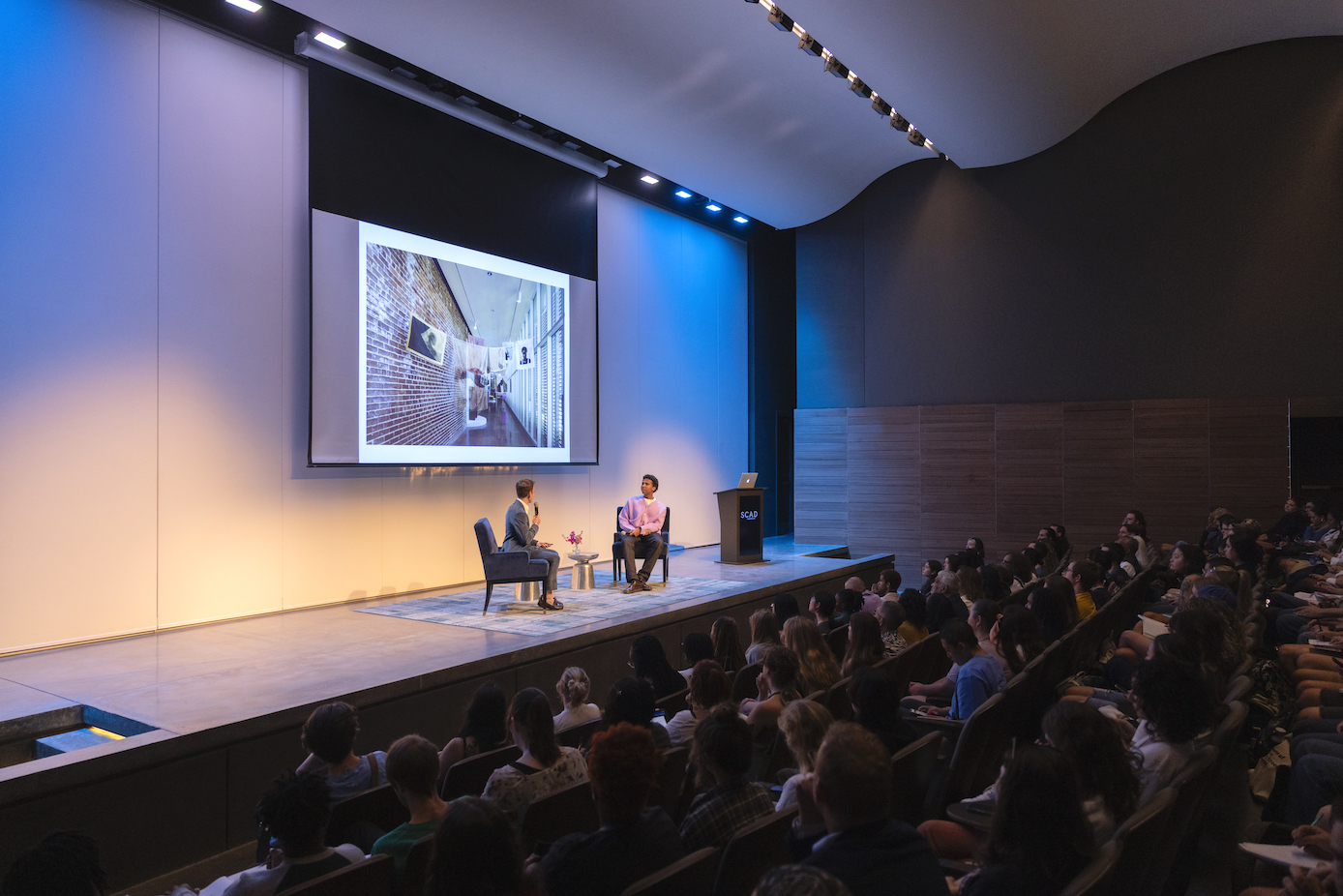
Last week the artist Tyler Mitchell, wearing a supremely stylish lavender sweater, sat on the SCAD MOA theater stage to discuss his new exhibition Domestic Imaginaries with chief curator Daniel Palmer. "This is such a big moment!" Palmer enthused, introducing "Tyler's most ambitious show to date and his first solo museum show in his home state." Mitchell basked in the ovation from the student audience.

"Whenever I'm invited to show my photographic work in a museum, I'm always thinking how to engage with the physicality, democratize the medium, and fuse the installation and sculpture," Mitchell said. The Atlanta native ("I grew up in the same house until age 18"), was prepared to plumb work that, in his words, "considers contemporary Black presence."

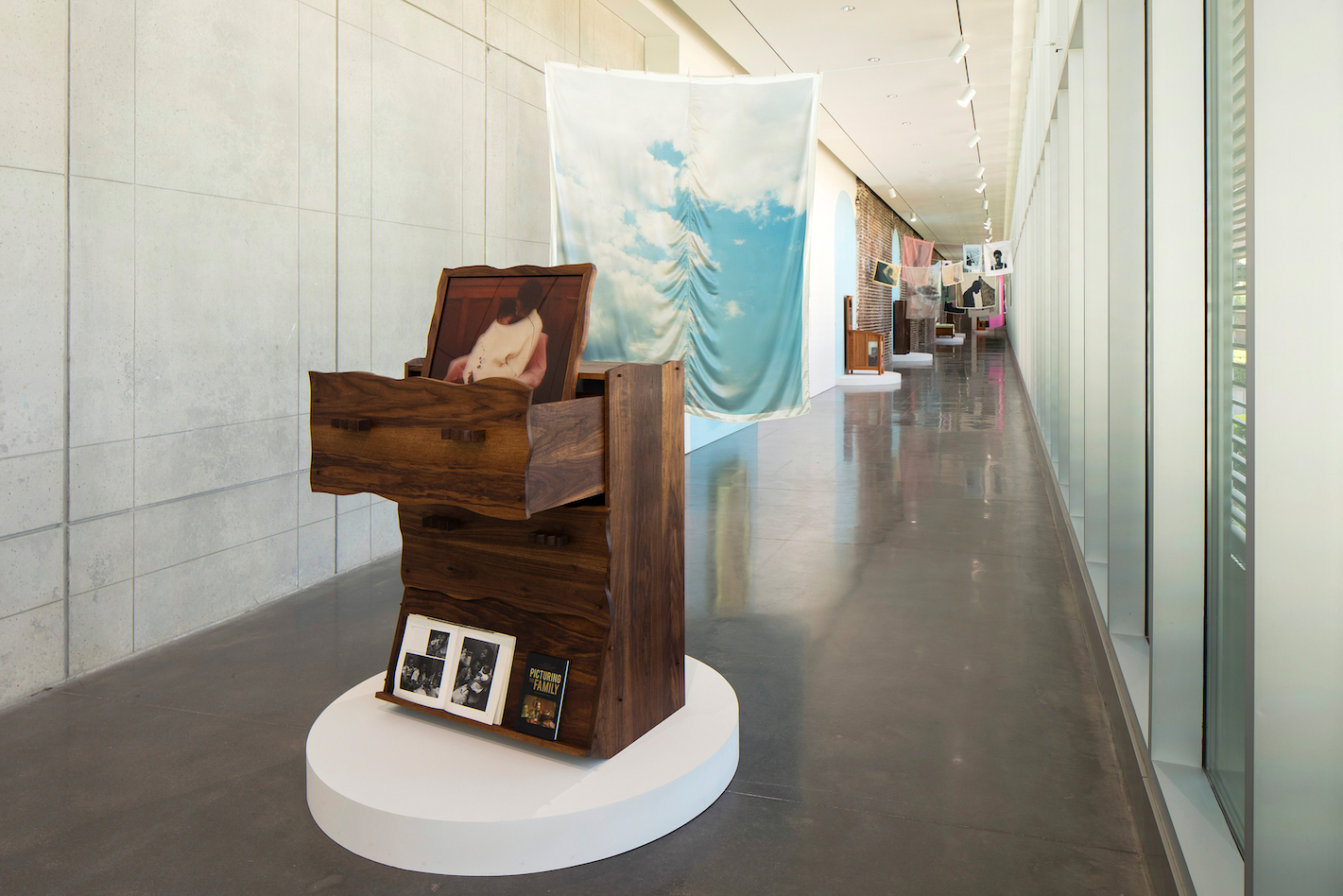
Domestic Imaginaries tackles a challenge of space. The Pamela Elaine Poetter Gallery of the SCAD Museum of Art—almost 300 feet long, with one wall comprised entirely of windows and the other of 1850s Savannah Gray brick—has confounded more experienced artists. Mitchell's solution: subdivide the gallery using zig-zagging clotheslines hung with photographs printed on fabric.

Installation

"I'm thinking about the luxury of outdoor space and what that means in today's world, especially for young Black people," Mitchell said. "All that gets married into this work, which I hope is understood and appreciated as much formally and visually as it is intellectually."

"House Is Not a Home" achieves all three aims. A satiny shroud covers a boxy walnut frame. The dye-sublimation print of a photograph of a young Black man on the fabric suggests that what is revealed is also obscured. A sort of now you see him, now you don't impression is indelible.

The exhibition also features pieces of furniture—a bureau, a bookshelf, a couch—that the artist calls "altar sculptures." They emphasize Mitchell's idea of the home as the original gallery, "where we first encounter photographs of ourselves, as people, as families, as humans wanting to form a sense of identity." (This is strikingly manifest in "The Grand Sofa," where family photos are literally printed on the sofa's mustard green fabric.)

By "bringing my photographic practice into a physical storytelling realm," Mitchell invites scrutiny of the work. One altar sculpture has drawers containing photographs; another is laden with books including Josef Albers' Interaction of Color (1963) and Robin Coste Lewis' To the Realization of Perfect Helplessness (2022). "Placing these books in proximity to each other can create almost a full sentence," Mitchell said.

Prompted by Palmer, the artists ‘fessed up to being an "obsessive collector of art books." His decision to include some of them in his show indicated a deep esteem for research as form of artistic practice. He gave a shout-out to Grace Wales Bonner.

At the end of Palmer and Mitchell's conversation, students posed questions: some technical, some philosophical. Mitchell emphasized intuition as a solution. He thanked everyone and said:

"It's exciting as a photographer to make a show that expands on what a photography show can do."

Panel

Domestic Imaginaries is on view at the SCAD Museum of Art through December 31, 2023.