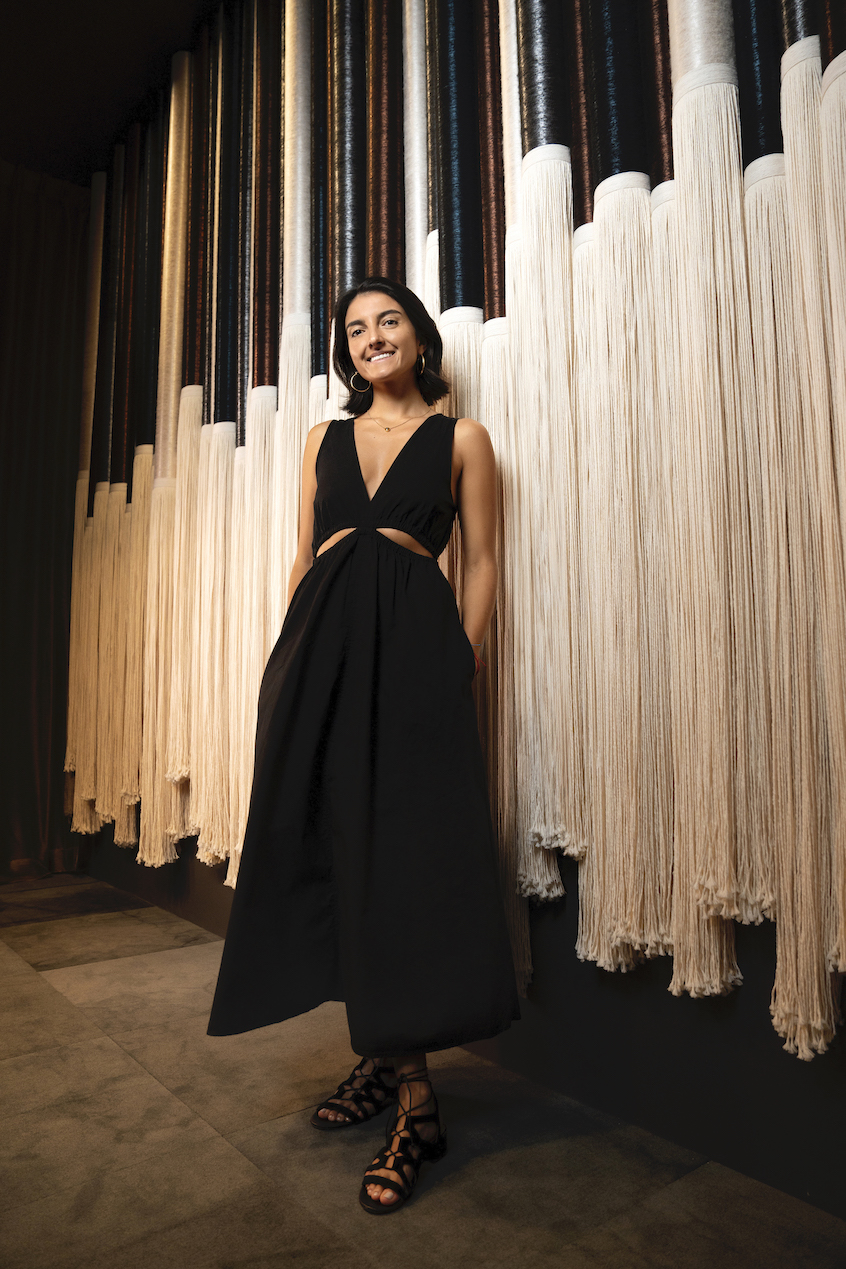
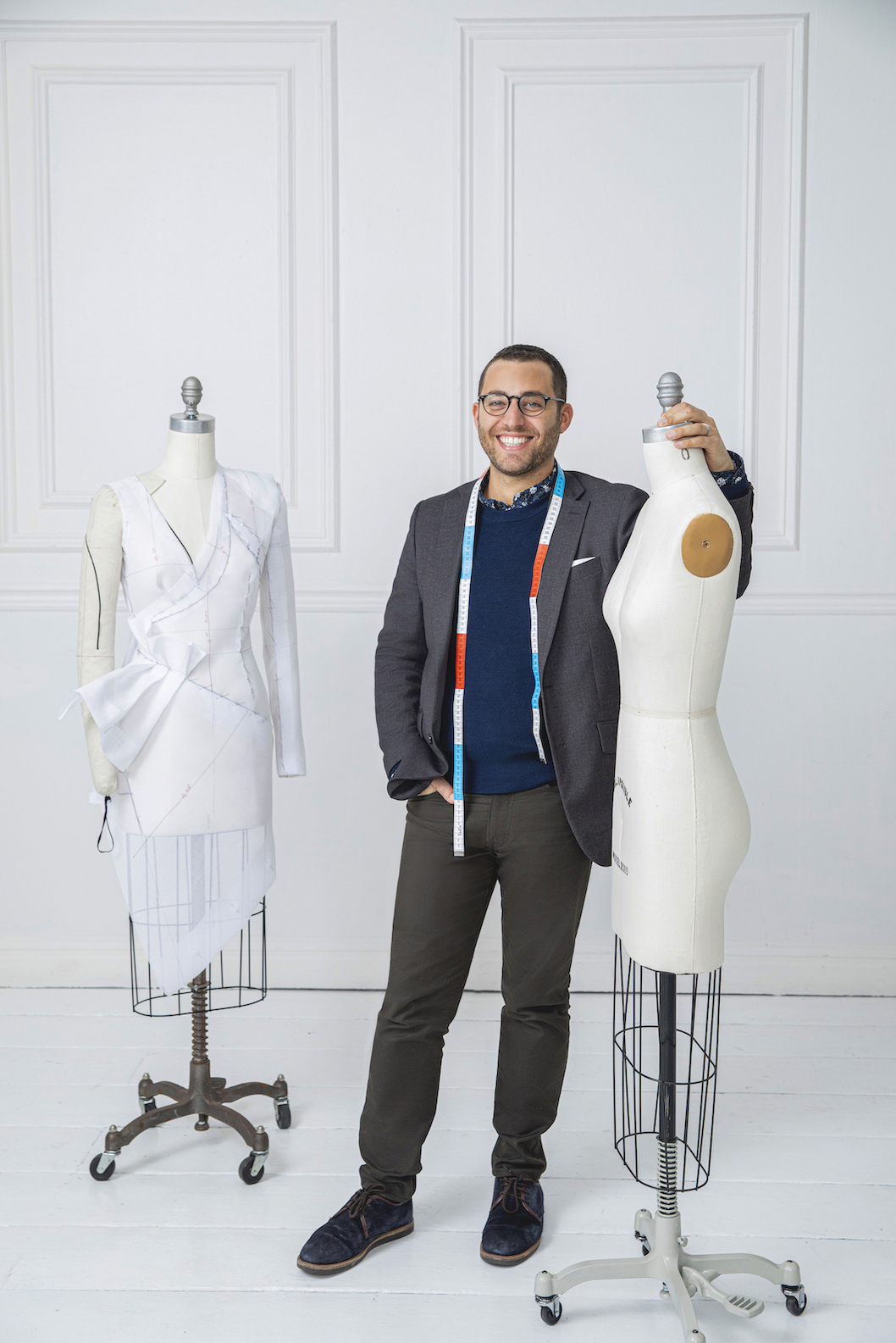
Julian Robaire (B.F.A., fashion, 2013), assistant head of the tailoring workshop in CHANEL's haute couture division, has worked for some of the biggest names in fashion since graduating from SCAD a decade ago. His preternatural gift for draping and design leading to commissions for everyone from Catherine Deneuve to Kirsten Dunst. Like so many SCAD alumni, Julian comes back to campus often to share his wit and wisdom with our students. I was honored to sit with him recently for an all-around delightful conversation about his career and the made-to-measure magic of couture.
President Paula S. Wallace: Julian, SCAD is so proud of you! Tell us about your first steps toward SCAD and your rockstar career in luxury fashion.
Julian Robaire: I was always interested in luxury. My great-aunt spent her whole career working for Hermès, and I remember, as a young child, always seeing her wearing Hermès shoes and scarves, even at home! She helped me discover luxury fashion and why it's so important. With SCAD's reputation in fashion, I knew where I wanted to study— and SCAD is where I fell in love with draping. After graduation, I moved to Paris to attend L'Ecole de la Chambre Syndicale de la Couture Parisienne, and then I went on to work at Christian Dior and John Galliano before moving on to Jean Paul Gaultier and CELINE, and now CHANEL.
PSW: Right to the top! Of course, you were no stranger to Paris, growing up in a Francophile household.
JR: I have grandparents from North Africa, and I've always had French influences around me. My parents took me to meet family in France for the first time when I was eight years old, and I fell in love with Paris—the most magical, most beautiful, most amazing city. It was the luxury so specific to Paris, I think, that made me want to move there after SCAD.
PSW: If I recall, you got your start at Christian Dior after a conversation with someone at a café?
JR: SCAD always taught me to have my business card with me and a killer portfolio ready because you never know who you might meet, whether you're sitting next to them on the Metro or introduced in a restaurant. I started talking to a guy at a café who turned out to be the technical director at Dior ready-to-wear. The number two person there! I gave him my business card, and he said, "Well, show me your work!" I pulled up my website with my SCAD portfolio on my phone. The class critiques at SCAD taught me how to discuss my work with an intelligent vocabulary, and I explained to him what I wanted to do in my career. Two weeks later, I had an interview and was hired on the spot.
PSW: Preparation meets opportunity. Since you mention critiques—your interview process with Jean Paul Gaultier was quite a different process than at Dior. What was that like?
JR: My first meeting at Gaultier was also an interview, but from there, it got interesting. My second interview was with JPG himself, who challenged me to create a garment in the aesthetic of the house of Gaultier that still stayed true to my design philosophy. A week later, I presented to him a half-draped, half-structured, tailored bustier jacket. He loved it and asked for a few alterations and adjustments. Over four weeks, each time we met, Mr. Gaultier reviewed my work and suggested more changes. This is precisely what SCAD prepared me for—learning to listen to what a client wants. Anything I created would have Mr. Gaultier's name on the label, so that interview process was about demonstrating I could adapt my ideas for his brand. Ultimately, he said oui and I was hired.
PSW: After proving yourself indispensable in haute couture for years, CHANEL came calling.
JR: CHANEL found its way to me, yes. I had three different people reach out to me within a three-month span: a recruiter, a freelance headhunter, and someone from within CHANEL. There were several serendipitous circumstances that accumulated to one outcome. I'm extremely happy to have found a home with CHANEL.
PSW: Okay, so let's back up a second. How exactly did you find out about SCAD?
JR: My high school English teacher had a SCAD poster in her classroom, and I started researching. I knew I wanted to study fashion, but SCAD wasn't just a fashion school: it had the most well-rounded education on the market, with foundations classes in sketching and 3D design and opportunities for collaboration across majors.
PSW: Accessory design, fibers and textiles design, filmmaking, we have it all.
JR: Plus, SCAD understands that all design is also business, so every class not only teaches you craft but also how to market and innovate within the industry. I wanted that knowledge.
PSW: Do you remember a favorite collab with your SCAD classmates?
JR: I worked with students from film, graphic design, and sound design on a fashion film featuring my work. It wasn't even for a class—we just loved working together and wanted to create something beautiful for our portfolios! The project really gave life to everything we had learned during our years at SCAD.
PSW: Which SCAD classes set you up most for the success you have today?
JR: I'm always going back to the principles I learned in foundations. I'm not a designer: I work after the designer sketches. I drape fabric on the mannequin and develop the garment's proportions and lines, the movement, the volumes. My foundations and structural design background set me up to look at sketches from a different perspective and really bring them to life.
PSW: I'm so honored that you come back to SCAD to share your experiences! A few years ago, you spoke at the launch of SCADamp, our in-house studio that teaches the fine art of communicating your work to any audience.
JR: SCAD is always ahead of its time. Recently, someone I know professionally asked what I was proud of having done in the last couple of years, and I brought up my keynote talk to SCAD faculty—that was really a big deal for me. I mean, that's a lot of people for me to speak in front of, and they all are experts in their fields! Having been trained to tell my story like that by SCADamp was such a rewarding experience. That type of coaching is something other universities don't give their students and alumni.
PSW: What does a normal workday at CHANEL look like for you?
JR: There really isn't a typical workday in my world! When we're developing a collection, I work with the fabric manager to choose all the ornaments and notions we need to make a garment. I'm also draping garments and taking them down to the studio for model fittings. Some days, clients come to view the collection and order pieces. I'll take their measurements, since haute couture is made-to-measure, before creating a mannequin that fits the client's proportions. There, I'll drape the garment before the workshop prepares the pieces for subsequent fittings. My work really depends on what part of the season we're in.
PSW: Your work involves fine hand tailoring—truly an ancient craft.
JR: My work is very traditional—the same traditions have existed since the time of Coco Chanel and Christian Dior. We still drape simple cotton fabric on a mannequin to make patterns. When I take measurements, I notice body structure and how garments will drape because the life drawing and anatomy classes at SCAD developed my ability to visually analyze the morphology of a client's body. A measurement of a hundred centimeters doesn't tell the whole story. The client can be more developed on one side of the body or have one shoulder lower than the other. No single body is perfectly symmetrical. You can have a hundred centimeters a billion different ways. Those morphological details are really specific, which is why we create every pattern by hand.
PSW: That's what's so special about haute couture—no two pieces are ever the same. Can you remind readers what defines haute couture?
JR: The term haute couture is actually protected by French law—there are only sixteen official haute couture houses in the world. It's not a designation taken lightly. When it comes down to it, haute couture is high fashion made to measure and made to order by an atelier. There are no sizes. We create patterns and garments to perfectly fit the models who walk down the catwalk. Everything is precise, because each piece is completely custom to each client.
PSW: What inspires you most in your work?
JR: I've always been drawn to the post-war liberation of female silhouettes—that point in time really fascinates me. During the Second World War, so many people naturally forgot about luxury and the fun of living. All of that came back in such a big way in the post-war period, and that's really similar to what we're seeing happen today in the post-Covid era. That big boom of relearning and embracing enjoyment again is seen in the music, the art, the fashion, and the films of that time.
PSW: Films like Gilda, An American in Paris, Sunset Boulevard, Roman Holiday.
JR: Exactly!
PSW: The silhouettes from that era are timeless. Moving from the classic to the current, what's a contemporary design trend you especially love?
JR: I spend so much time speaking French I sometimes have difficulty finding the English word, but...lightness, overall not too serious, not too heavy.
PSW: Maybe ethereal?
JR: Yes! Just in general, light fabrics, light colors, fun, easy-going, I think, are all keywords that the industry is looking to moving forward. The embodiment of joy.
PSW: Julian, I'm so happy to see you thriving in your dream career. SCAD loves you!
JR: Merci, Paula! I'm always so thrilled to buzz back to the SCAD hive!
Connect with Julian Robaire!