Skip to main content Accessibility Policy

SCAD Savannah Film Festival rides again

October
24
2022
By
Tags:

Opening weekend of the 25th SCAD Savannah Film Festival came complete with red carpets, Redmayne, rising stars and Ron Howard. Yet less touted gems remain essential to the festival, and documentary short The Bardia thrilled a largely unsuspecting full house Sunday at SCAD MOA.

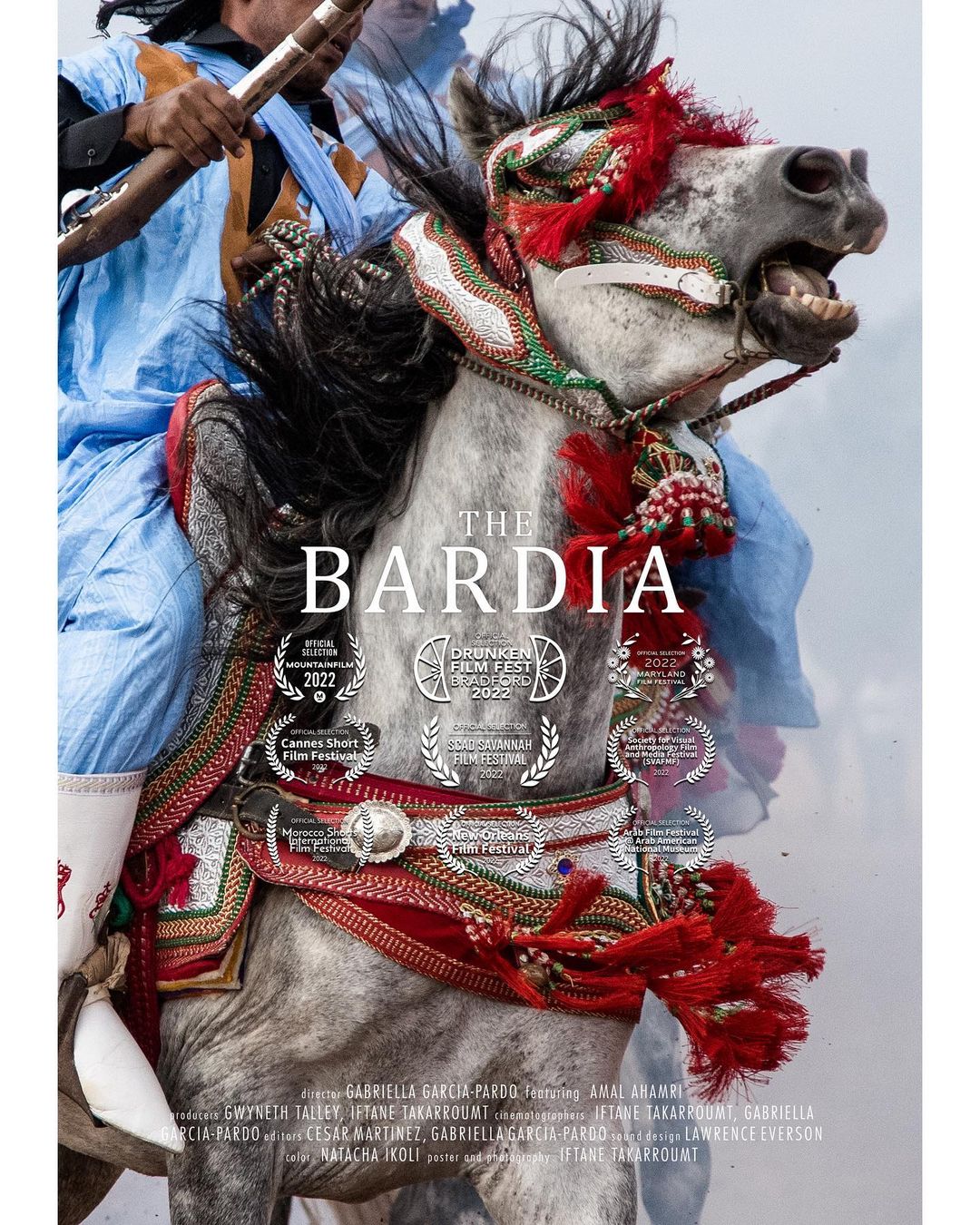
Directed by alum Gabriella Garcia-Pardo (B.F.A., film and television, 2012), The Bardia delivers the colorful story of Moroccan equestrian Amal Ahamri. Early archival clips show Ahamri as a brooding teenaged beauty, a celebrity in her home country as the leader of an all-female tbourida team.

The doc then shifts into footage Garcia-Pardo and her production teammates filmed during Ahamri’s lengthy sabbatical from the sport. "My life and work revolve around horses," says Amal, as an over-30 mother, wife, and equestrian policewoman. "I am grateful, but sometimes I feel confined."

In its 19-minute running time, The Bardia packs intense information and emotion. Its final image — of aggressively synchronized female riders discharging gunpowder rifles into the night sky — will not be soon forgotten.

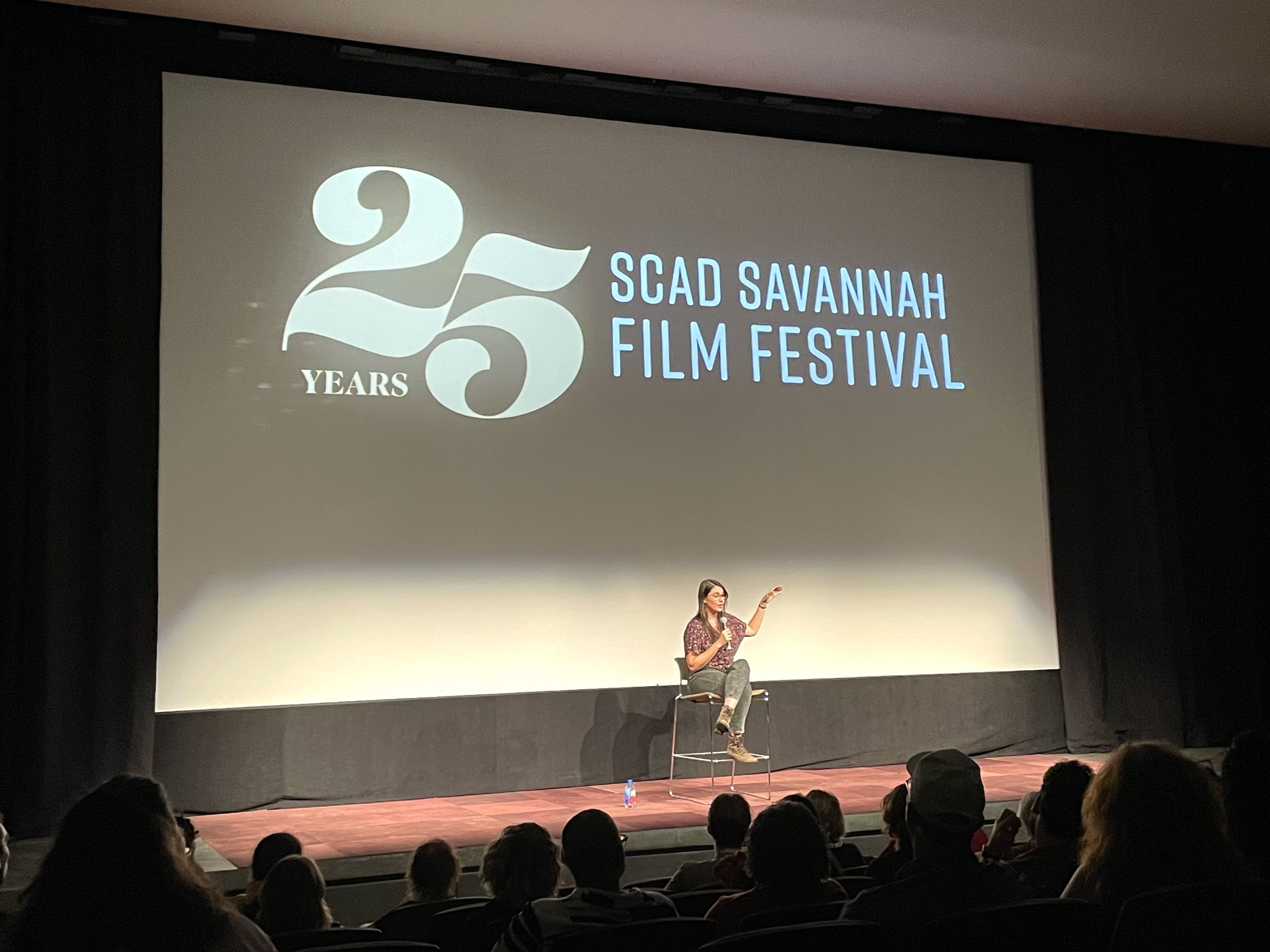
The affable Garcia-Pardo took the stage following the screening to discuss her work.

SCAD Savannah Film Festival presentation

"I directed this film and shot and co-edited the film, along with my two producing partners, Gwyneth Talley and Iftane Takarroumt. As a SCAD alum, it feels really special to be back here in Savannah," Garcia-Pardo said.

"The original idea for the film came when I met Gwyneth in 2015. She was in Morocco as an anthropologist on a Fulbright and had met Amal, and wanted to make a film but had never made a film before. At that point I’d been working at National Geographic as a one-woman band, by myself in the field, shooting, producing, and editing. One of the reasons I got into film is because it’s a truly collaborative process — on documentaries you have small teams where each person is contributing immensely. And that’s how we made this film.

"We wanted to share the film with audiences outside Morocco who have never heard of the sport, so we needed to give a little more context. We had to set up tbourida at the beginning as succinctly as possible, and who Amal was when we met her.

"When we met Amal she was at the peak of her career. She had been on TV a lot, but she basically got asked the same five questions over and over and nothing more. When she got pregnant, it shifted what our film was about. It became about how you identify yourself when the one thing you’ve tied yourself to is no longer in your life.

"We filmed over four years, going back once a year and interviewing Amal. The voiceover was built from those interviews. I wrote and condensed it. Iftane, one of the producing partners, recorded the voiceover as a temp track and we showed that to Amal. We wanted to make sure Amal felt represented. She was able to give us edits, and recorded the final voiceover herself. It was nice to have this collaborative process based on ideas she’d expressed over a period of time.

"My advice to SCAD students is do not to get fixated on accolades or prestige or the end-product. Find the joy in the process. Students might have an idea but think their skills aren’t there yet, so the idea sits on a shelf for years. It’s important to make the most of what you have and make it now."

Poster for "The Bardia"

Visit Gabriella Garcia-Pardo.


SCAD Lacoste unveils Promenade de Sculptures

October
24
2022
By
Tags:

For centuries, the medieval village of Lacoste in the Provence-Alpes-Côte d'Azur region of southeastern France has been an inspirational haven for artists. Claude Monet, Vincent van Gogh, and Pablo Picasso all sought out its rolling hills and lavender fields.

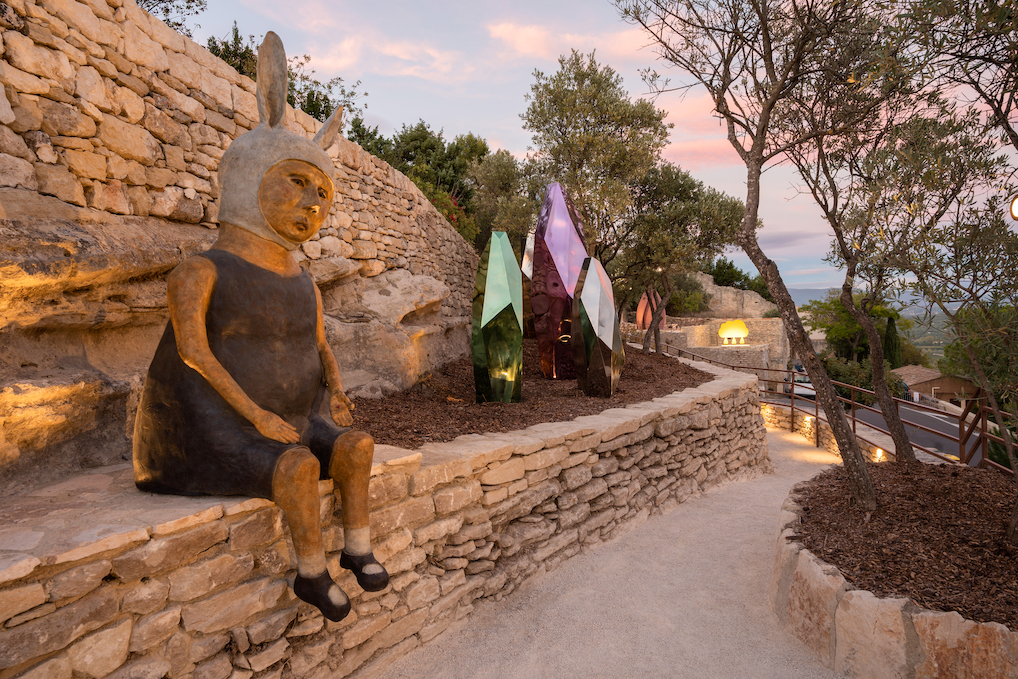
As the European location of the premier global destination for art and design education, SCAD Lacoste is now celebrating twenty years of creativity and innovation with the unveiling of Promenade de Sculptures. The permanent installation of ten large-scale works embodies the ingenuity of ten student, alumni, and faculty artists — diverse representatives of SCAD's talented network.

Curated by President Paula Wallace and Chief Operating Officer Glenn Wallace, and organized by SCAD Museum of Art associate curator Ben Tollefson, the works pay homage to the beauty and magic of the Luberon Valley. The artists were chosen from an array of artistic backgrounds. They were inspired by personal experiences in Lacoste as SCAD students or faculty, or through alumni enrichment programs like SCAD's prestigious Alumni Atelier. SCAD's top-ranked programs in industrial design, graphic design, painting, fibers, fashion, and animation are all represented.


"The village of Lacoste is a space full of rich history and wonderful, hand-hewn structures," says SCAD sculpture professor Justin Archer. "Rest and inspiration have been a critical aspect of this village and the Luberon region as a whole, drawing in remarkable artists and thinkers for centuries."

Of his new bronze sculpture entitled En Plein Air, Archer believes it "recognizes that ephemeral beauty, found in the Luberon valley, is a necessary source of peace and restoration. The opportunity to cast this work in bronze at SCAD Studio in Atlanta, gave me the ability to contribute to SCAD's legacy in the region by inspiring local residents, SCAD students, and visitors. I'm tremendously grateful."

Archer conceptualized En Plein Air in the spirit of the Greek sculpture The Winged Victory of Samothrace (190 B.C.). He aimed for  harmony between beauty and permanence, strength and ephemerality — qualities that parallel the medieval structures of southern France. Rising seven feet tall, the bronze-cast figure gazes purposefully across the sprawling landscape. Weathering on the surface of the sculpture evinces Archer's exploration of the fragmentation of the figure and, for the artist, "serves as a reminder that, although we experience hardship, we can breathe in the hope of creation and offer that to others."

Esteemed alumna Ashley Benton (B.F.A., painting, 1990) found inspiration for her sculpture during her time as a 2019 SCAD Alumni Atelier ambassador in Lacoste. It was then that she began a new body of work: a series of small, seated figures commingling human and animal forms. Expanding the scale of those works, her new sculpture is Benton's largest work to date. Her bronze sculpture has the tantalizing title When they asked her "why?," Odile thought about it and replied, "why not?," and the lock on her heart opened.

Milan Bhullar, originally from Pune, India, is a current M.F.A. student in the SCAD furniture design program. Her new work, Transfiguration, is the expansion of an idea Bhullar developed in a class at SCAD. Transfiguration is a series of five stainless steel menhirs of varying sizes and colors that combine to foster a sense of introspection and retrospection. Viewers experience their shifting reflections in the faceted structure with the expansive landscape of Lacoste as a backdrop.

A reflection on the ancient need to seek quiet contemplation, Bradley L. Bowers' Ooma is a response to our contemporary age and a culture bombarded with distractions. The double-curved dome references historic architecture while employing cutting-edge 3D bioplastic printing technology. The intricate geometric lattice work creates a permeable threshold, juxtaposing the interiority and solace of the self with the exteriority of the surrounding sweeping views of the Luberon Valley. Bowers (M.A., furniture design, 2012; B.F.A., industrial design, 2010) continues to amaze.
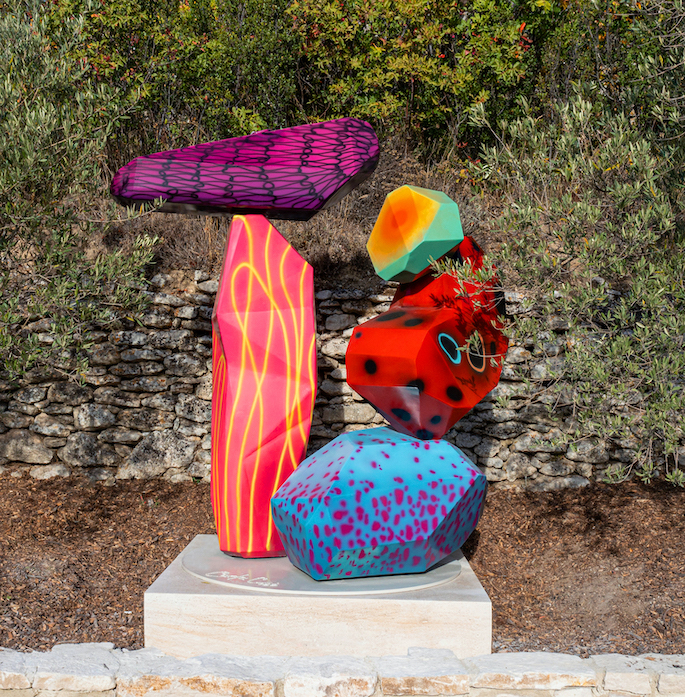
Carla Contreras, Harmonie, acier et peinture automobile, 2022.

Carla Contreras, Harmonie, acier et peinture automobile, 2022.

Inspired by the balance and creative energy of the Chattahoochee River ecosystems near her current home in Atlanta, Quito, Ecuador native Carla Contreras' first large-scale sculpture, Harmonie, is the result of a contemplative process driven by curiosity and fascination. With its vibrant colors and patterns, the work made from steel and automotive paint speaks to the "artist-nature-creation" phenomenon. Contreras (M.F.A. painting, 2020) connects this experience to being "attuned to a striking sunset by the river, the harmonious compositions of rock outcrops in the woods, the complexity of organisms like lichens, or the overwhelming smell of the lavender fields."

The powder-coated steel and Corten steel Tectonic Arch emerges from Kendall Glover's fascination with the arch form. Inspired by her collage practice, the work challenges viewers' assumptions of positive, negative, and dimensional space through the layering of colors and forms. As Glover (B.F.A., fibers, 2009) states: "When existing as a void, the arch may represent a passageway or portal. Stones of an archway hold each other in tension, distributing the pressure of the load. In Tectonic Arch, parts combine in a shared gesture, like alphabetic components that together form a phrase."

Andrew Herzog's background in graphic design and keen interest in language as a ubiquitous medium informs his sculptural practice. Herzog's seven-foot-tall, reflective, lenticular structure features a typeface inspired by French street signs. The title HERE/ICI reads either "here" or "ici" depending on the viewer's perspective. For Herzog, "public art should have some reflection of the space it inhabits." An homage to its location and its international audience, the work's reflective surface takes on the attributes of the landscape. Herzog (M.A., graphic design, 2013; B.F.A., graphic design, 2012) intends it as
a meditative reminder to honor the present moment, as mutable as the viewer's own experiences.

A paper airplane rendered in silicon bronze and embellished with silhouettes of the 12 zodiac signs, Melissa Richardson's sculpture Star-Crossed is imbued with universal symbolism. Its skyward orientation and the variable nature of its surfaces propose a sense of unity through our hopes and aspirations, our common connection to the stars, and our ever-changing human natures. Melissa is currently working towards her fashion degree at SCAD.

Wendy White's fabulously titled Raincloud (Neon Signs on Overcast Days) seems to achieve the impossible in aluminum and steel.  White (B.F.A., fibers, 1993) employs rain cloud as symbol to express the transience of a fleeting moment while making the intangible physical. In this work, White uses the precise shade "Curious Yellow," produced in 1971 by the Chrysler Plymouth car company, as a nod to the themes of Americana, car culture, and nostalgia that permeate the artist's larger oeuvre. White's cloud also engages pressing environmental concerns, serving, as the artist states, as "a reminder of weather's effect on human survival and nourishment as well as our ever-fragile connection to and dependence on the natural world."

Nuance in Repetition continues Justin Zielke's exploration of both realistic and abstract visual interpretations of the body to examine subjects of human experience. Zielke (M.F.A., animation, 2017) deployed  both traditional and digital approaches to create a bronze work exemplifies his fascination with the process of creation and its relation to individual identity. Through the obvious gestural marks rendered in grand scale, the larger-than-life-sized bust straddles familiarity and uncertainty.

In sum, the individual works represent something greater when experienced together in physical space. A grand unveiling on October 16, 2022 showed all the works in their permanent place. SCAD President Paula Wallace called the new Promenade de Sculptures as "a love letter to Provence writ large in the Luberon Valley. In celebration of 20 years of SCAD Lacoste, I cordially invite the public to tour our magnificent Promenade de Sculptures."
SCAD Lacoste unveils Promenade de Sculptures

Visit SCAD Lacoste.

Anacaona rising!

October
14
2022
By
Tags:

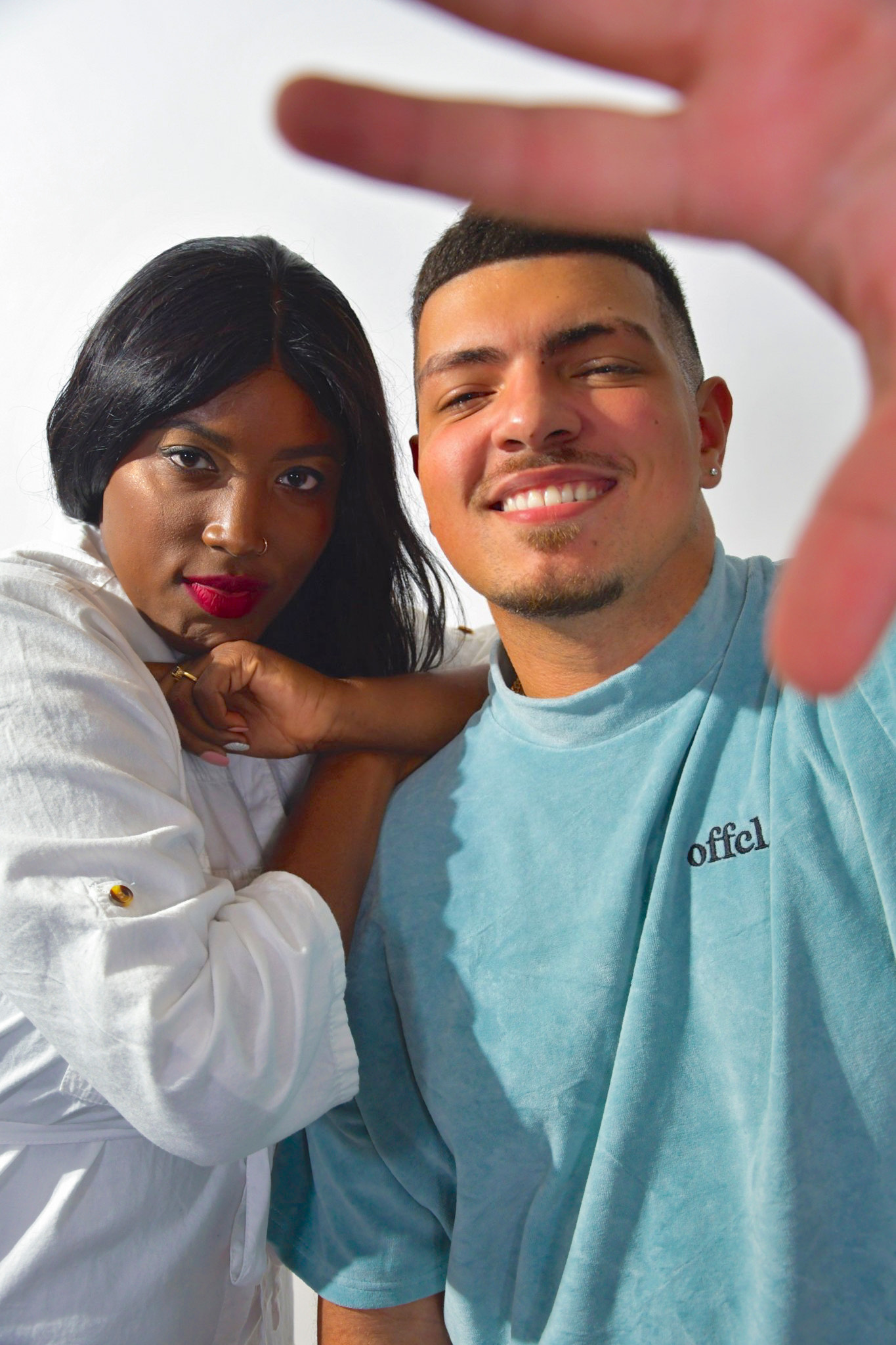
For two SCAD alumni, a conversation about the underrepresentation of Caribbean people led to the creation a production company, Anacaona Pictures.

Mahalia Latortue (M.F.A., film and television, 2020) grew up traveling between her family’s home in New York state and their native Haiti, steeped in storytelling as part of a culture not often pictured in media.  She was inspired to invest in her future while attending SCAD as a graduate film and television student amid Atlanta’s thriving entertainment scene.

At SCAD, met kindred creative spirit Erik Francisco Medina (M.F.A., film and television, 2020), a native of Puerto Rico and former journalist, embarking on a similar journey to tell stories about the intersectionality of culture. Their like-minds created natural telepathy for screenwriting at SCAD.

Since graduating in 2020, Medina and Latortue have continued their shared mission to create a space where all cultures are valued, respected, and uplifted within media. They have produced several award-winning shorts championing Caribbean culture, people of color, and women in film, television, and documentaries. The year, Latortue’s “The Last Good Day” was a finalist in the best short screenplay competition at the Nashville Film Festival.

Through their company, Anacaona Pictures, Latortue and Medina are telling new stories featuring diverse voices in-frame and behind the camera. They credit their Caribbean-Latino community for their continued success.

portrait of Medina and Latortu

Mahalia Latortue: Erik and I both love our cultures. The intersectional figure for our cultures is Anacaona, a Taíno chief, religious expert, poet, composer, and ruler of five tribes in Hispaniola. Eighty percent of Puerto Ricans identify as Tainos, and Anacaona was born on the island of Haiti. What's so fascinating about her is she is a woman leader who protected her tribes from extinction.  Anacaona is a symbol of strength. Who is a better icon to represent our writing and stories than Anacaona?

Erik Francisco Medina: My culture defines me. Before I'm Hispanic, I'm Latino. Before I'm Latino, I’m Caribbean. When we discuss more inclusive representation, it's exploring this intersectionality. We're fighting for our culture to be represented, uncompromised, and showcased as it is without diluting it.

Mahalia Latortue: When we co-wrote screenplays, everyone seemed to think it came from one person. As a writing duo, that is so hard to do. 

Erik Francisco Medina: Ninety-five percent of my film career is a collaboration with Mahalia.  I'm very grateful for that. SCAD opened those doors to see my career flourish and keep developing. We attribute collaboration and helping others to our continued success. As filmmakers, we can lean into the community and support each other no matter what. There's room for everybody in the industry as Latinos, being Hispanic.

Mahalia Latortue: What I find most inspiring about my Haitian culture is that even through adversity, people don't give up. It's an excellent metaphor for success, where you're striving towards your goal. Sometimes it's three steps forward, sometimes two steps back, and that's okay. That’s part of your journey to success.

logo for anacaona pictures


Visit Anacaona Pictures!


Emily Rodriguez: animation in motion

October
10
2022
By
Tags:

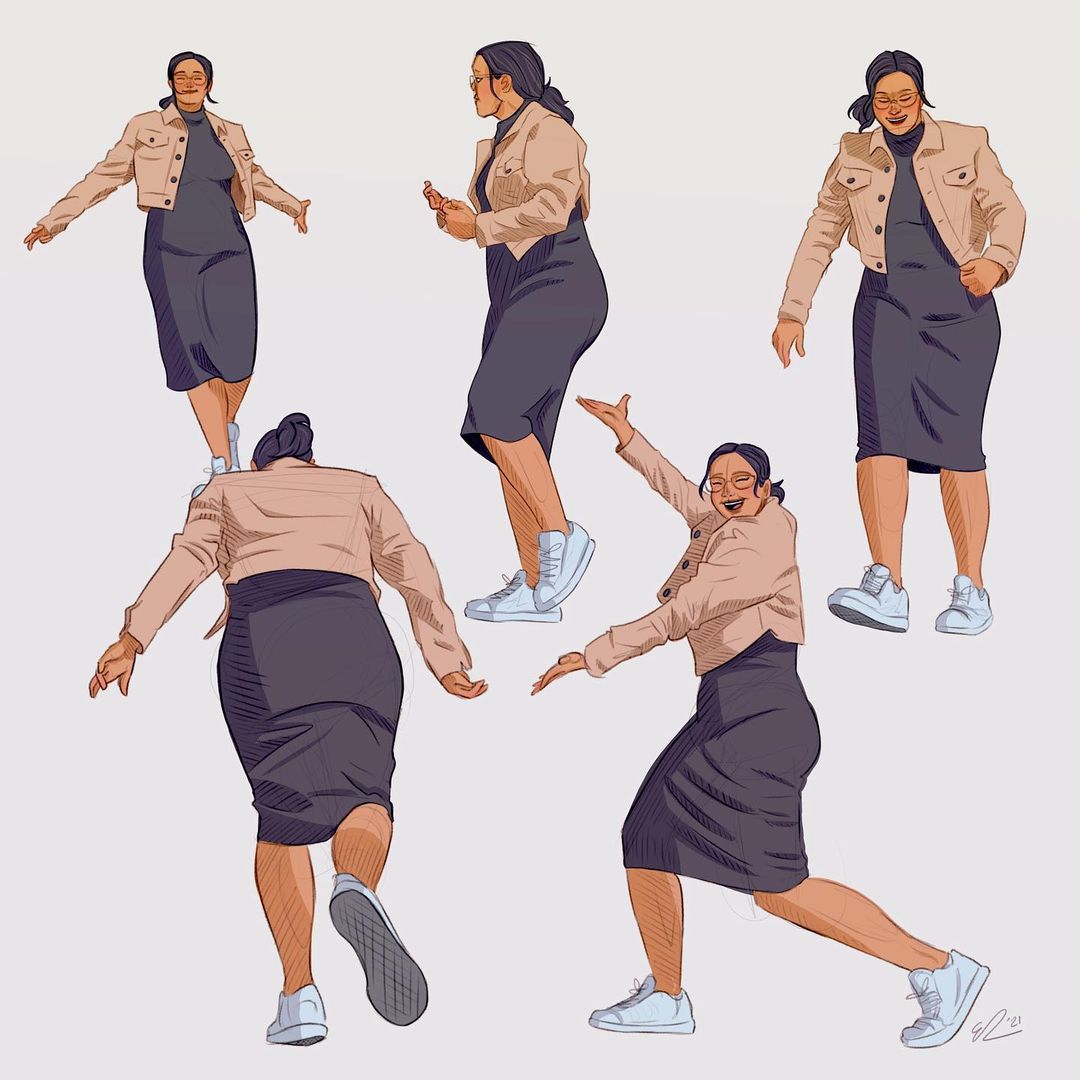
"When you know how you would move, you understand how the characters will move,” says Emily Rodriguez (B.F.A., animation, 2020).

A native of Miami Lakes, Florida, Rodriguez danced on a competition team in high school, until injuries redirected her career goals. Studying At SCAD Atlanta, Emily was able to connect her pursuits. “Through my experience with movement, I learned how to flow and transition between steps in my animation,” she says.

"Emily has a passion for learning and pushing herself to the next level, and she never settles,” says SCAD Atlanta animation professor Jenna Zona. “As my student, she was always looking for the next project to be better than the last and took her critiques seriously. Emily valued the learning process, resulting in her ability to adapt and grow quickly."

At SCAD AnimationFest 2022, Emily participated on the Alumni Voices panel, speaking about her work on shows including Netflix’s Paradise PD and Hoops, and Adult Swim’s Birdgirl. She is currently a 2D animator at Awesome, Inc. in Atlanta, GA.

animation artwork by emily rodriguez

Emily Rodriguez:

Growing up, I knew I had a talent, but lacked resources in South Florida. My mother supported my passion and enrolled me in all general art classes. I distinctly remember being the only 14-year-old in a room of nine-year-olds painting on canvas and trying to learn as much technique as I could.

When I arrived at SCAD, I had a significant learning curve. Animation is very technical. For the first year, I only studied 3D animation. I learned a ton, but it was a struggle. I love to draw, and I missed the illustration aspect.

When I met Professor Zona and enrolled in her class Animation: Digital Produciton and Compositing [ANIM 382], I realized, 'Oh, there's more to animation than 3D!' In one quarter, my creative world expanded enormously. Professor Zona's class was the starting point for me to develop the skill I loved: traditional 2D animation, which I now do professionally and clicks in my brain like nothing else. The projects I created in Professor Zona's class helped me land my first internship at Bento Box. I told Professor Zona my goal; she pushed me to achieve it. 

At SCAD, I gained confidence and affirmed my passion for animation. I'm excited to be an animator because it has been my dream growing up since middle school. I hoped I would be an animator, but before SCAD, I needed to figure out how to get to where I'm right now. Every day is a blessing that I get to go to my job and make art for a living and enjoy it. I work alongside several SCAD alumni at Awesome Inc. Growing professionally together is the best thing.

As a Cuban-American, my work ethic is my heritage. I'm relentless in honoring the sacrifices of my family. I carry the work ethic wherever I go and in everything I achieve. I want to make them proud. My success and achievement are in their honor.

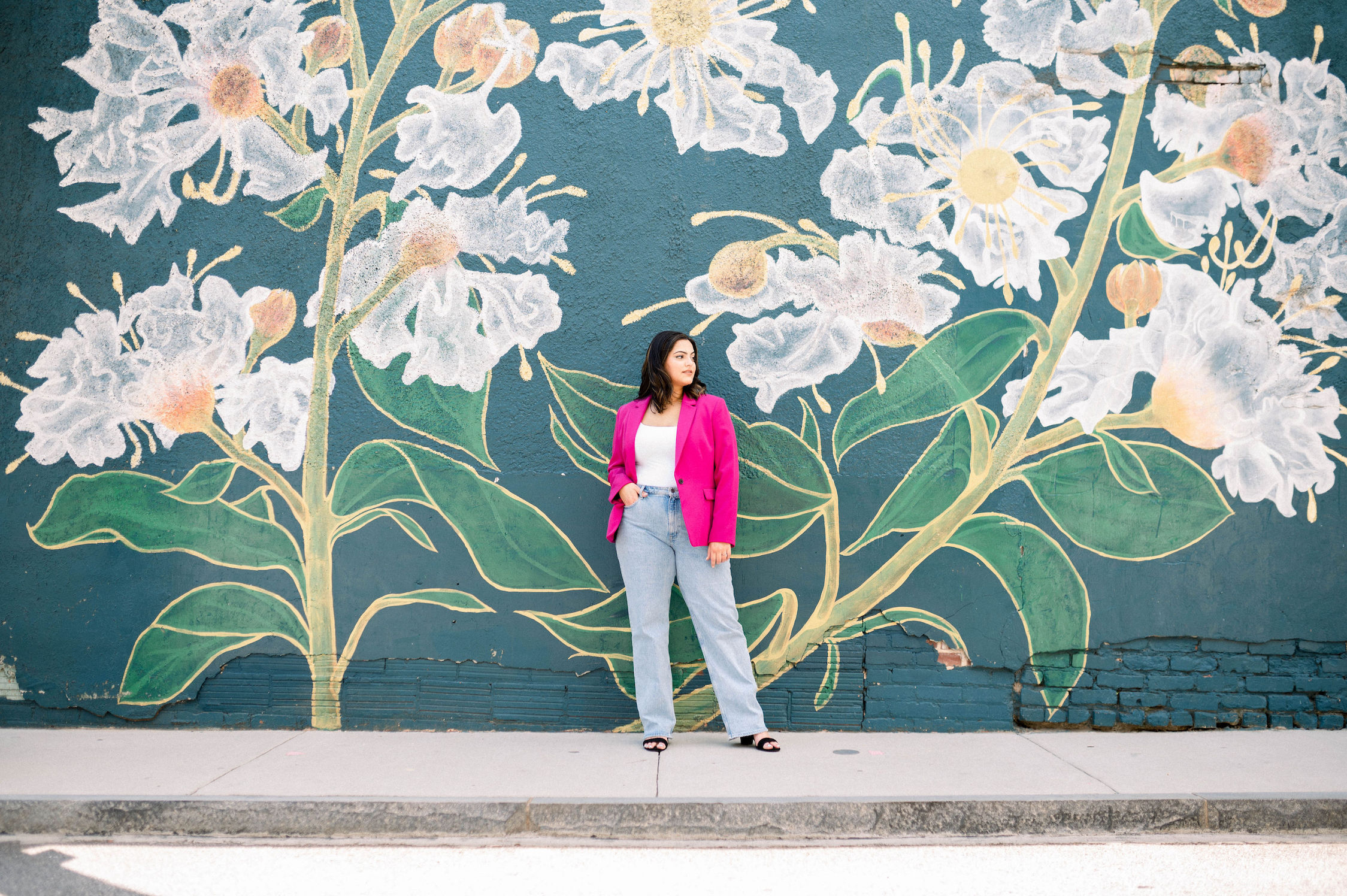
portrait of emily rodriguez

Photos of Emily Rodriguez by Caitlin Smith, Honey Photography & Planning


Heejung Kim: all in her backpack

October
4
2022
By
Tags:

"As someone whose career is multidisciplinary, I learn a lot as I go," says Heejung Kim (B.F.A., fashion marketing and management, 2017).

Working as art director for agency Harper + Scott, Heejung is part of the team that launched wildly successful backpack company Dare to Roam in 2021. Owned by R&B megastar Ciara, DTR has been acclaimed for its colorful, antimicrobial accessories by everyone from HYPEBAE to Oprah.

"I appreciate my title as art director, but it's not something that wholly encapsulates all the different tasks that I'm doing on a day-to-day basis," Heejung says. "I'm the person where, if you need help, I'm going to be there to support in any necessary capacity. That's the best way to learn about the production side, the marketing side, and all different aspects of a brand."

A native of Seoul, Korea, Heejung belongs to the exclusive coterie of alumni who began their SCAD experience in Hong Kong and finished in Savannah. Now based in San Diego ("It's eye-opening how much creativity comes out of this city"), she embodies the best of SCAD fashion marketing and management.

Heejung Kim:

On preparing for a creative career: "Harper + Scott hired me as a graphic designer because they saw my SCAD portfolio. That says a lot about the fashion marketing department. Professor Alessandro Cannatà taught me hard skills, like how to apply my photography minor to a campaign. Professor Oscar Betancur pushed me to be a better creator and try different approaches to get messages across. At the time, fashion marketing still primarily meant retail and merchandising, and Professor Betancur brought a fresh perspective with his multimedia class, which was visionary."

On creating a successful brand launch: "I touched on all aspects of building Dare to Roam, from prototyping to branding and speaking with the client. We launched with our hero product, the Prodigy backpack, which is minimal and antimicrobial and water-resistant, so you can wipe it and go. I got to be behind the camera and watch the campaign take shape, helping photograph and produce those shoots. Now, one year later, we're in Target and on Good Morning America. It's amazing."

On working with a Black, famous, female founder: "Working with Ciara as a founder has been educational. I've never worked with such a high-profile celebrity before, and it's inspiring to see how she's able to market strategically. Dare to Roam is only one aspect of her multi-multi-entrepreneurial goals, and it's exciting to see how she and her team think through what she wants to put out there."

On SCAD as the differential: "I don't take my SCAD education for granted. I use all the skills that I learned at SCAD: social media, website, and email marketing, creating look books, all directly applied to my job. I actually had the opportunity to look back at my SCAD portfolio recently, and I'm really proud of the professionalism that I put into my work. I miss living in Savannah and working in SCAD buildings, because that's where inspiration finds you. I've brought that vibrancy with me on my creative journey as I continue to move forward and grow."

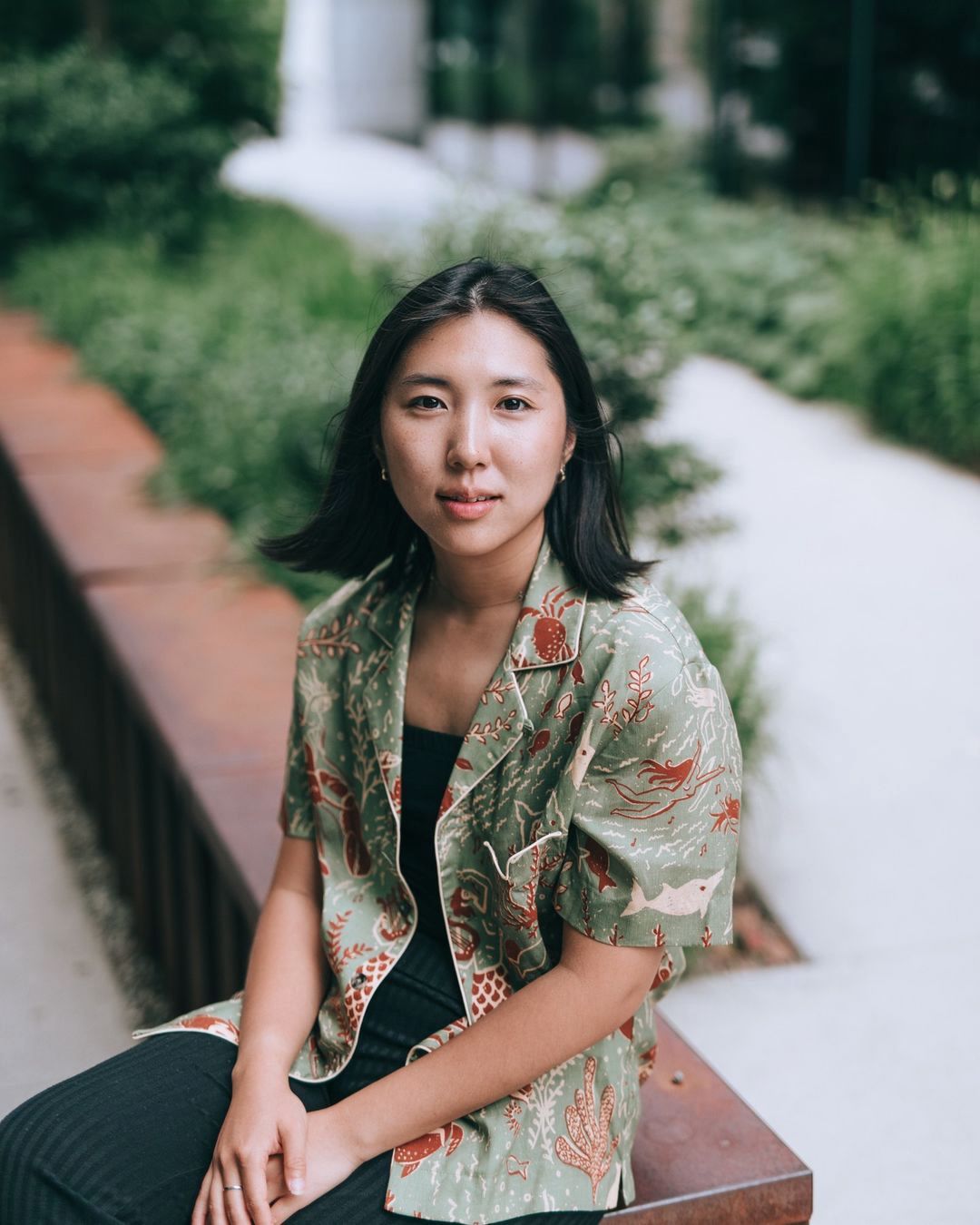
portrait of Heejung Kim

Photo of Heejung Kim by Minnow Park.


"Tokyo Rose" creators bloom

September
26
2022
By
Tags:

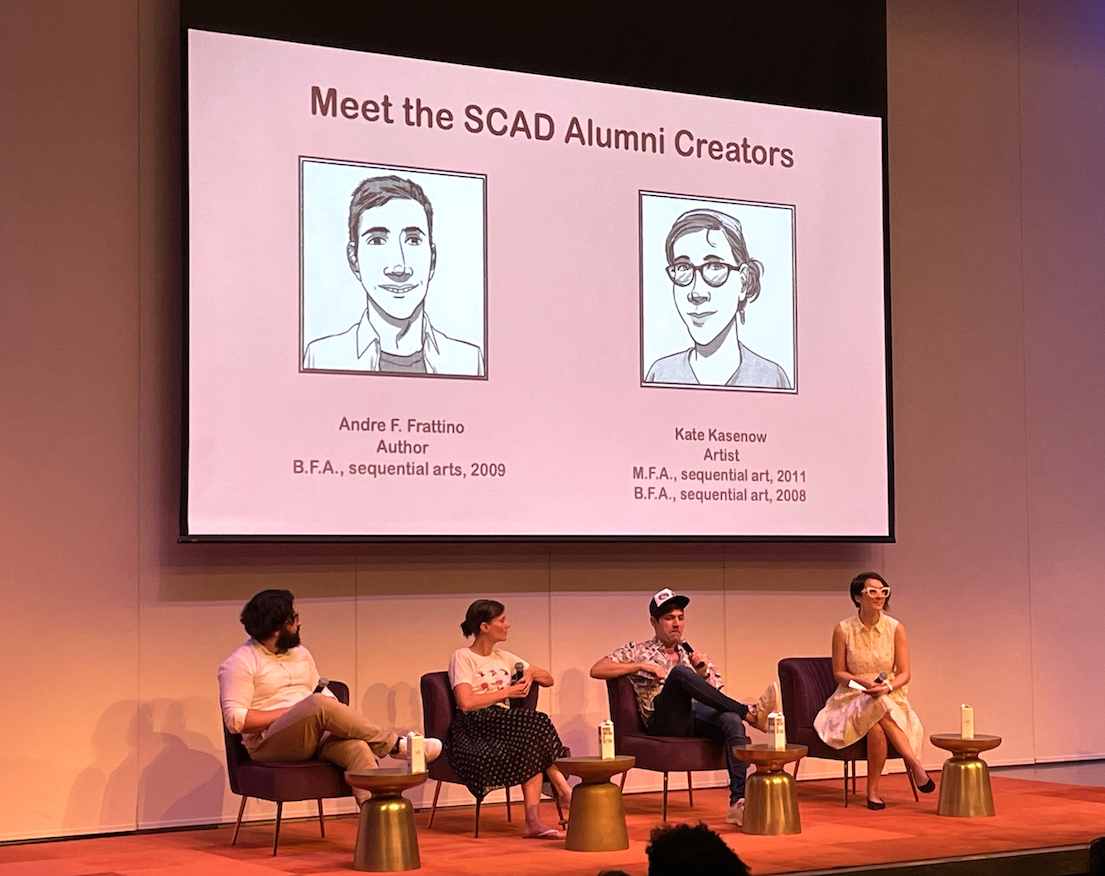
"How many of you here are studying sequential art?" asked Andre R. Frattino from the SCAD MOA stage. Across the theater seats, almost every student's hand went up. Frattino: "Those of you raising your hands, how many of you write and draw?" Nearly every hand stayed up.

Frattino (B.F.A., sequential art, 2009) and collaborator Kate Kasenow (M.F.A., sequential art, 2011; B.F.A., sequential art, 2008) were back at SCAD to discuss their intersecting professional journeys. The occasion was the publication of their brand-new graphic novel Tokyo Rose: Zero Hour (Tuttle Publishing, 2022).

Panel

Already reviewed enthusiastically in Forbes, the graphic novel tells the true story of Iva Toguri, a Japanese-American woman persecuted as a propagandist during World War II, and her postwar redemption. As Kasenow put it: "I'm telling her story—it's not mine."

Frattino mentioned that his grandfather was an artist who'd been a Marine at Pearl Harbor in 1941. "He would tell me about his experiences in the war, and when I watched war movies growing up as a kid, there was always this Tokyo Rose character, this disembodied woman's voice being broadcast, standing in for the Japanese in the Pacific, and I thought who is this? Is this the enemy?"

Frattino researched Toguri's story, deciding to tell it in graphic novel form. Over oysters at The Crab Shack on Tybee, he convinced Kasenow to come on board. They consulted with Asian American and Pacific Islanders regarding issues of authenticity and sensitivity. Recounting this process led to a larger discussion of the importance of collaborating.

Kasenow: "I made a lot of friends at SCAD, including Andre.  We met at one of my first classes and collaborated during school. Collaboration is immensely important, especially in comics. The relationship you have with other artists, writers, concept artists, editors—everything is collaborative. Comics is a storytelling medium, so you're not just thinking of your own perspective on things, you're constantly getting feedback from other people."

Frattino: "In some instances, when I work on a graphic novel, I'll write and illustrate it. My style is like Bruce Timm's Batman meets Archie Comics. On certain stories I might collaborate with someone whose visual style fits better. When I went to SCAD, I met Kate and saw her art and how intricate and delicate it was. I'd never seen illustration done that way. I thought, I've got to work with her!"

The pair funded Tokyo Rose: Zero Hour via Kickstarter. When the project was acquired by Tuttle Publishing, a key member of the creative team joined. "Tuttle said they could get Janice on board," Frattino said, referring to veteran letterer Janice Chiang. "Janice showed how the lettering could work with visual elements to enhance the story," Kasenow added. "We were lucky to work with her." 

Collaboration, teamwork, patience, pliability, passion: all accounted for. As Kasenow put it: "The most important thing is the respect you have for the people you're working with."

Poster

Visit the official page for Tokyo Rose: Zero Hour by Andre Frattino and Kate Kasenow.

Event presented by Director of Alumni Programs Grace Grund and career advisors Erin Berkery-Rovner and Juan Murillo Noguera.

Learn more about SCAD career and alumni success.

SCAD Atlanta debuts XR stage

September
23
2022
By
Tags:

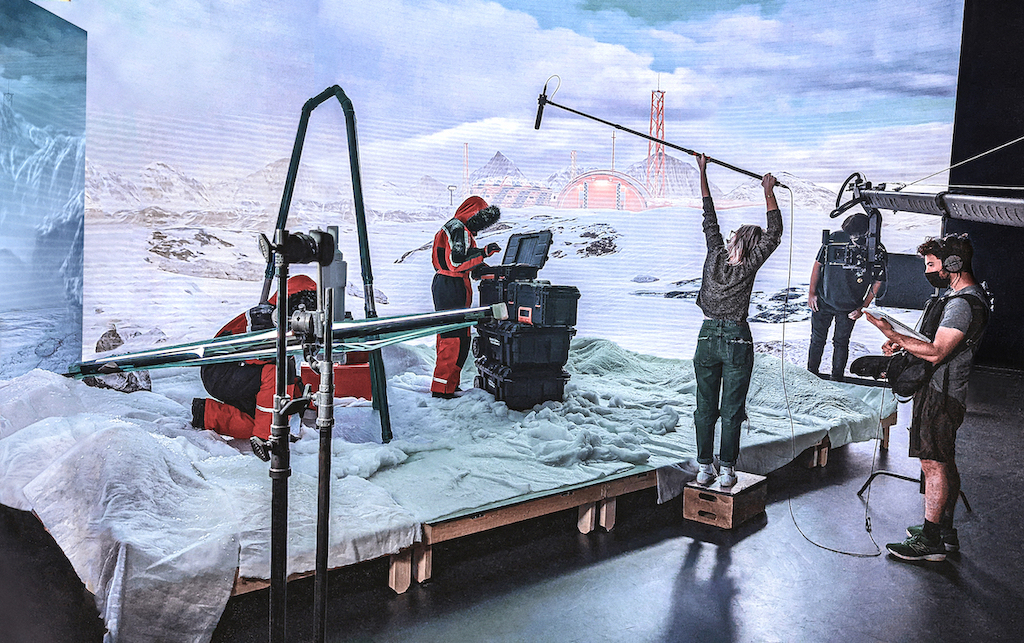
SCAD is proud to announce the opening of the university's state-of-the art extended reality (XR) stage for virtual productions at the recently expanded SCAD Digital Media Center in Atlanta. The debut of the XR stage, or LED volume, will take place this week during SCAD AnimationFest, the university's annual festival dedicated to exploring the latest trends in creative technology in entertainment.

Extended reality (XR) technology represents an innovative game-changer for SCAD students pursuing professions in entertainment and digital media. Extended reality technologies are groundbreaking innovations that represent filmmaking's next frontier. With the opening of the SCAD Atlanta stage, SCAD is the only university in the world with two LED volumes, following the opening of SCAD's first XR stage at Savannah Film Studios in 2021.

SCAD's LED volumes are also the largest at any academic institution in the U.S.. Students from top-ranked degree programs in the SCAD School of Animation and Motion and SCAD School of Film and Acting will be among the first in the world actively working and collaborating on LED volumes, taking their filmmaking and storytelling capabilities to new heights.

SCAD is committed to providing unparalleled resources and opportunities for students and alumni, helping empower students with an elite, industry-ready skillset upon graduation. SCAD Atlanta's trailblazing LED volume is an investment in the future and reinforces the university's contributions to Georgia's multibillion-dollar film and television industry.

"Collaboration and innovation are two of the cornerstones that make SCAD the only film school in the country offering students the opportunity to create content on two LED volumes," said SCAD School of Film and Acting dean Andra Reeve-Rabb. "Students from film and television, performing arts, production design, interactive design and game development, sound design, and visual effects have already begun collaborating in these industry-standard, cutting-edge spaces. Our students are working on professional sets all over Georgia because we train them to be working professionals in environments like these, singular only to SCAD."

Atlanta's XR stage was designed exclusively for SCAD in collaboration with Atlanta-based MEPTIK, an extended reality and virtual production studio co-founded by SCAD alum Sarah Linebaugh and Nick Rivero. At SCAD AnimationFest, Rivero will host a session discussing the evolution of this production technology and how this new frontier will impact content creation across the globe.

"SCAD is already leading the way in the future of education, and the completion of this stage is lightyears ahead of anyone else in thinking and execution," Rivero said. "SCAD is setting the standard in the future of our industry. This facility is on the leading edge of what's next. Whether film, television, or experiences, this technology, powered by disguise, is paving the way for what's ahead in our digital future."

SCAD is recognized as the preeminent global leader in art and design in higher education. In 2021, SCAD was named by The Rookies as the No. 1 university in its list of the Top 50 Creative Media and Entertainment Schools and Colleges in the World, while Animation Career Review consistently ranks SCAD as a top university for animation and visual effects. MovieMaker magazine recently named SCAD on its 2021 Best Film Schools in the U.S. and Canada list for its outstanding production training. Most recently, the university was named Art & Object's Best Art School in the U.S. for the second consecutive year.

View virtual and in-person attendance options for SCAD AnimationFest, to experience the XR stage panel on Friday, Sept. 23.

View virtual and in-person attendance options for SCAD AnimationFest, to experience the XR stage panel on Friday, Sept. 23.

Dominique Clayton: in her time

September
20
2022
By
Tags:

"Time is a currency to me," writes Dominique Clayton (M.A., creative business leadership, 2018) in her essay in A Nickel Bag of Time. "I have to trade, sell, borrow, and sometimes steal it to get what I need done."

Clayton's essay, featured in the new issue of arts broadsheet FIND PEACE. KEEP PEACE., addresses the combined challenges of life as a gallerist, entrepreneur, and married mother of three. She may make it look easy — but like the old song goes, it ain't necessarily so.

After earning her master's degree via the virtual SCADnow platform, Clayton came to Savannah for the first time during deFINE ART 2022. Her generative insights lit up a panel on radical approaches to arts management.

Now, having brought her brick-and-mortar Dominique Gallery into the virtual world ("a good shift for me"), Clayton is working towards a new definition of what a 21st century gallerist can be.

What follows is condensed from an extensive, wide-ranging conversation.

Dominique Clayton:

Although I started my first gallery and exhibition program in 2015, it wasn't until 2018-9 that I really began going the extra mile, trying to build the network and do all things at the same time. During the pandemic, there was a lot of outreach to me and Black writers and artists to tap into our feelings and our insights on how to make change.

Institutions and collectors were wanting to make some kind of amends, or open up a dialogue, as if this was a brand-new issue. And a lot of the younger artists' protest art, and Black identity art, was created and seen through this lens. But if you were to look at works from Black artists in the 1970s, the images, the feelings, the struggle, were identical. It's a cyclical thing, where this new generation of artists and audiences, it's fresh to them, and it's forced them to be a bit more reflective. Those who care to look back and see what happened in the past and how it influenced today, those are the artists and thinkers who I respond well to.

A lot of my clients and the artists I work with are skewing younger; they're digital natives. One thing I ask these Instagram artists: How would anyone find you if Instagram broke? Where are you archiving your studio work? I think about my children, when they're in college, learning about this time in the arts, where are they going to get their information? So, I keep magazines. I keep newspapers. I keep clippings, and brochures from art fairs. As an older millennial, part of me is still analogue. One of the planned pivots for Dominique Gallery is to launch an in-house publishing wing, and provide that service for artists and for galleries that I collaborate with.

SCAD helped me figure out that I don't have to limit myself. The masters program in arts leadership was the best way for me to fully immerse myself in the arts and come out with useful management skills. In my cohort, we were all virtual friends, we came from different communities, some right out of SCAD undergrad, some were older and making a career switch. My colleague Lauren Jackson Harris (M.A., creative business leadership, 2017), founder of Black Women in Visual Art, is an art sister to this day. In October, I'm going to Venice with Lauren for an artists' retreat in honor of Simone Leigh and her participation in the Biennale. At the end of October, I'll be back in L.A. curating a show for an art auction for the Wearable Art Gala, an initiative from Ms. Tina Knowles and Richard Lawson.

When I have control over my time, I feel like the ultimate hustler. Time is truly a commodity. Five more minutes to sleep, or five more minutes to finish that article due at midnight—you don't realize how important time is until you have none left.

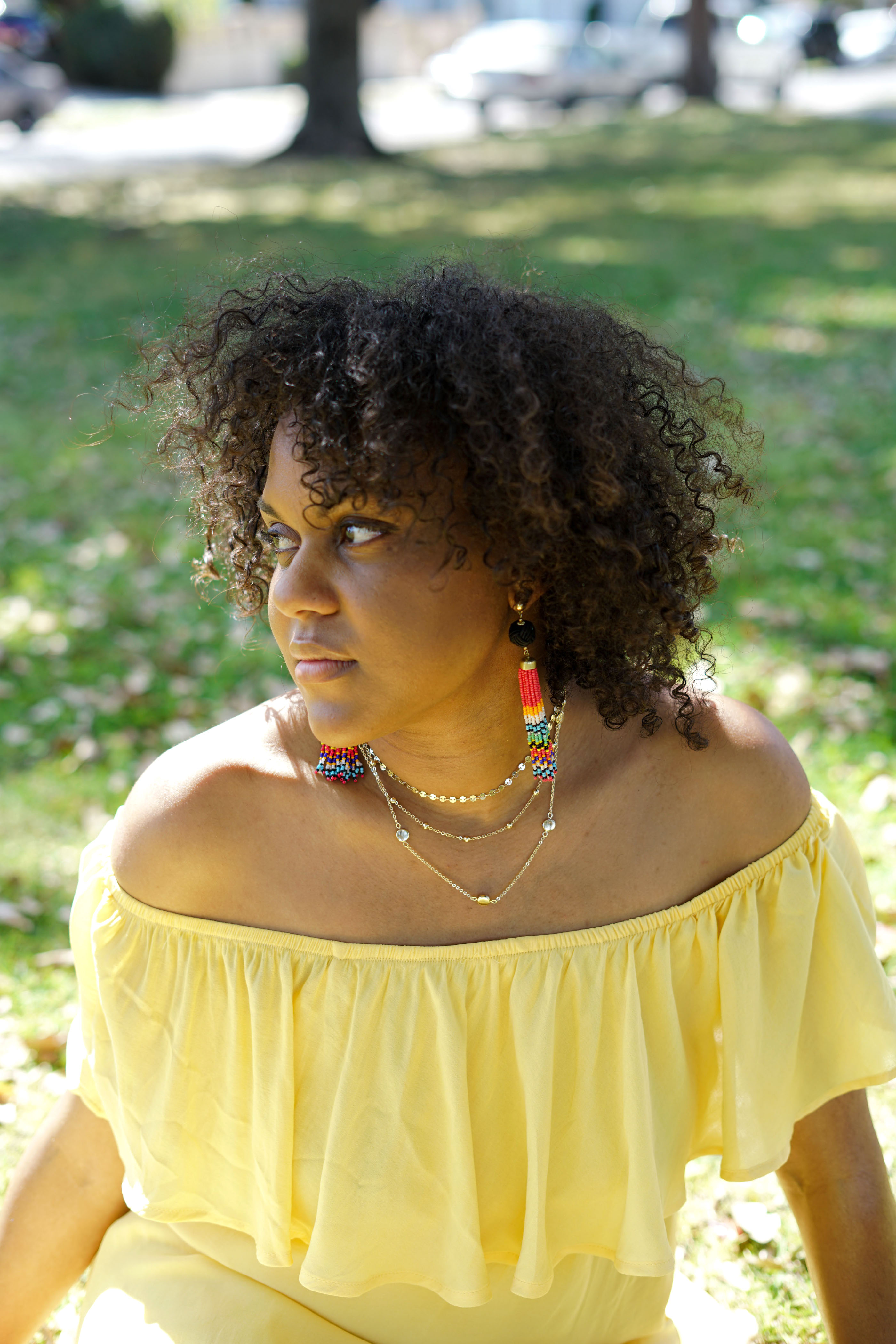
portrait of dominique clayton

Photos of Dominique Clayton taken in South Central, Los Angeles, by Texas Isaiah.

Purchase the new issue of FIND PEACE. KEEP PEACE. to read A Nickel Bag of Time in full.

Johana Moscoso: she dances salsa

August
12
2022
By
Tags:

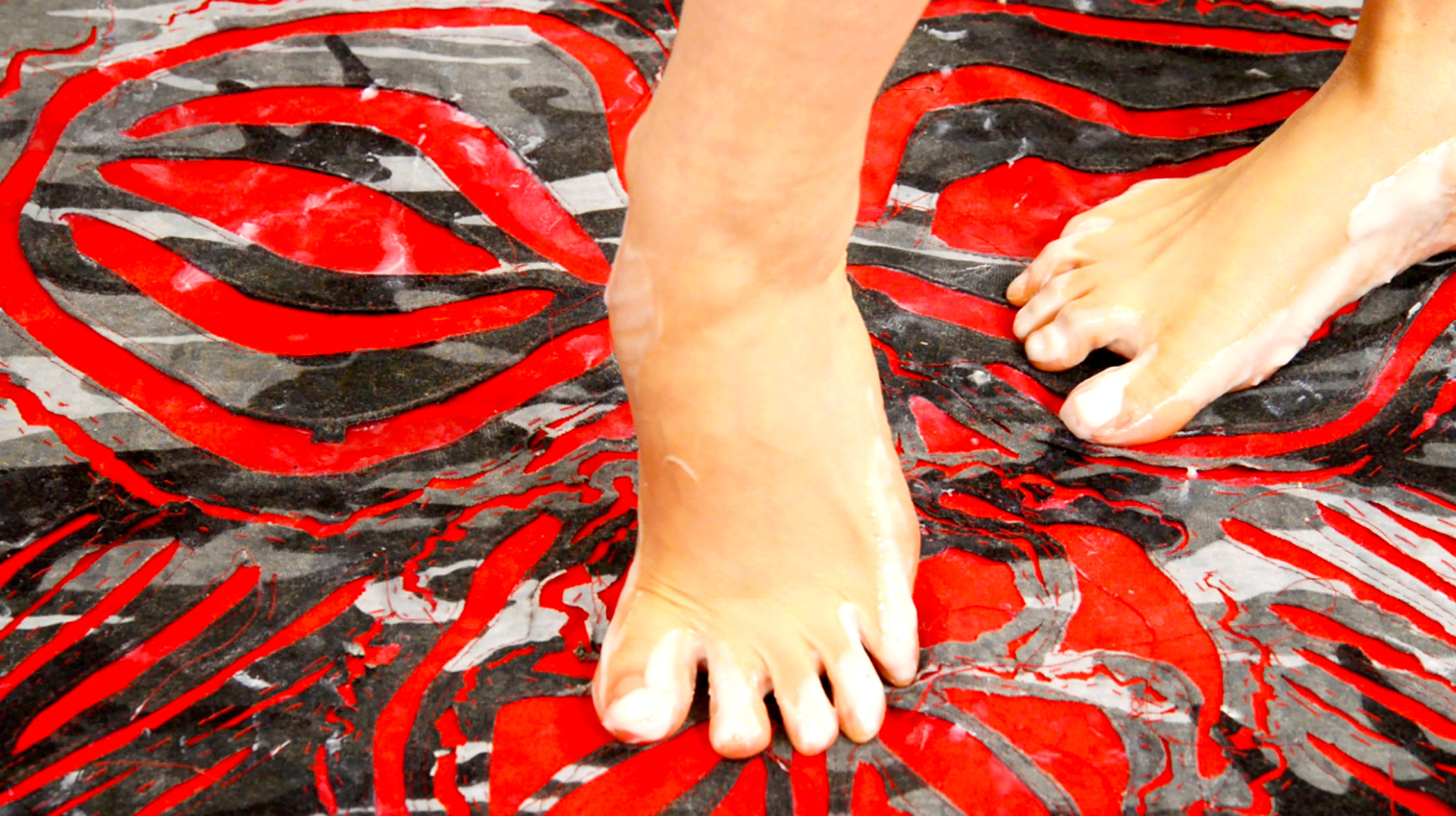
"I put glue on my feet and I dance," said Johana Moscoso during her show-opening talk at SCAD MOA. The Bogotá-born artist was referring to an important step—literally—in her process, as she preps fabric for the final addition of metallic foil. The vivid dividends of her footwork dominate her new exhibition, Entre sistemas invisibles.

Moscoso (M.F.A., sculpture, 2009) hand-stitches layers of fabric together using a traditional technique called mola. She explained that the reverse applique method originated with indigenous Latin American communities like the Kuna. Layers of cloth are sewn together, then cut away to reveal designs and symbols. "Their stitching is invisible, because that's how incredible the indigenous work is," Moscoso said, affirming the inspiration for the title of her show.

The gallery talk was a lively conversation between Moscoso and SCAD Museum of Art assistant curator Brittany Richmond. Richmond mentioned that Moscoso, a graduate of SCAD Atlanta, was visiting the university's Savannah campus for the first time, in connection with her exhibition.

A number of SCAD students and alumni inside the single-room gallery were Colombian. Seeing an old classmate across the room, Moscoso spontaneously exclaimed: "Oh my goodness, I know that guy!" She then acknowledged her sweetheart Scott Carter (B.F.A., painting, 2008). Richmond, laughing: "A lot of SCAD love happening here."

Returning to the work, Richmond challenged attendees: "Does anybody see sculpture or what you think of as sculpture in this room?" A couple tepid hands. "I think these works all have a sculptural presence, you can feel their physicality and the materiality in the room," the curator said.

Richmond wasn't wrong. The ceiling-hung works addressed but did not touch the walls. The laser-cut textiles featured serpentine embroidery both abstract and representative. The work told stories without dictating fixed narratives. The mandala-like complexity of "Entre camuflados" would've sent Rorschach into apoplexy.

On the floor, three video monitors showed Moscoso's adhesive hoofing in mud and glue. The artist explained the relevance.

Johana Moscoso, "Entre sistemas invisibles," 2022, video still

Johana Moscoso, "Entre sistemas invisibles," 2022, video still

"Dances are part of my practice," she said. "With my family, every time we meet it's a party. Dance becomes something normal. In Bogotá, we'd take the bus and the driver would be blasting salsa, so it's part of everyday life.

"Making this work, I was dancing to Celia Cruz. In the 1970s she was with Pacheco and all the Fania musicians in New York, playing cha-cha and mambo in all the clubs. In classic salsa, the male was the one who got the majority of the attention. The only woman among them was Celia Cruz, so the music I danced to all over my pieces with glue, and foil transfers, was Celia Cruz."

An immigrant to the United States, Moscoso has lived and worked in the U.S. for the past 14 years. She grew up during a time of unrest in Colombia, and it will be fascinating to see how her forthcoming work reflects Colombia's promising new political reality, including the recent election of President Gustavo Petro and Vice-President Francia Márquez, the first Afro-Colombian woman elected to high office.

One imagines she will continue to dance.

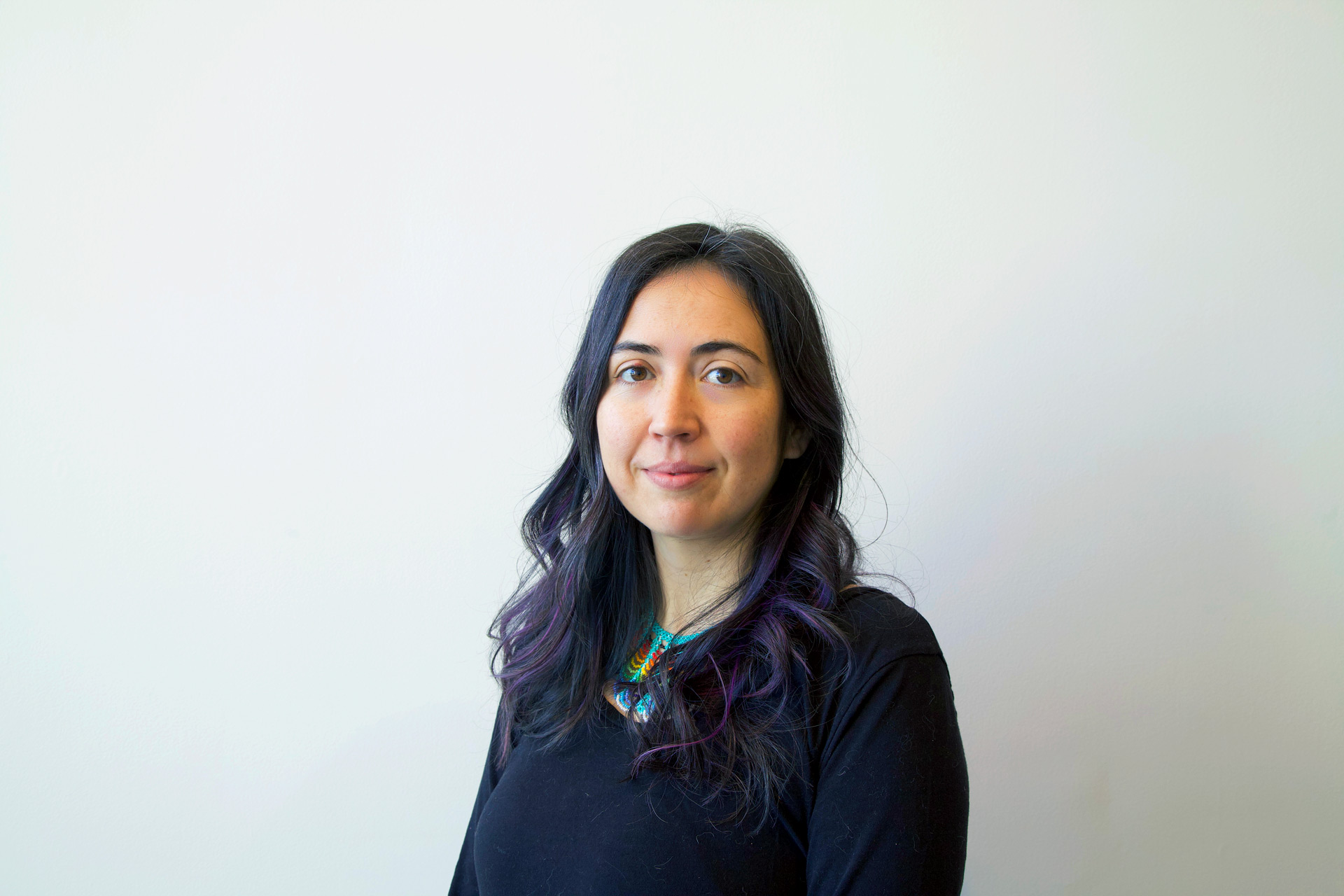
A picture of Johana Moscoso

Experience Entre sistemas invisibles at SCAD MOA through Oct. 31, 2022.


Gonzalo y Todd: ¡arriba!

August
9
2022
By
Tags:

Their dynamic is potent. This summer it pointed to the Luberon Valley.

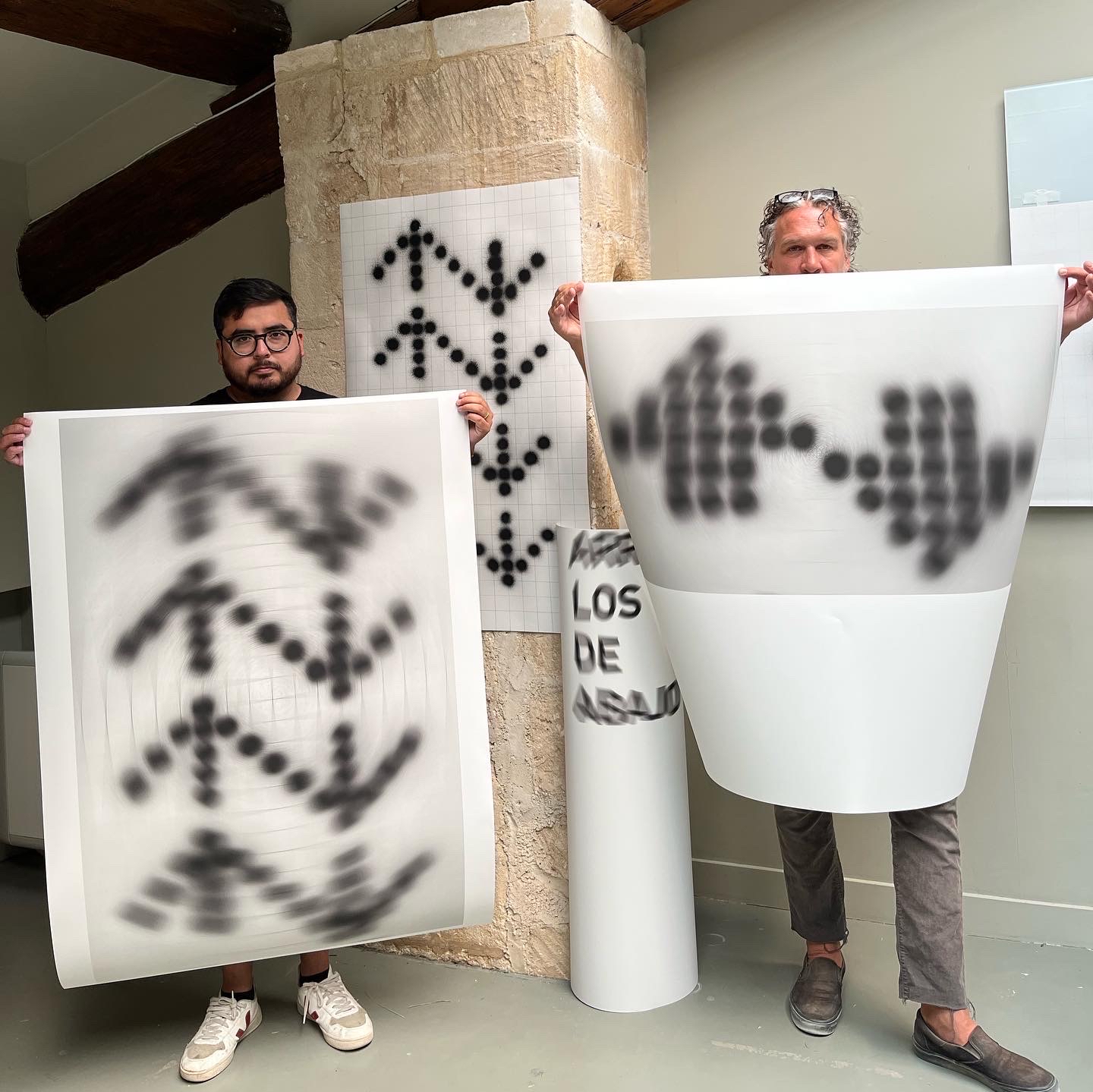
In July, Gonzalo Hernandez (M.F.A., fibers, 2019; M.A., painting, 2018) traveled to SCAD Lacoste as an Alumni Atelier associate. Professor Todd Schroeder was there teaching painting. Working in person, the duo began to create large-scale prints exploring layered techniques.

"Participating in the Alumni Atelier program in Lacoste allowed me to develop multiple projects," says Hernandez. "Knowing that Todd was there was an extra incentive, providing us with the opportunity to work together."

Schroeder has been a mentor to Hernandez since 2017 when Gonzalo—then an M.A. painting student—took his class Experiential and Conceptual Art (PNTG 766), exploring Surrealism and Dada and learning, in Schroeder's words, "to foreground objective strategies aimed at generating composition."

After earning his master's degree in painting, Gonzalo worked with Schroeder as a teaching intern. Hernandez acknowledged Schroeder's influence in the title of the painting "):) (gracias Todd)" in his solo show at SCAD MOA in 2020. The pair collaborated on the exhibition "SIH" —an acronym for Spanish Is Hard—at THE END in Atlanta in 2021. Something larger was taking shape: originally student and professor, the two became closer to peers.

"With my collaborations with Gonzalo, I focus my attention on a kind of hypersensitivity to associations, and I think Gonzalo does the same," Schroeder says of their summer in the studio and classroom spaces of SCAD Lacoste.

Gonzalo Hernandez and Todd Schroeder holding up prints

"Todd drew an arrow up and an arrow down," Hernandez says. "I began thinking about what that means, conceptually, and I thought of ‘los de abajo' and the sense of ‘let's pull up the people who are underdogs.'"

A native of Lima, Peru, Hernandez mentions the popular TV program ‘Los de arriba y los de abajo' "which was a bit like Romeo and Juliet, about an upper-class woman who falls in love with this poor guy from another level of society. It was one of the biggest telenovelas that we had in Peru in the 1990s, with lots of references to its political moment."

In the new work, text and image comingle, optically jittery, indicating upheaval and urgent motion.

"We wanted to play with the idea of how does it feel when things are going up and down?" Hernandez says. "The process began with Todd making a painting, then we'd take a photo of it and put it into Photoshop and use a blur filter to give the idea of movement. At the same time, I'm creating text, creating layers, seeing how it goes."

That exploratory mentality is a key to the process that Schroeder instilled in Hernandez at SCAD. Foregrounding process over result, the painting professor emphasizes staying "open to developments no matter how peripheral to any original conceit; in fact, to look to the peripheral for guidance."

Later this year, Hernandez will manifest a full slate of projects, including a SCAD commission for Design Miami and a solo exhibition at La Galería Rebelde in Guatemala, while Schroeder will return to teach at SCAD Savannah.

There are more arrows in their quiver.