Skip to main content Accessibility Policy

SCADpro Fund invests in Mini City Atlanta

January
21
2021
By
Tags:

SCADpro Fund has partnered with graphic design alumna India Hayes on her new venture, Mini City Atlanta. "We are proud to fund India’s work as she brings transformative change to under-served communities in Atlanta and beyond," says SCADpro Fund managing director Ray Crowell.

As stated on Mini City’s homepage, the challenge is clear:

US taxpayers spend $10 Billion annually due to homeless citizens remaining chronically homeless. This cost includes a range of services from ER visits to jail stays. This is inhumane for our homeless citizens and not sustainable for cities. ID alone cannot combat homelessness, but it is the key that can stop the cycle of homelessness.

Mini City Atlanta (MCA) helps the homeless population obtain government issued identification. Organizations and volunteers can access MCA’s web-based platform to assist those in need with filling out forms in order to acquire an ID that allows them to receive government-funded aid.

"Our primary goal is to combat chronic homelessness," says Mini City CEO Hayes (B.F.A., graphic design, 2010). "By placing identification cards into the hands of the homeless and those who care for them, we can help these individuals get housing, jobs, food resources, and educations."

As Hayes explains, a birth record is essential to solving this epidemic: "Our software is able to work with other states’ databases to ensure we are able to track down that information. If we can prove who you are, we can help you get the help you need."

Hayes grew up in a home of advocates. Her godmother founded the Southeast Regional Economic Justice Network and her mother, a founder of Youth for Social Change, traveled internationally to champion the rights of the oppressed and disenfranchised. "I learned a lot from those women and I felt I needed to continue that legacy," Hayes says.

After graduating from SCAD in 2010, Hayes joined CNN as a designer, creating info-graphics and transition screens. While she gained "a lot of experience working with high performing teams," she could not ignore an inner voice calling her back to social service and community activism.

Leaving CNN, Hayes joined the Atlanta Tech Village where she helped homeless women create resumes, a mission inspired by her favorite SCAD professor, Peter Wong.

"When I was at SCAD I had to create a resume for his graphic design class. He kept telling us to get rid of frilly fonts and dramatic designs in order to let our work shine. Once, when he returned a particular assignment, he pulled one out and said, ‘One person didn’t listen.’ It was me! That moment was important, and I have used his template going forward, integrating it with the individuals I work with. Professor Wong has probably helped hundreds of homeless persons get a job."

Hayes continues to build upon her goal to help the underserved and marginalized, and envisions MCA growing beyond Atlanta Metro area.

"We're looking to get resources into the hands of thousands of homeless citizens," says Hayes. "We can break the cycle of homelessness."

Mini City CEO India Hayes

Mini City CEO India Hayes.


SCADpro Fund invests in computational design pioneer Parafin

January
12
2021
By
Tags:

SCADpro Fund has partnered with architecture alumnus Brian Ahmes on his new pioneering venture, Parafin, Inc.  "We are excited to be part of Parafin's growth and success," says SCADpro Fund managing director Ray Crowell.

Parafin, a software service, helps real estate developers understand the economic benefits and earning potential of current sites on the market. Users click on an available parcel of land and Parafin runs thousands of possible hotel layouts. Developers can see in real time how many floors, rooms, conference amenities, and parking spaces the ideal project will need, quickly guiding client decisions.

"The process of parcel evaluation can take months and cost between thirty and fifty thousand dollars per project," explains founder Ahmes (B.F.A., architecture, 2007; M.F.A. architecture, 2008). "Architects and financial analysts go back and forth, wasting time and resources before a developer is able to understand if the investment is financially feasible. Parafin will shorten the discovery process from months to minutes."

Ahmes and business partner Adam Hengels launched Parafin in March of 2020. Their partnership allows future Courtyard by Marriott franchisees the ability to evaluate land parcels nationwide at any time without putting a strain on their teams.

"It's all about value generation for developers," Ahmes says. "Every time a developer evaluates a parcel, they have to pull team members off of existing projects and spend limited capital on the initial feasibility study. We have given them a tool that removes those barriers."

Ahmes emphasizes that the software is easy to use: "Parafin gives a detailed understanding of a project's cost, from the stone finishes to the amount of plywood needed, to the amount of gypsum wall board that will be hung. We provide a tremendous amount of value to our customers."

While a student in the innovative SCAD architecture program, Ahmes blended his love of graphic design with his programming background: "I was doing everything software based. While some schools were still teaching the old hand model techniques, I worked with my professors Scott Dietz, Ryan Bacha, and Hsu-Jen Huang, who were all ahead of their time in terms of industry trends."

After graduation, Ahmes made a name for himself in the architecture industry. He worked as a designer for firms including Leo A Daly, Gonzalez Architects, and HKS. He then founded H.ME Inc. with fellow SCAD alumnus Scott Blew (B.F.A., architecture, 2007; M.F.A. architecture, 2008). That venture, backed by Hyatt, focused on developing hotel and housing products globally.

Ahmes remains deeply connected to SCAD. "Along with our partnership with SCADpro, we were fortunate to have two amazing interns from SCAD in 2020. Jazmyne Knox (B.F.A., architecture) joined us for the summer and helped on the drawing/modeling of some hotel brands. Currently, Preethi Chitharanjan (M.F.A., architecture) is working to understand the intersection of generative design and real estate development through architecture."

Ahmes envisions Parafin's software eventually being used internationally for every conceivable type of building use: "From home builders to commercial real estate developers to hoteliers, Parafin will help our industry leaders make more informed decisions, help stimulate development, and save money along the way."

"Brian joins an amazing group of creative leaders in business we're investing in through SCADpro Fund," says SCADpro's Crowell. "He's one of the creative leaders challenging the status quo, pioneering new market models, and manifesting what's next."

SCADpro Fund was established in November 2017 to provide a means for SCAD to support alumni-created enterprises in launching commercially-feasible products, while obtaining an equity interest in the respective businesses. SCADpro Fund invests in early-stage alumni-led startups solving problems through innovation by design.

Crowell: "We believe that our creative entrepreneurs have the power to give rise to valuable businesses that compete on a global scale. We're integrating entrepreneurial talent and the global communities they call home to expand economic opportunities."

SCADpro Fund's investments directly contribute to SCAD's mission to prepare talented students for creative professions through engaged teaching and learning in a positively oriented university environment. The university's support will help Parafin reach their market goals.

Parafin founder Brian Ahmes

Parafin founder Brian Ahmes.
 

Vek Neal: empower ranger

January
7
2021
By
Tags:

"I consider myself a hype man for creativity," says Vek Neal (B.F.A., illustration, 2004). "My aim is to listen to students, ask the right questions, and provide insights based upon my experiences."

As the new SCADamp visualization coach, Atlanta-based Neal conducts one-on-one sessions with students looking to improve their professional presentation skills. This winter quarter he will also lead two recurring workshops, Design Your Deck and Dress the Part. Believe it: Vek's colossal charisma feels transferable even via Zoom. And you can bet he'll be wearing a snazzy blazer when you see him.

Vek Neal:

The metaphor I use for a visualization coach is a trainer who helps you get in shape. They're not going to lift the weights for you, they're going to give you the techniques that allow you to exercise properly and perform your best. Visualization coaching is about best practices and starting great routines early on, so when you present within your SCAD academic experience and in the professional world, you perform in a way that comes naturally.

My sessions with students are 20 or 40 minutes. Within that time, we talk about the work they're focused on. My first priority is to listen to the student for what they're trying to amplify. That's when I ask questions and start bringing in tips. As a SCADamp visualization coach, I'm not here to place students into a box, I'm here to help them find creative solutions in their own voice. What's really going to sell who you are? You have to be authentic.

My professional skill set includes illustration, photography, video editing, strategic planning, marketing, graphic design — all of which are art. I've always been like a Swiss army knife. Give me a moment, or a day or week or month, and I can learn new tasks. It's the challenge that keeps me excited.

SCAD has grown so much since I graduated in 2004. SCAD Atlanta and SCAD Savannah are different in terms of location and layout, but the energy and the creative activity are united. I recognize myself in the students, because I'm also committed to expressing myself and doing my best work.

Everybody on Zoom, everyone physically walking into a space, we're all here because we want to be. SCAD has always been successful walking into the unknown, and providing new outlets for learning. The fact that SCAD is able to create new, innovative platforms to educate is so impressive.

My truth is aligning vulnerability with strength. There's a level that you have to go to in order to be present within your creativity and elevate your work. If I'm coaching you, I want you to go past what you might normally do, because that's what's really going to make people want to work in partnership with you.

With students, I'm coming from a place of, I want you to win. It's as simple as that. I want you to win.

Students can email Vek directly at [email protected] to arrange a personal coaching session.

SCADamp logo

Sign up for SCADamp workshops here.

(Image courtesy: VEKKING)


'Fashion in Frame' in fine form

January
4
2021
By
Tags:

"It's almost a giant reveal of who you are," says Max Condon (B.F.A., fashion, 2020) at the beginning of the scintillating short film Fashion in Frame. Condon is speaking about what SCAD fashion students work towards for four years: their final collections. Yet when traditional, beloved runway shows disappear, what becomes of that reveal?

Presented by SCAD, Fashion in Frame is a film of incredible vibrancy and vitality — and due to circumstances, a pronounced poignancy. The cinematic showcase of innovative designs by SCAD fashion students and alumni features user-generated content captured by in-demand models and portraits by acclaimed photographer Alexandra Arnold (B.F.A., photography, 2014). Fashion in Frame heralds the evolution of the virtual fashion scene.

The film, which ​premiered in December to significant acclaim​, stars emerging and established fashion icons Kate Bosworth, Blake Gray, Lauren Chan, Emanuela de Paula, Nikita M'Bouroukounda (B.F.A., ​accessory design​, 2013), and Julia Wheatley (B.F.A., ​industrial design​, 2018). These alumni and influencers share their favorite looks from the collections, wearing innovative designs by SCAD fashion, accessories, and jewelry students and recent alumni.

"Design creativity cannot be constrained — even by a pandemic — as evidenced by our most recent fashion, accessories, and jewelry design alumni," said Michael Fink, dean of the School of Fashion. "As our industry grapples with its future, this collective body of work looks forward, celebrating the unique spirit that we all possess. ​Fashion in Frame revels in the energy and innovative ideas that these emerging designers are now bringing into a changing industry. Handcrafted and exquisitely produced, each piece is guaranteed to make you live your life fuller, dream bigger, and fall in love with fashion all over again."

With​ Fashion in Frame, the university's top-ranked School of Fashion offers a bold new answer to the future of the fashion experience, proving that no matter the circumstances, creativity finds a way. As Dean Fink said, "This has been a great turnaround moment for our students to deliver their vision."

The SCAD School of Fashion emphasizes real-world expertise. Students study sartorial history and process, meet career-making brand reps and editors, and get one-on-one mentorship from leading designers including Mary Katrantzou, Philip Lim, Brandon Maxwell, Miuccia Prada, Christian Siriano, and Vivienne Westwood. SCAD fashion alumni helm international houses like Chanel, Jean Paul Gaultier, Thom Browne, and Marc Jacobs, lead powerhouse brands including The Row and Anthropologie, and dress cultural legends like Beyoncé, Michelle Obama, Zendaya, Rihanna, Heidi Klum, and Tracee Ellis Ross. SCAD fashion courses translate seamlessly to SCADnow online learning, encouraging students to develop the ingenuity, flexibility, and adaptability they need to succeed.

film still from fashion in frame

View Fashion in Frame.


Top Posts of 2020: outstanding alumni

December
31
2020
By
Tags:

Alumni comprise a key facet of the growing SCAD family, with over 40,000 degree-holding Bees representing worldwide. Speaking with these alumni about their professional accomplishments brings light to the value and potential of the SCAD experience. Here are ten memorable posts from 2020 that focused on work being done by our stellar alumni.

Taylor Ayers, unequivocally: Ayers (M.A. creative business leadership; B.F.A., fibers, 2019) co-created the BLACK LIVES MATTER murals atop student residence hall FORTY in Atlanta and the exterior of Gutstein Gallery in Savannah.

“Say His Name”: Mickey Demas (B.F.A., industrial design, 2020) created potent new work, commissioned by BET, that captured the mood of a nation demanding positive change.

Danielle McCoy spells it out: The clever, text-specific, screen-printed work of McCoy (B.F.A., advertising, 2015) shone as part of the group show “Black Power is A Color.”

Danielle Elsener’s zero waste win: Proven problem-solver Elsener (B.F.A., fashion, 2013) got the attention of Virgil Abloh en route to winning the inaugural Activate Movement Program grant for her Zero Waste Scrub Set.

Victoria Wanjuhi’s creative upcycling: Fibers phenom Wanjuhi (M.F.A., fibers, 2020) took deconstruction as a prompt to building new ways to see and wear colorful creations cut from cast-offs.

Eleanor Turner: changing underwear: Entrepreneur Turner (B.F.A., fashion, 2008) is putting pima cotton where it counts with her new sustainable line of undergarments, The Big Favorite.

Ariel Felton, write on!: This year, Georgia native Felton (M.F.A., writing, 2015) published key pieces in outlets including the Washington Post, investigating the kind of stories that her home state tells about itself.

D.J. lights the way: Publishing powerhouse D.J. Kirkland-DeJesus (B.F.A., sequential art, 2009) is proud be raising the profile of Black and LGBTQ artists and storytellers in a rapidly evolving industry.

Alumni Atelier ambassador Kacie Willis: Willis (M.F.A., sound design, 2013) dedicated her Alumni Atelier experience to creating a new podcast, White Angle.

Generous gallerist Arnika Dawkins: The Atlanta gallery of Dawkins (M.A., digital photography, 2008) is dedicated to "speaking both to the moment we're in, and contributing to the grand dialogue across generations.”

Thank you for following SCADworks this year…see you in 2021!

Faculty Sabbatical Award: Josh Jalbert

December
18
2020
By
Tags:

SCAD recognizes that continuous faculty professional development contributes significantly to the quality of teaching and learning at the university. The SCAD Presidential Fellowship and Sabbatical Awards provide eligible professors with opportunities to pursue professional growth and new or renewed professional achievement through study, research, and practice.

This year, SCAD professor of photography Josh Jalbert traveled to England for his sabbatical project "An Experience of History: Photography’s Early Years."

"Photography, for me, is a question of perception and experience, not of representation," Jalbert explains. "Photography presses at the borders of the visual. It makes the visual explode and unfolds access to perception and feeling."

Jalbert visited museums and historic locations associated with selected photographers’ work and photographed his journey. He traveled to areas where some of the earliest and most influential photographers lived and worked in order to trace their footsteps, recreate historic photographs, and document their visual history. This research has become teaching tools for his courses.

"I became gradually more interested in photography over time through classes and my own practice," Jalbert explains, "but have only come to genuinely appreciate the complexity of photography through many years of involvement with it."

Josh Jalbert:

As a professor, I teach the history of photography. My favorite photographers are the pioneers, especially William Henry Fox Talbot, who is considered the inventor of the photographic negative.

My SCAD Faculty Sabbatical award enabled me to travel to England to visit Lacock Abbey, the mansion in Wiltshire in the English countryside where Fox Talbot lived and worked and made some of the earliest photographs way back in the 1830s.

I also traveled to Tintagel Island on the coast of Cornwall, a place famously associated with the legend of King Arthur and the wizard Merlin. Tintagel was a site of photographs by Peter Henry Emerson, who wrote one of the earliest arguments for photography as an art. From there I traveled to the home of photographer Julia Margaret Cameron on the Isle of Wight, and walked along Tennyson Down, the chalk cliffs by the sea, named after Alfred Tennyson, the great poet of the Victorian Era.

Cameron and Tennyson were neighbors and friends, and in the 1870s they collaborated on "Idylls of the King," based on the legend of King Arthur, with Cameron crated the photographic illustration to accompany Tennyson’s poetry. Many of the first examples of photographic art were produced by Cameron, including portraits of eminent individuals such as Charles Darwin and Virginia Woolf.

My sabbatical experience has direct correlation with my professional appointment and influences my scope of knowledge of the discipline of photography. This enhances my classroom instruction, and my ability to produce scholarly and creative work. I’ve shared the research documentation from my project with colleagues and students, serving as teaching tools for courses. That research and travel documentation are accessible here. Thank you to President Wallace for endowing the fellowship.

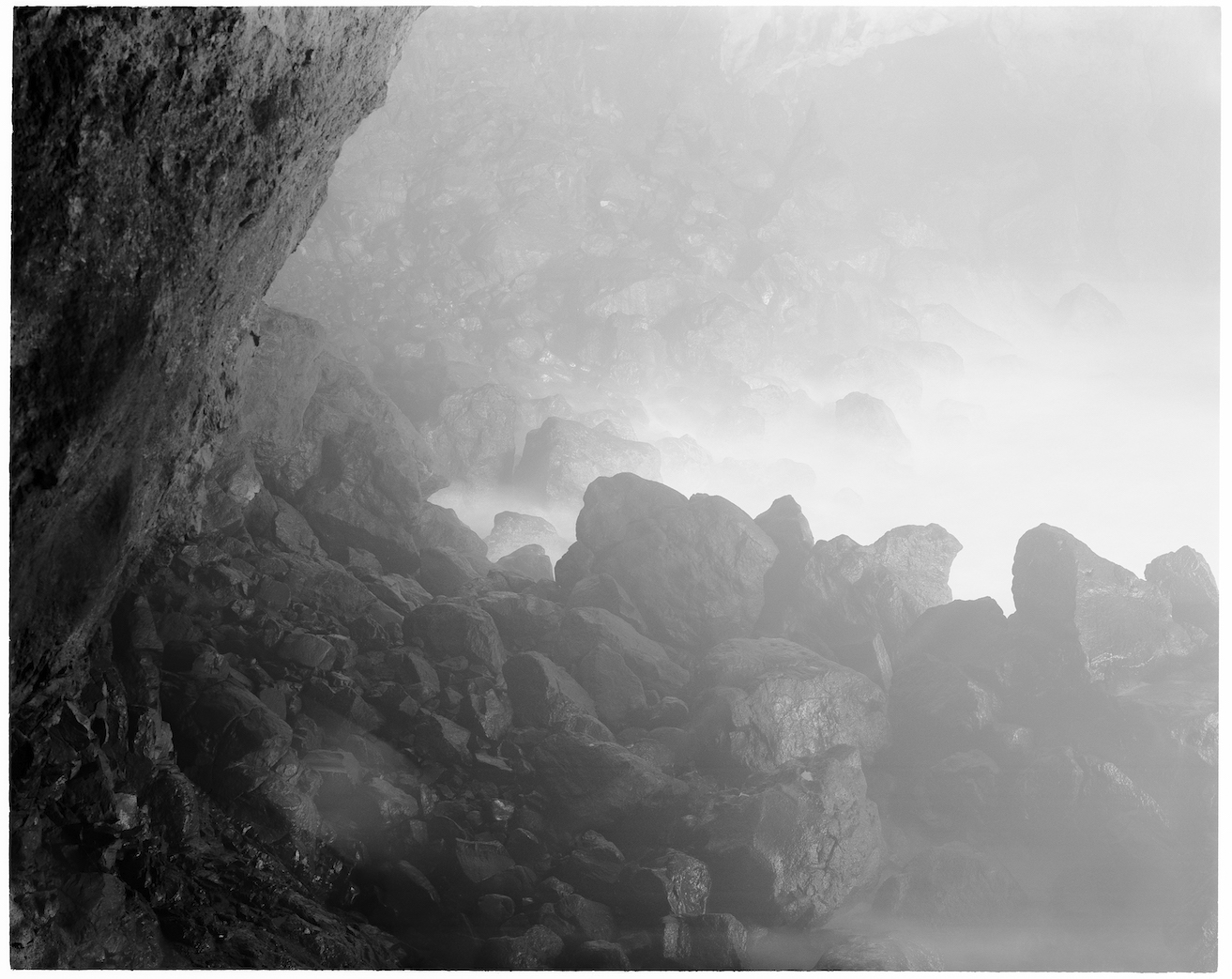
photographic artwork by josh jalbert

Josh Jalbert, Merlin's Cave, photograph, 2020.

Learn more about photography at SCAD.


Ariel Felton, write on!

December
11
2020
By
Tags:

Ariel Felton (M.F.A., writing, 2015) is making her words matter.

In January, 2020, Felton's article "A Local's Guide to Savannah, Ga." was published in the Washington Post. When the tone and tempo of the city were changed by the pandemic, her next Post feature went deeper, addressing the role of (and response to) Black tour guides in a city where "the tourism industry is king" and history is full of discomfiting truths. Meanwhile, her essay "A Letter to My Niece" received a notable mention in the Best American Essays 2020.

A native of Byron, Georgia, Felton is currently the teaching artist and publications manager at Deep Center, the award-winning nonprofit providing free arts and leadership programs for young people in Savannah.

SCAD: What was the impetus for "A Letter to My Niece"?

Ariel Felton: I'd read Ta-Nehisi Coates' "Between the World and Me" and James Baldwin's "A Letter to My Son." I was inspired by both of them, while noticing they're written to younger men and wondering, where do the ladies come in? Racial discrimination is often compounded by gender. Sometimes having a young niece helps me think, "Thalia needs to hear this right now in the life stage she's in." I actually wrote the letter without considering getting it published. I wrote it as something I would give to her and hope she'd take something from it.

SCAD: How was "A Letter to My Niece" received by your family?

AF: I sent it to my niece and my mom and my sister before it was published. My mom told me Thalia thought it was sweet, and she said, "Your sister's okay with it being published." At the time, my mom was also okay with it being published. It wasn't until later that she was kind of worried about our family mistakes being put out there. I told her, "I don't think those are mistakes," which is really the point of the piece, that this is just living, and we shouldn't shame people for that.

SCAD: How did you choose running as the central metaphor in the piece?

AF: When I write non-fiction, my process often starts with a memory that I can't seem to forget. The writing becomes figuring out why. I'd written about my sister and me and my niece all being ten years apart, and about being a Black woman in the South, and I'd written a thousand versions of it and it just wasn't working. Somewhere in my drafts in my Google drive I had this little nugget of my mom telling me about when my niece ran away from home. When I put them all side-by-side, something finally clicked.

SCAD: How did you pitch your piece on Black tour guides in Savannah to the Washington Post?

AF: I originally pitched the piece on Black tour guides as four separate profiles that would run together. In my pitch, I was able to refer back to a previous Washington Post article about pushback from tourists in Charleston who didn't want to hear about slavery while touring the McLeod Plantation. I said here's an angle in Savannah, a city that's focused on tourism, where this issue is being addressed by Black tour guides. It was accepted, and I wrote it in April and it sat on an editor's desk for months, until the editor asked how the pandemic had changed things in Savannah and asked me to report on that and incorporate that into the story, which finally appeared in late November.

SCAD: How did you go from being a SCAD writing student to writing for top national publications?

AF: For me, it's meant returning to the roots of my undergrad journalism studies at Valdosta State, combined with elements from non-fiction writing classes at SCAD. At SCAD, I took magazine writing with Lee Griffith, business and professional writing with James Lough, and an elective humor writing class with Harrison Scott Key. In those classes, I was really able to explore my voice and how fiction and personal essay techniques can work in narrative storytelling to makes an article more compelling.

SCAD: As a Georgia native, do you feel a responsibility to tell the stories of this state?

AF: Absolutely. I love the South.

portrait of ariel felton

Visit Ariel Felton.

Alumni Atelier ambassador Eric Ross

December
8
2020
By
Tags:

Eric Ross (M. Arch, 2010; B.F.A., architecture, 2009) is an award-winning director at William McDonough + Partners in Charlottesville, Virginia. His work at WM+P focuses on the integration of Cradle to Cradle thinking at all levels of a project, embodying regenerative design and development principles across scale and typology.

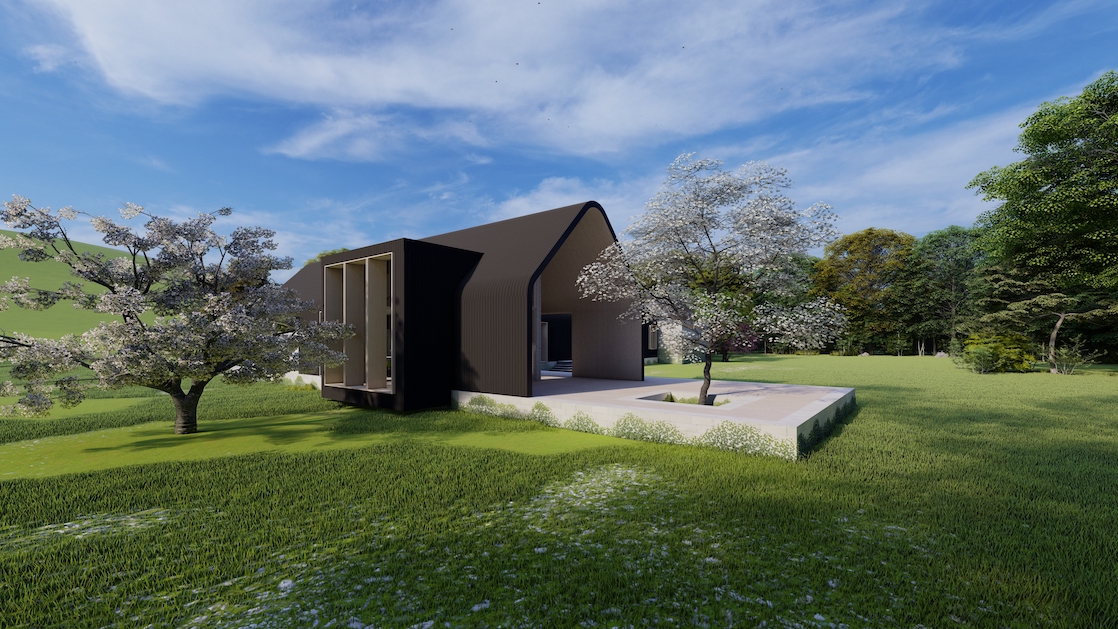
Eric's Fall 2020 Alumni Atelier project, A Return to Zero, addresses mass timber, the building material that is a critical element in the fight for carbon positive buildings. A collaborative endeavor with contributions from mass timber manufacturer Nordic Structures, A Return to Zero will serve as a landmark case study for carbon positive architecture.

architectural rendering

Rendering excerpted from A Return To Zero: A Case Study Report, Eric Ross, AIA, 2020.


Eric Ross:

Through deep research, the building industry has set targets to reduce carbon emissions substantially in the next 10 years, and ultimately reach zero by 2050. Larger companies have embraced the challenge internally rather than waiting on the public sector and politicians to lead. The housing industry continues to lags behind because it deals with the most economic hurdles.

My idea is: How can we take the work we're doing for major companies and distill it into case study house projects that can serve as roadmaps for architects and builders?

We've been using a new building material called mass timber in lieu of concrete or steel which both have pretty substantial carbon footprints. The test case house is meant to employ mass timber as much as possible, as well as prefabrication techniques which reduce on-site waste. It's a big vision thing. For Bill McDonough, my boss, it's something he's been pushing for 30 plus years. My Alumni Atelier project is a chance to distill it all down as a case study.

For me, this journey began about fifteen years ago. I had been in the Army and decided I wanted to study architecture. My sister living in Hilton Head recommended checking out SCAD. I immediately started the five-year program. Since I was a little bit older, I was working full time while going to SCAD and by the time I started that fifth year, I was completing my thesis and at the same time transitioning into a real architecture profession role, doing high-end architecture including 3D modeling that I learned in at SCAD. It was a nice dovetail.

Bill McDonough and Michael Braungart's book Cradle To Cradle: Remaking the Way We Make Things (North Point Press, 2002 was required reading for my first SCAD studio project with professor Tim Woods. This ethos of designing beautiful, compelling architecture with a strong, sustainable ethos was instilled early on at SCAD. Now, at WM+P, I've worked on five mass timber projects, building on this breadth of knowledge.

With these projects, we can do pretty great photorealistic renderings throughout the process. There are VR walkthroughs and prototype 3D printed models and laser cut models, analogous to what a studio project might produce in the end, but with a with a lot more real world thought and input.

Returning to SCAD for Alumni Atelier project has been wonderful. I've enjoyed speaking directly with students, taking them on a virtual walk-through of my work space, answering questions, and sharing my project in progress. I appreciate the opportunity to pay it forward.

The SCAD Alumni Atelier, conceived and endowed by SCAD President and Founder Paula Wallace, enriches the creative and professional endeavors of distinguished SCAD graduates.

Learn more about the program here.

D.J. lights the way

December
7
2020
By
Tags:

Artist and manga devotee D.J. Kirkland-DeJesus (B.F.A., sequential art, 2009) is the co-creator with writer Daniel Barnes of the hit graphic novel The Black Mage (Oni Press, 2019). A native of Charlotte, NC, Kirkland is committed to raising the profile of Black and LGBTQ artists and storytellers.

"There are not a lot of Black queer persons in our industry," D.J. says. "If I can be an example for even one other kid, then I've succeeded."

The Black Mage is a celebration of diversity and a condemnation of small mindedness. The main character, Tom Token, deals with the same issues marginalized children face growing up in their communities on a daily basis. Bullying. Stereotypes. Ignorance. Hate.

In addition to The Black Mage, D.J. has illustrated Oni Press titles including Dream Daddy (Oni Press, 2019) and Aggretsuko (Oni Press, 2020). D.J. also works at Viz Media as a digital publishing production assistant, where he ensures the quality of the firm's anime shows before release.

cover of the black mage graphic novel

D.J. Kirkland-DeJesus:

I found my love of art at an early age. My mom and dad worked hard to give me the typical suburban childhood. Sometimes that meant I would be left with a box of crayons, reams of printing paper, and Sailor Moon cartoons to keep me occupied until dinner was ready. I loved drawing, and that turned into a love for storytelling.

My first art teacher was my friend's mom, Mrs. Pittman. She was a local artist in Charlotte who hosted art classes for kids in the neighborhood. I was always coming home with little projects for my mom to hang up. When I was 13 my parents put me in more formal drawing classes.

I grew up watching anime, believing one day I would be the one creating the magic, but I wasn't sure how to get there. When I first heard about SCAD, I learned they offered programs for both sequential art and animation. Since I wanted to make both cartoons and comics. I knew I wanted to go to SCAD.

Professor John Larison (M.F.A., sequential art, 1998) single-handedly defined my sequential art experience at SCAD. I love him with every piece of my being. He pushed me to be my best, and was a huge advocate for me. In quarters when I didn't have classes with him, I would hang out with him during his office hours. Most importantly, he helped me showcase my work to ONI Press when editors from ONI visited SCAD to give guest critiques of student portfolios.

In 2015, I was at PAX West in Seattle and dropped by the ONI booth. Charlie Chu, their VP of creative and business development, asked: "Are you still interested in comics? We've got an open submission for a book called The Black Mage."

The rest is history, but I wouldn't have gotten that book if I hadn't already met Charlie at SCAD. Daniel and I are now looking to continue the story of The Black Mage and take it from the page to the screen. I envision a kid in his house, crayons splayed out across the table, drawing Tom Token the way I drew Sailor Moon, and telling his parents, "I am going to do this when I grow up."

portrait of DJ Kirkland

www.djkirkland.com


Gonzalo Hernandez keeps mixing emotions

December
2
2020
By
Tags:

"I reject the idea of the artist being dependent on mystic inspiration," says Gonzalo Hernandez (M.A., painting, 2018; M.F.A., fibers, 2019). "The idea I'm pushing is that everyone is an artist and this is a job."

The Peruvian multi-disciplinarian stands in the light-dappled Alumni Gallery of the SCAD Museum of Art on a brisk autumn morning. Behind him, two drill-wielding workers in backwards baseball caps affix one of his new works to a wall. While installing Hernandez's exhibition, their actions emphasize his point.

One wall exposes the gallery's pink innards, which will be covered when the installation is complete. Except a closer look reveals…it is the work itself, titled PPP. Hernandez has created a floor-to-ceiling vinyl simulation of Owens Corning Energy-Saving Insulation with its familiar Pink Panther logo, adding subtle adornments to the repeat pattern, including his web address and an enigmatic emoji ):).

"I was researching symbols and that's how I found the title of the show," Hernandez explains. "The closed parenthesis followed by a colon and another closed parenthesis is both a sad face and a happy face. The emoji represents mixed emotions, and that's how I feel right now — having my first museum show at SCAD MOA is a big step for me, while the whole world is dying!"

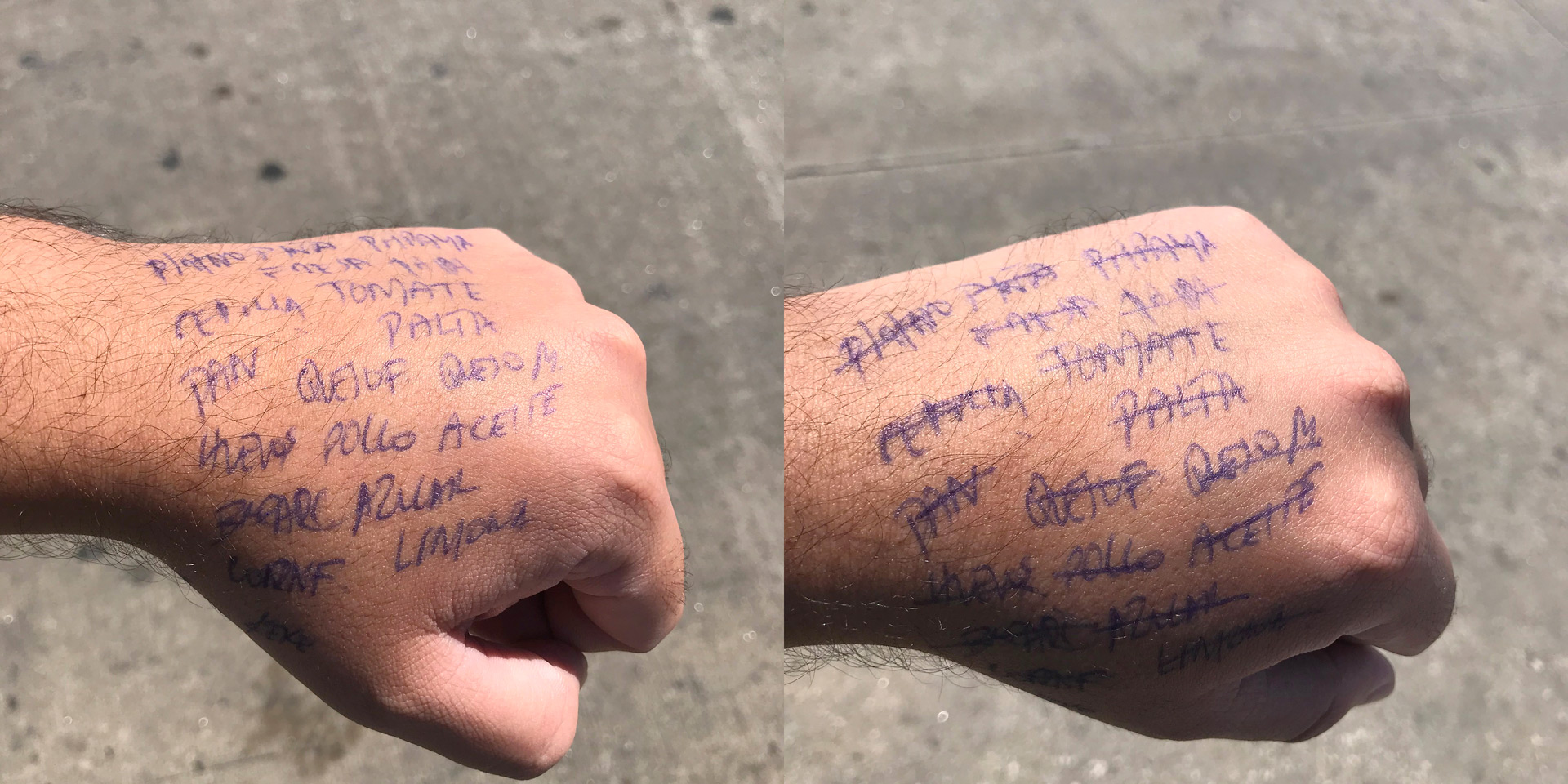
The artist is building himself as he goes. What might sound like fatalism in conversation inspires intrigue in person. In and Out, a photographic diptych of a shopping list written in Spanish on the back of a fist, carries implications about sustenance and consumption in a Corona-stricken year when even the supermarket can seem unsafe.

photographic prints by Gonzalo Hernandez

Gonzalo Hernandez, "In" (left) and "Out" (right), photographic prints, 40" x 40" each, 2020.


A video piece, 45", depicts Gonzalo wielding an advertising board featuring the word "SUCCESS" as he stands in different locations: an art fair, a soccer match, Damien Hirst's studio, a political rally, Machu Pichu. There is no sign twirling, the artist's stoicism questioning notions of location, reward, and who's doing the real work to make success possible.

In a moment of uncertainty and upheaval, Hernandez has embraced possibility. Shortly before the opening of his SCAD MOA show, he completed a monthlong residency with the nonprofit Erie Artists & Culture in Pennsylvania, where he collaborated with a piñata maker and a group of local musicians. In March, he and his wife Pierina Sanchez (M.U.D., urban design, 2019) launched ABRIR, an online gallery featuring an international network of artists including Leia Genis (B.F.A., painting, 2019; B.F.A., sculpture, 2019) and beloved painting professor Todd Schroeder.

"Todd is one of my big influences," Gonzalo says, nodding towards ):) (gracias Todd), a painting of the titular emoji on a sheet of Tyvek paper, a brand favored by Schroeder in his own work. "The English word ‘tribute' is not quite right," Gonzalo clarifies. "It's something closer to what we say in Spanish, homenaje."

Straddling cultures and countries, exploring art as language: Gonzalo Hernandez is on the job.

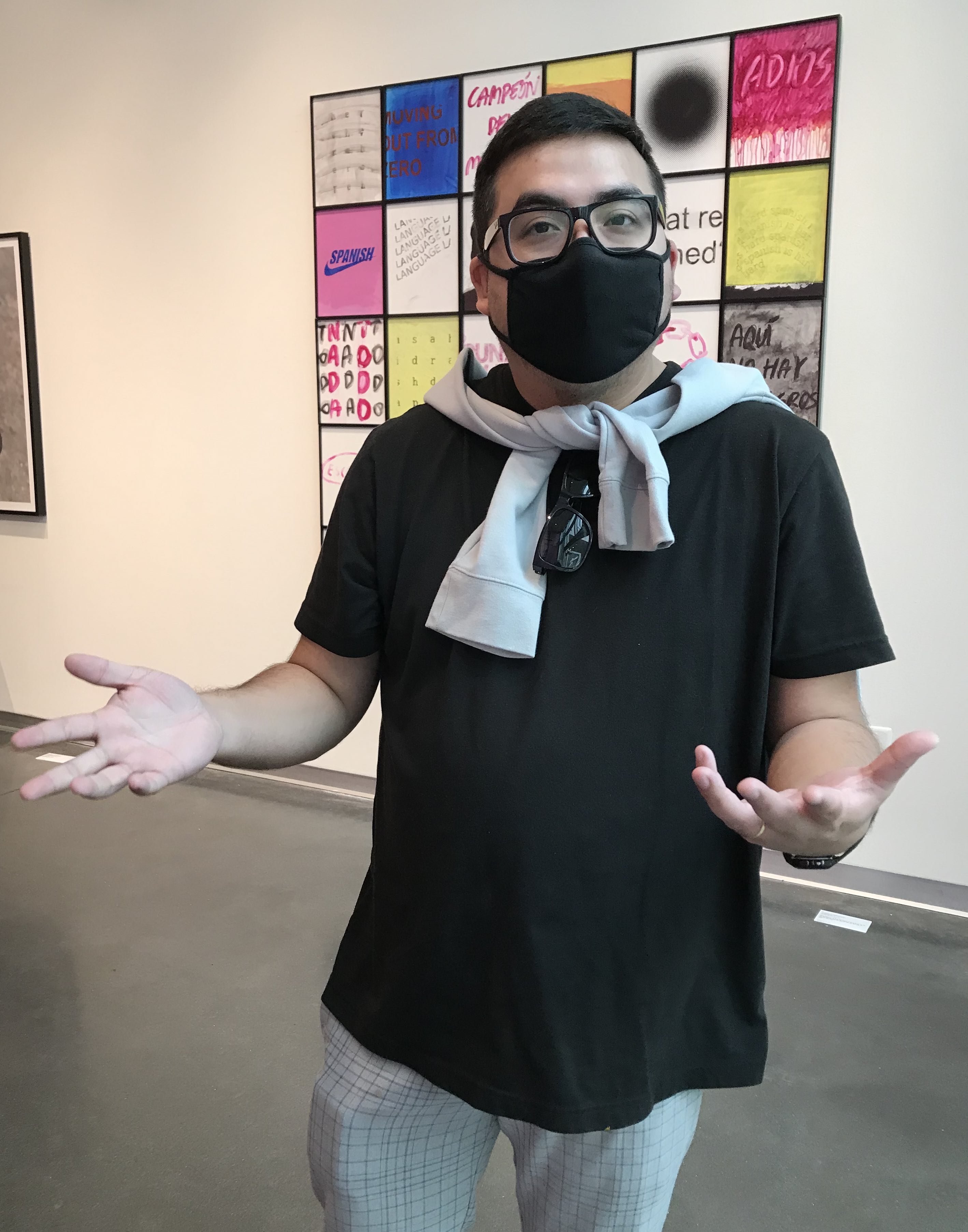
portrait of Gonzalo Hernandez

):) is on view through Sunday, January 24, 2021.

The exhibition is curated by Ben Tollefson.