Skip to main content Accessibility Policy

Alyssa Rodemsky shines bright

May
20
2026
By
Tags:

"There is a jewelry phenomenon underway," Alyssa Rodemsky wrote on LinkedIn in April. "From the architecture, to the vias...you turn a corner in Palm Beach and suddenly feel like you're somewhere in Europe."

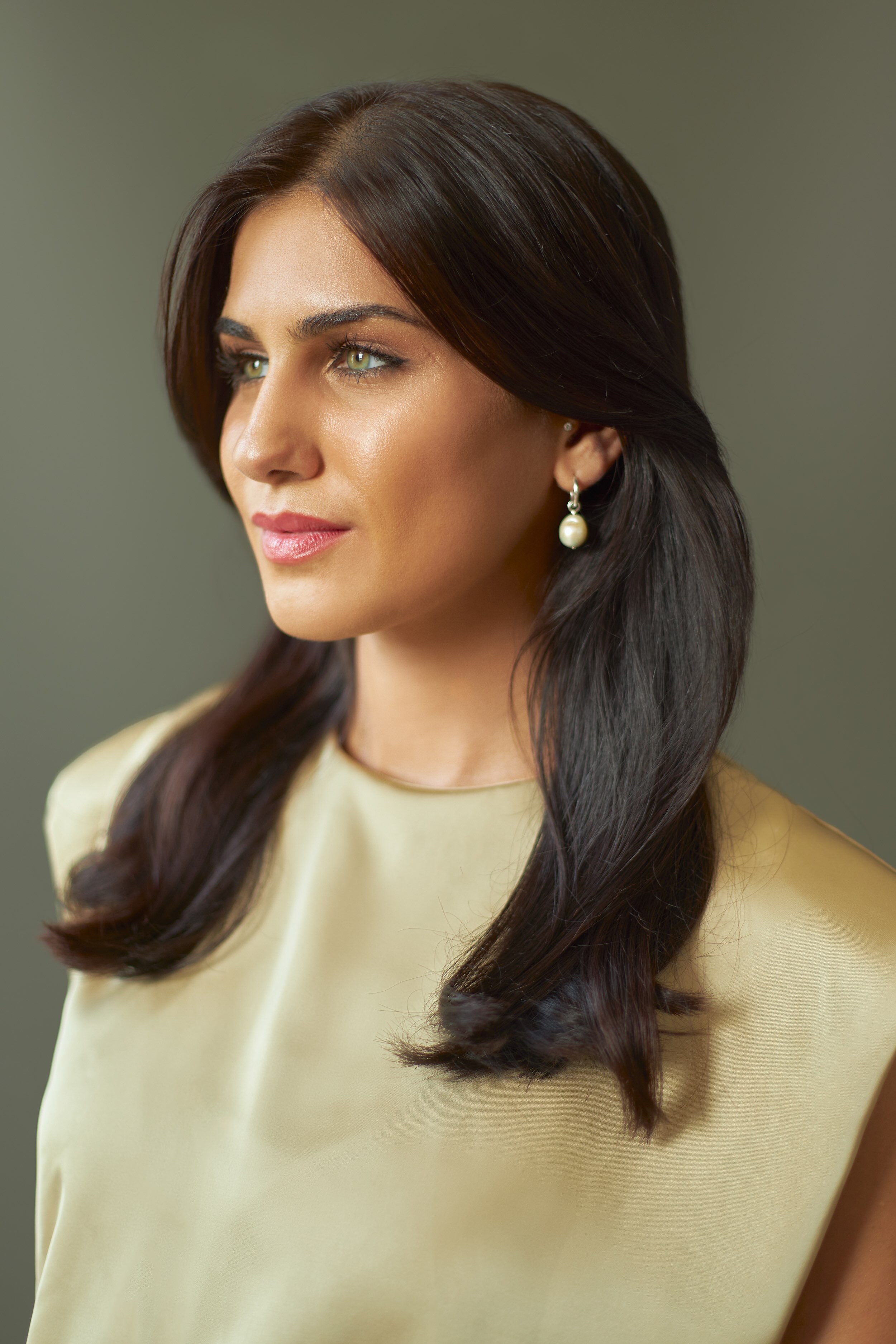
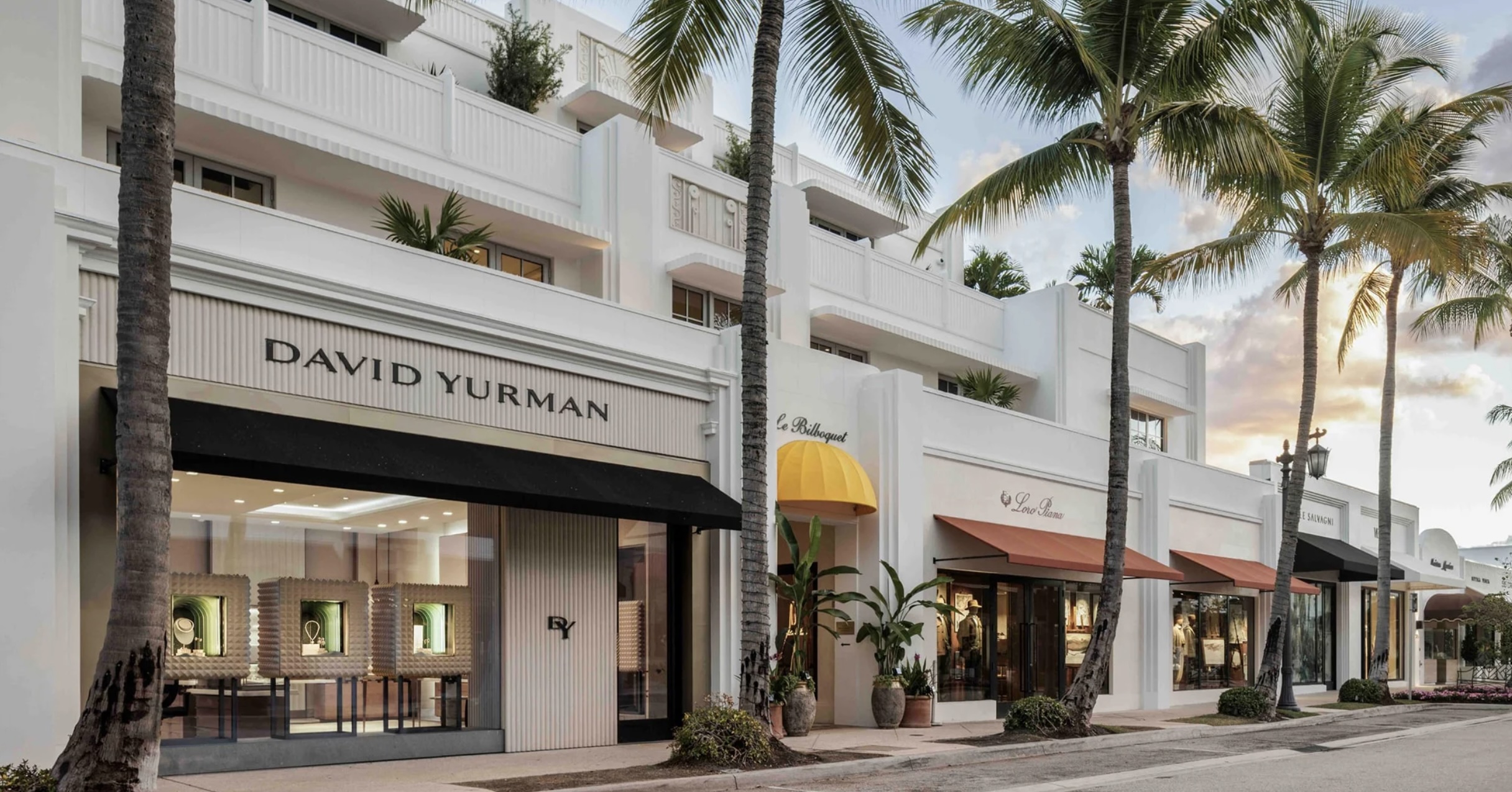
Rodemsky (B.F.A. fashion marketing and management, 2019) is in the storefront at the forefront. As luxury brand ambassador, she works at the David Yurman boutique on Worth Avenue in Palm Beach Island, Florida, the high-end retail thoroughfare that, she says, "is collectively building something spectacular."

"My passion is connecting people with jewelry that reflects their stories, styles, and personal milestones," says the Warrenton, Virgina native. "That means a people-first approach shaped by my SCAD education."

Yurman Palm Beach store

Street of dreams: the David Yurman boutique on Worth Ave.

Alyssa Rodemsky:

In 2025, I was selected to join the opening team for the newly renovated David Yurman boutique on Palm Beach Island, which features a two-story space with a dedicated high jewelry salon and private sales suite. I moved here specifically to learn how to sell to a certain clientele.

Worth Avenue has a long-standing history in Palm Beach. It's where all the Palm Beachers put on their best outfits and stroll and shop. There's Gucci, Zegna, Loro Piana, and many luxury jewelers and watchmakers, as well as its close proximity to the Colony Hotel and Bilboquet Market. It's really a jewelry mecca.

People seek out David Yurman for their first pieces and, importantly, for high jewelry. We have pieces featuring some of the most tantalizing, saturated gemstones from all over the world.

I feel that Palm Beach is the most special boutique of the seventy David Yurman stores worldwide. I collaborate closely with a tenured team and corporate partners here during store visits and special appearances, including hosting Mr. and Mrs. Yurman. It is an honor working alongside them.

I attended the SCAD alumni event at Palm House with Mrs. Yurman just a couple months ago. President Paula Wallace was there. There was a pop-up there with Ferragamo, and a screening of the Andre Leon Talley fashion film that SCAD students made, which is phenomenal.

Looking back, I see that my career didn't begin when I graduated from SCAD, it began the day I arrived as a freshman. SCAD taught me to how to trust my instincts and my intellect. I learned how to develop a project from start to finish with composure and grace and be proud of what I'm presenting. I took Digital Presentation Techniques (FASM 210) with Oscar Betancur, the chair of advertising. That was the class where I learned how to craft a presentation, and how to command a room.

I also took art history at SCAD, and a course in the psychology of the creative process, and learned to curate my eye. I found myself drawn to metal and gemstones, and that gave me the courage to try a jewelry class. When I was presenting my pieces at the bench class, I realized my favorite part was explaining the jewelry. That led me back into fashion marketing, which became my major.

After graduation, I spent seven years working in executive settings at big companies including NetApp and Salesforce. The versatility of the skills I acquired at SCAD allowed me to do that. Now, to be back working in jewelry, and to be at David Yurman, which is a proud industry partner of SCAD, feels powerful and beautiful.

The reputation of SCAD is really high in the rooms I'm frequenting. That includes the shops, salons, and event spaces in Palm Beach. There is a levity to my life here that I am embracing. Of course, it helps that I love the beach.

Rodemsky profile photo

She's a gem: connect with Alyssa on LinkedIn.


Chalk of fame: Sidewalk Arts 2026 winners!

April
27
2026
By
Tags:

If you happened to wander past the Forsyth Park bandshell on Saturday during Sidewalk Arts, you were in luck. Witnessing the Bee Sharps performing their version of KATSEYE's top bop "Gabriela," complete with choreography, was another perfect part of an unforgettable, magical day.

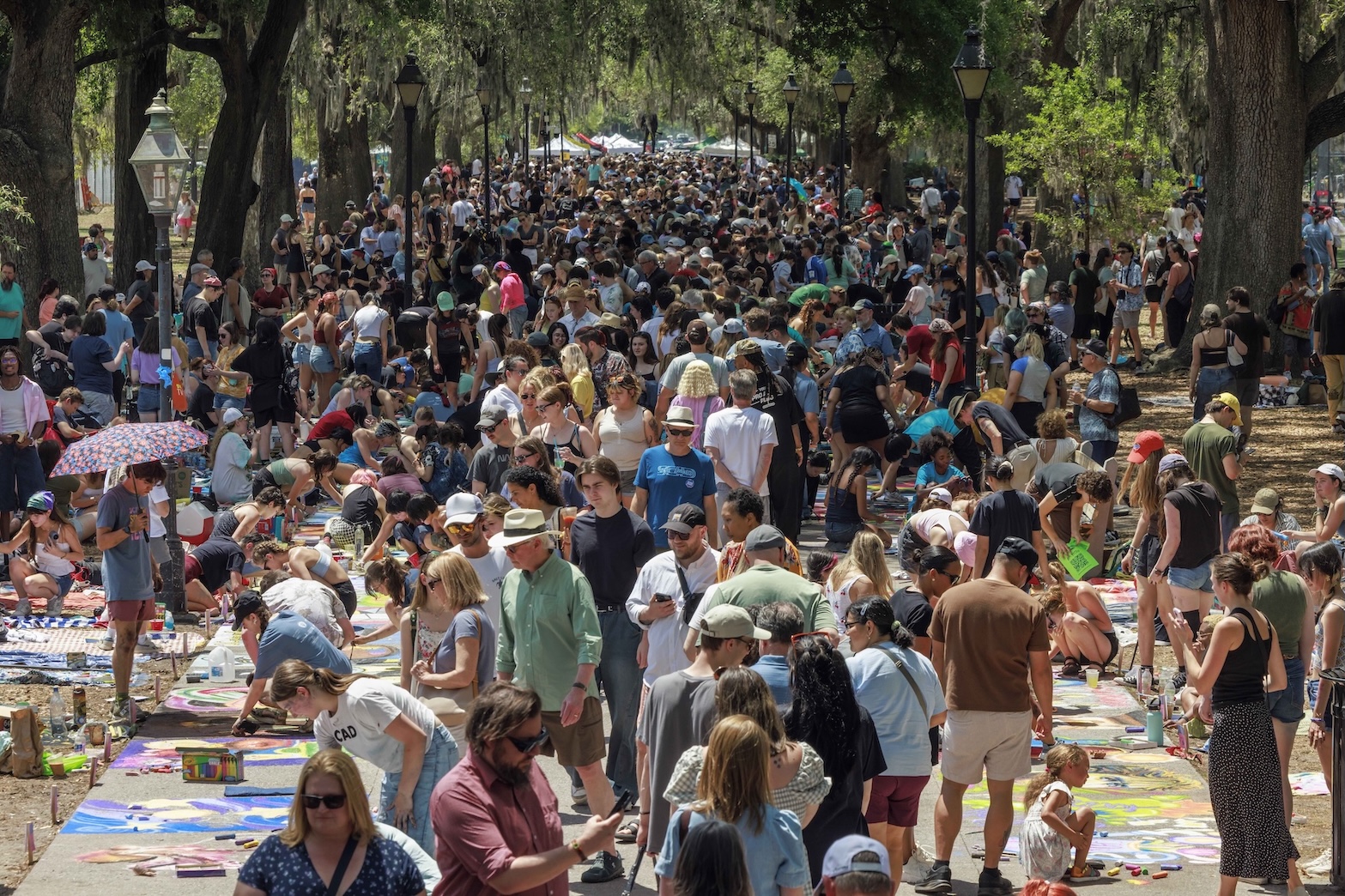
The weather was sweet. The record-breaking crowd celebrated chromatic chalk excellence. The 45th edition of beloved Sidewalk Arts festival reached its colorful culmination.

Prizes for best student, graduate student, prospective student, and student group artworks were richly, deeply, deserved. Spirit Awards and Best of Show were, as ever, the chalk of the town.

Sidewalk 2026 crowd

Stroll control: a great day for Sidewalk Arts 2026!

And the winners are….
 
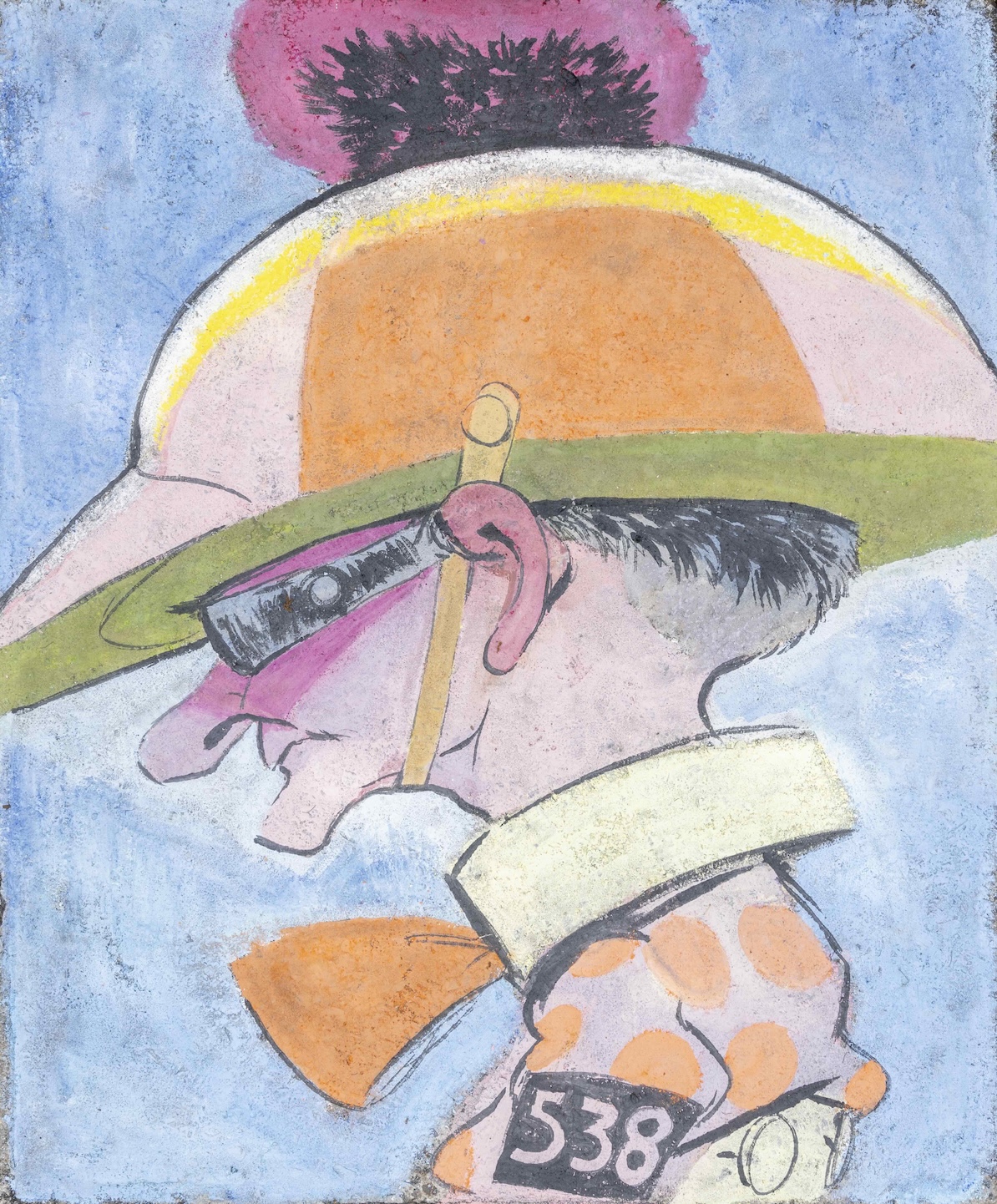
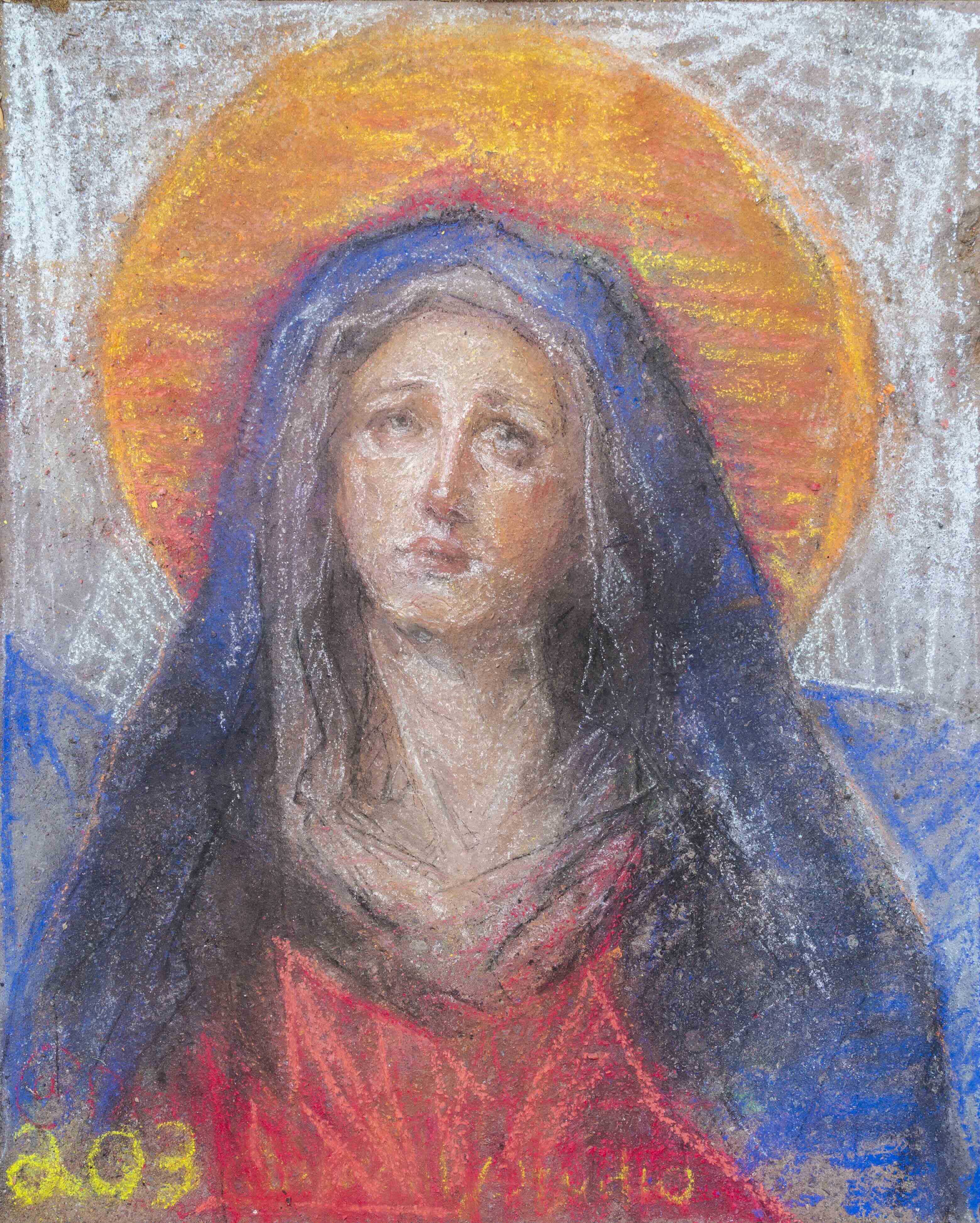
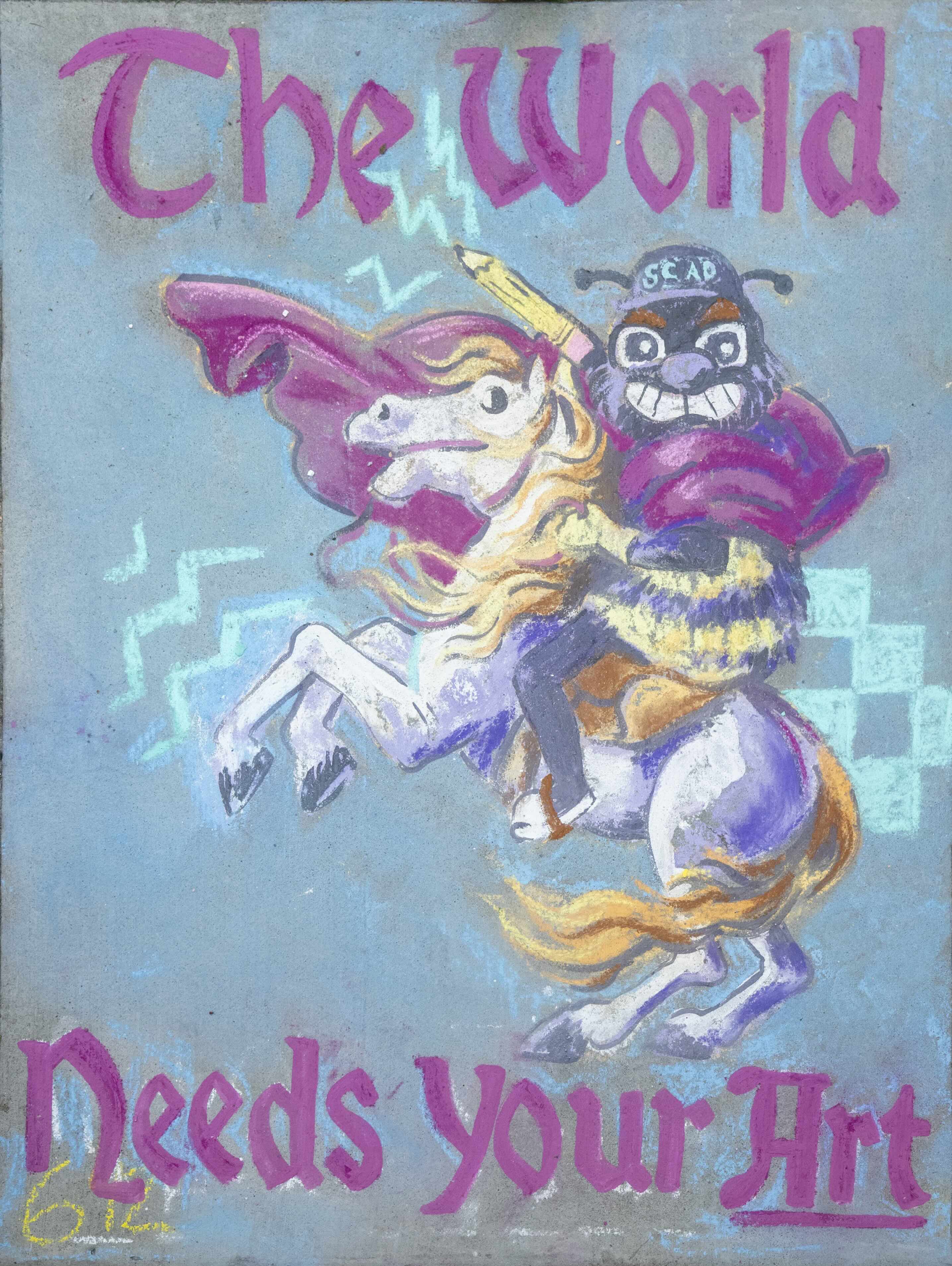
Student Spirit Award: "Lawnmowers" (Federica Merljak, Nicolas Espinosa, Thiago Franco Morassutti)
Alumni Spirit Award: Morgan Winters
Best of Show: Daniella Reilly
 
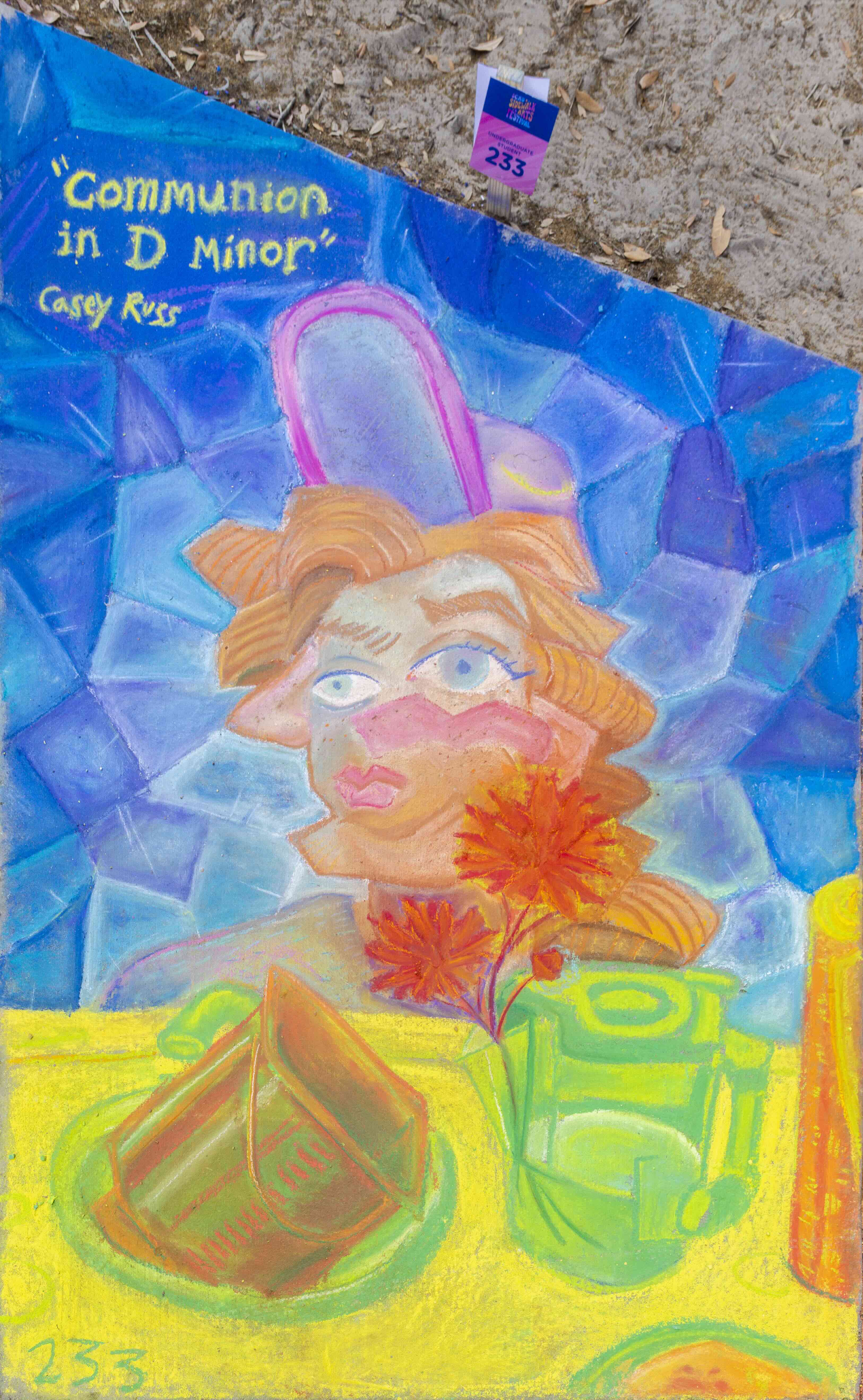
Individual Student 1st Place: Casey Russ
Individual Student 2nd Place: Catherine Bock
Graduate Student: Grace Wisdom
 
Student Group 1st Place: "Purple" (Lily Anderson, Mikaela Parrish)
Student Group 2nd Place: "Soulcrushers" (Chris DeMassa, Isabella Kiely)
 
Alumni 1st Place: Britt Spencer
Alumni 2nd Place: Hunter Muddiman

Prospective Students:
1st:
Star Peteranetz
2nd: Lola Gourneau
3rd: Dana Kim

Sidewalk 2026 student winner

Art by Casey Russ.

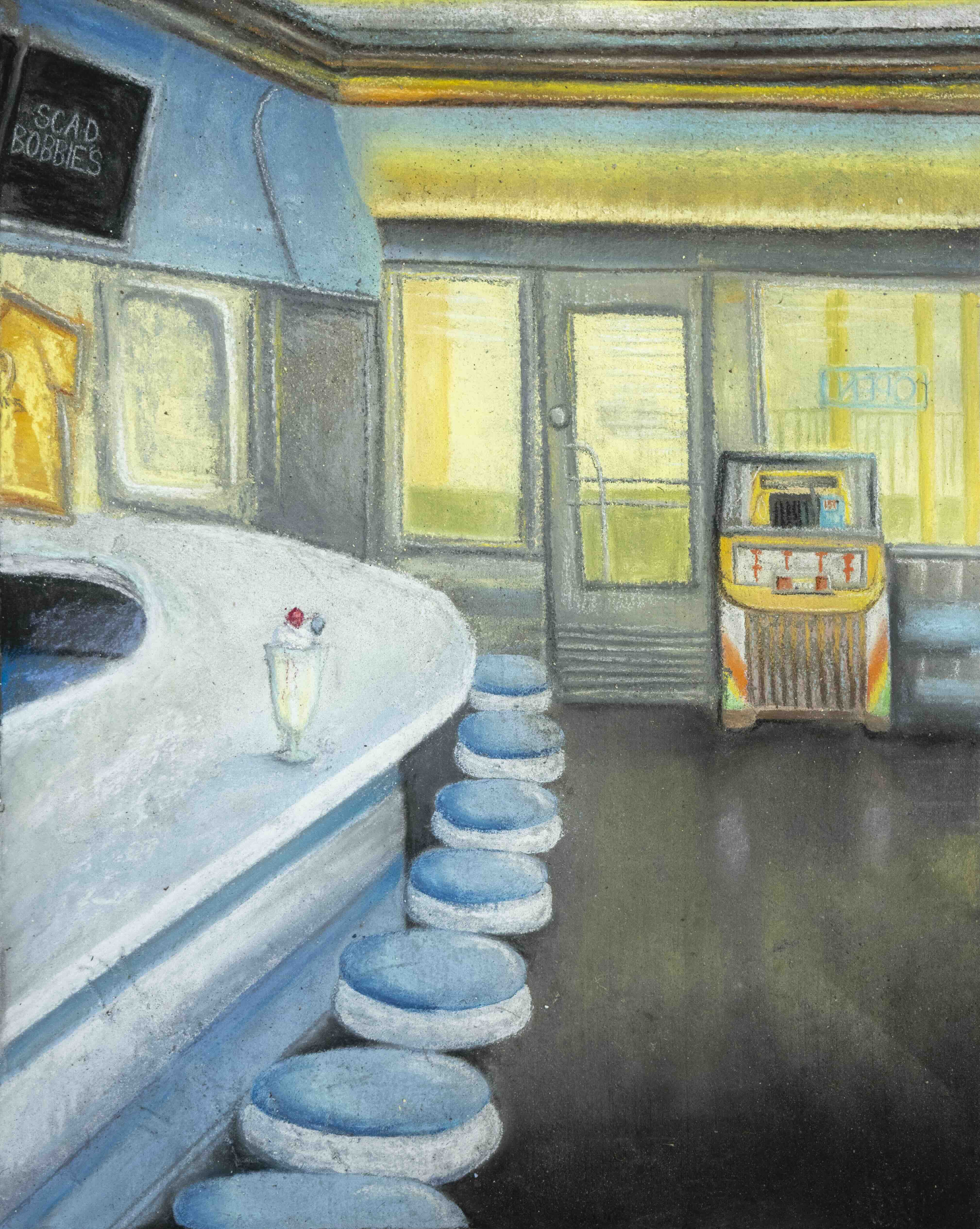
Sidewalk 2026 student group winner

Art by Lily Anderson and Mikaela Parrish.

Sidewalk 2026 alumni winner

Art by Britt Spencer.

Art by Daniella Reilly.

Sidewalk 2026 alumni spirit winner

Art by Morgan Winters.

Sidewalk 2026 winner

Free to Bee: thanks for coming to Sidewalk Arts 2026!

Sidewalk Arts Festival is here!

April
24
2026
By
Tags:

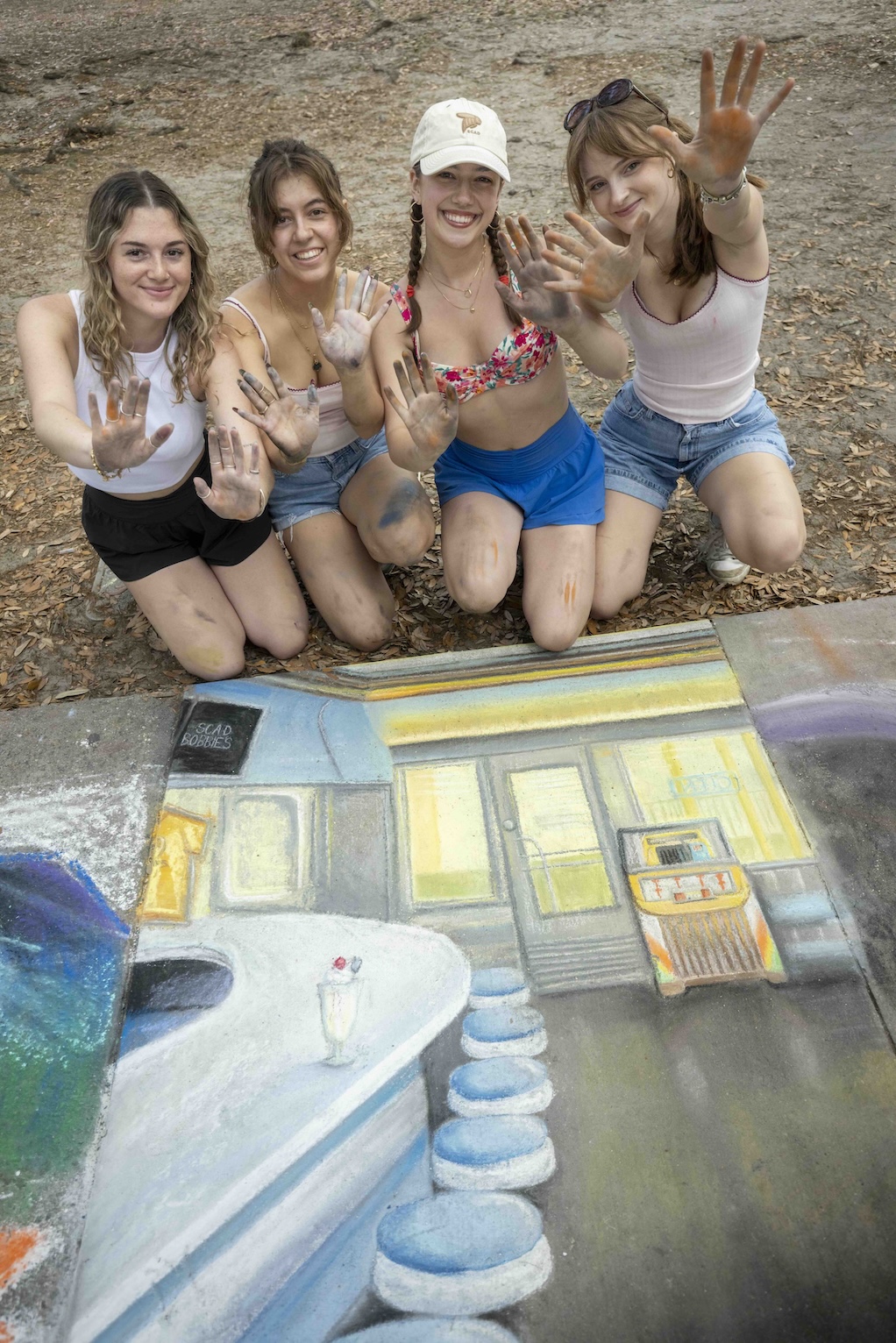
Spring has sprung, and it's time for the 45th annual SCAD Sidewalk Arts Festival! This Saturday, April 25, the chalk will rock as SCAD students, alumni, and local high school students transform Savannah's historic Forsyth Park into a technicolor landscape of chromatic compositions in a beloved tradition. More than 800 squares in the heart of the park will serve as concrete canvases for the day

"Beneath the majestic canopy of Savannah's grand live oaks, our visionary Bees elevate the city's sidewalks into an ethereal gallery of otherworldly enchantment where magic blooms in thousands of delightful, colorful works of wonder," said SCAD President Paula Wallace. "Come see the artistry of SCAD students and alumni in chalk-dusted éclat, step by step, square by square. See you there!"

Prizes will be awarded for Best of Show, as well as for the top individual SCAD student, student group, alumni, and graduate student. The SCAD Student Spirit Award and SCAD Alumni Spirit Award celebrate the best chalk works that embody the heart of the hive. Local high school students will also place in the competition.

Each spring, SCAD hosts Family and Alumni Weekend, offering three fun-filled days of events and opportunities for SCAD families to visit Savannah and for alumni to reconnect with their university community. The highlight of the weekend is the annual SCAD Sidewalk Arts Festival.

Thousands of attendees, including SCAD faculty and staff, local Savannahians, and city visitors will converge downtown for this event, shop in local stores, and dine in local restaurants. This event, like so many SCAD signature events, has a huge economic impact on Savannah. According to a 2023 study conducted by Tripp Umbach, the leading national consulting firm for nonprofit, arts, and tourism sectors, SCAD generates $1 billion annually for the Savannah area.

During this year's event, guests can "take a turn" on a life-size Monopoly board and enjoy a concert by SCAD's elite ensemble The Bee Sharps, who will perform at noon and 1:15 p.m.

Food vendors will include Java Burrito Company, Roly Poly Sandwiches, Chick-fil-A, BowTie Barbecue, Savannah Square Pops, Leopold's Ice Cream, Maui Wowi Hawaiian Coffees & Smoothies, and Coca-Cola. This year's SCAD Sidewalk Arts Festival is sponsored by Bon Appétit Management Company, Coca-Cola Bottling Company, Yates-Astro Termite & Pest Control, The Flatbush Foundation, E. Shaver Booksellers, BrightView Landscaping, Doki Doki Ice Creamery, EventWorks, Sunstates Security, Visit Savannah, and Ex Libris. Festival attendants are encouraged to share their imagination and creativity through Instagram using #SCADchalk.

sidewalk arts graphic

Learn more about this year's event here!  

Mandy Zheng: clarity at scale

April
22
2026
By
Tags:

For TikTok users, swiping and scrolling are instinctual. For product designers, they form a system of signals that must work at a massive scale.

Mandy Zheng (M.F.A., design management, 2025) designs inside that system. Having previously interned at Tinder and collaborated with companies including Google and Deloitte at SCADpro, the product designer gained essential experience across both academic and industry settings.

"SCADpro was a space for me to experiment and reflect. I could really understand how decisions were made and how collaboration worked," Zheng says. "Those experiences helped me clarify what I enjoy doing and where I can contribute most effectively."

Zheng tested this process in a 10-week SCADpro collaboration with Google, where she took on dual roles as design lead and product manager. With a real client at the table, compressed timelines, and feedback from multiple stakeholders, the RACI (Responsible, Accountable, Consulted, and Informed) framework helped Zheng prioritize revisions efficiently without losing sight of the larger process.

Mandy Zheng Google app

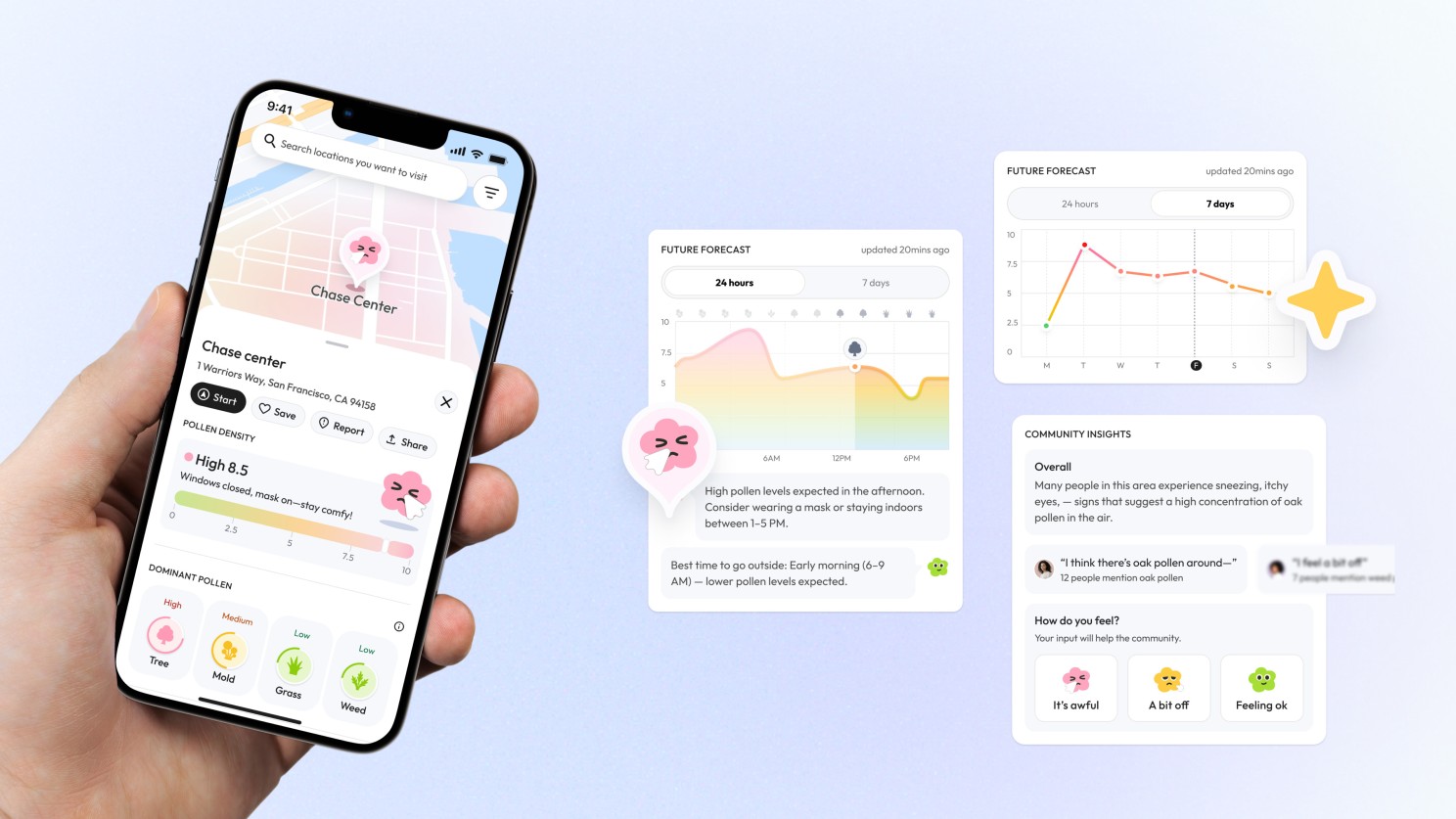
Nothing to sneeze at: "PollenNav," Red Dot Award-winning concept created by Yani Shi, Ziqi Li, Mandy Zheng, and Chang Mou.

"RACI helps me understand a new team's collaboration structure and identify different stakeholder roles at various stages of a project," she says. "Having a clear framework makes it easier to gradually form my own working approach."

Set within an academic environment, the SCADpro project followed a more structured and more idealized workflow. For Zheng, it created space to move through each stage with intention and understand more clearly what each phase contributed, from early research and ideation to collaboration, iteration, and final decision-making.

She learned to treat design as coordination, aligning stakeholders, clarifying decisions, and building cooperation across a team. Frameworks like RACI gave her a practical way to map roles and decision-making.

Zheng began connecting with professionals via ADPList, where she could better understand how designers at different stages approach their work. These conversations helped her refine how she shared her projects and how she articulated her underlying logic.

To support her own growth and grow alongside others, Zheng built a robust online community for early-career UX designers. What began as a small, peer-driven experiment has evolved into a network of 500 members. Across 32 online sessions with more than 500 participants, she brought people together for mock interviews, conversations on current design trends and emerging technologies, and peer support.

At its core, this belief continues to shape how Zheng approaches both design and growth: clarity is rarely built alone. "It's all about who you're around," Zheng said. She continues to carry that belief into her work, and the spaces she hopes to build for others.

Currently exploring ideas around digital legacies and experimenting with AI tools, Zheng is bringing the same curiosity that has defined her path so far. She remains open to connecting with people working on thoughtful, forward-looking ideas for the future.

"If you want to go fast, you can go alone. If you want to go further, you need to go with people together," she says.

Connect with Mandy Zheng on LinkedIn. Learn more about design management and the pioneering programs in the SCAD De Sole School of Business Innovation at scad.edu/innovation.

SCADpro Google

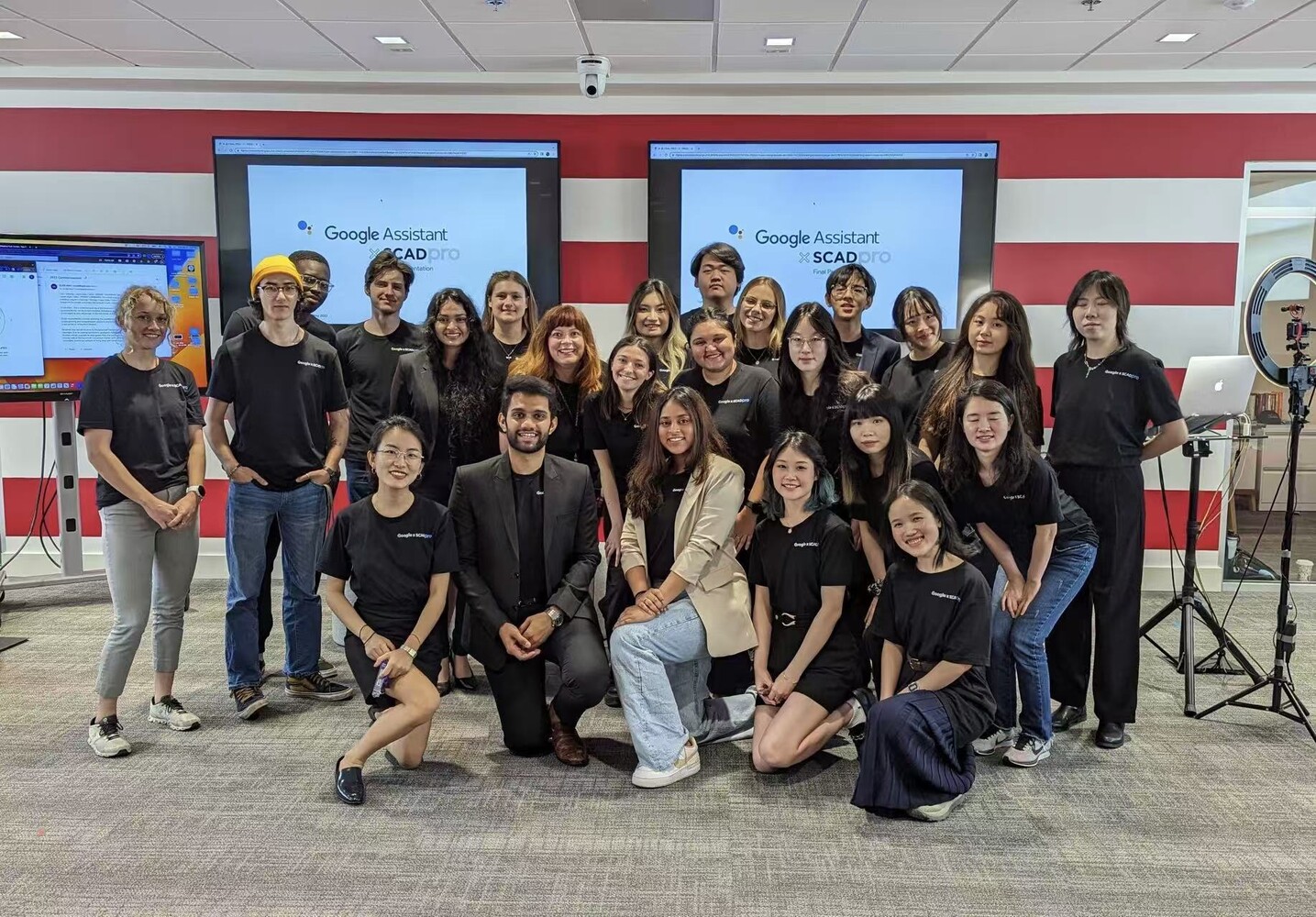
Ten strong weeks: During a SCADpro x Google collaboration, Zheng led design and product management responsibilities.

Connect with Mandy Zheng on LinkedIn.

Learn more about design management and the pioneering programs in the SCAD De Sole School of Business Innovation.

AeSun Jung: poetry in motion

March
30
2026
By
Tags:

When AeSun Jung (B.F.A. graphic design, 2024) began studying at SCAD in 2020, she stopped treating design as a set of separate disciplines and began treating it as a single, connected language.

"Design is about more than creating visuals. It's about connecting people and experiences through an integrated way of thinking," she says. "Motion, graphics, and branding ultimately come together as one unified experience. A designer's role extends beyond one title or skill set. Growth comes from continuously learning and expanding into areas that are needed."

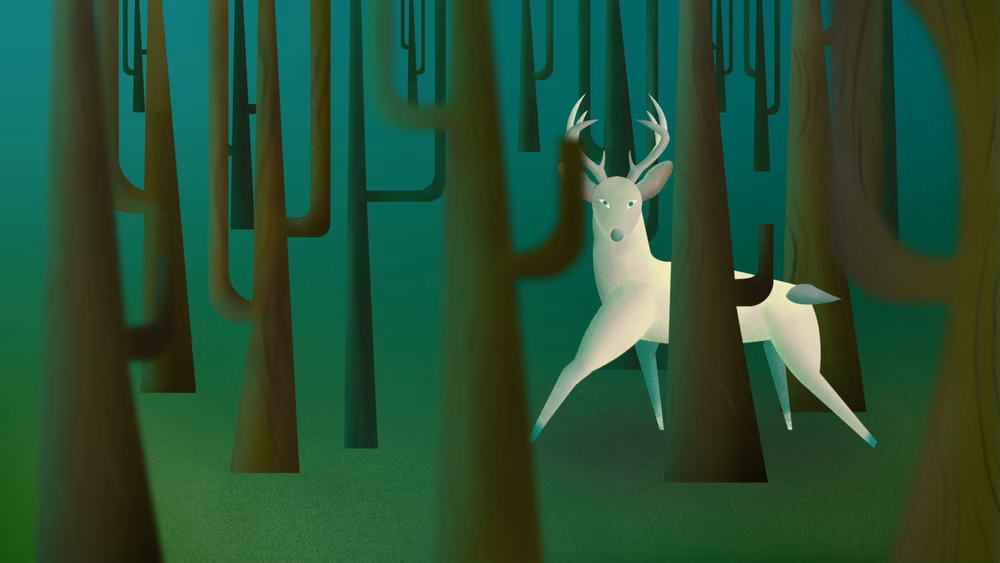
That mindset is visible in "The Forest," AeSun's poetry-inspired motion project recognized by the International Design Awards. "I chose Nikita Gill's poem ‘The Forest' because its message felt deeply connected to the way we live our lives," she says. "As we move through life, we encounter people with different backgrounds, personalities, and languages."

AeSun Jung Forest poetry

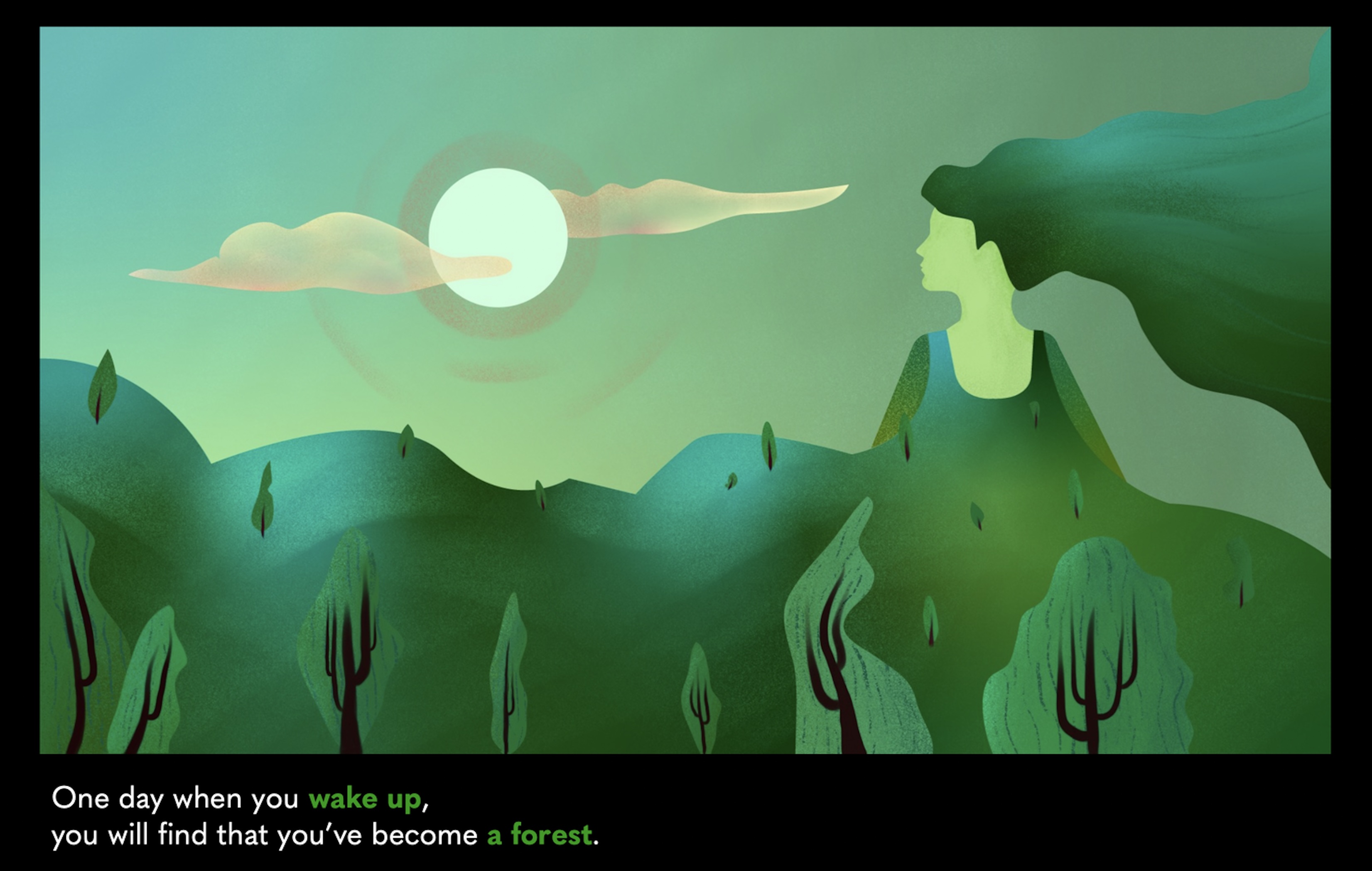
Wake up: a still from "The Forest" (courtesy of AeSun Jung).

AeSun found the symbolism in Gill's poem to be direct and personal. She placed herself inside "The Forest" to take a deeper look around. "I positioned myself as the speaker of the poem and explored how we experience life and move through it with awareness and wisdom. I translated these emotions and the narrative into changes in motion, rhythm, and texture. The roughness or density of a texture reflects the character's emotional state and rhythm of breathing. Without these elements, the emotional weight of a scene wouldn't fully come through."

The minute-long animation utilizes a combination of Procreate, Illustrator, and After Effects, while "the scenes in the illustration were created by weaving in moments and experiences from my own life," she says. "The Forest" was awarded the IDA Bronze in Multimedia/Adult Animation category, with its stated intention to "cultivate a greater interest in poetry."

Professionally, AeSun's recent roles span startups, healthcare, and nonprofit collaboration. She previously worked at LangPal, where she helped build brand identity and collaborated across teams. Today, she is a creative director at Integrated Personalized Medicine in California, overseeing design strategy and direction. She also volunteers as a 2D animator supporting nonprofit UI and UX teams.

AeSun's advice to Korean students considering studying abroad mirrors her own path: "The most important thing is to dive in and experience it firsthand. Lead with curiosity and a sense of challenge rather than fear. Approach it with an open mind and be willing to listen to others. Have a clear idea of what you want to learn, what you want to experience, and how you plan to apply it. Treat it as a personal test and an opportunity to grow."

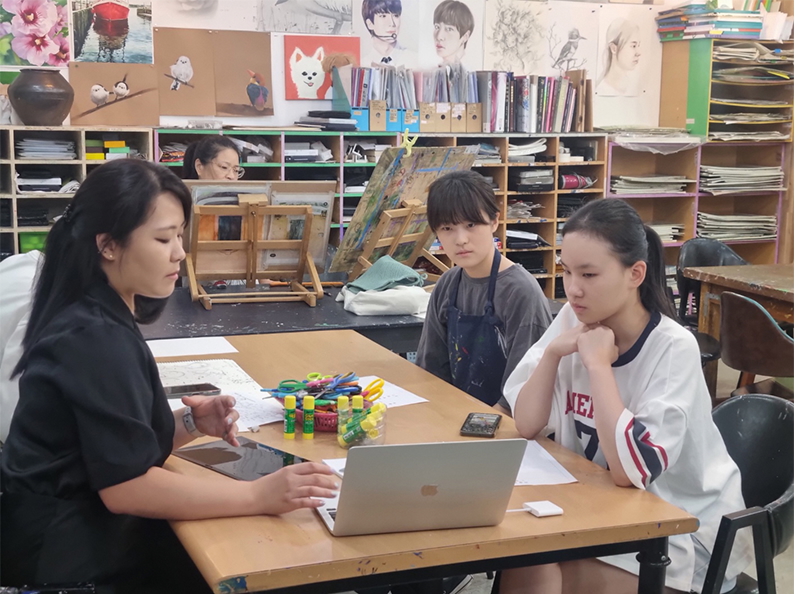
AeSun Jung classroom

Design thinking: AeSun speaks with students about curiosity, growth, and studying abroad.

Continuing her creative experimentation across mediums, AeSun is now exploring how publishing, graphic design, motion media, and AR and XR can work together. As technology evolves, AeSun sees the process of making connections between people and experiences as the one constant. "I always want to craft meaningful connections between users and brands with elevated content," she says.

Looking ahead, AeSun wants to create experiences that feel more intuitive and immersive.

"I want to be known as a designer who solves that challenge."

AeSun Jung Forest art

A host of wild creatures: "The Forest" design by AeSun Jung.

Connect with AeSun Jung on LinkedIn.

SCAD creatives power Oscar-nominated films

March
10
2026
By
Tags:

SCAD continues to shape the film industry. This year, 212 SCAD alumni and current students as well as two professors contributed to films nominated for the 98th Academy Awards®, emphasizing SCAD's role as a premier pipeline to the world's leading studios and creative teams.

SCAD talent worked on 21 films recognized by the Academy of Motion Picture Arts and Sciences, including seven Best Picture nominees, three Best Animated Feature nominees, and all five films nominated for Best Visual Effects. These acclaimed films include Sinners and One Battle After Another as well as global blockbusters Avatar: Fire and Ash, KPop Demon Hunters, and Zootopia 2.

"This extraordinary showing reflects what makes SCAD unique," said Andra Reeve-Rabb, dean of SCAD's School of Film and Acting. "Our students and alumni are prepared across every aspect of filmmaking, learning from Oscar-winning professors and working with resources that rival professional studios, from an 11-acre Hollywood-style backlot to LED volume stages and industry-run casting offices. That hands-on, real-world training is how we prepare the next generation of artists and storytellers who will shape the films audiences around the world celebrate each awards season."

SCAD's School of Film and Acting and School of Animation and Motion have launched thousands of alumni into the entertainment industry, with graduates contributing across every stage of filmmaking to Academy Award®–recognized films this year. These include alumni from the following degree programs: film and television (21 alumni), production design and costume-focused majors (six alumni), sound design (12 alumni), visual effects (79 alumni), and animation (69 alumni).

"This year's nominations once again demonstrate the impact SCAD visual effects alumni are having across both animated and narrative filmmaking," said Gray Marshall, chair of SCAD's visual effects program. "Our graduates are not only contributing to these films, they're leading teams, solving complex creative challenges, and pushing the boundaries of what's possible on screen."

"What we're seeing this year reflects years of dedication to craft, collaboration, and creative leadership," said Dan Bartlett, dean of SCAD's School of Animation and Motion. "We're incredibly proud of our alumni, who are trusted with shaping the visual language of major films — from cinematography and lighting to animation and storytelling — because they graduate with the ability to think holistically, collaborate across disciplines, and lead creative teams at the highest level."

Top creative contributors include:

●      Nathan Engelhardt (B.F.A., animation, 2007) directed and co-wrote Forevergreen, a Best Animated Short Film nominee that tells the handcrafted, visually inventive story of an orphaned bear cub who finds an unlikely home with a fatherly evergreen tree, while also serving as animation supervisor on Zootopia 2, a Best Animated Feature nominee. A supervising animator at Walt Disney Animation Studios, Engelhardt has helped shape beloved films including Moana, Frozen 2, Encanto, and Zootopia, blending heartfelt storytelling with innovative animation techniques.
●      Stephen Null (B.F.A., visual effects, 2005) worked as the lighting supervisor on Zootopia 2 and Forevergreen, guiding lighting teams in establishing mood, atmosphere, and visual continuity across complex animated sequences. Zootopia 2 is a Walt Disney Animation Studios production nominated for Best Animated Feature and Forevergreen is nominated for Best Animated Short Film. 
●      Jordan Rempel (B.F.A., visual effects, 2009) served as director of photography on Pixar Animation Studios' Elio, a Best Animated Feature nominee, crafting the film's cinematic lighting and visual language. He also contributed to Toy Story 5 and is known for sci-fi–inspired lighting cues that add richness, depth, and a distinctly cinematic feel to animated storytelling.
●      Johnathan Nixon (B.F.A., visual effects, 2007) is a senior visual effects head of department and senior visual effects production manager at Weta FX and worked on Avatar: Fire and Ash, a film nominated for Best Visual Effects, where he helped lead the creation of cutting-edge water simulations that bring the world of Pandora to life with unprecedented realism.
●      Virginia Berg (B.F.A., production design, 2015) worked as assistant art director on Avatar: Fire and Ash, a Best Visual Effects nominee, contributing to the film's expansive visual worldbuilding. She was named Variety magazine's Top 10 Artisans to Watch in 2025.
●      Tyler Kupferer (M.F.A., animation, 2011) served as director of cinematography – layout on Zootopia 2, a Best Animated Feature nominee, overseeing shot composition, camera movement, and staging to define how audiences experience the film visually long before final lighting and rendering. His previous credits include Frozen 2, Ralph Breaks the Internet, and Moana.
●      Filipe Messeder (B.F.A., sound design, 2016) served as the  supervising sound editor and re-recording mixer on The Perfect Neighbor, a Best Documentary Feature Film nominee. The Emmy-winning sound editor shaped the immersive sonic landscape of  the film, balancing emotional nuance with technical precision.
●      D.W. Moffett, chair of SCAD's Film and Television program, was a featured character actor in One Battle After Another, a drama that received 13 Academy Award nominations, including Best Picture. Moffett brings current on-set industry experience into the classroom, providing students with firsthand insight into professional performance, collaboration, and the realities of today's film and television industry.
●      Robert Nagy, a production design professor, served as set designer on Weapons, a horror-thriller filmed in Atlanta. A total of 22 SCAD students and alumni contributed to the film's immersive, tension-filled environments.
 

SCADapp logo

The 98th Academy Awards® will be televised live on Sunday, March 15, 2026, at 7 p.m. ET on ABC.

Banner image from Academy Award-nominated Best Animated Short Film Forevergreen.
The sky is the story: Agnes Asplund

February
27
2026
By
Tags:

Two bundled-up human beings — a wounded youth named Jussi and the radiant maiden Maria — trudge into the icy expanse of northern Sweden, frost-crowned mountains in the distance.

This is the epic, final shot of To Cook a Bear, the first-ever Nordic TV show on Disney+, which premiered to popular and critical acclaim in 2025. The matte painting of the forbidding landscape is the majestic work of Filmgate VFX studio supervisor Agnes Asplund (M.F.A. visual effects, 2012).

"To create a matte painting means understanding each layer of the story and the people in the story," Asplund says. "Where are they? Where are they heading? A sky can set a mood and a feeling. How dramatic is it? Does it signify despair, or does it show hope?"

It is early evening in Gothenburg as Asplund speaks to SCAD via Zoom. She has just wrapped up her day working on two big projects: "There's a four-part BBC TV series set in the 1800s that we've just begun, and we are also starting work on the next season of Slow Horses."

These prestige programs will join the impressive list of television shows and films that feature work by Filmgate VFX, including Living, A Thing with Feathers, The History of Sound, and The Apprentice. "We are a boutique company with a highly skilled team of about twenty-five people bringing high-level stories to life," Asplund says.

Agnes Asplund History of Sound matte

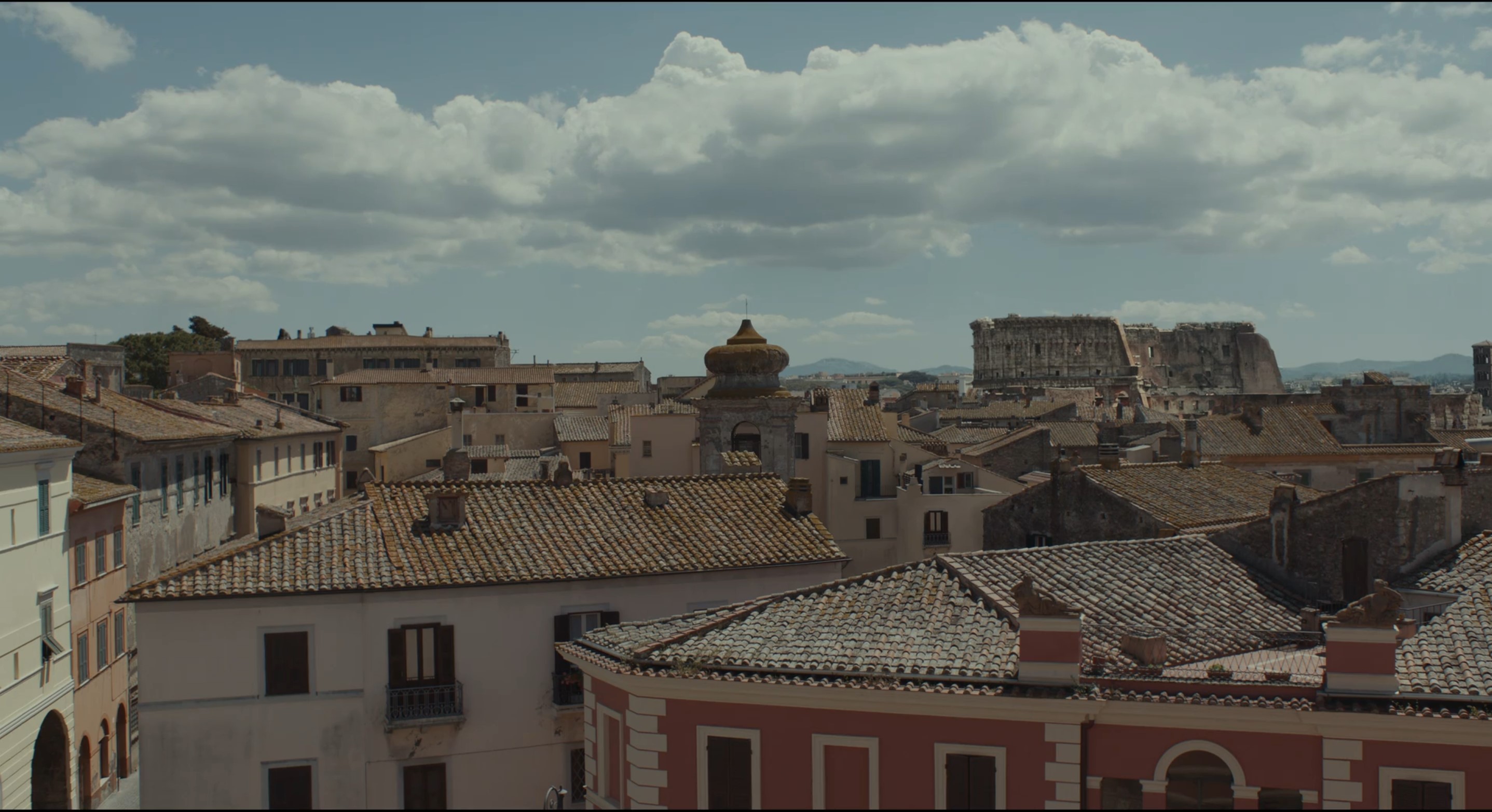
Roman rooftops: a matte painting by Agnes Asplund, as seen in The History of Sound (2025).

She and her team are creating at the cutting edge of a grand cinematic tradition. The Great Train Robbery (1903) featured scenes filmed in front of paintings to create early, blended looks. Today, digital mattes and chroma key compositing combine moving effects with filmed action to create complex visual realities.

The role of matte painting in storytelling was the subject of Asplund's master's thesis. Visual effects professor Robert Mrozowski taught Asplund in courses including Matte Painting: Photo-realistic Environment Creation (VFX 762), and he is "not at all surprised by her great professional success."

"I remember Agnes as easygoing, open, serious, and with enormous talent," Mrozowski says. "She understood camera tracking and was very good doing 3D with Maya. She also knew the artistic foundation of matte painting and had learned the history, all the way back to Albert Whitlock painting on a sheet of glass. Her matte paintings were extremely pleasing compositions. As a student, Agnes produced fantastic work."

The now-retired professor's appraisal is almost certainly shared by young director Oliver Hermanus, who has worked with Asplund and Filmgate VFX on projects including Mary & George (Starz, 2024), The History of Sound (Universal Pictures, 2024), and the Academy Award-nominated Living (Lionsgate, 2022).

Agnes Asplund Living matte

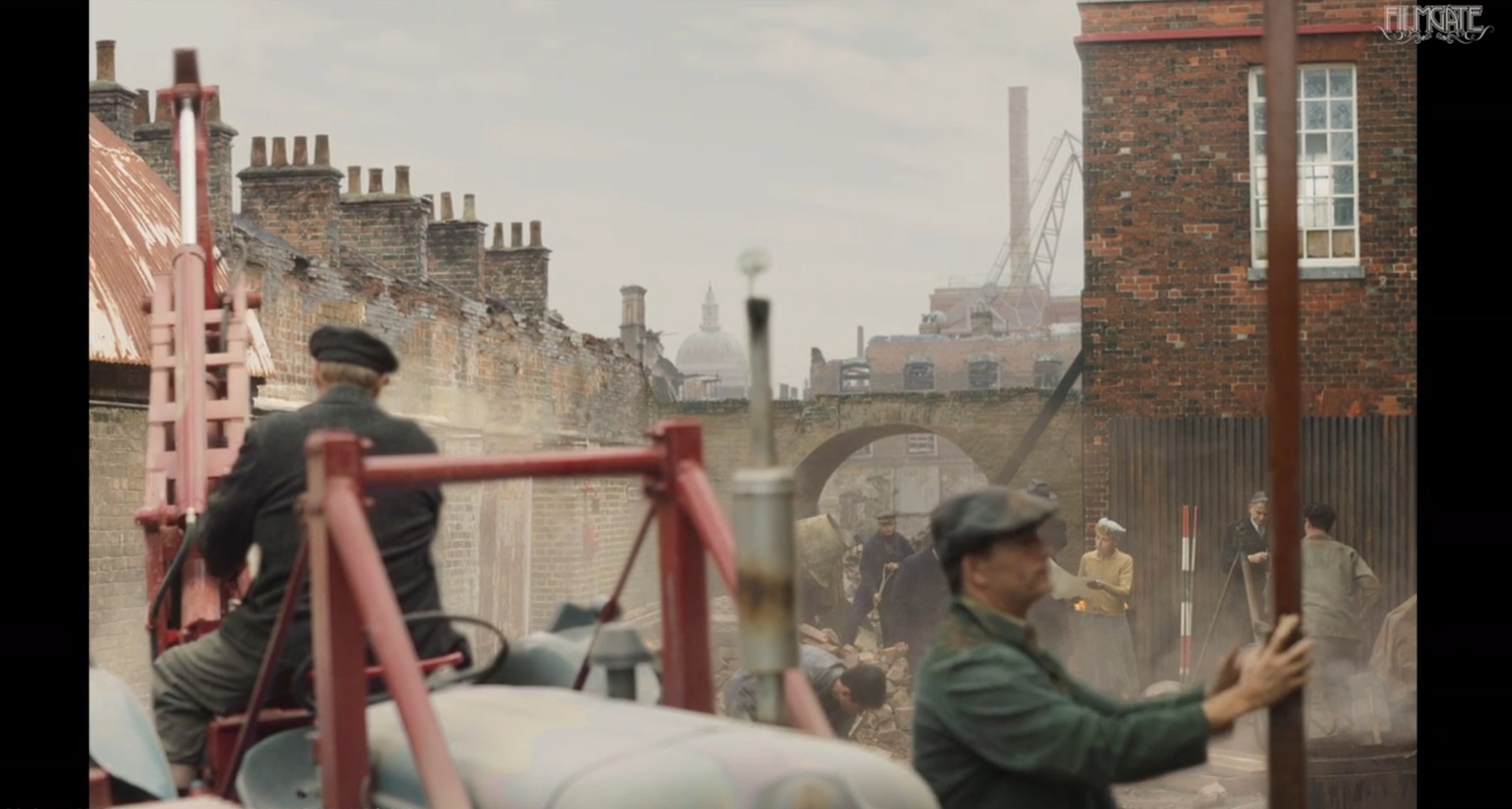
Bombs away: a scene of post-World War II-era London, from the film Living.

"Living was the first project we worked on together," Asplund says. "Before shooting began, the VFX shots were planned out together with Oliver. Then we'd take a screen grab of a shot with the blue screen, and I'd do a rough painting to sketch what we want of the different environments. We researched London of the time. What did the houses look like, with what kind of chimney pots? My sketches were approved by the director, becoming the basis for my paintings for each shot."

Now in her eighth year at Filmgate, Asplund sees the direct line back to her time in Savannah. She characterizes her SCAD experience as "like working in a small studio. You learn all the tools, you have a render farm, and you're collaborating with different people. When I graduated and went to work at DreamWorks Animation, I was prepared for that environment."

Further evidence of Asplund's time at SCAD is all around her. She and husband Tyler Reid (M.F.A. film and television, 2012) are the parents of three boys, ages 3 to 12. "We'll have to take our kids to Savannah someday to show them where our family story started," Agnes says with a smile. "SCAD has a special place in my heart."

Talk of love stories leads back Koka Björn (as To Cook a Bear is known in Swedish) and its powerful final scene. "We added a light snowfall to the dramatic sky with a hint of sunlight coming through, to signify hope," Asplund explains. "There is always a story that the environment wants to tell. They're walking into a bright future."

Agnes Asplund photo

Looking ahead: Agnes holds her youngest son. 

Connect with Agnes Asplund on LinkedIn.

Papa's Moon Shot!

February
23
2026
By
Tags:

Reports of the demise of the penny appear perilously premature. Fervent fans of fabulous fun, it is time to dig deep into your pockets for the maliciously maligned one-cent coin. Time for Moon Shot!

"I was inspired by the Fey Finger Striker, a penny arcade game from 1932, but instead of making a replica, I decided I'd create my own game. That allowed me full creative freedom while respecting the spirit of early arcade design," says Michael Papa (B.F.A. motion media design, 2013).

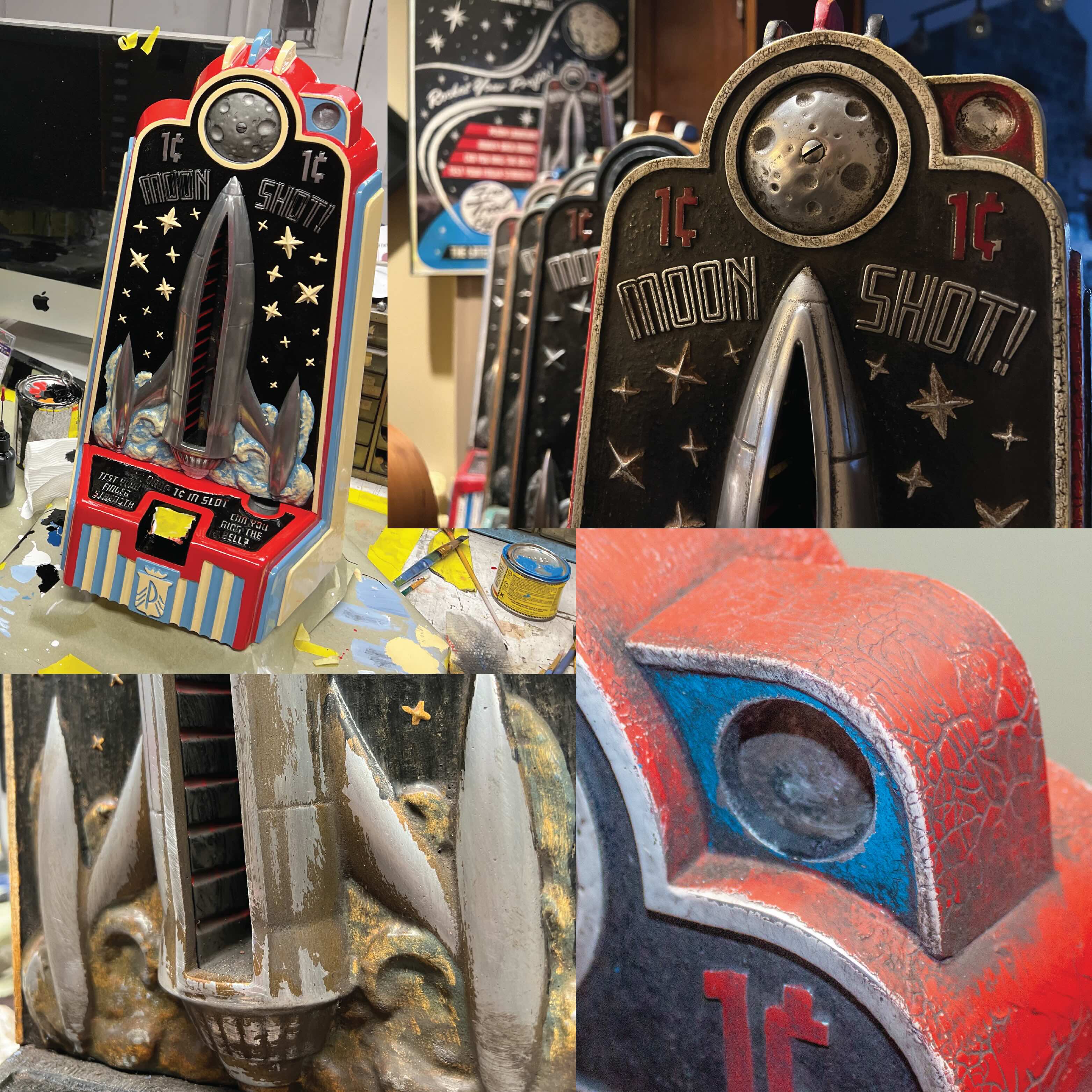
Over a two-year period, the Gloversville, New York native designed, engineered, and built the penny-to-play game. "Once I had the space theme, launching a penny to strike a bell that looks like the moon made perfect sense," Papa says. A fully mechanical arcade machine, 3D printed in aluminum-filled resin, Moon Shot! stands on its own.

Moon Shot fabrication

Process shots: the work side of the Moon.

Michael Papa:

I grew up surrounded by antique coin-operated machines. My father, John Papa, owns and operates National Jukebox Exchange. His restoration shop focuses on classic jukeboxes from the 1960s and earlier. When I was in high school, my dad was making recreations of ultra-rare penny arcade machines from, like, 1904 and 1928. My dad facilitated me being in that world.

After high school, I spent two years at Fulton-Montgomery Community College in Johnstown, New York. There was a 3D animation professor there, Bob Renda, who told me: "You have so much more potential, you need to go to SCAD." My dad and I flew down to Savannah and met with the motion media design department chair at the time, John Colette. Colette was so nice and enthusiastic about my portfolio and told me, "You can really excel here!"

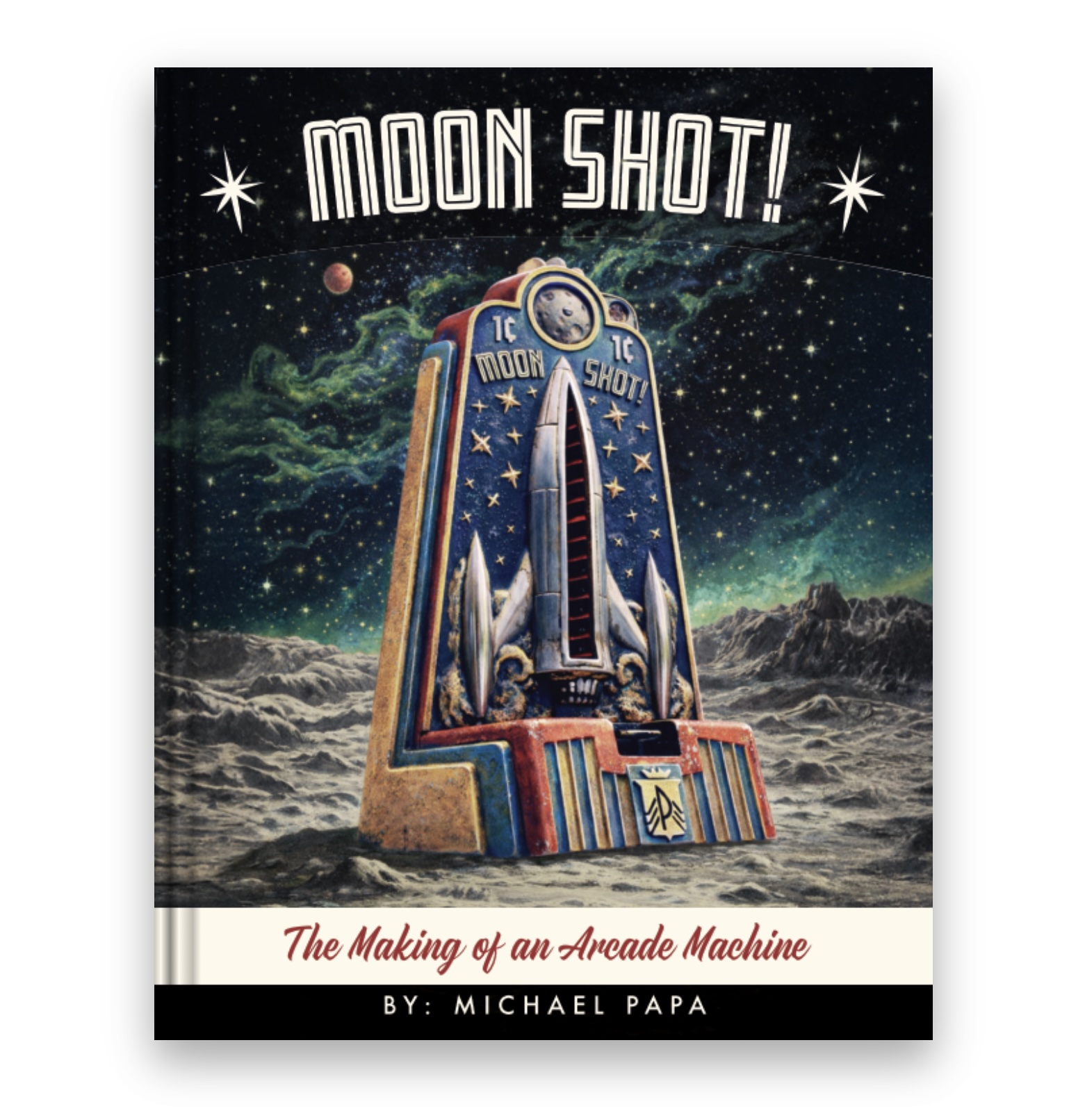
SCAD unlocked a lot in me. I never thought I'd be able to go to school for things I studied at SCAD, like Dynamic Typography (MOME 729). Professor Colette wrote a book about one of our motion media class projects, which was really inspiring. I've published five books now.

Moon Shot book cover

Written in the stars: Papa’s brand new book.

I started working on Moon Shot! in November 2022. Although it looks vintage, Moon Shot! was designed using modern digital tools. Every part was modeled with sand-casting constraints in mind. Draft angles, components, and theory of operation dictated every inch. The form draws from Art Deco, atomic-age futurism, and early amusement design. Influences range from Wurlitzer wallboxes to Popular Science magazine covers. Every machine carries a laser-etched data plate, identifying it as a modern creation by Papa's Re-Creations, complete with serial number.

I have written and designed a book about the making of Moon Shot! and everything that went into it, with color photos and production notes. I've got to thank my girlfriend, Megan Balser (B.F.A. writing, 2014). We were at SCAD at the same time and never knew each other then, but she ended up in Gloversville and has been here ever since. She edited the book and made sure it made sense.

I made sixteen total Moon Shot! machines including the prototype. Each one has a distinct finish and hand-painted enamel color scheme. I've gotten quite a few inquiries from people who say, "Hey, I've known your dad for 30 years, I own machines he restored, I'd love one of yours." I have sold over half of my Moon Shot! machines, just from people messaging me. The reception has been really nice.

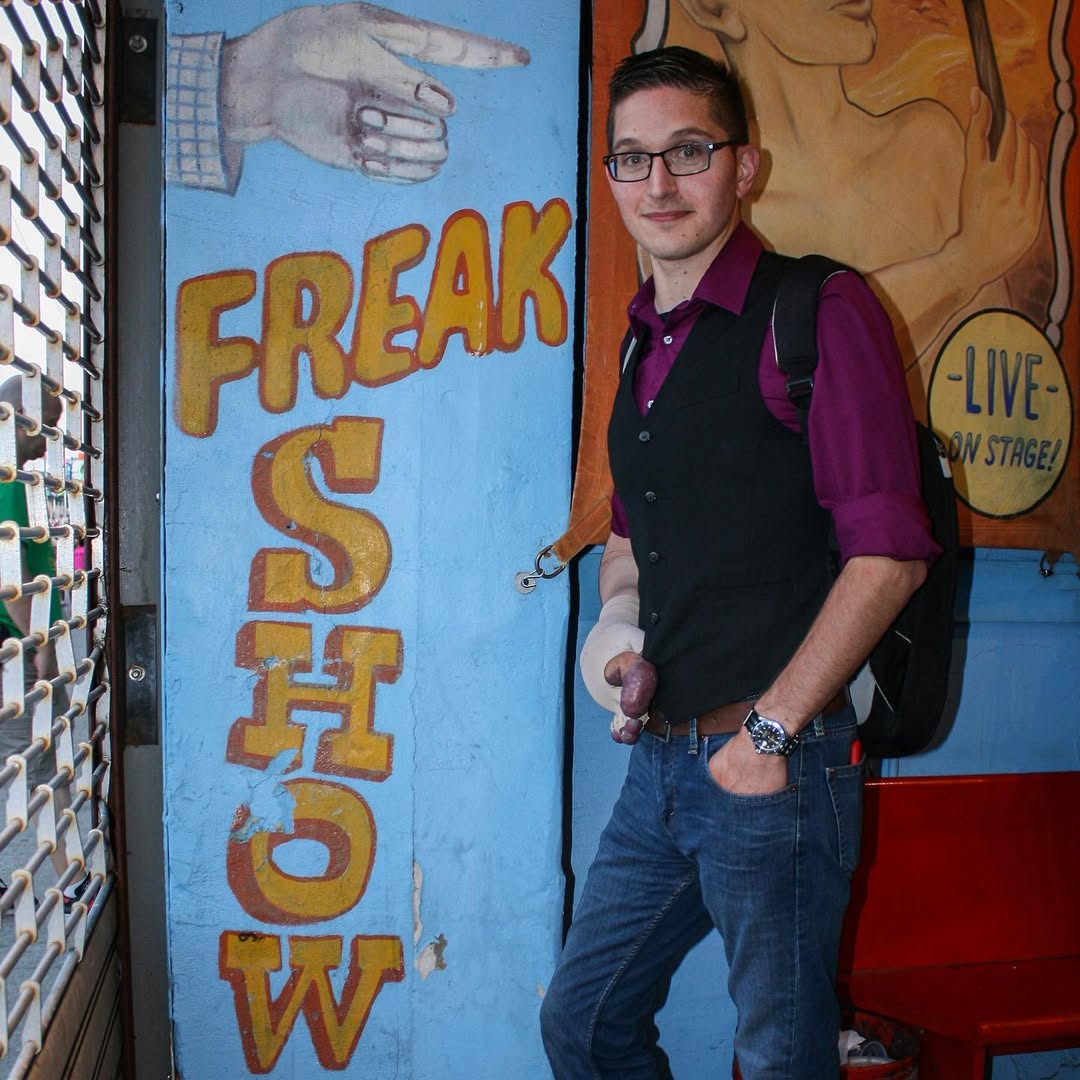
Michael Papa

Ready player: designer Michael Papa.

To purchase the book Moon Shot!: The Making of an Arcade Machine, contact [email protected].

Moon Unit rising!

February
16
2026
By
Tags:

Some love stories are written in the stars. This one began in a sketchbook.

Yuyu Tang (M.F.A., illustration, 2021) and Xintai Li (M.F.A., industrial design, 2021; M.F.A., design management, 2021) were randomly paired to pose as a couple in a foundation drawing class. They laughed, not knowing it was the first mark on a much bigger picture.

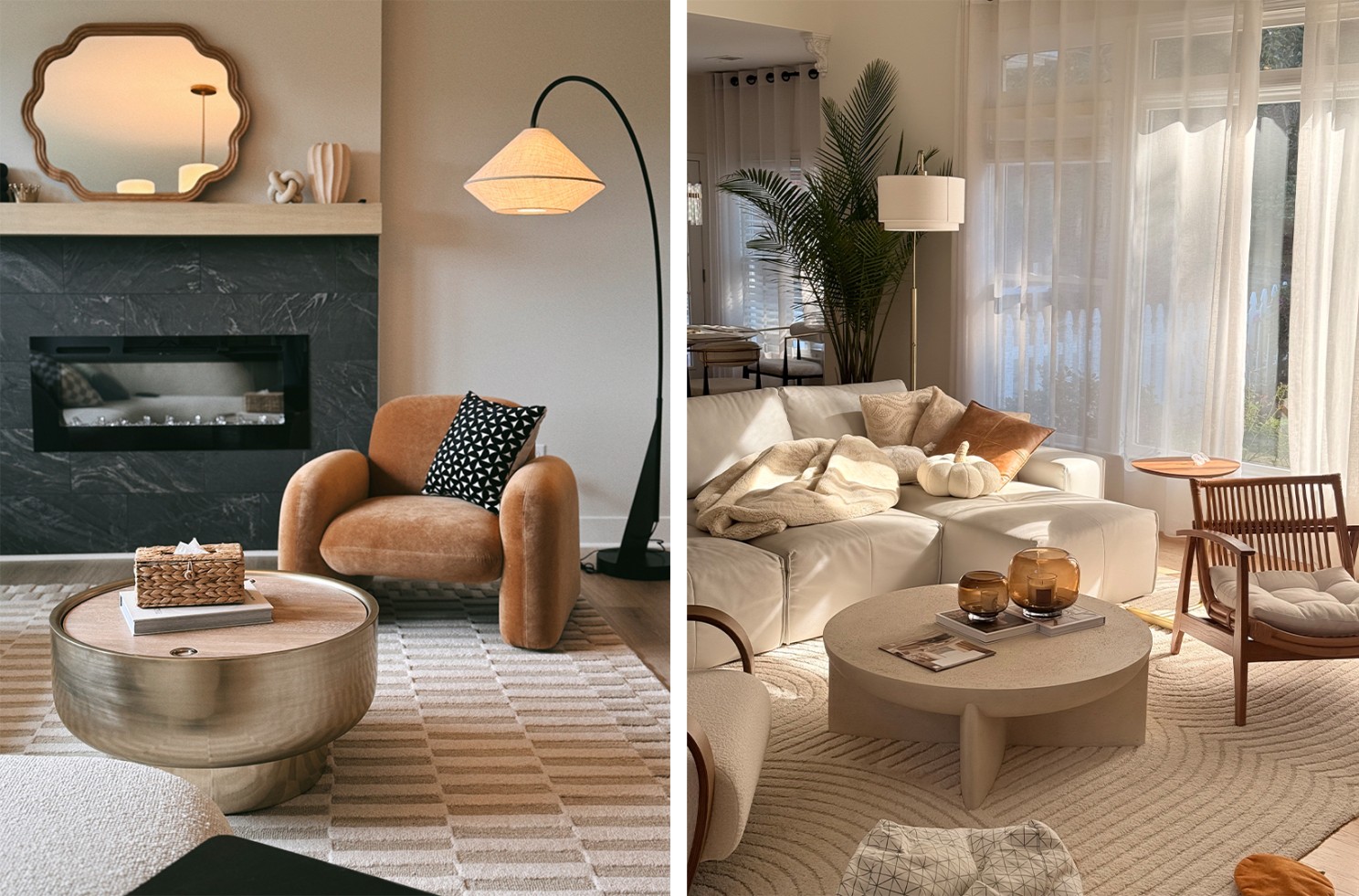
Today, Tang and Li are partners in every sense: married, raising a child and co-running Moon Unit Design, their interior design studio based in Atlanta known for its resonant, intentional spaces. "We're still learning," they explain, "and that means we get to grow with the spaces we design."

Before Moon Unit Design became a reality, Tang and Li were like many new alumni. They joined design firms, learning the pace of professional projects and handling tasks with the skills they learned at SCAD. Li's industrial design training honed his precision with materials, structure, and build processes. Tang's illustration program gave her the visual storytelling tools to make concepts tangible for clients. ESL presentation classes helped prepare them to pitch ideas and communicate with clarity. They agree: "Soft skills make hard work possible."

While early jobs gave them insight into how ideas move from paper to reality, it also made them realize they wanted more creative ownership in the long run.

"We thought instead of waiting for opportunities, why not create our own?" says Tang.

Their first independent projects came through word of mouth, and included an Airbnb makeover, a small cabin renovation in Atlanta, and a neighborhood café in China. Tang naturally took the lead in client conversations and concept sketches, while Li focused on materials, construction, and detail.

Moon Unit 2

This is personal: courtesy of Moon Unit.

Clients began calling them "translators of dream lifestyle." As referrals grew, so did their confidence in formally establishing Moon Unit, a name inspired by the concept of a moon habitat: quiet, warm, and personal.

One early milestone was Project 2049, named after the home's address. It was the first time Tang and Li handled every stage of a commission entirely on their own. The clients, a young couple living in another state, met them once for a brief conversation then placed the keys in their hands. When the couple finally stepped into their finished home, it was ready for love and life to unfold.

"We documented everything, managed every step, and gave them a home they could step into without worry," Li says.

For Tang and Li, design is about creating spaces that continue to hold love and life room by room and season after season.

"We don't design for photos, we design for people," Tang says. Every project is an extension of that shared rhythm, built together with trust at its core. Years after meeting as students at SCAD, they say it still feels like the beginning: fresh, full of possibility, and worth celebrating this Lunar New Year.

Tang and Li

Moon Unit: Tang and Li in 2021.

Visit the portfolio of the writer Yueer (Yuer) Deng.

Sounds you feel: Haoran Li

January
29
2026
By
Tags:

Ask a gamer what makes a game unforgettable, and they often describe a feeling: the way footsteps echo in an abandoned hall, the relief of a healing chime, the swell of ambient music as a mountain view unfolds. The invisible force behind those experiences is sound. It is the craft of Haoran Li (M.F.A. sound design, 2019), who builds what he calls “living, breathing, worlds" through audio at HYPERGRYPH, one of China's leading game studios.

Prior to earning his master's degree at SCAD, Li studied musicology in Xi'an, China, a city where history and noise blend into an urban rhythm, marked by the shuffle of chess players by the old city wall, the whipcrack of spinning tops, and the overlapping calls of vendors in the Muslim Quarter. Those sounds, he says, taught him to listen differently.

"Living in that environment made me realize every city has its own soundscape," Li says. “It reminded me that sound can record and preserve collective memory." When he first held a recording mic, he discovered the creative potential of sound itself. “It wasn't just about notes or melody anymore. It was about shaping an experience."

At SCAD, theory became creative practice. His first graduate course was Sound Effects and Dialogue Editing (SNDS 741) with Academy Award-winning sound design professor David Stone. "That was the moment when everything locked together," Li says. "I finally understood: sound isn't decoration, it's architecture."

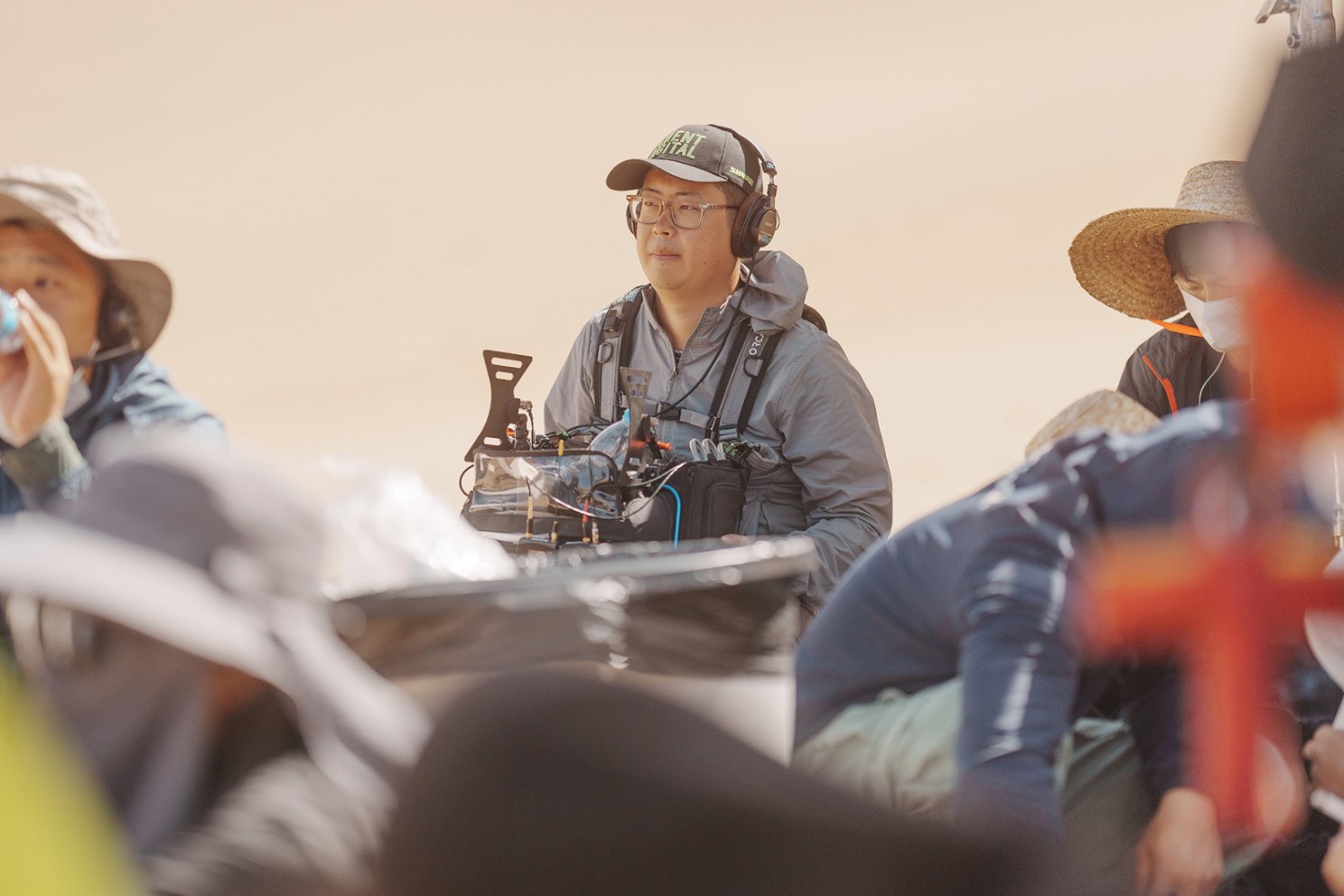
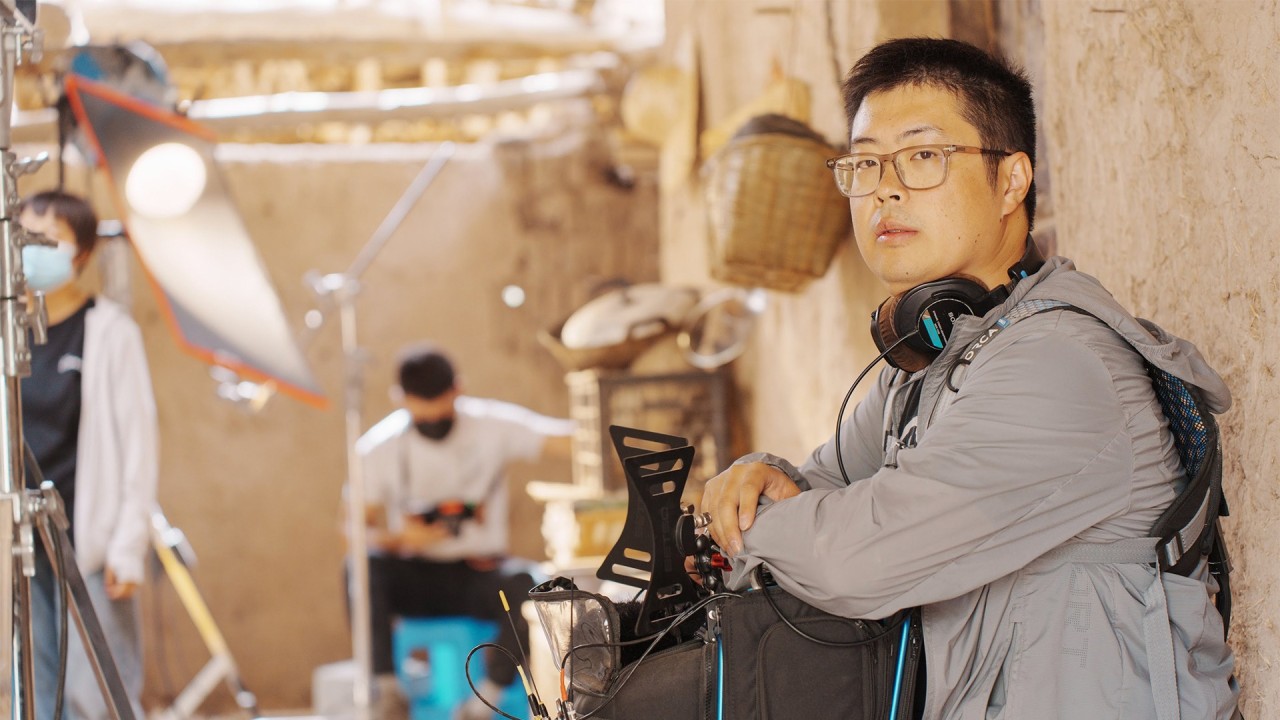
Vision in sound: Li has worked on feature films including the award-winning To Kill A Mongolian Horse.

That realization shaped Li's approach to every project that followed, including Bricks, a Civil War short film and one of Li's defining student projects. Tasked with capturing and designing historically authentic sound, he learned the power of restraint.

“During the first half, I carefully removed the birdsong we'd recorded. It was beautiful but emotionally wrong," he explains. “Only at the end, when hope returned, did I bring the birds back. Silence became the most powerful element." The lesson: the best sound design sometimes comes from what you don't play.

Li joined a SCADpro collaborative project with Ford Motor Company to prototype voice-assistant concepts, an experience that revealed sound's role beyond storytelling. In user interfaces, sound is feedback, logic, and system language.

At HYPERGRYPH, those lessons converge. Game audio is not linear. It responds to player behavior in real-time. Every footstep, echo, or ambient hum reacts fluidly to action and environment. “Sound in games isn't passive. It's a dynamic character that responds to players," says Li.

As the industry evolves from mobile to VR and spatial audio, Li sees two forces shaping the next generation of sound design: technical depth and cultural expression.

"We need sound designers who understand both the engineering and the artistry, and who can code middleware and compose emotional landscapes."

For students exploring the field, his advice is grounded and generous: "Try different forms of sound work before specializing. Stay curious about technology, recording, synthesis, middleware, and game engines. They're the same language, spoken in different contexts."

From the bustling streets of Xi'an to HYPERGRYPH's digital worlds, Haoran Li has built a career on one belief: The best sound design isn't what you notice, it's what you feel. In an industry obsessed with immersion, that invisible craft has never been more valuable.

Explore Haoran Li's portfolio and recent works on LinkedIn and IMDb

This story features additional editorial input by Lindsay Graham.