Skip to main content Accessibility Policy

SCADfit: bespoke fitness

December
19
2017
By
Tags:

It's Wednesday night at the SCADfit Savannah spin studio, clear with a chance of meteor shower. An in-house fabricated marquee emblazons the entrance, leading to portraits by Dakota Schreck Havard (B.F.A., painting, 2017) in shades of Gatorade. The bituminous floor, bisected by a double yellow line, and wall-to-wall Spivi projection complete the illusion of an open road in outer space. Each meteor-avatar tracks the 20-strong peloton of IC7 Indoor Cycles, ranking riders and measuring effort in real time.

Indefatigable instructor Brit Claus (M.F.A., luxury and fashion management, 2017) alternates exhortations and directives: "Keep coming back. The class doesn't get easier but it gets more fun and you'll find you can challenge yourself more deeply. Where else can you have a party in a dark room with loud music and burn serious calories?"

Since opening fall 2017, SCADfit has offered group fitness classes ranging from ballet and boot camp to Pilates and Zumba. Self-guided workouts, aided by interactive software and virtual trainers, take place in the main aerobic and strength room. Equipment includes Life Fitness treadmills and ellipticals, rowing machines, bench presses and three Ciclotte monowheels. Parlaying electromagnetic resistance into a realistic road-riding experience, the sleek Ciclottes would be at home in a sculpture garden.

The newest SCAD Savannah wellness facility pairs elite fitness apparatus with museum quality art. The walls proclaim "Too Buff to Sleep" in specular lettering by Michael Porten (M.F.A., painting, 2012; B.F.A, illustration, 2004), plus a cyberscape painting by Sheng Weng (M.F.A., painting). A 12-foot fibers installation, hand-tufted by Trish Andersen (B.F.A., fibers, 2005), swaddles the yoga studio. The locker room mural by Tyrus Lytton (M.F.A., painting, 2013) deploys a mirror to translate its word play: "Take Time for Self(ie) Reflection."

The cool neutrals that pervade the 12,000-square-foot space meet a bubblegum pink pane of glass dividing SCADfit from beeFUEL, the 24-hour coffee and juice bar operating out of repurposed shipping containers. Outside, the playful design continues. A multi-purpose workout station, anchored on vivid green turf, solves the dilemma of days too nice to spend indoors. The perfect complement to clubSCAD, SCADfit offers an inviting way to incorporate wellness into your routine.

HOURS
Monday-Thursday: 7 a.m. to 9 p.m.
Friday: 7 a.m. to 5 p.m.
Saturday: 9 a.m. to 5 p.m.
Sunday: Noon to 5 p.m.

SCADfit classes resume with the start of the new academic quarter Monday, Jan. 8, 2018.

SCAD AT MIAMI with 'the maestro'

December
5
2017
By
Tags:

Join SCAD AT MIAMI for a celebration of contemporary art and creative education during Miami Art Week, Dec. 6–10, 2017. Central to SCAD AT MIAMI is "Chroma," an exhibition of immersive installations at Untitled, Miami Beach by the maestro, renowned international artist and SCAD deFINE ART 2017 honoree Carlos Cruz-Diez.

Presented by the SCAD Museum of Art in collaboration with Articruz and the Cruz-Diez Art Foundation, "Chroma" explores Cruz-Diez's experimental and multidisciplinary practice and groundbreaking color theory philosophies. The exhibition includes a large-scale public artwork, an exhibition of recent works and three new documentaries covering the artist's life and work.

Here, Storm Janse van Rensburg, SCAD head curator of exhibitions, shares his "things to know" about Cruz-Diez.

1. Carlos Cruz-Diez was born in 1923 in Caracas, Venezuela.


2. After completing his studies at the School of Fine Arts in Caracas, Cruz-Diez worked as an illustrator in 1944, contributing to publications including El Farol, La Esfera and Elite. He created comics for various newspapers and was an illustrator for El Nacional. He also worked in 1946 as creative director for advertising agency McCann-Erickson, Venezuela.


3. In 1960, Cruz-Diez settled permanently in Paris, France with his family. He currently lives and works between Paris and Panama City, Panama.

4. Cruz-Diez approaches his research into color from a scientific and theoretical point of view, paying close attention to the non-verbal and emotive aspects of color. His conceptual approach to art emphasizes not the artwork itself, but the space between the artwork and the viewer.


5. Throughout his career Carlos Cruz-Diez has retained close links to his country of birth, through various major public art projects, initiatives and cultural contributions. He has received the Honorary Doctorate of Fine Arts, Universidad de Los Andes, Mérida, Venezuela and the Doctor Honoris Causa, Universidad Central, Caracas, Venezuela. 


6. Carlos Cruz-Diez’s ambitious works has been realized on a monumental scale in public contexts, whilst displaying a sensitivity to human scale and perception. "Ambientación de Color Aditivo" (1974) measures a total of 886 x 30 feet, and is made of hand-laid mosaics by a small team including the artist, and was commissioned for the Simón Bolívar International Airport, Maiquetia, Venezuela.

7. Carlos Cruz-Diez was the SCAD deFINE ART 2017 Honoree. His exhibition "Chroma" at SCAD Museum of Art featured specially-commissioned, large-scale, site-specific artworks including an altered, walk-in shipping container holding "Chromosaturation," a series of connected color chambers.

8. Cruz-Diez's "Chromatic Induction in a Double Frequency" (2011) graces the walkways of Marlins Ballpark Stadium in Miami. Made of one-inch square tile mosaics, the artwork measures a total of 5,485 square feet.


9. In 2012, Carlos Cruz-Diez received the Rank of Officer of The Order of Légion d'Honneur, the highest French order of Merit.

10. The 2017 success of "Chroma" at SCAD MOA inspired the exhibition to travel to SCAD AT MIAMI as this year’s Untitled, Miami Beach Special Project. Visit SCAD AT MIAMI for a transformative experience of color perception as only Carlos Cruz-Diez can create.
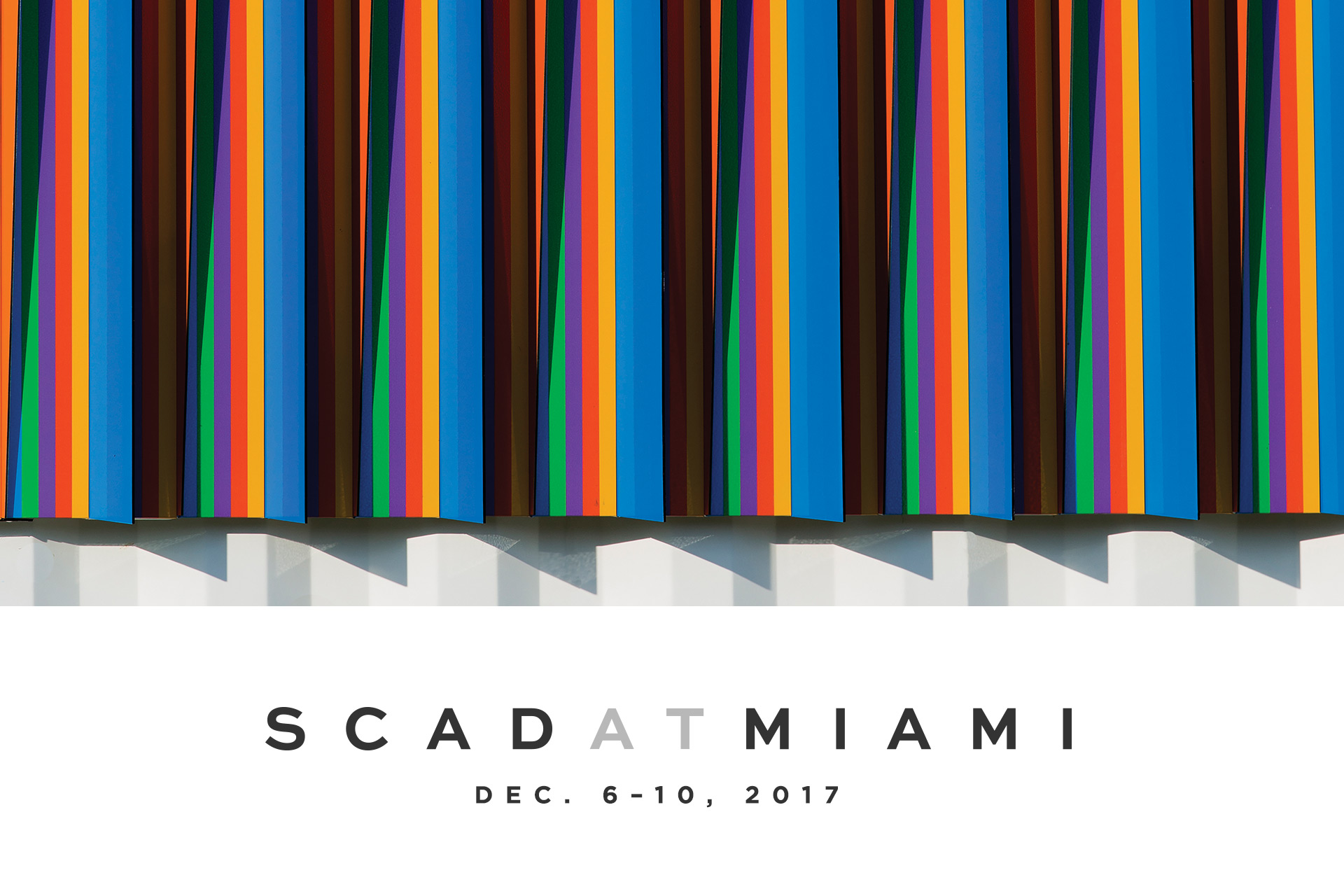
SCAD at Miami event advertising

For more information visit SCADATMIAMI.COM.
 

Reese Witherspoon receives SCAD Étoile award

November
30
2017
By
Tags:

The Savannah College of Art and Design will honor Reese Witherspoon with the university's prestigious SCAD Étoile award, presented in recognition of her celebrated lifestyle brand Draper James and her unique contributions to fashion, culture, design and style, at SCADshow theater in Atlanta at an event on Thursday, Nov. 30, 2017, 2 p.m.

The SCAD Étoile connotes brilliance, luminosity and glamour. The award is a tribute to the biggest and brightest stars of the fashion, style and design realms, and recognizes trendsetting, innovative leaders for their monumental contributions. Witherspoon joins a highly acclaimed coterie of SCAD Étoile honorees, including Jonathan Adler, Pierre Cardin, Catherine Deneuve, Carolina Herrera and David Yurman.

SCAD is also partnering with Draper James to design a limited edition capsule collection for the brand's Spring line. Students from SCAD's top-ranked fashion program will design a "Mommy + Me" capsule, which will debut at SCAD FASHWKND in May 2018. The SCAD collection will be available for purchase at draperjames.com.

"I'm so incredibly honored to receive the SCAD Étoile award and thrilled to be partnering with such a gifted and respected institution. I founded Draper James in order to showcase the originality and beauty of the South, and I'm thrilled it resonates so well with the emerging talent SCAD is known for around the world," said Witherspoon, the founder and creative director of Draper James. 

Created in tribute to Witherspoon's Southern heritage and her grandparents, Dorothea Draper and William James Witherspoon, Draper James is the epitome of contemporary, yet timeless, style.

"SCAD and Draper James belong together! I really admire the depth and breadth of Reese's accomplishments in film and fashion. Her Draper James line is smart and chic, suffused with Southern charm — just like SCAD," said SCAD president and founder Paula Wallace. "This partnership with Draper James is a dream for our students, who study within the world's preeminent School of Fashion. Every day these SCAD students manifest their dreams, just as Reese has done with her elegant, up-for-any-occasion brand."

The project joins students from SCAD degree programs in fashion, accessory design, graphic design, fashion marketing and management, and fibers with the brand's top design leadership to develop a complete, market-ready collection. The collaboration will be unveiled at SCAD FASHWKND, the university's annual fashion celebration, May 17-20, 2018. Hosted in Savannah and Atlanta, SCAD FASHWKND presents SCAD students' senior fashion collections, mentored and juried by fashion industry designers and influencers, in a full professional production. In 2017, SCAD FASHWKND featured an immersive runway show at the SCAD Museum of Art in Savannah, tableaux vivant-style vignettes at 1600 Peachtree in Atlanta, and a Shop the Runway component of SCAD alumni work at both locations.

SCAD is consistently ranked by Business of Fashion and Fashionista as a top fashion university, offering more than 200 courses focused on preparing students for professional careers in fashion industries. SCAD has pioneered programs in accessory design and luxury fashion management, and offers the largest fibers and jewelry degree programs in the U.S. SCAD fashion alumni work at globally renowned brands like Marc Jacobs, Ralph Lauren, Kate Spade, and Lanvin. In the past three years, SCAD students have won over 130 major fashion-related industry awards including consecutive Supima Design Competition grand prize awards, the CFDA Geoffrey Beene Design Award, and the International Design Awards Emerging Fashion Designer of the Year.

The presentation and conversation are free and open to the public with a reservation. Reserve your seat at SCADShow and present your ticket at the event.


#GivingTuesday is here!

November
28
2017
By
Tags:

#GivingTuesday is officially here, marking the start of the holiday giving season. As an incentive, anyone making an online gift of $50 or more to any designation at SCAD through 11:59 p.m. (ET) tonight will be entered to win one of three SCAD prizes.

When you give to SCAD, you support innovation, creativity and sustainability. SCAD is the world's leading art and design university, thanks in part to investments by individuals who believe in the value of a SCAD education and who champion our mission to prepare talented students for professional careers.

Give online today and be entered to win one of the following #GivingTuesday prizes:

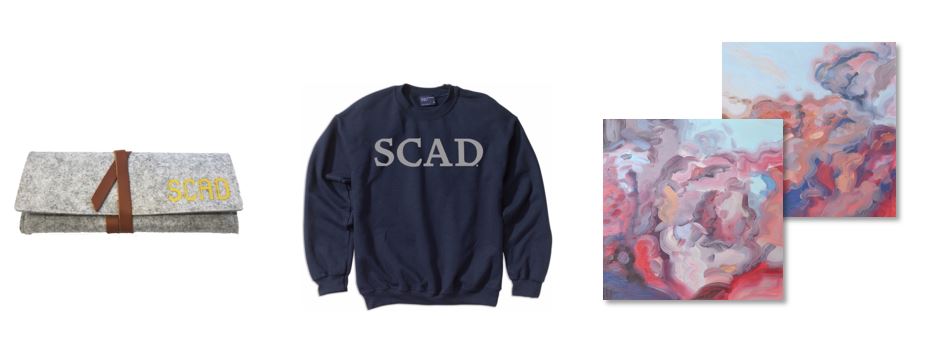
  • SCAD felt pencil pouch wrap
  • SCAD crew neck sweatshirt
  • A pair of signed, 8.5" x 11" giclée prints by SCAD alumna Rachel Evans (M.A., arts administration, 2016; M.F.A., painting, 2011)

No matter how you choose to give, your contribution will make an extraordinary impact in the lives of SCAD students.

SCAD gratefully acknowledges the vital role generous donors have played in our success, and hopes you will consider joining our valued supporters in securing a bright future for the university, its programs and, most especially, its students and alumni.

The Savannah College of Art and Design is a private, nonprofit, accredited institution conferring bachelor's and master's degrees at distinctive locations and online to prepare talented students for professional careers. SCAD offers degrees in more than 40 majors, as well as minors in more than 75 disciplines across its locations in Savannah and Atlanta, Georgia; in Hong Kong; in Lacoste, France; and online through SCAD eLearning. With more than 35,000 alumni worldwide, SCAD demonstrates an exceptional education and unparalleled career preparation. The diverse student body, consisting of nearly 14,000, comes from across the U.S. and more than 100 countries.

In 2017, the prestigious Red Dot Design Rankings placed SCAD as the top university in the U.S. and in the top two universities in the Americas and Europe. Career preparation is woven into every fiber of the university, resulting in a superior alumni employment rate. In a study of Spring 2016 SCAD graduates, 98 percent were employed, pursuing further education, or both within 10 months of graduation.

For more information visit SCAD Giving. Official rules and regulations apply to the #GivingTuesday drawing.

Jacob Lawrence goes to Black Mountain College

November
21
2017
By
Tags:

Jacob Lawrence had never met Josef Albers when, in the spring of 1946, the young African-American painter received an unexpected invitation from the German-born Bauhaus master to teach a painting course at a progressive liberal arts college in the mountains of Western North Carolina. Lawrence's experience that summer at Black Mountain College became a milestone for the artist, initiating him into the ranks of teacher and transforming his artistic practice.

Julie Levin-Caro, Ph.D., delivered her scholarly and spirited presentation "Jacob Lawrence at Black Mountain College, Summer 1946" during the recent symposium celebrating the exhibition "Jacob Lawrence: Lines of Influence" at SCAD Museum of Art. The lecture was enhanced by an astonishing array of visual materials Levin-Caro culled from the State Archives of North Carolina in Asheville, including Albers' original letter of invitation to Lawrence (mentioning a $25-a-week honorarium) and rare photographs by Nancy Newhall and Bacia Stepner of life at Black Mountain – a fully integrated campus in the Jim Crow South.

Levin-Caro, a professor of art history at Warren Wilson College, explained that at the time of Albers' invitation, "Lawrence had just returned to New York. He'd served two years in the Coast Guard during World War II. He'd resumed his painting career and was on a Guggenheim Fellowship and had started the 'War' series." As for Black Mountain, the college, founded in 1933 (it ceased operations in 1957) was in the summer of '46, as Levin-Caro put it, "fully under the sway of Josef Albers."

Albers and his wife Annie were in the United States as refugees of Nazi Germany. "When Albers arrived at Black Mountain, a student asked him, 'Mr. Albers, what are you going to teach us?'," Levin-Caro said. "To which Albers responded: 'To open eyes.'

"The idea was that Albers wasn't training artists, he was training people to see, to have visual perception. Another thing Jacob Lawrence got from Albers was a vocabulary and a confidence to talk about his work in formal terms. It makes us think about Jacob Lawrence as a formalist, and sometimes that gets overshadowed by the content and we lose sight that he's communicating this content through formal means."

That summer, Gwendolyn Knight Lawrence took sculpting with Leo Amino, sat in on Albers' painting classes, and taught an informal dance class to students in the dining hall, a location of no small importance, as Levin-Caro said: "Jacob Lawrence said that he was touched to notice that every day Albers would move around the dining hall and sit next to a different painting of his and look at it very closely."

Decades later, the experience at Black Mountain in the summer of 1946 continued to resonate. When interviewed in 1968 by Carroll Greene for the Archives of American Art, Jacob Lawrence said:

"Teaching has been a very good thing for me. It's led me into areas of exploration, areas of thinking which I may not have gone into it had I not had the experience of teaching. When you teach, it stimulates you. You're forced to formalize your own theories so that you may communicate them to students."

Special thanks to Dr. Julie Levin-Caro and all the presenters and attendees of the "Jacob-Lawrence: Lines of Influence" public symposium. SCAD Museum of Art will be closed Nov. 23-24 but reopens for normal hours on Saturday, Nov. 25, 2017. "Lines of Influence" is on view through Sunday, Feb. 4, 2018.


Diverse documentaries feature at film festival

November
1
2017
By
Tags:

Documentary films are essential to the SCAD Savannah Film Festival. The opening days of the 20th annual event showed diverse exemplars of the form.

Screening for the first time in front of a public audience in the U.S., "The Final Year" provided opening-night attendees at the Lucas Theatre an inside look at the Obama administration's ultimate annum. The film's emphasis is on foreign policy, with Secretary of State John Kerry, United Nations Ambassador Samantha Power and Deputy National Security Adviser for Strategic Communications Ben Rhodes all striving for progress and resolutions in countries including Cameroon, Cuba, Vietnam, Laos and Greenland. Peace negotiations in Syria and Obama's historic speech at Hiroshima are seen up close in real time. By the film's conclusion, its title refers to more than the final year of the Obama administration; it's end of U.S. diplomacy as it has functioned since the end of World War II.

A post-film Q&A with Rhodes and director Greg Barker, moderated by Access Hollywood critic Scott Mantz, revealed a further twist: Obama was to give his final foreign policy speech at the Greek Parthenon, the birthplace of democracy. After the outcome of the 2016 election, this was deemed no longer appropriate.

"Icarus" starts on two wheels. Director Bryan Fogel, a competitive cyclist, sets out to show how easy it is to circumvent doping controls in the sport. The involvement of Grigory Rodchenkov, director of Moscow's anti-doping agency, soon takes the film into another stratosphere: a full-scale expose of Russia's state-sponsored doping program and the decades-long campaign to pervert the integrity of the Olympic games.

The film reigns in floccose threads by including sequential illustrations depicting the psychological states of Rodchenkov and the Russian military athletic apparatus. For a film about doublespeak and the Olympic dream, "Icarus" has, in Rodchenkov, a quixotic human heart. A post-film Q&A with Fogel and SCAD film professor Michael Chaney revealed how the documentary was structured to resemble a "Bourne" action thriller, and that, to Fogel, a film is never finished until it hits the screen.

Then to the barre: "Anatomy of a Male Ballet Dancer," a cinematic portrait of Marcelo Gomes, principal dancer of the American Ballet Theater. As filmmakers David Barba and James Barberito follow Gomes' global pas de deux, breathtaking performances in ballets including "La Bayadere," "Gisele," and "Swan Lake" are heightened by Gomes' awareness of his physical fallibility. Archival video of Gomes as a young boy dancing with schoolmates in Brazil reveals his incandescent star power years before he refined his arabesque. While tackling issues of identity and Gomes' unresolved relationship with his father, the film delivers insights into this most exquisite and taxing art form.

The SCAD Savannah Film Festival continues through Saturday, November 4, with blockbuster premieres, exclusive screenings, workshops, panels and more. Visit filmfest.scad.edu.

Must-see SCAD Savannah Film Festival interviews

October
27
2017
By
Tags:

For 20 years, the world's most beloved and respected filmmakers have come to Savannah to share their wisdom with SCAD students. They teach masterclasses in rehearsal rooms, do scene work on stages, and sit beside students in editing suites, discussing the art of the masterful cut. At the end of each visit, we ask these brilliant minds to share with us a few final thoughts for our students. These powerful interviews go beyond the usual junket fare and penetrate right to the heart of filmmaking. Here are five of the most meaningful interview moments from the last few years.

No. 5: Sir Ian McKellen

In his 2010 interview, Sir Ian McKellen exhorts students to put in the hours, to take their careers and their ambitions by the horns and do the work. "My advice would be to work whenever you can [...] You can't just sit around waiting for work to happen." This lesson is critically important in a profession where it can seem, to young people, that everyone has power but them. Can't find the film role of your dreams? Write your own screenplay. Do you wish television reflected your culture and experience more? Make your own show.

***

No. 4: Olivia Wilde and Reed Morano

"No single person can create a film on their own," says Olivia Wilde in her 2015 interview, alongside director Reed Morano, her close collaborator. "You're not looking for a collaborator who's a carbon copy of yourself artistically. You're looking for someone who completes you, in many ways." SCAD students collaborate on their own student films, often forming their own collectives that thrive long after commencement. These collaborations reflect the breadth of degree programs at SCAD: You'll find storyboard artists from sequential art, 3-D character animators from the animation department, voiceover talent from performing arts, all working together to create a single film.

***

No. 3: Mahershala Ali

The work of the actor can seem like magic. You inhabit, through word and gesture, another self. How does this work, exactly? In his 2016 interview, Academy Award-winning actor Mahershala Ali invites students to embrace the search. Every artistic act is a question: Who am I? Who is this character? What makes him different from every other person who's ever lived? Mahershala says, "The more specific you can make the character, the more unique he or she can automatically become." In film as in literature, concrete details accrete into meaning.

***

No. 2: Gabourey Sidibe

In her 2012 interview, Academy Award-nominated Gabourey Sidibe reminded students that their creative anxieties can be bested. "There are absolutely times where I doubt myself," she said. Her solution? Don't pretend to know everything. Learn from everyone around you. She said, "I'm not just paying attention to my own character. I'm paying attention to the director of photography, the camera people. I pay attention to everything. The people who've been in the business for 20 years, they doubt themselves, as well. It's actually just a normal part of doing what you want to do."

***

No. 1: Stan Lee

Everybody loves Stan Lee, a born educator with a hero's heart. In his interview, he discusses the perennial importance of students finding their own point-of-view. He talks about how as a young comic book artist, he was told by his publisher not to worry about characterization. "Just put in a lot of fight scenes!" the man told young Stan. But Stan wanted to create more than mere fight scenes, and so he created backstories and dimensional heroes (and villains) with histories, flaws, desires. "Try to make the reader care about the characters before they have the obligatory fight scene," he says. In one sentence, he teaches SCAD students that empathy is key, and that listening to your own heart will help you find your voice.

The 20th annual SCAD Savannah Film Festival runs from Oct. 28 to Nov. 4, 2017, with screenings, masterclasses, Q&As, and award presentations at Lucas Theatre, Trustees Theater, and the SCAD Museum of Art Theater. This year's honorees and special guests include Sir Patrick Stewart, Robert Pattinson, Richard Gere, Salma Hayek, Holly Hunter, and more luminaries who will teach us, and especially our students, lessons that endure.

SCADMOA symposium honors Jacob Lawrence

October
23
2017
By
Tags:

The SCAD Museum of Art hosted a symposium Oct. 19-20, 2017, in honor of "Jacob Lawrence: Lines of Influence," a group exhibition celebrating the centennial of the birth of the acclaimed painter, storyteller and educator. The symposium included lectures, exhibition tours, performances and panel discussions, with leading scholars, artists, SCAD alumni and students commemorating Lawrence's life and legacy.

On Thursday, "Blocked at Five Points," a riveting performance by SCAD alumnus Masud Olufani (M.F.A., sculpture, 2013) and singer Minka Wiltz explored Southern oral traditions and the psychogeography of a former slave auction block, currently the site of a MARTA station, in Atlanta, Georgia. Attendees then learned about the themes and effects of Lawrence's expressive cubism at "The Moral Compass of Jacob Lawrence/Why Black Artists Matter," a keynote lecture by Patricia Hills Ph.D., professor emerita at Boston University.

Thursday's final event, "The Builders, 1947," was a collaborative multidisciplinary, performance by exhibiting artist Derrick Adams and a group of SCAD students in front of a large projection of Lawrence's painting "The Builders" (1947). The painting demonstrates Lawrence's preoccupation with the representation of everyday activities and elevation of labor as a noble activity. Adams and SCAD students mimed the movements of construction workers, bringing the painting to life with the sounds of popular 1940s music, commercials and important moments in African-American history, including an on-air interview with author James Baldwin.

The symposium continued Friday with a tour of the "Lines of Influence" exhibition hosted by Derrick Adams and fellow exhibiting artists Barbara Earl Thomas, Aaron Fowler and Meleko Mokgosi. Additional symposium events included a screening of "Moon Rising," a video created by multimedia concept band Moon Medicine, a lecture by art historian and curator Julie Levin-Caro on Lawrence's teaching experience at Black Mountain College in the summer of 1946, and a panel discussion exploring the importance of Lawrence's legacy as a teacher and art historical figure across multiple generations.

"Jacob Lawrence: Lines of Influence" is on view through Sunday, Feb. 4, 2018. The exhibition is made possible by the generous support of the Jacob and Gwendolyn Knight Lawrence Foundation and the Ford Foundation.

SCAD student collaborators on "The Builders, 1947":
Madison Alford (B.F.A., dramatic writing)
Kasey Appignani (B.F.A., film and television)
Daniel Arguello (B.F.A., performing arts)
Audrey Barbe (B.F.A., fashion)
Zara Bell (M.F.A., painting)
Steven Blevins (B.F.A., sound design)
Scott Boyd (B.F.A., film and television)
Hunter Brown (B.F.A., sound design)
Jordan Denton (B.F.A., sound design (sound)
Melissa Dodge (B.F.A., performing arts)
Kali Lewis (B.F.A., performing arts)
Blaine Little (B.F.A., art history)
Enrique Lopez (B.F.A., sound design)
Celine McDuffie (B.F.A., film and television)
Joe McGregor (B.F.A., performing arts)
Madison Parisi (B.F.A. dramatic writing)
Alex Pepper (B.F.A., performing arts)
Antonina Ramon (B.F.A., film and television)
Sydney Seabron (B.F.A., film and television)
Burke Swanson (B.F.A., performing arts)

SCAD keeps students safe during major storm

September
15
2017
By
Tags:

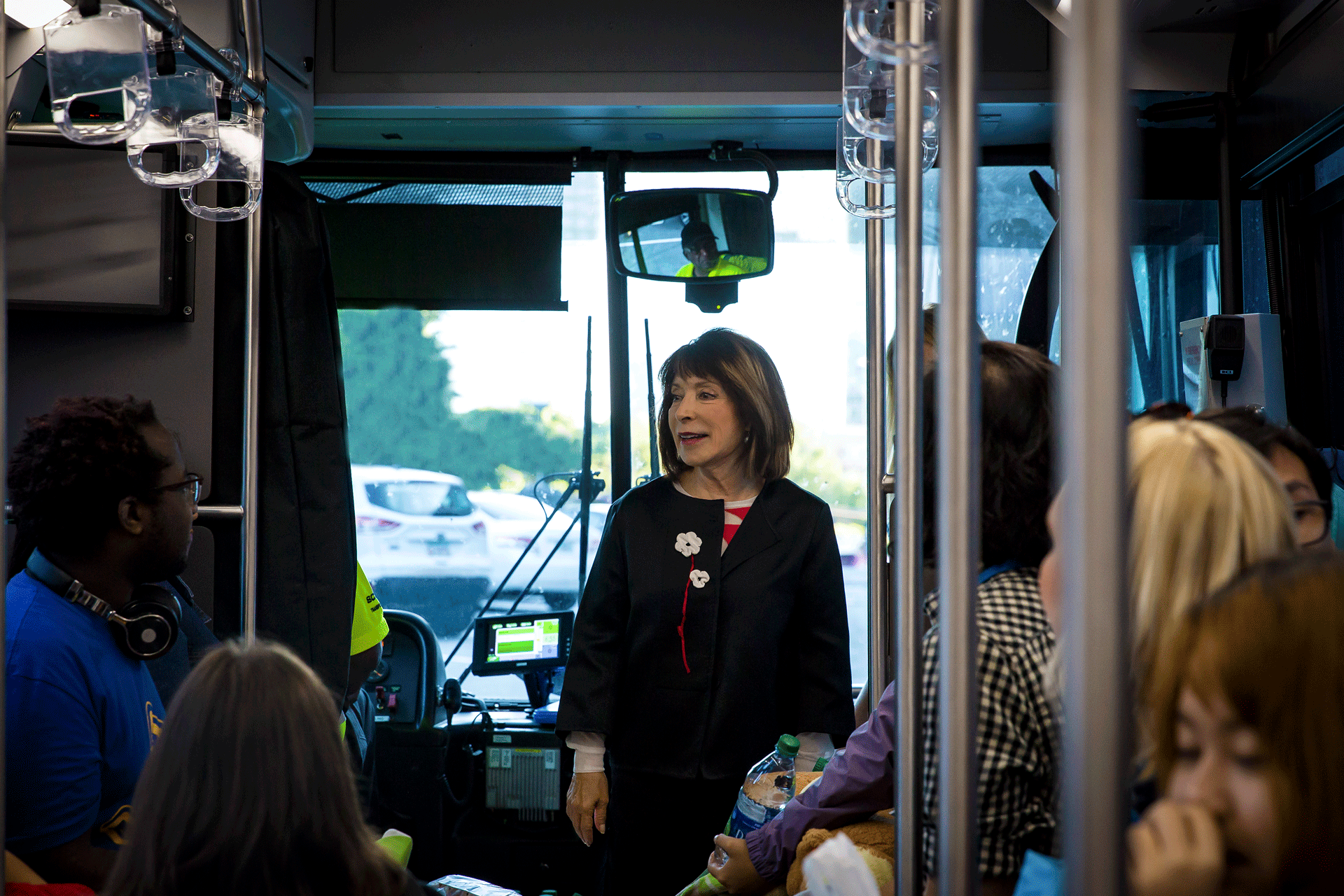
When first hearing of the impending arrival and potential severity of Hurricane Irma, SCAD relocated more than 600 students and faculty from Savannah to its Atlanta campus, well before any traffic or threat of the storm. With two campuses in Georgia, as well as locations in Hong Kong and Lacoste, France, SCAD is uniquely prepared to take quick action in times of need.

SCAD founder and president joins students on bus

En route to Atlanta via SCAD buses, students were inspired by the presence of SCAD professors and industry legends, including Mitch Gettleman, SCAD chair of sound design, known for his work on film and TV favorites "Scrubs," "Sabrina" and "Garden State." While sheltering in Atlanta, students turned a storm into a brainstorm, engaging in innovative programming including:

• Tours of the SCAD Atlanta campus, the Atlanta History Museum, the Atlanta Zoo, and the new Guo Pei exhibition at SCAD FASH Museum of Fashion + Film –the celebrated couturier's first US solo museum exhibition.
• Workshops taught by industry-leading SCAD faculty, who join the university from Dreamworks, Random House, Spanx, Alexander McQueen, Walt Disney Animation and more, including "LEGOS: Stop Motion for the Masses" with animation professor Tina O’Hailey, and "Live Long and Prosper: Understanding Successful Franchises" with writing professor Catherine Ramsdell.

Grateful parents who relocated to Atlanta due to Hurricane Irma joined the activities with SCAD students, including international families from as far as Dubai and Taipei. The Atlanta Braves gave the university 150 tickets to their game Sunday night, which turned out to be a stunning victory in extra innings.

SCAD is committed to keeping our students safe, and to providing an immersive, educational experience during temporary relocation. The university welcomes students back post-Irma for the beginning of the fall academic quarter on Monday, September 18, 2017.

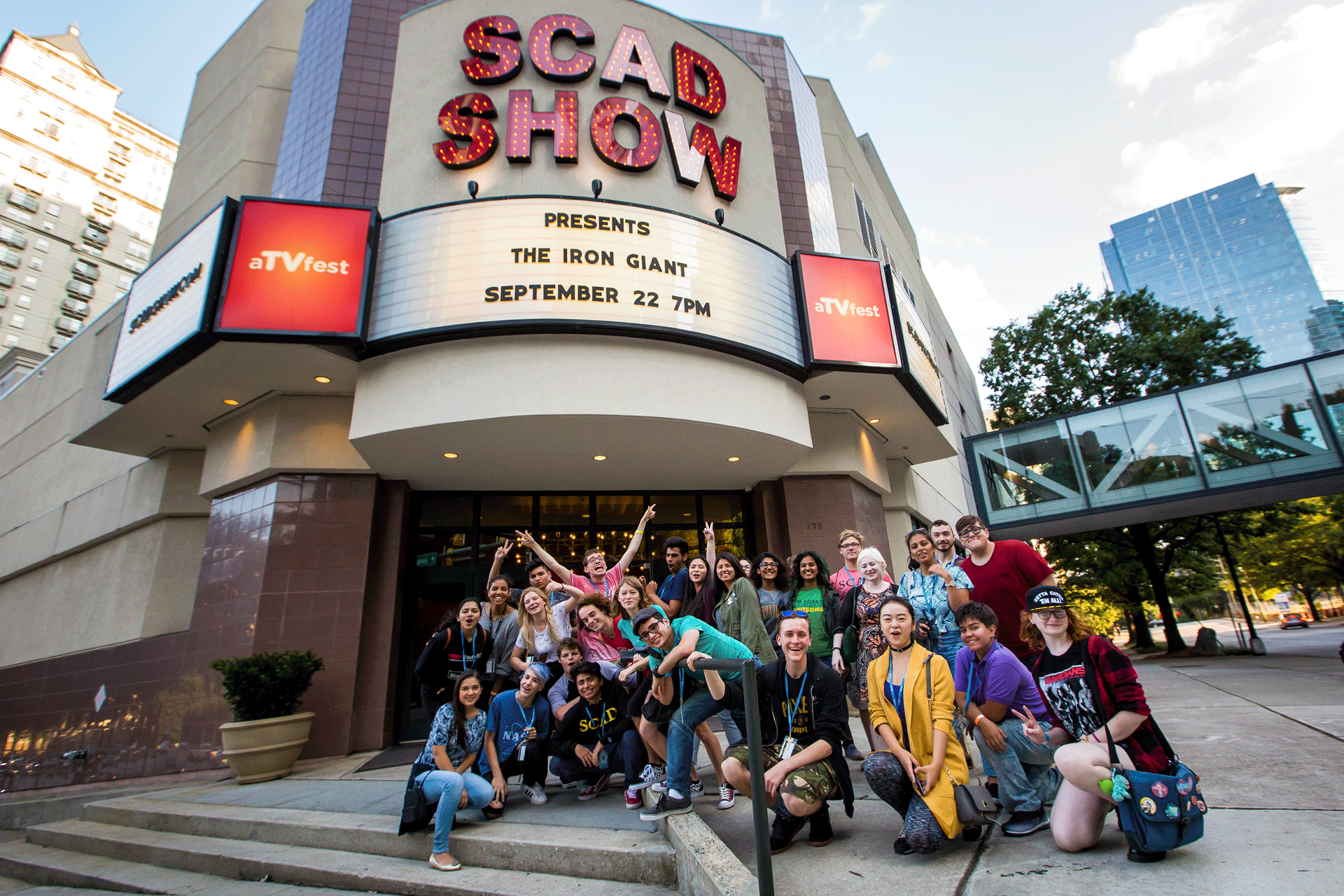
SCAD students gather in front of Atlanta theater cheering and raising their hands

'SCAD: The Architecture of a University'

September
1
2017
By
Tags:

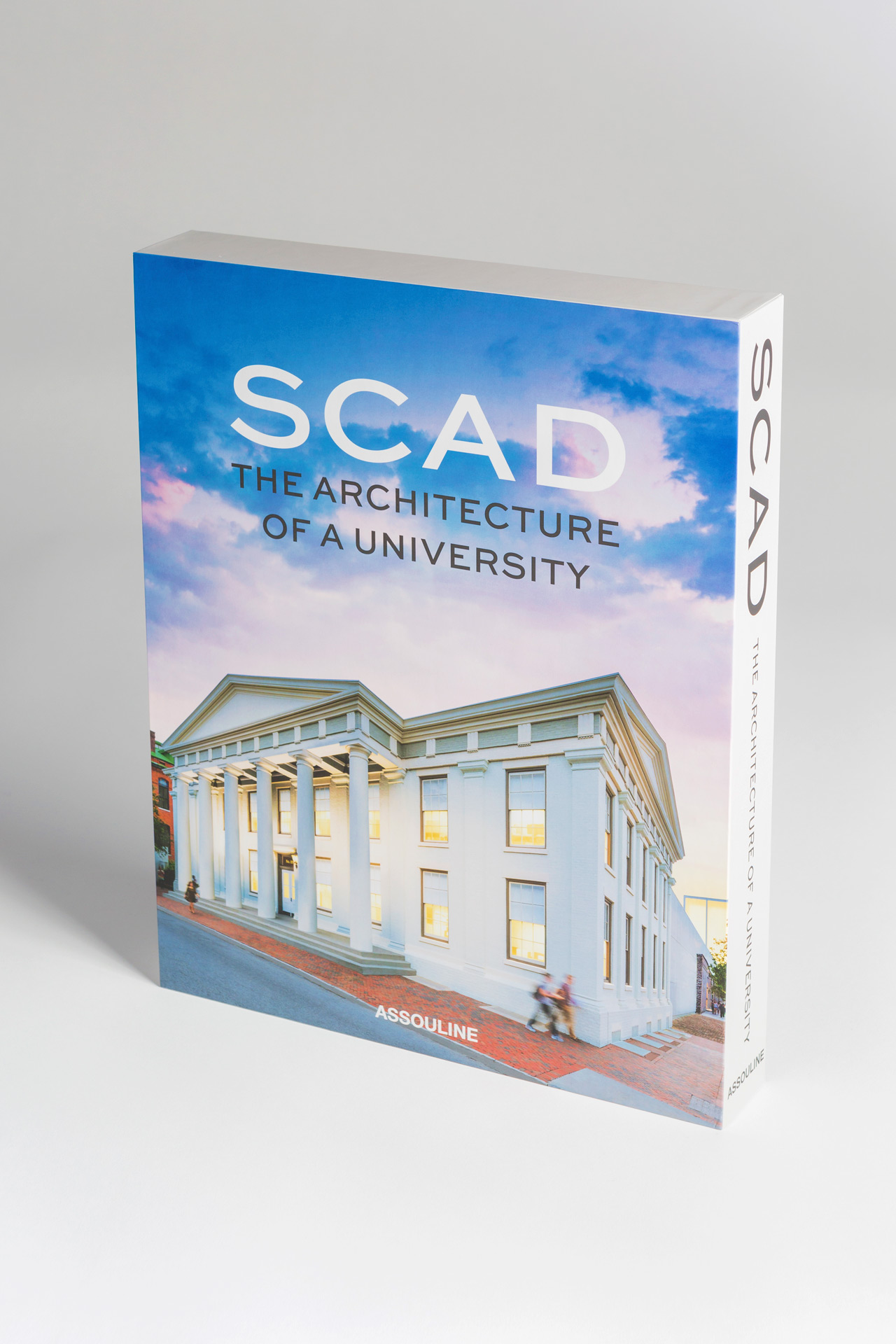
The venerable publishing house Assouline has released "SCAD: The Architecture of a University" by contributing authors Paula Wallace, Margaret Russell and Chuck Chewning. The 360-page volume, replete with 40 detailed narratives and 200 sublime photographs, highlights the university's most inspired and inspiring spaces. In this excerpt from the foreword, President and Founder Paula Wallace leads readers from the university's flagship building, Poetter Hall, to the panoply of SCAD architectural marvels around Savannah, and in Atlanta, Hong Kong and Lacoste.

By 1981, two years after we'd first cleaned its windows, the Armory was full. One building became two, then four, then ten, then twenty—the university flowered across the city like wisteria across a trellis. By the turn of the twenty-first century, the university had transformed old schoolhouses into thriving homes for fashion, fibers, foundation studies, and more. A bed and breakfast became the first SCAD dormitory. Savannah's first electric power station became the home of the university's department of film and television. The oldest extant railroad depot complex in North America is now the SCAD Museum of Art, recipient of the American Institute of Architects National Honor Award for Architecture. An empty downtown department store was rehabilitated into a world-class university library, honored by the American Library Association and by the International Interior Design Association. A decaying art deco playhouse is now home to the university's Savannah Film Festival. One of Savannah's oldest public high schools is now home to the SCAD School of Liberal Arts. The old and dying city was old, but it wasn't dying—it was just waiting for new life to fill its sidewalks and buildings. SCAD helped make that happen. Today, Savannah is a historical city with an inventive spirit and sparkling, bright future.
 
SCAD soon turned to other communities across the globe, offering students more opportunities to transform themselves and their world through art and design. In Atlanta, a former television studio is now home to the SCAD Digital Media Center, and one of the most beloved historic residences in all of Midtown is now home to the SCAD Atlanta Writing Center. In France, a former bakery has become the SCAD Lacoste library, while a decrepit farmhouse dating to the Middle Ages is now the best student housing in all of higher education. In the Sham Shui Po district of Asia's World City, a handsome midcentury magistracy is now home to the vibrant SCAD Hong Kong.
 
Out of more than one hundred SCAD properties around the world, fewer than ten have been newly built.
 
The world has taken note. In Savannah, it's not unusual to see wedding parties and families having their photographs taken around SCAD buildings, as often happens on the steps of Lai Wa Hall, a former residence now housing the executive administration. Anthropologie, J.Crew, and other fashion retailers have photographed in SCAD buildings. The brilliant interiors and memorable façades of SCAD can be seen in the occasional film, more of which are being produced in Georgia every year. The university's long history of adaptive new use has earned top awards from the National Trust for Historic Preservation, the American Institute of Architects, UNESCO, and others.

SCAD commissions original work from students and alumni for classrooms and offices, ensuring that students of art history, illustration, painting, and sculpture see their professions manifested within the walls of the university. SCAD has shaped the practice of architecture, yes, but architecture also has shaped SCAD.
 
The university's buildings radiantly depict to our students how resources can be reimagined and repurposed. Newer is not always better, as every generation—including millennials—must learn. In truth, the greenest building is the one that's already built.
 
As the university nears its fortieth anniversary, we have chosen forty SCAD buildings from around the world to feature in "SCAD: The Architecture of a University." It wasn't easy leaving out dozens of glorious properties, but to include any more would have required a building permit just to pick up the book. An eclectic mélange of historic and modern structures, the buildings are arranged by the date on which they were first inhabited by the university—as opposed to the date of original construction—beginning with Poetter Hall and moving to the present. In the latter half of the book, we've highlighted forty milestone moments from the university's past. These images and accounts, I hope, provide some sense of the history and beauty SCAD students are fortunate to call their own.

Cover of the book SCAD the Architecture of a University featuring Kiah Hall in Savannah