Skip to main content Accessibility Policy

Alyssa Rodemsky shines bright

May
20
2026
By
Tags:

"There is a jewelry phenomenon underway," Alyssa Rodemsky wrote on LinkedIn in April. "From the architecture, to the vias...you turn a corner in Palm Beach and suddenly feel like you're somewhere in Europe."

Rodemsky (B.F.A. fashion marketing and management, 2019) is in the storefront at the forefront. As luxury brand ambassador, she works at the David Yurman boutique on Worth Avenue in Palm Beach Island, Florida, the high-end retail thoroughfare that, she says, "is collectively building something spectacular."

"My passion is connecting people with jewelry that reflects their stories, styles, and personal milestones," says the Warrenton, Virgina native. "That means a people-first approach shaped by my SCAD education."

Yurman Palm Beach store

Street of dreams: the David Yurman boutique on Worth Ave.

Alyssa Rodemsky:

In 2025, I was selected to join the opening team for the newly renovated David Yurman boutique on Palm Beach Island, which features a two-story space with a dedicated high jewelry salon and private sales suite. I moved here specifically to learn how to sell to a certain clientele.

Worth Avenue has a long-standing history in Palm Beach. It's where all the Palm Beachers put on their best outfits and stroll and shop. There's Gucci, Zegna, Loro Piana, and many luxury jewelers and watchmakers, as well as its close proximity to the Colony Hotel and Bilboquet Market. It's really a jewelry mecca.

People seek out David Yurman for their first pieces and, importantly, for high jewelry. We have pieces featuring some of the most tantalizing, saturated gemstones from all over the world.

I feel that Palm Beach is the most special boutique of the seventy David Yurman stores worldwide. I collaborate closely with a tenured team and corporate partners here during store visits and special appearances, including hosting Mr. and Mrs. Yurman. It is an honor working alongside them.

I attended the SCAD alumni event at Palm House with Mrs. Yurman just a couple months ago. President Paula Wallace was there. There was a pop-up there with Ferragamo, and a screening of the Andre Leon Talley fashion film that SCAD students made, which is phenomenal.

Looking back, I see that my career didn't begin when I graduated from SCAD, it began the day I arrived as a freshman. SCAD taught me to how to trust my instincts and my intellect. I learned how to develop a project from start to finish with composure and grace and be proud of what I'm presenting. I took Digital Presentation Techniques (FASM 210) with Oscar Betancur, the chair of advertising. That was the class where I learned how to craft a presentation, and how to command a room.

I also took art history at SCAD, and a course in the psychology of the creative process, and learned to curate my eye. I found myself drawn to metal and gemstones, and that gave me the courage to try a jewelry class. When I was presenting my pieces at the bench class, I realized my favorite part was explaining the jewelry. That led me back into fashion marketing, which became my major.

After graduation, I spent seven years working in executive settings at big companies including NetApp and Salesforce. The versatility of the skills I acquired at SCAD allowed me to do that. Now, to be back working in jewelry, and to be at David Yurman, which is a proud industry partner of SCAD, feels powerful and beautiful.

The reputation of SCAD is really high in the rooms I'm frequenting. That includes the shops, salons, and event spaces in Palm Beach. There is a levity to my life here that I am embracing. Of course, it helps that I love the beach.

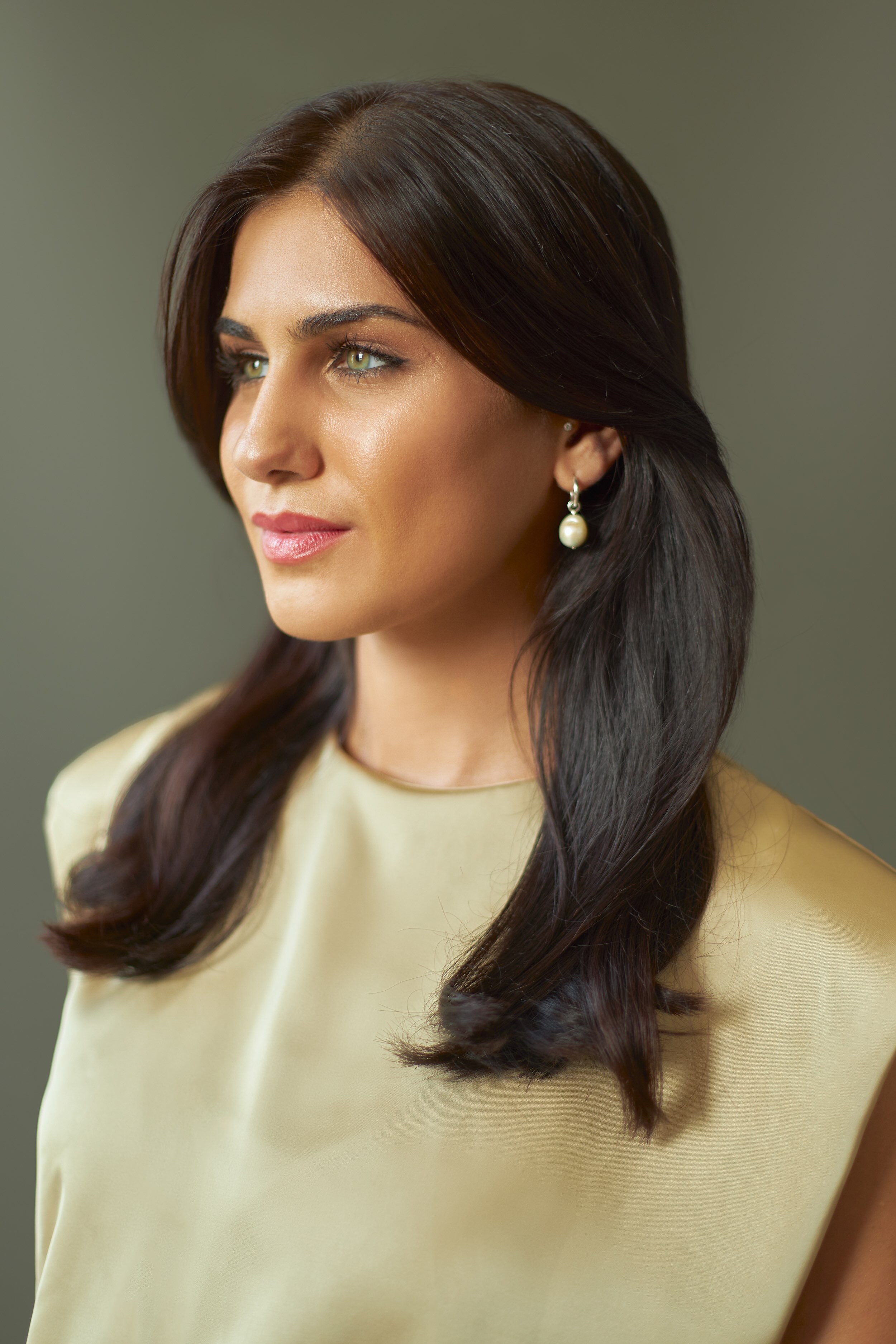
Rodemsky profile photo

She's a gem: connect with Alyssa on LinkedIn.


Soa Kim transforms time

May
13
2026
By
Tags:

Beauty is often associated with polished metal, luminous stones, and flawless surfaces. Soa Kim (B.F.A. jewelry) finds it in transformation — and the traces time leaves behind.
 
"My senior collection views life and death as a continuous flow and a quiet form of beauty," Kim says. "People often perceive death, decay, and dissolution negatively. I want to understand them not as separate concepts, but as parts of a connected process."
 
For Traces of Life, she reimagines a poetic cycle expressed through skeletal structures, shifting silhouettes, and surfaces shaped by time. Kim defined a clear evolution from the early stages of the collection material research into final form, pairing keywords like erosion, stillness, renewal, silence, and rebirth with imagery of fractured surfaces and deep crimson stones.
 
"I focused on structures that appear eroded or growing, allowing the form itself to suggest a process of change," she explains.

Soa Kim jewelry silhouette

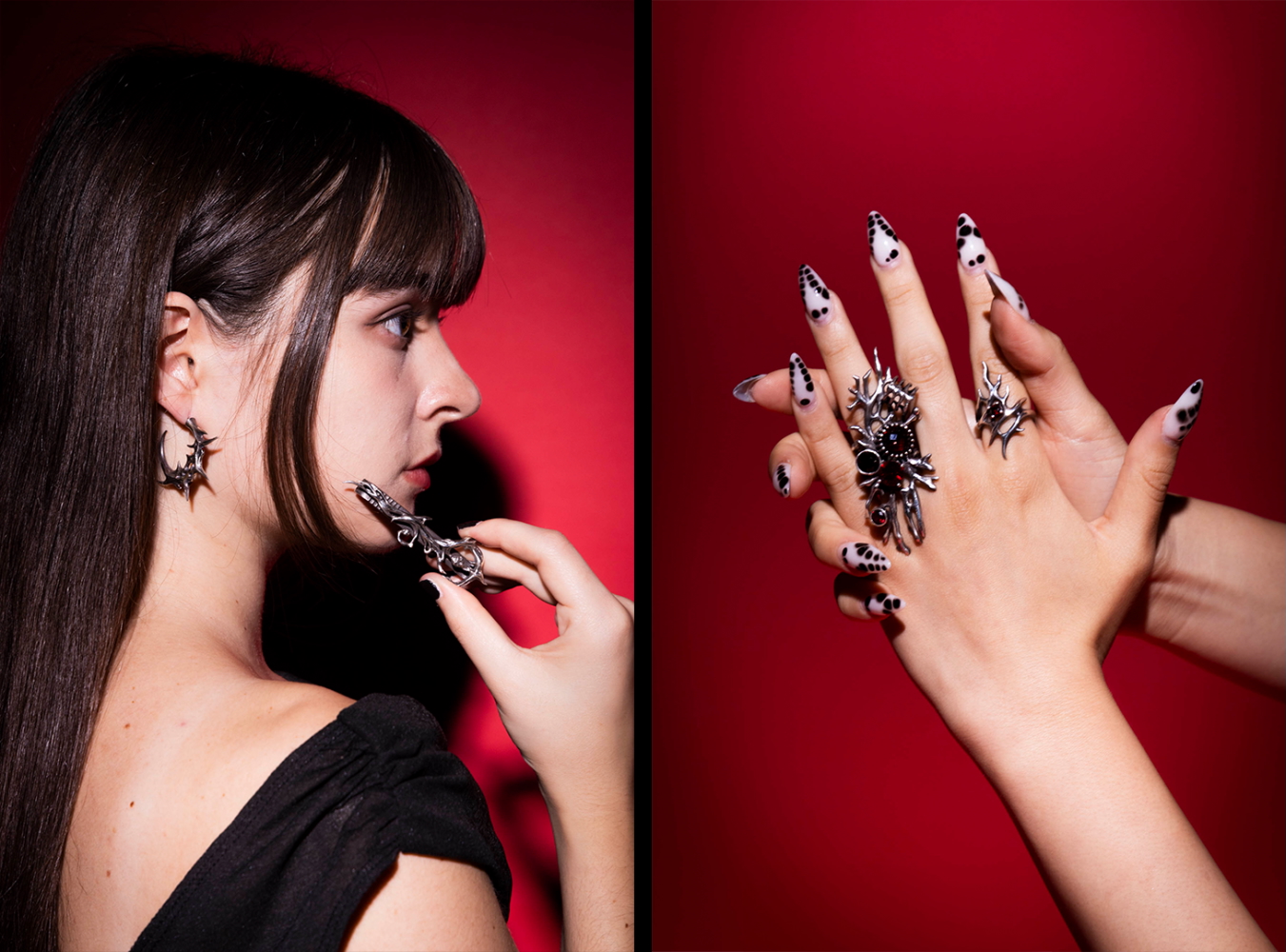
Soa Kim's "Traces of Life" collection | Photography by Lexi Moore

What makes Traces of Life especially compelling is the rigor of Kim's making process. The collection moves through a highly refined technical workflow that includes wax carving, Rhino modeling, 3D printing, spruing, casting, polishing, and hand fabrication, allowing concept and craftsmanship to evolve in tandem. Kim translated fluid, organic sketches into structural prototypes, resin prints, cast forms, and eventually polished metal pieces.
 
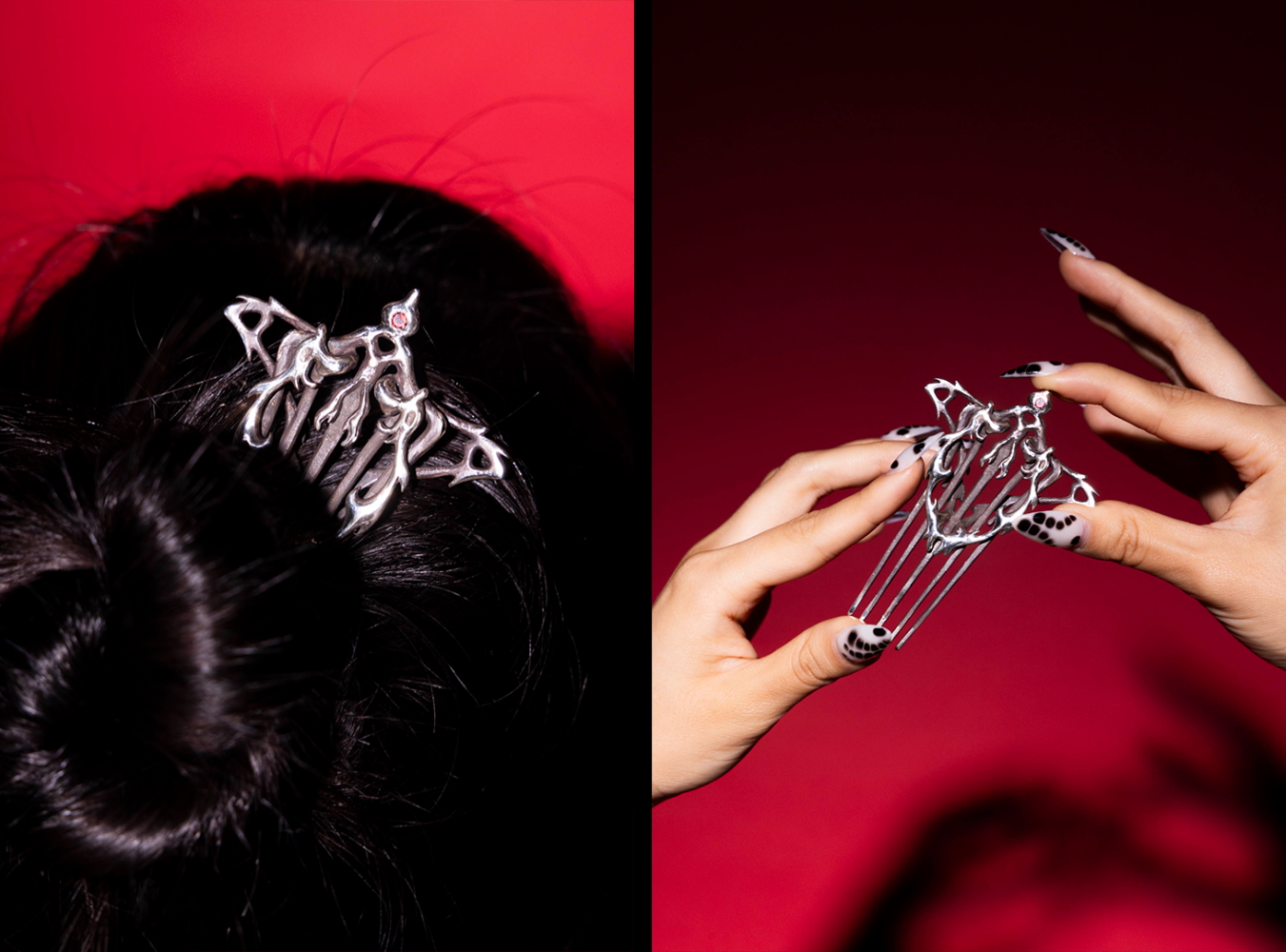
The ear cuff, bracelet, and earrings all echo branching, bone-like frameworks that seem to grow across the body rather than rest upon it. Ruby, garnet, and Swarovski crystals, with select gemstones donated by David Yurman, emerge like living cores within darkened silver structures, creating a striking tension between fragility and permanence. The contrast between matte black oxidation and polished silver gives each piece a sense of movement, between disappearance and renewal.

The ear cuff is one of the collection's most sculptural statements, carefully balancing expressive structure with wearability. Its asymmetrical branching form follows the line of the ear with an almost anatomical precision, while suspended gemstone details introduce movement and a pulse of color.

"It represents both a technical challenge and a point where my concept became clearer," she says.

Soa Kim jewelry hands

Soa Kim's "Traces of Life" collection | Photography by Lexi Moore

Alongside her studies at SCAD, Kim completed internships with Seoul-based brands LEWKIN and Nonnon, where she gained experience across accessories, branding, and product development. Coursework, critique, and experimentation helped shape her design voice, while interviews with Swatch and TAG Heuer reinforced the value of initiative, preparation, and timing. "Opportunities are created when you move toward them and challenge yourself," she says.
 
Kim hopes to pursue a career in fine and luxury jewelry design. If Traces of Life is any indication, her work reflects qualities that align with the language of modern luxury: intellectually rich, technically rigorous, and in forms that stay with us long after first glance.
 
"I see jewelry as something that forms a direct relationship with the body. Jewelry is only fully realized when it is worn."

Soa Kim headshot

Connect with Soa Kim on LinkedIn.

See work for purchase at the SCAD Jewelry Trunk Show this Thursday and Friday, May 14-15 in Poetter Hall.

Mandy Zheng: clarity at scale

April
22
2026
By
Tags:

For TikTok users, swiping and scrolling are instinctual. For product designers, they form a system of signals that must work at a massive scale.

Mandy Zheng (M.F.A., design management, 2025) designs inside that system. Having previously interned at Tinder and collaborated with companies including Google and Deloitte at SCADpro, the product designer gained essential experience across both academic and industry settings.

"SCADpro was a space for me to experiment and reflect. I could really understand how decisions were made and how collaboration worked," Zheng says. "Those experiences helped me clarify what I enjoy doing and where I can contribute most effectively."

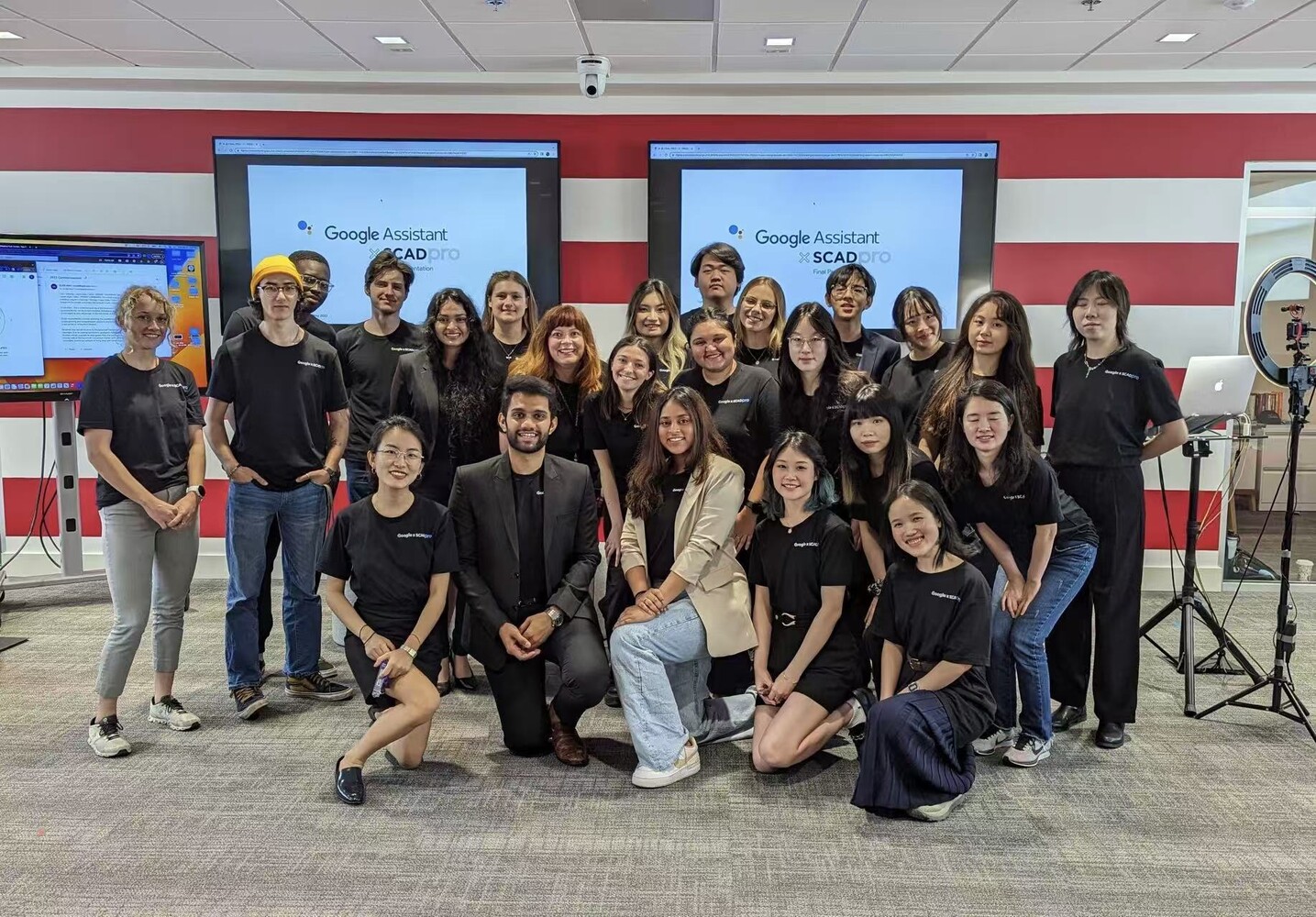
Zheng tested this process in a 10-week SCADpro collaboration with Google, where she took on dual roles as design lead and product manager. With a real client at the table, compressed timelines, and feedback from multiple stakeholders, the RACI (Responsible, Accountable, Consulted, and Informed) framework helped Zheng prioritize revisions efficiently without losing sight of the larger process.

Mandy Zheng Google app

Nothing to sneeze at: "PollenNav," Red Dot Award-winning concept created by Yani Shi, Ziqi Li, Mandy Zheng, and Chang Mou.

"RACI helps me understand a new team's collaboration structure and identify different stakeholder roles at various stages of a project," she says. "Having a clear framework makes it easier to gradually form my own working approach."

Set within an academic environment, the SCADpro project followed a more structured and more idealized workflow. For Zheng, it created space to move through each stage with intention and understand more clearly what each phase contributed, from early research and ideation to collaboration, iteration, and final decision-making.

She learned to treat design as coordination, aligning stakeholders, clarifying decisions, and building cooperation across a team. Frameworks like RACI gave her a practical way to map roles and decision-making.

Zheng began connecting with professionals via ADPList, where she could better understand how designers at different stages approach their work. These conversations helped her refine how she shared her projects and how she articulated her underlying logic.

To support her own growth and grow alongside others, Zheng built a robust online community for early-career UX designers. What began as a small, peer-driven experiment has evolved into a network of 500 members. Across 32 online sessions with more than 500 participants, she brought people together for mock interviews, conversations on current design trends and emerging technologies, and peer support.

At its core, this belief continues to shape how Zheng approaches both design and growth: clarity is rarely built alone. "It's all about who you're around," Zheng said. She continues to carry that belief into her work, and the spaces she hopes to build for others.

Currently exploring ideas around digital legacies and experimenting with AI tools, Zheng is bringing the same curiosity that has defined her path so far. She remains open to connecting with people working on thoughtful, forward-looking ideas for the future.

"If you want to go fast, you can go alone. If you want to go further, you need to go with people together," she says.

Connect with Mandy Zheng on LinkedIn. Learn more about design management and the pioneering programs in the SCAD De Sole School of Business Innovation at scad.edu/innovation.

SCADpro Google

Ten strong weeks: During a SCADpro x Google collaboration, Zheng led design and product management responsibilities.

Connect with Mandy Zheng on LinkedIn.

Learn more about design management and the pioneering programs in the SCAD De Sole School of Business Innovation.

Stephen Jones' hats top SCADstyle

April
16
2026
By
Tags:

It would have been worth it for the Rihanna story alone.
 
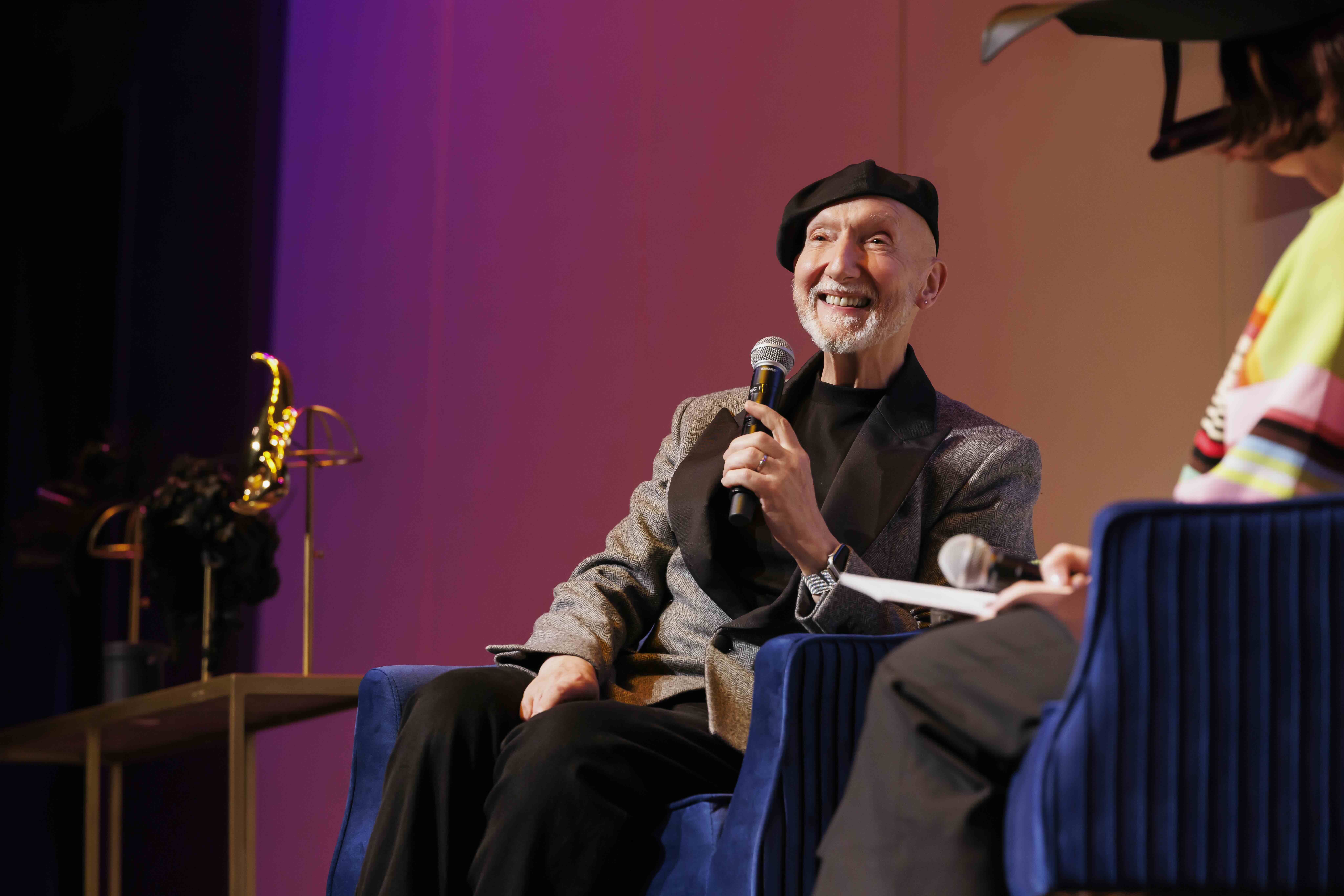
On Tuesday afternoon, Stephen Jones sat on stage at the SCAD Museum of Art theater, recounting the first time he met the Barbadian pop star. Rihanna had just so happened to have been wearing one of his hats, and told him: "I bought it at Dover Street Market." As Jones spoke, he placed his hand over his heart, a moment of graceful astonishment from the greatest milliner of the past half century.
 
The beret-wearing, bright-eyed Jones was in conversation with SCAD chair of fashion Kori Smith Urso during SCADstyle 2026. Having visited classes at Eckburg Hall earlier in the day, Jones now addressed the theater full of students: "My first year at college was 1976," he said. "I was a punk." Cue the milliner's centrality to crucial moments of cultural foment.

Jones has thrived at the forefront of fashion now for decades, making iconic hats for royalty and rock stars including Boy George, Lady Diana, Mick Jagger, and Lady Gaga. Fashion houses from Vivienne Westwood to Christian Dior have embraced him, making him haute couture's milliner of choice. He came to SCADstyle 2026 with impeccable timing, as the SCAD FASH exhibition Dior: Crafting Fashion opens this week in Atlanta.

Smith Urso kicked off their conversation: "Stephen, you started in the high energy DIY world of the Blitz Kids' London club scene, and now you work at the highest level of the fashion industry. What is the one rebellious lesson from your early days that you still rely on when working within the rigorous heritage of Dior?"

Stephen Jones smiles stage

Chapeau my gosh: magnificent millner Stephen Jones at SCADstyle.

"There's always high life and low life, the two things that you really combine," Jones said. "Whether it's experience or innovation or creativity or boredom or angst or no night's sleep, all that goes into the great blender and becomes something new."

A slide show of extraordinary images looped on the stage's big screen: seaside scenes from a Liverpool childhood; a glimpse of Jones in Culture Club's "Do You Really Want to Hurt Me?" video from 1982; dozens of vibrant models wearing his stunning creations; Jones aside collaborators including John Galliano, Raf Simmons, and Maria Grazia Chiuri.

"I think it's my job to make everybody feel happy or more optimistic," he said. "A really important part of what I do is put people in a good mood."

The first English milliner to work for a French couture house enthused over the pioneering hat designs of Christan Dior himself: "Monsieur Dior, either he did big hats which he thought were glamorous and sexy and represented Paris, or small hats which were supposed to be about the future and modernity and getting into a car."

The topic turned to Jones' collaborations creative director Jonathan Anderson, including Dior's recent, rapturously received spring/summer 2026 collection. The milliner explained how the hats made from flowers bound with satin ribbon were installed to models' heads: "The weight of the flowers was more than a hairpin could support. So, we did a braid on the girl's hair, and a wire connecting, and then we had to sew the wire onto the braid. They were positioned exactly correctly and symmetrically. Then the hair was taken from the front over the back so it looked as though it was the most effortless thing ever. But it was so complicated, I cannot tell you."

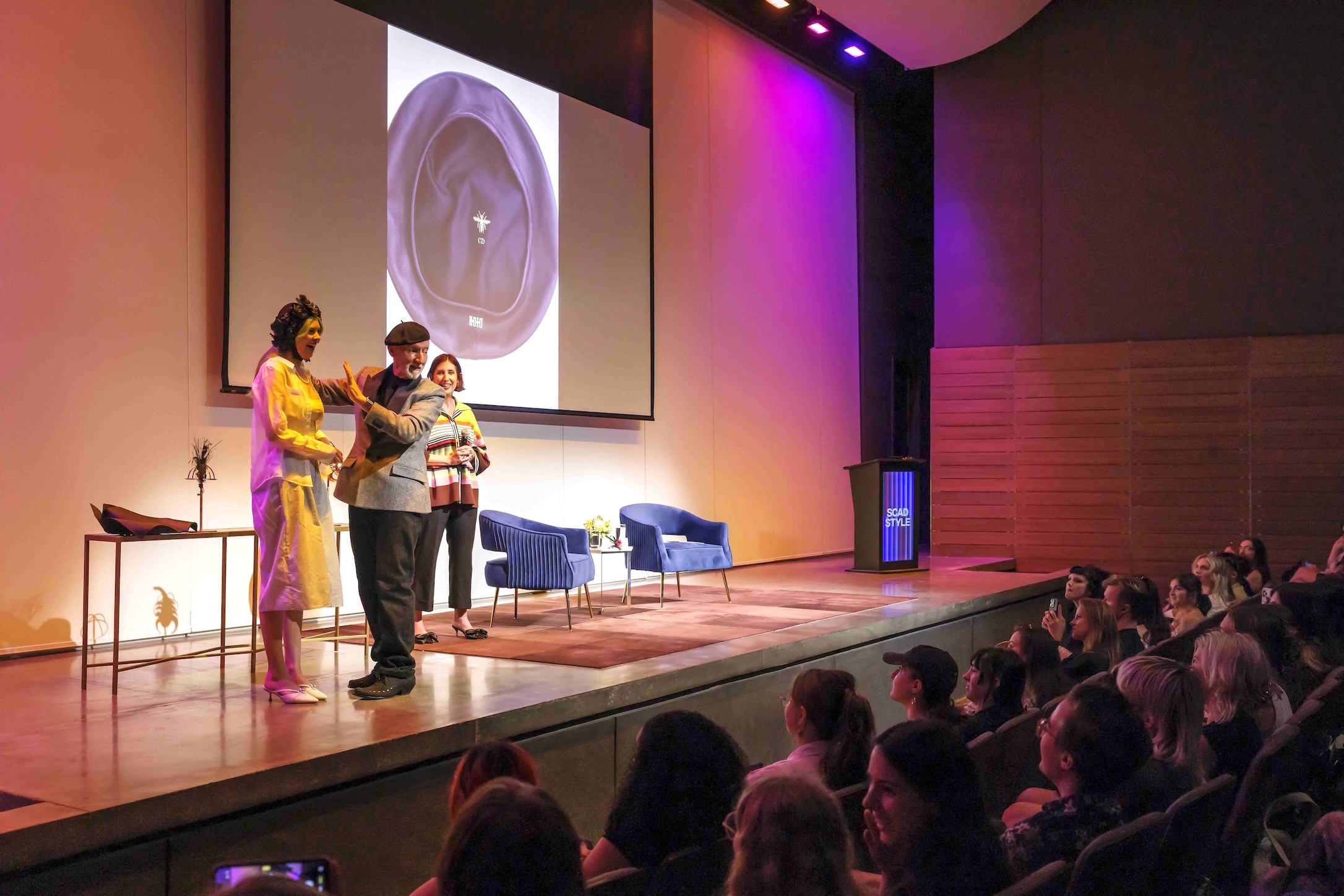
Suddenly, Jones said to Smith Urso: "You're going to be my model." Reaching towards an adjacent table, he picked up a tricorne with an epic brim, and fitted Smith Orso with the stingray. The hat was a sensual, architectural marvel. It looked fantastic. The chair beamed.

Jones cast then models from the students in the audience. Each took the stage and was adorned with a hat. Stars were born. Jones had a final reminder: "A hat is a frame for the face."

Stephen Jones SCADstyle 2

Hat's all, folks! Thanks to everyone who made SCADstyle 2026 such a smashing success!

Gracie's 'Faces, Spaces'

April
9
2026
By
Tags:

Gracie Borell is sitting atop the double decker bus parked inside Art's Cafe, showing off the sketchbook from her trip last December. An exquisite rendering of Michelangelo's David, drawn from life, returns her to the moment she made it.

"This was at Galleria dell'Accademia di Firenze, where we were looking up at the statue, which is seventeen feet tall," says Borell (B.F.A., illustration). "Michelangelo made the head bigger so that it doesn't feel out of proportion when you look at it from the ground. It's truly awe inspiring."

Gracie was part of a traveling iteration of the class Sketchbook: Professional Practice (DRAW 242), led by foundation studies professors Julie Horton and Susanne Mitchell, which began at SCAD Lacoste before heading east along the Ligurian Coast.
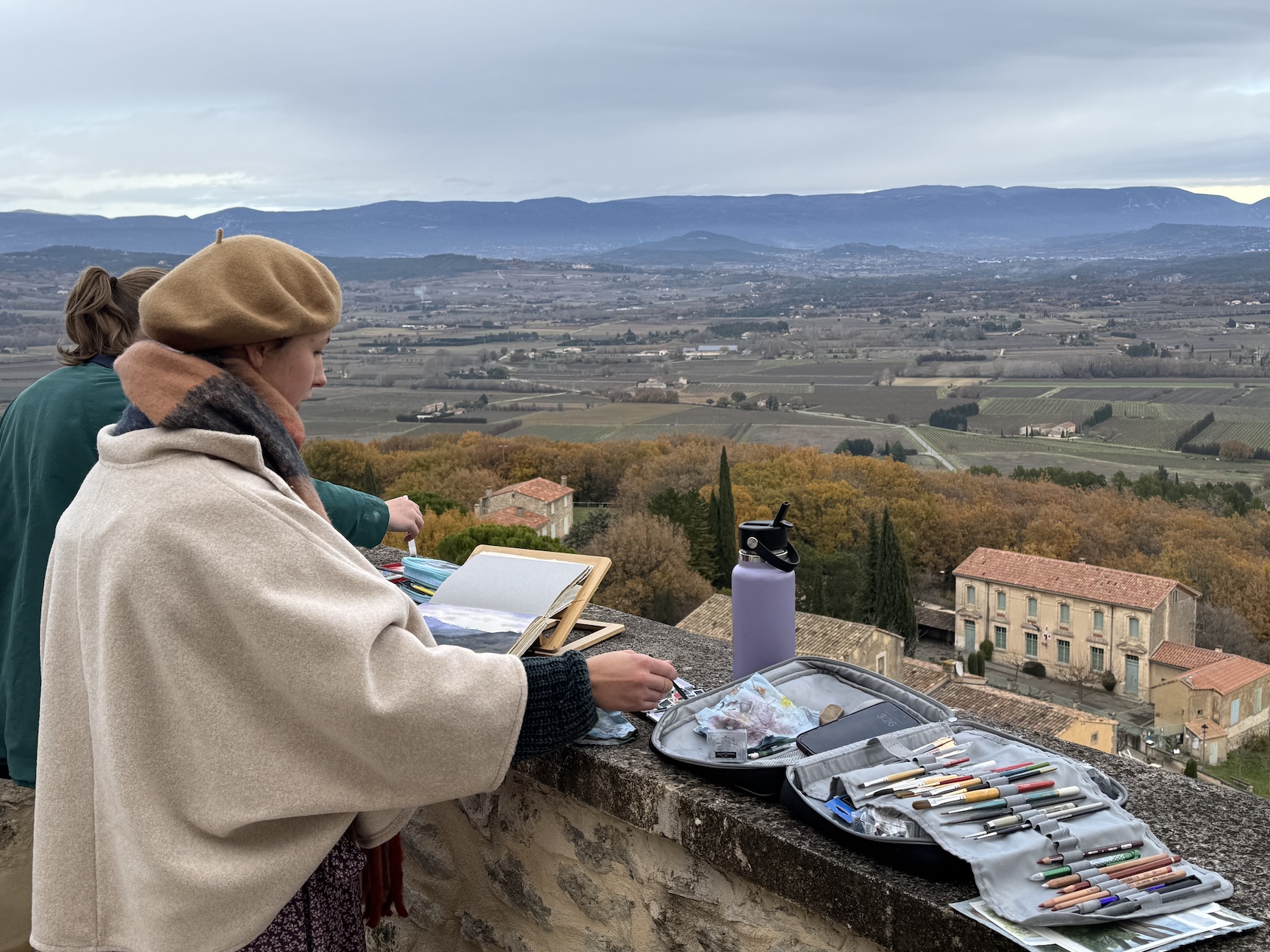
Gracie beret

Beret of light: Gracie in Lacoste. (Photo: Susanne Mitchell)

"Gracie stood out for her focus, curiosity, and sustained commitment throughout our time in Lacoste and Florence," Mitchell says. "She was deeply attentive to the visual richness around her, from architectural details to the masterworks of the Medieval, Renaissance, and Baroque eras. Her work reflects a thoughtful balance of observation and interpretation, and it was especially rewarding to see her artistic voice grow more distinct over the course of the program."

Taking in locations including the Uffizi and the Medici Chapels, Gracie and her fellow students drew first-person inspiration from these venerable destinations as well as more comestible morsels. (A couple pages after the head of David drawing, Gracie's sketchbook features a meticulous depiction of a delicious calzone from a café lunch.)

This Friday, April 10, at Christ Church Anglican in Savannah, Gracie will host the opening reception for her exhibition "Faces, Spaces: A Collection of Works by Gracie Green." It features portrait work, classwork from Materials and Techniques (ILLU 218), as well pieces developed from the sketchbook she created in France and Italy. "I hope to you there," she says.
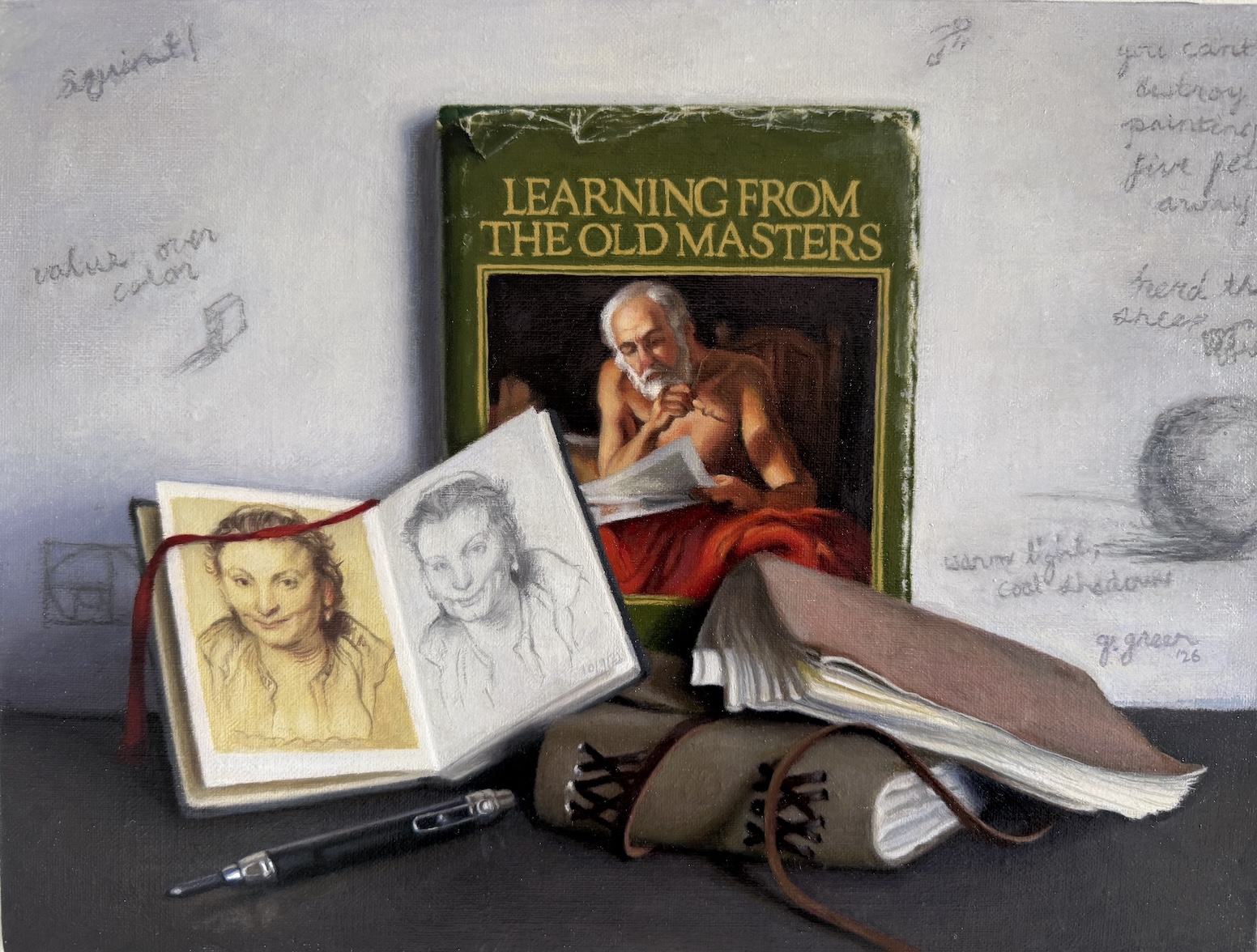
Gracie signature image

Go for baroque: Gracie's depiction of her sketchbook, with crucial accoutrements.

Gracie Borell:

I'm a 24-year-old sophomore from Minnesota. I attended the Art Academy in St. Paul, then studied oil painting and illustration at Great Lakes Atelier of Fine Arts before I came to SCAD. So, I feel lucky that I have a good past to draw on, and that I know how to time-manage, which is a real advantage.

The trip to Florence was unforgettable. I've traveled before, but never like this. We started in Lacoste, where we made the sketchbooks. I picked a variety of papers for my sketchbook: watercolor paper, drawing paper, charcoal paper, and I made my own paper too. 

To travel from a sketchbook perspective means sketching instead of taking pictures with your phone. We took the bus from Lacoste, and then we were in Florence for ten days. We'd go to a museum and the professors would let us roam free. It was very open-ended as to what you would look at. That was really good, because maybe somebody was really interested in Botticelli and someone else wanted to look at Caravaggio.

We had to use three different materials on each page of our sketchbooks. Sometimes I'd combine pencil and pen and watercolor. A sketch can be just a couple pencil strokes. It can be about brevity, simplifying and not overworking.

Some of it was like scrapbooking. I ripped out train tickets and cafe menus and pasted them in with a pastel fixative. I took the brochure from the collection of work from the Duomo di Firenze and scattered the words across the page. At Roussillon, we picked up ochre from the ground and I smeared it on my sketchbook. Professor Mitchell taught us gilding, so I have gold leaf in my sketchbook too.

For me, it was life-changing to experience how art was really ingrained in an older culture, and to appreciate these masterworks in person. Michelangelo was making work that wouldn't be finished until years after his death. I realized how much time, spanning many generations, was invested in developing the techniques that give art such profound meaning.
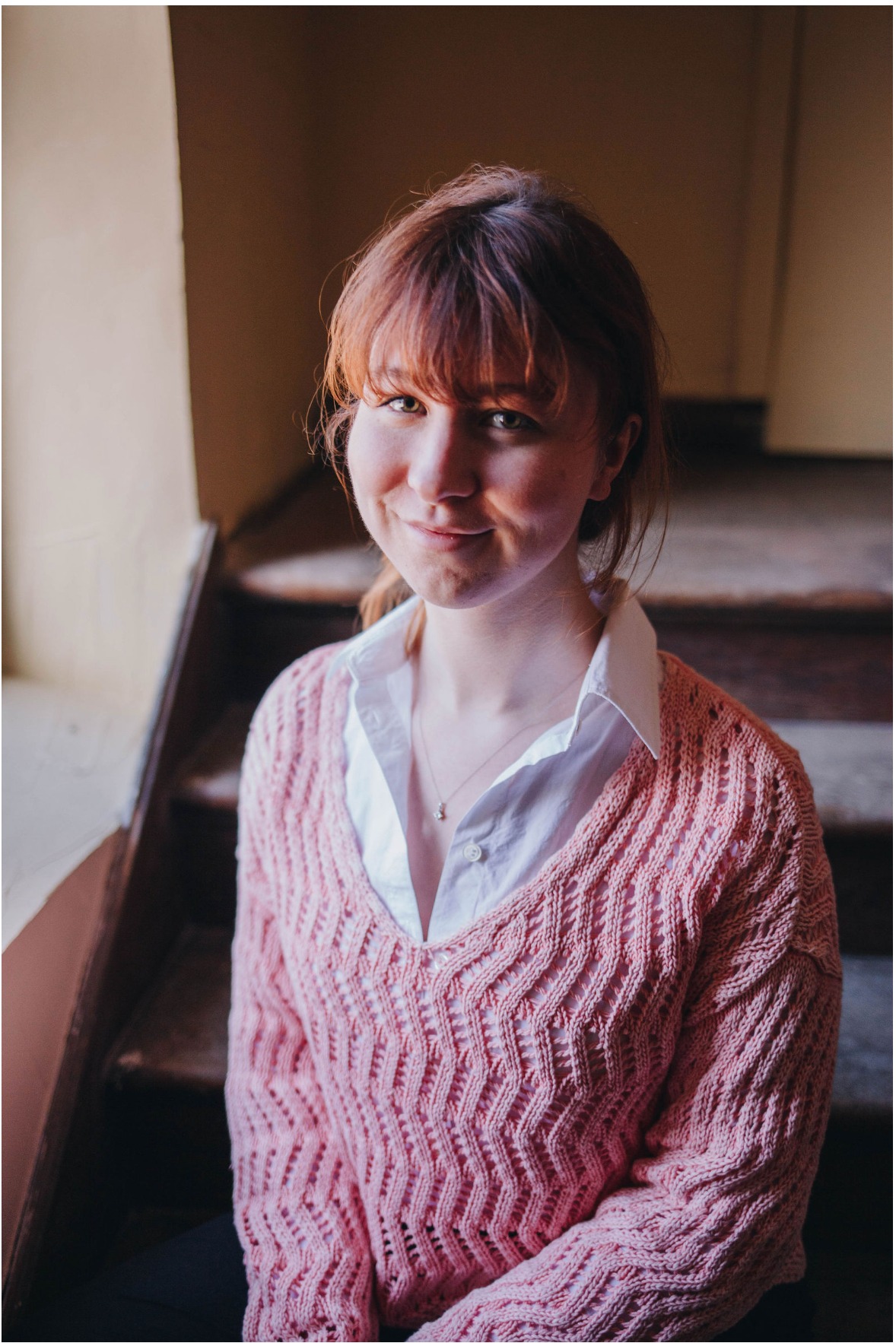
Gracie Borell photo

See more work at Gracie Green Fine Arts, and follow Gracie Borell Art on Instagram.

By George: Vedder's 'Blunt'

April
3
2026
By
Tags:

On a recent spring morning, George Vedder (B.F.A., writing) leaned across a table on the patio of a new bakery-café in Savannah. "There's a narrative you can tell through food," he said. "The more determined the restaurant, the more they're trying to tell a story with their menu."

Vedder turned a mesclun leaf over in his hand, admiring the play of sunlight upon vivid green. "I feel like Sixby is trying to tell a story about making a connection to the roots of nature, so it makes sense for us to eat outside." He popped the salad in his mouth.

Over the course of a highly enjoyable, hourlong meal, the writing student analyzed the pickled shallots, the sunny setting, the intentions of the establishment itself. It was a thoroughly modern moment, and a flavorful précis of the prodigiously productive young Vedder: journalist, cook, and publisher of the brilliant food magazine Blunt.

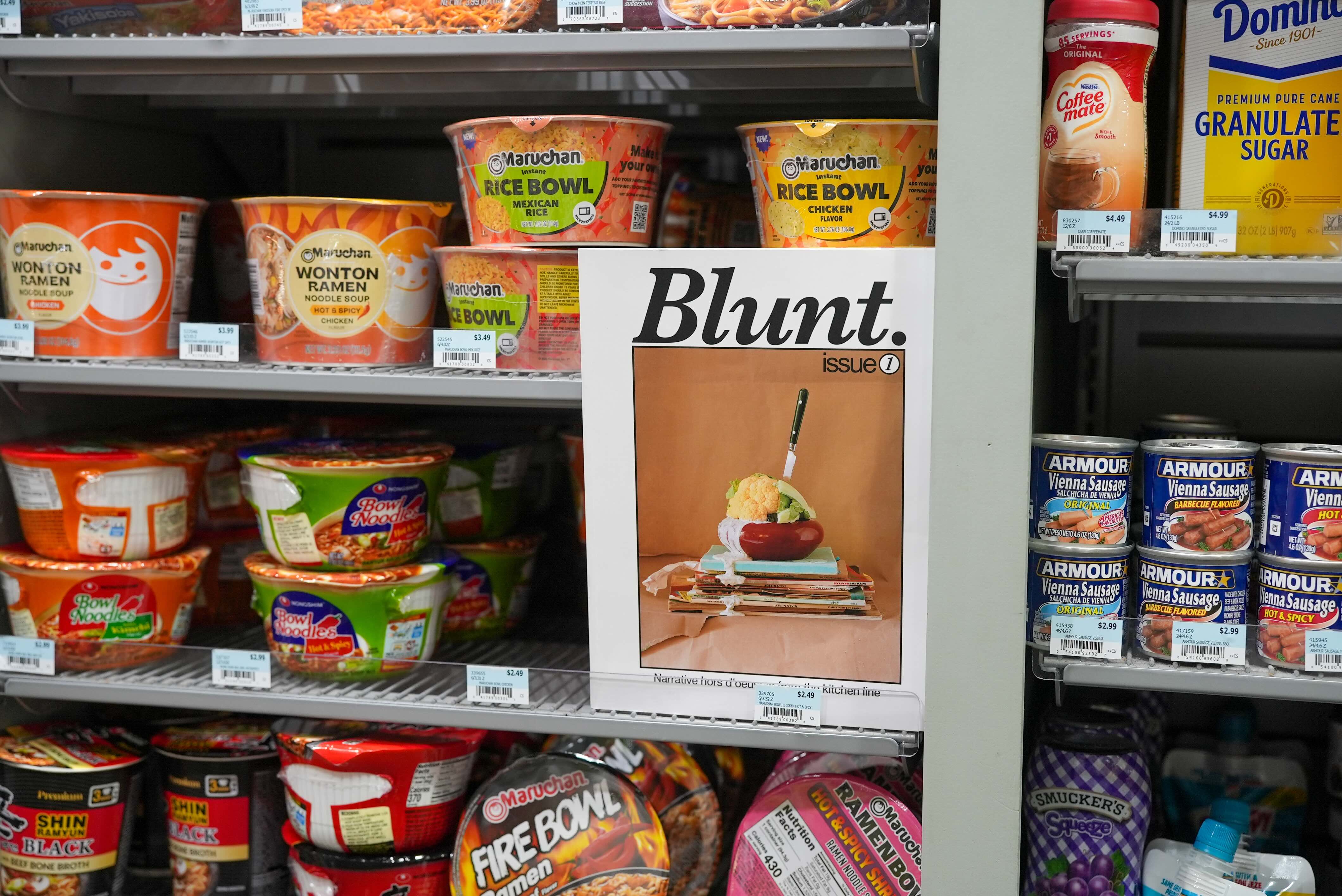
BLUNT cover shelf

Shelf life: the nourishing first issue of Blunt. 

"I've been working as a line cook since I was 15," George said, offering his culinary origin story. "The kitchen was the first thing that ever really put its arms around me. I felt like I mattered there."

Vedder has spent the past fifteen months as a line cook at acclaimed Savannah restaurant The Grey, renowned as the proving ground of James Beard Award-winning chef Mashama Bailey. "The Grey, to me, was what the green light across the river was to Gatsby, know what I mean?" he said.

On a mild morning, George was wearing an impressively tattered Death Grips T-shirt. This did not eradicate the fact that, as a teenager growing up in central Minnesota, he was a member of world-renowned The St. John's Boys' Choir. (He spent the early, "free range" part of his childhood in Waipahu, Oahu, Hawaii.) After arriving at SCAD three years ago to study fashion, he got jumped into the writing program by novelist and faculty stalwart Jonathan Rabb, who had noticed Vedder's talent for arranging words on a page.

"George brings remarkable discipline to his approach to writing, which stems from his willingness to dive deep into technique, even when that might seem counterintuitive," said Rabb. "George loves the puzzle of writing and is always looking to solve it. Add in his effortless control over language and you have a remarkable writer."

Alongside his full slate of academic classes, editor-in-chief Vedder has published the debut issue of Blunt (available locally at E. Shaver and Coastal Table and Tales), bursting with exceptional art direction, full-color photography, and writing (including George's two-page soliloquy on SPAM Musubi).

"Blunt came from what I felt was a lack of representation of the realities of the food industry for line cooks. What I wanted to accomplish with the magazine was to tell the stories of the unknown, back-of-house sector. I want readers to see the hands of the people in the kitchen."

Asked if the physical act of cooking aligns with the tactility of making a magazine, Vedder nodded, then furthered the notion: "Food lends itself to writing, and great food writing is, inherently, truly great writing."

The hour wound down. Having long ago finished his salad, George took a lingering look at the remains of his breakfast companion's jammy egg sammy with its benne seed bun.

"That is indeed a good sandwich," he said with a smile. "The bun is my favorite part."

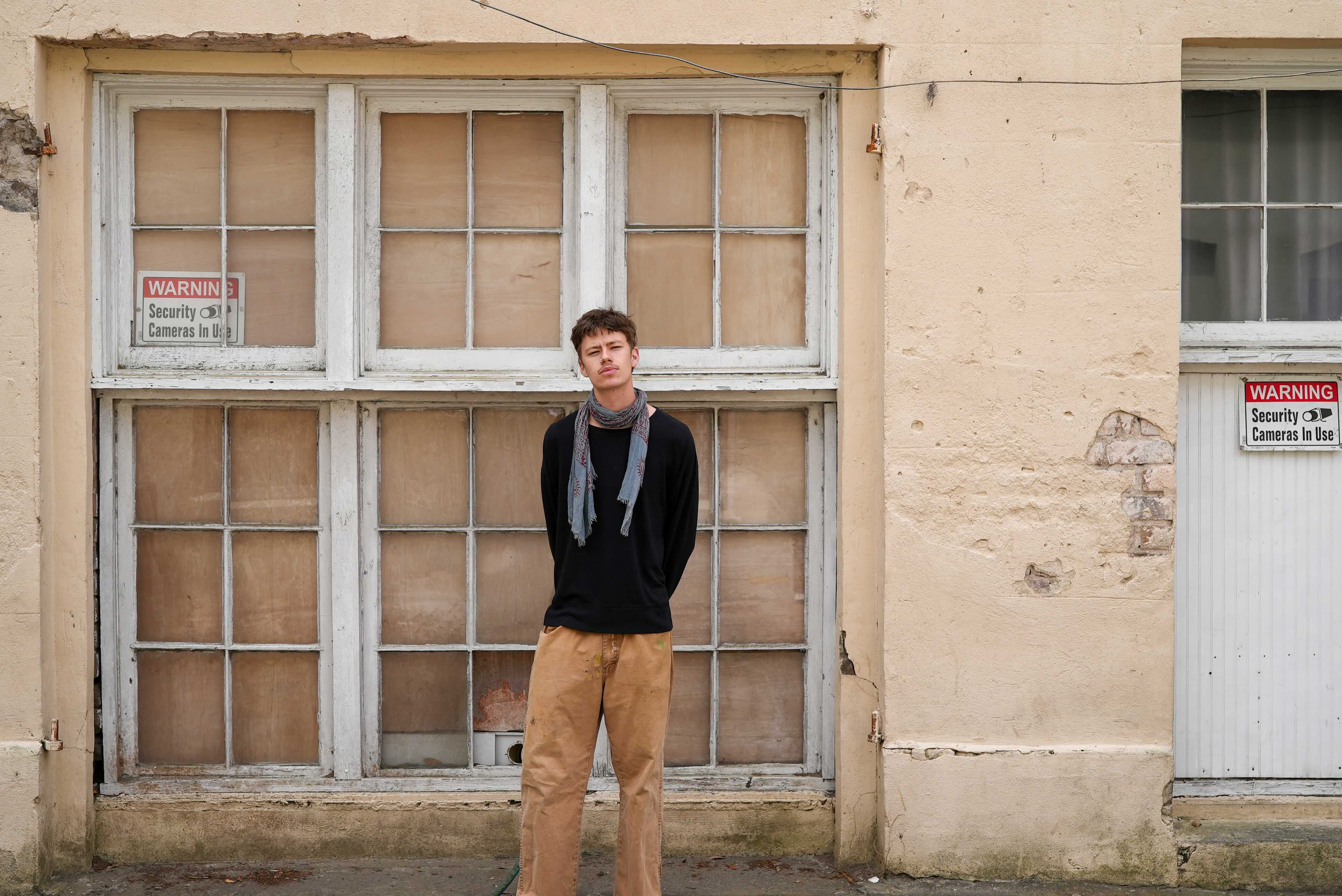
George Vedder portrait

Connect with George Vedder on LinkedIn.

Buy Blunt.

Vedder photo: Sage.

AeSun Jung: poetry in motion

March
30
2026
By
Tags:

When AeSun Jung (B.F.A. graphic design, 2024) began studying at SCAD in 2020, she stopped treating design as a set of separate disciplines and began treating it as a single, connected language.

"Design is about more than creating visuals. It's about connecting people and experiences through an integrated way of thinking," she says. "Motion, graphics, and branding ultimately come together as one unified experience. A designer's role extends beyond one title or skill set. Growth comes from continuously learning and expanding into areas that are needed."

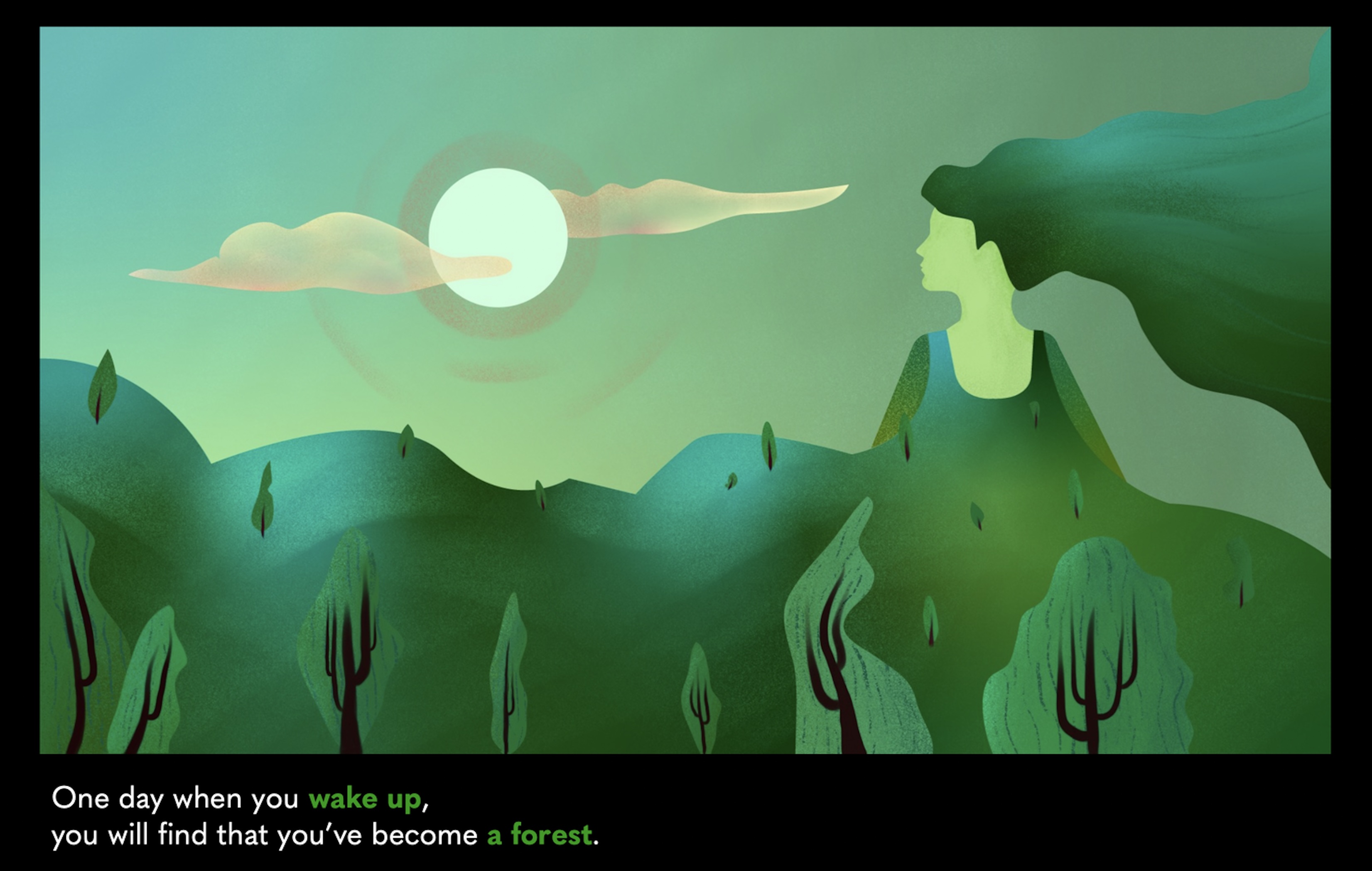
That mindset is visible in "The Forest," AeSun's poetry-inspired motion project recognized by the International Design Awards. "I chose Nikita Gill's poem ‘The Forest' because its message felt deeply connected to the way we live our lives," she says. "As we move through life, we encounter people with different backgrounds, personalities, and languages."

AeSun Jung Forest poetry

Wake up: a still from "The Forest" (courtesy of AeSun Jung).

AeSun found the symbolism in Gill's poem to be direct and personal. She placed herself inside "The Forest" to take a deeper look around. "I positioned myself as the speaker of the poem and explored how we experience life and move through it with awareness and wisdom. I translated these emotions and the narrative into changes in motion, rhythm, and texture. The roughness or density of a texture reflects the character's emotional state and rhythm of breathing. Without these elements, the emotional weight of a scene wouldn't fully come through."

The minute-long animation utilizes a combination of Procreate, Illustrator, and After Effects, while "the scenes in the illustration were created by weaving in moments and experiences from my own life," she says. "The Forest" was awarded the IDA Bronze in Multimedia/Adult Animation category, with its stated intention to "cultivate a greater interest in poetry."

Professionally, AeSun's recent roles span startups, healthcare, and nonprofit collaboration. She previously worked at LangPal, where she helped build brand identity and collaborated across teams. Today, she is a creative director at Integrated Personalized Medicine in California, overseeing design strategy and direction. She also volunteers as a 2D animator supporting nonprofit UI and UX teams.

AeSun's advice to Korean students considering studying abroad mirrors her own path: "The most important thing is to dive in and experience it firsthand. Lead with curiosity and a sense of challenge rather than fear. Approach it with an open mind and be willing to listen to others. Have a clear idea of what you want to learn, what you want to experience, and how you plan to apply it. Treat it as a personal test and an opportunity to grow."

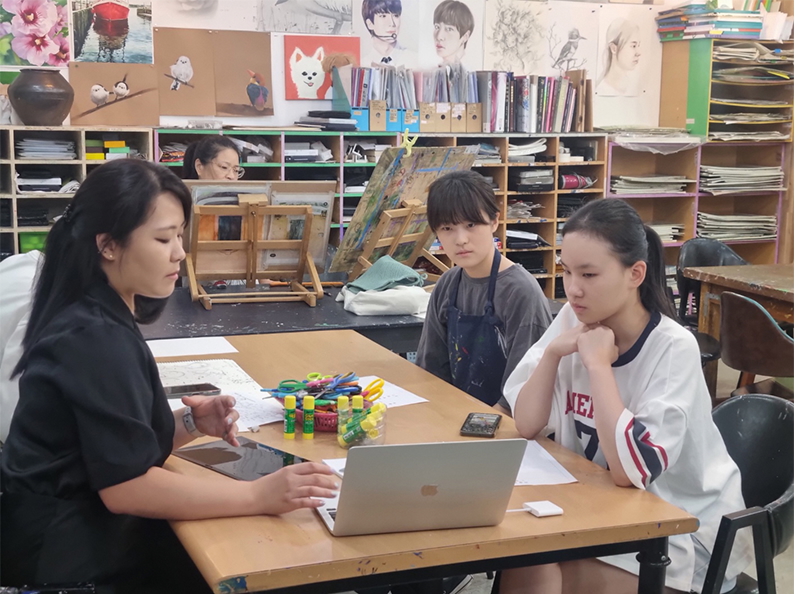
AeSun Jung classroom

Design thinking: AeSun speaks with students about curiosity, growth, and studying abroad.

Continuing her creative experimentation across mediums, AeSun is now exploring how publishing, graphic design, motion media, and AR and XR can work together. As technology evolves, AeSun sees the process of making connections between people and experiences as the one constant. "I always want to craft meaningful connections between users and brands with elevated content," she says.

Looking ahead, AeSun wants to create experiences that feel more intuitive and immersive.

"I want to be known as a designer who solves that challenge."

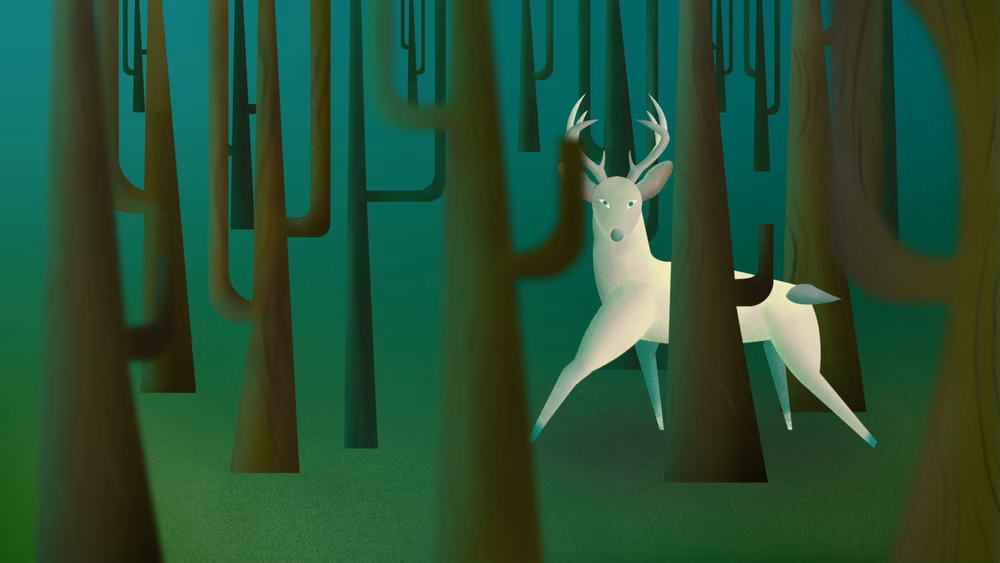
AeSun Jung Forest art

A host of wild creatures: "The Forest" design by AeSun Jung.

Connect with AeSun Jung on LinkedIn.

Undergoing 'Psychic Repair'

March
16
2026
By
Tags:

"How do you photograph the unphotographable?" asked artist Farah Al Qasimi, her head tilted at a curious angle. The artist also known as Frequently Asked Question then offered her answer: "A little bit of intervention."

Al Qasimi was in conversation with museum exhibitions associate curator Brittany Richmond. It was deFINE Art 2026 live on the SCAD MOA theater stage, and it was awesome.

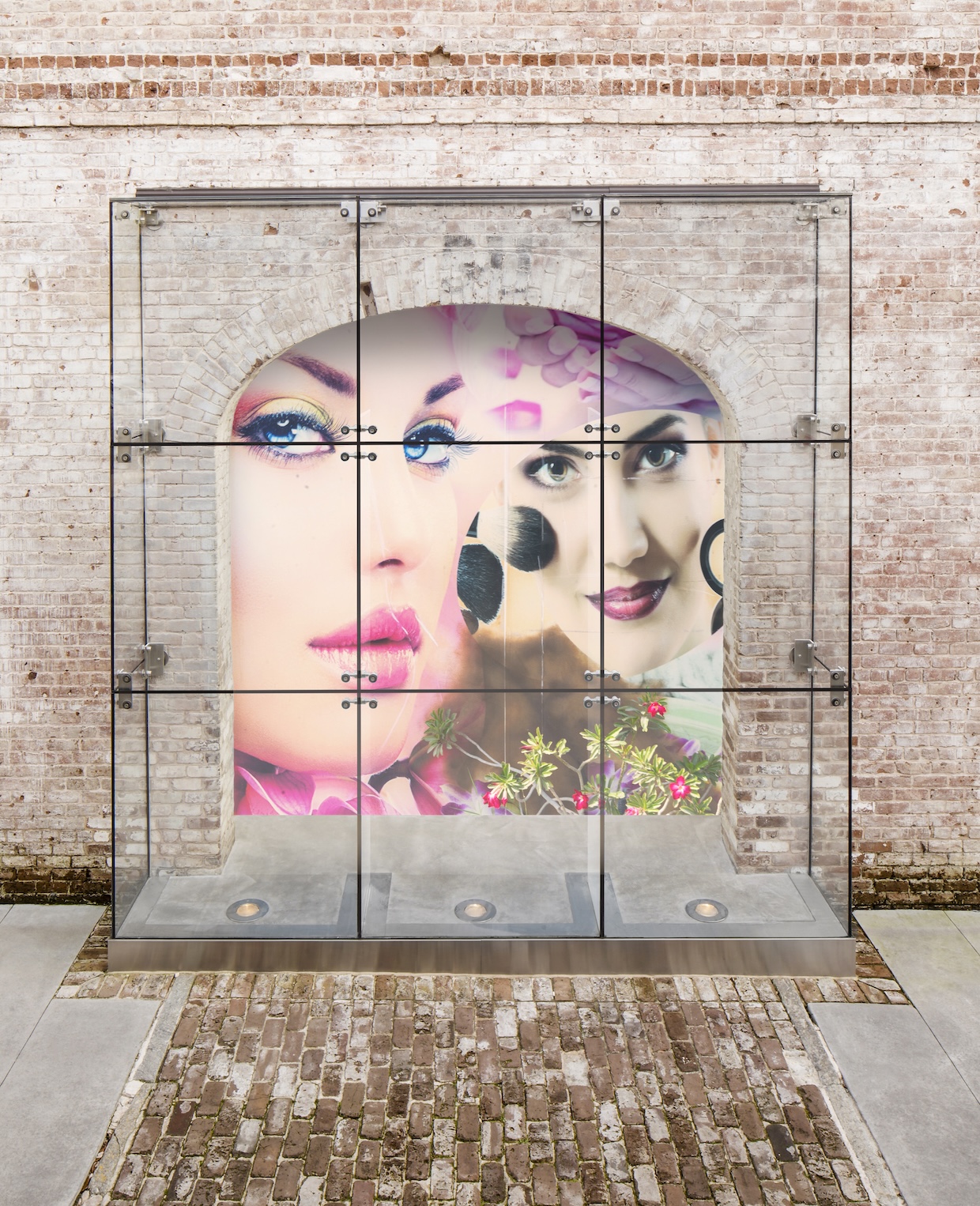
The occasion was the opening of Psychic Repair, Al Qasimi's double whammy activation of the museum's street-facing marquee vitrines and trippy inner gallery. "You're an image maker and you have a very specific relationship to images," Richmond began, prompting Al Qasimi to explain the dynamic between Instagram posts and museum-ready fine art.

"For photographers there's often this hierarchy where something made with your camera is an art object, and things made with your phone somehow count less," Al Qasimi replied. "I think of it all as the same enterprise, the same project of world-making."

What a world she's made: the Abu Dhabi-born, Brooklyn-based artist spoke of her "collaged sense of identity" (Emirati father, Lebanese mother, fluent in Photoshop and the Ivy League scene) that has left her "feeling like an outsider everywhere. Luckily that's a very good quality for a photographer to have, because you can find something a little bit fantastic or otherworldly in the everyday."

Psychic Repair (per the exhibition's promo collateral) presents "highly saturated images that explore rituals of self-presentation and their ties to identity, memory, and belief formation." Photographs like "Absolute Radiance" vibrate at freakish peaks of the chromatic spectrum, seductive and strange.

FAQ jewel box

Farah Al Qasimi, Psychic Repair, exterior museum view, 2026.

Al Qasimi then name-checked doyenne of dancing dolphins Lisa Frank, and mentioned "something a little bit more sinister underneath the surface of all that celebratory color." "We are so accustomed to images trying to sell us something," Richmond observed.

"I like the idea that these [photographs of mine] aren't trying to sell you on anything except maybe a deeper understanding of the language of consumerism and the seduction of the image," Al Qasimi replied, shuffling her boots.

At one point, the artist referred to Psychic Repair's video installations as "moments to pause." When the curator encouraged the audience to go experience the exhibition, those moments had arrived.

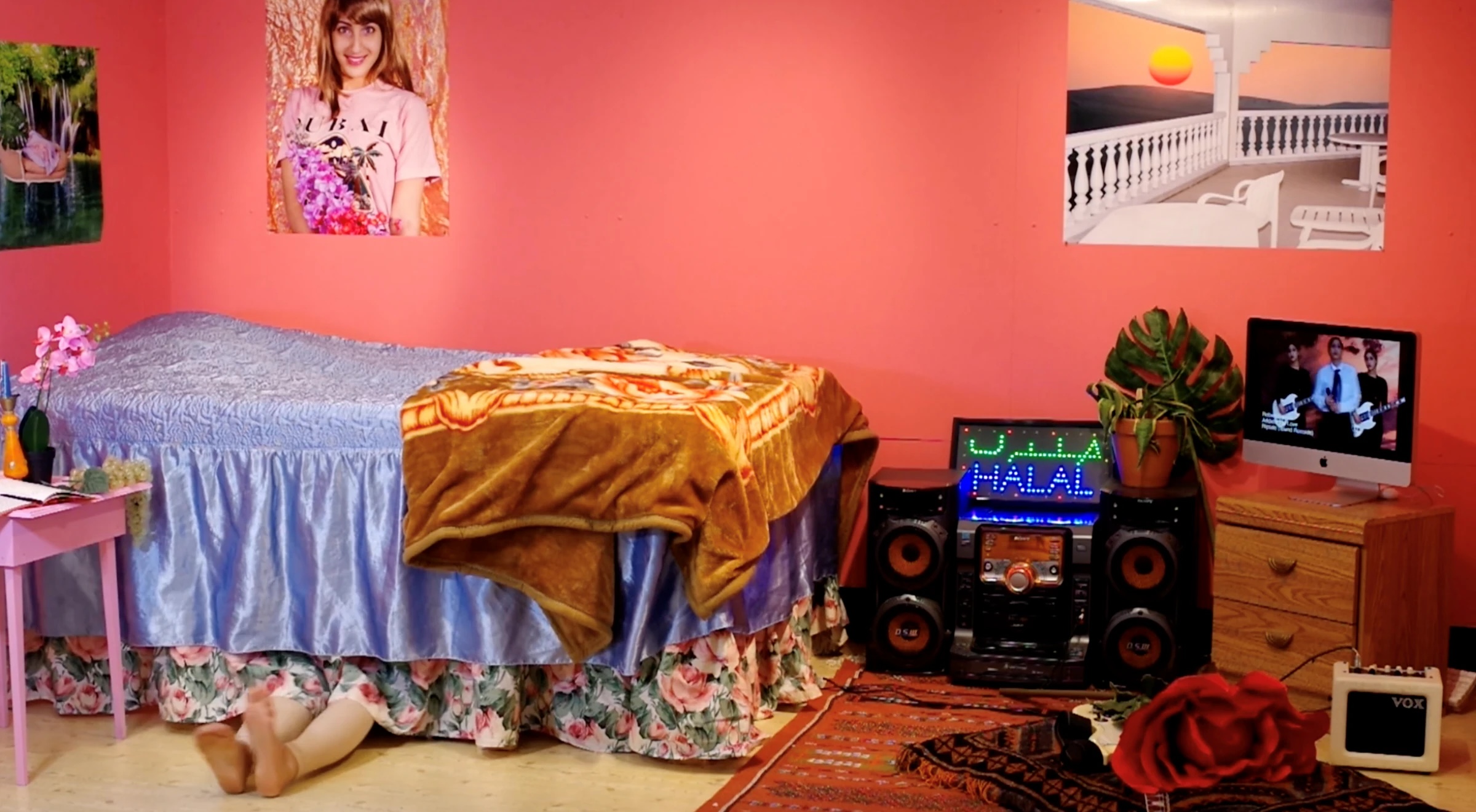
In the museum, TV screens flickered. One was labeled "How I Learned to Stop Worrying and Love My Room," its title a riff on Kubrick's Dr. Strangelove. Headphones beckoned.

There was Al Qasimi on screen, dressed in a suit like Robert Palmer in his iconically vapid 1986 MTV smash "Addicted to Love." Then she appeared as a dorky Dubai teen, smitten with Iron Maiden and high on skin whitening cream, crooning through her karaoke machine: "Hey dad / I bought a guitar / I'm in a band / please don't be mad."

Post-sinister, parody-ready pop pantomime became a fun way to beat time. FAQ's little bit of intervention had gone the distance.

Psychic FAQ

Farah Al Qasimi, "How I Learned To Stop Worrying and Love My Room," video still from digital video, 2016.

Courtesy of the artist and Francois Ghebaly, Los Angeles / New York.

Laurie Anderson: deFINE 'Head' space

March
5
2026
By
Tags:

"A skeleton walks into a bar," said Laurie Anderson from the Trustees Theater stage. "And the skeleton says, 'Gimme a beer, and a mop!'"

It's unlikely that anyone came to the keynote address of deFINE Art 2026 expecting one of the world's finest performance artists to tell jokes. Yet subverting expectations is part of Anderson's mischievous métier, at least since she scored a pop hit in 1981 with the genuinely strange soundwork "O Superman." Elfin oddity is funny stuff.

The SCAD deFINE ART 2026 honoree was in Savannah on the occasion of the opening of her SCAD MOA exhibition All in Your Head. A combination of written words plus projected images achieves generative effect in the show, priming museumgoers for sensory re-orientation. A VR component lets you visit the moon.

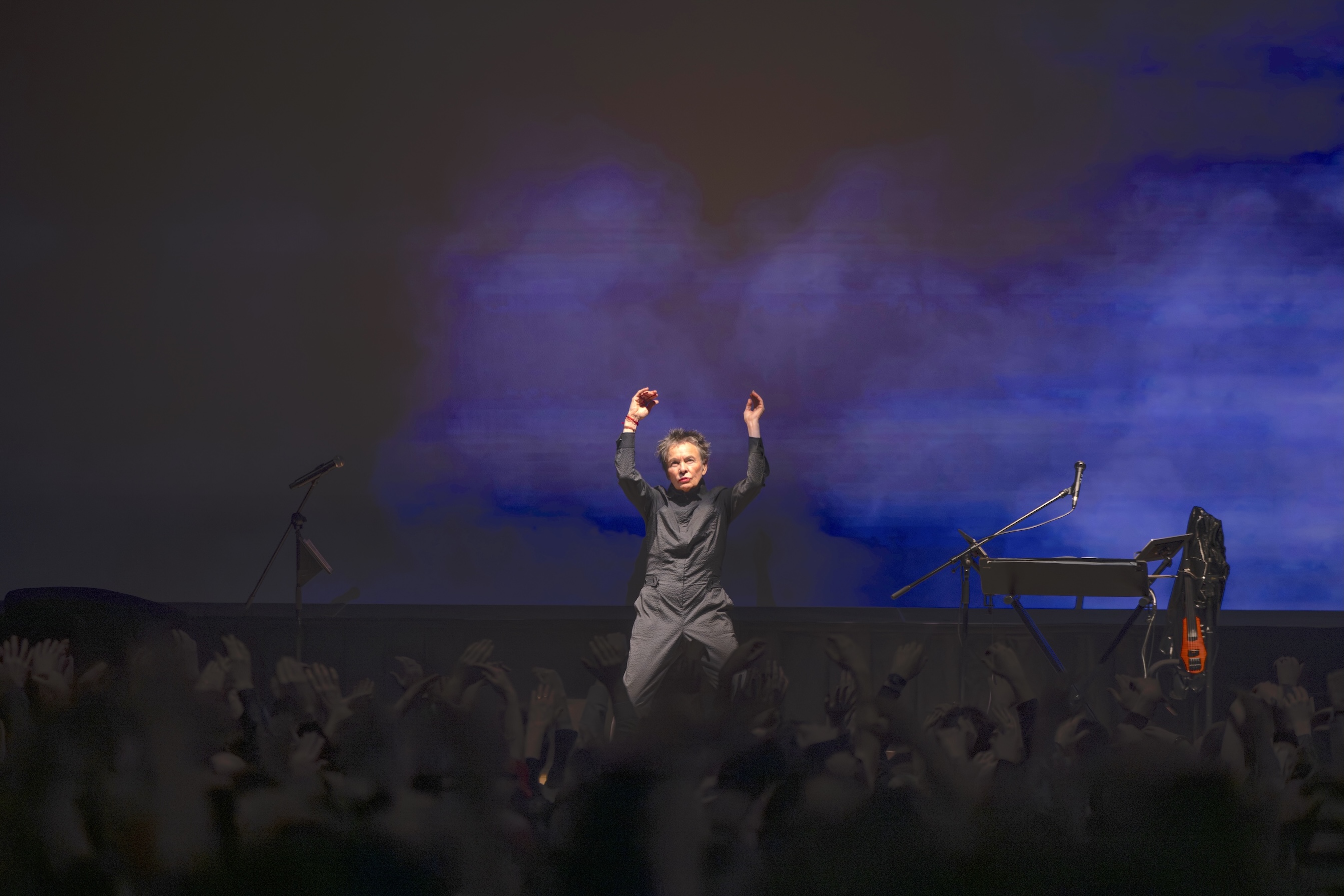
Reports that Anderson herself would be unable to attend deFINE due to an actual blizzard in New York City were soon squashed by the sightings of her distinctive diminutive figure — dressed in wooly togs and a slouch hat — moving through the SCAD MOA galleries on opening night. Two days later, her keynote address at Trustees became a full ninety-minute concert performance that no one in the packed house will ever forget.

A violinist, a monologist, an expert b.s. detector, a martial artist: Anderson began her performance with an echoing, electrified fiddle solo, as images of outer (or inner?) space flitted across on the towering screens behind her. Are those whirring helicopter blades coming from inside the building?

"Hi," she said. "Thank you so much for this amazing award. It's great to be here." The artist then explained that last spring she was invited to perform at a festival in Austria, "and the theme of the festival was the rise of fascism in Europe." Her eyebrows spoke volumes.

Laurie live deFINE

Oh mom and dad: Laurie Anderson performs at SCAD deFINE Art.

Anderson began a sort of fireside chat, full of well-read references to intellectuals and spiritual leaders from Cornell West and Pema Chodron to John Cage and Sigmund Freud. As the talk evolved, woven with her childhood memories and her dazzling, alien-baiting violin playing, she rounded on her theme: the power of words and the meaning of love.

Letters rained in recombinant digital showers on the screen as she spoke of her dead friend William S. Burroughs ("he wrote these very dark and very funny books") and Burroughs' belief that "language is a virus from outer space." Anderson pointed out how odd it had once seemed to her, the idea that "language is a virus communicable by mouth."  

Nothing polemical: meaning inferred. With a comedian's timing, the artist opened unexpected spaces for in-rushing meaning. Anderson invited the audience to think.

In the program's second half, the honoree mentioned a man named "Lou" — her late husband, the rock and roll star Lou Reed. Anderson performed a transformed rendition of Reed's gritty 1989 hit "Dirty Blvd." with its lyric "your poor huddled masses / let's club 'em to death." Ironic doublespeak became mournful. Keeping Lou alive by performing his song was an act of love.

As the evening concluded, Anderson invited the seven hundred-plus people in the audience to stand. Then she led a few, simple tai chi movements. That synchronized spontaneity created collective release. Also love.

Laurie headshot 2026

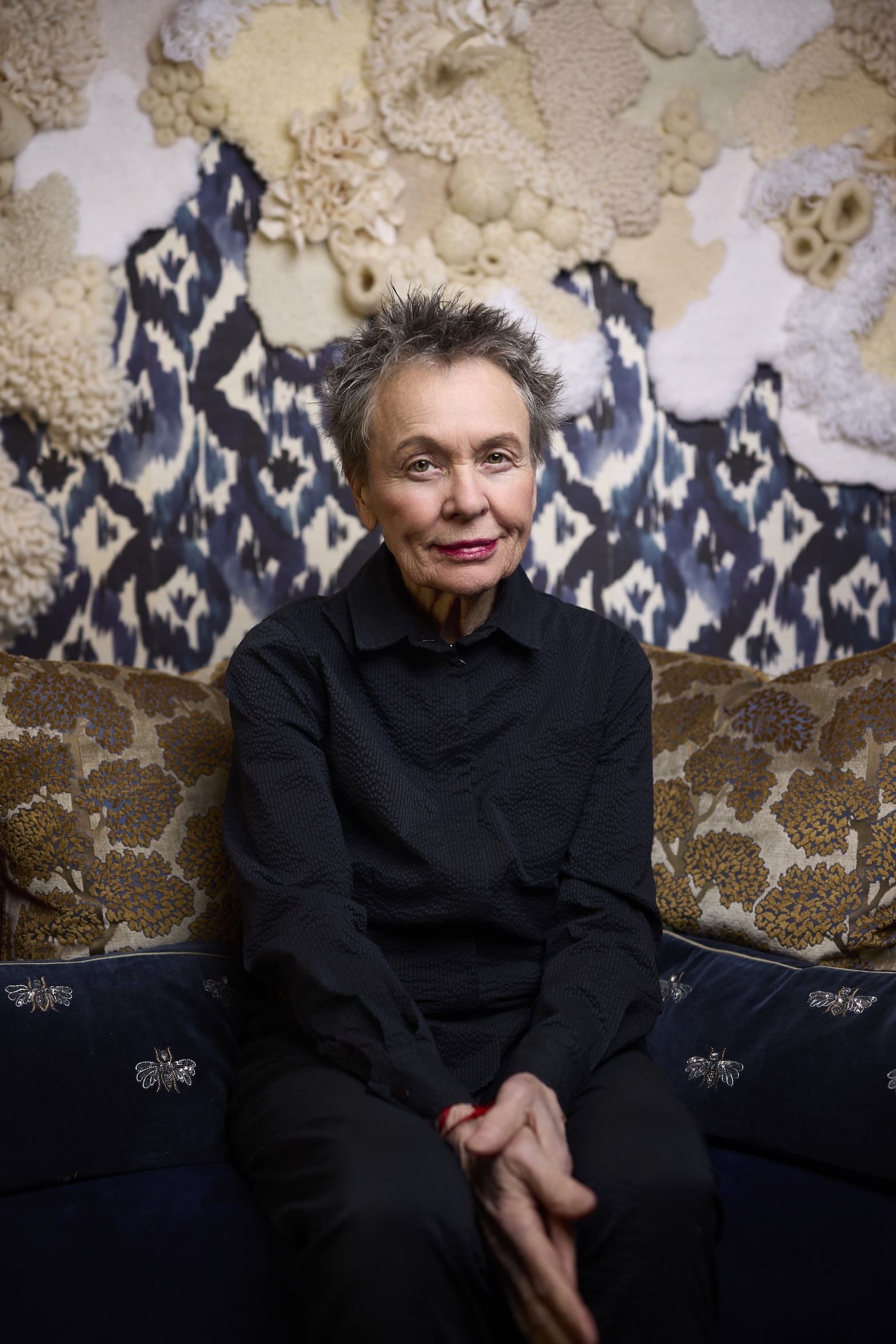
All In Your Head is on view at SCAD MOA through June 7.

Papa's Moon Shot!

February
23
2026
By
Tags:

Reports of the demise of the penny appear perilously premature. Fervent fans of fabulous fun, it is time to dig deep into your pockets for the maliciously maligned one-cent coin. Time for Moon Shot!

"I was inspired by the Fey Finger Striker, a penny arcade game from 1932, but instead of making a replica, I decided I'd create my own game. That allowed me full creative freedom while respecting the spirit of early arcade design," says Michael Papa (B.F.A. motion media design, 2013).

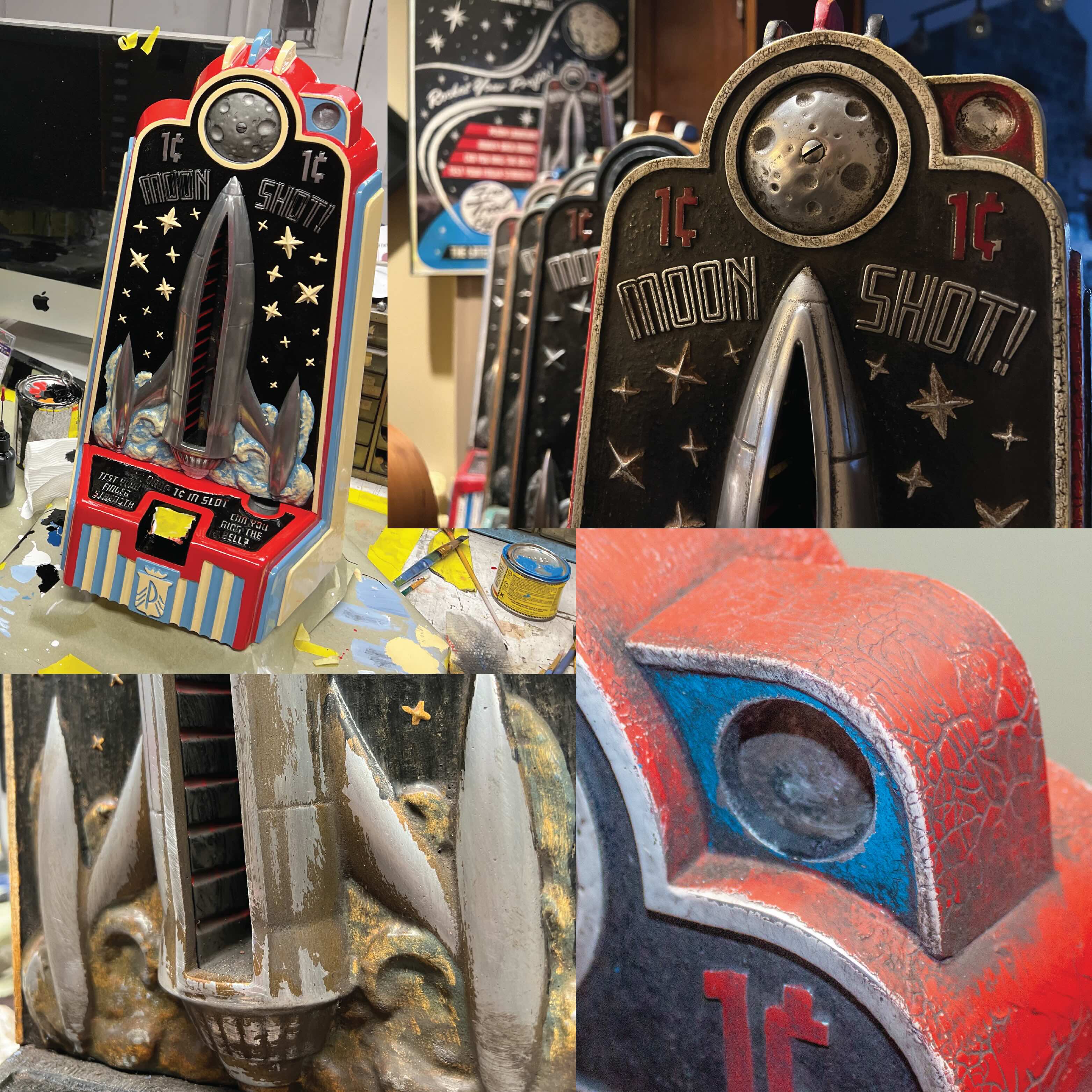
Over a two-year period, the Gloversville, New York native designed, engineered, and built the penny-to-play game. "Once I had the space theme, launching a penny to strike a bell that looks like the moon made perfect sense," Papa says. A fully mechanical arcade machine, 3D printed in aluminum-filled resin, Moon Shot! stands on its own.

Moon Shot fabrication

Process shots: the work side of the Moon.

Michael Papa:

I grew up surrounded by antique coin-operated machines. My father, John Papa, owns and operates National Jukebox Exchange. His restoration shop focuses on classic jukeboxes from the 1960s and earlier. When I was in high school, my dad was making recreations of ultra-rare penny arcade machines from, like, 1904 and 1928. My dad facilitated me being in that world.

After high school, I spent two years at Fulton-Montgomery Community College in Johnstown, New York. There was a 3D animation professor there, Bob Renda, who told me: "You have so much more potential, you need to go to SCAD." My dad and I flew down to Savannah and met with the motion media design department chair at the time, John Colette. Colette was so nice and enthusiastic about my portfolio and told me, "You can really excel here!"

SCAD unlocked a lot in me. I never thought I'd be able to go to school for things I studied at SCAD, like Dynamic Typography (MOME 729). Professor Colette wrote a book about one of our motion media class projects, which was really inspiring. I've published five books now.

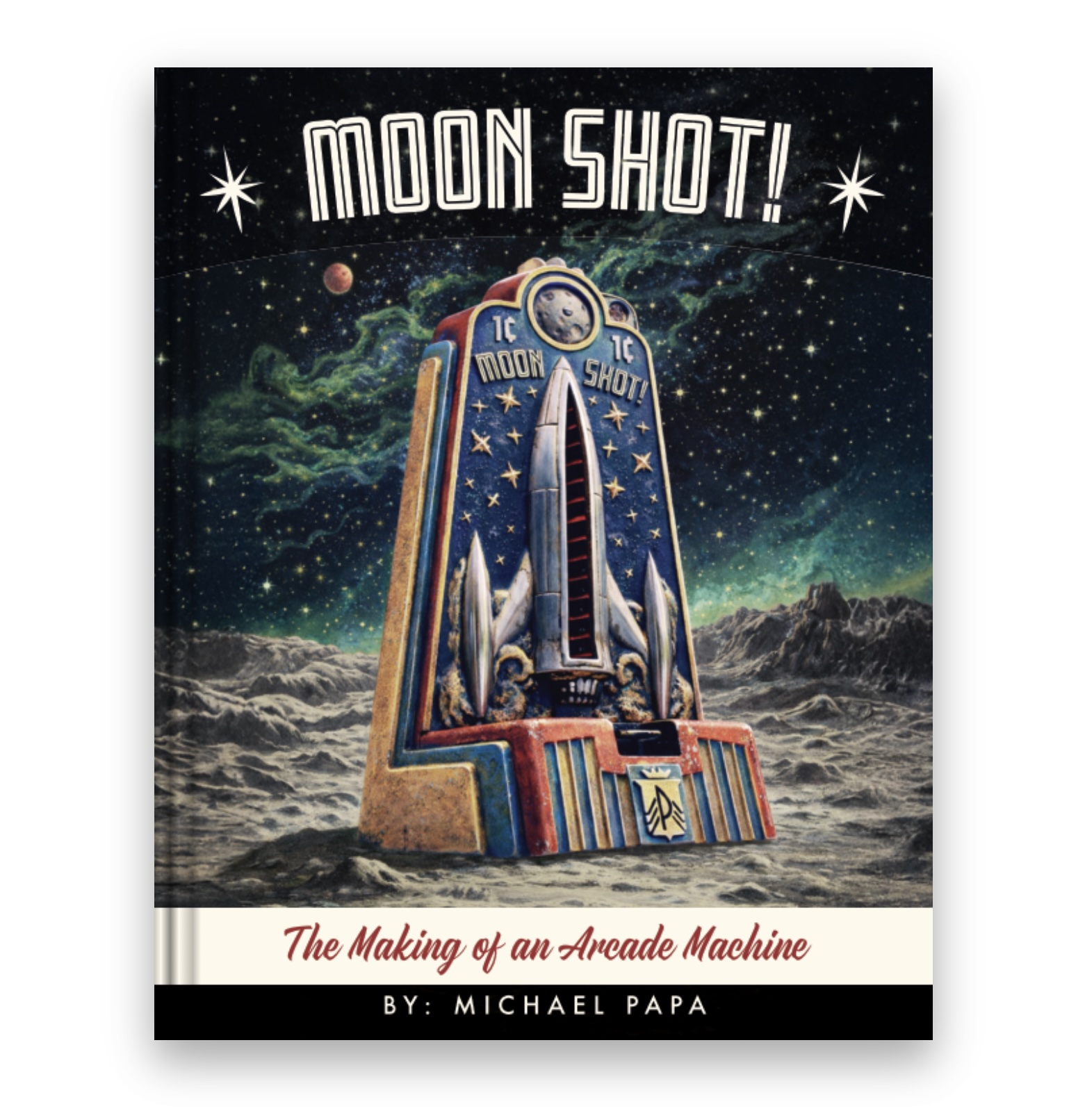
Moon Shot book cover

Written in the stars: Papa’s brand new book.

I started working on Moon Shot! in November 2022. Although it looks vintage, Moon Shot! was designed using modern digital tools. Every part was modeled with sand-casting constraints in mind. Draft angles, components, and theory of operation dictated every inch. The form draws from Art Deco, atomic-age futurism, and early amusement design. Influences range from Wurlitzer wallboxes to Popular Science magazine covers. Every machine carries a laser-etched data plate, identifying it as a modern creation by Papa's Re-Creations, complete with serial number.

I have written and designed a book about the making of Moon Shot! and everything that went into it, with color photos and production notes. I've got to thank my girlfriend, Megan Balser (B.F.A. writing, 2014). We were at SCAD at the same time and never knew each other then, but she ended up in Gloversville and has been here ever since. She edited the book and made sure it made sense.

I made sixteen total Moon Shot! machines including the prototype. Each one has a distinct finish and hand-painted enamel color scheme. I've gotten quite a few inquiries from people who say, "Hey, I've known your dad for 30 years, I own machines he restored, I'd love one of yours." I have sold over half of my Moon Shot! machines, just from people messaging me. The reception has been really nice.

Michael Papa

Ready player: designer Michael Papa.

To purchase the book Moon Shot!: The Making of an Arcade Machine, contact [email protected].