Skip to main content Accessibility Policy

Lily Adams: sound design for the soul

June
1
2022
By
Tags:

"How can I use my sound art powers for good?" asks Lily Adams (B.F.A., sound design).

It's three days before commencement, and the senior sound artist is in Hamilton Hall Room 201, delivering their talk "Sound Art for the Soul" to 20 enthusiastic fellow sound design students—all members of the official club called SCAD PASO (Professional Audio Student Organization).

Adams, the club's outgoing president, is discussing sound conservation and acoustic ecology. Referencing soundscape ecologist Bernie Krause, and screening a clip of the documentary Chasing Coral, Adams makes the case for "the different ways you can take your sound talent and apply it to something you care about."

"Lily is a model sound design student with extraordinary creative and technical skills who contributes professional-level work on every project," says sound design professor Jamie Baker. "As the president of PASO, Lily masterfully collaborates with peers, professors, and special industry guests to host wonderful, educational, supportive events. Lily sets the tone and leads the troops with natural ease and competence."

In June, Adams will head west to Los Angeles, for a coveted internship at Formosa Group. It will be their second time in L.A. this calendar year: in March, they received the Student Recognition Award at the 58th Annual Cinema Audio Society Awards, taking home a $5,000 prize. "The best part was networking with everyone there, including those I'd met previously via Zoom, like Mark Lanza, President of Motion Picture Sound Editors," Adams says. "It was fun being with all the best mixers in Hollywood in one room."
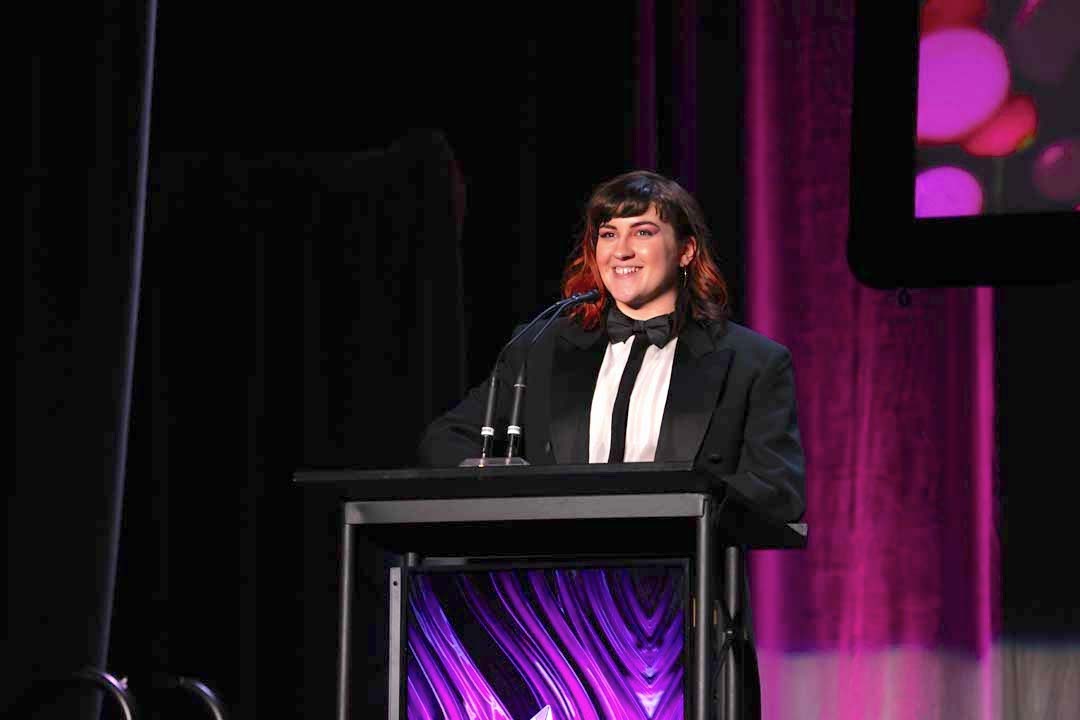
Lily Adams at the Cinema Audio Society Awards, March, 2022.

Lily Adams at the Cinema Audio Society Awards, March, 2022.


Adams grew up in Indianapolis, Indiana, and attended Park Tudor School, before coming to SCAD, specifically to study sound. "I was interested in how sound can make you feel things. As I like to say, pictures are information, but sound is emotion."

While taking first year sound design classes, Adams wasn't picking up ProTools as quickly as hoped. "So, I did peer tutoring with a student named Ashton Faydenko (B.F.A., sound design, 2020), who got me a student film to mix at the end of my first quarter. I started mixing more student films, and sound editing, and kept going to PASO."

"PASO is about offering access and fostering collaboration," Adams continues. "That includes creating a safe space for underclassmen who might not know what questions to ask. Post-production is a collaborative art form, and it doesn't mean anything unless you share it with people. It's the same in film and in theater: You build a family with the people you work with."

As a senior, Adams was in high demand as a cross-disciplinary collaborator. They worked on The Tunnel, directed by Jovianny Berrios (B.F.A., film and television, 2020), an intense psychological drama set in South Carolina in 1865. Then there was comedy short Smoothie Heist, directed by Sydney Bowers (B.F.A., film and television), a uproarious audience favorite at this year's student film showcase. "It's great to work with directors who understand how important sound is," Adams says.

Back in Hamilton Hall, PASO is still happening. Adams, wearing a pair of rainbow-soled platform sneakers, initiates the next part of the evening, inviting fellow sound design students to the front of the room to jam on the Moog Grandmother, a semi-modular analog synthesizer with built-in spring reverb. As the room swells with chromatic oscillations, pizzas appear courtesy of professor Baker. It's a conscious, soul sound party, designed for the expansive, positive possibilities of our world.

As Adams says: "Sound, because it's so emotional, is a big part of opening up someone's mind and making them think about things differently."

Visit Lily Adams Sound!
Zoélie wins Intel Game Showcase!

July
28
2021
By
Tags:

Zoélie, a game created by SCAD students, has been awarded 1st Place in the Best Gameplay category at the Intel University Game Showcase 2021. From among 20 leading university-level game development programs, SCAD eclipsed the other finalists to win the competition's top award. The national competition was livecast on the Intel Twitch channel during Game Developers Conference (GDC) 2021.

"I'm incredibly proud of this win by SCAD and Zoélie," said SuAnne Fu, SCAD chair of interactive design and game development. "It represents our leading position as the preeminent destination for students working towards creative careers in the gaming industry."

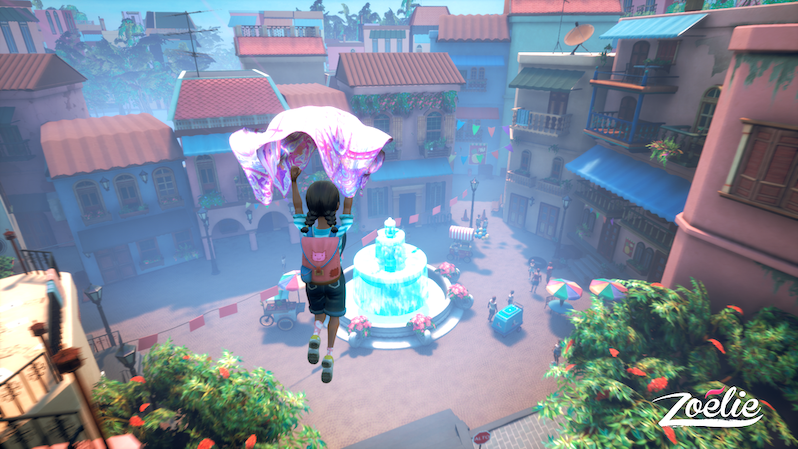
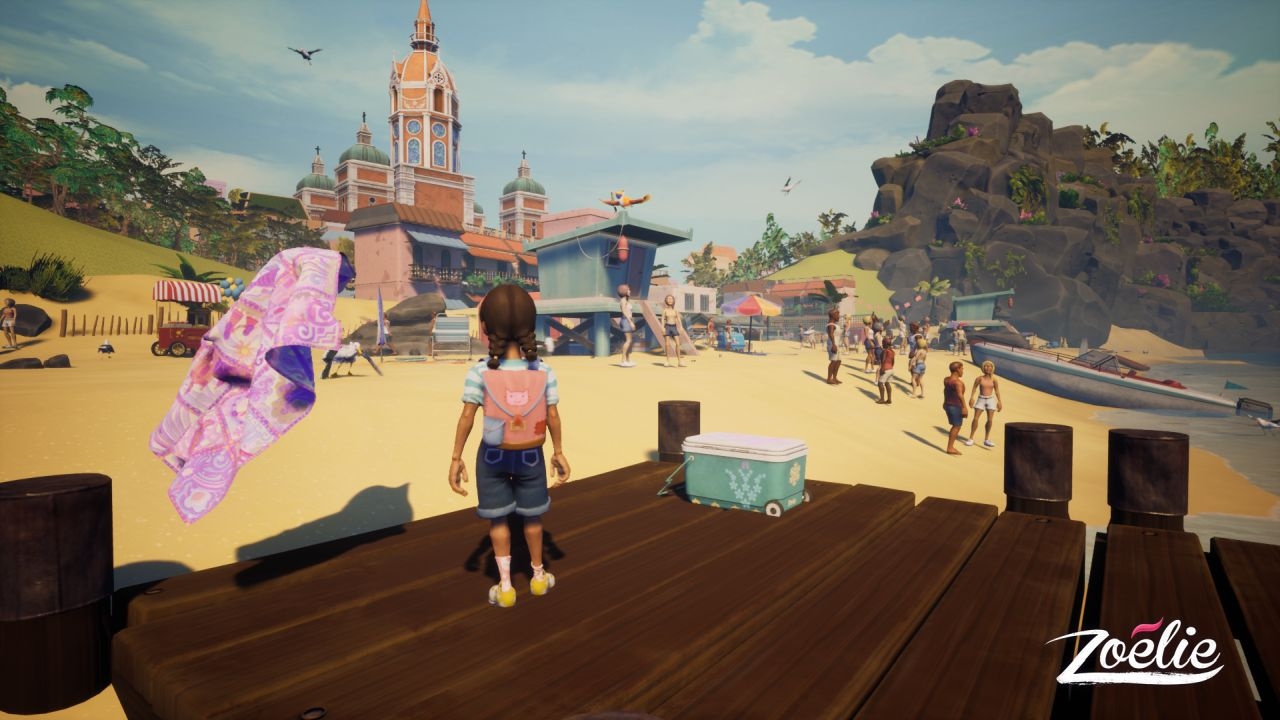
Zoélie is an action puzzle platformer that tells the story of a young girl exploring her town of La Colina with her imagination-powered quilt, Sueño. The coming-of-age tale follows her fantastical journey as she confronting life changes through her imagination.

Game still

This game was created in collaboration by SCAD students in the interactive design and game development, animation, visual effects, and sound design programs. Zoélie was featured in the panel "The Making of Zoélie" at SCAD Gaming Fest 2021.

After studying the local customs and mythology, the student development team chose South America as the game's setting, specifically Buenos Aires Province. Emphasizing the cultural importance of the bond between siblings, Zoélie's sister Sofia is a key character.

More than half of Zoélie's production was created remotely during the pandemic. By March 2020, Zoélie was already running on Perforce, with a dedicated Discord server host communications about the project. SCAD students continued to work as a team across different national and international time zones. Scrum meetings were held daily; the whole team met at least twice a week.  

"Zoélie is one of the biggest projects that we've created," said Su Anne Fu. "Its creation involved dozens of students from a wide array of different degree programs in a workflow environment of real-time development. As a game, Zoélie is absolutely gorgeous, and it's a great to play, as recognized by this Intel award. I'm full of admiration for what our students accomplished under the guidance of our faculty leads, professors Jack Mamais and Cyril Guichard. It's wonderful that Intel has recognized their work."

Congratulations to the Zoélie team!

Lead Gameplay Designer:
Ben Brook

Lead Systems Designer:
John Washington

Lead Narrative Designer:
Phillip Corrado

Narrative Designer:
Nathaniel J.L. Cartwright

Lead Programmers:
Vincent Aliquo
Gabriel Tobias

Character Programmer:
Kuan Xue

AI Programmer:
Oscar Painvin

Lead Concept Artists:
Julia Nguyen
Sammy Suen

Concept Artists:
Sanda Gavriliuc
Brice Morgan
Holly Owens
Zach St. Amand

Lead Character Artist:
Mackenzie Blackgoat

Character Artists:
Michael Mauro
Taan Tuchinda
Anushay Qureshi

Lead Environment Artist:
Nick Levene

Environment Artists:
Rodney Burton
Dixon Dubow
Kellan Dwyer
Bernardo Gullo
Tyler Klimek
Mercedes Khumnark
Santiago Medrano
Stephanie Owens
Mike Relleva
Gianna Rockwell
Courtney Vogel
Amanda Wood

Lead Animation and Rigging:
Tiffanni Blevins

Lead VFX Artist:
Zachary Taylor

Technical Artists:
Rachel Howard
Maxwell Mecimore

UX:
Julia Myers
Megan Tkac

Sound Supervisor:
Franco Tamasco

Sound Designers:
Cal Eidson
Collin Peck

Voice Cast:
Kelly Washington - Zoé/Sophia
Nathaniel J. L. Cartwright - Chonkers
Haden Ezekiel Felix - Patty
Phillip Corrado - Fernando

Game still

Meet Zoélie!

Alumni Atelier ambassador Kacie Willis

September
23
2020
By
Tags:

"My hope is that the podcast will show that we can have difficult conversations," says Kacie Willis (M.F.A., sound design, 2013). A Fall 2020 SCAD Alumni Atelier ambassador, Willis is speaking of White-Angle, her new podcast exploring "empathy in documentary filmmaking, dissecting how perspective and privilege factor into storytelling in our modern time of civil unrest."

Born in Detroit and based in Atlanta, Willis is a founding producer at Could Be Pretty Cool, has worked at the Center for Puppetry Arts and 7 Stages Theatre, and was one of 10 participants in last year's Spotify Sound Up program, an initiative to amplify underrepresented voices in the podcasting world. Boost the levels on Kacie for maximum effect.

Kacie Willis:

Of the pitches I submitted to the SCAD Alumni Atelier program, I was surprised that White-Angle was the one selected. I'd submitted three or four fun and quirky ideas, but this was the topic that I was asked to explore.

White-Angle is a podcast that pairs a white documentary filmmaker who's made a film about Black trauma with a Black filmmaker in conversation. It's a podcast about storytelling, agency, ownership, and about who should be telling stories. It's flipping the script in the sense that the documentarian is now the documentary subject of the podcast.

I'm primarily a theatrical sound designer. Since COVID-19 shut down live theater, a conversation has been presenting itself in the theatrical world about the future of race in theater and how to address those issues. I was on a panel where someone said they didn't think a white director should be allowed to direct plays by Black writers. I felt really conflicted about that.

I have friends from all different backgrounds who take their work very seriously, including several cis white male friends who have made feature length-documentary films on Black trauma. One has a film premiering at the Atlanta Film Festival next week that was based on a cold case in Griffin, Georgia. Another made a film about a black male who was having a bipolar episode and was killed by police in 2014. I thought, what can I do to speak to this moment?

Two members of my White-Angle team are also SCAD sound design alumni: Cooper Skinner (M.F.A., sound design, 2013; B.F.A., sound design 2010) will be doing the mixing and mastering, and Jacob McCoy (B.F.A., sound design, 2010) is cutting together a video trailer for the show.

Everything is going to be hosted on a standalone website. There'll be three episodes, each one about 30 minutes. The first episode will feature Stephen Robert Morse, director of In the Cold Dark Night and filmmaker and puppeteer Raymond Carr. Episode two will pair Roee Messinger, director of American Trial: The Eric Garner Story with screenwriter and producer Nakia Stephens. The third episode will feature Erik Ljung, director of The Blood is at the Doorstep, in conversation with filmmaker Derrick Jones.

Part of my Alumni Atelier project is figuring out my target audience for this podcast. This means strategically marketing a difficult piece of work at difficult time where people are looking for levity. It means figuring out how to spark important conversations about difficult topics. As a creative community, we can help one another to tell these stories.

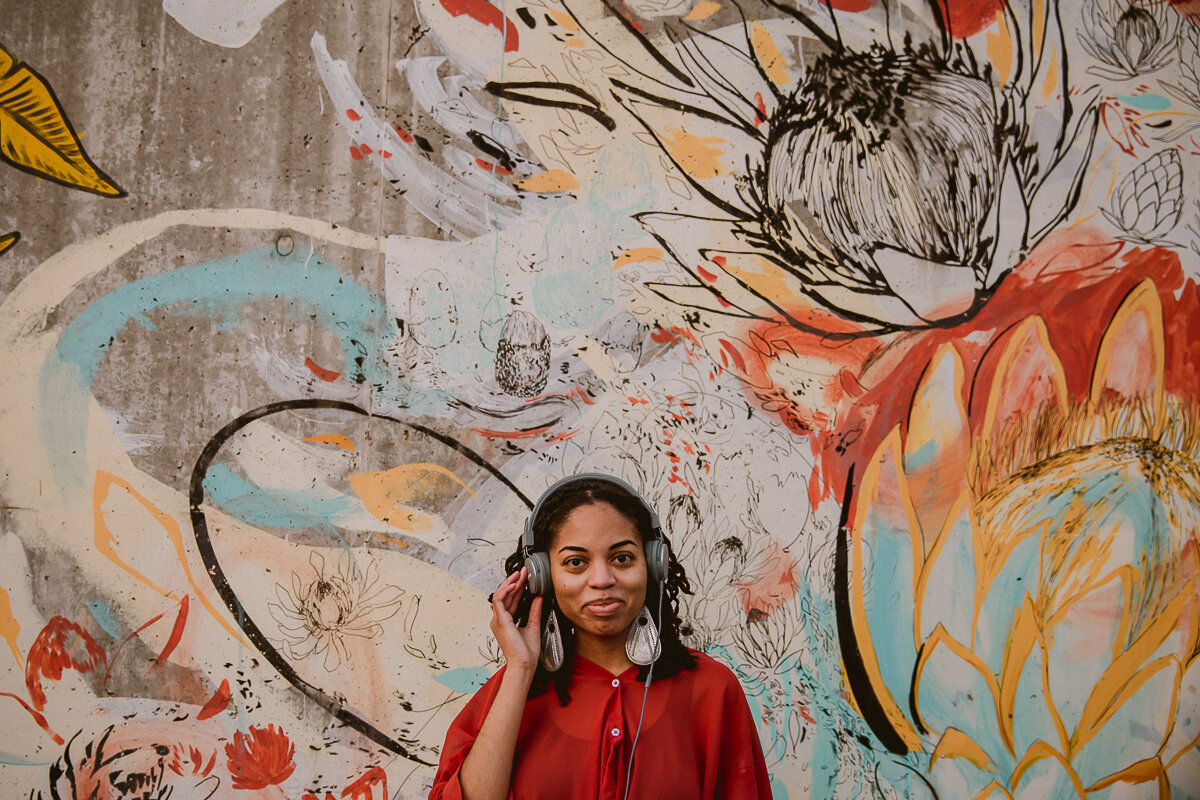
portrait of kacie willis

Visit Kacie at her excellent website. Stay tuned for more about the launch of White-Angle, coming October 2020.

The SCAD Alumni Atelier, conceived and endowed in 2015 by SCAD President Paula Wallace, supports select alumni with time, space, and resources to facilitate the creation of new work.

Interested alumni applicants should email [email protected] or visit www.scad.edu/success/alumni-programs/alumni-atelier for details.

photography: Kelley Raye


AnimationFest spotlight on 'Bearly'

September
18
2020
By
Tags:

What happens when a bear full of FOMO refuses to hibernate? Bearly, the new animated musical film and the first production of SCAD Animation Studios, tells the story of an adorable mammal who denies natural instincts to discover the beauty of the changing seasons. The project was written, developed, and realized by students in the university's top-ranked animation, dramatic writing, and sound design degree programs. Bearly will premiere during SCAD AnimationFest, Friday and Saturday, Sept. 25-26.

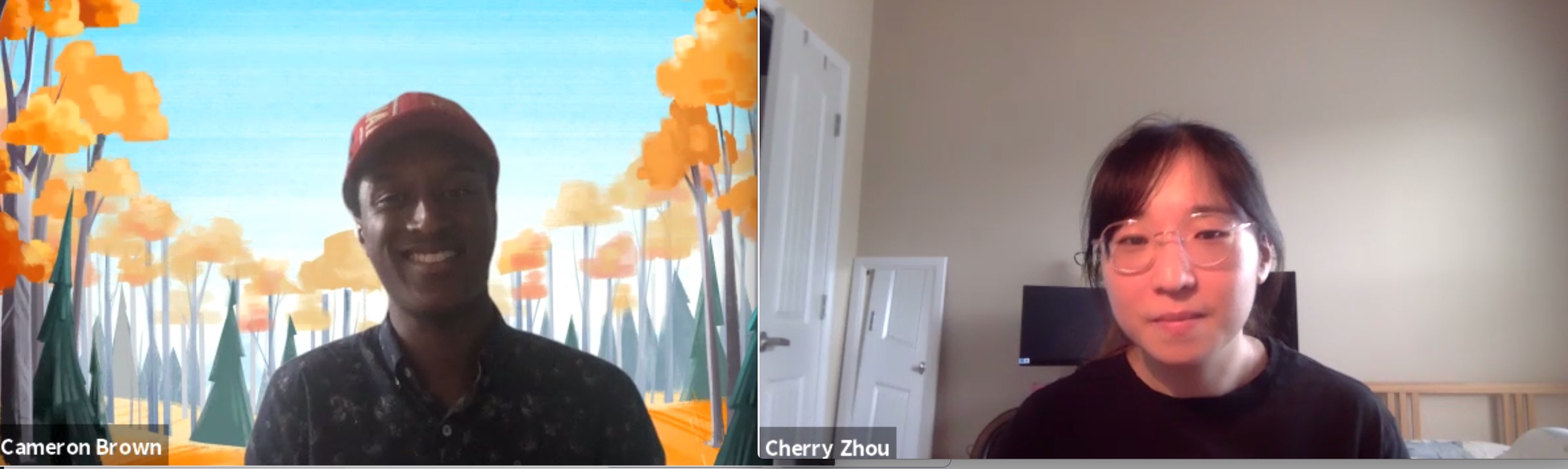
Producer Cameron Brown (B.F.A., animation) and director Cherry Zhou (M.F.A., animation) Zoom'd into SCADworks to discuss the film.

screen shot of zoom session

Cameron Brown: The initial processes began in summer 2019, when Colin Rhoades (B.F.A., dramatic writing) came up with the story of a bear who tries to see what winter is like and fight the urge to hibernate. Colin began writing the music, and once Fall 2019 quarter began, the project went into pre-production, which is when Cherry and I came aboard.

Cherry Zhou: During pre-production, we began storyboarding the film based on Colin's idea. The entire pre-production team met and discussed possible minor changes that could enhance the storyline. Because the song was the first thing we had, it finalized the timing of every single shot, whereas usually a production creates all the animation first, and then the music. All those story beats are very cohesive and quick in Bearly, and you can always read it very clearly.

Cameron Brown: Once we went into production, we started automation lighting tests and brought on a team of student animators. We already had the storyboards done, so it was simply a matter of communicating to the animators how to follow the follow the storyboard and interpret the story into the 3D space. On our art team, Natalya Gaida (M.F.A., animation) and Nicholas Piña (M.F.A., animation) worked to create the look in the style of a children's book. Their work was then handed over to our lighting team, who were working in Katana.

Cherry Zhou: I want to explain Katana a little bit more. In the animation department, most students have been using Autodesk Maya. We got the note to use a newer software called Katana that runs faster on lighting and rendering. It was a big plus, but in March 2020 we went into quarantine and the university was shut down for the spring quarter. Fortunately, SCAD got a system called Virtual Lab that allowed students remote access to our render farm.

Cameron Brown: One of the best things about an animation production is that everyone's got to work with everybody else. Bearly was an incredible team effort that involved the work of over 60 students. At AnimationFest, we're going to have a Bearly panel, including SCAD chair of animation Chris Gallagher, our executive producer Professor Bernardo Warman, along with myself, Cherry, our 3D animation lead Peter Kerkvliet (B.F.A., animation), and our lighting and compositing lead Taylor Saunders (B.F.A., animation). We're going to walk through our steps during production, and we're going to show the film. It's going to be awesome.

promo image for Bearly

For a full list of students who worked on Bearly, and to watch the trailer, visit the designated page.

Register for SCAD Animation Fest here.

Latin Grammy winner Nicolás Ramírez

December
3
2019
By
Tags:

Muchas felicidades and sumptuous congratulations to Nicolás Ramírez (M.F.A., sound design, 2018) for his extraordinary achievement: Nico is a Latin Grammy winner as inginerio de sonido on 2019 Latin Grammy Song of the Year, "Mi Persona Favorita" by Alejandro Sanz & Camila Cabello.

"Mi Persona Favorita" was recorded at Art House, the Miami studio and record label of Julio Reyes Copello. As recording engineer at Art House, Ramírez has worked on sessions with superstars including Will Smith, Jennifer Lopez, Residente, Shakira, and Bad Bunny, as well as developing artists like Colombian compatriot Paula Arena and Argentinian prodigy Nahuel Pannisi.

One of Ramírez's great skills is creating emotional intimacy through sound. As Nico says: "It doesn't matter if a song is in Spanish or English, if it gets into your skin, that's the incredible thing." Now he has a Latin Grammy to show for it.

Nicolás Ramírez:

When I graduated from SCAD I had the option to intern in Miami at Art House. I knew how internships are: connecting cables, making coffee. But at the same time, I'd be at Julio's studio, where I knew they were making great records with incredible artists.

When I arrived, they were working on Alejandro Sanz's album, #ELDISCO. One day Julio told me: "We need to record some drums, do you know how to do it?" Alejandro wanted Larnell Lewis, an incredible drummer from the band Snarky Puppy, to play on "Mi Persona Favorita." Of course I knew how to record drums. The equal question was: "Can you handle the pressure?" Technology can fail and you have to solve it right away, because recording is all about flow and energy. Julio saw I knew both the technical side and how to be a professional.

The Latin Grammys were an incredible experience, because it was the first Latin Grammy award for my sister Natalia too. She did the vocal post-production for Alejandro's album, including "Mi Persona Favorita." When we got back from Las Vegas to Miami, Alejandro invited the whole team to his house and made us a paella. Paella says it all.

Of course my SCAD experience was key. I came to U.S. from Colombia to study for my masters degree, which was a huge jump for me. SCAD sound design professors David Stone, Mitch Gettleman, and Matthew Akers were essential to my development in different ways. David emphasized that working is not only about the technical aspect, it's about bonding with the people you're working with. From Mitch, I learned how to working quickly and efficiently. With Matthew Akers, I learned about synthesizers, the art of sound, and creating outside the box.

My experience as part of the SCAD cycling team was important too. When you're doing workouts, you're suffering but you get stronger. Mentally, you know can do it. Now, when I'm in a situation in the studio where I need to push to the end of the session, I know I can do it. Another way cycling is like recording: the best way going forward is as a team.

Working at Art House, I go to sleep thinking, is this really happening? The Latin Grammy is my highest professional highlight so far. I'm going to squeeze all the juice of enjoyment from this, while looking forward to what's next.

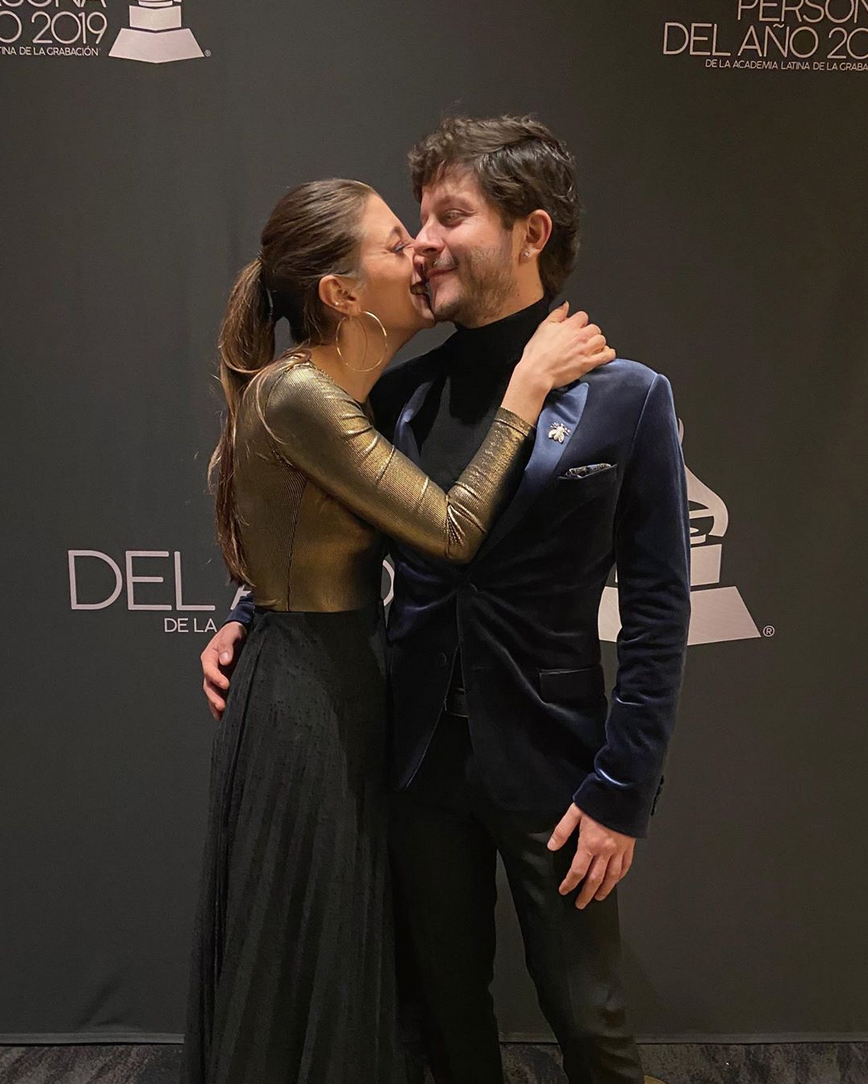
Nicolas y su novia Amalia Restrepo (M.F.A., illustration, 2018) at the 20th Latin Grammy Awards.

Nicolas y su novia Amalia Restrepo (M.F.A., illustration, 2018) at the 20th Latin Grammy Awards.

Visit Nico at niccolasramirez.com.

Banner photo: Manolo Alzamora.

And stay tuned: Alejandro Sanz's #ELDISCO is nominated for Best Latin Pop Album at the Grammy Awards, Jan. 26, 2020!

Inside 'The Pages of Destiny'

March
7
2019
By
Tags:

At a special event Wednesday evening at Trustees Theater, Emily Dillard (B.F.A., advertising) and Nico Rinciari (B.F.A., film and television) stood together before the purple proscenium, the Savannah Arts Academy orchestra seated to their right.

Dillard, producer of "The Pages of Destiny" – a new short film written and directed by Rinciari – addressed the audience: "It's important to acknowledge how many families we have here tonight. It starts with the love and trust of your family for you to go and do something great. And then that new family you find, in that new place, the family of creators and collaborators who become part of a greater family. It means the world to all be here together tonight."

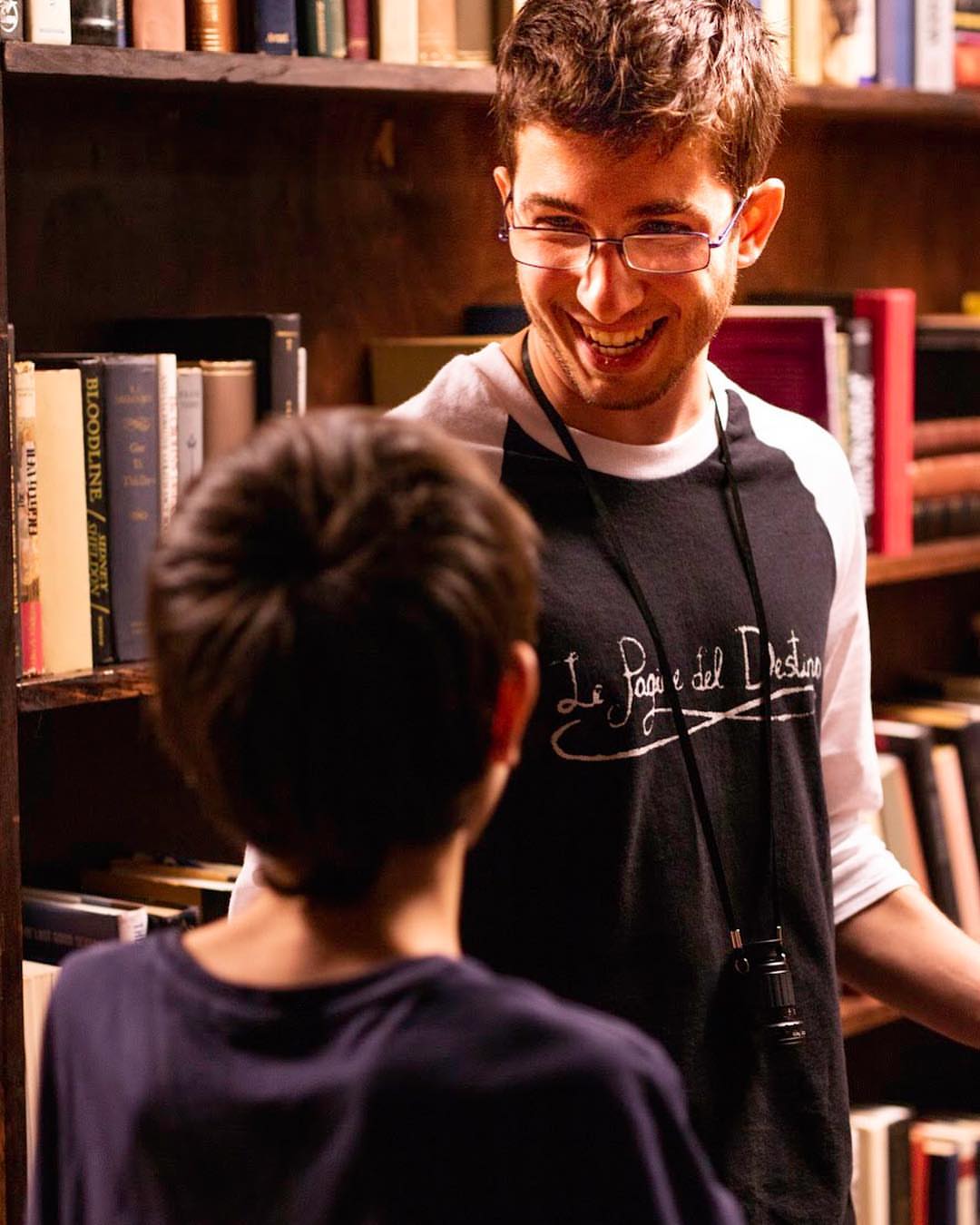
behind the scenes of The Pages of Destiny film

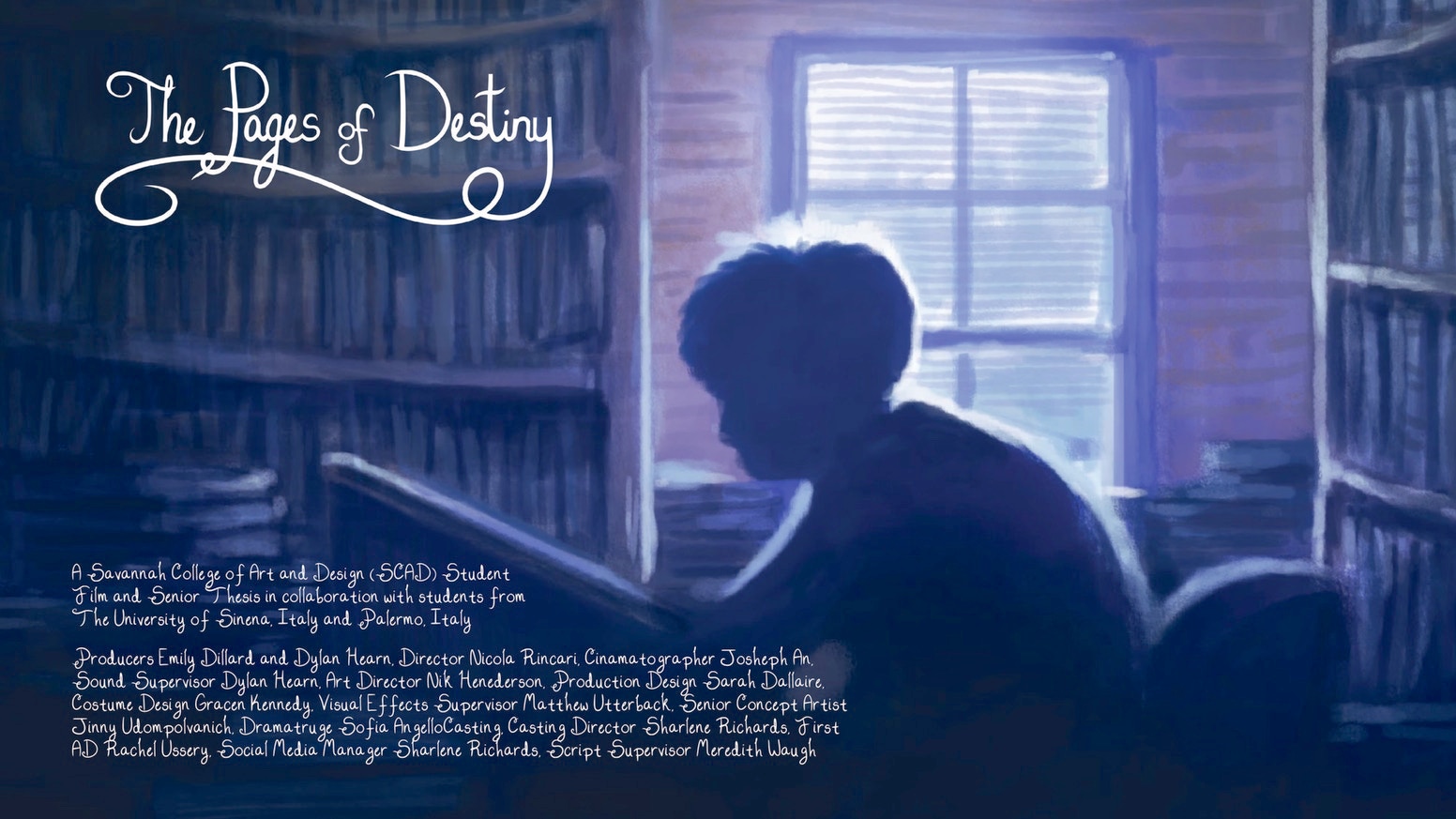
"The Pages of Destiny" is a short film about a boy's relationship with an extraordinary bookshop, created in collaboration by students from SCAD, the University of Siena, and Savannah Arts Academy. To emphasize the expansive unison effort, members of the production team and SCAD professors Mitch Gettleman (sound design) and Joe Pasquale (visual effects) delivered brief remarks from the stage. Screened clips from the work-in-progress were accompanied by excerpts from the film's score performed live by the high schoolers from Savannah Arts Academy. 

"We are honored to be able to work with the composer of this music," said Savannah Arts Academy music teacher and orchestra leader Emily Calhoun. "A lot of the music we perform is by composers who are long gone. To be able to talk with the composer, and have the composer sing the phrase as he imagined it when he wrote the music is phenomenal."

Visual effects supervisor Matthew Utterback (B.F.A., visual effects) spoke on the film's computer-generated aspects, including seasons changing as seen through a window, and a magical book jumping off a shelf: "Visual effects make the bookshop come alive."

Additional insight came from cinematographer Joseph An (B.F.A., film and television): "The best part of making a movie is doing it with people who want to make a movie. Storytelling is a language those of us here have learned to love and live for. I've been able to use our jib, dolly, Steadicam and lights. There are professional productions out there struggling to get access to the kind of gear we have here at SCAD."

Judging by the tantalizing screened scene, "The Pages of Destiny" has the enchanting aura of films like "Cinema Paradiso" and "Hugo" with a heart and soul all its own. The film demonstrates the power of books to bridge innocence and knowledge, its bookstore epitomizing a magical sanctuary. The astonishing score is done justice by the Savannah Arts Academy orchestra (who recently performed at the Kennedy Center). Flutes add delicacy to melody; a harp brings counterpoint to pizzicato violins; a vibraphone demonstrates pages turning in a dusty, glowing tome. "All the boy wants to do is find this golden book," producer Dillard said. "In the end, tonight, we'll let the music tell you if he finds it."

The orchestra performed the final sound cue with a flourish, as the maestro stepped forward. Rinciari's remarks were limited to brief, heartfelt thanks to the collaborators whose work had done the talking for him.

Afterwards, next door, Leopold's Ice Cream was serving a special Pages of Destiny Peanut Butter Sundae. A sweet evening to the last.

cover image for The Pages of Destiny film

Learn more about "The Pages of Destiny" at the film's official website and Instagram.


CATBOX cometh!

January
25
2019
By
Tags:

Do you resoundingly agree with the assertion, “Cats are the greatest creatures of all time!"?

Then come hither, feline friends. For as its clever creators claim: "CATBOX is the cat bed of your favorite feline's dreams!"

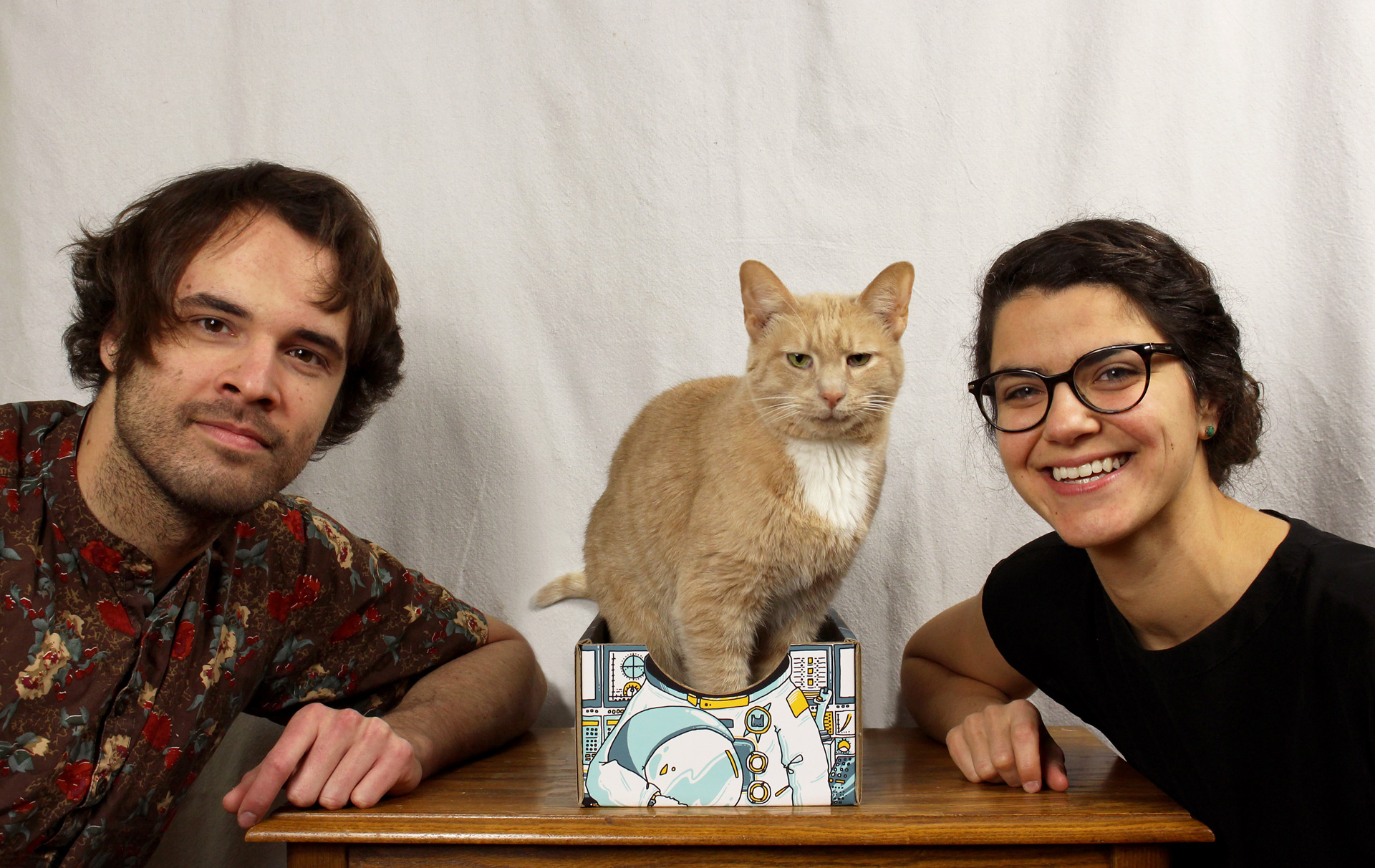
Overseen and undersigned by Jamie Bourgeois (B.F.A., fibers, 2012) and J. Magnus Nelson (B.F.A., sound design, 2015), CATBOX is a cardboard box engineered to fit cats of varying sizes comfortably...and to entertain cat owners too. CATBOX features cut-outs and illustrations that turn your cat into a cosmic seeker, a rock god, or something else entirely.

Incontrovertible CATBOX cuteness is, however, not the whole story. Bourgeois and Nelson are both experienced entrepreneurs with thriving professional careers in art and design.

Nelson, service manager at Gotham Sound and Communications, Inc., builds and maintains equipment for the film industry. He also runs a side business repairing vintage synthesizers, and plays in multiple delightfully demented rock bands in Atlanta. Bourgeois, gallery manager at the esteemed Spalding Nix Fine Art, is proprietor of her own eponymous line of hand-dyed kerchiefs, scarves, patches and prints. These sundry strands come together with CATBOX, as Jamie explains.

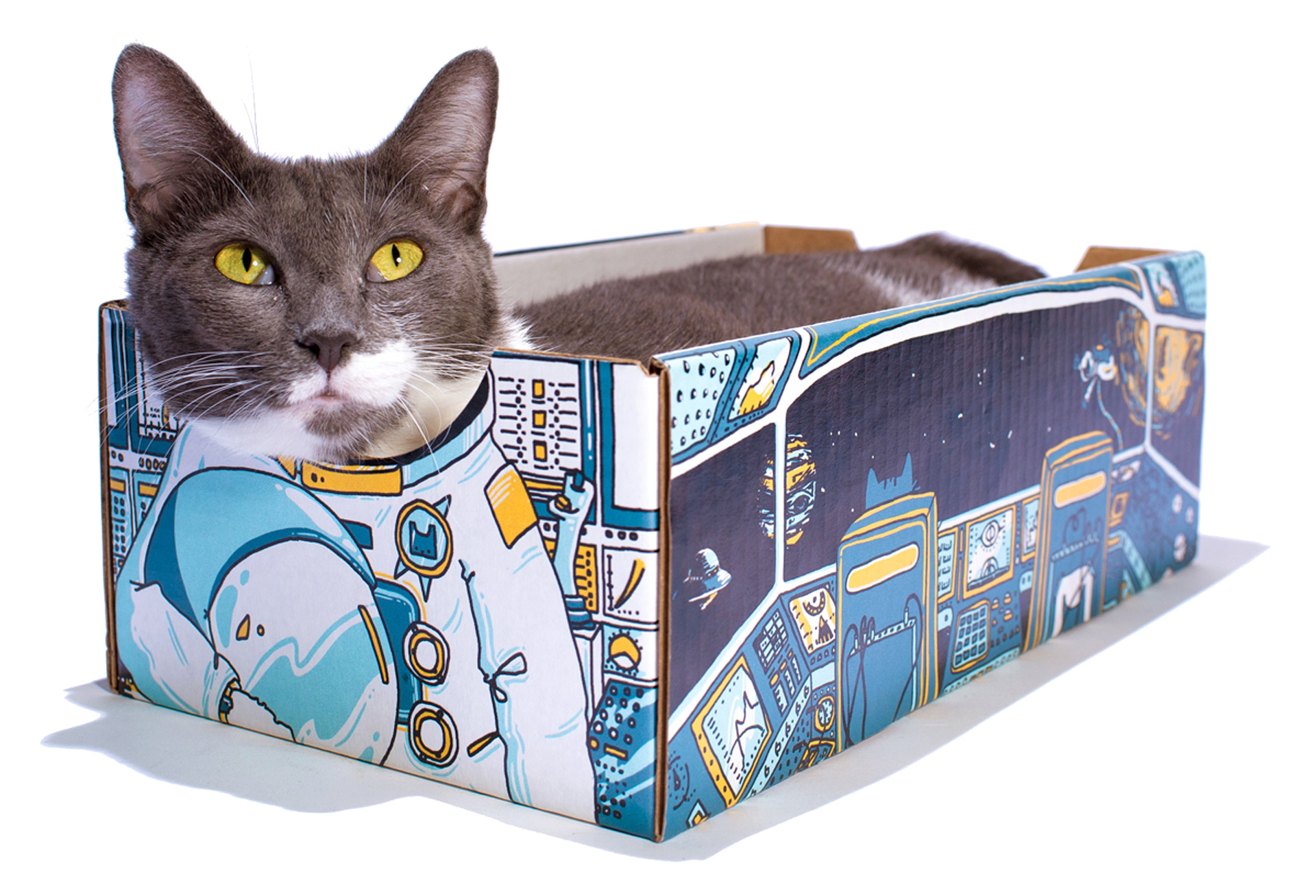
cat laying in illustrated box

Jamie Bourgeois:

I met Magnus when we were both at SCAD. He and my boyfriend played in a band together. One day Magnus came over with a small cardboard box and put it on the floor. Our cat immediately got in. I said, "What is this magic?"

Magnus had the idea for CATBOX. There are actual scientific studies on why cats like boxes. There's a burrowing instinct, and they like being in tight spaces. CATBOX is a rectangular cardboard box, sized to fit cats comfortably. There are cut-outs on each end for face scratching, head resting, and amusement.

Magnus wanted the outside of the box to have a design that made the cat into a character. I created the illustrations. We have a CATBOX with an astronaut design called ASTRObox, and one called ROCKbox where the cat is playing a double-necked guitar or drums, depending on how the box is turned.

All our boxes are composed of 100% recycled corrugated cardboard, printed with vegetable-based inks that are safe for cats, and are constructed and shipped here in Georgia. It's important that CATBOX is sustainable and creates no new waste.

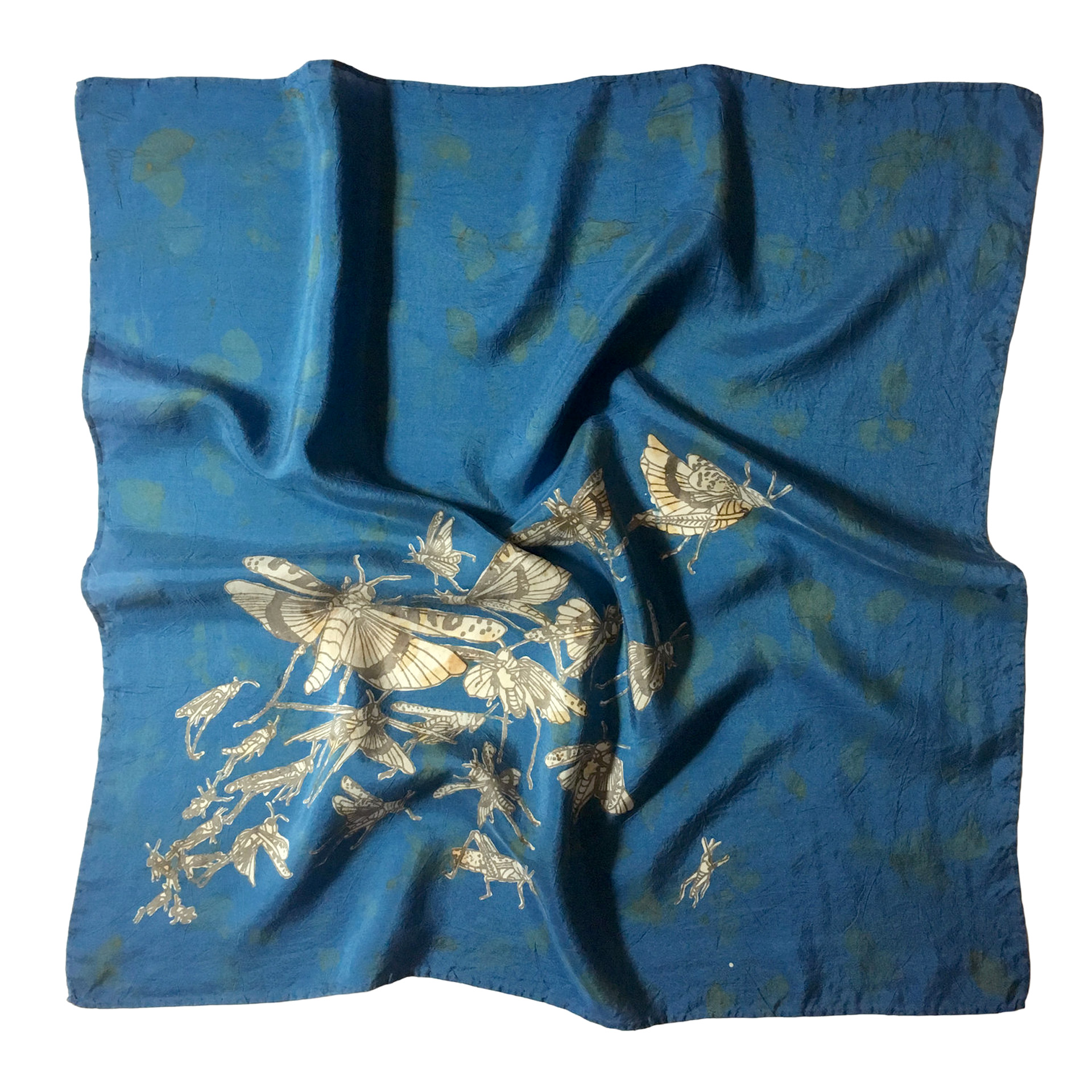
My senior year at SCAD I made scarves printed with an illustration about how humans classify non-human organisms in categories like invasive species and parasites, while excluding ourselves. I used synthetic dyes in the printing process. I realized that if I wanted to continue the work and be pro-environment, I couldn't continue using synthetic dyes. I started growing and harvesting plants like marigolds to create the dyes I use in the eco-bundling process.

screen printed scarf

CATBOX has a lifespan and then you compost or recycle it. It's is not a kitty litter box, it's a box for your cat to hang out in. If you put the CATBOX on a shelf, your cat will like that, because they'll feel secure but they can see everything.

Our research and development team included cats Harrison, Squirrel and Cersi — they've been invaluable getting us to launch. On the human side, both Magnus and I run own our small businesses, so we have that experience already. We hope one day CATBOX will be our full-time job.

Catbox designers Magnus Nelson and Jamie Bourgeois with cat in box

Learn more about CATBOX and contribute to the Kickstarter campaign here.

See more of Jamie's hand-dyed handiwork here.

Listen to Magnus' most excellent band KYLE here.


Sound design on Broadway with Palmer Hefferan

July
23
2018
By
Tags:

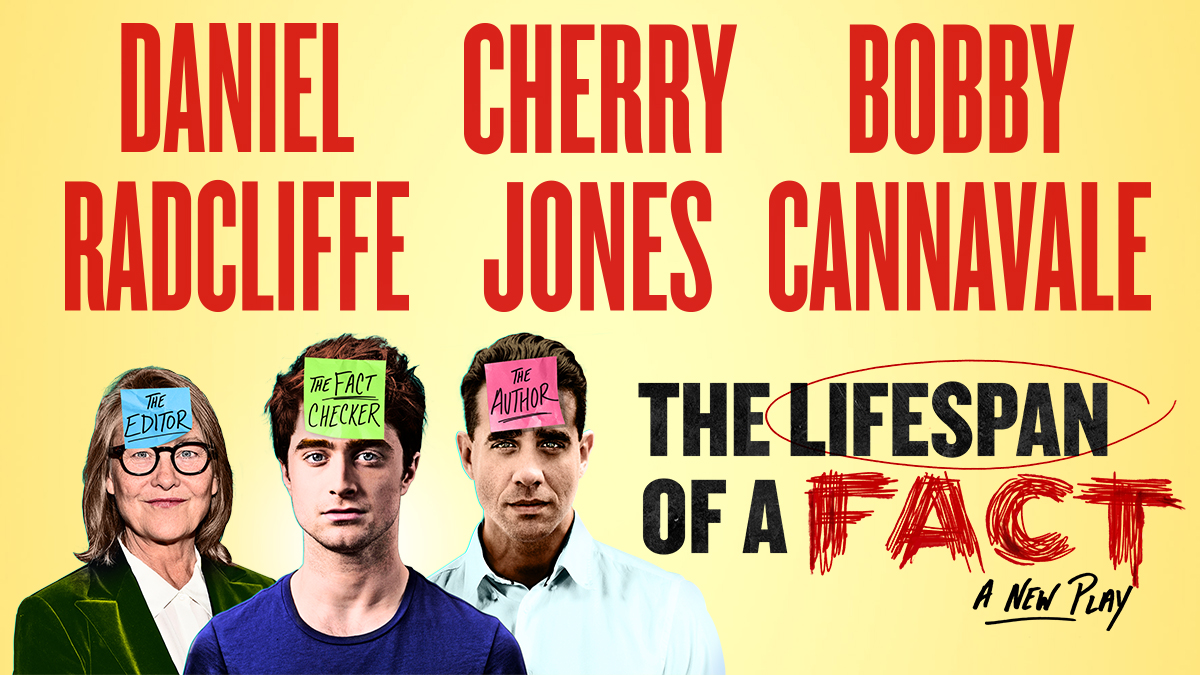
This fall, alumna Palmer Hefferan (B.F.A., sound design, 2007) is making history on Broadway. The composer and sound designer is part of the all-female design team for "The Lifespan of a Fact," a new play about a contentious tête-à-tête between a writer and a fact-checker. Starring Daniel Radcliffe, Bobby Cannavale, and Cherry Jones, the play opens its 16-week limited engagement on September 20.

Assembled by director Leigh Silverman, the design team also features scenic designer Mimi Lien, costume designer Linda Cho, lighting designer Jen Schriever, and projection designer Lucy Mackinnon.

"It's amazing being part of the groundbreaking design team for 'The Lifespan of a Fact'," Hefferan enthuses. "I never imagined that this was going to be my Broadway debut as head sound designer. That the show is at the legendary Studio 54 makes it even more special."

Lest Hefferan's modesty suggest neophyte status, the four-time Helen Hayes nominee's credits prove otherwise. She has worked ceaselessly over the past decade as sound designer and composer on theater productions in Boston, Washington, D.C., San Francisco, Atlanta, and New York. "I've worked in a lot of female-dominated environments in the past couple years," Hefferan says. "It's a trend being led by the theater world, one I'm proud to be part of."

SCAD: How are you approaching "The Lifespan of a Fact"?

PALMER HEFFERAN: The play is about an editor, a writer and fact-checker going through the process of fact-checking a story. There's resistance by the writer to have his work fact-checked. The character development is quick, and that lends itself to comedy.

There are quick blackouts where nothing physically is changing on-stage, but hours have passed. I'm writing original music created to match the rhythm of the play and its tonal shifts.

The first question I ask myself when I start work is: What is the era of this play? What is the setting? With a contemporary score, based in pop music, I use a lot of electronic drums and samples that have pop rhythms. I work in Ableton Live to create and manipulate sounds. If it's a play that needs a string quartet, I'll write a string arrangement in Sibelius that I send to string players I hire individually who record it live before I mix it.

SCAD: Did you come to SCAD intending to study sound design?

PH: My SCAD story begins when I was a 15-year old high school student in Orlando. I was signing up for electives and they put me into television production. That piqued my interest in pursuing that for a career. Also, my family started coming up to Savannah since it's not too far from Orlando.

When I was a high school junior my mom booked a SCAD tour for us. One of the amazing things about SCAD and Savannah is the beauty of the city and how SCAD is nestled in there. SCAD knocked it out of the park with the tour! I really got a full idea of the SCAD experience.

My freshman year at SCAD I took an intro to sound design class with a professor named Lauren Weinger, a sound artist who'd created a piece called "Silo" recorded in a grain silo. She complimented me on my work and invited me to take a master sound design class. It was significant to identify with her as a female artist, and receive that encouragement.

Studying sound design at SCAD, my mind was expanded and my listening habits transformed. I took a class in experimental sound design taught by Dr. Andre Ruschkowski where we learned about John Cage and created our own musique concrète pieces. It felt divergent in a positive way. It's important to know professional techniques, but what's your perspective? SCAD taught me both of those things. It's still a big part of who I am.

Experience sound samples of Palmer Hefferan's work here.

Lifespan of a fact advertising

Come hear Hefferan on Broadway this fall in "The Lifespan of a Fact"!


On stage and sound with Stephen LeGrand

June
14
2018
By
Tags:

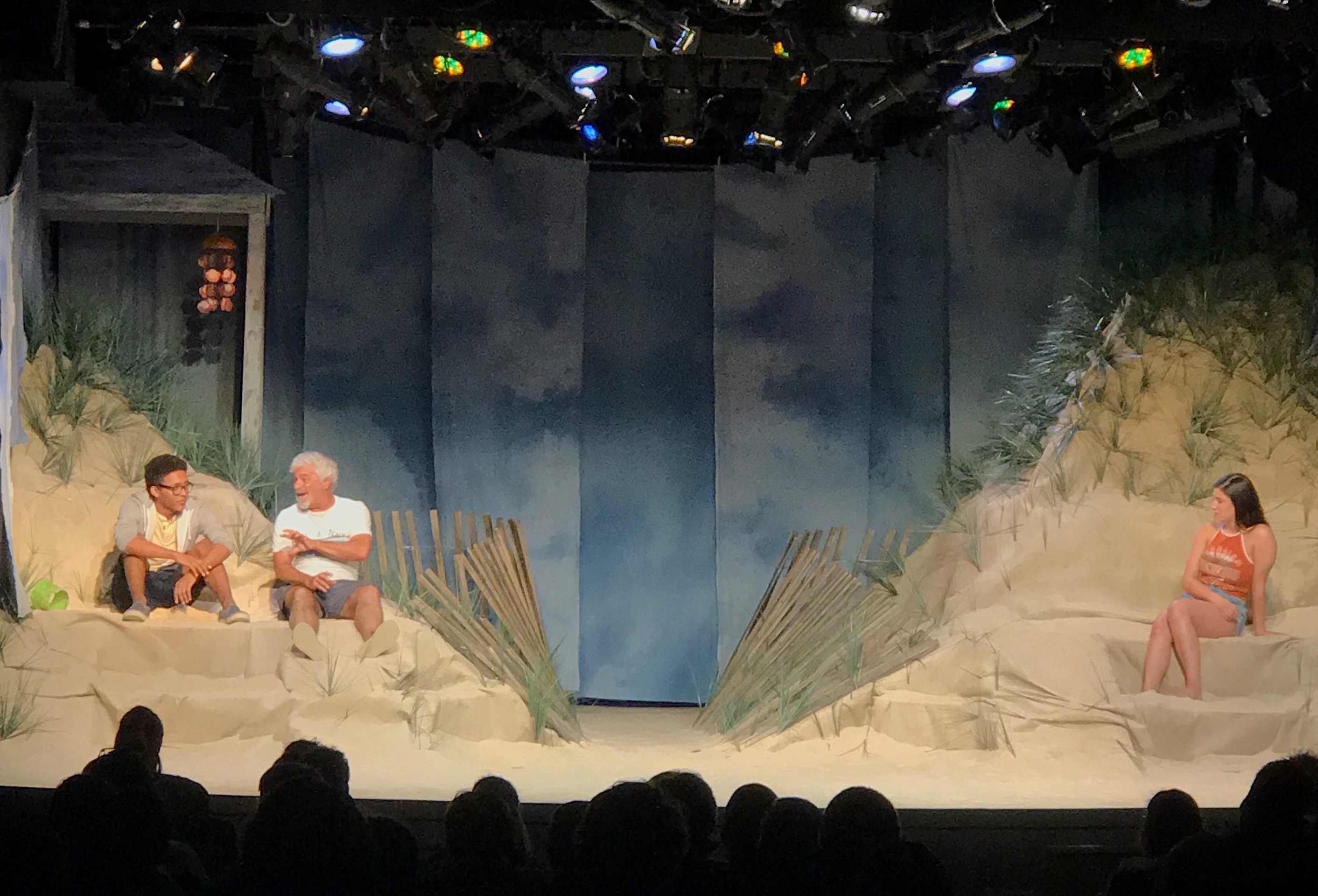
Professor Stephen Michael LeGrand is wearing an aloha shirt and strappy sandals when the wave hits. He's not at Tybee Island, but on stage at the Mondanaro Theater, as grizzled, goofy widower George in the SCAD school of entertainment arts production of Gregory S. Moss' play "Indian Summer." Trained as an actor, LeGrand spent decades working as a composer and sound designer, only to return to his thespian roots in the recent production directed by theater arts professor John Prosky.

As a SCAD sound design professor, LeGrand exemplifies the diverse professional experiences of SCAD faculty. Formerly the resident sound designer at American Conservatory Theater in San Francisco ("I worked over 110 productions, from Shakespeare to Sam Shepard"), he arrived at SCAD as a graduate student in 2008 when his spouse Sharon Ott was hired as a SCAD performing arts professor.

"Getting my SCAD degree was very important," LeGrand says. "Understanding the teaching styles of professors was highly instructive, as was understanding the culture of SCAD. Professor Robin Beauchamp really mentored me in how to be a professor of sound design." After earning his degree, LeGrand (M.F.A., sound design, 2009) began teaching at SCAD full-time.

Theater-goers look on at a beach set designphoto: Savanna Macri


SCAD: Your performance in "Indian Summer" was fantastic, with a rip current of pathos at the end. How long had it been since you appeared on-stage?

Stephen Michael LeGrand: I last acted on-stage 33 years ago, in a production of Sam Shepard's "The Tooth of Crime" — I played the space monkey. With "Indian Summer," our performing arts chair Mark Tymchyshyn suggested I meet with John Prosky, who asked me to be in the play. John told me, "Try and make every moment a discovery moment. If the audience sees you discover something, they're right there with you." That simple instruction was really helpful.

What I love about the theater is the process. You're developing something together with a family of people and you push through from that first table reading all the way to tech rehearsals and previews and then…opening! Backstage, you hear the audience buzz and you feel that juice. I was fortunate to be part of a cast with incredibly talented SCAD students who are able to find something new about every moment.

SCAD: What compelled you to remain at SCAD to teach after earning your degree here?

SML: SCAD has the preeminent sound design program in the country. Most university sound design programs are tucked into production design for live theater. At SCAD, sound design is its own specific degree program. The SCAD sound design department prepares our students to excel at a lot of different jobs. They're able to say yes to as many opportunities as possible in the world of sound design.

Also, SCAD emphasizes collaboration, and sound design is a collaborative art form. One of my graduate students Ana Marín (M.F.A., sound design, 2018) installed "Two Pieces," the recent Janet Cardiff and George Bures Miller exhibition at SCAD Museum of Art. For her thesis project, Ana collaborated with jewelry and industrial design student Maria Posada, designing wearable pieces that have sound elements to them. Phenomenal work, accomplished through collaboration.

SCAD: What's a sound design class you teach based around creative problem-solving?

SML: One example is "Foley Production Techniques" (SNDS 322). There's something called a Foley recipe where different objects make different sounds. For example, if you put a sharpened lead pencil between the keys of an old computer keyboard and turn it slowly, it makes the sound of a guy hanging on at the end of a creaking rope. The first assignment I give Foley students is to pick onomatopoetic words out of a hat, then find two objects that will create that sound, and then those objects go into our Foley closet. We work hard and have a lot of fun.

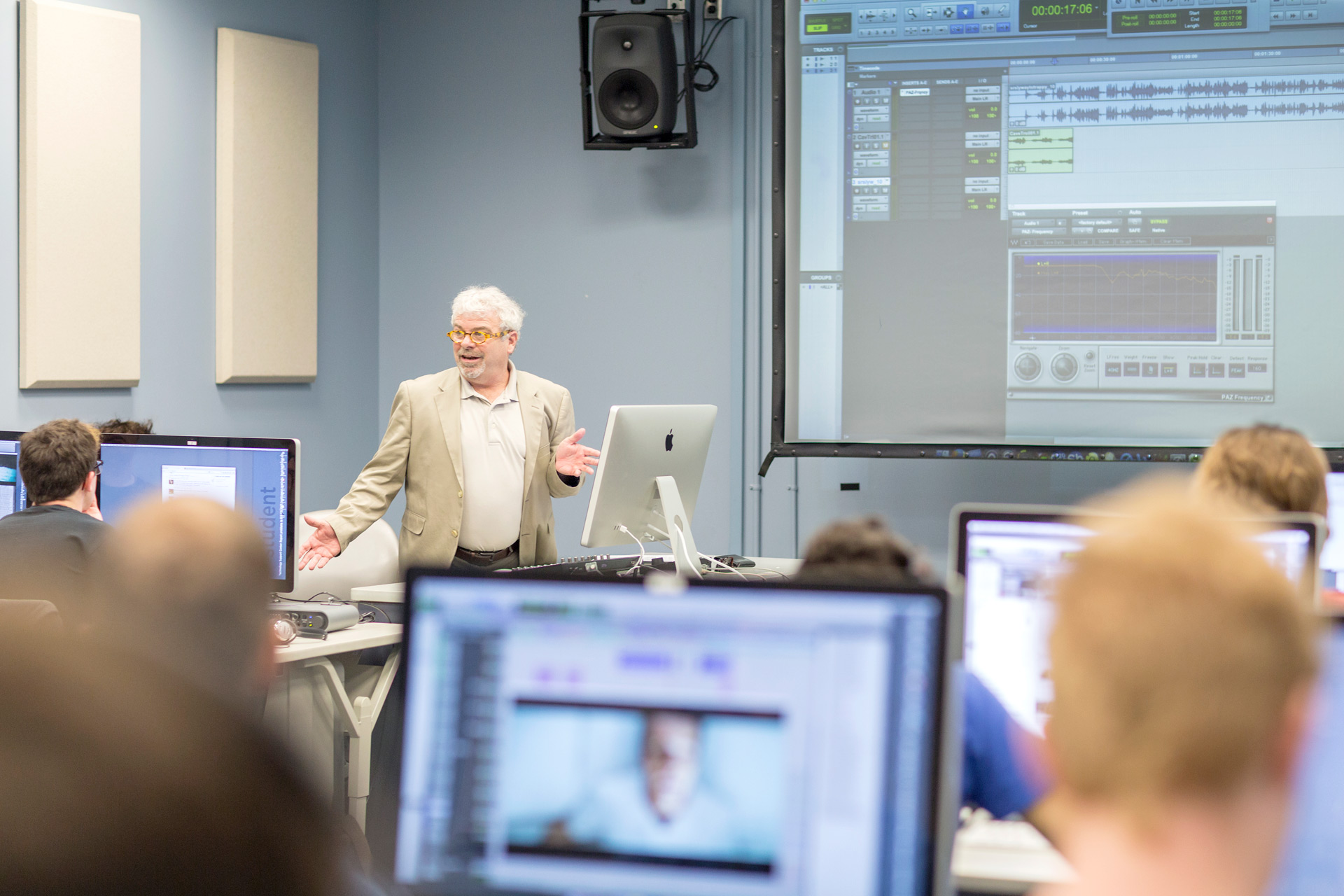
LeGrand lectures in the front of a computer lab

'Future Puppet News': felt so good

April
16
2018
By
Tags:

What happens when nine SCAD alumni work together on a project? Meet "Future Puppet News," a new series premiering this week on YouTube. Here to tell us more is the show's creator and director Jacob Menache (B.F.A., film and television, 2011).

SCAD: What is "Future Puppet News" and where and when does it premiere?

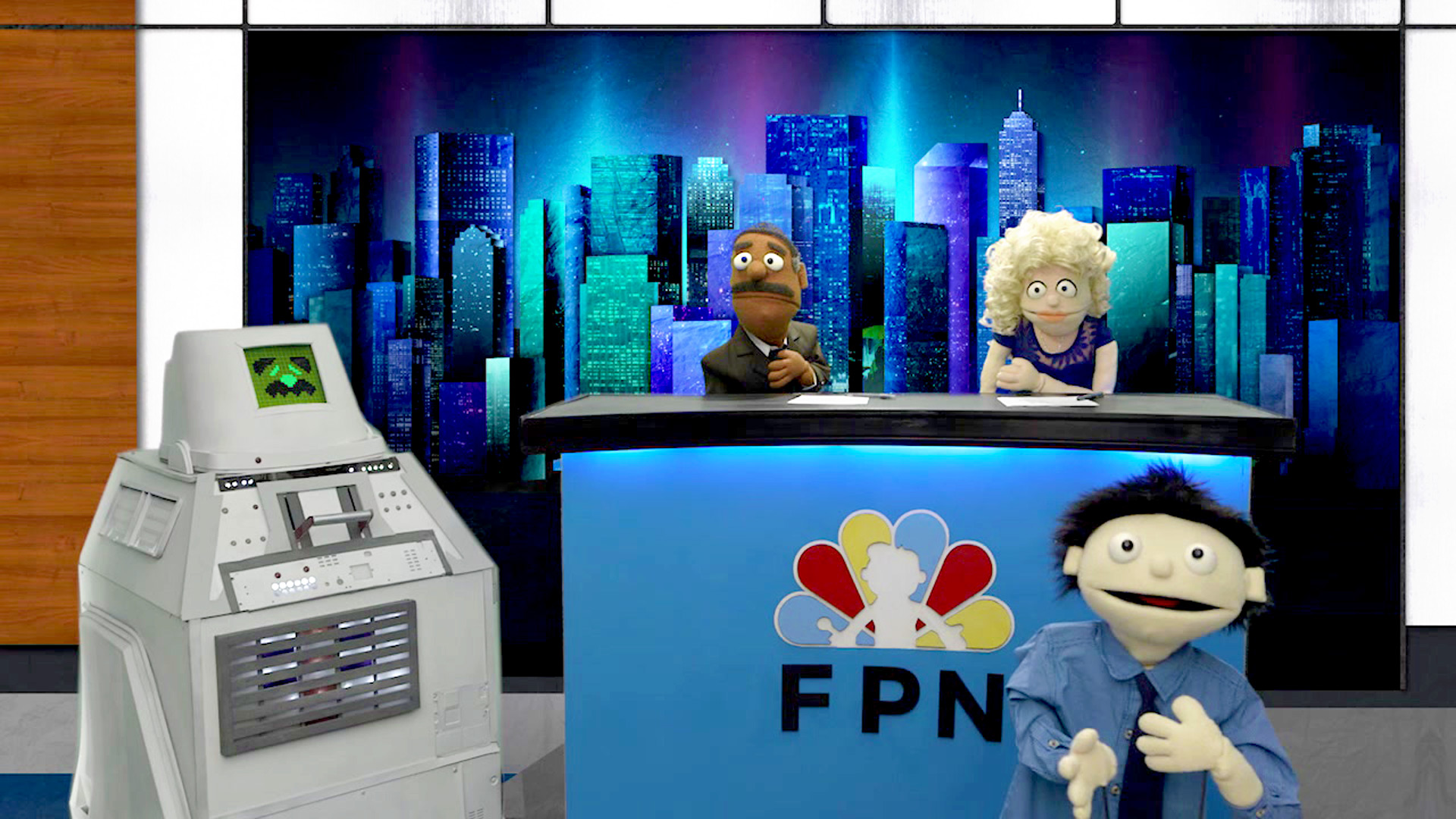
JACOB MENACHE: "Future Puppet News" is an educational kids show that follows a puppet news team and their time machine in the year 3000. Each week, events in the studio send our news team back to a different jam-packed point in history. The show debuts on April 19th, and you can see it on the SoulPancake YouTube channel. 


Three puppets on a news set

SCAD: What is SoulPancake?

MENACHE: SoulPancake is a digital media company and the brainchild of actor Rainn Wilson, who you no doubt remember from "The Office." Maybe you're familiar with Kid President? That was a SoulPancake production. I started working at SoulPancake after graduating SCAD. They had an open call for pitches and I presented a loose concept for "Future Puppet News." I shot a test that involved one of our characters taking a glorious trip on a majestic air vessel. Little did that character know, he was on the final flight of the Hindenburg. The SoulPancake team loved it and "Future Puppet News" was born.

SCAD: How did your SCAD experience prepare you for your professional career?

MENACHE: Being in the film program at SCAD allowed me to take control of my learning experience. If you want to learn about different positions and be on set as much as possible, SCAD facilitates those experiences. Every time I was on a SCAD student set I honed as many different skills as I could, which allowed me to communicate across departments to more effectively and easily convey my vision. More than anything, SCAD introduced me to the people who eventually helped me make the show a reality.


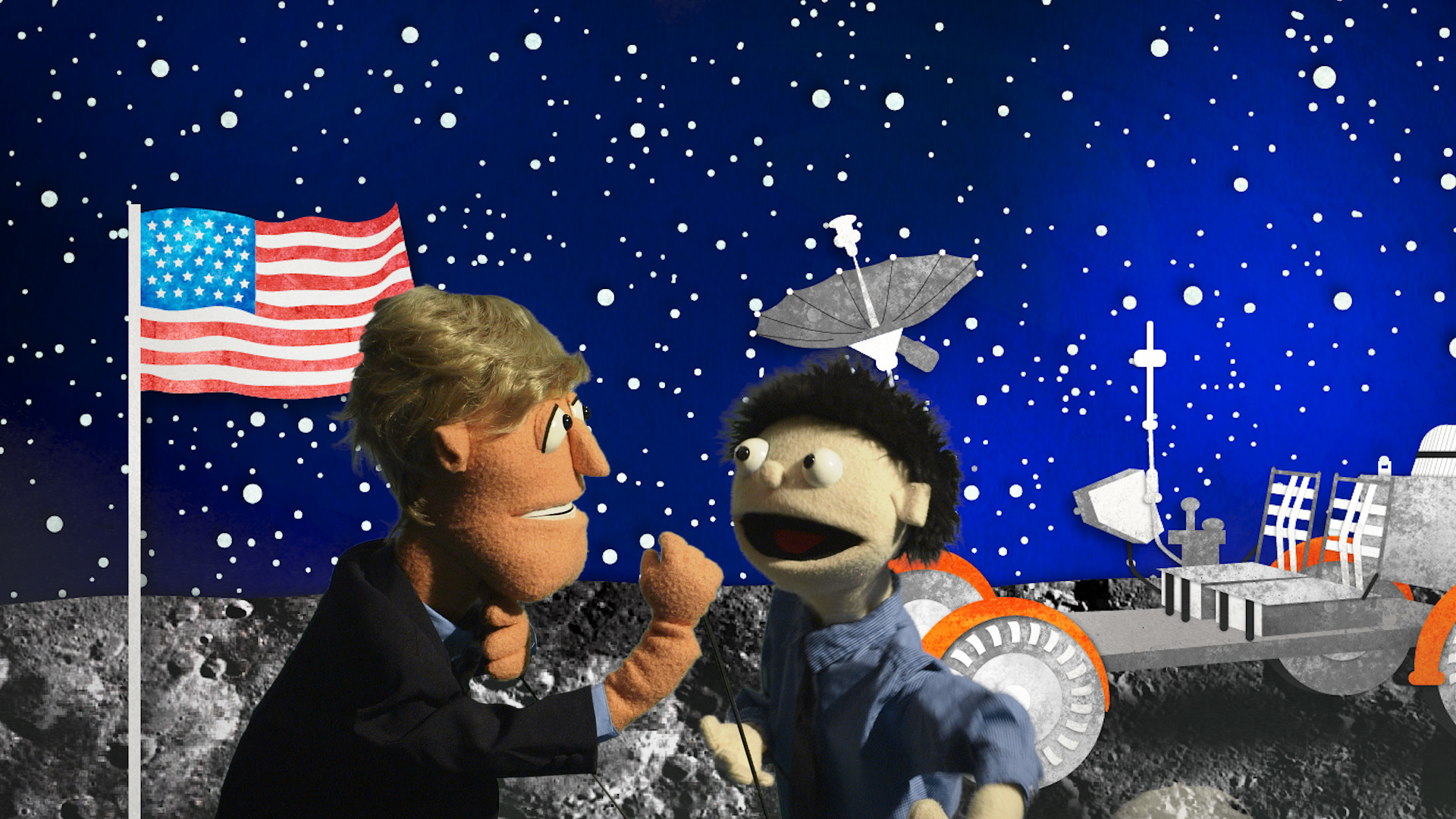
Two puppets talk with a scene of the moon landing behind themSCAD: How do you balance writing humor that appeals to such a wide age-range while still being educational?
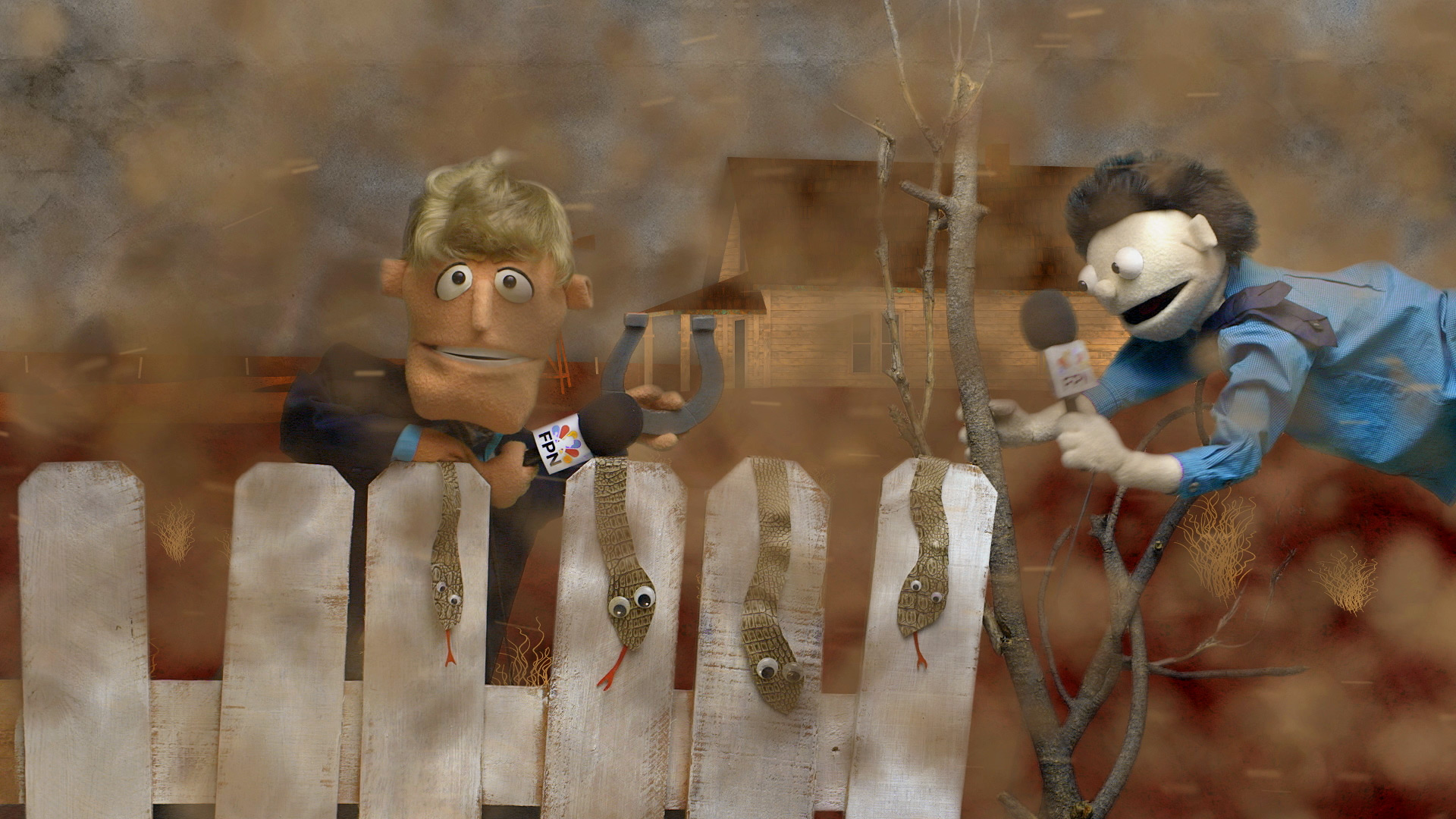


MENACHE: The humor was the easy part. We didn't want to talk down to kids, so we ended up writing what made us laugh. The hardest part was condensing big historical moments, often spanning years, into bite-sized pieces all ages could understand. In this first season we wanted to choose events like the Space Race, the Gold Rush, and the Dust Bowl that are well-known, but still contain some juicy mysteries. Some subjects were more difficult to tackle, but we had fun and sprinkled in some zany topics like "Nine Cats Who Changed History" and the story of who invented pants. In the end I wanted to create a show kids and parents could enjoy, learn from, and laugh at together.

Two puppets covering a storm, snakes appear on a fence in the foreground

SCAD: How many SCAD alumni were involved in "Future Puppet News"?


MENACHE: In total, there were nine SCAD alumni on set, in various roles:


Jacob Menache (me!), director/creator
Max Golden (B.F.A., film and television, 2011), writer/co-creator
Cody Ziglar (M.F.A., film and television), puppeteer/actor
Katelan Cunningham (B.F.A., writing, 2011), art department

Dave Cole (B.F.A., film and television, 2011), assistant direction

Adeshola Adigun (B.F.A., writing, 2013), script supervisor

Xiao Hou (M.F.A., sound design, 2015), sound design

Cindy Takehara (M.F.A., sound design, 2015), sound design

Corey Hayward (B.F.A., sound design, 2012), composer


Without SCAD alumni this project wouldn't exist. I did not set out to hire so many of my fellow former SCAD students for these jobs, but when it came down to who was best qualified it was clearly SCAD alumni.