Skip to main content Accessibility Policy

Karen Wilkin: talking Frankenthaler

February
13
2021
By
Tags:

"I can still see the carpet," Karen Wilkin says, remembering the moment she and Helen Frankenthaler stepped into Exhibit A.

In the spring of 1998, Frankenthaler (b. 1929, New York; d. 2011, Darien CT) came to Savannah for an exhibition of her work at a gallery on Bull Street called Exhibit A. At the time, SCAD was a significantly smaller institution than it is today; Exhibit A was SCAD's primary exhibition space (SCAD MOA did not open its doors until 2002). Frankenthaler: The Darker Palette, curated by Wilkin, ran through June 1998, before traveling to the Corcoran Gallery of Art and to Princeton University Art Museum. It marks the point of origin in the relationship between SCAD and one of the greatest modern artists in American history.

"Helen was the one that proposed The Darker Palette because she was so eager to have this side of her work acknowledged," says Wilkin, reflecting two-plus decades after the fact. "SCAD was certainly ambitious and could pay for an exhibition of this content, that is to say, do it properly in terms of security and air quality in the gallery. The work was not all recent, the work was from different times and was chosen because of its visual qualities. What we dealt with in that exhibition is something that's still very much an issue in Frankenthaler studies — her accurate insistence that she had a much wider range than she was often given credit for."
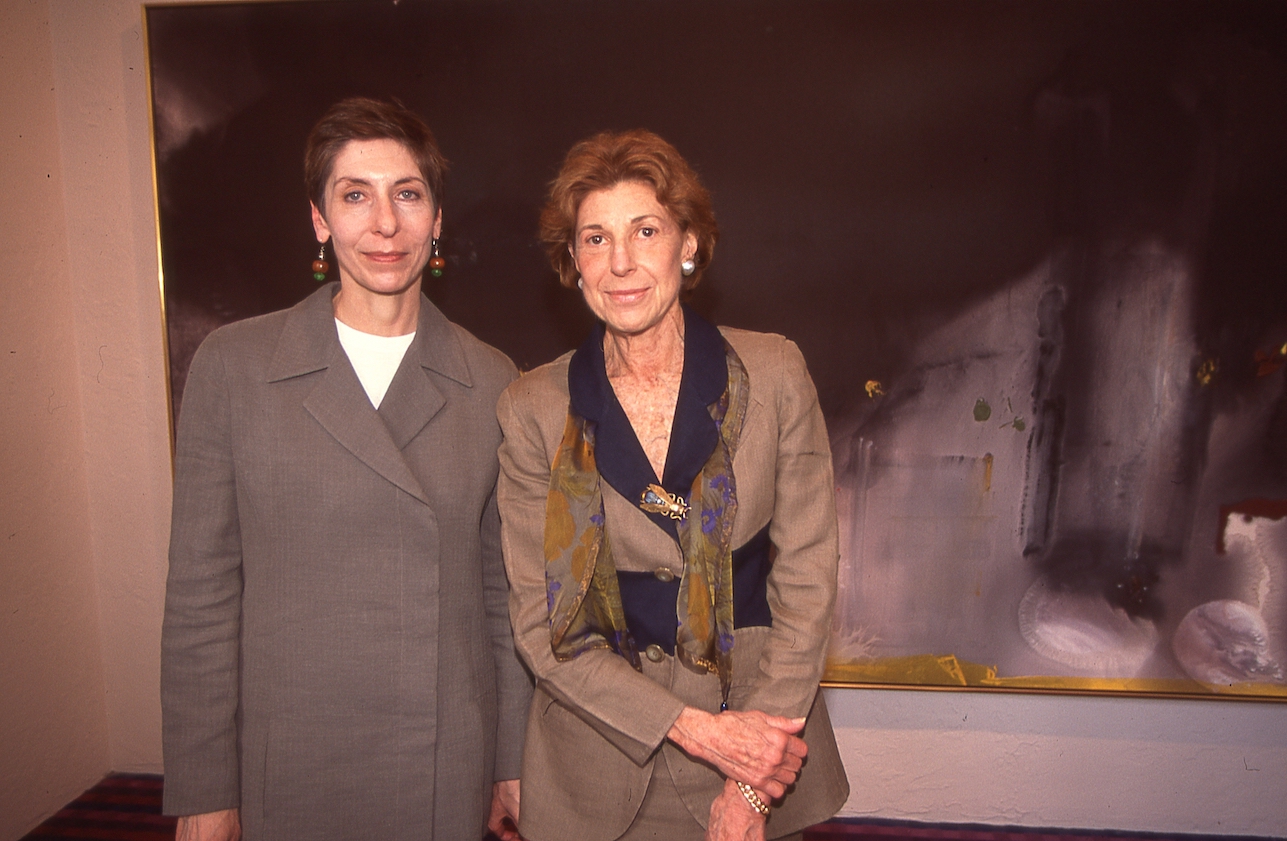
Karen Wilkin (left) with Helen Frankenthaler at SCAD, Savannah, GA, 1998.

Karen Wilkin (left) with Helen Frankenthaler at SCAD, Savannah, GA, 1998.


As critic, curator, and confidant, Wilkin has done some of the very best writing about Frankenthaler, including "Appreciation" (American Art, Fall 2012); Frankenthaler at Eighty: Six Decades (Knoedler & Company, 2008); and the superlative catalog essay for The Darker Palette. "She's been written about so much because she is such an important and prolific artist," Wilkin says. "Of course, the work is so subtle and so utterly dependent on direct firsthand encounters with things that are completely wordless. What you really want to do is shut up and point!"

This year, SCAD MOA opened the new exhibition Deliberate Risks: Prints by Helen Frankenthaler. It features a rotating selection of ten prints and four proofs from the 1960s through the early 2000s, gifted to SCAD by the Helen Frankenthaler Foundation. The works include the dazzling woodcut "Geisha" (edition 4 of 14, 38 x 26", 2003) and the writhing lithograph "Bronze Smoke" (edition 31 of 38, 31 1/2 x 22 1/2", 1978).
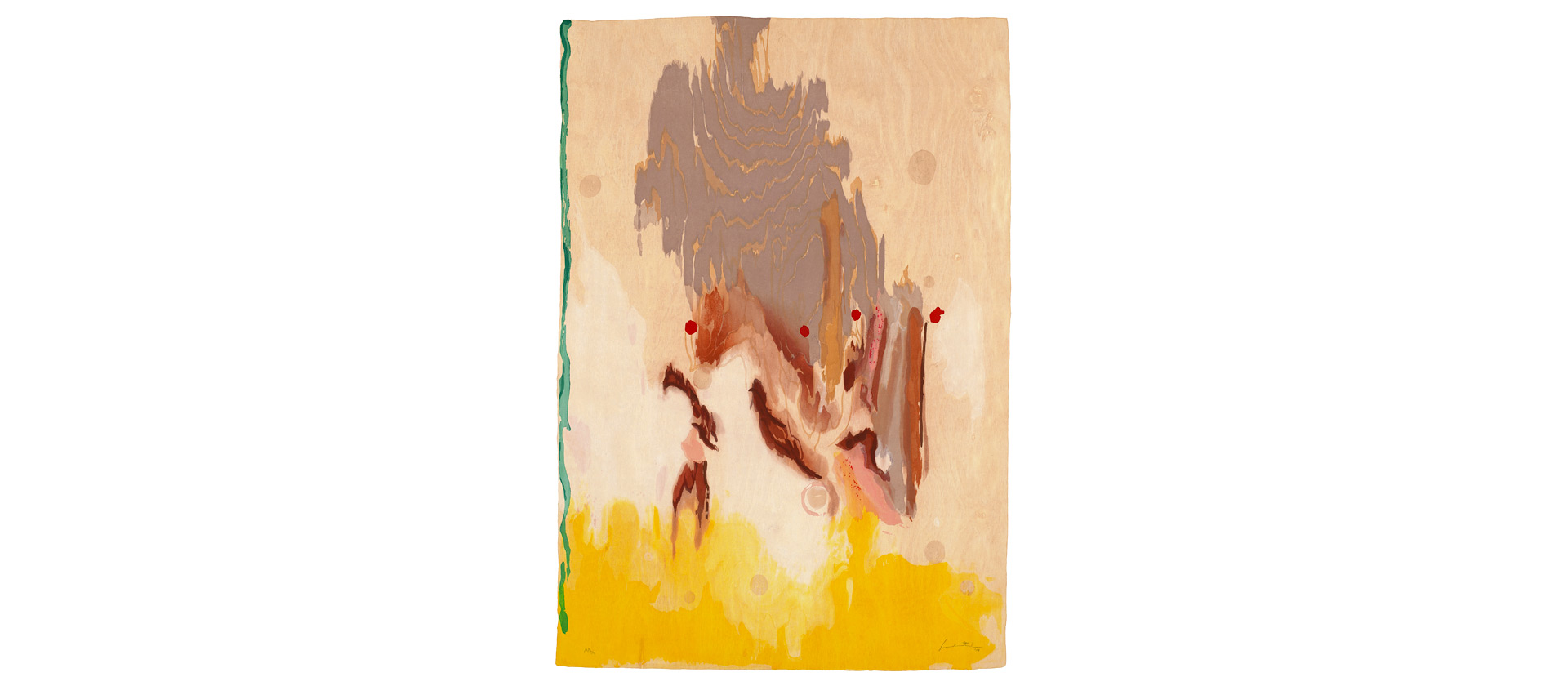
Helen Frankenthaler, "Geisha," woodcut, edition 4 of 14, 38" x 26", 2003. Abstract art.

Helen Frankenthaler, "Geisha," woodcut, edition 4 of 14, 38" x 26", 2003. © 2020 Helen Frankenthaler Foundation/Artists Rights Society (ARS), New York/Pace Editions, New York.


Neither The Darker Palette nor Deliberate Risks represent Frankenthaler's heavily canonized period, which is to say the paintings she produced in her 20s, including 1952's epochal "Mountains and Sea." Rather, the exhibitions incorporate exceptional works from her unstintingly productive subsequent decades. Wilkin is a rightful proponent of Frankenthaler's sculpture, works on paper, and prints.

"I'm very glad SCAD has these prints, and that students will get to see them," she says.

An hour speaking with Wilkin in 2021 means a peerless experience in art historical insights, as well stories about hanging out with Helen and getting deli sandwiches from Three Guys on the Upper East Side. Zooming from her office, its green plants outnumbered only by art books, Wilkin is friendly and direct, an undimmed glint in her eye, qualities all recognizable from photos taken together with Frankenthaler in Savannah in 1998. And so, about that carpet:

"We came down and the show was already installed. And we walked in there and the gallery had a carpet that had every color known to man in it in a geometric pattern and I thought we were both going to pass out. It was a real tribute to her work that it still stood up."
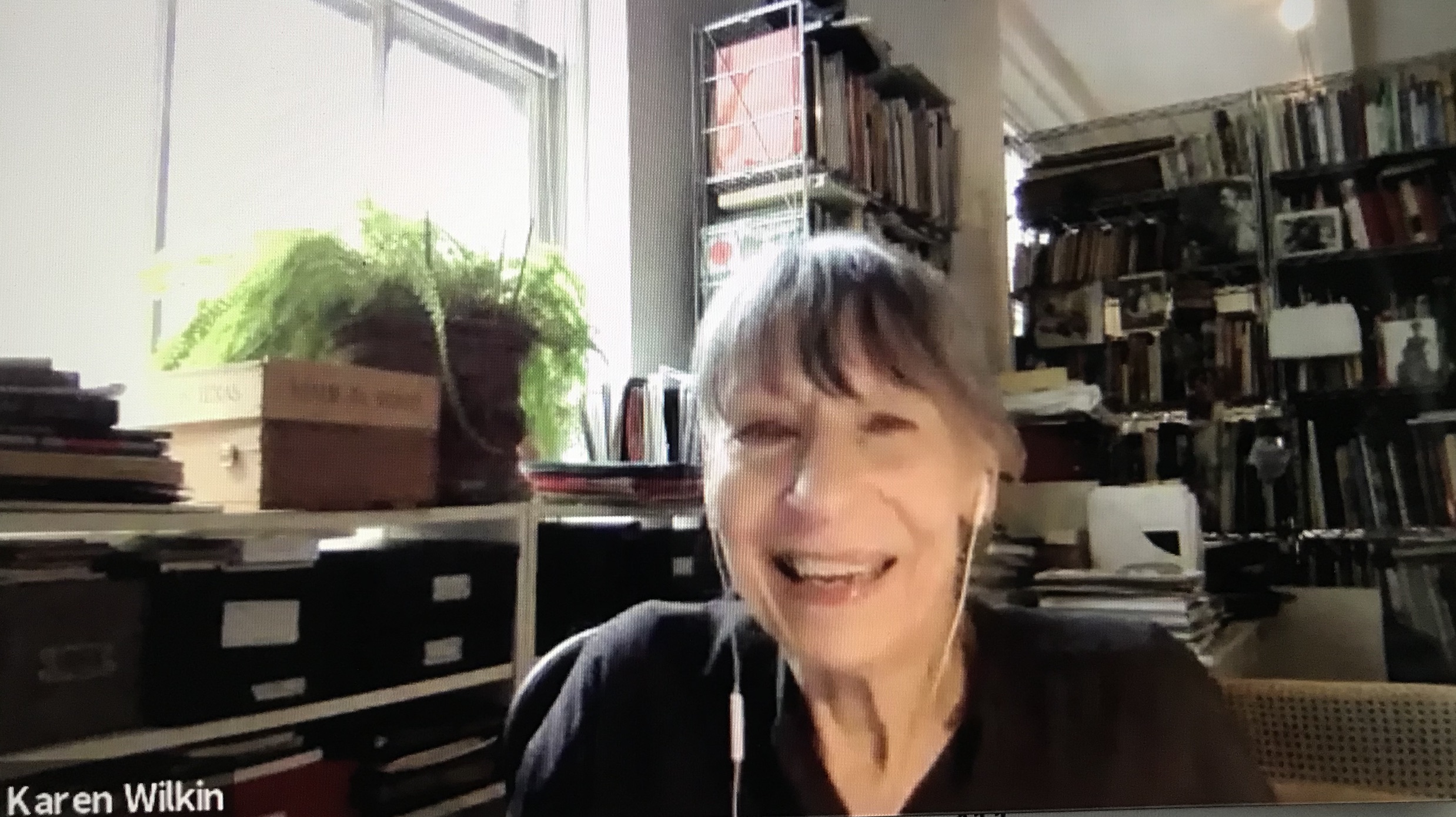
Karen Wilkin on a video call

Special thanks to SCAD community manager Rachel McDermott, who co-conducted the new interview with Ms. Wilkin that informs this article, and to SCAD Special Collections librarian Sauda Mitchell, who provided access to the Frankenthaler assets held at Jen Library.
SCADpro Fund backs Angela Benton's Streamlytics

February
4
2021
By
Tags:

Angela Benton is no start-up neophyte. Her previous ventures BlackWeb2.0 and NewME garnered hosannahs from CNN, Business Insider, and Marie Claire. She enlivened Fast Company's Most Influential Women in Technology and Goldman Sachs' 100 Most Intriguing Entrepreneurs lists. She made mind-meld business mates with influential actor Issa Rae.

Now, with her third company, Streamlytics, Benton (M.F.A., graphic design, 2007) is making an even bigger splash – this time with investment backing from SCADpro Fund.

"A lot of startups come across as versions of pre-existing services, while Streamlytics is something new," says Ray Crowell, SCADpro Fund managing director. "Making the decision to invest in Streamlytics also means committing to a more equitable internet, where users benefit from the sale of their personal data."

"Streamlytics enables users to get paid for their data," Benton explains. "We buy your data from you, clean it, enhance it, and then it gets sold to companies who can leverage it."

As more users get wise to being used by Big Tech, Streamlytics makes clear that personal data has value, and users should get paid accordingly.

"Data drives society," Benton says, "no ifs ands or buts. The problem is that our data is often exploited and our privacy violated. We see that with targeted ads and targeted misinformation that drives real-world consequences."

One benefit of her SCAD master's degree, explains Benton, "is that I'm able to conceptualize and manifest my ideas. I'm doing the design work to bring an idea to life. A lot of founders are reliant on other resources. I've been able to harness the creative education I received at SCAD to be successful in business."

That success is one of the reasons Benton was invited to Savannah in 2019 for StartUp, the annual week-long design sprint hosted by SCADFLUX and SCADpro. In a geographic twist, that was the first time Benton, a graduate of SCAD eLearning, visited the city of Savannah in person.

"Josh Lind [executive director, SCADpro] found me on LinkedIn and invited me to StartUp," Benton remembers. "I was so impressed by the students I met. We talked about their creative process, how to pitch and position your company, and how to raise funding. I was evaluating students' business plans and giving feedback, suggesting they use a certain methodology."

At StartUp, Benton and Crowell served as judges together. "Seeing Angela work with our students gave me significant insight into the type of founder and leader she is," recalls Crowell. "Having her among the portfolio of founders is an honor and significant benefit for our next generation of creative leaders in business."

As Streamlytics CEO, Benton believes SCADpro Fund may represent a new model of how institutions of higher education can promote alumni business development. "It's common for university endowments to invest in VC funds in the tech space, but what feels innovative about SCADpro Fund is that SCAD is investing directly in the alumni founders they believe in."

SCADpro Fund also functions as a creative consultancy for alumni entrepreneurs. "The education aspect of SCADpro Fund is compelling," Benton says. "I've been working with Ray on how to use creative methodology to set Streamlytics corporate strategy." The fact that SCADpro Fund is not a hands-off investment, but an engaged, ethical partner may prove to be a key to Streamlytics' success.

It's time! aTVfest 2021

February
3
2021
By
Tags:

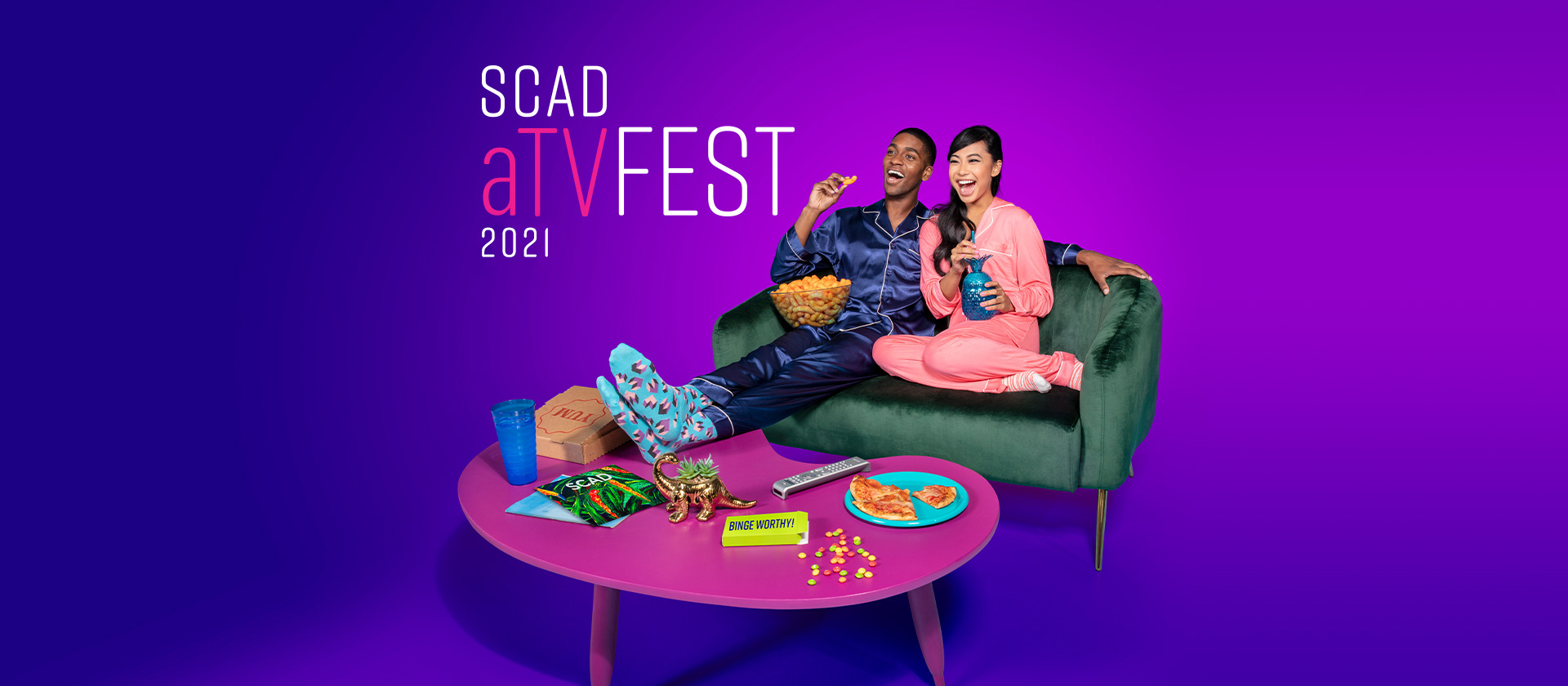
Tune in, turn on, power up: It’s time for aTVfest! Now in its ninth year, the university's annual signature event celebrating all things television and streaming will be a virtual experience taking place this Thursday, Friday, and Saturday, Feb. 4-6, 2021.

"SCAD aTVfest 2021 — our inaugural virtual edition, streaming worldwide — marks another SCAD first," said SCAD President Paula Wallace. "This dramatic digital debut extends the festival's preeminent reputation, built over the past eight years, to a global audience. SCAD aTVfest showcases the finest content, freshest experiences, and most fabulous stars in dozens of screenings, masterclasses, and panels with industry insiders — Cynthia Erivo, Chrissy Metz, Bryan Cranston, and more. Exclusive. Live. Commercial-free. Enjoy!"

"We can all agree that this past year has presented us with many challenges, but television has continued to provide us steady comfort to get us through each day," said Christina Routhier, aTVfest executive director. "I have seen so many outstanding programs and performances over the last year, and we are beyond excited to feature some of the best at this year's SCAD aTVfest. This is the perfect opportunity to celebrate these amazing shows and talented industry professionals. We sincerely thank our network and streaming partners for their continued support in helping us to showcase the best in the industry for our SCAD students and audience."

Bryan Cranston (Your Honor) will receive the Icon Award, Cynthia Erivo (Genius: Aretha) will receive the Spotlight Award, Javicia Leslie (Batwoman) will receive the Rising Star Award, Chrissy Metz (This Is Us) will receive the Vanguard Award, Jurnee Smollett (Lovecraft Country) will receive the Distinguished Performance Award, Kenan Thompson (Kenan) will receive the Virtuoso Award, and the cast of Good Girls (Christina Hendricks, Retta, and Mae Whitman) will receive the Maverick Cast Award. Honorees are scheduled to attend virtual screenings and participate in conversations regarding their performances and careers.

The SCAD aTVfest panel series also welcomes industry experts from a myriad of professions to engage in meaningful conversations about their work. Entertainment Weekly (EW) returns for the fourth year as media partner to create exclusive interview content and curate the Women Who Kick Ass Panel.Entertainment Weekly (EW) returns for the fourth year as Official Media Partner, SCAD aTVfest, and as hosts of the Women Who Kicks Ass panel.

Notable guests and shows virtually attending this year's festival include:

A Million Little Things (ABC); Batwoman (The CW); Delilah (OWN); Everything's Gonna Be Okay (Freeform); For All Mankind (Apple TV+); The Goldbergs (ABC); Good Girls (NBC); Good Trouble (Freeform); It's a Sin (HBO Max); Kenan (NBC); Lovecraft Country (HBO); Nancy Drew (The CW); Queen Sugar (OWN); Superstore (NBC); Tell Me Your Secrets (Amazon Prime Video); The Unicorn (CBS); This Is Us (NBC); Woke (Hulu); Your Honor (SHOWTIME).

This year's panels with industry experts include:

"-Ish" Happens: A Conversation with the Stars of the "-ish" Universe; The Making of Murder on Middle Beach, featuring SCAD alumni and filmmakers Madison Hamburg and Solomon Petchenik; Screen Style: Netflix's Ratched and The Queen's Gambit; Moving Pictures: Adapting Invincible for Animation; Creating Outer Space: Building Worlds with VFX Studio Crafty Apes; Raise the Roof with HGTV House Party; Producing ABC Unscripted Series During a Pandemic; In Conversation; Inside the Writers' Room; Meet the Executives; and SCAD Alumni Voices, an exclusive panel featuring university graduates working in television and digital media.

promo image for scad atvfest

Explore the festival lineup and sign up to attend at atvfest.com.


Nathaniel Adair's 'Balancing Act'

February
1
2021
By
Tags:

"I take a complicated thought, refine it, then I refine it again," says Nathaniel Adair (B.F.A., sculpture). "I repeat that process until I reach the very essence of the idea."

Nathaniel is a sculptor. A storyteller. A new disciple of 3D printing. He uses acrylic, wood, iron, and paint to share his perspective with the world and is combining traditional techniques with cutting edge technologies. A student at SCAD Atlanta, he creates inside SCAD Studio, the 16,700-square-foot industrial design and sculpture facility in Midtown Atlanta, considered one of the finest in the Southeast U.S.

In his own words, Nathaniel is committed to "exploring new ways to tell stories through the physical form." He is a soft-spoken nature lover, and highly regarded by his professors and peers.

Nathaniel Adair:

I wanted to pursue art from a young age. I attended Osceola County School for the Arts in Kissimmee, Florida, and have always been drawn to sculpture. I feel as though sculpture is a literal extension of me. It's physical. It's tangible. It takes up space. Where it is, I am too. It tells my story.

This year, I have focused on pushing myself to try new things and really showcase the skills and techniques I've learned at SCAD. Professor Chris Rothermel has helped me focus on getting to the emotional core of my pieces. Our conversations have challenged me to strip away nonessential components. The result is the essence of the piece itself.

I worked on several pieces this past year that showcase my artistic journey. The pieces tell the story of 2020 and the world as I am experiencing it today. They reflect highs and lows and my artistic progression.

I had never worked with 3D printers or laser cutting machines before coming to SCAD. SCAD has allowed me to explore not only my desire to create, it has also given me the opportunity to collaborate with other incredible artists. I got to be a part of a SCADpro project where I worked alongside industrial design students to create bronze coins. I was able to show my fellow students the traditional green sand approach to bronze work, and they showed me how to 3D model. It gave me access to a whole new set of skills I didn't have before.

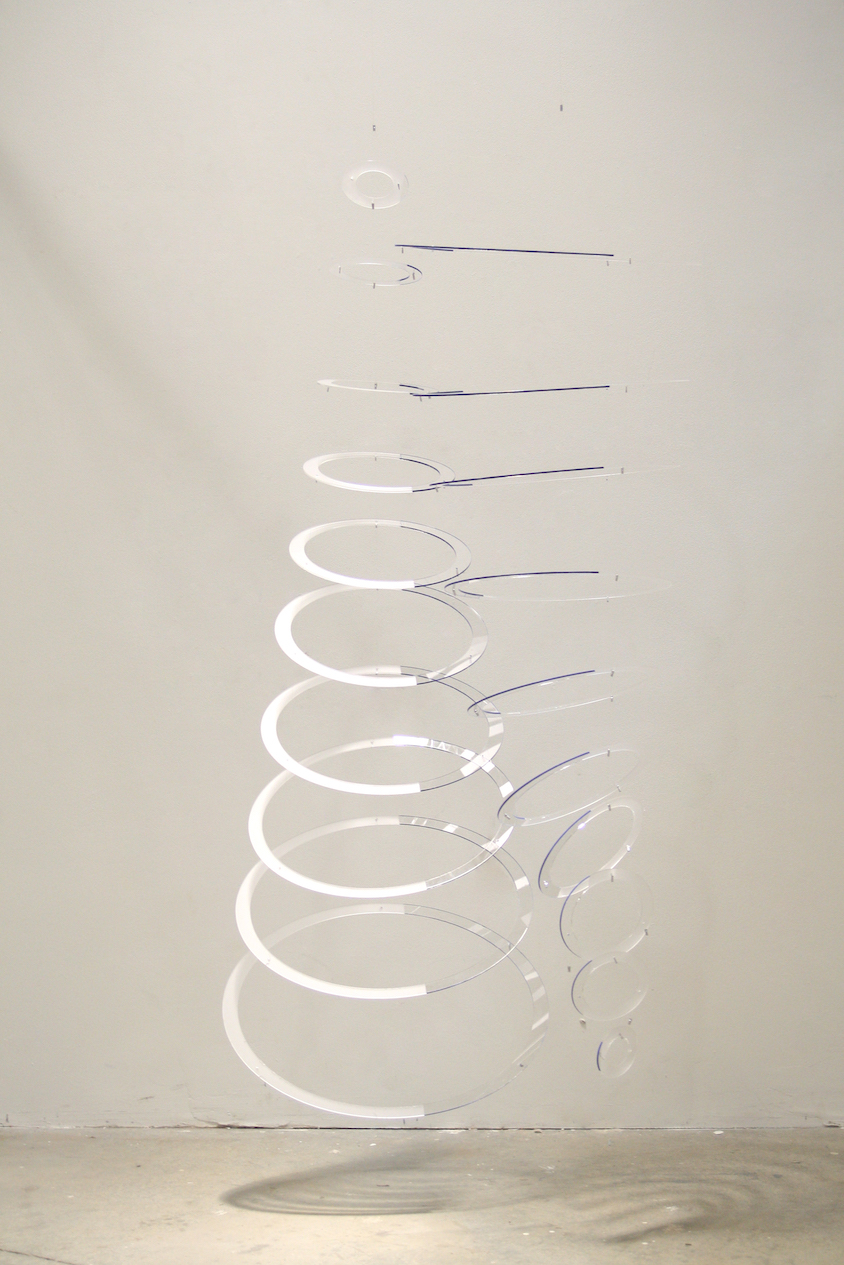
This year, I wanted to utilize those tools in combination with more traditional materials like wood and iron. As I got more comfortable with the tools, I began incorporating new elements. Paint. Plastics. Fiberboard. Having the ability to bring in new elements allowed me to play with shapes, light, and space. In "Frozen" I brought acrylic and wood components together to create a water scene. In a piece called "Balancing Act" I incorporate the two halves of myself into one cohesive piece, the perfect circles slowly shrinking and warping into the shape of creativity and perfect imperfection.

"Dancing," 2020, acrylic and paint, 6’x 4’ x 2.5’.

"Dancing," 2020, acrylic and paint, 6’x 4’ x 2.5’.

My year's work concludes with "Dancing": twenty perfect circles floating, twenty circles for my age, one set ascending and the other descending, symbolizing the ups and downs we face in our lives. The column of air formed between the two represents my family and friends who have supported me.

My fine art education and my experience as a SCAD sculpture student has prepared me to turn rough ideas into final deliverables. After graduation, I envision myself creating as part of a team, sharing my creative process with others. Always learning, always sculpting.

Nathaniel Adair

Visit Nathaniel Adair.

Learn more about SCAD sculpture.

Banner image: "Balancing Act," , 2020, acrylic and paint, 18’’x 3’ x 16’’.

SCAD MOA welcomes new curator DJ Hellerman

January
29
2021
By
Tags:

SCAD is proud to announce the appointment of DJ Hellerman as curator at SCAD Museum of Art. An experienced curator, writer, archivist, and art historian, Hellerman brings a deep understanding of site-specific, interdisciplinary projects to SCAD MOA.

"SCAD welcomes DJ Hellerman, a curatorial leader with a reputation for creating distinguished programming of relevance and interest to the communities he serves," said Kari Herrin, SCAD VP of brand experience and head of exhibitions. "Since opening our doors in 2011, SCAD MOA has delivered engaging exhibitions in an array of disciplines, and as we usher in our next decade, DJ's presence ensures that the museum will continue to be an institution that educates and inspires."

Hellerman joins a SCAD MOA curatorial team committed to elevating the museum's international renown. Current exhibitions at SCAD MOA feature artists including Paulina Olowska (Poland), Carlos Garaicoa (Cuba), Gonzalo Hernandez (Peru), and Hass Brothers (Austin, Texas, U.S.A.). The annual deFINE ART festival, featuring honoree Sanford Biggers, will be held Feb. 23-25, 2021.

Prior to joining SCAD, Hellerman worked at the Everson Museum of Art in Syracuse, New York, where his numerous curatorial projects included exhibitions by Yoko Ono, Jeff Donaldson, Edie Fake, and Vanessa German. He also worked as chief curator with Burlington City Arts in Burlington, Vermont, and as registrar at the Progressive Art Collection in Cleveland, Ohio. He holds an M.A. in art history from Case Western Reserve University and a B.A. in English and philosophy from Lake Erie College.

"I'm enthusiastic to be here at SCAD MOA, and I'm committed to advancing the museum's legacy of delivering dynamic exhibition programming in Savannah," said Hellerman. "By providing audiences with the opportunity to get first looks at emerging artists alongside more established international voices, we'll continue to make SCAD MOA a world-class destination."

The SCAD Museum of Art is a premier contemporary art museum that features emerging and established international artists through commissioned works and rotating exhibitions, engages local communities with special initiatives of an international scope, and serves as a resource for SCAD students and alumni during their academic careers and beyond.

The museum incorporates the oldest surviving antebellum railroad depot in the U.S. into its striking design. It has been recognized by the Georgia Trust for Historic Preservation, the Congress for the New Urbanism, the International Interior Design Association, and the Historic Savannah Foundation, and received the American Institute of Architects Honor Award for Architecture.

The SCAD Museum of Art

Visit scadmoa.org.


The curation of 'Afrofuturism'

January
27
2021
By
Tags:

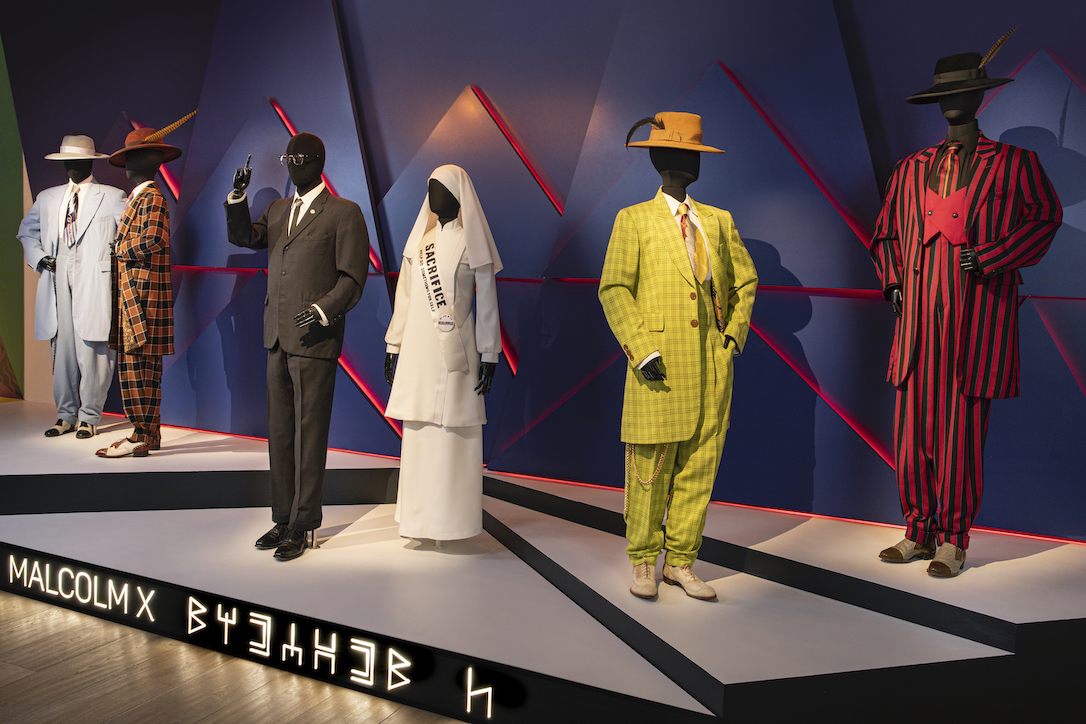
"We are so fortunate that Ruth put her faith in SCAD FASH to tell her story," says Alexandra Sachs, executive director, SCAD FASH Museum of Fashion + Film, speaking of Ruth E. Carter: Afrofuturism in Costume Design, now on view at the museum. Featuring over 60 costumes from Carter's career, along with sketches and ephemera, the dazzling retrospective was named by W Magazine as the number one fashion exhibition to see in 2021.

Ruth E. Carter: Afrofuturism in Costume Design is co-curated by Rafael Gomes, director of fashion exhibitions, and Christina Frank, assistant director of fashion exhibitions, in collaboration with guest curator Julia Long. A significant number of students and alumni worked on the show. Fashion designers Madi Smith (B.F.A., fashion, 2019) and Kahmani Zeon (B.F.A, fashion) created the perfect fit when dressing the mannequins and putting finishing details on costumes. Jonas Stewart (M.F.A., film and television) edited the film montage exploring the breadth and depth of Carter's career. The exhibition's Afrofuturistic installation incorporates original artwork by Brandon Sadler (B.F.A., illustration, 2009), whose murals were prominently featured in Black Panther.

Here, Sachs and Frank discuss the curatorial process and the wondrous result.

Alexandra Sachs: Ruth has been a friend of SCAD for a while. She was here several years ago for a faculty conference where she gave a lecture, and Rafael [Gomes, curator] and I had the pleasure of having lunch with her. When she was in Atlanta to work on Coming 2 America, we met up again. Then, as the pandemic caused us to reconsider our fall 2020 exhibition calendar, I thought, I'm just going to write Ruth to see if she'd be interested in working with us. Fortunately, she was.

Christina Frank: Ruth's archivist, Julia Long, presented us with a list of the film costumes they had available. It was immediately apparent there was an overarching narrative these films are telling about African-American history, starting with Roots, to Selma, to Do The Right Thing, culminating in Black Panther and Ruth winning the Academy Award for Best Costume Design in 2019. We wanted the exhibition to reflect that arc.

AS: Black Panther is the signature image for the exhibition, and it's the thing Ruth is best known for, but what might surprise visitors is how much she has done in her career. Ruth really sees the totality of her work as an expression of Afrofuturism, in the sense that drawing from the past is a means for thinking about possibilities of the future. She's been doing that throughout her career.

CF: A lot of our student docents who work in the galleries are international students who might not have grown up learning about the Civil Rights Movement. It's imperative that we provide educational tools for what's in the exhibition. We developed a digital guide that offers historical context for each costume in the exhibition, which helps people appreciate what they're seeing.

AS: Another really important aspect of this exhibition is its appreciation for the collaborative nature of creative pursuits. Just like our exhibition team is a large team that brought it together, there's an even larger team that brings together these films. We have a projection in the museum's front area where Ruth is talking about her process and also about the relationship between costume designer and production designer, and costume designer and director. That exchange of ideas helps develop concepts that then become manifest.

installation view of ruth e carter exhibition at scad fash

Ruth E. Carter: Afrofuturism in Costume Design is on view at SCAD FASH through Sept. 21, 2021.


Najja Elon Lawson's path less traveled

January
25
2021
By
Tags:

As long as Najja Elon Lawson's art is on display in Augusta Regional Airport, no passing traveler will have a mundane day. The presence of her paintings could even be a metaphor for her own vibrant and unconventional journey: After five years in the U.S. Navy, Lawson (B.F.A., graphic design) "knew I wanted to study art, and I liked how open and spacious SCAD Savannah is, how it's part of the city itself." She enrolled in fall 2019, and has been a Bee in clover ever since.

Najja Elon Lawson:

I'm originally from Philadelphia. When I graduated from Cheltenham High School, I realized I wanted to see the world, so at age 17 I joined the Navy. My first two years in the Navy, I lived in Japan. The workload in the Navy is so intense it's hard to explore your own hobbies. Then in 2016, while stationed in Jacksonville, I went on a whim to a "Painting with a Twist" event. I was so into it! I thought wait, I need to really do this.

When I came to SCAD, I didn't have any knowledge of digital applications or digital art, I just knew I wanted to broaden the scope of my abilities. I began investigating the Adobe Creative Suite, and earned my Adobe certification. I have a separate romance with the app Procreate, which I use to make work that's a digitally rendered version of my style.

Last year I saw a post online that Augusta Airport was looking for artwork. I thought, the worst they can do is say no. I submitted my portfolio, and a month later received an email from the airport public relations manager Lauren Smith saying: "We'll show your artworks as long as they fit the dimensions of the display case." I picked three paintings, drove them there, and as soon as she saw them, she said, "YES!"

The larger painting is called "Living Later." It's about how some people try to stretch their youth throughout their entire lives. The painting "Oluwatoyin Salau" is a portrait of a BLM activist who was murdered. I want people to engage with the work and remember her name and the work she did.

It can be hard to make your work standout online because the internet is such a crowded place. The opportunity at Augusta Airport showcases how diverse my art is, and has made me more excited to experiment. That space is traversed by people nonstop. I mean, it's an airport!

In the Navy, I traveled to 23 countries. In the Philippines, there are people darker than me. In Malaysia, I met people with my skin tone. Places you wouldn't expect "us" to be. I think it's important for people to see different colors of Black. That's why I don't necessarily paint Black people black.

Najja Elon Lawson, "Target," 2020, oil on canvas, 30 x 40 in.

Najja Elon Lawson, "Target," 2020, oil on canvas, 30 x 40 in.

I'm attracted to color. Colors that complement. Colors that differ. I don't like to stick to one color, because your relationship with that color might be different than mine. The point of having a multi-hued palette is to allow people different interpretations of the work. I want you to have your own experience.

I didn't realize how many things I wanted to do until I got to SCAD. There are so many options here. This quarter, I'm taking Topography 1: Form & Space with graphic design professor Stephan Geissbühler, and Painting for the Non-Major with professor Denise Carson. I write down what my professors say and apply it to my art, even in different media. I want to be multidimensional.  I'm committed to learning new things.

Najja Elon Lawson

Visit Najja Elon.

Photos of Najja: Erin White (B.F.A., photography, 2019).


SCADpro Fund invests in Mini City Atlanta

January
21
2021
By
Tags:

SCADpro Fund has partnered with graphic design alumna India Hayes on her new venture, Mini City Atlanta. "We are proud to fund India’s work as she brings transformative change to under-served communities in Atlanta and beyond," says SCADpro Fund managing director Ray Crowell.

As stated on Mini City’s homepage, the challenge is clear:

US taxpayers spend $10 Billion annually due to homeless citizens remaining chronically homeless. This cost includes a range of services from ER visits to jail stays. This is inhumane for our homeless citizens and not sustainable for cities. ID alone cannot combat homelessness, but it is the key that can stop the cycle of homelessness.

Mini City Atlanta (MCA) helps the homeless population obtain government issued identification. Organizations and volunteers can access MCA’s web-based platform to assist those in need with filling out forms in order to acquire an ID that allows them to receive government-funded aid.

"Our primary goal is to combat chronic homelessness," says Mini City CEO Hayes (B.F.A., graphic design, 2010). "By placing identification cards into the hands of the homeless and those who care for them, we can help these individuals get housing, jobs, food resources, and educations."

As Hayes explains, a birth record is essential to solving this epidemic: "Our software is able to work with other states’ databases to ensure we are able to track down that information. If we can prove who you are, we can help you get the help you need."

Hayes grew up in a home of advocates. Her godmother founded the Southeast Regional Economic Justice Network and her mother, a founder of Youth for Social Change, traveled internationally to champion the rights of the oppressed and disenfranchised. "I learned a lot from those women and I felt I needed to continue that legacy," Hayes says.

After graduating from SCAD in 2010, Hayes joined CNN as a designer, creating info-graphics and transition screens. While she gained "a lot of experience working with high performing teams," she could not ignore an inner voice calling her back to social service and community activism.

Leaving CNN, Hayes joined the Atlanta Tech Village where she helped homeless women create resumes, a mission inspired by her favorite SCAD professor, Peter Wong.

"When I was at SCAD I had to create a resume for his graphic design class. He kept telling us to get rid of frilly fonts and dramatic designs in order to let our work shine. Once, when he returned a particular assignment, he pulled one out and said, ‘One person didn’t listen.’ It was me! That moment was important, and I have used his template going forward, integrating it with the individuals I work with. Professor Wong has probably helped hundreds of homeless persons get a job."

Hayes continues to build upon her goal to help the underserved and marginalized, and envisions MCA growing beyond Atlanta Metro area.

"We're looking to get resources into the hands of thousands of homeless citizens," says Hayes. "We can break the cycle of homelessness."

Mini City CEO India Hayes

Mini City CEO India Hayes.


Lubomir Kocka: Reading Creatively

January
19
2021
By
Tags:

"I was born a visual storyteller," says film and television professor Lubomir Kocka. "I inherited that quality from my grandfather, who was a painter and a priest. The frescos he painted almost a hundred years ago are still in churches in Vojvodina, Serbia. The Biblical stories he narrated launched my imagination."

Growing up in the former Czechoslovakia, Kocka (pronounced COAT-ska) was driven to improve his reading skills by his parents, who emphasized the relevance of literacy to artistic pursuits. "So I read everything, even the Communist newspaper Pravda."

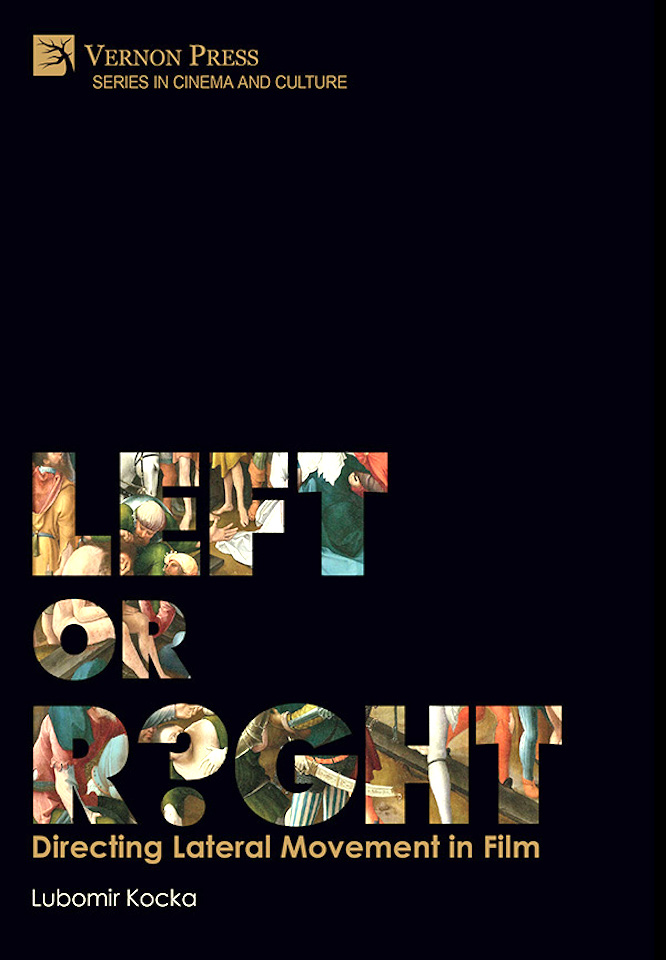
In addition to being a lauded director of feature films and television series, Kocka is the author of the new book Left or Right? Directing Lateral Movement in Film (Vernon Press, 2020). For his Reading Creatively selections, he reflects upon works that comprise his own formative "firsts."
 
Pavol Dobsinsky, David L. Cooper (ed., transl.), Traditional Slovak Folk Tales (Routledge, First American Edition, 2001). "My first encounter with literature, and the first bedtime stories my father read to me, and that I later read to both my sons, along with Grimms' Fairy Tales and Hans Christian Andersen's Fairy Tales. Along with radio dramas and children's vinyl LP records, these tales significantly influenced my visual thinking and storytelling skills."


Edgar Rice Burroughs, The Return of Tarzan (A.C.. McClurg, 1913). "The first book I read multiple times. Up to that point, when reading a book and nearing the end, I slowed down because I did not want to leave the characters. My father told me, 'If you want to meet a novel's characters again, you can start reading the book again.' Such a liberation! I still reread great books today."

Norman Mailer, The Naked and the Dead (Rinehart & Company, 1948). "A foot soldier in a platoon is walking through bushes when he gets his foot stuck in the branches of a shrub. But when he tries to pull it out, he realizes that his foot is trapped in the rib cage of the dead enemy. This journalistic visual detail left an unforgettable impression on me. This was the first book where I realized the power of visual writing, and how a literary detail can be comparable to a close-up in film."

E. R. Braithwaite, To Sir, With Love (Bodley Head, 1959). "The first book I read after seeing the film, Braithwaite's novel tells the story of a dedicated Black teacher who deviates from the standard curriculum to discuss issues with his students like poverty, sex, love, and death, while slowly breaking down the barriers of racial prejudice. I don't remember how many times I saw the 1967 film starring Sidney Poitier in the movie theater, crying each time. Reading the book, I cried again. That was the first time I realized a written story can be interpreted differently by a screenwriter or director."

George Orwell, Nineteen Eighty-Four (Secker & Warburg, 1949). "Orwell's dystopian political science fiction classic was the first samizdat I read. Living in a socialistic country with a real experience of violations of freedom of expression, the cult of personality, and culture of survival did not make me feel that I was reading something unique. I felt like I was living it."

John Irving, The World According to Garp (E.P. Dutton, 1978). "The first book I read after surviving a helicopter crash while scouting locations for Mountain Rangers, a TV series I directed. Laid up in the hospital with two broken vertebrae, I was visited by my friend, the screenwriter Zura Krizkova, who told me, 'It was not your time to die, and it is not time to be gloomy, you have to read this book.' I was in no mood to laugh, but I read it in one breath."

ubomir Kocka's book, Left or Right? Directing Lateral Movement in Film
Lubomir Kocka's new book, Left or Right? Directing Lateral Movement in Film, is the work of a creator and educator who has dedicated his life to the art of storytelling. The book includes a chapter-length contribution from fellow SCAD film professor Stephen Stanley on LGBTQ+ film. Learn more about the book at the official Vernon Press page, and from this brief talk by the author himself.


'Mainly for Women' opens at SCAD MOA

January
15
2021
By
Tags:

Stepping into the gallery means being struck by the colors of “Mainly for Women.” Many of the works are rich with purples and midnight blues. Arterial maroons and other dusky hues dominate. The colors are enticing, with a hint of the intentionally unknowable. There’s something playful yet uncanny at work.

"Mainly for Women" showcases a sumptuous array of paintings by Polish artist Paulina Olowska, highlighting her storied exploration into female archetypes. Olowska immerses herself within the world of womanhood via her mastery of appropriation and homage, creating paintings that draw out the psychosexual and sociopolitical constructs of female experience. Her rapid brushstrokes render naïve photorealist forms that are redolent with the feeling of bygone eras, as her colors appear softened by the passage of time.

Within her exploration of womanhood, Olowska brings the domestic act of playing hostess into the space of the gallery, inviting a group of women from the next generation of distinguished Polish artists to exhibit alongside her within the show. This collaborative act is definitive of Olowska's practice and indicates that her focus on portraying multiple representations of women is not just a conceptual preoccupation, but an active and performative aspect of her work. In the words of writer Jan Verwoert, "The house Olowska is building in her work is not a place of imaginary returns, but a site for gathering sister spirits."

The artists whom Olowska has invited to exhibit alongside her — Karolina Jabłońska, Dominika Olszowy, Agata Słowak, and Natalia Załuska — offer a dynamic range of female perspectives, creating an alchemical exchange of artistic approaches that reflects Olowska's focus on creating a complex and multifaceted vision of femininity. The group presentation, which takes on an almost mythic, séance-like quality, transforms the visuals created by these artists into an exposition of ideas. 

The exhibition's title, "Mainly for Women," takes its name from a 1960s "guide to love making" written by Robert Chartham, a pseudonym used by author Ronald Sydney Seth publishing under the guise of a sexologist. In the work, Chartham seeks to enlighten women on how to avoid harming their husbands' sexual self-respect while providing a biological play-by-play of the coital act, strictly to be enacted by a husband and wife only. This patriarchal bestowal of information is irreverently subverted by Olowska, who reclaims Chartham's title for her own purpose: to give name to a show of women artists who speak for themselves. Olowska's action of creating a female community suggests a valuing of subjectivities in which she and her fellow women artists are autonomous in determining their own image.

In their practices, Olowska, Jabłońska, Olszowy, Słowak, and Załuska grapple with the history and contemporary status of women in society. They contend with issues of female labor, patriarchal constructs of a woman's role, and visual manifestations of female interiority, with many of the featured works drawing from imagery related to pagan mythological narratives.

Through the distinct perspectives of formalism, portraiture, appropriation, and narrative painting, the artists use their work to disrupt our understanding of womanhood. Their erotic imagery, depictions of female agency, and labored methods of painterly execution are markers of how these women seek an uncompromised position of gender parity within art and society. With the recent attempt by Poland's constitutional court to impose a near-total ban on abortions — including in instances of rape and incest — this exhibition speaks with a sense of urgency for the dire need to insert female autonomy into biopolitics and society at large. In its presentation in the U.S., the exhibition holds a mirror to the country's own reckoning with women's rights.

Mainly for Women is curated by SCAD MOA assistant curator Ariella Wolens.

Paulina Olowska, "Romania," 2020, oil on canvas, 94 1/2 x 74 13/16 in. Private collection.

Paulina Olowska, "Romania," 2020, oil on canvas, 94 1/2 x 74 13/16 in. Private collection.

Banner image: the artist Paulina Olowska at SCAD MOA.

Visit scadmoa.org.