Skip to main content Accessibility Policy

Tim Rollins and K.O.S. team up with young artists

February
20
2014
By
Tags:

Hanging amidst the exhibitions of celebrated contemporary artists at SCAD Museum of Art is the work of 14-year-old Winter Jones.

I never would have suspected that I would have the chance to put one of my pieces inside of a museum as good as this.

Who better than Tim Rollins and K.O.S. to introduce Winter and his 7th and 8th grade classmates from Garrison School of Visual and Performing Arts to the art world. The collaboration between Winter’s class and the New York-based artists was a condition of sorts that Tim set for bringing the exhibition Rivers (Feb. 1 - June 8, 2014) to SCAD Museum of Art. Because, quite naturally, he wanted to interact with the community.

And so, among staples of the Tim Rollins and K.O.S. collection inspired by literature like Harriet Jacbos’ Incidents in the Life of a Slave Girl and Mark Twain’s Adventures of Huckleberry Finn, is the piece that bears the untested marks of middle school students like Winter, Darkwater III (after W.E.B. Du Bois).
Student's workStudent's work
The students saw their work - first edition pages of the text "Darkwater" dipped in watercolor and gold acrylic - displayed on museum walls for the first time this week during deFINE ART.

Students look at artwork
Professional addresses the students
Students take a closer look at artwork
Students point out detail in artwork
Judging from their reactions, the students' encounter with Tim and K.O.S. was one opportunity that made their possibilities seem endless.

Olympic urbanism: the Games’ legacy to our cities

February
11
2014
By
Tags:

With the Winter Olympics in full swing, you’ll forgive me if I have more on my mind than figure skating, ski slopes, and curling. After months of studying the impact Olympic Games have on our cities for my graduate thesis, "Olympic Theatrics on the Global Stage: Evaluating the effects of temporary and permanent event structures on historic urban landscapes," it’s nearly impossible to acknowledge the Games at face value. As Sochi has already been marred by viral images of unfinished facilities and technical malfunctions at the opening ceremony, here are five things to think about while rooting on the talented athletes in Sochi.

1. The Olympics are no longer about sport
Instead, hosting the Games is an unsurprising justification for urban renewal efforts. Driven by financial and political motives, the Games provide opportunity for infrastructure improvements, economic gains through tourism, redevelopment schemes, and the city’s self-promotion to the global audience. This approach is referred to as 'Olympic urbanism,' defined by identity, regeneration, and the intended legacy of the Games. While the participants demonstrate extraordinary feats of athleticism, the sporting events are a mere façade to the administrative agenda.
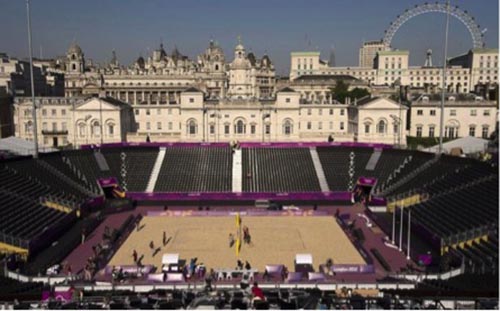
Volleyball court at 2012 Olympics
2012 London Olympic Games. Credit: Rex Features, Canadian Press.

2. Planning decisions have significant long-term effects
In designing for the Olympic Games, host cities have several options: reuse existing buildings, construct new permanent facilities, or create temporary structures for the short-term use. Athens (2004) and Beijing (2008) created a building stock of megastructures that have mostly been abandoned due to high maintenance costs and limited post-Game function. Olympic construction should include a feasible long-term use plan before a city is selected to play host.
Scenes of abandoned Olympic parks
Olympic Abandonment: 1984 Sarajevo, 2004 Athens, 2008 Beijing. Credit: Huffington Post/Business Insider.

3. Hosting the Games comes at the expense of local residents
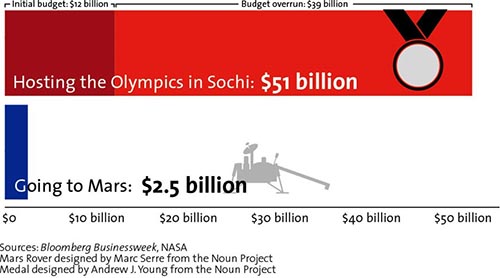
The Olympics are intended to be financed by fundraising efforts of the host city’s local planning organization, but it is not uncommon for the tab to be unwillingly picked up by local taxpayers. As the Olympics have reached a mind-blowing height of cost, the expense paid by locals is not only financial but also includes environmental and social consequences. Planning should engage local community members and organizations with focus on the long-term benefit. Sochi’s struggle with social equality and environmental conservation have been no secret while generating construction costs greater than any other Olympic Games in history: $51 billion compared to Beijing’s $40 billion in 2008 (the most expensive Winter Games prior to Sochi were Vancouver’s for $7 billion in 2010).
Infographic showing rise in cost of hosting Olympics
Credit: Mother Jones

4. The Olympics are detrimental to historic urban landscapes
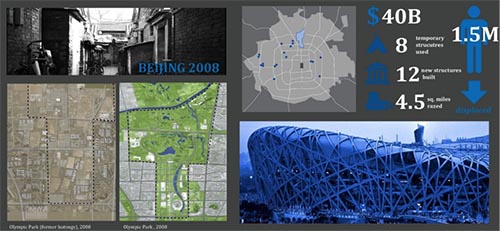
Recent trends over the past 30 years favor mass demolition within the existing built environment to create a blank canvas for the Games. This tendency obliterates all historic integrity and sense of place specific to that region. With the need for large buildable area and little availability of open space, the Olympics are an undeniable catalyst for resident displacement. The dislocation of 6,000 people in London (2012) is seemingly minor compared to Beijing’s (2008) 1.5 million people. Sochi has reportedly displaced 2,000 families in preparation for this year’s event. The ideal solution would require host cities to implement a layering strategy to integrate new construction with existing heritage.
Statistics from Beijing Olympics
2008 Beijing statistics by David Trayte.
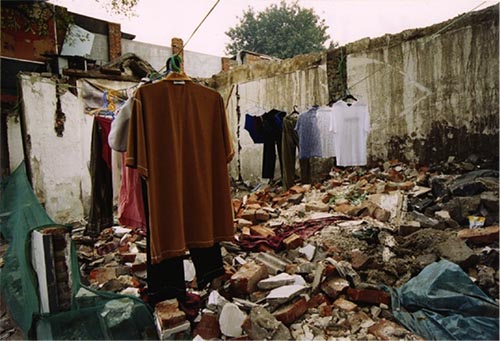
Site full of rubble
Historic hutong demolition by Jose Antonio Soria/CCCB.

5. The Olympics are not stopping anytime soon
The Modern Games have been held for almost 120 years without any signs of slowing. The Games are more often harmful to our cities than not, but it is important to acknowledge the lengthy Olympiad timeline that continues to grow. A sense of permanent Olympic identity should be evident in every host city, allowing the event to succeed while being sensitively integrated in the existing landscape. Only with the incitement of a preservation voice can the Olympic adage of “faster, higher, stronger” rise above displacement, destruction, and disregard.
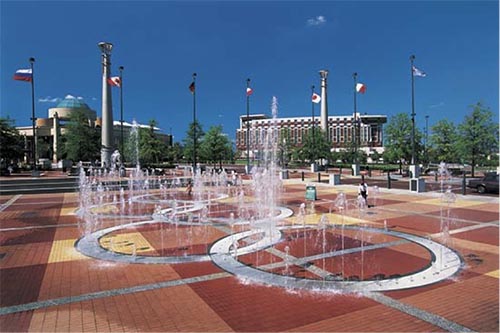
Water fountain with Olympic rings
Atlanta's Centennial Olympic Park by Andrew Gunners, Getty Images.

David Trayte (B.F.A., Architecture, 2011; M.F.A. Historic Preservation, 2013) is a preservation specialist for an architecture firm in Cleveland, Ohio, where he also volunteers with cultural landscape initiatives. His preservation interests include modern heritage of the recent past, cultural landscapes, and the integration of contemporary design with historic resources.


Is that real? Uses for virtual and augmented reality in TV

February
9
2014
By
Tags:

The Virtual and Augmented Reality panel at aTVfest, with Janet Arlotta and John Howell from North Carolina-based (n+1) designstudio, opened my eyes to how 3D and motion media are giving producers on live TV sets unlimited possibilities.

For a producer, a physical set is like home base. You block segments around the set. You visualize how the host will engage the audience and cameras. You know exactly where to perch to make eye contact with your talent while the make-up artist touches up their foundation.

A few of the sets I became cozy with over the years:

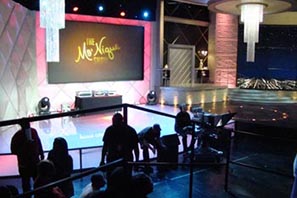
Television sets

From that reference point, I assumed that a virtual set would be totally disorienting and cold. (Could an audience really relate to augmented reality over the cushiness of Oprah’s coach?) But the case studies Janet and John presented demonstrate that these increasingly used and essential methods for engaging an audience create storytelling opportunities that vastly outweigh the temporary discomfort of operating outside of a traditional set.

With clients like Inside Edition, Food Network and Tennis Channel, some of the best work with virtual and augmented reality isn’t happening in sci-fi, as I erroneously believed, but in nonfiction television, especially sports. And it’s all done in real-time, not post-production.
UFC set
Virtual sets like, UFC’s for example, have smaller space requirements but posses more specialized features, like ‘baked-in’ lighting and shadows, which mean less man hours needed for live broadcasts. For Tennis Channel, a virtual set offered a two-in-one for US Open coverage: one set for "US Open Tonight" and one for "Breakfast at the Open." That’s two shows built around one desk, sitting on one green screen.

Probably the best known use of augmented reality in TV is the neon first down line, now ubiquitous in NFL games, along with the line of scrimmage and the world record marker that you’ve seen hovering above Olympic swimmers.
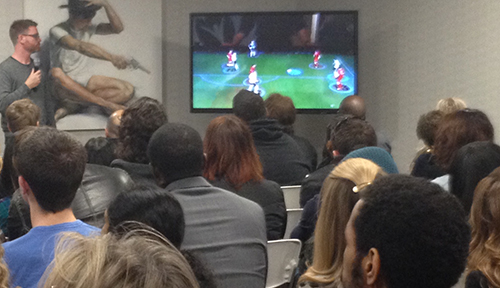
People watch demonstration
John Howell shows how ESPN diagrams a soccer play using augmented reality.

But AR also means ESPN can diagram plays using animated 3D players, and that CNBC’s hosts can walk in and around the financial data they’re reporting using corresponding infrared dots on their hands and Steadicam.
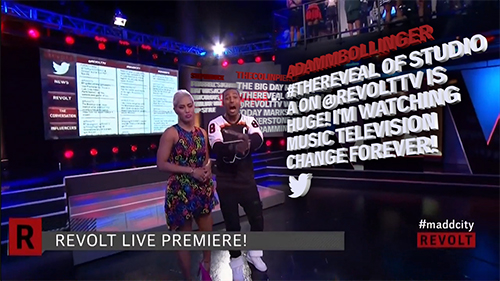
Set of music network REVOLT
Then there’s social media. No, not the kind that sits in a screen beside the talent on a set. That’s so 2010. Sean “Diddy” Combs approached (n+1) designstudio for help with the set for his new music network REVOLT.  With social media interaction being a major player in REVOLT’s mission, (n+1) took that traffic out of the screen and literally made live Tweets float in the air around the talent. Instead of a Twitter wall built into the set, AR enables those screens to move and fly around the hosts.

And you thought Oprah’s coach was immersive.

Executive Producer Tim Gibbons's truths for surviving TV

February
7
2014
By
Tags:

Hosted by TV Week's Hillary Atkin, aTVfest's Q-and-A with Tim Gibbons, the executive producer of HBO’s monumental comedy Curb Your Enthusiasm and BET’s runaway hit Real Husbands of Hollywood, two shows that thrive on improvisation, fittingly gave the audience an improvised list of Truths for Surviving TV. Here’s what Tim knows that helped him evolve from $20-a-day production assistant to six-time Emmy nominee.

Students take note during the discussion

Talent will help you keep a job but a friend will help you get it
Tim’s dream was to work in TV, so in 1976 when a friend called him for a day player role as a PA with Dick Clark Productions, he was ready. The process of getting the gig sounded simple, “Someone said Tim could be a PA.” But it’s through nurturing and growing a network, and making genuine friendships in the business, that Tim has had such a successful run in the business.

Every job I got since then has been the same. I don’t think I was ever hired once by sending out a resume. It’s because someone I knew said, ‘What about Gibbons.’

No job is beneath you and there are no shortcuts to the top
Once in the door at Dick Clark, which Tim called ‘my college,’ he made an effort to know what every role at the production company involved. Then he broke into comedy as an associate producer, learning budgeting, scheduling, how to work with writers and the costume department, all knowledge that would serve him when he became a show runner.

I became a sponge. I tried to learn about every department and every job, whether it was a tech job or Xeroxing scripts all night.

Know when your time is done and go
Tim lasted four years at Dick Clark Productions, riding the ranks, which went from PA, to head PA, to coordinator, and on up to associate producer, the role Tim was angling for. Though 20 dollars a day had turned into 300,  Tim was passed over for the next position up and knew he had to leave or remain stuck. So at 27 he took a lateral position as production manager on President Reagan’s inauguration. Not exactly the promotion he was looking for, but a gig that gave him experience coordinating a major production and a stepping stone to his next job.

Sometimes reputation is helped by a dose of chemistry
The opportunity to work on Curb came knocking three times. Tim was under contract with Ripley’s Believe It or Not, but HBO kept calling on the strength of the previous work he’d done for them. Their enthusiasm about Tim, though, didn’t excuse him from a final interview with Larry David, who wanted to get a feel for him. While in the interview Larry made a bald joke about neither one of them having hair. Tim laughed and Larry later told him that’s why he got the job. Reputation got Tim in the door, but being relatable to the ultimate decision-maker sealed the deal.

He was testing me to see if I had his comic sensibility.

Persistence, Persistence, Persistence
Regardless of the accolades that have come Tim’s way, he most credits persistence for his longevity in the business. Of the 20 PAs that Tim started out with, he’s one of only two that are still working. Persistence, he said, is what helped him sell a show he pitched 56 times. Persistence is what will distinguish you and help you get ahead.

In the job world you’re selling you and you have to be better than the 20 others who landed in LA that day and want the job.

Tim Gibbons talks to students after discussion

Whether you got your start in the 70s or are just now shoving off, some things, it seems, don’t change.

A letter to future television writers

February
6
2014
By
Tags:

I teach a class at Savannah College of Art and Design where students write original television pilots. Lucky me, I get to read exciting material from writers who are just finding their voices and have something to say. As a teacher, it doesn’t get much better than that.

Oh, and just as an aside, having pitched my share of series to both network and cable executives, and having watched or sampled at least 80 percent of all new series over the past umpteen years, I can say without reservation that a lot of my students’ work is better than most of what makes it on the air. I am not being hyperbolic here. That is my sincere belief. And you know what? I’m sure that any professor who teaches a similar class at a college with a student body as talented as SCAD’s feels the same way. And they’re right, too. 

That’s both the good news and the bad news.

The bad news: the odds against a writer making his or her way into an office to present an idea for a new show to an executive who can actually make that show happen are astronomically high. Maybe 10,000 to 1. Really.

The good news: those executives’ very lives depend (nope, that’s not hyperbole either) on beating those odds. So they take meetings and meetings and more meetings—which are only a fraction of the meetings their assistants take.

And what comes out of those meetings? The great Ernie Kovacs once said: “Imitation is the sincerest form of television.” We get shows we’ve already seen before. By the way, that quote was from about 60 years ago. Some French guy once said, “Plus ça change, plus c’est la meme chose,” which roughly translated means: “Hey, Betty White was hot in the 50s, and here it is 2014 and she still gets ratings. Give her another show.”

Do I blame the executives who are charged with making money for their studios and networks and thus go after shows and stars that have worked before and therefore will hopefully work again? Not a bit. That, after all, is their job. And I’m a smart guy. I know how to work a remote.

Let me tell you who I admire, though: the executives who said, "Let’s take a chance on shows like Mad Men, and Orange is the New Black, and The Walking Dead, and Justified." You get the idea. Shows that are different, shows that have made television great again.

So what do I tell my students? Be bold, take a chance. At no time in the history of television has there been such space and appetite for originality. Go ahead, create something that would have made Ernie Kovacs puff on his cigar and say, "Must've been written by one of them SCAD kids."

Chris Auer is the chair of film and television as well as dramatic writing at the Savannah College of Art and Design. His career as an Emmy-nominated writer and producer for sitcoms, dramas and soaps spans more than 25 years. Meet Chris at aTVfest (Feb. 6 - 8), where he'll moderate Q-and-A sessions with cast members from Justified, The Walking Dead and more.

Video: SCAD-FOX Sports Super Bowl collaboration

February
5
2014
By
Tags:

We’re happy to bring you the final result of SCAD’s partnership with FOX Sports to design the opening animation for the Super Bowl. Originally scheduled to air at 6 p.m. on Super Bowl Sunday, FOX Sports moved the airtime up to 2 p.m., during the network’s pre-game broadcast. Enjoy the show and the buzz it created.

How my class designed the Super Bowl open

January
30
2014
By
Tags:

Editor's note: The SCAD/FOX Sports collaboration ran at 2 p.m. during pregrame broadcast, earlier than originally scheduled by FOX Sports. Watch the final animation here: http://youtu.be/HSXd7O5bjpo.

How did a bunch of art students land one of the biggest jobs on television? As with most things, this dream job happened because of relationships. Many of our motion media design alumni work for FOX Sports. We got together and figured out that designing the 20-second opening title for the Super Bowl would be the perfect assignment for Motion Media 408, a class created to teach students about network branding. Here’s how they did it:


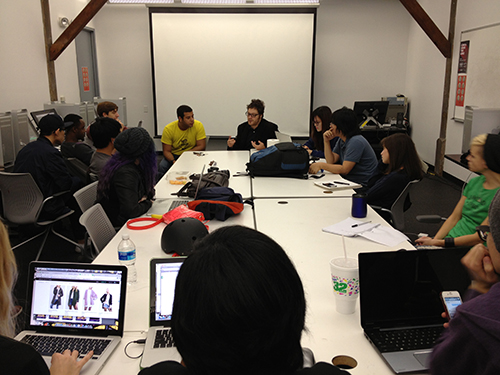
To come up with a unique concept for the Super Bowl open, the class first dug in to understanding the FOX Sports brand and researching its aesthetic. Any designer has to retain this kind of information so that their concept matches the brand’s style.

Students collaborating
Concept drawing of Cleatus

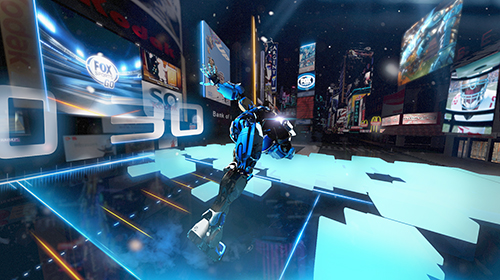
The students finally landed on three different options to pursue and presented them to FOX Sports. FOX Sports decided to focus on Concept Two: Cleatus racing through New York City to arrive at an activation chamber, where he’d place his football to trigger the start of Super Bowl XLVIII.
Series of concept drawings
With a clearly defined vision, and a healthy dose of notes from FOX Sports, the class began pre-production on the stylized world and story that will draw fans from the nachos to the TV for kickoff. First came the written treatment and laying out the specifics of the animation sequence. Even more important were the style frames and motion tests, which conveyed the style and pacing of the animation to FOX Sports.
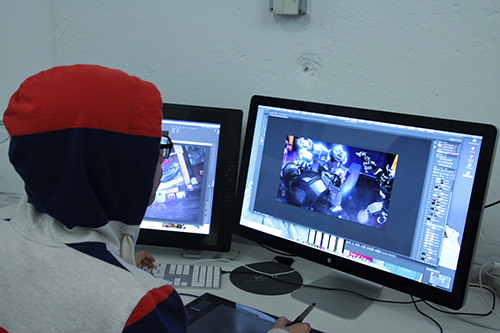
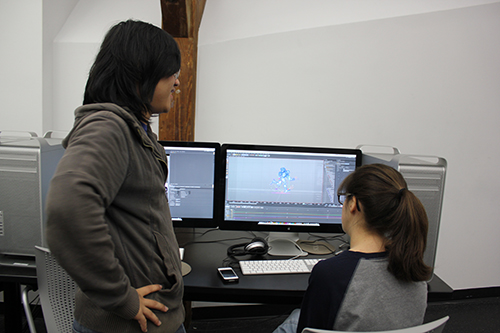
Student working at computer
Students working at computer
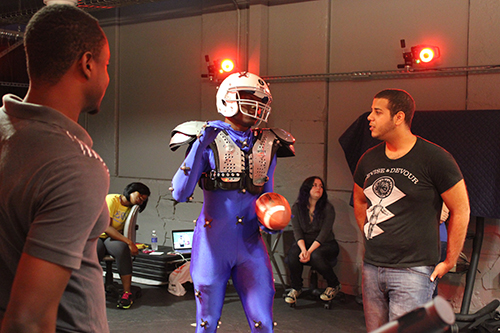
Animating a giant football player robot is complicated for anyone, but Motion Capture technology gave the team the perfect tool to work with. They recruited local high school football player Robert Heyward to model the moves that an animated Cleatus the Robot would make along his journey through New York City.

Student doing a motion test
Student does a motion test on a treadmill
The motion tests gave FOX Sports an idea of how the students would move Cleatus and the cameras in 3D. The students took the animated data and turned them in to motion clips, blending the movements together, or animating Cleatus, at 60 fps, which means for every second they created 60 frames, or images, each with a different pose. The class then rendered each frame and compiled them to create a complete animation.
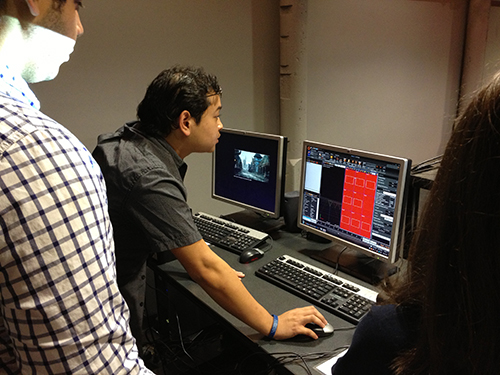
Two students work together on a computer
Cleatus in action
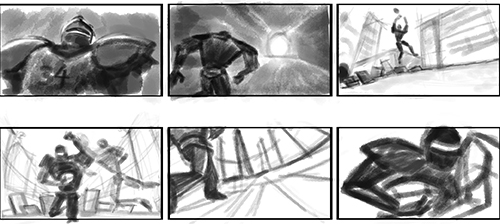
The team spent a lot of time fine tuning the concept and creating storyboards. These boards showcased the mood, style, specific shots and camera angles in the opening sequence, which gave FOX Sports a scene-by-scene layout to approve.
Storyboard for Cleatus

But the most time-consuming elements of this project were the final design boards, which required several designers and countless hours to produce.Frames of different scenes from the animation
With each style frame treated like its own piece of art, the complete design boards exhibited a few significant scenes from the storyboard. Expertly composited of 3D, 2D, texture and lighting elements, the design boards were made to simulate the refined look of the final animation that you’ll see on Super Bowl Sunday.

Austin Shaw is a motion media design professor at Savannah College of Art and Design. He has worked as a creative director, designer, and animator for companies such as Süperfad, Digital Kitchen, and Curious Pictures, creating original content for the broadcast and advertising industries. His credits include numerous Broadcast Design Award and Emmy-nominated projects.

I'm going to Disneyland!

January
29
2014
By
Tags:

You may hear the famililar refrain of champions, "I'm going to Disneyland," ring out from your television on Sunday night after the big game. But four students from Savannah College of Art and Design programs in Interior Design, Animation, Illustration and Interactive Design and Game Development have the Super Bowl victors beat.

They’re in Disneyland this week visiting the headquarters of Walt Disney Imagineering. The dream field trip and their eight-week internship at Hong Kong Disneyland, slated for June, are prizes for their first place finish in the Disney ImagiNations Hong Kong contest for emerging designers.

Click here to read more about students who are working to create the world's leading theme parks of the future.

The winning 2013 Disney ImagiNation's Hong Kong team took us inside their winning concept "Second Star to the Right" and what it took to be the third team in a row from SCAD to take home the grand prize.
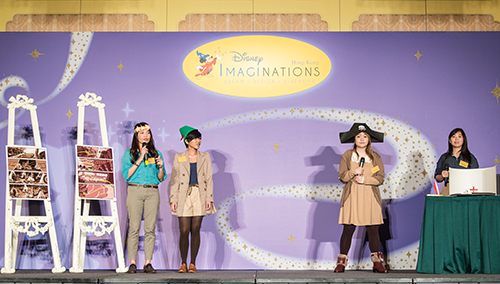
Students make their Disney proposals
"Our team proposed to bring 'Neverland' to the Hong Kong audience. While famous as the setting for Peter Pan's adventures, we wanted Neverland to become a unique, personal experience for guests."
Depiction of Neverland experience
"Each aspect of the land is as immersive as it is diverse. It features interactive Pirate Bay and Mermaid Lagoon playgrounds, a fantastical Pixie Hollow restaurant, a thrilling gesture-activated dark ride in which guests help Peter save Tinkerbell, and a theater in the round showcasing the story of Peter's adventures with the Darling children through 360 degree projections."
Aerial view of the Neverland experience
"Throughout each area of the land, guests can also document their adventures through Magic Mirror photo booths and pixie-powered light drawings. Guests are then able to weave their personal Neverland experience together through the creation of their very own storybook."
Rendering of Neverland experience where visitors look into a large shell
"There were many iterations of the Neverland concept, but we always knew that the land had to offer an experience that was both immersive and interactive. We realized that the land's uniqueness rested primarily on the guests' ability to feel a personal connection to Neverland. Keeping that in mind, we focused on building a unique hook for guests to experience. We also narrowed the attractions down to the ones that made the greatest cohesive impact."

A lot of the technology we use in Neverland is derived from technology already available in the market.

"In our dark ride below, for example, guests use gestures to interact with the environment. This is very similar to the technology they use for the Kinect, where special cameras detect specific body or hand gestures and use them as cues to trigger events. In our Magic Mirrors, guests can take photos of themselves and apply backgrounds and images to their photos, similar to that of a Purikura Photo Booth. In our Indian Brave Camp, guests can draw onto the walls of a special tent using a totem, using technology that is very similar to the wiimote.
Rendering of the Neverland experience of visitor boats
"In terms of conceptualizing and developing our ideas, we worked a lot with traditional sketches to flesh out our initial concepts. What's great is that the design process is iterative, and being able to quickly discuss things with your teammates and edit ideas on the fly is incredibly convenient. After everything had been figured out, we worked almost exclusively with Photoshop to create the final illustrations and slides you see above."


The future of fashion

January
15
2014
By
Tags:

What does it take to be considered a rising star in the fashion industry? Each year, the YMA gives us a glimpse into what the future of fashion holds when it crowns a new group of Fashion Scholarship Fund winners.

As the New Year got under way, the YMA awarded its coveted $5,000 scholarship and pinch-me-I’m-dreaming internships, with industry leaders like Neiman Marcus and Polo Ralph Lauren, to 100 fashion students to watch. Nine of them are Fashion or Fashion Marketing and Management students from Savannah College of Art and Design.
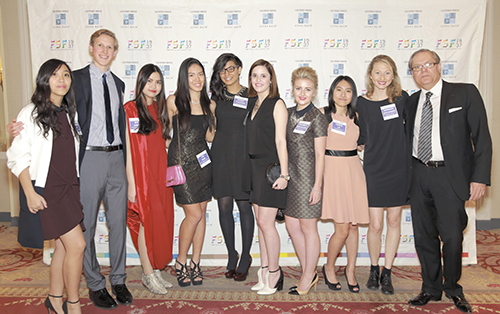
Students at the YMA Award
From left to right: Annalise Lao, Oliver Selby, My Dinh, Elva Jiang, Sania Tharani, Rachel Johnson, Chanelle Bertelsen, Linda La, Hannah Aylward, Prof. Daniel Green

Here’s why their applications wowed the judges.

The challenge: Present a plan to help retailer JCPenney reach the Millennial customer.

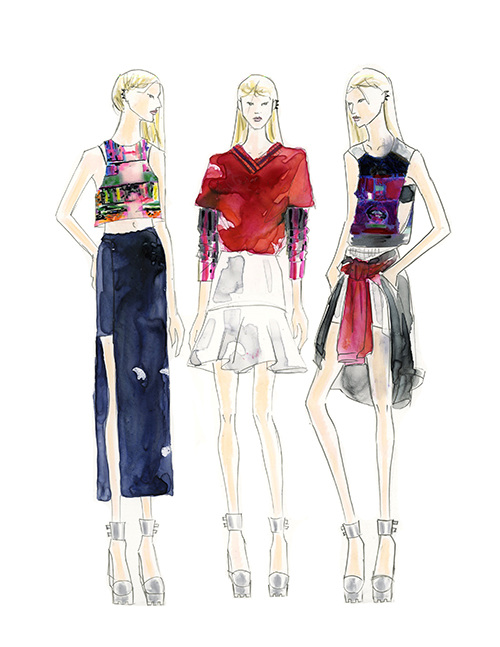
My Dinh (B.F.A., Fashion, Junior)

Sketches of garments by My Dinh Sketches of garments by My Dinh
My solution for the YMA 2014 case study is a street wear clothing line for women named #neversleep. The hashtag is a manifestation of youth. Using social media to build a lifestyle around the brand name is the main strategy. The products of #neversleep are identified by its playfulness which is visualized by its bold silhouettes and whimsical prints. The brand has a much needed witty perspective on the harsh realities of modern fashion and life.

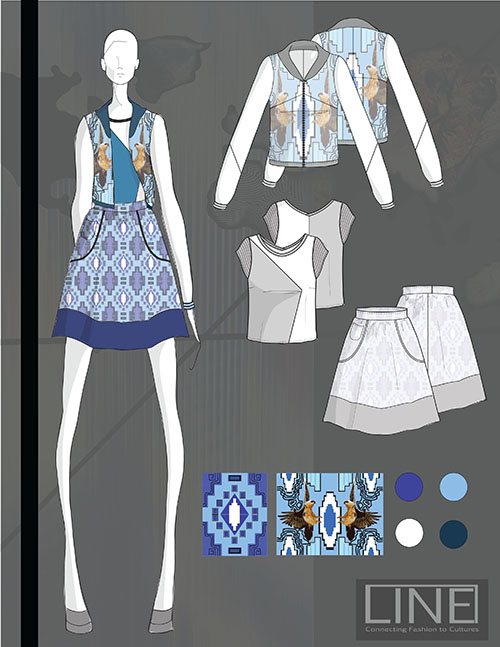
Oliver Selby (B.F.A., Fashion, Junior)
Sketches of garments and patterns by Oliver SelbyMood board by Oliver Selby
The brand that I created for JCP is LINE, connecting fashion to cultures. LINE connects the world of fashion to different cultures of the world, old and new, while creating a modern twist with the combination of print, fabric, and color blocking. Each piece of clothing is able to be matched with others in the collection, enabling the customer to combine different prints and colors, allowing them to connect different cultures of the world together.

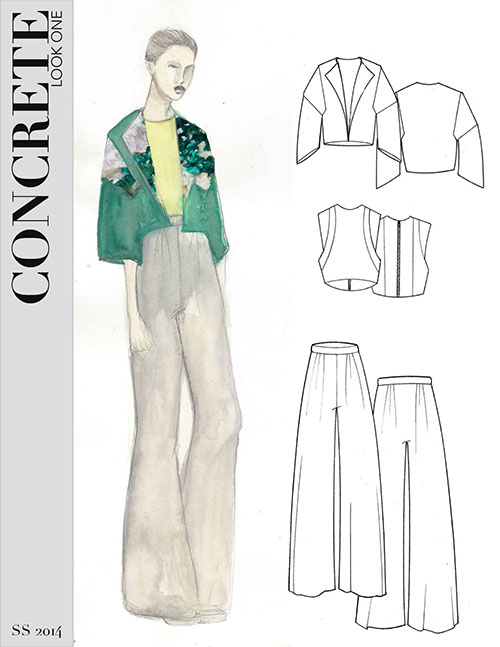
Rachel Johnson (B.F.A., Fashion, Senior)
Sketches of garments by Rachel JohnsonMood board by Rachel Johnson
My concept was initially inspired by modern architecture and the lines found in the architecture for the garments themselves. I was extremely inspired by geode rocks and minerals for the prints and color stories I used for the line. My brand Concrete was created for a strong and confident woman and was to be a store-in-store at JCPenney.

Sania Tharani (B.F.A., Fashion Marketing and Management, Senior)
Menswear campaign by Sania Tharani
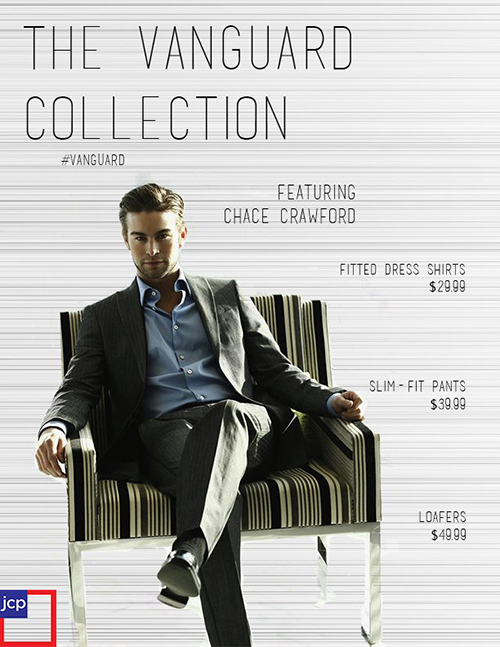
I proposed The Vanguard Collection, a hip menswear brand of distinctly branded apparel and accessories that appeal to the Millennial man with its slim-fit tailoring and fresh print and color combinations. A store-within-a-store layout and interactive social media marketing foster a seamless transition among all platforms, providing him with a pleasurable shopping experience catered to his every need.

Linda La (B.F.A., Fashion Marketing and Management, Senior)
Concept board by Linda La
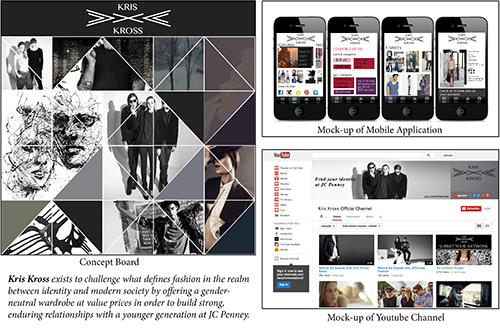
My vision was to create a contemporary, item-based clothing line that was genderless in nature. Having a gender-neutral line taps into the psychographics of the Millennial customer and goes along with their changing attitudes regarding social ideology. All in all Kris Kross exists to challenge what defines fashion in the realm between identity and modern society by offering a gender-neutral wardrobe at value prices in order to build strong, enduring relationships with a younger generation at JCPenney.

Chanelle Bertelsen (B.F.A., Fashion Marketing and Management, Junior)
I created a product line called 27 & Grand showcasing a powerful impact presentation of sneakers in a high tech shopping environment. JCPenney stands at the corner of a major intersection. This intersection is the place where the troubled past meets the opportunity the future holds for JCPenney. The launch of the brand “27 & Grand at JCPenney” will connect with the Millennial generation in a way that will create major business opportunities for the store and for its future.

Hannah Aylward (B.F.A., Fashion Marketing and Management, Junior)
Mobile view of the partner campaign by Hannah Aylward
The main focus of my project was to partner with American Apparel and set up Miniature American Apparel stores within JCPenney locations in order to entice the Millennial customer. The American Apparel for JCPenney brand presents the right merchandise, at the right price, at the right time. The brand's well-established credibility and style are perfectly tailored for the lifestyle values of the Millennial customer.

Elva Jiang (B.F.A., Fashion, Senior)
Glass Ceiling graphic by Elva Jiang
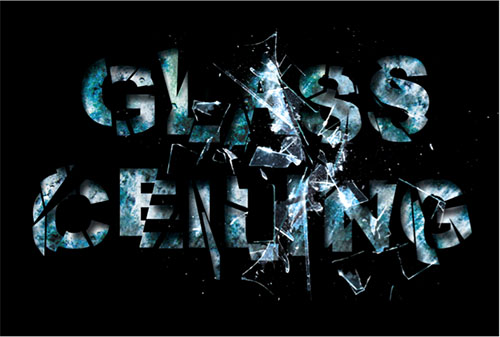
Glass Ceiling at JCPenney empowers the young, business-minded Millennial woman who strives to transcend economic and social boundaries to take over the “corner office” and become the top executive of a company. The sophisticated yet trendy selection of styles allows our customer to present herself professionally in all business occasions while expressing confidence and individuality.


SCAD alumni fan the flames of Super Bowl ad fever

January
13
2014
By
Tags:

An Ostrich. Doritos. The chance to be seen by one of the largest television audiences in history. Not getting the connection? Keep reading.

"Breakroom Ostrich," by a team from Atlanta-based FUGO Studios, including cinematographer Richard Webb (B.F.A., Film and Television, 2005) and Brandon Morris (B.F.A., Motion Media, 2010) is one of five finalist commercials, out of thousands submitted, in the Doritos Crash the Super Bowl ad contest.

What made this spot by Savannah College Art and Design alumni break through for a real shot at the $1 million prize?

An ostrich named “Clyde” had a little something to do with it. Though Clyde wasn’t invited, Brandon and Richard will attend Super Bowl XLVIII with the other Doritos finalists and watch on the edge of their private suite seats to see whether "Breakroom Ostrich" will be one of two finalist ads to air during the big game. I caught up with them before they depart for New Jersey.

Thread: What led you to enter the Doritos Crash the Super Bowl contest?

Richard and Brandon: We've always been interested in advertising. The main reason for entering the contest, besides the awesome prizes, is to truly learn what makes a commercial successful. There is a true art to getting your message across in 30 seconds, and the Doritos Crash the Super Bowl contest allows us to sharpen our skills every year.
Shooting "Breakroom Ostrich"
Shooting at a desk for "Breakroom Ostrich"

T: How did you come up with the concept “Breakroom Ostrich”?

R & B: The spot was written by director Eric Haviv and VFX supervisor Bryan Westberry. The concept was born out of Eric's longtime fascination with ostriches and a solid brainstorming session over a beer or two. Another factor that drove the idea was the success of previous Crash the Super Bowl entries. There is no formula to winning this contest, but it helps to pay attention to what works and what doesn't. There were a few different versions of the script floating around in pre-production. One idea was based on the hilarious way ostriches eat, but we figured we probably wouldn't get the shots we needed from the birds. We really went into production with the notion that the ostriches themselves would dictate where we could go with the final spot.

T: Where in the world did you find Clyde?

R & B: Clyde was found by a cold call to Bird Brain Ostrich Ranch in Sherills Ford, N.C. The owners were so accommodating, which was a huge help. Believe it or not, there aren't too many ostrich farms near Atlanta, so when we found one that was eager to help a few young filmmakers, it was very exciting.
Three ostriches behind a fence

T: What challenges did Clyde pose on set? Any problems that made you think you couldn't pull it off?

R & B: The main challenge in filming Clyde is that he is a big, mean, flightless bird. Ostriches are virtually un-trainable. In fact, as the shoot day wore on, it seemed like they just wanted to do the opposite of what you needed them to do. Our initial plan was to get the ostriches in front of a green screen, which would make visual effects much easier. As it turned out, Clyde was terrified of the green screen. These birds knew something was up immediately, and it made the shoot day a real gamble. Once we realized we were in a plan B situation, we knew that it would be up to the magic of visual effects to make this spot happen. We brought the footage back and did a couple of tests, which came out great. This was a wonderful boost for morale, and we decided to move forward with the office portion of the shoot.
Green screen set up on Ostrich farm
Shooting a ostrich in front of green screen
Image of an ostrich being cut out in editing software

T: When did you know that you had a winner, or at least a finalist, on your hands?

R & B: Honestly, we never had that feeling until we were notified. We are always our own worst critics and once you watch something 100 times during post-production, you start to wonder if it's funny or not. Luckily, we started to get a great response from the people we showed it to, and we knew that, win or lose, we had something we were proud of.
Ostrich image with background removed in editing software
Scene from Breakroom Ostrich

T: Did you get any advice or learn anything from other SCAD alumni who have entered the Doritos contest before?

R & B: We always enjoyed the entries from the Dandy Dwarves, who are SCAD alumni.

T: What would you do with the $1 million prize?

R & B: Besides buy an ostrich farm of our own? You know, the four of us have been working hard and honing our craft for years now, and we want to make a feature film soon. I think $1 million would make our dreams come true.