Skip to main content Accessibility Policy

Alexandra Tunstall: Reading Creatively

March
4
2021
By
Tags:

Dr. Alexandra Tunstall, professor of art history, SCAD Atlanta, is an expert in the Chinese woven tapestry art of Kesi (K'o-ssu). Dating to the Tang dynasty (618 to 907), Kesi thrived for over twelve hundred years, until the end of the Qing dynasty in the early 20th century. The Kesi weaving process was used to create royal garments, tapestries, and paintings, requiring meticulous techniques and a special loom, irreplicable by modern machines. 

Dr. Tunstall has lectured and written about the art form's refinement throughout Imperial China, and is known as a prominent voice on the ancient technique. In October, 2020, New York Textile Month, she delivered her virtual lecture "Technology of Imitation: Silk Tapestry Weave in Imperial China" at the annual Talking Textiles Conference. Her Reading Creatively recommendations focus on artistic mediums, Asia, and the blending of Eastern and Western cultures.

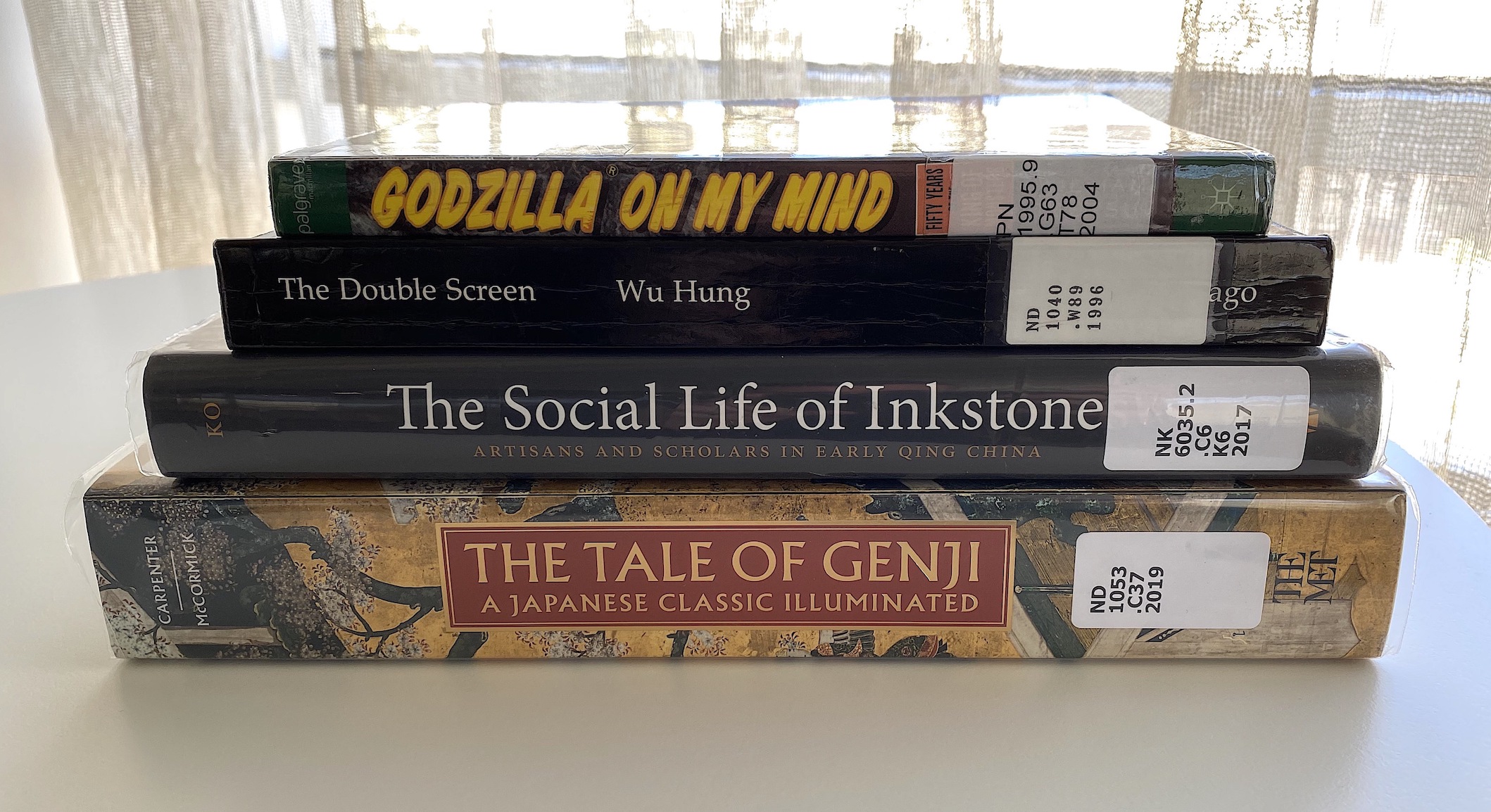
Wu Hung, The Double Screen: Medium and Representation in Chinese Painting (University of Chicago Press, 1996). "This text addresses Chinese paintings and their formats, focusing on the screen. Wu Hung studies paintings, not simply as images, but as objects.  By examining how the viewer's interaction with a work of art creates meaning, Wu Hung gives depth and specificity to the study of scrolls, screens, murals, and fans, among other painting formats."
 
Dorothy Ko, The Social Life of Ink Stones: Artisans and Scholars in Early Qing China (University of Washington Press, 2017). "Ko, a brilliant historian of China, writes about an important object for scholars throughout the history of China – the inkstone. By exploring the object and different histories of making, owning, and using inkstones, Ko writes a history of early Qing China that includes women, artisans, emperors, scholars, and merchants, always touching on the material object that unites these different groups."

Craig Clunas, Pictures and Visuality in Early Modern China (Princeton, 1997). "This book challenges how we define what a picture is and redefines the term "picture" according to how words and images were used in early modern China. Clunas breaks down the divide between artist and artisan, showing how high culture was incorporated into popular culture."

Francesca Bray, Technology and Gender: Fabrics of Power in Late Imperial China (University of California Press, 1997). "In her study of early modern Chinese history, Bray focuses on women and technology. Bray's work has opened the dialogue about technological innovations, and asks the reader to rethink ways textile artisans approached pictorial problems in their weaving, re-positioning pictorial problem-solving as technological breakthroughs in tapestry weave."

William Tsutsui, Godzilla on My Mind (St. Martin's Press, 2004). "Tsutsui, a renowned Japanologist, writes a joyful study of the famous movie kaiju. While focusing on Godzilla, the author incorporates political and cultural history as well as the history of filmmaking in the U.S. and Japan in the 1950s. This book provides the reader with a deeper understanding of how Godzilla was developed and became a beloved icon in Japan and the United States."

John T. Carpenter, Melissa McCormick, and Mónika Bincsik, The Tale of Genji: A Japanese Classic Illuminated (Metropolitan Museum of Art, 2019). "This catalogue for a recent exhibition at the Metropolitan Museum of Art offers a beautiful approach to images from "The Tale of Genji," the most famous work of literature in Japan. The exhibition explores how myths and stories emerged around the author of the tale and how the novel took on different meanings for different readers. This catalogue breaks new ground in giving historical interpretations for a wide variety of Genji images."

stack of library books

Learn more about the SCAD art history department.


Saif sees the light

March
3
2021
By
Tags:

Late last year, the NY-based clothing designer Wiederhoeft reached out to Saif Al-Sobaihi (B.F.A., film and television, 2017) for his lighting expertise as they photographed their Spring/Summer 2021 collection. "I told them I wanted to light the set with continuous light, using LED panels," says Saif, who minored in fashion photography at SCAD. "It's much smoother to the eye than the flashing lights used on most fashion shoots, and it means I'm not interrupting the photographer or models. The light is seamless and beautiful."

In a world where intense specialization is often a precondition of desirable employment, Saif is a multi-hyphenate lighting designer, composer, athlete, writer, and award-winning cinematographer. He dodges the dangers of dilettantism by stepping towards the light. Always the light.

"When you don't have confidence as an artist, you think you have to focus on one thing," says Saif. "With confidence comes the ability to conduct your talents in many directions."

Image from Wiederhoeft SS/21 | designer: Jackson Wiederhoeft, photographer: Paul Simon, chief lighting tech: Saif Al-Sobaihi.

Image from Wiederhoeft SS/21 | designer: Jackson Wiederhoeft, photographer: Paul Simon, chief lighting tech: Saif Al-Sobaihi.

From Jeddah, Saudi Arabia, Saif first came to the United States a decade ago to commit to an immersive ESL program in Georgia. On a day off, he went to lunch with a friend who insisted they stop by the SCAD Atlanta welcome center at 1600 Peachtree Street NW. "We went inside, and a recruitment representative approached me and handed me a catalog," Saif remembers. "I opened it and the first thing I saw was a picture of the SCAD equestrian team. I asked, ‘Where do I apply'?"

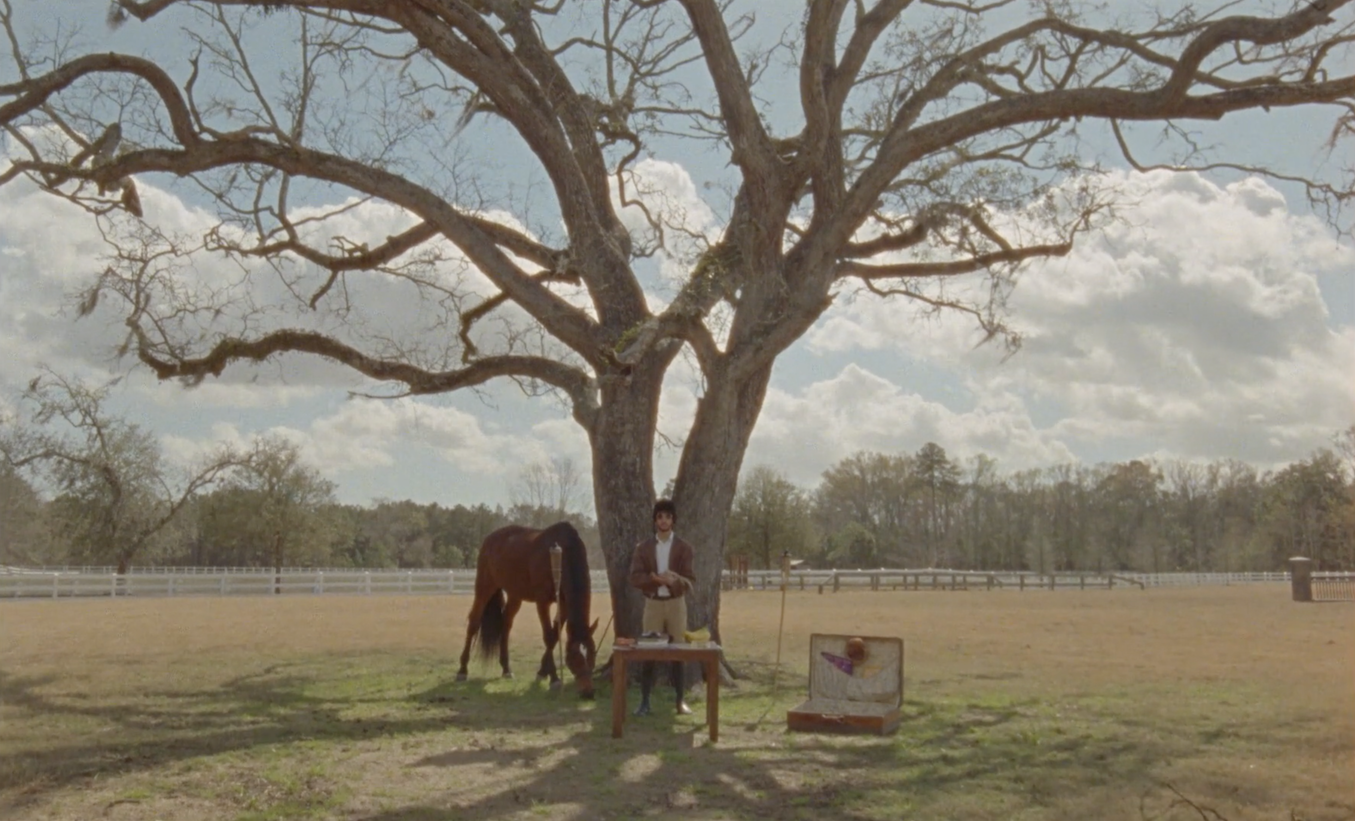
Having grown up riding, Saif was a natural fit for SCAD's national championship-winning equestrian program. As a film and television major, he collaborated on two 16mm films that incorporated his love of horses. "Hamood in America" is a wry short comedy starring Saif's younger brother Mohammed (B.F.A., fashion), while "Rider" is a mini-doc featuring SCAD equestrian captain Ryan Genn (B.F.A., equestrian studies, 2016). Both films showcase Saif's stunning sensitivity to the emotional and psychological properties of light.

"In one of my SCAD cinematography classes, [our professor] gave us a fantastic exercise. He handed us cheap, disposable cameras and said, ‘Make a scene, light it and compose it as beautifully as possible, as if you're shooting a film.' Those disposable cameras are flashy and weird and you can't see what you're shooting, but everyone in the class got incredible results. Trust your eye, love what you see, no matter the camera."

"Hamood in America" caught the attention of Steve Cossman, founder of the Brooklyn-based non-profit cinema arts organization Mono No Aware. Cossman made the film a selection at Mono No Aware XI Film Festival 2018, and invited Saif to lecture in analogue filmmaking, adding "educator" to his CV. "I teach workshops in 16 millimeter filmmaking," Saif says, "how to maintain the camera and lenses, how to edit, how to create a film from the moment you order your stocks until your film is finished, printed, and being screened."

As the conversation winds down, Saif plays some instrumental tunes he's released under his moniker TheSaif, including his new single "Freelance Angel." Cool, warm, laid-back, and thoughtful, with the bluesy R&B feel of Tom Scott's "Today," the music captures the same lambent, radiant qualities as his cinematography.

"Instead of being a single-focus artist, every artist should explore what they want," Saif says. "By exploring different disciplines, you understand how they go hand in hand. Art is more fluid now."

Still from "Hamood in America" (2017) dir. Ryan Hance, produced and photographed by Saif Al-Sobaihi.

Still from "Hamood in America" (2017) dir. Ryan Hance, produced and photographed by Saif Al-Sobaihi.


Hanna Allen: the perfect twist

March
1
2021
By
Tags:

"In my heart, I will always love toilet paper," says Hanna Allen (B.F.A., sculpture, 2020).

Allen has found a more refined use for Scott Single Ply, transforming standard white rolls into fine art. The Atlanta-based sculptor's pieces are strong enough to support climbing, swinging, and a child's embrace, yet are ruined in a light mist. Her sculptures can stand fifteen feet tall or be worn by a bride walking down the aisle. With each twist, braid, and plait, she shares herself with the viewer.

At first glance, viewers might not notice Allen's unusual chosen medium. Her pieces closely resemble macrame, fooling the eye for a moment of charmed disbelief. Whether umbrella, rope, or ladder, her unique pieces woven from toilet paper can contain up to forty rolls and take weeks to complete.
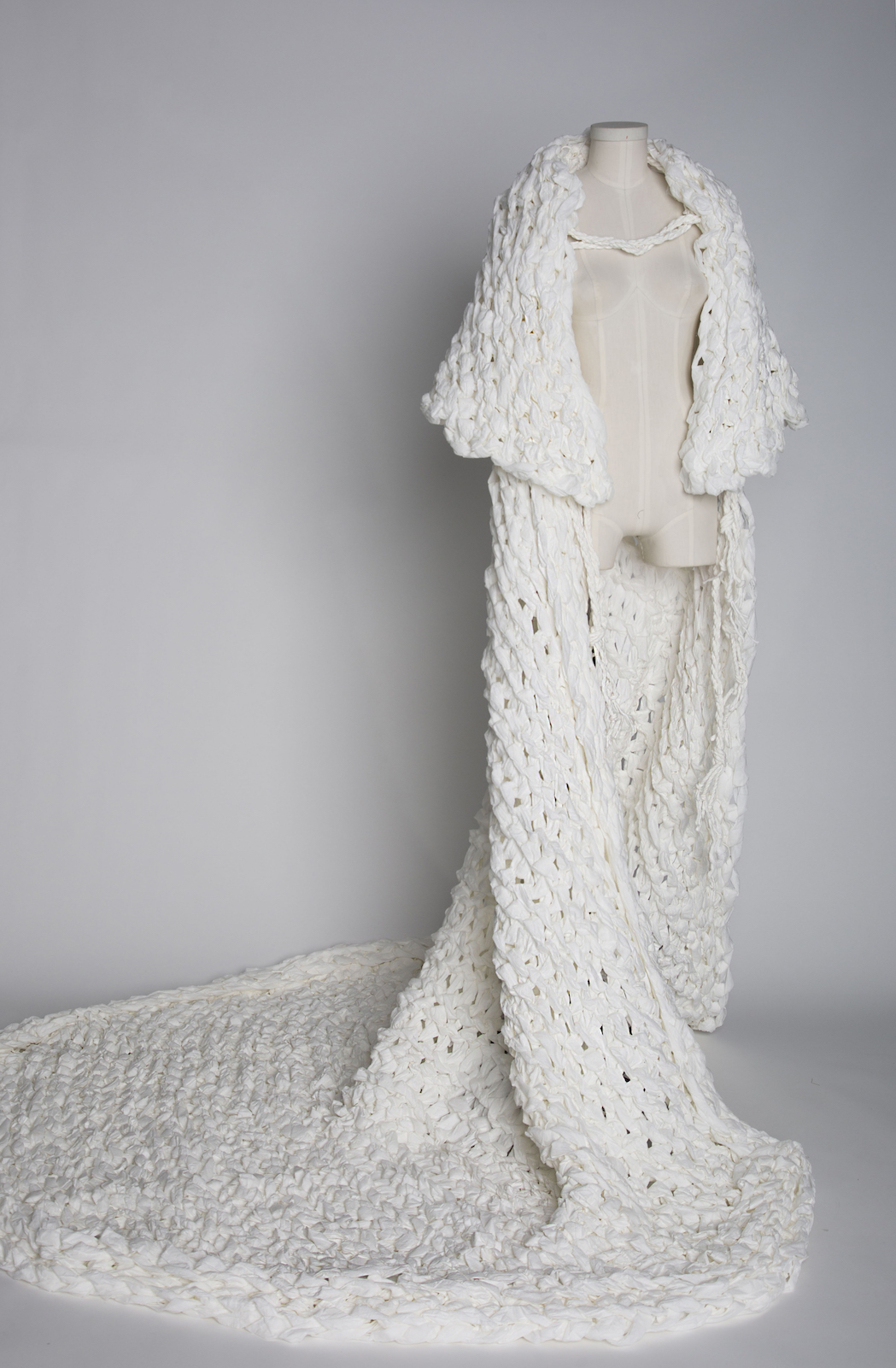
toilet paper sculpture by Hanna Allen

"Coronation Robe (Worth)," toilet paper, 2019.

Hanna Allen:

Toilet paper has a specific use. We all know what it is and why we need it. It is meant to be disposed of, flushed down a drain, never seen again. There is nothing inherently cool or noteworthy about the roll hanging on the wall, yet what would we do without it? Like most things in life, toilet paper can mean more if you let it.

The summer after I graduated high school, I was diagnosed with narcolepsy. I was planning to attend SCAD Savannah and swim on the swim team. Out of an abundance of caution, my mother persuaded me to change my plans. Later that year, I slipped and fell on some ice and received my second concussion. There I was, at home in Atlanta, not sculpting, and not sure what to do next. So, I re-applied to SCAD Atlanta and I got in. 

SCAD allowed me the freedom to experiment and find my creative voice. One night while I was working on a class project, I remembered an episode of Myth Busters where a prisoner used toilet paper to escape. I went and bought toilet paper to see if it would actually work. I didn't know what I was doing. I just started twisting.

The simple act of twisting the toilet paper together affected me. The toilet paper rope became stronger as I braided the three cords together. I watched this weak and disposable item become strong, intricate, and beautiful. I felt myself connecting with the experience in a way that moved me on a spiritual level.

Flash forward to 2018, my junior year at SCAD. I traveled to Nepal for the Gallery Mcube Interdisciplinary Students Residency. I was encouraged to go by the leaders of the SCAD Atlanta InterVarsity club, a campus ministry group. 

I was there with no tools and no SCAD studio to fall back on, wondering what I could do. I began sitting on my floor, twisting toilet paper into cords. Eventually the cords of three became cords of nine, eighty-one, and two-hundred and forty-three. My final product was a tree that suspended from the ceiling called "Chautari." It still hangs in Kathmandu today, it was too heavy to take home.

When I back to Atlanta, I made a swing, a ladder, and a tug-of-war rope. It was incredible how strong the pieces were. Then my focus shifted to the fragility of the pieces. Yes, they were strong, but only if they were dry. I began my Destruction Series with a coronation robe I titled "Worth." I wove an intricate garment and then walked outside and stood in the rain, allowing it to tear and fall apart.

As the garment deteriorated and failed, I felt a sense of relief. I felt myself let go of the stresses of being. I had made something I loved and let it go. I found my power as an artist through my Destruction Series. My beauty and worth aren't tied to my accomplishments as a sculptor. I am me. I am a woman of faith, a friend, and a creator.
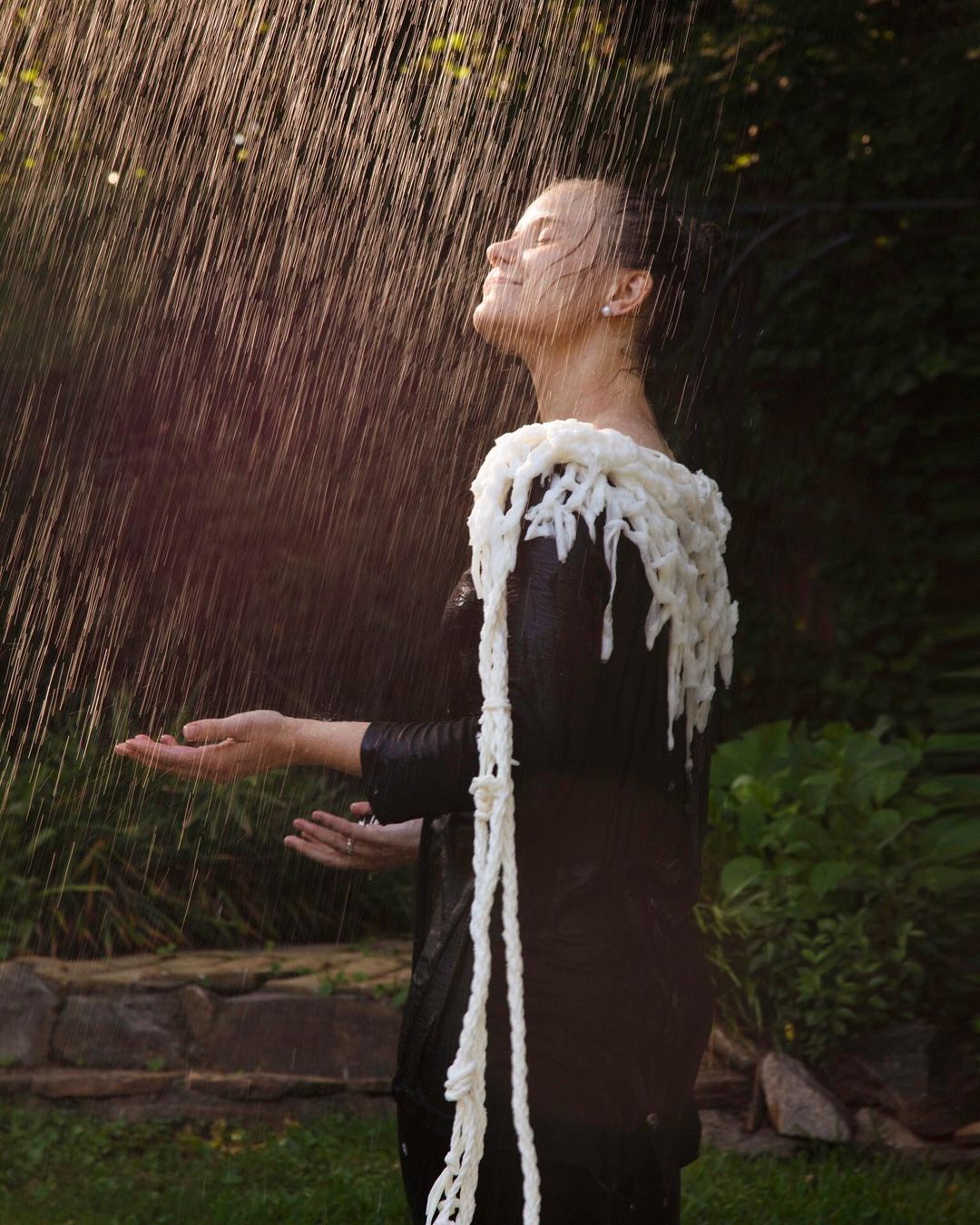
portrait of Hanna Allen

Hanna Allen.

Photograph by Cristina Mora (B.F.A., photography, 2019).
Jenn Lee: excellence in user experience

February
10
2021
By
Tags:

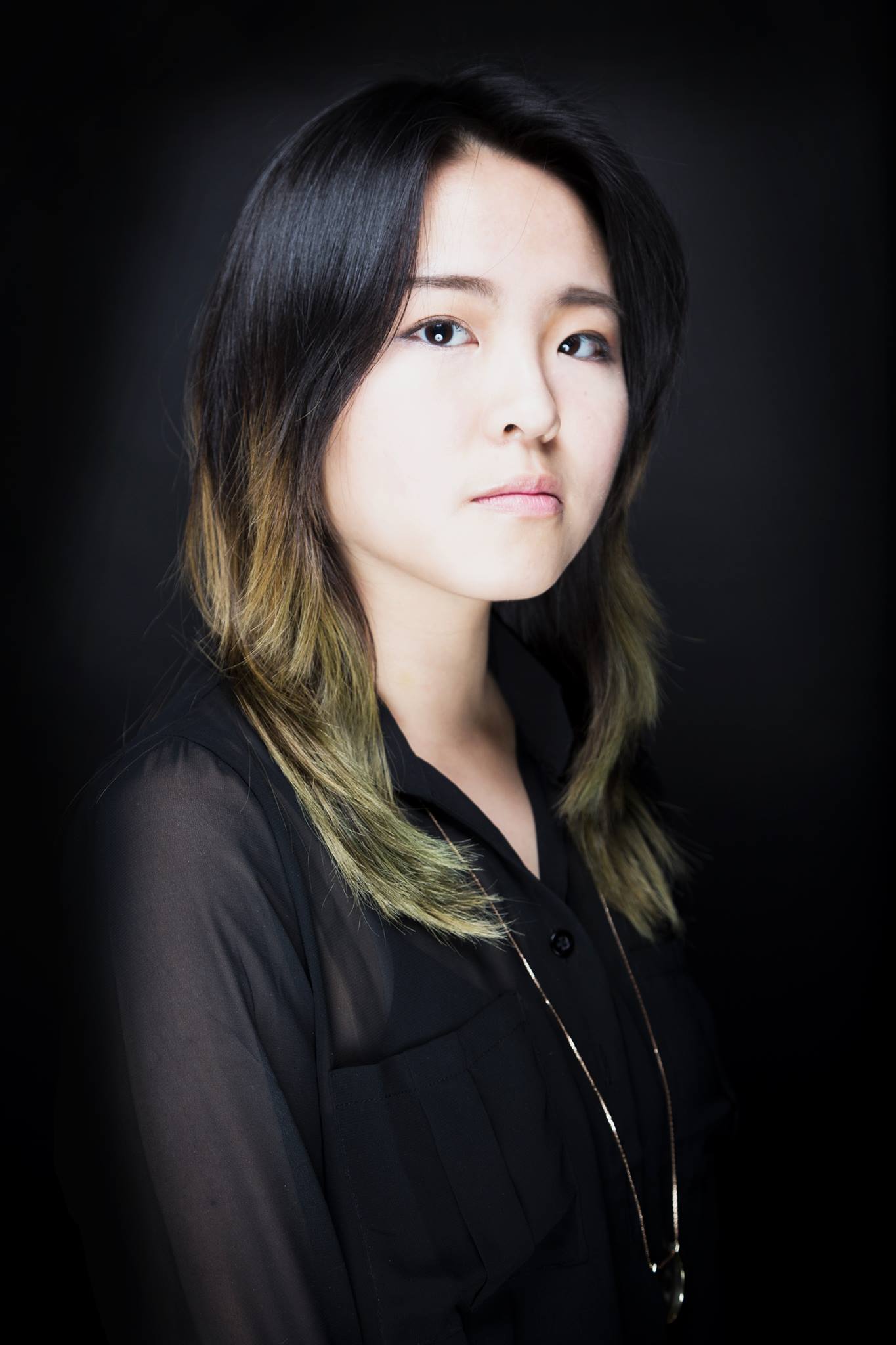
"The heart of UX design is understanding and solving needs," says Jenn Lee (B.F.A., user experience design, 2019). "The simplicity of the task combined with the complexity of the technical process is what I love about my career."

A senior product designer at C3.ai in Redwood City, California, Lee works to facilitate small companies interfacing with artificial intelligence. She previously worked on UX projects with Google, IBM Watson, and Ford Motor Company, focusing on improvements to mobility assistance and IoT data visualization platforms. Chair of the SCAD UX design department BC Hwang praised Jenn as "one of the most promising UX designers this century."

Jenn Lee:

I grew up in the Bay area, the daughter of an engineer, surrounded by technology. At the same time, I enjoyed expressing myself through art. When I found SCAD, I knew I found a place where I could blend these disciplines together.

I took Human/Computer Interaction (IACT 315) with professor BC Hwang my sophomore year. The class was my first exposure to the full depth of the UX process. We had ten weeks to "create something humanity needs."

I worked to understand each step of the UX design process. Beginning with the initial research phase, then iterating the design, and finally creating a prototype, I did it all. Professor Hwang helped me understand how to research an idea and improve the concept, empowering me to present something I was proud of.

That's when it clicked. The work was iterative, collaborative, and incorporated hands-on design components. This was the type of career I wanted.

I participated in a SCADpro partnership with Ford Motor Company my junior year. My team researched and developed a personal voice assistant. The assistant would, over time, provide a multimodal mobility experience, unique to the individual user.

Senior year, I worked on a project for Google Maps. The team at Google asked us to reimagine the experience for 18-to-24-year-olds, specifically urban users. We conducted a lot of interviews and worked closely with the development team to get the final results. Google loved our ideas, and you can see components of our project on your phone now.

Those experiences prepared me for life after graduation. When I got to IBM, I knew how data shaped an initial idea, and how that idea needed to be tested, and tested again. SCAD taught me how to present my ideas and how to shape and tell the story of the product.

I entered the workforce with a solid foundation and transferable skills. Today, I am senior product designer at C3.ai. focused on democratizing AI. I want to empower people to do things that traditionally only very technically savvy individuals could do. I am taking complex concepts and making them more accessible for people who may not have STEM related backgrounds.

I want to make sure that I make decisions that connect my passions and aspirations. I went to SCAD to combine my interests into a career. Now that I'm living that reality, I'm determined to make a positive difference in this industry.

portrait of Jenn Lee

Visit Jenn Lee.

In 2015 SCAD, in collaboration with Google, launched the first UX design degree program at the university level. Learn more about the program here. 

Banner image: user flow storyboard created by Jenn Lee for IBM Watson, Internet of Things (IoT), 2020.

Nathaniel Adair's 'Balancing Act'

February
1
2021
By
Tags:

"I take a complicated thought, refine it, then I refine it again," says Nathaniel Adair (B.F.A., sculpture). "I repeat that process until I reach the very essence of the idea."

Nathaniel is a sculptor. A storyteller. A new disciple of 3D printing. He uses acrylic, wood, iron, and paint to share his perspective with the world and is combining traditional techniques with cutting edge technologies. A student at SCAD Atlanta, he creates inside SCAD Studio, the 16,700-square-foot industrial design and sculpture facility in Midtown Atlanta, considered one of the finest in the Southeast U.S.

In his own words, Nathaniel is committed to "exploring new ways to tell stories through the physical form." He is a soft-spoken nature lover, and highly regarded by his professors and peers.

Nathaniel Adair:

I wanted to pursue art from a young age. I attended Osceola County School for the Arts in Kissimmee, Florida, and have always been drawn to sculpture. I feel as though sculpture is a literal extension of me. It's physical. It's tangible. It takes up space. Where it is, I am too. It tells my story.

This year, I have focused on pushing myself to try new things and really showcase the skills and techniques I've learned at SCAD. Professor Chris Rothermel has helped me focus on getting to the emotional core of my pieces. Our conversations have challenged me to strip away nonessential components. The result is the essence of the piece itself.

I worked on several pieces this past year that showcase my artistic journey. The pieces tell the story of 2020 and the world as I am experiencing it today. They reflect highs and lows and my artistic progression.

I had never worked with 3D printers or laser cutting machines before coming to SCAD. SCAD has allowed me to explore not only my desire to create, it has also given me the opportunity to collaborate with other incredible artists. I got to be a part of a SCADpro project where I worked alongside industrial design students to create bronze coins. I was able to show my fellow students the traditional green sand approach to bronze work, and they showed me how to 3D model. It gave me access to a whole new set of skills I didn't have before.

This year, I wanted to utilize those tools in combination with more traditional materials like wood and iron. As I got more comfortable with the tools, I began incorporating new elements. Paint. Plastics. Fiberboard. Having the ability to bring in new elements allowed me to play with shapes, light, and space. In "Frozen" I brought acrylic and wood components together to create a water scene. In a piece called "Balancing Act" I incorporate the two halves of myself into one cohesive piece, the perfect circles slowly shrinking and warping into the shape of creativity and perfect imperfection.

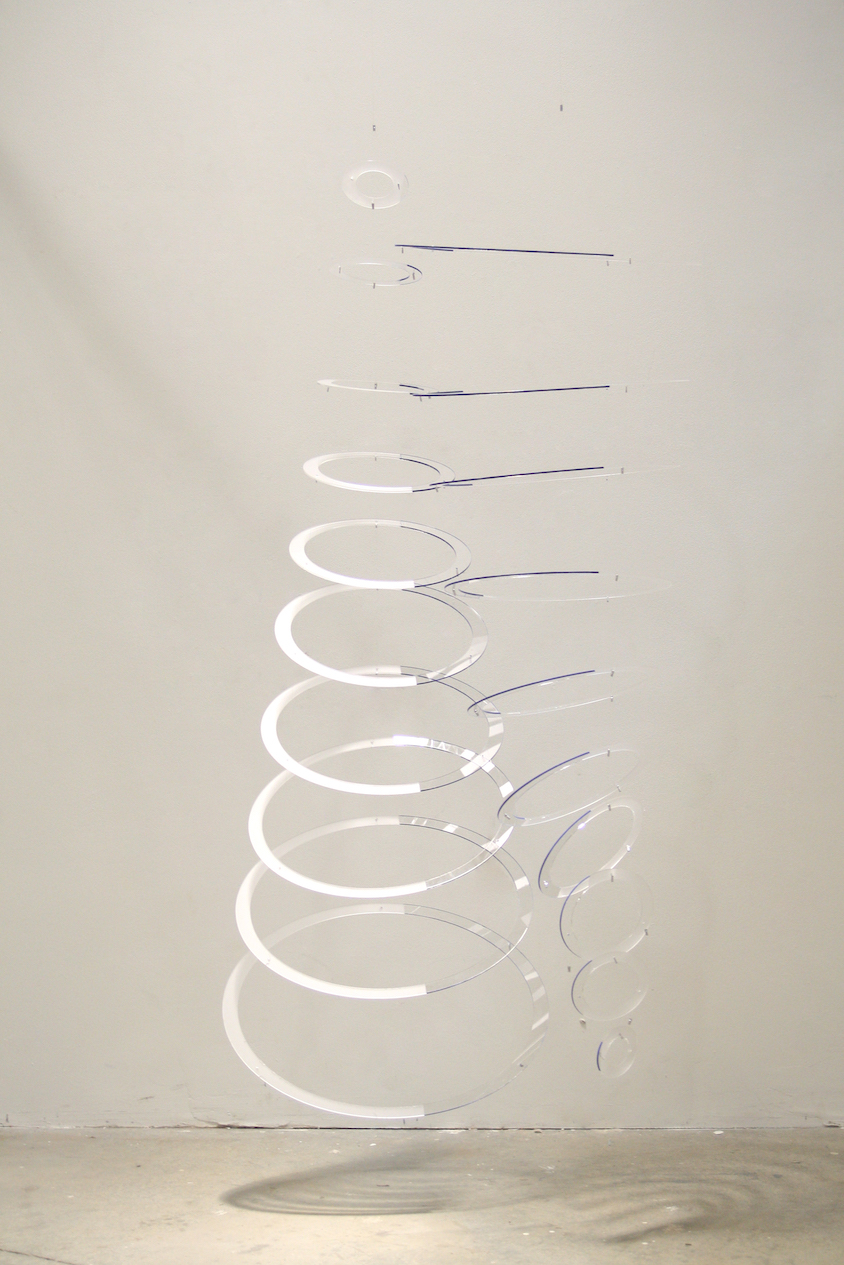
"Dancing," 2020, acrylic and paint, 6’x 4’ x 2.5’.

"Dancing," 2020, acrylic and paint, 6’x 4’ x 2.5’.

My year's work concludes with "Dancing": twenty perfect circles floating, twenty circles for my age, one set ascending and the other descending, symbolizing the ups and downs we face in our lives. The column of air formed between the two represents my family and friends who have supported me.

My fine art education and my experience as a SCAD sculpture student has prepared me to turn rough ideas into final deliverables. After graduation, I envision myself creating as part of a team, sharing my creative process with others. Always learning, always sculpting.

Nathaniel Adair

Visit Nathaniel Adair.

Learn more about SCAD sculpture.

Banner image: "Balancing Act," , 2020, acrylic and paint, 18’’x 3’ x 16’’.

Najja Elon Lawson's path less traveled

January
25
2021
By
Tags:

As long as Najja Elon Lawson's art is on display in Augusta Regional Airport, no passing traveler will have a mundane day. The presence of her paintings could even be a metaphor for her own vibrant and unconventional journey: After five years in the U.S. Navy, Lawson (B.F.A., graphic design) "knew I wanted to study art, and I liked how open and spacious SCAD Savannah is, how it's part of the city itself." She enrolled in fall 2019, and has been a Bee in clover ever since.

Najja Elon Lawson:

I'm originally from Philadelphia. When I graduated from Cheltenham High School, I realized I wanted to see the world, so at age 17 I joined the Navy. My first two years in the Navy, I lived in Japan. The workload in the Navy is so intense it's hard to explore your own hobbies. Then in 2016, while stationed in Jacksonville, I went on a whim to a "Painting with a Twist" event. I was so into it! I thought wait, I need to really do this.

When I came to SCAD, I didn't have any knowledge of digital applications or digital art, I just knew I wanted to broaden the scope of my abilities. I began investigating the Adobe Creative Suite, and earned my Adobe certification. I have a separate romance with the app Procreate, which I use to make work that's a digitally rendered version of my style.

Last year I saw a post online that Augusta Airport was looking for artwork. I thought, the worst they can do is say no. I submitted my portfolio, and a month later received an email from the airport public relations manager Lauren Smith saying: "We'll show your artworks as long as they fit the dimensions of the display case." I picked three paintings, drove them there, and as soon as she saw them, she said, "YES!"

The larger painting is called "Living Later." It's about how some people try to stretch their youth throughout their entire lives. The painting "Oluwatoyin Salau" is a portrait of a BLM activist who was murdered. I want people to engage with the work and remember her name and the work she did.

It can be hard to make your work standout online because the internet is such a crowded place. The opportunity at Augusta Airport showcases how diverse my art is, and has made me more excited to experiment. That space is traversed by people nonstop. I mean, it's an airport!

In the Navy, I traveled to 23 countries. In the Philippines, there are people darker than me. In Malaysia, I met people with my skin tone. Places you wouldn't expect "us" to be. I think it's important for people to see different colors of Black. That's why I don't necessarily paint Black people black.

Najja Elon Lawson, "Target," 2020, oil on canvas, 30 x 40 in.

Najja Elon Lawson, "Target," 2020, oil on canvas, 30 x 40 in.

I'm attracted to color. Colors that complement. Colors that differ. I don't like to stick to one color, because your relationship with that color might be different than mine. The point of having a multi-hued palette is to allow people different interpretations of the work. I want you to have your own experience.

I didn't realize how many things I wanted to do until I got to SCAD. There are so many options here. This quarter, I'm taking Topography 1: Form & Space with graphic design professor Stephan Geissbühler, and Painting for the Non-Major with professor Denise Carson. I write down what my professors say and apply it to my art, even in different media. I want to be multidimensional.  I'm committed to learning new things.

Najja Elon Lawson

Visit Najja Elon.

Photos of Najja: Erin White (B.F.A., photography, 2019).
 

Lubomir Kocka: Reading Creatively

January
19
2021
By
Tags:

"I was born a visual storyteller," says film and television professor Lubomir Kocka. "I inherited that quality from my grandfather, who was a painter and a priest. The frescos he painted almost a hundred years ago are still in churches in Vojvodina, Serbia. The Biblical stories he narrated launched my imagination."

Growing up in the former Czechoslovakia, Kocka (pronounced COAT-ska) was driven to improve his reading skills by his parents, who emphasized the relevance of literacy to artistic pursuits. "So I read everything, even the Communist newspaper Pravda."

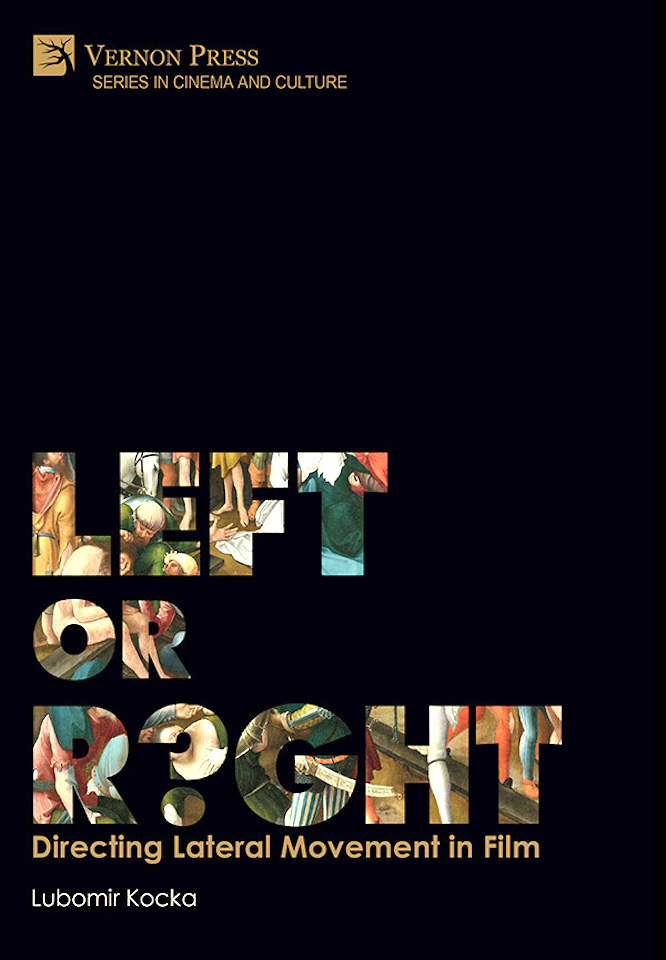
In addition to being a lauded director of feature films and television series, Kocka is the author of the new book Left or Right? Directing Lateral Movement in Film (Vernon Press, 2020). For his Reading Creatively selections, he reflects upon works that comprise his own formative "firsts."
 
Pavol Dobsinsky, David L. Cooper (ed., transl.), Traditional Slovak Folk Tales (Routledge, First American Edition, 2001). "My first encounter with literature, and the first bedtime stories my father read to me, and that I later read to both my sons, along with Grimms' Fairy Tales and Hans Christian Andersen's Fairy Tales. Along with radio dramas and children's vinyl LP records, these tales significantly influenced my visual thinking and storytelling skills."


Edgar Rice Burroughs, The Return of Tarzan (A.C.. McClurg, 1913). "The first book I read multiple times. Up to that point, when reading a book and nearing the end, I slowed down because I did not want to leave the characters. My father told me, 'If you want to meet a novel's characters again, you can start reading the book again.' Such a liberation! I still reread great books today."

Norman Mailer, The Naked and the Dead (Rinehart & Company, 1948). "A foot soldier in a platoon is walking through bushes when he gets his foot stuck in the branches of a shrub. But when he tries to pull it out, he realizes that his foot is trapped in the rib cage of the dead enemy. This journalistic visual detail left an unforgettable impression on me. This was the first book where I realized the power of visual writing, and how a literary detail can be comparable to a close-up in film."

E. R. Braithwaite, To Sir, With Love (Bodley Head, 1959). "The first book I read after seeing the film, Braithwaite's novel tells the story of a dedicated Black teacher who deviates from the standard curriculum to discuss issues with his students like poverty, sex, love, and death, while slowly breaking down the barriers of racial prejudice. I don't remember how many times I saw the 1967 film starring Sidney Poitier in the movie theater, crying each time. Reading the book, I cried again. That was the first time I realized a written story can be interpreted differently by a screenwriter or director."

George Orwell, Nineteen Eighty-Four (Secker & Warburg, 1949). "Orwell's dystopian political science fiction classic was the first samizdat I read. Living in a socialistic country with a real experience of violations of freedom of expression, the cult of personality, and culture of survival did not make me feel that I was reading something unique. I felt like I was living it."

John Irving, The World According to Garp (E.P. Dutton, 1978). "The first book I read after surviving a helicopter crash while scouting locations for Mountain Rangers, a TV series I directed. Laid up in the hospital with two broken vertebrae, I was visited by my friend, the screenwriter Zura Krizkova, who told me, 'It was not your time to die, and it is not time to be gloomy, you have to read this book.' I was in no mood to laugh, but I read it in one breath."

ubomir Kocka's book, Left or Right? Directing Lateral Movement in Film
Lubomir Kocka's new book, Left or Right? Directing Lateral Movement in Film, is the work of a creator and educator who has dedicated his life to the art of storytelling. The book includes a chapter-length contribution from fellow SCAD film professor Stephen Stanley on LGBTQ+ film. Learn more about the book at the official Vernon Press page, and from this brief talk by the author himself.


Vek Neal: empower ranger

January
7
2021
By
Tags:

"I consider myself a hype man for creativity," says Vek Neal (B.F.A., illustration, 2004). "My aim is to listen to students, ask the right questions, and provide insights based upon my experiences."

As the new SCADamp visualization coach, Atlanta-based Neal conducts one-on-one sessions with students looking to improve their professional presentation skills. This winter quarter he will also lead two recurring workshops, Design Your Deck and Dress the Part. Believe it: Vek's colossal charisma feels transferable even via Zoom. And you can bet he'll be wearing a snazzy blazer when you see him.

Vek Neal:

The metaphor I use for a visualization coach is a trainer who helps you get in shape. They're not going to lift the weights for you, they're going to give you the techniques that allow you to exercise properly and perform your best. Visualization coaching is about best practices and starting great routines early on, so when you present within your SCAD academic experience and in the professional world, you perform in a way that comes naturally.

My sessions with students are 20 or 40 minutes. Within that time, we talk about the work they're focused on. My first priority is to listen to the student for what they're trying to amplify. That's when I ask questions and start bringing in tips. As a SCADamp visualization coach, I'm not here to place students into a box, I'm here to help them find creative solutions in their own voice. What's really going to sell who you are? You have to be authentic.

My professional skill set includes illustration, photography, video editing, strategic planning, marketing, graphic design — all of which are art. I've always been like a Swiss army knife. Give me a moment, or a day or week or month, and I can learn new tasks. It's the challenge that keeps me excited.

SCAD has grown so much since I graduated in 2004. SCAD Atlanta and SCAD Savannah are different in terms of location and layout, but the energy and the creative activity are united. I recognize myself in the students, because I'm also committed to expressing myself and doing my best work.

Everybody on Zoom, everyone physically walking into a space, we're all here because we want to be. SCAD has always been successful walking into the unknown, and providing new outlets for learning. The fact that SCAD is able to create new, innovative platforms to educate is so impressive.

My truth is aligning vulnerability with strength. There's a level that you have to go to in order to be present within your creativity and elevate your work. If I'm coaching you, I want you to go past what you might normally do, because that's what's really going to make people want to work in partnership with you.

With students, I'm coming from a place of, I want you to win. It's as simple as that. I want you to win.

Students can email Vek directly at [email protected] to arrange a personal coaching session.

SCADamp logo

Sign up for SCADamp workshops here.

(Image courtesy: VEKKING)


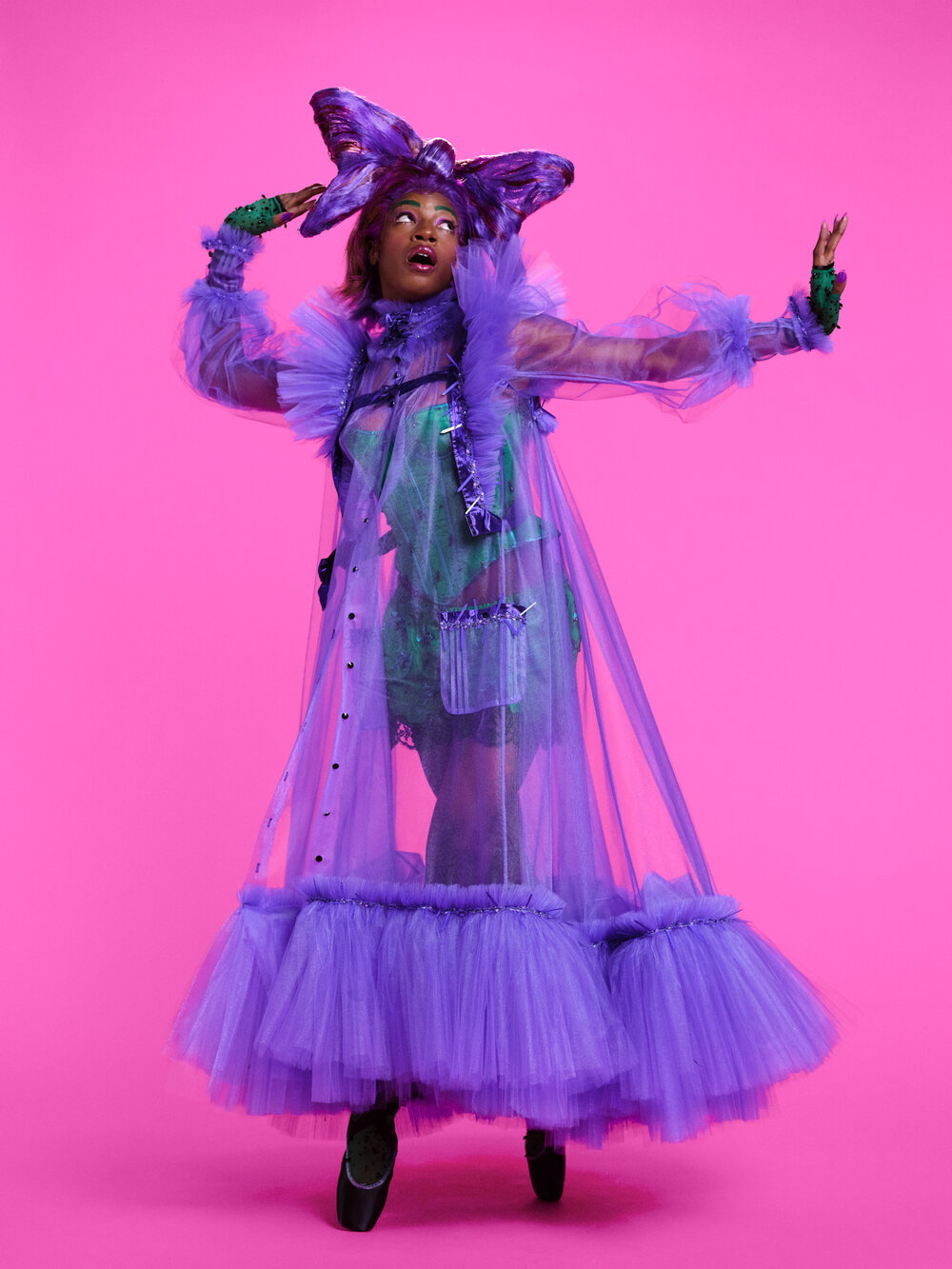
'Fashion in Frame' in fine form

January
4
2021
By
Tags:

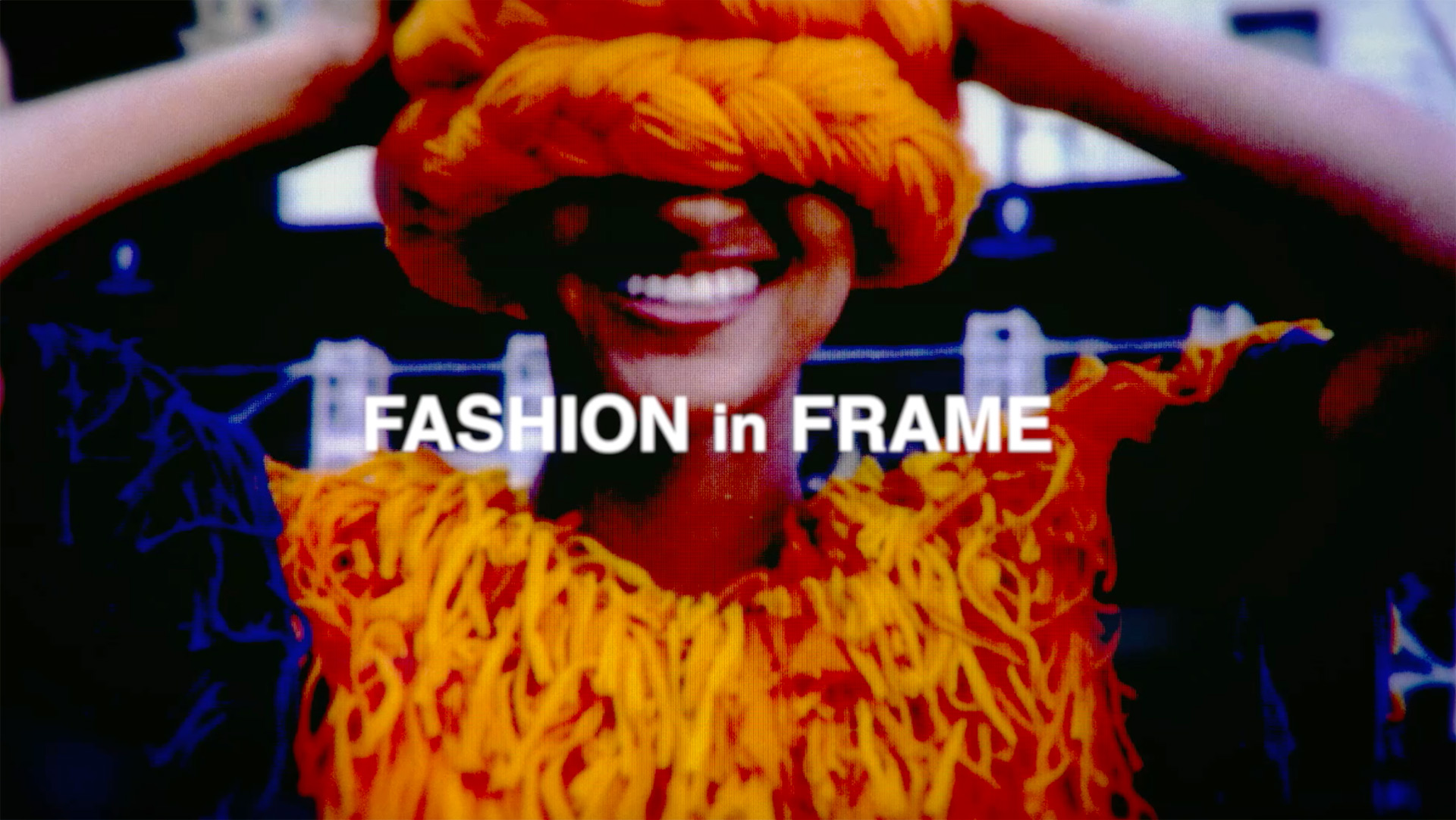
"It's almost a giant reveal of who you are," says Max Condon (B.F.A., fashion, 2020) at the beginning of the scintillating short film Fashion in Frame. Condon is speaking about what SCAD fashion students work towards for four years: their final collections. Yet when traditional, beloved runway shows disappear, what becomes of that reveal?

Presented by SCAD, Fashion in Frame is a film of incredible vibrancy and vitality — and due to circumstances, a pronounced poignancy. The cinematic showcase of innovative designs by SCAD fashion students and alumni features user-generated content captured by in-demand models and portraits by acclaimed photographer Alexandra Arnold (B.F.A., photography, 2014). Fashion in Frame heralds the evolution of the virtual fashion scene.

The film, which ​premiered in December to significant acclaim​, stars emerging and established fashion icons Kate Bosworth, Blake Gray, Lauren Chan, Emanuela de Paula, Nikita M'Bouroukounda (B.F.A., ​accessory design​, 2013), and Julia Wheatley (B.F.A., ​industrial design​, 2018). These alumni and influencers share their favorite looks from the collections, wearing innovative designs by SCAD fashion, accessories, and jewelry students and recent alumni.

"Design creativity cannot be constrained — even by a pandemic — as evidenced by our most recent fashion, accessories, and jewelry design alumni," said Michael Fink, dean of the School of Fashion. "As our industry grapples with its future, this collective body of work looks forward, celebrating the unique spirit that we all possess. ​Fashion in Frame revels in the energy and innovative ideas that these emerging designers are now bringing into a changing industry. Handcrafted and exquisitely produced, each piece is guaranteed to make you live your life fuller, dream bigger, and fall in love with fashion all over again."

With​ Fashion in Frame, the university's top-ranked School of Fashion offers a bold new answer to the future of the fashion experience, proving that no matter the circumstances, creativity finds a way. As Dean Fink said, "This has been a great turnaround moment for our students to deliver their vision."

The SCAD School of Fashion emphasizes real-world expertise. Students study sartorial history and process, meet career-making brand reps and editors, and get one-on-one mentorship from leading designers including Mary Katrantzou, Philip Lim, Brandon Maxwell, Miuccia Prada, Christian Siriano, and Vivienne Westwood. SCAD fashion alumni helm international houses like Chanel, Jean Paul Gaultier, Thom Browne, and Marc Jacobs, lead powerhouse brands including The Row and Anthropologie, and dress cultural legends like Beyoncé, Michelle Obama, Zendaya, Rihanna, Heidi Klum, and Tracee Ellis Ross. SCAD fashion courses translate seamlessly to SCADnow online learning, encouraging students to develop the ingenuity, flexibility, and adaptability they need to succeed.

film still from fashion in frame

View Fashion in Frame.


Top Ten Posts of 2020: Student Work

December
21
2020
By
Tags:

It's the time of year to reflect on the accomplishments of our incredible students. Speaking with them (Zoom counts!) about their process and projects is one of the real treats of being part of the SCAD family. Here are ten memorable posts from 2020 that focused on student work.

Devon Vander Voort's Museum Mission: This museum studies minor (B.F.A., art history) presented her project "An American Tail Immigration Brochure" at this year's Southeastern Museums Conference.

Shark Tank of Wellness Winner Samii: Krysta Silva (B.F.A., advertising) collaborated with fellow SCAD Atlanta students Daranie Mor (B.F.A., advertising) and Megan Ip (B.F.A., advertising, 2020) to create Samii, first-place winner at the 2020 Global Wellness Summit.

Open Studio spotlight: "lé dieguê": SCAD Fall Open Studio artist Diego Cardenas (M.F.A., painting) enthused about the power of murals.

AnimationFest spotlight on 'Bearly': Producer Cameron Brown (B.F.A., animation) and director Cherry Zhou (M.F.A., animation) decided not to hibernate, and instead discuss their film about a bear who similarly refuses sleep.

Enya's themed entertainment journey: Yun Enya Huang (M.F.A., themed entertainment design) wrote about being an international student and learning to translate the theme park experience in a diverse world.

Jaylyn Lassiter: Open Studio spotlight: Virginia native Lassiter (M.F.A., painting) celebrated the “incredible feeling” of her new work connecting with her audience.

Actors grow 'Closer': In the tantalizingly brief window this year where live theater was a thing, Clare Tassinari and Sarah Smeltzer Wright (M.F.A. performing arts) brought the house down with their production of Patrick Marber's "Closer."

Erin Gabrielle Tutcher: A couch to faint for: Fearless fabricator Erin Tutcher (M.F.A., furniture design) put in the hard work, by hand, to make her dreamy furniture come to life.

Mora Medina talks Walky: Award-winning designer Armando Mora Medina (M.F.A., furniture design) decided that instead of reinventing the wheel, he'd simply to make the best chair around.

Lina Deeb Forrester's deep dive in the Kravet archive: SCAD fibers building Pepe Hall was transformed by Lina Deeb Forrester (B.F.A., interior design), who curated a display of fabrics from the archive of industry-leading textile company Kravet.

Thank you for following SCADworks this year...see you in 2021!