Skip to main content Accessibility Policy

Enter 'SplatGarden'

July
21
2026
By
Tags:

Across the uncanny valley lies the beautiful garden, a place where grape hyacinths waver before a gorgeous gazebo, and stunning sunlight stirs the pistils of daffodils. SplatGarden beckons.

"We built the 3D environment in Unreal Engine, then trained it into millions of Gaussian Splat points that recreate the scene," says Danci Shen (M.A., interactive design and game development, 2026).

"We explored how to pair it with Houdini simulation to have elements move," adds Itim Kongsakulvatanasook (M.F.A. visual effects).

In early 2026, the two creative technologists joined five fellow SCAD students during a 20-week period to build the interactive environment called SplatGarden. Utilizing AI-driven content creation, 3D Gaussian Splatting, FX simulation, and live interaction, the team engaged Houdini, Unreal Engine, and OpenUSD to author a stunning environment, powered by NVIDIA RTX 6000 Blackwell GPUs in SCAD's AI Lab.

Ashley Goldstein, lead tech marketing engineer, NVIDIA Omniverse, observed: "The work SCAD students have done is eye-opening. To see [Gaussian Splatting] in another creative light is transformative — there's no other word for it."

SplatGarden daisy

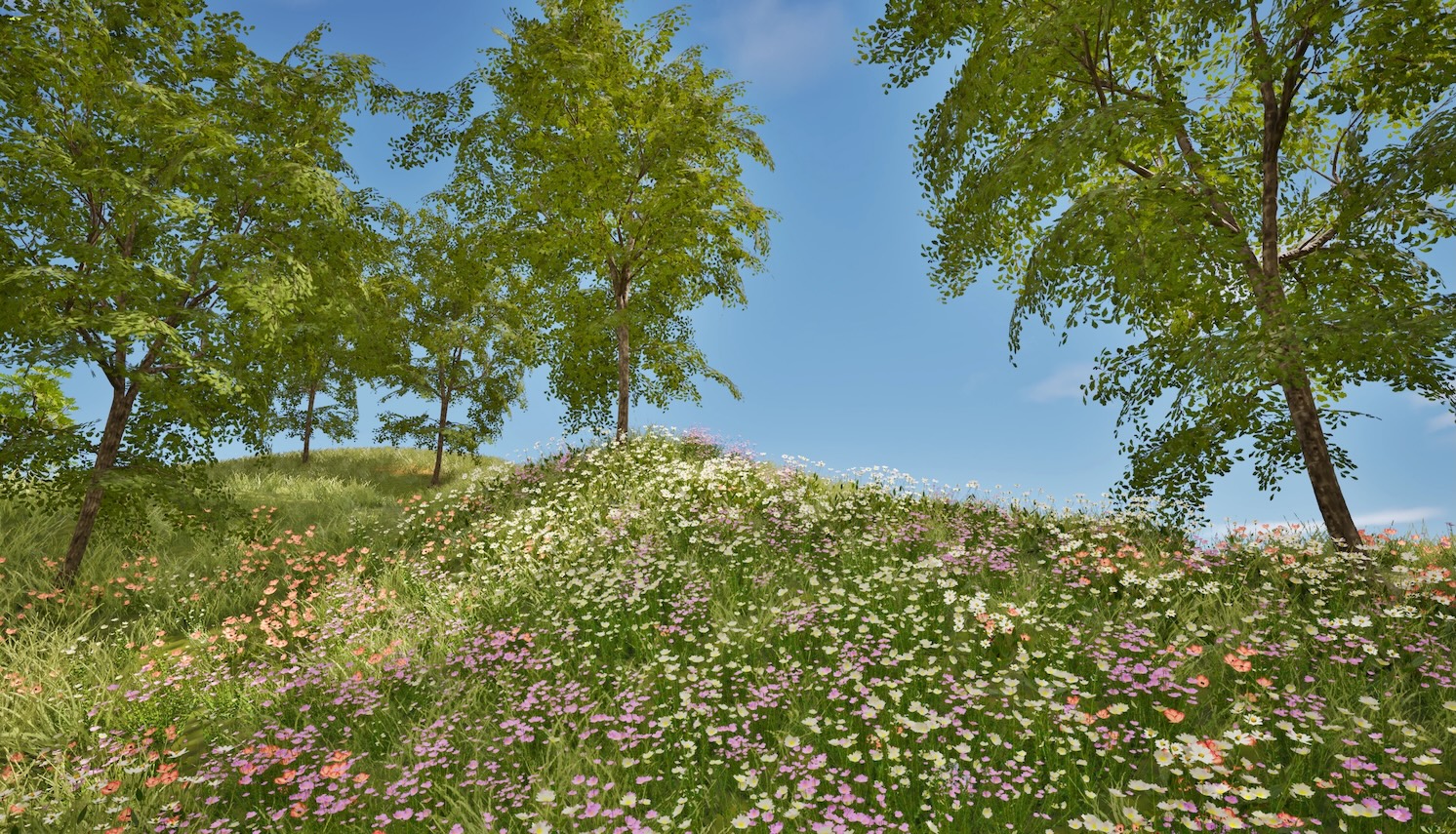
Daisy chain: still image from SplatGarden with painterly detail.

Intentional collaboration feeds creativity. Professor of visual effects Dr. Deborah R. Fowler teaches the graduate course Procedural Modeling and Animation for Production (VSFX 721), the proving ground for additional SplatGarden team members Yiqi Zheng (M.F.A. visual effects), Yiyi Long (M.F.A. animation), Yichen Shi (M.F.A. visual effects), Xinyi Liang (M.F.A. interactive design and game development), and Ben Jones (B.F.A. visual effects).

"Each member was selected based on their thesis topics and research interests, with their specific area of specialization, all under a theme of plant visualization and emerging technology," Fowler says, sounding a bit like Professor Xavier assembling the X-Men. "Our goals were to integrate AI techniques and USDs into the pipeline as well as to create a visual that would bring the individual work together."

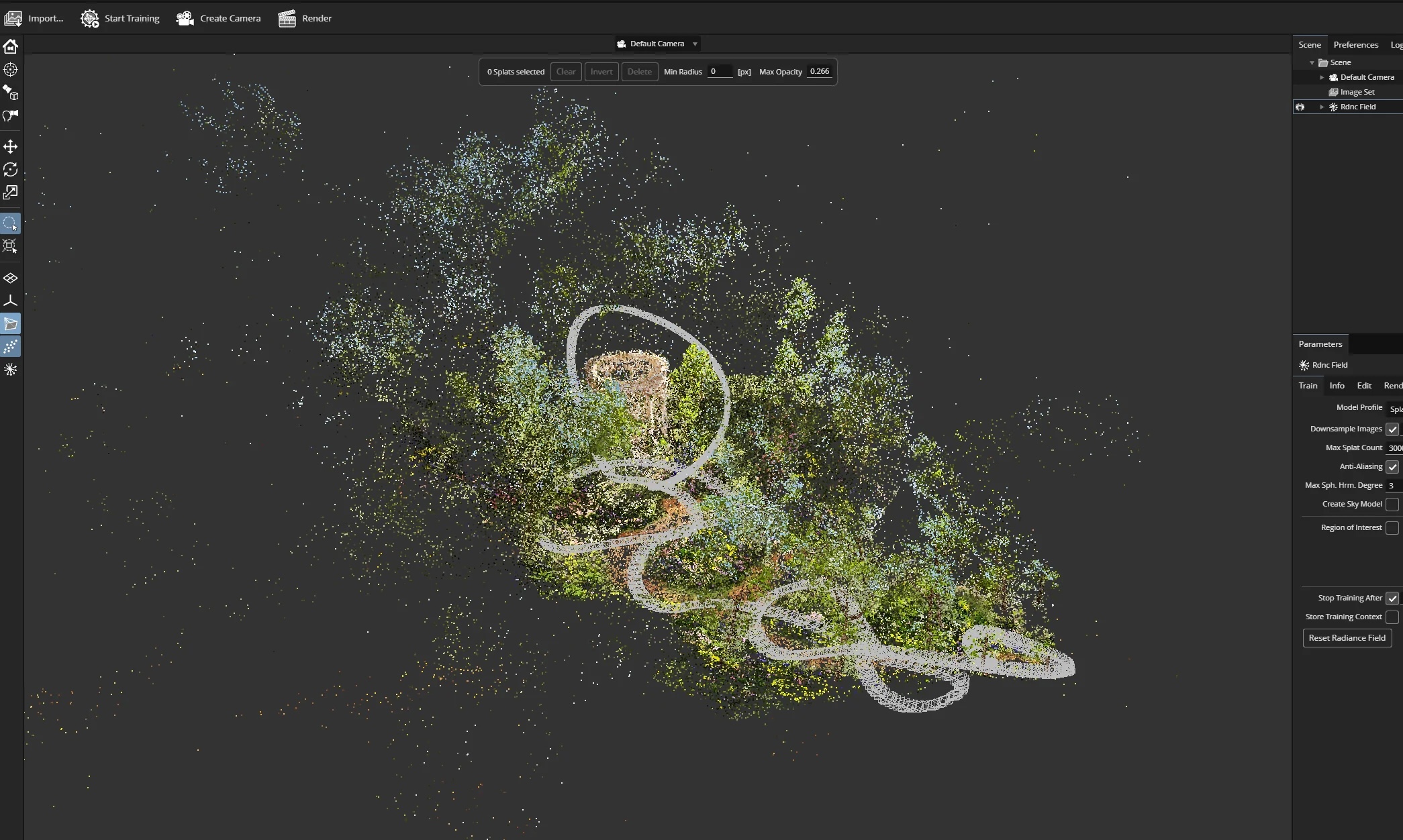
SplatGarden 3dgs

Rich machine: 3DGS preview of SplatGarden after cleanup.

On Monday, July 20 in Los Angeles, Shen and Kongsakulvatanasook presented the project at SIGGRAPH, the massive (and massively influential) annual computer graphics conference. Their eight-minute-long talk was a concise version of the livestream presentation "How to Build a 3D World with AI & Gaussian Splatting" made on YouTube in June (archived here).

"Normally, [NVIDIA] will use OpenUSD for industrial digital twins and robotics," Shen says. "SplatGarden shows that OpenUSD can be used not just for technical tasks, but artistic purposes as well."

The result is therapeutic. Engage the hand-tracking option that pairs with a tablet or laptop's built-in camera, and a visitor can navigate the environment with a pinch of their fingers.

Whether digital dilletante or techno boffin, visitors will be edified by the site's meticulous annotations explaining practice and process. Academic rigor proffers a peek behind the curtain of AI design. Those intent on simply roaming through the awesome garden are also welcome.

"SplatGarden lives in a website where everyone can just click and experience OpenUSD," Itim says. As NVIDIA's Goldstein put it: "You can iterate in it in real-time without having to download anything!"

SIGGRAPH has hosted a specific session about immersive visualization systems every year since 2014. This year's "Immersive Visualization for Science, Research, Art and Digital Twins Applications" showcase may be its most significant — and consequential. "With rapid developments in AI, we stay at the forefront in the way we prepare our students at SCAD," Fowler says.

At that forefront, SplatGarden grows.

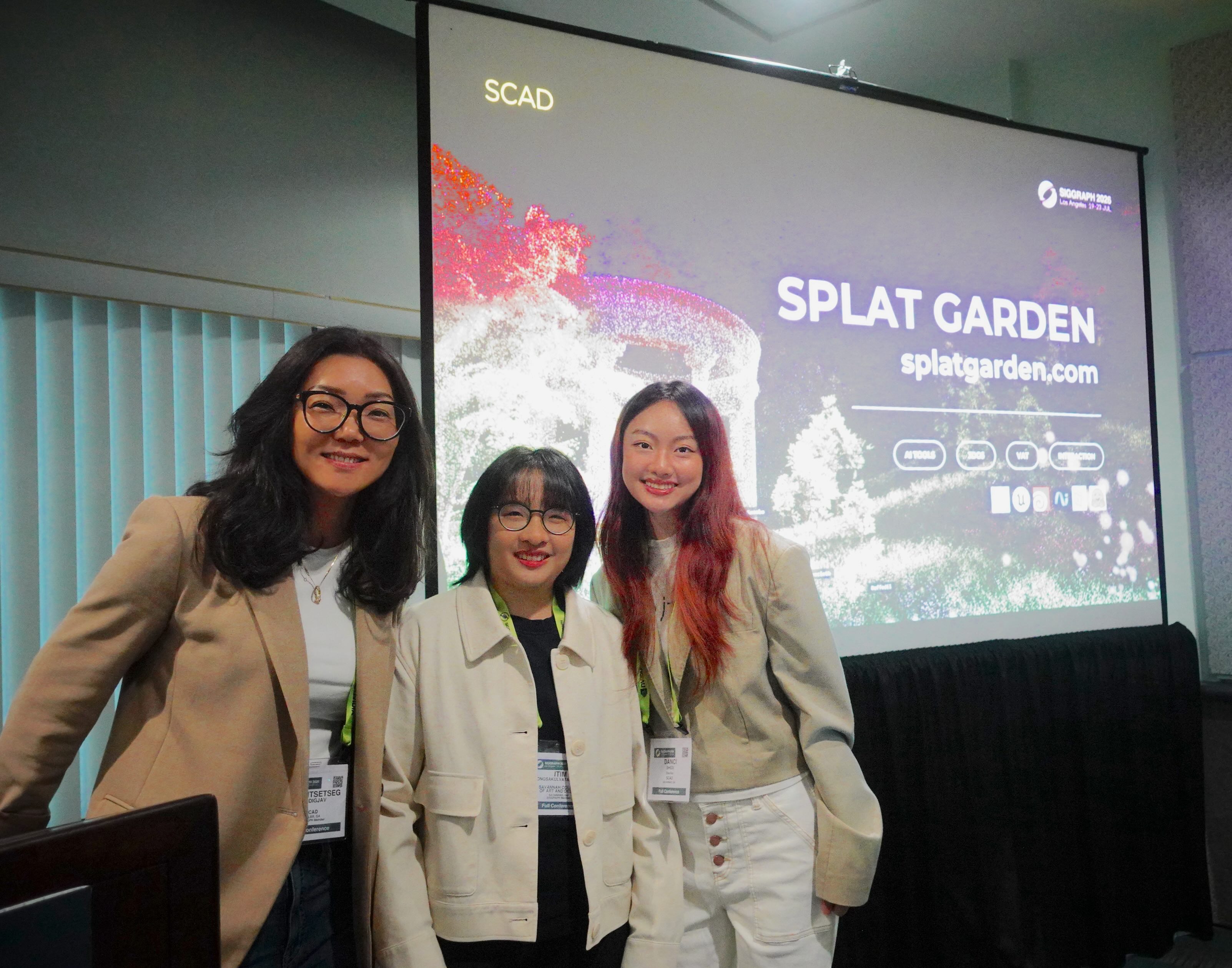
SIGGRAPH Muunuu

Positive Splat-itude (l-r): SCADask Executive Director Munkhtsetseg Nandigjav, Itim Kongsakulvatanasook, and Danci Shen at SIGGRAPH 2026.

Earny Karnasuta: beauty everywhere

July
6
2026
By
Tags:

Earny Karnasuta (B.F.A., business of beauty and fragrance, 2024) remembers the allure and impact of beauty products from her childhood. "I've had an obsession with beauty since I was little," she says. "Beauty means self-expression, confidence, and how we connect with ourselves and others."

Reaching college age, studying in the U.S. came as an easy choice for the native of Bangkok, Thailand. As well as being an important international geographic shift, the opportunity promised personal and academic enrichment. "I have always been eager to study abroad, which can broaden your perspective and help you develop essential skills such as adaptability and resilience," she says.

At SCAD Savannah, Karnasuta discovered an abundance of programs that reflected her interests, including fashion marketing, which became her minor.

Karnasuta received guidance by esteemed faculty members — including associate dean of the De Sole School of Business Innovation Meloney Moore — who connected her to an elite network of beauty influencers and brands and paved the path for her to launch a career in the business of beauty and fragrance.

Karnasuta also credits her SCAD career and alumni success adviser, Christopher Ridley, with facilitating a key entry point to securing internships.

"Christopher helped me find internship opportunities and provided support and guidance on my interview skills whenever needed," Karnasuta says. Prepared by SCADamp communication coaches, she interned on-site in New York City at The Estée Lauder Companies with the Clinique online e-commerce team in 2023.

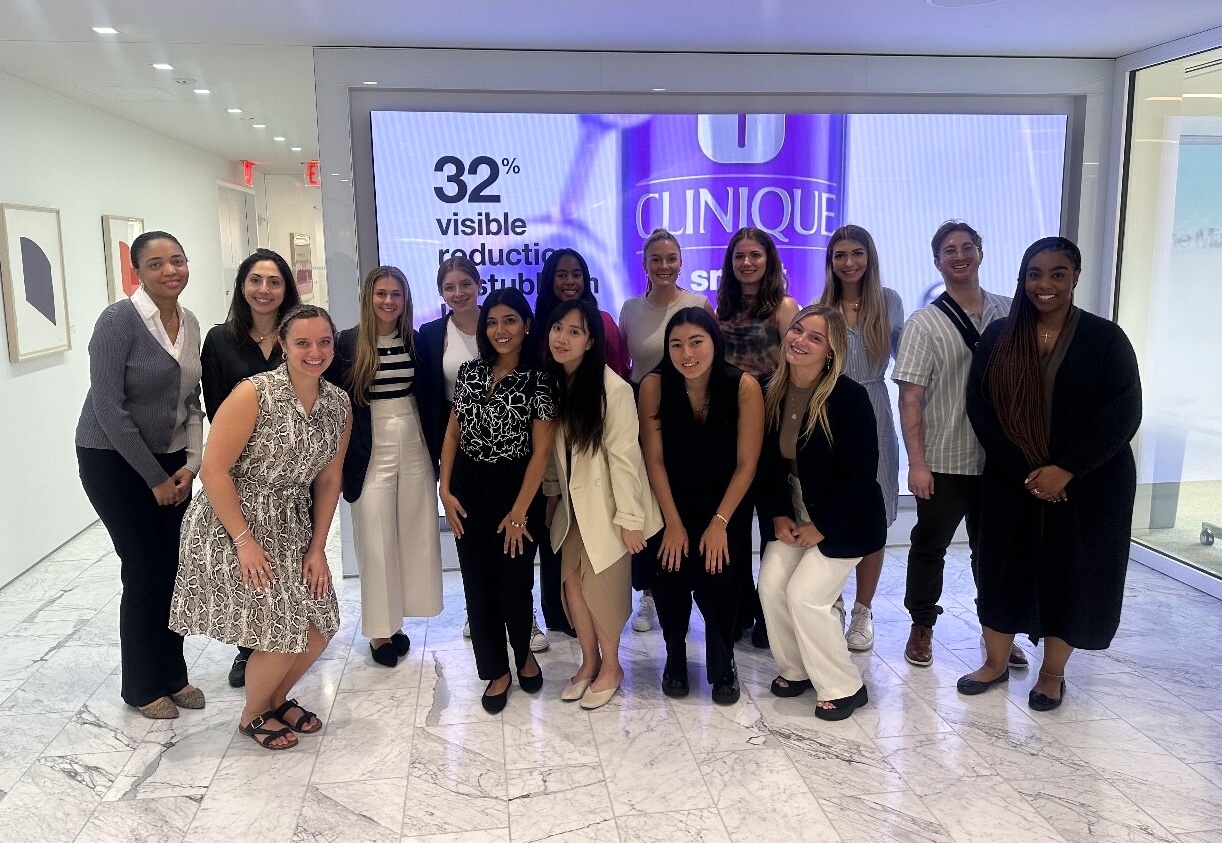
Earny Clinique

Leveling up: Karnasuta (front and center, in white) and the Clinique team. 

"Estée Lauder was the first time I had interviewed with such a big company, and it took three rounds of interviews to get the offer," Karnasuta says. "SCADamp is a valuable resource for students to improve their communication and public speaking skills."

Reflecting on the value of her internship experience, "I gained hands-on experience and connected with like-minded individuals who shared my passion for beauty. I discovered that the industry constantly evolves, and staying up-to-date with the latest trends and technologies is essential."

Karnasuta's SCAD story included a three-week immersive class in SCAD Lacoste, exploring luxury fragrance in Grasse and Paris.

"We had the chance to learn about the history of fragrance, as well as the process of crafting our own scents with the help of the fragrance nose. It was an immersive and eye-opening experience that deepened my understanding of the beauty and fragrance industry."

With an open mind and heart, Karnasuta has honed a deep self-confidence about the possibilities that lay ahead for her as a beauty change-maker. She currently works as an influencer marketing coordinator at the Bangkok City-based Mali Group.

"My ultimate goal is to lead the beauty and fragrance industry, using my passion to change how young girls see themselves and be confident in their own skin," she explains. "I love to see how products come to life. The hardworking individuals behind the success of a brand always inspire me."

Earny headshot

Experience Earny on TikTok and Instagram!

Learn more about top-ranked programs in the De Sole School of Business Innovation at scad.edu/innovation.

Banner image: Karnasuta's capstone project SYM BEAUTY created solutions to make beauty products easier to use for people with visual impairments.

All images courtesy Earny Karnasuta.

Book talk: Doucet draws Lawrence

June
16
2026
By
Tags:

Eighty-five years after American artist Jacob Lawrence exhibited his milestone Migration Series at a New York City gallery, sequential art professor Rashad Doucet sat in the SCAD Museum of Art to discuss his new graphic novel Jacob Lawrence: A life in drawings. Andreia Wardlaw, director of the Walter and Linda Evans Center for African American Studies, turned to Doucet and asked: "How do you fit the legacy of someone like Jacob Lawrence into thirty pages?"

Doucet considered it. "I began with a deep dive into his art. Exploring Lawrence's work gave me the idea to create a framework for his story, starting at the beginning of his life." The gentle professor's megawatt smile was complemented by his powder blue blazer and patterned pink polo.   

It was a Friday evening, and the well-attended event featured two very special in-person guests: Dr. Walter and Linda Evans. As friends of the late, great Lawrence (1917-2000) and major collectors of his work, the Evanses lent the conversation a profound, personable authority.  

"Five or so years ago, we were putting the materials together for a Lawrence exhibition at the Kunsthal KAdE in Amersfoort, the Netherlands," Dr. Evans explained. "The curator there, Robbert Roos, said, 'Do you think we could do a graphic novel for this?' Rashad's graphic novel, translated into Dutch, turned out so nice that it was included as the last thirty pages of the exhibition catalog."

As a stand-alone book in English, the graphic novel hits all the right notes: edifying, exciting, and unflinching in its depiction of Lawrence's childhood during the Harlem Renaissance, his World War II service aboard the USCGC Sea Cloud, and his enduring, inspiring marriage to artist Gwendolyn. Throughout, Doucet reveals Lawrence's unflagging commitment to storytelling through art.

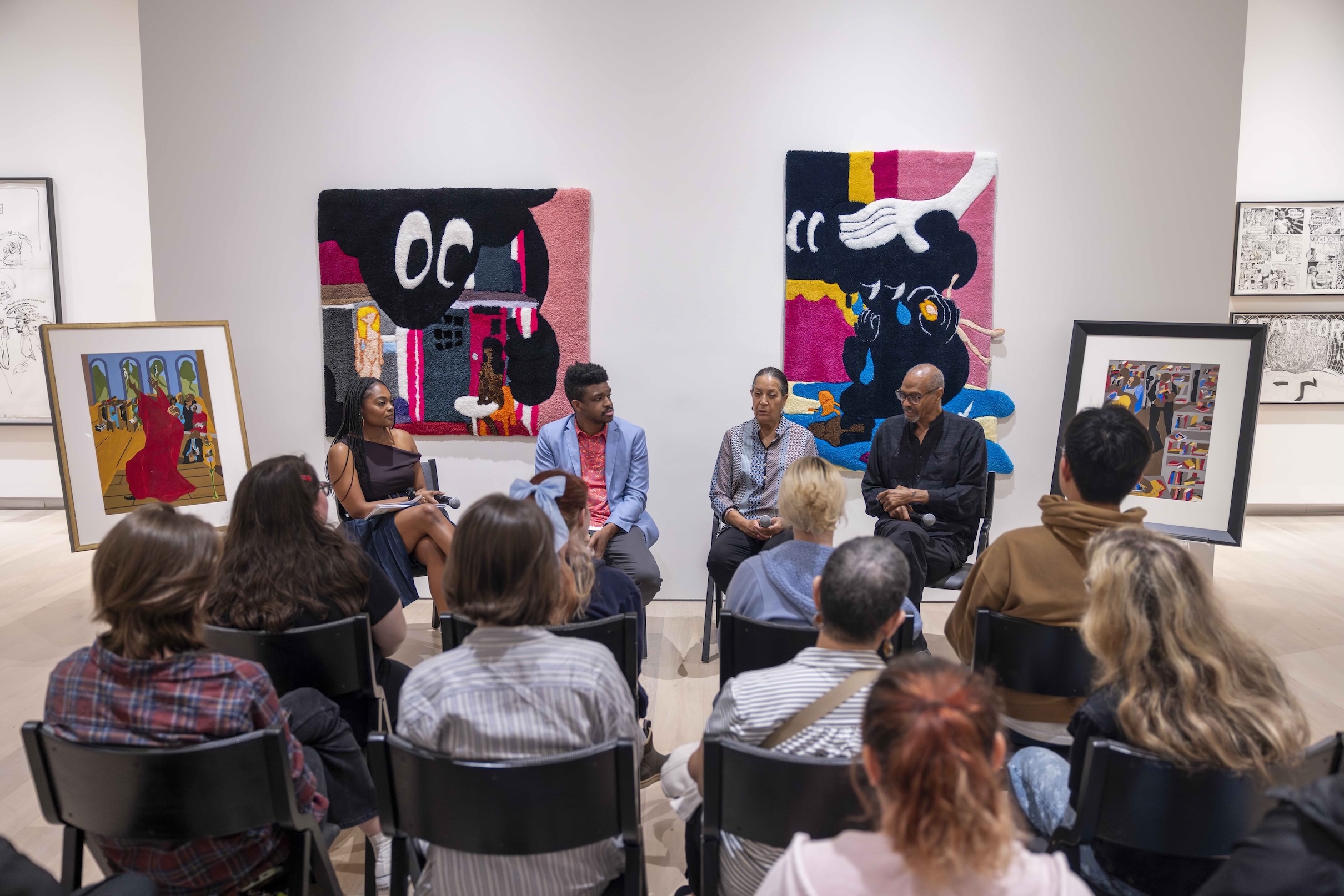
Rashad et al

Inspiration information (from left): Andreia Wardlaw, Rashad Doucet, Linda Evans, and Dr. Walter Evans.

"One of the things that I was concerned about was like, I can't directly copy Jacob Lawrence's style, right?" said Doucet (M.F.A., sequential art, 2009). "What I drew had to be filtered through how it makes me feel."

In the book, Doucet versions Lawrence's 1975 painting Confrontation at the Bridge, with its fangs-bared dog straining to attack voting rights marchers approaching from the distance. By flipping the perspective of the original, Doucet manifests truths about Lawrence's own potent narrative.

Addressing Doucet, Linda Evans made a key observation: "Your process was very, very similar to Jacob Lawrence's process. He would write out his captions first, then he would draw, then he would make decisions about color. Because he did a lot of things in series, it was important that he had the story down first."

"And even before he put the panels down, he was at the library doing research," added Dr. Evans.

The conversation flowed for a lively 45 minutes, culminating in questions from students. One wondered what Jacob Lawrence would have made of Doucet's book.

"Jacob Lawrence was such a warm, big-hearted gentle person," replied Linda Evans. "He would have been honored by the way Rashad represented him."


Rashad Doucet graphic novel

Visit SCAD MOA and pick up Prof. Rashad Doucet's book!

Goal! SCAD shapes Atlanta's FIFA World Cup experience

June
12
2026
By
Tags:

It's all kicking off: As Atlanta welcomes international visitors for the 2026 FIFA World Cup, SCAD students and faculty are guiding how these guests will experience the city in real time.

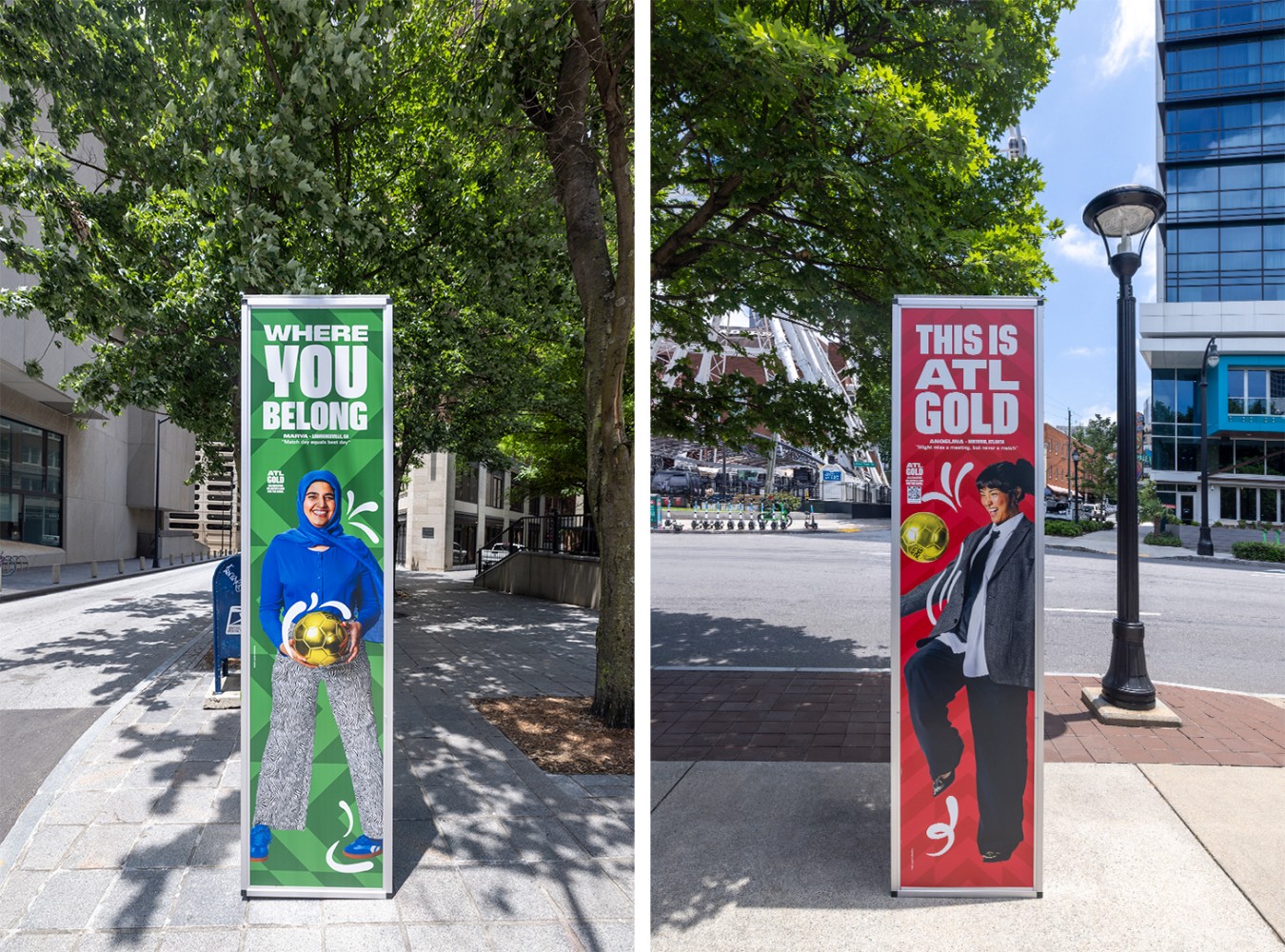
Through SCADpro, SCAD's collaborative innovation studio, and the Atlanta World Cup Host Committee (AWCHC), students across graphic design, user experience (UX) design, advertising, design management, motion media design, photography, and illustration developed an immersive wayfinding campaign for The Last Mile, the high-traffic corridor surrounding Mercedes-Benz Stadium.
 
"The Last Mile is about making sure visitors know where they're going with clarity," said associate chair of graphic design Sam Eckersley. "From the MARTA stations to the fan festival to the stadium itself, every detail was designed to help people navigate the city confidently and intuitively."
 
Atlanta is expected to welcome more than 300,000 visitors during the eight World Cup matches hosted at Mercedes-Benz Stadium, including a semifinal match on July 15. The wayfinding campaign is part of a broader creative partnership spanning public art, immersive installations, and digital storytelling. SCADpro students collaborated to support strategic social media storytelling during matches in collaboration with the Metro Atlanta Chamber.
 
"One thing the host committee told us they found unique about SCAD was the balance of science and art," Eckersley said. "That means bringing intelligent solutions together with beautification and energy for the city."
 
For Kavya Ray (B.F.A., user experience design, 2026), the project represented a new level of scale and responsibility, a challenge met through the strength of the interdisciplinary team.
 
"We were designing an actual experience for hundreds of thousands of people coming from all over the world," Ray said. "The UX team brought the clarity and strategy, while the advertising team focused on engagement and energy. That balance is what made a strong experience."

Sofie Wright (M.B.I. design management; B.F.A., advertising and branding, 2025) led the advertising and branding direction for the project, helping translate Atlanta's culture and energy into a cohesive visual system that aligned with FIFA guidelines.

"We created three different types of signage throughout downtown within that one-mile radius around Mercedes-Benz Stadium," Wright said. "As visitors get closer and closer, the colors become warmer and more energetic. We call it ‘red hot.'"

FIFA UX students

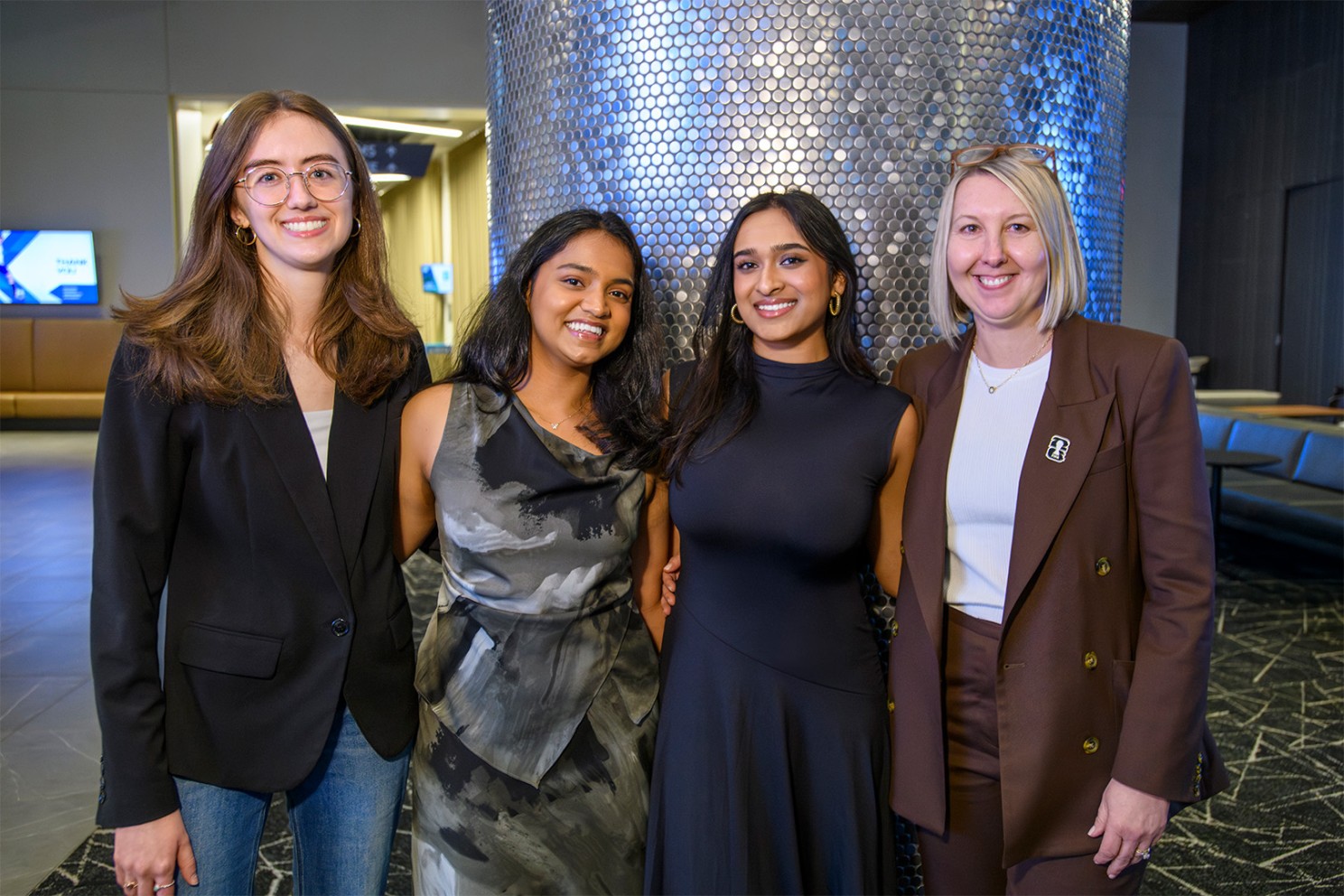
 Kicking it (l-r): Wright, Jain, and Ray with FIFA World Cup 2026 Atlanta Host City Director Bev Carey.

Although Wright entered the project without a background in sports branding, the collaboration unexpectedly reshaped her creative interests. "There's just something about the energy of sports fans that I really, really enjoyed designing for."

For Siya Jain (B.F.A. user experience design), the project carried personal meaning beyond the classroom. A lifelong soccer fan from Singapore, Jain immediately recognized the significance of contributing to the FIFA World Cup experience.

"I realized I could have an actual role in the FIFA World Cup as a designer," Jain said. "Presenting our work inside Mercedes-Benz Stadium to the stakeholders was a proud moment for me. The goal was to make people feel welcomed while creating something memorable."

The finished result reflects the talent and ingenuity of SCAD students. As Atlanta Sports Council and Atlanta World Cup Host Committee president Dan Corso observed: "SCAD's involvement in Atlanta's Last Mile project has brought a level of creativity, innovation, and local collaboration that truly reflects the spirit of our city."

FIFA wayfinding

Explore more at visitatlanta.scad.edu.


VERA: design for dignity

June
8
2026
By
Tags:

On a busy afternoon in week ten, as Gulfstream Center buzzes with students pressing to complete projects, Viraj Gapchoop sits in a common area in a Hot Mesh chair designed by Brad Bray (M.F.A. furniture design, 2005), radiating calm. "For me, the success of my project means millions of passengers might someday travel with greater dignity, comfort, and trust," he says with a smile.

Gapchoop (M.F.A. industrial design, 2026) knows relief. His master's thesis VERA: Trust in Motion, reimagines the restroom experience for one of the world largest transit networks: Indian Railways, which serves an estimated 25 million passengers daily. "Dignity is infrastructure and cannot be an afterthought," he says. 

A fully fabricated, full-scale model of VERA sits in a nearby classroom. Fellow students and faculty will be able to enter and inspect the facility during graduate showcase. Professor William Woods, chair of Gapchoop's thesis committee, celebrates the achievement.

"When Viraj pitched me his thesis, I knew that it was going to be important work," Woods says. "He exemplifies the spirit of our industrial design program, with every element of his design deeply informed by on-site research that he conducted and applied with rigor and sensitivity. It has been a privilege to guide him through this project and to watch VERA come to life."


Viraj VERA design

 
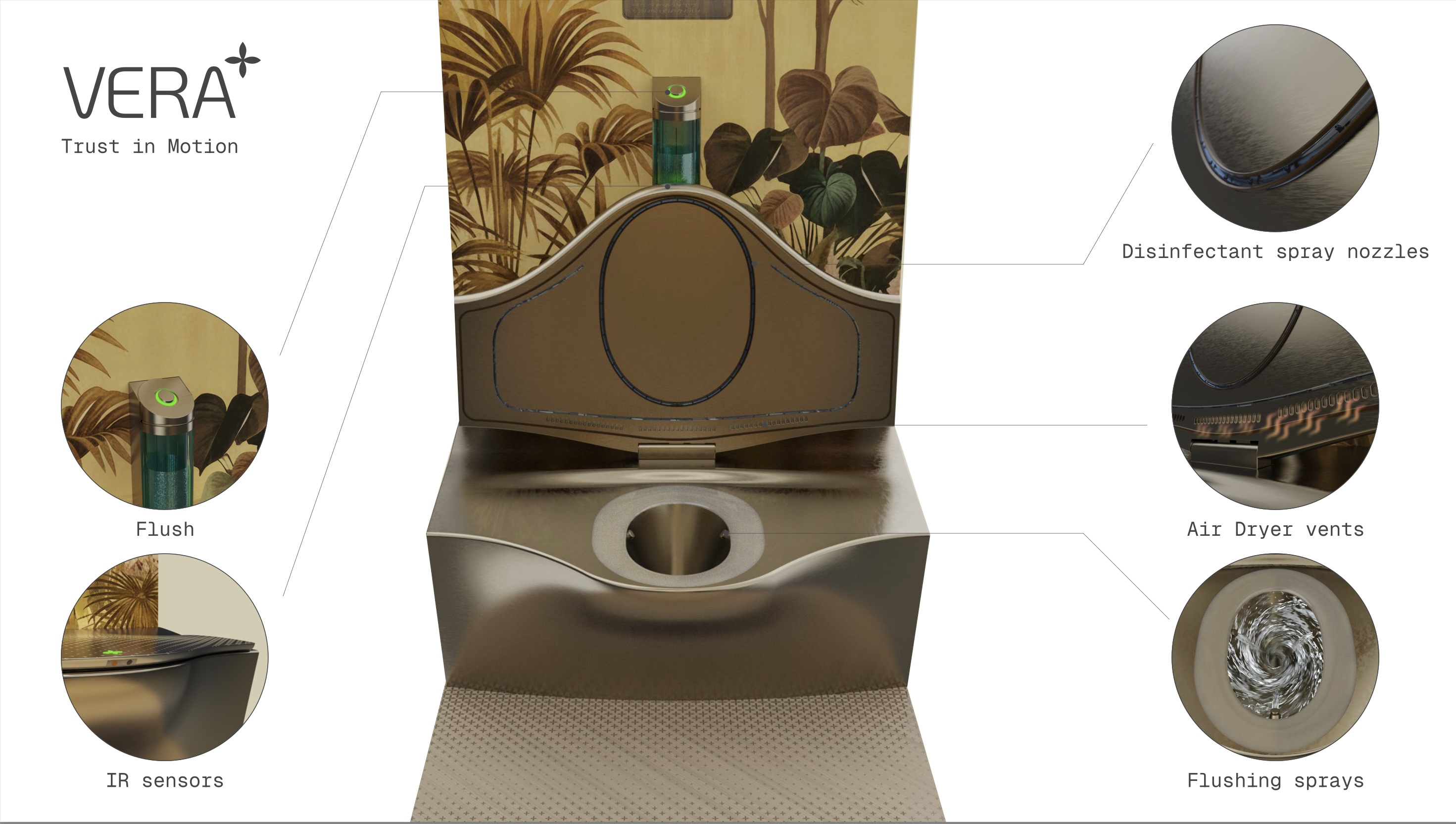
Motion sensitive: a detailed rendering of VERA.


Viraj Gapchoop:

I studied architecture and earned my undergraduate degree in India. For graduate school, I knew I wanted to study at the cross section of UX, interior design, graphic design, and spaces. I attended a SCAD event in Mumbai, met professor Sooshin Choi, and I came to Savannah in 2023 to study industrial design, knowing that I would be able to explore design management and sustainability.

So much of the design conversation now is about AI and data centers, and I'm interested in those things. Still, there are essential issues we still face in 2026, and as a designer, I have a responsibility to solve those issues. With VERA, it was all about finding a real problem which matters to the masses.

As I worked on my MFA thesis, I traveled back to India twice, examining the Indian Railways experience. I traveled 5000 kilometers on the train. In a compartment of six or eight people you are basically living their life for a day or two, so you share everything. I noticed what could be improved about the experience.

Public toilets touch our lives every day, but we avoid touching them. It's the most private activity that we do in a public space. There's a dichotomy embedded in that experience which tends to get overlooked. The issue is not cleanliness alone, the issue is trust.

Modernizing the rail system with a hygienic and comfortable restroom experience is urgent. An automated restroom reacts to your presence. An intelligent restroom understands its own hygiene state. That distinction became the backbone of my project.

When PAW-based sanitation works in Indian Railways, it works in the New York City Subway, London Underground, Singapore MRT, airports, stadiums, and high-density transit hubs globally. That means safety and comfort for everyone.

I designed a space which is three feet by five-and-a-half feet and seven feet high. There will be a projected four thousand and five hundred Vande Bharat Express trains on Indian Railways by 2047, which means a total of 144,000 toilets. The impact it will make on peoples' lives is tremendous.

Dignity fosters trust. Trust grows ridership, which in turn increases revenue. The aim with VERA is to transform sanitation into a seamless passenger experience.

Inclusivity is the most important thing for my project. Everyone can be inside the railway. Understanding different body types, mental frameworks, habits and cultures was essential to informing my design. I believe VERA shows that dignity is a design decision.

Viraj VERA install

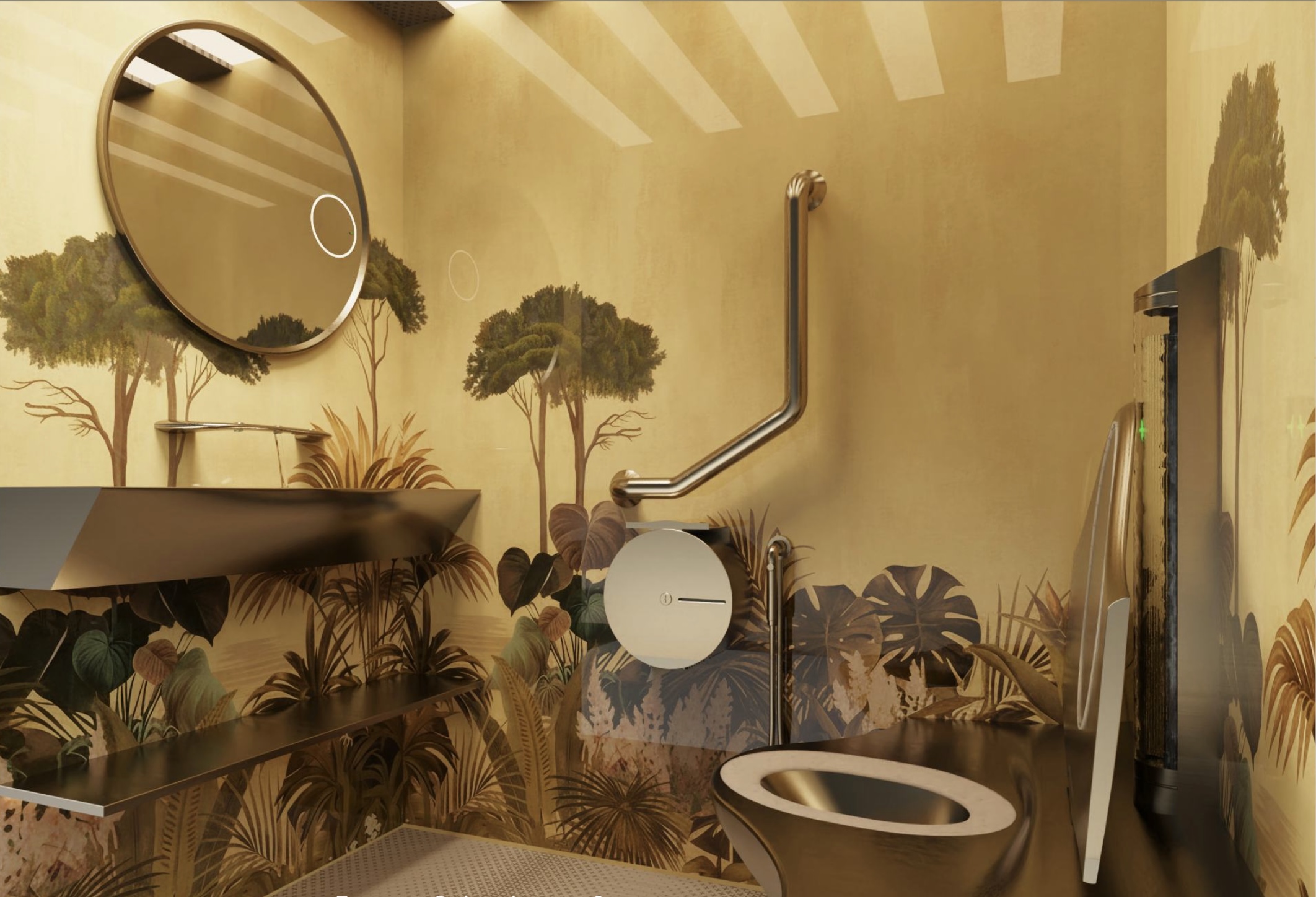
As seen in Gulfstream: the full-scale build of VERA.

Connect with Viraj Gapchoop on LinkedIn.

Stella Lee is leading design at scale

June
4
2026
By
Tags:

The further Stella Lee moves from the drafting table, the more she influences what gets built. This progression reflects a core principle: design leadership is about guiding outcomes at a broader level.

As senior project design manager at JPMorganChase in New York, Lee (M.A. creative business leadership, 2018) focuses on aligning stakeholders, reviewing proposals, and building a case for purposeful design.

"My role centers on leading design," Lee says. "That requires clearly communicating the reasoning behind decisions to people who think in very different terms."

Her previous roles as senior architectural designer at Fogarty Finger in New York and Smallwood in Atlanta were keys to her development. Her ability to move across sectors and diverse projects remains connected by one theme: people.

Lee’s career spans multifamily, high-rise residential, hospitality, retail, and large-scale corporate workplace design. Each environment sharpened a different dimension of her approach. Hospitality taught her the power of atmosphere and emotional experience. Retail strengthened her understanding of brand identity and spatial storytelling. Residential reinforced the concept that space expresses lifestyle, behavior, and identity.

Stella Lee Smallwood

From the ground up: "VELA," a project Lee worked on at Smallwood.

"A workplace is not only a functional environment for productivity," she says. "It's a human-centered environment where people spend a significant part of their lives, collaborate, and represent the organization."

Lee’s degree in creative business leadership has broadened her approach to design, expanding her understanding of it as a cultural language and a business tool. It has also given her the fluency to lead creative work at scale. Today, Lee translates creative thinking into a shared language that executives, project managers, and technical specialists can act on. Excel models, presentations, and documentation now reside alongside design thinking as key tools in her practice.

"A valuable lesson was learning how to translate creative ideas into language that stakeholders understand," she explains. "Articulating the value of design in terms that connect with varied audiences has become a key part of my role."

At JPMorganChase, Lee oversees design review, coordination, and implementation at multiple sites, working closely with architects, consultants, and internal teams to ensure each assignment meets design standards and functional goals.

Working as an embedded consultant has changed how she approaches leadership. "As an on-site consultant, you have deeper insight into how decisions are made, how priorities shift, and how design affects long-term operations. That perspective changes how you approach design."

Corporate standards are key for large portfolios, but Lee argues that design needs flexibility. If a layout meets the requirements but not the team’s needs, she calls for evidence-based adjustments.

"When you connect design decisions to user experience, workflow, and long-term functionality, stakeholders become much more open to thoughtful adjustments."

She applies this mindset to the way she leads. Rather than a one-size-fits-all approach, Lee focuses on individual strengths and places each person where they can succeed. "Part of leadership is identifying each person's aspirations, and helping them contribute in ways that improve the overall team," she says.

As workplace design evolves in cities like New York, Lee sees rising expectations for physical space. Today, the focus is on experience, adaptability, wellbeing, and supporting varied work styles.
Stella Lee Fogarty

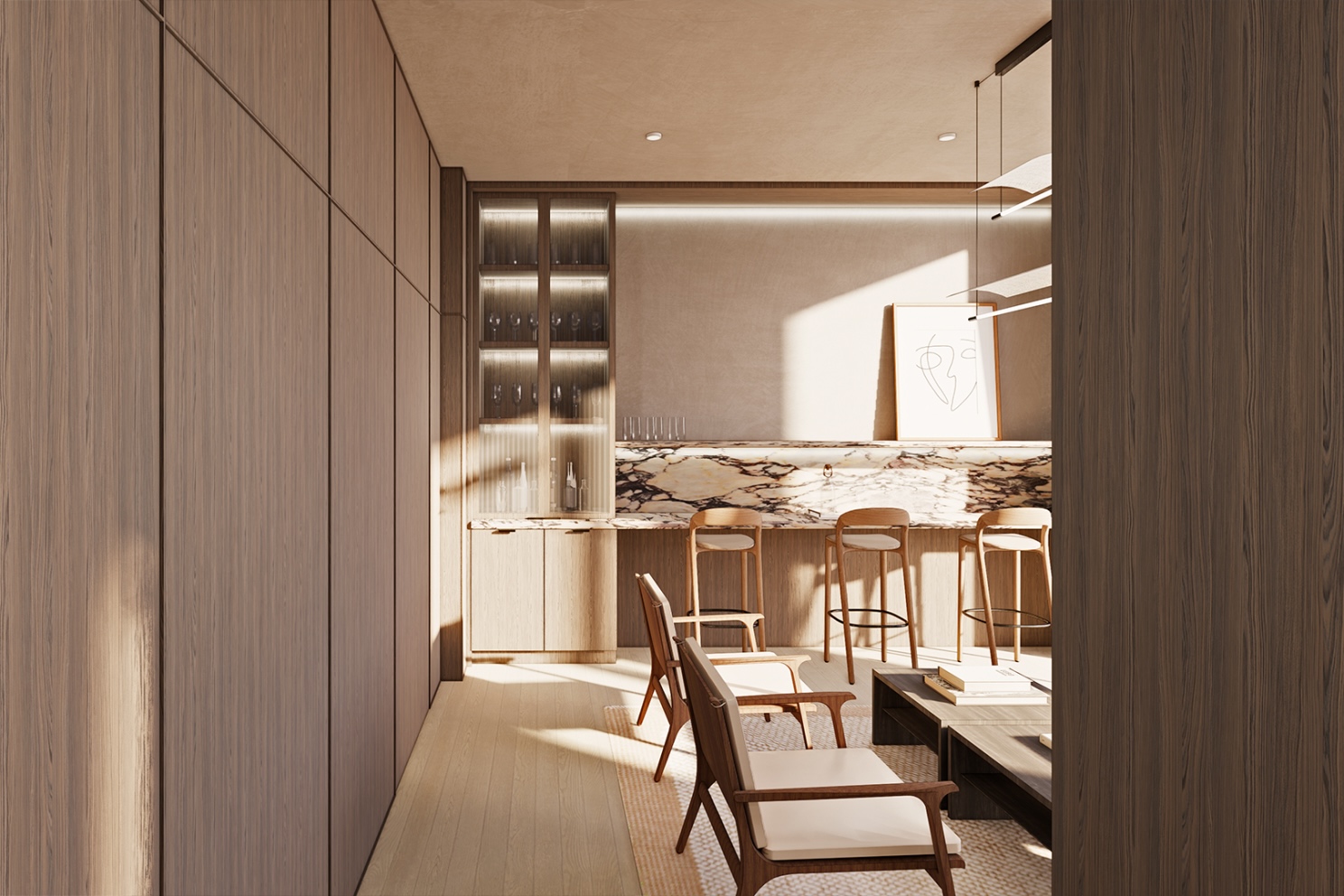
More than functional: 1245 Broadway workplace library and bar design at Fogarty Finger.

"Offices need to earn the commute by offering something meaningful that employees cannot reproduce at home,” she says. "That often means more collaborative spaces, hospitality-influenced amenities, and a stronger emphasis on wellbeing and community.”

She believes resilience now defines strong workplace design. Spaces need to remain flexible and resilient, capable of adapting to future shifts in how we work.

"Even small decisions about layout, lighting, and materiality can shape atmosphere, comfort, and the overall experience of the people who use it,” Lee says. "I want to continue doing work I truly love while creating meaningful impact, and to keep growing as both a designer and a leader in the spaces I help shape.”

Connect with Stella Lee on LinkedIn.
Alyssa Rodemsky shines bright

May
20
2026
By
Tags:

"There is a jewelry phenomenon underway," Alyssa Rodemsky wrote on LinkedIn in April. "From the architecture, to the vias...you turn a corner in Palm Beach and suddenly feel like you're somewhere in Europe."

Rodemsky (B.F.A. fashion marketing and management, 2019) is in the storefront at the forefront. As luxury brand ambassador, she works at the David Yurman boutique on Worth Avenue in Palm Beach Island, Florida, the high-end retail thoroughfare that, she says, "is collectively building something spectacular."

"My passion is connecting people with jewelry that reflects their stories, styles, and personal milestones," says the Warrenton, Virgina native. "That means a people-first approach shaped by my SCAD education."

Yurman Palm Beach store

Street of dreams: the David Yurman boutique on Worth Ave.

Alyssa Rodemsky:

In 2025, I was selected to join the opening team for the newly renovated David Yurman boutique on Palm Beach Island, which features a two-story space with a dedicated high jewelry salon and private sales suite. I moved here specifically to learn how to sell to a certain clientele.

Worth Avenue has a long-standing history in Palm Beach. It's where all the Palm Beachers put on their best outfits and stroll and shop. There's Gucci, Zegna, Loro Piana, and many luxury jewelers and watchmakers, as well as its close proximity to the Colony Hotel and Bilboquet Market. It's really a jewelry mecca.

People seek out David Yurman for their first pieces and, importantly, for high jewelry. We have pieces featuring some of the most tantalizing, saturated gemstones from all over the world.

I feel that Palm Beach is the most special boutique of the seventy David Yurman stores worldwide. I collaborate closely with a tenured team and corporate partners here during store visits and special appearances, including hosting Mr. and Mrs. Yurman. It is an honor working alongside them.

I attended the SCAD alumni event at Palm House with Mrs. Yurman just a couple months ago. President Paula Wallace was there. There was a pop-up there with Ferragamo, and a screening of the Andre Leon Talley fashion film that SCAD students made, which is phenomenal.

Looking back, I see that my career didn't begin when I graduated from SCAD, it began the day I arrived as a freshman. SCAD taught me to how to trust my instincts and my intellect. I learned how to develop a project from start to finish with composure and grace and be proud of what I'm presenting. I took Digital Presentation Techniques (FASM 210) with Oscar Betancur, the chair of advertising. That was the class where I learned how to craft a presentation, and how to command a room.

I also took art history at SCAD, and a course in the psychology of the creative process, and learned to curate my eye. I found myself drawn to metal and gemstones, and that gave me the courage to try a jewelry class. When I was presenting my pieces at the bench class, I realized my favorite part was explaining the jewelry. That led me back into fashion marketing, which became my major.

After graduation, I spent seven years working in executive settings at big companies including NetApp and Salesforce. The versatility of the skills I acquired at SCAD allowed me to do that. Now, to be back working in jewelry, and to be at David Yurman, which is a proud industry partner of SCAD, feels powerful and beautiful.

The reputation of SCAD is really high in the rooms I'm frequenting. That includes the shops, salons, and event spaces in Palm Beach. There is a levity to my life here that I am embracing. Of course, it helps that I love the beach.

Rodemsky profile photo

She's a gem: connect with Alyssa on LinkedIn.


Soa Kim transforms time

May
13
2026
By
Tags:

Beauty is often associated with polished metal, luminous stones, and flawless surfaces. Soa Kim (B.F.A. jewelry) finds it in transformation — and the traces time leaves behind.
 
"My senior collection views life and death as a continuous flow and a quiet form of beauty," Kim says. "People often perceive death, decay, and dissolution negatively. I want to understand them not as separate concepts, but as parts of a connected process."
 
For Traces of Life, she reimagines a poetic cycle expressed through skeletal structures, shifting silhouettes, and surfaces shaped by time. Kim defined a clear evolution from the early stages of the collection material research into final form, pairing keywords like erosion, stillness, renewal, silence, and rebirth with imagery of fractured surfaces and deep crimson stones.
 
"I focused on structures that appear eroded or growing, allowing the form itself to suggest a process of change," she explains.

Soa Kim jewelry silhouette

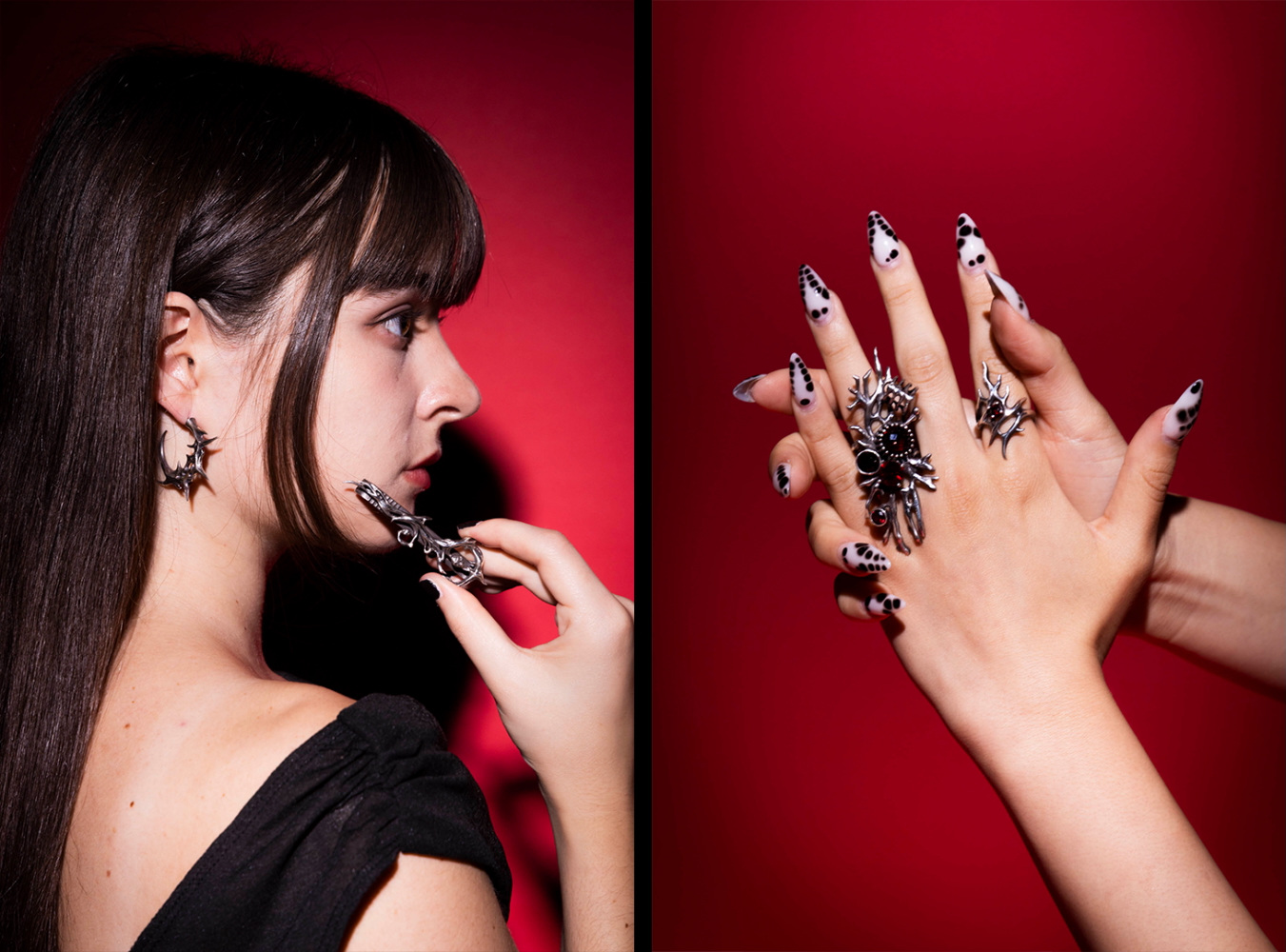
Soa Kim's "Traces of Life" collection | Photography by Lexi Moore

What makes Traces of Life especially compelling is the rigor of Kim's making process. The collection moves through a highly refined technical workflow that includes wax carving, Rhino modeling, 3D printing, spruing, casting, polishing, and hand fabrication, allowing concept and craftsmanship to evolve in tandem. Kim translated fluid, organic sketches into structural prototypes, resin prints, cast forms, and eventually polished metal pieces.
 
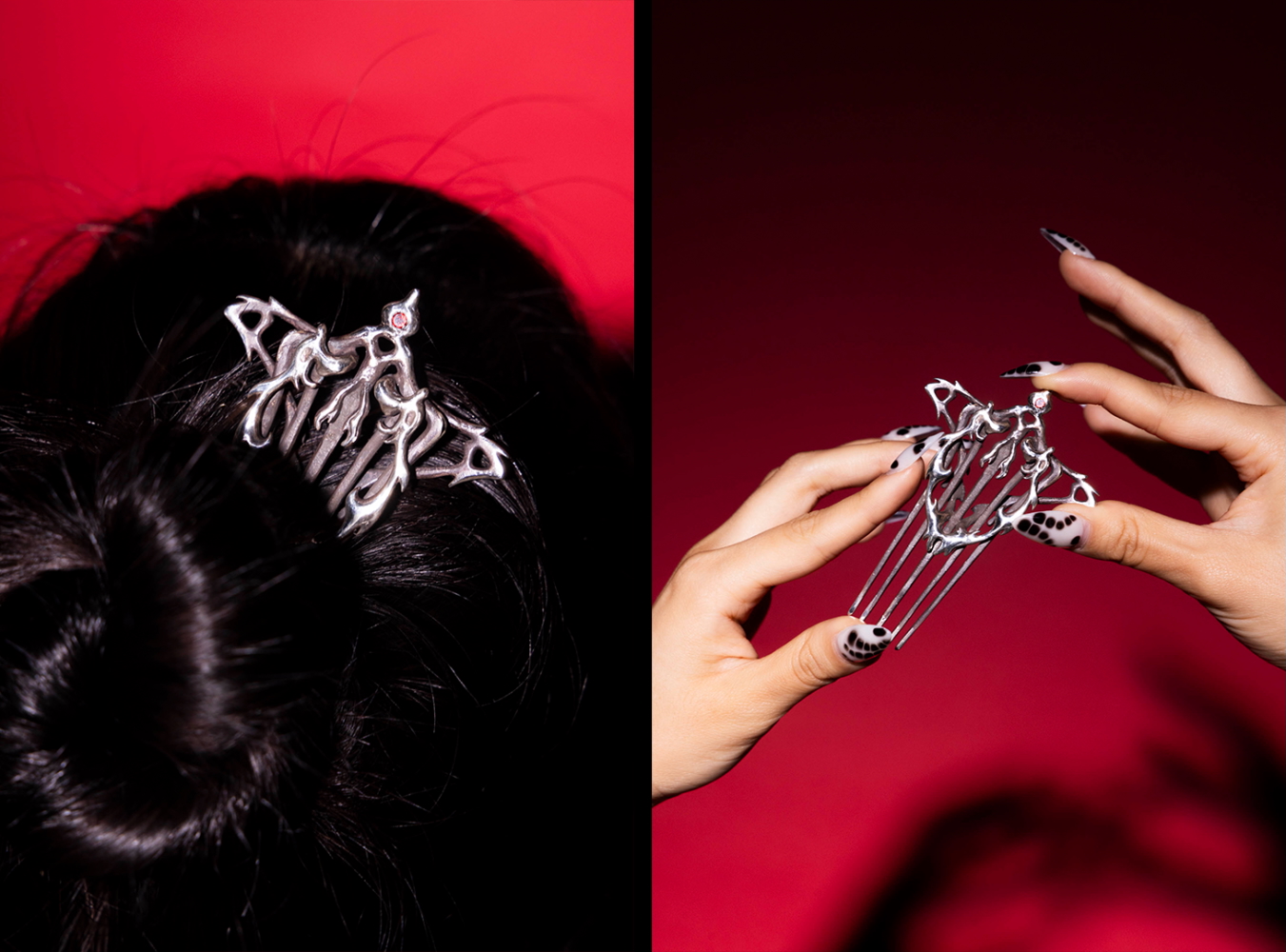
The ear cuff, bracelet, and earrings all echo branching, bone-like frameworks that seem to grow across the body rather than rest upon it. Ruby, garnet, and Swarovski crystals, with select gemstones donated by David Yurman, emerge like living cores within darkened silver structures, creating a striking tension between fragility and permanence. The contrast between matte black oxidation and polished silver gives each piece a sense of movement, between disappearance and renewal.

The ear cuff is one of the collection's most sculptural statements, carefully balancing expressive structure with wearability. Its asymmetrical branching form follows the line of the ear with an almost anatomical precision, while suspended gemstone details introduce movement and a pulse of color.

"It represents both a technical challenge and a point where my concept became clearer," she says.

Soa Kim jewelry hands

Soa Kim's "Traces of Life" collection | Photography by Lexi Moore

Alongside her studies at SCAD, Kim completed internships with Seoul-based brands LEWKIN and Nonnon, where she gained experience across accessories, branding, and product development. Coursework, critique, and experimentation helped shape her design voice, while interviews with Swatch and TAG Heuer reinforced the value of initiative, preparation, and timing. "Opportunities are created when you move toward them and challenge yourself," she says.
 
Kim hopes to pursue a career in fine and luxury jewelry design. If Traces of Life is any indication, her work reflects qualities that align with the language of modern luxury: intellectually rich, technically rigorous, and in forms that stay with us long after first glance.
 
"I see jewelry as something that forms a direct relationship with the body. Jewelry is only fully realized when it is worn."

Soa Kim headshot

Connect with Soa Kim on LinkedIn.

See work for purchase at the SCAD Jewelry Trunk Show this Thursday and Friday, May 14-15 in Poetter Hall.

Kehua Wu: 'Home' is here

May
1
2026
By
Tags:

Kehua Wu is staring at her own nose, mouth, and glasses. Rows of squiggly self-portraits stare back.

These figurative drawings — dozens of them, pen on paper, pasted along her studio wall in Alexander Hall — are stoic, scary, silly and sly. As impulsive depictions, they complement Wu's more carefully planned and technically precise works. Beautifully.

"I started making these little self-portraits the first day I came here," says Wu (M.F.A., painting). "In China, I did what's called cognitive recording therapy. It's a writing process that helps you analyze yourself in the moment, to help you understand your feelings are not based in truth, but in how you think." Wu's self-portrait series, called 'Diary Plan', is, she says, "a kind of visual version of that."

Face time: drawings from the series 'Diary Plan' by Kehua Wu.

It's a little over 48 hours before the opening reception for Wu's thesis exhibition "Where the Home" at ArtStryngs Gallery, and the master's student from Changsha is discussing the range of works she is about to cart across town.

Leaning against the wall is a five-foot tall painting titled "Trinity." This self-portrait is "about my own body, and how it conflicts with my desire and my happiness to eat," Wu explains. Influenced by the fleshy oils of British artist Jenny Saville, "Trinity" incorporates principles of geometric art and collages from restaurant menus. The painting stuns with its shifting spectrum bent into a bow.

"I layer the colors on the paper — in English what's called rice paper, in Chinese it's called xuān zhǐ — layer by layer, over and over. I also use a technical pencil in this piece, so my process is a bit different, but I still follow the Chinese technique of layering colors."

Kehua Wu, "Trinity," 48 x 60 inches, raw canvas, Chinese paper, Chinese watercolor, high flow acrylic, collage.

The result is as fine as fine art can be. Painting professor Holly Mathews, a member of Wu's thesis committee, provides context and insight.

"Kehua is an exceptional painter whose work reflects deep cultural lineage and a fiercely independent voice," Mathews writes via email. "Coming from China to Savannah, Kehua carried the weight and beauty of a traditional painting background. Through her reflective and inquisitive mindset, and her technical sensitivity and ability to merge controlled brushwork with collage, she has found a way to navigate her cultural history while developing a contemporary language that is honest, rigorous, and entirely her own. Watching her evolve has been a real privilege."

Wu also mentions painting professors Todd Schroeder ("I took his course 'Experiential and Conceptual Art'") and Greg Eltringham as keys to her development. While working as Eltringham's teaching assistant, Wu welcomed his class into her studio to see her process. "I said to them, 'Make a bunch of artwork you are not satisfied with. That's OK.'"

Practice, preach: For the past three years, Wu has spent a minimum of six hours a day, at least four days a week, in her studio, making work.

"What I gained the most at SCAD is [the idea] that you don't prepare to start making art. You grab anything, in any moment of your life when you think this can be art. Then you find out. You gain more from the process than the artwork itself."

Kehua Wu's "Where the Home" opens Friday, May 1st, 6-9 p.m. at ArtStryngs Gallery, Savannah.

Mandy Zheng: clarity at scale

April
22
2026
By
Tags:

For TikTok users, swiping and scrolling are instinctual. For product designers, they form a system of signals that must work at a massive scale.

Mandy Zheng (M.F.A., design management, 2025) designs inside that system. Having previously interned at Tinder and collaborated with companies including Google and Deloitte at SCADpro, the product designer gained essential experience across both academic and industry settings.

"SCADpro was a space for me to experiment and reflect. I could really understand how decisions were made and how collaboration worked," Zheng says. "Those experiences helped me clarify what I enjoy doing and where I can contribute most effectively."

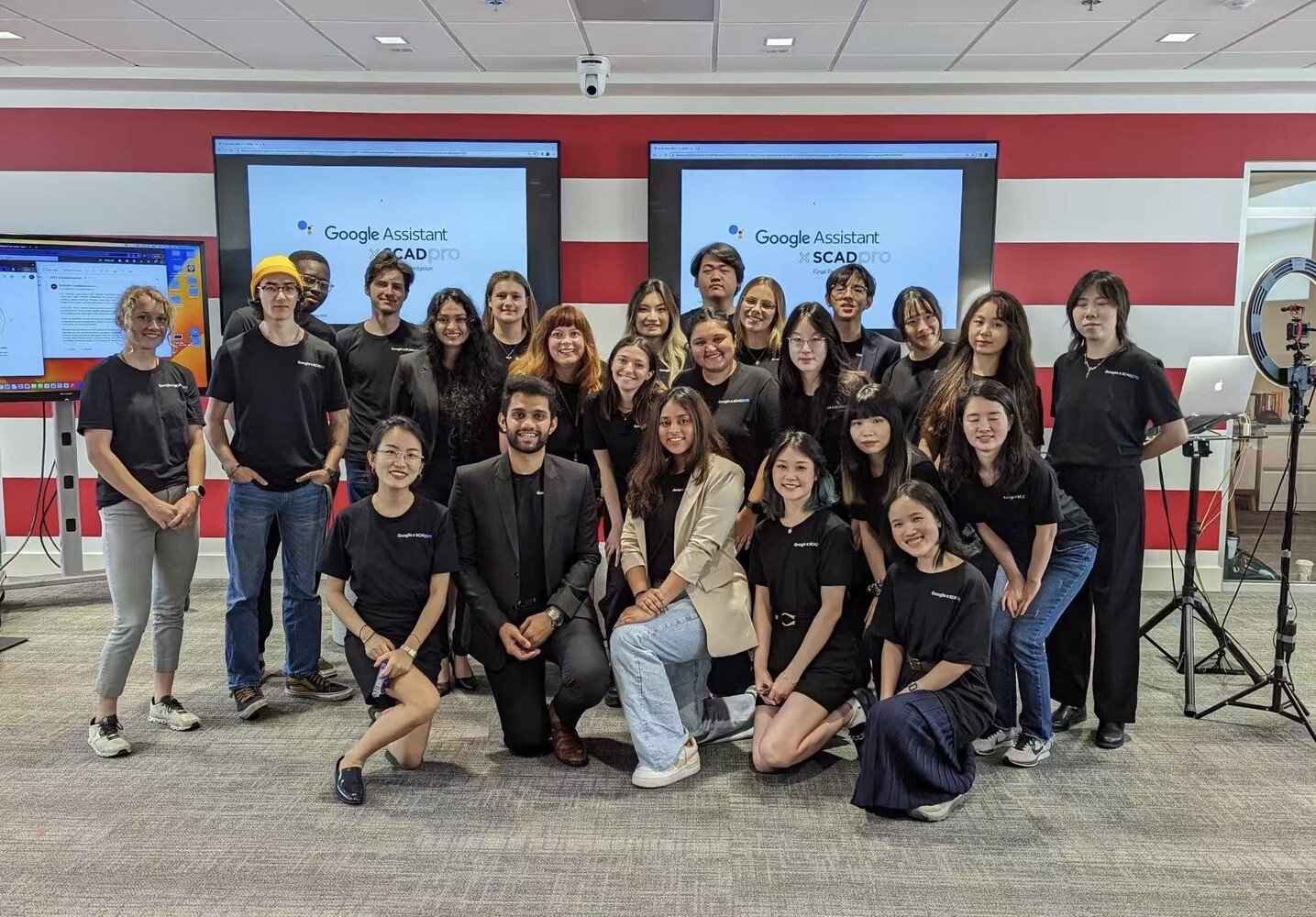
Zheng tested this process in a 10-week SCADpro collaboration with Google, where she took on dual roles as design lead and product manager. With a real client at the table, compressed timelines, and feedback from multiple stakeholders, the RACI (Responsible, Accountable, Consulted, and Informed) framework helped Zheng prioritize revisions efficiently without losing sight of the larger process.

Mandy Zheng Google app

Nothing to sneeze at: "PollenNav," Red Dot Award-winning concept created by Yani Shi, Ziqi Li, Mandy Zheng, and Chang Mou.

"RACI helps me understand a new team's collaboration structure and identify different stakeholder roles at various stages of a project," she says. "Having a clear framework makes it easier to gradually form my own working approach."

Set within an academic environment, the SCADpro project followed a more structured and more idealized workflow. For Zheng, it created space to move through each stage with intention and understand more clearly what each phase contributed, from early research and ideation to collaboration, iteration, and final decision-making.

She learned to treat design as coordination, aligning stakeholders, clarifying decisions, and building cooperation across a team. Frameworks like RACI gave her a practical way to map roles and decision-making.

Zheng began connecting with professionals via ADPList, where she could better understand how designers at different stages approach their work. These conversations helped her refine how she shared her projects and how she articulated her underlying logic.

To support her own growth and grow alongside others, Zheng built a robust online community for early-career UX designers. What began as a small, peer-driven experiment has evolved into a network of 500 members. Across 32 online sessions with more than 500 participants, she brought people together for mock interviews, conversations on current design trends and emerging technologies, and peer support.

At its core, this belief continues to shape how Zheng approaches both design and growth: clarity is rarely built alone. "It's all about who you're around," Zheng said. She continues to carry that belief into her work, and the spaces she hopes to build for others.

Currently exploring ideas around digital legacies and experimenting with AI tools, Zheng is bringing the same curiosity that has defined her path so far. She remains open to connecting with people working on thoughtful, forward-looking ideas for the future.

"If you want to go fast, you can go alone. If you want to go further, you need to go with people together," she says.

Connect with Mandy Zheng on LinkedIn. Learn more about design management and the pioneering programs in the SCAD De Sole School of Business Innovation at scad.edu/innovation.

SCADpro Google

Ten strong weeks: During a SCADpro x Google collaboration, Zheng led design and product management responsibilities.

Connect with Mandy Zheng on LinkedIn.

Learn more about design management and the pioneering programs in the SCAD De Sole School of Business Innovation.