Skip to main content Accessibility Policy

SCAD hosts historians for SESAH 2026

October
20
2026
By
Tags:

Attending conferences is an important opportunity for architectural historians to showcase and see new research, scholarship and analytical approaches, and hone their public speaking skills. These gatherings are also great opportunities to connect with colleagues from across the country, learn about the host city through tours and presentations, and for students and recent graduates to network for internships and jobs.

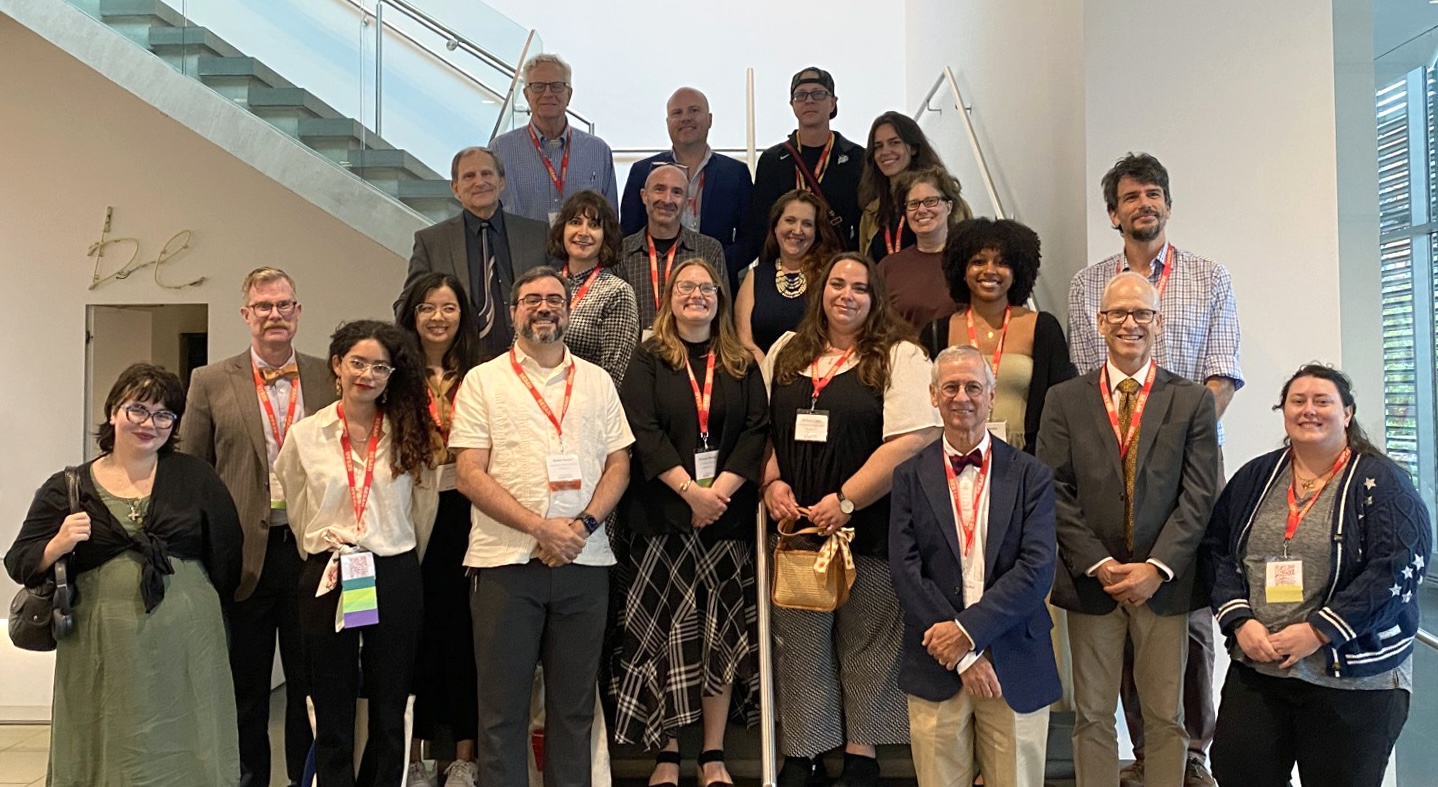
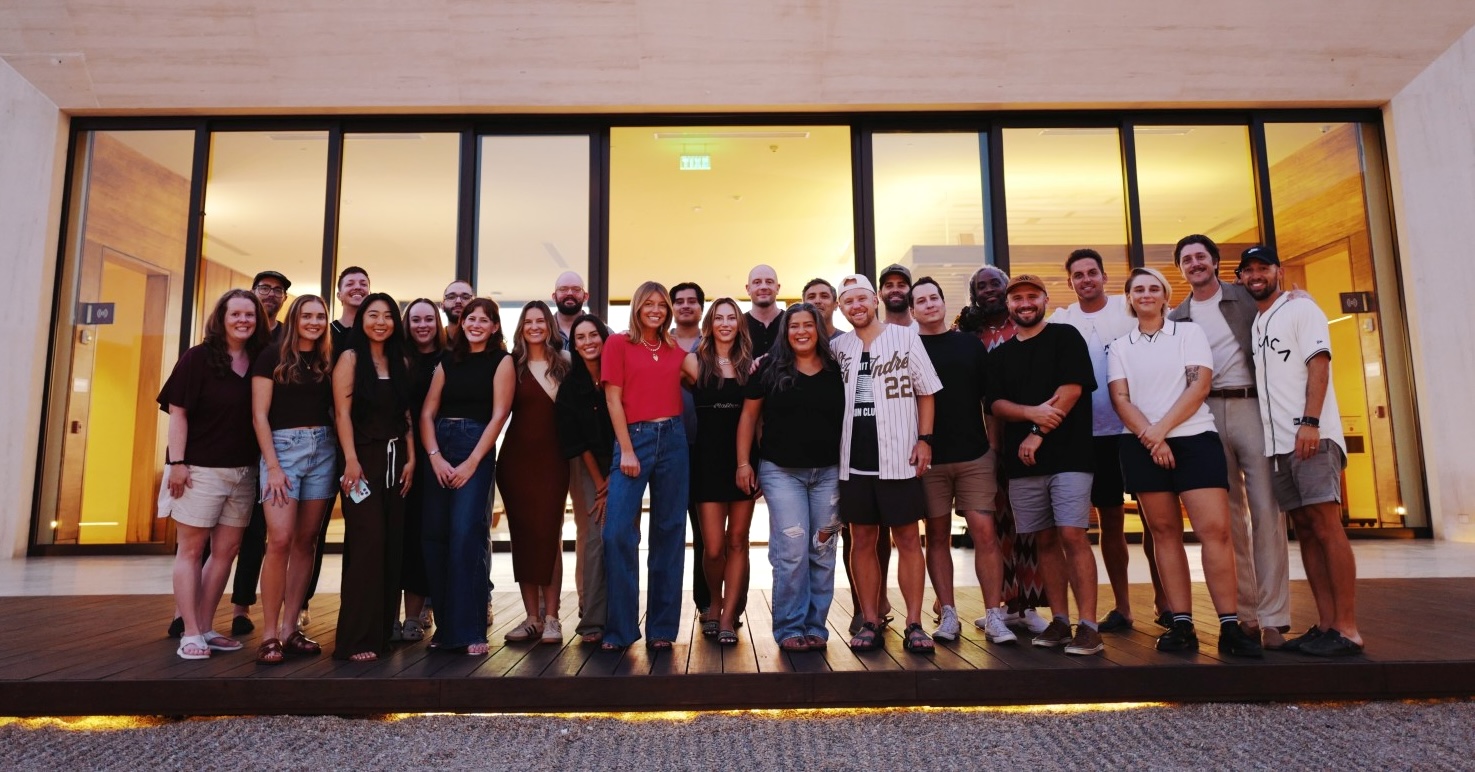
To celebrate the thirtieth anniversary of the university's architectural history department, SCAD had the honor to host the annual meeting of the Southeast Chapter of the Society of Architectural Historians (known as "SESAH"; pronounced see-saw), which attracts architectural historians, historic preservationists, social historians, architects, and independent scholars. This year's meeting, held September 30 to October 3, highlighted the range of buildings that forms the SCAD Savannah campus, with the main conference held in the SCAD Museum of Art, while the board meeting, receptions and special presentations took place at Kiah Hall, Gutstein Gallery, Trustees Theater and May Poetter Gallery in Poetter Hall. There were more than 150 attendees total.

Architectural history professor Kelly W.S. Ritter and department chair Robin B. Williams served as the conference co-chairs, having organized the event over the past two years. SCAD faculty led a dozen tours of various architectural and urban sites around downtown, while over 30 students from across the School of Building Arts served as volunteers.

SESAH group 2026

SESAH scene: SCAD students, alumni, and faculty at this year's conference.

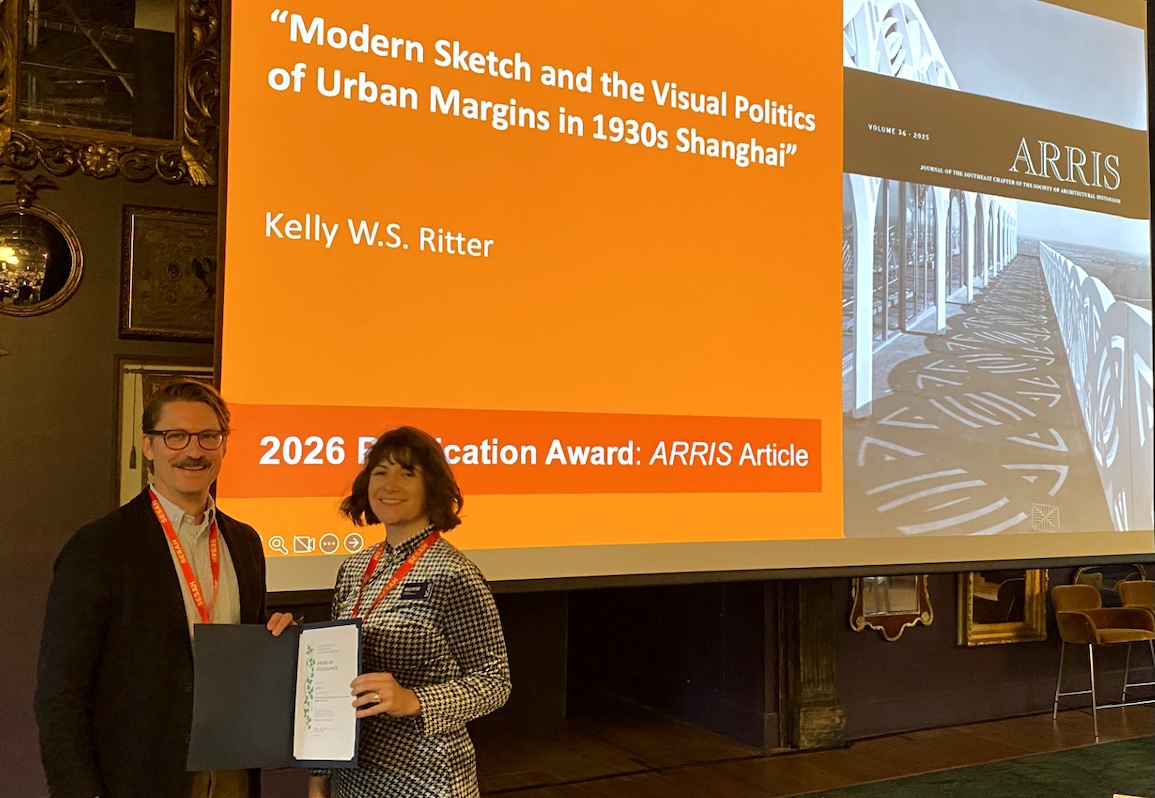
Williams and architectural history professor David Gobel presented the opening plenary address, revealing insights about the history of Savannah's urban plan and how it shaped the city's architecture from their recently released book, Learning from Savannah: From Ideal City to Elastic Urbanism (University of Georgia Press, 2026). Ritter moderated the closing plenary panel discussion about "Alternative Narratives: Archives, Ghosts and Digital History in the History of Place," which featured professors Alena Pirok (SUNY Cortland) and Scott Nesbit (University of Georgia) and City of Savannah Archives and History Officer Luciana Spracher. At the business and awards luncheon, Professor Ritter was honored with 2026 Publication Award for the best article in the SESAH journal, Arris, for her article "Modern Sketch and the Visual Politics of Urban Margins in 1930s Shanghai."

Ritter SESAH 2026

Faculty excellence: Professor Kelly Ritter (right) accepts the 2026 Publication Award.

SCAD was well represented with nine faculty, current students and alumni among the paper presenters, as selected by an independent SESAH committee. Students Halle Rudolf (M.F.A. architectural history) and Carolina Mendoza (B.F.A. architecture) and Shelby Weatherly (B.F.A. architecture) reflected the range of topics emerging from SCAD classes: the social significance of Frenchmen Street in New Orleans, the representation of preservation in Crazy Rich Asians, and the bamboo architecture of Simon Velez. Art history professor Christine Neal discussed the pathways to becoming an architect.

Numerous architectural history alumni from around the Southeast attended the conference, with three presenting papers that illustrated their evolving scholarship: Glen Umberger (M.F.A. 2015), Mike Walker (B.F.A. 2016), and Hannah Dinning (B.F.A. 2024), all veterans of previous SESAH meetings. Alumna Kayla Sparks (B.F.A., interior design, 2026) and Elizaveta Kavunets (M.A., art history, 2026) also presented papers. SCAD Atlanta architectural history professor Daniel Williamson also attended.

SESAH 2026 banner

Congratulations to everyone involved in a highly successful SESAH 2026.

Mian Irtiza Aftab: Plato presents voice-first AI

October
16
2026
By
Tags:

People meet artificial intelligence through a text box. Type a question, wait, read the answer. For systems that can now reason, listen, and act on their own, it seems a strangely narrow doorway.

"The challenge lies in the relationship between a person and a system that can do more than any tool they've used before," says Mian Irtiza Aftab (M.A., interactive design and game development, 2025).

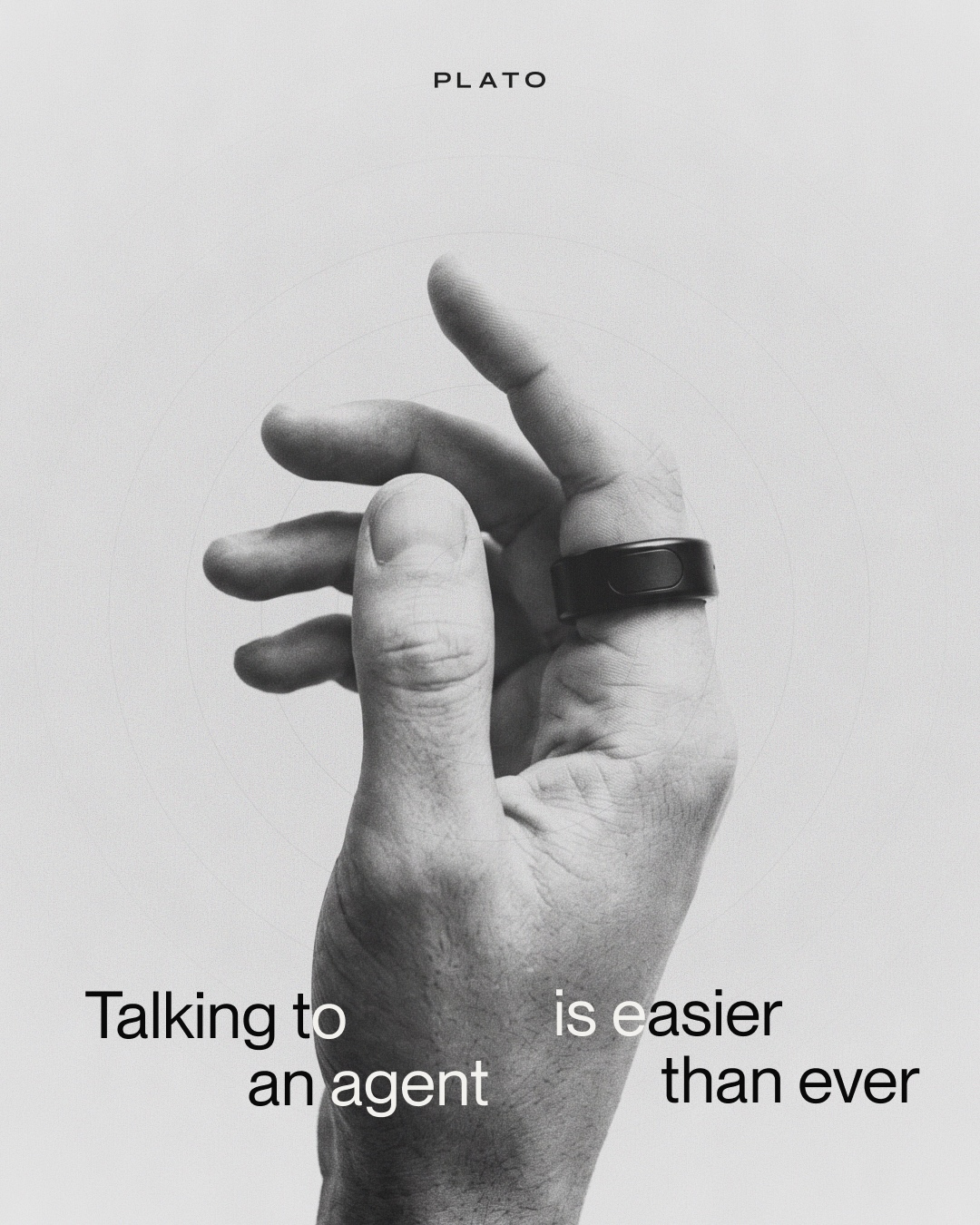
As co-founder of The Augmentation Company, Aftab and his 16-person R&D lab are launching Plato, a voice-first wearable finger ring designed to help people capture thoughts and interact with AI through speech. The project brings their work on human-AI interaction into a physical object, moving beyond the text box and into everyday life.

Aftab Plato ring

Easy does it: the voice-first Plato ring from The Augmentation Company.

"We're trying to understand where voice genuinely makes a person's day easier, and what level of trust, reliability and control they need to feel comfortable using it," Aftab says. "People should feel that the system supports their intentions and provides them with a private space to be themselves."

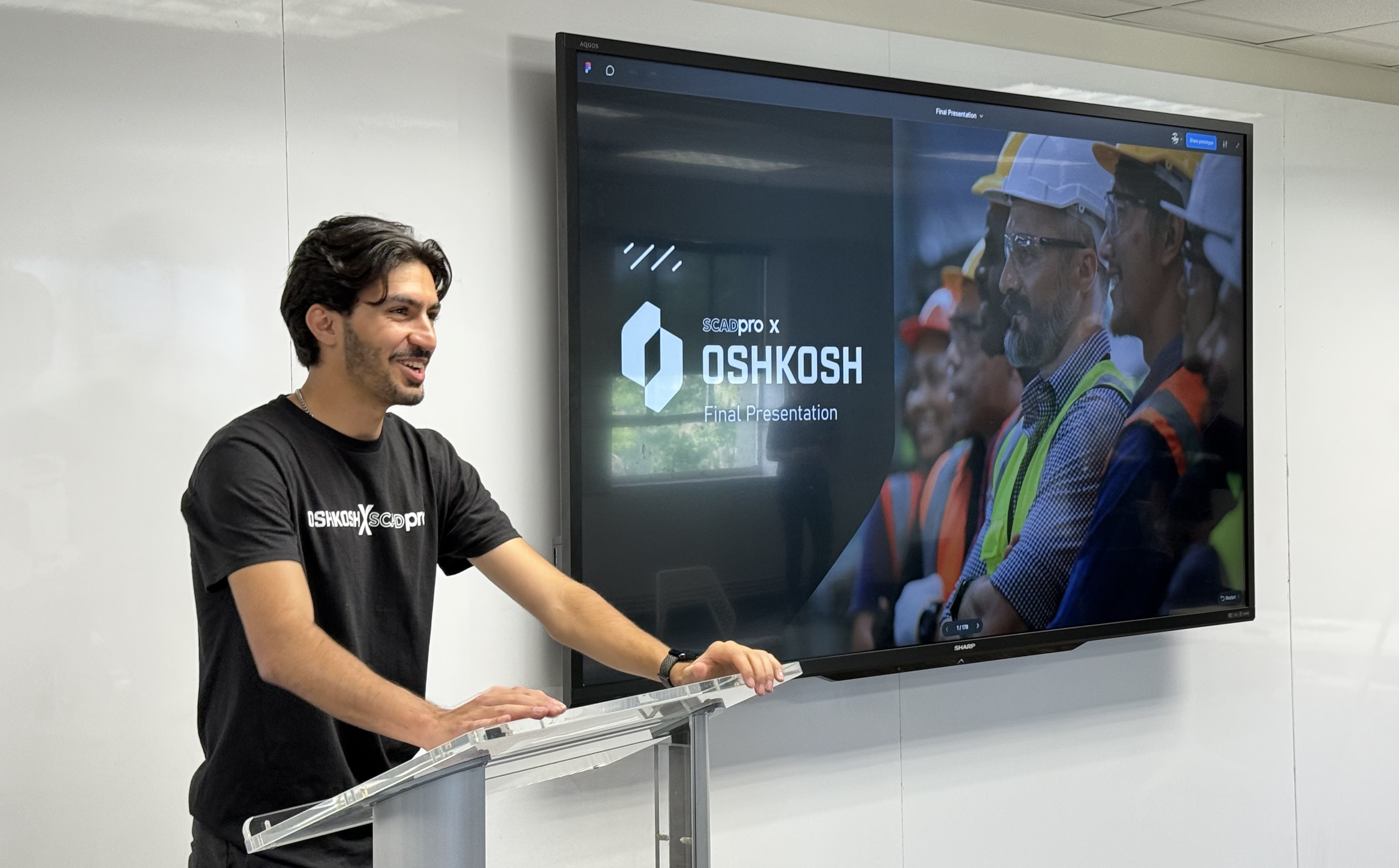
From Lahore, Pakistan, Aftab studied design at Beaconhouse National University and came to SCAD to pursue his master's degree in 2023. He gained valuable experience on SCADpro projects with BMW, Oshkosh Defense, Hyundai Mobis, and as a paid UX designer for Deloitte.

"Deloitte was my first SCADpro experience, and it was an unfamiliar environment for me. I was learning how to recognize another point of view and how to work together effectively with a team of fellow students. The client presentations helped me understand how to explain my work clearly enough for someone else to see its value."

Aftab SCADpro

The best defense: Aftab presents a SCADpro project.

As the Augmentation Company approaches $1M in annual recurring revenue without outside funding, Aftab and co-founder and CEO Dünya Baradari, a graduate student from the MIT Media Lab, are focused on bringing Plato to life. The ring puts their broader exploration of human-AI collaboration into practice: designing how people access intelligent systems through wearable tech. Alongside Plato, the company also develops what's called agentic fund intelligence, meaning AI agents that help funds and founder programs understand people, companies, and signals.

"Making an interaction easy is only part of the work," says Aftab. "Our philosophy of augmentation is about helping people stay on top of their lives while preserving their judgement and their own way of expressing themselves."

Aftab describes the company's direction in four words: human interfaces for superintelligence. "For forty years we learned to speak the computer's language: keyboards, menus, apps. Now the computer can finally speak ours," he says. "The interface is going to move off the screen and into the way we talk, work, and think."

He credits SCAD for the instinct that guides that work. "You learn to ask how something should feel before you ask how it works. Most AI companies start with the model. We start with the person."

The Augmentation Company is growing, with new projects launching in the months ahead. "SCAD students think in systems and experiences," he says. "They are the designers we need."

Aftab headshot

Connect with Mian Irtiza Aftab on LinkedIn.

Rafael L. Ribeiro: true impact in design management

October
15
2026
By
Tags:

Rafael L. Ribeiro (M.F.A., design management, 2012) has built a thriving career helping organizations make better decisions in high-stakes environments. As Chief Digital Officer at Aché Laboratories, one of Brazil’s leading pharmaceutical companies, he applies design thinking as organizations navigate uncertainty, align priorities, and improve outcomes.
 
Brazilian-born Ribeiro moved to Atlanta in his teens, then went to business school for college, before recognizing a gap between theory and practice. That led him to SCAD and its unique degree programs, which provided the missing piece Ribeiro was looking for. He joined one of the earliest cohorts of SCAD’s design management graduate program. "I came to see design as a discipline for navigating complexity," Ribeiro says.
 
At SCAD, Ribeiro discovered that design could extend beyond products and experiences. It became a way to understand organizations, evaluate tradeoffs, and make better decisions. Real-world opportunities through the Collaborative Learning Center, now known as SCADpro, enabled him to tackle practical challenges requiring immediate decisions, cross-functional alignment, and accountability beyond the classroom.
 
"I saw how things actually work in real life. That experience made the transition into my career much smoother," he said. That mindset became the foundation of a career spanning consulting, healthcare, and digital leadership while remaining grounded in a human-centered perspective.

After graduating, Ribeiro returned to São Paulo and began his career in consulting before moving into healthcare. At Hospital Sírio-Libanês, one of the largest hospitals in Latin America, he worked across multidisciplinary teams where success depended on aligning people, processes, and decisions.

"That’s where leadership matters most, in providing direction and giving the team the confidence to move forward together," Ribeiro said.

The defining test came during the COVID-19 pandemic. Faced with overwhelmed emergency systems, Ribeiro and his team developed a remote monitoring solution within days to triage low-risk patients while maintaining clinical oversight. The initiative reduced strain on hospital infrastructure and required rapid alignment across teams, protocols, and decision-makers. The experience reinforced an idea that continues to guide his work today: design creates the greatest value when it helps people make better decisions under real-world constraints. "We had to create a solution in just a few days. There was no room for iteration; it had to work." 

Today, Ribeiro serves as Chief Digital Officer at Aché Laboratórios, where he leads digital transformation efforts across a long-established pharmaceutical organization. His work focuses on modernizing digital capabilities while helping teams align business priorities with better experiences for employees, partners, and patients. "Design added a more human and nuanced way of thinking about business," he says.

Constraints are central to Ribeiro's approach. "Once constraints are understood, you identify where change is possible," he says. Those conditions shape better decisions and stronger outcomes. "That's how creativity becomes effective." 

Ribeiro continues to bridge creative thinking with execution, designing systems that are resilient, practical, and responsive to human needs. "Success, for me, is impact that holds over time through clarity, good judgment, and strong teams."

Ribeiro vertical

Connect with Rafael L. Ribeiro on LinkedIn.

Explore the pioneering programs in the SCAD De Sole School of Business Innovation at scad.edu/innovation.

Photographer Mark Seliger's 'true self'

October
8
2026
By
Tags:

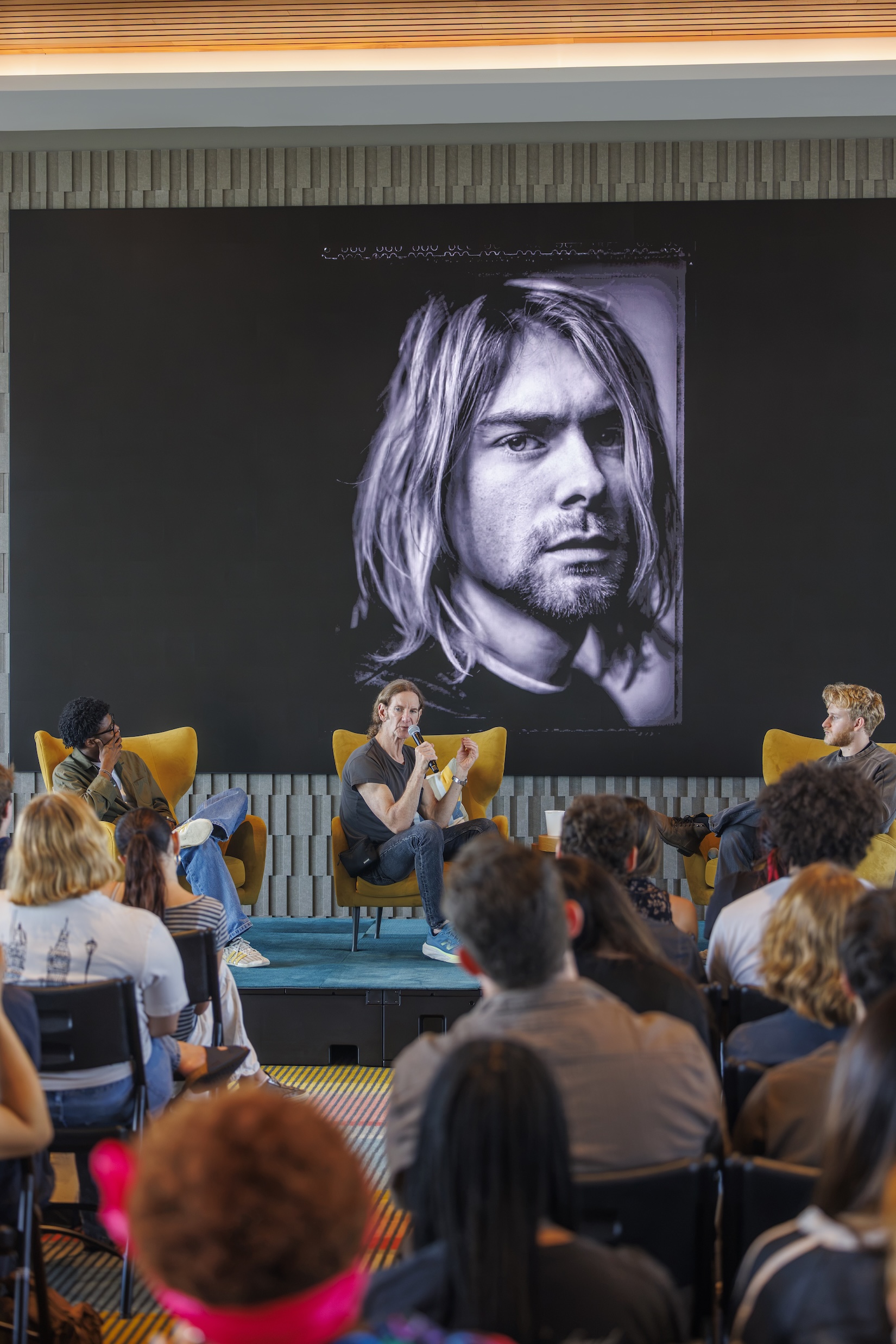
As the steely, vulnerable face of Kurt Cobain stared out at SCAD students, the room atop River fell silent.
 
Mark Seliger stared back. "This portrait was taken in 1994 with a film called Polaroid 55, which gives you a positive print and a negative. Because Kurt thought it was a test, I saved the Polaroid negative and brought it back with me to New York," Seliger said. He nodded at the iconic Nirvana frontman. "Two months later Kurt [was dead] and this photo became the memorial cover [of Rolling Stone]."
 
It was but one extraordinary story from an extraordinary day. Seliger's Sept. 29 visit to SCAD included class visits and one-on-one critiques leading up to his River lecture. Photography students had the rare chance to meet a legend in their field.

Seliger Cobain

Come as you are: Mark Seliger speaks with SCAD students about his portrait of Kurt Cobain.

Chair of photography Josh Jalbert introduced Seliger: "Mark's pictures find the person inside the persona, asking the questions we all ask: How am I seen? Who am I becoming? What remains when the performance ends? A Seliger portrait is a record of a relationship, however brief, a trace of trust, a fragment of mutual recognition."
 
A native of Amarillo, Texas, Seliger attended East Texas State before moving to NYC in the mid-'80s where he began working for Rolling Stone. His photos have graced an estimated 188 covers of that magazine. Other work for Vanity Fair, GQ, Harper's Bazaar, and Vogue demonstrates his lasting influence on post-modern visual sensibilities.
 
"Making a simple photograph feel elevated takes a lot of decision making," Seliger said. "It means deciding what kind of camera you're going to use, what lens, whether you're going to use black and white or go for color, your lighting, and then how much do you know about the subject you're photographing? Can you make them feel comfortable? How do you move them within a shoot?"
 
Over the course of an hour, Seliger told stories about individual photographs of Ringo Starr, Fleetwood Mac, Carlos Santana, Johnny Cash, John Lee Hooker, Mick Jagger, Demi Moore, Barack Obama, Jerry Garcia, Malala Yousafzai, Robin Williams, the cast of Seinfeld, Misty Copeland, Mikhail Baryshnikov, Sean Penn, Jalen Brunson, and the Dalai Lama.
 
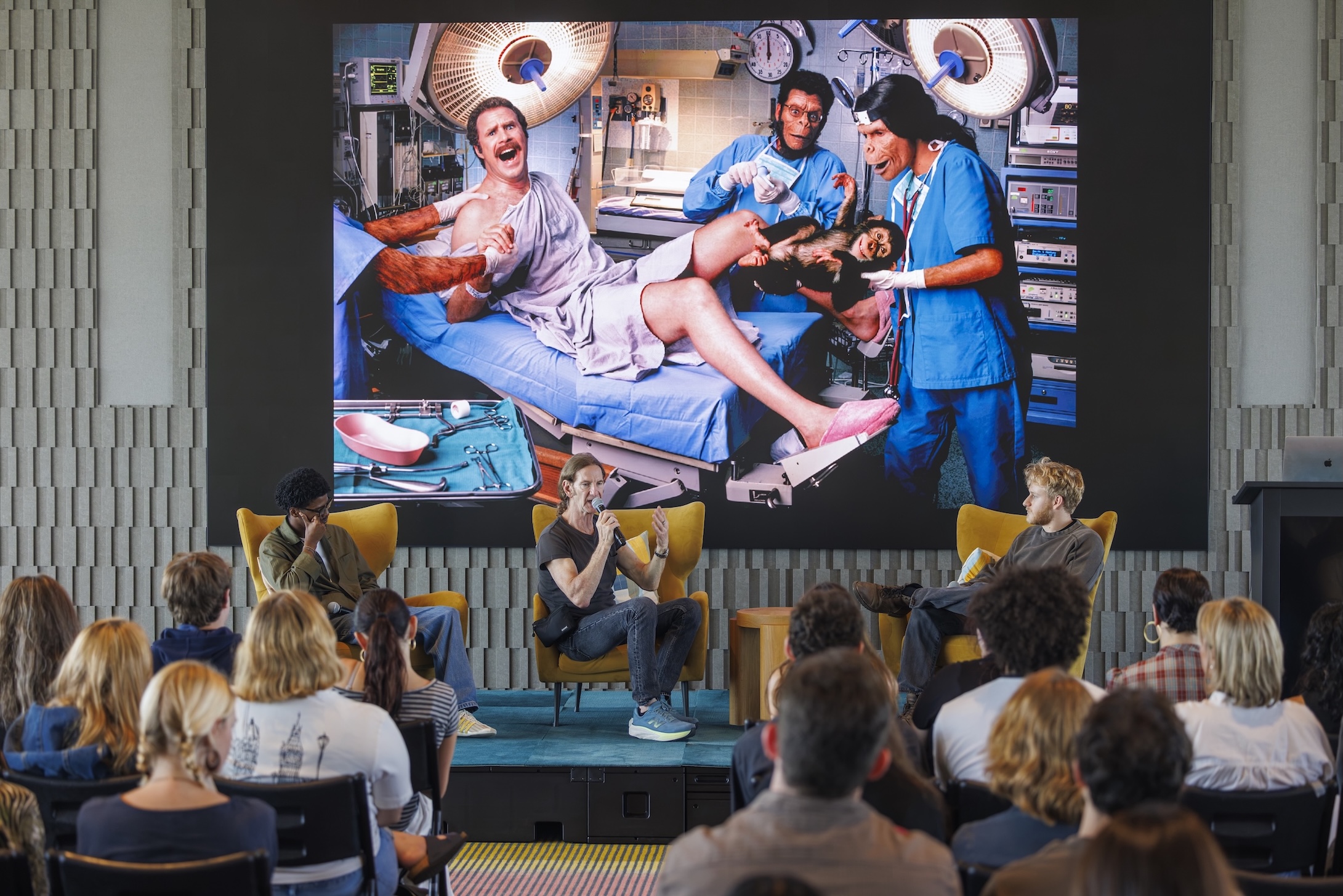
"You're having a conversation, feeling where they're at for the day. You take them through what you plan out for them, even if it's a simple portrait. You eliminate things that don't work. You give them direction that allows them to feel more comfortable. You never know what the mood of the photograph will turn into. I had a hundred ideas for Will Ferrell. His manager goes, you know, Will has this really good idea. And I was like, oh yeah, what's that? He goes, what do you think about him giving birth to a monkey? I was like, That's fantastic."

Seliger Will Ferrell

You stay classy: Seliger and his photo of Will Ferrell.

Flanking Seliger were Xavier Thompson (B.F.A., photography, 2022) and Will Foerster (B.F.A., photography, 2022). "Will came direct from SCAD and joined my studio as an intern and we made him do the things we didn't want to do," Seliger said. "He became my first assistant because he did them so well."
 
The hour wound down. Seliger got personal. He showed images from a trip to Cuba, and photos of the "gender-bending" community in NYC, where "instead of me fearing asking people to take their pictures, we were celebrating the first time for them to actually be seen as their true selves."
 
He ended his talk with a nug of advice: "If you are struggling with where you want to go with your photography, start with an idea. Don't start with your camera, start with an idea. What is the idea behind what you're trying to say? Then you start plugging in everything else."

Seliger Covers Concepts

Thank you Mark Seliger for coming to Savannah! Learn more about the photography program at SCAD.

UX designer Finley Peplinksi's Rocket-powered summer

September
10
2026
By
Tags:

"What started as a portfolio review is taking me to Detroit this summer! Ready to learn fast and design thoughtfully," wrote Finley Peplinski (B.F.A., user experience design) in a LinkedIn update in January, 2026.

Now, eight months later, the co-president of student club SCAD FLUX is in her family's home in Utica, NY, checking in via Zoom to reflect on her still-fresh internship with fintech and homeowner services leader, Rocket Companies, Inc. "Rocket gave me a lot of freedom to try things this summer, and to critique what they already had to make better experiences," Peplinski says.

The catalyst for the internship came in 2025, when Peplinski's UX design portfolio project Avos wowed a recruiter from Rocket Companies during a visit to SCAD. "Avos uses conversational AI for informal injury reporting, and Rocket is an amazing company that is really pushing forward with AI," Peplinski says.

That connection led to the internship with Rocket's software services team. "I spent ten weeks on-site in Detroit this summer working mostly with software engineers. The experience challenged me and my processes, and made me rethink how to communicate what was necessary to move a project forward."

Peplinski Rocket

All the way up: Peplinksi this summer at Rocket. 

As the sole UX designer on a Rocket intern project, Peplinski played a unique role. One challenge was to build a Slack bot based on paid time off, "which does not sound glamorous, but it was very exciting because the whole company of 23,000 employees would experience this product." To better reflect employee reality, Peplinski interviewed 26 team members across different Rocket departments. "The decision to put the bot in Slack was actually the right idea, because most people are already having their PTO conversation informally."

This research-based approach sprang from a course Peplinski took last spring at SCAD, Usability Testing: People vs. the World (UXDG 380) with UX design professor Jeannie Harran. "I used everything I learned from Professor Harran to be successful in my internship," Peplinski says. "It's really about using data to prove things to people who might not feel the creative energy."

In turn, Professor Harran praises her student, calling Peplinski "particularly strong" at "communicating findings and presenting her work."

"In my Usability Testing course, Finley stood out for her strong communication skills, collaborative approach, and commitment to conducting thoughtful, rigorous research," Harran says. "Finley held herself and her teammates to a high standard throughout." (Harran, who joined the SCAD faculty in 2025, was formerly a lead researcher at Dell Technologies.)

Now, with the new academic year about to begin, Peplinski is looking forward to UX Design Senior Studio (UXDG 450). "Our UX department is not as big as programs like graphic design and fashion at SCAD, so you often find yourself in class with the same people. Having received our outside [internship] experiences, it'll be really interesting to see what our respective companies have taught us about how we can collaborate to create better products. I want to bring the vibes from my Rocket internship back to SCAD."

"Finley represents exactly what we hope to see in our UX students," concludes Harran. "She is designer who is curious, collaborative, and ready to put what she has learned into practice."

Finley Peplinski headshot

Connect with Finley Peplinski on LinkedIn.

Austin Klubenspies trusts his team

September
1
2026
By
Tags:

In an industry obsessed with speed, trends, and surface-level differentiation, Austin Klubenspies (B.F.A. graphic design, 2019) has built his career around a less glamorous but more durable idea: design only matters if it works. "Design in the digital age can't be beautiful but not work, and it can't work without being beautiful. There is a balance in that," Klubenspies says.

As president and partner of Wild Places, a Summit House design studio focused on brand identity and digital experience, Klubenspies brings an entrepreneurial lens to creative work. For the Atlanta-based team leader, his journey mirrors his philosophy.

Klubenspies began as a late-night freelancer before joining AMB Sports and Entertainment, leading digital experience for the Atlanta Falcons, Atlanta United, and Mercedes-Benz Stadium. He joined Wild Places as vice president of digital. While many agencies optimize by repeating what they know, Klubenspies prefers to challenge defaults.

"Everybody in the industry says, 'Let's not reinvent the wheel.' I say, 'Let's reinvent the wheel!' That's how you discover what was broken about it in the first place."

Wild Places aims to become "specialists in solving problems," choosing the right tools and partners to deliver solutions. That approach matters when timelines compress, expectations spike, and internal teams have no margin.

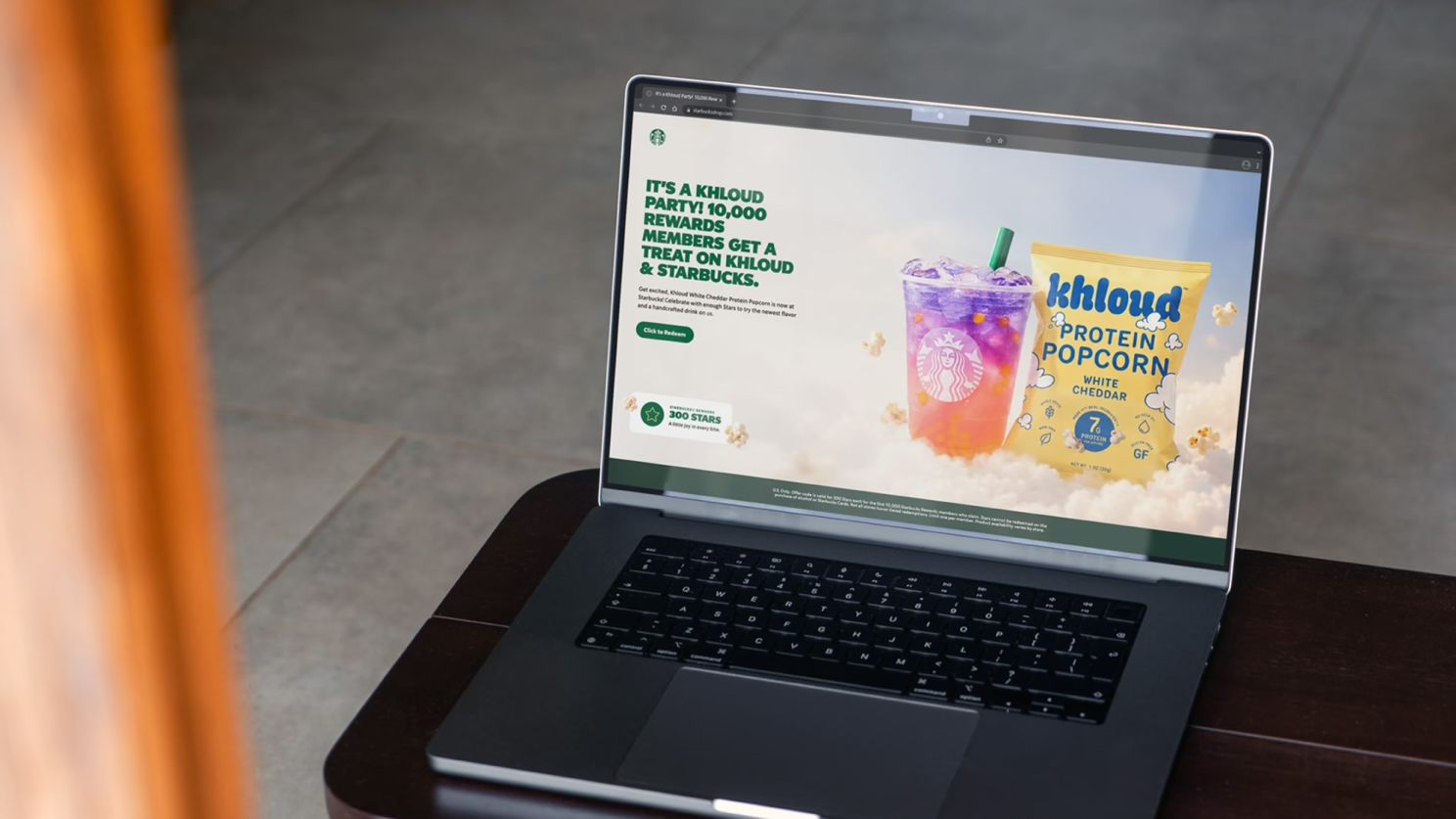
One example came during a Starbucks campaign tied to the seasonal return of the pumpkin spice latte and, later, a Taylor Swift–driven microsite experience. The challenge was reliability.

"The first concern wasn't, 'Does this look good?' It was, 'Will this crash?' Because to the end user, it's not a vendor failing. It's Starbucks failing," Klubenspies says.

Klubenspies Starbucks

Grande graphics: design work for Starbucks.

Wild Places built an experience designed to withstand extreme demand, with layered contingency plans to protect uptime even if multiple systems failed. It was a short yet high-impact moment for customers, backed by infrastructure built to perform.

"Our job is to make sure the magic moment works and that the client never has to explain why it didn't," Klubenspies says.

The most meaningful work is often less visible. At Mercedes-Benz Stadium, that meant rethinking how digital content, such as food and beverage updates, are managed day-to-day. "If a marketing team can't update their own site without engineering support, that's a failure of design," he says.

By building flexible systems and repeatable components, Wild Places enabled nontechnical teams to keep experiences current without breaking standards. That is where design becomes operational leverage: fewer bottlenecks, faster execution, and less burnout. "If I can buy a team back thirty or forty percent of their time, that's priceless."

As Wild Places has grown, Klubenspies has become more selective about what the studio takes on. He has seen how projects fail when "great work" collapses at handoff because the system was never built to survive real-world constraints.

Internally, Klubenspies protects momentum through process and feedback loops that prevent misalignment from compounding. "If I don't trust my team, I have the wrong team," he believes.

Klubenspies credits SCAD with teaching him to treat critique as objective and constructive rather than emotional. That mindset still shapes how he hires and mentors. "I hire culture before I hire skill set every time."

For Klubenspies, the future of design leadership is not louder visuals or faster output. It is systems that scale, teams that stay healthy, and experiences that work under pressure.

"I get excited about solving problems that actually matter. Making people's lives easier. That's what wakes me up in the morning."

Klubenspies team

Squad up: the Wild Places team.

Connect with Austin Klubenspies on LinkedIn!

Zero Waste measures up!

August
19
2026
By
Tags:

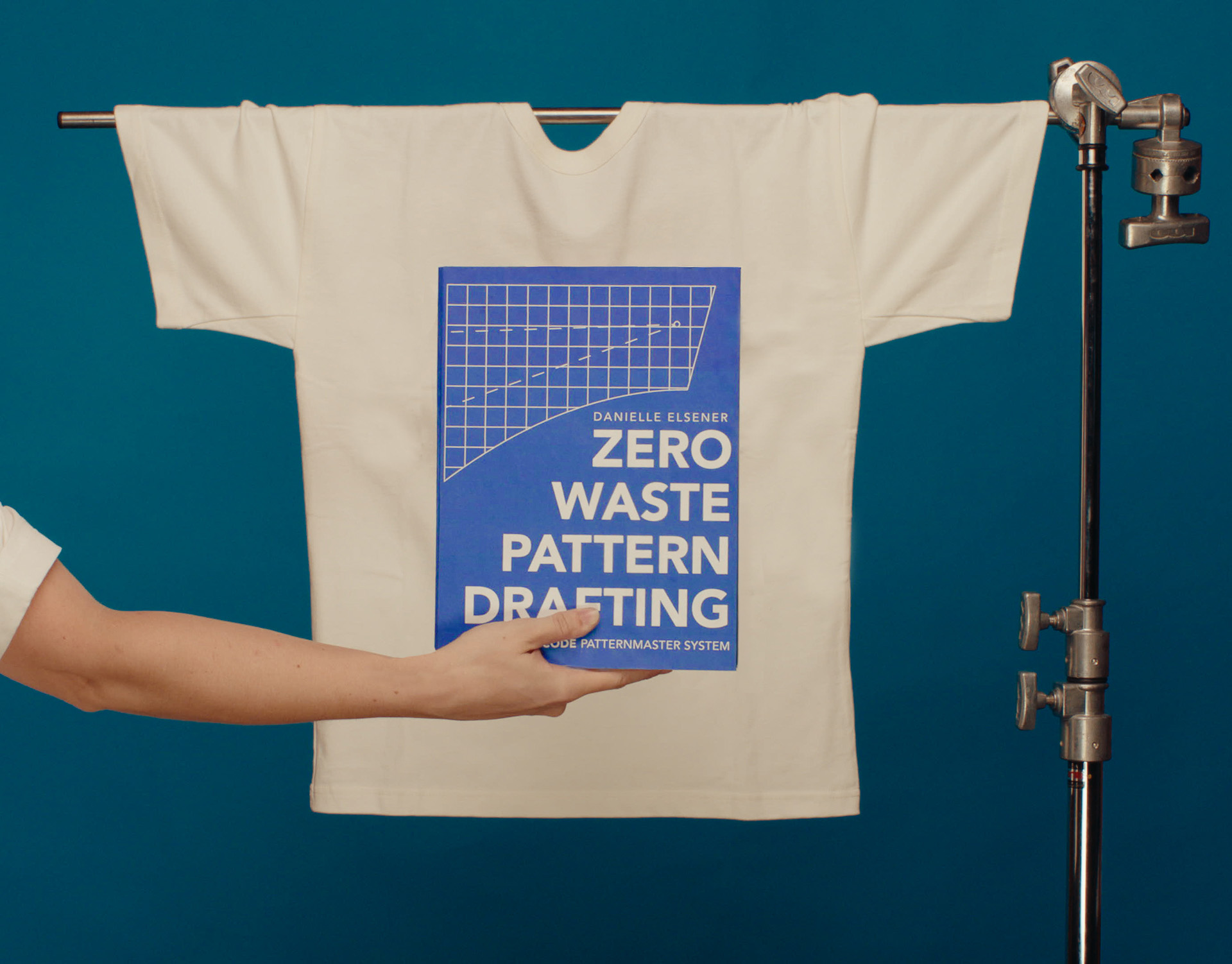
"Zero waste design is a giant puzzle," Danielle Elsener said in 2020, the year she received the inaugural Activate Movement Program grant for sustainable design. Six years later, the designer and DECODE founder has put that puzzle together in the form of a book.

Zero Waste Pattern Drafting is a distillation of the decade and a half that Elsener (B.F.A. fashion, 2012) has dedicated to developing her DECODE methodology. The campaign to back the "hands-on guide to zero waste pattern drafting" launched earlier this week, with Kickstarter officially naming it "a project we love."

"The DECODE Zero Waste Pattern System presents a set of ten garment-specific drafting tools and instructions," Elsener explains. "The system lets any pattern-maker, home sewer or student draft a fully zero waste garment directly onto their chosen fabric — no prior zero waste experience required."

Elsener book cover

Book smart: the initiative that Kickstarter calls "a project we love." 

The 250-page hardcover book includes digital tools and files, with optional bundles for a companion set of laser-cut acrylic drafting tools and workshops. (The book is $85; bundled with physical tools the cost is $210.) Backers should expect delivery in early 2027.

"This book will make it easier for students to jump into zero waste design from the outset of their careers and design thinking," Elsener says. "When I was a SCAD student, I had to work very hard to find information on designing zero waste patterns. The original book Zero Waste Fashion Design (Bloomsbury, 2015) by Timo Rissanen and Holly McQuillan was an eye opener. I hope that my book Zero Waste Pattern Drafting is an evolution that empowers the next generation."

Zero Waste Pattern Drafting follows Danielle's continued work bringing zero waste methodology into both classrooms and supply chains, arguing that the future of sustainable fashion depends on better design systems built for zero waste from the ground up.
 
"A significant portion of the twelve million tons of textile waste produced by the fashion industry every year happens in the pattern room, and in the early decisions designers make, what ends up on the cutting room floor," Elsener says. "The issues are always costs, time, and feasibility."

Elsener book pose

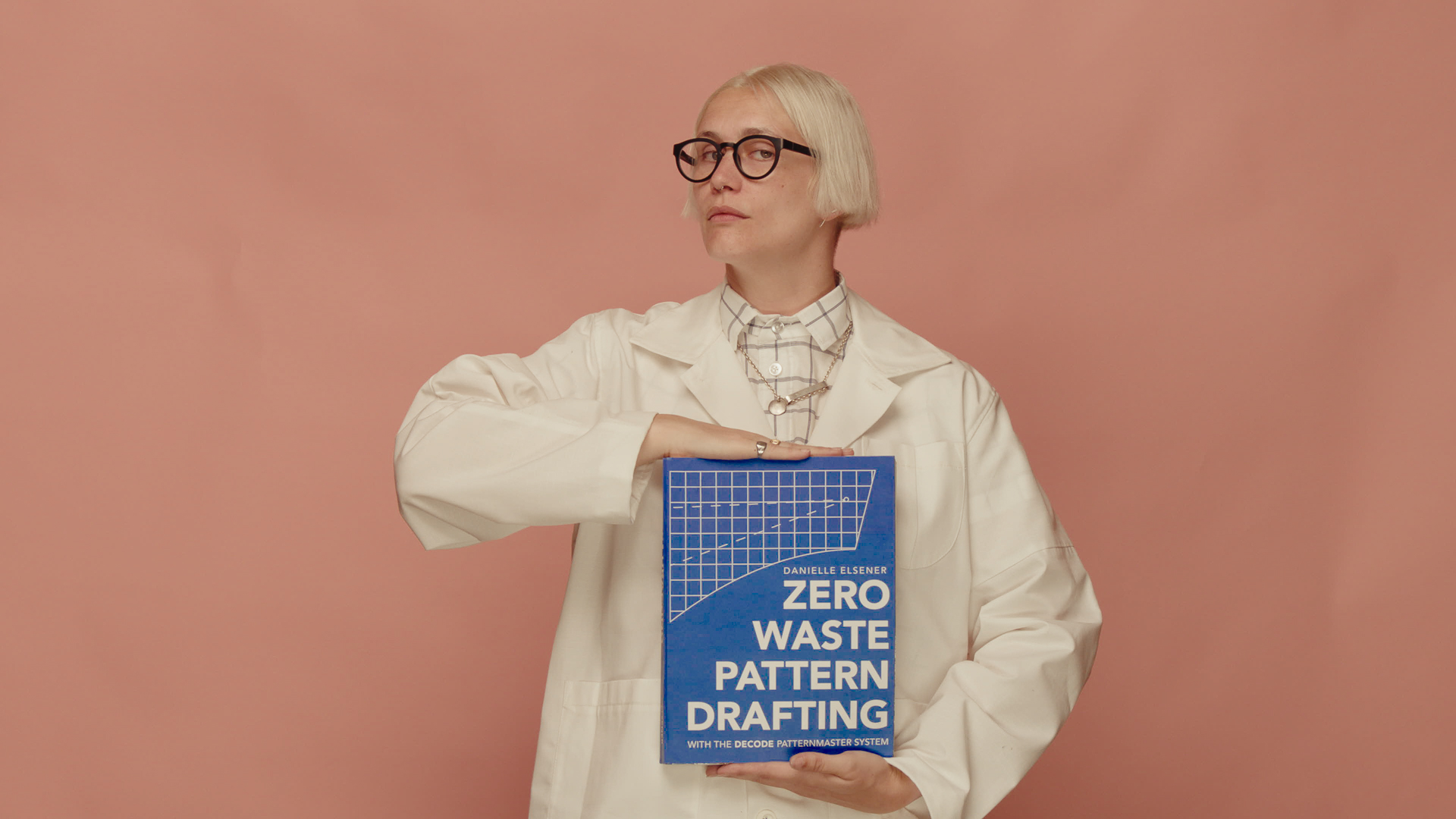
Shirt happens: Elsener models her new book.

Elsener has worked with brands including Nike, Adidas, Manduka, Cone Denim, and Albino & Preto in order to "to build zero waste design systems into how they actually make things, not just how they talk about it."

"One example I highlight in the book is where I talk about what it actually takes to get zero waste designs manufactured. I was working with a well-known brand to redesign one of their classic garments to be zero waste. We were partnered with a domestic manufacturer, and they kept coming back to me saying, 'This isn't a zero waste pattern, what should we do?' I was so confused. We had sent tech packs, samples, measurement charts, .dxf files, .pdf files, everything they'd need to make a sample to spec.
 
"We finally figured out the issue: their nesting software was taking my zero waste pattern and rearranging it the way it normally rearranges any other pattern, which put the standard 15% waste right back into it. The software simply wasn't built to read zero waste patterns, since the industry so rarely produces them. In the end, we had to find a workaround so their machines could cut the pattern without running it through the software at all."

Now, with Zero Waste Pattern Drafting, Elsener is putting the knowledge into designers' hands. Back the book here.

Elsener headshot

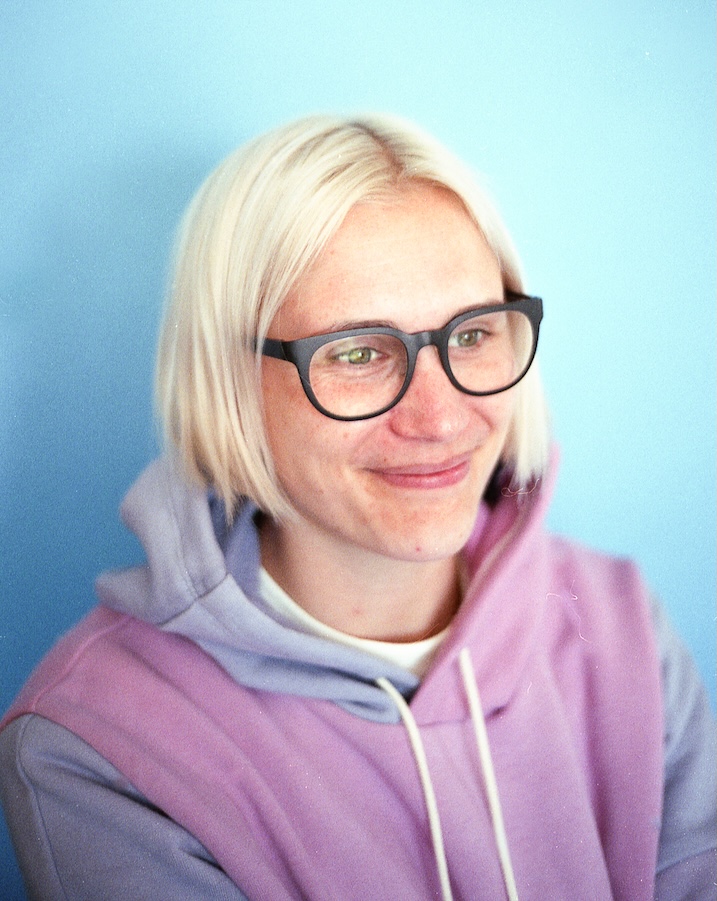
Knowledge is power: connect with Elsener on LinkedIn.

Fiamma Noto: ready, steady, Tibi

August
14
2026
By
Tags:

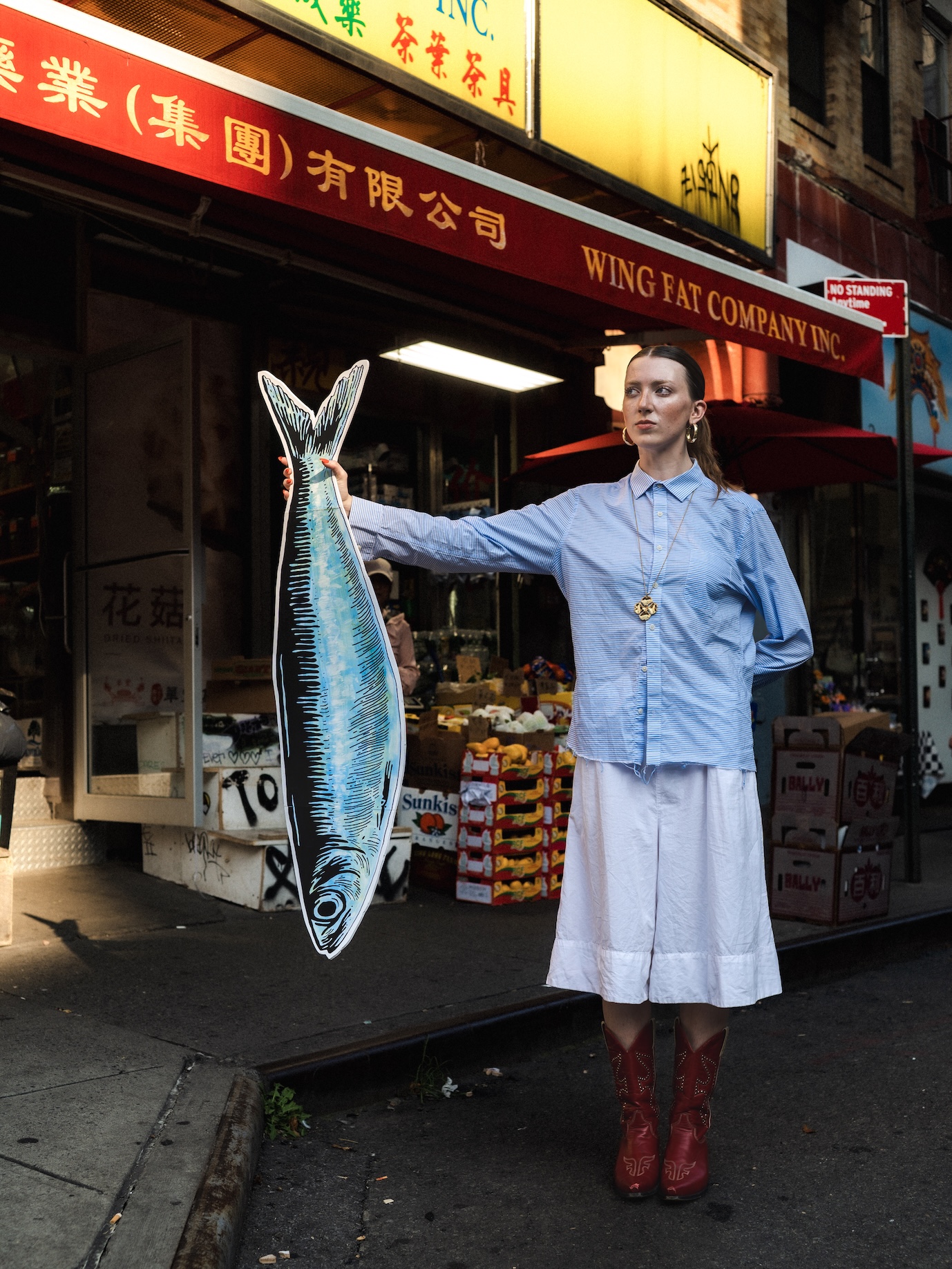
A young woman wearing gold hoop earrings holds a fish the size of a boogie board. Her ruby boots match the awning of the Wing Fat Company overhead and the No Standing Anytime sign behind her. The obtusely shaped NYC Chinatown curb is echoed by the top-buttoned collar of her shirt and the anchovy's tail.

This absurdly vivid image — a photograph by Fiamma Noto — blurs the lines between fashion, art, and street photography. "I had a phase where I was loving photographing editorials, but with, like, really large objects," says Noto (B.F.A. photography). "I did it with the fish and one with a big paper airplane. Those were collaborations with all people from SCAD." She smiles. "That was last summer, when I had more free time."

Noto fish

Piscean scene: fishing for more in New York.

This summer's different: Brooklyn native Noto is back in the city as a marketing intern at Tibi, the chic clothing brand founded by "creative pragmatist" Amy Smilovic. "Tibi's the perfect place for me, where I can be in an office and be highly creative," Noto says.

Last spring, Noto was shooting for the SCAD fashion media team during Tibi's 2026 Fall runway show at SCAD FASHION when she met Tibi director of creative operations Reed Young. "Then I got a message from him that said, 'Would love for you to shoot for Vogue Runway.' I was on the Red Bus at the time and I was like, oh my gosh, yes!"

A subsequent LinkedIn connection with Tibi's manager of strategic partnerships Gabriel Smilovic led to her summer internship. "Gabe told me in the beginning, 'I want you to get what you want out of the summer.' Tibi is really interested in Gen Z's point of view on things. It's a fashion company, and we also sell books, and have a podcast [Off You Go]. Being on the marketing team, it keeps us very busy. It's super-cool to listen to how Amy thinks."

When Noto came to SCAD in 2023, her plan was to be an illustration major, "but when I went to Career Fair, I spoke with [photography department chair] Michael James O'Brien who told me I should go to SCAD MOA and check out the Tyler Mitchell exhibition. So, I walked over, and I was like, I could see myself doing this."

Noto bird

When doves cry: Noto's Bird Whisper.

The Mitchell exhibition began Noto's all-in obsession with photography. "Once I got access to the photography studio sophomore year, it was all I did. I rented studio equipment and played with different cameras to figure out what I liked and what worked." This year she became photo editor for SCAD's official fashion publication Manor.

"Fiamma's work ethic is second to none," says photography professor Dillon McDaniel, who taught Noto in courses including PHOT 301: Video Techniques. "Rarely did a week pass in class when I didn't see her starting a new project, experimenting with new techniques, and fanning a new flame. She pushes herself to evolve, delighting both me and her classmates."

While summer might be winding down, New York Fashion Week is coming up the second week in September, which will give Noto a chance to close out her time at Tibi on a high. "I'm excited, but Fashion Week is going to be intense," she says.

Then she'll be back at SCAD. This coming academic year, Noto intends to shoot "only on film": "I will be channeling [photographers] Petra Collins and Nadia Lee Cohen. I want to perfect the tactility of film."

The last word goes to her professor, McDaniel: "Fiamma is already on her way to a stellar career. She will inspire future SCAD students."

Noto headshot

Connect with Fiamma Noto on LinkedIn.

Banner image: crowd surfing at Foo Fighters' show at Irving Plaza, April 30, 2026.

Copyright: Fiamma Noto.

Spainhour summer!

August
3
2026
By
Tags:

Carter Spainhour (B.F.A. industrial design) Zooms in from Estée Lauder's global headquarters near Central Park with a friendly smile, ready to discuss his summer in the city. The dean's list student and Ars Longa Society standout has spent the past eight weeks interning at Clinique, elevating the brand's beauty and skincare product line as a member of its packaging and design team.

"I started my Clinique internship the Monday following the end of spring quarter at SCAD, so it was a quick turnaround, but it was good to get my boots on the ground," Spainhour says. "I knew right away that I was going to enjoy connecting with the team here. They've welcomed me, coached me, and let me take the wheel to see how far I can take projects creatively."

The world of beauty is a good fit for Spainhour's industrial design nous. "Every year, winter quarter, I work with business of beauty and fragrance students to support them on their capstone projects," he says. "I 3D model and 3D print different bottles for them so their ideas can come to life."

Spainhour bath

Capstone collaboration: modular fragrance system UNIE.

Fashion marketing and management professor Daniel Green recruited Spainhour in 2025 to join Atelier 202, a year-long collaborative special project where fourteen students were tasked with developing the university's first signature university fragrance.

"As supervising professor for that unique project, I reached out to Carter after learning about the quality of his work," Green says. "I had heard about his positive contributions to SCADpro projects from students who had worked with him first-hand. Carter became a valued member of our creative team, motivating with his can-do attitude and sharing his design talent to achieve critical work in product and packaging design."

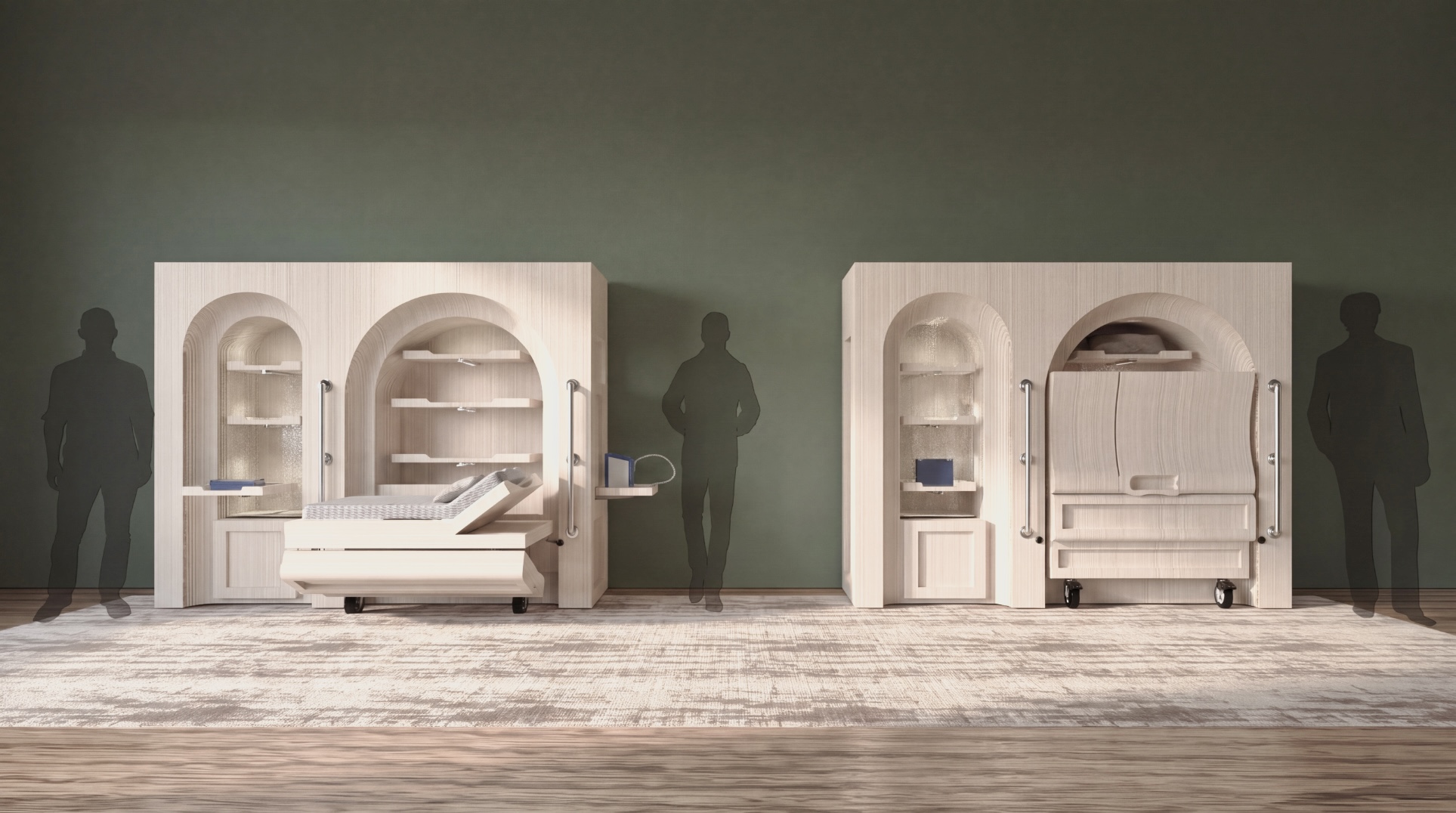
Spainhour Haven five

Change maker: table design for Haven.

An examination of Spainhour's design portfolio reflects a wide range of projects and a refined sensibility at play. There's Aroma, an architectonic coffee maker that delivers "precise customization" with every drink. A changing station, called Haven, developed as a SCAD SERVE project, aligns with the American with Disabilities Act of 1990 (ADA) and features in government buildings in Savannah. The aptly-named luxury Vaark vacuum sports a sumptuous snout.
 
These were among the designs Spainhour presented last year to SCAD executive-in-residence Bob Chavez, the former Executive Chairman of Hermès Americas, who "helped me understand the emotional aspect of my work as it relates to the beauty industry," Spainhour says.
 
Subsequently, while presenting to a beauty recruiter, "I was able to show my versatility and my ability to draw on disparate experiences. While Estée Lauder does not create truck trailers or feminine product dispensers" — both items Spainhour has designed — "I was able to demonstrate that my color, material and finish analysis can be interpreted in diverse ways, at different scales."
 
Spainhour will return to SCAD this fall, Clinque stint complete, and dive into senior year. A graduate of Atlanta International School, he takes pride in his Georgia roots and the values cultivated at SCAD. As Green says: "Carter welcomes the joy of creative collaboration."
 
"I design for empathy," agrees Spainhour. "To be able to impact someone positively with a single product is what I aspire to do." As summer carries on, Carter is clear on one thing:
 
"Everybody needs an industrial designer."

Spainhour headshot

Connect with Carter Spainhour on LinkedIn!
 

AlphaRise arrives

July
29
2026
By
Tags:

Most technology asks the human to adapt to it — learn the interface, keep up with the pace, and meet it on its terms. For designer and creative technologist Ned Shoaei (M.F.A. interactive design and game development), that arrangement always seemed backward. The most meaningful technology, she argues, should adapt to the person with care.

Shoaei's vision takes form in her thesis project AlphaRise, a compassionate neurofeedback game built in the SCAD School of Creative Technology for one of the least understood symptoms of multiple sclerosis (MS): fatigue.

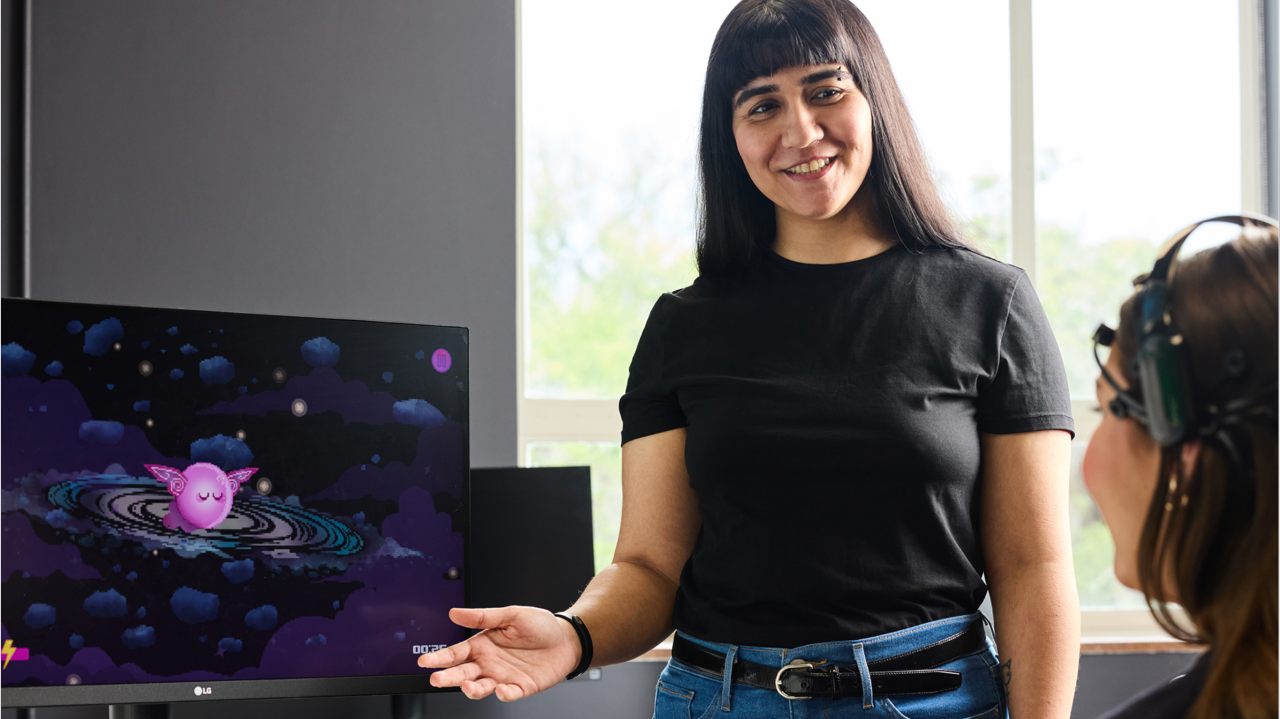
Players first meet Pip, a round, pixelated creature that drifts through soft, reactive environments in search of a higher state of calm focus. The player wears a brain-computer interface (BCI) headset, and Pip responds to their actual brain activity in real time. As focus rises, Pip rises with it, energy shifting in color and motion.  Within seconds, players are intuitively guided into a feedback loop, using boosters and meeting challenges as they go on their discovery journey alongside Pip.

That loop is doing real therapeutic work. Research links fatigue to specific patterns of brain activity, and AlphaRise is designed to gently encourage the brain toward the opposite state, giving players a way to see and steer something that normally happens invisibly.
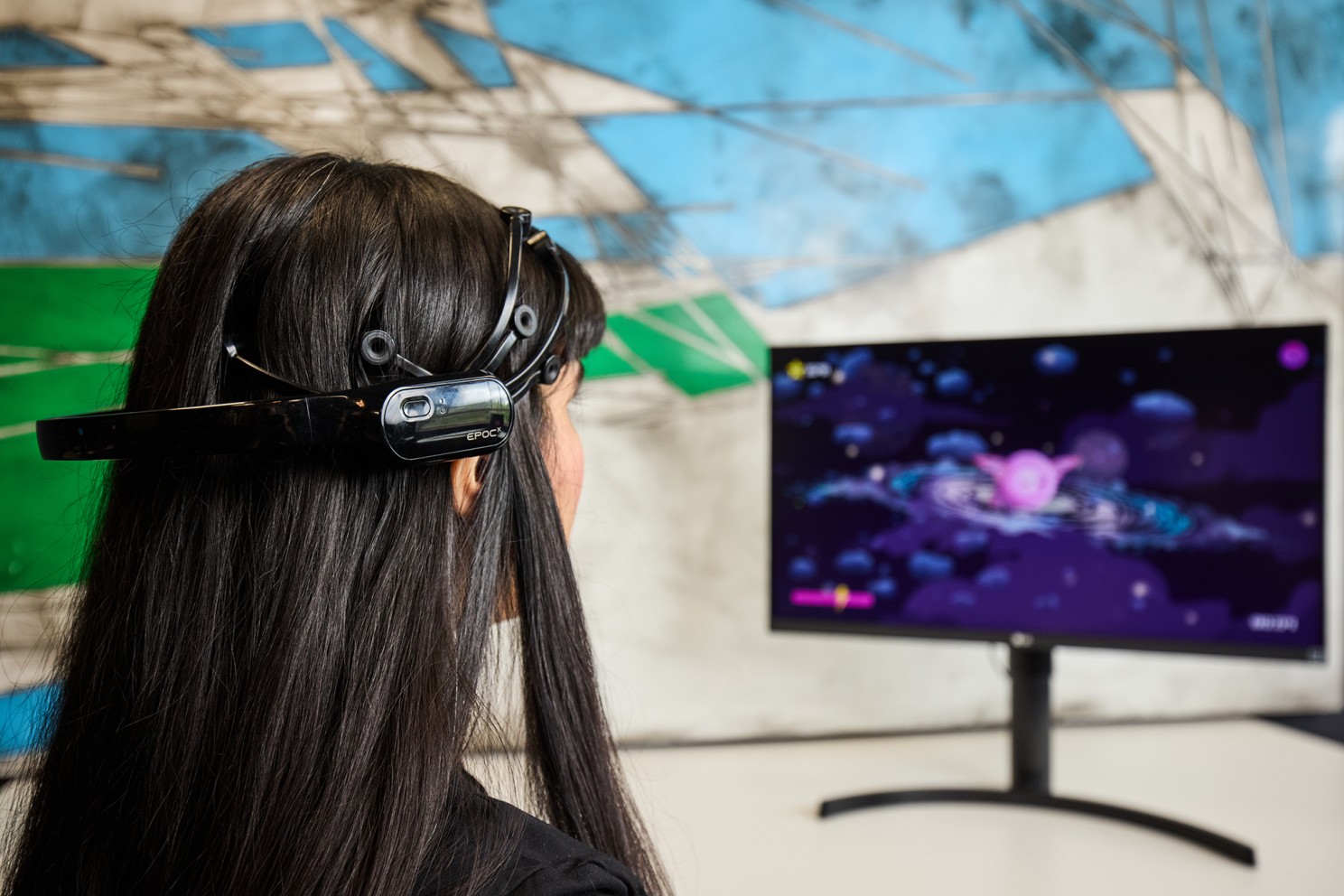
Shoaei headset

Pip in: Shoaei wears a wireless headset that reads brain activity as the game responds on-screen. Photo: Mike Schalk.

The part most dear to Shoaei is what she calls Compassionate Mode. When the game senses fatigue, it eases off, softens, and rewards the player for staying present. Players reach more energized states of mind by reinforcing visual and audio feedback.

"You should never punish the symptom you're trying to heal,” Shoaei said.

AlphaRise began with a neuroscience kit and a single-channel EEG headset. Shoaei streamed live human brain data into a game engine for the first time and watched a digital world respond to a real mind in real time. That moment convinced her there was something here worth worth studying: "I'm designing with the most sensitive data humans have: streaming consciousness, thoughts, and brain signals."

The path from there was rocky and rewarding. Shoaei chose hardware, worked through calibration and signal processing, learned the language of neuroscience, and interviewed scientists and subject-matter experts.

"I learned to treat every hardship and failure as information, a signal toward my next step,” Shoaei said. "Iteration and validation are part of my job as a designer. With AlphaRise, I've experienced that at a whole new level.”

As AlphaRise grows, Shoaei develops it with others. This spring, game artist Madeleine Schaefer (B.F.A. interactive design and game development) began collaborating with Shoaei on the game's visual world, helping turn brain states into the colors, motion, and atmosphere players actually feel.

"It has been an incredible experience working alongside Ned Shoaei on this project. I believe this game has a bright future, and I'm eager to see where it will go next,” Schaefer said.
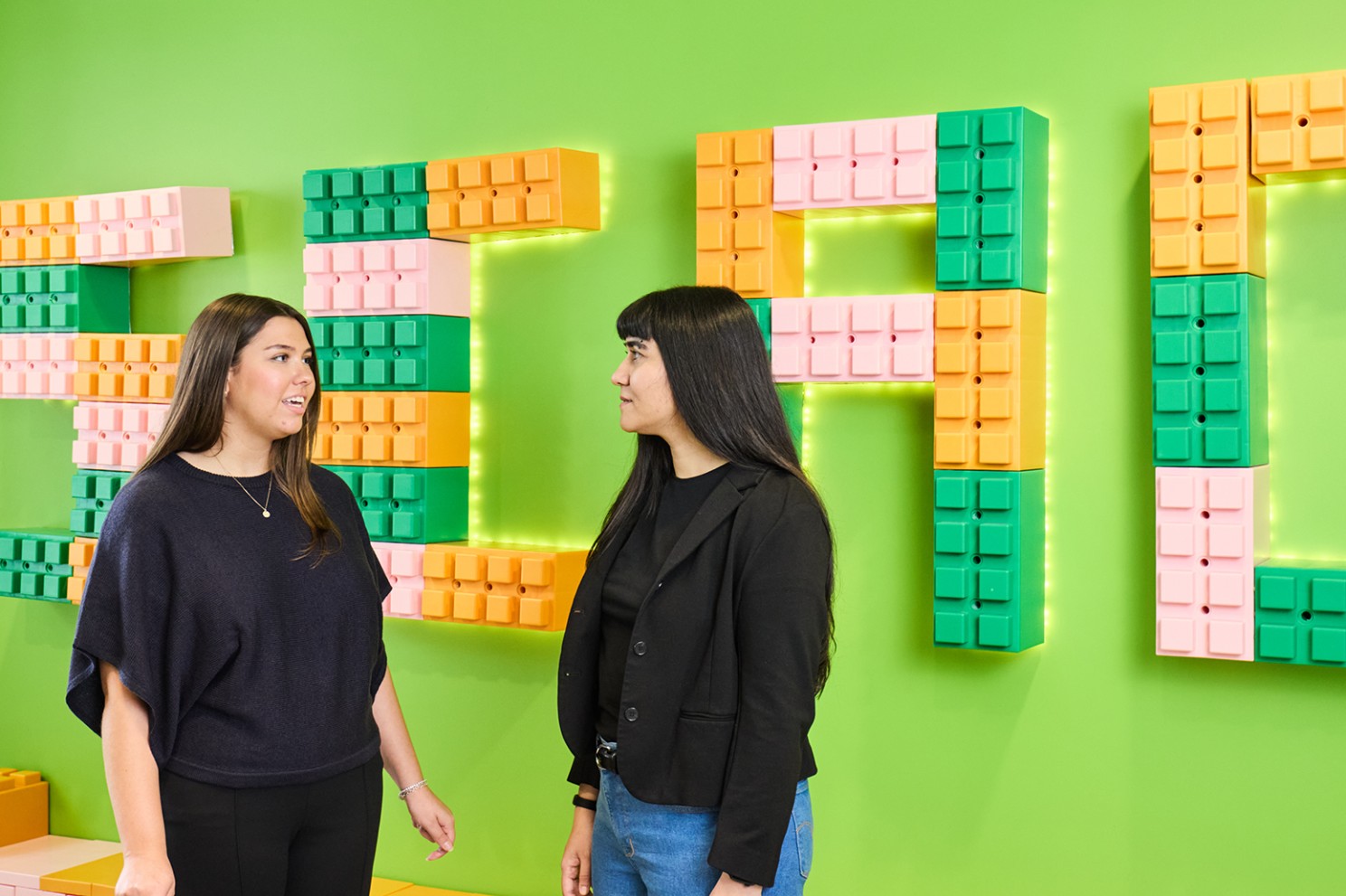
Shoaei Schaefer

Art work: Schaefer (left) and Shoaei developed AlphaRise's visual world, translating neurofeedback into color, movement, and atmosphere. Photo: Mike Schalk.

AlphaRise has begun earning recognition for its innovative approach to neurofeedback and game design. The game won first place for Best Graduate Research Design Artifact at SCAD's Entelechy 2026 and was nominated by SCAD faculty for the 2026 Lumen Prize Student Award in Experiential Innovation.

Shoaei has carried the research into the rooms where medicine, design, and technology meet. Her work was accepted into the AMXRA-sponsored poster session at the Cedars-Sinai Virtual Medicine Conference — no small feat for a project that arrives in the form of a game. Her research was also accepted to the Augmented World Expo (AWE) USA 2026 Research Track, one of the most competitive stages in extended reality.

Closer to home, she delivered a keynote on her thesis at Hack iX 2025, SCAD's inaugural 48-hour hackathon, where students built systems to support patient recovery alongside health care experts and mentors from Unity and Johnson & Johnson. The challenge rewarded the exact instincts AlphaRise is built on: entering an unfamiliar domain, learning fast, and collaborating across roles.

Shoaei's drive to connect people extends well past her own work. After attending AWE in 2024, she connected with the XR Women organization and established a professional student chapter at SCAD. She credits her thesis mentor, chapter adviser, and SCAD professor Dr. Robyn-Ann Patanin as a steady champion for women in gaming and innovation, and a force behind her work and vision. The systems-level thinking that drives Shoaei's game shapes her professional role as a research assistant at SCADask, the university's applied research arm, where she leads insight reports on the future of games, robotics, and human-centered technology.

Shoaei knows the extraordinary potential of AlphaRise. Research literature points to tens of millions living with long-term chronic fatigue across many conditions. She designs with that horizon in mind — a system proven first for MS, scaled toward the much wider population it could one day serve.

Whether the audience is a person living with a chronic condition, a fellow student, or an industry partner, Shoaei's goal is the same: technology that supports human capability with care.
Shoaei speaks

Loop digger: Explore Ned Shoaei's work at alphariselabs.netlify.app and on YouTube @nedzzonee.