Skip to main content Accessibility Policy

You Li: designing stories, shaping spaces

July
1
2025
By
Tags:

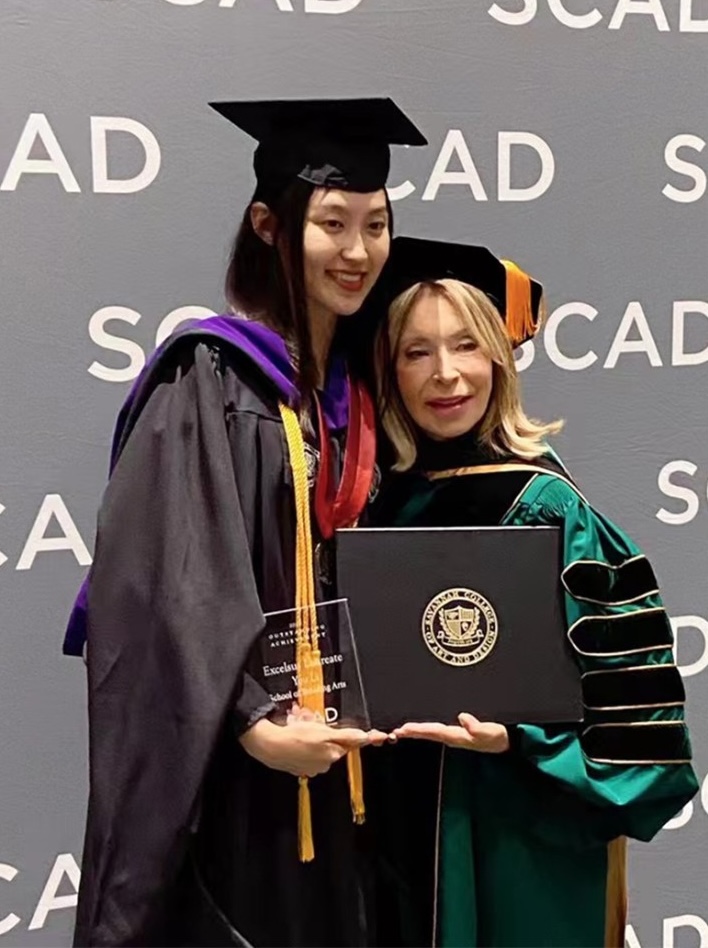
It began on a momentous day: SCAD Commencement 2021. You Li (M.F.A., interior design, 2021) stood on stage in Atlanta, receiving her master's diploma and the prestigious Excelsus Laureate distinction from SCAD President Paula Wallace. The occasion brimmed with excitement as Li ventured into the professional world of interior design, eager to tell stories through spaces.

Four years later, and You Li has fashioned a remarkable career as an interior designer at Gensler, the globally-renowned architectural and design firm. From conceptualizing bold ideas to traveling across the U.S. to inspect construction sites, her work blends aesthetic vision with practical execution.

You Li President Wallace

Let the good designs roll: You Li with President Wallace at Commencement 2021. 

For Li, design is storytelling — expressing a client's vision and capturing a city's cultural identity through the artistry of spatial design. She transforms ordinary structures into extraordinary vessels of collective memory by mastering the interplay of concepts, color, light, and shadow. At Gensler, she works alongside construction teams, seeing every phase through from ideation to completion.

"Every design needs to stand the test of time, to tell a story today and resonate tomorrow," she says.

At SCAD, Li learned a vital truth about design: it begins with listening. Whether walking through a client's stables or sitting at their kitchen table, she immerses herself in their stories, transforming their needs into personalized solutions. "It's about understanding the purpose of design and weaving visions into actionable plans," she says.

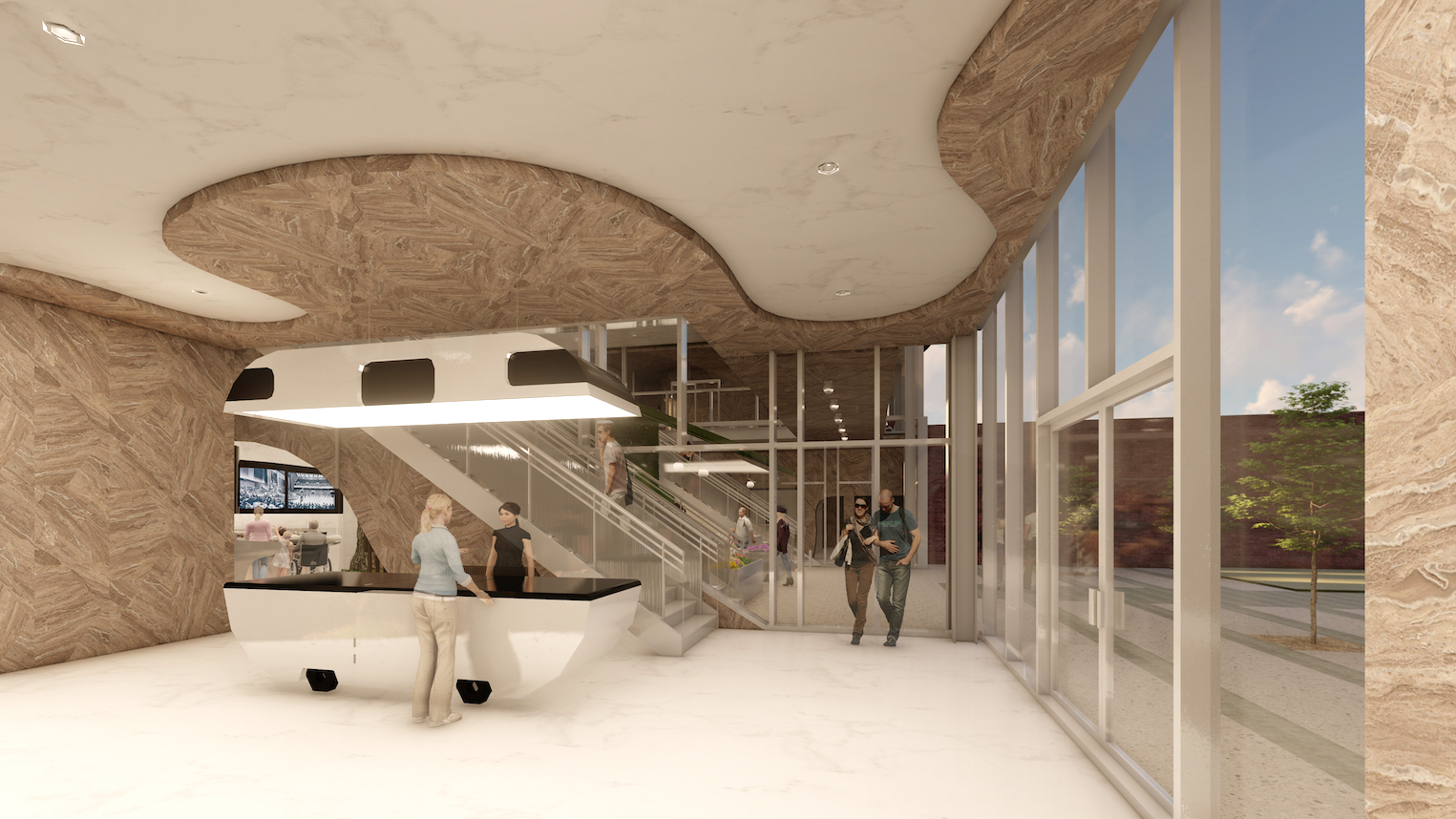
She balances creativity with practicality, and communication with execution when aligning teams of engineers or presenting polished concepts to clients. Standout projects include a passenger lounge at San Francisco International Airport. Li sees the space as more than a waiting area. For her, the lounge bookends a traveler's experience, connecting the passenger to San Francisco's cultural heartbeat. She poured the city's essence into every detail of the 20,000-square-foot lounge.

"The lounge will tell a memorable story of the city's vibe and the airline's brand, even during a fleeting stay," she says.

Li is a trailblazer in modular design, contributing to Boise's first prefabricated bank branch. Prefabrication, often likened to assembling a life-sized Lego set, introduces efficiency to construction projects. "This project redefined the boundaries between customization and modular production."By modularizing components, the project reduced construction time, enhanced sustainability, and simplified long-term maintenance.

She credits much of her own growth to her time at SCAD. From mastering design software to experiencing accessibility challenges firsthand, her education grounded her designs in inclusivity and practicality. Her advice to students is simple and profound: "Use each project as an opportunity to explore what truly excites you. The classroom is your testing ground for the future."

Now, as an emerging leader with the IIDA and a LEED-accredited professional — her newest stamp of credibility is the Council for Interior Design's NCIDQ certification — Li is shaping the future of design.

"Design challenges you to listen, balance, and create spaces that inspire and endure," she says.

For Li, interior design remains an invitation to connect people with places and transform functional infrastructure into an enduring story.

Connect with You Li on LinkedIn.

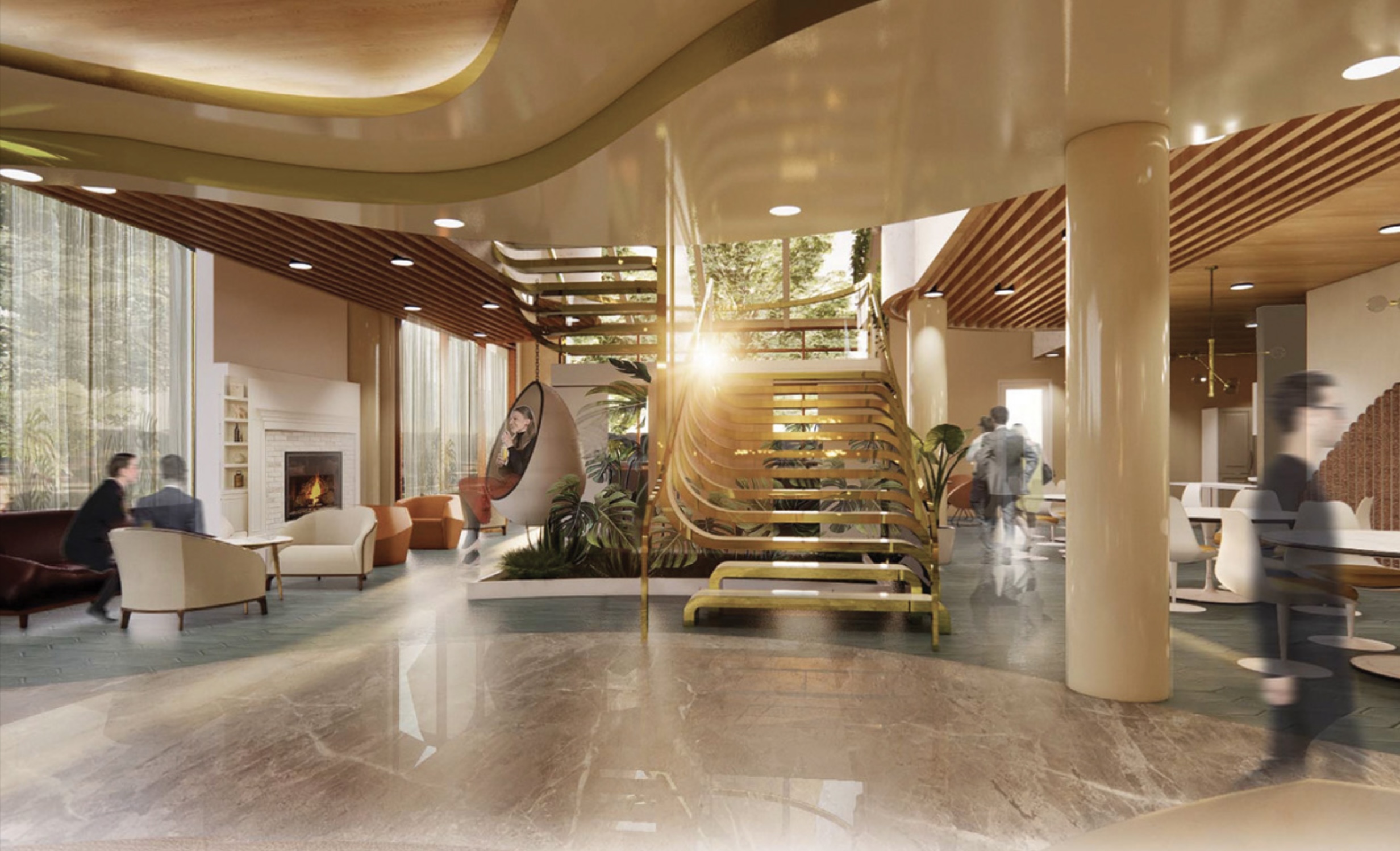
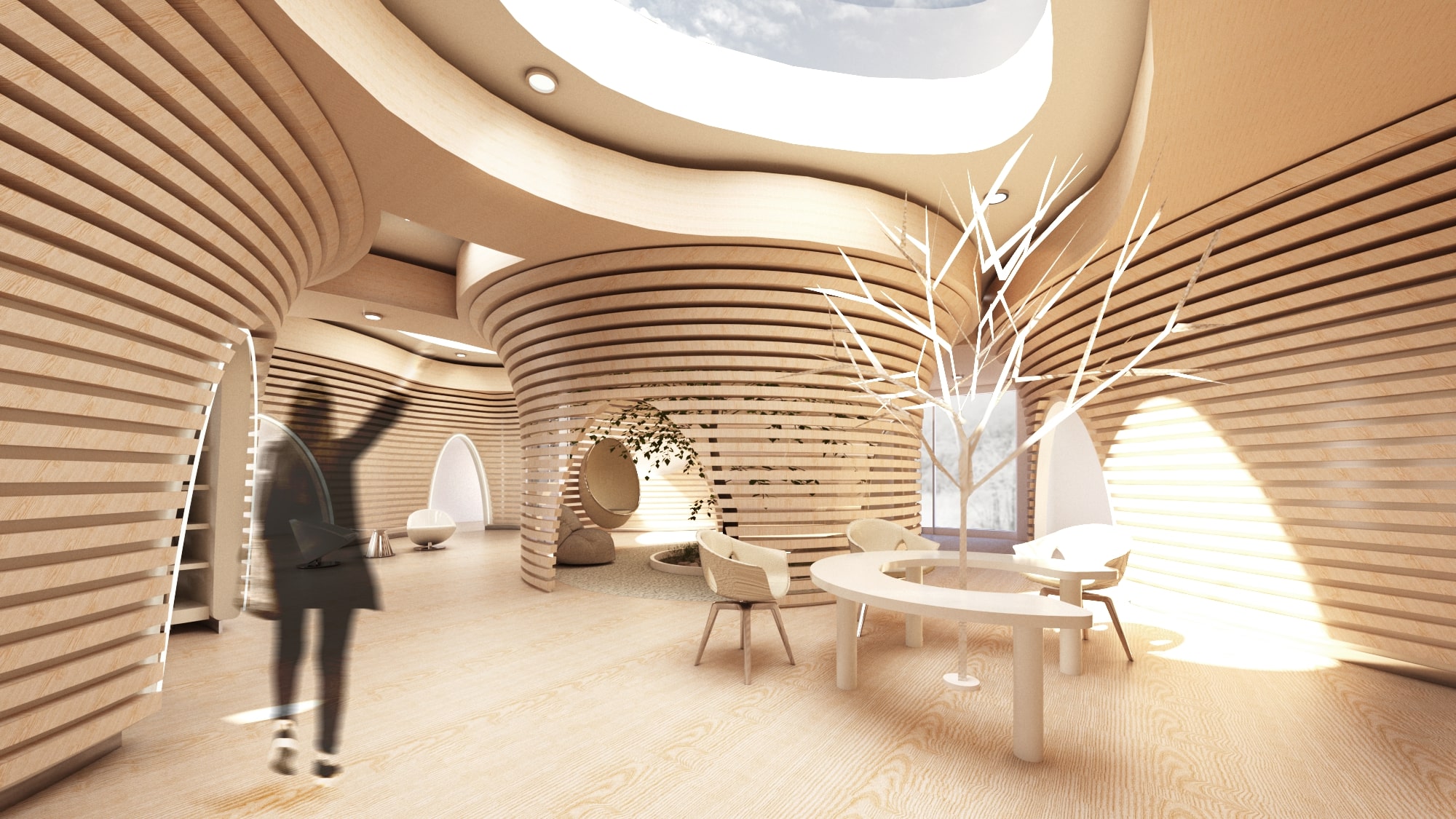
You Li interior

An interior design by You Li (Handan, China) from her final SCAD portfolio.


Nanyan Chen: from internship to dream career

December
18
2023
By
Tags:

"Every architect and interior designer will tell you the same thing: it is a unique feeling when you step into the space you designed," said Nanyan "Vincent" Chen (M.F.A., interior design, 2022), interior designer, Lissoni & Partners. "You know everything about it, every detail, every flaw, and the backstory. It is your child."

For Chen, a native of Nantong, China, the choice to pursue a career in interior design was clear. He had long nurtured his passion and worked in China on suburban renovation projects with S5 Design Co. Ltd., where he found inspiration in natural elements and absorbed insights from industry leaders who influenced him as a designer in his own right. SCAD Atlanta was the perfect place to make the next step happen.

"SCAD provided a friendly environment that allowed me to build on my past experiences and merge them into my design language," Chen said.

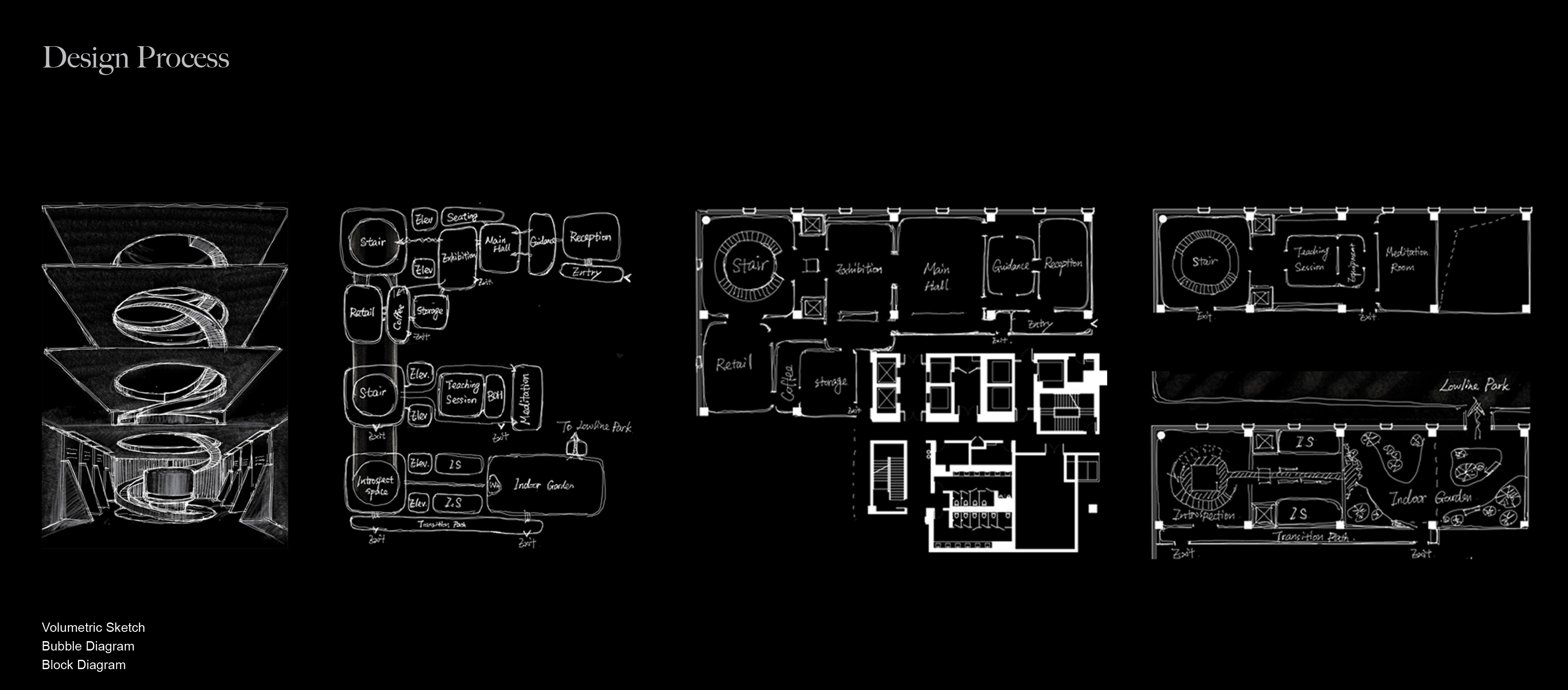
Interior design drawings by Vincent Chen from his SCAD project "Journey & Space," 2022.

Interior design drawings by Vincent Chen from his SCAD project "Journey & Space," 2022.

Chen's professors encouraged and supported his creative journey toward a career in a sophisticated design studio. Interior design professor Peili Wang, who taught Chen in the course Graduate Interior Design Studio III: Inclusive Design for Special Populations (INDS 751), said: "He is gifted, diligent, quick-minded, and serious in his design study."

For Chen, whose job search presented challenges including a language barrier, the comprehensive resources at SCAD were crucial touchstones. Workshops, industry connections, and the SCAD Job Portal provided Chen with clarity and professional focus. As an international student, he gained valuable insight into how the interior design industry operates in the U.S., all of which led to his internship with Lissoni & Partners in New York in March 2022.

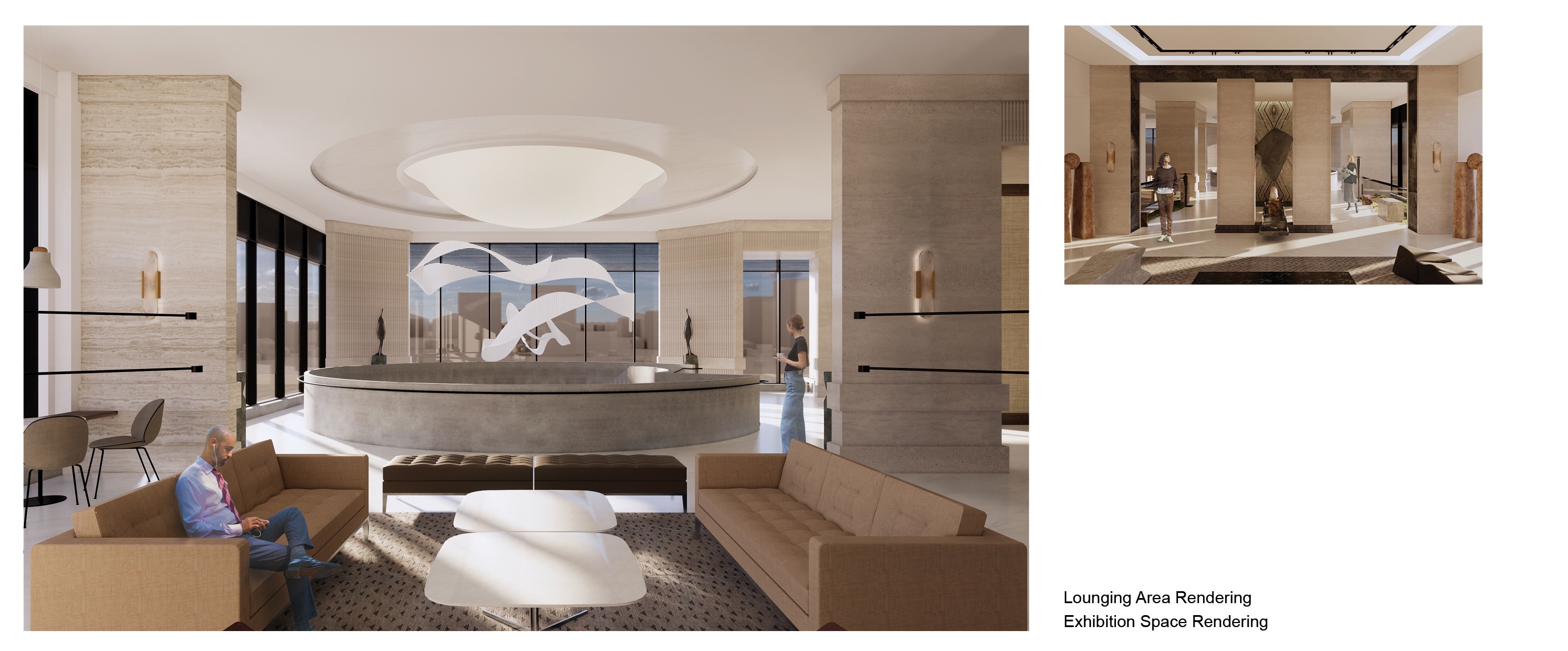
Interior design renderings by Vincent Chen from his SCAD project "Journey & Space," 2022.

Interior design renderings by Vincent Chen from his SCAD project "Journey & Space," 2022.

Chen's excellent performance during his internship led to a full-time position with Lissoni & Partners. The transition brought more responsibility, including projects with the Ritz-Carlton and Waldorf Astoria. Working on high-end projects allowed Chen to apply his understanding of design processes learned at SCAD.

Lissoni co-founder and CEO Stefano Giussani said: "Chen is a reliable designer, creative, and professional with any task, able to meet deadlines, is well organized, and follows the design process being a detail-oriented member of our firm."

"SCAD taught me how to use design thinking throughout the design process ,which allows me to keep the creativity and open-mindedness to embrace what Lissoni offers," Chen said.

At this moment in his career, Chen favors renovation projects for their sustainable approach. He notes the importance of environmentally friendly materials and is passionate about minimalist design.

Chen's advice to aspiring interior designers includes staying passionate, nurturing curiosity, and having a clear vision.

"For me, it is not only a profession about design but also lifestyle. It is important to check different designs, visit different spaces, travel, and meet people with an eye for interior design. All of your experience and knowledge will be reflected in your design."

Learn more about SCAD's award-winning interior design degree programs.

Connect with Chen in LinkedIn.

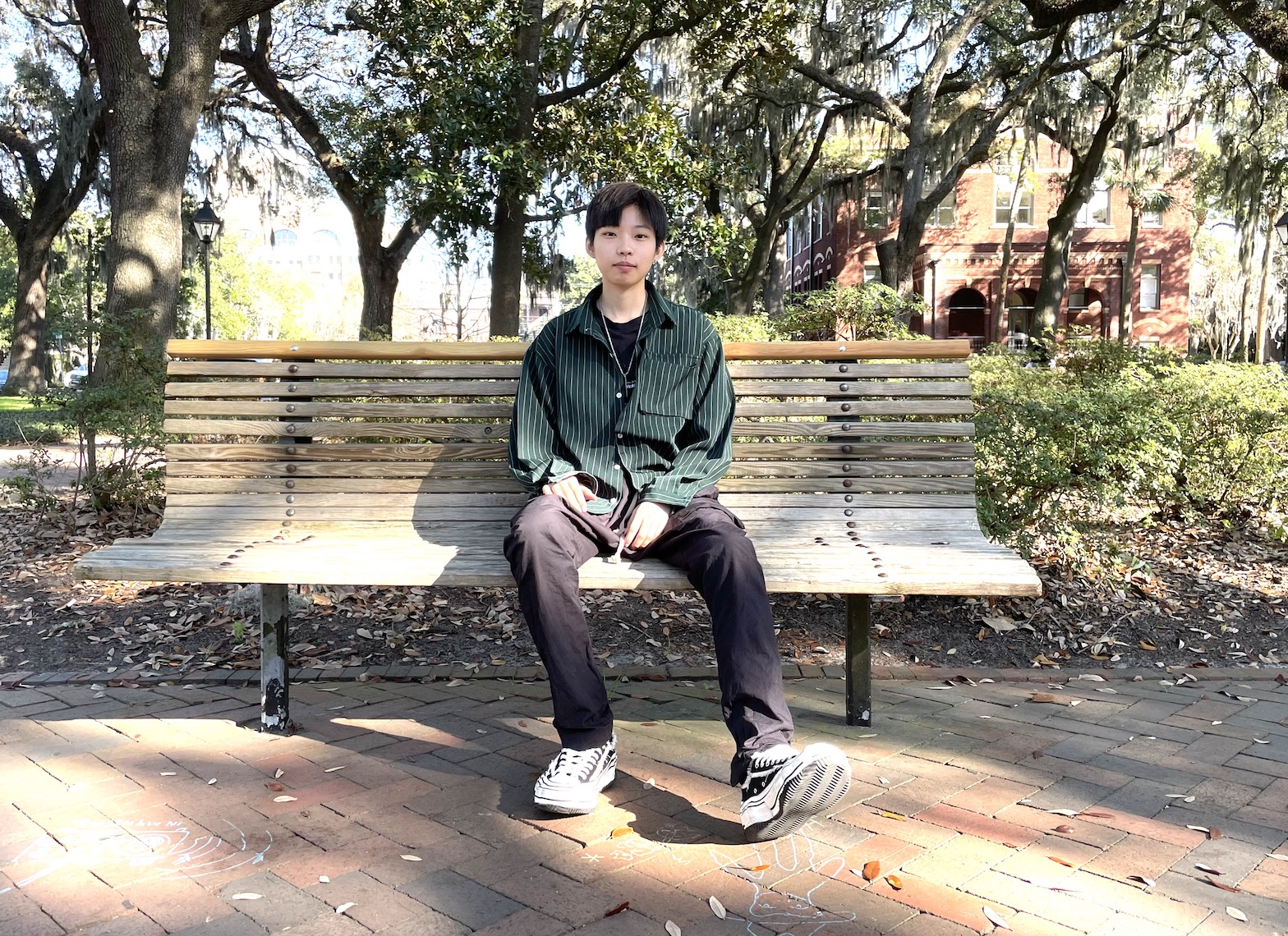
Nanyan Chen

Portrait photo: Wenyi "Bebe " Li (M.F.A., photography, 2022)

SCADpro Fund grows with CompostNow

July
7
2023
By
Tags:

"There's nothing that embodies the cycle of life and death as well as composting," says CompostNow Chief Impact Officer David Paull (B.F.A., interior design, 2013). "That rotting banana peel in your hand is going to become nutrient rich soil to grow another delicious banana."

Having founded Compostwheels as a SCAD Atlanta student in 2012, Paull merged his business with CompostNow in 2017. CompostNow has grown rapidly to become the preeminent compost company in the southeast U.S. with clients including State Farm Arena, Chipotle, Starbucks, and Chick-fil-A. Offering easy, affordable services for homes and businesses in Raleigh-Durham, Asheville, Atlanta, Charleston, and Cincinnati, CompostNow has received backing from the SCADpro Fund.

"CompostNow is at the forefront of a paradigm shift in organic agriculture," says SCADpro Fund managing director Ray Crowell. "Their commitment to an ethical model is something SCAD students prioritize as they enter the business world. David Paull is a beacon to look to in terms of creative entrepreneurship."

Much like the composting process itself, Paull is willing to dig into the rich loam of his backstory.

"At SCAD I started simply by standing at a farmers' market with a sandwich-board sign that said DO YOU COMPOST? and asking people if they composted, and if they would be interested in having someone do it for them," he says. "It wasn't until I got further into it that I realized there was a real need in the community and in the world for this.

"Consumers were looking for another way to support organic agriculture, and one of the biggest needs those farms have is soil health. You need a lot of nutrients in the soil to get a high yield in a small space. Composting became a very important part of that conversation. Meanwhile, communities and companies were really starting to think about sustainability. All of this converged in rapid-fire growth around consumer sentiment towards sustainability, our climate crisis, politics, policy, and investment."

Studying interior design at SCAD was "really fun" Paull says—and relevant to his current work.

"Interior design is all about the human experience through the built environment, and leading people through a space so that they can understand it, and what your intent is for them. We've applied that to composting. There were a lot of early tours for our community to come through the composting facilities to see it happening. To this day we have folks that come out at all age levels and see the process and get emotional about it."

At SCAD, the Viroqua, Wisconsin native played tennis and ran cross country—a full plate considering he was also going to "four to six farmers' markets a week, and to schools, universities, church groups, HOA meetings—anywhere anyone was interested in talking about sustainability, we were there to talk with them."

Paull now sees the composting movement leaping from homes and offices to city-wide services. "We are starting to get municipal contracts. That brings composting to everyone, not just those that can afford to do it in a boutique way."

And he is enthusiastic to have the backing of the SCADpro Fund, adding nutrients to the soil. "Composting is something that's life-giving, through the daily act of recycling food waste back into our food system," Paull concludes. "Composting attracts creative people."

CompostNow's Chief Impact Officer David Paull

Learn more about David and the team at CompostNow!


SCADpro students design Colite City

November
17
2022
By
Tags:

On the second Saturday in September, nine SCAD students stood in the rusted shell of Colonial-Hites Manufacturing Plant in West Columbia, South Carolina. Wade Caughman, Director of Development for real estate development firm Jams + Stark, addressed the group: "When you look at the outside of this building, you'll see the sign that says THINK GLOBAL. That goes back to when signage was made here for everything from Hartsfield-Jackson Airport to Epcot Center to the University of Qatar. That's the level of ambition we want you to bring to this project."

Preservation design graduate student Sebastian Escobar Campos surveyed the former factory: "I see so much potential here. It gets me excited about the possibilities of how we might transform old space into a new place. We can do something modern while incorporating Colite history."
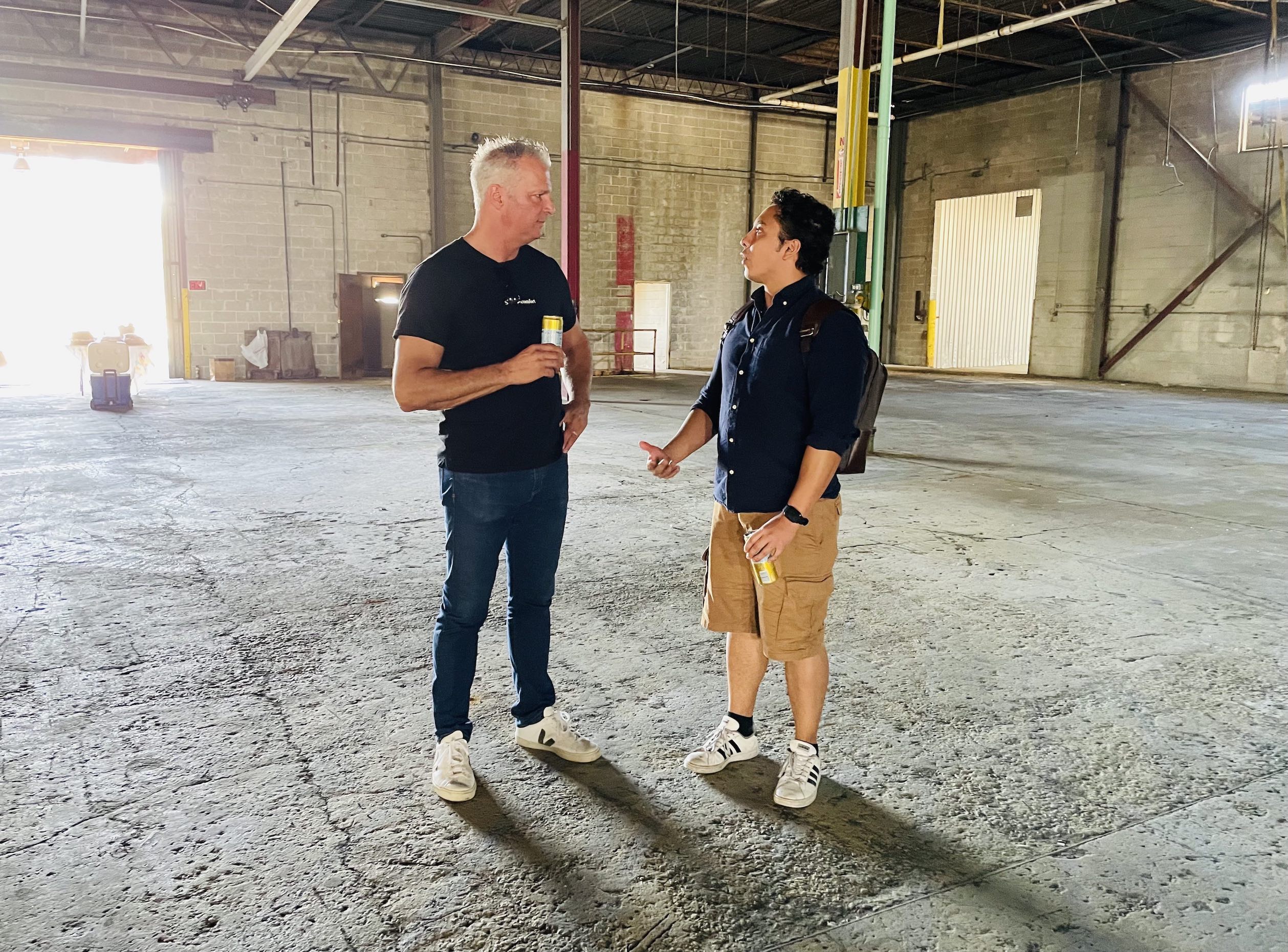
Jams + Stark's Wade Caughman (left) listens to SCAD student Sebastian Escobar Campos.

Jams + Stark's Wade Caughman (left) listens to SCAD student Sebastian Escobar Campos.

The students, all participants in an exclusive SCADpro project in partnership with Jams + Stark, were tasked with designing the transformation of the 155,000 square-foot space into a live-work-play creative mecca called "Colite City." Brooklyn's Industry City and Atlanta's popular Ponce City Market are precedents, and the goal, as Caughman prompted, is to spur the revitalization of West Columbia.

"The Colite City project enables students to collaborate on a real-world preservation design application," explained SCAD architecture professor and faculty point person Ryan Madson. "Students work on a complex design brief that addresses adaptive reuse of an inspiring post-industrial site. We explore branding, landscape design, wayfinding, master planning, web design, and innovative programming for future tenants."

After the West Columbia site visit, students returned to Savannah. Fall quarter gained momentum. Twice a week, they met to work on deliverables from technical drawings to user experience case studies. Banded under the courses Studio 1: Preservation Through Public Policy (PRES 710) and Studio IV: Policy and Planning (PRES 310), the group was guided by Madson's expertise in urban planning and landscape architecture.
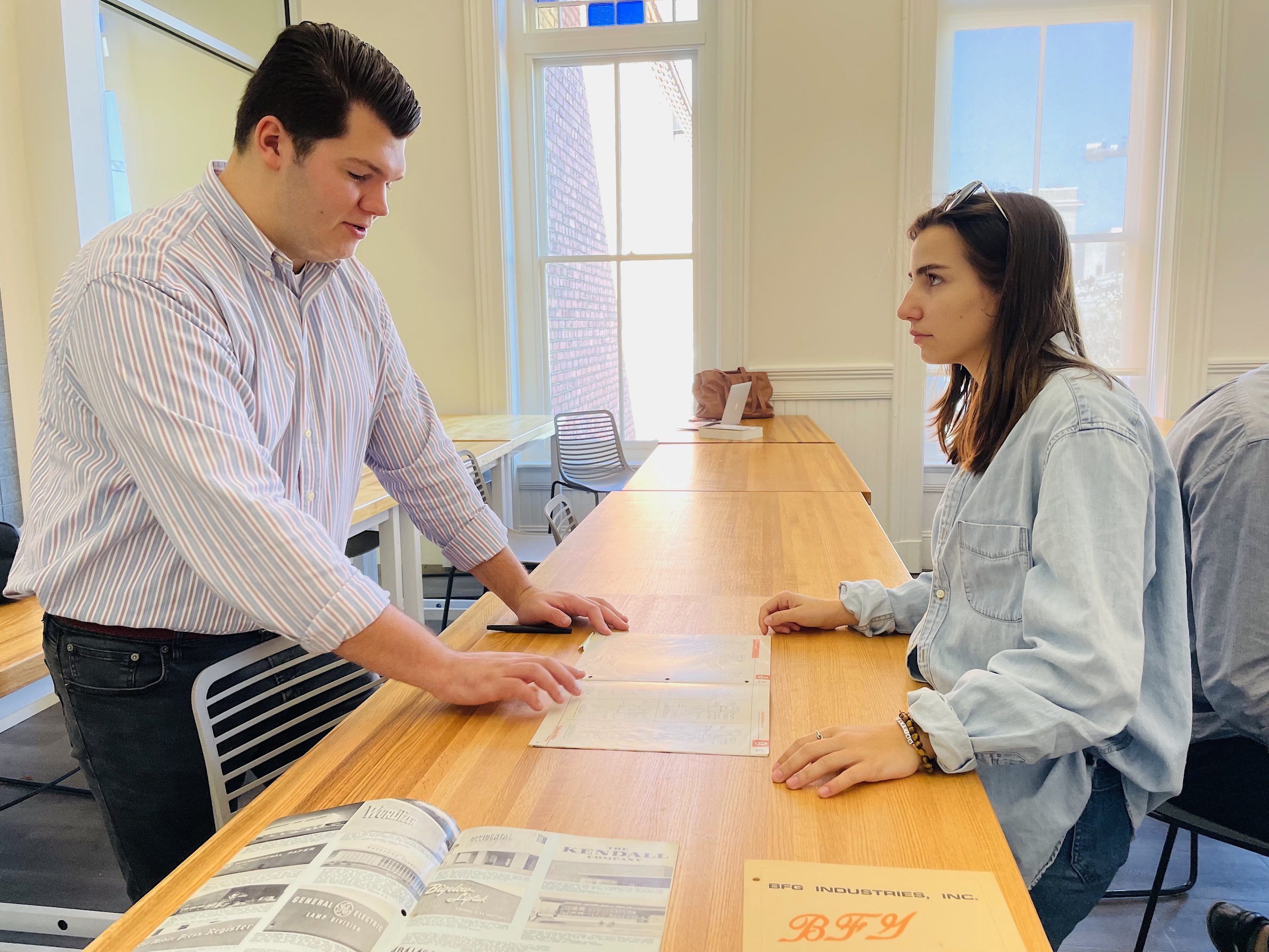
Hazen Soucy and Madeline Jensen share ideas.

Hazen Soucy and Madeline Jensen share ideas.

Five weeks passed. In an upstairs classroom in Clark Hall, 3D Autodesk renderings were projected on a wall beside a marked-up white board. Hazen Soucy (B.F.A., architecture) and Madeline Jensen (M.F.A., interior design; B.F.A., interior design, 2022) led a spirited debate about the relative merits of layouts for an outdoor area in Colite City. Professor Madson listened at length, then interjected: "Don't call it green space, call it a lawn." Everyone laughed. "Remember this is intended for real people."

Another five weeks went by. Suddenly it was the final day of the academic quarter. This time Wade Caughman was on the students' turf, upstairs in Ruskin Hall. The ambitious project was ready to present.

Preservation design master's candidate Savannah Kruzner: "The first time we met you Wade, we were at the site, and you gave us a challenge to design Colite City as a place where we would want to live. After brainstorming, we realized we all have different reasons why we'd want to live in the Colite City that we've designed."

Each student spoke in turn. Thoughtful responses were epitomized by Zheng He (M.F.A., preservation design): "I want to live in Colite City because it's a city within a city, so I can live a lifestyle of convenience, while having more outdoor space to experience nature."

It was time for the comprehensive proposal. "We see Colite City as the next chapter in a continuum for greater Columbia, West Columbia, and the site itself," said Madeline Jensen.

"Colite Industries did an incredible thing representing the community of West Columbia on a global scale," said Kruzner. "We want that global scale to exist within the fabric of the site in Colite City."

With Kruzner, Jensen, and Campos leading the presentation, the blend of technical design and compelling narratives made areas within Colite City like The Hangar, Soda Street, and Industry Alley come alive.

Jams + Stark's Wade Caughman sat front and center. An hour later, he clapped his hands: "This is incredible. You exceeded my expectations, and even convinced me of a couple things I didn't consider possible."

As the beaming students gathered to shake hands with Caughman, Professor Madson smiled. "We are thrilled by the opportunity for our designs to be brought to life by our partners at Jams + Stark."
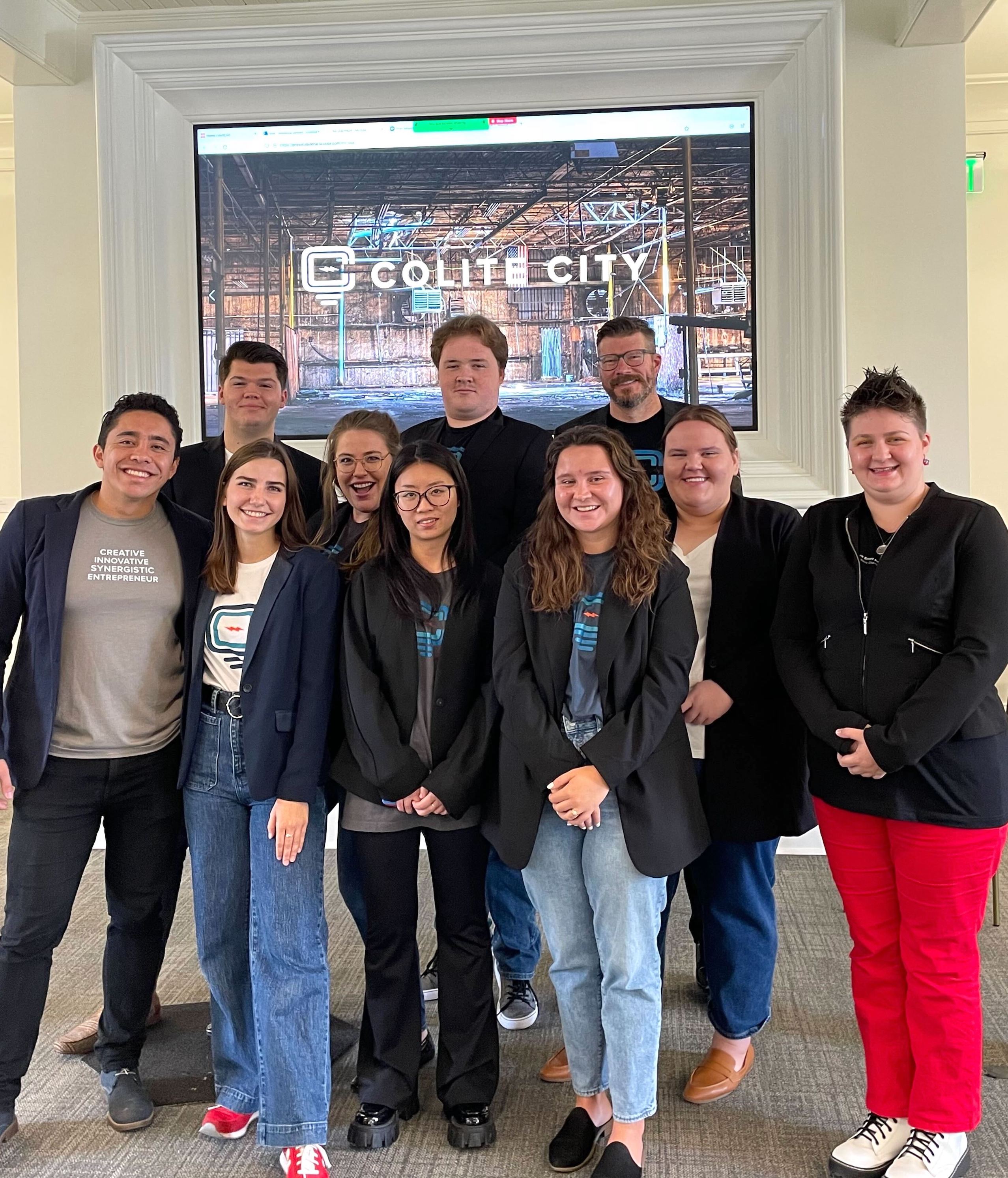

Front row (l-r): Sebastian Campos, Madeline Jensen, Savannah Kruzner, Zheng He, Kate Dutilly, Jackie Boling, Savannah Tuten. Back row (l-r): Hazen Soucy, Edward Harrison, Prof. Ryan Madson.

Front row (l-r): Sebastian Campos, Madeline Jensen, Savannah Kruzner, Zheng He, Kate Dutilly, Jackie Boling, Savannah Tuten.
Back row (l-r): Hazen Soucy, Edward Harrison, Prof. Ryan Madson.

Maximum respect to Prof. Ryan Madson and the SCADpro x JAMS + STARK fall 2022 students:

Jaqueline Boling (M.F.A., preservation design)
Sebastian Escobar Campos (M.F.A., preservation design)
Katherine Dutilly (M.F.A., preservation design)
Edward O. Harrison (B.F.A., preservation design)
Zheng He (M.F.A., preservation design)
Madeline Jensen (M.F.A., interior design; B.F.A., interior design, 2022)
Savannah Kruzner (M.A., preservation design)
Hazen Soucy (B.F.A., architecture)
Savannah Mae Tuten (M.F.A., preservation design; B.F.A., painting, 2021)

Colite City logo

Nikole Nelson: deconstructing lavender

July
25
2022
By
Tags:

"For 75 days I studied the lavender growth daily, waiting for the purple to appear," wrote Nikole Nelson (B.F.A., interior design, 2007) in a mid-June Instagram post. "And on my last few days in Provence, it did."

Nelson's words represent the wonder of surrender, and the corresponding potential for artistic creation. Of her experience as a Spring 2022 SCAD Lacoste Alumni Atelier ambassador, she says: "Awakening to the earth's rhythms in that place in time was powerful for me."

Founder of the Hawaii-based art and design studio BLKCORAL, Nelson is familiar with great expectations. She has created conceptual environments for clients including Coach, Kate Spade, Tory Burch, and New Balance. For her SCAD Alumni Atelier project, Nelson created botanical artworks from flora sourced in the Luberon Valley. Her sculptural work Emergence, an undulating wave of lavender and pressed peony, was purchased by local collectors Barbara Hummel and Xavier Coll. "I'm thrilled the original piece will live on in Lacoste," Nelson says.

Recounting her Alumni Atelier experience, the artist's gratitude is palpable.

Emergence, lavender and pressed peony, 25" x 30", 2022.

Emergence, lavender and pressed peony, 25" x 30", 2022.


Nikole Nelson:

I was first in SCAD Lacoste as a student in 2006, sixteen years ago, in the fall. Lacoste is a medieval village, so not much has changed aesthetically over time. Being there this spring, I thought it was going to be green and in bloom. Reality connected me to the fact that the seasons have rhythms, just like there's a rhythm within us. The earth was saying, this is the pace, you can't go any faster. There's so much magic in the land that it's undeniable.

The day I arrived I went into Café Beauregard and walked table to table and let the students know to feel free to talk to me. No matter what discipline you're studying there's always an opportunity to collaborate and have a conversation. When students came to my studio, I would always give them something—perhaps a Palo Santo stick and dried flowers and twine—that they could create with in their journals when they left.

I've been mentoring students for 15 years, primarily interior design students, so it was exciting in Lacoste to work with animation and fibers and painting and all kinds of majors. I love giving back to our future generations. SCAD thrives on reciprocity.

My plan in Lacoste was to make a large round sea of lavender. I wanted to sculpt the base then place the lavender over it. I realized I was not going to have access to the lavender I needed. I was going to have to pivot, like I've done with clients a million times. I gathered what I could and went to nurseries and befriended gardeners and got pointers on where to find lavender.

At that point at Acorn Cottage a peony bloomed that was ten inches across. It barely fit in my press. It was so beautiful that it took my breath away. I'd never seen one before in nature. I waited until the bloom period was done to let it be in its full glory. I pressed the peony for a week then put it into the silica so it's still sculptural and retains its depth. The work was photographed by my fellow Alumni Atelier ambassador Justin Zeilke (M.F.A., animation, 2017).

My Alumni Atelier Lacoste experience keeps giving beyond the 10-week quarter. I came home with a bounty of pressed and dried flowers and new concepts to explore. Moving through the power of the blooms I've begun communicating with the roots, going deeper into both myself and the earth. I'm excited to continue a more sculptural approach and see where the French botanicals take me.

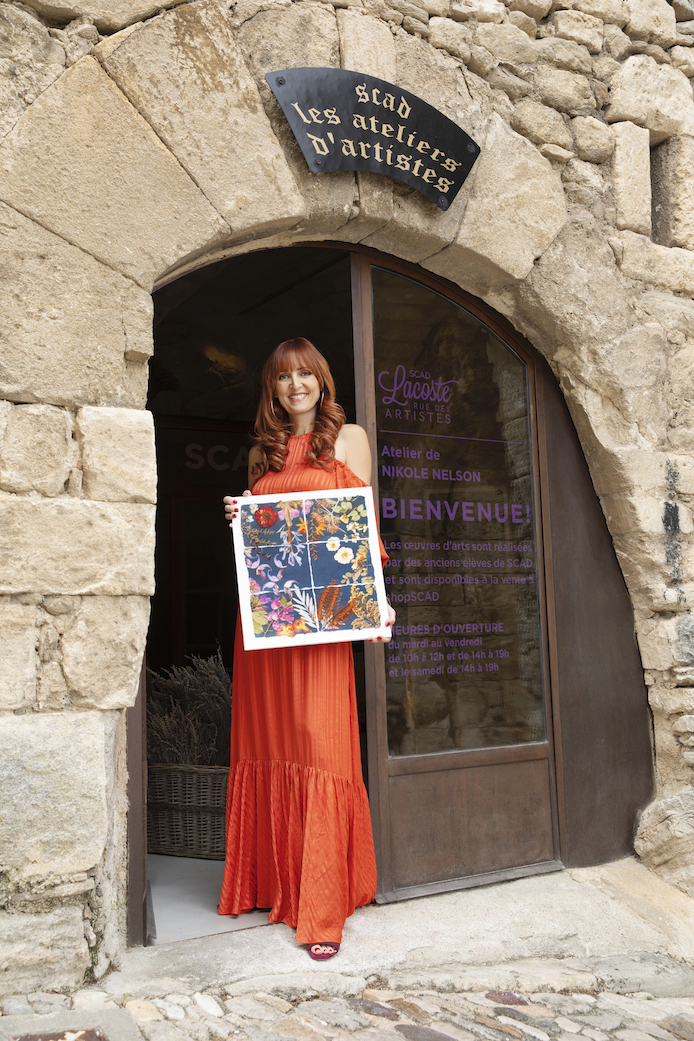
Botanical transnational: Nikole Nelson at SCAD Lacoste.

Botanical transnational: Nikole Nelson at SCAD Lacoste.

Nikole Nelson would like to extend thanks and mahalo to President Wallace and Alumni Atelier director Tiffani Taylor (M.F.A., painting, 2020; M.A., art history, 2003; B.F.A., painting, 2002).

The SCAD Alumni Atelier, conceived and endowed by SCAD President and Founder Paula Wallace, enriches the creative and professional endeavors of distinguished SCAD graduates.

Learn more about the Alumni Atelier program here.  

Tzuying Wang: free to RV

March
8
2022
By
Tags:

"I love traveling and I love road trips. One of my dreams is to buy an RV and visit all 48 continental U.S. states."

Tzuying Wang—called Wan by faculty and friends—is a native Mandarin speaker from Taipei, and a graduate of Ivy Collegiate Academy (ICA) in Taichung, Taiwan. Currently in her final quarter at SCAD, Wan (B.F.A., interior design) has designed a dynamic RV park, branded under the name The Bond of Border, aimed at revitalizing the U.S. tourist economy.

"RV living in an exciting alternative lifestyle choice that gives people the freedom to explore the world as part of their day-to-day," Wan explains. "During the pandemic, with air travel way down, people indicated a new willingness to travel by RV. That was an early inspiration for my project."

The capstone has evolved over two quarter-long classes: Interior Design Studio V—Design Thinking for Innovation (INDS 470) and Interior Design Studio VI—Design Development and Communication (INDS 480). Under the guidance of her thesis chair, professor Christine Van Duyn, Wan's project reveals great technical skill and a humane vision at work.

"I've known Wan since she was in my Introduction to Interior Design class (INDS 101)," says Van Duyn (B.F.A., photography, 2004). "It's been a pleasure to watch her grow into the designer she is today, always taking the extra step and making sure every detail is attended to."

"Instead of imposing limitations, Professor Van Duyn encourages us to extend the possibilities of our designs and develop a strong visual aesthetic," Wan says, noting that the professor gifted students the Elizabeth Gilbert book Big Magic: Creative Living Without Fear (Penguin Publishing, 2015), to liberating effect.

"With her thesis project, Wan is pushing boundaries," Van Duyn adds. "Her bold intentions and deep research mean she is designing a project both timely and thoughtful."

Wan visited local Savannah RV resorts including Red Gate and Creek Fire to research first-hand how wayfinding and amenities affect in the park experience.

"My project aims to create a complex for relaxing, socializing, and recharging," Wan explains. "My goal is to reshape the harmony between individual and collective, and revive local business economies through encouraging tourism."

Interior rendering

Interior rendering of The Bond of Borders reception center, by Tzuying Wang (B.F.A., interior design)

Wan envisions The Bond of Borders as a replicable, environmentally sensitive model that can be iterated successfully in different locations. The multi-functional park features fresh food market, restaurant, RV maintenance station, interactive art gallery, outdoor gardening area, equipment rental for bicycle and kayak, and a pet café "because so many people travel with their pets."

In conversation, Wan exudes the self-sustaining enthusiasm of an international student who has embraced the range of opportunities at SCAD. In February, she participated in StartUp 2022, teaming with students from industrial design, graphic design, and animation to design a pair of VR glasses called Janus. "StartUp offered the chance to get valuable feedback on our project from industry leaders, and allowed me to take a workshop where I learned new facets in UX design."

With graduation on the near horizon, Wan is in the process of refining her portfolio. She hopes to stay in the United States, has obtained her OPT card, and is currently applying for design jobs.

"It will be hard to leave SCAD, but I know I'll be back. Maybe in my RV."

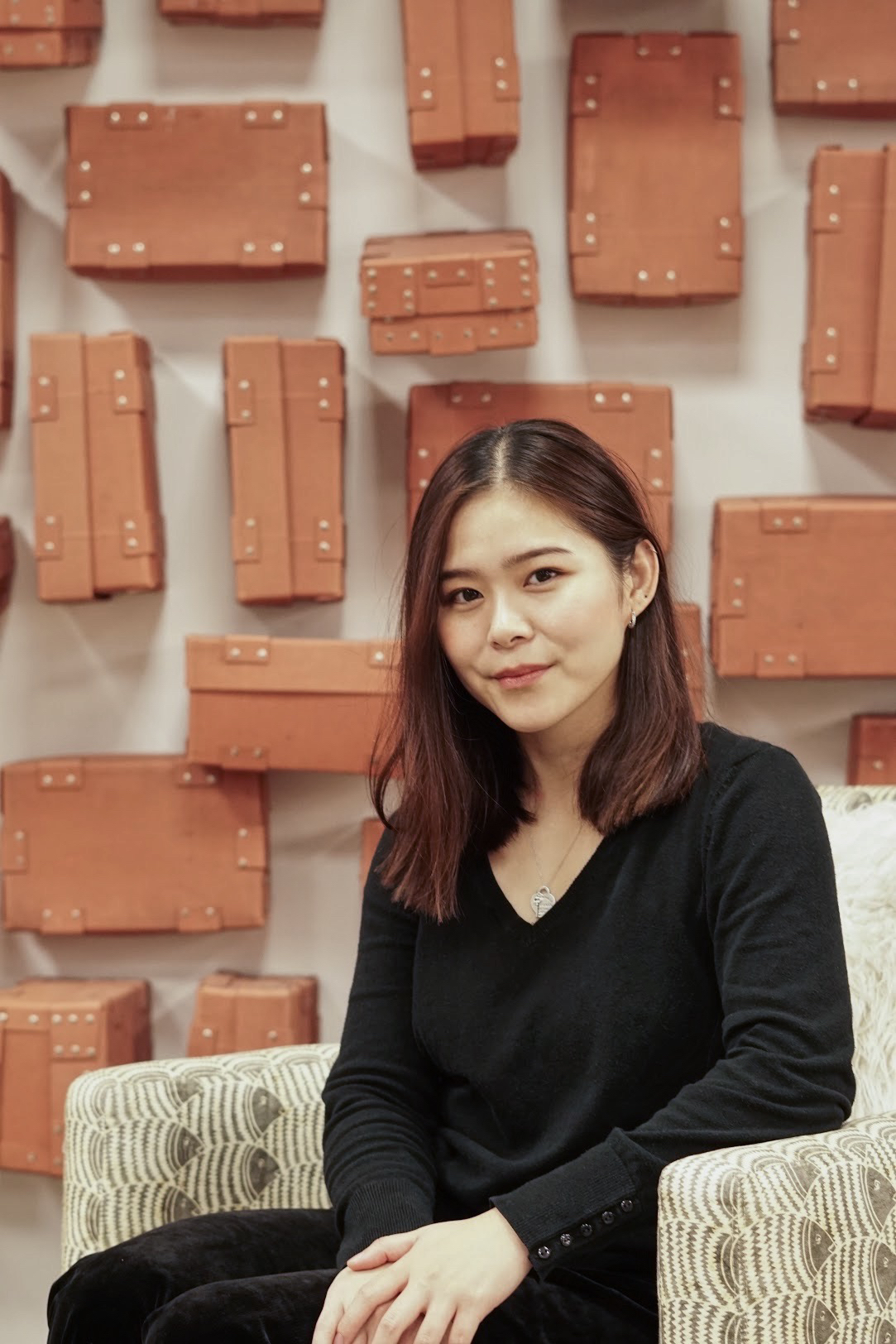
Tzuying Wang

Visit Tzuying Wang.

And view all the project renderings on Wan's IG!

Award-winning interior designer Jessica Ma

March
9
2021
By
Tags:

Jessica Ma (B.F.A., interior design, 2020) has been named Emerging Interior Designer of the Year by the International Design Awards (IDA). Her award-winning portfolio focused on helping people, companies, and venues surmount obstacles that hinder human interaction. 

"Interior design is truly a way to make substantial differences in our well-being," Ma says. "As a creator, I shape experiences and the feelings associated with them."

Born in Bloemfontein, South Africa, Ma grew up believing she would be a doctor. As a teenager, her family moved to Macau, where she attended International School of Macau. As a volunteer desk clerk at The Macau University of Science and Technology hospital, Ma saw first-hand how a building's inefficiencies and outdated design components impact the treatment and well-being of patients.

The SCAD Atlanta 2020 valedictorian lives in New Jersey, speaks Mandarin, Cantonese, and English and, in her downtime, plays classical piano.

interior design rendering

Jessica Ma:

As a child, I was always drawing and expressing myself creatively through art. As I got older, I started making my mom take me to open houses in our neighborhood. I loved seeing how people decorated their homes. When I got into The Sims, I played it a lot. My mom should have probably understood then that I was going to become an interior designer.

Before transferring to SCAD Hong Kong in 2017, I was studying medical engineering at The Hong Kong Polytechnic University. While I was doing well in my courses, I realized I had to make a change. I remember telling my parents, "I have to follow my heart. I'm going to be an artist."

At SCAD, I became a different person. I was finally able to embrace my creative spirit. Following my heart and studying interior design was the best decision I ever made.

Interior design truly is a way to help people and make substantial differences in our well-being. We are constantly indoors, and we use spaces to connect with each other hundreds of times a day, whether in an office, home, café, hotel, or other public or private space. As a creator, I shape those experiences and the feelings associated with them.

My professors at SCAD provided guidance, and gave me space and freedom to create. There were no boundaries placed on what was possible, and that allowed me explore groundbreaking ideas. Working with chair of interior design Ryan Hansen, I was able to embrace new concepts on each new space I worked on.

In my submission to the IDA, I included designs I created for The Independent Living, Inc. I began working on the concept my junior year in the class Interior Design Studio II: Specialized Interior Environments. Professor Hansen encouraged us to reimagine and design a space that would assist autistic individuals integrating more fully into society.

The project helped me realize the power of designing for specific industries. For example, healthcare providers are constantly upgrading their facilities as the needs of their patients change. Interior designers are crucial to that effort.

Interior design is a young industry. It will be crucial to our society for years to come. We need safe havens to curate relationships, create connections, and rejuvenate ourselves. I see myself as a difference maker. I wouldn't have gotten here without SCAD.

portrait of jessica ma

Learn more about SCAD interior design.

Van Duyn dines safely

August
19
2020
By
Tags:

Interior design professor Christine Van Duyn knows what it takes to accomplish world-class work. Before joining the faculty at SCAD, she worked as an architect specializing in award-winning restaurants, bars, and lounges, including marquee projects like the Columbia Room, named "The Best American Cocktail Bar" (Tales of the Cocktail, 2017) and The Dabney, both in Washington D.C.

A SCAD alumna, Prof. Van Duyn (B.F.A., photography, 2004) is challenging her students this quarter to examine the future of the restaurant industry as they design spaces that will function in a post COVID-19 landscape.

Christine E. Van Duyn:

Restaurants have unique obstacles in our world today. Social distancing guidelines, capacity limits, and mask requirements are all impacting businesses in ways that restauranters are still trying to figure out. Here in Savannah a few places have developed to-go menus, begun taking reservations, and changed their hours of operation.

Industry professionals learned numerous lessons over the summer, and those learnings are months if not years away from fully being implemented to ensure the struggles and shutdowns we've experienced will never happen again.

With that understanding, I am working closely with my interior design students this quarter to re-think, re-imagine, and re-understand what a restaurant experience will be going forward. The conversations have been fun to lead and I am excited to see how the students develop their projects over the course of the semester. Here are some of the original ideas that have really sparked our imaginations:

Outdoor Dining: We are seeing our downtown sidewalks and streets turn into funky pop-up patios. While these are fun and needed adjustments, they are not long-term solutions. Outdoor dining will be necessary in the world going forward. We must look to design designated outdoor spaces from the beginning rather than the end.

Back to Booths: We have all been to an old-school Italian restaurant where the lighting is dark, the décor is dated, and the waiters served your parents butter and noodles when they were young. The one thing that those restaurants did right was booths. Booths provide a barrier from other parties and will slow the spread of germs and air born pathogens. Booths will make a comeback, and we need to ensure the spaces we design allow for easy flow of movement and safety of staff.

To-Go Windows: Food delivery systems will only be more important to the success of our community as we move forward. Today, your delivery driver physically walks into a restaurant and often times interacts face to face with individuals in order to ensure they are walking out with your food. We can already see the inherent risks in this system. While that was fine 12 months ago, it will not be the norm going forward. Restaurants will design specific windows and locations for food pick-up, limiting risks for both the staff, delivery drivers, and patrons.

Safety has always been paramount when it comes to design, and these shifts will be seen as exciting new challenges throughout the industry. The fact that they will play out in real time, across the entire world, will be entirely brand new — and I can guarantee you that SCAD students will be right there as it happens.

Visit Christine Van Duyn at her wonderful website.


Erin Gabrielle Tutcher: a couch to faint for

February
4
2020
By
Tags:

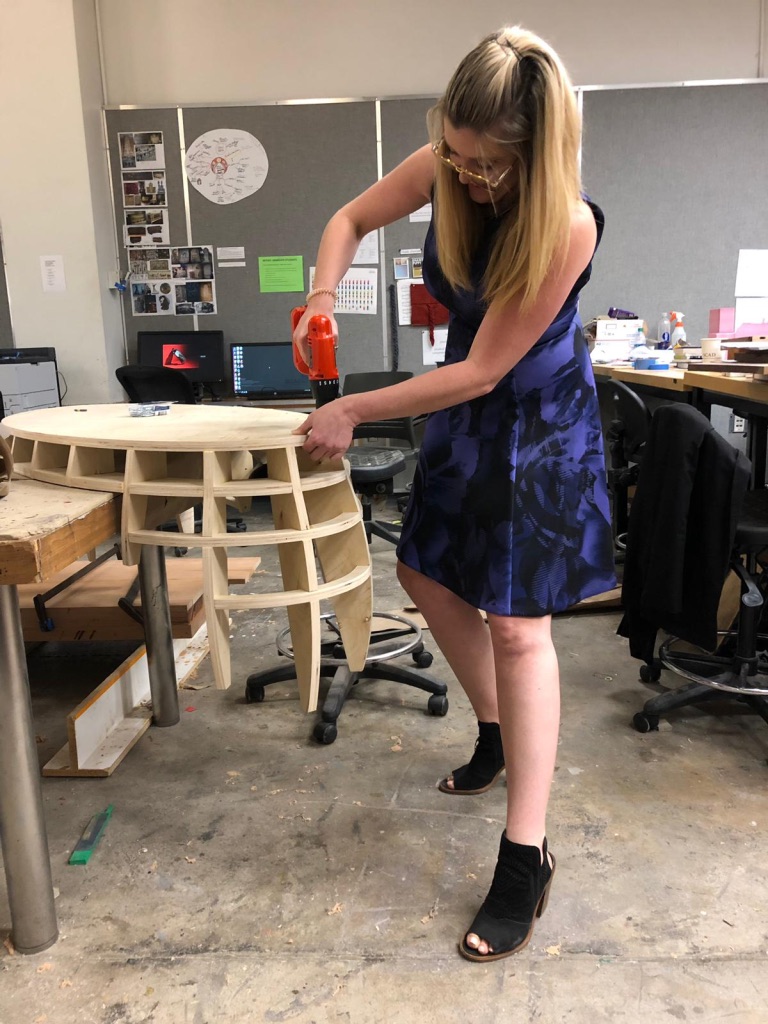
"I think about where my furniture will live," says Erin Tutcher (M.F.A., furniture design), gesturing towards the couch, mirror and table of her master's thesis collection, "and how the pieces will live with one another."

"Between 7th and 8th" (named after Manhattan's garment district) is the culmination of a sustained process. From conception and sketching through SolidWorks designs, material sourcing, fabrication and display, the pieces epitomize the depth and quality of Tutcher's SCAD experience.

Before coming to SCAD, Tutcher worked as an interior designer for a staging company in New York, staging furniture in opulent for-sale apartments. "I knew I needed to understand furniture better, so I decided to pursue my master's degree at SCAD."

"Between 7th and 8th" is currently on display at Cedar House Gallery in Savannah. The table and mirror are rich and strange. The fainting couch will take your breath away.

Erin Tutcher making furniture

Erin Tutcher:

My thesis project transposes techniques of pleating from haute couture fashion into modern furniture design. I incorporated the idea of pleats into elements of each piece. My work tends to have angles and repeated forms. It's a combo of Art Deco and Hollywood Regency, and the organic lines of Art Nouveau. There's a new term, Neo Deco, that might describe my work too.

In haute couture you see fainting couches in dressing rooms as people are getting dressed. In Victorian England they tied corsets so tight that women fainted. I liked the drama of that, and wanted to create a fainting couch as a statement piece in my collection.

I designed and built the interior frame of the couch, did tab-and-slot construction, and had it CNC'd at SCAD. I brought the upholsterer a legless couch and said, don't upholster over the T-nuts, because that's how it's going to attach. The fabric is performance velvet.

The couch legs started as gnarly chunks of raw steel, 20 pounds each. The legs were also CNC'd, and had to be bolted to the machine leaving bolt holes in them. Instead of covering them with a metal plate, I turned spikes for them on the metal lathe. Once I turned them on the lathe, everyone in the shop got pumped, because I was making sharp, aggressive objects for the couch's feminine form. They're meant to look like studs, inspired by an Alexander McQueen shoe with a similar detail.

After the base was welded together I had it powder-coated. It was a challenge making sure everything fit and that the joints were strong enough. You can't have the welds break when people are sitting on it. Professor George Perez gave me key guidance.

The prongs are 3-D printed nylon that I painted with acrylic. When you sit on the couch with another person, its angles mean you face each other. It's a literal conversation piece.

The mirror frame began as a two-inch chunk of ash, five feet long and 80 pounds. I wanted the wood to have a finish where you could still see the grain of the curly ash. I pickled it with whitewash, then took a steamer and raised the wood grain, rubbed in wood grain filler with a palette knife, hand-rubbed gold pigment into the grain, sanded it, added more, sanded again, and finally, lacquer. It has a pearlescent, iridescent finish.

I designed the mirror so the center matches up directly to where the couch swoops in. The language of the mirror perfectly mimics the couch. It feels like they were meant for one another.

portrait of erin tutcher

Learn more about SCAD furniture design.


Lina Deeb Forrester's deep dive in the Kravet archive

January
15
2020
By
Tags:

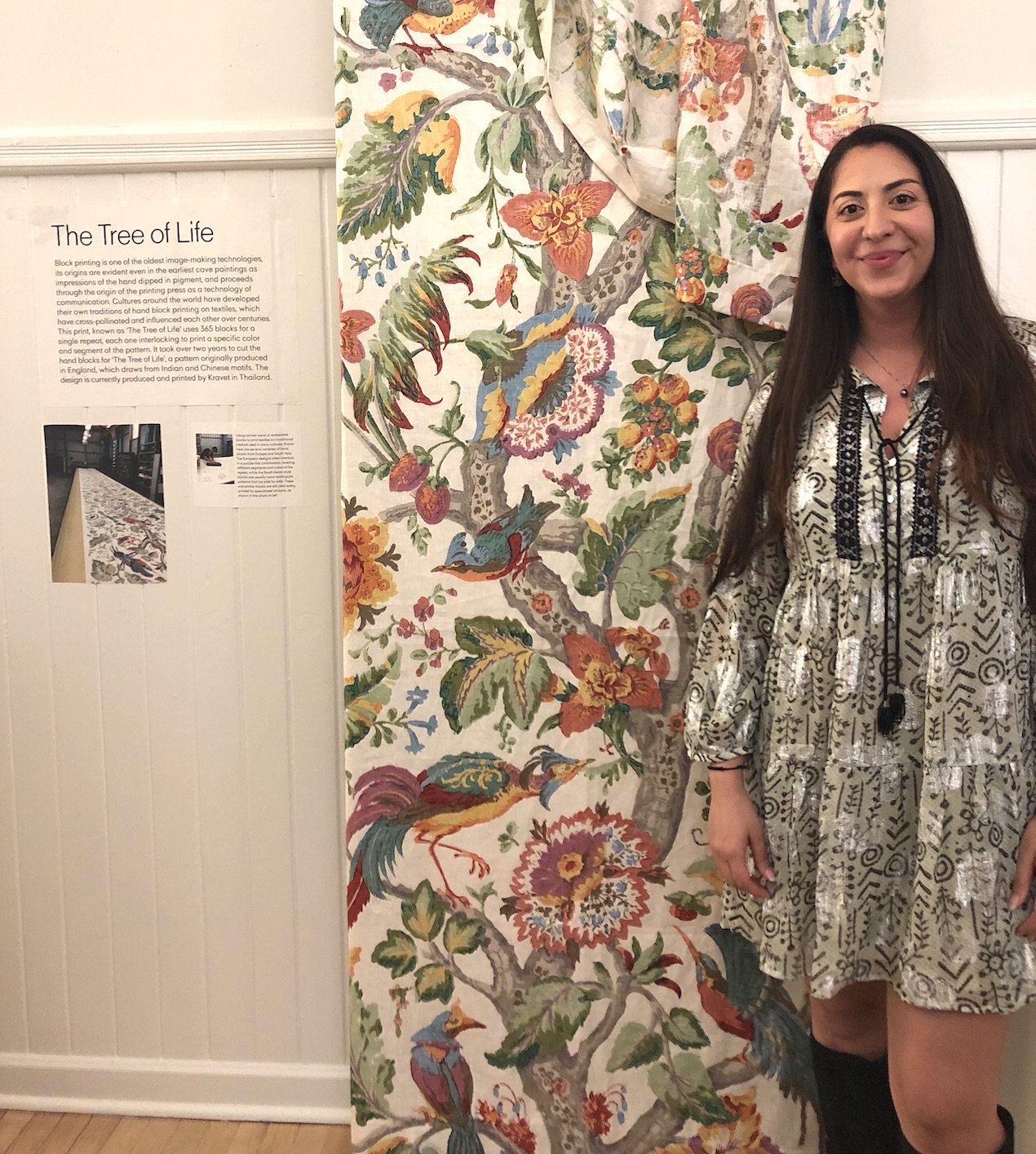
Lina Deeb Forrester (B.F.A., interior design) is standing beside "The Tree of Life" in Pepe Hall. The block-printed English pattern, drawn from Indian and Chinese motifs, is currently printed in Thailand by Kravet, the trade home furnishings industry leader with whom Deeb Forrester interned in 2019.

A linguist who speaks Indonesian, Arabic and Malaysian, Deeb Forrester served in the military before coming to SCAD: "I was thinking about going back to school, and learned that SCAD is ranked #1 for interior design. I came to Savannah, took my first tour and said, ‘Let's start this now!'"

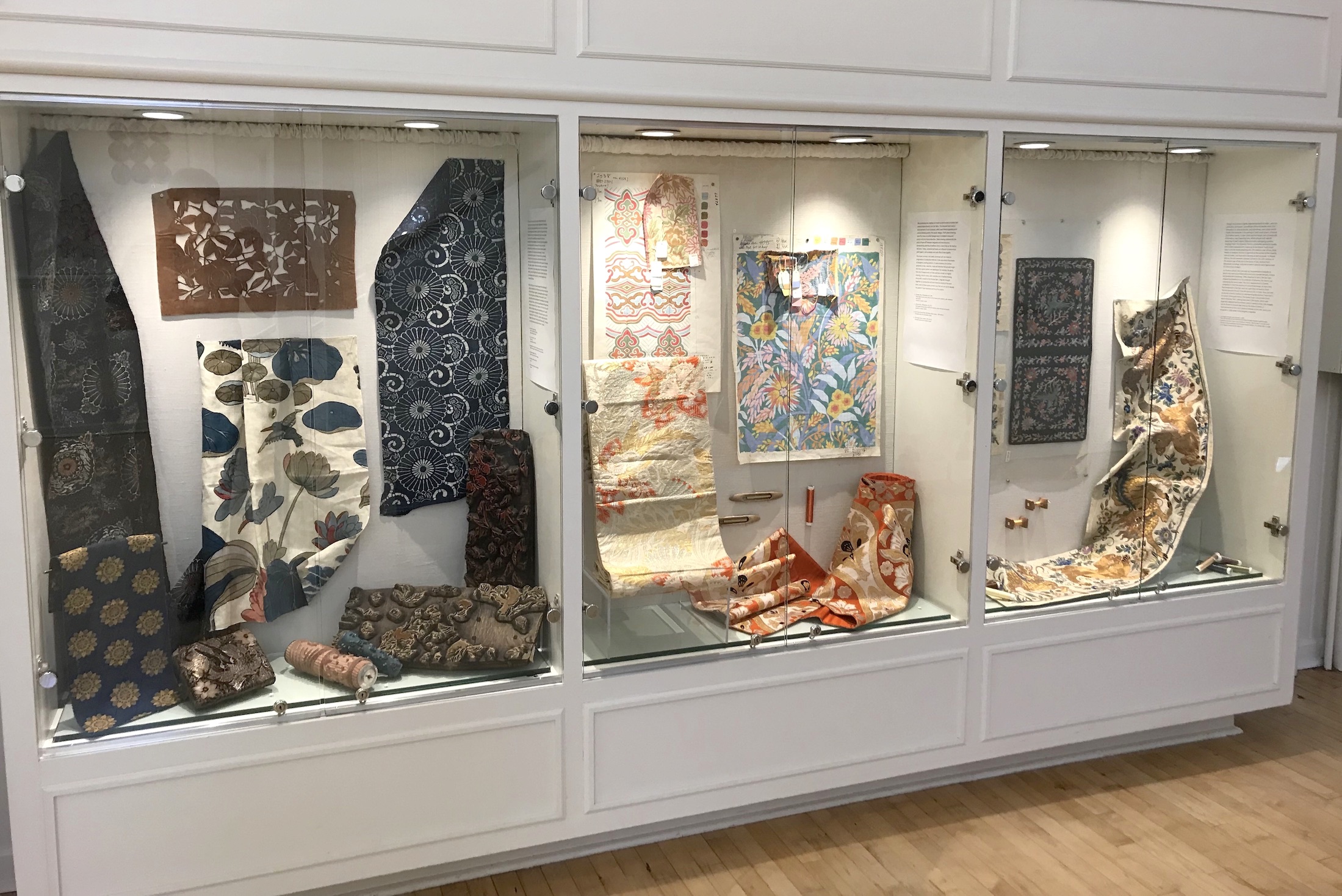
Lina's international experience, collector's mentality, and fibers minor all informed her extraordinary selections from the Kravet archive, currently on display in Pepe Hall.

Lina Deeb Forrester's deep dive in the Kravet archive

Lina Deeb Forrester:

Last year, Kravet Chief Creative Director Scott Kravet came to SCAD to lecture on the textiles from around the world that are in the Kravet archive. I was fascinated. Afterwards I introduced myself, and later emailed a follow-up. There was no actual archive internship position at the time. I was persistent. Eventually Kravet created the position to accommodate me!

I interned in the climate-controlled Kravet archive at their corporate office in Bethpage, Long Island for two and a half months. I was in frequent contact with the Kravet design studios including Lee Jofa, Kravet Couture, and Brunschwig and Fils. If they were looking for a piece with say, a specific bird, I'd look it up in the database of almost 40,000 items, find it, package it and send it to them so they could physically use the archival piece as inspiration for the creation of new designs.

As part of my internship last summer with Kravet, I helped curate an exhibition in New York called "Pattern & Process." I examined the boxes and drawers in the Kravet archive to select the best pieces. One of the oldest items in the archives is a Coptic weaving from Egypt from 200 B.C. To be able to touch it was mind-blowing. As a student, to do something I'd never done before and be given a leadership role really fulfilled my soul.

The items from the Kravet archive I selected to display here in Pepe Hall are glimpses into the depth and diversity of the Kravet holdings. Block printing is one of the oldest ways of creating images on fabric. "The Tree of Life" uses 365 different blocks interlocked like a puzzle to create one three-yard repeat pattern. When you look at the back you can see the variation in the pressure each artist applied to their blocks. There are obis from Japan, alongside shuttles from the 19th century that use silk and metallic threads. There are point papers from Orinoka Mills, originally one of the largest mills in the Philadelphia area. On the back each artist wrote the sizes and colors for the swatches, and how long it took them to work on a piece.

I had an incredible experience at Kravet, and I'm really happy that I'm able to translate the experience to this exhibition at Pepe Hall. It emphasizes how connected the world is via the art of textiles. An archive is a living thing.

Lina Deeb Forrester

Special thanks to Kravet Executive VP and co-owner Ellen Kravet, Kravet special projects manager Karen Lerman, and the entire Kravet team.

Learn more about SCAD fibers and SCAD interior design degree programs.