Skip to main content Accessibility Policy

'Mainly for Women' opens at SCAD MOA

January
15
2021
By
Tags:

Stepping into the gallery means being struck by the colors of “Mainly for Women.” Many of the works are rich with purples and midnight blues. Arterial maroons and other dusky hues dominate. The colors are enticing, with a hint of the intentionally unknowable. There’s something playful yet uncanny at work.

"Mainly for Women" showcases a sumptuous array of paintings by Polish artist Paulina Olowska, highlighting her storied exploration into female archetypes. Olowska immerses herself within the world of womanhood via her mastery of appropriation and homage, creating paintings that draw out the psychosexual and sociopolitical constructs of female experience. Her rapid brushstrokes render naïve photorealist forms that are redolent with the feeling of bygone eras, as her colors appear softened by the passage of time.

Within her exploration of womanhood, Olowska brings the domestic act of playing hostess into the space of the gallery, inviting a group of women from the next generation of distinguished Polish artists to exhibit alongside her within the show. This collaborative act is definitive of Olowska's practice and indicates that her focus on portraying multiple representations of women is not just a conceptual preoccupation, but an active and performative aspect of her work. In the words of writer Jan Verwoert, "The house Olowska is building in her work is not a place of imaginary returns, but a site for gathering sister spirits."

The artists whom Olowska has invited to exhibit alongside her — Karolina Jabłońska, Dominika Olszowy, Agata Słowak, and Natalia Załuska — offer a dynamic range of female perspectives, creating an alchemical exchange of artistic approaches that reflects Olowska's focus on creating a complex and multifaceted vision of femininity. The group presentation, which takes on an almost mythic, séance-like quality, transforms the visuals created by these artists into an exposition of ideas. 

The exhibition's title, "Mainly for Women," takes its name from a 1960s "guide to love making" written by Robert Chartham, a pseudonym used by author Ronald Sydney Seth publishing under the guise of a sexologist. In the work, Chartham seeks to enlighten women on how to avoid harming their husbands' sexual self-respect while providing a biological play-by-play of the coital act, strictly to be enacted by a husband and wife only. This patriarchal bestowal of information is irreverently subverted by Olowska, who reclaims Chartham's title for her own purpose: to give name to a show of women artists who speak for themselves. Olowska's action of creating a female community suggests a valuing of subjectivities in which she and her fellow women artists are autonomous in determining their own image.

In their practices, Olowska, Jabłońska, Olszowy, Słowak, and Załuska grapple with the history and contemporary status of women in society. They contend with issues of female labor, patriarchal constructs of a woman's role, and visual manifestations of female interiority, with many of the featured works drawing from imagery related to pagan mythological narratives.

Through the distinct perspectives of formalism, portraiture, appropriation, and narrative painting, the artists use their work to disrupt our understanding of womanhood. Their erotic imagery, depictions of female agency, and labored methods of painterly execution are markers of how these women seek an uncompromised position of gender parity within art and society. With the recent attempt by Poland's constitutional court to impose a near-total ban on abortions — including in instances of rape and incest — this exhibition speaks with a sense of urgency for the dire need to insert female autonomy into biopolitics and society at large. In its presentation in the U.S., the exhibition holds a mirror to the country's own reckoning with women's rights.

Mainly for Women is curated by SCAD MOA assistant curator Ariella Wolens.

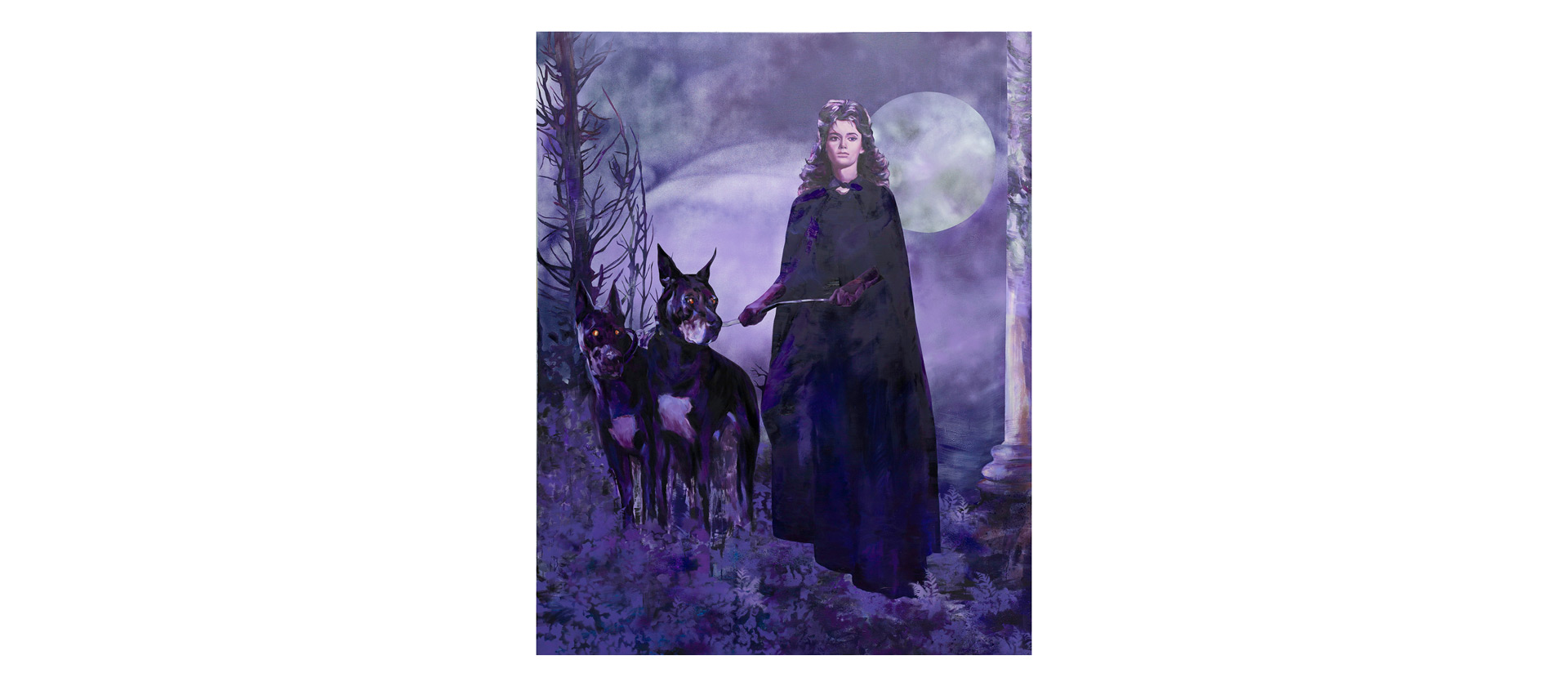
Paulina Olowska, "Romania," 2020, oil on canvas, 94 1/2 x 74 13/16 in. Private collection.

Paulina Olowska, "Romania," 2020, oil on canvas, 94 1/2 x 74 13/16 in. Private collection.

Banner image: the artist Paulina Olowska at SCAD MOA.

Visit scadmoa.org.


Vek Neal: empower ranger

January
7
2021
By
Tags:

"I consider myself a hype man for creativity," says Vek Neal (B.F.A., illustration, 2004). "My aim is to listen to students, ask the right questions, and provide insights based upon my experiences."

As the new SCADamp visualization coach, Atlanta-based Neal conducts one-on-one sessions with students looking to improve their professional presentation skills. This winter quarter he will also lead two recurring workshops, Design Your Deck and Dress the Part. Believe it: Vek's colossal charisma feels transferable even via Zoom. And you can bet he'll be wearing a snazzy blazer when you see him.

Vek Neal:

The metaphor I use for a visualization coach is a trainer who helps you get in shape. They're not going to lift the weights for you, they're going to give you the techniques that allow you to exercise properly and perform your best. Visualization coaching is about best practices and starting great routines early on, so when you present within your SCAD academic experience and in the professional world, you perform in a way that comes naturally.

My sessions with students are 20 or 40 minutes. Within that time, we talk about the work they're focused on. My first priority is to listen to the student for what they're trying to amplify. That's when I ask questions and start bringing in tips. As a SCADamp visualization coach, I'm not here to place students into a box, I'm here to help them find creative solutions in their own voice. What's really going to sell who you are? You have to be authentic.

My professional skill set includes illustration, photography, video editing, strategic planning, marketing, graphic design — all of which are art. I've always been like a Swiss army knife. Give me a moment, or a day or week or month, and I can learn new tasks. It's the challenge that keeps me excited.

SCAD has grown so much since I graduated in 2004. SCAD Atlanta and SCAD Savannah are different in terms of location and layout, but the energy and the creative activity are united. I recognize myself in the students, because I'm also committed to expressing myself and doing my best work.

Everybody on Zoom, everyone physically walking into a space, we're all here because we want to be. SCAD has always been successful walking into the unknown, and providing new outlets for learning. The fact that SCAD is able to create new, innovative platforms to educate is so impressive.

My truth is aligning vulnerability with strength. There's a level that you have to go to in order to be present within your creativity and elevate your work. If I'm coaching you, I want you to go past what you might normally do, because that's what's really going to make people want to work in partnership with you.

With students, I'm coming from a place of, I want you to win. It's as simple as that. I want you to win.

Students can email Vek directly at [email protected] to arrange a personal coaching session.

SCADamp logo

Sign up for SCADamp workshops here.

(Image courtesy: VEKKING)


Devon Vander Voort's museum mission

November
19
2020
By
Tags:

"I believe museums should drive social change," says Devon Vander Voort (B.F.A., art history). "All my work is aligned in some way with that mission." A museum studies minor, Vander Voort presented her project "An American Tail Immigration Brochure" at this year's Southeastern Museums Conference, as part of the Student Work in Museums (SWIM) Awards.

The project sprang from MUSM 302: Museum Curation and Collection Management, a class taught by art history professor Christine Neal. Conducted in collaboration with Special Collections librarian Sauda Mitchell, the class accessed the Don Bluth Collection of Animation at the Jen Library, as students designed education materials for hypothetical museum exhibitions.

Museums have been a thread through Vander Voort's life, from her time as a high school student with the Teen Arts Council at Everson Museum in Syracuse, NY, to her current work as a docent and exhibition planner at the Savannah African Art Museum alongside executive director and SCAD alumna Billie Stultz (B.F.A., art history, 2016). "My dream is to someday be director of the National Museum of Women in the Arts," says Devon. She's on her way.

animation still from an american tail

Devon Vander Voort:

As part of my museum studies minor, I took MUSM 301: Museum Leadership in fall 2019 with Dr. Carr. Then I spent a quarter in Lacoste, where I took ARTH 240: Treasures of Provence, which I loved. When I returned to Savannah for spring quarter this year, SCAD had transitioned to virtual learning as I began MUSM 302: Curatorial Practices with Professor Neal.

One thing instilled in me during Museum Leadership is that museums have to reflect a community's needs. I was thinking about that as I began Curatorial Practices. When Professor Neal said we were going to be using the Bluth Collection, I realized how little I knew about the art of animation. Then I saw that one of the films Don Bluth made was An American Tail, which is an immigration story. Immigration affects people's lives, and I began thinking how I could align my values and my work for this class.

As Americans we have had this idea that we welcome people from other places. Then we see the border crisis on the news and it doesn't make any sense. I created the brochure to address the themes of immigration in the movie, and juxtapose them with the current border crisis. The brochure includes a card with information on what to do if you're approached by law enforcement about your immigration status.

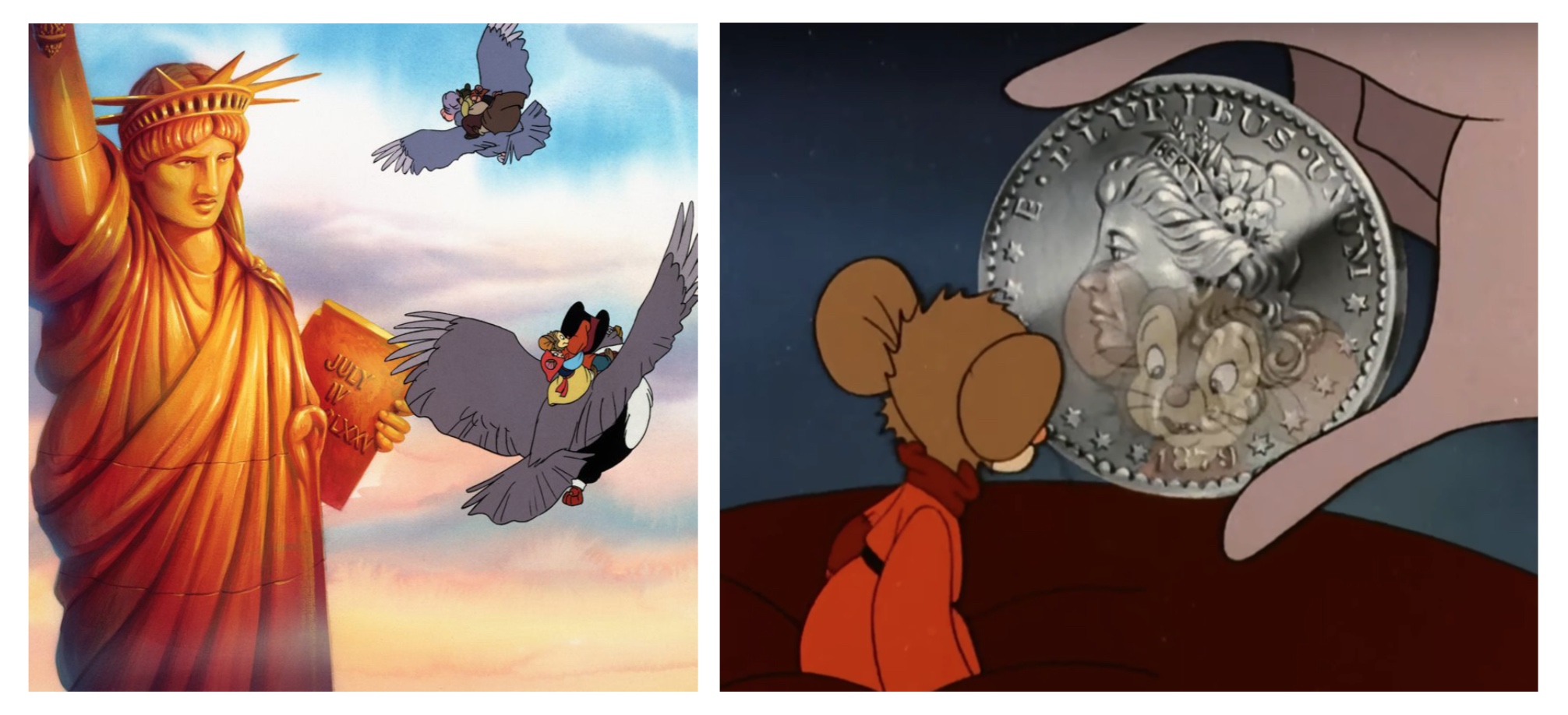
In An American Tail we see the Statue of Liberty, and we see U.S. currency, and Fievel the mouse seeing his face reflected in the face of the coin. My proposed exhibition would include the drawings and animation cells from SCAD Special Collections, a space where the movie's playing, and a display about the history of America's first immigration center, Castle Garden. Museumgoers would have a chance to learn about their own ancestors, and see how we're all connected.

I was born in India and adopted by my mom. I grew up in a small suburb outside Syracuse, but we lived abroad for a few years, and we traveled a lot. My mother gave me those experiences, which influenced my world view and my project. I've been afforded an awesome life and have to do something with it to help other people. I plan to achieve that through working at museums, and making them places of inclusion, accessible to the communities they serve.

Learn more about the Don Bluth Collection of Animation.

www.devonvandervoort.com

Open Studio spotlight: "lé dieguê"

November
12
2020
By
Tags:

Originally from Caracas, Venezuela, Diego Cardenas (M.F.A., painting) was 13 years old when he began dabbling in graffiti. A decade later, the artist known as "lé dieguê" is a popular muralist and a featured artist for SCAD Open Studio Fall 2020, the virtual event taking place this Friday through Sunday, Nov. 13-15. His color field explorations, in the tradition of chromatic pioneer and SCAD deFINE art 2017 honoree Carlos Cruz-Diez, can light up a mood, a city, or the soul of a people. Don't underestimate the power of the work.

Diego Cardenas:

My art is largely abstract, though I also make representational work. I'm currently in Kentucky, painting a mural at a university inside a science building, of fish native to that region. I've been blessed to be able to paint commissions and murals for people. I also draw, though drawing isn't my major body of work, I try to keep the pencil moving.

My process begins on my computer in Abode Illustrator. The software helps me set measurements for each section of my work and then I mark it off. I try not to use graphite because it tends to show through spray paint. I make little dots to guide me and then I use masking tape to create clean lines. It's a little tricky because I paint, then move the tape, and paint again, which takes a lot of patience.

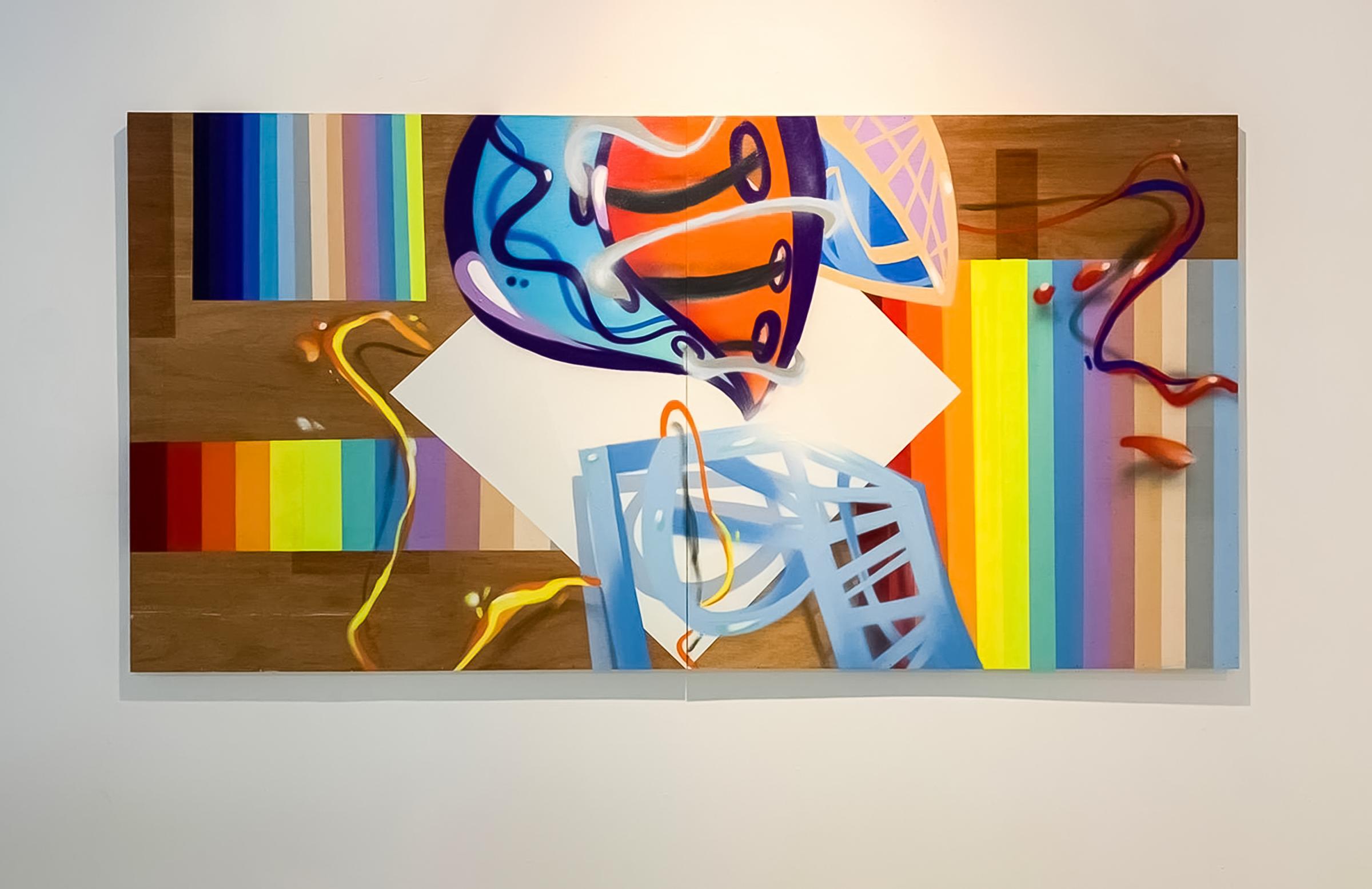
My painting "Angular Perception 13" uses color and lines to change how you perceive the size of aspects of the work. I strive for pristine lines, but I stop short of being a perfectionist. That comes from working outside, where I can't control whatever is floating around in the air that winds up sticking to the surface. When paint bleeds underneath a line, I might go back later and touch it up, or I might like the effect.

I don't consider myself a pioneer. A lot of people have laid the foundations for this work. I'm very close to the work of Carlos Cruz-Diez. He is one of the main references for what I do and how I do it. I interned at both his Articruz studios, the one in Panama City and at Atelier Cruz-Diez in Paris. It was sad when he passed away [in 2019, at age 95] though his work and chromatic investigations survive, and what he achieved as an artist from Venezuela around the world.

What's happening in Venezuela is on my mind all the time. I'm always cheering for my people. In 2018, I started a non-profit called CRÜ with two friends, Hugo Pah Carrasco and Andres Pri Martinez, where we go and paint in poor communities in Venezuela. We create colorful murals to cover old propaganda. You start to paint and you have 30 or 40 kids around you in an instant, and they want to paint too. We've made works for auction that are used to pay for materials to create courses for young people to learn to draw and paint.

I love natural light. Living in Savannah, I'm really interested in what I call the sub-spectrum. I'm always taking pictures. I use software to match the colors of my paint to the colors I see in my photos. From that, I create a limited palette and put color properties together and start playing. I've been studying a book by Faber Birren called Color & Human Response (Van Nostrand Reinhold Co., 1978) about how we perceive color and react to it. If you see someone wearing certain colors it will make you more likely to say hello.

I'm not trying to paint specific feelings. How you feel about the work is up to you, but I want my work to be a tool that will help the viewer be a little more sensitive, to open up awareness and change the way you see things later on.

Diego Cardenas (lé dieguê), “Composición a Malevich,” oil on canvas, spray paint, latex, and varnish on wood, 48”96”, 2020.

Diego Cardenas (lé dieguê), “Composición a Malevich,” oil on canvas, spray paint, latex, and varnish on wood, 48”96”, 2020.

Photo of lé dieguê by Luis Ramirez @luisasphotographer.

Follow Diego Cardenas on Instagram here.


Superstar sisters' Guests + Gusto

November
10
2020
By
Tags:

"We have been partners since the day I was born," Inga Berge tells a rapt audience of SCAD students, professors, and staff. "I am pretty sure Leslye pulled me into her room the moment our mom brought me home form the hospital. We've been a creative team ever since."

Founder of Raging Bees, Inga is an artist, creative director, graphic designer, and one half of the Brege/Headland creative duo that brought the hit Netflix show Russian Doll to life. Her sister Leslye Headland is a writer, producer, and director best known for feature films Sleeping with Other People and Bachelorette. Leslye is currently developing and writing the next installment of the Star Wars franchise for Disney+ with Inga at her side.

"I couldn't do it without Inga," Leslye says. "Inga's ability to shape worlds and create tones, feelings, and narratives through art is a huge help to me as a writer."

As part of the ongoing lecture series Guests and Gusto, the sisters spoke on creativity, writing, and how the look and feel of a show is part of their process. Here are several key takeaways:

Embrace your process. Leslye: "When I went to Lucasfilm with my idea for our Disney+ series I was clear about my needs as a creator: I need Inga with me from the very beginning. Most often, a look book is brought in at the end of the initial development process, but her ideas drive my story process forward. Often times I get on a call and pour out my thoughts like a waterfall. Then Inga takes what I said and builds the environment that the story will live in. From there, I am refine the characters and further enhance the overall arc. Our partnership allows me to be better at my job."

Know it all. Inga: "You have to study beyond your specific field. When you are developing a look book for a film, play, or television series, you have to understand how all the pieces fit together. Who are these characters? What are their motivations and how does the director want the audience to feel for them? The more knowledge you have at the outset, the better. Leslye and I have a shorthand when it comes to concept creation, but when I am working with a new team I ask thousands of questions. I can't do my job unless I understand what the entire picture needs to look like."

Continually clarify. Inga: "If someone says, ‘I want it to be more fluffy,' ask what ‘fluffy' means to them. I am continually working with clients who describe their needs in abstract or overly simplistic terms. For example, ‘We want it to be gothic.' Gothic literature is an enormous genre! Are they asking you for gothic horror or gothic romance? Are they looking for a tone of the beyond, or do they simply love the clothing choices? Are we talking Dracula or A Christmas Carol? The more specific the answers, the better your deliverable will be."

Chop wood, carry water. Leslye: "As writers we are constantly pushing ourselves to reach the next destination and forget the journey we are on. We want our shows to get picked up, our movies to be made, our plays to be seen on Broadway, but we can lose sight of what we enjoy about storytelling and character development. We write because we love to write. Don't forget that. Be present in your work, and take pride in the steps you are taking along the way."

Guestst and Gusto slide

Learn more about Guests and Gusto and future virtual events.


Virtual Open Studio returns for fall

November
6
2020
By
Tags:

SCAD returns for fall with Open Studio, offering art collectors and enthusiasts exclusive access to work by the university's community of talented artists. The three-day all-virtual event takes place Friday through Sunday, Nov. 13-15.

Open Studio will showcase more than 700 jury-selected works by students, alumni, and faculty across all SCAD degree programs, including illustration, painting, photography, printmaking, and sculpture. Featured artists include Diego Cardenas aka "lé dieguê" (M.F.A., painting), Olivia Lovito (B.F.A., photography), Ayana Ross (M.F.A., printmaking), Andrew Munoz (M.A., advertising), Ashna Malik (B.F.A., painting, 2020), and Thomas Flynn II (B.F.A., painting, 2016). Open Studio is an exceptional opportunity to obtain leading works by star and future star artists from the SCAD universe.

A portion of proceeds from Open Studio will benefit the SCAD Student Relief Fund, helping students with financial hardships complete their degrees. This follows a successful initial virtual iteration of Open Studio night held in June of this year.

"Open Studio is an event that represents our continuing commitment to supporting and elevating the creative voices in our communities," said Victoria Gildersleeve, associate director, SCAD Art Sales. "The virtual event enables patrons around the world to shop for original SCAD artwork by talented artists among our students, alumni, and faculty. SCAD continues to provide an education of unparalleled excellence for fine artists, and Open Studio remains an important part of that mission."

SCAD Art Sales, a premier curatorial platform launched in 2016, will offer guests access to its artist network through the work on display. A "view-in-room" will be available during Open Studio on the mobile platform via the ArtCloud app, making it possible for shoppers to preview works in their home before placing an order.

Stay tuned next week as SCADworks features interviews with Open Studio artists.

Banner image: Diego Cardenas aka lé dieguê (M.F.A. painting), "Angular Perception 13," oil on canvas, 48" x 48".

#SAVFF: marquee mood

November
5
2020
By
Tags:

SCAD Savannah Film Festival 2020 went virtual, screening 148 films total, including ten major studio pictures ahead of their general release. Film Fest has long prided itself as a place where student-made short films and future Oscar-winners share screens, and top stars interact directly with SCAD students. This year's virtual format changed the game, creating new, focused connections.

In interviews, workshops, and virtual masterclasses, students and festivalgoers heard directly talent from across the filmmaking spectrum, from writers to producers to top-marquee screen stars, including 2020 honorees Samuel L. Jackson, Millie Bobby Brown, Ethan Hawke, Jennifer Hudson, Steven Yeun, Delroy Lindo, Rachel Brosnahan, Billy Crystal, Glen Keane, Yahya Abdul-Mateen II, and Tessa Thompson.

Ethan Hawke brought all the love, offering words of encouragement and strength to students at a #SAVFF masterclass: "Take good care of yourself. Treat yourself with respect. That's all that matters. Find ways of nurturing and caring for yourself like you would someone you love. Once you do that, you'll be able to nurture other people, because you'll be in a position of strength." Hawke was honored with the Outstanding Achievement in Entertainment Award for his prolific career, including his new Showtime project, The Good Lord Bird.

Tessa Thompson received the Vanguard Award and spoke on her roles in Creed and Thor: Ragnarak. Asked about her process, Thompson said: "When I'm approaching a part, something I always loved to feel is scared of something. When I played Bianca, the idea of having to write and perform original music was terrifying to me. Playing Valkyrie, the idea of having to do something so physical to pull off the bravado of a superhero, that terrified me. I love this feeling right after I get the job, or have the conversation with the director, a moment of panic wondering if I can do it."

Virtuoso Award winner Jennifer Hudson, hotly anticipated as Aretha Franklin in Respect, spoke about a career is built in incremental steps, from American Idol to Dreamgirls to the honor of playing the First Lady of Soul: "Aretha asked me, how are you going to portray me? And I said, Ma'am, how would you like to be portrayed?  Aretha spoke to me a lot about life. Her life. I'm so grateful to be able to be chosen to portray her, and to have a communication with her for her to teach me. She deserves see her legacy carried on and represented in the way she represented herself. I miss her presence to this day."

Hudson told students about working on the film's live singing scenes with director Leisl Tommy, who comes from an award-winning Broadway background. Hudson: "It's something we both were adamant about. I like living in the moment and a huge part of that comes from our church, and then there's her background as a theater director, which you have to perform live. When you can use the instrument of your voice while filming, it gives you more power and control over the moment."

Millie Bobby Brown received the Maverick Award. Brown produced and is starring as the younger sister of Sherlock Holmes in the Netflix film Enola Holmes. Brown is a something of an adoptee of the Georgia film industry, after her breakout role in Stranger Things was filmed in the state. "It's definitely fulfilling to see young girls and sometimes even women look at me and see inspiration. Usually in those moments I take the time to think about the women before me who helped me get to where I am. When people find me inspiring, I actually find them really inspiring. They usually tell me stories that are just amazing and make me want to do what I do even more. Inspired women inspire women. That's a quote I live by."

Stars, they're just like us? At #SAVFF, yes.


Tessa Thompson photo courtesy Awol Erizku.

Women of Blumhouse

November
5
2020
By
Tags:

"Horror gets a bad rap," said Bea Sequiera, executive vice president, Blumhouse Productions, during a virtual Wonder Women panel at this year's SCAD Savannah Film Festival. "Yet the genre has always been a vessel for talented storytellers to share new stories and points of views."

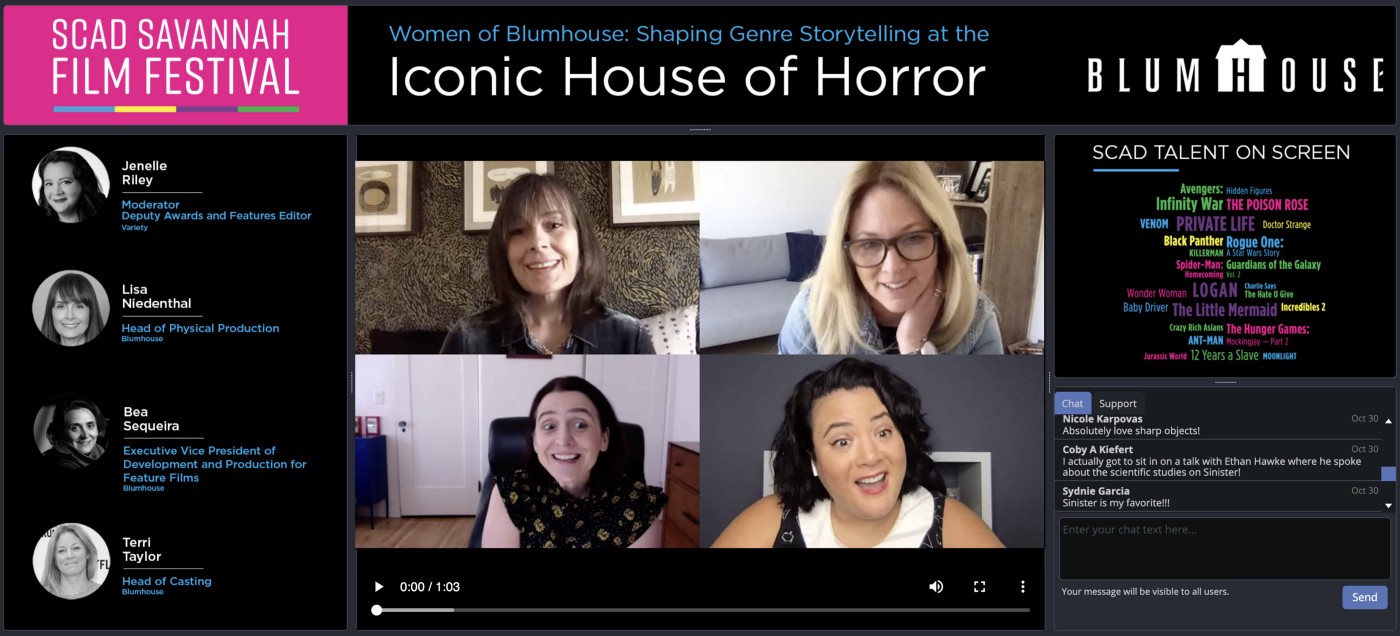
Sequiera was speaking during the panel Women of Blumhouse: Shaping Genre Storytelling at the Iconic House of Horror, celebrating the studio behind blockbusters including The Invisible Man and Get Out, award-winning shows Sharp Objects and The Purge, and new releases Freaky, and The Good Lord Bird.

Film Fest has continually showcased and elevated the voices of women in the film industry, exemplified by the return this year of the popular Wonder Women panel series. The Blumhouse panel, moderated by Variety features editor Jenelle Riley, welcomed three industry leaders from the studio: Lisa Niedenthal, head of physical production; Bea Sequeira, executive vice president of development and production for feature films; and Terri Taylor, head of casting. The panelists brought thrills and chills and insights to the virtual audience. 

Lisa Niedenthal: "The best advice I can give to anyone looking to make films is to dive right in. Working alongside a great director is a crash course in how to be a great producer, actor, editor, etc. Talented directors know every step of the process. They anticipate needs, and are always one step ahead of the production. Seeing the process through their eyes will help you as a creator in your own right, and allow you to pick and choose the techniques that speak to you as a leader. You do not have to start from square one. Learn from the people who have already paved the best paths."

Bea Sequeira: "From traditional slasher movies, to psychological thrillers, to the supernatural, horror films get to be something completely different. Our genre is oftentimes a 'trojan horse' in terms of social conversations. Our studio allows film makers the ability to share a specific viewpoint and message with the audience many mainstream films are unable to. That maneuverability brings writers, directors, and film professionals back to the genre and allows those of us who love thrillers, a robust and ever deepening collection of meaningful films."

Terri Taylor: "Our genre is always looking for new and emerging talent. As a casting director, I am constantly searching for actors who can portray the emotional and phycological turmoil that make our movies work. Yes, you are wrestling a demon in a vent, but is it believable? Are you drawing the viewers in? Can the audience sense your terror? Thrillers only work if the actors bring the audience into the scene with them. We all love giving young professionals the opportunity to showcase their craft and stretch their skills on set."

Webinar screenshot

Thanks to everyone who made the 2020 SCAD Savannah Film Festival an event to remember.


Pitchford preaches prioritization

October
29
2020
By
Tags:

"I firmly believe that the best game developers in ten years are people who are not yet in the industry today," said Randy Pitchford, "and that's going to be you."

As founder of Gearbox Software, Pitchford is an industry icon. His company has created some of the most successful video game franchises of all time, including Borderlands and Brothers in Arms. He spearheaded the initiative Borderlands Science, a mini-game within Borderlands 3 that enables players to contribute to medical research by helping map the human gut microbiome. With his youthful cowlick and unbridled enthusiasm, Pitchford has cred to boot, having grown up with the earliest gaming systems to become an architect of a billion-dollar global industry.

Pitchford's guest lecture, "The Artist's Dilemma," delivered via Zoom to undergraduate and graduate students in the SCAD School of Digital Media, addressed those who play Pitchford's popular games and will work in his industry. During his talk, the Zoom chat boomed with animation, motion media design, visual effects, and interactive design and game development students asking questions in real time, testament to this connection.

"While we are artists, we're commercial artists," Pitchford said. "Our livelihoods, and the livelihoods of the people we work with, depend on making commercial art. The fact that we can make commercial art means that we as a species have figured out a way to commoditize entertainment, so that some of us can dedicate our lives to creating experiences and joy for other people."

Pitchford's talk was structured with compelling narrative reveals and mind-fizzing koans, suiting someone who attacks his craft and his business from both wildly philosophical and rigorously practical perspectives. Ultimately, he spoke directly to the task at hand: doing the work.

Here are five key points from his talk:

1. "When I got started programming computers and designing games back in the early days, there were no schools to go to and learn the craft, we were teaching ourselves as we went. Now you have the opportunity to go to a university where experts can teach you how to get to a point where you can pave the way for what's next. I'm so grateful you guys exist."

2. "I make video games because I love video games. I'm a lot like you: When we feel that engagement interacting with our entertainment, we want to see if we can do that too, and create something that gives those feelings to other people. That instinct is rooted in empathy. I call it having the heart of an entertainer."

3. "You need to eat. If we're going to commit to this, we have to make money. As an artist there's a balance that we have to think about. There's a spectrum with expression on one side and commercialism on the other. There is a place in the middle where we can value expression but accept the reality of earning a living. Hunting for that sweet spot is the artist's dilemma."

4. "I've been in the industry for 30 years, and worked on a lot of projects and made a lot of things. There's the same problem every time: not enough. Not enough time, not enough money, not enough people, not enough memory. Of all the skills you develop, the most important may be figuring out what's important and attending to what's higher in the importance ranking. That's prioritization."

5. "It can be daunting thinking about entering the job market. If you're really good at something that we're already in need of, we're going to want to employ you. Then show us something we've never seen before. If you can do both, you're going to be wanted and loved, you're a unicorn. In aggregate, show a high degree of specialized skill. Another way to be successful is to be awesome and great, so that people love working with you."
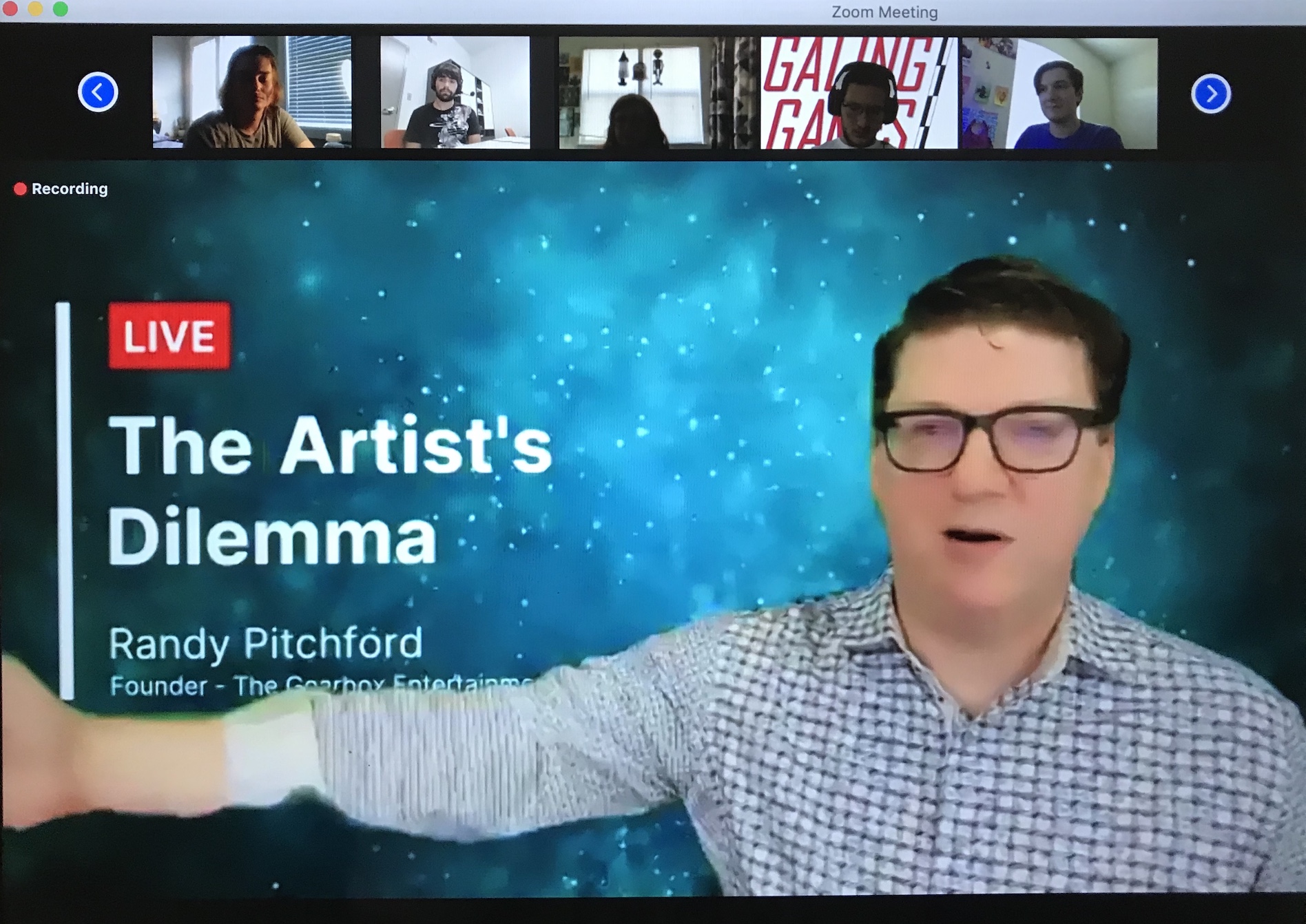
Pitchford's guest lecture, "The Artist's Dilemma," delivered via Zoom

Thanks to SuAnne Fu, chair of interactive design and game development, and Nye Warburton, associate chair of interactive design and game development.

Find Randy Pitchford on Twitter @DuvalMagic.
 

Film Fest spotlight: McKinley Benson

October
28
2020
By
Tags:

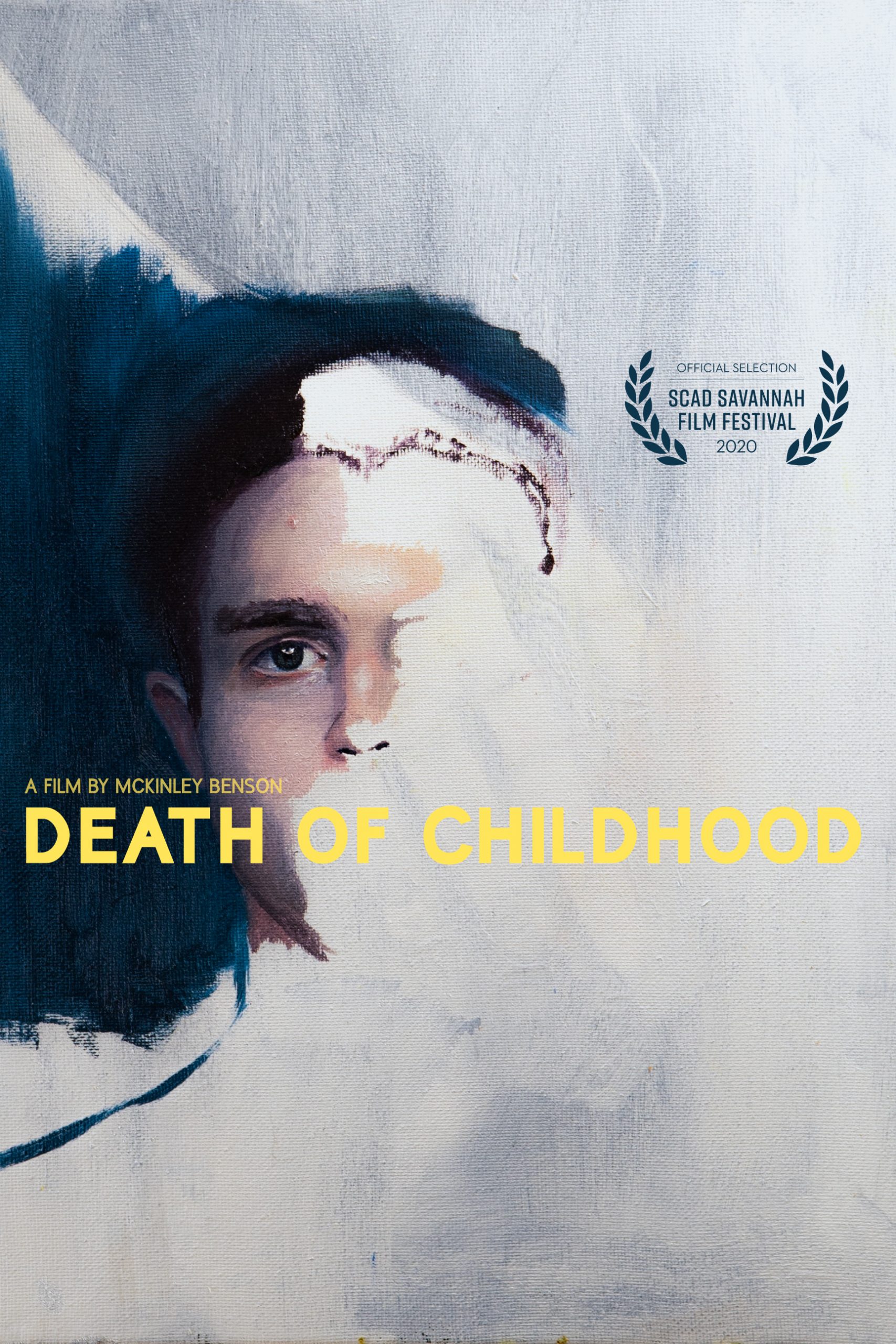
The debut documentary film by director McKinley Benson (B.F.A., film and television, 2020), Death of Childhood, is part of the Student Shorts showcase at this year's SCAD Savannah Film Festival. The eight-minute short focuses on young artist Brady Dollyhigh, and the loss of a sketchbook containing memories of his estranged father.

Dollyhigh is a childhood friend of Benson’s. “We met at church when we were eight and we've remained good friends ever since,” Benson say. “One of my earliest memories is of us watching Phineas and Ferb cartoons and sketching on the floor.”

Death of Childhood was originally planned to document the opening of Dollyhigh’s solo exhibition in 2019 at the Lakewood Cultural Center in Lakewood, Colorado. But things didn’t go exactly as planned.

McKinley Benson:

When I first sat down to write the treatment for what became Death of Childhood it was a completely different film. The project started as my final project for my graduate seminar Directing the Documentary [FILM 747A], with film professor Jennifer Hyde. I reached out to my friend Brady to see if I could capture his gallery opening in Colorado. I had previously documented his 24-hour long line drawing “Time” and thought this would be a perfect follow up.

I didn't know anything about documentary filmmaking until I took Professor Hyde’s class, so I dug in as deep as could. She taught me how to write a treatment and prepare the questions in order to shape the story. I remember her sharing the importance of not only setting up the shot, but knowing what the shot should look like before I turned the camera on. It’s not as easy as showing up and interviewing people.

I was on the plane to Colorado and I felt prepared. My questions were laid out. My treatment was finalized, and I was practicing how I was going to broach the subject of his father, and their falling out. It was always going to be in the documentary, but I did not envision it as the center point. When I landed in Colorado everything went out the window.

Brady is meticulous about his sketchbooks. He is constantly drawing in them, journaling in them, and capturing his particular genius. They are a part of him, and when he lost one when we began filming the entire documentary shifted to that pain.

This particular notebook was meaningful because he was in the process of reconciling his relationship with his dad. He was grieving that loss through his art, and he had things written down that he wanted to say to his father. I was nervous when I turned the camera on for the first time. I didn’t know how deep to dig, or how he would respond to my questions, but in the end it flowed out from both of us.

I was there to document Brady’s work. He understood I had to ask him honest questions. That didn’t change the fact that I knew his dad. Our families had barbeques together, I went to his home and played, and I have my own memories of him before this. Brady wasn’t the only one in pain when we opened up that wound.

The whole shoot took place over a weekend. He painted on a mountain top. His sketchbook went missing. We dug into a dark place and we helped each other heal. His pain is real, and after we turned the camera off we were both emotional. I was packing up my camera with tears rolling down my face thankful I was there for him, and thankful he was there for me.

This is my first documentary film, and I’m excited to have it in this year’s Film Festival. I attended last year's festival and saw some really amazing work there. It’s great to see what other filmmakers are creating, and to see what inspiration you can take away and bring to your own work.

Death of Childhood film poster

The SCAD Savannah Film Festival continues through Saturday, Oct. 31.