Skip to main content Accessibility Policy

SCAD alumnus Jeffrey Taylor shows collection at Paris Fashion Week

September
27
2016
By
Tags:

Next stop for SCAD alumnus Jeffrey Taylor: Paris, France.

As Paris Fashion Week kicks off, "la Ville Lumière" is the only place to see Tibet Garden, the award-winning collection created by Taylor (B.F.A. fashion, 2016). Winner of the $10,000 grand prize of the 9th Annual Supima Design Competition this September during New York Fashion Week, Taylor’s collection will be unveiled at the Supima Design Competition Presentation on Thursday, September 27, 7-10 p.m., in Paris. 

Taylor’s entire five-piece collection will be presented on the mechanized runway in an industrial space that will set off his colorful, romantic designs. Fashion influencers and industry insiders are promised an evening of exceptional fashion. 

“Jeffrey's triumph affirms his mastery of fashion,” said SCAD President and Founder Paula Wallace. “The lyrical lines and deft craftsmanship of his Supima collection deserve the international stage.”

Tibet Garden was inspired by a trip to New York City, where Taylor saw a group of Tibetan women passing by in a train station. Moved by the colorful attire, their heritage and culture, he designed a floral eveningwear collection representing the women’s transformation during their coming of age. Taylor collaborated with Jennifer Dranttel (M.F.A. fibers), Liz Nagel (B.F.A. fibers, 2016), Katherine Boarman (B.F.A. fibers, 2016), Olivia Miller (B.F.A. fibers, 2016), and Naomi Crumpley (B.F.A. fashion, fashion marketing and management minor, 2016). They helped create patterned textiles for the collection by scanning in real flowers and hand-beading and embroidering the flowers.

Taylor’s affinity for fashion began at a young age when he was inspired by his mother’s bright church clothes. After a congregation member taught him how to sew, his creative perseverance grew into a successful college career at SCAD. The young designer made his official runway debut at the 2016 SCAD Fashion Show, an annual event featuring premier garments from select senior collections within SCAD’s School of Fashion.

Taylor was one of only six designers invited to display his emerging designer collection, Tibet Garden, during NYFW at the Skylight Clarkson Square gallery space in Lincoln Center on September 8. The Supima Design Competition creates runway exposure for top emerging talent, supporting young designers and challenging them to create capsule collections of women’s eveningwear from luxury cotton fabrics. SCAD graduate Kate McKenna (B.F.A., fashion, 2015) won the 2015 competition.

“SCAD’s fashion program is competitive, so I was thrilled to be selected as one of the designers for the SCAD Fashion Show,” said Taylor. “Being selected by jury for the show, and then, just a few months later, winning Supima, has all been the icing on top of an incredible college experience. I feel unbelievably honored.”

Félicitations à vous, Jeffrey!

Masud Olufani: The artist as concatenator

September
20
2016
By
Tags:

Masud Olufani is a reverse seer. He portrays history as more than an academic exercise; he enacts legacy as an existential necessity. Masud’s recent solo exhibition at the Museum of Contemporary Art of Georgia (MOCA GA) and his current show at the SCAD Museum of Art (SCAD MOA) explore the lacunae in the ancestral memory of the disenfranchised.

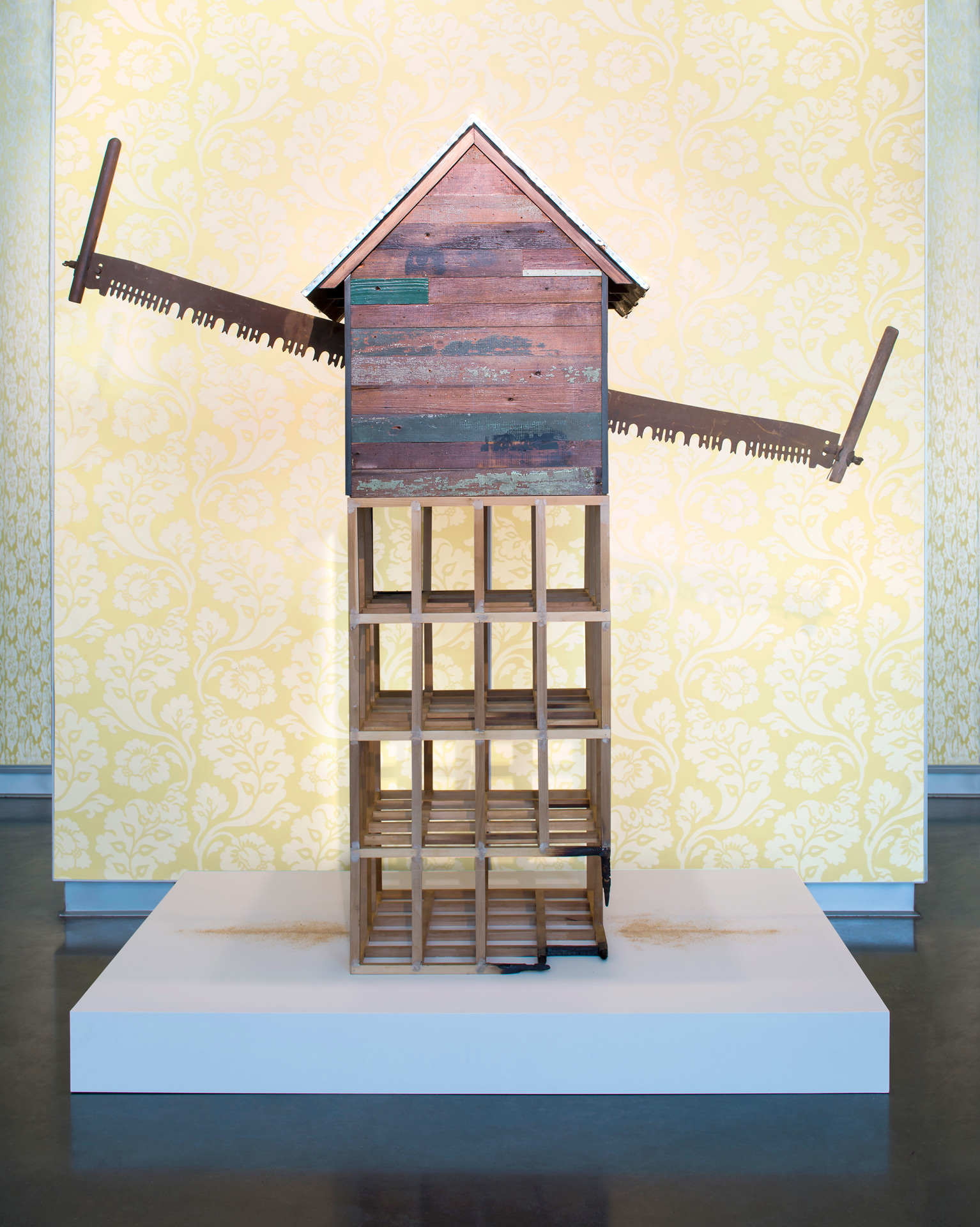
Sculpture of house at SCAD Museum of Art exhibition “Imprint: Past as Prologue.

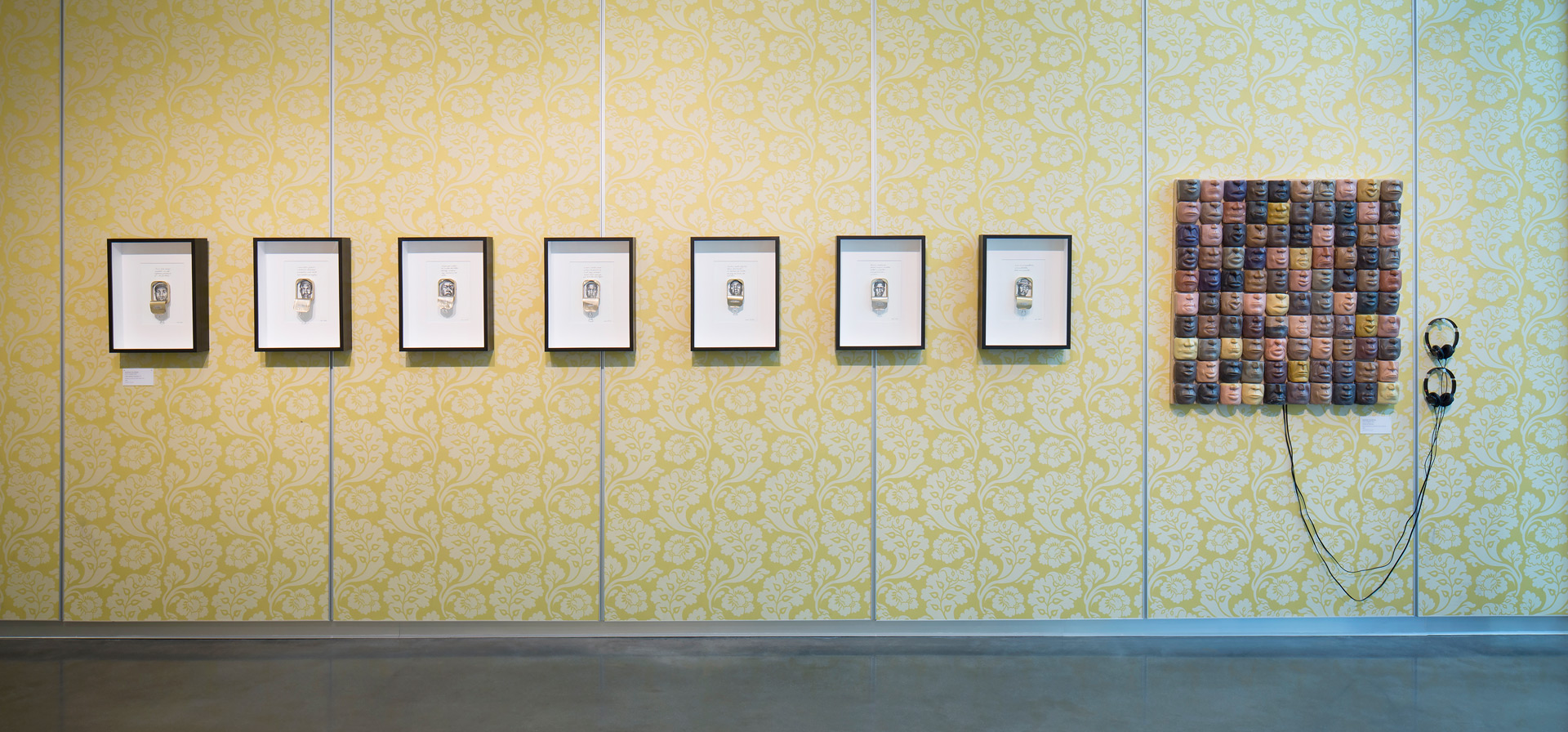
Masud creates a poignant, brilliant visual essay upon themes of memory and connectedness in the soundscapes, drawings, and sculptures in his SCAD MOA exhibition “Imprint: Past as Prologue.” The eye is immediately drawn to Masud’s sculpture “To Gut,” a wooden house with a gable roof, neatly bisected by a two-man saw. With an unfinished and charred frame, the house appears on the brink of proving the adage “A house divided cannot stand.” This sculpture is flanked by two compelling rows of portraits. “Tight Packers: Excerpts 1-7” stands out as an allusion to both the horrifying conditions enslaved captives were subjected to in the holds of ships and the modern counterpart – prison cells. Each graphite illustration of an African American man is tucked inside a sardine can with a lid that reveals a numeric inmate identifier. Next, two pairs of headphones invite visitors to experience “Chorus of Memory,” a balletic orchestration of oral genealogies collected from and recorded by a host of individuals, including SCAD faculty, staff, and students whom Masud interviewed during his SCAD residency.

Display from SCAD Museum of Art exhibition Imprint: Past as Prologue

In his multi-media triumph, “Poetics of the Disembodied,” Masud plaited personal, communal, and imagined experience to reconstruct stories of people of African descent. He stood in the narrative gap as he stepped into tabby slave cabins in a series of photographs by Davion Alston. His recent MOCA GA exhibition, including the photographs created with Davion during Masud’s SCAD Alumni Atelier residency, permitted no passive bystanders, no innocent parties.

“Listeners/Witnesses of the Trade,” created by Masud at SCAD Savannah, presented a deceptively halcyon front. There were shells resting on a bed of sand, hemmed in by a projection of the sea. Only, the shells were not shells; they were the currency that buoyed the Transatlantic slave trade. The enslaved people were notably, hauntingly absent. Masud wielded absence as masterfully as he did performance, poetry, sculpture, and other media in the show – how better to symbolize the systematic elision of memory?

Masud Olufani’s work is timely and transcendent, giving voice to the voiceless and legacy to the disinherited. He expresses deeply held views without compromise or violence. When delivering the 2016 SCAD alumni address at the SCAD Atlanta commencement ceremony, Masud said: “Never forget that once the work leaves you and enters the purview of the public, you are helping to shape the way we see the world. We are like stones cast into a vast sea of creativity and even the smallest rocks make ripples.” Masud shapes the way we see the world by telling the stories, by linking generations.

Check it Out:  “Imprint: Past as Prologue,” SCAD Museum of Art, Aug. 16-Oct. 16

Empire Building: Photography by SCAD alumnus Vegas Giovanni

September
19
2016
By
Tags:

With a brand of photography that blends fashion, character design and game culture, alumnus Vegas Giovanni (B.F.A photography, 2016) is a rising star. This excellent mix of elements recently landed the photographer’s work on set for the new season of "Empire," premiering Wednesday, September 21 on FOX.

SCAD alumnus Vegas Giovanni

SCAD:  Your photography will appear in Cookie's apartment on the new season of "Empire." How was your work selected?

GIOVANNI: One of the buyers for the show scouted me. I was delighted and surprised to know she was a fan of my work, and interested in showcasing it on "Empire."    

SCAD: You studied photography at SCAD. How did the degree program prepare you for your career?

GIOVANNI: I came to SCAD as an interior design major. I had no experience in photography, only fashion. Deciding to transition into photography was one of the best decisions I’ve ever made. The program and its faculty were excellent at providing me with a well-rounded understanding of both the artistic and technical aspects of the field. That, along with an overwhelming feeling of kinship and belonging, shaped me into the person I am today. I would recommend SCAD and its photography program to any and everyone.

Work by SCAD alumnus Vegas Giovanni

SCAD: Your creative success is blossoming — what is your formula for growth?

GIOVANNI: First and foremost, I consistently try to remain in a state of calm and inner peace. This allows my mind to focus on all of the random things it needs to dig through in order to reach the ideas. Since I’m a freelancer, I have to manage my time well, so it’s important to make sure that I do productive tasks each day, outside of shooting and retouching.

SCAD: What advice do you have for other aspiring creative entrepreneurs, especially other SCAD students?

GIOVANNI: Don’t wait until you are out of school to break into your career path. Each week at SCAD should be spent not only handling school work, but also finding your way into your industry. Set personal goals and use your time strategically and consistently. I got a lot of great work done while in school, but I sure had fun, too. Treat yourself for each accomplishment; the little steps really matter and deserve to be celebrated. Last and most importantly, keep putting out the work that resonates with you. It doesn’t matter how many likes you get, or how many people are into it. It always takes a while for the masses to catch up to good, meaningful work.

Work by SCAD alumnus Vegas Giovanni

SCAD: You were born in Florida, but now call Atlanta home. Tell us about this city: How does it feed your creative spirit?

GIOVANNI: I love Atlanta. There is a soul and energy that resonates throughout the city, and a lot of artists are tapping into it. The market is slowly beginning to expand and catch up to the talent that lives here, and I’m excited to watch the transformation happen. I get a lot of inspiration from photographers like An Le, Tim Walker and Mario Testino. But the bulk of my ideas are influenced by dreams, and the fantastic universe of anime and video games.

SCAD: What are your plans for the future?

GIOVANNI: It’s hard to plan for the future when you feel like you’re strategically weaving your way through each month. As a freelancer my main plan is simple: Keep shooting, and keep putting it out into the world. I know that by constantly doing that, the right opportunity will find its way to me. While I will always call Atlanta home, I am ready to see what else is out there. I have discovered an appreciation for my work in Atlanta, but I have always wanted to experiment with different markets and contrasting point of views.


Artwork courtesty of Vegas Giovanni. Artist's headshot by Luane DeMeo.
LOVE HEARS: Support new documentary on deaf-hearing couples

September
7
2016
By
Tags:

One hears. One can’t. But in these relationships, there is love — and “Love Hears.”

“Love Hears” is an in-progress documentary film detailing the love stories of deaf-hearing couples. The debut feature by director Aleatha Williams (M.A., arts administration, 2013) presents fresh perspectives on deaf culture as it delves into the victories and vicissitudes of an indelible array of romantic partnerships. The stakes feel raised as “Love Hears” examines what effective communication can mean. Differences are overcome when the essence of togetherness remains.

SCAD: You have a great cast of diverse individuals. How did you find couples for the film?

WILLIAMS: We launched a casting call online and within the deaf community. During casting, each couple submitted a background of their relationship. It was important to cast couples who were at different stages in their relationship. In the film you will see couples at pretty much every stage, from dating to long-time married couples. I also felt it was important to offer a diverse cast. There are interracial couples, individuals of different nationalities, races and religions, as well as LGBT.

SCAD: What are the keys to a deaf-hearing marriage beyond a loving partnership? 

WILLIAMS: One of the recurring keys you will hear in the film is communication. This is important in any relationship, but it seems to be especially important for a lasting deaf-hearing relationship.

SCAD: Is social media changing the hearing population’s perception of deaf people?

WILLIAMS: Social media has been a great platform for dismantling the still-lingering stigma of deaf people as unapproachable and incapable. The more content available on and about deaf/hard of hearing (HOH) people, the better informed the hearing population will be.

SCAD: How did your SCAD experience influence your filmmaking?

WILLIAMS: I went to SCAD Atlanta and obtained an MA in art administration. I was awarded the Spring 2013 Thesis Proposal Award, the first person in the art administration department to win the award. Then in 2015 I took classes/workshops in film at SCAD, which gave me the confidence and encouragement I needed to move forward with “Love Hears.”

SCAD: Was there a deaf community at SCAD while you were a student here?

WILLIAMS: While I did not come across any other deaf/HOH students while I was at SCAD, I did join a network of other students who had various disabilities.

SCAD: What have you learned about love while making this film? 

WILLIAMS: This is a big one! I definitely learned something about love from each and every couple in the film. Two things that have stuck out to me since we started filming: You cannot take each other too seriously, and good communication is vital.

Love Hears documentary poster

Share the love. Contribute to the fundraising campaign.

Celebrate 3 years of interstellar spuds

August
24
2016
By
Tags:

Spuds from outer space? August 26th celebrates three years of stellar potato bowls at Spudnik. SCAD alumnus Andrew Wanamaker (B.F.A., architecture, 2011; M.Arch, 2012) wants to launch his Savannah endeavor to a wider U.S. market. Take a minute and flavor your day with business insights on the humble yet mighty potato.

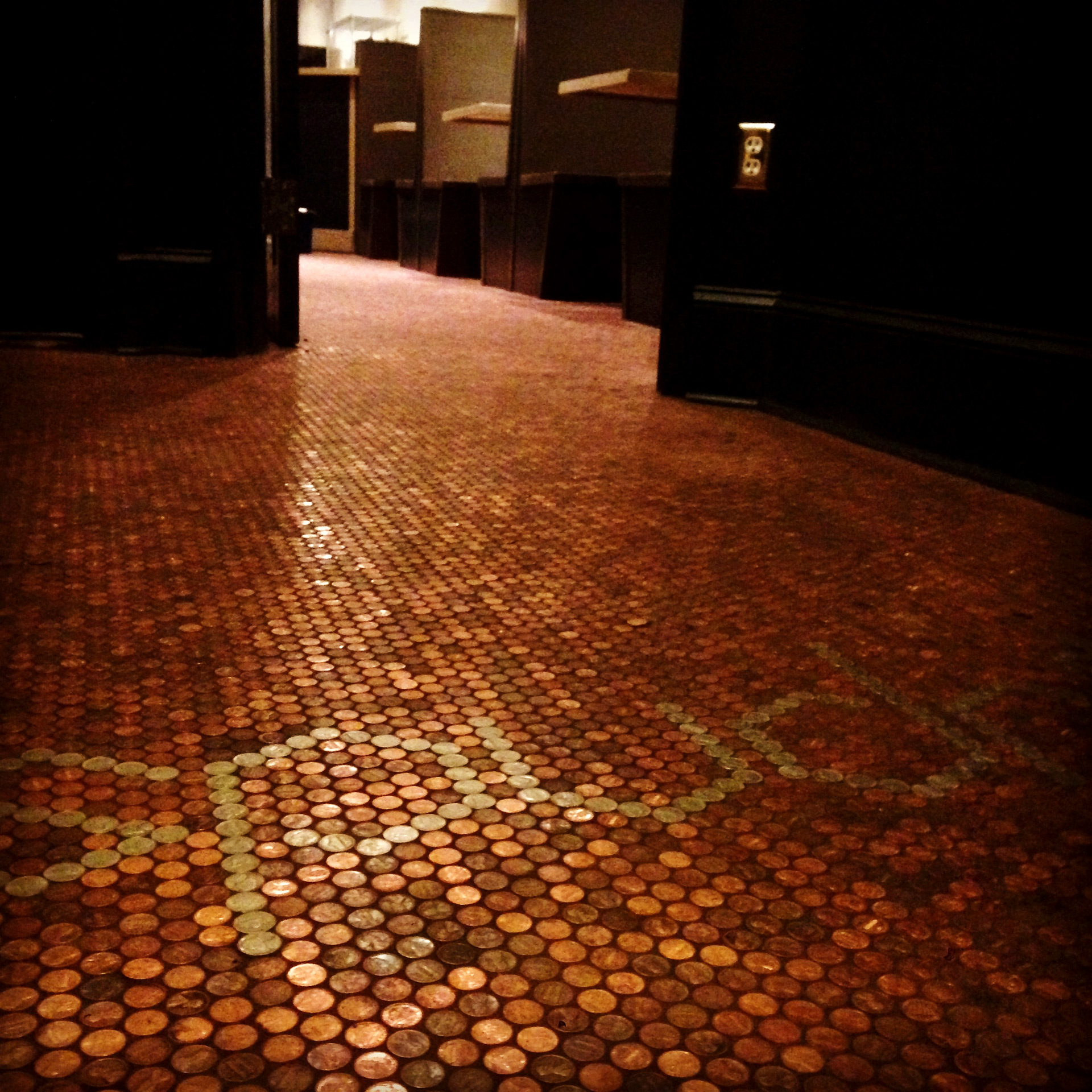
Floor made out of pennies

SCAD: Where did the concept for Spudnik emerge?

WANAMAKER: My best friend, John Croley (B.F.A., animation, 2006), owns Planet Fun, and when it originally opened, we did all the work ourselves. It took a lot of hard work — tearing up carpets, building walls, painting, etc. The place was full of 30 years' worth of junk, too, including an empty box from the '70s for frozen, microwavable twice-baked potatoes. We were so tired and hungry that day, and the graphics on this box were so appealing, that we just wanted a huge twice-baked potato. But you couldn't get that in any restaurant in Savannah. You can't get that anywhere, actually. But it was an interesting idea, so I just kept that in the back of my mind as I finished my senior year and earned my Master’s in Architecture. Eventually, we were driving down the road and I realized you could put salsa, or BBQ, or really anything on a potato and it would probably be delicious. It was the epiphany that really solidified Spudnik as a restaurant concept.

SCAD: Turning an idea into a business is no small task. What happened next?

WANAMAKER: I didn't tell any of my classmates my exact plans after graduation, but I dropped cryptic hints about a business I was starting. People occasionally guessed something close. The best question I remember was, “Can you put it in a jar?” I said, "Yes, I suppose you could."

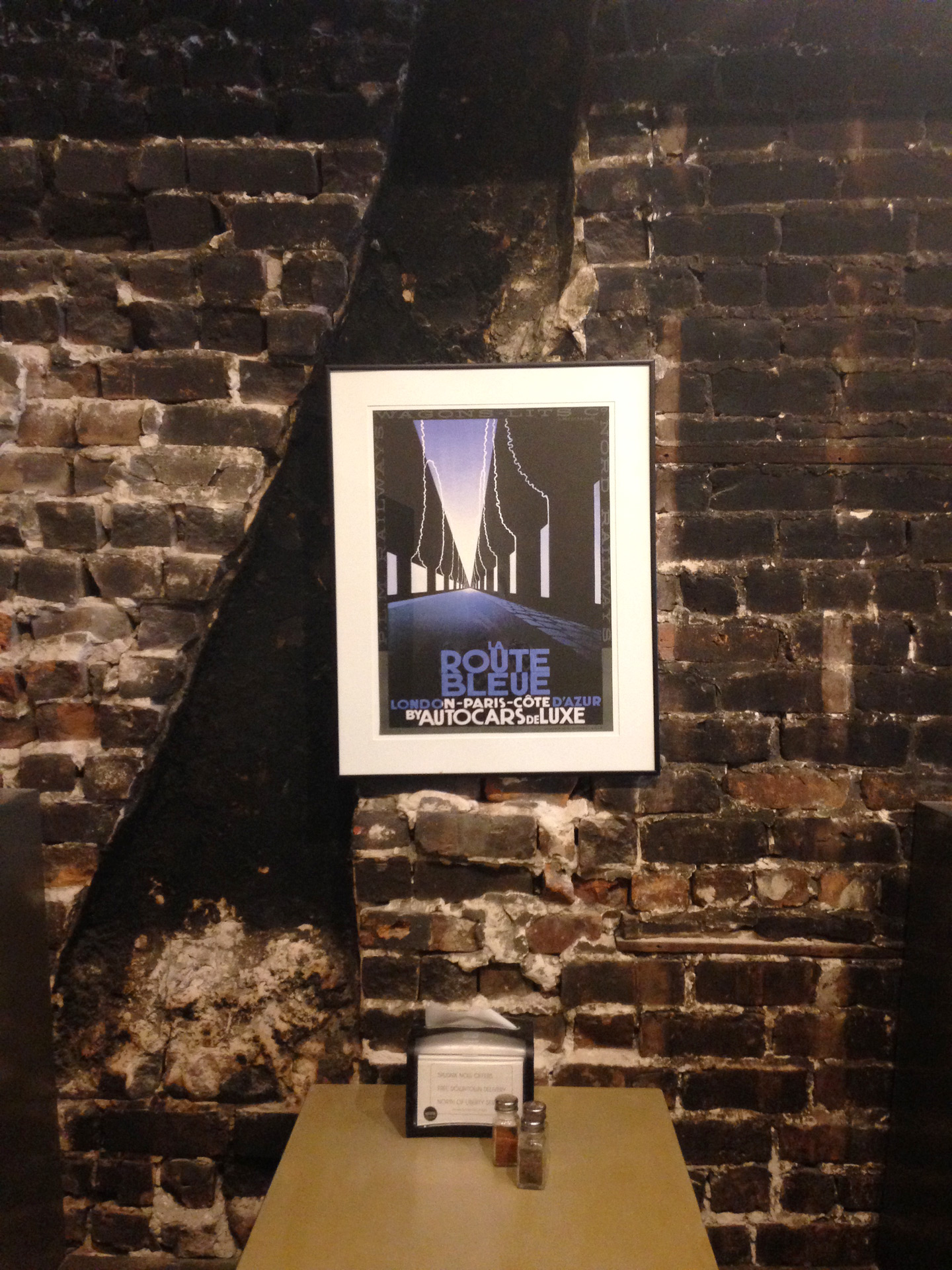
While finishing my last quarter of grad school, I started searching for locations on Broughton Street. Construction took much longer than it was supposed to, though. We still weren't open in time for the 2013 commencement ceremony. Moshe Safdie was the commencement speaker that year, and he actually offered me a job! He saw my thesis model — a BMW showcase and museum set in downtown Manhattan —on display at Clark Hall and wanted to hire me. But I was already so heavily invested in Spudnik. Although you never know; maybe we could plan a future collaboration!Inside Spudnik

SCAD: The space and visuals have a great vibe. How did the Spudnik brand originate?

WANAMAKER: Good design is of paramount importance to branding. How do you communicate complex ideas successfully? How do you create brands that resonate emotionally with people? Most restauranteurs, and even businesses, don't come from a design background, and you can often tell. SCAD allowed me to create Spudnik with a strong branding foundation in place, which will continue to reap dividends as we grow from a single restaurant into a chain. I'd like to have a space on the Southside of Savannah before too long, and maybe up to Boston or New York in a few years.

SCAD: How did you know potatoes would be such a success?

WANAMAKER: Who doesn’t love potatoes?Their simplicity allows for a ton of creativity. For example: from October to December, we have a seasonal specialty called "The Gobbler." It's a potato bowl with roast turkey breast, gravy, stuffing and cranberry jelly. I would eat one every day, except I'm scared I would somehow get bored with it. So I eat it every other day. I'm not joking. October can't come soon enough.

Happy National Coloring Book Day!

August
2
2016
By
Tags:

Emily Isabella (B.F.A. fibers/textile design) may be familiar to you from her evocative illustrations for SCAD President and Founder Paula Wallace’s memoir The Bee and the Acorn (Assouline Books), or the playful panoply of work she has created for clients including Anthropologie and Birch Fabric. With the recent publication of her Iconic New York Coloring Book and Iconic Washington D.C. Coloring Book, Isabella spoke with SCADworks for National Coloring Book Day.


Me. Today. Minus the lipstick.

A photo posted by Emily Isabella (@emilymisabella) on

SCAD: What inspired your new coloring book series?

Isabella: The publisher, Artisan Books, approached me about doing this series. The New York and Washington, D.C. coloring books are available now. Paris and San Francisco are in the works and will be released this fall.


My latest project with @artisan_books - coming soon to a bookstore near you!

A photo posted by Emily Isabella (@emilymisabella) on

SCAD: Why use major cities as subjects?

Isabella: Artisan is marketing the series towards tourists and museum gift shops. Each coloring book page is also a postcard that can be torn from the book and mailed while you're visiting that city.

SCAD: What do you think about the current cultural enthusiasm around coloring books? Should we have never given them up in the first place, or have we just been needing coloring books to grow up with us?

Isabella: I'm thrilled about the resurgence of coloring book enthusiasts! What a great way to decompress, break from screen time and reconnect with our creative brains.

SCAD: What is your most used color?

Isabella: I'd say, vermillion and shell pink.

SCAD: Were you into coloring books as a kid?

Isabella: It's ironic that I'm working on so many coloring book projects lately because growing up coloring books were sort of discouraged in my family! My parents are both artists and always encouraged us to start with a blank sheet of paper.

SCAD: Do you think coloring for all ages is here to stay?

Isabella: I hope so!


Header image illustration by Emily Isabella for Everyone Loves New York by Leslie Jonath (teNeues Publishing Group).

From Skopje to SCAD: Rising Star alumna Monica Benya

July
29
2016
By
Tags:

Rising Star, the annual five-week summer program that awards college credit to rising high school seniors, recently concluded in Savannah, Atlanta and Hong Kong. The program is attended by hundreds of students across SCAD locations — students like Monica Benya, who completed the program in 2014 and is now an interactive design and game development major in the SCAD Class of 2019.

Rising Star Monica Benya

SCAD: Tell us about your journey to SCAD.

MONICA BENYA: I spent the first few years of my life in Romania then moved to Macedonia until second grade, when I first moved to America. At the end of the eighth grade, we moved back to Macedonia.

I remember attending a college fair in Macedonia and seeing a booth for SCAD. I was already interested in SCAD, having heard about it when researching top animation and game design schools. So I immediately went to the booth and saw a packet for Rising Star. The second the program was explained to me, I was hooked. I went home and applied and eagerly waited to hear back. The next thing I knew, I was flying over an ocean to get to this exciting program.

After the first two weeks at Rising Star, I knew SCAD was the school for me. It valued hard work and created a culture that celebrated discipline and limitless possibility. After the program ended, I didn’t apply to a single other university.

SCAD: What was your experience like at Rising Star?

BENYA: I was constantly stimulated by the students, the faculty, the staff, the events and the environment. I stayed at Turner House and loved it. My roommate was an instant lifelong friend, my hall was a family away from home, and my classmates were a community of driven young students that never hesitated to help each other. I was thrilled to attend what I consider the most transformative program of my life.

SCAD: How did Rising Star help you excel as a SCAD freshman?

BENYA: I came in with about a year’s worth of credits, thanks to Rising Star and eStar, and this gave me a year to play with. I could choose to graduate in three years, try out different majors, or use that year to take interesting classes outside my major. I chose the latter. Moreover, I was accustomed to SCAD and the campus. It made me feel I was returning to an amazing place rather than going into the unknown. I already had deep bonds with many students, faculty and staff. Rising Star helped me to hit the ground running.

SCAD: What is your advice to students considering Rising Star?

BENYA: If you want to see how much five weeks can change your life, apply for this program. One application, five weeks, and endless memories later, you will get a peek at your creative potential and be amazed at what you can achieve. You learn that effort is never wasted, success is contagious, and that you are not alone in your artistic pursuit. After finishing Rising Star, for the first time in my life, I was confident in my choice to turn my art into a career without fear of failure. I am no longer afraid of not succeeding, because starting at Rising Star taught me how to make success accessible.

Learn more about pre-college programs Rising Star, SCAD eStar, SCAD Summer Seminars and competition opportunities here.

Taking queues from SCAD Themed Entertainment Design

July
28
2016
By
Tags:

Hey theme park fans: Ever bide time in a line that blew your mind?

While the idea may sound antithetical to the thrills of a corkscrew 'coaster, amusement parks are increasingly dedicated to making the waiting-to-board process a superlative experience. The Themed Entertainment Design (THED) program at SCAD is at the forefront of improved queue-line conceptualization, as illuminated in a brand new piece by industry-leading journalist Arthur Levine.

SCAD THED offers both a Master of Fine Arts degree and a minor concentration. Program alumni currently work across the industry, from show production to exhibit design, at companies including Walt Disney Imagineering, Herschend Entertainment (Dollywood, Silver Dollar City), and Universal Studios Theme Parks.

“Themed entertainment ultimately encompasses more than theme parks,” explains Gregory Beck, dean of the School of Entertainment Arts. “It includes resorts, hotels, museums, and visitor attractions, which can all involve lines. Our Queue Line Design class directly addresses the experience of waiting in line, and how it can ultimately enhance the guest experience.”

Next time you’re in line — whether at Disneyland or the DMV — think about how your time can become something sublime.  

Alumna Bojana Ginn’s process-driven presence

July
20
2016
By
Tags:

Bojana Ginn (M.F.A., sculpture) lives a life full of twists and turns, having made the transition from M.D. to M.F.A., and Eastern Europe to the American South. After growing up in the former Yugoslavia and working as a physician in Belgrade, Serbia, she was drawn by a research opportunity to Atlanta, where she chose to pursue a creative career at SCAD.

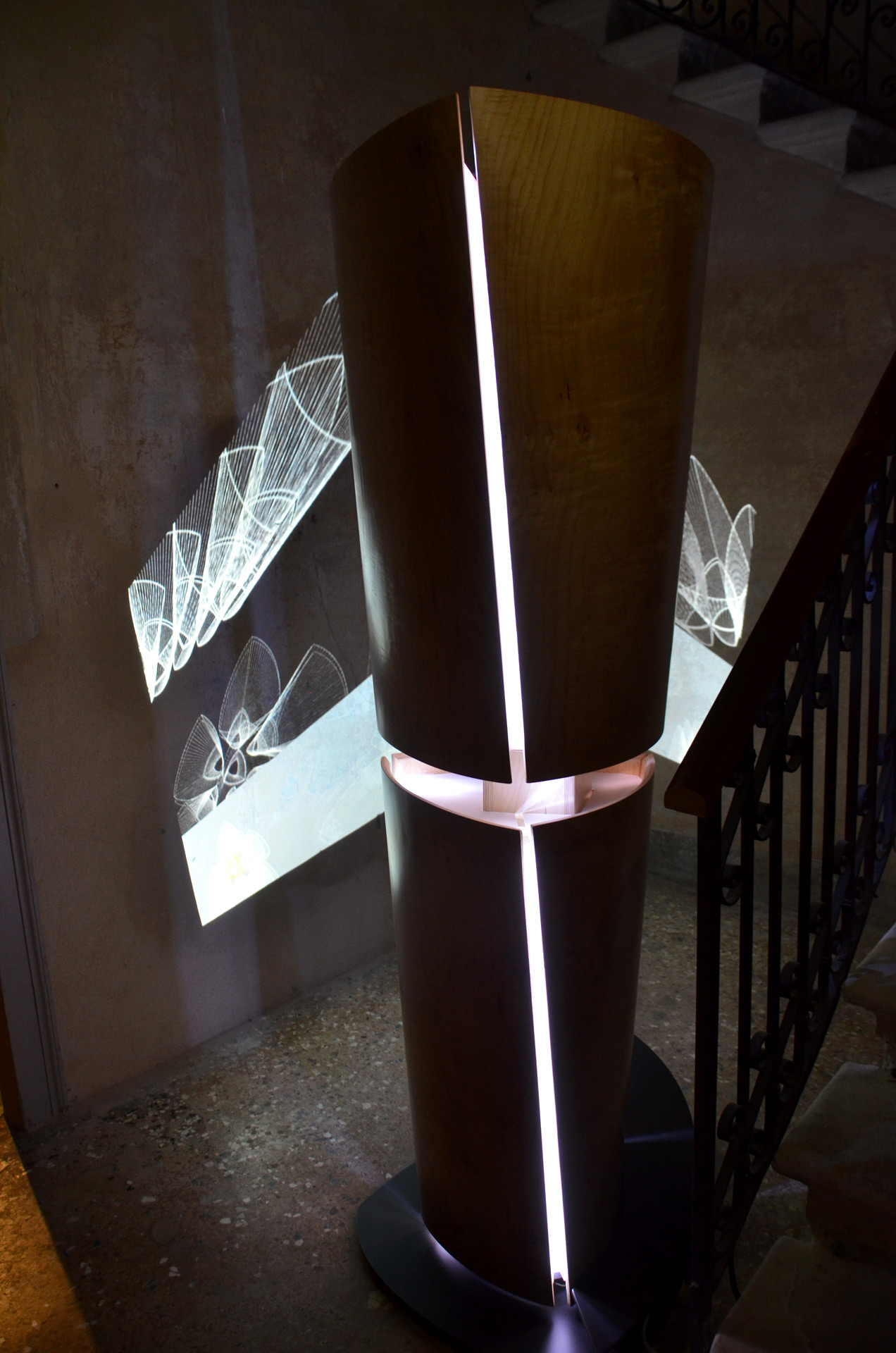
Recently Ginn’s artistic adventure took another tack, when she was invited to collaborate on a work entitled “Presence,” featured at the Palazzo Mora as part of the prestigious 2016 Venice Architecture Biennale. The exhibition, sponsored by the European Cultural Centre, will be on display through November. For “Presence,” Ginn created a video paired with a beautiful wooden structure by architects Morgan Strickland and Nick Cusimano, working with William Carpenter and his Decatur-based design firm Lightroom.

SCADworks spoke with Bojana about the project, her time at SCAD, and how her background in the sciences influences her work.

Alumna Bojana Ginn

SCAD: Can you describe the piece for us?

BOJANA GINN: The video focuses on the creative process. The name of the exhibition is “Time, Space, Existence,” so we were both thinking about what that means for both of our practices. I work a lot with the subject of creativity, which is the essence of human existence. The video exposes the creative act. The viewer can see the line being manipulated in time. The dots are connected, the shapes emerge and dissolve and the process of visual thinking becomes the work itself. 

SCAD: How did you transport “Presence” to Venice?

GINN: That was interesting because it was a large piece. Instead of shipping it, which would have been very expensive, we decided to pack it up and bring it in very large suitcases. I brought all my equipment in carry-ons: the projector, cables, and video player. From the airplane, we moved the work onto a gondola and transported it via the canals of Venice to Palazzo Mora. It was a very adventurous process. When we came to the site, we were able to assemble it in three hours. Everything worked out perfectly.

SCAD alumna Bojana Ginn's scuplture

SCAD: What did you most enjoy about your SCAD experience?

GINN: The faculty at the sculpture department at SCAD Atlanta were absolutely wonderful and created a safe, supportive, informative environment. I was able to become the artist I wanted to be. My positive SCAD experience is thanks to these people.

SCAD: How does your previous experience as a scientist influence your work? 

GINN: How it influences my work is different in each project. Generally, it’s the scientific methodology and the context of that knowledge. When you learn something for many years, that knowledge influences the way you build and the way you see an object. Scientists always zoom in on the micro-structure of nature and then expose a certain process. You want to see how things work. And that is how I build my videos: by zooming in, by abstracting and exposing the process of the creative act. My videos are drawings in action.

SCAD: What advice would you give to SCAD students?

GINN: The creative process is a magical thing, and I would encourage anybody just to work hard. You never know where your next opportunity is coming from.

Alumna earns her stripes with SCAD FASH zebra sculpture

July
18
2016
By
Tags:

What’s black and white and seen at SCAD FASH? A much-ballyhooed, life-size zebra created by SCAD alumna Emily Nelms Perez (B.F.A., painting)! The zebra stands amid a selection of dazzling garments at the “Carolina Herrera: Refined Irreverence” exhibition at SCAD FASH, adding whimsy to the show while accentuating the couture.

SCAD: What was your approach to creating the sculpture?

EMILY NELMS PEREZ: My first thought was that I was actually a little nervous to do the project because my personal work is figurative, contemporary sculpture. Carolina Herrera was showing a collection of her black-and-white gowns, and SCAD wanted a zebra to accompany the exhibition. I approached the project by trying to make a zebra that would complement the dresses in the best way.

SCAD: How did you design the sculpture?

PEREZ: I built my forms in Rhinoceros 3D, and from there I took it into a program called Pepakura, which is used mainly by gamers to create gaming suits. I used that program to cut up the model and create puzzle pieces and lay them out on sheets of cardboard. Then I set it up back into Rhinoceros to be prepped for laser cutting.

It also went through Adobe Illustrator. In Illustrator, I coded the lines to let the laser know what to do. I coded each line to be either a mountain line or a valley line, depending on what kind of fold I needed. Ideally, when you get your files back from your laser cutter, you have hundreds of puzzle pieces with all the lines marked properly.

SCAD: What materials did you use?

PEREZ: With commissions and public art, the goal is to make it as big as possible, but light and durable, too. It’s like building a very large 3-D puzzle. The interior is half hollow and half solid. From the shoulder of the animal to the belly and the legs, it’s all solid, with wooden dowels.

The zebra is made of paper and cardboard. I covered it with a non-toxic, water-based resin five times. That material creates a cement-like compound on the surface and solidifies the paper on the inside. If you touch the zebra, it feels solid. It’s pretty strong and super lightweight.

SCAD: What was it like seeing your work at the opening?

PEREZ: It was with a great sense of pride. I love working with SCAD — they’re so good to their students!

“Carolina Herrera: Refined Irreverence” is on view at SCAD FASH through September 25, and through September 4 at SCAD Museum of Art.