Skip to main content Accessibility Policy

By George: Vedder's 'Blunt'

April
3
2026
By
Tags:

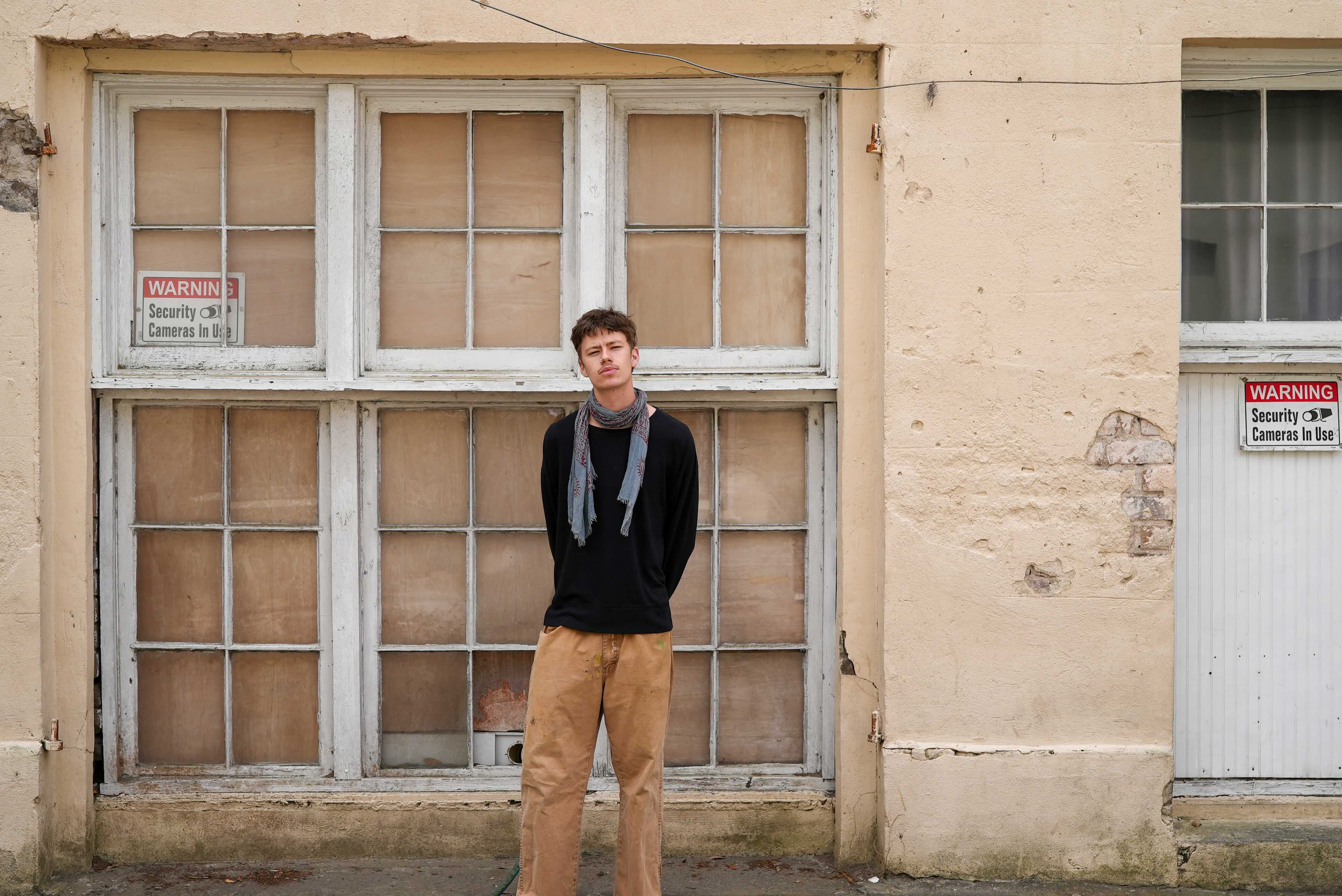
On a recent spring morning, George Vedder (B.F.A., writing) leaned across a table on the patio of a new bakery-café in Savannah. "There's a narrative you can tell through food," he said. "The more determined the restaurant, the more they're trying to tell a story with their menu."

Vedder turned a mesclun leaf over in his hand, admiring the play of sunlight upon vivid green. "I feel like Sixby is trying to tell a story about making a connection to the roots of nature, so it makes sense for us to eat outside." He popped the salad in his mouth.

Over the course of a highly enjoyable, hourlong meal, the writing student analyzed the pickled shallots, the sunny setting, the intentions of the establishment itself. It was a thoroughly modern moment, and a flavorful précis of the prodigiously productive young Vedder: journalist, cook, and publisher of the brilliant food magazine Blunt.

BLUNT cover shelf

Shelf life: the nourishing first issue of Blunt. 

"I've been working as a line cook since I was 15," George said, offering his culinary origin story. "The kitchen was the first thing that ever really put its arms around me. I felt like I mattered there."

Vedder has spent the past fifteen months as a line cook at acclaimed Savannah restaurant The Grey, renowned as the proving ground of James Beard Award-winning chef Mashama Bailey. "The Grey, to me, was what the green light across the river was to Gatsby, know what I mean?" he said.

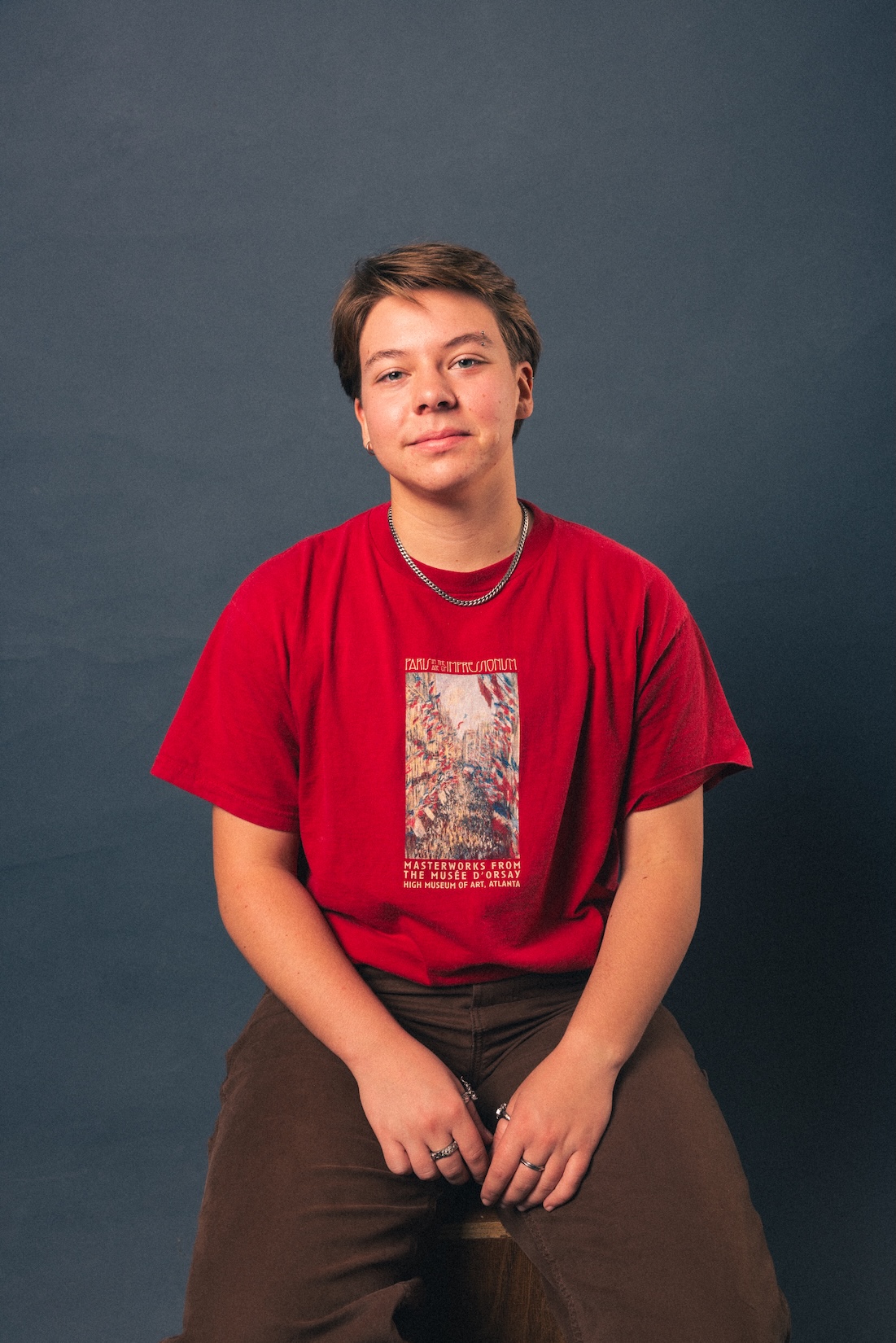
On a mild morning, George was wearing an impressively tattered Death Grips T-shirt. This did not eradicate the fact that, as a teenager growing up in central Minnesota, he was a member of world-renowned The St. John's Boys' Choir. (He spent the early, "free range" part of his childhood in Waipahu, Oahu, Hawaii.) After arriving at SCAD three years ago to study fashion, he got jumped into the writing program by novelist and faculty stalwart Jonathan Rabb, who had noticed Vedder's talent for arranging words on a page.

"George brings remarkable discipline to his approach to writing, which stems from his willingness to dive deep into technique, even when that might seem counterintuitive," said Rabb. "George loves the puzzle of writing and is always looking to solve it. Add in his effortless control over language and you have a remarkable writer."

Alongside his full slate of academic classes, editor-in-chief Vedder has published the debut issue of Blunt (available locally at E. Shaver and Coastal Table and Tales), bursting with exceptional art direction, full-color photography, and writing (including George's two-page soliloquy on SPAM Musubi).

"Blunt came from what I felt was a lack of representation of the realities of the food industry for line cooks. What I wanted to accomplish with the magazine was to tell the stories of the unknown, back-of-house sector. I want readers to see the hands of the people in the kitchen."

Asked if the physical act of cooking aligns with the tactility of making a magazine, Vedder nodded, then furthered the notion: "Food lends itself to writing, and great food writing is, inherently, truly great writing."

The hour wound down. Having long ago finished his salad, George took a lingering look at the remains of his breakfast companion's jammy egg sammy with its benne seed bun.

"That is indeed a good sandwich," he said with a smile. "The bun is my favorite part."

George Vedder portrait

Connect with George Vedder on LinkedIn.

Buy Blunt.

Vedder photo: Sage.

Lydia Wollard: smells like zine spirit

December
1
2025
By
Tags:

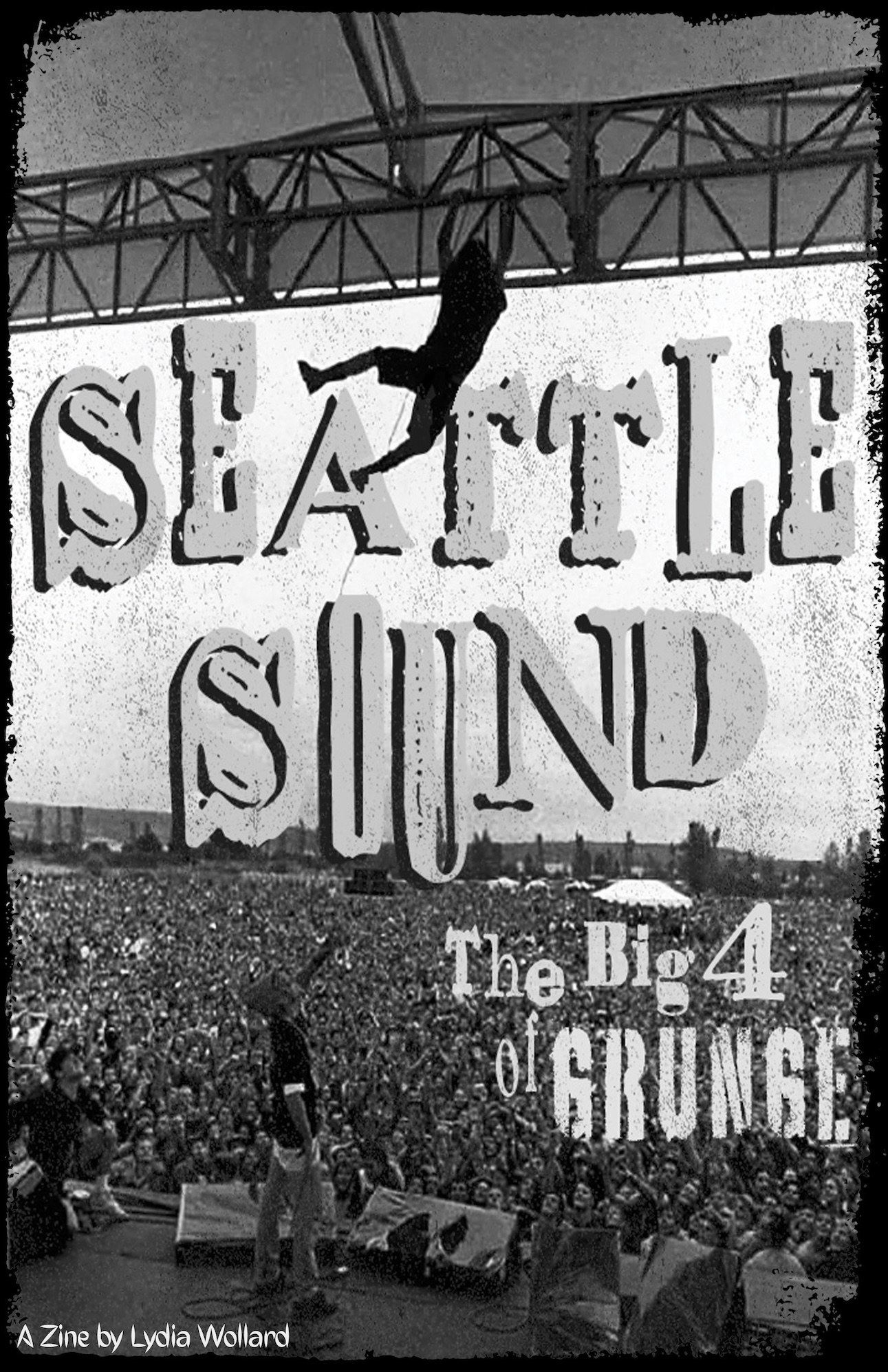
Eddie Vedder's swinging from the scaffolding. An unwashed horde of fans roils behind him. It's a classic, unhinged moment from Pearl Jam's performance at the 1992 "Drop in the Park" concert in Seattle's Magnuson Park. The image graces the cover of "Seattle Sound: The Big Four of Grunge," a zine written and designed by second year student Lydia Wollard (B.F.A. writing).

"It's a photo by Lance Mercer, a prominent photographer of the Seattle scene from the nineties. He was close with Alice in Chains and he took that photo of Eddie Vedder and Pearl Jam, and I knew I had to use that picture on the cover of my zine, because it represents the ethos of grunge, and doing what you want," Wollard says. "My zine explains why grunge was important, that it's more than an aesthetic. That was my goal."

Wollard zine cover

Come as you are: the cover of the zine.

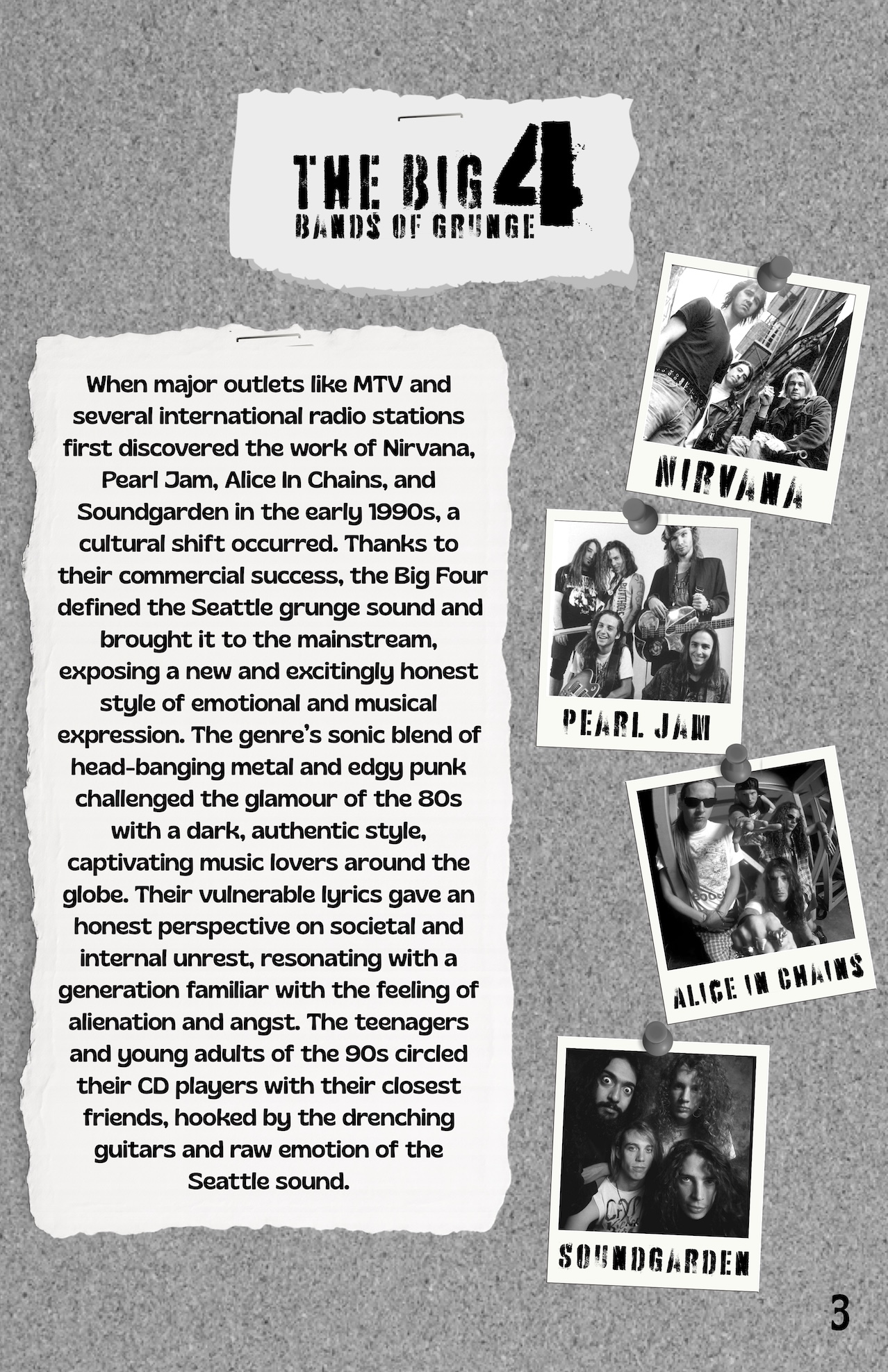
Generational change surged through rock music at the dawn the 1990s, when the insipid poodle metal of the eighties was obliterated by bands charging hard out of the Pacific Northwest. The music of those bands — Wollard's zine focuses on four key acts — resonates decades later, as she writes in her opening essay: "As I grew up in the early 2000s, my folks frequently introduced me to the hits of Soundgarden, Nirvana, Alice in Chains, and Pearl Jam. [...] When I reached high school and began exploring music with my closest friends, I fell in love with grunge's vulnerability and intensity."

Professor Tish Hamilton taught Wollard in Writing for Arts and Entertainment (WRIT-205), the ten-week fall course where the zine was created. "I launched the Zine Project to give my students the opportunity to understand content creation and execution, from idea to finished product, and from the jump, Lydia excelled," Hamilton says. "Lydia's writing is conversational, cogent, and convincing, and her design, type treatment, and visuals perfectly complement the grunge scene." (It's worth noting that prior to teaching at SCAD, Hamilton was an editor at Rolling Stone, and experienced the grunge era firsthand.)

"On the first day of class, Professor Hamilton mentioned zines, and I was like oh, this my moment," Wollard says. "When I came to SCAD, I initially thought I'd major in graphic design. Then I became a writing major, and making this zine I was able to use those passions and blend them."

Grunge big four

Here we are now: a page of Wollard's work.

Across 20 punchy pages, "Seattle Sound: The Big Four of Grunge" features a timeline, song recommendations ("Your Grunge Prescription: Seven Tracks for the Emotions You Can't Escape"), an analysis of Soundgarden's "Black Hole Sun" music video, and original reporting including an interview with drummer Mark Vaquer of Rody's Records in Savannah.

"I had a checklist of every piece, and went through every single one, dissecting it, ripping out unnecessary stuff, took my classmates' and Professor Hamilton's notes, and edited and edited and edited, listening to grunge the whole time. When I got sick of Alice in Chains, I found Mudhoney, and Green River, and then I ended up on, like, Temple of the Dog and Audioslave."

At the end of the quarter, WRIT-205 students brought their completed, printed zines to class to share and judge. "Lydia's time, care, and dedication showed, and her peers easily voted her zine as the winner," Hamilton says admiringly.

Readers of a certain age may likely recall the moment they first heard Nirvana's "Smells Like Teen Spirit" — a song that once usurped classic rock, only to become classic rock itself. After this aging fan bestows an original grunge generation seal of approval on Wollard's zine, its creator offers fresh perspective: "Every generation experiences something that came before them, and they don't make it like that anymore. That's how I feel about grunge, and that's what makes it so special."

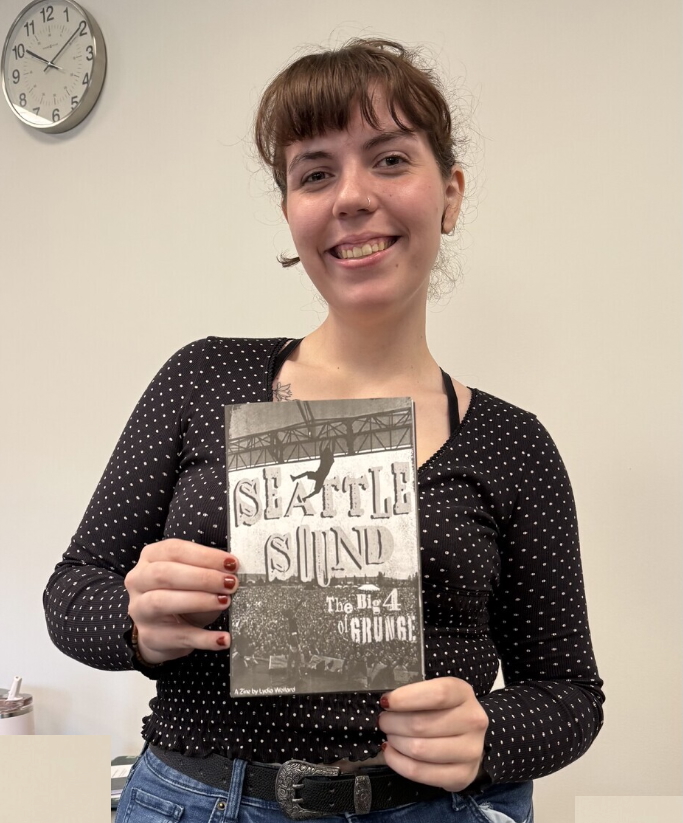
Lydia Wollard color zine

On a cobweb afternoon: connect with Lydia on LinkedIn and check out her SCAD Radio show "Tune Den."

Logan Kilde: writing on the edge of glory

February
19
2025
By
Tags:

On a Wednesday evening in fall quarter, 2023, Logan Kilde (B.F.A. writing) sat beside the midge-combating high-grade industrial fan in the observational tower at the SCAD Athletics Complex in Hardeeville, S.C., busily entering the final stats for another win by the women's soccer team. Then a realization struck: "I realized they had an undefeated season going."
 
It was a scoreboard light bulb moment. The junior from Albemarle, N.C. decided to act fast: "I interviewed the coaches and wrote the article immediately, I was just so excited."
 
The resulting 450-word piece "SCAD Women's Soccer Coaches: It's all about bravery, relentlessness, and classiness" (published by SCAD District on Oct. 17, 2023) had the frisson of prediction: last year, the team won the NAIA women's soccer national championship for the first time in program history. The experience also changed Kilde's academic path: they switched majors from film to writing.
 
"I originally got involved in SCAD athletics just to have a part time job," Kilde says. Fortunately, that meant being hired as a student assistant to sports information director Colena Roberts. "Colena is the best, and it's really about SCAD athletics as a whole because almost every person there in a leadership position is a woman. It has changed my experience working with sports."
 
"Logan is one of the hardest working student workers I have ever had," Roberts says in typically frank fashion. "When they switched their major to writing, we began discussing how to integrate their studies into what they do for SCAD athletics. Logan had the idea to write about our student-athletes, and has gone ahead and did that, finding the athletes to write about, interviewing them and posting the stories on our website. What Logan does is so important."
 
Kilde's first profile, of Sun Conference All-Academic lacrosse standout Emma Roch, used techniques gleaned from courses in the writing program: Story Research (WRIT 285) with award-winning novelist Jonathan Rabb, and Writing for Arts and Entertainment (WRIT 205) with former Runner's World executive editor Tish Hamilton.
 
Hamilton is teaching Kilde again this quarter in Professional Freelance Writing (WRIT 353). "Logan is curious about the world, attentive to details, and committed to accuracy, which are qualities every professor hopes to see in a budding creative nonfiction writer and arts journalist," says Hamilton. "I admire Logan's fearlessness and commitment to bringing the skills learned in SCAD writing classes to the page with clarity and elegance."
 
In recent weeks, Kilde has penned perspicacious profiles of student-athletes from the cross country, equestrian, and bowling teams, in each instance illuminating what makes SCAD athletics unique.
 
"I believe that sports and art and design have an interesting connection, and that's one of the things I like writing about," Kilde says. "I am fascinated by SCAD athletes and their schedules and their respective sports and how it all ties into the creative work they do."

Glory awaits.

Logan vert

Connect with Logan on LinkedIn.


Running on sentences

August
11
2023
By
Tags:

For this writing professor, summer reading hits different.

Talking over iced chai on a leafy patio, Tish Hamilton mentions Angels on Toast by Dawn Powell, Zora Neale Hurston's Their Eyes Were Watching God, and How the Word Is Passed by Clint Smith, as well as the sonnets of Terrance Hayes and recent magazine profiles of Tom Hanks, Sharon Olds, and Lizzo. For Hamilton, reading for pleasure and edification is indivisible from building challenging classroom syllabi.

"Media literacy is part of a writing degree," says the professor, who joined SCAD Savannah's writing faculty in fall 2022. "That means being able to recognize what to invest your intellectual and creative energy in."

Hamilton brings river-deep, mountain-high professional experience to SCAD. She excelled as an editor at publications including Rolling Stone, Outside, and Sports Illustrated for Women, and led for a decade-plus as executive editor at Runner's World, where she penned an incisive profile of Olympic marathoner Kara Goucher. Hamilton—who has completed 56 marathons herself and co-hosts the podcast Another Mother Runner—is in it for the long haul.

"Running, like writing, requires discipline, endurance, and great stretches of time alone," she says. "Then you come together, whether that means running the New York City Marathon with fifty thousand other people or showing up to class with your peers and your professor to workshop your draft and get feedback."

School of Liberal Arts Dean Kate Newell emphasizes the value of Hamilton joining the department. "In just one year at SCAD, Tish has achieved the status of ‘much beloved faculty member,'" says Newell. "Students love her humor, positivity, and ability to translate her professional expertise in the classroom. For our writing majors pursuing careers in multi-platform journalism, editing, and story research, Tish is genuinely invested in their success, and they feel that connection, support, and authenticity."

This fall, Hamilton will again teach Writing for Emerging Media: Storytelling in the Digital Landscape (WRIT 355) and, for the first time, Writing for Arts and Entertainment (WRIT 205).

"What I love about teaching is helping people uncover their best writing selves," Hamilton explains. "That means understanding where there could be more metaphor or revelation or where the writing can be tightened up and still be true to their voice and vision."

Hamilton's classroom process begins by her witnessing "how my students are reacting to storytelling. We talk about multi-media stories, and how to use audio, graphics, slideshows, and maps to enhance the reading experience. We talk about how to do what surrounds the story in a way that complements, but is not redundant, and makes sense for the medium."

A natural classroom rapport is helped by a certain familiarity: Hamilton raised a digital native of her own. (Her daughter Nina is now a rising sophomore at Barnard.)

"I'm focused on teaching students how to produce quality content," Hamilton says. "Whether you're doing longform journalism or creating Instagram stories and TikToks, you have to be able to do the work. True quality will win out."

Connect with writer, runner, and professor Tish Hamilton.

Where there's a 'Wil'

March
18
2021
By
Tags:

All the virtual world's a stage! Wil, a new feature project written and produced by SCAD Atlanta professor of dramatic writing Dan Rosen, will be presented via virtual reading this Friday-Tuesday, March 19-23 to benefit the Actor's Fund and the Actor's Fund Canada.

An acclaimed cast of esteemed industry luminaries have volunteered their time for the performance. The ensemble includes Eric McCormack (Will & Grace, Perception, recipient of SCAD aTVFest 2020 Impact Award), Oliver Dench (Ride, Pandora), Will Swenson (Broadway's Hair, Les Misérables, Central Park), Jonathan Scarf (Van Helsing, The Equalizer 2), Colm Feore (Thor, The Chronicles of Riddick, Chicago), Luke Humphrey, Lucy Peacock, Zuleikha Robinson, and more.

Set in 1590, Wil introduces us to 26-year-old Wil Shakespeare, a promising but floundering playwright with a wife, three children, a ballooning mortgage, and a new play that just closed on opening night at the Stratford-Upon-Avon Supper Theater. Things look bleak until Wil's trusted agent, Bernie Shylock, lands Wil his first professional gig — running the summer stock theatre program at Elsinore Castle in Denmark. Upon arriving in Denmark, ready to work out his new play Romeo & Juliet, Wil finds the royal Hamlet clan under siege by thieves and murderers looking to overthrow the kingdom. He realizes that putting on a respectable performance of the world's greatest doomed romance might be the least of his worries.

"I originally wrote Wil back in 1994 just as I moved to Hollywood," says Rosen. "Since then, I've written and directed a few films (The Last Supper, Dead Man's Curve, Freeloaders), but Wil holds a special place in my heart, and has always been my favorite script. The story is not just about a young William Shakespeare trying to break into showbusiness, but it also tells my story and all the hoops and obstacles every writer or creative person has to jump through and get around to make it in Hollywood!"

The screenplay reading will be produced by Rosen along with Academy Award winner Richard Middleton (The Artist, Hitchcock, I Love You Phillip Morris) and Kelly McCall (Big Little Lies, The Morning Show, Little Fires Everywhere). Writer and director Sara Botsford (Those Damn Canadians) will direct and co-produce, and Christopher "CB" Brown (The Strain, The Morning Show, Little Fires Everywhere) will stage manage and co-produce.

Tickets can be purchased at MuchAdoAboutWil.com for the pre-recorded Zoom performance to be shown March 19-23. All proceeds and donations from the virtual reading will be donated to The Actor's Fund and The Actor's Fund Canada to support working and performing actors whose livelihoods have been impacted by the Covid-19 pandemic. Since March 2020, The Actor's Fund has distributed over $18 million in emergency financial assistance to almost 15,000 professionals in performing arts and entertainment.

Dan Rosen

Author of Wil, SCAD dramatic writing professor Dan Rosen.


Ariel Felton, write on!

December
11
2020
By
Tags:

Ariel Felton (M.F.A., writing, 2015) is making her words matter.

In January, 2020, Felton's article "A Local's Guide to Savannah, Ga." was published in the Washington Post. When the tone and tempo of the city were changed by the pandemic, her next Post feature went deeper, addressing the role of (and response to) Black tour guides in a city where "the tourism industry is king" and history is full of discomfiting truths. Meanwhile, her essay "A Letter to My Niece" received a notable mention in the Best American Essays 2020.

A native of Byron, Georgia, Felton is currently the teaching artist and publications manager at Deep Center, the award-winning nonprofit providing free arts and leadership programs for young people in Savannah.

SCAD: What was the impetus for "A Letter to My Niece"?

Ariel Felton: I'd read Ta-Nehisi Coates' "Between the World and Me" and James Baldwin's "A Letter to My Son." I was inspired by both of them, while noticing they're written to younger men and wondering, where do the ladies come in? Racial discrimination is often compounded by gender. Sometimes having a young niece helps me think, "Thalia needs to hear this right now in the life stage she's in." I actually wrote the letter without considering getting it published. I wrote it as something I would give to her and hope she'd take something from it.

SCAD: How was "A Letter to My Niece" received by your family?

AF: I sent it to my niece and my mom and my sister before it was published. My mom told me Thalia thought it was sweet, and she said, "Your sister's okay with it being published." At the time, my mom was also okay with it being published. It wasn't until later that she was kind of worried about our family mistakes being put out there. I told her, "I don't think those are mistakes," which is really the point of the piece, that this is just living, and we shouldn't shame people for that.

SCAD: How did you choose running as the central metaphor in the piece?

AF: When I write non-fiction, my process often starts with a memory that I can't seem to forget. The writing becomes figuring out why. I'd written about my sister and me and my niece all being ten years apart, and about being a Black woman in the South, and I'd written a thousand versions of it and it just wasn't working. Somewhere in my drafts in my Google drive I had this little nugget of my mom telling me about when my niece ran away from home. When I put them all side-by-side, something finally clicked.

SCAD: How did you pitch your piece on Black tour guides in Savannah to the Washington Post?

AF: I originally pitched the piece on Black tour guides as four separate profiles that would run together. In my pitch, I was able to refer back to a previous Washington Post article about pushback from tourists in Charleston who didn't want to hear about slavery while touring the McLeod Plantation. I said here's an angle in Savannah, a city that's focused on tourism, where this issue is being addressed by Black tour guides. It was accepted, and I wrote it in April and it sat on an editor's desk for months, until the editor asked how the pandemic had changed things in Savannah and asked me to report on that and incorporate that into the story, which finally appeared in late November.

SCAD: How did you go from being a SCAD writing student to writing for top national publications?

AF: For me, it's meant returning to the roots of my undergrad journalism studies at Valdosta State, combined with elements from non-fiction writing classes at SCAD. At SCAD, I took magazine writing with Lee Griffith, business and professional writing with James Lough, and an elective humor writing class with Harrison Scott Key. In those classes, I was really able to explore my voice and how fiction and personal essay techniques can work in narrative storytelling to makes an article more compelling.

SCAD: As a Georgia native, do you feel a responsibility to tell the stories of this state?

AF: Absolutely. I love the South.

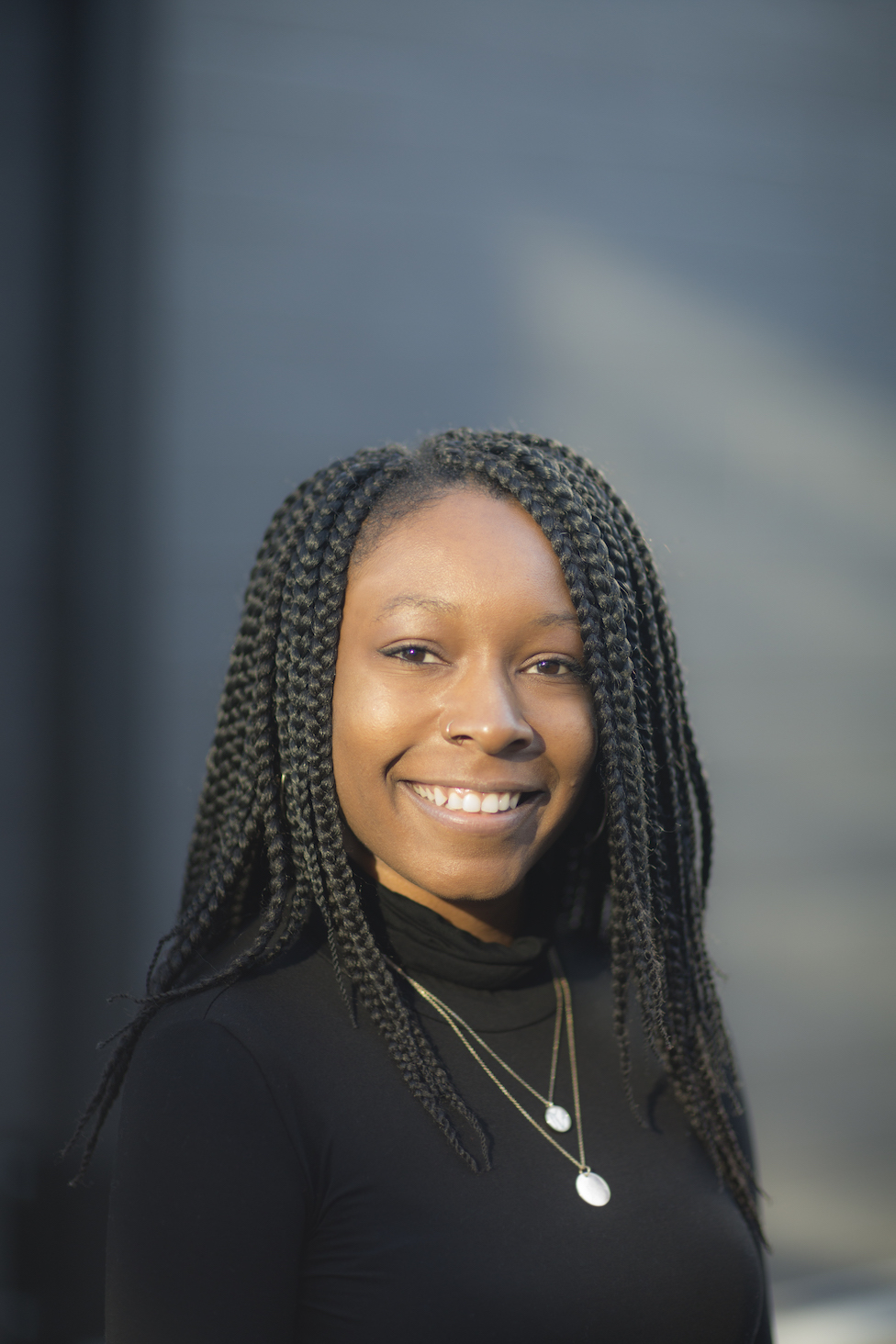
portrait of ariel felton

Visit Ariel Felton.

Black creatives 'Pass the Mic'

August
7
2020
By
Tags:

On the last day of July, the Guests and Gusto online symposium "Pass the Mic: Conversations with Black Creatives" united leading professionals for three insightful panels exploring how diverse voices impact collaboration and creativity.

The "Black Beauty Matters" panel, moderated by Julee Wilson, beauty director at Cosmopolitan, featured Linda Arrington, former global brand GM at Estée Lauder Companies; Sarah Curtis Henry, chief marketing officer at Tatcha; and Sir John, global makeup artist, activist, and producer. They discussed their formative experiences with the concept of beauty, and the actions necessary to make the industry more inclusive.

Sarah Curtis Henry: "I think of beauty as an individual art form, because it is so unique and specific to each and every person. It's a state of being, a way of holding your head high and way of walking. As a Black woman, I was taught to walk a little taller and hold my head higher because my beauty was not the standard of beauty per se. It really does come from the soul."

Sir John: "I'm not allowing brands use my blackness as a shield or as an umbrella. This is not situational. This is a revolution. These changes are a grand awakening, you know. I've been in this game for almost 20 years now and seen so many different directions, but I feel so anchored in being a truth teller. It feels good to actually speak up for people who don't have a voice."

Linda Arrington: "One of the things that I look for when I'm hiring are people who have a tremendous amount of curiosity. If you have an insatiable curiosity, you're always looking to learn. You're always looking to figure out how you can do better, be better, be smarter and beat the competition. The best advice is to really maintain curiosity and keep learning."

The "Black in Fashion" panel, moderated by SCAD professor and footwear designer Michael Mack, featured leaders in fashion sharing their experiences navigating the industry. Panelists included celebrity stylist and creative director Jason Bolden; Nicole Chapoteau, fashion market director at Vanity Fair; and Lindsay Peoples Wagner, editor-in-chief of Teen Vogue.
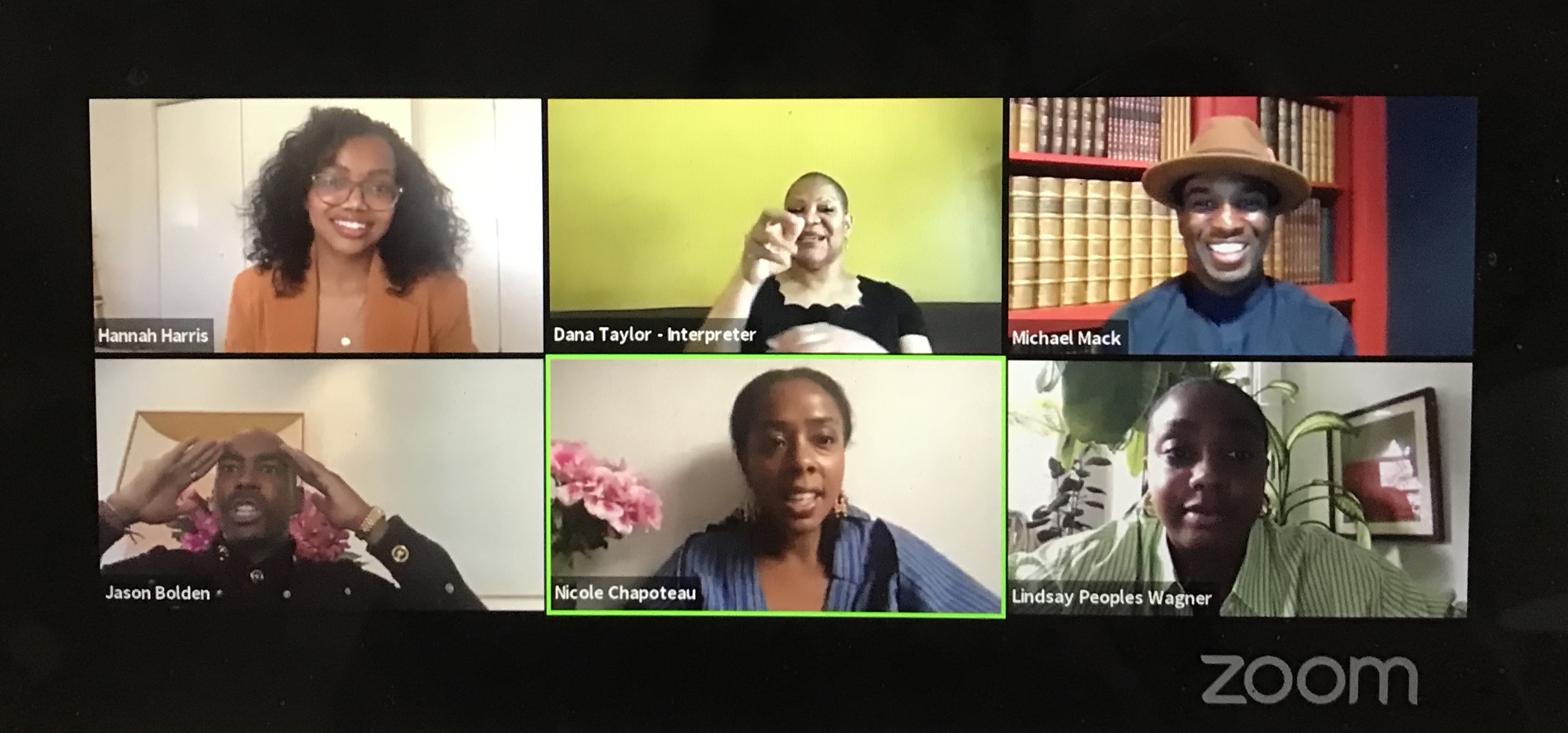
screen shot of zoom meeting

Jason Bolden: "Work ethic trumps talent. A lot of times you can be the most talented person, but if you don't have the work ethic, you fall to the wayside. You may not be the most talented designer, but if you have major work ethic that pushes through everything, those are the people who constantly rise higher in their profession."

Lindsay Peoples Wagner: "Editors shouldn't just be like, Oh, let me write up 15 Black brands because we're dealing with this time culturally right now. Have you reached out to them to try to establish a real relationship? Are you going past the performative level of saying that you're doing something? Because look, if you're not doing the real work, we're not interested."

Nicole Chapoteau: "We have to make sure this movement stays public, that it stays out there, and we have a tool now that our parents’ generation didn't have: We have the internet. You can get information out really quickly and let everybody know. We have the prime opportunity to keep it growing."

The day’s final panel, "Behind the Lens" with moderator Tiffany Reid, fashion director of Bustle Digital Group, featured director and photographer Christian Cody (B.F.A., photography, 2016);
 T. Cooper, celebrity makeup artist and founder of Major Face; and Candace Marie Stewart, social media strategist and founder of Black in Corporate. All three spoke about transformational professional experiences.

Christian Cody: "I make sure that whoever I have in front of me, no matter what their tone is, that they represent themselves. Working with Killer Mike for a GQ shoot for their new August issue, it was really great to connect with someone who has a purpose, politically, especially in the Atlanta area. I’m proud of that."

Candace Marie Stewart: "I wanted to find some way to help level the playing field. For me, it was about being in that luxury space and amplifying Black voices. I pride myself on making sure that voices that had never been heard before are able to use this platform. We deserve to have as many opportunities, resources and mentorship."

T. Cooper: "I love doing fashion shows and I love my sisters. A lot of times my team consists of all Black women. That makes me feel like I'm doing something special, because I'm adding an element that just didn't exist in fashion. And we continue to slay."

See more at scad.edu/guests-and-gusto.

 

Emilie Kefalas' "Replay"

October
10
2019
By
Tags:

"I'm inspired by the women announcers I found through this project," says Emilie Kefalas (B.F.A., writing, 2018). "Writing ‘Replay' introduced me to a whole new facet of sports."

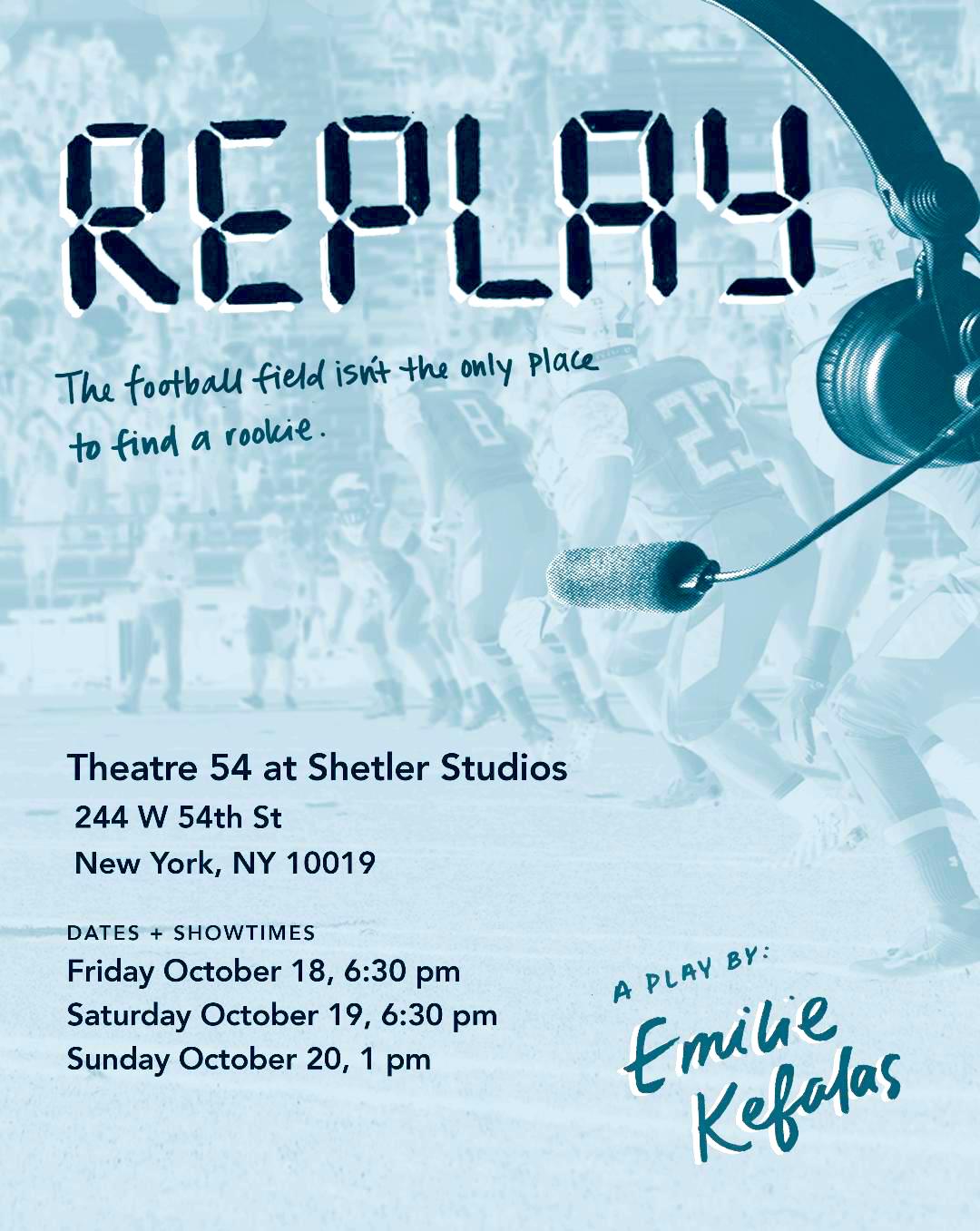
A new one-act play about a rookie sports announcer calling her first collegiate football game, "Replay" premieres at Theatre 54 in New York City, Fri., Oct. 18. Produced with the support of the Manhattan Repertory Theatre, "Replay" is but the latest of Kefalas's diverse writing credits. Formerly editor-in-chief of SCAD District, she is the author/illustrator of children's book "A Capitol Dream" (Palmetto Publishing, 2019), and currently works as external communications coordinator with Disney Parks, Experiences and Products. In a pinch she can also kick an extra point.

Emilie Kefalas:

I had the idea to write a play about rookie female sports announcer after I read a Chicago Tribune article in 2016 by the wonderful journalist Heidi Stevens, about Julie DiCaro, a host of a sports commentary radio show in the Metro Chicago area. Heidi wrote about how Julie received these abhorrent comments from men about her voice and her opinions on sports.

It was the first time I'd considered how women play a role in sports commentary. Women's voices in sports announcing are relatively rare. When you hear a woman's voice commentating on a football or baseball game, you take notice.

When I watch college football on TV, the women I see are all sideline reporters. But the idea of hearing the woman's voice I found fascinating. I researched how people react to women reporting from the broadcast booth.

Reading about their experiences and listening to their announcing on-line was really helpful. It's an art form and a craft. You have to call quickly and assess a tackle, a move. I had to train my brain to follow how they called players names and numbers and the plays themselves.

I thought, I have to write a play about this. I knew it would be a great medium to explore how people react to this concept of a woman announcer, while bringing awareness to the women in sports announcing. I dedicate the play to them and the trailblazing they have done.

As a writing major at SCAD, I took Introduction to Dramatic Writing (DWRI 101) as an elective. Due to the robust curriculum of the SCAD writing program, I graduated with a portfolio of unrivaled diversity. My SCAD experience empowered me to try all different forms of writing, including playwriting.

Having my play produced in New York feels like scoring a touchdown. It's called "Replay" because the story is told in reverse. It starts at what appears to be the end. We first see "Mags" after she's called her first collegiate football game by herself. She was supposed to be in the booth with someone, but we find out everything via a replay of what happened. I love the idea of pulling back layers of a story and making an audience think.

promo poster for Replay

Purchase "Replay" tickets here.

Photo: Angie Stong (B.F.A., photography, 2018)
Poster design: Sarah Funk

Visit www.emiliekefalas.com!


'Future Puppet News': felt so good

April
16
2018
By
Tags:

What happens when nine SCAD alumni work together on a project? Meet "Future Puppet News," a new series premiering this week on YouTube. Here to tell us more is the show's creator and director Jacob Menache (B.F.A., film and television, 2011).

SCAD: What is "Future Puppet News" and where and when does it premiere?

JACOB MENACHE: "Future Puppet News" is an educational kids show that follows a puppet news team and their time machine in the year 3000. Each week, events in the studio send our news team back to a different jam-packed point in history. The show debuts on April 19th, and you can see it on the SoulPancake YouTube channel. 


Three puppets on a news set

SCAD: What is SoulPancake?

MENACHE: SoulPancake is a digital media company and the brainchild of actor Rainn Wilson, who you no doubt remember from "The Office." Maybe you're familiar with Kid President? That was a SoulPancake production. I started working at SoulPancake after graduating SCAD. They had an open call for pitches and I presented a loose concept for "Future Puppet News." I shot a test that involved one of our characters taking a glorious trip on a majestic air vessel. Little did that character know, he was on the final flight of the Hindenburg. The SoulPancake team loved it and "Future Puppet News" was born.

SCAD: How did your SCAD experience prepare you for your professional career?

MENACHE: Being in the film program at SCAD allowed me to take control of my learning experience. If you want to learn about different positions and be on set as much as possible, SCAD facilitates those experiences. Every time I was on a SCAD student set I honed as many different skills as I could, which allowed me to communicate across departments to more effectively and easily convey my vision. More than anything, SCAD introduced me to the people who eventually helped me make the show a reality.


Two puppets talk with a scene of the moon landing behind themSCAD: How do you balance writing humor that appeals to such a wide age-range while still being educational?
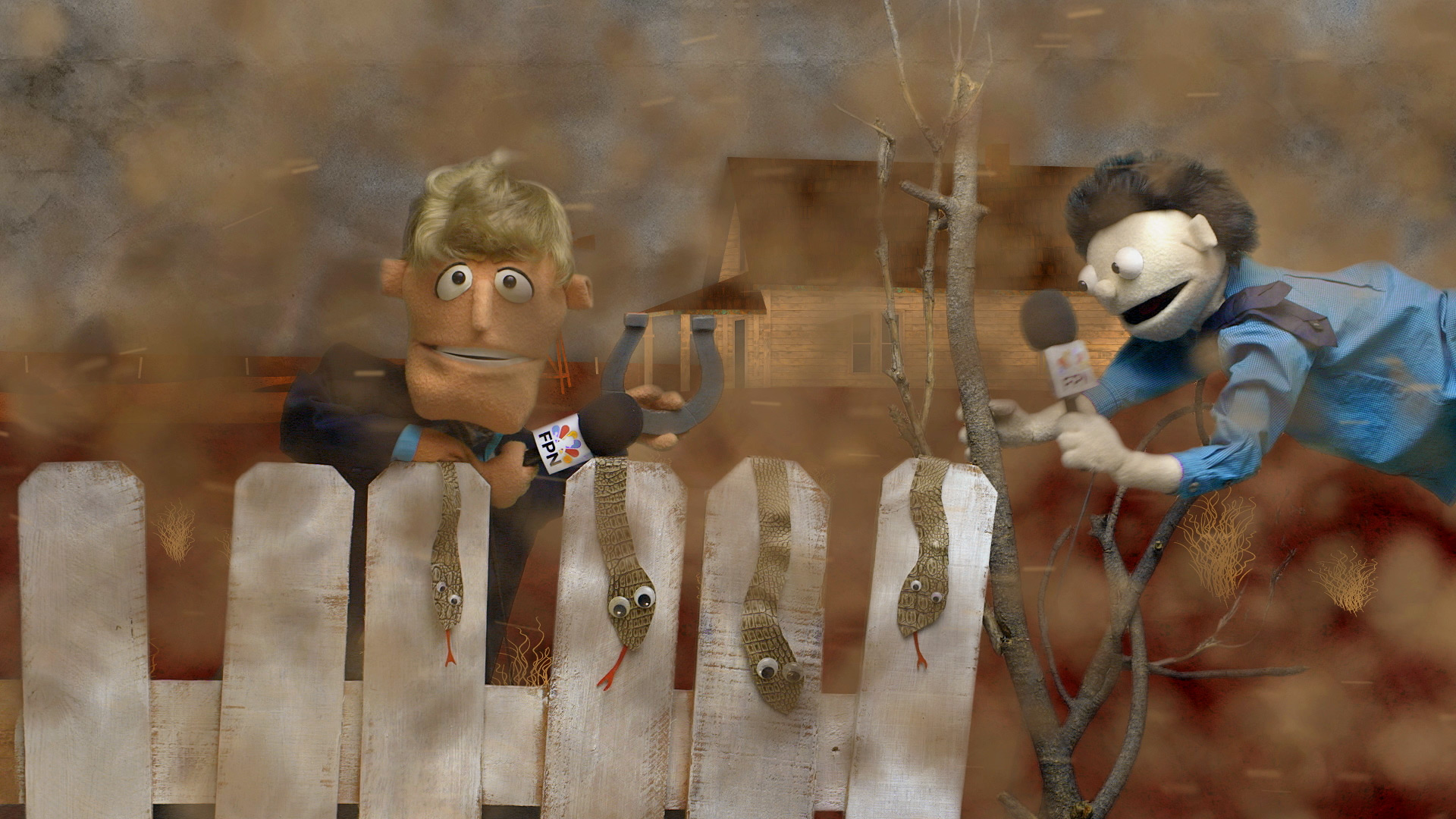


MENACHE: The humor was the easy part. We didn't want to talk down to kids, so we ended up writing what made us laugh. The hardest part was condensing big historical moments, often spanning years, into bite-sized pieces all ages could understand. In this first season we wanted to choose events like the Space Race, the Gold Rush, and the Dust Bowl that are well-known, but still contain some juicy mysteries. Some subjects were more difficult to tackle, but we had fun and sprinkled in some zany topics like "Nine Cats Who Changed History" and the story of who invented pants. In the end I wanted to create a show kids and parents could enjoy, learn from, and laugh at together.

Two puppets covering a storm, snakes appear on a fence in the foreground

SCAD: How many SCAD alumni were involved in "Future Puppet News"?


MENACHE: In total, there were nine SCAD alumni on set, in various roles:


Jacob Menache (me!), director/creator
Max Golden (B.F.A., film and television, 2011), writer/co-creator
Cody Ziglar (M.F.A., film and television), puppeteer/actor
Katelan Cunningham (B.F.A., writing, 2011), art department

Dave Cole (B.F.A., film and television, 2011), assistant direction

Adeshola Adigun (B.F.A., writing, 2013), script supervisor

Xiao Hou (M.F.A., sound design, 2015), sound design

Cindy Takehara (M.F.A., sound design, 2015), sound design

Corey Hayward (B.F.A., sound design, 2012), composer


Without SCAD alumni this project wouldn't exist. I did not set out to hire so many of my fellow former SCAD students for these jobs, but when it came down to who was best qualified it was clearly SCAD alumni.


Sylvie Simmons' top ten tips for writers

April
4
2018
By
Tags:

"Wear makeup if you're going to be a rock chick," journalist and author Sylvie Simmons said from the Arnold Hall stage, flecking her "Art of the Mind" lecture with a wry aside. A rare woman in the elite rock critic fraternity of the 1970s and '80s, and the subject of BBC documentary "The Rock Chick," Simmons saw and heard it all, wrote for music publications including Sounds, Creem, Kerrang and Rolling Stone, and lived to deliver jewel bright insights.

Simmons' lecture was an inviting, picaresque stroll through her London childhood, her breakthrough scribbling for England's weekly music broadsheets ("they called them the 'inkies' because the ink was so cheap it came off on your hands"), her stint documenting the hair metal bacchanal of '80s L.A., and the writing process behind her award-winning biography "I'm Your Man: The Life of Leonard Cohen" (Ecco Press, 2012).

A singer-songwriter in her own right, Simmons engaged in a lengthy and lively Q&A before concluding the evening serenading students on her ukulele, performing three Leonard Cohen songs, including a "Hallelujah" singalong. Simmons will join musician Jim White in performance at the Roasting Room in Bluffton, SC, Thursday, April 5.

Sylvie Simmons' Top Ten Writing Tips

  1. Persistence. That isn't required just to become a writer, but to stay a writer. If words don't come, if you're not in the mood, you have to fulfill some other function of whatever book or story you're working on. Just putting one word after another is a kind of sacrifice to the gods of words, and they'll look kindly on you.
  2. Keep rewards for yourself in the house. Cold drinks, chocolate, whatever you want, so whenever you finish your page you can reward yourself.
  3. Do not take a break to Google yourself or any other writer.
  4. Read aloud what you've written. This is very important. Sometimes people who get logorrhea write long ridiculous sentences. If you can't read what you wrote aloud then it's not going to communicate what you want to say.
  5. Fine yourself for every exclamation point and any unnecessarily pretentious word you use, then send the money to the Authors Guild, an excellent organization worth joining.
  6. Don't keep a picture of a favorite author on the wall above your desk. This is especially important if your favorite author committed suicide.
  7. If you're writing an article, make sure you cover the brief that your editor gave you (that's the outline of what the editor wants), but be sure to add the things that interest you, because that's often what the reader will want to read.
  8. Write honestly and accurately and the best you can. Don't be lazy.
  9. Write a book or an article that you would want to read.
  10. This is for career writers: Remember that writing is work. You may love your work but it's still a job. But by all means, make it seem as glamorous as possible on social media.