Skip to main content Accessibility Policy

Ariel Felton, write on!

December
11
2020
By
Tags:

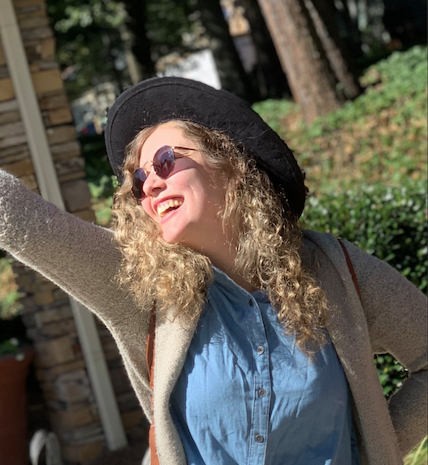
Ariel Felton (M.F.A., writing, 2015) is making her words matter.

In January, 2020, Felton's article "A Local's Guide to Savannah, Ga." was published in the Washington Post. When the tone and tempo of the city were changed by the pandemic, her next Post feature went deeper, addressing the role of (and response to) Black tour guides in a city where "the tourism industry is king" and history is full of discomfiting truths. Meanwhile, her essay "A Letter to My Niece" received a notable mention in the Best American Essays 2020.

A native of Byron, Georgia, Felton is currently the teaching artist and publications manager at Deep Center, the award-winning nonprofit providing free arts and leadership programs for young people in Savannah.

SCAD: What was the impetus for "A Letter to My Niece"?

Ariel Felton: I'd read Ta-Nehisi Coates' "Between the World and Me" and James Baldwin's "A Letter to My Son." I was inspired by both of them, while noticing they're written to younger men and wondering, where do the ladies come in? Racial discrimination is often compounded by gender. Sometimes having a young niece helps me think, "Thalia needs to hear this right now in the life stage she's in." I actually wrote the letter without considering getting it published. I wrote it as something I would give to her and hope she'd take something from it.

SCAD: How was "A Letter to My Niece" received by your family?

AF: I sent it to my niece and my mom and my sister before it was published. My mom told me Thalia thought it was sweet, and she said, "Your sister's okay with it being published." At the time, my mom was also okay with it being published. It wasn't until later that she was kind of worried about our family mistakes being put out there. I told her, "I don't think those are mistakes," which is really the point of the piece, that this is just living, and we shouldn't shame people for that.

SCAD: How did you choose running as the central metaphor in the piece?

AF: When I write non-fiction, my process often starts with a memory that I can't seem to forget. The writing becomes figuring out why. I'd written about my sister and me and my niece all being ten years apart, and about being a Black woman in the South, and I'd written a thousand versions of it and it just wasn't working. Somewhere in my drafts in my Google drive I had this little nugget of my mom telling me about when my niece ran away from home. When I put them all side-by-side, something finally clicked.

SCAD: How did you pitch your piece on Black tour guides in Savannah to the Washington Post?

AF: I originally pitched the piece on Black tour guides as four separate profiles that would run together. In my pitch, I was able to refer back to a previous Washington Post article about pushback from tourists in Charleston who didn't want to hear about slavery while touring the McLeod Plantation. I said here's an angle in Savannah, a city that's focused on tourism, where this issue is being addressed by Black tour guides. It was accepted, and I wrote it in April and it sat on an editor's desk for months, until the editor asked how the pandemic had changed things in Savannah and asked me to report on that and incorporate that into the story, which finally appeared in late November.

SCAD: How did you go from being a SCAD writing student to writing for top national publications?

AF: For me, it's meant returning to the roots of my undergrad journalism studies at Valdosta State, combined with elements from non-fiction writing classes at SCAD. At SCAD, I took magazine writing with Lee Griffith, business and professional writing with James Lough, and an elective humor writing class with Harrison Scott Key. In those classes, I was really able to explore my voice and how fiction and personal essay techniques can work in narrative storytelling to makes an article more compelling.

SCAD: As a Georgia native, do you feel a responsibility to tell the stories of this state?

AF: Absolutely. I love the South.
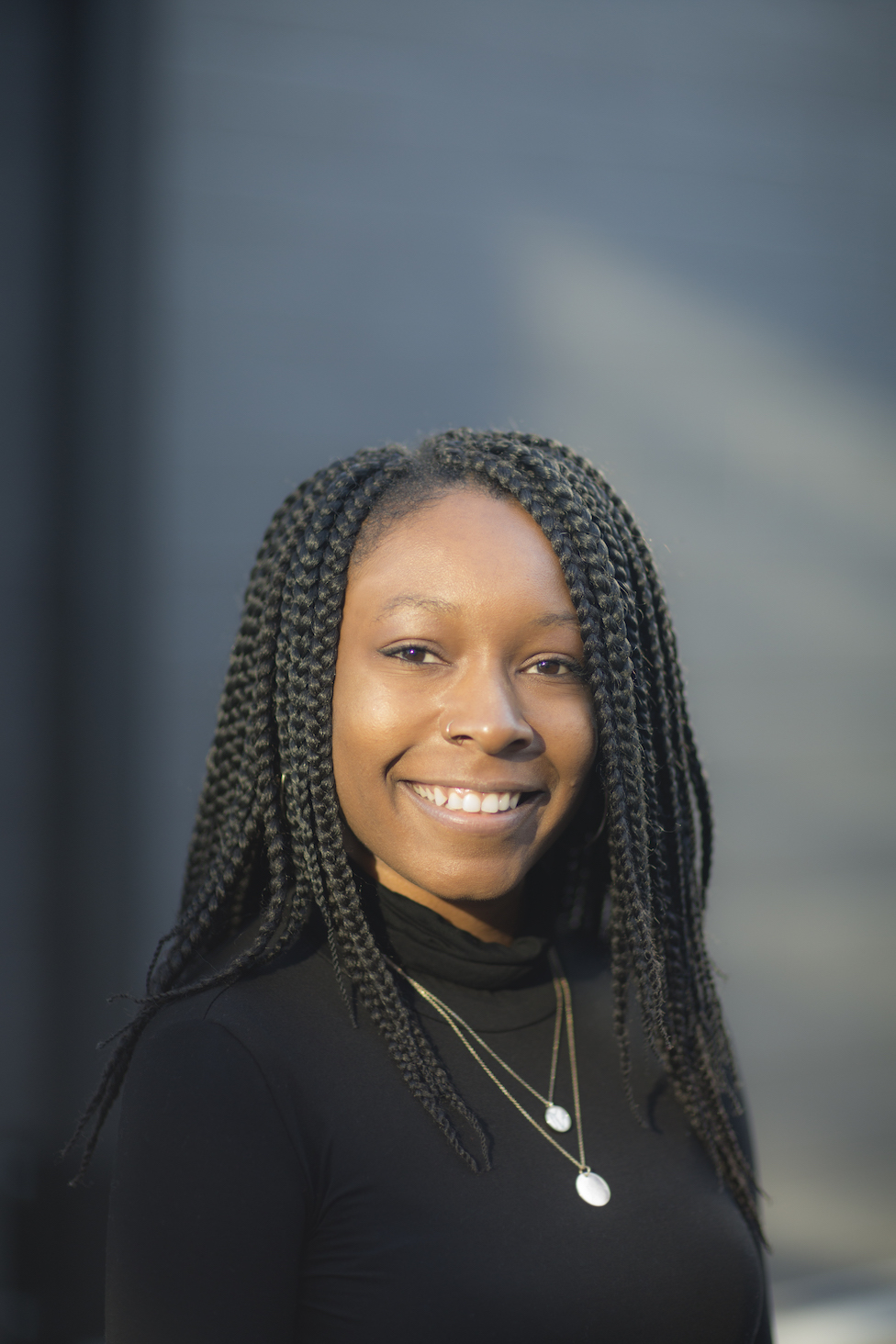
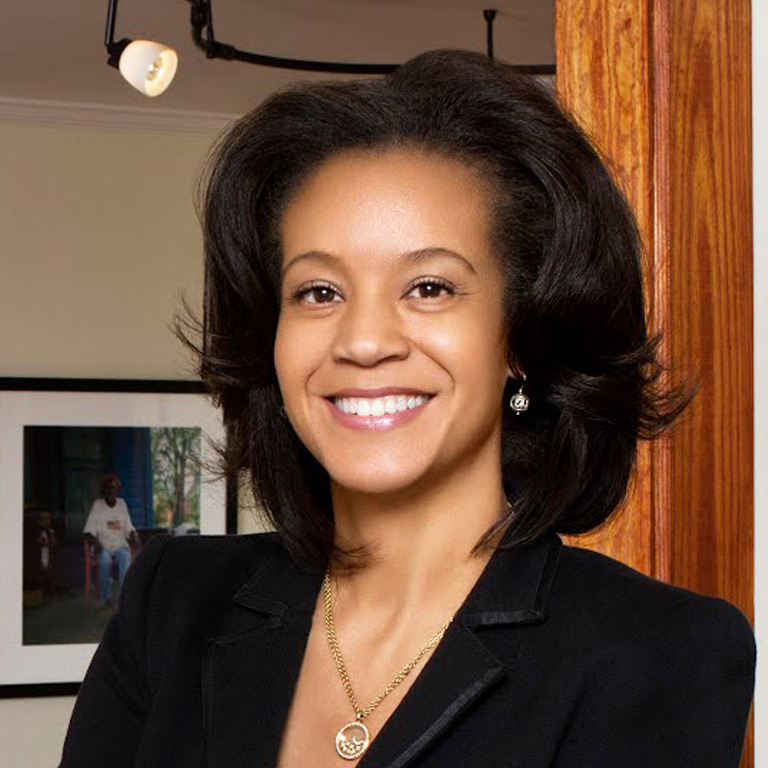
portrait of ariel felton

Visit Ariel Felton.

Getting comfy with Daniela Duarte

December
2
2020
By
Tags:

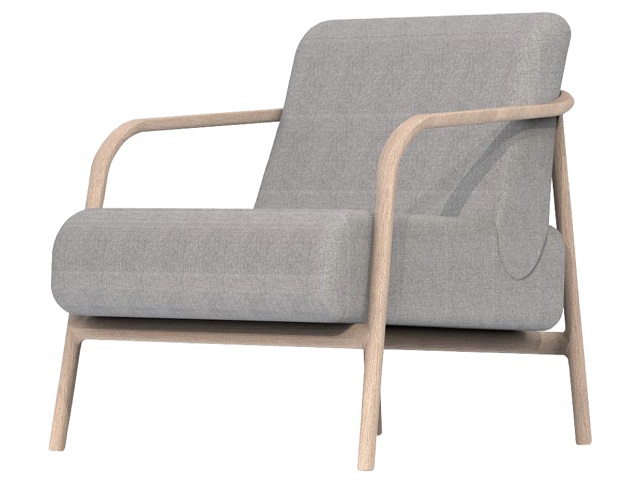
"I'm interested in how the attitude of humans is affected by design," says Daniela Duarte (B.F.A., furniture design, 2020). "Different shapes and textures call to us in a thousand different ways, and designers have to be aware of the emotions we are evoking when we create our pieces."

Duarte recently won the Student Award at the International Society of Furniture Designers 2020 Pinnacle Awards for CURVA, a chair she designed in her senior studio class. The Pinnacle Awards recognize excellence, innovation, and originality in furniture design, and ISFD judges called CURVA "exactly the type of product that consumers are looking for."

Today, Daniela is working at 5 SÓLIDOS in Medellin, Columbia. She took time to discuss her process, path, and passion for producing prepossessing décor.

Daniela Duarte:

As I worked on my senior collection, I was focused on making sure I created a positive feeling for the consumer. My concept was based around creating a sense of belonging. I wanted to design a memorable product and create an experience for the user well beyond just a chair.

CURVA was the first element and ultimately the catalyst for my senior project. The entire year was dedicated to creating a collection that personified my philosophy and spoke to who I am as a designer.

I am interested in the concept of emotional design, and have studied the works of Don Norman to understand how designers can make deeper connections with users through their products. First, I spent a lot of time on the shape of the chair itself. I found that the interlocking components created a sense of calm and peace with my fellow designers.

I tried a variety of shapes, and interlocking connections, then tested those designs with my classmates to understand what emotions came forth with each new design. I found that shapes that were tilting created stress and nervousness. Shapes that were perfectly interlocking or melting into one another were "satisfying" and created a sense of "belonging."

The idea of belonging drove the remainder of the product experience. The arms are shaped to look like a hug, and the monochromatic colors help the chair create a sense of harmony. The wood is ash, and I love how it works with the gray of the fabric.

From there, I focused on making sure the chair performed well. Would it matter if the chair looked great but you never sat in it? I wanted the product to be both memorable and invisible. Obviously, that is a slight paradox, but good design enhances our life seamlessly. 

Professor Fred Spector encouraged me to submit my design to the competition. He felt that I had a good chance of winning, and was very encouraging throughout the process. I was shocked when I won and of course very happy I listened to him.

My experience at SCAD has helped shape me into the designer I am today. When I was looking at universities, I had a teacher, Paola Caicedo (B.F.A., fashion, 1997), who'd attended SCAD and loved it. She encouraged me to come to Savannah since I too wanted to study industrial design. I fell in love with furniture design once I got here.

The furniture design department is a really tight-knit community and the professors are amazing. I was able to design, choose patterns and fabrics, and build life-long pieces for people to enjoy. I loved all of it. I hope to open my own studio in the future, and am learning and growing as much as I can until then.

chair designed by Daniela Duarte

Learn more about SCAD furniture design.

Shark Tank of Wellness winner Samii

November
23
2020
By
Tags:

"Thirty-two million Americans experience food allergies, and forty percent of children with food allergies experience life-threatening reactions," explains Krysta Silva (B.F.A., advertising). Speaking on behalf of her Shark Tank of Wellness award-winning team, Silva emphasized the need for new tools to help individuals stay safe and better understand what is in their food.

Krysta collaborated with fellow SCAD Atlanta students Daranie Mor (B.F.A., advertising) and Megan Ip (B.F.A., advertising, 2020) to create Samii, a set of portable, rechargeable utensils that detect allergenic proteins in food. Their concept was chosen from over 130 submissions from 36 countries as the first-place winner at the 2020 Global Wellness Summit in Palm Beach, Florida.

Today, Krysta and her team are working with investors to get Samii to a table near you.

Krysta Silva:

Samii started as a class project for ADBR 305: Brand Innovation: From Physical to Virtual (ADBR 305). Professor Misra-Deshpande put it plainly: "Your assignment is to win the Shark Tank of Wellness competition." Our team set out with that goal in mind.

First, we researched the wellness industry and looked for white space to fill in. None of us had food allergies, but we all knew people struggling with this issue and thought it would be a meaningful project. We were shocked to see the real need for research and tools. A few of the statics were jaw dropping:

  • 220 million people are affected globally by food allergies.
  • Food allergies cost the U.S. economy $24.8 billion annually.
  • Every three minutes there is an E.R. visit from induced anaphylaxis.
  • Over 50% of adults report developing a food allergy after the age of 18.
  • The cost of epinephrine increased 514% from 2001-2016.

Clearly something needs to be done, and the current rate of funding for research is woefully behind the needs of those suffering.

One of the largest needs is more detailed and accurate testing of food. Current allergen scanners require users to separate a portion of their food to be tested. But what if the selection you portioned off was safe, but the next bite was contaminated? We can't expect diners to test every bite this way.

That is why Samii could be so revolutionary. It works in coordination with the app to test each bite as you eat it, bringing peace of mind to the eater and drastically lowering the numbers of individuals who will need emergency medical attention. By simply reversing the current way of testing food, we will change the entire industry for the better. We are now in discussions with a tech start-up that is interested in the possibilities ahead.

When I first applied to SCAD, I thought I wanted to study fashion design. I spent a lot of time researching what university was right for me. SCAD was absolutely the correct choice. Since making the decision to major in advertising, I've found my passion for product design. I can't imagine doing anything else.

Krysta Silva

Visit Krysta Silva!

Statistics sourced from End Allergies Together (EAT).


Devon Vander Voort's museum mission

November
19
2020
By
Tags:

"I believe museums should drive social change," says Devon Vander Voort (B.F.A., art history). "All my work is aligned in some way with that mission." A museum studies minor, Vander Voort presented her project "An American Tail Immigration Brochure" at this year's Southeastern Museums Conference, as part of the Student Work in Museums (SWIM) Awards.

The project sprang from MUSM 302: Museum Curation and Collection Management, a class taught by art history professor Christine Neal. Conducted in collaboration with Special Collections librarian Sauda Mitchell, the class accessed the Don Bluth Collection of Animation at the Jen Library, as students designed education materials for hypothetical museum exhibitions.

Museums have been a thread through Vander Voort's life, from her time as a high school student with the Teen Arts Council at Everson Museum in Syracuse, NY, to her current work as a docent and exhibition planner at the Savannah African Art Museum alongside executive director and SCAD alumna Billie Stultz (B.F.A., art history, 2016). "My dream is to someday be director of the National Museum of Women in the Arts," says Devon. She's on her way.

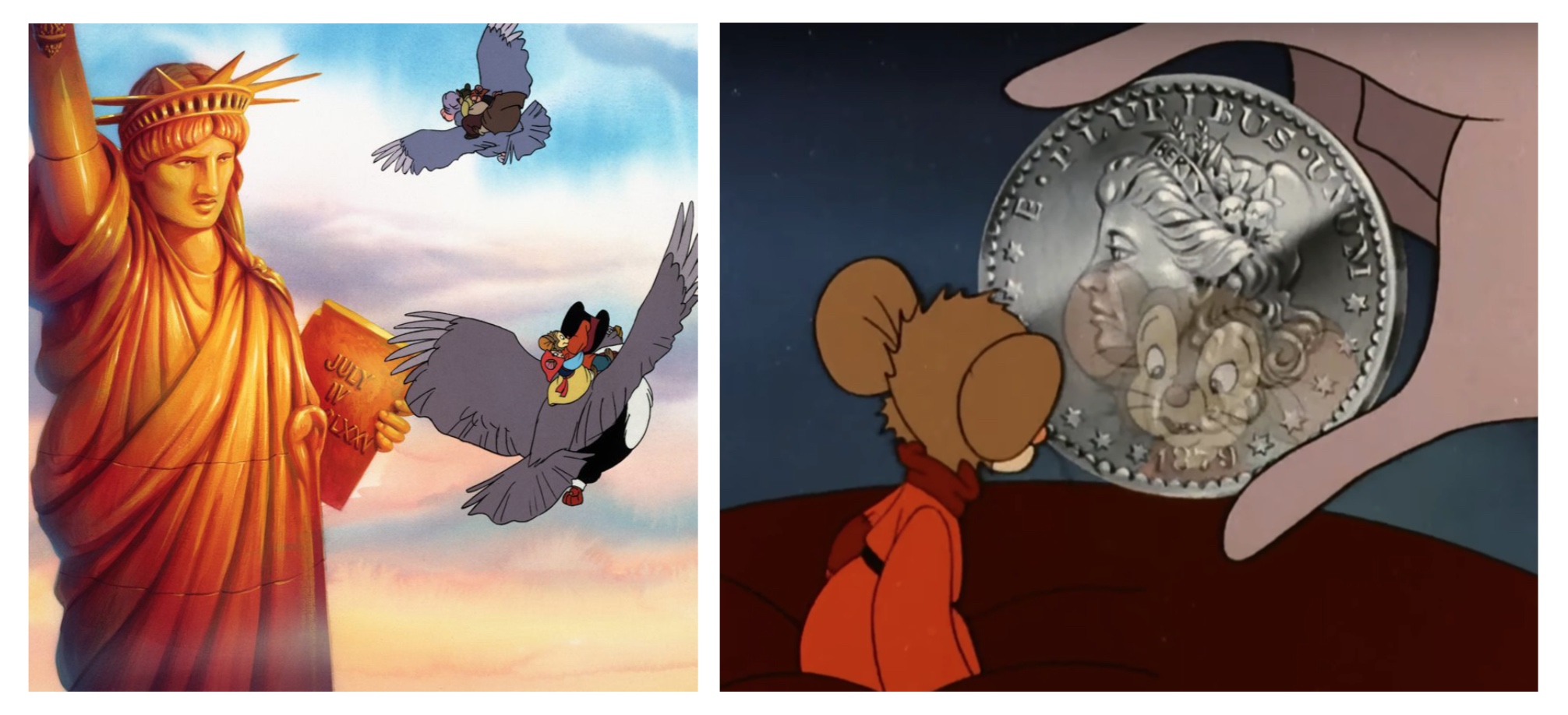
animation still from an american tail

Devon Vander Voort:

As part of my museum studies minor, I took MUSM 301: Museum Leadership in fall 2019 with Dr. Carr. Then I spent a quarter in Lacoste, where I took ARTH 240: Treasures of Provence, which I loved. When I returned to Savannah for spring quarter this year, SCAD had transitioned to virtual learning as I began MUSM 302: Curatorial Practices with Professor Neal.

One thing instilled in me during Museum Leadership is that museums have to reflect a community's needs. I was thinking about that as I began Curatorial Practices. When Professor Neal said we were going to be using the Bluth Collection, I realized how little I knew about the art of animation. Then I saw that one of the films Don Bluth made was An American Tail, which is an immigration story. Immigration affects people's lives, and I began thinking how I could align my values and my work for this class.

As Americans we have had this idea that we welcome people from other places. Then we see the border crisis on the news and it doesn't make any sense. I created the brochure to address the themes of immigration in the movie, and juxtapose them with the current border crisis. The brochure includes a card with information on what to do if you're approached by law enforcement about your immigration status.

In An American Tail we see the Statue of Liberty, and we see U.S. currency, and Fievel the mouse seeing his face reflected in the face of the coin. My proposed exhibition would include the drawings and animation cells from SCAD Special Collections, a space where the movie's playing, and a display about the history of America's first immigration center, Castle Garden. Museumgoers would have a chance to learn about their own ancestors, and see how we're all connected.

I was born in India and adopted by my mom. I grew up in a small suburb outside Syracuse, but we lived abroad for a few years, and we traveled a lot. My mother gave me those experiences, which influenced my world view and my project. I've been afforded an awesome life and have to do something with it to help other people. I plan to achieve that through working at museums, and making them places of inclusion, accessible to the communities they serve.

Learn more about the Don Bluth Collection of Animation.

www.devonvandervoort.com

Open Studio spotlight: "lé dieguê"

November
12
2020
By
Tags:

Originally from Caracas, Venezuela, Diego Cardenas (M.F.A., painting) was 13 years old when he began dabbling in graffiti. A decade later, the artist known as "lé dieguê" is a popular muralist and a featured artist for SCAD Open Studio Fall 2020, the virtual event taking place this Friday through Sunday, Nov. 13-15. His color field explorations, in the tradition of chromatic pioneer and SCAD deFINE art 2017 honoree Carlos Cruz-Diez, can light up a mood, a city, or the soul of a people. Don't underestimate the power of the work.

Diego Cardenas:

My art is largely abstract, though I also make representational work. I'm currently in Kentucky, painting a mural at a university inside a science building, of fish native to that region. I've been blessed to be able to paint commissions and murals for people. I also draw, though drawing isn't my major body of work, I try to keep the pencil moving.

My process begins on my computer in Abode Illustrator. The software helps me set measurements for each section of my work and then I mark it off. I try not to use graphite because it tends to show through spray paint. I make little dots to guide me and then I use masking tape to create clean lines. It's a little tricky because I paint, then move the tape, and paint again, which takes a lot of patience.

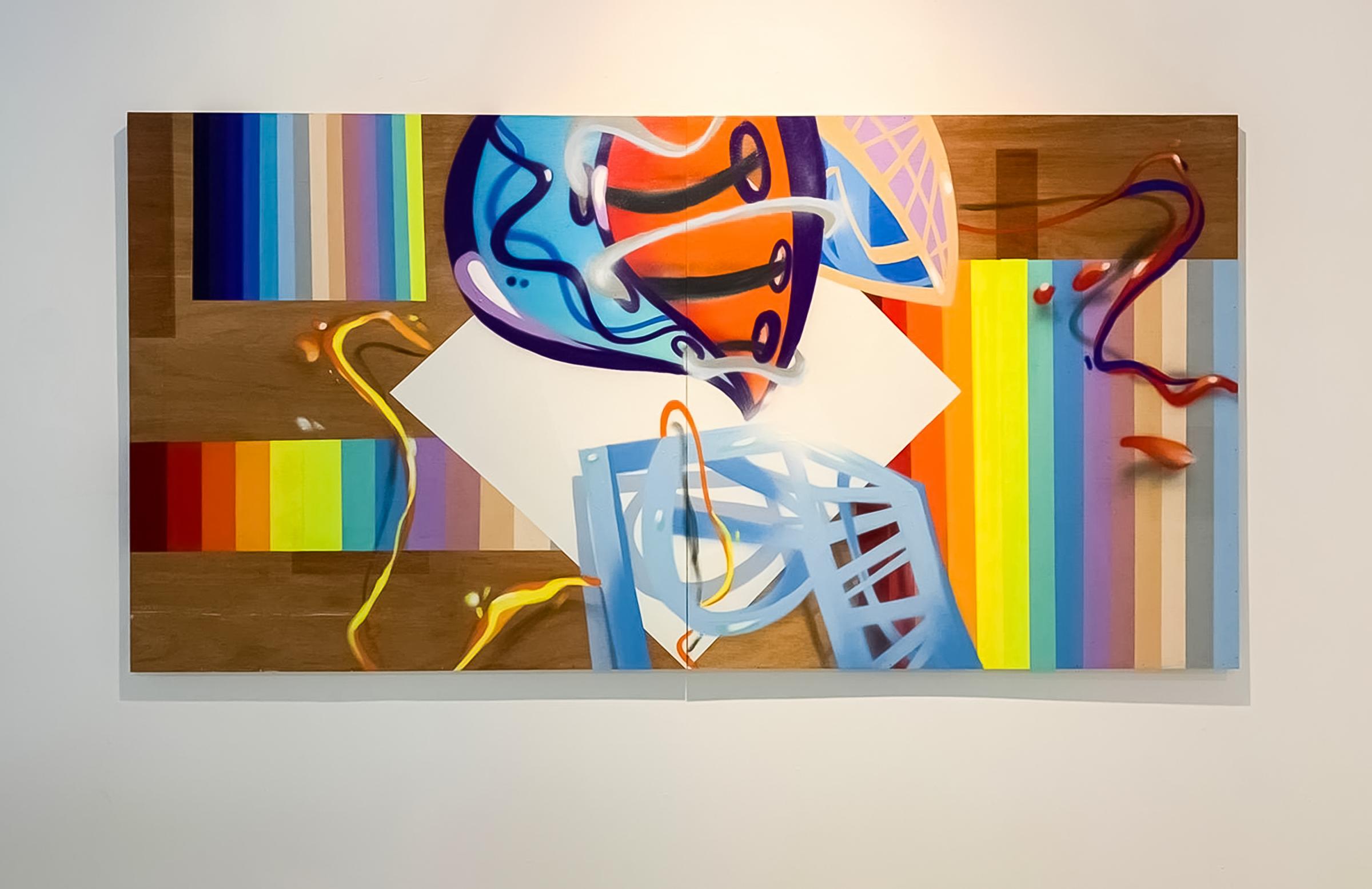
My painting "Angular Perception 13" uses color and lines to change how you perceive the size of aspects of the work. I strive for pristine lines, but I stop short of being a perfectionist. That comes from working outside, where I can't control whatever is floating around in the air that winds up sticking to the surface. When paint bleeds underneath a line, I might go back later and touch it up, or I might like the effect.

I don't consider myself a pioneer. A lot of people have laid the foundations for this work. I'm very close to the work of Carlos Cruz-Diez. He is one of the main references for what I do and how I do it. I interned at both his Articruz studios, the one in Panama City and at Atelier Cruz-Diez in Paris. It was sad when he passed away [in 2019, at age 95] though his work and chromatic investigations survive, and what he achieved as an artist from Venezuela around the world.

What's happening in Venezuela is on my mind all the time. I'm always cheering for my people. In 2018, I started a non-profit called CRÜ with two friends, Hugo Pah Carrasco and Andres Pri Martinez, where we go and paint in poor communities in Venezuela. We create colorful murals to cover old propaganda. You start to paint and you have 30 or 40 kids around you in an instant, and they want to paint too. We've made works for auction that are used to pay for materials to create courses for young people to learn to draw and paint.

I love natural light. Living in Savannah, I'm really interested in what I call the sub-spectrum. I'm always taking pictures. I use software to match the colors of my paint to the colors I see in my photos. From that, I create a limited palette and put color properties together and start playing. I've been studying a book by Faber Birren called Color & Human Response (Van Nostrand Reinhold Co., 1978) about how we perceive color and react to it. If you see someone wearing certain colors it will make you more likely to say hello.

I'm not trying to paint specific feelings. How you feel about the work is up to you, but I want my work to be a tool that will help the viewer be a little more sensitive, to open up awareness and change the way you see things later on.

Diego Cardenas (lé dieguê), “Composición a Malevich,” oil on canvas, spray paint, latex, and varnish on wood, 48”96”, 2020.

Diego Cardenas (lé dieguê), “Composición a Malevich,” oil on canvas, spray paint, latex, and varnish on wood, 48”96”, 2020.

Photo of lé dieguê by Luis Ramirez @luisasphotographer.

Follow Diego Cardenas on Instagram here.


SCAD Savannah Film Festival: Samuel L. Jackson

October
27
2020
By
Tags:

"From an early age I was serious about being an actor, so I went out and worked," said Samuel L. Jackson, recipient of the Legend of Cinema Award at the 23rd SCAD Savannah Film Festival. "I don't know how many projects I have been a part of. I lost count along the way."

Jackson has been in over 100 movies, with 189 credits to his name, including television, video games, soundtracks, and production projects. He is revered across every cinematic demographic, from young children who love him as The Incredibles' Frozone, to Star Wars fans who covet Mace Windu's purple lightsaber, to "grandmas who know me from A Time to Kill."

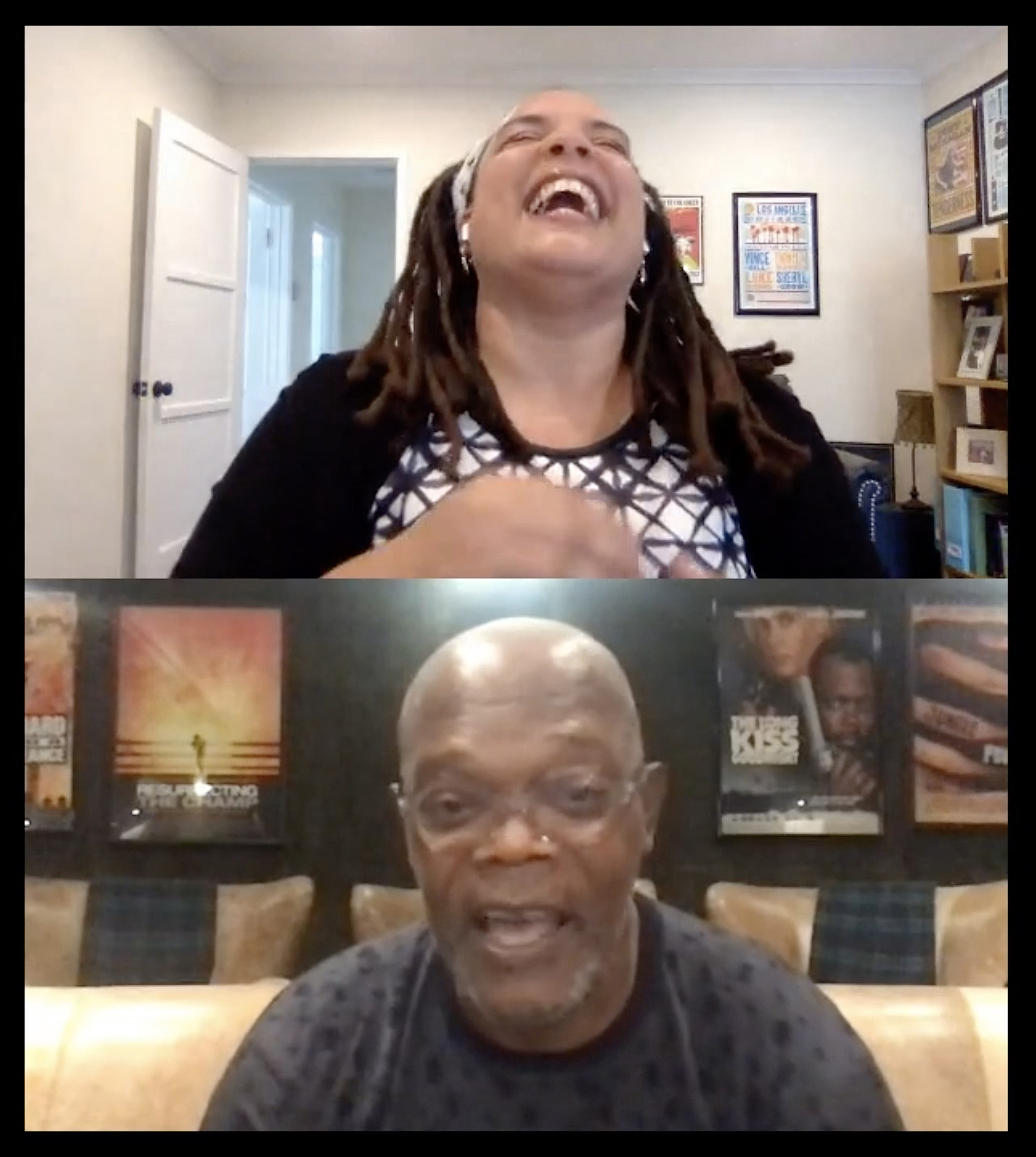
In a conversation filled with laughter and insights moderated by Entertainment Weekly executive editor Sarah Rodman, Jackson gave the audience an honest look at a legendary career.

Samuel L. Jackson In a conversation filled with laughter and insights moderated by Entertainment Weekly executive editor Sarah Rodman

Samuel L. Jackson:

I consider myself a native son of Georgia. The film scene in Georgia helped propel me in my career. My first film Black Cream was filmed in Atlanta. Then I shot the The Displaced Person in Milledgeville. Recently I have been at Pinewood Studios in Fayetteville for some smaller movies — I'm not sure if anyone has heard of The Avengers?

From the very beginning I was serious about being a professional actor. I worked hard on my craft, and was ready to shoot when "action" was called. If a director said we were starting at seven o'clock, that meant I needed to be on set at six to warm up, get into character, envision my steps, and walk around the set to get a feel of the room. Call time was not the time to start my process. I always encourage young actors to take a similar approach. Be ready. Be professional and know your role.

I also encourage actors to develop their skills on the stage. When I was young, I lived in New York and cut my teeth on Broadway. I learned stage direction, how to project my voice, how to exude emotion, how to speak to the people in the back row even when I had to whisper. Nowadays, I meet so many actors in Hollywood who skipped that step. They were the lead in their small-town play and then moved to L.A. without learning the art of acting. When I was just starting out I took whatever part I was offered. Today it's a little different, but my process hasn't changed.

I am proud to have been part of several iconic franchises and cult classics. Whenever I'm out, I know what film people recognize me from, and I always enjoy seeing people realize it is me. Yes, I do go to the grocery store, and yes it is okay to wave. Older Black women will always come up to me, punch my shoulder and say, "Do you know who you are?" I reply: "I do. Do you?" Parents with smaller children usually introduce me as "super suit guy." And young men quote Pulp Fiction from across parking lots.

I am thankful for the career I have, and I love being a movie star. I think it's important to be passionate about your work. Anytime I am flipping channels and see Pulp Fiction, Jackie Brown, or Deep Blue Sea, as long as I haven't been killed off yet, I watch. My favorite is The Long Kiss Goodnight. Long Kiss Goodnight was the first real girl kick-ass movie. I'd been at a party and saw Geena Davis and told her "I want to be in your movie" and she said, "You got the part."

Things happen when they are supposed to happen. If you're trying to move the needle, you need to look inside yourself and understand why. Success came to me when I forgot about success, and focused on being the best version of me.

Find out more about the honored guests at this year's SCAD Savannah Film Festival.


Generous gallerist Arnika Dawkins

October
20
2020
By
Tags:

"Artists are dialed to a different level of sensitivity," says Arnika Dawkins (M.A., digital photography, 2008). The eponymous founder of Arnika Dawkins Gallery is attuned to her own focused mission. Her Midwest Atlanta gallery shows photographic works by artists "speaking both to the moment we're in, and contributing to the grand dialogue across generations."

Dawkins has helped elevate the work of SCAD alumni LeAndra LeSeur (B.F.A., photography, 2014) and Ervin A. Johnson (M.F.A., photography, 2015) to international prominence. She celebrated Johnson's current show Variations on a Theme with a virtual opening in September. A fine art photographer in her own right, and member of SCAD Atlanta's first graduating class in 2008, Dawkins is a star in the SCAD firmament.

Arnika Dawkins:

The story of how I wound up attending SCAD begins with my youngest cousin, who was an on-air reporter in Savannah took me and my daughters through downtown Savannah and said, these buildings are part of what's called the Savannah College of Art and Design. Within months a big sign went up on Peachtree announcing the opening of SCAD Atlanta, and I decided to apply. I gave myself permission to pursue something I was passionate about. SCAD was perfect for me.

After I graduated, I interned at Jackson Fine Art in Atlanta, a local gallery with an amazing reputation, and got the bug to start my own gallery. I opened Arnika Dawkins Gallery in 2012, and my intern Le'Andra LeSeur said she wanted to introduce me to her classmate Ervin Johnson. At an opening here at the gallery and Le'Andra noticed that Ervin was heading out, so we ran over to say hello. When I took a look at his work, I had this powerful visceral reaction. I invited Ervin and Le'Andra to have their work in an exhibition in late 2015 that I titled On Being Black, where 22 artists showed work about being what being Black means to them.

Soon thereafter we did a solo exhibition of Ervin's work called #InHonor. It was Ervin's creative response to the Black Lives Matter movement, and it evolved into #InHonor: Monoliths, the second solo exhibition I've shown of his work. The art that I love to show is art that engages your head, your intellect, your heart, and your vision — then you have this thing going on which feels so good. It's been a real pleasure to show Ervin's work and see his evolution.

At the invitation of the European Cultural Centre, I submitted Ervin's work and it was shown at the 2019 Venice Biennale in their exhibition called Personal Structures. It was very well received and we were so happy to have Ervin go to Venice and receive all those accolades. I'm thrilled that SCAD is also showing that work during Photo London alongside Le'Andra's work, in concert with us having his third solo show here at the gallery called Variations on a Theme. These portraits are mesmerizing, captivating, and impactful. When you see them, you see why.

It is my hope as gallerist that by being part of this visual dialogue we can move the needle and create questions that people can reflect on. Art has the ability to do that. Through these conversations, we can progress and then there's great benefit to us all, people of all races, because we're all part of each other's existence.

portrait of arnika dawkins

Visit Arnika Dawkins Gallery.

Banner image: Ervin A. Johnson, Variation 17, photographic mixed media on cotton (detail), 2020.


Filmmaker Nicola Rinciari on 'Our Side'

October
15
2020
By
Tags:

Director Nicola Rinciari (B.F.A., film and television, 2020) is a finalist at the 2020 Student Academy Awards for his film Our Side. The 12-minute short, co-written by Rinciari and Emily Dillard (B.F.A., film and television, 2020), will have its Southeast U.S. premiere as part of the "Live Action Shorts" program at this year's SCAD Savannah Film Festival.

Our Side tells the story of an African caregiver named Adillah living in Sicily. When new laws render her visa invalid, Adillah must decide between saving herself or the elderly man in her care. Addressing issues surrounding immigration and discrimination, Our Side was filmed on location during winter quarter. A crew of 21 SCAD students flew to Italy specifically to work on the project.

The film represents something of a homecoming for Rinciari. Born in Palermo, Rinciari spent his childhood sitting in front of his family's television creating an imagined sequel to the 1994 Disney film The Lion King with crayons and colored pencils. "I remember drawing constantly while I watched the behind-the-scenes extras on that VHS tape," Rinciari says. Nicola's mother helped him photograph those drawings, before he scrolled through the images to see his story come to life. "My mom and I became filmmakers in our kitchen."

Today, Nicola lives in Los Angeles and works as a previs artist at The Third Floor, Inc.

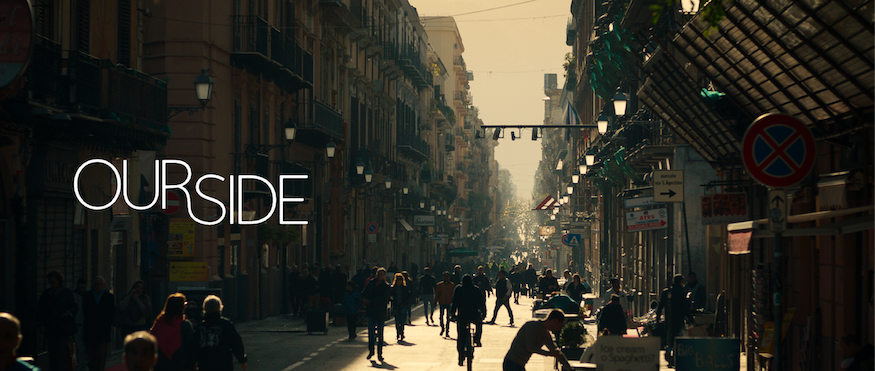
cover image for Our Side short film

Nicola Rinciari:

As a child I was fascinated with movies. Spider-Man was the first film I ever saw in a theater. I loved it, and it ignited my passion for filmmaking. I knew I wanted to get into the film industry, and I understood I needed to come to America to give myself the best chance for success.

When I was looking at film schools, I applied to SCAD. As I was mulling the decision to leave my home, I saw a magazine ad discussing Atlanta's booming film industry and there he was — Spider-Man. The newest installments of the Spider-Man franchise were shot partly in Georgia, and instantly I knew I was going to SCAD. I had never been to America, and Atlanta seemed a world away from Palermo. I packed my bags, and along with my parents made the journey.

When I arrived at SCAD, my family and I met film professor and department chair D.W. Moffett. He heard us speaking Italian and began speaking to us in our language! From then on, D.W. became a mentor to me. Professor Moffett helped me pick the student crew I took to Italy to make Our Side, and spent hours talking to me about the script and final edits. I could not have done it without his expert guidance.

The film was a huge undertaking. We combined the crew of SCAD students with a crew I put together of local residents who helped helped people understand why we were shutting down their streets. The entire experience was incredible, and I am grateful for everyone who made it possible.

I am especially thankful to my partner Emily Dillard. Without her expertise and strength, this Student Oscar nomination would not be possible. The experience has been life changing.

The winners of the 2020 Student Academy awards will be announced on Oct. 21, 2020.

Our Side will screen at the SCAD Savannah Film Festival on Monday, Oct. 26.

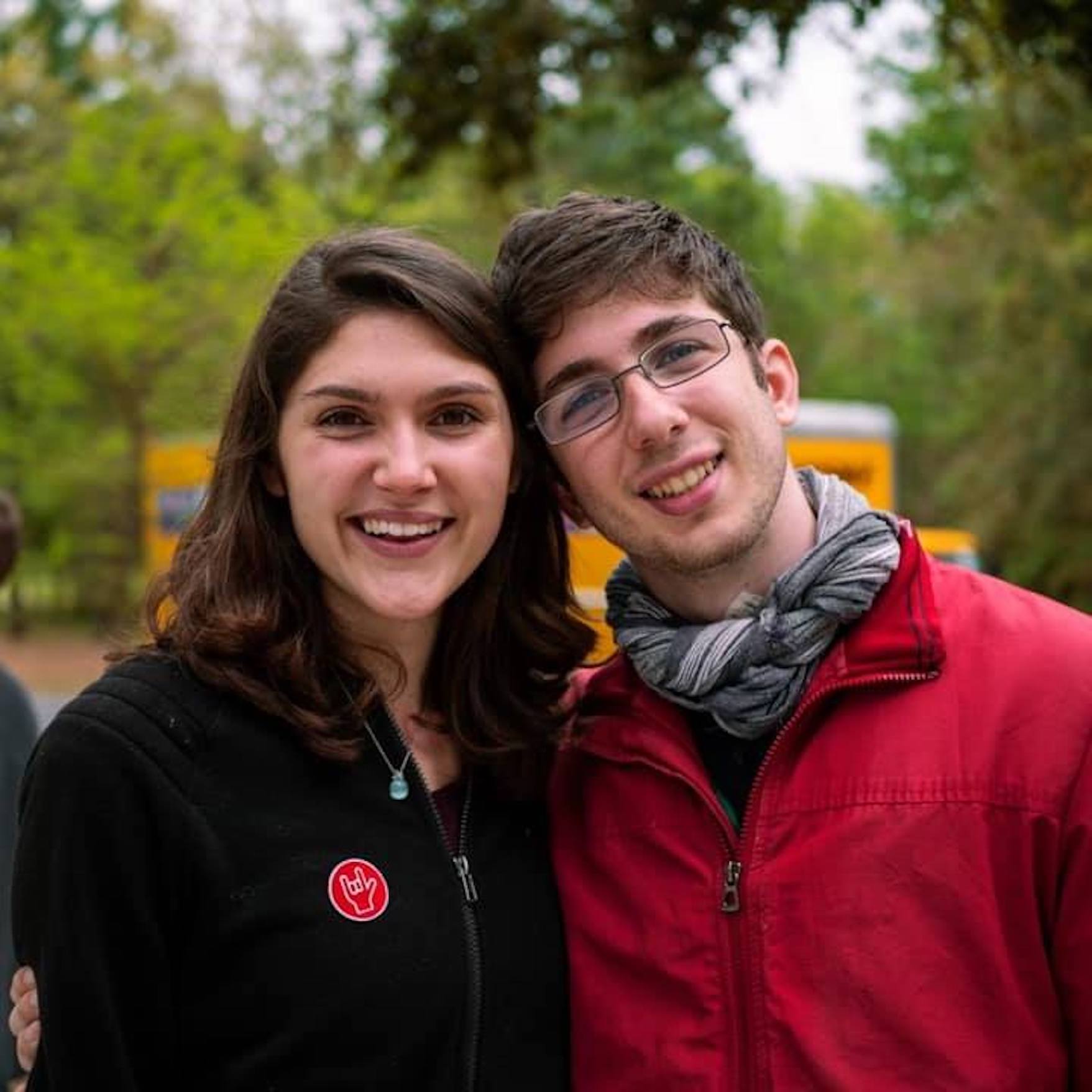
portrait of Emily Dillard and Nicola Rinciari

Emily Dillard and Nicola Rinciari


September Park delivers

October
9
2020
By
Tags:

It's one thing to design a great collection. It's another to present it effectively. Out of 4482 entrants to the i-D x ARTSTHREAD Global Design Graduate Show 2020, the work of alumna September Park (B.F.A., fashion, 2020) stands out.

The garments in her collection PS² (Park September Postal Service), inspired by postal workers and packaging materials, sport shipping labels linking to her digital portfolio: "It shows I'm ready for new opportunities."

Sponsored by Gucci, the international competition was open to all art and design students graduating in 2019-20. From the judge’s curated shortlist, Park’s collection received the most public support in the Sports & Denim category.
 
The Seoul, Korea native is currently interning in New York for Victor Li. When Park Zoom’d with SCADworks, she’d just finished a call with Alex Brownless, co-founder of ARTSTHREAD, to discuss next steps in her c
areer.

Student work

September Park:

When I heard about ARTSTHREAD competition, my senior collection was finished, but I went back to work on how I presented the collection on the digital platform, to make sure it best represented my concept and style.

My initial idea for PS² was a concept design based on "delivery," where I’m delivering stories through a fashion collection. At the same time, part of my concept was, How do I deliver myself to a potential employer?

I thought about the postal service, where a mail carrier comes to your door and delivers presents and joy, and also important mail, like voting information. I interviewed a person who works in the mailbox store next to Eckburg Hall. He said the work is very sensitive regarding time and quality, and means working every day, locally and internationally. I want to be that kind of person, who you can trust to deliver, and get a job done right and done fast. And technically, I am shipped from my home in Korea to study in the United States.

I chose to take my inspiration from the postal service. The postal service is for everyone. I wanted to make sure my collection is for everyone too. That's why I used elastic waistbands and adjustable straps, to fit the clothing to your body. I wanted to make sure this collection is for all sizes and all genders. When I shop for clothes, I shop in women’s wear and in the men’s section too. It’s important to mix genders in my collection because I personally wear clothing that way.

Fashion professor Mitchell Vassie helped me develop my concepts and portfolio, and another incredible fashion professor, Sachiko Honda helped me with the pattern making process. I was inspired by the torn edges of packaging, and created a pattern, then used glossy ink to print it on the jumpsuit with flatbed printing.

I’ve been friends with Regina La Ò (B.F.A., graphic design, 2019) since freshman year at SCAD. Her style matches my aesthetic, and I asked her to design some shipping labels for me. She designed my fantastic logo, and the QR code on the label links to my portfolio. It all connects to the inspiration for the collection itself: packaging, shipping, and delivery.

My journey really began when I was attending North Jakarta International School, and a representative from SCAD came in. At the time I was just discovering my love of art, and the SCAD representative said she saw potential in my work. I applied to SCAD and was offered a scholarship. That was a magical moment for me. SCAD gave me true friendships, love, and proof that if I keep pushing myself, there is always something good that can happen.


Visit September Park and view her winning portfolio.


Coming soon! SCAD Savannah Film Festival

October
5
2020
By
Tags:

There's something good on the event horizon: the 23rd annual SCAD Savannah Film Festival will take place as an all-virtual experience, Oct. 24–31, 2020. The largest university-run film festival in the U.S., the eight-day celebration of cinematic excellence honors professional and student filmmakers and welcomes industry luminaries, including award-winning directors, writers and actors across the big screen.

A key stop on the Academy Awards festival circuit, the SCAD Savannah Film Festival will screen 148 films, including 20 narrative films, 17 documentary films and 111 shorts, with 14 world premieres, four U.S. premieres and four North American premieres. The festival kicks off Saturday, Oct. 24, with the opening-night Gala Screening of I'm Your Woman, directed by Julia Hart and featuring Spotlight Award honoree Rachel Brosnahan. The festival culminates Saturday, Oct. 31, with the closing-night Gala Screening of One Night in Miami, directed by Regina King. Minari will be featured as a Gala Spotlight Screening on Mon., Oct. 26, with a special Q&A with actor Steven Yeun and director Lee Isaac Chung.

The 2020 schedule includes Gala and Signature Screenings, professional and student competition films, Docs to Watch, Shorts Spotlight, Global Shorts Forum, and the Wonder Women and Below the Line panel series. The SCAD Savannah Film Festival has screened more than 125 Academy Award-nominated films and has honored more than 90 legendary actors, directors, producers, writers and filmmakers from around the world. Entertainment Weekly returns as a media partner to help curate this year's programming and moderate select talent panels.

SCAD President and Founder Paula Wallace said, "SCAD screens the stories that matter to our students and to viewers around the globe. And this year, everybody's got the best seat in the house!"

SCAD will honor Yahya Abdul-Mateen II (The Trial of the Chicago 7) with the Distinguished Performance Award, Rachel Brosnahan (I'm Your Woman) and Delroy Lindo (Da 5 Bloods) with the Spotlight Award, Millie Bobby Brown (Enola Holmes) with the Maverick Award, Ethan Hawke (The Good Lord Bird) with the Outstanding Achievement in Entertainment Award, Jennifer Hudson (Respect) with the Virtuoso Award and Glen Keane (Over the Moon) with the Lifetime Achievement in Animation Award.

"We are so excited for the virtual program we've put together this year, from our film screenings to our amazing guests and panelists," said SCAD Savannah Film Festival Executive Director Christina Routhier. "I am even more proud that the festival will be screening films from more than 64 women filmmakers and hosting our annual Wonder Women panels, making us one of the few festivals that continues to highlight the work of women artists from around the world."

Celebrating its 23rd year, the festival and competition provide SCAD students with opportunities as unique as the selected films. This year, the SCAD Savannah Film Festival received more than 1,500 submissions for the competition series. During the festival, students from every academic discipline connect with leaders from the entertainment industry through master classes, coffee talks, lectures, workshops and panel discussions. Savannah, a premier film hub in the Southeast, promotes quality movies produced by independent and studio filmmakers.

advertisement for scad savannah film festival

For scheduling and programming, visit the SCAD Savannah Film Festival site.